
Noah Filipiak's Blog, page 14
December 16, 2019
Podcast ep. 22: Trying to fill the hole inside of us & what to do with our brokenness

Listen below or subscribe on iTunes or Google Play
Episode 22 dives into all the many ways we try to feel whole, valuable, accepted, and loved. Noah leads the way with opening up about some current struggles he is dealing with. This leads to a conversation about what to do with our brokenness and the amazing way God’s love can be experienced in the midst of not knowing how to fix ourselves.
Take 4 minutes to help make The Flip Side Podcast better at www.noahfilipiak.com/survey
Sign up for the Beyond the Battle online small group starting January 13th at www.beyondthebattle.net
Email the show at podcast@beyondthebattle.net
The post Podcast ep. 22: Trying to fill the hole inside of us & what to do with our brokenness appeared first on by Noah Filipiak.


The Flip Side Podcast Survey – give 4 minutes to help make Noah’s podcast better!

Hi Flippopotamuses!
Can you help make The Flip Side Podcast better with this 4 minute anonymous survey? I’d really appreciate it! https://www.surveymonkey.com/r/GXJPC37
The post The Flip Side Podcast Survey – give 4 minutes to help make Noah’s podcast better! appeared first on by Noah Filipiak.
December 13, 2019
Accountability is for the Weak

Accountability is for the weak.
What does this phrase stir up in you? Do you agree or disagree? Are you weak or are you strong?
Most of us, especially us guys, like to think of ourselves as tough, strong, and self-reliant. If I’m in trouble, I’ll get myself out of it. If I’m lost, I’m not asking for directions. If there’s a car on top of my chest, I’ll gather my gusto and push that sucker off, thank you very much. I’ll help you, but I’m certainly not in need of your help. This then bleeds in whenever we hear the topic of accountability broached by a pastor or in a sexual purity conversation. I don’t have a problem, and even if I did, I’d be able to figure it out myself.
Continue reading this article by Noah Filipiak on the Covenant Eyes blog…
The post Accountability is for the Weak appeared first on by Noah Filipiak.
December 2, 2019
Ep. 21: Depression, Elf on a Shelf, and get $1 every time Noah says “like”
Ep. 21 talks about depression, and depression within the Church specifically. Why we don’t talk about it enough and why we need to talk about it more. And in general, the Church’s hesitation to talk about anything that is vulnerable or deals with our struggles.
Noah’s Rant gets into how much people say “like,” including Noah himself, and offers you a chance to earn a $1 every time Noah says “like” on the podcast from here on how (legal fine print: starting in episode 22!)
Also make sure you get a say on what Flip Side listeners will be called, as the leader in the clubhouse is the Flippopotamuses!
Noah’s blog articles on depression:
https://www.noahfilipiak.com/psalm-46-gift-struggle-depression-anxiety/
https://www.noahfilipiak.com/god-will-never-give-can-handle-oh-really/
https://www.noahfilipiak.com/what-does-the-bible-say-about-insecurity/
https://www.noahfilipiak.com/turning-anxiety-into-worship-why-im-thankful-for-my-depression/
https://www.noahfilipiak.com/why-are-we-afraid-to-talk-about-our-depression/
https://www.noahfilipiak.com/is-suicide-an-unforgivable-sin-that-sends-you-to-hell/
You can support the podcast at www.patreon.com/noahfilipiak
The post Ep. 21: Depression, Elf on a Shelf, and get $1 every time Noah says “like” appeared first on by Noah Filipiak.
November 29, 2019
Flip Side Book Club: “The Sexuality of Jesus” & “Male, Female, and the Imago Dei”
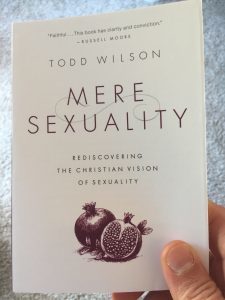
Chapters 2 and 3 of Mere Sexuality did a nice job of laying down further framework for the biblical framework of sexuality that has been accepted by the Church for almost all of its history. They were both good chapters, though since I’m a bit of a contrarian, I’ll start out with what I felt were negative or weak points.
Chapter 2 has an intriguing title, “The Sexuality of Jesus.” I don’t want to say that it didn’t live up to its name. As I read Mere Sexuality, I’m realizing there are 3 categories that the broad term “sexuality” encompasses. One is gender / transgenderism, one is orientation / LGBTQ+, and the other would be what is sometimes called “sexual purity,” more or less meaning pornography, sex before marriage, lust, etc. I think where someone’s expectations for chapter 2 might be let down is if they were anticipating a lot of content about category 3, or even category 2, whereas the conversation around Jesus’ sexuality primarily focused around his being male and God choosing to reveal himself in a clear, gender binary, way. There’s a lot to be gleaned here and I don’t want to dismiss it, but I think many want to hear more about how Jesus related to women. Did he have crushes on them? Could he have been same sex attracted and that’s one of the reason he stayed single? Or even, did he masturbate? Those might sound crass, but I think those are the types of mysterious questions that percolate around the phrase “The Sexuality of Jesus,” not delving into him being male. I understand the point Wilson was making, and I think it’s a good point, I think it’s just taking me some time (and I think others in the book club agree) warming up to the idea that the definition of “sexuality” is broader than I/we anticipated.
Wilson did do a good job of addressing the significance of Jesus being celibate and single. This led to the shining point of these two chapters, which I’ll address in a moment.
I want to get the other weakness out of the way first, which was from chapter 3 in addressing gender. “Male, Female, and the Imago Dei” was a good technical / theological treatise on gender from Scripture. One I will likely cite in future writing and sermons. But what I kept waiting for and never came was compassion for those who struggle with gender dysphoria. The tone of the chapter assumed that people always choose to struggle with their gender. I am sure that some do choose to want to be the other gender based on a trend or social pressure or just because, but many of the personal stories I have read about and those I know personally didn’t choose to want to be different than their biological sex, the way you choose your breakfast cereal or choose to rob a bank. These individuals were overwhelmed from the inside out that they really are a different gender than what they see in the mirror, like they are trapped in their own body. It’s more than I can put into words here, but if they could convince themselves otherwise, they certainly would have. I don’t disagree with Wilson’s biblical argument and I think it’s a helpful roadmap for the Church, but it lacked pastoral care for the person actually dealing with the struggle. I think it would have felt more preachy than helpful to someone looking for help who was neck-deep in the struggle, but looking for a biblical path to walk. It reminded me of 15-20 years ago when most of the Church was still convinced people chose to be gay, and we taught the biblical truths about homosexuality with that tone. Whereas now, almost everyone (including Wilson, as he writes about) acknowledges that many do not choose their orientation and can’t change it even though they have tried. This doesn’t change the biblical commands for how we all are to live out our sexuality, but it certainly changes our approach to how we teach on the subject and how we interact with those in the midst of the struggle. While I understand Mere Sexuality is meant to be more of a theological handbook, a compassionate pastoral section written toward those who struggle with gender dysphoria would have made a nice addition to this chapter.
Switching gears, I loved what Wilson did in chapters 2 and 3 as he compared the opposite way the world views the priority of sexual activity and the priority of biological sex, versus what Jesus and Scripture lays out. Essentially, culture today tells you that you aren’t living unless you are having sex. People start having sex at very young ages and they continue seeking it out with abandon for most of their lives. Do what your body tells you to do. Having sex seems as important to our culture as food or oxygen. You contrast that with Jesus and he never had sex! Jesus was also the ideal version of a human. He had everything he needed without having sex with anyone. He got these things from the love of the Father and from companionship with friends and community around him. Wilson’s point becomes even more profound as he swings the comparison the other direction and you find the same polarities. While having sex means everything to our culture, being biologically sexed as male or female means almost nothing. You can swap out your biological sex, or choose one of many gender options. Meanwhile, Jesus was firmly a male and was born firmly from a female. God revealed himself in very firm binary genders (male Jesus from female Mary). The creation account affirms that we are indeed created in God’s image, male and female (Genesis 1:27). Biological sex is a gift from God that reflects the very essence of who he is.
For those in the Flip Side Book Club, please only answer 2 of the following questions in the comment section. (Please do not answer all of them).
Please also leave a reply on two of the comments from other book club members.
Comments are due by Dec. 6th. My post on Chapters 4 & 5 will publish on Dec. 13th.
1. What new information did chapter 2 provide for you about Jesus’ sexuality and how was that helpful? What information were you hoping this chapter would address that it failed to (if any)?
2. On the bottom of page 42, Wilson makes a list of questions. Choose one to give an answer to here. (What might Jesus’ sexuality mean for how we think about human sexuality and homosexuality? Is there moral or theological significance to the fact that Jesus was born of a virgin? Is there moral or theological significance to the fact Jesus lived a chaste and celibate life? Is there moral or theological significance to the fact Jesus never married? Is there moral or theological significance to the fact Jesus’ resurrection body is a male body?)
3. Wilson dives into the very controversial subject of the role of men and women (arguing for the complementation side, as opposed to the egalitarian side). Which side of this debate do you typically fall on and did Wilson’s arguments sway you? What were the strengths and weaknesses of his argument?
4. Thinking of page 53, how can a person have deep intimacy and companionship without having sex?
5. Jesus “took on human flesh and lived a sexually fulfilled, sexually chaste, sacrificial life–all for the sake of others (p. 59).” How can this truth, combined with the previous truth that Jesus can sympathize with our weakness because he’s experienced it (Hebrews 4:14-16), help a person who is struggling with same sex attraction? …help a person who is struggling with transgenderism? …help a person who is struggling in their sexual purity?
6. How has postmodernism (“I determine what is true for me”) influenced the popular view of universalism (“all will be saved, all roads lead to God”)? How has that mindset affected our culture’s view of sexuality and gender?
The post Flip Side Book Club: “The Sexuality of Jesus” & “Male, Female, and the Imago Dei” appeared first on by Noah Filipiak.
November 15, 2019
Ep. 20: Interview with Jason Redoutey on Vulnerability and Grace Overcoming Shame and Addiction


Listen below or subscribe on iTunes or Google Play
Noah catches up with Jason Redoutey on how encountering the affirming love of God satisfied Jason’s lifelong quest for approval and affirmation. A quest that led him to a double life of porn, lies, womanizing, and cheating in his marriage. Shame was once the ruler in Jason’s life, shame that has been replaced by love and grace, found through vulnerability. Jason now helps other men find this same overwhelming love of God as one of the directors of Hearts, Alive, and Free.
Watch this video, putting yourself as the soldier and God as the family member running toward you:
The post Ep. 20: Interview with Jason Redoutey on Vulnerability and Grace Overcoming Shame and Addiction appeared first on by Noah Filipiak.
Flip Side Book Club: “Mere Sexuality” Intro & Chapter 1
Learn about / Join the Flip Side Book Club for Mere Sexuality here.
I liked the introduction and first chapter of Mere Sexuality by Todd A. Wilson. I like Wilson’s writing style and feel I can respect him as an intellectual and theologian. In some respects, I can see Mere Sexuality as a book I would write if I were to write a book on sexuality. Particularly on the trend in the Church over the past 10-20 years to swing to other side of the pendulum on its stance on LGBTQ+ issues as they relate to Scripture. The church has kept pace with culture, following its lead and modifying the Bible to it. Whether you are “for” this swing or “against” it, you have to admit that it’s a pretty drastic swing in a very short period of time, which is a pretty fascinating concept in and of itself, and worthy of inspection. What I mean by saying that I could see this as a book that I would write is that Wilson and I are both heterosexual, married men who love Scripture, pastor churches, and love people. So there is a compassionate ache for those who struggle with gender identity or with same sex attraction, but also the conviction that Scripture is the inspired and authoritative word of God and you can’t pick and choose the parts you like and don’t like. In other words, you can’t put your own authority above God’s authority. But then you have to figure out how this plays out in the life of a man or woman who struggle with these issues and give them real paths of life they can walk down.
When I’ve written or taught on LGBTQ+ issues in the past, I’ve always said it’s not about this issue, like we are picking on people who are gay, it’s about your take on Scripture. I think homosexuality just became the dividing-line issue of our era where a person had to choose a “side” on if they were sticking with the long held view that the Bible is God’s authoritative view, or if they were instead viewing Scripture as a number of other options: a book of myths, a book of tradition, etc., believing faulty explanations about what certain words mean or meant, or using a hermeneutic (the method by which we interpret the Bible into today’s world) where things that were applied one way in the 1st century would be applied differently today because of love or other similar reasons.
It’s easy for all of this to stay in the land of theory, debate, and academia for a straight, married pastor such as myself or Wilson. It’s easy to point to gay marriage as the reason marriage has fallen apart, throwing stones at people who struggle with things we never will. What I love is how Wilson points us toward the sexual revolution of the 1960’s as when marriage and sexuality began to crumble away from God’s design in Scripture on a large cultural scale. Heterosexuals lost interest in God’s design for marriage (and were embraced by culture) long before culture adopted homosexual practice as acceptable. In fact, the first break from God’s design laid the groundwork for all the others that would follow. You see this in divorce, premarital sex, the hook up culture, and the myriad of other ways heterosexual sin has been widely embraced by culture and by the Church. I wrote about this 5 years ago when I got tired of Christians blaming gay marriage for destroying marriage, which I felt was our way of dodging the sins we struggle with and commit so we can point fingers and blame people who struggle with things we never will. A little too convenient, but also inaccurate in who should be getting the blame for what we are currently facing in society. Wilson quotes biblical scholar Luke Timothy Johnson, “There is more than enough sexual disorder among heterosexuals to fuel moral outrage.” I agree.
I’m excited to see what else Wilson has in store for us as we read Mere Sexuality. The book is not intended to convince or debate with someone who is passionately for homosexual sex being acceptable. I think Wilson knows his primary audience is the evangelical Church who already keeps to a traditional view of marriage and Scripture, though he does a good job of identifying and welcoming in each type of reader who might be reading the book. I think the book will be especially helpful to Christians who struggle with same sex attraction or gender dysphoria who have always believed the Bible is God’s authoritative word and that sex is designed to be within marriage between a man and a woman, but are now on the fence of what direction to go because of culture and the Church’s changing of the guard. I think there will also be plenty to challenge and strengthen a heterosexual’s walk with the Lord as each of us struggle with our own sexual sin, and needing desperately to be reminded of God’s design for our lives as sexual beings.
Discussion Questions for Book Club Members:
Answer two of the following questions in the comment section below. Answers are due by November 22nd. You also need to reply to at least two other people’s answers.
(REMEMBER THESE QUESTIONS ARE POSTED ON A PUBLIC FORUM. You are welcome to be as transparent and vulnerable as you are comfortable with about your own story, just be cognizant that your answers can be read by anyone.)
Please begin by giving a little bio information about yourself so your fellow book clubbers can get to know you a little and have some context.
1. Wilson says (p.14) that the questions “What does the Bible really teach about homosexuality?” and “How can we love homosexuals as Jesus would?” are both insufficient questions. What makes them insufficient? (or are they?)
2. Thinking of Wilson’s list on the bottom of p. 32, how would you prescribe the balance between grace toward a Christian living in sexual sin and a holding a Christian to what the Bible says?
3. What is Wilson’s definition of ‘mere sexuality’? Do you like it or no? Why or why not?
4. What philosophical cultural norms about authority did the 1960’s sexual revolution cause? (and/or what cultural norms about authority caused the sexual revolution?) — By “authority” here, I mean someone being able to tell someone else what to do or how to live.
5. What role does church history play in the authority of Scripture? (see mid-bottom of p.37 for context)
NEXT ASSIGNMENT: Have chapters 2 & 3 read by Dec. 6th. I will post my reflection and discussion questions for chapters 2 & 3 on the blog on Nov. 29th. Have your answers to those discussion questions posted by Dec. 6th.
The post Flip Side Book Club: “Mere Sexuality” Intro & Chapter 1 appeared first on by Noah Filipiak.
November 5, 2019
Ep. 19: The Flip Side is BACK! Topic: The Right Kind of Blindness


Listen below or subscribe on iTunes or Google Play
After a brief hiatus, “real” episodes of the Flip Side are back! After catching up on the mailbag, the topic of the day is the right kind of blindness, and of course, the moment you’ve all been waiting for: Noah’s Rant finally chimes in on the “real people, not actors” Chevy commercials.
Check out the BRAND NEW Flip Side book club here.
You can support the podcast at www.patreon.com/noahfilipiak
Show Notes:
What’s it like to be one of the “regular people” in those Chevy commercials?
The post Ep. 19: The Flip Side is BACK! Topic: The Right Kind of Blindness appeared first on by Noah Filipiak.
November 4, 2019
Join the first ever Flip Side Book Club: Mere Sexuality by Todd A. Wilson

The Flip Side Book Club will be an ongoing book club that anyone is invited to join. Our first book will be Mere Sexuality: Rediscovering the Christian Vision of Sexuality by Todd A. Wilson.
Reply in the comment section of this blog post if you are signing up to be in this round of the book club. Please use the blog interface only for this, not social media commenting. You can respond anonymously or with your name.
I will have “Introduction: The Road Ahead” (pages 13-24) and “Chapter 1: What Is Mere Sexuality?” (pages 25-38) read by November 15th. On November 15th, I will write a response to this section of Mere Sexuality on my blog in a new post, along with some discussion questions for you. Those participating in the Book Club are to write a response in the blog comment section of my Introduction & Chapter 1 post. The comment section will serve as our discussion area to comment on and reply to each other’s thoughts. The due date for reader responses is November 22nd.
I will include new reading assignments and due dates as we go. I’ll be shooting for roughly two chapters every two weeks. There will be supplemental content to the Book Club on The Flip Side Podcast.
Comment below if you are in!
If you are in, get a copy of the book and have the Introduction and Chapter 1 read by November 22nd.
Subscribe to Flip Side Book Club updates here:
E-mail Address:
Unsubscribe me
Categories
All categories
The Flip Side Book Club
Beyond the Battle Blog
Subscribe me
Unsubscribe
The post Join the first ever Flip Side Book Club: Mere Sexuality by Todd A. Wilson appeared first on by Noah Filipiak.
October 21, 2019
The Lies of Lust: Stolen Humanity


Lie: Objectifying doesn’t hurt anyone.
“My dad told me it’s okay to look, as long as you don’t touch,” a large, well-past-puberty 8th grader once told me with a smile.
This boy’s father passed on to him the idea that objectification doesn’t hurt anyone. This is a lie. It’s a lie the father had bought into and has now passed on to his son. It’s a lie from culture that many of us have bought into as well.
One could argue that it’s better to look and not touch than it is to give unwanted touches, which is obviously true. This is probably what this father was trying to teach his son. But the fact that unwanted touches bring great harm does not mean that “looking without touching” is a victimless crime, as this dad had led his son to believe.
Read the rest of this article by Noah Filipiak on the Covenant Eyes blog…
The post The Lies of Lust: Stolen Humanity appeared first on by Noah Filipiak.


