
Noah Filipiak's Blog, page 13
April 6, 2020
Challenge to Christians: Give your Coronavirus Stimulus to Someone Who Needs it

This is a simple challenge to Christians who will be receiving stimulus money as a part of the United States Coronavirus Stimulus Package:
If you don’t need the money, give it to someone who does.
Do you qualify for the stimulus, but if the thought of the stimulus never came up within our government, you’d get along fine? You’d be able to pay all of your essential bills and provide adequately for you and your family?
When you heard about the stimulus, were you planning on purchasing something with it like a four-wheeler, or finishing some renovations on your house?
Do you still have the same income you had before the quarantine?
If so, consider giving your stimulus money to someone who really needs it. Yes, they’ll be getting some stimulus money too, but how long will that last?
We all know someone who has lost their job due to this shelter-in-place. Someone who is laid off, not knowing how long this quarantine will last or how they are going to pay their bills. They didn’t do anything to be in this place of need, it is simply the need of this unique season of history we are in.
It’s not sinful to buy a four-wheeler, or renovate your home. But in a season where some are experiencing true famine and some are still experiencing plenty, hasn’t the Christian response in the Bible always been for those with plenty to give to those without?
I’m not setting up a program. I’m just asking you to think and pray about those in your own personal life who you know are hurting financially right now. Particularly someone in your church family. Or someone connected to a local Christian non-profit. As the Church, we are called to provide for our brothers and sisters in times of need.
If you are able to pass your stimulus money on to someone else who needs it more, please do.
Will you pass this challenge on to others to consider as well?
For Macedonia and Achaia were pleased to make a contribution for the poor among the Lord’s people in Jerusalem. They were pleased to do it… -Romans 15:26-27
This service that you perform is not only supplying the needs of the Lord’s people but is also overflowing in many expressions of thanks to God. Because of the service by which you have proved yourselves, others will praise God for the obedience that accompanies your confession of the gospel of Christ, and for your generosity in sharing with them and with everyone else. -2 Corinthians 9:12-13
They sold property and possessions to give to anyone who had need. -Acts 2:45
All the believers were one in heart and mind. No one claimed that any of their possessions was their own, but they shared everything they had. -Acts 4:32
F.A.Q. on Stimulus Checks, Unemployment and the Coronavirus Plan (New York Times)
Related:
 The Flip Side Podcast, Episode 27: Finding Solid Ground in the Midst of a COVID-19 World
The post Challenge to Christians: Give your Coronavirus Stimulus to Someone Who Needs it appeared first on by Noah Filipiak.


April 2, 2020
Ep. 28: Brooks Hall, ’99 Mr. Ohio Basketball, University of Dayton star, on giving his life to Jesus

Listen below or subscribe on iTunes or Google Play
Noah interviews Brooks Hall on giving his life to Jesus Christ a little over a year ago. Brooks won the 1999 Mr. Ohio Basketball award, given to the best player in the state. He went on to be a 4-year starter at the University of Dayton (3x all conference), as well as a career in professional basketball. He currently is a radio commentator for the University of Dayton basketball team and the founder of and recruiting coordinator for Brooks Hall Basketball Consulting, helping high school basketball players get college scholarships.
Connect with Brooks via his website and Facebook page:
https://www.facebook.com/brooks.hall.714 – Personal Page
www.facebook.com/brookshallbc – Business Page
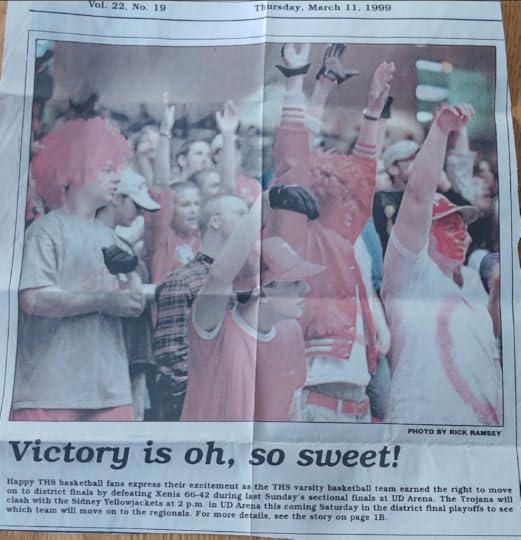
While Brooks was dunking over people his senior year, this is what 10th grade Noah was up to in the crowd:
As always, you can email the show at podcast@beyondthebattle.net
Related:

The post Ep. 28: Brooks Hall, ’99 Mr. Ohio Basketball, University of Dayton star, on giving his life to Jesus appeared first on by Noah Filipiak.
March 13, 2020
Ep. 27: Finding Solid Ground in the Midst of a COVID-19 World
Noah pauses to reflect on the unprecedented time of history we are experiencing with COVID-19. As followers of Jesus, can we reflect on where our security really lies? Can we reflect on how busy and hectic we normally live our lives and what we can do with this forced pause?
Listen below or subscribe on iTunes or Google Play
The post Ep. 27: Finding Solid Ground in the Midst of a COVID-19 World appeared first on by Noah Filipiak.
Ep. 27: Reflections on Spiritual Health During the Coronavirus

Noah pauses to reflect on the unprecedented time of history we are experiencing with COVID-19. As followers of Jesus, can we reflect on where our security really lies? Can we reflect on how busy and hectic we normally live our lives and what we can do with this forced pause?
Listen below or subscribe on iTunes or Google Play
The post Ep. 27: Reflections on Spiritual Health During the Coronavirus appeared first on by Noah Filipiak.
February 17, 2020
Ep. 26, Interview with Nick Stumbo: Going from a pastor looking at porn to Director of Pure Desire Ministries, helping others find freedom
 Listen below or subscribe on iTunes or Google Play
Nick and Noah talk through the desire that is underneath the desire to look at pornography, and how the only real way to find freedom is to have that desire met in legitimate ways. Listen in to find out what those legitimate ways are and how you can get past the “every time is the last time” mentality toward pornography and sexual sin. The “legitimate ways” of meeting our deepest desires applies to any area of struggle you may be facing, not just pornography.
Nick is the Executive Director of Pure Desire Ministries. He has been in leadership for 15+ years. He was in Pastoral Ministry at East Hills Alliance Church in Kelso, Washington, for 14 years. Nick has a Bachelor’s in Pastoral Studies from Crown College and an MDiv from Bethel Seminary. He has authored two books, Setting Us Free and Safe: Creating a Culture of Grace in a Climate of Shame.
Pure Desire provides a safe place for hope and healing for men, women, and students impacted by sexual brokenness. Through group resources, counseling, events, and partnerships, men, women, and students can develop sexual integrity, restore broken marriages, and establish healthy relationships.
The post Ep. 26, Interview with Nick Stumbo: Going from a pastor looking at porn to Director of Pure Desire Ministries, helping others find freedom appeared first on by Noah Filipiak.
February 1, 2020
Ep. 25: How the love we have from the Father, through Jesus is the antidote to our longings for acceptance, validation, and wholeness
 Listen below or subscribe on iTunes or Google Play
Episode 25 is a podcast within a podcast, as we revisit one of the most important, and most asked for topics:
The mailbag addresses fearing God and if God is always disappointed in us.
We spend time in Matthew 3:16-17 for guidance on how to spend daily rhythm time with Jesus.
And the topic of the episode centers around knowing what The Best Thing is.
Blog articles mentioned:
Shame vs. the Gospel – Is God Pleased with You?
House Money: Releasing God from “Your Best Life Now” and the Freedom this Brings
The post Ep. 25: How the love we have from the Father, through Jesus is the antidote to our longings for acceptance, validation, and wholeness appeared first on by Noah Filipiak.
January 17, 2020
Ep. 24, Interview with Tyler St. Clair on dealing with the grind and insecurity of pastoring + race & the Church


Listen below or subscribe on iTunes or Google Play
Noah interviews Tyler St. Clair on his church planting journey in the inner city of Detroit, MI. Tyler is the lead pastor of Cornerstone Church Detroit in Detroit, Michigan. He also serves as the network lead for Church in Hard Places in Acts 29’s S. Midwest Network. Tyler talks about dealing with the grind of pastoring and church planting, and the insecurity that most pastors deal with in wanting larger ministries or more recognition. This insecurity is similar to what every person faces in that we all look for something to give us our value, approval, and acceptance…all the things Jesus offers to us in the gospel when we know we our identity as the Father’s beloved sons and daughters.
Follow Tyler on Twitter at www.twitter.com/tylerpsaint
Check out Tyler’s writing on The Gospel Coalition’s blog: https://www.thegospelcoalition.org/profile/tyler-st-clair/
Sign up for the next Beyond the Battle online group at www.beyondthebattle.com
The post Ep. 24, Interview with Tyler St. Clair on dealing with the grind and insecurity of pastoring + race & the Church appeared first on by Noah Filipiak.
January 9, 2020
Yes, You Can Relearn how to View Women as People Rather than Objects to be Consumed


It sounds kind of bad when you put it that way, doesn’t it?
Our culture has adopted lust, casual sex, and pornography as normal and expected behavior, as if there are no consequences attached. Meanwhile, each of us deals with the litany of consequences that these behaviors bring with them, both internally and affecting our society at large.
If you’re a man who inadvertently sees women as sexual objects, I have good news for you. First, let me explain who I’m talking to.
Your eyes inadvertently fall to a woman’s chest rather than to her eyes. Though you’d never pursue it, your flesh gets revved up by these women’s curves and you can’t get them out of your head. These are the women you interact with on a regular basis and you always wonder if they notice your fidgety eyes and thoughts, or if you are covering your tracks well enough. You wonder if your wife notices. You figure they have to notice eventually and shame swarms over you.
You don’t desire these behaviors. Sure, there have been times you have intentionally binged on porn and maybe even in darker seasons, visited strip clubs or other similar pursuits. But you’ve grown and changed and been convicted of your sins. You’re not the man you used to be. You don’t want to desire women as sexual objects anymore, yet you can’t stop. You have stopped the conscious choice, but the undercurrent of your subconscious desires is winning the day.
It happens before you can think. The fantasy draws you in like a Star Trek tractor beam. It just feels like you are hard wired for this. You put on a good front. You don’t want a double life, but it’s there, just beyond your reach to stop it. You go to church, you’re in a small group, you love your wife, or if you’re single, you try to respect women and keep God first in your dating priorities. But you can’t stop your eyes and your mind from doing what they do.
If this is you, there is hope. There is good news.
First and foremost, you can get to the point where you don’t desire pornography anymore. This is a true level of freedom, compared to simply stopping the behavior through physical force and restraint, but still being consumed with desire for it.
You can also get to the point where you see women as real people, as God intended. Where you aren’t constantly forcing your eyes to go to her eyes and forcing your mind to stop fantasizing, longing, and wishing. You can get to the point where you are content in your marriage or content with your singleness, regardless of surrounding circumstances.
I’m not pitching a quick fix or an overnight change. I’ve written about this before, and it’s worth building more and more layers and strategies on to as it’s a journey we’ll be on for a long time. This is a change I have experienced, continue to grow in, and have seen many other men experience on this journey as well.
It all starts with Jesus. Don’t tune me out here. I’m not prescribing some spiritual pixie dust or magic Bible verse that will instantly cure you. I have used the Bible and spiritual disciplines in behavior-based, symptom management ways in the past, and this is not that. This is about your heart’s desire.
Your Heart’s Desire
It will look differently for each of us, but one of our core desires is to be accepted and approved. For someone to tell us we are valuable. For someone to love us.
For some of us, our parents did a woeful job at this, leaving a gaping void. For others, an abuser took this from us. And for those of us who grew up without blatant trauma, the very world we all live in did its own number on us. We’ve all watched enough TV commercials, seen enough red carpet walks, and read enough self-improvement magazine covers to know that there are perfect people out there, and we ain’t it. Not to mention the many break-ups, heartbreaks, and rejections that have been experienced in desired romantic relationships. All of these experiences shout that something is lacking in us, setting us on a lifelong search to make the grade.
For some, this search leads to the endless pursuit of money, success, and achievement. For others, it is simply numbed with entertainment or more blatant addictions like substance abuse. But for many men and women, the magical chalice of acceptance and validation is believed to be found in sex. We are duped into believing that the next man or next woman will make us feel whole, valuable, and accepted. Or we know that mythical person doesn’t exist, so we settle for the faux feelings of approval we can get from lust, pornography, or fantasy.
The wholeness, approval, and validation we are looking for from men or women can only be found in the wholeness, approval, and validation we already have in Jesus. Two halves will never make a whole, but Jesus can make you whole (in fact he already has if you are a Christian) all on his own. Whether married or single, you can be a whole person, fully satisfied in the value you have in Christ, no longer thirsting for this rush from fantasy and sexual sin. I write more about Jesus as the solution to our desire for sexual sin here.
Let’s now talk about how to view women as people instead of objects. Without having your wholeness grounded in Jesus, none of this will matter, so please don’t gloss over the points previously made. The reason it won’t matter is because our unquenchable desire to feel that rush of feeling good will always flood the new brain patterns we are working to develop. But if we satisfy that desire in Jesus, the flood waters will drop, and we can learn how to view and think about women in the way God always intended.
Double Vision
Do you remember being given double vision by an optometrist while your face is smushed up against the large binocular-like eye exam apparatus? Or even right now, what happens when you put your finger in front of your face, then look past it and focus in on your computer screen? Your one finger turns into two. You wouldn’t want to go through your whole day like this, so to get your finger back, you focus your eyes on it and the two parallels images merge back together into one. Optometrists call this fusion.
It’s one thing to want to see women as people and even coach yourself in this. But here I want to give you a tangible strategy you can use to help carry this out whenever temptation comes your way.
I want to propose that when you lust over a woman, it’s like having double vision. The woman is in front of you, but you’ve split her into two. Let’s call one of these blurred images her personhood and the other her body. When you lust, you are only looking at a woman’s body, as if it were really her. We are deceiving ourselves and living in a false reality when we do this. You can’t separate a woman’s body from her personhood. Every woman in existence is a full, whole person. She has all the things that make a person a person: opinions, a personality, flaws, ideas, priorities, goals, and the myriad of other things that all of us have as human beings. Lust doesn’t see these things, it only sees a body, which it turns into a sexual object to be consumed, filling in the blanks on all the rest.
If you are married, think of it as the difference between your wife and a woman you just met, or maybe even never met, but are very attracted to. In your mind, you fill in all the blanks about this new woman. She must be charming and friendly and always in a good mood and most important to your fantasy, want you. But none of that is real. If that new woman were married, you could interview her husband and he’d laugh at your fantasized view of her. Because he knows her as a whole, real person. And she would do the same about him, if the roles were reversed. If you are married and I was fantasizing about your wife being a utopian person, you’d likely do the same. This is not a bash your wife, or the woman you’re lusting over, it’s just reality. It’s the same reality that is true for every man and woman on the planet: what people see on the surface is maybe 2% of who we really are. The double vision of lust takes this 2% and runs away with it, as if that 2% were the woman. But it’s not and we all know that, we just need to be consistently reminded of it.
When we are stuck in the 2%-double-vision-mindset, our only defense is behavior modification. Our eyes go inadvertently to her chest because we see women as bodies-only. We are left to tell ourselves to stop, to bounce our eyes, to look at the sky, etc. These tactics are certainly better than indulging, but we’ve all experienced that they aren’t sustainable, nor do they address the deep desire we still have to consume her body as an object. We’ve said no to the desire, for now, but it’s still there, trying it’s best to suck us back in to its trance.
Here are some simple lines you can tell yourself when you’re tempted to lust:
She’s a (whole) woman.
That (what I’m currently seeing) is not her.
Meaning: that body, that one side of the double vision, that 2% is not her. My brain is telling me that what I’m seeing is a woman, but I’m not. She’s there, I’m just not seeing her.
The solution: fusion. See the whole woman. Let the two pieces of double vision merge into one. Literally do this in your mind, watching the two images join in the middle as one. Add the 98% to the 2%. Now you’re seeing 100% of her. It doesn’t deny the body’s existence, or even its beauty, but it combines it with everything else that makes this woman a woman. This is why the Bible tells us the design for sex is a “one flesh” relationship, because you don’t get to have just the body without the rest of the person (for better or worse) coming along with it.
When you see a woman you’re tempted to lust over, rather than berating yourself for being attracted to her or trying your best to look at the ceiling, look into her eyes and see her as a whole person. This means see her as a normal person. See her as someone who is a daughter, a sister, and potentially a mother and wife. See her as someone who is not your soul mate and has no interest or romantic business with you. See her as someone who has to get to her doctor’s appointment, has to pay her rent, and has to resolve conflicts in her work relationships, some of which she is causing. See her as someone who might struggle with depression, anxiety, worry, or any number of heavy burdens to carry, things you are in no position to help her carry. And if it helps, see her as someone who does not share your worldview, someone whose personality does not jive with yours, and someone you wouldn’t be so interested in if they weren’t physically attractive. But see her. See fusion. When you do, you won’t be able to see her as just a body anymore.
I’m not saying this is a light-switch solution and that since you’ve read this blog post, you’ll never have this issue again. Far from it. You have been conditioned almost your entire life to see women with double vision, objectifying their bodies. It will take a while to unlearn these patterns. But it’s up to us as men of God to go beyond behavior modification and address the root of the problem. To let Jesus be our cure, and then to allow God’s design to rewire the way we think, see, and feel, being realigned back to his design. If this strikes a chord with you, I want to invite you to join a 7-week online small group with me, going through material that has helped many men get on this journey of lasting freedom, the journey of being rewired to see women as people and not as bodies to be consumed. Groups are forming now.
The freedom to see women as people is out there. Don’t settle for anything less.
The post Yes, You Can Relearn how to View Women as People Rather than Objects to be Consumed appeared first on by Noah Filipiak.
December 31, 2019
Ep. 23: State of the Podcast + How to Live for Christ in this Messed Up World
Listen below or subscribe on iTunes or Google PlayThe first annual State of the Podcast talks about the Flip Side Podcast Survey and some upcoming improvements to the podcast. Topic of the day is how to live for Christ in this messed up world. How to stop from being gradually assimilated into the world’s way of operating, particularly around the around of sex, but also in how we view Scripture and our overall worldview.
Noah’s Rant addresses the “shake a hand with a neighbor” time during many church services.
Show Notes:
The Primary Purpose of Sex is not Pleasure – from Noah’s blog
Take 4 minutes to help make The Flip Side better at www.noahfilipiak.com/survey
Sign up for the Beyond the Battle online small group starting January 13th at www.beyondthebattle.net
Email the show at podcast@beyondthebattle.net
The post Ep. 23: State of the Podcast + How to Live for Christ in this Messed Up World appeared first on by Noah Filipiak.
December 30, 2019
The Primary Purpose of Sex is not Pleasure
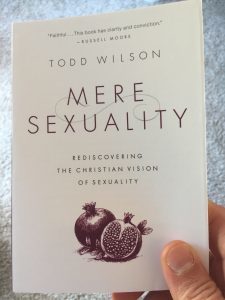
We live in a culture that believes pleasure is the primary, and often times only, purpose for sex. Chapters 4 and 5 of Mere Sexuality: Rediscovering the Christian Vision of Sexuality by Todd A. Wilson say that the Bible teaches otherwise. You might roll your eyes at “the Bible” teaching you about what you should or shouldn’t do sexually. Before you make this judgment, pause and ask if our culture’s “do what pleases you” mindset for sex has created fruitful outcomes for individuals, children, and culture at large or not.
Chapter 4 of Mere Sexuality shows how a new understanding of marriage has become normative in American society. Wilson calls it a “companionate” view of marriage, where marriage is primarily about companionship–a deep, intimate, lasting relationship with another person. The commitment you make to this other person is based on an intense emotional connection you share. Wilson argues that this is the dominant view of marriage within our culture among Christians and non-Christians alike.
In contrast to the companionate view, Wilson points us to Genesis 2:24 as the biblical blueprint for marriage. “One flesh” is a comprehensive union that joins two people together mentally, emotionally, spiritually, and bodily. Wilson makes the point that this bodily uniting, sexual intercourse, can physically only happen between a man and a woman, just as Genesis 2:24 describes. I’d add to this a point the Apostle Paul makes in 1 Corinthians 6:16, that “one flesh” happens when intercourse happens, not when a wedding ceremony happens. This shows us the biblical design that sex was never designed to be experienced before marriage, something Wilson later unpacks.
Wilson gives two very helpful characteristics of the comprehensive union of “one flesh” marriage that you don’t find in culture’s “companionate” view of marriage. The first is exclusivity. You see this most pronounced in the traditional wedding vows, where we “forsake all others and keep ourselves unto this one only.” The “one flesh” uniting of bodies can only happen with two people, not three, four, or more. Wilson contrasts this type of relationship with all of the rest of the relationships we have, using friendships as one example. This relationship, the “one flesh” relationship, is set apart from friendship because you share many things with a friend, but not your body. The sharing and uniting of bodies is only meant for marriage.
The second characteristic of “one flesh” marriage is permanence. A man leaves his father and mother and unites to his wife, “till death do us part.” Jesus says, “Therefore what God has joined together, let no one separate” (Matthew 19:6). Today 60% of first time marriages begin with cohabitation (let alone those who never marry). Wilson quotes Sam Allberry on this, “Sexuality is a little like a post-it note. And the more that union is forged and then broken, the more our capacity for deep and abiding unity is diminished.” Wilson points out that the proposed solution of cohabitation if making the problem worse because it is attempting a comprehensive union while removing an essential characteristic–permanence. So when the couple gets married and attempts to have permanence, they are already conditioned to a sex life without it.
Permanence and exclusivity also mark Jesus’ commitment to us, his bride the Church, which we see in Ephesians 5:31-32. His is the ultimate marriage that all human marriages are meant to symbolize.
Chapter 5 is where Wilson challenges culture’s value on pleasure being the primary purpose of sex. Whether you agree to this or not as an individual, you have to admit this is true for our culture at large. Wilson points out “this purpose is very oriented to the individual. It focuses on what sex does for us–what we get out of it–and has little to do with the joining of two lives in a one-flesh union.” He goes on to talk about how the creation of babies has been completely removed from our cultural understanding of one of the purposes of marriage, and the ramifications of such a conclusion. He quotes a Vanity Fair article about Tinder and how people are gorging on casual sex with strangers, how this is happening at younger and younger ages, and how socially acceptable this has become.
God made sex as a blessing (Genesis 1:28). “At the heart of a biblical vision of sex is the bold affirmation that sex is a blessing. In our culture, sex may be viewed as a blessing because it feels good. But in the biblical vision, sex is a blessing not because of the pleasure it brings but because of the purpose it serves: to unite lives and to create life. (Wilson, 97)”
Wilson makes some great points about how children are now a “mistake” in our culture, and how you see this in society at large with abortion and with so many kids having to grow up without their mom and dad in the same home. “When sex is simply a means for our personal pleasure, we see children as a problem, an inconvenience. Children are a ‘mistake’ as we pursue our own agenda of pleasing ourselves. (Wilson, 99)”
He never says pleasure isn’t a part of the purpose of sex, but points out how pleasure and sexual gratification have become our god. This god has become our slave master–a demanding and unforgiving one that controls and destroys lives and relationships. (Wilson, 99)
I saved the best for last, in my opinion, and that is Wilson’s point that one of the primary purposes of sex is to unite lives. In our culture that is obsessed with pleasure, sex becomes about body parts, not about people. One of my main purposes in Beyond the Battle is to teach men how to retrain their brains, hearts, and eyes to see all women with the dignity of being complex humans, rather than as objects to consume. Wilson’s point about marriage being meant to unite lives adds a very helpful layer to this for married men. If your basis for sex is pleasure and body parts, what happens when your wife’s body changes over time? If sex is meant for pleasure only, you will lose interest and start looking elsewhere. But if sex is about uniting lives, then the physical appearance of your spouse becomes less and less relevant, as you are uniting yourself to them. That meaning all of them. Sex is the act that keeps your entire relationship and personhood united, and vice versa, it is the physical expression of that fully united relationship. The experience of marital sex is a celebration of the union of two whole people in an exclusive, permanent relationship. This is so much bigger and deeper than simple physical gratification. This reframe back to God’s design gives us much to celebrate in our marriages, and a new way of viewing all men and women for both singles and married, not as objects to be consumed, but as whole people designed on purpose by God.
If you are in the Flip Side Book Club, please answer two of the following questions in the blog comments below:
What are the differences between the “companionate” view of marriage and the “one flesh” view?
What does the Bible’s blueprint for “one flesh” sex-within-marriage have to say about the question of premarital sex?
In light of Wilson’s points and the Scriptures he references, how should the biblical Church teach on divorce today?
At the bottom of p.84, Wilson says that “there is nothing inherent in a companionate view of marriage that requires monogamous exclusivity.” See paragraph for full context. Do you buy his argument here? Argue for or against it.
At the top of p.90, Wilson says “We need to see that the one-flesh union between a man and a woman is rooted not just in biology but in God’s redemptive plan for all of human history.” What does he mean here?
The post The Primary Purpose of Sex is not Pleasure appeared first on by Noah Filipiak.


