
Noah Filipiak's Blog, page 10
January 26, 2021
Ep. 42: Interview with Preston Sprinkle on transgender identities, the Church, and what the Bible has to say
Noah and Preston dive into Preston's new book Embodied: Transgender identities, the Church, and what the Bible has to say They discuss loving and empathizing with people who are trans* and / or who struggle with gender dysphoria and making the Church a place they can find love and the path of discipleship.
The post Ep. 42: Interview with Preston Sprinkle on transgender identities, the Church, and what the Bible has to say appeared first on by Noah Filipiak.


January 17, 2021
Ep. 41: Interview with Wesley Hill on Covenant Friendships as a Biblical Path of Love for Celibate Gay Christians
After wrapping up the Flip Side Book Club's reading of Spiritual Friendship, Noah interviews author Wes Hill on the book's subject of providing a path of love for celibate gay Christians.
The post Ep. 41: Interview with Wesley Hill on Covenant Friendships as a Biblical Path of Love for Celibate Gay Christians appeared first on by Noah Filipiak.
January 6, 2021
The unresolved tension that will never go away for gay / SSA Christians

A feeling of gratitude came over me as I wrapped up reading Spiritual Friendship: Finding Love in the Church as a Celibate Gay Christian by Wesley Hill. I will not forget what I read in the pages of this book. It changed the way I see friendships. It changed the way I see gay or same sex attracted people and their burden. Every pastor should read this book. We pastors desperately need more solutions to gay dilemma than our current binary of “it’s okay” or “it’s bad.” My hearts aches for Christian men and women saddled with same sex attraction and with Scripture’s directive that homosexual sex in sinful. This topic was a lot easier (1-2 decades ago) when we all thought gay people were choosing to be gay. We could just preach that it was sinful, and those gay people could just choose the straight path instead. How little did we know.
In the roughly 10-20 years since this was the dominant mindset in the church, as we’ve learned more from gay / SSA people, we’ve learned that for the vast majority of them no such choice was ever made and no such corrective choice is possible. Not only have they tried a thousand times to make that corrective choice and prayed earnestly for it, the lack of answer from God, in addition to the continued “it’s bad” message from the Church has driven so many to emotional despair and spiritual paralysis.
I praise God for Wesley Hill and others like him who are trying to create alternative biblical solutions for themselves and other gay / SSA Christians who want to follow the Bible’s commands on sex. They know that, “do it, it’s okay” doesn’t mesh with the Bible they have committed to follow, but they also know you simply can’t leave a gay / SSA person there. They know this from the pain and isolation of their own lives.
In chapters 1-4, Wesley presents a compelling case for kinship-like friendship to allow gay / SSA Christians to love and be loved in a way that is consistent with Scripture. He gives convincing scriptural evidence for how this type of biblical friendship has been lost in Western culture and needs to be reclaimed by the church for all members, gay or straight, married or single.
What I love about Wesley is his ruthless honesty. He essentially spends all of chapter 5 making sure the reader understands he is not presenting a quick fix to the emotional ache that gay / SSA people feel. He wants to make sure gay / SSA Christians, as well as pastors looking for the magic bullet solution to all of this, understand that there is no magic bullet. He wants to make sure people understand if they walk down the path of kinship / covenantal friendship, they will meet pain and disappointment. This is not a good sales pitch! But it is real and it is honest. Us pastors hate this. We want a systematic theology that fixes everything. We want the right answer that grounds us in Scripture and that gives everyone warm fuzzies.
Wesley chills any warm fuzzies in chapter 5 when he gives a behind the scenes look at Henri Nouwen, a gay celibate Christian leader who Wesley has mentioned throughout the book and who has served as a life example to Wesley personally. While I’m not gay or celibate, I too have always bonded intimately with Nouwen’s writing. He shares almost all my insecurities, and while I am married, I know that my longing for lust, porn, or other women is rooted in the same longings Nouwen writes about. Longings for acceptance, validation, and approval. The desire to be desired. These of course spill into my life as a church planter and author as well, as they did in Nouwen’s author and vocational ministry life. I am telling you without exaggeration that Nouwen’s books The Return of the Prodigal Son, Letters to Marc about Jesus, In the Name of Jesus, and The Way of the Heart have been the most soul-transforming books I have ever read, reminding me of my identity in Christ and allowing me to viscerally feel the love the Father has for me. These books and his many others like them can give the impression that Nouwen, such a sage in the area of experiencing the love of the Father at its deepest level, at the level that quenches our thirst indefinitely, never struggled again in this area. What makes Nouwen such an effective and relatable writer is he that writes from his wound, where he and you know this is not the case. He is the wounded healer and it shows. But in chapter 5, Hill goes out of his way to make sure we understand what it’s really like for a gay, celibate Christian to live the life Nouwen lived and writes about. To make sure we really understand this isn’t a silver bullet. To profoundly understand the meaning of “wounded.” Hill uses biographies written after Nouwen’s death, as well as details given here and there by Nouwen in his writings, to take us into the raw, authentic ache that Nouwen experienced in his singleness and celibacy.
Henri Nouwen had fallen in love with a close male friend named Nathan. He maintained his vow of celibacy and wasn’t pursuing a homosexual relationship with Nathan, but his feelings were deep and strong and beyond his control. He had become codependent on Nathan for his sense of identity and acceptance. When Nathan realized the real depth of Nouwen’s feelings for him, he withdrew and their friendship dissolved.
Nouwen writes: “…the enormous space that had been opened for me could not be filled by the one who had opened it.” He often writes about how only Jesus can fill this void (as I do in Beyond the Battle: A Man’s Guide to His Identity in Christ in an Oversexualized World) and Hill references that Nouwen “eventually wrote about the place of peace he arrived at, speaking of the ‘inner voice of love’ that he heard at the end of the anguish. It’s a picture of rest, of still waters after a squall.”
Boom. The end. Magic bullet locked, loaded, and fired.
I wish it was that simple, but Hill refuses to let us stop there. He goes on:
Truthfully, though, that’s not the image I took away from reading Nouwen’s account and spending time with his biographers. I pictured him instead in his room, alone, receiving the Blessed Sacrament away from the community to which he belonged, unable to meet the gaze of anyone but the priest who tipped the chalice toward his lips. “The body of our Lord Jesus Christ keep you in everlasting life,” the priest said, and I pictured Nouwen crying.
I imagined him in his therapist’s office, curled in a fetal position. I pictured the therapist, per the regiment they had already agreed on, placing his arms around Nouwen’s weeping form and holding him, speaking in hushed tones, “You’re safe. You’re loved. Your heart is greater than your wounds.”
I pictured the alienation, the loneliness.
Spiritual friendship, page 95
When Wesley says he “pictured” this, he’s not imagining “what if” scenarios, he is talking about the actual accounts from Nouwen’s biographers. He is saying that’s the part I picture. That’s the part I am living. That’s what’s most vivid to me.
Hill begins winding down his book by wanting to make sure he does not idealize friendship as a quick fix for loneliness and relational burdens, rather than as something requiring substantial burden-bearing itself. You will get your heart broken anytime you love. Therefore Hill says, the calling of friendship is a call to pain. Joy, yes, and consolation, but not as a substitute for pain (page 99).
I couldn’t help but feel a little melancholy and mournful as I finished up chapter 5. A needed sobriety to be sure, but unsettling nonetheless.
The book’s sixth and final chapter gives some helpful ways to cultivate deeper friendships, whether gay or straight, married or single, particularly in the church context. It ends with an image of hope from a friendship in Wesley’s life, but definitely will be a feeling of “To be continued…” as well. A feeling that this thing could still unravel anytime and likely will some day end. But it’s good for today.
And I suppose that’s how it is for gay / SSA Christians more often than not. No magic bullets. Rarely much closure. But a lot of “To be continues.”
Pastors and straight Christians must begin to understand this. This road of waiting that gay / SSA Christians walk. A waiting that will likely never have a neat and shiny bow tied on top of it, this side of eternity.
Up to this point, we have not had room for this unresolved tension within contemporary Western Christianity. The Psalms make room for it, which is why I am falling more and more in love with them. Wesley’s life has had no choice but to make room for it. The unresolved tension has moved in and he has had to accommodate it, whether he’s wanted to or not.
Our theology and approach to ministering to gay / SSA Christians needs to make room for it as well.
Subscribe below to receive future posts from this category only:
E-mail Address:
All categories
LGBTQ
Singleness
The Flip Side Book Club
Update Me
Subscribe Me
Unsubscribe Me
The post The unresolved tension that will never go away for gay / SSA Christians appeared first on by Noah Filipiak.
December 30, 2020
Ep. 40: The 2020 Podcast Year in Review

Listen below or subscribe on iTunes or Google Play
Noah recaps a podcast year like no other. Reminisce, recap, and be reminded of life-changing lessons and fun memories from this past year on the Flip Side.
Become a patron and get sweet Flip Side swag at www.patreon.com/noahfilipiak
Use promo code FLIP to get 10% off Angry Brew and Chris’ Blend coffee beans at fivelakes.com and angrybrew.com
Email the show at podcast@beyondthebattle.net
The post Ep. 40: The 2020 Podcast Year in Review appeared first on by Noah Filipiak.
December 16, 2020
Another Path for Gay / SSA Christians: Friendships that Go Deeper than Family or Romance
In chapter 3 of Spiritual Friendship: Finding Love in the Church as a Celibate Gay Christian, Wesley Hill gives a biblical argument for friendship. You could call it a theology of friendship. This might not seem to be a typical category of theology that you’d think of, but Wesley points out several arguments that have been made against friendship by Christians before pointing to primary passages for it. The main argument against friendship is that it is based on preference, while as Christians we are called to love all, even our enemies, without partiality.
John 15:13, Proverbs 18:24, Proverbs 17:17 gives biblical vocabulary for friendship, and Wesley spends time showing how the friendships of Ruth & Naomi, David & Jonathan, Jesus & Lazarus, and Jesus & John give biblical examples of the types of deep friendships Wesley describes. These are friendships that go as deep, if not deeper than a familial or even romantic relationship would.
The idea that friendships can go deeper than family or romance is a pretty bold claim in a culture that worships romance, is built around family ties, and only sees friendship as casual relationships, typically based around recreation and fun, that come and go as life circumstances change.
In Mark 3:32-35, Jesus talks about how these Christian friendships will be deeper than familial ties. Referencing Galatians 3:27-28 and 1 Corinthians 12:13, Hill concludes that,
Gradually, then, the ancient idea of friendship…wasn’t so much abandoned in the early church (as Kierkegaard thought) as it was transformed…friendship was now shaped by the cross and the empty tomb. No longer would believers gravitate only toward their social equals; now they would form committed, permanent relationships of affection that cut across lines of enslaved versus free, wealthy versus poor, highborn versus peasant.”
Spiritual Friendship, PAGE 57
A question I plan to ask Wesley in our upcoming interview is in the tension between this wide definition of friendship and where he talks elsewhere about deep, committed, 1 on 1 lifetime covenant friendships. I love this Christian understanding of a widened friendship, one that doesn’t create friendship bonds over self-serving affinity, but forms them based on the relationship we now share in Jesus. But I can’t have a 1 on 1 lifetime covenant friendship with all of those people. That level of commitment just isn’t sustainable with more than 1, maybe 2 people. And in those lifetime covenant friendships, it seems that those must be forged through mutual affinity and connection, where you’d choose this type of friend in a similar way you would choose a spouse. Because otherwise, how could this friendship be life-giving and again, sustainable?
The beginning of chapter 4 marks the beginning of Part 2 (of 2) of the book, where Wesley really starts to get into the weeds of living out covenant friendship, particularly as a gay Christian. He begins the chapter describing a conversation he once had with a reader of his first book Washed and Waiting: Reflections on Christian Faithfulness and Homosexuality, whom he calls Conor. Conor is gay / same-sex attracted and committed to being celibate, like Wesley. He affirms the Bible’s teaching on marriage and sex being between a man and a woman, as Wesley does. Conor’s conundrum is when he tries investing in friendships with guys, he many times will unintentionally develop romantic and/or erotic feelings toward the man he is trying to be friends with. He comes to Wesley for help.
What you have to love and appreciate about Wesley and his writing is that he is dealing with real issues for real people. I find it is so easy for heterosexual married pastors to come up with cookie cutter sermons and treatises on what the Bible says on homosexuality that are just preaching to the choir. They are really only intended to help biblically conservative, heterosexual Christians feel good about their biblical position on a sin that they don’t struggle with at all. These teachings have little-to-no intention of actually helping gay / same-sex attracted Christians who are held in a daily chokehold by their same-sex attraction, something they have little-to-no control over. These church leaders give them very little in the way of options or action steps, which is why so many end up turning away from the Church and pursuing gay sexual relationships and/or keep things bottled up inside with no one to help them as they struggle down paths of deep depression and suicide.
What would you say to Conor? I am thankful that Wesley is willing to walk the difficult path with gay / same-sex attracted Christians. Even if you disagree with all of his conclusions, you have to see that we must deal in reality and with grace and compassion to those who experience same-sex attraction and give them real options for getting their relational and emotional needs for love met.
Things get real here and I’m sure will provide for a lively interview with Wesley. He asks the question often posed by those concerned with gay / same-sex attracted Christians vowing a lifetime commitment of friendship:
If friendship becomes a solution to loneliness, won’t that make it edge ever closer toward becoming just another form of romance, all the more complicated because it’s calling itself “friendship”?
Spiritual friendship, page 69
Friendship is seen as being blurred and confused with romantic, sexual love.
Thinking of Conor’s, his own, and so many other gay / same-sex attracted Christians’ experiences, Wesley says:
If we couldn’t eradicate our homosexuality, and if we couldn’t, therefore, entirely separate out our romantic attractions to men from our desire to be friends with men, then were we simply in a situation that meant we would never experience real friendship–friendship, that is, unalloyed with erotic feelings? Were we double doomed…What were we supposed to do?
spiritual friendship, page 73
Hill concludes that giving up one thing (gay sex, in this case) is always about the embrace of another.
A loss or a place of pain becomes a gateway into a greater benefit that one wouldn’t have been able to find without the loss and pain. And that benefit is best described as a “vocation,” a calling and a divinely given commission, to make one’s loss and pain a means of service to others.
spiritual friendship, PAGE 75
My being gay and saying no to gay sex may lead me to be more of a friend to men, not less.
Spiritual friendship, page 81
Hill gives this specific clarification on friendship among gay / same-sex attracted Christians:
Perhaps celibate gay and lesbian Christians, precisely in and out of their celibacy, are called to express, rather than simply renounce and deny, same-sex love. And perhaps this is where, for all the potential trials and temptations that come with this way of thinking, same-sex friendship represents one way for gay Christians who wish to be celibate to say: “I am embracing a positive calling. I am, along with every other Christian, called to love and be loved.
spiritual friendship, page 76
I think one reason it’s difficult for biblically conservative heterosexual Christians (myself included) to digest what Hill says here is because when we hear “same-sex love,” we instantly think of sex and romance. But the love I have for my male friends is same-sex love. Our culture’s obsession with sex has made it so it’s hard to even think of the concept of love outside of sex anymore, which is precisely the problem making so many so lonely. Single people are lonely because they don’t have a sexual partner and married people are lonely because they bought the lie that sex would extinguish their loneliness.
At the end of the day, Hill is saying that his same-sex attractions are inescapably bound up with his gift for and calling to friendship (pages 78-79).
As far as the many temptations this calling brings, particularly when the friendship is between two gay men in Wesley’s case, he says he knows he needs accountability. He needs trusted counselors who can serve as his sounding board and reality check, making sure he isn’t allowing himself to rationalize immature, irresponsible sexual behavior in his quest to find deep friendship (page 79).
He goes on to say:
Despite what you might conclude from cultural sound bites, being gay isn’t only, or even primarily, about what people choose to do in bed…being gay colors everything about me, even though I’m celibate. It’s less a separable piece of my experience, like a shelf in my office (separate from other shelves)…and more like the proverbial drop of ink in a glass of water: not identical with the water, but also not entirely distinct from it either.
spiritual friendship, page 80
This is a huge topic amongst Christians trying to navigate this topic. Many teach that everyone should use the label “same-sex attracted” instead of “gay” because of the sin and sexual connotation that “gay” brings, particularly as an identifier (versus identity in Christ as a new creation). There are good points to be made with that argument and it’s not my intent to refute that teaching here. What I want to do is bring up one of the sticking points in this debate, and that is the inability of heterosexual Christians to understand how being gay colors everything about a gay person, not simply their sexual actions. (And how could we? We aren’t gay. We think that since our heterosexual attraction is like one shelf on our wall, separate from the other shelves of our life, it is this way for gay/SSA people as well. But once you start talking to gay people, you discover this is not the case for many, if not most of them.) And if the sexual actions are what God calls sinful, then many Christians with same-sex attraction still choose to use the identifier of “gay” as Wesley shows here, as it allows them to simply be themselves, but not be in sin. This is a huge topic with more branches than I have room here to write on here, including our fallen nature and sinful desires, different from willful or actual sin, which we’ll get into another time! But we need to chew on and consider both sides of this question. I’m looking forward to hearing Wesley’s perspective here.
I will conclude this post with words Wesley uses to conclude his chapter and words he spoke to Conor:
Perhaps, in the end, that determination to make the best of a complex, fraught set of circumstances is where those of us who are Christian, gay, and committed to celibacy all find ourselves, sooner or later.
Spiritual friendship, page 84
Wesley is trying to make the best of the situation he was given, and trying to help others make the best of theirs as well. The waters are murkier than we’d like, but I hope you and I are helping gay / SSA brothers and sisters make the best of it too.
(You can read Part 1 of this series on chapters 1 & 2 of Spiritual Friendship here)
The post Another Path for Gay / SSA Christians: Friendships that Go Deeper than Family or Romance appeared first on by Noah Filipiak.
December 14, 2020
Ep. 39: Interview with Mike Wittmer on the Bible, theology, and how to not leave your faith over conflicts with science and archaeology

Listen below or subscribe on iTunes or Google Play
Noah and Mike Wittmer talk through his most recent book, The Bible Explainer: Questions and Answers on Origins, a Q&A book on origins, the Old Testament, Jesus, the end times, and much more (over 250 entries). This is a fun and very helpful conversation that is sure to strengthen and encourage your faith.
Mike Wittmer is Professor of Systematic Theology at Grand Rapids Theological Seminary and pastor of Cedar Springs Baptist Church. He is the author of several books, including Becoming Worldly Saints, Heaven Is a Place on Earth, Don’t Stop Believing, Despite Doubt, and The Last Enemy. He and his wife Julie have been blessed with three children. Because of them, he has no hobbies. Mike enjoys eating Asian cuisine and cheering for Cleveland sports teams, who over the course of his life have come in first exactly once. Check out Mike’s blog at www.mikewittmer.blog
Please help support The Flip Side’s new sponsor, Angry Brew! Use promo code FLIP to get 10% off your order on Angry Brew or Chris’ Blend at angrybrew.com or fivelakes.com
Become a patron of the Flip Side today and receive fantastic Flip Side custom swag. Visit www.patreon.com/noahfilipiak or https://www.noahfilipiak.com/patreon-swag/ for details and to check out the new swag collection.
To receive free BONUS swag:
*Take a photo of yourself with your swag and post it on social media.
*Include a link to a favorite Flip Side episode of yours, encouraging your friends to listen
*use #flipsidepod
*use @noahfilipiak on Twitter, Instagram, and Facebook. If using another social media platform, you’ll need to email podcast@beyondthebattle.net with a screenshot of your post.
Blog article from Noah on Jesus and the death penalty: www.noahfilipiak.com/jesus-is-against-the-death-penalty
Email the show at podcast@beyondthebattle.net
The post Ep. 39: Interview with Mike Wittmer on the Bible, theology, and how to not leave your faith over conflicts with science and archaeology appeared first on by Noah Filipiak.
December 12, 2020
Jesus is against the death penalty
These are Jesus’ words from Matthew 5:38-48
You have heard that it was said, ‘Eye for eye, and tooth for tooth.’ 39 But I tell you, do not resist an evil person. If anyone slaps you on the right cheek, turn to them the other cheek also. 40 And if anyone wants to sue you and take your shirt, hand over your coat as well. 41 If anyone forces you to go one mile, go with them two miles. 42 Give to the one who asks you, and do not turn away from the one who wants to borrow from you. “You have heard that it was said, ‘Love your neighbor and hate your enemy.’ 44 But I tell you, love your enemies and pray for those who persecute you, 45 that you may be children of your Father in heaven. He causes his sun to rise on the evil and the good, and sends rain on the righteous and the unrighteous. 46 If you love those who love you, what reward will you get? Are not even the tax collectors doing that? 47 And if you greet only your own people, what are you doing more than others? Do not even pagans do that? 48 Be perfect, therefore, as your heavenly Father is perfect.
When Jesus says, “You have heard that it was said, ‘Eye for eye, and tooth for tooth,'” he is quoting Leviticus 24:20 of the Old Testament. This phrase is sandwiched in between Leviticus 24:17, “Anyone who takes the life of a human being is to be put to death.” and Leviticus 24:21b, which repeats the line. This is the Old Testament command for the death penalty. Jesus then says but I tell you, and goes on to give a new command that is the exact opposite of the death penalty. You can read it for yourself above.
I posted this verse on Twitter, stating Jesus is against the death penalty. Someone commented and said I was taking this passage out of context because Jesus was only teaching on how Christians should treat other Christians.
Huh?
The “walk a mile” command comes from the first century Roman law called impressment, where a Roman soldier could command a non-Roman Jew to carry his pack up to one mile–a pack that could weigh up to 100 pounds! This is not Christian to Christian.
In verse 45, Jesus appeals to the common grace God the Father shows to everyone, evil and good, righteous and unrighteous. Jesus is going out of his way to make sure we understand this is not talking about Christian to Christian.
I intentionally want this to be a very short, simple post where Jesus’ words speak for themselves.
Jesus is against the death penalty.
For more, check out this 2016 interview I did with Shane Claiborne.
Sign the petitions to abolish the death penalty at https://deathpenaltyaction.org/federal-death-penalty
Read Executing Grace: How the death penalty killed Jesus and why it’s killing us by Shane Claiborne
Watch the movie Just Mercy or read the book Just Mercy: A Story of Justice and Redemption by Bryan Stevenson.
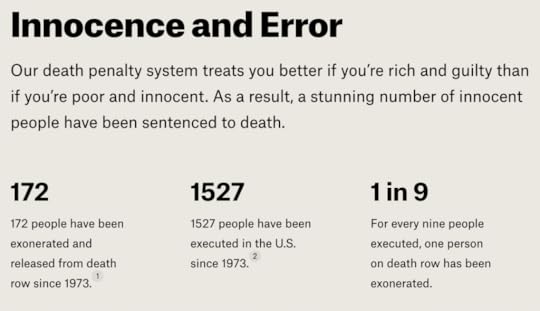 From the Equal Justice Initiative https://eji.org/issues/death-penalty/
The post Jesus is against the death penalty appeared first on by Noah Filipiak.
November 18, 2020
Ep. 38: Jesus’ Love for the Outcast & how this Grace Transforms Each of Us
Listen below or subscribe on iTunes or Google Play
Episode 38 takes us to a recent sermon Noah did on Luke 7:36-50, where a “sinful woman” anoints Jesus’ feet with her hair and tears. This interruption of an elite dinner party led a Pharisee, Jesus, and this woman to have to each make a crucial choice. Their choices are choices that each of us face as well. As our nation attempts to recover from a divisive election, this message brings clarity to what ushering in God’s Kingdom looks like in the here and now.
New www.beyondthebattle.net groups are forming now! Join today for 7 weeks of growing closer to Jesus and finding freedom from sexual sin, discontentment, and temptation.
Email the show at podcast@beyondthebattle.net
The post Ep. 38: Jesus’ Love for the Outcast & how this Grace Transforms Each of Us appeared first on by Noah Filipiak.
Another Path for Gay Christians: Friendship as a Lost Vow

Wesley Hill is a gay, celibate Christian. While I can’t speak for all people in all places, his 2010 book Washed and Waiting: Reflections on Christian Faithfulness and Homosexuality was groundbreaking in my corner of biblically conservative evangelicalism. In a topic that had become bifurcated into only two camps, Wesley presented a third camp: Christians who were gay, but who were remaining celibate to obey and honor the Bible’s demand (Wesley’s word) that sex and marriage are for a man and a woman.
I’m doing lots of summarizing here of the overall conversation (not necessarily from Wesley or his book), but this third way argues (successfully in my opinion) that homosexual attraction is not a sin. That any time the Bible speaks against homosexual sin in Scripture, it’s referring to sexual actions, not attractions. This is no different for a heterosexual like myself. We can’t control our attractions. I’m attracted to women other than my wife, it’s what I choose to do with those attractions that determines if I’m in sin or not. In Wesley’s story, he discovered he was attracted to other males while he was going through puberty, around the age of 13. I have a gay friend who made this discovery at the age of 7. Wesley, and the vast majority of other stories I’ve heard from gay or same sex attracted people do not describe this discovery as a choice; they discover it as they would that they are right-handed or six feet tall. There’s no choosing or praying it away, try as they might. This is a huge shift away from the popular mindset the Church had in the 1980’s and 1990’s that homosexual attraction or orientation could be healed and changed, a mindset that inflicted significant trauma on many. There are some individuals for whom their attraction is a choice or who have been able to see some change, but by and large this is not the norm.
This is why many gay Christians, like Wesley, use the term gay Christian to describe themselves. If the attraction of being gay is not a sin and is out of your control, then why douse yourself in shame over it? The other ingredient here is that being gay doesn’t just involve having sex, it involves who you are as a person. This is a difficult one for some heterosexual conservative Christians to get our minds around. But when Wesley says he is gay, he isn’t lying, even though he isn’t having sex with anyone. I can’t put eloquent or even clear words to it, but it’s something my gay friends are able to articulate well. I’ll ask Wesley about it when I interview him in an upcoming podcast interview (January 2021) so he can give you the eloquent and clear answer!
Other Christians prefer to use the term same sex attraction to describe their struggle. For some of them, “gay” carries a sin connotation with it that they don’t want to identify with. For others, they don’t see “gay” as who they are all the time, but are able to compartmentalize this as something that only affects who they are attracted to. I apologize in advance to my gay and SSA readers, knowing I am butchering both of your reasons for choosing the words you do to describe yourself. My point is only to give an lay of the land for readers who are new to this conversation and most importantly to say that I do not believe we need to divide ourselves further by making passionate arguments why gay / SSA Christians should not call themselves “gay” or should not call themselves “same sex attracted.” I think there are valid reasons on both sides and both are choosing words that lessen shame for them. This is such a divisive (and incredibly painful) topic already, and those who hold to the view I’m describing are already in such a minority, that we should not divide ourselves into even smaller camps of disagreement. Both for the unity of the Church, and to give our gay / SSA brothers and sisters as much support within the Church as possible.
In Washed and Waiting, Wesley helped create a world and a community where gay / SSA Christians can be gay, while remaining celibate and faithful to Scripture’s demand that sex is meant for a man and a woman within marriage. He takes this world a step further in his 2015 book Spiritual Friendship: Finding Love in the Church as a Celibate Gay Christian.
Spiritual Friendship is our current Flip Side Book Club book, which you are welcome to pick up a copy of and participate with us in reading and discussing.
Spiritual Friendship is spurred by the idea of loneliness. In some ways, it is a sequel to Washed and Waiting. Now that a gay Christian has committed themselves to celibacy, does it also mean they are committed to a life of loneliness and a life without love? It is all too easy as a heterosexual, married pastor to preach a sermon on celibacy for gay Christians and never have to wrestle with the grit of loneliness that this entails for those actually living this life.
And let’s be honest, the Church doesn’t have much to offer in the way of community for single folks in general, whether gay or straight. We’ve elevated marriage to unbiblical proportions while creating an unspoken stigma around singleness.
In Spiritual Friendship, Wesley dives deep into the Church’s history of non-sexual, physically intimate same-sex friendships. He explores vows made between friends. Covenantal vows between two same-sex friends that they would always be there for each other. Often these friends were married to a spouse of the opposite gender, but the culture allowed for them to maintain both of these covenants at the same time. There were even times in history when friendships were seen in law and policy, the way you only see marriages today.
Wesley talks about how today the only love we consider important is romantic love, thus it’s the only love we deem worthy of giving a vow ceremony to. Particularly in contemporary Protestant circles, we have lost all concepts of vows outside of the marriage vows. Monastic vows and even godparent vows are largely forgotten, making a vow of friendship feel even more unrealistic. Friendship today is a matter of convenience and is temporary. We easily move across the country for a new job, not thinking twice about how this virtually ends our friendships and makes us start over anew. And on the flip side, any show of love is seen as erotic or romantic. This is why guys say things like “no homo” to one another, because our culture doesn’t allow for any same sex intimacy anymore without it being sexualized.
When Wesley discovered these covenantal friendships throughout Church history, he found “that there exists, for someone like me, a location for my love.” (Page 22) As he dives into the topic, his hope is to give a vision of friendship for celibate gay Christians like himself, but also for all Christians, single and married, who need the community and intimacy of true friendship in their lives.
Some questions that I’m interested in asking Wesley in our interview are around the sustainability of the type of covenantal vow friendships he casts a vision for within a culture that doesn’t have supports built in for these. I know one main avenue for these friendships is gay celibate Christians like Wesley. This seems like it will work because you have two single people who don’t have other commitments to a spouse, children, etc. who can really build their time around this one friendship. But I don’t know how a friendship like this could work in my life where my time and attention is needed in my marriage and children, as well as the introvert time I love and need. Some of Spiritual Friendship‘s principles thus far seem aimed at elevating all friendships to a higher bar, while other principles seem aimed exclusively at this one covenantal friendship. I wonder if you could have more than one of these covenantal friendships, or if they are meant to be exclusive, similar to a marriage. There’s also the “pink elephant” in the room question you may be thinking about as a reader, and that is regarding two gay celibate Christians having this vow of friendship with each other. While that’s not Wesley’s sole purpose of the vision of this book, it certainly is a primary one. This is likely where he has received the most amount of pushback or criticism from conservative Christians, as it feels you are setting people up to sin by creating an environment of temptation that would be too much to bear.
This is a legitimate concern that needs to be wrestled with seriously.
Wesley responds to this pink elephant by saying:
I find myself wondering which is the greater danger—the ever-present possibility of codependency, sexual transgression, emotional smothering (and other temptations that come with close friendship) or else the burden, not to mention the attendant temptations, of isolation and solitude created by the absence of human closeness?
Page 41, Spiritual Friendship
It is a heavy weight to think about the burden and temptation that come with isolation and solitude, including pornography, promiscuity, substance abuse, severe depression, and even suicide.
These are not light topics we are dealing with here. What God is putting on my heart as I read Spiritual Friendship is I need to get out of the ivory tower that is so easy to blog and preach from when talking about LGBTQ+ issues and get into the grit and grind of what actual people are dealing with on a daily basis.
I’m only through chapter 2 of Spiritual Friendship and will write another post on chapters 3-4 in a few weeks. I am thankful for Wesley Hill’s bravery and boldness in writing this book. It is a fruitful effort to help many gay / SSA Christians who are stuck between devastating loneliness and living against God’s demands in Scripture. Whether you agree with all of it or not is not the point. To me, this is a rally cry that we must do more in the Church to create a space for our gay / SSA brothers and sisters to be in community and give and receive love, while they try, like the rest of us, to live according to God’s design for sex and marriage.
The post Another Path for Gay Christians: Friendship as a Lost Vow appeared first on by Noah Filipiak.
October 24, 2020
Ep. 37: Jesus bringing great calm to great chaos + new Flip Side book club exploring gay celibate partnerships with Wesley Hill


Listen below or subscribe on iTunes or Google Play
Noah introduces the next Flip Side Book Club book, Spiritual Friendship by Wesley Hill. Pick up your copy today and sign up to be a part of the book club here. Spiritual Friendship explores gay celibate friendships or partnerships of Christians who are committed to a high view of Scripture and God’s design for sex and marriage to be for a man and a woman. The book club will be a place we can respectfully wrestle with, debate, and converse with Wesley’s thought-provoking and challenging ideas. It’s more than okay to disagree and give challenges as we sharpen each other in our understanding. Noah will be interviewing Wesley on the podcast in January and book club members will be welcomed to send in their questions for Wesley to answer.
Also of note is Noah’s long awaited blog post: Is Masturbation a Sin?
The topic of this episode is based around a sermon Noah preached recently on Jesus calming the storm in Mark 4:35-39. In a chaotic season of COVID-19, racism, and a divisive election, let this passage of Scripture bring peace to these chaotic waters and the daily pain of living in a fallen world.
Email the show at podcast@beyondthebattle.net
The post Ep. 37: Jesus bringing great calm to great chaos + new Flip Side book club exploring gay celibate partnerships with Wesley Hill appeared first on by Noah Filipiak.


