
C.A.A. Savastano's Blog, page 16
October 23, 2017
The Conover Cover
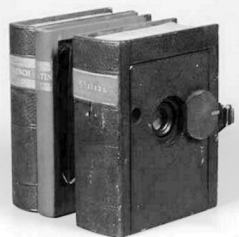
False books conceal a spy camera
Conover-Mast Publications was a New York book publisher incorporated with offices in Chicago and grew to include locations in other major cities internationally. Burdette Pond Mast Sr. and Harvey Conover Sr. were formerly magazine sales representatives who founded Conover-Mast Publications, Inc. during 1928. Their first publication was Mill and Factory magazine and by 1948, Mast Sr. became Conover-Mast's Chairman of the Board. His son Burdette Mast Jr. joined the company in 1948 and became a vice-president in 1956 after working as the publisher of the "Construction Equipment" periodical.i ii Mast Jr. would eventually become the President of Conover-Mast subsequent to the death of both corporate founders.

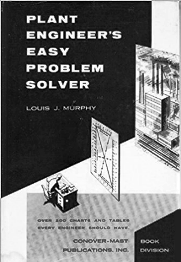
Harvey Conover the other cofounder of Conover-Mast was likewise a former business magazine salesperson, and he met Burdette P. Mast in the 1920s. For years, Mast and Conover worked together on two magazines until they subsequently founded their publishing corporation. Conover and Mast had each grown rich and influential as the company expanded during the passing years. This income was from the creation, publishing, and distribution of periodicals and books such as the "Plant Purchasing Directory. Industries Buying Guide"
Yet in 1957, the publisher faced a lawsuit filed by the Domestic Engineering Company for copyright infringement. Domestic Engineering alleged after it created an industrial magazine in 1937 and Conover-Mast had created a 1953 periodical that nearly copied their longstanding work. Additionally, Domestic Engineering accused Conover-Mast of reusing copyrighted material for promotions that Domestic Engineering had prior created. The defendant responded claiming that Domestic Engineering had used one of its articles and that their allegations of unfair competition were unfounded.iii This legal filing is one among the lawsuits Conover-Mast subsequently would face and survive.
Harvey Conover enjoyed his success and friends noted his love of sailing; he purchased a new 48 ft. yacht named the Revonoc and set sail with his family during 1958. Conover, his wife, their son Larry, his wife, and their executive friend William Flugelman boarded the Revonoc at Key West the morning of New Year's Day 1958. Miami was reportedly the final destination of Harry Conover where he scheduled an appointment for the morning of January 4. Others support that he might have planned to sail to Nassau and then head for Miami but various members of the public have debated his intentions and the weather reports that morning did not speak of the eventual stormy seas.
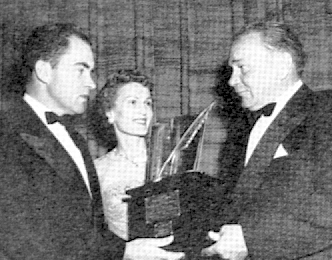
Harvey Conover and Richard Nixon at a public ceremony
Unfortunately, Conover while possessing a radio receiver for weather broadcasts did not possess a radio transmitter to request aid. By 4pm, the weather reports had changed but the Conover family was already three hours into their ocean journey. In the early morning of January 2, strong weather services predicted 40 mph winds and squalls; these became gale force winds capable of reaching over 50 mph by the early the next morning. A northeaster with nearly Hurricane force winds reaching 70 mph likely battered the Revonoc and portions of the Caribbean. These winds later slammed into Miami rending storefronts, disturbing shipping lanes, and damaging homes. Authorities scrambled to answer a mass of calls for aid that smaller craft were sending in the affected region, but the Revonoc had no means to call. The Coast Guard deployed a number of search groups as January 4, 1958 passed. At the height of these activities, officials dispatched over twenty airplanes in the following days to locate the missing captain and passengers of the Revonoc. Pieces of the yacht were later located strewn in multiple locations with no sign of survivors.iv
Now with a single founder at the helm Conover-Mast expanded its publications to include many various new business and industrial themed offerings during the early 1960s. However the corporation had already proved of value to the Central Intelligence Agency. Among the benefits of using such a business as cover for Agency personnel was its wide access to rival companies, business groups, and expanding intelligence opportunities.v Such access would also provide the chance to learn information about businesses held in enemy nations, corporate targets of interest, and even targets for defection or agent infiltration possibilities for industrial espionage.
One related document reveals Agency officials working on the distribution of publicity to support CIA Project CHALICE that collaborated with leaders of the US military to undertake joint operations for photographic intelligence gathering using troop, marine, and aerial cameras.vi vii viii ix x xi xii xiii Among the related undertakings was Project CHALICE-V that launched operations from JMWAVE the CIA's domestic base in Miami and included but was not limited to paramilitary infiltration of Cuba, setting up weapons caches, and the maritime gathering of photographic and observational intelligence. Additionally, later Watergate burglar James McCord was among the Security Staff for Project CHALICE-V. In one related document, the commenting official discussed their communications with various magazines that would feature information provided by the Agency with noted corrections. Among the businesses related to aiding in the dissemination of desired information was Business Commercial Aviation Magazine "...a section of Aviation Age...It is published by Conover-Mast Publications, Inc."xiv
During 2012 Professor Joan Mellen referred to documents she reviewed stating that Conover Mast-Publications was the identity of the CIA cryptonym LPOVER. Subsequently researcher William Kelly reviewed and supported her book's contentions regarding the LPOVER designation. Similarly, Mellen in a prior book also revealed the Casasin Memo a document that supports Lee Harvey Oswald was indeed at least considered for use by a then unidentified CIA officer using the pseudonym Thomas B. Casasin.
Following the prior documents and one document from the last JFK Records Act release eventually led me to the identity of this formerly hidden officer as Jacques Richardson. In the Casasin memo following his consideration of Oswald for use as a source of intelligence information, Richardson states he was shifting into his "LPOVER cover assignment".xv Since Richardson was a Non Official Cover (NOC) agent and not protected by the Geneva Convention he required a plausible cover for his Agency undertakings abroad.
The 1962 University of Michigan Alumnus publication offered announcements and biographic material on notable former students. Among those students in the Class of 1947 graduates was Jacques Richardson. The Alumnus guide states he had "...been appointed to the recently created position of European editorial representative for Conover-Mast Publications, Inc., New York. He has established offices in Paris and is responsible for editorial contact throughout the European area. Mrs. Richardson and their two daughters accompanied him to Europe."xvi This would verify Conover Mast provided intelligence cover and supports the prior identifications of LPOVER being the now defunct publisher. The announcement further reinforces additional verified documents that place Richardson and his family in Paris, where he later retired.
Jacques Richardson was in control of this new position at Conover-Mast with access to stores of information acquired internationally by its own sources and staff. Not only could someone access all the business contacts of Conover Mast and exploit them for intelligence but also they could wield editorial controls and kill or promote literature to support their operational goals. Richardson served the interests of the Central Intelligence Agency by infiltrating a media corporation. This would not be the last Agency operation using a corporate mask and it is likely these methods endure today.
Sincerely,
C.A.A. Savastano
TPAAK Facebook
References:
i. Burdette P. Mast Sr. 72, Dies, (April 25, 1964), New York Times, nytimes.com
ii. Vice Presidents for Conover-Mast, (April 7, 1956), New York Times, nytimes.com
iii. Domestic Engineering Company v Conover Mast Publications, United States District Court N.D. Illinois, E.D., June 7, 1957
iv. Nature Keeps A Grim Date At Sea, (January 20, 1958), Sports Illustrated, si.com
v. Report of Contact with a representative of a public information medium: John J. Ford, CBSB/LSD/SI and Michael F. Wolff, Senior Editor Innovation, CIA Library Reading Room, March 4, 1969, cia.gov
vi. Central Intelligence Agency, Library Reading Room, Procedures for the handling of CHALICE material, May 13, 1958, cia.gov
vii. CIA, Library Reading Room, Subject: CHALICE Security System, September 18, 1958, cia.gov
viii. CIA, LRR, Preparations for the briefing at Honolulu, September 11, 1958, cia.gov
ix. CIA, LRR, Subject: Concurrence in Amendment No. 2 Contract No. SP-1919 with Lockheed
Aircraft Corporation Burbank, California Oarfish 5, Project AIR Force (CHALICE), June 18, 1959, cia.gov
x. CIA, LRR, Subject: CHALICE (redacted) Operations Plan, October 23, 1958, cia.gov
xi. CIA, LRR, Memo for Mr. Bissell, Subject: Concept of Operations, May 9, 1958, cia.gov
xii. CIA, LRR, Subject: Use of CHALICE Photography for Geodetic Control Purposes, February 5, 1959, cia.gov
xiii. CIA, LRR, Memo from Mr. Bissell, Subject: Aerial Survey of Yemen, July 15, 1958, cia.gov
xiv. Typhoon Kit publicity for Project CHALICE, CIA Library Reading Room, June 4, 1958, cia.gov
xv. CIA file, Russ Holmes Work File, Dispatch: Lee Harvey Oswald/Forwarded memo by Thomas B. Casasin, November 25, 1963
xvi. The Michigan Alumnus Volume LXIX, Number 2, The Alumni Family, Class of 1947, UM Libraries, November, 1962


October 5, 2017
Cryptonym Update
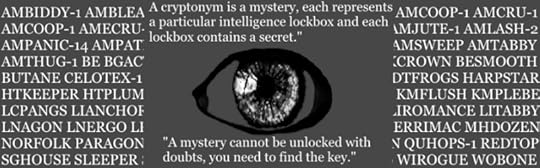
Presenting a notable expansion of the Primary Evidence Collections cryptonym list with over 70 new Central Intelligence Agency cryptonyms, more than 40 general cryptonyms including AMCOB 1 and 3-15, BGMURDER, BGWOEFUL, CAUTERY 1-6, HBTROUT, HTEXOTIC, KUCHAP, KUJAZZ, and dozens more that prior concealed assets, agents, nations, and operational information. Some of the additionally over 20 revealed project and operation cryptonyms are BECRIPPLE, BESMIRCH, BGFIEND, CATOMIC, HARVARD, OBSIDIOUS, OBTUSE, QKDEMON, and several more for your review.
September 29, 2017
Cryptonyms and Pseudonyms update


Eight cryptonyms (BGGYPSY, DTFROGS, JMBLUG, HTKEEPER, HTPLUME, KMFLUSH, KMPLEBE, and LCPANGS) revealing nations with CIA operational interest and one US Ambassador and the pseudonyms of CIA Officers Richard Bissell (Pickney E. Lynade) and Frank Wisner (Harold S. Whiting) are revealed for your inspection. #CIA #JFK #history #evidencematters
September 14, 2017
The CIA Man who considered using Oswald
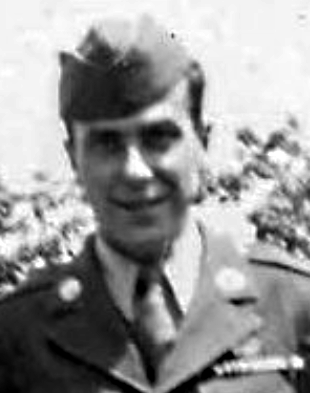
Jacques G. Richardson aka Thomas B. Casasin
The pseudonym Thomas B. Casasin belongs to a largely unknown Central Intelligence Agency (CIA) officer. His name appeared in a memo researchers for years have discussed that supports that at least one Agency employee considered using Lee Harvey Oswald for the acquisition of foreign intelligence. While this does not definitively connect Oswald to the CIA, it does offer that possibility was quite real. While the mythical secret agent Oswald a few offer is improbable, we do have verifiable evidence dispelling past claims that Oswald would never be considered for official use.i However, there is more to the story of Casasin than just the prior versions of this notable memo.
The latest JFK Records Act release has provided a fully unredacted copy of the Casasin memo and handwritten notes that reveal the true names of both men in the letter. The author of the memo is Agency officer Jacques Richardson aka Thomas B. Casasin and the recipient is listed as CIA employee James M. Flint aka Walter Haltigan.ii Richardson is the only yet verifiable official employee with recorded operational interest in Lee Harvey Oswald who clearly expressed his desire in an official document. Who were these men and how did Oswald come to be a possible intelligence source?
Jacques Richardson worked for the Agency "...in Japan from 1955 to June 1960." The CIA transferred Richardson later that year and reassigned him to the CIA's Soviet Russia Division to serve "...as Chief of the Soviet Base of the North Asia Command." His unit was one of four and its base targeted the Soviet Union specifically as opposed to other Communist regimes in the area. Richardson worked in Section 6 "...in support of the Soviet Russia Division of the CIA; he characterized that work as classical espionage work against the USSR. He said it involved penetration for the purpose of espionage, and included cartography, demography, sociology, and experts in the fields of science and political science." Richardson subsequently had discussions with the Chief and Deputy Chief of the Section 6 Research group about interviewing Oswald via "...KUJUMP (Operations Division or Domestic Contacts Division) or other suitable channels."
Richardson defined the "suitable channels" were "...the Immigration and Naturalization Service and the FBI. He said he believed he had received maybe one State Department dispatch on the returning American. Richardson supported the CIA found Oswald appeared "odd" based on his ability to live in the Soviet Union and quickly marry a Soviet citizen. He "...believed some type of controlled intelligence station should approach Oswald; they would be able to contact and talk to him in a perfunctory manner for debriefing purposes." This clearly dispels prior official claims of no interest existing to use Oswald for intelligence purposes if only to debrief him. Richardson further states, "...during the period 1945-60 no more than 10 American defectors came to their attention from the State Department and the military." He reveals the CIA Legal Travelers Program, a program that "...involved using persons to give information about the Soviet Union who had a 'very legitimate' presence in the Soviet Union, such as scientists, etc." Officials would then debrief these "...people and defectors would write the information and pass it on."iii The CIA had an interest in Minsk, the area Oswald lived in, due to "special design plants in Minsk of interest to the CIA...The targeted plant dealt with aviation, nuclear energy, bacteriological warfare, etc...Additionally, anyone in the area of those plants was of interest to the agency."
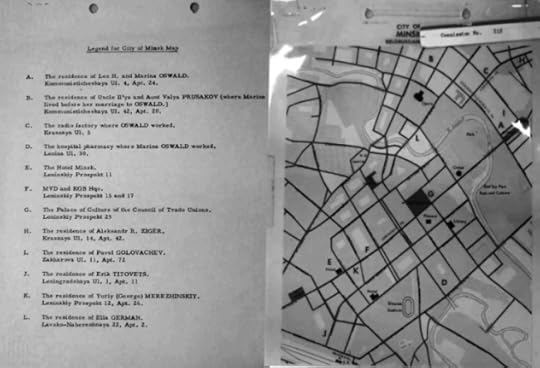
A maP of LEE HArvey Oswald's Travels in Minsk Constructed by Officials for the President;s Commission
Richardson identifies Alexander Sokaloff of the Soviet Russia Division as leading the Legal Travelers Program. He states the program began prior to 1960 with the lessening of tensions between the United States and the Soviet Union. The program "...operated in such a way that the agency contact was in touch with the traveler well before the proposed trip and would be informed as to which areas would be visited, what he would be doing in the country, etc." "The agency contact would then be able to give the traveler the agency's 'requirements' for information while he was abroad." Richardson was opposed to the program because of the investment of resources and involved risks and not directly involved. He stated the "Harvey Story" reference in the memo was possibly a cryptonym or code but he doubts he would have listed a true name and informs officials he was never prior contacted by anyone, including the Warren Commission.iv
Yet Richardson did not initially remember exactly when these conversations occurred. He originally states the prior referenced memo regarding Oswald was created in 1960. While Richardson originally placed the discussion in the summer of 1960 "...it is apparent that if the discussion ensued during or after Oswald's return to the United States, SR/6 discussion would have been during the summer of 1962. Casasin (Richardson) during an HSCA interview confirmed summer 1962 as the correct reference period.v vi Officials referencing the memo incorrectly state the date it was created was in 1964 but the actual date in the original document is November 25, 1963. Having resolved the outstanding issues of the document's origin, we can now examine later interviews of Richardson and others.
House Select Committee on Assassinations Staff Member Surrell Brady conducted an extensive interview with Richardson during 1978 in Paris, France. A summary of Richardson's comments offer that he eventually believed "Oswald was sent out of the Soviet Union by the KGB, so he exercised caution and did not attempt to debrief Oswald..." Richardson asserts "The fact that no follow-up on that lead was not unusual...He (Oswald) was of only marginal interest to the Agency...it is inconceivable that Oswald would have been any type of operative of the CIA." However, Richardson also gave his opinion that the nature of KGB operations made it conceivable Oswald could have been a "...lay-low Soviet operative."vii It seems while many officials have ever contended a conspiracy did not occur, some officials merely opposed the type of feasible conspiracy. If a public claim ignores all of the contending evidence and possible connections to United States intelligence and wholly blames Communist groups, officials are suddenly more open-minded. Despite Richardson's unsubstantiated opinions regarding Oswald's possible allegiance, not just the KGB utilized such agents.
Left BanK, Off The Boulevard St Michel In PARIS, France IN 1978
Various intelligence groups and employees have and continue to utilize peripheral witting and unwitting assets. The vast majority would use any means necessary to avoid blowback from such arrangements. Additionally Richardson "...said he does not recall any discussion concerning the possible use of American defectors to penetrate the Soviets. He said one reason for no interest in such use was probably that the First Chief Directorate of the KGB would suspect any such American from the beginning as being CIA connected." Indeed suspicion would be extremely high for a US defector, but if that defector had attempted suicide to demonstrate their "undying loyalty" to Marxism then married and had a child with a Russian citizen, it might sway prior Soviet official skepticism. At least in Oswald's case this sort behavior appears to have successfully provided him the desired outcome of extending his time in the Soviet Union.
Richardson further objected to using Oswald for a long-term penetration of the Soviets and stated this means of intelligence gathering was not "the American Way". Yet other evidence verifies the CIA used and cultivated multiple Soviet double agents to penetrate KGB intelligence circles, and this would contend Richardson's characterization.viii The CIA spent hundreds of millions of dollars to prevent the spread of Communism abroad and to fight the Russian and Cuban Intelligence structure. Yet Cuba's DGI (Cuban Intelligence) was minor in comparison to the influence of the KGB. The great Cuban threat was not just revolutionary Communism but the enduring fear of pervasive Soviet institutional Communism. The CIA would likely use any method, including using long-term and slowly placed intelligence assets to combat the advancement of Soviet influences.
The Select Committee desired for Richardson to provide whatever evidence he possessed regarding Oswald and his possible connections to the CIA. He states originally creating the memo for "...a Senior Officer in the Soviet Office in the Paris Station at the time of the assassination." This officer used the pseudonym (false name) Robert G Lamprell, and this officer directed the memo to the Chiefs of both Agency's Soviet Russia and Western Hemisphere Divisions. Richardson also directed a copy of the memo to another senior officer, the aforementioned James M. Flint using the pseudonym Walter Haltigan. Flint served as the "...Chief of the Soviet Section of the Paris Station which corroborated (Richardson's) recollection."ix Flint told officials that Richardson worked out of his home and not the American Embassy where he was stationed, and Flint did not receive the Casasin memo because he was in the hospital. Flint similar to Richardson believed that if the Agency used Oswald, he would have been aware. Yet no evidence but speculations and the endorsements of just two officers supports that claim. No one likely had knowledge of all related operations in a group that prided itself on concealing and compartmentalizing information.
The former Chief of Soviet Russia Division in 1963 David Murphy was questioned regarding the Casasin memo. Murphy offers that he was on a CIA "tour of duty" in England. Despite the memos transmission to his office Murphy claims he did not hear of Oswald until "...following the assassination on November 22, 1963." The question is did Murphy ignore or miss the prior memo or did someone in the chain prevent him from learning of the memo's contents? In either instance, the CIA had multiple chances to learn of Oswald prior to the assassination of President Kennedy. Officials contacted a former senior CIA Officer in Moscow using the pseudonym Frank Langelle. He informed them learning of Oswald attempting to renounce his citizenship in 1959 at the American Embassy while stationed at CIA headquarters.x The Select Committee also contacted Paul Hartman a former member of the CIA's Counter Intelligence Staff Research and Analysis Group. Hartman was unable to find any credible evidence that Oswald was connected to the Agency. However, the Committee only contacted a handful of the Soviet Russia Division's former membership related to the matter.
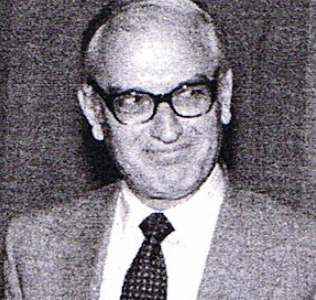
DAvid Murphy WAs Former CHIEF of The CIA's SOviet Russia DIVISION
Could the Agency potentially have used Oswald without his knowledge? An internal document relates the meeting of Agency employees and Select Committee Staff and exposes two interesting cases. The first is an unconnected matter where the Agency used an unwitting man named Calvillo who had performed a service for the Agency without knowledge of having done so. The Agency had provided him employment in order to create a situation for intelligence purposes. Calvillo was a journalist hired to interview refugees and write news articles the Agency desired created and had a minor connection to the JFK case the Select Committee sought to explore. This would illustrate the CIA could and did utilize people for their operations and sometimes those used had no inkling it had occurred.
The more relevant matter relates to the Casasin memo problem the Agency faced. Richardson had worked under non-official cover and this did not provide him diplomatic immunity for the various possible crimes he committed in service to the Agency. His later employment at the time by a United Nations organization would make his public unmasking uncomfortable for the Agency and possibly affect international relations. The more valuable information is while attempting to cast doubt on Oswald and his actions being odd, Richardson had previously been running a traveler "agent" inside the Soviet Union who met a Russian girl and married her. This "agent" was "...successful in getting his Russian wife out of the country, as Oswald was in getting Marina out." While the Agency had "...no problem in arranging an interview with Casasin (Richardson) but the name of the agent we do not wish to reveal..." Thus, despite his protestations Richardson did conduct a very similar operation to the one alleged by Commission detractors regarding Oswald.xi Additionally, Richardson previously noted roughly a dozen similar cases of Russian women marrying foreigners, immigrating with them, and then after the relationship ceased they remained in their adopted nations. Richardson states the CIA was able to connect some of these women to the KGB, thus if the pattern is to be regarded, Marina would be the possible sleeper agent and not her "odd" husband.xii Yet this does not support the official claims of a Communist plot using Oswald and thus is set aside.
Similar actions and circumstances are noteworthy; officials claim that despite the verifiable similarities between the unnamed agent and Lee Harvey Oswald's actions, they are unrelated. Agency personnel claiming there was no interest in Oswald clearly ignore the evidence verifying there was interest for some time. Could another officer or agent have been using Oswald? Despite the misgivings expressed by the Agency's employees, Oswald is present while the very same proposed operations and programs that could have manipulated him were active.
Jacques Richardson desired to approach Oswald for intelligence purposes while prior directing his own unnamed agent. This agent like Oswald improbably married a Russian woman during the Cold War and was able to immigrate with her abroad. Reasonable doubts and questions certainly remain, not least of which is the name of Richardson's agent. While this agent's true name is elusive his cryptonym according to multiple documents is AEOCEAN-3, AEOCEAN is the operational code name for the Legal Travelers Program of which AEOCEAN-3 was a part.xiii Who is the man that was able to prior undertake such improbable actions and fade into history?
Sincerely,
C.A.A. Savastano
TPAAK Facebook
References:
i. Central Intelligence Agency file, Mr. Lee Harvey Oswald, 104-10067-10212, November 25, 1963
ii. Ibid
iii. House Select Committee on Assassination, Segregated CIA Collection, 180-10143-10227, Interview of Thomas B. Casasin, August 17, 1978, p. 5
iv. Ibid p. 6
v. HSCA, Seg. CIA Collection, 180-10143-10227, p. 1
vi. House Select Committee on Assassination, Segregated CIA Collection, SR People, Summary of Thomas B. Casasin, August 17, 1978, p. 1
vii. Ibid, p. 3
viii. CIA, Russ Holmes Work File, As HQs Aware Station Double Agents have not had meetings with Sovs since assassination, November 29, 1963
ix. HSCA, Seg CIA Coll, SR People, Summary of TB Casasin, pp. 2, 3
x. Ibid, pp. 4-6
xi. HSCA, Seg. CIA Coll., Meeting with HSCA Staffers, Box 57, p. 5
xii. CIA file, Russ Holmes Work File, Dispatch: Lee Harvey Oswald/Forwarded Memo by Thomas B. Casasin, December 16, 1963, p. 2
xiii. HSCA, Seg. CIA Coll., Cable of HSCA Staffer Brady Interview, Box 11, August 11, 1978
Related Articles:
Travelers, Informants, and Defectors
September 9, 2017
Project ZRRIFLE update

An expansion of the Primary Evidence Collections Project ZRRIFLE section with new documents from the 2017 JFK Records release, additional photography, and additional project files, summaries, and timelines. #ZRRIFLE #QJWIN #JFK
Primary Evidence Collections: Project ZRRIFLE documents update
An expansion of the Primary Evidence Collections Project ZRRIFLE section with new documents from the 2017 JFK Records release, additional photography, and additional project files, summaries, and timelines. #ZRRIFLE #QJWIN #JFK https://www.tpaak.com/zrrifle-plots
September 5, 2017
Castro Plots update
A newly updated section with additional details about the CIA assassination plots targeting Fidel Castro, seven new documents from the 2017 JFK files, and multiple detailed summaries and timelines of the organization and development of various related plots from the official files. #JFK #evidencematters
Primary Evidence Collection: Castro Plots update
A newly updated section with additional details about the CIA assassination plots targeting Fidel Castro, seven new documents from the 2017 JFK files, and multiple detailed summaries and timelines of the organization and development of various related plots from the official files. #JFK #evidencematters https://www.tpaak.com/cia-castro-plots
August 30, 2017
New Cryptonyms from the 2017 JFK Records release

Multiple new cryptonyms decoded from the 2017 JFK Records release. They include DMLIVID an associate of QJWIN, and five locational prefixes that reveal the countries the CIA had active operations within. #CIA #JFK #evidencematters https://www.tpaak.com/cia-cryptonyms-and-pseudonyms
August 20, 2017
The Castro Coffee Story
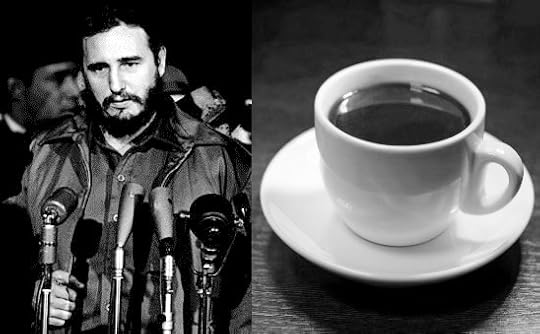
A new Improbability Vault entry features an unlikely tale of Castro, the coffee business, and Lee Harvey Oswald's actions in New Orleans compared to evidence. #JFK #evidencematters https://www.tpaak.com/the-castro-coffee-story/


