
C.A.A. Savastano's Blog, page 20
October 11, 2016
Down and Out in Mexico City
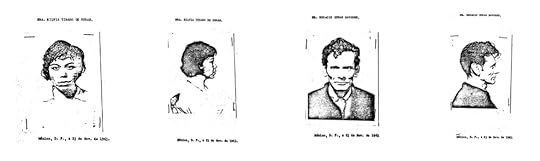
The Mexican Police Mug Shots of Silvia Tirado De duran and Horacio Duran Navarro
Lee Harvey Oswald's Mexico City travels present many official and public allegations and little conclusive verified evidence. A few have presented evolving ideas and some have chosen to believe former assertions despite the problematic evidence. Certain assertions have sought to make definite claims regarding Oswald without the necessary definite proof.
Two stories that some have purported are of great importance are the allegations regarding Silvia Tirado de Duran. One claim states Oswald and others attended a party at Duran's house and Oswald had a physical relationship with Duran. The other assertion places Oswald, Duran, and a Communist official meeting at a local restaurant. Each story has significant problems.
Duran was a worker in the Cuban Consulate office where according to officials she encountered Lee Harvey Oswald. However, the person meeting with Duran has dissimilar features, "That he is blond, short, poorly dressed, that his face gets red when he talks..."i Beyond the shabby dress, a short, blonde, red-faced man does not describe Oswald. If we are to regard Duran's testimony, we should regard all of it. This person visits the Embassy in September while Oswald is in Mexico, but Duran's statement describes someone with other features than Oswald possessed. Duran herself in one statement admits she did not have a clear view of the man during this visit.
Despite the contrary description, Duran later identifies the actual Lee Harvey Oswald as having visiting the Cuban diplomatic compound prior. Mexican officials arrest and interrogate Duran and her husband multiple times in the days following the Kennedy assassination, Duran states her only meetings with Oswald were at the Cuban Consulate. She gives Oswald her name and the diplomatic office phone number; Oswald later adds it to the collection of names in his personal documents. Some infer her name supports a relationship, while Duran states it was normal procedure to aid in processing his requests.ii iii Thus, in Silvia Duran's earliest official statements she denies knowing Oswald beyond the brief consulate encounters.
Over a year following the multiple arrests of the Durans, Horacio Duran's cousin Elena Carro De Paz and her daughter Elena Paz Garro claimed a twist party had occurred. They claimed they had not previously made a statement for fear of reprisal, however it remains unclear how a year's time assured their safety if fear was their motivation. De Paz claimed she infrequently visited her cousin Horacio Duran but was invited to a party at her cousin's house. De Paz is unable to supply a date for this asserted gathering. She supplied the dates of Monday, Tuesday, or Wednesday, September 30, October 1, and October 2, 1963, respectively, with the most likely possibility that is was held on the evening of October 1 or 2, 1963." De Paz claimed she and her daughter were picked up in the morning and taken to a party. She estimated some thirty people attended, described as a "twist" party at the home of Rueben Duran. De Paz continues asserting that three Americans arrived and Silvia Duran greeted them. De Paz further could not determine how long the three purported Americans were present. One of these Americans was dressed in a sweater and dark pants and De Paz claims he "resembled very much press photographs of Lee Harvey Oswald. Her daughter agreed with this observation. Photographs of Oswald in various poses were exhibited to both Mrs. Paz and her daughter at the time of the interview and they were unable to make a positive identification..."iv This vague claim lacks verifiable evidence and even those making the claim cannot expressly identify Oswald. This is notable because all the others involved contend the statement.
When the Mexican police questioned Silvia's husband Horacio Duran Navarro previously about Oswald, he only knew the name from Silvia's prior mention of the angry consulate encounters and the press. Silvia's cousin and asserted twist party host Rueben Duran Navarro, his wife, sister in law, and multiple visiting family friends, each affirmed they did not know Oswald before the De Paz assertion.v The De Paz claim is feasibly just one of the dozens of mistaken Oswald identifications. Without a clear statement that at least has the correct date offered and verifiable facts, there is no reason to believe that Oswald met Duran beyond what most evidence presents.
If Oswald and Duran were having an affair, why could she not secure his request at the Consulate? Could he not have asked her prior and saved himself the repeated visits? Why later associate with her if she could not help achieve his goal of reaching Cuba. Oswald had a room at the Hotel del Comercio in Mexico City, if he was having a physical relationship or secret meeting with Duran, why not be discreet and use it to meet her. The owner, multiple employees of the hotel, and guests never saw Oswald with another person during his stay.vi vii
Officials noted the White House received a paper entitled "Possible Psychological Motivations in the Assassination of President Kennedy written by Jose Lasaga of Miami, Florida. This speculative paper attempted to establish the motivation of Oswald in the assassination of President Kennedy was Fidel Castro or a Castro agent...the paper alleged that Oswald held an extended interview with the Cuban Ambassador in Mexico City who he met in a restaurant on the outskirts of Mexico City." Reporter Salvador Diaz Verson had told the restaurant claim to Lasaga. Diaz Verson "was interviewed and stated he was at offices of the newspaper 'Excelsior' on November 25, 1963. There he learned through the Mexican press that the Mexican Government had arrested on Silvia Duran, that Duran allegedly had Oswald as a guest in her house during his visit to Mexico, and that Duran placed Oswald in contact with officials of the Cuban Embassy in Mexico City."viii As the claims mount, no verifiable support beyond rumor and Diaz Verson is forthcoming.
The entire claim of the restaurant meeting relies upon anti-Castro essay citing a prior rumor. Additionally, "Diaz Verson went on to claim that he was told by Dr. Borrell Navarros, an exiled Cuban newspaper man employed by "Excelsior", that Oswald had a private meeting with Silvia Duran and a Cuban official. Officials subsequently interview him and Navarros states he did speak with Diaz Verson about Oswald. Yet he confirms never telling Diaz Verson "...the story credited to him by Diaz Verson concerning the visit to a Mexico City restaurant by Oswald and Silvia Duran. Borrell had never heard this story or any similar story. Borrell knew of no meeting between Oswald and Cuban Embassy officials other than the meetings that allegedly occurred at the time Oswald allegedly visited the Cuban Consulate in Mexico City. Borrell knew nothing concerning any visit by Oswald to the home of Duran"ix
An official source was unable to locate the asserted Caballo Blanco Restaurant, the alleged location of an Oswald meeting in Mexico City, but found a Caballo Bayo restaurant. The source questioned the restaurant's employees and offered photographs of Cuban Consul Azcue Lopez, Cuban Ambassador Armas, Silvia Duran, and Oswald. None of the employees identified them. However, Dolores Ramirez De Barrieo was the owner of the local restaurant Oswald had visited, the Calle Bernardino de Sahagun "immediately adjacent to the Hotel De Comercio." She remembered Oswald eating several meals alone.x
Salvador Diaz Verson prior circulates the story consistently among the Mexican media, which embraced the speculation. One reporter "Fernandez Varela admitted he had not understood the story too well and perhaps confused it 'a little when he retold it'." When Diaz Verson was asked by officials about eventual variances in his different accounts Diaz Verson admitted he did make statements to...the FBI...slightly at variance with each other, and both at variance with what he related to another Special Agent..." "He declared he did not regard anything he heard, or said he heard in Mexico, as evidence, or of serious importance he stated he had engaged in loose talk and repeated theory and speculation and when challenged as to his sources, he was ashamed to admit an irresponsible naming of sources."
Diaz Verson eventually told officials "...when visiting the newspaper office of Excelsior, he did not listen closely to the eighteen or twenty newsmen who were there, expressing ideas, theories, and speculation, regarding the visit of Lee Harvey Oswald to Mexico. Diaz Verson stated he took no notes on what was said by the reporters as he knew at the time it was only speculation and newsman conversation; Dr. Borrell Navarro was the only person present whose name he knew and Diaz Verson simply attributed some thing said to Borrell Navarro which Borrell Navarro did not say...." "...Diaz Verson stated he cannot honestly separate as to source, what he heard from about twenty newsmen, what he read in the Mexico City newspapers, and what he heard from Dr. Borrell Navarro.xi
Diaz Verson stated he was extremely distressed an ashamed of his irresponsible talk as he is a professional newsman. He said he writes for the AHORA, a Spanish language newspaper in New York...He stated he has written nothing concerning what heard regarding the Oswald case in Mexico, as he recognized he had nothing newsworthy, and no facts which he could substantiate. Diaz Verson declined to take a polygraph examination stating it would only humiliate him further, and show what he had already admitted."xii
The only meetings of Lee Harvey Oswald and Silvia Duran with some evidence were their possible discussions at the Cuban Mexico City diplomatic compound. However, some of the same evidence disputes it was always Oswald at some of those brief exchanges. No significant evidence supports any romance, secret meeting in a restaurant, or in a shared car. Due to the misinformation of a reporter, the speculation of witnesses and officials, and decades of evolving claims, much has been made of a story with little verifiable facts.
Sincerely,
C.A.A. Savastano
TPAAK Facebook
References:
i. House Select Committee on Assassinations, Segregated CIA file, Reel 7, Folder H - Silvia Tirado de Duran (Soft File), Results of the Interrogation of Silvia Duran and her husband Horacio Duran Navarro, p. 3
ii. Ibid
iii. Ibid, Letter regarding Lee Harvey Oswald and Silvia Tirado De Duran, November 26, 1963
iv. Ibid, Lee Harvey Oswald, December 11, 1964
v. Ibid, Translation of Interrogations, p. 4
vi. Federal Bureau of Investigation file, Oswald Mexico City File (105-3702), Section 11, Oswald in Mexico City, Part D. Hotel Accommodations of Lee Harvey Oswald, p. 54
vii. Ibid, pp. 55-57
viii. HSCA Seg. CIA file, Microfilm Reel 7, Folder H, Duque-Golitsyn, Silvia Tirado De Duran (Soft File), Re: Lee Harvey Oswald, January 29, 1964 pp. 1-2
ix. Ibid, p. 2
x. FBI file, Oswald MC File, Sec. 11, p. 57
xi. HSCA Seg. CIA file, Re: LHO, Jan 29, 1964, p. 3
xii. Ibid pp. 3-4


October 6, 2016
Primary Evidence Collections update
Two documents for your review, the first a report on the various CIA business contacts with Clay Shaw. The second FBI document while not supporting the evolving stories attached to the Clay Bertrand pseudonym, does offer that two unnamed and likely unreported FBI informants claimed Clay Bertrand was Clay Shaw.#JFK #Evidence http://tpaak.com/related-individuals-of-note
September 27, 2016
Primary Evidence Collections update
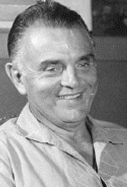
A document verifying the Central Intelligence Agency utilized George de Mohrenschildt's second wife and brother. Officials note in the document that de Mohrenschildt's claim to be the only couple who associated with both the Oswalds and the Kennedys. #JFK #Evidence
http://tpaak.com/related-individuals-of-note
September 21, 2016
Primary Evidence Collections update
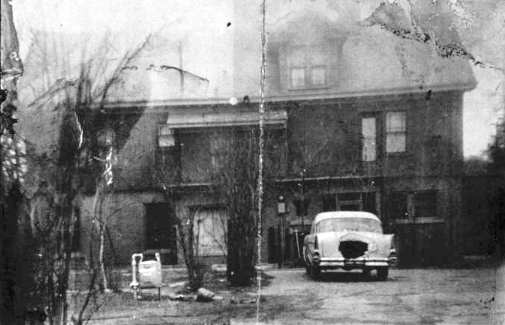
Ignored and contending evidence, witness discrepancies, press rumors, and a victim with a militant agenda. After reviewing additional evidence several factors render the current official version of the Walker allegations feasibly improbable. #JFK #Evidence http://tpaak.com/walker-allegations
September 12, 2016
Primary Evidence Collections update
Four newly documented CIA projects for your review. Projects Butane, Cellotex-1, and Cellotex-2, each of these projects targeted members of the media for revealing classified information. Additionally, the CIA's Office of Security targeted dissident groups considered a threat to Agency employees and operations codenamed Project Merrimac. Each in the Agency's own words are "probable violations of the Agency's charter." #JFK #CIA http://tpaak.com/cia-operations-and-projects
September 5, 2016
The Imprisoned Defector
Hearty alpine thistles were in bloom in the rural lanes outside Geneva, Switzerland in the summer of 1962. Just beyond this scenic atmosphere "KGB officer Yuriy Ivanovich Nosenko contacted the CIA...Over the course of five meetings he provided sufficient information to enable the two officers from CIA's Soviet Russia Division...to establish that he was a bona fide source. The major information furnished by him at that time was the identification of a US code technician who had been recruited by the KGB, and the identification of the location of KGB microphones in the US Embassy in Moscow, 52 of which were later found." Nosenko's eventual defection and the drastic shift in his treatment would lead to years of solitary imprisonment.
Strident anti-Communist James Angleton was the Agency's Counterintelligence Chief for twenty years and was highly paranoid of potential Communist plots. This paranoia stemmed in part from Angleton's prior associations with Kim Philby. Philby was among the most famous Soviet moles in British intelligence history. His service to the Soviets compromised significant operational information held by British and American intelligence organizations.
When Angleton's Counterintelligence Staff learned about Nosenko, Angleton "regarded this news within the context of what they had been hearing from a KGB defector whom they were debriefing Anatoliy Mikhaylovich Golitsyn. Golitsyn...was a counterintelligence officer who was obsessed with the subject of KGB deception operations. Even though Golitsyn was diagnosed in early 1962 as a 'paranoid personality,' the CI Staff had complete faith in the validity of his theories and analysis." The CI Staff offered a redacted version of Nosenko's offered comments to Golitsyn and he "...flatly concluded that Nosenko was acting under KGB control." Based on little beyond Golitsyn's assertions "The CI Staff accepted Golitsyn's analysis and persuaded the management of SR (Soviet Russia) Division also to accept it."
Angleton's staff members would eventually dismiss the proven circumstances and embrace speculations regarding Nosenko's statements. "By the time Nosenko was again heard from, in January 1964, again in Geneva, the management of SR and CI Staff was firmly committed to the position that Nosenko was part of a KGB deception operation." After Nosenko's defection February 4, 1964 "...no matter what he would say, CI Staff and SR Division would twist it to prove that it was either already known and therefore worthless, or of little value and therefore a deception ploy designed to lead away from cases of real value. " Some officials conspired to ignore the contending evidence for their predisposed beliefs.
One Agency review states, "Mr. Nosenko, like any other human source, has made some errors of fact and analysis, in addition he long admitted that in 1964 he embellished some aspects of his status to pressure us into granting him asylum...." However, normal mistakes and unverifiable information was used to indict all of Nosenko's statements. Agency employee John Hart testified that "...Angleton had approved hostile interrogation of Nosenko, which he (Angleton) said was untrue...I do recall Hart saying to me there is little by way of records connecting Angleton with the handling of the case. Angleton described Hart's statements as slanderous and perjured."
One Agency employee states "...Mr. Nosenko was interrogated on the basis of preconception prevalent in certain elements of the intelligence community at the time...He is not the only man, during that period, whose bona fides was suspect...Mr. Nosenko's interrogation as distinguished from methodical debriefing, was based in significant respects on the transcripts of early questioning of him. The records of those early debriefings were put in transcripts form, translated to English. They contained a number of mistranslations, which came to be used as the basis for testing the consistency of what he said." These mistakes coupled with Golitsyn and Angleton's paranoia falsely brand Nosenko a loyal KGB agent.
"It takes little imagination to understand how interrogation of a man, challenging such apparent inconsistencies, could compound initial distortions and build a record that could never wholly be righted. When the extended period of detention (three years) under the most spartan of living conditions is added to this, with recurring intensive interrogation, one must recognize the permanent harm risked to the record and to his unburdened memory."
In 1964, Deputy Director for Plans Richard Helms conversed with Nicholas Katzenbach at the Department of Justice. They talked about disposal options for Nosenko. "We will soon feel compelled to begin hostile interrogation of (Nosenko) against his will for this purpose. Second, we would have to be ready...to deport him. We had thought of...Germany and transferring him to Soviet custody." The justification for Nosenko's enduring captivity relied upon his status as "...an exclusion and parole case". He was "paroled to the Agency which is responsible for him while he is in the country...if he said he wished to leave the country to return to the Soviet Union, technically we would not be able to detain him further." The memo concluded stating, "...Mr. Helms thanked Mr. Katzenbach for his assistance and we departed amid some jovial banter with respect to "The Spy Who Came in From the Cold" about what we expected to happen to him when he started to climb over that "wall" in Berlin." Unconsidered in the "jovial" banter was that if Soviets gained control of Nosenko, he likely would face torture and execution for his legitimate defection.
Agency employee Thomas Ryan debriefed Nosenko regarding knowledge of Lee Harvey Oswald in 1964. Yet beyond this occasion almost no "...effort was made to debrief Nosenko systematically, and CI Staff members never even spoke to him. SR Division spent most of its efforts trying to make Nosenko confess that he was under KGB control; when these efforts were unsuccessful, Nosenko was simple left alone in his detention cell." Officials dismiss the information Nosenko offered until years after the President's Commission was over. Nosenko had prior told the Agency that Oswald was not a KGB agent or under Soviet influence, this did not agree with some Agency employees committed to implicating Oswald as a Communist operative.
"The problem at the time was real. There was little that could be done to clarify or verify the few things Nosenko had to say about Lee Harvey Oswald. As an officer in the KGB's Second Chief Directorate there is reason to assume he would not have known the details of Oswald's relationship with the First Chief Directorate, assuming that such existed. It seemed the case had to be resolved...The course chosen by those given responsibility for him was to break him...The steps taken were then, and are now, unacceptable...We now know that much of the record is built on him was founded on initial errors perpetuated and compounded by the unprofessional way in which he was handled. We have taken steps to ensure that such an occurrence will not be repeated."
"In 1967 Director of Central Intelligence Richard Helms turned Nosenko's case over to the Office of Security for final resolution, and at the same time the FBI began a review of the information it had obtained from Nosenko. The results of these two very thorough investigations...both of which concluded that Nosenko was who he claimed to be and was a bona fide defector. Since that time this has been and is the position of CIA. Nosenko was probably the most valuable source of counterintelligence information that the US Government has ever had, and the enormous scope and value of his information attest conclusively to his bona fides as a defector.
Nosenko identified some 2,000 KGB officers and 300 Soviets who were acting as KGB agents. He provided information on some 238 Americans in whom the KGB agents. He provided information on 238 Americans in whom the KGB had displayed some interest, including many who had been recruited." The CIA mistreated and for years imprisoned perhaps their best source from within the KGB. In one unnamed Agency official's assessment, "...former U.S. Government employees contesting current Agency views on Mr. Nosenko are essentially defending the conduct of their own stewardship...The cries of outrage of these former employees cannot be judged as wholly objective. Certainly, their brutal abuse of Mr. Nosenko remains a blot on the Agency, as their conduct, which cannot be retrieved by shrill denunciations. The fact remains that Mr. Nosenko was accorded inexcusable treatment. The intelligence record of his questioning...is a further dark aspect of the matter"
"While the Office of Security files do document the rationale for the original confinement of (Nosenko), they do not document the rationale for his continued confinement over so long a period of time..." many officials were unaware of the internal Agency wrangling over Nosenko's defector status. In 1969, the Agency grants Nosenko a Florida vacation during which Central Intelligence Agency "...personnel, with apparent Headquarters approval, obtained the services of prostitutes. This apparently occurred on at least two occasions." It seems the Agency felt so remorseful for its prior vile treatment of Nosenko it disregarded normal laws. Nosenko eventually was "...ultimately released to private life, as a result, and since then has proven a valuable asset of the American Government." Declassification eventually reveals Nosenko's harsh treatment and possibly limits future useful defections. The operational details of the matter are a warning to officials seeking to utilize a foreign defector; its occurrence is a warning to Americans concerned with secret actions undertaken in the public's name.
Sincerely,
C.A.A. Savastano
TPAAK Facebook
References:
i. House Select Committee on Assassinations, Segregated Central Intelligence Agency file, The Bona Fides of Yuriy Ivanovich Nosenko, (n.d.)
ii. HSCA, Seg. CIA file, The Bona Fides of Y. Nosenko, (n.d.)
iii. HSCA, Seg. CIA file, "Letter Concerning the CIA's handling of Yuri Nosenko", Box 12, (n.d.)
iv. HSCA, Seg. CIA file, Inquiry from James Angleton, Box 11, p. 2
v. HSCA, Seg. CIA file, "Letter Concerning the CIA's handling of Yuri Nosenko", Box 12, (n.d.)
vi. Central Intelligence Agency, Russ Holmes Work file, Memorandum: This folder relates to questions #20 in your letter of 30 January 1975, Discussion with Deputy Attorney General on Iden 1 Case, April 2, 1964
vii. HSCA, Seg. CIA file, Deposition for the HSCA (Thomas A. Ryan), pp. 1-3
viii. HSCA, Seg. CIA file, The Bona Fides of Y. Nosenko, (n.d.)
ix. HSCA, Seg. CIA, "Letter Concerning the CIA's handling..." p.2
x. CIA, Russ Holmes Work file, Memorandum: This folder relates to questions #20 in your letter of 30 January 1975, KGB Officer, (n.d.)
xi. CIA, Russ Holmes Work file, Memo: Discussion with Deputy Attorney General on Nosenko Case, Defectors-Nosenko, p. 1
August 24, 2016
Primary Evidence Collections update
Three new pseudonyms for your review, the first Bronson Tweedy the first CIA Africa division leader questioned about discussing the possible assassination of Congolese leader Patrice LaMumba. The second is the false name of a former DGI (Cuban Intelligence) Chief of Uraguay, and the final name is a Chinese ally of the anti-Communist Cuban group the Unidad Revolucionaria. #JFK #CIA #DGI http://tpaak.com/cia-cryptonyms-and-pseudonyms
August 19, 2016
The possible Castro Assassination Plot tapes
Three documents that support the feasible existence of recorded material directly related to the CIA and Mafia Castro plotting. This evidence likely was destroyed to protect official interests. #CIA #JFK #Castro http://tpaak.com/cia-castro-plots
The Possible Castro Assassination Plot tapes
Three documents that support the feasible existence of recorded material directly related to the CIA and Mafia Castro plotting. This evidence likely was destroyed to protect official interests. #CIA #JFK #Castro http://tpaak.com/cia-castro-plots
August 12, 2016
Primary Evidence Collections update
Three new CIA Security files are offered for your inspection. The file of Richard Snyder, American consul and CIA operative, he spoke with Lee Harvey Oswald at the American Embassy during his Russian defection. Additionally, the files of two men among the handful with direct knowledge of the CIA Castro plots Edward Morgan and James O'Connell. #CIA #JFKhttp://tpaak.com/cia-security-files


