
C.A.A. Savastano's Blog, page 19
December 23, 2016
New Section of the Primary Evidence Collections
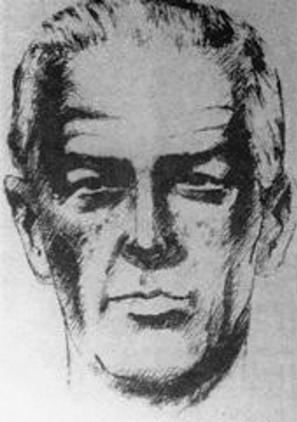
A Sketch of the Man Alleged to be Bishop
Our new Essays section offers an extensive review of the allegations, evidence, and contending ideas surrounding Antonio Veciana and the man called Bishop. #JFK #Evidence http://tpaak.com/regarding-maurice-bishop


Primary Evidence Collection Update
A Sketch of the Man Alleged to be Bishop
Our new Essays section offers an extensive review of the allegations, evidence, and contending ideas surrounding Antonio Veciana and the man called Bishop. #JFK #Evidence http://tpaak.com/regarding-maurice-bishop
December 18, 2016
Primary Evidence Collections update
Presenting additional Policy and Resource documents concerning the wide array of Cuban nationals investigated and cataloged by the Central Intelligence Agency. The Cuban Mug Books Vol. II and III are offered for your inspection. #JFK #Evidence http://tpaak.com/cia-policy-and-reference
December 5, 2016
The Death and Times of a Gangster
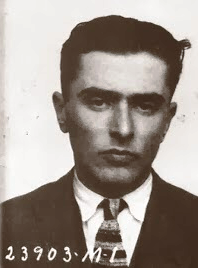
Johnny Roselli aka Filippo Sacco
Many criminals associated with various organized crime families have been the enemies of American law enforcement since the early twentieth century. However, the Central Intelligence Agency contacted a small but notable minority of Mafia leaders and members for use in political assassinations. The target was Fidel Castro, the reasoning questionable, and the unintended flaws numerous. Some of the Castro Plots had multiple phases, each with different leaders and focus on vastly different methods. The only Mafia personality that was verifiably part of multiple plot phases was Filippo Sacco, better known as Johnny Roselli.i
Despite the unverifiable claims offered about Roselli having a direct role in undertaking the JFK assassination, Roselli has no verified connection to the events in Dealey Plaza. However, Roselli's various efforts drew him into the case as he tried to influence officials. Roselli during one conversation with an Agency lawyer blamed Castro for President Kennedy's death. This statement circulates among national media outlets, Congressional investigators, and the Federal Bureau of Investigation.ii Roselli's unproven claim was likely to reinforce the existing call for military operations against Cuba. If successful, this would potentially allow the Mafia to regain control of the Cuban underworld and its gambling businesses.
Agency Director Allen Dulles authorized the Castro Plots, Agency officers Colonel Sheffield Edwards, Deputy Director Richard Bissell, and Western Hemisphere Chief J. C. King discussed them. Agency employee Robert Maheu contacts Roselli and later met with him and Director of Security James O Connell. Roselli arranged for Mafia leaders Sam Giancana and Santos Trafficante to meet officials as well. Agency employees and criminals had found a mutually beneficial arrangement. Yet all their plans failed.
During Phase II of the Castro Plots CIA officer William Harvey became acquainted with Johnny Roselli. Harvey was responsible for the recruitment of potential assassins for use in the foreign nations and designing military style assassination plots targeting Fidel Castro. Officials compiled some of their later meetings and in time lost trust in Harvey's judgment.iii The two men formed a friendship that outlasted warnings to desist, Harvey's reassignment to Rome, and his eventually dismissal from the Agency.
"Mrs. C.G. Harvey...stated she first became acquainted with John Roselli in the early 1960's when her late husband William, was employed by the CIA. As a result of her husband and Roselli's employments, their frequent contacts developed into a friendship which lasted until Harvey's death...they maintained contact with him on a friendly basis, which included occasional telephone calls and several overnight visits by Roselli at their home."iv In 1967, Harvey again comes under investigation by the Agency's Inspector General at the behest of Director of Central Intelligence Richard Helms. Director of Security Howard Osborn paid Helms a visit and to gain higher approval to "bury this material."v During this period, Roselli also invited his long estranged brother Albert Sacco to a dinner with a different related associate, Mafia leader Santo Trafficante.vi
Roselli attempted to blackmail the Agency to avoid prison for other crimes, and the Agency dismissed his threats. Roselli or possibly someone acting on his behalf reacted by furnishing reporter Jack Anderson details of the Castro Plots.vii Officials send Roselli to a Federal prison located in Seattle Washington. After his release, he went to live with relatives in Florida. After settling into a routine Roselli's apparent retirement seemed to be the final chapter of his infamous life. Then he testified to a Congressional Committee regarding the Castro Plots and subsequently disappeared months later.
His niece Jo Anne Quintana and her husband Jose told the Federal Bureau of Investigation about their interactions with Roselli. Among them were multiple sightings of Santos Trafficante with Roselli, and Jose had met Trafficante prior to a later Roselli introduction. They learned of Roselli's disappearance from another niece Eloise McKnight.viii Roselli's attorney David Walters advised Roselli's brother-in-law Joseph E. Daigle to call authorities and file a missing persons report. Walters also informed Senator Frank Church and the Congressional Committee Roselli prior testified before of his disappearance.ix
Roselli's sister Edith Daigle was the last family member to Roselli alive. Daigle noted he slept in and fixed himself breakfast in the early afternoon. Roselli offered no information to any destination before leaving and she expected him to return for dinner. He left the Daigle home driving his sister's Chevrolet. Mrs. Daigle offers that Roselli had no local Miami acquaintances, girlfriend, and only went away to visit one of his lawyers and would not cause her undue anxiety and called if he was going to be late for dinner. The report states "...she is not optimistic about him and felt he has met with foul play of some kind."x Events would soon confirm her intuition.
Johnny Roselli had prior mentioned in a joking manner to his sister that if he ever disappeared look for the car in airport parking. This was likely due to the Mafia's tactic of killing someone and disposing of the car in airport parking to avoid short-term discovery by authorities. Joseph E. Daigle later received a call from his daughter Eloise; she had found the car Roselli left in parked at the airport.xi The car appeared normal beyond a smudged window and Roselli's golf clubs were in the trunk, but Roselli was not there.xii Unfortunately, Daigle disturbed the car and its contents before any police search occurred.


Dade County Department of Public Safety Detective Erwin in the early afternoon of August 7, 1976 made a gruesome discovery. Miami officials "...had recovered a 55-gallon steel drum containing a human body from the waters of Dumfoundling Bay". Local authorities contacted FBI Special Agent Edward J. Dunn Jr. and who relayed the case details to Detective Erwin. By the end of the day, the FBI's Identification Division had matched Roselli's thumbprint to the dismembered corpse.xiii Roselli's cause of death was "asphyxiation" and the killer inflicted his most grievous injuries after he expired.

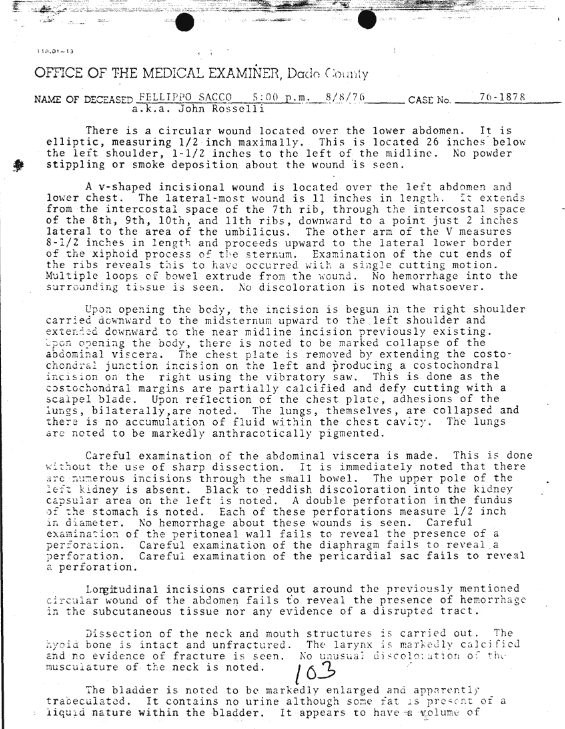


Bureau agents with the assistance of various Industrial business people tracked the Roselli barrel almost to its industrial origin using outer markings and notations. Tallowmasters Plant Manager John Bozsoki offered his professional opinion that an industrial business likely had discarded the drum. He states a "smaller outfit who could not afford to clean it and recondition it..."might have used it. Inside the drum was a notable amount of yellow grease, feasibly used by local Miami restaurants for cooking.xiv
Two related sources with questionable motivations offered their suggestions to the FBI indicating about one possible suspect responsible for Roselli's grisly end. Tony Varona's acquaintance and Cuban exile Jose "Pepe" Aleman and militant Frank Sturgis each named Santos Trafficante responsible for Roselli's death.xv xvi Yet both men have offered various contrary and opportunistic statements.
It is feasible Mafia and Cuban exile leaders sought revenge for Roselli's testimony that revealed the Castro Plots. This also might have concerned some criminals about future leaks regarding all their former illegal undertakings. It might have endangered other lucrative arrangements with corrupt officials. Roselli's murder numbers among the handful with possible connections to verified operations involving the assassination of a world leader. The murder's victim, timing, associations, and manner present significant questions worth considering.
Sincerely,
C.A.A. Savastano
TPAAK Facebook
References:
i. Federal Bureau of Investigation, House Select Committee on Assassination Subject File: John Roselli, No Title, Birth Data Re John Roselli, p. 2
ii. House Select Committee on Assassinations (HSCA), Staff Notes Staff Report on the evolution and implications of the CIA sponsored as, pp. 12- 13
iii. HSCA, Segregated CIA file, Collection of Memos Re: Conversations with/between John Roselli and, Subject: Meetings between William K. Harvey and Johnny Roselli, December 11, 1967 pp. 1-3
iv. FBI, HSCA Subject File: John Roselli, No Title, Statement of C.G. Harvey, January 6, 1977, p. 1
v. Central Intelligence Agency, HSCA Segregated file, Johnny" (Roselli), Box 48, March 29, 1967
vi. Ibid, Statement of Albert Sacco, August 23, 1976
vii. HSCA, Seg. CIA file, Roselli, John, Box 1, February 12, 1972
viii. FBI, HSCA Sub. File: John Roselli, No Title, Statement of Jose and Jo Anne Quintana, August 23, 1976
ix. Ibid, Statement of David Walters, August 9, 1976
x. Ibid, Statement of Edith Daigle, August 9, 1976
xi. Ibid, Statement of Joseph E. Daigle, August 20, 1976
xii. Ibid, Statement of J. E. Daigle, August 9, 1976
xiii. Ibid, Memo of Telephone Conversation and Thumbprint ID, August 7, 1976
xiv. Ibid, Statement of John Bozsoki, October 18, 1976
xv. Ibid, Statement of Jose Aleman, November 22, 1976
xvi. Ibid, Statement of Frank Fiorini aka Frank Sturgis, October 14, 1976
November 29, 2016
Primary Evidence Collections update
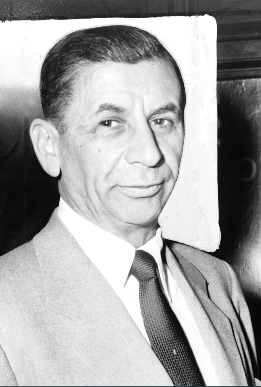
Meyer Lansky
The statement of Manuel "Tony" Varona recounts a meeting about Cuba between him and featured Mafia notable Meyer Lansky. The CIA quickly warns Varona to stay away from Lansky, to which Varona seemingly complies. Yet Lansky associate and Mafia leader Santos Trafficante later suggests Varona for use in the Castro Plots. #JFK #Evidence http://tpaak.com/related-individuals-of-note
November 20, 2016
JFK Lancer NID 2016 Conference Presentation Evidence
Author Carmine Savastano's evidence regarding the subjects he discussed at the JFK Lancer 2016 Conference. For all those who could not attend the conference we invite you to review the newly added Oswald Timeline Myth.
Myths and Legends in the JFK Case:
Myth 1: The Castro Tapes http://tpaak.com/cia-castro-plots
Legend 1: Guy Banister had no connection to the CIA http://tpaak.com/related-individuals-of-note
Myth 2: The Walker Allegations http://tpaak.com/walker-allegations
Legend 2: The Rafael Cruz Story http://tpaak.com/cruz-story
Myth 3: The Oswald Timeline http://tpaak.com/the-oswald-timeline-myth
November 16, 2016
Primary Evidence Collections update
The legal statement of Former Assistant Director of the FBI William Sullivan regards the internal actions and vendettas of J. Edgar Hoover against the CIA and Warren Commission. They include leaking secret or embarrassing CIA information and then promoting disinformation to blame other officials, and seeking to prevent the Warren Commission's investigation from deviating from his prejudgment of Oswald's guilt. #JFK #Evidence http://tpaak.com/related-individuals-of-note
November 3, 2016
P.O. Box Questions
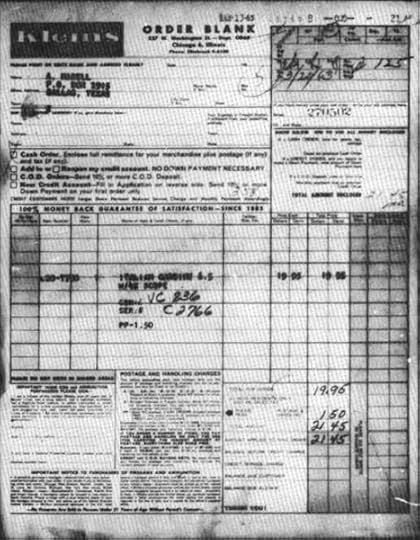
THE CARCANO ORDER FORM SENT BY A. HIDELL THAT LISTS P.O. BOX 2915 as the RECIPIENT'S Address
Post Office Box 2915 in Dallas Texas is the subject of contentious debate. Its history and various owners have attracted the attention of government informants, employees, and the public for years. Officials contend that evidence implicates its most famous prior owner Lee Harvey Oswald of receiving the alleged murder weapon. Several researchers contend that postal irregularities ranging from a lack of proper stamps, markings, and processing are missing from official exhibits rendering them allegedly unreliable. If Oswald did verifiably receive the weapons, it supports official contentions. If he did not verifiably receive the alleged rifle and pistol under the alias Alec Hidell, a piece of the case against him falters under the lack of evidence.
A signed application for a post office box located in the "General Post Office, Dallas" by "Lee H. Oswald" for number 2915 dated "October 9, 1962" was later filed in the United States Post Office Terminal Annex in Dallas, Texas. A letter from James P. Cannon of the Socialist Workers Party is located among Oswald's possessions and is addressed to "Mr. Lee H. Oswald...Box 2915". One reply to a former letter of inquiry about photographic copy work sent a month later to Oswald from Bob Chester bears the address "Box 2915". A second reply from the Hall-Davis Defense Committee and money orders sent from "Oswald, Box 2915, Dallas, Texas" supports Oswald's ownership of the P.O. Box the President's Commission stated received the Carcano.
The records of Klein's Sporting Goods and Crescent Firearms Inc were searched an confirmed a weapon sent to one A. Hidell Post Office Box 2915, Dallas Texas on March 20, 1963. Treasury Department and Federal Bureau of Investigation document examiners alleged the handwriting from Oswald's collected documents matched the handwriting on the rifle mail order form. Yet handwriting analysis is subjective and despite officials claims, not definitive. It requires examining "hundreds of traits" and the analyst "make educated guesses as to what they mean." Tracing the order officials used the money order, envelope received, and the company's bank deposit of 21.45. Officials state this would cover the 19.95 and 1.50 for postage and handling.
Thus far, officials have made a reasonable case for Oswald owning the post office box, frequently receiving mail from it, and using the alias A. Hidell to order the weapons. Yet some verifiable prior official evidence is contending. The President's Commission states, "It is not known whether the application for post office box 2915 listed 'A. Hidell' as a person to receive mail at this box. In accordance with postal regulations, the portion of the application which lists names of persons, other than the applicant, entitled to receive mail was thrown away after the box was closed..." Seemingly that was not the case.
Within the President's Commission Hearings an FBI summary attempting to dispel a public claim and offer the investigations findings states "Investigation: Our investigation has revealed that Oswald did not indicate on his application that others, including an 'A. Hidell', would receive mail through the box in question, which was Post Office Box 2915 in Dallas." This is a significant problem. Only registered people can receive mail from a post office box. If a name is not included as the FBI prior stated, A. Hidell cannot receive mail for P.O. Pox 2915.
Officials do not account for this in their allegations, the Commission does state Dallas Postal Inspector Harry Holmes offered, "...that when a package is received in a certain box, a notice is placed in the box regardless of whether the name on the package is listed on the application as a person entitled to receive mail through the box. The person having access to the box then takes the notice to the window and is given the package." Holmes claimed that ordinarily "...identification is not requested because it is assumed that the person with the notice is entitled to the package." Thus, mistaken official assumptions exist within the realm of possibility.
A receipt of Oswald presenting the notice and accepting the package with a Carcano is not among the currently offered documents. Officials fail to provide a simple log of the time and date the package and its contents are picked up or the employee responsible for the post office window the day it was received. Nor is there any postal employee declaring they interacted with Oswald that testified he received the package. If instead Oswald had marked special deliveries to be sent to his home, a postal carrier would have delivered it and their route and time of delivery should be available to officials. If any of these were the case, a series of incompetent actions or formerly suppressed evidence should exist. Yet none of it is offered and provides the definitive stance officials have chosen. Legal claims require legal evidence, especially if no criminal trial ever occurs.
Another question is did other people besides Oswald have access to the box, despite that he never registered another user? Officials have already verified they usually never checked identifications if the person had the notice. If this is possible, anyone with access to Oswald's various boarding houses or other temporary housing too could attain access using the post office box key. If Oswald entrusted someone careless with a key and current postal documents are consistent with former practices, one of the two keys issued could be lost. Yet no matter how many keys existed, at least one other person had access to Oswald's post office box, his wife Marina.
In an officially translated letter, Marina Oswald corresponds with "Comrade Reznichenko" due to her change of address from Fort Worth to Dallas. Marina states "Here is my post office address, in case you need to send me any correspondence..." and she lists her address being "Box 2915, Dallas, Texas." This would support that Marina was at least receiving mail and feasibly using the post office box as well. A later statement Oswald gave to an official informant also supports this, "He denied receiving any mail addressed to A. Hidell through any Post Office boxes and denied that anyone else had ever received any mail through these boxes. He admitted to informant that on one or two occasions he may have given his Post Office Box key to Box 2915 to his wife for her to obtain the mail from the box and bring it to him." Thus, perhaps Oswald was unaware his wife used the mailbox for her own mail as well or he may have been attempting to protect her from implication.
Yet the outstanding questions and the lack of evidence proving the official claims remain. Oswald claims he never received mail as Hidell, officials retort based on the evidence they collected he did. Yet they cannot prove he received the weapon, Hidell is found by the FBI to never have been able to accept mail at P.O. Box 2915. The FBI seemingly shared this with the Commission but they claimed the item was destroyed and beyond their knowledge. Officials rely on Oswald alone having access to the Post Office box, this too is inaccurate.
Whoever allegedly picked up the rifle seemingly would not have to show identification because of incompetent office management. If Oswald did order the weapons, it only definitely proves he used an alias to order weapons, not that he is guilty alone of the Kennedy assassination. Yet that has not been proven and official assumptions and mistakes are reasonably questioned. There is no definite record of the actual person responsible offered, the employee they dealt with, nor a receipt marking the rifle's acceptance or a log of the item's pick up. Officials or contending researchers may decide this matter in time but only with greater evidence.
Sincerely,
C. A. A. Savastano
TPAAK Facebook
References:
i. Federal Bureau of Investigation file, Oswald Headquarters File (105-82555), Section 22, Report of Special Agent Alfred C. Ellington, November 27, 1963
ii. FBI, Oswald HQ File (105-82555), Section 5, Memo to Director of the FBI from SAC Dallas, November 26, 1963
iii. FBI, Oswald HQ File (105-82555), Section 47, WFO 105- 37111, p. 4
iv. Report of the President's Commission, Chapter 4, Ownership and Possession of Assassination Weapon, pp. 118-119
v. Central Intelligence Agency, Oswald 201 File, Volume 3, Folder 9A, Part 2, FBI Lab Report, November 25, 1963
vi. Matthew Scanlon, James Mauro, (November 1, 1992), The Lowdown on Handwriting Analysis, Psychology Today, psychologytoday.com
vii. Report of the Pres. Com, Chap. 4, p. 119
viii. Ibid, p. 121
ix. Hearings of the President's Commission, Volume XXV, Commission Exhibit 2585, p.4
x. Report of the Pres. Com, Chap. 4, p. 121
xi. Postal Service Form 1093, "PO Box Keys", January 2012
xii. President's Commission Document Number 6, FBI De Brueys Report of 8, Dec 1963 re: Oswald, Section III. Information received Re subject from Russian Embassy, Washington D.C., Russian Translation of Handwritten letter, (n.d.)
Related Podcast:
The Ochelli Effect "JFK Myths 9" with Zachary D. Jendro, Trish Fleming-Jendro, and Carmine Savastano
October 26, 2016
Primary Evidence Collections update
Three new CIA Biographic Profiles to review, the first was a CIA Operations Officer in Saigon supporting the overthrow of its government, Lucien Emile Conein. Additionally, the files of Howard M. Orr, an Intelligence and Operations Officer, and the file of CIA Intelligence Analyst and Operations Officer James Sauvie Woods that served for two years at Atsugi Airbase in Japan. Each is offered for your inspection. #CIA #Evidence http://tpaak.com/cia-biographic-profiles
October 20, 2016
Primary Evidence Collections update
Three additional CIA Security files submitted for your inspection. They regard Garrison Investigation witness and Dean Andrews. The second file briefly inspects former FBI employee, RFK appointee, NBC reporter, and Garrison critic Walter Sheridan. The third file offers information concerning noted researcher and former Office of Strategic Services member Harold Weisberg. http://tpaak.com/cia-security-files


