
C.A.A. Savastano's Blog, page 15
January 21, 2018
McCuistion programs w/ C.A.A. Savastano discussed new files and the JFK case
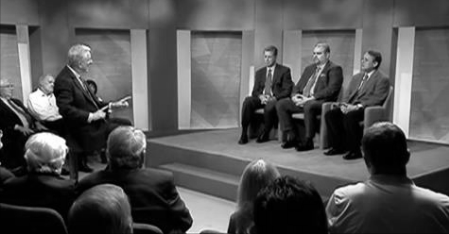
Author C.A.A. Savastano joins Jacob Hornberger President of the Future of Freedom Foundation, attorney Paul Watler, and host Dennis McCuistion to discuss the new JFK documents and the possible implications they have upon the Warren Commission. #JFK #McCuistion
http://www.frtv.org/2018/01/what-do-new-jfk-documents-imply-about-the-warren-commission-report/
C.A.A. Savastano also joined journalist Jefferson Morley and host Dennis McCuistion to discuss the CIA and FBI cover-ups and controversies regarding Lee Harvey Oswald.#JFK #McCuistion
http://www.frtv.org/2018/01/cia-and-fbi-cover-ups-vietnam-mexico-city-and-the-controversies-over-oswald-part-one/


January 19, 2018
JFK Myths Episode 13
JFK Assassination Myths returns to the Ochelli Effect! Join researchers Rob Clark, Steve Roe, Carmine Savastano, and Chuck Ochelli to discuss myths related to the JFK case and compare them to evidence. #JFK #myths #evidence
https://ochelli.com/jfk-assassination-myths-13-bush-lbj-circus/
January 16, 2018
The Man with Plans
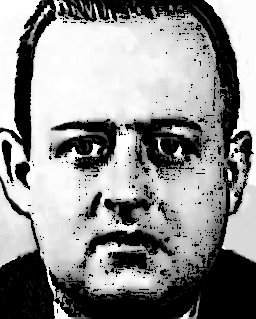
WILLIAM KING HARVEY
CrediT To: Alchetron
The success and failure of various intricate plans developed by the Central Intelligence Agency relied on the oversight of its administrators, the professionalism of its employees, and the control of its assets. In such a high pressure and secretive environment, obsession and imagination can be valuable tools and deadly hindrances if one strays too far afield from the illumination provided by verifiable facts. Unfortunately, secret agendas can allow exception to be made, the bending of policies, and even the most unthinkable has been given voice for its utility with little consideration to blowback. A frequent underlying lesson regarding many intelligence operations has ever been doing unto others before they do unto you.
A seemingly endless cast of people surrounds many of the most nefarious and foreboding plots to emerge from the United States military and intelligence community. In some instances, plots can involve members of both communities with drastically varying expectations and personnel. Yet one trait shared by some of the more notable people and handed down to later members was a strong dislike for complete oversight and a want to conceal operations that could damage their respective groups if exposed. One such person with a staunch commitment to the superiority of clandestine matters over civil laws is CIA officer Bill K. Harvey.
William King Harvey was reportedly born in Cleveland, Ohio during the fall of 1915 to literature professor Dr. Sara Jewell Harvey and lawyer Drenan R. Walker. Following the death of Harvey's father in 1916 at the age of 27, William is noted to have developed a very close relationship with his mother subsequent to losing his father. Harvey spent his childhood in Danville, Indiana and later went to Wiley High School in Terra Haute and official reports consulting Harvey's school records note he was a "brilliant boy" and "a real leader".
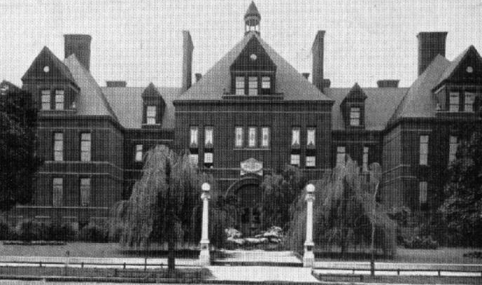
Wiley High School Terra Haute, Indiana
He attends Indiana University and subsequently his later wife Clara Grace (CG) Harvey describes Bill developing a strong relationship with his godfather attorney Benjamin F. Small.i This friendship and Small's later employment as the dean of Indianapolis University Law School feasibly influenced Harvey upon his path to become versed in law. Harvey was employed by the Danville Gazette and performed reporter and printer duties in 1931. He left the newspaper and in 1934 was a publicity writer for Indiana University at Bloomington. By 1937, Harvey was practicing law and three years later the US Department of Justice would employ him.
Harvey was a supervising Special Agent of the Federal Bureau of Investigation until he resigns for his behavior in 1947.ii By this time, Harvey was able to speak German proficiently and was able to use this in the service of the Central Intelligence Group (CIG). The CIG was a precursor intelligence group that when joined with other related intelligence organizations would become the CIA. The CIA was legally created mere weeks before Harvey is employed by the CIG on September 29, 1947 as the Division Chief of the Internal USSR Division.iii During Harvey's service as Division Chief from CIA Headquarters, he additionally was the Chief of Foreign Intelligence Staff E and later served on the Deputy Director of Plans Staff as well.
The Agency transfers Harvey in 1952 to Europe and he assumes a new position as Chief of Berlin Station. He came to this new job with an idea to create a secret way into the Soviet controlled zone of Berlin. Harvey oversaw the development of an underground Berlin Tunnel that connected the West Berlin to East Berlin but the project was compromised and eventually abandoned.iv Harvey is later consulted about the series of Soviet agents that had infiltrated British Intelligence. Harvey offered suspicions regarding Kim Philby a well-placed British intelligence officer. However, some in MI6 and CIA Counterintelligence Chief James Angleton who maintained a friendship with Philby decided the British officer was not the source of the recurring Soviet penetrations. Years later when Philby fled to Moscow, it was a hollow vindication for Harvey due to Philby's long-term success in deceiving MI-6 to become its most notorious mole.
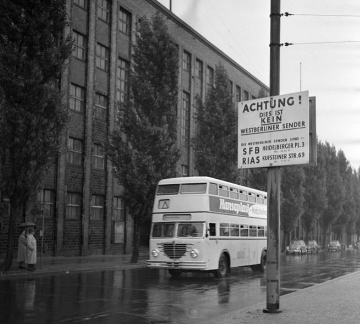
A suburb of Berlin in Fall of 1955
According to official records, Harvey was the Station Chief in Berlin until 1959 and following his German assignment, he transfers to CIA headquarters and is named the Chief of Foreign Intelligence Staff D. This Agency group sought to penetrate and pillage enemy signals intelligence and cryptographic materials.v However, this staff's activities would later quietly provide a plausibly deniable home for deadly plans.vi During portions of Harvey's prior assignments in Germany and future placement in Italy, he utilizes the US State Department's Foreign Service for cover.
Deputy Director of Plans Richard Bissell subsequently tasks William Harvey with the development of "Executive action", a euphemism for political assassination capabilities in February of 1960. Chief of Luxembourg Station Arnold M. Silver recruits espionage agent, spotter, and potential assassin Jose Marie Andre Mankel (QJWIN) in Europe.vii Silver had a conversation with Richard Bissell and was informed of plans to possibly use Mankel for a potential assassin operation. The target suggested by Richard Bissell was the Prime Minster of the Congo Patrice Lumumba who had resisted American attempts to influence the control of Congo's natural resources and openly accepted the aid of Soviet and Communist groups. Staff D member Justin O' Donnell approaches William Harvey and recounts Bissell ordering him to "undertake an operation in the Congo, one of the objectives of which was the elimination of Patrice Lumumba."viii
By August of 1960, the Eisenhower administration's Special Group of advisers discussed potentially removing enemy foreign leaders using assassination, Lumumba is mentioned by name. November 2, 1960 Richard Bissell dispatches Justin O'Donnell under the pseudonym Oliver Altman to meet the Agency's new potential assassin in Paris. O'Donnell claims he refused to participate but he does later venture to meet Jose Mankel in Europe to assess him. Officials hire Mankel to spot potential sabotage agents, useful criminals, and perform clandestine operations. Yet another purpose officials' note for Mankel is political assassination but the Agency refrains from telling Mankel the full details of his potential assignment and eventually sends Mankel to the Congo.
Evidence suggests the Agency did not assassinate Patrice Lumumba directly because local CIA Station Chief Larry Devlin refused. However, Devlin did choose to influence the leader of Congolese military forces to consider Lumumba a lethal security threat. These Congolese forces soon captured Patrice Lumumba and murder him in January 1961. By February 28, 1961, Mankel signed a contract with the Agency to continue his spotting activities. William Harvey later that year designs operational notes for Project ZRRIFLE to spot, recruit, and use sabotage agents and assassins.
[image error]
Lawrence "LArry" RAymond Devlin
Jose Mankel is designated the primary agent of ZRRIFLE but he was only a single method of dispatching the CIA's enemies. Among those who discussed other means of assassination with Harvey by utilizing virulent poisons was the Agency's Technical Services Director Sidney Gottlieb.ix Gottlieb is another notorious Agency officer who among his duties created and studied biological and chemical weapons for the Agency. In the early stages of the Project, Harvey begins in some instances to combine the related cryptonyms and this incites confusion during later official investigations. Additionally, Harvey claimed that his varying designations were for record keeping purposes to separate ZRRIFLE from other connected plots but his record keeping does not consistently reflect his assertion.
In 1962 Harvey becomes the CIA representative for Operation Mongoose, an organization of collaborating US government agencies and military groups seeking to overthrow the Cuban regime. He additionally is the leader of the Task Force W a group undertaking operations targeting Cuba's leadership conducted from Agency headquarters; the W denotes the group as under the leadership of William. Justin O'Donnell who had acted earlier to assess Jose Mankel for Richard Bissell was also serving on Staff D under the command of Harvey.
Richard Bissell and Agency Director of Security Sheffield Edwards brief Harvey on prior aborted plans seeking to displace Fidel Castro via assassination using Mafia leaders. Harvey leads Phase II of the Castro assassination plots and retains the help of gangster Johnny Roselli. William Harvey led or is connected to every related official group contemplating assassination plots by 1962. As his responsibilities mount so too do the pressures, Harvey's temperament worsens and he launches a Cuban mission without the full approval or knowledge of the Kennedy administration. After no significant progress had been made and with notable past failures to adhere to the chain of command Harvey is removed from his many posts and sent to Italy in the summer of 1963.
Officials reassign the staunchly opinionated Harvey to the position of Chief of the CIA's Rome Station and he serves roughly two years before his removal from the CIA's Italian operations. Harvey returns to Agency headquarters and voluntarily accepts retirement amid drinking concerns in 1967. Harvey maintains a relationship with Johnny Roselli despite warnings from his superiors to desist and this damages his official credibility. Rumors about Harvey and Roselli, the CIA, Mafia, and the Kennedy assassination persistently circulate in the media, books, and the public.
His involvement in multiple assassination projects eventually placed William Harvey in the path of subsequent congressional investigations. In June of 1975, the Senate Select "Church" Committee hears the testimony of William King Harvey. Senator Tower asks Harvey during testimony if the Special Group Augmented, a presidential advisory group with the addition of Attorney General Robert Kennedy, knew "...there was an assassination capability?" Harvey responds "Senator Tower, not to my knowledge."x While Robert Kennedy was told by J. Edgar Hoover of some earlier CIA plotting with Mafia, Kennedy had no idea how many specific plots were still underway.
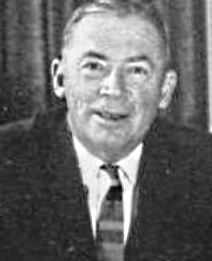
Office of Security Director Sheffield Edwards
The Committee was concerned with misleading statements Harvey made in official files regarding his use of Mafia member Johnny Roselli. Officials quote a memo by Sheffield Edwards in which Harvey "...indicated he was dropping any plans for the use of the subject...for the future." Harvey confirms he did make the statement and Mr. Schwarz of the Committee replies, "Now, that wasn't true, was it?" William Harvey states, "No, it was not true, and Colonel Edwards knew it was not true." Harvey further claims he undertook the deception on the record to create "...a logical termination on the file that Edwards had..." Harvey wanted "...to completely remove any duality in this, to remove it from the Office of Security and to permit Colonel Edwards to be able to say that as of such and such a date, as far as I, Colonel Edwards know, this matter is dead."xi Harvey sought to fabricate a recorded end to ongoing plots to further compartmentalize and remove them from the normal oversight system. This deceptive method also matches his prior suggestions in the ZRRIFLE notes.
Senator Frank Church subsequently presses Harvey for his feasible attempt to "falsify the record" and Harvey does not deny his action but responds he does not "...find the term falsify very palatable."xii Harvey's actions to disregard normal oversight procedures and not inform his superiors directly about the Castro plots drew wide criticism from the Select Committee on Intelligence. Senator Richard Schweiker refers to Harvey's intentional reporting lapses as " ...thwarting the very thing that you said this morning was essential by, in essence, entering into a conspiracy with your superior, to abort that process." Harvey contends despite the facts there was "...no collusion, agreement, conspiracy, to 'deny' information to the DCI (Director of Central Intelligence)."xiii He insists that he merely wanted to terminate the operation safely and decided to discuss the matter with his superior and felt that was sufficient oversight.
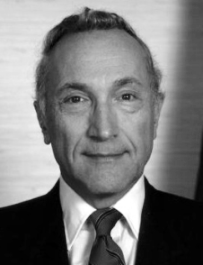
Senator Richard SCHWEIKER
Harvey attempts to justify himself to the Committee and dismiss Schweiker's criticism of his actions by stating he was in keeping with all professional standards of conduct. Among the "compelling reasons" Schweiker claimed full operational disclosure to the CIA highest leaders was necessary is due to Harvey's collaboration with the Mafia. A further reasonable concern of investigating officials was William Harvey's actions following his Agency employment. He continued a friendship with gangster Johnny Roselli that extends to several phone calls and personal visits at William Harvey's dwelling over the years following his retirement. Roselli at one point in 1974 stopped to visit at the invitation of Harvey, and while these multiple visits do not prove nefarious actions, they do infer Harvey maintained a "personal friendship" with his former assassination collaborator.xiv What common interests would a Mafia hit man and a former CIA officer connected to multiple assassination plots discuss in their free time?
September 24, 1975 Committee representative Frederick D. Baron interviews William Harvey regarding additional questions regarding the plans to eliminate Patrice Lumumba. Harvey claims that he never heard about assassination plans in the Congo, despite his former statements to the contrary. One interesting portion of Harvey's testimony suggests that Jose Mankel (QJWIN) was not under his control in the Congo but he was loaned to the CIA's African Division via Harvey's deputy. While related documents state this was a Staff D operation, Harvey replies that notation was merely "an administrative device to secure funding for QJWIN and allow for accounting out of Staff D funds." He also states that he never actually met Mankel in person.xv
William Harvey dies of a heart attack June 9, 1976 and unknown parties dismember Johnny Roselli two months later. Since then William Harvey based upon his statements, actions, and the evidence is a reasonable suspect in yet unsolved possible assassination conspiracies. Some claim Harvey is guilty and others declare his innocence but his wife CG Harvey, another CIA operative, sought to clear Harvey's name. Reportedly, she never did so due to legal agreements with the Agency and the damage it might financially inflict. Clara Harvey dies twenty-four years following her husband and never offers evidence that would dismiss the public allegations.
Harvey's words and deeds cast the shadow of suspicion upon him and those with access to the murderous plots he oversaw. His disregard for oversight and attempts to fabricate a portion of the legal record forces us to consider the question of how many others attempted to do so to support the Agency's operations. While deception is a key weapon for successful intelligence operations, when operators deceive their legal administrators and perform illegal actions by avoiding proper channels of oversight they become a serious danger. When they attempt to conceal illegality directed against the American public or media, they become the central threat to a well-informed citizenry. Such actions endanger the credibility of all related officials and possibly cloak nefarious peripheral actions.
Sincerely,
C. A. A. Savastano
TPAAK Facebook
References:
i. Mike McCormick, (April 28, 2007), Historical Perspective: America's James Bond: The new biography of William King Harvey, Indiana Tribune Star, tribstar.com
ii. House Select Committee on Assassinations, Segregated CIA file, Biographic Profiles of David L. Christ, William Harvey, and Howard Hunt, June 24, 1970, 104-10136-10362, p. 1
iii. Central Intelligence Group, Letter of Acceptance for Employment to William K. Harvey, September 29, 1947, Central Intelligence Agency Library, cia.gov
iv. President Commission on CIA Activities with the U.S., Excerpt from the Testimony of William K. Harvey, May 1, 1975, 157-10005-10169
v. Senate Select Committee to Study Governmental Operations with Respect to Intelligence Activities, Excepts from the Testimony of William Harvey, June 25, 1975, p. 9, 157-10002-10105, p. 9
vi. Ibid p. 49
vii. Senate Select Comm., Department of Defense Memo from Edward Lansdale, Alternate Course B of Operation Mongoose, August 13, 1962, 157-10004-10137
viii. Senate Select Comm., Excerpts from Testimony of W. Harvey, p. 9
ix. Ibid, p. 53
x. Senate Select Comm., Boxed Files, Testimony of William K. Harvey, p. 127, June 25, 1975, 157-10002-10106
xi. Ibid, p. 97
xii. Ibid, p. 100
xiii. Ibid, pp. 89-91
xiv. Ibid, pp. 140-141
xv. Senate Select Comm., Interview with William Harvey by Frederick D. Baron, September 14, 1975, 157-10011-10124, pp. 1-3
January 12, 2018
The Ochelli Effect's JFK 101 part 10 "The Pike Committee"
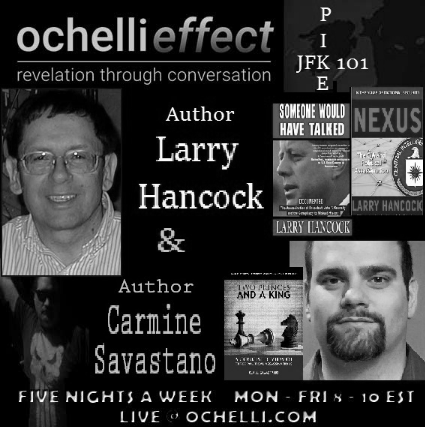
Join Historian Larry Hancock, advocate Chuck Ochelli, and researcher C.A.A. Savastano to inspect the Pike Committee and related evidence. #JFK #Pike #CIA
https://ochelli.com/jfk-assassination-101-pike-committee/
January 5, 2018
Sinister History returns to The Ochelli Effect

Sinister History returns to the Ochelli Effect! Author C.A.A. Savastano joins Chuck Ochelli to discuss and inspect the assassination of former Pakistani Prime Minster Benazir Bhutto. #assassination #sinister #history
https://ochelli.com/benazir-bhutto-assassination-rawalpindi-2007/
To review all Savastano's prior appearances on the Ochelli Effect and elsewhere click the following link: https://www.tpaak.com/author-information/
December 21, 2017
Castro Plots documents update
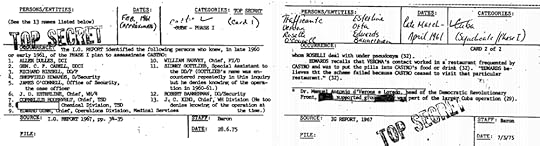
Presenting eight additional documents within the 2017 JFK Records files related to the Castro assassination plots. Among them are two extended lists of those with knowledge of the plots that includes Sidney Gottlieb, Robert Bannerman, Jake Esterline, Edward Gunn, and Cornelius Roosevelt. Also included is related testimony, summaries, and timelines that offer further details and dates of importance for your inspection. #JFK #Castro #assassination #evidence
https://www.tpaak.com/cia-castro-plots
December 5, 2017
The Power of the Press
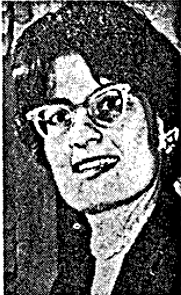
Priscilla Johnson McMillan
A nation of citizens that desires a free press must seek to promote an informed public and must at times rely on the content of the independent press to provide them neutral inspections that reports without agenda. The Fourth Estate is an honorary title reflecting the power of influence relegated to members of the media because they have no official power. Yet they do choose what historical and contemporary issues of importance are widely known to many citizens and their stories often can make and destroy the careers and lives of nearly any person no matter how beloved or reviled. However, we should also consider those revealed by evidence abusing this position to influence the public.
The Kennedy Assassination is among the most controversial topics dismissed by some media outlets and there is no shortage of bad ideas offered by some officials and fringe conspiracy advocates, yet there is a substantial amount of verifiable contending evidence as well. Evidence that confirms a minority of high officials sought to use the press to shield them from reasonable skepticism and the historic mistakes that still haunt their past investigations. A huge omniscient cover-up did not occur, but a series of multiple cover-ups by various officials to protect their reputations, hide past illegalities, and deny all possible ties linking them to people and suspects important to the case did repeatedly. When official narratives require a journalist to propagate them some are too willing to participate and do not understand every official interest regarding them might one day be revealed.
Businessperson Stuart Holmes Johnson and socialite Eunice Clapp Caroll were engaged in 1922 and subsequently married and had four children, among them was a daughter Priscilla Mary Post Johnson born in Glen Cove, New York on July 19, 1928. i Priscilla's family spent her formative years in a rich household within New York State and feasibly at the couple's summer residence as well. She later attended local elementary and high school in Long Island and New York respectively and began her college education at Bryn Mawr College earning a degree in 1950.ii She reportedly applied for Central Intelligence Agency employment in 1952.iii
By 1953, she had learned proficiency in three additional languages and gained her master's degree from Harvard College. The same year Priscilla graduated from Harvard she would serve for one month as the researcher on Southeast Asia for Senator John F. Kennedy.iv Following extensive investigation Agency officials disapprove her for employment due to connections with subversive groups and Johnson's liberal education.v Among these likely security risks was her employment for the Current Digest of the Soviet Press at Columbia University. She would make three trips to the Soviet Union according to her testimony and later withdrew her prior application for CIA employment.vi
Priscilla decided instead to use her diverse skills to become a reporter and she wrote articles for Colliers Magazine and became a freelance journalist in 1955. Subsequently Johnson began traveling the world working for various media companies abroad. She joined the North American Newspaper Alliance and travels to Europe to report about the Geneva Summit in 1955, the gathering reportedly was to deescalate and possibly end the Cold War. Johnson made contact and was debriefed by a case officer in 1956, and was issued provisional operational approval (POA).vii According to her Office of Security file Johnson "Johnson has been of prior interest to this Agency...was employed on a part time basis in the U.S. Embassy in Moscow during two periods of residence in Russia."viii
In April of 1958, authorities issue another POA request for Johnson and because she met the requirements for her use as a traveler and informant. Officials contend that Priscilla Johnson would be receptive to their proposal but the request canceled months later. During May, she consents to a "...'Embassy' briefing prior to departure to SU. (Soviet Union)" and she "Expressed willingness to do what could. Believe could act as spotter and contact appropriate Soviets of interest." Subsequently officials again disapprove Johnson for security clearance and deny the request for her use as a legal traveler "spotter".
However later clandestine Agency interest directed at Johnson was largely unknown to her. In September of 1958, Agency officials began targeting Johnson with the HTLINGUAL mail intercept program to observe her communications and they collected over thirty pieces of mail regarding her in the following years.ix She also worked as a translator for the Moscow desk of the Reuters news agency and states using diplomatic pouches at times to send letters and minor reports to the United States. Johnson also utilized some travelers to deliver her messages and stories to avoid Russian censorship.x
In 1959, Lee Harvey Oswald had been suggested a local hotel by Edward Snyder, a Consul official and CIA agent with State Department cover. John McVickar a different consul official at the United States Embassy in Moscow suggests that Priscilla Johnson meet with the defector Lee Harvey Oswald. Johnson interviewed Oswald for five hours in Moscow at the Hotel Metropol, where she too was a resident. She reported that from the interview she believed he was a soft spoken but angry young man who was an ideological Marxist defector.
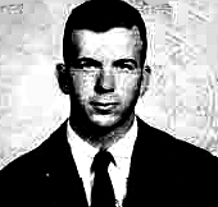
Lee Harvey Oswald Circa 1959
Yet it was not this often-discussed interview or later maligning of Oswald that Johnson undertook with a seeming agenda that is most notable but instead another item she failed to mention to the President's Commission. In a subsequent interview with the House Select Committee on Assassinations, she reveals that US Moscow Embassy employee John McVickar was worried about the actions of Second Consul Snyder. Priscilla relayed McVickar's fear that Snyder had pushed Oswald and teased him "...toward defecting rather than the other way." Later in the same interview, she denies a now documented relationship with the CIA repeatedly to investigators. She also informs them that she contacted Edward Snyder about the Oswald interaction.xi Johnson reports there were few precedents then regarding defectors and "there had not been many cases of defectors coming and getting out. There were cases of...people come to Russia in the thirties who got trapped, and who were never able to leave...once you 'defected', or became a Soviet...you could never leave again. And I assumed that was the fate he (Oswald) was headed for."xii
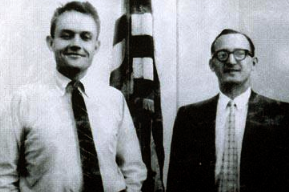
US Moscow Embassy Employees John McVickar and Richard E. Snyder
Despite the prior investigations and denials, a proprietary approval late in spring of 1962 sought to utilize Johnson as a media asset. Officials issue another request for proprietary approval to use her "...as News Editor and Writer for magazines subsidized by (redacted) under project (redacted)" Johnson reported information regarding the attempted assassination of Soviet Premier Khrushchev to the CIA in September of 1962. She additionally reported further information regarding her months of travel in Moscow, Leningrad, and London to Agency officials. The Agency contacts Johnson and selects her as the likely person to write an article for Agency operational purposes "in a major US magazine for our campaign". She also "...can be encouraged to write pretty much the articles we want."xiii
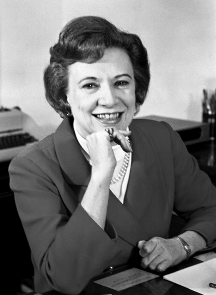
Yet while Johnson was interacting with the Agency in 1962, the Federal Bureau of Investigation received a list of correspondents who were possible Soviet Agents reporting political information. Richard Nixon's personal secretary Rose Mary Woods provided this list to the Agency and they began to exclude some listed names. Yet among those still under consideration during 1959 was Priscilla Johnson.xiv One file notes that in October a security check request concerning Johnson was made "...for routine exploitation of foreign positive intelligence."
Rose Mary Woods
Near the end of the year, a provisional covert security approval request was issued regarding Johnson's contacts in the Soviet Union under "project (redacted)". During 1963 another POA was requested and Priscilla had multiple meetings was an unnamed CIA employee prior to the Kennedy assassination regarding her previous intelligence connections. Officials grant her a covert security approval (CSA) in May of 1963 to debrief her again regarding her Russian contacts. The Agency feasibly related her debriefing to project AEDINOSAUR, a program to import censored books into the Soviet Union.xv xvi
In January of the next year, she met again with the same employee to discuss her prior interview of Lee Harvey Oswald and other related matters. She has a casual contact with an unnamed CIA component and employee that clear her for use in March of 1964.xvii Johnson writes the article "Oswald in Moscow" during April for Harper's Magazine, in the article she describes Oswald as "evasive...and too frail, psychologically, for what he had set out to do." She claimed that his alleged lethal role determined by officials was part of his "social protest", yet Oswald largely only praised President Kennedy according to related witnesses. If he wanted attention for his protests, it does not make sense that would not take credit for the allegations targeting him and forever be a part of Marxist history. Johnson speculates that President Kennedy was not a man but "a surprisingly abstract being, a soulless personification of authority." Of course, Johnson never offers evidence or sources to prove this but merely her officially aligned interpretation.
Despite Oswald's later return to the United States Johnson seemed to believe his determination to remain in the Soviet Union and never return. Oswald reportedly states he taught himself to read and write in Russian, yet he additionally offers "But I still have trouble speaking." Johnson states after listening to Oswald discuss Marxism and Soviet economics "...that his views were rigid and naive, and that he did not know his Marxism very well."xviii This would match Oswald's public claims of being a Marxist but possessing no deep understanding of the cause he claimed to advocate for and never verifiably attending Communist or Marxist meetings as nearly every active member would. Oswald I would contend has all the seeming of a Marxist but he possessed no verified allegiances. Johnson even admits in one part of her article that "I doubt Oswald was aware that he was violating Lenin's writings on individual terror when-an if- he pulled the trigger...I suspect, rather, that he was not Marxist enough to realize (assassination)...was the ultimate anti-Marxist act."xix
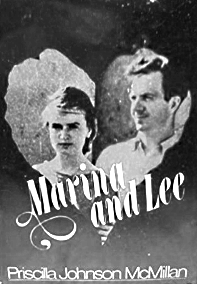
Priscilla also lived for a period with Marina Oswald and began writing her now famous book "Marina and Lee: The Tormented Love and Fatal Obsession Behind Lee Harvey Oswald's Assassination of John F. Kennedy." In 1964, she offers a narrative in the press supporting based on Johnson's speculation about Oswald's alleged mental states during the time she encountered him and beyond. Marina Oswald sends a letter to the President's Commission during this period asking for "all documents and belongings of my husband Lee Harvey Oswald...I am jointly working with Miss Priscilla Johnson on the book of my life with Lee Oswald."xx Interestingly, one anecdote Johnson offered later investigators that she omitted from her book was Marina told her Oswald contacted the US controlled Radio Liberty with a postcard to let them know he could hear them in Russia. He also listened to a broadcast of President Kennedy according to Marina.xxi
George McMillan
Following Johnson's marriage to George McMillan in 1966, her name became Priscilla Johnson McMillan. By 1967, Johnson McMillan was translating the memoirs of the former Russian dictator Josef Stalin's daughter. McMillan's does not publish her book "Marina and Lee" until 1977 amid the ongoing inquiry of the House Select Committee on Assassinations. One prior article regarding Priscilla captures her style of reporting, "The where-am-I expression she seems habitually to wear is a natural disguise for a fine mind and sensibility, as well as a stubborn talent for getting what she is professionally interested in having."xxii February 2, 1978 the House Select Committee interviewed Priscilla McMillan and during her biographic statement it is noted that George McMillan her husband was the author of the book "The Making of an Assassin, the life of James Earl Ray." It seems the couple had a penchant for endorsing official narratives.
Sincerely,
C. A. A. Savastano
TPAAK Facebook
i. Week in Society, (September 30, 1922), Mrs. Carroll and Mr. Stuart Johnson to Wed, Brooklyn Life, p. 8
ii. House Select Committee on Assassinations, Segregated Central Intelligence Agency file, Microfilm Reel 9, Hernandez-Loganov, Folder H, Priscilla Johnson McMillan, Personal Record Questionnaire, (n.d.), p. 2, 1994-04-07-11-53-41-840005
iii. HSCA, Seg. CIA file, Box 5, McMillan, Priscilla Johnson, 201 File, April 7, 1978, 180-10141-10205
iv. HSCA, Seg CIA file, Security File on Priscilla Johnson Macmillan, Oswald in Moscow, Box 43, pp. 48-49, 1993.08.13.18:14:26:210059
v. HSCA, Seg. CIA file, Box 43, Memorandum: Johnson, Priscilla Mary, March 23, 1953, pp. 1,2,8, 104-10120-10430
vi. HSCA, Numbered File, No Title, Interview with Priscilla Johnson McMillan, Tape 1, Side 2, 180-10076-10399
vii. HSCA, Seg. CIA file, Box 5, McMillan, Priscilla Johnson, 201 File
viii. HSCA, Seg CIA file, Security File on Priscilla Johnson Macmillan
ix. HSCA, Seg CIA file, HTLINGUAL Mail Intercepts, Box 10, 1993.07.12.16:57:53:000440
x. HSCA, Numbered File, No Title, pp. 7-9
xi. Ibid, p. 46, 49
xii. Ibid, p. 35
xiii. HSCA, Seg. CIA file, Box 5, McMillan, Priscilla Johnson, 201 File
xiv. Federal Bureau of Investigation, HSCA Subject Files, M-N, Aline Mosby, No Title, p.3, 124-90151-10015
xv. HSCA, Seg. CIA file, Johnson, Priscilla Mary Post (Comments on Oswald), Box 47, December 18, 1963, 104-10132-10105
xvi. HSCA, Seg. CIA file, Form - Request for Approval or Investigative Action, Box 43, 104-10120-10441
xvii. HSCA, Seg. CIA file, Box 5, McMillan, Priscilla Johnson, 201 File
xviii. HSCA, Seg CIA file, Security File on Priscilla Johnson Macmillan, Oswald in Moscow
xix. Ibid
xx. FBI, HSCA Administrative Folder F-11, Outgoing Commission Volume X, Letter from Marina Oswald to the President's Commission, September 9, 1964, 124-10371-10182
xxi. HSCA, Numbered File, No Title, Interview w/ PJM, p. 27
xxii. Security File on Priscilla Johnson McMillan
Related Podcast:
JFK 2017 Documents and Priscilla McMillan Johnson
November 22, 2017
C.A.A. Savastano joins others to discuss the JFK case with the Dallas Morning News
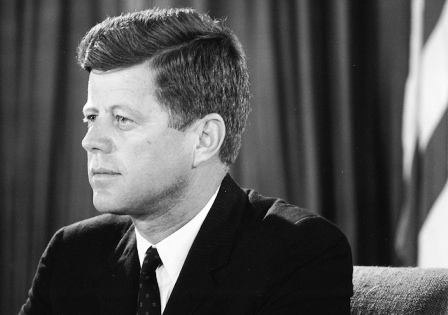
Author Carmine Savastano is among those researchers who recently discussed some of the new documents and the current state of the JFK case with the Dallas Morning News. #jfk #evidence
https://www.dallasnews.com/news/jfk/2017/11/22/new-jfk-documents-point-conspiracy-secrecy-still-leaves-questions-unanswered
November 18, 2017
2017 Lancer NID Conference Presentation Evidence
Offer below is the evidence regarding subjects Carmine Savastano discussed at the JFK Lancer 2017 NID Conference. Subjects included myths regarding Joseph Milteer, Tosh Plumlee, E. Howard Hunt, Judyth Vary Baker, Hugh Aynesworth, and Priscilla McMillan Johnson.
Myths and Misses in the JFK Case:
Myth 1: Joseph Milteer and a Plaza Full of Mirrors
Myth 2: Tosh Plumlee and the Abort Team Story
Myth 3: Where was E. Howard Hunt?
Myth 4:
Judyth Baker and The Castro Coffee Story
Myth 5: Hugh Aynesworth and the CIA
Myth 6: The CIA connection to Priscilla McMillan Johnson
November 10, 2017
The Consolidated CIA Files update
Offered for your review is the new Consolidated CIA Files section that contains profiles with up to six different types of documents for each reviewed subject and updated summaries that present over forty notable CIA employees, agents, and officers. Over thirty new additional multiple document files are included from the November 2017 JFK Records releases and new subjects include David E. Murphy, Samuel G. Kail, George F. Munro, Henry Preston Lopez, Birch O'Neal, and Jacques Richardson. New documents include Contact and Personnel Files regarding David Lamar Christ, Anne Goodpasture, William Harvey, E. Howard Hunt, Thomas J. Keenan, J. Walton Moore, and Lucien E. Conein. #JFK #evidence https://www.tpaak.com/consolidated-cia-files/


