
C.A.A. Savastano's Blog, page 13
May 22, 2018
Who was WIROGUE-1? part II
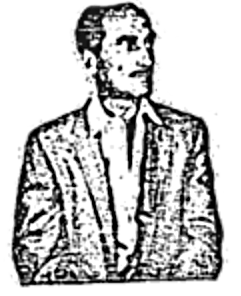
David Tzitzichvili aka WIROGUE-1
Most human beings are but a mass of contradictions, no more so than some participating in clandestine operations where both legal skills and illicit ones are often required. Seldom are those practicing tradecraft what they appear to be and in rare cases they are far more than even their handlers expect. One noted Central Intelligence Agency foreign contract agent was an inventor, bank robber, photographer, forger, researcher, and potential assassin. Most knew him merely under the shadowy moniker WIROGUE-1 for decades.
David Tzitzichvili aka WIROGUE-1 was reportedly born in Gori, Georgia, a later Soviet Union holding on July 12, 1918. His parents fled with him and a substantial amount of money prior to the Bolshevik invasion of Georgia. While his family lived excessively for a time, eventually they fell upon poverty and this hardened Tzitzichvili's desire for revenge against the Soviets. "He is a person who cannot tolerate being beaten in competition." He was educated in Paris and studied at several institutions as his family repeatedly moved within France. Several cases of educational rebellion, insubordination, and expulsions from multiple schools are the first signs of his eternal problem with authority.i His family later fell apart following his father and sister's return to Soviet controlled Georgia and his mother's resulting suicide from despair.
Tzitzichvili left his final college attempt with the outbreak of World War II during November of 1939 and joined the French Foreign Legion to serve in its 1st Calvary Regiment. During 1940 while attending a military training course, he withdrew and asked for reassignment to a unit comprised of all Georgians. That same year he was assigned to his requested unit and was discharged when France lost significant territory to German annexation.That same year Tzitzichvili was assigned to his requested unit and was discharged when France lost significant territory to German annexation. During 1942, he was self-employed managing a photo shop in Paris and began training himself in document forgery using personal identification papers and practicing additional photographic techniques.
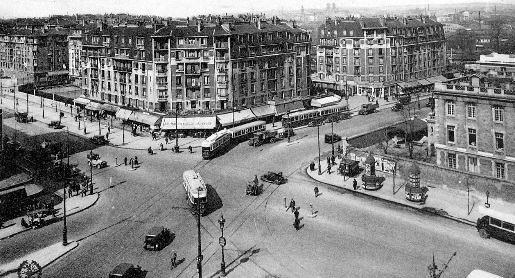
A panorama view of Porte CLIGnanCOURT within Paris France CIRCa the 1930s
Tzitzichvili then went to Berlin and found production line work where he received a commendation for developing a cartridge case adjustment device. Privately he began to alter past German official stamps and travel forms and formed a small resistance cell to repatriate and liberate war prisoners. Within two years he was creating several travel documents and learned photographic skills that allowed him to develop more impressive forgery techniques and the recycling of old forged documents. David later provided these augmented materials to people who sought to travel across Germany territory. His illegal activities further expanded into the counterfeiting of German financial vouchers in time. It was during this period he lost his left index finger and thumb in an explosion after attempting to salvage a bomb. Tzitzichvili subsequently worked as a translator for German police having already become proficient in Georgian, French, and German and had a fair grasp of English.
The WIROGUE-1 Project Outline reveals the "subject was arrested by the German police for forgery. He was not unduly held by the criminal investigation branch of the police but passed on to the Gestapo. Subject was brought to Berlin where he was interrogated for several months at Gestapo headquarters." Eventually Nazi officials sentenced Tzitzichvili to death but he convinced officials of his inventive skills it was possible to develop a motor that could run without gasoline. Using the false motor claim, he was able to postpone his sentence and moved from camp to camp until Allied forces later freed him.
Following WWII Tzitzichvili returned to Paris and was employed by a company to perform electrical installation planning and the construction of proto-type model builder. He committed two successful jewelry store robberies on behalf of a friend but a successive bank robbery attempt led to his arrest in 1950 when his co-conspirator informed on him. While serving his prison sentence David Tzitzichvili developed and sold a pocket automatic transit indicator and received a cash settlement for his latest invention in the early 1950s. In 1953, he gave his prison administrator an invention for making cardboard boxes the official constructed and later used. During 1955 Tzitzichvili gains employment as an X-ray machine technician and operator and less than two years later he invented, patented, and sold a calendar device to the French commercial market. While his aggressiveness and criminal intent are often noted, his technical skill and intelligence were largely unknown. He is not a mere criminal patsy but an intelligent operative that a year later in 1958 invented and patented a commercial photomechanical advertising device.
The Central Intelligence Agency first contacted Tzitzichvili in 1958 after they received a lead regarding him. The Agency Station in Frankfurt, Germany recruited him for the Soviet Russia Division in 1959 for use in their REDSOX program targeting the Soviet Union with illegal operations. Officials were concerned after his initial recruitment if he could actually work reasonably with another agent in the proposed operation. Following his psychological assessment and polygraph testing officials decided he would be utilized and one summary reports "Another aspect of his system of ideals proceeds from the life concept of chivalry...This involves the defense and the protection of the oppressed and the weak. It is sort of a Robin Hood concept which he attributes to himself...In other words he is motivated to helping others to obtain love and affection." Despite the very destructive and criminal nature of his repeated actions, he seemed to still be partially motivated by a warped sense of nobility. Yet a motivation to "succeed out of a spirit of revenge" taints his declared "nobility".ii
The first cryptonym he was assigned is AEASPIC and was trained in April 1959 to serve in another CIA project.iii His training at a "covert site ops base formerly in the District of Columbia" included clandestine field operations, small arms, Soviet interrogation techniques, the Russian language, the AESENTINEL operations plan, and air infiltration and exfiltration techniques and the related aircraft that best served these attempts to enter and exit restricted areas.iv However, Tzitzichvili's use in AESENTINEL was postponed and he was assigned to the CIA Technical Services Division to perform cataloging and developmental roles.
Officials cancel Project AESENTINEL as Tzitzichvili was living in Washington D.C. on June 17, 1960, and he was reassigned to the African Division after it "expressed interest and agreed to utilize him." Eventually officials would replace his cryptonym with its more notorious incarnation WIROGUE-1. One of multiple pseudonyms he would further assume for operational use is Georg Franz Heiner. Despite the extensive use of WIROGUE-1, he reportedly was not aware what specific intelligence group was using him. "He knows he is connected with some intelligence organization...He does not know anything about KUBARK (CIA) organization nor its modus operandi."v The Agency considers resettling him in Mexico during August of 1960.vi
David Tzitzichvili is later a foreign contract agent deployed to the Congo under the cover of a photographic business owner. To prevent his discovery by prior associates and enemy agencies he undergoes plastic surgery, wears a wig, and his false documents claim he is Austrian. His mission's initial purpose is to "provide a long term deep cover asset...in the Republic of Congo and adjacent areas in order to build a covert net in support of operation activities and to provide an asset utility support for KUBARK personnel under official cover."vii The Eisenhower Administration had prior decided that Congolese Prime Minster Patrice Lumumba was a threat to national security due to his countries extensive uranium holdings. Lumumba's decision to undertake diplomacy with the Soviets and others who might threaten US access to these uranium stores inspired the discussion and planning of his potential assassination.viii
Leopoldville Station within the Congo sent a message after reviewing the project to CIA Director Allen Dulles that offered, "WIROGUE One appears to be just what the doctor ordered."ix Agency officer William Harvey consequently uses him for spotting and recruiting potential sabotage agents and assassins under Project ZRRIFLE. Tzitzichvili and even more notorious sabotage agent and potential assassin QJWIN stay in the same hotel during December 1960. The CIA's Leopoldville Station would eventually regret using Tzitzichvili for his "freewheeling... lack of security...inability to handle finances, and unwillingness to follow instructions." It seems WIROGUE is ever a classic example of personality beset with contradictions.
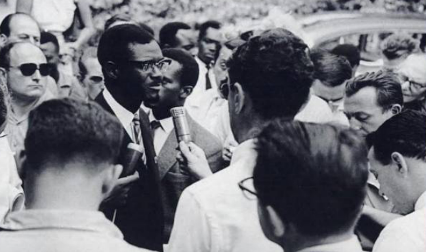
Patrice Lumumba Speaks at A Press Conference During the Congo Crisis
Some details make Tzitzichvili a perfect candidate for political assassinations and illegal projects such as his dependency on the CIA. Officials in there project assessment confide to each other "The more important built in control is the fact that he will be under false documents, and being stateless, he is completely dependent on KUBARK to perpetuate his quasi legal existence to eventually legalize his status. Added to this is the control which stems from the prospect of resettlement in another country. This would give him status as a citizen. Realizing these points, subject is more than willing to play ball with us." Added to this advantage is Tzitzichvili's chronic need to commit escalating crimes and challenge his intellect without consideration to the law. He is skilled in multiple languages, covert operations, well versed in deception, and had extremely valuable technical insights.
Yet he also presents the same unpredictable streak we can observe in various intelligence related individuals and Tzitzichvili further has a severe issue with authority he believed was undeserving or unfair. While evidence does not support that he was utilized to kill Patrice Lumumba and had distinct problems with following orders, he still proves to be a useful mold for a potential assassin officials would utilize in the right circumstances. In 1964, Tzitzichvili was turned over to another official group for resettlement and the Agency believed he could not cause potential controversy because he knew little of the CIA. Officials did not anticipate the later notoriety his assigned cryptonym would gain and its attachment to programs historically related to the Kennedy administration later files declassified would reveal.
Sincerely,
C.A.A. Savastano
References:
i. Central Intelligence Agency, 201 File on WIROGUE, Volume III, Subject: David, January 8-10, 1959, National Archives and Records Administration Identification Number: 104-10182-10057, pp. 1, 2
ii. Ibid, pp. 2-3
iii. CIA, 201 File on WIROGUE, Volume III, Project Outline, November 16, 1960, 104-10182-10069, pp. 1-4, 8
iv. CIA, File on WIROGUE, Subject: Informal Character Assessment of WIROGUE, October 9, 1964
v. CIA, WIROGUE, Volume III, Project Outline, pp. 5-7
vi. Ibid, Mexican Resettlement Arrangements for AESENTINEL agent AEASPIC, August 19, 1960
vii. Ibid, Financial Annex, Project WIROGUE-Loan, November 16, 1960
viii. House Select Committee on Assassinations, CIA Segregated File, Memo on QJWIN, Box 36, NARA ID: 104-10103-10291, pp. 1, 7
ix. CIA, 201 File on WIROGUE, Volume III, Cable from Leopoldville to Director, WIROGUE, November 2, 1960
Related Articles:
Who was WIROGUE-1?
Related Collections:
Project ZRRIFLE


May 18, 2018
The State of JFK Research Panel and New Cryptonyms

Join the founder of History Matters and President of the Mary Ferrell Foundation Rex Bradford, researcher and advocate William Kelly, researcher and author Carmine Savastano, and attorney and researcher Bill Simpich for the State of JFK Research Panel. Your host and researcher Chuck Ochelli and his guests discuss the JFK case history, the new documents releases, how to get involved, and how to possibly secure the remaining files still beyond the public's reach. #JFK55 #documents #MFF #AARC

Review newly added CIA cryptonyms (code names) that decode nations, people, and operations that include AMSMILE-1, KMULCER, AMRAZOR-1, and PDDONOR.
May 14, 2018
The Ochelli Effect with Hancock and Savastano on MLK's Assassination

Join researchers Larry Hancock, Carmine Savastano, and your host Chuck Ochelli to discuss the assassination of Dr. Martin Luther King Jr., the significant problems in the official narrative, and the challenges that lay ahead. #MLK50 #assassination #evidence
May 5, 2018
C.A.A. Savastano joins the Ochelli Effect for more Sinister History

Author C.A.A. Savastano returns with Chuck Ochelli to the files of the JFK case and they compare new and prior evidence that supports and contends prior allegations. Join them to assess the claims and facts regarding long held official pronouncements. #JFK #CIA
May 1, 2018
Disturbed Men II
Among the regular criticism offered by those who oppose a feasible conspiracy regarding the assassination of President Kennedy is the Central Intelligence Agency would not use Lee Harvey Oswald because of his alleged character and unstable lifestyle. Yet official documents prove that is not the case and when Oswald is compared to some cases of highly unstable operatives and unsavory former enemies the Agency used, Oswald comparatively is the most stable choice offered. Despite asserting instability would preclude official use by the CIA, the evidence reveals it certainly did not.
Unquenchable commitment to a goal is admirable when the cost of such exertions leads to beneficial results, but some goals are not too lofty but left to better circumstances and personnel to execute them. Some officials in the Central Intelligence Agency would not just bend the rules for moments of great consequence, but ignore them when they deemed a potential operative or source was too valuable to allow normal protocols. Public backlash and international blowback were not overwhelming considerations when compared to operational goals. Even madness and crimes against humanity would not dissuade the use of some monstrous individuals for Agency projects following World War II.
The Soviet Russia Division of the CIA employed forty five year old Latvian born Freds Ziedonids Launags as a contract agent from "1951 through 1959". He was a member of the Latvian underground targeting Soviet interests and operated seemingly under military cover according to public sources that attribute service to the US military during this period. Launags was recruited in Sweden and transported to Germany to participate "...in training of REDSOX agents dispatched in Latvia in 1952." REDSOX operations included illegal actions directed at Soviet targets that included but was not limited to intelligence gathering, recruitment of sources, and using agents for spot targets for sabotage. However, all other agents used in these operations were exposed and the Soviets "...either killed or captured" all of them. Launags was utilized two years for "...general support purposes" and in 1955 he indicated on an official medical history that he had been nervous since the end of WWII and "attempted suicide in 1951". After examination by official medical staff, he was "found to have had a brief psychotic episode in 1951 and always had a schizoid type of relationship with people with many obsessive-compulsive defenses." His coworkers referred to Launags as a "character" and he was assigned temporary duty in 1955.
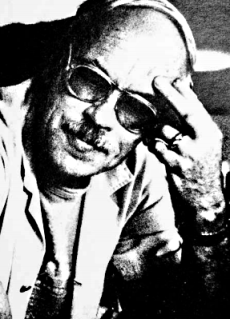
Freds Z. Launags circa 1983
CIA officials subsequently place him in Spain to perform propaganda broadcasts to Latvia via Radio Madrid. During his service in Madrid Launags "...had many paranoid projections and felt that he was under constant surveillance and that even his colleagues hated him." Despite Launags posing a feasible danger to CIA operations and himself the Agency continued to use him for years. In 1957, officials undertake another evaluation of Launags reaffirming prior findings of psychosis and further add depression to the list of problems. Despite these affirmations and the years of aggressive mental problems, the CIA again reassigns Launags to Germany where he performs operations in the Baltic launched by the CIA's Frankfurt Station.
One documents states, "The same pattern of paranoid projection, loss of contact with reality, and a constant delusional framework of reference occurred in his recent PCS to Germany." Launags was forced to return from his German assignment in 1959 "...when he showed evidence of mental instability."i Agency mental health experts diagnose him as "a paranoid schizophrenic" and place him in the hospital for a brief duration. A related document using Launags pseudonym Raymond S. Churgin states "The Subject apparently again experienced an acute paranoid schizophrenic reaction from which he recovered during the time that he was under examination by the Psychiatric Staff".ii
The Agency fired him once they had repeated confirmation of Launags psychological instability. A month following his dismissal Agency employees met with Launags to relieve him of a weapon he retained and to gather information about his current activities. Yet Agency employees use the false pretense of wanting to give Launags an assignment to meet with him and the CIA had multiple employees from the Medical Staff and Office of Security present for this gathering.iii These additional measures were due to Launags insanity and were largely four years too late.
After Launags arrives, repeated employment losses force him to consider repatriating back to Latvia but the Agency seeks to prevent this by persuading him to seek mental help domestically. This was likely due to the possible exposure of clandestine plots and the blowback suffered when they are revealed. During subsequent years, Launags might have received some of the medical treatment necessary because he is later referred to as a writer, poet, and member of the Latvian resistance in media publications. Yet it took the CIA over four years and three evaluations to relieve Launags of his official role. How many Agency operations might have been compromised because the person undertaking them them was deranged?
Yet while some truly disturbed individuals are used, many did not have a choice in battling internal demons because they were predisposed to psychosis. Others however were guilty of monstrous deeds that clearly revealed psychosis in their repeated actions serving the most hated dictator of the twentieth century. A particularly brutal and murderous person selected for use in the Agency's operations was Theodor Emil Saevecke. According to one Agency file, he was born in Hamburg within the nation of Germany and educated in multiple secondary schools. Subsequent to his graduation Saevecke joined the Germany Merchant Navy where he eventually became a junior officer. Following a dismissal for health reasons, Saevecke joined the Nazi group the Saalschlacht (SA) that supported Adolph Hitler's rise in 1929. He then was employed as a German law enforcement official and investigated arson, murder, and traffic cases until WWII began.iv
Saevecke then became an officer in the SA until the group is destroyed and supplanted by the Schutzstaffel better known as the Nazi SS paramilitary organization. He later aided the German war effort in Poland and Tunisia and rose to become a Captain in the SS and Commander of the regional Gestapo secret police. Nazi leaders assign Saevecke the Lombardy region of Italy and he took residence in the city of Milan. Decades later, he is charged for ordering over a dozen officially sanctioned murders, linked to the abuse of Jewish prisoners in Tunisia, and hounded by persistent accounts that he ordered several public deaths by hanging or firing squad within Poland during 1939.v Allied forces imprison Saevecke after the war but eventually they release him without charges from their custody.
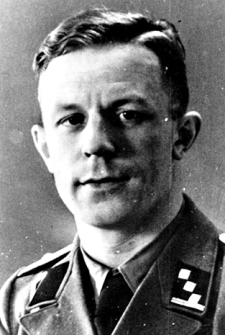
TheoDor E. Saevecke
By 1951, the CIA recruited Saevecke for use in an undertaking that sought to gather intelligence leads, sources, and spot potential Soviet defectors for recruitment. Officials dubbed the assignment Project CAUTERY and during this period the Agency confirms Saevecke would "literally stop at nothing to suppress the Communist movement, against which he has felt an elementary hatred since the 1920's"vi Saevecke is assigned the cryptonym CAUTERY-2 and serves as the right hand of Hanz Lobbes, another former Nazi officer in the same project.vii Officials briefly summarize the hideous crimes Saevecke had committed and state, "CAUTERY-2) poses somewhat of an operational and security problem inasmuch as, at least on paper, his Third Reich record is thoroughly bad. He was a ranking SD functionary and a Nazi with heart and soul...despite serious misgivings we decided to enlist his services after all..." The Agency confirms using Saevecke because "he was never indicted for War Crimes" and CIA officials believed "that the specific assignment to which CATUERY has devoted itself even an enlistment of the devil as sub-source should not necessarily be frowned upon."viii
In 1954 Saevecke was one of several former Nazi agents that later gained employment with the SD West German police organization established less than a decade prior. The Security Group of the West German Criminal Police Office in Bonn employed Saevecke and he was also simultaneously a liaison contact with an unnamed US government agent and sought help regarding his public denunciation by an Italian religious official and his supporters. Eventually he was suspended and investigated but the Agency was "unhappy" about the latest charges targeting Saevecke and "...would like to help should we be in a position to do so". Officials cite the charges potentially would damage not just Agency interests but the command structure and morale of the West German Police.ix Additionally, if Saevecke was found guilty he would likely also be prosecuted for wartime crimes by a German court as well. Should that have occurred it was further possible Saevecke would compromise all the CIA operations in which he was involved.
Saevecke's part in police searches targeting German press outlet Der Spiegel for treason and the resulting scandal brought renewed attention to him. As his past was again facing scrutiny in the press, he transferred from the SD to the BKA Weisbaden aka the German Federal Criminal Police Office in 1963. The Agency learns additional information on Saevecke's time in Tunisia would also likely face investigation, a month following his transfer the Die Welt newspaper carried a story revealing more about Saevecke's past military assignments.x The same document also reveals the Agency provided files to the German Ministry of the Interior in 1955 and"...were able to provide...a body of info which helped serve to exonerate him from the charges".xi Thus, the CIA continued to aid Saevecke despite the worst portions of his past that should have precluded him from service.
June 9, 1999, Theodor Saevecke was convicted in absentia of war crimes at the Turin War Tribunal presiding within Italy. The tribunal sentenced him to life imprisonment for ordering the murder of fifteen Italians held at San Vittore prison via troops under his command. Saevecke had ordered his men to publicly execute the prisoners and leave the bodies in the square for a day to send a message to local citizens. The legal panel found his crimes while in Milan deserved life imprisonment but the nation of Germany would not extradite him and he died years later without facing justice for his crimes.xii
Launags was a demented person the Agency found value in and was given responsibilities he never should have been. What other mistakes over the years occurred because his fragile mind could not handle the pressures upon it? Saevecke committed abhorrent misdeeds and deserved to face justice but the Agency disagreed while assisting his escape from legal prosecution. Lee Harvey Oswald seems like an even-tempered and reliable soul in comparison to some who verifiably served the Central Intelligence Agency. If official groups will offer deception and ignore the guidelines upon which they claim to operate with ease, it is not unreasonable to doubt their other pronouncements as well.
Sincerely,
C.A.A. Savastano
TPAAK Facebook
References:
i. Central Intelligence Agency file, Launags, Freds Vol. 4, Fred Z. Launags Possible Repatriation to Latvia, January 29, 1965, CIA Library Reading Room, cia.gov
ii. CIA file, Launags Vol. 3, Churgin, Raymond S., October 9, 1959, CIA Library Reading Room, cia.gov
iii. CIA file, Launags, Freds Vol. 3, Meeting with Raymond S. Churgin (P), November 31, 1959, CIA Library Reading Room, cia.gov
iv. CIA file, Saevecke, Theo 004, First Detailed Interrogation Report on Five PW from Sipo UND SD Aussenkommando Milan, Source: Theo Saevecke, (n.d.)
v. CIA file, Saevecke, Theo 0065, LCIMPROVE, Theo Saevecke, January 14, 1964, p. 2, 3
vi. Ralf Beste, Georg Bonisch..., (March 6, 2012), The Role Ex Nazi's Played in Early West Germany, Der Spiegel, spiegel.com.de
vii. Research Aid: Cryptonyms and Terms in Declassified CIA Files Nazi War Crimes and Japanese Imperial Government Disclosure Act, National Archives and Records Administration, (n.d.), archives.gov
viii. CIA file, Lobbes, Hans Friedrich, Operational REDBIRD, Project CAUTERY - Progress Report, January 16, 1951, p. 4
ix. CIA file, Saevecke, Theo, 0038, Theodor Saevecke, CIA Library Reading Room, July 19, 1954
x. CIA file, Saevecke, Theo, 0059, Theo Saevecke Operational Cart, December 28, 1962
xi. CIA file, Saevecke, Theo, 0055, Cable from Frankfurt to the Director, February 28, 1963
xii. The Oxford Companion to International Criminal Justice, Saevecke, Oxford University Press, January 22, 2009, p. 902
Related Articles:
Disturbed Men
Related Podcasts:
T
he Man Who Claimed Too Much
April 29, 2018
The HSCA Tarasoff Tapes
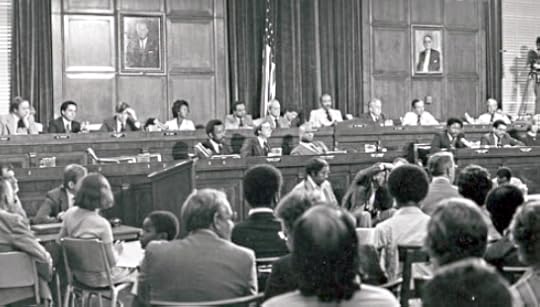
The House Select Committee on Assassinations circa the late 1970s
Presenting from the latest JFK Assassination files the House Select Committee on Assassinations interview of CIA Mexico City employees Boris and Anna Tarasoff. They are responsible for translating and transcribing the controversial cables that allege Oswald was present multiple times at both the Soviet and Cuban Embassies during 1963. #JFK #evidence
Tape 1
Tape 2
April 23, 2018
JFK 101 part 12 "The HSCA" Investigation

Presenting the Ochelli Effect's latest episode of "JFK 101" with authors Larry Hancock, Carmine Savastano, and your host Chuck Ochelli. Join them as they discuss the origins, evidence, and conflicts within the House Select Committee on Assassinations. #JFK #HSCA
April 21, 2018
...
C.A.A. Savastano stops by to chat with Midnight Writer News editor S.T. Patrick about the JFK case, evidence, an official guide to assassination, and they review public and official myths.
April 13, 2018
The Ochelli Effect 's Sinister History Returns!

Researcher Carmine Savastano joins your host Chuck Ochelli to discuss the often unknown dozens of subprojects under the MKULTRA umbrella. They additionally discuss the little known biological and chemical weapons program referred to as Project MKNAOMI.
April 6, 2018
The Ochelli Effect and Expanded MLK Investigation Files

Administrator, educator, and advocate for socioeconomic justice Garland Brown returns to discuss the legacy, progress, and the elusive things still needed to fulfill Dr. King's dream with author Carmine Savastano and your host Chuck Ochelli.
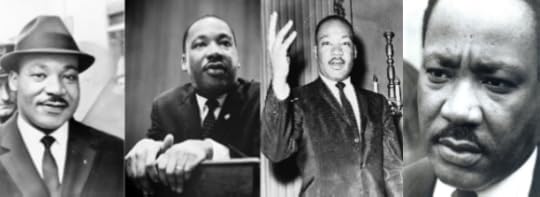
Additionally offered is an expanded and updated MLK Investigation Files section with additional evidence and information regarding persons of note, FBI illegality and CIA surveillance targeting Dr. King and his cadre. #MLK50 #evidence


