Lucy Pollard-Gott's Blog, page 5
October 18, 2015
Travel the World in Books Readathon–Day 1 Intros and Photo Challenge #TTWIBRAT
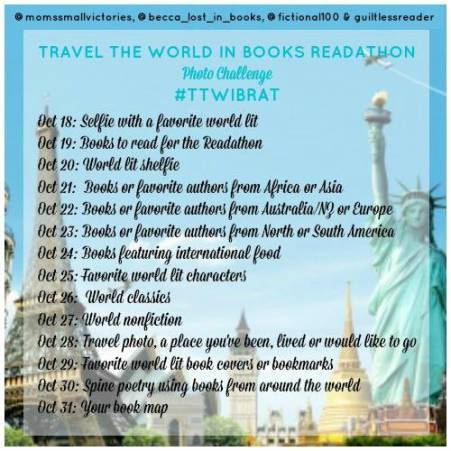
Image courtesy of potowizard at FreeDigitalPhotos.net.
The 2nd annual Travel the World in Books Readathon has begun! It’s a beautiful fall day here in NJ, crisp and sunny, and perfect for reading with the curtains open and some great music in the background. But first…
Time for Tanya’s delightful Photo Challenge which runs throughout the readathon. It gives us a chance to rummage through our bookshelves (boxes, bags, toppling piles, as the case may be!) and locate favorite books we’ve read or are planning to read that transport us to another place, and share a photo of them. The Photo Challenge also includes other fun book-related and travel-related items to hunt up. I knew this challenge was coming, so I joined Instagram and posted my first picture–a selfie (naturally) with a favorite from world literature.
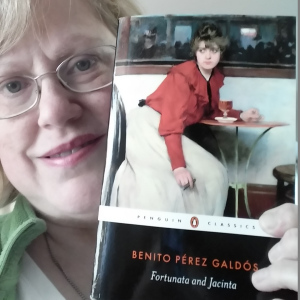
#TTWIB Photo challenge Day 1
I have just begun Fortunata and Jacinta by Benito Pérez Galdós, but I think it is a favorite in the making. I already admire the rich character development and beautiful writing (through the gifts of translator Agnes Gullón), and the love triangle these two women endure for a very long time is likely to make a heart-wrenching and memorable story. This book isn’t even on my posted Readathon plans, but these things are flexible, right? I may just pick this up and keep reading.
I don’t know what other introductions to add right now, except that I love to read world literature, especially when I discover classics from other countries, and I love blogging and keeping up with new sightings of the Fictional 100 characters (here is my ranked list of them). I’m looking forward to checking out everyone’s photos and #TTWIBRAT postings! Stop by Mom’s Small Victories to see the full schedule of events for the readathon, including discussion topics, guest posts, and mini-challenges.


October 13, 2015
#FrightFall Read-a-thon 2015: Wrap-up Thoughts
I send big thanks to Michelle at Seasons of Reading for graciously hosting this year’s #FrightFall read-a-thon. As usual, readathons create some motivation to select something and try to finish it–something I am sometimes slow to do!
I ended up reading two of my planned fairy-tale retellings, Deerskin and White as Snow.
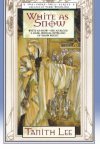
White as Snow by Tanith Lee was indeed a chilling retelling–more of a retooling–of the ‘Snow White’ story. It had flashes of insight certainly, and proved to be very involving, although quite shocking and painful to read. Half of the book was about the Queen and the brutal crime that had warped her spirit early in her life. The second half of the novel was about her daughter Snow White, but at this point her story merged with the Persephone myth and some fairly standard Celtic elements of the Beltaine stag figure. The span of time in which Snow White lived with the dwarfs was the most creative part of the book, and recaptured my attention. The tone of this part reminded me of War of the Flowers by Tad Williams (which I liked better).
Deerskin, which I didn’t finish yet, also subjects its main character, Princess Lissla Lissar, to terrible violence and betrayal early in the story at the hand of her father the king. She is wholely sympathetic, though sometimes rather stuporous in her trauma. She must flee for her life, and in the process of survival, suppresses her true identity, even from herself. She assumes the name Deerskin, after receiving a supernatural gift of a deerskin dress. The chapters where she is living off the land with only her greyhound Ash for company are beautifully and tenderly written. I will definitely keep reading this one to the end, and I look forward to reading both of McKinley’s retellings of ‘Beauty and the Beast’–Beauty and Rose Daughter.
I have to wonder why, in both these retellings, two such highly regarded writers as Tanith Lee and Robin McKinley chose to subject their main female characters to such brutal crimes, described so graphically. Whereas often the ‘Grimmest’ of fairy tales only threatens a potential for crime or taboo-breaking in the story, while not enacting it, these tales are merciless and rescue does not come. In the aftermath, these women suffer, very realistically, a total deadening of spirit, a numbness and hollowing out of soul. The rest of the story offers opportunities, however slender, to find their way back to selfhood and a sense of wholeness. It seems no accident then that fairy tales are one vehicle now, in our time, for holding up a mirror (a magical mirror in White as Snow) to the violence against women in our world, by no means a thing of some mythic or misty past.

October 11, 2015
Travel the World in Books Readathon, Oct 18-31 #TTWIBRAT
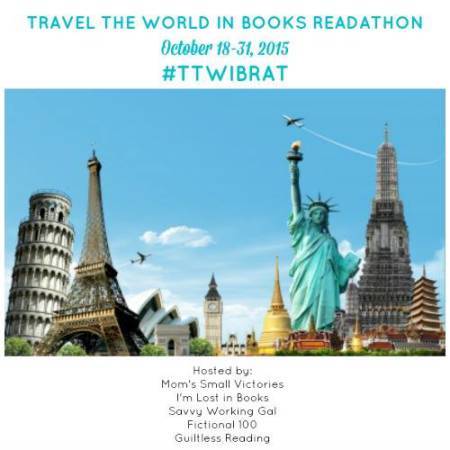
I’m so happy it’s Fall again and time for another Travel the World in Books Readathon! It was such great fun last time, and also a great stimulus to reading widely and diversely, discovering new writers and their books from around the globe. This year I’m very happy to be joining Tanya of Mom’s Small Victories, Becca of I’m Lost in Books, Savvy Working Gal, and Aloi of Guiltless Reading as a co-host! I’m planning a mini-challenge, about favorite characters and the cover art they inspire, for the second week of the readathon. I will also be hosting a Twitter chat, along with Savvy Working Gal, where we can discuss what we’ve all been reading. Once you SIGN UP, you will get updates with all the particulars for events during the Readathon.
The thing I love about the challenges and linkups that Tanya creates is the way they are relaxed and laid back, yet abundantly clear, structured, and inviting. Right from the beginning last year, I felt like I knew what to do and where to begin, and I could pick and choose the mini-challenges and events that interested me most. I’m so glad that Guiltless Reader Aloi will be offering her mini-challenge again where we can make our own Google Maps of our reading. Hers is awesome, and I plan to add to the one I started last year. I’m also looking forward to Tanya’s Instagram challenge, especially since I just (or, should I say, finally?) joined Instagram so I could participate!
The Readathon is part of the ongoing Travel the World in Books Reading Challenge, but you don’t have to sign on to that to do the readathon–unless, of course, you want to! The purpose of the readathon and the challenge is the same:
Explore countries other than the one where you live. Read as much as you can of books set in a different country or by an author from a different country. Read for your own pleasure or learning, read with your kids or both. Travel the world from the comfort of your own home and learn about different cultures. Expand your horizons and show publishers that #WeNeedDiverseBooks to promote cultural understanding and diversity in our reading. Support diverse authors and books.
We’ll be using #TraveltheWorldinBooksRAT and #TTWIBRAT as our hashtags for posts and social media during the Readathon. I’ll probably opt for the shorter one, to have more room to tweet!
Sign up and link up, and you can sample ideas for diverse books from those who have linked up already. I know I will refer to Becca’s fabulous list of books she has read by Country and Culture (organized by continent). Stop by Guiltless Reading’s post to find her links with many book ideas, including her Notable Reads in 2014 for the reading challenge.
What I’ll Be Reading This Time
I’m planning on finishing two books that both begin with characters traveling by train:
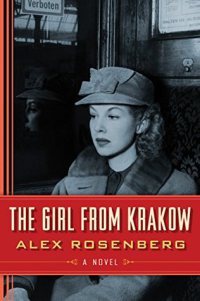
The Girl from Krakow by Alex Rosenberg shows one woman’s perilous activities during wartime.
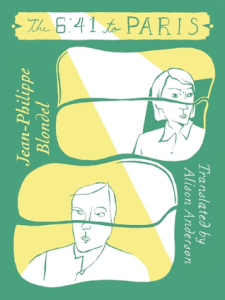
 The 6:41 from Paris by Jean-Philippe Blondel puts two characters in an awkward emotional situation when they meet on a train.
I’m also going to keep reading The Idiot by Fyodor Dostoevsky. The title character, Prince Myshkin, is viewed as an “idiot” in the very Russian sense of the Wise Fool, one who is touched (and a bit tetched) by God. This character is usually regarded as a Christlike figure–he is a gentle soul whose simple goodness is uncompromising, and therefore sometimes perplexing to those he meets. After reading The Brothers Karamazov, I have been eager to read this one too.

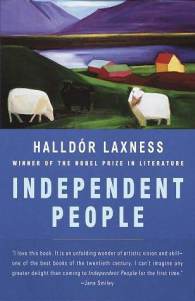
As part of my Northern Lights Reading Project, I plan to continue reading the Icelandic classic, Independent People by Nobel-prize-winner Halldór Laxness. This modern-day saga of an irascible sheep farmer and his wife is compelling reading, and quite fascinating!
Happy reading!

September 30, 2015
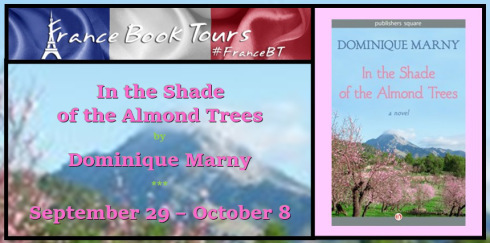
Review and Giveaway: “In the Shade of the Almond Trees” by Dominique Marny #FranceBT
MY REVIEW
In the Shade of the Almond Trees by Dominique Marny is historical fiction at the intersection of many of the features I especially appreciate: It is a family saga. Set in the immediate time after the First World War, it shows the effects on family life at the home front. The Barthélemy family has lost their patriarch, who died at Verdun. His widow and children must deal with their grief and the challenge of running their business in the postwar economic climate. It is set in the French countryside, outside the village of Cotignac, in the center of Provence, where the Barthélemy almond trees and olive groves have provided the family’s livelihood.

Place de la mairie de Cotignac – Var – France. By Technob105 (Own work) [CC BY-SA 3.0], via Wikimedia Commons
The pace of Marny’s prose is measured and restful, like the undulating rows of olive trees in their estate of Restanques.“They went around a pigeon coop, then down the steps that led to the yard’s first terrace. Restanques spread down a hill over several acres planted with almond, olive, and fig trees, all on terraces held together by stone walls.” (p. 11)
This view, which Jeanne Barthélemy shows visiting botanist (and soon-to-be love interest) Jérôme Guillaumin, may be restful but the problems she faces are urgent and unsettling: how to maintain the smooth operation and solvency of the almond nougat and olive oil businesses without the support of her mother or the immediate help of her brother, Laurent who is bitten by wanderlust. As a further complication, an opportunist land speculator called René Verdier has bought the neighboring estate of Bel Horizon, with an eye to romancing the naive Barthélemy widow and gaining control of Restanques too. Jeanne tackles the demands of running her businesses with determination and creativity, but very humanly, she faces genuine discouragement at times and her own romantic blind alleys. But, as Jérôme advises her,
“You’re pursuing a dream–yours, which gives your life meaning. … What you’re accomplishing here, right now, will be yours forever.” (p. 174)
What I liked most about this novel was that it presented two strong female characters, who were NOT romantic rivals, but rather childhood friends, whose lives converged again at this critical moment. Rosalie is the niece of Apolline who had worked for the Barthélemy family for many years. When Rosalie joins her aunt and begins to work for them as a maid, the two young women find themselves side by side, their friendship renewed but complicated by the differences in their situations. Jeanne is now Rosalie’s employer. Marny does an excellent job of showing us Rosalie’s aspirations and conflicts as often and as deeply as Jeanne’s. In fact, their romantic lives are running in parallel to some degree, both having three significant men in their lives. For Jeanne, they are Régis Cuvelier, a self-centered playboy who nevertheless keeps a strong hold on her; Antoine Laferrière, a businessman who persistently offers her financial help–and his heart; and Jérôme, who is elusive and independent. Soon after she arrives, beautiful Rosalie gives her heart to Laurent Barthélemy, but his restlessness and immaturity pose significant obstacles. Vulnerable and dissatisfied with her position, she becomes entangled with Verdier, at great cost. She is nearly oblivious to the loyal attention of François, who works managing the estates and is likewise ambitious to make something better of his life.
At the risk of repeating a stereotype, this novel felt ‘very French’ to me (in the best way!), focusing as it did on the sometimes disastrous love affairs of the principal characters. Perhaps that is just the hallmark of good historical romance, in any language! As I read, I instantly compared this novel to The Rocheforts, which I also reviewed for France Book Tours (see The Rocheforts tour quotations) this year. Like it, In the Shade of the Almond Trees gives a glimpse of the workings of the family’s agriculturally based business–information which I found especially helpful in rounding out the picture of French life at the historical time and place. The Rocheforts perhaps emphasized the business side more, as it presented the intertwined relations of two families over several generations. With the strength of this book’s compassionate portrayals of Jeanne and Rosalie, and Marny’s sure hand in crafting a well-paced story, In the Shade of the Almond Trees captured my interest throughout, and I can highly recommend this slice of Provençal life and love in the aftermath of the First World War.
I also look forward to reading Marny’s previous novel in translation I Looked for the One My Heart Loves.
******
Dominique Marny
on Tour
September 29 – October 8
with
In the Shade of the Almond Trees
(historical fiction)
Release date: September 29, 2015
at Open Road Media
280 pages
ISBN: 978-1480461178
******
SYNOPSIS
In the aftermath of World War I, a family estate hangs in the balance.
For generations, the Barthélemy family tended to the olive trees of Restanques, a sprawling property in Cotignac whose olive oil and almonds were as incredible as the countryside that produced them. But all that changed when war came to France. Robert Barthélemy never returned from the trenches, and without him, the farm is beginning to die. His widow has lost the will to live, and only the fierce efforts of their daughter, Jeanne, have kept the creditors at bay.
Jeanne is spending an afternoon at home with the family’s grim financial statements when a handsome stranger appears on the front steps. His name is Jérôme Guillaumin and he is a brilliant botanist about to embark on a journey around the globe. From the moment they meet, Jeanne is struck by feelings she never thought possible: feelings that could save her life or destroy everything she has ever known.
******
 ABOUT THE AUTHOR
Dominique Marny
was raised in a family
that loved art, literature, adventure, and travel.
In addition to being a novelist,
she is a playwright and screenwriter,
and writes for various magazines.
Follow Open Road Integrated Media on Facebook | Twitter
Subscribe to Open Road’s Newsletter
Visit the author’s website (in French)
Follow her on Facebook
******
GIVEAWAY
Global giveaway open internationally:
2 participants will each win a copy of this book.
Print/digital format for US residents
Digital for all other residents
Be sure to follow each participant on Twitter/Facebook,
for more chances to win
Enter here
Visit each blogger on the tour:
tweeting about the giveaway everyday
of the Tour will give you 5 extra entries each time!
[just follow the directions on the entry-form]
******
CLICK ON THE BANNER
TO READ OTHER REVIEWS AND EXCERPTS
*Note*: I received an advance copy of this book, in exchange for an honest review. I did not receive any other compensation, and the views expressed in my review are my own opinions.
**********************************************

September 27, 2015
#FrightFall Read-a-thon 2015: Some (semi-scary) Fairy Tales!
Fairy tales are just about the right level of “scary” for me. I send big thanks to Michelle at Seasons of Reading for graciously hosting these delightful seasonal events (and for letting me go easy on the “fright” aspect in October)! Here is my #FrightFall read-a-thon lineup for next week:
Deerskin by Robin McKinley is just gorgeously written. I’ve already started this one, and I hope to finish it during the read-a-thon. It is a retelling of Charles Perrault’s “Donkeyskin” and it is considered a CINDERELLA variant–certainly a scarier version of that story, since it deals with the widowed father’s dark depression and misdirected attachment to his daughter. King Lear is another variant of the Donkeyskin tale.
White as Snow by Tanith Lee promises to be an especially chilling retelling of the Snow White story, with a twist, given my experience with every short story by Tanith Lee I’ve read. I’m looking forward to this full length fairy-tale novel of hers. And what stylish cover art by Thomas Canty! (The lovely Deerskin cover painting is by artist Dawn Wilson.)
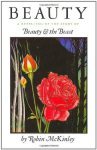
Beauty by Robin McKinley is also on my list, if I can get to it. I will be reading this for our Lit Collective discussion in March on fairy tales and fairy-tale retellings. (Visit our group page on Goodreads for more information about the Lit Collective and other books we’re reading for March. Michelle–aka, the True Book Addict–is also one of the moderators for this group, along with Heather of Between the Covers and Laura of Book Snob.)
Good luck to all the #FrightFall participants and may they be pleasantly scared by their eerie, mysterious, or truly frightening reads to kick off October. Sign-ups continue through Friday (11:59 CST) of the read-a-thon week, and there will be a very generous giveaway at the end, eligible to those who post a wrap-up by Tuesday after the read-a-thon.

July 27, 2015
High Summer Read-a-thon 2015 Wraps Up! #HSReadathon
Summer is a prime time for reading, isn’t it? Usually. But some summers are so packed with activity that reading is done only in bits and snatches. Nevertheless, thanks to the High Summer Read-a-thon, hosted graciously by Michelle at her blog Seasons of Reading, I found some quality reading time this weekend and at last made some progress with Harbor by John Ajvide Lindqvist. It is our July selection for TuesBookTalk Read-a-Longs and I am finally past the half-way mark and starting to discover some of the book’s chilling secrets. It begins to remind me of a Shirley Jackson story, but set in a remote Swedish fishing village. Lindqvist ’s novels have gained a wide international following, and I was glad to have this little push to read one of them. I came across his name in the course of my Northern Lights Reading Project, and when I finish this book, I will review it there.

In nonfiction, I started reading Becoming Madison: the extraordinary origins of the least likely founding father by Michael Signer. I visited Madison’s newly restored home of Montpelier in northern Virginia a few years ago, when the main house was opened to visitors and the archaeology of the entire plantation was well underway, and this sparked my interest in Madison’s life. Signer gave an excellent talk about Madison on C-Span’s BookTV last weekend, and after listening, I spent much of the rest of the day reading his book on my kindle (ah, the joys and temptations of instant book gratification!).
I hope all this year’s participants had a lovely Read-a-Thon, and I did too, after all. Visit Seasons of Reading to find out what everyone was reading, via the wrap-up links.

June 14, 2015
“Madame Bovary” (2014)–a Film Review

Madame Bovary (2014) film poster. Copyright: Aden Film, Aleph Motion Pictures, Left Field Ventures, Occupant Entertainment, Radiant Films International. See Wikipedia for fair use guidelines.
Madame Bovary (2014), a film by Sophie Barthes, stars Mia Wasikowska as Emma Bovary, the iconic woman created by Flaubert in his 1857 novel. Wasikowska’s name has appeared on this blog before, when she excelled in two other roles based on Fictional 100 characters: Jane Eyre and Alice in Wonderland. A little older now, she succeeds once again in embodying the unhappily married Madame Bovary.
As in Fukunaga’s Jane Eyre film, this film opens with a scene of Wasikowska running outdoors, in desperate flight from something. Both films then proceed to tell their stories in flashback. Wasikowska can certainly fill the screen with her resolute quiet; whereas as Jane Eyre this denoted her discretion and strongly principled character, as Emma Bovary, her quiet masks her restless, troubled inner life and her felt need for growing deceptions. The first changes, though, are not hidden but very visible in her acquisition–on credit–of new stylish clothes for herself and furnishings for the house she shares with her benign, country-doctor husband Charles. At first, she rebuffed the insinuating offers of Monsier Lheureux (l’heureux means “the happy one”), who tempted her to borrow from him for his expensive goods; his success at leading her into debt represents her first seduction. The romantic affairs that will follow, with “The Marquis” and Léon, are an outgrowth of this first fall from innocence. She craves the romance of luxury and love, hoping to replace the emptiness and disappointment she found in the stifling constriction of Yonville and her confining marriage. She can hardly breathe, and so her restraint and quiet demeanor break open, becoming in the end a frantic rush to destruction.
This film departs markedly from previous films and especially from Flaubert’s novel. Several crucial elements are missing:
Berthe, the child of Emma and Charles, does not appear here. There is no mention of her having a child at all. In the novel, this fact serves to underline another area of life in which Emma could find no satisfaction. Flaubert’s Emma was unable to love or bond with her small daughter, a further wound to her marriage, which made her susceptible to falling in love with other men that crossed her path. Emma’s tragic ending is also more poignant because of the daughter she leaves behind.
Rodolphe Boulanger is subsumed in the character of the Marquis d’Andervilliers who gives a ball early in the novel. It made more sense in the novel that farming landowner Rodolphe would be speaking (and flirting) with Emma at an agricultural fair.
Likewise, the village of Tostes and the town of Yonville are merged. This misses that Charles was sensitive enough to Emma’s unhappiness to move to a larger, albeit still rural, setting for their life together. However, it is understandable that the screenplay for a two-hour film must make these kinds of abbreviations of plot.
In Rouen, Emma and Léon rendezvous in the Cathedral and take a carriage to a room to make love; however, this director chose not to show us one of the novel’s most famous scenes: in which the couple make love in the closed carriage itself, as it circles around the city; Flaubert brilliantly suggests the passionate embraces inside by the sole detail of Emma’s ungloved hand in the window of the jostling carriage.
The pharmacist Monsieur Homais’s character and behavior is sketched so roughly that viewers may not understand that he is in competition with the new doctor in town for patients, which motivates his insistence that Charles attempt a risky operation on a local boy. He is friend to neither Charles nor Emma.
Finally, this film chooses to have Emma die alone in the forest after she has taken poison, thereby missing some of the most important scenes in the novel, and the only ones that hint at any rapprochement of the couple and a sort of redemption, in the midst of tragedy. In Flaubert’s treatment, Emma ingests a fatal dose of arsenic but takes several days to succumb, during which time she tries to comfort Charles, realizing perhaps the depth of his essential goodness and true love for her. “You’re good, not like the others,” she says to him.
Since I have listed elements I found missing in this adaptation, let me finish out this review by praising an aspect of the film that I found illuminating and symbolically satisfying. Twice, Emma goes to the local priest in his church in Yonville, hoping for some sort of guidance and comfort–neither of which she finds. The first time was especially telling: all the while she is trying to talk to him, a group of unruly children are running in the small sanctuary and the priest interrupts her to reprimand them. After he offers a few, insufficient words urging her to be happy with the roof over her head and food (and a good fellow for a husband), he sends her away, excusing himself to “get these very devils ready for Communion.” Right in front of him was a troubled young woman, being assailed by devils of her own, tempted by the Devil himself (in the form of Lheureux) and her own passions, and he couldn’t see it. She was the one who needed some real communion with grace–a compassionate confessor and some wise words of faith to strengthen her–and this priest had little to give her. If only she could have encountered a Monsieur Myriel such as appeared in the path of Jean Valjean at exactly the time when he needed him! In Emma, Flaubert portrayed some of the cracks that were appearing in traditional faith during the 19th century. His villain Homais was an atheist, and it would take more than good will and going through the motions of religion to stand up to the spiritual crisis of the people at that time (or any time!). Sophie Barthes handles these scenes between the priest and Emma with illuminating clarity for the audience, although Emma is left to plunge into her own darkness without any supports to grasp.
I recommend the film for Mia Wasikowska’s genuine portrayal of Emma and Rhys Ifan’s scary take on Lheureux. He recently played a secretive, but loyal Mycroft Holmes in the Elementary series for TV, but he is truly sinister here. The film is visually beautiful, punctuated by Emma’s stunning costumes, many of them in a fiery orange.
Madame Bovary ranks 37th on The Fictional 100 .

May 11, 2015
Children’s Book Week Giveaway Hop–And the Winner Is…!

I’m happy to announce that Hope C., who blogs at HopeToRead.com, is the winner of two lovely illustrated books, Pinocchio and Nelson Mandela’s Favorite African Folktales. I see that Hope’s blog features many Book Tours and Giveaways, so do stop by! Thanks to everyone who entered and participated in this event to celebrate kids and reading (perfect together!).

May 3, 2015
Children’s Book Week Giveaway Hop–Giving Away Two Illustrated Books!
 For Children’s Book Week, I’m delighted to participate in the Children’s Book Giveaway Blog Hop hosted by Tressa at Wishful Endings. I’m giving away BRAND NEW paperback copies of two illustrated books I’ve reviewed previously here at The Fictional 100 (each title is linked to my review):
Pinocchio by Carlo Collodi, illustrated by Sara Fanelli.
Nelson Mandela’s Favorite African Folktales, illustrated by various artists from Africa.

Both books seem to me to be perfect for all ages. School Library Journal suggests Grades 1 to 5 for Nelson Mandela’s folktales. These books have gorgeous, innovative illustrations enhancing the delightful texts. I am giving away one gift package containing both books. Follow the instructions on the giveaway link below, which will be open May 4 to May 10 for entrants from the US or Canada.
Entry-Form
I will notify the winner by email on May 11th. Please respond within 48 hours, if possible, so that I can send you your books! Thanks for entering and supporting Children’s Book Week! I thank Sharon at Faith Hope & Cherrytea for letting me know about the Giveaway Hop.
Please CLICK the blue linky button to visit the other participating blogs offering more great giveaways, and have fun sharing books with children!


April 24, 2015
My First Dewey Readathon + Spring Into Horror! = Lots of Reading!

Beautiful Dewey’s Readathon button, created by Michelle of The True Book Addict, who always finds terrific pictures of women reading!
In celebration of the good side of peer pressure, I’ve just signed up for my first Dewey’s Readathon! I will be doing this in tandem with Michelle’s Spring Into Horror Read-a-thon, which is already underway this week and ending Sunday night (in the US).

This is also created by Michelle, for her blog Seasons of Reading, where she hosts her seasonal Read-a-thons.
I have already described my Read-a-thon reading list, which includes Dan Simmons’ new take on Sherlock Holmes, The Fifth Heart, as well as the original stories of the Brothers Grimm. I will probably add some Outlander, specifically Book 2, Dragonfly in Amber, and I know I’ll be taking a break in the evening to watch the next installment of the “Outlander” series on STARZ! :) I’m looking forward to visiting blogs and checking in with folks all day on Twitter (@Fictional100)!