Lucy Pollard-Gott's Blog, page 3
May 15, 2016
Review: “A Perfumer’s Secret” by Adria J. Cimino
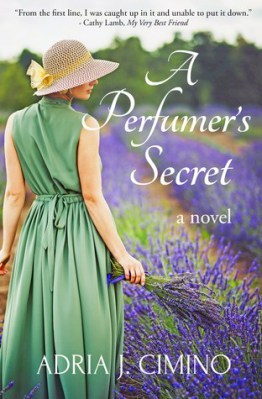
I thank Adria J. Cimino and Velvet Morning Press for the opportunity to review this new novel by Adria, who is already familiar to readers as the author of Amazon best-seller Paris, Rue des Martyrs and Close to Destiny.
My Review
A Perfumer’s Secret is richly evocative of a very special art, the art of composing fragrances, practiced well by only a very few, remarkable people. I’ve never read a story so thoroughly drenched in fragrances–one in which olfactory imagery was not merely added to color and deepen the reality of the fictional world but in which particular scents were themselves central to the plot and keys to character. Scents function as the engine of the plot, and characters are so sensitive to smells of all kinds in their environment that they truly earn the perfumers’ nickname for one of their best: a “nose,” un nez.
Being a nose is a gift, a natural endowment as valuable to their craft as winning the lottery would be to a person deep in debt. And that gift in turn puts them in debt to the world, as they seem to be driven from within to create the most meaningful, memorable scents, which others are then privileged to experience. But to most of us, these nuanced scents and their creators remain a mystery.
The book opens with a haunting prologue:
Zoe Flore’s first creation was the scent of tears. A hot, salty fragrance that she concocted the day her mother died. A perfume built on oak moss, a touch of geranium and the real tears that tumbled into the mix. It was her fifteenth birthday, and from that moment on, she wore the scent as a suit of armor.
Zoe Flore, now 30, is one of these gifted people, a “nose,” who could transform her grief into a living epitaph for her mother, whose memory still infused her consciousness and her creative life. As Zoe works on new fragrance ideas for an important contract, it is her mother’s very particular gift for perfume concoction that occupies her dreams:
she dreamed of her mother composing a fragrance, like the conductor of an orchestra. Barbara Rose sat before the rows of vials, each containing a different basic material. With careful, flowing movements, she went through the routine: selecting vials from the perfume organ, sniffing scent dips that she inserted into one tube and waved delicately over another, then noting each element on a piece of parchment paper. Zoe squinted, but she couldn’t read the words Barbara Rose had printed on the paper.
She awoke in sad frustration. When Zoe thought of her deepest yearnings, it was not, in fact, romantic love she wanted most but “the thrill, the excitement that came with creating an unusual fragrance of unprecedented complexity.”
Unexpectedly, the death of her great aunt Marie-Odile in France broke open the lingering sadness in her life and sent her on a quest to discover her mother’s secrets and her own identity. For one thing, she never knew that her mother, Barbara Rose Flore, was really Barbara Rose Flore-Fontaine, daughter to one of the great families of French perfume makers in the commune of Grasse. Her mother had fled this family, moved to America, and hidden this connection. Zoe was summoned to the reading of her great-aunt’s will where she would inherit a letter, something of incomparable value to her. The scent of the envelope itself told her its origin: it still carried the elusive, but unmistakable scent of Barbara Rose’s perfume, a fragrance she always wore and which Zoe would never forget. The enclosed letter detailed this perfume’s secret formula.
Such a secret was valuable to a host of people beside Zoe, and it only took a short time before the letter was stolen from Zoe’s belongings. Yet, it was still possible she could reconstruct it from memory with a little trial and error.
She decided to stay in France, despite the deadline pressure from her New York City office; they wanted her to take the first plane home and turn in some sort of perfume proposal right away in hopes of pulling off a miracle and securing the coveted contract. But Zoe knew her best chance of recreating her mother’s perfume was right there in Grasse, near her family’s home. Furthermore, she felt inspired to try creating something entirely new and uniquely her own. She rented a picturesque cottage called the Rose of May, frequented by visiting perfumers from around the world. This was her first view of it:
Her eyes drank in the hillsides with their emerald-colored foliage and houses like droplets of rose, violet and mustard. She could almost see through this to the vast flower fields whose perfume drifted delicately into town whenever the wind took hold. How many times had her mother looked out a similar window right here in Grasse?
Grasse is situated at the southeast corner of France on the French Riviera. The painter Fragonard was born here, and Édith Piaf spent her last days here in her villa. With its warm coastal climate, sheltered from salty sea air, it is the perfect farmland for flowers in the many hundreds of species. The profusion of flowers and other plants fostered in Grasse made it the “perfume capital of the world” by the 18th century, a magnet for those who wish to combine the essences of its unique botanical treasures.
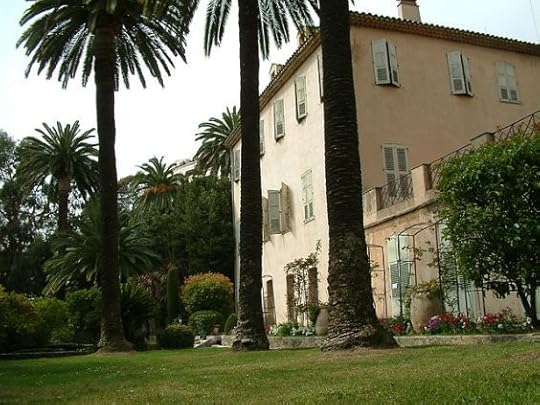
Photograph of the Fragonard’s Museum building.
This lush scene is outside the Fragonard Musée du Parfum, adjacent to the Fragonard Perfumerie, one of the few perfumeries that gives public tours. It gives an idea of the beauty of Grasse and why Zoe wanted to stay! The lovely cover of Adria’s book, with its lavender fields stretching toward the horizon, also conjures up the romance of the place, the sheer abundance of it.
Zoe was not working in a vacuum. The family she suddenly acquired already had a heap of their own issues and complications. Some of them were very unhappy about her arrival on the scene, and others proved to be surprising allies. They were vying for that same perfume contract, and they desperately wanted to learn her mother’s secrets too. One competitor in particular, Philippe Chevrefeuille, was a particular problem for Zoe because he captivated her romantically in a way she thought she was immune to. Likewise, he was unnerved by her “scent of tears,” and waivered between wanting to market it as his own and wanting simply to drink it in and discover the reasons behind her sadness.
Besides coping with the confusing distraction of Philippe in her life, Zoe had to figure out who took her mother’s formula! Perhaps a greater mystery, what were the circumstances of her creating it in the first place? Why did she leave her family behind so completely when she seemed perfectly suited to the career she was born to?
I won’t hint at the answers to these mysteries, since Adria discloses the truth so deftly as she spins her tale. I will say that I felt I knew Zoe very well as I was reading. I could predict her reactions. Just one example: When she picked up her key for the Rose of May cottage, she declined to have the rental agent show her around. Although the author didn’t say so, I surmised that Zoe didn’t want anyone else’s scents to mingle with her first impressions of the place, the accumulated traces of those perfumers who had lived and worked there. I can only imagine what it must be like to live so deeply immersed in one’s olfactory sense. Or rather, I can imagine it much better now, for having read A Perfumer’s Secret. For me, the title now has a double meaning: the family secret (or secrets) of various characters in this particular story, and the private world of the extraordinary creative people who make original perfumes.
Synopsis
The quest for a stolen perfume formula awakens passion, rivalry and family secrets in the fragrant flower fields of the South of France…
Perfumer Zoe Flore travels to Grasse, perfume capital of the world, to collect a formula: her inheritance from the family she never knew existed. The scent matches the one worn by her mother, who passed away when Zoe was a teenager. Zoe, competing to create a new fragrance for a prestigious designer, believes this scent could win the contract—and lead her to the reason her mother fled Grasse for New York City.
Before Zoe can discover the truth, the formula is stolen. And she’s not the only one looking for it. So is Loulou, her rebellious teenage cousin; Philippe, her alluring competitor for the fragrance contract; and a third person who never wanted the formula to slip into the public in the first place.
The pursuit transforms into a journey of self-discovery as each struggles to understand the complexities of love, the force of pride, and the meaning of family.
Contemporary/ Literary fiction, Women’s fiction
Pages: 258 print length
Release date: May 16, 2016
Publisher: Velvet Morning Press
Buy the book: Amazon
About the Author
 Adria J. Cimino is the author of Amazon Best-Selling novel Paris, Rue des Martyrs and Close to Destiny, as well as The Creepshow (release April 2016) and A Perfumer’s Secret (release May 2016).
She also co-founded boutique publishing house Velvet Morning Press. Prior to jumping into the publishing world full time, she spent more than a decade as a journalist at news organizations including The AP and Bloomberg News. Adria is a member of Tall Poppy Writers, which unites bright authors with smart readers. Adria writes about her real-life adventures at AdriaJCimino.com and on Twitter @Adria_in_Paris.
Twitter | Facebook | Website | Blog
*******
*Note*: I received an advance electronic copy of this book, in exchange for an honest review. I did not receive any other compensation, and the views expressed in my review are my own opinions.


May 14, 2016
#TTWIB Travels in May: Reading Russia
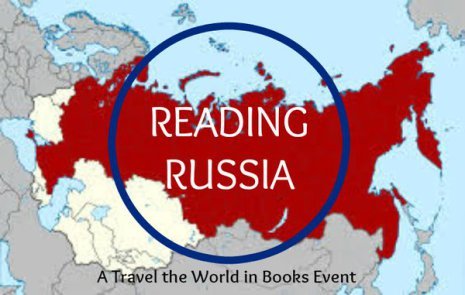
This month Becca of I’m Lost in Books is hosting a free-choice reading event of books set in Russia. I have a couple of books in mind for this:
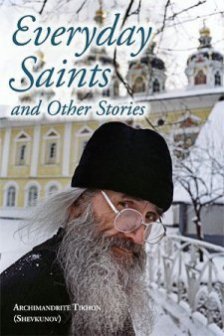
Everyday Saints and Other Stories by Archimandrite Tikhon Shevkunov is rather like a “Chicken Soup for the Russian Orthodox Soul,” to make a homely comparison. The author describes his awakening of faith and entry into the Pskov Caves Monastery in Pechory, near the Estonian border.

I learned of this book from a review by Emma of Words and Peace. It was reportedly a bestseller in Russia, with over a million copies sold worldwide. The personal warmth and frankness of its author have surely been a big part of its success. He tells us that, although he and his friends were reasonably happy young men with promising careers, something strange and wonderful drew them to monastic life: “for each of us, a new world had suddenly opened up, incomparable in its beauty.” He attempts to share this beauty as it manifests in daily life, through his gift for storytelling. Understanding the beauty of this Orthodox way of life is one essential to understanding the foundations of Russian culture, especially relevant since the fall of the Soviet system.
I hope to read Everyday Saints during the remainder of May, but I wanted to mention another Russian book, Vasily Grossman’s Life and Fate.
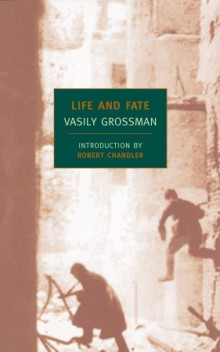
In scope and importance, this World War II novel has been compared to War and Peace. At nearly 900 pages, this will take me a while, but I’d like to make a start on it in May during our Read Russia event.
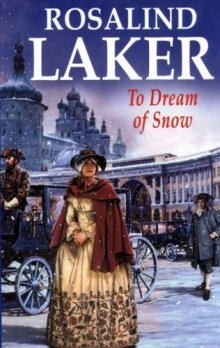
In a much lighter vein, I’d like to recommend Rosalind Laker’s charming historical novel, To Dream of Snow, in which a Parisian seamstress travels to the court of the Empress Elisabeth to embroider the elaborate gowns of the monarch and her daughter-in-law Catherine–the future Catherine the Great (for more details, see my review).
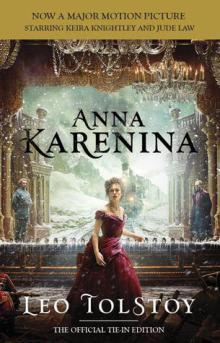
Finally, if you haven’t read Anna Karenina yet, there are so many good translations available now. I first read the older one by Constance Garnett; it has its critics these days, but it certainly won me over (and it is free on Kindle). I like the Louise and Aylmer Maude translation in the Dover Thrift Edition, and their version was used for the movie tie-in edition to Joe Wright’s brilliant (but underrated) film.
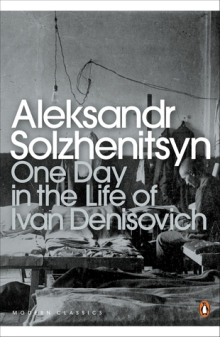
Another Russian classic is One Day in the Life of Ivan Denisovich by Aleksandr Solzhensitsyn (trans. H. T. Willetts). Here’s a recent paperback edition.
I hope some of these ideas are helpful; likewise, I hope to get some new ideas of mysteries, historicals, and contemporary fiction set in Russia, from other readers!

May 7, 2016
#BookBuddyAthon this week! What I’m Reading (#TBR Stack)
I’m so happy to be joining fellow blogger and friend, Sharon, of Faith Hope & Cherrytea (@_eHope) for a #BookBuddyAthon this week (May 7-13). We are long-distance buddies in miles (or kilometers–she’s Canadian) but close in kindred spirits and many shared interests. I can always count on FHC for lovely new recommendations of nourishing fiction, faith & inspiration, as well as soul stirring music–all presented with her specially chosen and delightful images. Visit her page for all the particulars on the #BookBuddyAthon, which is being hosted by @robertson_elena and @ColdTeaCrumbs (their Twitter handles) at a special YouTube channel, since they are both BookTubers too! Elena has posted a Giveaway, open internationally, of a gift certificate for the Book Depository. (You can also find the Giveaway at ColdTeaAndCrumbs’ video). Now on to my #TBRs!
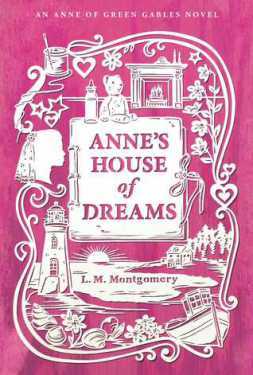
As our Buddy Read, FHC and I are reading Anne’s House of Dreams by Lucy Maud Montgomery. (I have to write out the L. M., being another Lucy myself!) The story of Anne and her true love Gilbert Blythe starting off married life in their first home together still beckons readers after nearly 100 years (published in 1919). It still uplifts the heart, even when their move away from Avonlea presents new challenges for Anne and Gilbert.
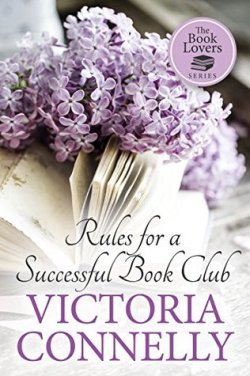
The #BookBuddyAthon also asks us to choose a book whose cover displays our buddy’s favorite color (for FHC, that would be purple or periwinkle), and one whose title includes one of her initials. I settled on a book she suggested (a bonus buddy read!), Rules for a Successful Book Club by Victoria Connelly, that fulfills both of these. From the title, I expected a nonfiction guide to starting your own book club! My literal thinking… In any case, it looks like a very engaging story about people who happen to be in a book club together. Isn’t this a stylish cover?
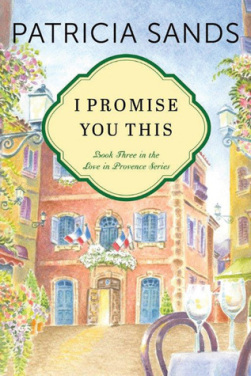
During the week, I hope to polish off a free-choice read called I Promise You This by Patricia Sands. It is the third and final book of her Love in Provence series, and I will be reviewing it later this month for France Book Tours. I discovered that FHC has also read this one, so clearly we have caught the true #BookBuddyAthon spirit! See the rest of her choices, including Stardust by Carla Stewart, whose cover features my favorite color, yellow!
To see what others are reading, visit the YouTube channel or follow along with hashtag #BookBuddyAthon on Twitter or Instagram. I’m going to start off my reading with Anne’s House of Dreams!

April 24, 2016
#ReadNobels Meets #TTWIB: Week 3
For our April challenge, combining #ReadNobels with Travel the World in Books (#TTWIB), Aloi of Guiltless Reading has posed the following questions for Week 3.
Week 3: What other Nobel Prize-winning authors/books have you discovered? And which would you like to read? Any surprises?
Some of the books I hope to read are by authors new to me (Selma Lagerlöf, Wisława Szymborska), whereas the rest are by authors I know, but wish to read more of.
Sigrid Undset (1928):
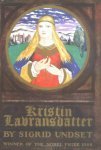
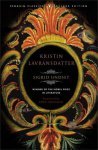
Kristin Lavransdatter (I plan to reread this one in the new Penguin Classic edition.)
The Master of Hestviken (another medieval novel)
Ida Elizabeth (a modern-day story of a marriage)
Biography of St. Catherine of Siena (I need to finish this one)
Jenny (story of a painter’s pilgrimage to Rome)
Selma Lagerlöf (1909):
The Wonderful Adventures of Nils
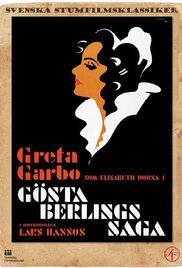
The Story of Gösta Berling (made into a 1924 silent film starring Greta Garbo)
Thomas Mann (1929):
The Magic Mountain
Sir Winston Churchill (1953):
The Second World War
A History of the English-Speaking Peoples
Halldór Laxness (1955):
Independent People (currently reading)
Aleksander Solzhenitsyn (1970):
The First Circle
The Cancer Ward
Although he has probably become most famous for his nonfiction account of The Gulag Archipelago, his novels allow his complete artistry to unfold in the subtle characterization of people under daily life-and-death pressures.
Wisława Szymborska (1996):
Five of her poems can be found at Nobel Prize site.
When asked why she had published less than 350 poems, she answered, “I have a trash can in my home.” (source: Wikipedia) I just have to read something by a woman who would answer like that!
“Possibilities” reads like the set of answers to a very sophisticated online quiz that gets shared among friends. Her tone is witty, at times abrupt, but sagacious in a deadpan way. I’d like to read more of her poems.
José Saramago (1998):
A History of the Siege of Lisbon

As a former copyeditor, I find the premise of this book fascinating: a proofreading error is deliberately slipped into a work of history, with big consequences.
Doris Lessing (2007):
The Grass is Singing
*****
The most surprising thing, for me, about the Nobel Prize winners in literature is the list of notable absences: Leo Tolstoy (d. 1910), Mark Twain (d. 1910), Marcel Proust (d. 1922), James Joyce (d. 1941), Richard Wright (d. 1960), Jorge Luis Borges (1986) are some names that come to mind. Of these, Tolstoy and Twain died within a decade of the first literature Nobel Prize being awarded, and the others lived well into the Nobel Prize era. An award is only as good as its list of past recipients; the Nobel Prize in Literature is undoubtedly a gathering of excellence, and it has become increasingly diverse in its selections over time. Awarding of prizes are subject to many factors, not least of which are politics and the ebb and flow of taste and literary controversies. The omissions merely emphasize that art itself will likely surpass, and confound, any attempts to define, once and for all, its pinnacles.
*****

April 17, 2016
#ReadNobels and #TTWIB join forces in April!: Week 2
Under the spirited #ReadNobels leadership of Aloi of Guiltless Reading, and in conjunction with Travel the World in Books (#TTWIB; co-hosted by Aloi, Tanya of Mom’s Small Victories, Becca of I’m Lost in Books, Savvy Working Gal, and me), the April combined challenge is rolling along–it’s the end of Week 2! Guiltless Reader has provided us with questions each week to get the discussion going and prompt our own thinking about the great wealth of Nobel-recognized literature, which is out there, just waiting to be sampled.
This week the focus is on making a list of authors and their works we have read, from among those on the list of Nobel prizes awarded in Literature. This was an illuminating exercise, because it became apparent which authors had become dear favorites and which were merely respected acquaintances. When I was doing research (over quite a few years) for my book The Fictional 100, I tried to read a wide range of notable authors around the world, so I encountered many of these distinguished authors (though surely not everyone I might have read!). In Week 3, I will offer a list, as Guiltless Reader suggests, of Nobel-prize-winning authors and books on my wish list for future reading!
Week 2 question: Which Literature Nobelists have you read (at least something of theirs)?
Rudyard Kipling (1907)
Just So Stories
Rabindranath Tagore (1913):
Gitanjali (poetry)
William Butler Yeats (1923):
“The Wild Swans of Coole,” other poems
Fairy and Folk Tales of the Irish
George Bernard Shaw (1925):
Man and Superman
Sigrid Undset (1928):
Kristin Lavransdatter
Gunnar’s Daughter
Thomas Mann (1929):
Buddenbrooks
Death in Venice
Joseph and His Brothers (Parts I and II)
Sinclair Lewis (1930):
Main Street
Babbitt
Dodsworth
John Galsworthy (1932):
The Forsyte Saga
Luigi Pirandello (1934):
“Six Characters in Search of an Author”
Eugene O’Neill (1936):
Mourning Becomes Electra
Hermann Hesse (1946):
Siddhartha
The Glass Bead Game
T. S. Eliot (1948):
The Waste Land
“Four Quartets”
William Faulkner (1949):
The Sound and the Fury
Absalom, Absalom!
Ernest Hemingway (1954):
The Old Man and the Sea
Halldór Laxness (1955):
The Great Weaver from Kashmir (excellent, his first important novel)
Albert Camus (1957):
The Stranger
Boris Pasternak (1958):
Doctor Zhivago
John Steinbeck (1962):
Of Mice and Men
The Grapes of Wrath
The Acts of King Arthur and His Noble Knights
Aleksander Solzhenitsyn (1970):
One Day in the Life of Ivan Denisovich
Eugenio Montale (1975)
Selected Poems (still working on these!)
Gabriel García Márquez (1982):
One Hundred Years of Solitude
Love in the Time of Cholera
Wole Soyinka (1986):
“Madmen and Specialists”
“The Trials of Brother Jero”
“A Dance of the Forests”
Nadine Gordimer (1991)
Burger’s Daughter
Derek Walcott (1992):
Omeros
Toni Morrison (1993):
Beloved
Song of Solomon
Jazz
The Bluest Eye
José Saramago (1998):
Journey Through Portugal
V. S. Naipaul (2001):
A Bend in the River
A House for Mr. Biswas
India: A Million Mutinies Now
Orhan Pamuk (2006):
The Museum of Innocence
Other Colours (Essays)
Istanbul
Doris Lessing (2007):
The Golden Notebook
Canopus in Argos: Archives (sci-fi!)
Briefing for a Descent into Hell
Memoirs of a Survivor
Mario Vargas Llosa (2010):
The Perpetual Orgy (literary criticism, Madame Bovary)
The Temptation of the Impossible (literary criticism, Les Misérables)
*****
Looking over these works, they were all distinctly memorable reading experiences, and associated with obsessive bursts of enthusiasm. I remember when I was reading Doris Lessing with a passion, then I moved on to other authors. I would like to revisit her (Week 3!) I love Mario Vargas Llosa’s literary criticism and found it influential in my own thinking. I used a quote from The Perpetual Orgy to open the Introduction to my own book. But his fiction has not grabbed me so far. Beloved still stands out to me, as unique and beautiful and heart-wrenching. I recalled being so thrilled when Toni Morrison won the prize! Sigrid Undset’s writing has long been deeply meaningful to me, and I still wonder why I didn’t include Kristin Lavransdatter in my top 100 characters. I want to recommend this book, a medieval saga written by a modern author, one which reads like a glorious triple-decker novel of family, love, loss, and redemption, a masterpiece in the greatest traditions of storytelling.
*****

April 9, 2016
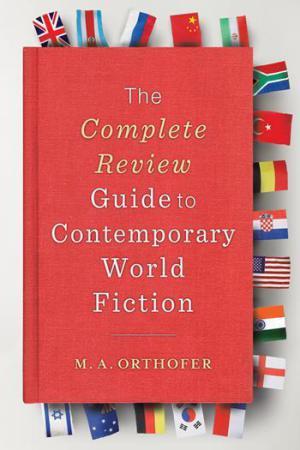
Review: “The Complete Review Guide to Contemporary World Fiction” by M. A. Orthofer
My Review
For those of us attempting to cast a wider net in contemporary world fiction, The Complete Review Guide to Contemporary World Fiction is no less than a godsend. I could not imagine designing a more useful reference tool for readers, bloggers, and reviewers wishing to discover authors of distinction from around the world. This book grew out of the Complete Review website, founded by M. A. Orthofer in 1999 to provide timely information on book reviews of international fiction, along with publishing and translation information for readers. This website is phenomenal, but I am delighted to have a guide in book form that digs deep into the literary scene for nearly all the countries of the world and offers a rich treasure trove of contemporary fiction to consider.
What is considered contemporary? The Guide focuses on fiction after 1945, but rest assurred, earlier fiction is discussed to provide context for the relevant country or national literature. A fascinating Introduction describes the selection process and some of the issues involved in classifying the works. The author has done internet detective work ever since founding the Complete Review website, trawling newspapers worldwide, online reviews and forums, and a host of professional websites, including publishers’ foreign rights pages, international literary agencies, and national organizations that promote the exchange of book information and news about contemporary fiction. An extensive appendix of Supplemental Resources shares many of the available sources with the reader. The very scope of information available online, as the author notes, creates the need for an overview, country by country, as a helpful “entry point” for readers seeking to delve into a nation’s literature.
Here are some of the considerations that went into making the Guide:
How to classify an author who has written in more than one language? Nabokov, for one, wrote in Russian and then in English, and this is not an uncommon situation because authors tend to move around both geographically and linguistically. Today, for example, Indian-American novelist Jhumpa Lahiri, has just relocated to Rome and made the transition from writing in English to writing exclusively in Italian, and one can anticipate future works of fiction in her new chosen language.
How to classify authors geographically when their country itself has undergone transitions ? This comes into play in Europe in the comparatively recent reunification of Germany, and in the breakup of the Soviet Union and the former Yugoslavia. The Guide gives separate consideration to contemporary fiction originating in the Federal Republic of Germany (West), the German Democratic Republic (East), and then a reunified Germany. In Central Africa, fiction produced in the Democratic Republic of the Congo (known formerly as Belgian Congo and then Zaïre), in which the difficult political situation has largely inhibited any flourishing of book culture (with exceptions that are noted), is contrasted with that from Congo-Brazzaville (Republic of the Congo), which has produced several well-known writers. Although the guide is organized by continent and then by region, you will find detailed treatment down to individual countries, as they are currently constituted.
How to classify writers who have relocated in adulthood? This issue overlaps to some extent with the issue of language but also depends on the writer’s predominant subject matter. Chinua Achebe moved between Nigeria and the United States, finally settling in the U.S. after 1990 to teach at Bard College. His novels are revelatory of Nigerian traditional life under the twin impacts of colonial rule and modernity, so they are classified in his native country.
Orthofer summarizes the guiding criteria for classification:
“In The Complete Review Guide, authors are assigned to specific locales according to–in order of significance–the language in which they write, their domicile (previous or original as well as current), the subject matter of their fiction, and their reputation.” (p. 4)
Regardless of classification decisions, cross-cultural connections are carefully treated wherever an author and that author’s works are discussed.
The problem for those of us who want to read international fiction (as Ann Morgan will attest from her year of reading the world) is finding good translations into the language one reads (English, in this case). Realistically, this is the only way most of us have access to some level of appreciation of an author’s achievement and fictional worldview. This guide is “emphatically a reader’s guide for an English-speaking audience.” American publishers have been slower to introduce translated works, and the translation market has been dominated by fiction translated from French or Spanish, enjoying sustained interest in America, and a selection of Nobel laureates. This is changing gradually. The translation boom in European crime fiction, especially from Scandinavia, has meant that crime fiction has gotten special attention from translators across many languages, and this is reflected in the Guide, which often devotes a special section to crime fiction in a given country. Orthofer traces the recent history of globalization in literature and how it is affecting the translation and dissemination of fiction.
As a reader, I am most excited to ask, what’s out there? And, how will I know where to begin? Fortunately, each country’s entry includes a mini-overview of its most prominent authors, summary and evaluation of major works, and boxes of other notable writers to “keep in mind.” Every title mentioned (always in English) has an original publication date and the translation date (if different). I will share a few random discoveries that caught my eye:
The greatest modern writer in Catalan is considered to be Mercè Rodoreda (1908-1983); her most important works are The Pigeon Girl (1962, English 1967) and A Broken Mirror (1974, English 2006). This is very typical of this guide–“Spanish” writers in Basque, Catalan, and Galician receive separate notice, in addition to Castilian writers.
Manuel Rivas (b. 1957) is the leading Galician writer (The Carpenter’s Pencil, 1999; English 2001).
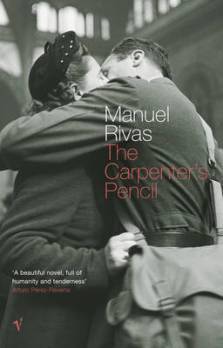
Jonathan Dunne, trans.
Heðin Brú (1901-1987) published an important novel in Faroese, the language of the Faroë Islands, in 1940. The English translation, The Old Man and His Sons, was published in 1970 and is readily available. Although most of the authors discussed in the chapter on Scandinavia were familiar to me, Heðin Brú was new; I already have my copy, ready to read on Kindle and include on my Northern Lights Reading Project.
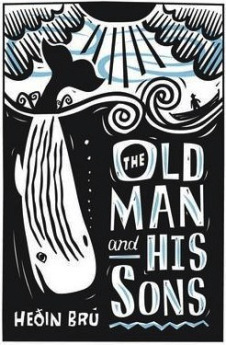
John F. West, trans.
Aleksis Kivi (1834-1872) wrote a Finnish classic, still important today, called Seven Brothers (1870, English 1929, 1991). This is a good example of the way the Guide anchors the overview for each country with key works that pre-date the main corpus of post-war fiction being catalogued.
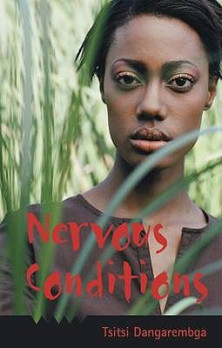
Nervous Conditions (1988) by Tsitsi Dangarembga (b. 1959) is an autobiographical novel, and the first novel by a Zimbabwean woman.
The first novel from Malawi is No Easy Task (1966) by Aubrey Kachingwe (b. 1926).
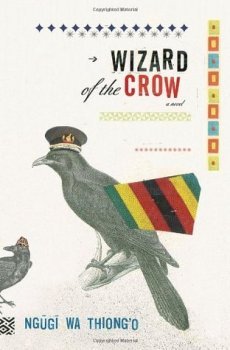
Wizard of the Crow (2004-2006, English 2006) by Kenyan Ngũgĩ wa Thiong’o (b. 1938; also known as James Ngugi) is a satire set in a fictional African republic. This epic work has won numerous literary prizes.
Trans. by author
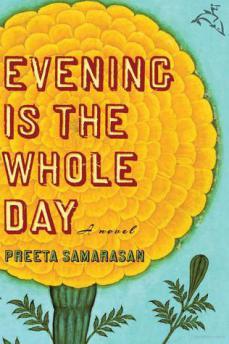
Evening Is the Whole Day (2008) by Preeta Samarasan (b. 1976) is a popular family saga about Indians living in Malaysia.
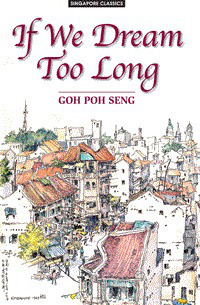
Goh Poh Seng (1936-2010) wrote If We Dream Too Long (1972), deemed the first true Singaporean novel.
I invite you to explore The Complete Review Guide to Contemporary World Fiction for yourself. It manages to include just the right amount of information about authors and their works to engage one’s interest and lead to further exploration. One can only be grateful to the translators who undertook to share these works of international fiction with English-speaking readers, and I am surely grateful to M. A. Orthofer, for the dedication that it took to offer this comprehensive guide. Be sure to visit the Complete Review website as well to find links to full-length reviews of many titles. You are sure to find something amazing.
*******
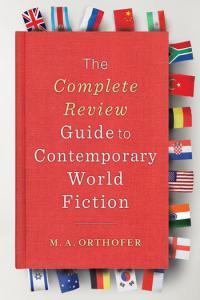
The Complete Review Guide to Contemporary
World Fiction
(Literary Criticism/ Reference/ World Literature/ Literary Studies)
Released April 5, 2016
496 pages
Available in Paperback, Hardcover, and e-book (from the publisher)
Amazon | Complete Review Website | Publisher’s page | Goodreads
Description
For more than a decade, the Complete Review has been an essential site for readers interested in learning about new books in translation and developments in global literature. Expanding upon the site’s content, this wide-ranging yet user-friendly resource is the perfect guide for English-language readers eager to explore fiction from around the world. Profiling hundreds of titles and authors from 1945 to today, with an emphasis on fiction published in the past two decades, this reference provides a fascinating portal into the styles, trends, and genres of the world’s literatures, from Scandinavian crime thrillers and cutting-edge works in China to Latin American narco-fiction and award-winning French novels.
What sets this guide apart is its critical selection of titles that define the arc of a nation’s literary development, paired with lively summaries that convey both the enjoyment and significance of each work. Arranged by region, country, and language, entries illuminate the fiction of individual nations, cultures, and peoples, while concise biographies sketch the careers of noteworthy authors. Compiled by M. A. Orthofer, an avid book reviewer and founder of the Complete Review, this reference will benefit from an actively maintained companion site featuring additional links and resources and new reviews as contemporary works are published. The Complete Review Guide to Contemporary World Fiction is perfect for readers who wish to expand their reading choices and knowledge of contemporary world fiction.
About the Author
M. A. Orthofer is the founder, managing editor, and lead contributor to the Complete Review and its blog The Literary Saloon. Launched in 1999, the Complete Review has been praised by the Times Literary Supplement, Wired, and the New York Times Book Review, which called the site “one of the best literary destinations on the Web.” Orthofer has also served as judge for the Best Translated Book Award and the Austrian Cultural Forum’s ACF Translation Prize, and is a member of the National Book Critics Circle.
*******
*Note*: I thank Columbia University Press and NetGalley for providing an advance electronic copy of this book, in exchange for an honest review. I did not receive any other compensation, and the views expressed in my review are my own opinions.
*******
Image courtesy of potowizard at FreeDigitalPhotos.net.

April 3, 2016
April Showers! It’s Raining Reading Challenges, Readalongs, and Readathons!
For most people, “spring fever” suggests the urge to open the windows for some fresh blossom-scented air and head outside for a walk. Bookish people do this too, but usually with one or more books in hand. This year, spring fever among the book obsessed corresponds with a glorious shower of new reading events. Let’s list a few I know about:
Roots Readalong @True Book Addict
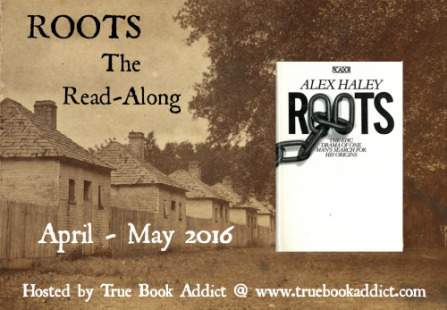
Michelle of the True Book Addict had the idea to host this readalong, in connection with the new televised mini-series adaptation of Alex Haley’s novel, to begin on May 30 at the History Channel. Since Roots is such a long book, this readalong will continue throughout May, so plenty of time to get the schedule and sign up. I am reading the 30th Anniversary edition, with an introduction by Michael Dyson, and looking forward to the discussions Michelle has planned to host at her blog.

Spring Into Horror @ Seasons of Reading
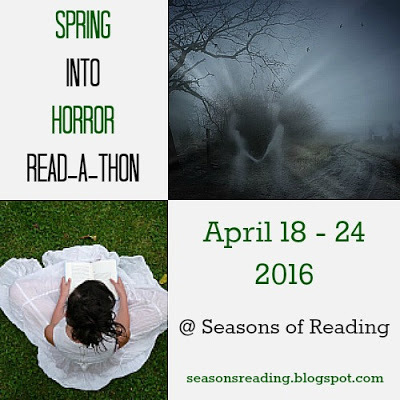
Michelle is also hosting her Spring Into Horror Read-a-thon at her site for recurring seasonal readathons, Seasons of Reading. I have two books picked out for the week: Painting the Darkness by Robert Goddard and Broken by Karin Fossum.
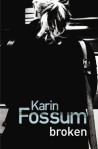
Painting the Darkness is a darkly threatening Victorian mystery, about a man confronted by a stranger who claims to be his wife’s first fiancé, long believed to be dead. Is this man an impostor or the real thing? What will his wife do, and what does she believe? What secrets has she been keeping? I’ve already started this one, and I really like Robert Goddard’s writing–a new find for me! In Karin Fossum’s novel, one of her writer-protagonist’s characters has come calling on her at night, angry about the way his life is going. I plan to review this Norwegian writer’s boundary-breaking story at my Northern Lights Reading Project.
#ReadNobels for Travel the World in Books in April @ Guiltless Reading
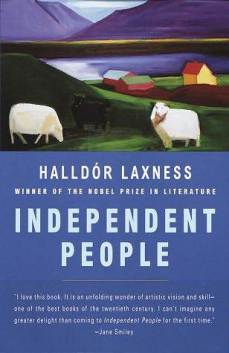
My esteemed co-host, Aloi of Guiltless Reading, is hosting our Travel the World in Books (#TTWIB) event for April, combining this ongoing challenge–to read our way around the world with diverse books–with her own fabulous challenge to read books by Nobel prize-winning authors. Her announcement post for April’s combined challenge has all the details, including numerous helpful links to reviews and resources for finding books to choose from. The main thing is to pick ONE BOOK for April, something by an author who garnered the Nobel Prize in Literature. I will be reading Independent People, the most important book by Iceland’s 1955 Nobelist, Halldór Laxness. James Anderson Thompson is the translator of this beautiful paperback in English.
That’s the lovely thing about the Nobel prize–it tends to motivate skilled translators to take up that author’s works and make them available to more readers worldwide. As another example, Emma of Words and Peace, herself a translator, reviewed 2014 Nobelist Patrick Modiano’s So You Don’t Get Lost in the Neighborhood (in English translation) last year for our October #TTWIB Readathon. I’m looking forward to answering Guiltless Reader’s fun and stimulating questions slated to chart each week’s progress and cheer on our exploration of Nobel writers.
Dewey’s 24 Hour Readathon
This overlaps conveniently with Spring Into Horror, so I will probably sign on, though I never go for the full 24 hours. Or keep up with all the mini-challenges. But it is nice to be part of this blogger favorite to see what everyone is reading and how they make room in their lives for our mutual favorite pastime. Signups are open!
And There’s More!
Besides books I am reading for upcoming reviews, I am also looking forward to my Goodreads book club reads:
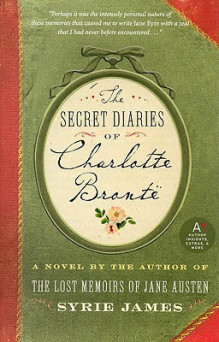
The Secret Diaries of Charlotte Brontë by Syrie James is our TuesBookTalk Read-a-Longs selection for April.
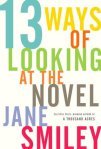
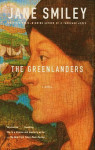
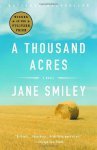
Three books by Jane Smiley are set for our Lit Collective: An Online Reading Retreat. Beginning in April, this will run through August when Michelle (that generous, and very busy girl!) will help get us going with Discussion Board questions on this author.
Will I get all this reading done in April? Probably not! But I love trying, and I love making a start on great books that carry over into the coming months. The best ones bear tremendous fruit–not just another review (although I love writing them!), but something new to think about or understand better about the multifaceted human life all around us.
If you know of other April Reading events you’d like to share, please leave a comment about them!

April 1, 2016
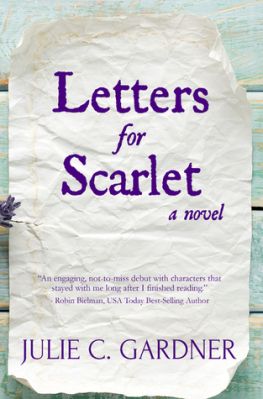
Review: “Letters for Scarlet” by Julie C. Gardner
My Review
Epistolary novels–novels in which the narrative is entrusted to letters between characters–have long fascinated me. Ever since I read Clarissa by Samuel Richardson (or parts of it–it is very long), I have thought of this 18th-century masterpiece as the quintessential example of the form. Despite its length, it is exquisitely suspenseful because the author has such ingenious control over disclosure of the facts and the secrets, little by little. This feature should make the form attractive to authors of any era, but how does one go about writing an epistolary novel today? How does one craft a story through letters that feels both contemporary and natural?
In her new novel, Letters for Scarlet, Julie C. Gardner has figured out how do this beautifully by adopting a hybrid technique. The story unfolds through narrative and dialogue that we expect to find in a novel, but the main revelations that bind the story together and illuminate its characters’ motives occur in the abundant letters inserted throughout. Gardner handles both ways of telling her story with sureness of purpose and a very genuine voice. Or, should I say, “voices,” because the letters require her to speak in many voices. But nearly all the letters are intended for the same recipient, Scarlet Hinden, one of the novel’s two pivotal characters. Most of the letters are from her friend Corie Harper.
Both Corie and Scarlet are 28. Corie is an English teacher and aspiring writer, married to Tuck Slater. They would like to have children but so far have been frustrated by trying, something that deeply wounds Corie who already has some nagging doubts about her marriage. Scarlet is a busy attorney and in a relationship with Gavin; she is expecting a baby but struggling with paralyzing fears about being a mother; she is skeptical of ever finding happiness and holding on to it. What is the connection between these two couples, and how is it influencing their pain in the present moment?
Corie and Scarlet were inseparable friends in high school, and along with Tuck, they were a solid trio until something happened that destroyed the women’s friendship and upended all their lives. We know that the trio turned into a triangle when Corie and Tuck became a couple, but clearly much more must have transpired to cause the kind of unbridgeable rift they are suffering. It doesn’t seem like anything will change their situation, until Corie receives a letter from the past: the letter she wrote 10 years ago to her future self. It was an assignment in her senior English class (and a very clever mechanism to introduce the first letters into the story). Since she wrote it before her friendship with Scarlet fell apart, Corie feels the loss even more acutely, the aching absence of something that was once unquestionable. Corie begins to write a series of letters to Scarlet, ones she thinks she’ll never dare send, but which allow her to open her heart to the friend she still needs so desperately. Here are a few bits of her first letter:
Did you get your ten-year letter from Mr. Roosevelt? Until Tuck handed me that envelope, I had completely forgotten about the assignment. But since I read those words from the past, I’ve been prompted by a desire (more like a need) to say a few things to you. Some old. Some new. All of them true. For what it’s worth. …
I’m sorry we didn’t tell you about us sooner. I suppose the secrets we keep can be as dangerous as the ones we share. Maybe more so.
Sometimes I wonder how different our lives would be if the three of us had loved each other less….
In a surprising move, Scarlet’s mother visits Corie and entrusts her with Scarlet’s 10-year letter. Corie wants to deliver this powderkeg letter but she hesitates, since Scarlet has refused all contact since high school.
I read the last two thirds of this novel in one long sitting–it was that compelling and I didn’t want to stop until I discovered what tragedy drove these friends apart and how–or whether–they could move on from it. This fine debut novel convincingly explores the ties of love and friendship at the breaking point.
Synopsis
Pain can take a lifetime to heal, but hope lasts even longer…
Corie Harper is twenty-eight years old when she is first visited by a ghost—in the form of a graduation letter she forgot she wrote. Although she spent a decade burying that desperate girl and her regrets, each page resurrects the past, dragging Corie back to a time when all she craved was Scarlet Hinden’s friendship and Tuck Slater’s heart. But she couldn’t keep them both and keep her word.
Scarlet is haunted in her own way, by memories of Corie and of a night that left her wishing she were dead. But Scarlet is not only alive, she’s carrying new life: a baby she never wanted and is terrified to have. Convinced she would be a disastrous mother, she questions whether or not she deserves the love of any man. Especially the father of her child.
Letters for Scarlet traces one friendship from deep roots to branches torn by broken promises and loss.
Release date: April 4, 2016
Publisher: Velvet Morning Press
Buy the book: Amazon
About Julie C. Gardner
 I’m a former English teacher and lapsed marathon runner who traded in the classroom for a writing nook. I am the co-author of You Have Lipstick on Your Teeth, and a contributor to the upcoming anthology So Glad They Told Me; my essays have appeared in BlogHerVoices of the Year: 2012 and Precipice Literary Anthology. I live in Southern California with my husband, two children, and three dogs.
Twitter | Instagram | Facebook | Website | Blog
*Note*: I received an advance electronic copy of this book, in exchange for an honest review. I did not receive any other compensation, and the views expressed in my review are my own opinions.

March 9, 2016
Review + Giveaway: “The Sword of the Maiden” by Kathleen C. Perrin #FranceBT
My Review
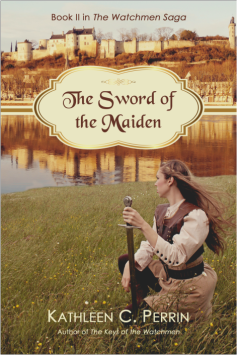
In my Goodreads review of The Keys of the Watchmen, I wrote: “Kathleen Perrin’s instincts for portraying a 21st-century teenager’s speech and emotions are unerring, and she has created one of the most engaging, instantly involving characters I have read in quite a while.” In that first book, her heroine, Katelyn Michaels, was drafted by the Archangel Michael to save Mont-Saint-Michel, under siege by the English in what became the Hundred Years’ War. To do this, she must travel, using a divinely empowered key (her own unique enseigne disk), to 1424 and discover her calling as a “Watchman.” For me, she not only jumped back in time, but also jumped off the page, and I am delighted to tell you about Book II of The Watchmen’s Saga, The Sword of the Maiden.
As Book II opens, Katelyn is back in her own time, living at home in the U.S. with her brother Jackson, her father, and her father’s new wife Adèle. Katelyn is recovering from a grave injury she received in the past, but she must keep the true facts from her family, instead devising a story about suffering a bad fall during their recent visit to Mont-Saint-Michel as tourists. Her ordeals in the past have changed her perspective and she has made peace with her new stepmother, even reaching out to her in friendship. Katelyn is 18 and a senior in high school. But she is still a Watchman. This new identity is ever-present in her mind, as is Nicolas le Breton, the young man in 15th-century Normandy who shared her Watchman’s assignment and, in the course of things, became her husband. What was conceived as a necessary part of their scheme to defeat the English (and stop the demonic adversary Abdon) soon turned into a bond of real love, although the couple never had the chance to be truly husband and wife.
Part of being a Watchman entails receiving messages, sometimes direct and sometimes subtle, from the Archangel Michael. Present-day Katelyn continues to receive those intimations of how she must still help safeguard Mont-Saint-Michel and its divinely ordained secret. Her last adventure was only part of the larger mission to prevent the English from wiping out this stronghold in the long conflict of the Hundred Years’ War. The next phase of her mission comes to her in a dream. She hears the voice of Jean le Vieux, her old mentor who prepared her for her first tasks:
I could feel the caring emanating from him. I had known Jean for such a short time, and yet his love was all-encompassing. It gave me an instant understanding of the love God feels for all of his children. That love filled the crevices of hurt that had opened up in my heart. It filled the spaces of doubt and discouragement that had been drilled into my mind, and it soothed the constant pain of my knitting bones and healing skin. (p. 16)
He reminds her of her sacred trust as a Watchman and that more will be required of her now. He assures her, typical of all the Archangel’s messages, that she will know what to do when the time is right. Finally, he gives her the cryptic message that only her dedication and perseverance can fully decode and realize:
“Learn of the Maiden, Katelyn, and take her the sword.”
Since she is back in the present-day world, she has all the resources of the internet to help her research and learn about the Maiden, whom she soon understands to be La Pucelle, the Maid of Orléans, Joan of Arc–the great heroine and martyr-saint of France. At the same time, Katelyn begins to prepare herself for her new challenges, following the lead of the Archangel. She finds that, by angelic intervention, she is already enrolled in different high-school classes than she expected: Medieval history, French language, and rock climbing! She also gets the message to study fencing and horsemanship on her own–no easy task to explain and to convince her parents to pay the bills for these lessons! When she knows she is ready, something very unexpected happens; she hears from her beloved Nicolas in the way she might least have expected–a Facebook message! Perrin shows great imagination and control of tone in crafting their exchange of vital messages.
Clearly, the time for action has come, but she must first get back to Mont-Saint-Michel, and the place where her special key will unlock her way to the past. Abdon, the emissary of Satan that they fought in the first book, is still on her trail but in a new host. Nevertheless, Katelyn’s road to meeting Jehanne, as Joan was known in her native village of Domrémy, may soon be opening up. The obstacles on Jehanne’s path, however, are thorny and complicated. It is no small thing for an unlettered peasant girl to claim that God has spoken to her, commanding her to lead a great army and ensure that the rightful king is crowned. Katelyn’s role will involve much more than simply bringing a very special sword to the Maiden. Katelyn has to cope with the constant awareness that a cruel martyrdom awaits Jehanne, but she cannot speak about this or risk changing history. Instead, she must learn how best to support, aid, and encourage this devout young girl who would soon inspire all of France.
.jpg)
Joan of Arc miniature, ca. 1450-1500, oil on parchment
Perrin is anxious not to appear to detract from Jehanne’s courage, divine call, or accomplishments because of the events of the novel in which Katelyn serves as a significant help to her, ingeniously carrying out her own appointed mission as Watchman. Perrin writes about this sensitively in her Author’s Notes. Jehanne’s–Joan of Arc’s–saintliness and her accomplishments against nearly overwhelming obstacles cannot be denied and the novel’s portrait of Jehanne does her justice in this regard, both in the chapters that recount Jehanne’s experience of her quest (in the third person) and in Katelyn’s first-person chapters, where she offers her impressions of Jehanne. Early in her time with Jehanne, Katelyn says to herself (in her own unique way):
she doesn’t even realize how amazing she is. Jehanne has all the qualities of the ‘Wizard of Oz’ heroes wrapped into one. She has Dorothy’s loyalty and persistence, the Good Witch Glinda’s compassion, the courage of the Lion, the heart of the Tin Man, and, yes, even the brains of the Scarecrow. She learns quickly and retains nearly everything. Jehanne even has Toto’s bite. She will do well rebuking the soldiers, because this girl has a lot of righteous indignation, which comes from her pure devotion to God. In every way, this girl is remarkable, and it humbles me to think that I was given the responsibility to help her carry out her mission. (p. 332)
If Katelyn’s “magic” devices brought back from the future were instrumental in this novel, the implication is that, historically, God used other instruments and other people to support this saintly young girl and aid her cause. Joan’s purity and determination were God’s gifts to her, and God’s chief instruments, from the point of view of the sacred story which runs throughout the novel. It remains respectful of the facts, the speculations, and the evidence of faith that have come down to us through history. As Jehanne begins to assume her leadership role with greater confidence, Katelyn watches her in awe and reflects:
Her words are eloquent and moving, and I cannot help but marvel at her power and the strength of her personality. She speaks with authority, and in spite of her humble beginnings, she speaks with such magnetism, it’s like our souls are bound to hers. This is her gift from God, and it is certainly one that I don’t have. (p. 377)
Perrin notes that we only see a few significant moments in Joan’s life, because this novel is really about Katelyn and Nicolas and their difficult charge to serve as Watchmen. How will it turn out for them? Will they be reunited in a time when they actually have the opportunity to live as the married couple that they are? And in what century will they live? These questions about their destiny must unfold in the novel, and the author never falters in carrying the story through convincingly to the end.
I can most heartily recommend The Sword and the Maiden, along with Book I, The Keys of the Watchmen, to anyone who loves engagingly written historical fiction, peopled with believable characters and full of life. Kathleen Perrin succeeds in touching the broad range of emotions–disbelief, doubt, anger, fear, pain, despair, joy, love–that a modern person might experience if thrust into the past, in the midst of great events.
We still have not learned the “secret” of the Mount, the one that demands tremendous sacrifice from so many. There are hints near the end, and I have high hopes that Book III, due out in December 2016 will reveal even more!
******
Kathleen C. Perrin
on Tour
March 7-26
with
The Sword of the Maiden
(historical fiction)
Release date: December 3, 2015
Self published at Langon House
515 pages
ISBN: 978-0692576922
SYNOPSIS
After being abruptly separated from Nicolas le Breton during the battle to save Mont Saint Michel in 1424, Katelyn Michaels finds herself back in her normal twenty-first century life as an American teenager. Depressed and anxious to be reunited with Nicolas, she is comforted when a series of events and impressions lead her to believe she is being prepared for another mission as a Watchman. When her beloved mentor, Jean le Vieux, comes to her in a dream and gives her the injunction to “Learn of the Maiden and take her the sword,” Katelyn understands that her mission involves assisting one of the most iconic figures in all of French History. Katelyn is once again whisked back to the turmoil of medieval France during the Hundred Years’ War and to Nicolas. However, before the two can consider the future of their relationship, they must first complete their mission to take the sword to the Maiden. Little do they know that their old nemesis, Abdon, is already on their trail and will do everything in his unhallowed power to stop them.
ABOUT THE AUTHOR

Kathleen C. Perrin
holds bachelor’s degrees in French and Humanities from Brigham Young University and is a certified French translator. Besides being the author of The Watchmen Saga, she has published several non-fiction articles, academic papers, and a religious history about Tahiti. Kathleen has lived in Utah, New York City, France, and French Polynesia. She and her French husband have spent years investigating the mysteries and beauties of his native country—where they have a cottage—and have taken tourist groups to France. The Perrins have three children and currently reside in Utah.
******
Visit her website. Follow her on Facebook, Twitter
Sign up to receive her Newsletter.
Buy the book on Amazon
******
You can enter the global giveaway here
or on any other book blogs participating in this tour.
Be sure to follow each participant on Twitter/Facebook,
they are listed in the entry form below.
Enter here
Visit each blogger on the tour:
tweeting about the giveaway everyday
of the Tour will give you 5 extra entries each time!
[just follow the directions on the entry-form]
Global giveaway open internationally:
5 participants will each win a copy of this book, print or digital
and 3 participants will each win a $10 Amazon gift card
******
CLICK ON THE BANNER
TO READ REVIEWS, EXCERPT AND GUEST-POST
*Note*: I received an advance review copy of this book, in exchange for an honest review. I did not receive any other compensation, and the views expressed in my review are my own opinions.

February 29, 2016
Review + Interview + Giveaway: “In Another Life” by Julie Christine Johnson #FranceBT
My Review
In Another Life by Julie Christine Johnson takes a pivotal historical event — the assassination of Archdeacon Pierre de Castelnau on January 15, 1208 — as her inspiration for this speculative mystery and fantasy romance. The novel opens, however, in the present day when recent widow Lia Carrer returns to Languedoc, France to complete her research in medieval history, specifically the murder of Castelnau. The return is bittersweet: the region’s beauty and rich history stir her soul, as they did when she lived there in her youth, but it is also the site of her husband’s death in a competitive cycling accident. She plans to reconnect and heal with her close friend Rose and Rose’s husband Domènec who live there, but she has arrived at a liminal time, the winter solstice, when uncanny things are possible. On her first night in the town of Minerve, she emerges from a restorative bath and sees a ghostly image in a tall window:
In the space between heartbeats, she saw the face of a man. Moonlight revealed fierce dark eyes and the etched planes of cheekbones. A seeping black streak marred the left side of his face, running from his temple down his cheek to the corner of his mouth. The palm of a hand came into view, reaching toward her.
She slaps the glass and the image dissolves, becoming a “Bonelli’s eagle,” a rare and portentous bird of prey. She will not disclose this, even to her friends, right away. Instead she revisits her advisor and confidante, Fr. Jordí Bonafé, who is archivist at the Cathedral of Saint-Just and Saint-Pasteur in Narbonne. They have a close connection: when she insisted on giving her planned address to a historical meeting at Carcassonne only three days after her husband Gabriel’s death, he was there to console her. Now he has hinted at possible new evidence concerning the death of Pierre de Castelnau, a document that could change the substance of her research and revive her interrupted career. Castelnau’s murder was the trigger that led to the Cathar, or Albigensian, Crusade, in which the church and the French king both ultimately benefitted by crushing the renegade heretical sect and the independent region where they flourished.
While events unfold in present-day Languedoc, we are also given interspersed scenes from the past, in fact the life-and-death moments in 1208 that began the cruel extermination of the Cathars. Very early in the story we witness the murder of Archdeacon Castelnau, through the eyes of a shadowy bystander in the church of St. Gilles. History records that Castelnau may have been ambushed while returning from Rome, but his relics are interred in St. Gilles, and Johnson makes good use of the dramatic possibilities by setting the assassination in the church itself. The slain cleric drops a letter to the floor under the altar; partially hidden by the altar cloth, this mysterious letter with its coded message goes unnoticed by the assassin but not by the trembling witness to events, whose actions will safeguard it through the centuries.

West portal of St.-Gilles-du-Gard. JMalik, Wikimedia commons.
We learn that one of the heretical tenets of Catharism was a belief that souls would need to be perfected and purified from the taint of matter through many lives before they could be admitted to heaven. The hints of reincarnation are dropped early in the novel as we hear the names of present day characters–Lucas, Raoul, Jordí–echoed in the names of the figures glimpsed in scenes from the past. Lia becomes involved with two men, attractive photographer Lucas Moisset, who helps her with her research and wants to get closer to her, and brooding Raoul Arango, a local farmer and winemaker, who stuns her by his resemblance both to the ghostly face she saw in her window and to a mysterious man she encountered at Carcassonne only two days before. If you think this disclosure will dull the suspense, have no fear of that because the dramatic tension for the reader is only heightened. Johnson skillfully constructs her mosaic of past and present events to reveal the full picture only at the end. One of the persistent mysteries is how Lia herself fits into the puzzle? Is she herself a reincarnated soul?
At one point after Lia has met Raoul at Rose and Domènec’s house, Le Pèlerin, she lets Rose take her on a visit to Lagrasse and the winery that Raoul is restoring. She does not know their destination until she gets there.
“What is this place?” Lia trailed behind Rose, who walked resolutely to the front door and knocked. Rose held up a finger, listening.
Lia hung back, wandering through the small front garden. Tendrils of newly green wisteria crept up the outside wall—last year’s dead growth had been trimmed away. The first perennials poked through black loam in window boxes, and the flowerbeds had a fresh layer of straw to keep them warm over the chilly, early spring nights. A hopeful heart had foreseen a season of flowers, and gentle hands had prepared the soil.
Unexpectedly, she meets Raoul himself, who has returned to supervise work on his property, and I could not help but be reminded of Elizabeth Bennet’s visit to Pemberley and her surprise encounter with Darcy in Pride and Prejudice. A nice touch, as readers will sense the romantic implications.
I gladly recommend this impressive book, which combines historical and religious reference, vivid description of setting, careful plotting, and sensitive character development, for a well-paced, satisfying read. The book also includes helpful maps of the Languedoc region and its position in France to help the curious reader follow the sites of the action.
******
Interview with Julie Christine Johnson
I am delighted to welcome Julie Christine Johnson, who has kindly agreed to share some thoughts on her novel, her writing process, and the interplay between life and fiction writing.
Bonjour Lucy! And thank you for featuring me, and ‘In Another Life,’ on your beautiful blog! It’s an honor to be here.
Q1. I see that your education includes degrees in French, psychology, and international affairs. I came to literature by way of psychology myself, and I know it often influences my perspective on fictional characters, whether directly or indirectly. Your novel seems very sensitive to the kind of trauma Lia has faced before the story opens. Do you feel your psychology training has informed your fiction writing, and in what ways?
What a great question. I think it’s one of those chicken-and-egg things. I may have gravitated to psychology because I have always been a keen observer of the human condition, trying to sort out what drives us, inspires us, why we make the choices we do, what weaknesses and strengths we exploit in ourselves and in others. I’ve always listened carefully to others’ stories and their hearts, and for a time I considered a career in counseling and therapy. Yet, I was keenly interested in psycholinguistics, as well, which led to the degree in French. So, it all ties together to make a writer: an ear and heart tuned to stories and language.
With regards to Lia’s trauma and grief, that comes from within the writer. Colum McCann says, “Sometimes it seems to me that we are writing our lives in advance, but at other times we can only ever look back. In the end, though, every word we write is autobiographical, perhaps most especially when we attempt to avoid the autobiographical.” Although I have not lost my life partner, I have experienced terrible loss, I have mourned. It is that grief I tapped in order to touch Lia’s own.
Q2. The Cathars and the Albigensian Crusade against them continue to fascinate us after 800 years. Their suffering seems so extreme, and the means to enforce orthodoxy so harsh and unforgiving. I knew about their rejection of the flesh and the material world, but I wasn’t really aware of the reincarnation aspect. At what point did that become a key driver of your novel? In other words, did you begin with the time shifting in mind, or did it come as a Eureka moment during your clearly extensive research process? Did it present any special problems or puzzles to solve as you worked out the story?
The Languedoc region and Cathar history have enthralled me for years. Long before I knew I’d be writing a novel of this time and this place, two facts buried themselves in my psyche: history never identified Pierre de Castelnau’s assassin; and the Cathars believed in reincarnation and the transmigration of souls.
This belief in reincarnation became my way into the story—my wings to make the leap from historical fiction into fantasy. Although the story’s foundation is historical—the assassination of a papal emissary which led immediately to the crusade against the Cathars—the very premise of characters who emerge from one era to another by way of reincarnation allowed me to play with the notions of history (what we can prove), of the past (what we can make a reasonable guess at), and of faith as fantasy. By writing a fantasy, I took tremendous license in building a world that is disconcertingly similar to, but fundamentally different from, our own.
Rather than pursue a science fiction approach to the characters’ transition from past to present, where the mechanics of time travel are examined and perhaps explained, I kept to the theme of faith and used Biblical and other religious mythologies as my guide: what must Adam and Eve have felt, awakening to a world they did not know, but somehow understood? They were fully able to use the technology of their time. For me, the interest wasn’t in the how, but in the why, the who, the “what now?”
What I hint at in the narrative, however, is the role memory plays. That there is an understanding of modern life because there have been other passages through time where things were learned and retained by the body and brain, but those passages are not remembered. And that each man has experienced his transitions differently-hence, the fundamentals of reincarnation: that rebirth can occur in many different forms.
Time travel doesn’t interest me as a plot device. It seems too mechanical, too dependent upon logic and processes. My world is the world of faith and religion, where beliefs are held as sacred, upheld by tradition, and it is not for the believer to ask how, but to accept.
Which of course, leaves open all sorts of possibilities for future “past” adventures, doesn’t it?!
Q3. A Bonelli’s eagle makes an appearance early in the story and seems to be a symbolic portent. Without giving too much away, can you tell a little bit more about this bird and why you chose to introduce it?
The Cathars also believed in transmigration of human souls into non-human animals. The moment I read this, I imagined birds of prey soaring above the mountains and valleys of Languedoc, great raptors battling the good and evil within their own souls, souls that had at one time been human. And then I learned that the dove had become a symbol of the Cathar people, a tender and tragic reminder of all those souls lost to fire, torture, starvation and disease, eradicated by evil, yet rising above, pure and peaceful. Everything clicked into place: Paloma as the dove, Raoul as the eagle, Lucas as the falcon. In earlier drafts I emphasized the transmigration element to a much greater extent, but I gradually toned it down to make human-bird soul exchange more of a thread in the tapestry of the story, weaving in and out, catching the light or disappearing into the shadows.
Q4. Apart from their specific roles in the plot, Lucas and Raoul seem to bring out different sides of Lia’s character; both interest her, and neither one is easy for her to dismiss. How would you describe each one’s appeal for Lia? How did you think about them as you were writing?
In earlier drafts, Lucas was far more sinister, but as I got to know him and fleshed out the story, I realized I wanted a more ambivalent, richer character, someone who had made poor choices, had done terrible things, but who was not inherently evil. One of the major themes of ‘In Another Life’ is redemption and through that I came to develop affection for and a desire to forgive Lucas. For Lia, the first glimpse of Lucas is a reawakening of her desire and he immediately becomes associated with guilt. And of course, he is a man consumed by guilt and regret. As she realizes her desire for him is more of a reflex action and nothing made from love, she is able to reach out to him in compassion.
There is a theme running through this novel that only recently occurs to me, perhaps because I have been too close to it; yet it is something I strive for, and that is acceptance of the now and moving forward with what you hold in your heart at the moment, without looking back or pushing against the future. There is an essential peacefulness in both Raoul and Lia that I admire. I think this is how they were able to find one another, at least this time around—their hearts were capable of and open to wonder. In Lucas, a chance for redemption; in Raoul, a reawakening of her true emotional self and genuine desire, of honor to marriage and true love, and ultimately, selflessness.
Q5. The Languedoc region of southern France is a place that Lia longs to return to in the story, a place where she feels at home, despite its being the site of some painful events. You have studied and worked abroad, including two years spent in New Zealand. Is there a place that still beckons you? Somewhere you long to revisit or make your home for extended periods?
There is so much of the world I have yet to explore, it takes my breath away. Western, southern, eastern Africa; the Levant, Southeast Asia. But my heart, oh my heart. It is in a vineyard in southern France, close enough to the sea to smell the salt air and be scoured clean by the wind.
Q6. I hope you will one day write more historical fiction (!), but I am quite interested to know about your next two novels, which have contemporary settings. Can you tell us a little about The Crows of Beara and Tui?
Oh, thank you! I can tell you right now that I am not done with the Cathars and Languedoc. Whether it’s a sequel to ‘In Another Life’ or something else entirely I won’t say, but I will be returning to this world.
My second novel, ‘The Crows of Beara,’ will be published September 2017 (Ashland Creek Press). I’m in the midst of working with my editor on revisions. It takes place in contemporary Co. Cork, southwest Ireland, and weaves together themes of industry vs. the environment, addiction, creativity, and hill walking, with a thread of magical realism woven through (of course, it’s Ireland!).
My third novel, which was ‘Tui,’ but now has the new working title ‘Upside-Down Girl,’ follows the journey of Holly Dawes as she emigrates from Seattle to New Zealand, where she befriends a young Maori girl, and realizes there is more than one way to fulfill her desire to be a mother and more than one way to lose a beloved child. ‘Upside-Down Girl’ is now with my agent and revisions await me as soon as I wrap up ‘The Crows of Beara’ (and breathe!). I lived in New Zealand in the mid-late 2000s, and ‘Upside-Down Girl’ is perhaps the most personal of my stories. At least it started out that way. It became something else entirely by the end. It’s the first time I’ve written a child as one of the main characters.
Lucy, thank you for such an outstanding interview! It’s been a joy connecting with you and your readers.
Thank you, Julie, for such illuminating answers! You speak eloquently of the underpinnings of your writing and of storytelling in general. Personally, I am very glad that you took the choice to make Lucas a motivationally complex character, as you grew to know him during your writing. Also, what you say about Lia and Raoul rings very true with me as a reader and deepens my appreciation for them.
I look forward to your two upcoming books and especially to your return to Languedoc and the Cathars for some more mythic fantasy before too long!
******
Julie Christine Johnson
on Tour
March 1-10
with
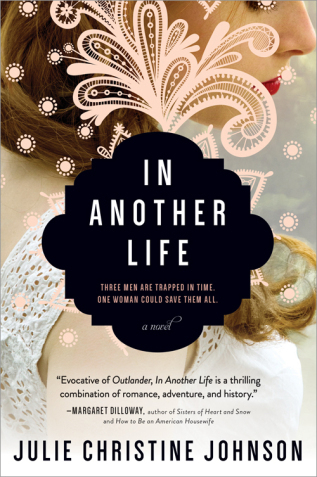
In Another Life
(Historical Fiction/Contemporary Women’s Fiction/
Fantasy/Romance)
Release date: February 2, 2016
at Sourcebooks
368 pages
ISBN: 978–2954168197
SYNOPSIS
Historian Lia Carrer has finally returned to southern France, determined to rebuild her life after the death of her husband. But instead of finding solace in the region’s quiet hills and medieval ruins, she falls in love with Raoul, a man whose very existence challenges everything she knows about life–and about her husband’s death. As Raoul reveals the story of his past to Lia, she becomes entangled in the echoes of an ancient murder, resulting in a haunting and suspenseful journey that reminds Lia that the dead may not be as far from us as we think. Steeped in the rich history and romantic landscape of the Languedoc region, In Another Life is a story of love that conquers time and the lost loves that haunt us all.
ABOUT THE AUTHOR
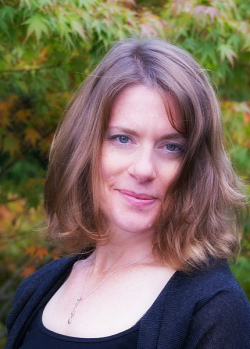
Photo by Al Bergstein
Julie Christine Johnson is the author of the novels In Another Life (February 2016, Sourcebooks Landmark) and The Crows of Beara (September 2017, Ashland Creek Press). Her short stories and essays have appeared in several journals, including Emerge Literary Journal, Mud Season Review; Cirque: A Literary Journal of the North Pacific Rim; Cobalt, the anthologies Stories for Sendai; Up, Do: Flash Fiction by Women Writers; and Three Minus One: Stories of Love and Loss and featured on the flash fiction podcast, No Extra Words. She holds undergraduate degrees in French and Psychology and a Master’s in International Affairs. A runner, hiker, and wine geek, Julie makes her home on the Olympic Peninsula of northwest Washington state with her husband. In Another Life is her first novel.
***
Visit Julie’s website and blog
Follow Julie Christine Johnson on Twitter | on Facebook
Sign up to receive her Newsletter.
Buy the book | on Amazon | on Barnes & Noble | on Indiebound
***
Global giveaway open to US residents only:
5 participants will each win a print copy of this book.
Be sure to follow each participant on Twitter/Facebook,
for more chances to win
Enter here
Visit each blogger on the tour:
tweeting about the giveaway everyday
of the Tour will give you 5 extra entries each time!
[just follow the directions on the entry-form]
***
CLICK ON THE BANNER
TO READ REVIEWS, EXCERPT, INTERVIEW, GUEST-POST
*Note*: I received an advance electronic copy of this book, in exchange for an honest review. I did not receive any other compensation, and the views expressed in my review are my own opinions.