Lucy Pollard-Gott's Blog, page 6
April 15, 2015
Spring Into Horror Read-a-thon 2015: What I’m Reading
Time for daffodils, tulips, and scary reading! My selections for this year’s Spring Into Horror Read-a-thon are not primarily horror, but they do have their scary or mysterious elements. I am happy that Michelle makes her Seasons of Reading event flexible enough to welcome those who wish to read only around the edges of the horror genre. For this one, I’ve selected some books that may scare the wits out of me yet! We’ll see.
Today is April 15; not only is that tax filing day in the U.S., but it is also the birthday of novelist Henry James (he would be 172). The Fifth Heart, Dan Simmon’s new literary mystery (just released in March), finds Henry James teaming up with Sherlock Holmes to investigate the death of Clover Adams, the wife of writer Henry Adams. Their pairing is complicated by the existential crisis of Holmes who has deduced that he is a fictional character!

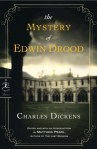
Another Dan Simmons novel, Drood, has been on my mental list for a while, since it combines biographical fiction about Charles Dickens with speculation about the intended ending of his last novel, The Mystery of Edwin Drood, whose horrible aspects are magnified by the lack of resolution. This week I will continue reading A Tale of Two Cities, our Dickens selection for the TuesBookTalk Read-a-Longs group at Goodreads. Although it certainly has much sweetness in the relationship between Doctor Manette and his daughter Lucie, the Reign of Terror, which readers know will follow the French Revolution and endanger noble-hearted nobleman Charles Darney, casts an eerie shadow over the whole story.


Finally, I am reading The Original Folk & Fairy Tales of the Brothers Grimm: The Complete First Editiion, translated and edited by noted fairy-tale specialist Jack Zipes. This illustrated collection brings together English translations of all the stories from the Grimms’ 1812 and 1815 first editions. Zipes emphasizes that these versions are closer to the originals that the brothers recorded from traditional storytellers. They tend to be shorter, more clipped in style, and faithful to the scarier aspects of many of the tales. The illustrations by Andrea Dezsö are interesting: they are black-and-white and give the impression of being simple woodcuts (or paper cutouts), but their content and arrangement of elements looks impressionistic and modern. They are also reminiscent of Arthur Rackham’s silhouette illustration technique, such as he used for Cinderella, or “Aschenputtel” in the Grimms’ tales.

Sign-ups for the Read-a-thon continue all week, until Friday (see Guidelines), and you don’t have to have a blog. You can join from Facebook, Goodreads, or Twitter! Look for discussion with hashtag #SpringHorrorRAT to find out what everyone is reading and to join the scheduled chat. Only one scary or mysterious book needs to be on your reading menu for the week; whatever else you are reading is fine too.


April 6, 2015
Review + Giveaway: “The Rocheforts” by Christian Laborie

My Review
I found The Rocheforts to be an enthralling family saga, one which kept me intensely engaged from its dramatic Prologue, set in 1898, to its Epilogue, thirty-two years later. Although this is Christian Laborie’s first novel to appear in English, I was not surprised to learn that he is an accomplished author of many other novels, a total of 16 books to date, two of which have won prizes for regional fiction related to the area he has made his home, the Cévennes, a mountainous region in the southeast corner of the Massif Central. It must have a special attraction for authors: Robert Louis Stevenson traveled there in 1878 and then published a famous memoir about his trip, Travels with a Donkey in the Cévennes. Much of The Rocheforts takes place in Tornac (near Anduze, we are told) in the Gard department, within sight of the Cévennes mountains. This is the home of the Rouvières, a family of prosperous farmers who raise sheep and maintain vineyards on their fertile land holdings. The other main locus of the action is Nîmes, capital of Gard and a major city in the Languedoc-Rousillon region, noted for its Roman ruins and long history and, in this novel, for its wonderful sturdy cloth, the “serge de Nîmes” commonly called denim. Anselme Rochefort and his family has long maintained a thriving textile business in the region, first, in silk made from their own silkworms fed on mulberry trees they grew themselves, and then, thanks to the shrewd management of Anselme’s father, who moved the factories to Nîmes, in denim which they sold to Levi Strauss in America. The Rocheforts live in the city but often spend time at their country home, Clos du Tournel, which made them neighbors of the Rouvières.
It soon becomes clear that this book is really the saga of two families, whose lives become so entangled that their histories cannot be told separately. However, I believe it would be most helpful to readers for me to introduce the members of each family, who are the chief characters of the novel. It is to Laborie’s credit as a writer and an observer of people that he makes each family member distinctly memorable.
The Rocheforts:
Anselme –Shrewd and unswerving in his calculations, whether to advance his business interests or dominate his family, Anselme is a formidable patriarch. He inherits much wealth, adds to it by two advantageous marriages, and wishes to hold absolute sway over his children especially. Events flow from this determination of his to control, even when that control is thwarted–at great cost to those closest to him.
Eleanor –Anselme’s first wife and mother of his eldest daughter, Catherine. Already suffering from depression when she wed, Eleanor’s life proved to be as short as it was unhappy.
Elisabeth –Anselme’s second wife, who raised Catherine as her own and had two more daughters and two sons with him. She showed herself a capable mother and loyal wife, despite Anselme’s often cold and dismissive disposition; devoutly religious, she was sincerely involved in many charitable activities, befitting the role of a society wife. Aware of her high social station, she was slow to form close bonds with the Rouvières, but she was not as implacable as her husband, and grew to value and respect them.
Catherine –The Rocheforts’ oldest daughter is the focus of family secrets. When we meet the family, they are already in mourning for her at her funeral.
Elodie –Being deeply attached to her older sister, Elodie suffers from persistent grief over Catherine’s death and suspicion about its circumstances. Her health declines but readers should not count her out of the drama because of her frailty.
Jean-Christophe –The “good son” who apparently follows his father’s wishes, Jean Christophe shares his father’s harsh political views, and agrees to devote his life to the family business. Unfortunately, he has too little of his father’s keen judgment and too much disregard for the consequences of his actions. The extent of his double-dealing and immorality will surprise even his father, and point the family toward disaster.
Sebastien –The rebellious son, Sebastien is the one who feels as though he landed in the wrong family. He has no taste for wealth or luxury, develops early concern for the plight of workers, and wishes for nothing but the independence to conduct his own life without interference from his father. His childhood and youth are a constant tug-of-war with Anselme. An idealist in many ways, he nevertheless manifests a thoughtless streak that ends up hurting others.
Faustine –The pampered youngest child, Faustine is perhaps the only Rochefort child who is warmly loved, and willingly indulged, by Anselme. She is beautiful, confident, intelligent, and the least troubled of her siblings. Yet this will not protect her from hurtling toward terrible heartache.
The Rouvières:
Donatien –The Rouvière patriarch is a loving family man, father of three daughters and one adopted son. He wisely manages and tirelessly works his extensive farms, called La Fenouillère, and his honest dealings have made him respected in the region. He is on good terms with his neighbors including the powerful Rocheforts, a position which allows him to incur privileges, such as summer pasturing of his sheep on Rochefort land in Lozère. In turn, he harvests the grapes from the Rochefort vineyards and is able to keep (and sell) half their yield. But despite his obvious success, social disparity is enough to put him at a disadvantage when Anselme Rochefort wishes to contract a marriage between his oldest son Jean-Christophe and Donatien’s eldest daughter, Louise.
Constance –Donatien married for love, and his wife Constance is a partner in their family and even in some of the farm labor, such as the grape harvest, where the whole family must pitch in. She is warmly understanding and solicitous of her children, but finds herself somewhat intimidated at first by the closer connections established with the wealthier Rouvières.
Louise –The Rouvières’ eldest daughter accepts an arranged marriage with Jean-Christophe Rochefort very early in the book. She brings to the marriage an impressive dowry, the groves of mulberry trees which Anselme covets to feed his silkworms. Louise and Jean-Christophe have a large family of their own, and she becomes an influential figure in the story for both her siblings and her in-laws.
Julie –The second Rouvière daughter has a bad case of middle-child syndrome, since she feels ignored and uncomfortable with the expectations placed on her. She will also become entangled with one of the Rochefort men.
Aline –Youngest daughter Aline is bright and wishes to be a teacher. Her ready admiration for her adopted brother Vincent becomes unrequited love as they grow older.
Vincent –Vincent Janvier spends his early childhood years at the Sisters of Charity orphanage in Nîmes, until he is adopted by Donatien and Constance Rouvière. He quickly loves all the duties of farm life and forms strong bonds with his new family. The Rocheforts are slower to acknowledge his status as Donatien’s fully fledged son and sometimes fail to recognize his importance, with the significant exception of young Faustine. She and Vincent fall in love “at first sight” as children, and their forbidden romance is pivotal throughout the novel.
These families will experience the repercussions of World War I, the Russian Revolution, and the post-war period up through the financial crash of 1929. We see the changing fortunes of the Rocheforts’ textile company, the effects of shifting markets and supplier competition in the denim industry, and the crisis of an aging industrial magnate trying to pass on his business and ensure his family legacy. The threats of family disunity and financial disintegration are never far away, and in this respect, the novel belongs to a class of novels exemplified by Thomas Mann’s Buddenbrooks (1901), the story of a north German family’s decline over four generations. Younger generations who succeed a great founder of a business empire tend to have different talents and different aspirations, and they are adversely affected morally by the very wealth their illustrious forebear has created for them. Critic Ian Sansom called this the “Buddenbrooks effect” in his last piece for The Guardian in 2011. It is equally the “Rochefort effect” in Christian Laborie’s compelling portrait of two French families at the beginning of the twentieth century.
******

Author Christian Laborie
on Tour
April 6-15, 2015
with
The Rocheforts
(fiction / saga)
Release date: May 5, 2015 at Open Road Integrated Media
484 pages
ISBN: 978-1-4804-6120-8
Goodreads
******
SYNOPSIS
Two very different families are bonded by scandal in this sweeping story of love, greed, and betrayal.
Anselme Rochefort has built an empire manufacturing serge de Nîmes, or denim. His biggest client? Levi Strauss. As the craze for blue jeans begins to sweep the globe, Rochefort Industries seems poised for untold success. But Anselme can be as cruel and ruthless with his family as he is in business.
The Rocheforts’ neighbor Donatien Rouvière has one of the region’s most prosperous farms and is desperate for a son to carry on his legacy. After the births of three daughters, the Rouvières adopt an orphan from the Sisters of Charity convent and raise him as their own.
When Anselme suggests uniting the two families by arranging for their children to marry, it seems like the perfect match. But as the lives of the two clans grow increasingly intertwined, dark secrets come to light, including the mysterious circumstances of the death of Anselme’s eldest daughter.
With The Rocheforts, Christian Laborie weaves a captivating tale of deceit, intrigue, and the dynamic tension between industrialization and a way of life rooted in the land. [provided by the publisher]
******
 ABOUT THE AUTHOR
Christian Laborie was born in the North of France, but has lived in the southern region of Cévennes for more than twenty years.
The Rocheforts is his first novel to be published in English.
Follow Open Road Integrated Media on Facebook | Twitter
Subscribe to Open Road’s Newsletter
******
You can enter the global giveaway here
or on any other book blogs participating in this tour.
Be sure to follow each participant on Twitter/Facebook;
they are listed in the entry form below.
Entry -Form
Visit each blogger on the tour:
tweeting about the giveaway everyday
of the Tour will give you 5 extra entries each time!
[just follow the directions on the entry-form]
Global giveaway open internationally:
5 winners will receive 1 digital copy of The Rocheforts
******
CLICK ON THE BANNER
TO READ OTHER REVIEWS AND AN EXCERPT

*Note*: I received an electronic copy of this book, in exchange for an honest review. I did not receive any other compensation, and the views expressed in my review are my own opinions.
Related links:
Travels With a Donkey in the Cévennes (a recent review by Jane Greensmith of R. L. Stevenson’s travelogue)
“Great Dynasties of the World: The Buddenbrooks Effect” by Ian Sansom (The Guardian, 30 Sept 2011)
“The Earthier Side of the Buddenbrooks” by Theodore Ziolkowski (The New York Times, 18 April 1993)
*************************************************




March 27, 2015
My Guest Post at Mom’s Small Victories
I offer my warmest thanks to Tanya M. for inviting me to Be Her Guest this week at her delightful blog, Mom’s Small Victories, where she posts positive blogging tips, reviews, recipes, reading events, and great ideas for living abundantly, despite chronic pain. She likes to team up with other bloggers and make her blog a meeting place for regular linkups, such as the Small Victories Sunday Linkup, perfect for finding something fun and helpful to read all week.
For my guest post, I wrote about 6 Ways That Social Media Stretch My Soul. Please head on over and leave a comment about your own relationship (totally on board? love/hate? sometimes skittish?) with social media. Thanks.


February 2, 2015
A Winter’s Respite Read-A-Thon 2015: What Did I Read?
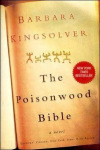
I joined Michelle at Seasons of Reading and many friends for A Winter’s Respite Read-a-thon. I did get some reading done, mostly on the weekends. I’m usually snatching a chapter here and there, so it was nice to have a good reason to put aside my other “to-do’s” and just stay put and read. I said to myself, “I could do that {laundry, writing, other work}, but hey, I’M ON A READ-A-THON; I think I’ll just sit here…” Among those I planned to read, I finished two books (one a monumental story of a family’s cultural education and transformation in the Congo, the other a historical romance of a French seamstress at the court of Imperial Russia):
The Poisonwood Bible by Barbara Kingsolver
To Dream of Snow by Rosalind Laker

And I started two others:
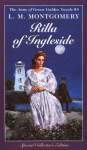
Rilla of Ingleside by Lucy Maud Montgomery
Now Face to Face by Karleen Koen

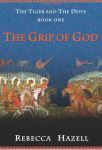
I also started The Grip of God by Rebecca Hazell, the first book in her trilogy called “The Tiger and the Dove.” I won this book in Michelle’s High Summer Read-a-thon in July–it’s about time for me to get into this dramatic historical novel set in Eastern Europe and Asia during the 13th century. I am especially interested in the way the clash of spiritual traditions seems to play a key role in the story.
Since more snow and ice seems to be on the way every few days here for a while, more reading time may be in the forecast! I’m grateful for this Read-a-thon and the camaraderie of delightful book-lovers; check out Seasons of Reading to see what seasonal reading events are coming up.

January 25, 2015
A Winter’s Respite Read-A-Thon: Reading as the Flakes Fall
With a blizzard on the way here in the northeast U.S., my respite from winter will indeed be in the form of cozy reading, with a fleece blanket in my lap and a cup of tea or coffee within easy reach! Here’s hoping the power stays on! And that everyone has shelter and stays safe.
I’m happy to join Michelle at Seasons of Reading and many friends for A Winter’s Respite Read-a-thon. Here are some choices I’m lining up for the week:
The Poisonwood Bible by Barbara Kingsolver — finishing this one up for Travel the World in Books Readalong Twitter chat on Wed., Jan 28.
Rilla of Ingleside by Lucy Maud Montgomery — a heartwarming story to take the chill off!
To Dream of Snow by Rosalind Laker — French embroiderer Marguerite travels to Russia to the royal court of Empress Elisabeth to sew for her and her remarkable daughter-in-law, Catherine.
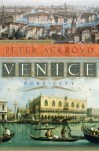
Venice: Pure City by Peter Ackroyd — for March’s Lit Collective reading retreat on Venice
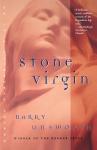
Stone Virgin by Barry Unsworth — also for Lit Collective theme
Now Face to Face by Karleen Koen — historical romance by an author new to me

January 21, 2015
2015 Reading Challenges–French Bingo and more
 I’m delighted to join this reading challenge for 2015, hosted by Emma at Words and Peace. Here are some of the books I may include:
Journeys Through France and Life by Glenda de Vaney (my review)
To Dance with Kings by Rosalind Laker (set in court of Louis XIV)
The Sharp Hook of Love by Sherry Jones (about Héloïse and Abélard)
How Paris Became Paris by Joan De Jean
The Vicomte de Bragelonne by Alexander Dumas (in the Musketeer series)
Lev Gillet: ‘A Monk of the Eastern Church’ by Elisabeth Behr-Sigel
I’ll most likely add others during the year, especially as part of France Book Tours. I will post those reviews here on the Fictional 100 blog. Other brief reviews will appear on my Goodreads shelf.
Many of these books will also qualify for two challenges posted by The Introverted Reader: the 2015 Nonfiction Reading Challenge and the 2015 Books in Translation Reading Challenge.


Finally, these varied books on France, past and present, fiction and nonfiction, are also part of my ongoing participation in the Travel the World in Books Reading Challenge, hosted by Mom’s Small Victories, I’m Lost in Books, and Savvy Working Gal.


January 16, 2015
Review + Interview + Giveaway: “Journeys Through France and Life” by Glenda de Vaney

My Review
This is an unusual memoir. It combines vivid travel writing spanning a lifetime of visits to France with an account of de Vaney’s personal journey of self-discovery in the midst of crisis. She endows her memoir with the instinctive pacing of a thriller, and I read it in just two sittings, driven by the suspense generated by the two intertwined crises she faced.
Trips to France run through the entire book, with colorful stories of meals eaten, places visited, and people encountered, but those incidents described in the second half of the book could not be more different from those in the first half, because of the shadow cast in the first half by her husband during two decades of marriage. As the author states, when living with an emotionally abusive, controlling mate, “losing my soul to someone else didn’t happen overnight, but little by little.” The cycle of his rages and withdrawal and her appeasement strategies was a pervasive feature of their relationship; month-long trips to France were also a fixture of their married life, and for a while, the shared enjoyment of experiencing new sights and tastes together or revisiting old favorites clouded the truth of their underlying disconnection and conflict. Over time, however, de Vaney realized what had been happening: “a marriage has to be made of something more than trips to France. The vacations had been a distraction, allowing us to paper over the truth of our relationship.” The breaking point came when Kyle, her son from her first marriage, suffered a severe episode of psychosis, which ultimately led to a diagnosis of schizophrenia, a psychiatric condition that doesn’t typically manifest until young adulthood. Her son needed her now; she would have to marshall all her strength to care for him and find the medical help he needed. A husband who thwarted these efforts was not merely a source of suffering to her, but presented an imminent danger to her son.
…now, there was much more at stake than just a dysfunctional marriage. The fate of my son hung in the balance. …The profound needs of my son overcame my fears and gave me the courage to do what I should have done years earlier.
She left with Kyle, and a new chapter of life began. Despite the urgent demands and challenges which she and her son faced, this second half of the book felt empowering because of her fierce love and determination to learn about her son’s illness and create the best life possible for both of them.
Treatment for schizophrenia combines powerful medications–which can be quite effective at relieving the most disturbing symptoms–with learning to adapt to the special stresses that can exacerbate illness. The family members must learn to adapt right along with the person coping with the illness. De Vaney tells the story of this dedicated learning process with tremendous heart and insight. Sticking with the medication, once it relieves overt symptoms, is the biggest challenge, because, as she describes, people with schizophrenia have a hard time grasping their need for medication and the dire consequences of stopping it. Nevertheless, she always respected her son’s personhood as much as she worried about him. I have never read a more sensitive account of the ups and downs of living with a beloved family member coping with mental illness. De Vaney is wonderful at showing Kyle’s experience, as she understands it; this is not a book framed solely around the trials of a caregiver–at every turn, she takes pains to describe what Kyle’s experience must be like, while at the same time respecting that no one but her son knows exactly how he feels.
Even when life is punctuated by such crises, at some point a certain degree of stability returns; when this happened for de Vaney, she began tentatively to ask herself, will I ever go to France again? Could I make the trip alone? Her account of her first trip back is not to be missed. It is more than just another travel experience but her first steps toward a new independent life and a different career. And, not to be overlooked, she had some fantastic meals!
…duck breasts with warm, sliced pears; vin moelleux, a sweet white wine; and crème brûlée. The caramelized brown sugar on top crackled as the spoon broke through it to the luscious custard beneath, made even more decadent with exquisite vanilla ice cream. …
Dinner that evening was scrumptious. The entrée was langoustine salad, then rumsteck with red onion compote for the main dish, a glass of red wine, and for dessert, brioche with apples, ice cream, and Calvados (a Normandy apple liqueur that scorches the throat taken straight, but tastes good in a sauce), then coffee with tiny pastries.
Somehow her sense of humor was given breathing room when she was traveling on her own. Flaps with people she met or faux pas of her own were funny but not demoralizing or shaming because, this time, she was the captain of her journey. Her spirit opened up and her faith in God blossomed as well, a welcome support in her life with Kyle and in her new photography business.
As she says, she doesn’t know how the story will end. I’d like to think that the garden she chose for her cover represents a place of hope and interior peace she has found.
De Vaney’s beautiful photos of châteaux and other landmarks are included throughout the book. My favorite was probably the one of the Château d’Ô reflected in its moat. You can see slide shows of her photography at her website under “Images of France.”
**********
Interview with Glenda de Vaney
Q1. Tell me about the cover image of a beautiful enclosed garden. I would love to know where it is and how you came to photograph it.
A. The cover photograph was taken at the Jardin du Manoir d’Eyrignac in the southwest of France. It is listed as one of the most beautiful gardens in France. I am always looking for a scene that I think will make a good photograph. I love this scene because it frames the Pavillon of Peace and the stone fence within the arched greenery. To me, it symbolizes a hidden treasure or the hidden truths of my story waiting to be discovered.
Q2. After 30 trips to France, where in France do you feel most at home – your “home away from home,” so to speak? Do you have a favorite town or region?
A. I never stay in one place longer than two or three nights – I am always on the move to the next thing, so I don’t really have a “home away from home.” But I do feel at home anywhere in France. I love all the different regions of France but, for this question, I asked myself, “If I could choose only one region for my last vacation to France, what would it be?” I decided it would be the Loire valley, because I love châteaux and this is where so many of them are located. It is also a green and beautiful area with many charming villages.
Q3. Your book recounts your own journey to find courage for a new life, but clearly you are writing about Kyle’s journey too, giving it voice. Your story bears witness to Kyle’s courage day by day. Is there anything further you’d like to add about that?
A. Kyle’s journey is really my journey too – to help him have the best life possible. I want so much for him to have a fuller life and to be in a place, mentally and emotionally, that will allow him to make it on his own after I’m gone. The longer he goes without another psychotic break, the better it bodes for him long term. Sometimes I feel as though he is walking a tightrope, that he could fall off at any time, and that I am on the tightrope with him. He could easily qualify for Social Security Income because of his disability and have more money, but he doesn’t apply for it. He wants to support himself as much as he can, so he doesn’t give up – he keeps working at his small eBay business doing the best he can.
Q4. Your bio mentions your volunteer work with the National Alliance for the Mentally Ill (NAMI) and your advocacy for those suffering from mental illness. What would you most like to say to parents whose children are facing similar struggles?
A. Two things: first, learn as much as possible about the illness. Schizophrenia and bipolar disorder are very serious, complex, and mysterious illnesses. In order to provide the healthiest environment for their child, it is crucial that parents educate themselves about the illness. Attending Family-to-Family classes sponsored by NAMI is extremely helpful. Statistics have shown that the more knowledge and understanding the parents have, and the more support they provide, the better the outlook for their son or daughter. And, two, never give up hope.
Q5. Was the journey described in Chapter 22, “The Last Trip to France,” truly your last? Have you made any new travel plans since then? Do you have more writing projects in the works?
A. “The Last Trip to France” was not really my last. In spite of the many frustrations, I couldn’t give up something that has given me so much joy. The last words in the book, “Ce n’est pas fini” (it is not finished), were a clue. I made a trip in 2013, taking copies of my book to give as gifts to the hotels I wrote about. In 2014, for the first time in the sixteen years we’ve been together since his psychotic break, Kyle asked me not to go to France and to my family reunion because he did not feel he was well enough to be alone. I didn’t go. Depending on Kyle’s health, I am hoping to make a trip this year. As for future writing projects, I don’t have any plans at the moment but I am open to all possibilities.
My warmest thanks to Glenda de Vaney for her time in responding to my questions and for her candid, informative, and heartfelt answers. I hope she does continue to write in the future!
**********

Journeys Through France and Life
[memoir]
by
Glenda de Vaney
Release date: March 23, 201
at Journeys Press
296 pages
ISBN: 978-0615660875
***
SYNOPSIS
Month-long trips to France twice a year – that was the life! Until real life intervenes and everything changes. Come on a journey through France with the author and her husband, eating delicious cuisine, seeing fabulous sights, mixing it up with the French. Stay on the journey as a crisis reveals that her son from a previous marriage has schizophrenia, and that her husband is not only unsympathetic, but something more.
Travel with the author as she faces her fears, and finds a way back to her true self. Through her experience, others may find insight regarding dark corners of their own lives. She puts a human face on the stigmatized illness of schizophrenia, while sharing her love of France, where she finds frustration, humor, and joy. [provided by the author]
ABOUT THE AUTHOR
 Smitten with France, Glenda de Vaney has traveled there over thirty times to photograph châteaux, gardens, villages and whatever is beautiful. She presents slide shows on France and sells framed pictures. The author is a former volunteer for the National Alliance for the Mentally Ill and an advocate for those suffering from mental illness. She is also an avid table tennis player who strikes fear in her opponents’ hearts, or at least wishes she did. Glenda lives in a historic home in a suburb of San Diego with the younger of her two sons.
Visit her website.
Follow Glenda de Vaney on Facebook
Buy the book | on Amazon | on Goodreads
**********
GIVEAWAY
Click on Entry-Form to enter the giveaway:
Entry -Form
Visit each blogger on the tour:
tweeting about the giveaway every day of the Tour
will give you 5 extra entries each time!
[just follow the directions on the entry-form]
Giveaway open to US/Canada residents:
kindle copy of this book
4 winners
CLICK ON THE BANNER
TO READ OTHER REVIEWS, INTERVIEW AND EXCERPT

Visit the other stops on this tour for more perspectives on this memoir of France and life!
**********
*Note*: I received an electronic copy of this book in exchange for an honest review. I did not receive any other compensation, and the views expressed in my review are my own opinions.

January 6, 2015
Christmas Spirit Reading Challenge: Wrapping it all up with a bow!
 Christmas season was even more fun and festive this year because of the Christmas Spirit Reading Challenge, hosted by Michelle at her gorgeous blog, The Christmas Spirit, which makes life cheerier year-round, any time we need a little Christmas, as the Jerry Herman song says. I enjoyed her posts and guest posts on the theme of “Sharing the Joy: Christmas Around the World,” including Hungarian and Bohemian (by guest Caddy Rowland) customs of food, celebrating, and decorating.

For my participation in the Challenge, I read four books (and reviewed two):
Jacob T. Marley by R. William Bennett (a well-written twist on A Christmas Carol, recommended to me by Michelle, who also reviewed it here).
Moominland Midwinter, written and illustrated by Tove Jansson (a whimsical wisdom tale for both children and adults, counting towards my Northern Lights Reading Project).
Scandinavian Christmas by Trine Hahnemann (a cookbook, also for Northern Lights).
Shepherds Abiding by Jan Karon (recommended to me by Sharon of Faith Hope and Cherrytea; it’s now my favorite of the Karon books I’ve read).



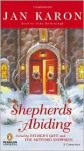
I didn’t do my usual re-read of Old Christmas, by Washington Irving, but I did pull the book off the shelf and savored once again the illustrations by Randolph Caldecott. I had hoped to finish Lakeshore Christmas by Susan Wiggs, but I’ve only just started it–something for next year’s Challenge!
As part of the Challenge, I watched (or should I say “binge-watched”) Christmas movies served up marathon-style on the Hallmark Channel during the month of December. Here are some of my favorites:
Fallen Angel (2003), starring Gary Sinise and Joely Richardson. Quietly beautiful story of two people who met as children and were destined to find each other again. This one got many viewings at my house.
Christmas Cottage (2008), starring Marcia Gay Harden, Peter O’Toole, and Jared Padalecki. Early life and formative experiences of artist Thomas Kinkade.
Christmas at Cartwright’s (2014), starring Alicia Witt, Gabriel Hogan, and Wallace Shawn. Alicia Witt is charmingly klutzy as a woman who becomes a department store Santa, and stumbles upon true love.
The Christmas Ornament (2013), starring Kellie Martin and Cameron Mathison. Martin is wonderful as a widow who pushes away both Christmas and a new friendship with Mathison because of her loyalty to memory.
The Nine Lives of Christmas (2014), starring Brandon Routh and Stephanie Bennett. Remember Superman Returns from 2006? Its star, Brandon Routh, plays a commitment-shy bachelor, but, hey, he’s on the Hallmark Channel during Christmas, so he’s sure to find lasting love!
As you can see, I had a lot of fun with the “Mistletoe” level of books read and the “Fa La La La La” (!) level of films watched. I’ll be back for more next year!

December 18, 2014
The Ghost at Scrooge’s Door: “Jacob T. Marley” by R. William Bennett–A Review

Jacob T. Marley by R. William Bennett. Shadow Mountain, 2011.
In this convincingly written pastiche of Charles Dickens’ classic novella A Christmas Carol, author R. William Bennett includes a Preface addressing his readers, whom he assumes are well acquainted with Dickens’ account of Scrooge’s visitations by three spirits on Christmas Eve, his repentance, and his chance to make amends and change his life. And why not? It is one of the most famous stories in the world, repeated, read, and watched on film by millions every year. But Bennett wants to know more. He wants us to join him in inquiring further into the backstory of A Christmas Carol, in life and beyond. For him, it all boils down to one fundamental concern: “What of old Jacob?”
Who was this man? Why was he so evil? Why did he in fact get to visit Scrooge and usher in the experience that changed first Ebenezer and then so many of our lives? Why did Scrooge get a final chance to change and not Jacob Marley?
Or did he?
Bennett’s novel offers answers to all these questions, and in the process considers the nature of redemption and forgiveness. Can Scrooge be saved, and yet Marley suffer and rattle his heavy chains eternally, as Dickens implies? Perhaps everything is not as it seems. An intriguing premise for a spinoff novel, but the success all depends on the quality of storytelling and control of language–Bennett rates highly on both counts.
The story is mapped out very well. First, it asks how did Marley become the man that he did. Unlike Scrooge, young Jacob Thelonius Marley is shown enjoying a happy childhood in a loving family. This makes Marley, the wizened old miser, the merciless business partner of Scrooge, even more inexplicable. The author turns to the reader again, confiding that “we search for a particular event, the germination of a seed that, watered by some kind of cupidity, would take root in the pure-hearted young Jacob and find its flower in deceitful old Marley.” He finds it in a particular incident in school when Marley’s pride and ambition are awakened by praise of his superiority in math and figures, without any tempering moral instruction. That is the seed. The flowering comes when young Marley disowns the good example of an illustrious forebear, Thelonius Marley, whose sole distinction was an act of generosity and self-sacrifice. Jacob allows cynicism and calculation to replace his former admiration and he drops his own middle name honoring this kind man, finally expunging even the initial T., along with the memory of goodness it represented. Is this really an explanation for Marley turning bad? Not exactly, because there is always a choice (that’s why this is a modern morality tale). The rest of the novel plays out with close examination of Marley’s–and Scrooge’s–choices and their consequences. The “Christmas magic” enters in when some of those choices lead to second chances.
Marley’s actions intersected with Scrooge’s life before they met because Marley was landlord to Scrooge’s sister Fan. They met on the street during her funeral procession. But neither man would know of this connection until much later. As they saw it, a chance meeting had introduced each to his perfect associate in profit-seeking. Each man strengthened the worst qualities in the other, and their fortunes grew as their moral character withered: “For twenty-five years, the two men grew more mean, more selfish, and more aligned in their purpose.”
Were Scrooge and Marley friends? Marley did not think so, as he lay on his deathbed, and mutely received the cold, “perfunctory” visits from Scrooge each day. He could feel Scrooge’s impatience for him to depart so that Scrooge could get back to his own business. And yet–death is a crossroads, and no one can entirely predict how he might feel approaching the boundary that separates death from life. Did Marley’s life pass before him in the long hours between Scrooge’s visits? Indeed. Marley saw the spirits of his wronged clients of a lifetime; he realized he had chosen to show them no mercy–it wasn’t inevitable. Perhaps even now he could muster the strength to say a few words to Scrooge. I won’t reveal those last words, but they have momentous consequences for the spirit of Jacob Marley.
Now the novel has arrived at the point where Dickens takes up the story. As you might expect, Bennett will retell the crucial events from Marley’s perspective this time. Is the visit of Marley’s wailing, chain-rattling Ghost exactly what it seems to be? Perhaps there could be more to the story. This time, Marley’s ghost will remain throughout, as an unseen witness to all that Scrooge sees when the three Ghosts of Christmas come to show him the hard truths of his past, present, and future and thereby awaken his remorse. Marley can’t help but consider his own role in many of these events. But will it be enough? This book imagines some surprising twists that will affect the eternal fates of both Marley and Scrooge.
Like A Christmas Carol, Jacob T. Marley is a tale that examines the nature of redemption, forgiveness, and atonement, but Bennett’s book is more theological in its speculations and more overtly Christian in its symbolism than Dickens’ work. As pointed out recently by Michele Jacobsen of A Reader’s Respite (citing Les Standiford, who wrote The Man Who Invented Christmas), the appearance of A Christmas Carol coincided with the beginnings of a shift toward a more secular society, one in which man had to depend on himself as much as on his Creator. Scrooge’s path of redemption could be seen as consistent with that, although it clearly did not deny a supernatural world. As she puts it, “God was not being rejected, but man’s control over his destiny was gaining ground.” Scrooge’s choice one Christmas Eve has shaped our modern idea of Christmas. Bennett’s book could be seen as an alternative interpretation of Scrooge’s choice and his salvation from that fearful afterlife so memorably presented to him by Jacob Marley’s ghost.
Related links:
A Very Dickens Christmas by Michele of A Reader’s Respite [a guest post at I’m Lost in Books].
Ghosts of Scrooges Past: Revisiting “A Christmas Carol”
*********************************


November 21, 2014
The 5th Annual Christmas Spirit Reading Challenge
 I’m full of cheer in anticipation of next week’s kickoff of the Christmas Spirit Reading Challenge, graciously hosted by Michelle (alias The True Book Addict) at her beautiful blog page The Christmas Spirit. It’s decorated with gorgeous holiday images and even some tunes to play! So, do pay it a visit.
I’m planning to read four books (Mistletoe level):
Jacob T. Marley by R. William Bennett.
Scandinavian Christmas by Trine Hahnemann.
Moominland Midwinter by Tove Jansson (who also illustrates).
Old Christmas by Washington Irving, illus. Randolph Caldecott.
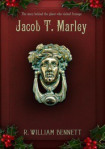



The novel about poor old Jacob T. Marley will give me a good reason to write something new about Scrooge and The Christmas Carol here this year. My reviews for Scandinavian Christmas (a cookbook) and Moominland Midwinter (from Finland: a children’s book that adults love too!) will be over at my other blog, Northern Lights Reading Project. Old Christmas is just pure fun to re-read each year, with its descriptions of Christmas puddings, country dancing, and even a little romance in bloom at Bracebridge Hall, as gently satirized by Washington Irving, with the help of Caldecott’s masterful caricatures.
I’m sure I’ll be watching quite a few Christmas movies all during the challenge, since I already have a good head start with the Hallmark channel’s Christmas movie theme since the beginning of November. My favorite so far, and one that I’d never seen before, is called Fallen Angel (2003) starring Gary Sinise and Joely Richardson.
 The Challenge begins with the Christmas Spirit Read-a-thon. Its guidelines are a little different, so be sure to visit the Read-a-thon announcement for details. Her biggest guideline is to HAVE FUN with it! I will!