#FrightFall Read-a-thon 2015: Wrap-up Thoughts
I send big thanks to Michelle at Seasons of Reading for graciously hosting this year’s #FrightFall read-a-thon. As usual, readathons create some motivation to select something and try to finish it–something I am sometimes slow to do!
I ended up reading two of my planned fairy-tale retellings, Deerskin and White as Snow.
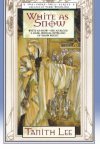
White as Snow by Tanith Lee was indeed a chilling retelling–more of a retooling–of the ‘Snow White’ story. It had flashes of insight certainly, and proved to be very involving, although quite shocking and painful to read. Half of the book was about the Queen and the brutal crime that had warped her spirit early in her life. The second half of the novel was about her daughter Snow White, but at this point her story merged with the Persephone myth and some fairly standard Celtic elements of the Beltaine stag figure. The span of time in which Snow White lived with the dwarfs was the most creative part of the book, and recaptured my attention. The tone of this part reminded me of War of the Flowers by Tad Williams (which I liked better).
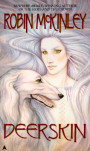
Deerskin, which I didn’t finish yet, also subjects its main character, Princess Lissla Lissar, to terrible violence and betrayal early in the story at the hand of her father the king. She is wholely sympathetic, though sometimes rather stuporous in her trauma. She must flee for her life, and in the process of survival, suppresses her true identity, even from herself. She assumes the name Deerskin, after receiving a supernatural gift of a deerskin dress. The chapters where she is living off the land with only her greyhound Ash for company are beautifully and tenderly written. I will definitely keep reading this one to the end, and I look forward to reading both of McKinley’s retellings of ‘Beauty and the Beast’–Beauty and Rose Daughter.
I have to wonder why, in both these retellings, two such highly regarded writers as Tanith Lee and Robin McKinley chose to subject their main female characters to such brutal crimes, described so graphically. Whereas often the ‘Grimmest’ of fairy tales only threatens a potential for crime or taboo-breaking in the story, while not enacting it, these tales are merciless and rescue does not come. In the aftermath, these women suffer, very realistically, a total deadening of spirit, a numbness and hollowing out of soul. The rest of the story offers opportunities, however slender, to find their way back to selfhood and a sense of wholeness. It seems no accident then that fairy tales are one vehicle now, in our time, for holding up a mirror (a magical mirror in White as Snow) to the violence against women in our world, by no means a thing of some mythic or misty past.