
Heather King's Blog, page 17
March 20, 2024
THE WEEK BEFORE HOLY WEEK
Blessed belated Solemnity of St. Joseph, husband of Mary.
Here’s a little reflection to accompany my recent piece on the spot-on Flannery O:
As well as the purifying HA HA experience of a communal penance service at my local parish.
Father gave some great guidelines to kick off an examination of conscience, per the seven deadly sins.
He started of course with pride:
Does it always have to be about me?
Am I the center of my own little universe?
CONVICTED!!!


March 18, 2024
THOUGHTS ON VIRTUE SIGNALING FROM FLANNERY O’CONNOR
Here’s how this week’s arts and culture column begins:
“If other ages felt less, they saw more, even though they saw with the blind, prophetical, unsentimental eye of acceptance, which is to say, of faith. In the absence of this faith now, we govern by tenderness. It is a tenderness which, long cut off from the person of Christ, is wrapped in theory. When tenderness is detached from the source of tenderness, its logical outcome is terror. It ends in forced-labor camps and in the fumes of the gas chamber.”
— Catholic novelist and short story writer Flannery O’Connor
Way back in the 1950s and ’60s, Flannery O’Connor foresaw the doleful effects of contemporary identity politics.
“On the subject of this feminist business,” she once wrote to a friend, “I just never … think of qualities which are specifically feminine or masculine. I suppose I [divide] people into two classes: the Irksome and the Non-Irksome without regard to sex.”
READ THE WHOLE PIECE HERE.
March 16, 2024
JOIN ME FOR A JUNE CATHOLIC ART INSTITUTE RETREAT IN DC
Yep, I am ON THE MOVE.
The Catholic Art Institute is headed up by Barb Nicolosi, force-of-nature professor, screenwriter, speaker, passionate promoter of the arts, general mover-and-shaker, and Red Sox fan.
Also my friend.
Here’s the link to what promises to be a fantastic weekend.
We will be housed at the Franciscan Monastery of the Holy Land. I mean come on.
I have visited our nation’s capital but once, loved it, and have managed to parlay this current trip into a week of wandering about visiting some of Washington DC’s incredible museums, parks, and gardens.
So come on out, down, up, over, or in, depending on where you live…and let’s explore the specific demands that the search for “new epiphanies of beauty” puts on the artistic soul.
March 14, 2024
INTO GREAT SILENCE
Here’s how my most recent arts and culture column begins:
“The Father spoke from all eternity just one Word. And he spoke it in an eternal silence. And it is in silence that we hear him.”
— St. John of the Cross
Into Great Silence is an award-winning 2005 art-house documentary about the Grande Chartreuse, the famed Carthusian monastery high in the French Alps.
German director Philip Gröning approached the monks in 1984, asking for their permission. “We’ll get back to you,” they said. Sixteen years later, they finally gave the green light.
READ THE WHOLE PIECE HERE.
Also, this week’s video reflection: up with the Blessed Virgin Mary and the sorrow of a mansplaining Mass!…
March 12, 2024
THE ULTIMATE EASTER FILM: PASOLINI’S THE GOSPEL ACCORDING TO ST. MATTHEW
A slightly updated re-post from 2015:
Pier Paolo Pasolini (1922-1975) was an Italian film-maker, writer, and poet.
Part intellectual, part peasant; part Marxist, part broken-hearted Catholic, as a youth, he sold his novels and poetry on the streets of Rome. He knew that power always tends to the right. He was gay without making a campaign out of it.
He was once arrested for lewd public acts, he was a constant target for the tabloid press, and his work became increasingly darker and controversial as he aged (Salò, his last film, is considered by many to be unwatchable).
He was murdered in 1975, brutally beaten and run over multiple times by his own Alfa Romeo in a late-night pick-up gone wrong.
And he made at least one movie for which alone he should be awarded the crown of stars: The Gospel According to St. Matthew (2 hr. 15 min.,1964).
Barth David Schwartz tells the story of the making of the film in Pasolini Requiem.
Pope John XXIII—to whom the film is dedicated—had called for a new dialogue with non-Catholic artists. In 1962, Pasolini found himself stuck for a weekend conference in Assisi. He picked up a copy of the Gospels, and “read them straight through.”
Instantly, all his other planned projects fell away. “[T]he idea of making a film… alone remained, alive and thriving within me.”
He used no script. Every word in the film comes directly from Matthew’s Gospel.
He used “real people” in his film, including his own mother (with whom he continued to live as an adult) as the older Virgin Mary. People with real emotions, ravaged faces, bad teeth.
“I have an almost ideological esthetic preference for nonprofessional actors,” Pasolini observed, “who themselves are shreds of reality as is a landscape, a sky, the sun, a donkey passing along the road.”
Enrique Irazoqui , the 19-year-old Spanish economics student who played Christ, had never acted before, and after The Gospel According to St. Matthew, never acted again. Slender, good-looking but not movie-star handsome, Irazoqui has a head of oiled dark hair, swept straight back, and eyebrows that meet.
Watching him, you feel This is exactly what Christ would look like and act like. Intense but not fanatical. Fierce yet tender. On fire but contained. Possessed of absolute integrity but without the desire to retaliate, lord it over, or be vindicated. One of us and yet…of an entirely different realm, and utterly unique.
The film was shot in black-and-white mostly in the poor Italian district of Basilicata. The rocky mountainsides, people wandering in hooded robes, and noisy, dusty marketplaces resemble the pictures from my 1950’s-era childhood Bible. Clearly the budget didn’t allow for special effects but the integrity of the film-making forbids laughter.
The opening scene, where Joseph discovers Mary is pregnant, the baptism, the miracle of the loaves and the fishes, the night where, praying in the Garden at Gethsemane, Christ sees the torches of the Roman soldiers approaching through the gloom and knows his hour is come, are affecting in a way no other “religious” film in my experience remotely approaches.
As Christ approaches Jerusalem, knowing he’ll soon be crucified, a raucous band of little children tug at his sleeves, crowd in to be hugged, and exuberantly rattle their palm fronds. The camera ranges over their grimy faces, then back to Christ who is gazing upon them with unalloyed delight. It’s the first and only time in the film he full-on smiles.
The score includes Bach’s Mass in B Minor, Odetta’s “Sometimes I Feel Like a Motherless Child,” and the Missa Luba, a version of the Latin Mass based on traditional Congolese songs.
In 2014 the Vatican newspaper “L’Osservatore Romano” described “The Gospel According to St. Matthew” as “the best film about Jesus ever made in the history of cinema.”
But it was in reading a letter to his student and friend Tonuti Spagnol, dated October 25, 1946, that I felt a true kinship with Pasolini.
“Something quite powerful happened to me yesterday. While I was standing on one of the Tiber bridges, waiting for friends (it was night), there came to me the idea of descending the staircase which carried one down to water level…It was very dark; I could make out the arches of the bridge over my head and, along the river’s length, could make out lamps, in infinite number of lamps. I was about twenty meters below the level of the city and its din came muffled to me, as from another world. I really never thought that in the heart of a metropolis it was enough to descend a staircase to enter the most absolute solitude.”
In Rome several years ago, I, too, walked alone along the banks of the Tiber. I, too, descended below the city into a profound solitude. I, too, was entranced as night came on, at the “infinite number” of lamps, shining in the darkness.
It’s the same hushed solitude, with the mountains in the distance and the blank sky above, in which the closing scene of The Gospel According to St. Matthew seems to have been shot.
It’s the moment when the stone slab covering the entrance to Christ’s tomb falls aside—and we see that the tomb is empty.
March 8, 2024
JOIN ME THIS SUMMER FOR A MEMOIR-WRITING WORKSHOP IN IRELAND!
MARCH PROMO FOR $100 OFF: EARLYBIRD100.
Here’s your big chance! To kick-start your memoir, travel to Ireland, hang out in Kylemore’s walled Victorian Garden.
The questions as we contemplate writing a memoir tend to go like this:
How do I start? How do I organize my material? How do I overcome the voices in my head? How do I shape the events of my life into a story? Was I walking with God in those dark places? How do I make time for writing when I have so many other responsibilities?
The format for this weeklong workshop will include talks, discussions, prompts, and plenty of quiet writing time. We’ll learn tips and techniques to help us structure our stories, envision our narrative arcs, and adapt our life events into a chronological memoir.
We’ll focus on the craft of writing, and on enlarging our hearts, horizons and souls. We’ll read from our works-in-progress, give and receive notes, and share our questions, challenges, and triumphs.
We’ll form a tightly-knit, supportive community that invites stretching, exploring, and growing. We’ll meet one-on-one during the week.
The only requirement for the Workshop is a desire to establish a more dedicated and structured way to write. The participants will bring a wide range of sensibilities and levels of expertise. Some of us may never seriously written before, nor shown our work to another human being. Others may have been published.
Every human being has an authentic voice and a unique story. Let’s get together—human-to-human—and start telling them.
Reserve a spot Writing Workshop Schedule [PDF, 1MB]
Date Options8-13 September 2024 (optional extra night available*)Cost€1700 ($1870) for one person*€150 for optional extra nightINCLUDES:5 Night Accommodation Single Ensuite at the Notre Dame Global Centre at Kylemore Abbey – rooms and common spaces renovated to a high standardAll meals by renowned chef Mikel Redondo with locally sourced ingredients – plentiful dishes with tea and coffee available throughout the dayTuition & Cultural ProgramingPLEASE NOTE: Cost does NOT include travel to Ireland.
Workshop SuppliesParticipants are asked to bring:
journalswriting toolscomfortable clothing
AWARD-WINNING AUTHOR, COLUMNIST AND SPEAKER HEATHER KING“We come into this world with sealed orders.” — Søren Kierkegaard
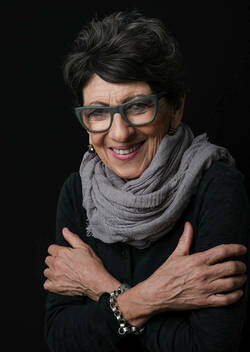
Heather King is a writer with a dozen books, a former commentator for NPR’s “All Things Considered,” and an award-winning arts and culture columnist. She also speaks, edits, and gives workshops and retreats. King has written memoirs about alcoholism (PARCHED), food (FAMISHED), gardening (HARROWED), money and earning (LOADED), converting to Catholicism (REDEEMED), and St. Thérèse of Lisieux (SHIRT OF FLAME). She writes weekly on literature, painting, dance and film for Angelus News, the archdiocesan newspaper of LA. And she is thrilled to share her experience, strength and hope with other aspiring memoir-writers.
For more, visit heather-king.com.
March 6, 2024
DO LET ME SEE YOUR GLORY
“Do let me see your glory!” says Moses to God in today’s Office of Readings. As he stands outside the holy-of-holies tent, and God’s voice issues from a column of cloud…
God replies: “I will make all my beauty pass before you, and in your presence I will prounounce my name, ‘Lord’; I who show favors to whom I will, I who grant mercy to whom I will. But my face you cannot see, for no man sees me and still live.” [Exodus 33:18-20]
Nothing much has changed. Neither our poignant, heartfelt plea–nor God’s hiddenness.
I can’t say enough for a book I mentioned recently: Immortal Thoughts: Late Style in a Time of Plague by Christopher Neve.
it’s about the art of painting, the life of the artist, aging, decaying, dying, pandemic lockdown: the human condition in other words. Neve writes of the last years and works of Poussin, Constable, Pisarro, El Greco, Chardin, Morandi, Rouault, and Chaim Soutine among others.
I first came across Soutine at the Barnes Foundation in Philaelphia and instantly fell in love. His life, personal hygeine, finances, romances and health were a perpetual mess. He died in agony at 50, basically fleeing from the Nazis, of stomach cancer.
“In talking about Soutine’s last paintings,” Neve writes, “I need to discuss the idea of risk. Risk in painting is characteristic of many artists’ last work, in particular that of Rembrandt, Titian, and Soutine. That is because they knew far too much to be held up by tenchical difficulties and because it no longer mattered to them very much what patrons and buyers might expect. But it was infinitely more than that”…
“In Soutine’s case extreme anxiety and angst are part of his method of inner expression turned outwards, his way of making something his own by realizing it in a system of energetic marks. Nietzsche insists that it is necessary to get in touch with one’s passins and then submit them to discipline. But this version of self-realization is patently not a discipline. It is more like the terrible freedom and loneliness of Sartre’s self-making. To get in touch with your inner genius you act now, this very moment, on impulse and exactly true to your own nature. So the artist, in this turmoil of the psyche, takes risks. He has to….This energetic ardour, an uncontrolled appetitie for paint and life, can produce out of violence and disorder and profound anarchy an occasional truth, the truth he first imagined as if by accident.”
Another book I’m hugely enjoying: In Praise of Failure: Four Lessons in Humility, by Costica Bradatan, a Professor of Humanities at the Honors College at Texas Tech University and Honorory Research Professor of Philosophy at the University of Queensland in Australia whose work has been translated into more than twenty languages.
So far he’s covered Simone Weil, Mahatma Gandhi, and Romanian philosopher E.M. Cioran, who “turned his back on social acceptability.” (Well! I hope so…).
Yukio Mishima, who I personally consider a total nutcase, God rest his soul, is fourth.
“Gleefully breaching the boundaries between argument and storytelling, scholarship and spiritual quest, Bradatan concludes that while success can give us a shallow sense of satisfaction, our failures can lead us to humbler, more attentive, and more fulfilling lives. We can do without success, but we are much poorer without the gifts of failure.”
Maybe…but Mishima and arguably Weil were both suicides. That’s not “failure”–that’s abdication, at least they way they did it, which in both cases to my mind stemmed not so much from humility as from, weirdly….pride.
Anyway, Bradatan has a sense of humor (so sorely lacking in today’s world), and is a great storyteller, and the stories provide wonderful fodder for reflection, internal argument, and identification. Which I’m pretty sure was his aim.
Here’s what was on my mind after reading the section on Weil.
March 5, 2024
THE NEW MARTYRS
For the month of March, the Holy Father’s prayer intention is “For the new martyrs: We pray that those who risk their lives for the Gospel in various parts of the world inflame the Church with their courage and missionary enthusiasm.”
Ever since taking a little trip to Rome in October, 2015, thinking by my invisible presence and silent prayer to be in solidarity with the Synod on the Family that was taking place during that time, I’ve had a special place in my heart for the New Martyrs. This is a piece I wrote of my two weeks there.
The churches were stupendous. The ruins were sublime. But I couldn’t get over the Tiber, which runs north to south through the city, and which Romans largely ignore. For most of my visit, the water was a dreamy green (later brown). Still, if such a river ran through the middle of my own city of LA, the whole thing would have been turned into a mall or at the very least an over-crowded bike path.
As it was, other than the stray jogger, cyclist or stroller, I had the Tiber almost to myself. My rented studio apartment was hard by the Ponte Sisto, and I loved descending the stone steps to walk along the ancient cobblestones, pass beneath the crumbling, moss-covered bridges, and marvel at the curving lines of lamps as they came on at dusk.
A few bridges down, I noticed a little island and, after several days, made my way over. That was when I stumbled upon the Basilica di San Bartolomeo all’Isola, the Memorial of the New Martyrs.
The church dates back to the Roman Empire. The website explains:
In 1999, anticipating the celebration of the Jubilee 2000, Pope John Paul II created a Commission to the study the life and history of the New Christian Martyrs of the 20th Century. For two years the Commission worked in the Basilica of St. Bartholomew, collecting approximately 12,000 dossiers on martyrs and witnesses of faith from dioceses all around the world.
Among the fruits of this study was the ecumenical prayer at the Coliseum, when the Pope gathered with several representatives of various Christian Churches during the Jubilee celebrations. The event revealed that the multitude of Christian believers killed or persecuted in the last century is like a continent still waiting to be explored, a heritage that all Christian denominations share.
After the Jubilee, John Paul II wished that the memory of the witnesses of faith of the 20th Century were made visible in the Basilica of St. Bartholomew.
In its current incarnation, the basilica features six chapels, three on each side: The New Martyrs in Asia, Oceania, and the Near East. The New Martyrs in Latin America. The New Martyrs of Africa. The New Martyrs of Communism. The New Martyrs of Nazism. The New Martyrs of Spain and Mexico.
Each chapel featured a large glass case of relics. (The labels were in Italian so I looked up the relics online in translation after):
“Chalice, paten and stole of Don Andrea Santoro, Catholic priest missionary in Turkey, killed while he was praying in his parish in Trabzon, on the afternoon of Sunday, February 5, 2006.”
“Rosary and “discos” of Father Alexander Men, Orthodox priest from Moscow, killed on September, 1990, as he was on his way to his church to celebrate the Sunday liturgy.”
“Pectoral cross belonged to Father Joseph Maria Noguer y Tarafa, parish priest of Santa Pau, Catalonia, shot on August 9, 1936.”
It’s one thing to visit the Colosseum and contemplate the martyrs who were thrown to the lions 1800 years ago. Or courtesy of some Dominican nuns, to kneel by the tomb of Catherine of Siena (1347-1380), who had a thing for self-mutilation and may or may not have been anorexic.
But these men and women who had been killed for the faith seventy, fifty, as recently as eight years ago, moved me in a way that was more immediate and more piercing.
In fact, the Church has produced more martyrs in the last 100 years than in the previous 1900 put together.
“The Bible of Floribert Bwana Chui-young of the Community of Sant’Egidio of Goma (Congo), tortured and killed in the night between 8 and 9 June 2007 for failing to bend to bribes.”
“The missal of Archbishop Oscar Arnulfo Romero, killed while celebrating the Eucharist on the altar, 24 March 1980.”
“A letter written by Blessed Franz Jägerstätter husband and father, beheaded by the Nazis for refusing to fight for the German Army.”
In 1938, Jägerstätter cast the only vote in his village against joining the Third Reich. He underwent military training from 1940-41, but the experience only sharpened his resolve to resist serving under Hitler. To his wife he wrote: “Christ said that whoever wants to be my disciple must take up his cross and follow me.”
In notebooks he kept from 1941-43, he remarked upon, but did not blame, the priests and bishops who had chosen to go along with the Nazis and counseled their parishioners to do the same. He dreamed one night of a train that was going to hell. He asked himself: “What must people of other beliefs think about us and about our Christian belief when we value it so little?”
Many of his fellow Catholics criticized Jägerstätter’s decision, accusing him of neglecting his moral duty as a husband and father. He rejoined: “Is someone permitted to lie in taking an oath just because he has a wife and children? Did not Christ himself say that whoever loves a wife, mother and children more than me is not worthy of me?”
Across the Tiber and several bridges north, cardinals and bishops from all over the world were debating the human family. Close by were the world-renowned schools of theology where many of them had been trained: the Pontifical North American College, the Pontifical Gregorian University, the Pontifical University of the Holy Cross.
Jägerstätter had a seventh-grade education.
But he had the firmest possible grasp of “family values.”
BLESSED JERZY POPIEŁUSZKO
This piece, about another “New Martyr,” was published as a “Credible Witness” essay in the October, 2020 Magnificat.
Blessed Jerzy Popiełuszko (1947-1984), Polish priest and staunch anti-Communist, associated with Solidarity trade unions and dared openly to celebrate Mass under the country’s totalitarian regime. He was martyred—beaten to death by three state-sponsored thugs—under Communism.
Popiełuszko was born in the village Okopy, in the Białystok area. His parents were farmers and devout Catholics. As a seminarian in Warsaw, he was conscripted into the army. As a result of repeated punishments for resisting atheistic propaganda, he suffered ill health for the rest of his life.
After being ordained, he served at local parishes there. His sermons, notorious for exhorting members of the faithful to resist Communism, were broadcast on Radio Free Europe.
From December 13, 1981 to July 22, 1983, the Polish People’s Republic imposed martial law in an effort to crush political opposition. During that period, Father Popiełuszko continued to celebrate Mass in public places.
“An idea which needs rifles to survive dies of its own accord,” he observed. And elsewhere, “It is not enough for a Christian to condemn evil, cowardice, lies, and use of force, hatred, and oppression. He must at all times be a witness to and defender of justice, goodness, truth, freedom, and love. He must never tire of claiming these values as a right both for himself and others.”
In 1983 he was arrested on trumped-up charges but members of the clergy intervened and he was soon released and granted amnesty.
He then emerged unscathed from an October 13, 1984 car “accident” that had been staged by the state for the purpose of killing him.
But on October 13, 1984, he was murdered in 1984 by three agents of Służba Bezpieczeństwa (Security Service of the Ministry of Internal Affairs). The thugs lured him by faking the breakdown of their vehicle, and flagging him down for help. They savagely beat him, tied him up, and shoved him in the trunk of their car. They then bound a stone to his feet and dumped him into a nearby reservoir. His body was recovered on October 30.
An uproar went up across Poland. His funeral was attended by 250,000. His martyrdom became a flash point for the anti-Communist resistance movement.
His assassins were subsequently tried and convicted of murder, as was the colonel who gave the order.
Fr. Popiełuszko’s courage and integrity were astounding. But it’s worth noting that what got him killed was a simple act of charity: stopping for a stranded motorist. “Truth, like Justice,” he once observed, “is connected to Love, and Love has a Price.”
He was buried in St Stanislaus Kostka Curch, Warsaw, and in 2009 posthumously awarded the Order of the White Eagle, Poland’s highest honor for civilians and military.
But his truest crown is of another kind. The rock used to kill him is now housed as a relic in San Bartolomeo all’Isola—the Shrine to the New Martyrs of the 20th and 21st centuries—in Rome.
He was beatified on June 6, 2010, by Archbishop Angelo Amato on behalf of Pope Benedict XVI.
These men were extraordinary–but they probably didn’t seem extraordinary to themselves.
Thus, a last word from Venerable Mary Magdalen of Jesus in the Eucharist, from the Monday, February 5th Magnificat reflection:
“We must appreciate those saints of a simple life, who have done no more than love God with fidelity in the duties of their state in life. This is all the more necessary now, when sanctity is badly understood and only the extraordinary arouses interest. But one who seeks the extraordinary has very little chance of becoming a saint. How many souls never reach sanctity because they do not proceed by the path on whih they are called by God. I even dare to add that those who desire to be saints and do not know for certain the path by which the Lord wants to lead them should embrace this path of fidelity to their obligations.”
Off to sweep the sidewalk.
March 2, 2024
THE BLASCHKA SEA CREATURES
Here’s how this week’s arts and culture column begins:
One of the biggest thrills of my New Hampshire childhood was the field trip my elementary school class once took to the Harvard Museum of Natural History.
To a kid raised among apple orchards and grazing cows, Boston was akin to a trip to Paris, or Istanbul, or the lost city of Atlantis.
Harvard represented a foray into unimaginable sophistication.
And a visit to the Museum of Natural History meant that we got to see The Glass Flowers gallery.
READ THE WHOLE PIECE HERE.
February 29, 2024
I BURN FOR YOUR PEACE
Michelangelo lived till almost 90 and wrote near the end: “I live here in Florence in great toil and great weariness of body and have no friends of any kind and don’t want any, and haven’t time to eat what I need.”
His last drawings were all of the Crucifixion. The above, owned by the ROYAL COLLECTION TRUST, is one of them. From their description:
“A drawing of Christ on the Cross, with St John the Evangelist and the Virgin Mary. At the base of the cross is an indication of a third figure crouched, presumably Mary Magdalene. On the verso, a drawing of a left leg, and a triangular outline.
In the last years of his life Michelangelo drew the Crucifixion repeatedly (see also RCIN 912761 and 912774), as a sustained and profoundly felt spiritual exercise. In addition to the two drawings at Windsor, there are four other complete drawings of the subject in London (two), Oxford and Paris, together with several fragments, preparatory sketches and copies of lost drawings.
These very late drawings, together with two (or possibly three) sculptures of the Lamentation or Pietà, differ radically from Michelangelo’s earlier works, in which the body of Christ on the cross, or after death, is depicted as undefiled, even heroic. Those earlier works asserted Christ’s triumph over death; the later drawings and sculptures emphasise instead his sacrifice, and the death and dissolution of his material body.
In these drawings Michelangelo depicts the Crucifixion not as a narrative scene but as a symbol, and what began as a carefully drawn composition gradually became more indefinite as he repeatedly reworked the outlines of Christ. Here the torso of Christ is finely modelled, though the face is uncertain and the legs are in several distinct positions. This is not due to imprecision of touch in Michelangelo’s old age: his reworking of the figure of Christ gave an entirely deliberate effect of indeterminacy, capturing the dissolution of the body as the soul leaves the material world at the moment of death and passes into a different realm…A few lines between the Virgin and St John may be first indications of Mary Magdalene embracing the base of the Cross. There is also a patch of red chalk on Christ’s feet, placed too precisely to be accidental and surely added by Michelangelo as blood.”
I was pointed to the drawings by a wonderful book: Christopher Neve’s Immortal Thoughts: Late Style in a Time of Plague (2023). Of Michelangelo’s old age, he writes:
“A simple faith in God seems to him the only change of redemption and through purification, of ultimate salvation. He still knows much of Dante by heart…
Let me know mine end and the number of my days. Very soon it will be February 8th, 1564 [the day Michelangelo died]. Do not attempt to guess what is running through Michelangelo’s head in these last five drawings.
All are of the crucifixion [sic]. Four include Mary and Saint John. Each drawing is blotched and marked, full of revisions, alterations, corrections, and patently incomplete. In two the vertical of the cross has been changed using a ruler, apparently at a late stage, to a slight tilt, the better to express the dead weight of the body. For in these drawings Christ is dead…Mary and John are in despairing attitudes. In one, Mary holds her head with both hands. In two others the distraught figures approach the body of Christ but cannot touch it. Their feet heavily grip the ground and their clothes are either absent or or so rudimentary as to accentuate their nudity by wrapping round it. The body of Christ himself is beautiful beyond all belief, full of hollows, the agonized muscles of the chest and stretched stomach, which are at the centre of each drawing, conveyed miraculously by a sort of smoke of changing indication within the form.
Do not say: This is drawing by an old man’s shaky hand. For it is drawing by one of the greatest sensibilities there has ever been, at its wits’ end.” pp 35-38.
Continuing with our Lenten reflections…I’ve been thinking how we Catholics have the confessional. Why then do some of us, including, starting with St. Augustine, choose to “confess” to the whole world?


