
Heather King's Blog, page 16
April 19, 2024
IN PRAISE OF FAILURE
Here’s how this week’s arts and culture column begins:
Author Costica Bradatan, a professor of humanities and philosophy, provides rich contemplative fodder in his recent book, “In Praise of Failure: Four Lessons in Humility” (Harvard University Press, $29.95).
The four subjects he selects are French intellectual Simone Weil, Mahatma Gandhi, Romanian philosopher E.M. Cioran, and Japanese writer Yukio Mishima.
“Gleefully breaching the boundaries between argument and storytelling, scholarship and spiritual quest,” runs the jacket copy, “Bradatan concludes that while success can give us a shallow sense of satisfaction, our failures can lead us to humbler, more attentive, and more fulfilling lives. We can do without success, but we are much poorer without the gifts of failure.”
Maybe … but these are failures that are willed, to one degree or another; controlled; failures that were meant to sidestep real failure and thus have the last word.
READ THE WHOLE PIECE HERE.


April 18, 2024
BRIDESHEAD REVISITED AND OTHER TRAVELS
I am safe home from my trip to LA and other points California, and very glad to be here. The cacti are beginning their glorious spring bloom.
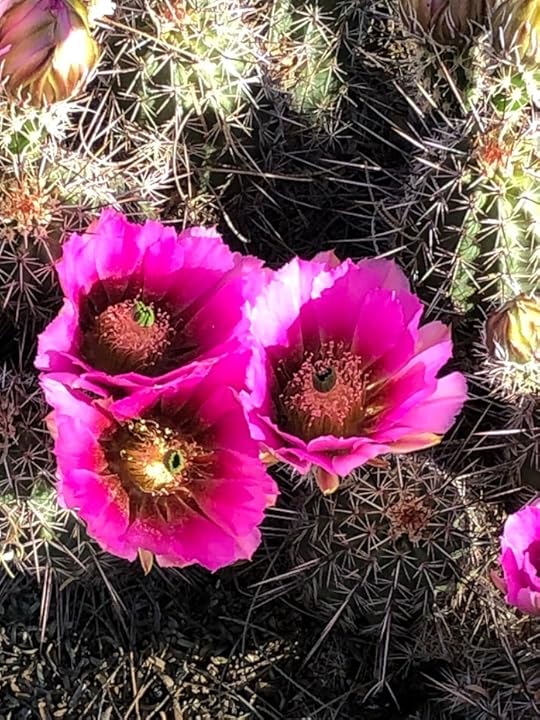
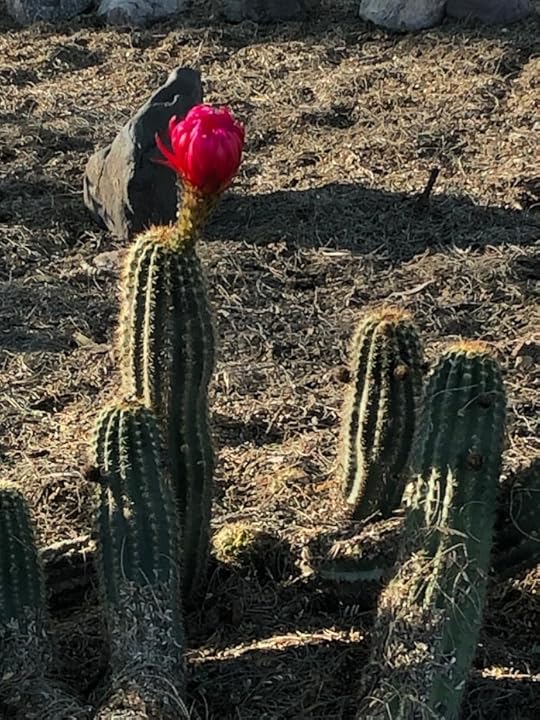
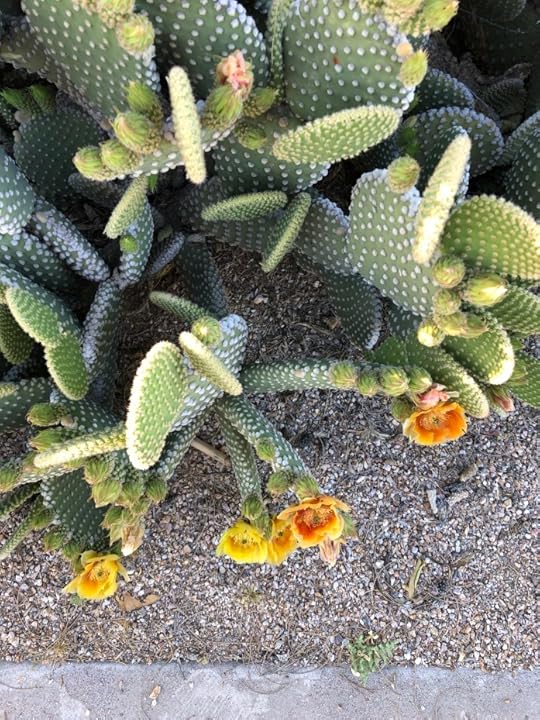
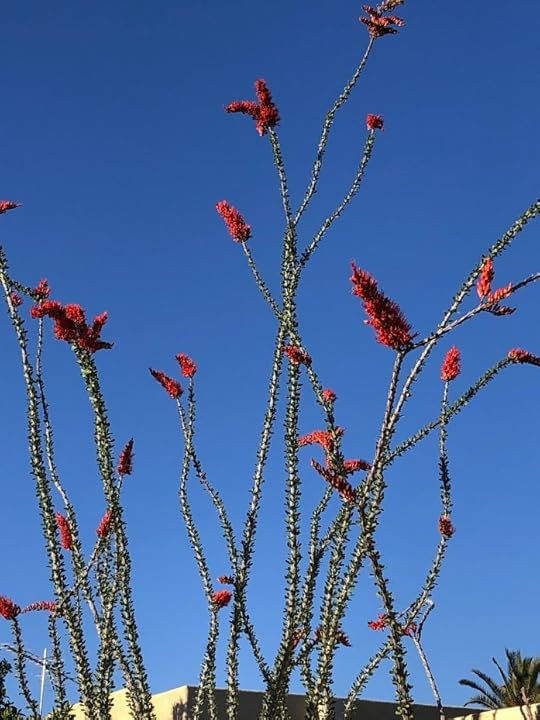
Whilst (I am British now) gone, during a grim three-day spell of cold and rain, I watched all 11 episodes of a 1981 made-for-TV series starring Jeremy Iron and Anthony Andrews of the acclaimed Evelyn Waugh novel Brideshead Revisited. Deeply Catholic themes.
Here you go!
April 14, 2024
DANTE’S “DIVINE COMEDY” ON PBS
Here’s how this week’s arts and culture column begins:
Dante Alighieri (1265-1321), Italian poet and moral philosopher, authored “The Divine Comedy.” His three-part journey through hell, purgatory, and paradise, with the Latin poet Virgil as his guide and the ethereal Beatrice as his muse, is perhaps the greatest work ever written on romantic love.
Dante started the “Inferno,” his description through the nine circles of hell, in 1307, five years after he was exiled from Florence on politically motivated corruption charges.
Reams have been written about this iconic poem: Dante’s innovative jettisoning of Latin in favor of the Italian vernacular, the terza rima (third rhyme) that makes translating so fiendishly difficult, the debates over which of the 109 and counting English translations has remained most faithful to the text.
READ THE WHOLE PIECE HERE.
April 12, 2024
I AM ON A LONELY ROAD
And for all you Joni Mitchell fans, I am traveling…
Here’s a video, dateline West Hollywood.
For my readers are never far from my mind and heart!
Then again, I haven’t had much time to think deeply about anything.
Highlight of trip: Carizzo Plain National Monument with dear friends who live in Santa Maria, CA.
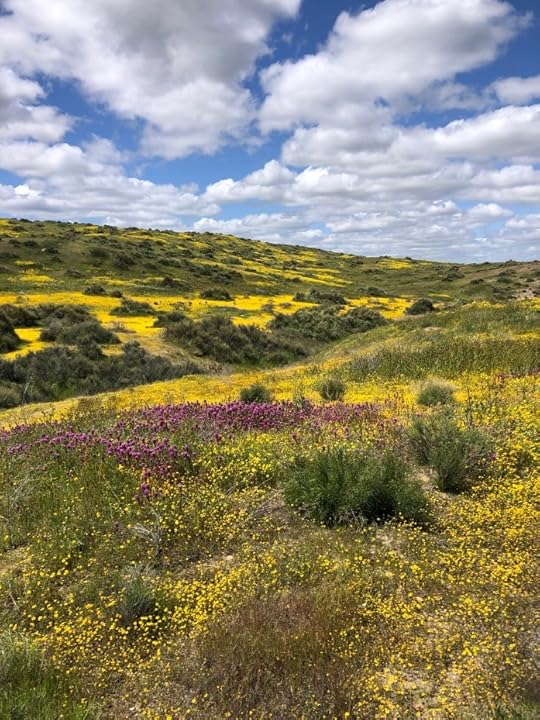
 photo by DENNIS APEL
Super highlight: stopping in at Immaculate Conception, New Cuyama, CA, a small church on the far edge of the (gigantic) Archdiocese of Los Angeles. The door was open. Red candle burning by the tabernacle. We knelt for a bit, and rested.
Then down to LA, more unbelievably fantastic, generous, and hospitable friends.
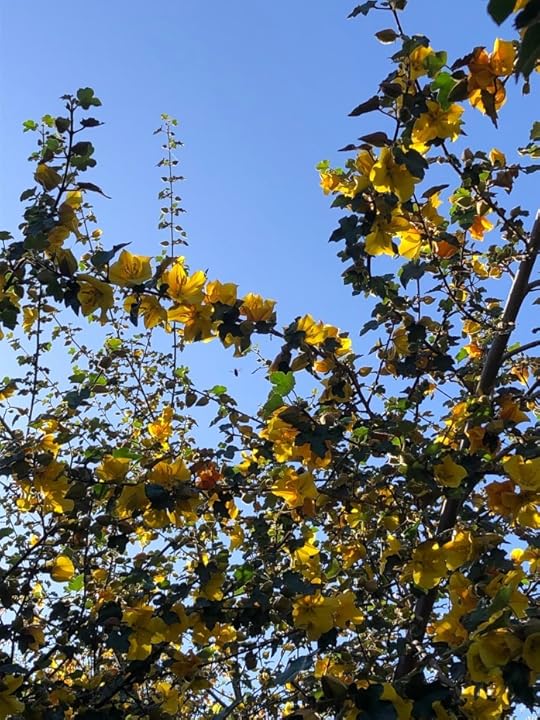
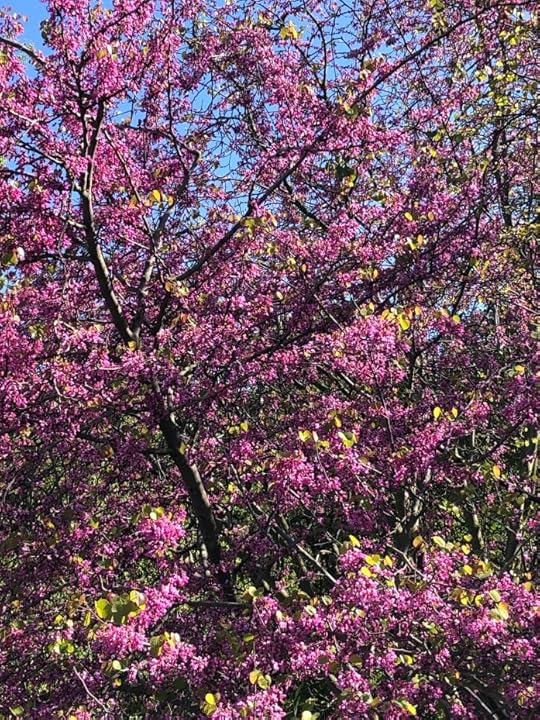

 DESCANSO GARDENS, LA CAÑADA FLINTRIDGE, GREATER LA.
I HAD A FEW HOURS HERE TO MYSELF, AND THAT WAS HEAVEN.
Highlight of trip: St. Andrew’s Abbey, Valyermo, CA, walking up hill to cemetery, genuflecting at Oblates section where if all goes well I will one day be laid to rest, striking off in opposite direction, past/through the Monk’s section, picking my way through cactus, agaves and wildflowers, finding rock to sit on, and just think, just pray, just be.
I could only stay a single night, as 2 1/2 months out, rooms for private retreatants were booked almost through December. That was hard. Everything in me longed to rest my head and spirit. Still, the time I did have was heaven: noon Mass, a visit with Fr. Francis Benedict, a stop into the used bookstore (Fr. Walter Ciszek, Catherine de Hueck Doherty, Carlo Carretto–as Fr. Martin pointed out all the convents and monasteries that thrived in the 50s and 60s and that are now closing down are donating their libraries…I love these old stalwarts), Vespers, Compline, and then Vigils and Lauds the next morning. A huge tree outside my window.
Followed by a somewhat scary drive through the Angeles Forest and Angeles Crest Highways (the only thing worse would have been taking the 14, 5, and 215 highways) back into town. Traffic, traffic, traffic. A visit with a dear friend. Silver Lake Ramen (the original location, on Sunset in Silver Lake).
Highlight of trip: 6 pm daily Mass, Thursday, at St. Ambrose in West Hollywood. Seven parishioners, one of whom sat in back the whole time, head in hands. Fr. Dennis, who I remembered from years ago at St. Basil’s in Koreatown, a film buff. Altar banked with lilies, everything shipshape, the world outside rushing, roaring, swirling, oblivious. The red candle burning by the tabernacle.
More friends, more flowers, more noodles and other fab SoCal food, and more Mass ahead.
April 6, 2024
WILLIAM CONGDON, CRUCIFIX-OBSESSED PAINTER
Here’s how this week’s arts and culture column begins:
“I paint on black because painting is not representing a light that is and that’s all, but rather participating in the light that is becoming out of the darkness.”
— William Congdon
The Sabbath of History: William Congdon, with Meditations on Holy Week, by Joseph Ratzinger (Knights of Columbus Museum, $45), is a catalog on the work and reflections of painter William Congdon (1912-1998).
Congdon, an abstract expressionist and a convert, came to see the crucifix as his one — as the — subject. In 1961, he observed: “Our every experience finds its apex, its substance, and ultimate meaning in the death and Resurrection of Christ, whose image is the Cross (instinct crossed by the spirit). For this reason, every subject that takes me to paint sooner or later reveals, better still becomes the Cross of Christ. … Now, without looking for inspiration elsewhere, I always paint the Crucifix, because in it lies everything I have seen and lived so far until I have painted, and everything I shall ever see in the future; sum of yesterday and prophet of tomorrow: death and Resurrection.”
READ THE WHOLE PIECE HERE.
April 4, 2024
THE OCTAVE OF EASTER
I am off to LA and environs tomorrow to celebrate the Resurrection.
Many books in tow.
Here’s a little video I worked up. Wishing one and all a beautiful week.
April 2, 2024
HE IS RISEN
THE MUSICIAN
A memory of Kreisler once:
At some recital in this same city,
The seats all taken, I found myself pushed
On to the stage with a few others,
So near that I could see the toil
Of his face muscles, a pulse like a moth
Fluttering under the fine skin
And the indelible viens of his smooth brow.
I could see, too, the twitching of the fingers,
Caught temporarily in art’s neurosis,
As we sat there or warmly applauded
The player who so beautifully suffered
For each of us upon his instrument.
So it must have been on Calvary
In the fiercer light of the thorns’ halo:
The men standing by and that one figure,
The hands bleeding, the mind bruised but calm,
Making such music as lives still.
And no one daring to interrupt
Because it was himself that he played
And closer than all of them the God listened.
March 29, 2024
CARRYING THE CROSS
Here’s how this week’s arts and culture column begins:
One recent morning I found myself in downtown LA hanging out in front of the Superior Courthouse’s Grand Avenue entrance.
I was sipping a Starbucks, idly thinking, watching the parade of humanity pass by. Kids hefting backpacks, fashionistas with crossbody bags, young guys on bikes, languidly weaving in and out of pedestrian traffic with plastic bags dangling from the handlebars.
Lawyers schlepping briefcases, couriers humping banker’s boxes of files, mothers-to-be carrying babies in their wombs, fathers carrying babies in the crooks of their arms.
Homeless people pushing impossibly heavy carts. Everybody carrying a phone.
I myself had a purse as well as a tote bag with snacks, water, and a book.
Everybody, in other words, was carrying something.
READ THE WHOLE PIECE HERE.
ON THE CROSS
He was dying on the cross
on a hospital bed
loneliness stood there by his side
the mother of sorrows
Lips closed
and feet tied
God my God
why have you forsaken me
Sudden silence
All had happened
that was to happen
between a man
and God
–Anna Kamieńska, May 8, 1986
BLESSED GOOD FRIDAY.
March 27, 2024
ENTERING INTO HOLY WEEK
An excerpt from thoughts by Bishop Erik Varden on entering into Holy Week.
WWNN [What We Need Now substack]: Sometimes Holy Week seems almost too rich in meaning, too overwhelming to properly appreciate. What’s the best thing to focus on as we observe it?
Bishop Varden: Isn’t the best thing to do not to make too many plans? Simply to walk through Holy Week step by step, as we do when we pray the Stations of the Cross, being intensely present before each. To pray while we walk, “Lord, open my eyes, my heart to what I need to see.” Then to be attentive.
Meanwhile, here’s my Holy Week reflection: Good Friday and the Thin Line Between Passion and Pathology.
March 22, 2024
KING OF THE CHILDREN
Here’s how this week’s arts and culture column begins:
Polish Jew Janusz Korczak (1878-1942) was a medical doctor, author, and children’s rights advocate.
He was also a hero of the Nazi era who, even today, remains largely unknown.
Biographer Betty Jean Lifton tells the story in “The King of Children” (Farrar, Straus & Giroux, $10.91).
Born Henryk Goldszmit in Warsaw, Korczak — the pen name he later adopted as a writer — had difficult beginnings.
READ THE WHOLE PIECE HERE.


