
Kenneth C. Davis's Blog, page 113
March 11, 2011
Today in History: "We the People" (v 2.0)
On March 11, 1861, the delegates at the Congress of the Confederate States of America, meeting in Montgomery, Alabama, adopted a Constitution. Working under duress, they used the U.S. Constitution almost verbatim as their template. But they made some changes…
What was the difference between the Confederate and U.S. Constitutions?
One week after Lincoln's inaugural address, on March 11, the Confederacy adopted a constitution. Given the long-held arguments that the crisis was over such issues as federal power and states' rights, and not slavery, it might be assumed that the new Confederate nation adopted some very different form of government, perhaps more like the Articles of Confederation, under which the states operated before the Constitution was adopted.
In fact, the Constitution of the Confederate States of America was based almost verbatim on the U.S. Constitution. There were, however, several significant but relatively minor differences, as well as one big difference:
• The preamble added the words, "each State acting in its sovereign and independent character," and instead of forming "a more perfect Union," it was forming "a permanent federal government." It also added an invocation to "Almighty God" absent from the original.
• It permitted a tariff for revenue but not for protection of domestic industries, though the distinction between the two was unclear.
• It altered the executive branch by creating a presidency with a single six-year term, instead of (then) unlimited four-year terms. However, the presidency was strengthened with a line item veto with which certain parts of a budget can be removed by the president. (Many U.S. presidents of both parties have argued for the line item veto as a means to control congressional spending. A line item veto was finally passed in 1996 and used first by President Bill Clinton. However, in 1998 the U.S. Supreme Court ruled that the line item veto was unconstitutional.
• The major differences between the two constitutions regarded slavery. First, the Confederate version didn't bother with neat euphemisms ("persons held in service") but simply and honestly called it slavery. While it upheld the ban on the importation of slaves from abroad, the Confederate constitution removed any restrictions on slavery. Slavery was going to be protected and extended into any new territory the Confederacy might acquire.
•There were also changes in citizenship requirements that were designed to prevent abolition-minded people from moving into the Confederate states and influencing slavery laws.
In other words, while "states' rights" is a powerful abstraction, and the back-and-forth between federal power and the power of the states has been a theme throughout American history, there were few explicit changes to the federal powers under the Constitution. There was really only one right that the southern states cared about. Examining the speeches by southern leaders and the Confederate constitution itself underscores the fact that the only right in question was the right to continue slavery without restriction, both where it already existed and in the new territories being opened up in the West.
(adapted from Don't Know Much About History. For more about the Civil War, read Don't Know Much About the Civil War.
The complete text of the Confederate Constitution can be found in the documents at the Avalon Project, Yale Law School.
An excellent source to follow the progress of the Civil War can be found at Vermont Public Radio's Civil War Book of Days.


March 10, 2011
Sugaring Time and the Civil War
It may be Madness for everyone else, but the arrival of March in Vermont means one thing– it's Maple Sugar Time. As both the temperatures and sap rise, you see the web of sap lines descending from the woods to galvanized vats beside the roads, as dense clouds of wood smoke billow from sugar houses, large and small. One of my favorite sugaring spots is the Merck Forest, near my home in Vermont, where they celebrate Sugaring Season on March 19 & 20th, 2011.
But this year, as the 150th anniversary of the Civil War approaches, the maple sugar season has a different meaning. Some 70 years before the war began on April 12, 1861, people had looked to maple sugar –both as a political and economic weapon against slavery. The idea was simple –replace cane sugar, produced by slave labor, with maple sugar and it would be a blow to the slave system.
One of the first to advocate the idea was Benjamin Rush, a physician and signer of the Declaration and an early voice of abolition in America. With the Quakers of Philadelphia, Rush proposed using maple sugar as a means of hastening the end of slavery by replacing one of the key products produced by slave labor. (Rush also opposed the death penalty, was a proponent of public education, and advocated for the humane treatment of the mentally ill.)
In 1788 Rush had published an essay on the "Advantages of the Culture of the Sugar Maple Tree" in a Philadelphia monthly. In 1789 he had founded, with a group of Philadelphia Quakers, the Society for Promoting the Manufacture of Sugar from the Sugar Maple Tree. He had even staged a scientific tea party to prove the potency of maple sugar. The guests – Alexander Hamilton, Quaker merchant Henry Drinker, and "several Ladies" – sipped cups of hyson tea, sweetened with equal amounts of cane and maple sugar. All agreed the sugar from the maple was as sweet as cane sugar. (Source: The Thomas Jefferson Encyclopedia)
Their aim was simple, as Rush's 1788 essay put it: "to lessen or destroy the consumption of West Indian sugar, and thus indirectly to destroy negro slavery."
Dr. Rush found an enthusiastic disciple in Thomas Jefferson, who explored the concept of an American maple sugar industry during a journey to Vermont and even attempted–unsuccessfully it would turn out– to import sugar maple trees to Monticello.
Jefferson and other conscientious consumers could now … "put sugar in (their) coffee without being saddened by the thought of all the toil, sweat, tears, suffering and crimes that have hitherto been necessary to procure this product." (Source: The Thomas Jefferson Encyclopedia)
Jefferson, Dr. Rush and other Abolitionists were ultimately disappointed as the maple sugar idea failed to gain a foothold and speculation in maple forests actually created a "maple bubble" which burst before this "sugar substitute" could prove itself an economic weapon against slavery.
But well into the 19th century, Abolitionists continued to pursue the cause of maple sugar. The American artist Eastman Johnson attempted to make maple syrup a political statement through a collection of works showing the sugaring process was not only a part of New England's social fabric, but a way to strike a blow for freedom.
This failed effort to make what we buy and eat a political act may have been a quixotic disappointment. But the thought of putting maple syrup and sugar to use in a noble cause only makes them taste a little sweeter. And the fundamental idea that taking care in what what we purchase and consume can make a difference is still a valuable principle.
March 4, 2011
"We are not enemies but friends."
"That there are persons in one section or another who seek to destroy the Union at all events and are glad of any pretext to do it I will neither affirm nor deny; but if there be such, I need address no word to them. To those, however, who really love the Union may I not speak?"
It is more than a little ironic to me that today, as we mark the 150th anniversary of Abraham Lincoln's first inauguration on March 4, 1861 – and the events leading to the first shots in the Civil War on April 12, 1861—that "destroying the Union" has a very different context. In Wisconsin and other parts of the country, there is an assault on unionized workers –private and public. That attack on one group of Americans by another is, in fact, another kind of civil war.
When Lincoln delivered his first inaugural address, before a crowd said to number 30,000, on what was a balmy fifty-degree March day, in front of the unfinished Capitol Building, the nation was on the brink of the deadliest and most dangerous chapter in our history.
It is hard to imagine the weight of responsibility on Lincoln's shoulders as he rose to speak. Never was the nation more divided. The division extended well past North and South.
In his speech, Lincoln was measured, even conciliatory. No glove was thrown down, no threats issued. He sought to reassure the slaveholding states that he had no plan to abolish slavery. That was never the issue for him –although he was morally and philosophically opposed to slavery, Lincoln recognized that it was the law of the land. He and most other Republicans sought merely to limit its extension.
Lincoln was at first lawyerly, arguing for the permanence of the Constitution and the inherent political flaws and dangers of secession. But he also spoke compellingly and from the heart about the history of the Union, going back before 1776. And in the end, he sought to connect Americans together, to find common ground –even as the issues drove them further apart.
In rereading and reflecting on Lincoln's first inaugural –one of the greatest speeches in American history— I can only wonder in the present division: What would Lincoln say if he was in Wisconsin?
Maybe it would be as simple and as eloquent as this:
"We are not enemies but friends. We must not be enemies. Though passion may have strained, it must not break our bonds of affection. The mystic chords of memory, stretching from every battlefield and patriot grave to every living heart and hearthstone, all over this broad land, will yet swell the chorus of the Union, when again touched, as surely they will be, by the better angels of our nature."
************
In this clip, the late political columnist and one-time presidential speechwriter William Safire discusses Lincoln's First Inaugural and the composition of that memorable closing passage in particular.
March 3, 2011
"Beam me IN, Scotty" –Classroom Skype Visits by Author Kenneth C. Davis
AN OPEN LETTER TO TEACHERS—
BEAM ME IN, SCOTTY!
Apologies to Captain Kirk. I know it's really, "Beam me UP, Scotty."
For nearly 10 years, whenever possible, I have been traveling the country to schools, libraries, museums and teacher conferences to share my love for history, geography and all the subjects I have covered in the Don't Know Much About series of books for children and adults. It's always great fun for me to talk about America's past, telling real stories of real people, exploring the "hidden history" I've uncovered, connecting history to the headlines –and sharing my love for writing and books. Our students love to learn. Our teachers and librarians are dedicated professionals. And this writer has learned a lot from them along the way.
Now, with the power of computers, I want to visit your classroom virtually. Will you invite me?
Here is my plan. As we mark the 150th anniversary of the beginning of the Civil War on April 12, 1865, I will be making a limited number of free classroom Skype visits to discuss Civil War history, the life of Abraham Lincoln, and other aspects of this momentous tragedy in our past and how it continues to haunt us. These visits are planned to last 20-30 minutes. They will include a brief introduction by me of some of the major aspects of the Civil War, and time for students' questions –my favorite part of the visit.
If you would like to "Beam me IN, Scotty," via Skype, a video link to your classroom computers, please use the Contact page on my website. We will get back to you in an effort to set up a convenient time and date.
I look forward to beaming into your classrooms!
Best wishes,
Kenneth C. Davis
Don't Know Much About® Field Trip: the National Anthem
Eighty years ago, on March 3, 1931 President Herbert Hoover signed into law the bill that made "The Star-Spangled Banner" the National Anthem
It has been officially butchered at baseball and football games ever since. Just ask Christina Aguilera who had some trouble with the part about those annoying ramparts at the most recent Super Bowl.
But the history of the song that has confounded singers for so long goes back much farther. To trace that history, I took a field trip to the song's birthplace, Fort McHenry, in Baltimore, Maryland.
It was September 13, 1814. America was at war with England for the second time since 1776. Francis Scott Key was an attorney attempting to negotiate the return of a civilian prisoner held by the British who had just burned Washington DC and had set their sights on Baltimore. As the British attacked the city, Key watched the naval bombardment from a ship in Baltimore's harbor. In the morning, he could see that the Stars and Stripes still flew over Fort McHenry. Inspired, he wrote the lyrics that we all know –well some of you know some of them.
But here's what they didn't tell you:
Yes, Washington, D.C. was burned in 1814, including the President's Home which would later get a fresh coat of paint and be called the "White House." But Washington was torched in retaliation for the burning of York –now Toronto—in Canada earlier in the war.
Yes, Key wrote words. But the music comes from an old English drinking song. Good thing it wasn't 99 Bottles of Beer on the Wall.
Here's a link to the original lyrics of the Drinking song via Poem of the Week
http://www.potw.org/archive/potw234.html
The Star Spangled Banner did not become the national anthem until 1916 when President Wilson declared it by Executive Order. But that didn't really count. And finally, in 1931, it became the National Anthem by Congressional resolution signed by President Herbert Hoover, on March 3.
Now, here are a couple of footnotes to the Francis Scott Key story—his son, Philip Barton Key, was a District attorney in Washington. DC. He was shot and killed by Congressman Daniel Sickles. Sickles was acquitted with the first use of the defense of temporary insanity in 1859. And went on to serve as a Civil War general –and not a very good one.
And speaking of the Civil War, Key's grandson was later imprisoned in Fort McHenry along with Baltimore's Mayor and other pro-Confederate sympathizers.
Here are some places to learn more about Fort McHenry, Key and the Flag that inspired the National Anthem.
http://www.nps.gov/archive/fomc/home.htm
The images and music in this video are courtesy of the Smithsonian Museum of American History: http://americanhistory.si.ed/starspangledbanner/
This version of the anthem in the video is performed on 19th century instruments:
http://americanhistory.si.edu/starspangledbanner/mp3/song.ssb.dsl.mp3
The Bible Riots of 1844 (DKMA Minute #18)
In May 1844, Philadelphia –the City of Brotherly Love– was torn apart by a series of bloody riots. Known as the "Bible Riots," they grew out of the vicious anti-immigrant and anti-Catholic sentiment that was so widespread in 19th century America. Families were burned out of their homes. Churches were destroyed. And more than two dozen people died in one of the worst urban riots in American History.
The story of the "Bible Riots" is another untold tale that I explore in my new book (on sale May 11, 2010) A NATION RISING
March 1, 2011
Can Socks Save the Union?
So Much Depends Upon a Decent Pair of Socks
"Look for the union label…"
If you are of a certain generation, you'll recognize those words instantly as the first line of a song that became a 1970s advertising icon.
Sung by a swelling chorus of lovely ladies (and a few guys) of all colors, shapes and sizes, it was the anthem of the International Ladies Garment Workers Union.
Airing in the 1970s, as American unions began to confront the inexorable drain of jobs to cheap foreign labor markets, the song ringingly implored us to look for the union label when shopping for clothes ("When you are buying a coat, dress or blouse"). Seeing these earnest women, thinking of them at their sewing machines, made some of us race to the closet and check our clothes for that ILGWU imprimatur. ("It says we're able to make it in the USA.")
After all, these were ladies who could put in a hard day's work and then come home and bake one hell of a pie. They were the daughters of Rosie the Riveter. Owning the clothes they made just seemed, well, righteous.
With all the talk abut union-busting and collective bargaining in the controversy over public employee unions, those union ladies of the ILGWU came to mind when I was looking for some socks the other day—even though socks weren't mentioned in the song. Hunting for warmth in this winter of our discontent, I found it difficult to find a pair of socks that were made in America, just as we all know it is increasingly challenging to locate other American-made articles of clothing, household products, electronics or sports equipment. This, of course, is not news. It's globalization baby! (Blaming this problem entirely on the unions, as many Americans do, is a simplistic and convenient misrepresentation of a much more complex issue.)
I have never been one to paste a "Buy American—The Job You Save May Be Your Own" bumper sticker on my cars (which for the most part, I must add, have been foreign-made). But in the past few years, my wife and I have been making a conscious decision to "Buy Local." That means shopping at the local hardware store, sporting goods store and especially the farmers market near our Vermont home, where we feel like we are not only getting fresher produce but also participating in a community. We like to buy things from our neighbors. Even better if they make or grow them.
I struck gold with my sock problem when I finally found some wonderful Merino socks that were not only made in America, but also made in Vermont! They weren't cheap but they were on special—"Buy 3 Get 1 Free"—so I took four pair. And yes, I love my Darn Tough socks.
But here's the point. Whether it is socks or solar panels, the task of rebuilding America's manufacturing base is obviously one key to the problem of unemployment and low-wage jobs facing the country. It would be incredibly naïve to think that buying four pairs of locally produced socks will make a big difference. But small acts add up to movements. In the past few months, as my wife and I have become far more label-conscious, we've put down many an item that was foreign-made, either doing without or expanding the search.
Lately, with a little effort –and some gentle nudging to merchants to show me something made in America—I've found some small prizes: a nice pair of cycling shorts made in High Point, N.C.; a road bike built in Pennsylvania; sneakers still turned out in an American plant.
Admittedly, some concessions are necessary –unless you want to go the Gandhi route and wear homespun. But I don't do loincloths very well.
Now, as a political statement, buying home- grown socks doesn't quite rank with joining the March on Washington or going on a hunger strike for peace. It's one small step. But maybe it is the first step that begins a long journey —and in comfortable socks!
So back to those singing ladies –and a final point on labor history and the current headlines. The International Ladies Garment Worker Union was born in 1900, in the midst of the often-violent period of early 20th century labor organizing when brutal working conditions and child labor were the norm in America's mines and factories. One of the companies the union attempted to organize was the Triangle Shirtwaist Factory in Greenwich Village, which employed many poor and mostly immigrant women. A walkout against the firm in 1909 helped strengthen the union's rolls and led to a union victory in 1910. But the Triangle Shirtwaist Company –which would chain its doors shut to control its workers— earned infamy when a fire broke out on March 25, 1911 and 146 workers, most of them young women, were trapped in the flaming building and died, some leaping to their deaths. The tragedy helped galvanize the trade union movement and especially the ILGWU.
As the 100th anniversary of that dreadful event approaches, it is worth remembering that American prosperity was built on the sweat, tears and blood of working men and women. It is a piece of history that should be part of any discussion of the future of workers' unions and their rights.
Cornell University's Kheel Center for Labor-Management Documentation offers a web exhibit on the Triangle Factory Fire;
And last night, February 28, 2011, the American Experience on PBS aired a documentary film about the tragedy and the period.
I also discuss labor history in Don't Know Much About History.
February 17, 2011
It is NOT Presidents Day. Or President's Day. Or Even Presidents' Day.
So What Day Is it After All?
Okay. We all do it. It's printed on calendars and in bank windows. We mistakenly call the third Monday in February Presidents Day, in part because of all those commercials in which George Washington uses his legendary ax and "Rail-splitter" Abe Lincoln swings his ax to chop down prices on everything from linens to SUVs.
But, really it is George Washington's Birthday –federally speaking that is.
The official designation of the federal holiday observed on the third Monday of February was, and still is, Washington's Birthday.
But Washington's Birthday has become widely known as Presidents Day (or President's Day, or even Presidents' Day). The popular usage and confusion resulted from the merging of what had been two widely celebrated Presidential birthdays in February –Lincoln's on February 12th, which was never a federal holiday– and Washington's on February 22.
Created under the Uniform Holiday Act of 1968, which gave us three-day weekend Monday holidays, the federal holiday on the third Monday in February is technically still Washington's Birthday. But here's the rub: the holiday can never land on Washington's true birthday because the latest date it can fall is February 21, as it does in 2011.
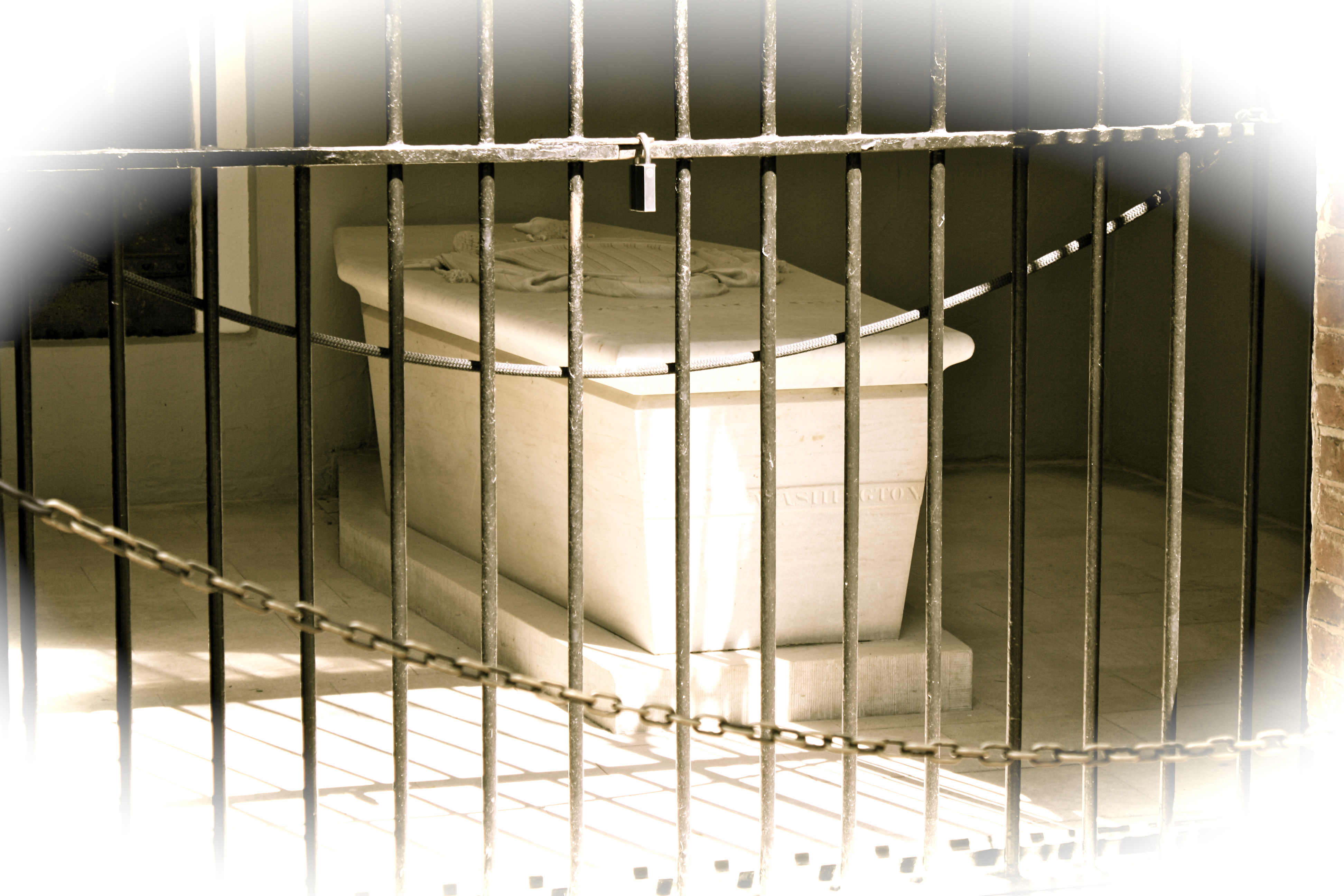
Washington's Tomb -- Mt. Vernon (Photo credit Kenneth C. Davis 2010)
Just because it is officially Washington's Birthday doesn't mean we can't talk about the other Presidents too. So here's a quick Presidential Pop Quiz:
•Who was the first President born an American citizen?
Martin van Buren, the eighth, also known as "Old Kinderhook," or "OK". All of his predecessors were born British subjects during the colonial era.
•Who was the first President to commit troops to a foreign country?
From 1801 to 1805, Thomas Jefferson sent the navy and marines to "Barbary" in what is modern day Libya, Algeria, Morocco, and Tunisia to attack the pirates who were preying on American and European shipping.
•Washington was the first general to become President. But how many other generals became President?
Eleven. Besides Washington, five were career officers: Andrew Jackson (Creek War, War of 1812); William Henry Harrison (Battle of Tippecanoe); Zachary Taylor (Mexican War); Grant (Civil War); and Eisenhower (WW II). Six others were not career soldiers but attained the rank by appointment: Franklin Pierce, (Mexican War); Andrew Johnson, Rutherford B. Hayes, James Garfield, Chester A. Arthur, and Benjamin Harrison (all of whom served in the Civil War).
Ironically, the two greatest war Presidents, Lincoln and Roosevelt, had little or no military experience. Lincoln was briefly in the Illinois militia, or national guard, during the Black Hawk War and later said he led a charge against an onion field and lost a lot of blood to mosquitoes.
During World War I, Roosevelt was Undersecretary of the Navy and had tried to enlist, but was asked to remain in his navy office. And many other Presidents had military experience but never attained the rank of general.
•Which President dodged the draft, legally?
During the Civil War, Grover Cleveland paid for a substitute when he was drafted. That was legal at the time under the 1863 Conscription Act.
•Which two Presidents died on the Fourth of July, 50 years after the Declaration of Independence was signed?
Thomas Jefferson and John Adams in 1826. James Monroe also died on July 4, 1831, and Calvin Coolidge was born in Vermont on Independence Day.
•Did President Lincoln write the Gettysburg Address on the back of an envelope?
That's the myth. But no, Lincoln drafted what may be the most memorable speech in American history several times. At Gettysburg for the dedication of a cemetery to the thousands who had died in the 1863 battle, Lincoln was not the featured speaker. That honor went to a man who spoke for two hours. Lincoln's address took about two and half minutes. But which one do we remember?
•Which President returned to the House of Representatives after his term?
John Quincy Adams
Many of these questions are drawn from Don't Know Much About History or my children's book Don't Know Much About the Presidents


You can also read more quick Presidential biographies at the White House official site.
February 15, 2011
"Would you like one term or two?"
Two thousand, nine-hundred and twenty-two days. What would you do with that much time?
That's what a President who is re-elected and fully serves both terms in office gets. But as history tells us, more than a few presidents who desired a second term were not returned to office. And not every president seeks re-election.
As Presidents Day –actually Washington's Birthday in official terms– approaches, and with the first whiff of a 2012 campaign in the air, it seems a good time to take a look at how history has shaken out. What keeps single-term Presidents from earning those added 1,461 days in office? And what can the past say about President Obama's future?
Leaving out those eight men who died in office, either naturally or by assassination, and the five Presidents who only served out the term of a deceased –or in one case, resigned— predecessor and were not reelected in their own right, here's the list of America's twelve single-term Presidents (See the White House for quick bios of each):
2d John Adams (Not reelected)
6th John Quincy Adams (Not reelected)
8th Martin Van Buren (Not reelected)
11th James Knox Polk (Pledged to serve a single term and did not seek a second term)
14th Franklin Pierce (Denied nomination)
15th James Buchanan (Did not seek a second term)
19th Rutherford B. Hayes (Pledged to a single term)
23rd Benjamin Harrison (Not reelected)
27th William Howard Taft (Not reelected)
31st Herbert Hoover (Not reelected)
39th Jimmy Carter (Not reelected)
41st George H.W. Bush (Not reelected)
(Grover Cleveland deserves an asterisk here. The 22nd President was elected in 1884 and then defeated in a controversial election, despite winning the popular vote in 1888. But he won again in 1892 and returned to the White House in 1893 as the 24th President.)
Clearly, the first rule about being reelected President is to avoid having the name Adams. We can also set aside James Knox Polk and Rutherford B. Hayes as exceptions; both had pledged to serve only a single term. But apart from the name Adams and the Polk-Hayes oddities, there are a few common themes here:
•Tough act to follow: Several of the Presidents who failed in a bid for a second term were following an extremely popular President. John Adams (after Washington), Martin Van Buren (Andrew Jackson), William Howard Taft (Theodore Roosevelt), and George H.W. Bush (Ronald Reagan). Certainly each of these men had to contend with the expectations —and perhaps the "fatigue factor"— of following in the footsteps of four of the most popular Presidents in history. Taft's case is also unusual –he had to run against his popular predecessor, Theodore Roosevelt, and finished third, with Woodrow Wilson winning the 1912 election.
•Not the People's Choice: John Quincy Adams won the 1824 election based on the vote in the House of Representatives. (His opponent, Andrew Jackson, the popular vote winner, called it the "corrupt bargain" and won four years later.) Although Hayes had pledged not run, he also became President in one of the most controversial elections in history in 1876, when a special Commission awarded him some disputed electoral votes, denying the popular vote winner, Samuel Tilden. And Harrison also won a disputed election in 1888 against the aforementioned Cleveland in which election fraud is credited with giving Harrison the electors from Indiana.
•Ineffective (polite way of saying bad): Pierce and Buchanan, who both were contending with a nation heading almost inexorably towards Civil War, are often ranked among the worst American Presidents; neither was renominated by their party. Historians usually rank most of the other one-termers fairly low. Jimmy Carter was given fairly poor marks for his Presidency, and especially for his handling of the Iran hostage crisis. But his loss may have more to do with the next theme.
(C-Span surveyed historians for Presidential rankings in 2009 and Carter was ranked #25 of 42, right behind Taft.)
•It's the economy stupid: Most elections are won and lost on the pocketbook issue. Opponents called Van Buren "Martin Van Ruin" as the nation endured a long economic downturn. Herbert Hoover presided over the Crash of 1929 and the onset of the Great Depression. Jimmy Carter, saddled with unemployment, inflation, and high interest rates (remember 12%?), and George Bush were also hurt by severe recessions on their watch.
Among the Presidents who took office on the death (or resignation) of the President, there are five who did not win a term of their own and they also receive generally low historical ratings:
10th John Tyler (Denied nomination)
13th Millard Fillmore (Denied nomination)
17th Andrew Johnson (Denied nomination)
21st Chester A. Arthur (Denied nomination)
38th Gerald Ford (Lost bid for second term)
What does any of this augur for Barack Obama?
Obama is probably safe on the first three counts: his predecessor was not ranked among the "greats"; he was popularly elected; and, whether or not you like his policies, his first two years can't be called "ineffective."
But if history has anything to say about Obama's future, the last point –the economy, stupid– will again be the determining factor.
During his first term, Ronald Reagan was saddled with a deep recession and a higher unemployment rate (10.8% in November 1982) than we have now. Reagan, like Obama, suffered a sharp setback in the midterm elections of 1982. But over the next two years, the economy began to turn and Reagan went on to a landslide victory to secure his second term in 1984.
The history of Presidential reelection fortunes? Maybe It's all about the "benjamins" after all.
Read more about the Presidents and elections in Don't Know Much About History
February 14, 2011
DKMA Minute #16: A Nation Rising: A Video Q&A with Author Kenneth C. Davis
With the publication of A NATION RISING (Smithsonian/HarperCollins) on May 11th, bestselling author Kenneth C. Davis answers some questions about his career and new book.
JUST IN: Advance Praise for A NATION RISING:
Davis is a fine writer who uses a fast-moving narrative to tell these stories well.
–Jay Freeman, Booklist (May)

Advance Praise for A NATION RISING–
"With his special gift for revealing the significance of neglected historical characters, Kenneth Davis creates a multilayered, haunting narrative. Peeling back the veneer of self-serving nineteenth-century patriotism, Davis evokes the raw and violent spirit not just of an 'expanding nation,' but of an emerging and aggressive empire."
-Ray Raphael, author of Founders


![[image error]](http://www.loc.gov/exhibits/treasures/images/vctt8photo.jpg)