
Kenneth C. Davis's Blog, page 116
November 2, 2010
Why we "Hide" our History: A videoblog
People ask me two questions all the time: Why don't we know much about History?
And why is so much of America's History Hidden?
To the first the answer is simple. It was boring.
And to the second, we lie.
Sometimes these lies are little white lies –like Washington and the Cherry Tree. But sometimes they are Big Lies.
Let me give you an example of a BIG LIE. I was in a wonderful historical village in Florida, doing some research. A Spanish mission, with a neighboring Indian village, it featured an enthusiastic, well-versed staff in period costume. It was exactly the kind of place I like to suggest to parents and teachers to take their kids to get them excited about history.
Then I went into their "educational center." On the wall was a time chart of Florida's history and under the date 1565, I saw this legend: "The French are banished from Florida."
Not so fast… The French Protestants, or Huguenots who were America's real first pilgrims, were not "banished." They were massacred by the Spanish. And not because they were French but because they were Protestants–"heretics." It happened in September and October 1565.
October is also the month in which those folks who brought you the Salem Witch Trials executed a couple of Quakers –who had been banned from Boston and the Bay Colony in October 1656. A year later, another Quaker named Mary Dyer was executed and a fourth was hung in 1661 –simply for the crime of being a Quaker.
They left that part out of the Thanksgiving Story, didn't they? These are some of the "hidden history" moments that we don't talk about when we discuss America as a so-called "Christian nation" and the Puritans coming for freedom of religion. That meant their religion not anyone else's.
We hide our history when the truth is ugly. We like to paint a picture of that that makes history tidy and acceptable. But our history isn't tidy or bloodless. And it certainly isn't boring as these stories prove.
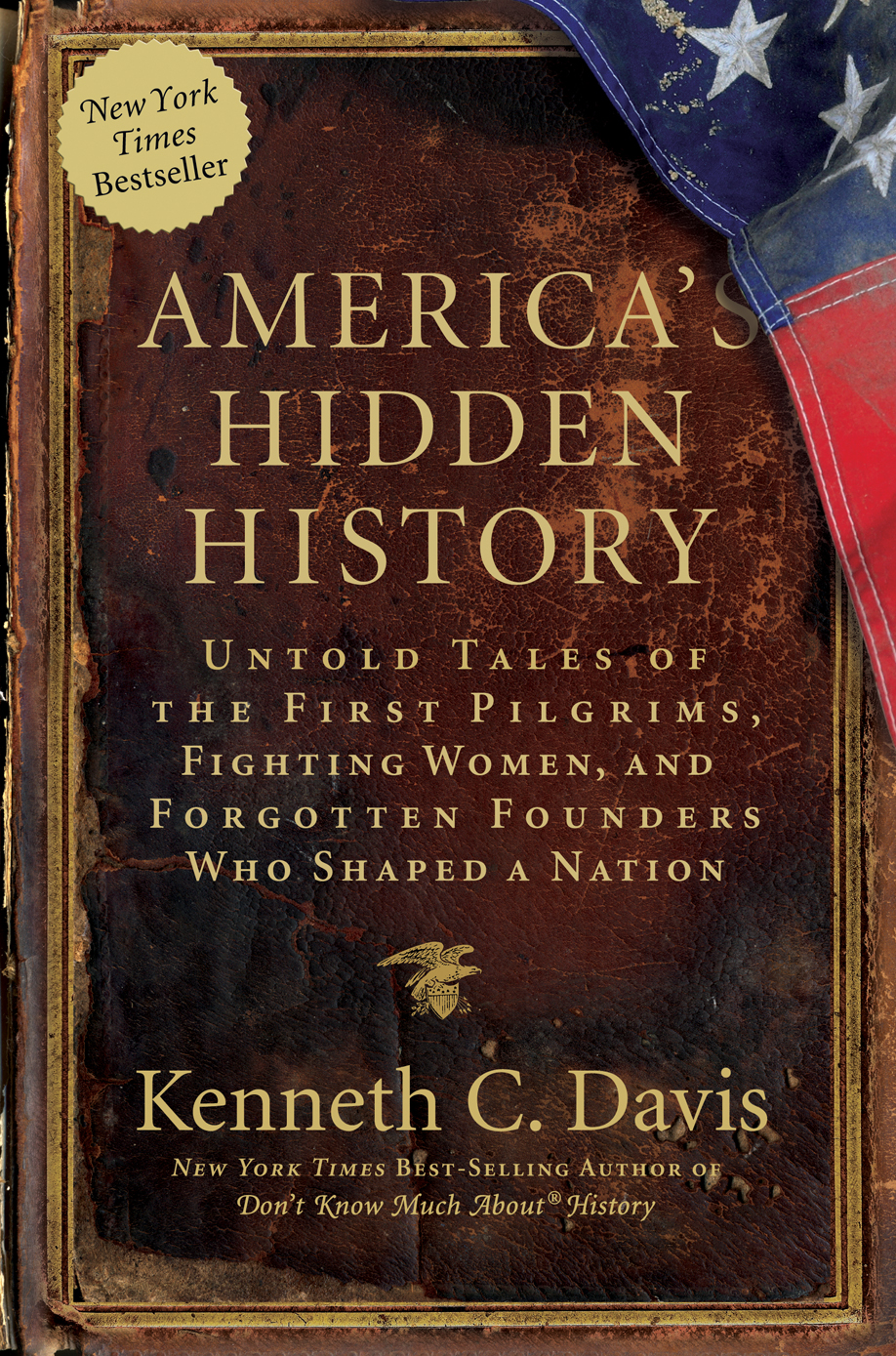
You can read more about the French Pilgrims and the Quakers in America's Hidden History
Here is a link the national monument at Fort Matanzas, site of the Massacre:
http://www.nps.gov/foma/index.htm
This is a brief biography of Mary Dyer from teh Masschusetts stae website:
http://www.mass.gov/?pageID=mg2terminal&L=6&L0=Home&L1=State+Government&L2=About+Massachusetts&L3=Interactive+State+House&L4=Inside+the+State+House&L5=Statues+in+Bronze&sid=massgov2&b=terminalcontent&f=interactive_statehouse_statue_dyer&csid=massgov2


November 1, 2010
Civics Primer #6: Another Quiz and Two Bedrock Rights
As we head into tomorrow's election, I finish my brief Civics Refresher Course with five more questions from the Naturalization Test given by the U.S. Citizenship and Immigration Service.
1. What stops one branch of government from becoming too powerful? (Two officially acceptable answers)
2. Under the U.S. Constitution, some powers belong to the states. Name one. (At least five officially acceptable answers)
3. When was the Constitution written?
4. Name four of the wars fought by the United States in the 1800s. (The test asks for one of four wars; there are others).
5. What is the supreme law of the land?
Whether you have done well or poorly, I hope this series has spurred a little more curiosity about our fundamental rights under the American Constitution and the history behind those rights.
Now, for the last two of the Amendments in the Bill of Rights. Although most people would be hard-pressed to name or describe them, both are fundamental to individual rights and our system of government.
Amendment Nine
Establishes the rule of the construction of the Constitution.
The enumeration in the Constitution, of certain rights, shall not be construed to deny or disparage others retained by the people.
This amendment is at the heart of the Constitution, and it is based on the idea that all human beings have certain fundamental rights. Some of these rights are specifically mentioned ("enumerated") in the Constitution, but others are not. Alexander Hamilton and James Madison responded to criticism that the Bill of Rights was flawed because it listed certain rights that gave specific protections, but left the government free to act on any that had not been specifically set down. To protect those rights, including those that were expressed in the Declaration of Independence as "life, liberty and the pursuit of happiness," this amendment covers fundamental rights not set forth in the Constitution.
Still controversial and debated, this interpretation of the ninth Amendment is at the heart of the debate over the right of privacy. That concept, never specifically mentioned in the Constitution, was first established in 1965 by the Supreme Court in Griswold v Connecticut, a case involving Connecticut's ban on the use of contraceptive devices, and added to in several later cases. But most people know it as the underpinning of what is still the most controversial and divisive ruling in recent history, Roe v. Wade (1973), which legalized abortion. The Court also recognized that a woman's right to choose contraception or abortion is "central to personal dignity and autonomy."
Amendment Ten
Lays out the rights of states under the Constitution.
The powers not delegated to the United States by the Constitution, nor prohibited by it to the States, are reserved to the States respectively, or to the people.
This amendment was a sort of additional "fail safe" designed to allay fears that a central national government might someday exceed its proper powers. It has been the cornerstone of the states' rights philosophy, but does not diminish or add to the authority of the federal government.
The Cornell University Law School offers an annotated guide to the Tenth Amendment and the rest of the Constitution.
Pop Quiz Answers
1. The system of checks and balances; the separation of powers
2. Provide schooling and education; provide protection (police, state militias); provide safety (fire departments and state militias); give a driver's license; approve zoning and land use.
3. 1787
4. The four wars listed in the Naturalization exam are the War of 1812, the Mexican-American War, the Civil War and the Spanish-American War. This list does not include any of the wars fought against Native-American nations such as the Creek War or the Seminole War, among others.
5. The U.S. Constitution
DKMA Minute #17 William Weatherford: An American "Braveheart"
Do you know the name William Weatherford? You should. He was a charismatic leader of his people who wanted freedom and to protect his land. Just like "Braveheart," or William Wallace of Mel Gibson fame.
Only William Weatherford, also known as Red Eagle, wasn't fighting a cruel King. He was at war with the United States government.
William Weatherford's story is one of six pieces of Hidden History I recount in my new book, A NATION RISING
Here is a link to my page about A NATION RISING coming on May 11, 2010
http://www.dontknowmuch.com/about-the-series/a-nation-rising/
"An informative and enjoyable book," says Booklist (May 2010)
Davis is a widely read author and a contributor to National Public Radio. He has made a career out of writing about the supposedly "hidden" truths that transcend the mythology about American history. Here, he offers a series of essays that covers the period from 1800 to 1850, which witnessed massive territorial expansion, controversy over slavery, and efforts to forge a national identity. Incidents covered include the trial of Aaron Burr for treason, the Seminole War in Florida, a slave uprising in Louisiana, and anti-Catholic riots in Philadelphia. Professional historians may cringe at Davis' claims of revealing hidden truths, given that virtually all of these topics are familiar to scholars. Still, Davis is a fine writer who uses a fast-moving narrative to tell these stories well. He knows his facts, and his assertions and speculations are generally credible. For general readers who wish to expand their knowledge of the period, this is an informative and enjoyable work.— Jay Freeman
October 29, 2010
Cruel and Unusual- (Civics Primer Part 5)
No, learning about Civics and American History is not the Cruel and Unusual part. Actually, when done properly, this stuff can be fun and interesting.
Following up on my earlier lessons about the Bill of Rights, today's focus is on two more of the fundamental rights of the accused found in the Seventh and Eighth Amendments. And that's where "cruel and unusual" comes in. You don't need to be a law student or a lawyer to know that phrase: it was invoked by the Supreme Court to regulate capital punishment. And it is clearly a subjective standard that is often revised and otherwise fine-tuned.
But first, this wouldn't be a proper Civics Lesson without a Pop Quiz: Here are five more of the questions regarding things you need to know to become an American citizen.
1. What did the Declaration of Independence do? (in nine words or less)
2. What is the economic system of the United States? (Two officially acceptable answers, subject to debate.)
3. Name four states that border Mexico. (Citizen applicants only have to provide one. But I'm the mean teacher.)
4. Name three of the five U.S. territories. (Applicants need only know one.)
5. Who did the United States fight in World War II? (All three main opponents, please)
Now, for more of your basic rights…
Amendment Seven
Guarantees the right of trial by jury in federal civil cases.
In suits at common law, where the value in controversy shall exceed twenty dollars, the right of trial by jury shall be preserved, and no fact tried by a jury shall be otherwise re-examined in any Court of the United States, than according to the rules of the common law.
This amendment gives a right to a trial by jury for monetary damages in federal court. The Constitution does not require a jury in civil cases in state courts.
Amendment Eight
Protects from excessive bail or fines; cruel and unusual punishment.
Excessive bail shall not be required, nor excessive fines imposed, nor cruel and unusual punishments inflicted.
Another of the amendments that protect the rights of the accused, it allows the accused to post bail, a guarantee that he will return for trial, in order to be free from detention to prepare his defense. A judge can determine that factors such as the gravity of the offense and previous record weigh against bail.
More controversial is the "cruel and unusual punishment" line, which has been used to argue against the death penalty. In 1972, the Furman v Georgia decision essentially ended all capital punishment. In 1976, the decision Gregg v Georgia opened the way for executions. Under current Court rulings, the death penalty is not considered cruel and unusual, although the United States is one of the few industrialized nations that permits the death penalty.
One widely accepted argument has been that the death penalty acts as a deterrent, preventing further murders. Statistically speaking, there is no evidence to support that idea. In fact, some statistics suggest that the opposite is true. Over the last twenty years, the homicide rates in states with the death penalty has been 50 to 100 percent higher than the rate in states without it, a 2000 New York Times study found. FBI crime statistics in 2009, according the the Death Penalty Information Center, show southern states with the highest rates of execution also have the highest homicide rates, while northern states with no death penalty have substantially lower murder rates. (Link below)
The fact is that homicide rates are often determined by many other factors, including demographics, unemployment, and poverty.
The execution of convicted terrorist bomber Timothy McVeigh in 2001 came at a time when the country was reexamining its attitudes about the death penalty. The governor of Illinois, a conservative Republican who previously supported capital punishment, and the governor of Maryland, a Democrat, both announced a moratorium on executions when a significant number of death row convictions were overturned in their states. In some of these cases, new DNA evidence proved a convicted person's innocence; other convictions had been found to be based on tainted evidence or misconduct by police investigators, technicians, or prosecutors.
In 2002, the Supreme Court issued two rulings that also reflected changing attitudes toward the death penalty. In the first case, the Court ruled that the execution of the mentally retarded qualified as cruel and unusual punishment. In another case, the Court held that juries rather than judges must determine if the death penalty is to be used.
The Death Penalty Information Center, a nonprofit, nonpartisan group, offers a history of the death penalty and other valuable information and resources on the issues relating to the death penalty.
Pop Quiz Answers:
1. Acceptable answer are: Announced our independence (from Great Britain); or declared our independence (from Great Britain); or said that the United is free (from Great Britain).
2. Capitalist economy or free market economy.
3. California, Arizona, New Mexico, Texas.
4. Puerto Rico, U.S. Virgin Islands, American Samoa, Northen Mariana Islands, Guam.
5. Germany, Japan and Italy.
October 28, 2010
Pleading the Fifth (Civics Primer Part 4)
My Civics Primer has been focusing on the Bill of Rights and continues with two more Amendments that deal with the rights of the accused –including perhaps the most famous of all, the Fifth Amendment.
But first, the pop quiz portion of the class continues. These five questions are drawn from the Naturalization Test given to applicants for U.S. Citizenship. Surely any native American citizen can get all of them right. Surely.
1. How many Amendments does the Constitution have?
2. What are two rights in the Declaration of Independence?
3. Name three of the original thirteen states.
4. What territory did the United States buy in 1803? (And who sold it?)
5. Who was President during World War I?
In the previous post, I highlighted the Fourth Amendment. That is the first of four of the articles in the Bill of Rights that deal with the rights of the accused. The Framers were men who had lived under a monarch with nearly unlimited powers. It is no accident that four of the ten Amendments in the Bill of Rights were clearly designed to protect the innocent and curb the power of the government in accusing and trying the people.
Amendment Five
Guarantees provisions for prosecution and due process of law. Double jeopardy restriction. Protects against self-incrimination. Safeguards due process. Private property not to be taken without compensation.
No person shall be held to answer for a capital, or otherwise infamous crime, unless on a presentment or indictment of a Grand Jury, except in cases arising in the land or naval forces, or in the Militia, when in actual service in time of War or public danger; nor shall any person be subject for the same offence to be twice put in jeopardy of life or limb; nor shall be compelled in any criminal case to be a witness against himself; nor be deprived of life, liberty, or property, without due process of law; nor shall private property be taken for public use, without just compensation.
"Pleading the Fifth" has acquired the connotation of "He must be hiding something" for many people. If you have nothing to hide, they reason, you would tell the truth. But the idea behind protection from self-incrimination is part of a tradition of reasoning that begins with the presumption of innocence and was designed to check the power of the government. Written by men who knew the unlimited power of a monarch or church to compel evidence, the Bill of Rights placed the interest of the individual above that of the state. Under this amendment, the Constitution requires the state to establish guilt by independent evidence, protecting everyone from a potentially abusive government.
Amendment Six
Guarantees the right to a speedy trial, witnesses, counsel.
In all criminal prosecutions, the accused shall enjoy the right to a speedy and public trial, by an impartial jury of the State and district wherein the crime shall have been committed, which district shall have been previously ascertained by law, and to be informed of the nature and cause of the accusation; to be confronted with the witnesses against him; to have compulsory process for obtaining Witnesses in his favor, and to have the Assistance of Counsel for his defence.
This amendment also protects the individual's rights in criminal proceedings. Having seen people taken to jail under a monarchy, never to be seen again, the authors of the Bill of Rights wrote specific protections against that possibility. Speedy trials, public trials instead of secret inquisitions, jury trials in the district where the crime is committed, the right to confront accusers, and the guarantee of legal representation are all bedrock rights in the American system of justice.
Answers
1. 27
2. Life. Liberty. The Pursuit of happiness.
3. New Hampshire, Massachusetts, Rhode Island, Connecticut, New York, New Jersey, Pennsylvania, Delaware, Maryland, Virginia, North Carolina, South Carolina, Georgia.
4. Louisiana Territory (from France)
5. Woodrow Wilson
October 27, 2010
After the Veep, who comes next? (Civics Primer Part 3)
Someone asked me recently what Americans need to know about our history and government. The answer is easy. There's a test for that.
It's called the Naturalization Test, given by the U.S. Citizenship and Immigration Services, and applicants for citizenship must pass it.
Could most American-born citizens pass it? In my experience testing audiences with some of these questions, many people are on shaky ground. That's one reason I am offering this Civics Primer as Election Day approaches.
So here are a couple of questions from the test, Can you keep your passport? (Answers below. Don't peek!) –
1. The Vice-President takes over if the President can't serve. What official is next in line? (And what is that person's name currently?)
2. What do we call the first Ten Amendments to the Constitution?
3. What are the three branches of government?
4. Name one of the three writers of the Federalist Papers (essays which supported ratifying the Constitution)?
5. Name one of the two longest rivers in America. (Gotcha. You didn't think there was any Geography on this test, did you?)
My previous posts focused on the first two of the initial Ten Amendments to the Constitution. Here's a quick refresher on Numbers Three and Four.
Amendment Three is the Rodney Dangerfield of Amendments– it gets no respect.
No Soldier shall, in time of peace, be quartered in any house, without the consent of the Owner, nor in time of war, but in a manner prescribed by law.
A reaction to the enforced housing of British troops in colonial America before independence was achieved, this amendment has never been the basis for a Supreme Court decision since its adoption. It does mean, however, that the Army can't just move into your house if it decides it needs a barracks for some troops. It also serves as an important reminder of what the major concerns were for the men who wrote the Constitution and Bill of Rights: they were concerned about protection of individual rights and property and feared, perhaps more than anything, the unlimited power of government.
Amendment Four has gotten much more attention.
Protects from unreasonable search and seizure. Calls for probable cause.
The right of the people to be secure in their persons, houses, papers and effects, against unreasonable searches and seizures, shall not be violated, and no Warrants shall issue, but upon probable cause, supported by Oath or affirmation and particularly describing the place to be searched, and the persons or things to be seized.
At the heart of the debate over "criminals' rights," this amendment was intended to protect privacy and personal security as essential to liberty. This means that no one can be arrested without a warrant naming a specific individual with a specified crime. Arrests without warrants may be made in the case of a felony when the police arrest someone suspected of a crime. After such an arrest, a judge must determine if there is probable cause to hold that person. A police officer can also arrest someone who commits a minor infraction, or misdemeanor, in the presence of the arresting officer.
The amendment also permits only "reasonable" searches and covers evidence that is uncovered during a search that relates to a separate crime. All of these issues depend on the court hearing them. No warrant is necessary for police to look for something outside a building or private yard or property.


Answers:
1. The Speaker of the House of Representatives (currently Nancy Pelosi)
2. The Bill of Rights
3. Legislative (Article I of the Constitution); the Executive (Article II of the Constitution); Judicial (Article III of the Constitution)
4. James Madison, Alexander Hamilton and John Jay
5. The Missouri or the Mississippi
October 26, 2010
Bare Arms? Arm Bears? A Second Amendment Guide (Civics Primer #2)
Pop Quiz: How many Representatives in the House of Representatives? That was one of the stumpers in a recent Civics online survey
The answer: 435.
Here's another question that wasn't included in that survey: How many Electors are there? Add 100 Senators to the number of Representatives and then three more votes for the District of Columbia (which has no Senators and a non-voting member of the House) and you get the answer: 538. Each state gets electors equal to their representation in Congress. To become President, you must win enough states and their Electors to reach the Magic Number of 270 (half of 538 plus one). By the way, the "Electoral College" is not mentioned in the Constitution –only "Electors." And no, the Electoral College is definitely not a party school.
In the first post of this series, I summarized the First Amendment and its five essential guarantees –always a source of controversy. If anything, the Second Amendment has often proven just as contentious. But most of us don't know what it actually says or means.
Americans have always liked their guns. And some Americans REALLY like their guns. Whether to hunt, protect their homes or defend themselves from a tyrannical government, many Americans believe that the government has no right to restrict their access to firearms. But those who want to minimize gun violence, Congress, and the Courts have thought otherwise. Which brings us to the Second Amendment. There is little doubt that the Founders and Framers, in a time when there was no standing army, expected men to have a gun at the ready to defend the country. But does that 18th century logic still hold in a country with a standing army, state militias and local police forces? And does the high level of American gun violence (more than 31,000 firearms fatalities in 2006, according to the CDC) mean it is time to reassess an idea that made sense more than 200 years ago?
Amendment Two: Guarantees the limited right to keep and bear arms.
A well regulated Militia, being necessary to the security of a free State, the right of the people to keep and bear Arms, shall not be infringed.
Among today's most passionately argued of the amendments in the Bill of Rights, the Second Amendment was intended to provide for the effectiveness of the militia, which would presumably protect the citizen against Indians, foreign powers, or the power of the federal government, at a time when there was little or no standing army. Militias also served another unique role in the slave holding states: one of their primary duties was to suppress slave revolts, of which there were hundreds throughout American History.
In a long string of decisions, the Supreme Court had consistently ruled that the Second Amendment does not bind the states, so that state and local governments are free to enact gun control laws if they desire. In the case of federal laws, since a 1939 case involving sawed-off shotguns, United States v. Miller, the courts have held that the Second Amendment only confers a collective right to keep and bear arms, which must have a "reasonable relationship to the preservation or efficiency of a well regulated militia." Since then, Congress has placed many restrictions on the manufacture, sale, transfer, and possession of weapons, and these statutes have all been upheld as constitutional.
Not everyone agrees with that interpretation, even though it stood for more than sixty years. As constitutional scholar Leonard W. Levy writes,
The Second Amendment is as vague as it is ambiguous. Some think it upholds the collective right of state militias to bear arms, while others, probably more accurate in so far as original intent is concerned, argue that it protects the right of individuals to keep arms. (Original Intent and the Framers' Constitution)
Until 2002, no administration had challenged the so-called "collective right" established by Miller in 1939. But in 2002, Attorney General John Ashcroft announced that the Justice Department would seek to challenge the collective view in favor of the individual rights view, a stance vigorously supported by the National Rifle Association. In footnotes in two filings with the Supreme Court in 2002, the government said that the Second Amendment protected the rights of individuals "to possess and bear their own firearms, subject to reasonable restrictions designed to prevent possession by unfit persons or to restrict the possession of types of firearms that are particularly suited to criminal misuse."
More recently, in June 2008, the Supreme Court, led by George W. Bush appointee Chief Justice John Roberts (appointed in 2005 following the death of Chief Justice William Rehnquist), went beyond the Bush Administration's arguments. In District of Columbia v. Heller, the Court struck down a 32-year-old Washington, D.C. ban on handguns as incompatible with the Second Amendment.
The majority opinion in the 5-4 decision ruled that an individual right to bear arms is supported by "the historical narrative" both before and after the Second Amendment was adopted, wrote Justice Antonin Scalia. The Constitution does not permit "the absolute prohibition of handguns held and used for self-defense in the home."
In a vigorous dissent expressing what had been the predominant view since the 1939 Miller ruling, Justice Stevens wrote that the Second Amendment:
was adopted to protect the right of the people of each of the several States to maintain a well-regulated militia. It was a response to concerns raised during the ratification of the Constitution that the power of Congress to disarm the state militias and create a national standing army posed an intolerable threat to the sovereignty of the several States. Neither the text of the Amendment nor the arguments advanced by its proponents evidenced the slightest interest in limiting any legislature's authority to regulate private civilian uses of firearms. Specifically, there is no indication that the Framers of the Amendment intended to enshrine the common-law right of self-defense in the Constitution.
And that is where the Second Amendment stands today.
Here is a link to the District of Columbia v. Heller case, including the majority and dissenting opinions.
http://www.law.cornell.edu/supct/html/07-290.ZS.html
October 25, 2010
Don't Know Much About the First Amendment: A Civics Primer
Who is the Vice President? How many Senators are there? How many Supreme Court Justices?
A new online survey suggests many Americans can't answer those Civics 101 questions. That is a point underscored in a New York Times Week in Review article yesterday that points out how many Americans don't know what the First Amendment says. Two of them, sad to say, are Senate candidates in Delaware where Republican Christine O'Donell and her Democratic rival Chris Coons had trouble sorting out the fundamental rights guaranteed by the First Amendment.
To me, this is not only sad but dangerous, especially with Election Day a week away. But this sorry state also constitutes a "teachable moment."
So, in my ongoing effort to light a candle instead of cursing the darkness, here begins a Civics Primer on the Constitution, the Bill of Rights and a few other basic things we all "need to know" about American History. This Civics Class will offer some of the fundamental facts about American History and government, including the fact that Electoral College is NOT a Party School.
I am going to start with the First Amendment as it is so prominently in the headlines. I will continue this series in the days and weeks ahead until ahead until we all get it right –or you can turn in your passport.
First, a little background about the Supreme Law of the Land — the Constitution and the changes that have been made to it.
The U.S. Constitution was drafted during the summer of 1787 in Philadelphia where the Declaration of Independence had been written and adopted eleven years earlier. Under the new Constitution, the first Congress, meeting in New York City on September 25, 1789, submitted twelve proposed changes to the Constitution—called articles or amendments—for ratification by the states. These amendments dealt with certain individual and states' rights not specifically named in the Constitution. Ten of these articles, which were originally proposed as Amendments Three through Twelve, were declared ratified in 1791 and are now known as Amendments One through Ten, or the Bill of Rights.
Since 1791, another seventeen changes have been made to the Constitution, a process that begins when Congress proposes an amendment, which must clear both the House and the Senate by a two-thirds majority. The proposed amendment is sent to the states for ratification. Three quarters of the states are needed to ratify, and that is usually done by state legislatures.
Here is the First Amendment. And it should be clear to everyone why this one comes first–
Amendment One
Congress shall make no law respecting an establishment of religion, or prohibiting the free exercise thereof, or abridging the freedom of speech, or of the press; or the right of the people peaceably to assemble, and to petition the Government for a redress of grievances.
The First Amendment guarantees five fundamental American freedoms:
-Religion: Prohibits the establishment of religions by government and guarantees freedom of religion. One of the only restraints on religion permitted is on a practice that may endanger the physical health of citizens; for instance, courts have allowed medical treatment of children against their parents' religious beliefs.
(For more background on the road that led Madison to the First Amendment, see my Smithsonian article on the history of religious intolerance in America.)
-Speech: Guarantees that government cannot limit speech with certain exceptions established over the years by the Courts, such as slanderous or obscene speech. Of course, private companies and employers can limit the speech of their employees, which is why National Public Radio can fire Juan Williams for breaching their code of conduct for reporters and commentators.
-Press: Guarantees freedom of the press from government interference, including college publications (but not public high school students). This freedom applies to books, magazines, and most television and radio programs (although the Federal Communications Commission is able to limit broadcasts under its licensing powers– hence a "wardrobe malfunction" is not protected "speech.)
-Assembly: Guarantees the right to assemble peaceably, which includes picketing, a right that that has been at the core of political, labor and civil rights disputes. In general, picketing is protected when it is for a lawful purpose and is orderly.
-Petition: Guarantees the right to petition government, a protection best exemplified by the nation's founding document, the Declaration of Independence.
There you go. Five Easy pieces– Fundamental Freedoms you can count on one hand.
Next: The Second Amendment
And by the way: the Answers are Joe Biden, one hundred Senators (two from each state) and nine Justices.
Halloween–The Hidden History
When I was a kid in the early 1960s, the autumn social calendar was highlighted by the Halloween party in our church. In these simpler day, the kids all bobbed for apples and paraded through a spooky "haunted house" in homemade costumes –Daniel Boone replete with coonskin caps for the boys; tiaras and fairy princess wands for the girls. It was safe, secure and innocent.
The irony is that our church was a Congregational church — founded by the Puritans of New England. The same people who brought you the Salem Witch Trials.
Here's a link to a history of those Witch Trials in 1692.
http://www.law.umkc.edu/faculty/projects/ftrials/salem/salem.htm
Rooted in pagan traditions more than 2000 years old, Halloween grew out of a Celtic Druid celebration that marked summer's end. Called Samhain (pronounced sow-in or sow-een), it combined the Celts' harvest and New Year festivals, held in late October and early November by people in what is now Ireland, Great Britain and elsewhere in Europe. This ancient Druid rite was tied to the seasonal cycles of life and death — as the last crops were harvested, the final apples picked and livestock brought in for winter stables or slaughter. Contrary to what some modern critics believe, Samhain was not the name of a malevolent Celtic deity but meant, "end of summer."
The Celts also saw Samhain as a fearful time, when the barrier between the worlds of living and dead broke, and spirits walked the earth, causing mischief. Going door to door, children collected wood for a sacred bonfire that provided light against the growing darkness, and villagers gathered to burn crops in honor of their agricultural gods. During this fiery festival, the Celts wore masks, often made of animal heads and skins, hoping to frighten off wandering spirits. As the celebration ended, families carried home embers from the communal fire to re-light their hearth fires.
Getting the picture? Costumes, "trick or treat" and Jack-o-lanterns all got started more than two thousand years ago at an Irish bonfire.
Christianity took a dim view of these "heathen" rites. Attempting to replace the Druid festival of the dead with a church-approved holiday, the seventh-century Pope Boniface IV designated November 1 as All Saints' Day to honor saints and martyrs. Then in 1000 AD, the church made November 2 All Souls' Day, a day to remember the departed and pray for their souls. Together, the three celebrations –All Saints' Eve, All Saints' Day, and All Souls Day– were called Hallowmas, and the night before came to be called All-hallows Evening, eventually shortened to "Halloween."
And when millions of Irish and other Europeans emigrated to America, they carried along their traditions. The age-old practice of carrying home embers in a hollowed-out turnip still burns strong. In an Irish folk tale, a man named Stingy Jack once escaped the devil with one of these turnip lanterns. When the Irish came to America, Jack's turnip was exchanged for the more easily carved pumpkin and Stingy Jack's name lives on in "Jack-o-lantern."
Halloween, in other words, is deeply rooted in myths –ancient stories that explain the seasons and the mysteries of life and death.
You can read more about ancient myths in the modern world in Don't Know Much About Mythology
September 28, 2010
Don't Know Much About® the Bible–STILL!
Pop Quiz, hotshot. Who is Job?
For a nation that is seemingly wild about religion, we are once again shown to be "Clueless Nation."
The latest survey of American knowledge (or ignorance!) — a Pew Forum on Religion and Public Life– tested Americans on the basics of religion –Christianity, Judaism, and other faiths. According to the Pew survey as reported by the New York Times, most people scored around 50 percent –which is a failing grade. The most knowledgeable were atheists and agnostics.
Here is the New York Times story about the survey with a link to a sample of the quiz. (Full Disclosure: I scored 6 out of 6 on the sample.) Religion Test
The results of this survey do not surprise me at all. For all of the talk of America being a "Christian Nation," and being founded on "religious principles," many Americans are as misinformed about religion as they are about history, basic science and geography. Many people tend to believe what they were told when they were children. That, is sadly, a very incomplete eduction. Few of us seem to move past "thinking like a child," and do as Saint Paul said,
"When I became a man, I put away childish things." (1 Corinthians 13: 11)
When I wrote Don't Know Much About the Bible, I said the "Good Book" fits Mark Twain's definition of a "classic"
A book which people praise but never read."
Most people continue to rely upon what they hear from preachers and politicians. Often is is misquoted or taken out of context, Or they remember what they distilled from the Hollywood version of the Bible. The internet has, in many ways, just made matters worse.
The very serious problem that the Pew survey underscores is that there a lot of people out there making stark judgments about matters like religion about which they are Clueless. And when it comes to Americans doing very bad things based on their beliefs, the results can be deadly. I traced the murderous intersection of religion and history and America's so-called tradition of tolerance, in this recent Smithsonian article:
America's True History of Religious Tolerance

By the way, Job is the biblical character for whom a very challenging chapter of the Bible is named. God took away everything he had — over a bet with Satan.


