
Jamie Parsley's Blog, page 61
July 10, 2016
8 Pentecost
 July 10, 2016
Luke 7.36-8.3
+ It has been a long, difficult violent week in the world. But, to lighten things a bit, this past week, our Senior Warden, Cathy McMullen, posted a wonderful little photo on Facebook.
Under the heading “This busy priest doesn’t have time for your long-winded confessions” was a photo of a sign that read:
“Confessions today…will be until exactly 5:30 pm. There is only one priest available for confession today. Make your confession direct to the point and confess only your sins and offenses. No need to explain why you did it. Thank you very much.”
I loved it! But it did seem a bit legalistic, shall we say. And there was an interesting conversation that ensued, in which people said they were glad we were “Protestant” and didn’t need to make confession. I won’t get into all that “Protestant” talk this morning, though some of you know where I stand on that.
But, actually, we as Episcopalians do have an opportunity for confession. And, I guess, according to the responses in that Facebook posting, so do Lutherans, though I never ever heard of it in the years I was a Lutheran, nor have any of my immediate Lutheran relatives.
But, for us, yes, we Episcopalians do have confession. And some of you have taken advantage of it over the years. On a regular basis. If you doubt this fact that Confession is a valid aspect of being Episcopalian—and no doubt some of you are this morning—I invite you to take a quick perusal of your Book of Common Prayer. It’s right there on page 447. The service for “The Reconciliation of a Penitent” is a service very few of us here this morning has probably ever taken advantage of. And that’s all right. It’s not all that big of a deal. But it is an important service and it is one that certainly deserves our attention, even if we have no desire to take advantage of that service.
Confession in the Episcopal Church is often described in this way:
“All can, some should, no one must.”
And it’s nice to take a look at it at a time other than Lent, when we are almost overwhelmed with talk of sin and forgiveness. The service of Reconciliation is a service in which a person seeking to ask forgiveness of whatever shortcomings they have goes to a priest (and in the Episcopal Church only a priest can grant absolution) and having prayerfully and thoughtfully shared these sins, received words of comfort and counsel and then is given absolution by the priest. It really is just like Confession is in the Roman Catholic Church, though for us we don’t go into a little cubicle and whisper our sins through a screen to a priest. So, on those occasions when we describe the Episcopal Church as “Catholic lite,” and we get the inevitable question of whether or not we have “Confession,” we can say yes, we do, but then quickly add that it’s not a requirement.
I think few of us want to take advantage of this service, but, occasionally, we sometimes do find the need. And, as I said, it is not a requirement for any of us, though it is a very vital and, at times, helpful service
Not a lot of people know that I take advantage of it on a fairly regular basis. Actually, I hadn’t for a couple of years, because the clergy person I regularly confessed to had made themselves unavailable. And then, a few weeks ago, I had a situation arise in which I desperately needed to partake of confession.
Before you start letting your minds race with unsavory thoughts about why I needed confession, it was nothing scandalous. It was simply an unpleasant situation with some members of my family in which I lost my cool and allowed myself to get a bit angry and say a few things I later regretted. This was not to my mother, I also want to make clear as well. But I ended up finding a new clergy person who is actually a wonderful confessor. And after the rite, I really felt so much better. There really is something very positive and good about being open and honest about one’s shortcomings, about sharing those shortcomings with someone else, about getting some practical and helpful council and advice and then hearing from that person that I am forgiven for the wrongs I have done.
For us, we find Confession best summarized on page 446 in our Prayer Book:
“The ministry of reconciliation, which has been committed by Christ to his Church, is exercised through the care each Christian has for others, through the common prayer of Christians assembled for public worship, and through the priesthood of Christ and his ministers declaring absolution.”
So, as we’ve just heard, we realize that Confession is not something the Church and bunch of male priests invented. It was something commended to us by Jesus, who knew full well how important it was for us to confess and to hear –actually hear—the words of forgiveness.
As a priest, one of the most important responsibilities I have has always been to be a confessor. On that night that I was ordained, as part of the ordination service, the Bishop declared to me that among my responsibilities as a priest was “to declare God’s forgiveness to penitent sinners…” Now, that may sound like some “special” power we priests have.
But, more than anything, what a priest does when she or he declare God’s forgiveness is just that:
We declare God’s forgiveness.
Nothing magical. We just state a fact. But, it IS an important fact. It is important to hear. It is important to hear that we are forgiven. It is important to hear, when we fall short in any way in our lives, to hear those words, “You are forgiven.”
Hearing those words, I can say, is a truly powerful experience. There is a sense of a weight being lifted. There is a sense that something which was bound up has been loosened and released. To hear those words of pardon and forgiveness are important to us because we sometimes do need to hear that we are forgiven.
Without those words of forgiveness, we may continue on in our self-pitying and our self-loathing. Guilt can weigh heavily on us. Those words of pardon and absolution restore us. They help us rise above the wrongs we have done so we can live fully and completely.
When we hear Jesus say to that penitent woman in today’s Gospel, “Your sins are forgiven…Your faith has saved you. Go in peace,” we can almost feel the weight being lifted from her. Whatever shortcomings that woman brought with her into that place, we know are gone from her as she leaves. This is the power of confession.
At the end of “Form Two” of Confession in the Prayer Book, the service is concluded when the priest, echoing this very Gospel reading, says,
“Now there is rejoicing in heaven; for you were lost, and are found; you were dead, and are now alive in Christ Jesus our Lord. Go in peace. The Lord has put away all your sins.”
To which the penitent replies, “Thanks be to God.”
Those are words that cause us to continue on, despite whatever we have done. The forgiveness of our sins transforms us and changes us. It frees us from whatever might hold us down.
So, let us together strive, when we have done wrong, to seek those words of forgiveness. Some of us might actually wish to seek out the Sacrament of Reconciliation as found in the Book of Common Prayer. I encourage you to do so. It is good to have a regular confessor—to take time to confess your faults and failings to some one. It is good psychologically and it is good spiritually. Certainly, as your priest, I am always available for this service, but any priest will do. Any priest can grant absolution.
But you do not have to be a priest to remind people of God’s forgiveness and love. All of us can carry those words of forgiveness from Jesus close to our hearts when we do fail and we do fall short in our relationships, and when others wrong us.
Let us humble ourselves, but let’s not despair in those moments. Let us come before God and seek that forgiveness that lifts us up from our tears. Let us unloose from within us whatever is holding us captive so that we may be truly free to love God and love others with no regrets, no recriminations, no undue guilt.
Jesus’ words to each of us are “go in peace.” That peace we find in this forgiveness is truly a liberating peace. It is a peace that destroys not only what others do to us, but we do to ourselves and to others, which sometimes can be much worse. That peace we find in reconciliation truly does liberate. So, let us take the peace offered to us by Jesus and go forth in that peace of God. And doing so, let us rejoice in the freedom that peace gives us. Amen.


July 3, 2016
7 Pentecost
 July 3, 2016
Luke 10.1-11, 16-20
+ As most of you know, we are currently in the process, here at St. Stephen’s, of helping three of our members discern a call to be ordained ministry, two to the ministry of Deacons and one to the ministry of Priest. Jessica Zdenek, John Anderson, and William Weightman have been praying and struggling and discerning and wrestling with this auspicious calling. And it’s, at times, a difficult one.
Luckily, each of them has already been doing ministry up to this point. Ministry is not a stranger to any of them. They know many of the hardships and pitfalls involved in ministry, which will help them as they proceed to ordained ministry, if God so wills. One of the areas of ministry all of us—and we are all doing ministry here at St. Stephen’s—might find ourselves susceptible to, is what some might call “lone wolf” ministry.
Lone wolf ministry can be very dangerous behavior. You really can’t do ministry and be a lone wolf. Doing ministry means doing it together.
But…I’m afraid I might sound kinda like a hypocrite here. For any of you who know me and worked with me for any period of time, you know I’m a bit of a lone wolf about some things. You may call it lone wolf. I call it being independent. Or maybe, sometimes, just impatient. Things have to get done after all. And, when they do, you know, I’ll just do it.
But, being a lone wolf is not a good thing. In the Church it is never a good thing to be a lone wolf. None of us can do ministry alone. We all need to admit that we need each other to do effective ministry. And sometimes even the lone wolf admits that simple fact: I can’t do this alone. The lone wolf sometimes has to seek help from others.
Ultimately, the lone wolf can be a bad thing for the church for another reason though. Lone wolves can easily be led down that ugly, slippery slope of believing, at some point, that it’s all about them.
Now, I want to make clear: I never have believed that anything is about just me. Yech. I despise that kind of thinking in myself. For all my lone wolf tendencies, I have a pretty good support system around me—people who will very quickly tell me when they think I might be heading down that slippery egocentric slope.
There is, after all, a difference, I have discovered between “lone wolf” behavior and ego-centric, it’s-all-about-me, I-don’t-need-anyone’s-help behavior. And as you all know, I have no problem asking your advice and your opinions on anything before some of the things I’ve done as a priest. I might not necessarily heed those suggestions. But I appreciate them, and they are, for the most part, helpful.
But, I have known too many church leaders who have not had a support system like mine. I have known too many church leaders who have made it clear to me that it was because of them—because their winning personality, or their knowledge of church growth, or their years of expertise—that a particular parish flourished.It’s an unfortunate trap leaders in the Church fall into when they believe that a parish’s success depends on them as individuals and their own abilities of ministry—and, mind you, I am not just talking about priests here. Lay leaders in the Church have fallen into this trap as well. I have known some of those lay leaders as well, trust me.
Maybe to some extent it’s true. Maybe some people do have the personality and the winning combination in themselves to do it. I can tell you, I don’t. Nor do I want to. But for those who may have that kind of natural personality, I still have to admit: it all makes me wary. It’s just too slippery of a slope for me.
We are dealing with similar personalities in today’s Gospel. In our reading for today, those seventy that Jesus chose and sent out come back amazed by the gift of blessing God had granted to them and their personality. They exclaim,
“Lord, in your name even the demons submit to us!”
In and of its self, that’s certainly not a bad thing to say. It’s a simple expression of amazement. But Jesus—in that way that Jesus does—puts them very quickly in their place. He tells them,
“do not rejoice in these gifts, but rejoice rather that your names are written in heaven.”
Or to be more blunt, he is saying rejoice not in yourselves and the things you can do with God’s help, but rejoice rather in God. The burden of bringing about the Kingdom of God shouldn’t be solely the individual responsibly of any one of us. Even Jesus made that clear for himself. Just imagine that stress in having to bring that about.
Bringing the Kingdom of God into our midst is the responsibility of all of us together. It is the responsibility of those who have the personality to bring people on board and it is the responsibility of those of us who do not have that winning personality. For those of us who do not have that kind of personality, it is our responsibility to bring the Kingdom about in our own ways. We do so simply by living out our Christian commitment.
As baptized followers of Jesus, we bring the Kingdom into our midst simply: By Love. We do it by loving God and loving each other as God loves us in whatever ways we can in our lives. Bringing the Kingdom of God about in our midst involves more than just preaching from a pulpit or attending church on Sunday. Spreading the Kingdom of God is more than just preaching on street corners or knocking on the doors.
It means living it out in our actions as well. It means living out our faith in our everyday life. It means loving God and each other as completely as we can.But it does not mean loving ourselves to the exclusion of everything of else.
It means using whatever gifts we have received from God to bring the Kingdom a bit closer. These gifts—of our personality, of our vision of the world around us, of our convictions and beliefs on certain issues—are what we can use. It means not letting our personalities—no matter how magnetic and appealing they might be—to get in the way of following Jesus.
Our eyes need to be on God. We can’t be doing that when we’re busy preening in the mirror, praising ourselves for all God does to us and through us.
The Church does not exist for own our personal use. If we think the Church is there so we can get some nice little pat on the back for all the good we’re doing, or as an easy way to get us into heaven when we die, then we’re in the wrong place. And we’re doing good for the wrong intention.
The Church exists for God, and for us, collectively. The Church is ideally the conduit through which the Kingdom of God comes into our midst. And it will come into our midst, with or without me as individual.
But it will comes into our midst through as us. All of us. Together. The Church is our way of coming alongside Jesus in his ministry to the world. In a very real sense, the Church is our way to be the hands, the feet, the voice, the compassion, the love of God to this world and to each other. But it’s all of us. Not just me. Not just you as an individual. It’s all of us. Together.Working together. Loving together. Serving together. And giving God the ultimate credit again and again.
Hopefully, in doing that, we do receive some consolation ourselves. Hopefully in doing that, we in turn receive the compassion and love of God in our own lives as well. But if we are here purely for our own well-being and not for the well-being of others, than it is does become only about us and not about God. And in those moments, we are sounding very much like those 70 who come back to Jesus exclaiming, “look at what we have done!”
The message of today’s Gospel is that it must always be about God. It must always be about helping that Kingdom of God break through into this selfish world of huge egos. It means realizing that when we are not doing it for God, we have lost track of what we’re doing. We have lost sight of who we are following.
So, let us—together—be the hands, the feet, the voice, the compassion and the love of God in the world around us. Like those 70, let us be amazed at what we can do in Jesus’ name. But more importantly let us rejoice!Rejoice! Rejoice this morning! Rejoice in the fact that your name, that my name—that our names are written at this moment in heaven.
June 26, 2016
6 Pentecost
 June 26, 2016
1 Kings 19.15-16,19-21; Galatians 5.1,13-25; .Luke 9:51-62
+ This past Wednesday, we did something here at St. Stephen’s that we just do, as a congregation. We gathered for our regular Wednesday night Eucharist. We shared scripture. We prayed for those who need our prayers. We blessed Holly and Michael Eklund on the anniversary of their marriage. We offered incense. We shared the Body and Blood of Jesus. And then, at the end of our liturgy, we buried in our memorial garden another abandoned urn.
This one was a bit different than Adolf Scott in November. We actually knew who this person was. We knew a name, and dates. We knew where this person lived and of which she died. We know she had a family. And yet, we did what we are called to do here. We buried her with dignity. And just as importantly, we welcomed her into our midst. She became one of us.
Although others might abandon such things, we will always remember her. She will be included in our prayers on the anniversary of her death and on in our All Saints octave. This is what we do.
We did something—and will no doubt continue to do this—even despite what we heard in our Gospel reading for today. We hear Jesus say, Let the dead bury their own dead. If we did that, we would not be doing what we did on Wednesday night. In fact, we probably wouldn’t be doing any funerals. And the funeral industry would be having a bit of trouble.
It’s an unusual statement. It almost boggles the mind when you think about it. And yet….there is beautiful poetry in that phrase.We hear this saying of Jesus referenced occasionally in our secular society. It conveys a sense of resignation and putting behind oneself insignificant aspects of our lives.
Still, it is a strange image to wrap our minds around. Let the dead bury their own dead. What could Jesus possibly mean by this reference?
Well, actually, Jesus would actually not have any issues with what we did on Wednesday, or with any of our funeral customs. Because, this statement from him, as always, has a deeper meaning—and really only starts to make sense when we put it in the context of his time and who his followers were. When we find this man talking about having to go and bury his father, and Jesus’ response of “let the dead bury their own dead,” we might instantly think that Jesus is being callous. It would seem, at least from our modern perspective, that this man is mourning, having just lost his father.
 The fact is, his father actually probably died a year or more before. What happened in that culture is that when a person died, they were anointed, wrapped in a cloth shroud and placed in a tomb. There would have been an actually formal burial rite at that times. And of course, Jesus himself would later be buried exactly like this.
 This initial tomb bury was actually a temporary interment. They were probably placed on a shelf near the entrance of the tomb. About a year or so after their death, the family gathered again at which time the tomb was re-opened. By that time, the body would, of course, have been reduced to bones. The bones would then be collected, placed in a small stone box and buried with the other relatives, probably further back in the tomb.

A remnant of this tradition still exists in Judaism, when, on the first anniversary of the death of a loved one, the family often gathers to unveil the gravestone in the cemetery. Which I think a very cool tradition personally.
We actually oftentimes do have a similar tradition. More and more, we find that often, there is a cremation and a memorial service within the week of death, but the burial or disposition of the remains takes place much later. Sort of like the burial we did on Wednesday night.
So, when we encounter this man in today’s Gospel, we are not necessarily finding a man mourning his recently deceased father. What we are actually finding is a man who is waiting to go to the tomb where his father’s bones now lie so he can bury the bones. When we see it from this perspective, we can understand why Jesus makes such a seemingly strange comment—and we realize it isn’t quite the callous comment we thought it was.
As far as Jesus is concerned, the father has been buried. Whatever this man does is merely an excuse to not go out and proclaim the kingdom of God, as Jesus commands him to do.
Now to be fair to the man, he could just be making an excuse, which really under any other circumstances, would have been a perfectly valid excuse. Or he could really have felt that his duty as his father’s son took precedence over this calling from Jesus. It doesn’t seem as though he doesn’t want to follow Jesus or proclaim the Kingdom. He doesn’t flat-out say no. He simply says, not now. In a sense, he is given the choice between the dead and dried bones of his father or the living Jesus who stands before him.
Jesus’ response, which may sound strange to our modern, Western ears, is actually a very clear statement to this man. He is saying, in a sense: “You are attached to these bones. Don’t worry about bones. Break your attachment, follow me, proclaim the goodness and love of God and you will have life. Follow me TODAY. NOW”
How many times have we been in the same place in our lives? How many times have we looked for excuses to get out of following Jesus, at least right now? We all have our own “bones” that we feel we must bury before we can go and proclaim the Kingdom of God in our midst by following Jesus. We all have our own attachments that we simply cannot break so we can go forward unhindered to follow and to serve.
And they’re easy to find. It’s easy to be led astray by attachments—to let these attachments fill our lives and give us a false sense of fulfillment. It is easy for us to despair when the bad things of life happen to us.
But the fact is, even when awful things happen, even then, we need to realize, it is not the end. Despite these bad things, the kingdom of God still needs to be proclaimed. Now. And not later. Not after everything has been restored. Not when everything is good and right in the world. Not when the elections are over, or the weather is cooler. Not after we have calmed down.
The Kingdom needs to be proclaimed NOW. Now. Even in the midst of chaos. Even when those crappy things happen, we still need to follow Jesus. Right now. Right here.
Our faith in God, our following of Jesus and our striving to love and serve others doesn’t change just because we have setbacks. Rather, when the setbacks arise, we need to deal with them and move on. But if those setbacks become an excuse not to follow Jesus, then they too become a case for letting these dead bury their own dead.
So, in a sense, we find ourselves confronted with that very important question: what are we, in our own lives, attached to? What are the “bones” of our life? What are the attachments in our life that cause us to look for excuses for not following Jesus and serving others? For not loving, fully and completely. What things in our lives prevent us from proclaiming the Kingdom of God?
Whatever they might be, just let them be. Let the dead bury their own dead. Let’s not become attached to the dead objects of our lives that keep us from serving our living God. Let’s not allow those dead things to lead us astray and prevent us from living and loving fully. Let us not become bogged down with all the attachments we have in this life as we are called to follow Jesus. Let us not let them become the yoke of slavery we hear Paul discussing in his letter to the Galatians.Rather, let us take this yoke, break it and burn it as Elisha did, as an offering to our living God.
But let us remember that this is not some sweet, nice, gentle suggestion from Jesus. It is a command from him.
“Let the dead bury their own dead. But as for you, go, and proclaim the kingdom of God.”
We proclaim the kingdom, as we all know, by loving God and loving each other.You can’t proclaim the kingdom—you can’t love—when you are busy obsessing about the dead, loveless things of your life.
We who are following Jesus have all put our hands to the plow. We put our hands to that plow when were baptized, when we set out on that path of following Jesus. Now, with our hands on that plow, let us not look back. Let us not be led astray by the attachments we have in this life that lead us wandering about aimlessly. But, let us focus. Let us look forward. Let us push on. Let us proclaim by word and example the love we have for God and one another. And when we do, we are doing exactly what Jesus commands us to do.
Now is the time. Let us proclaim that Kingdom and making it a reality in our midst.Now. Amen.
June 22, 2016
Requiem Mass
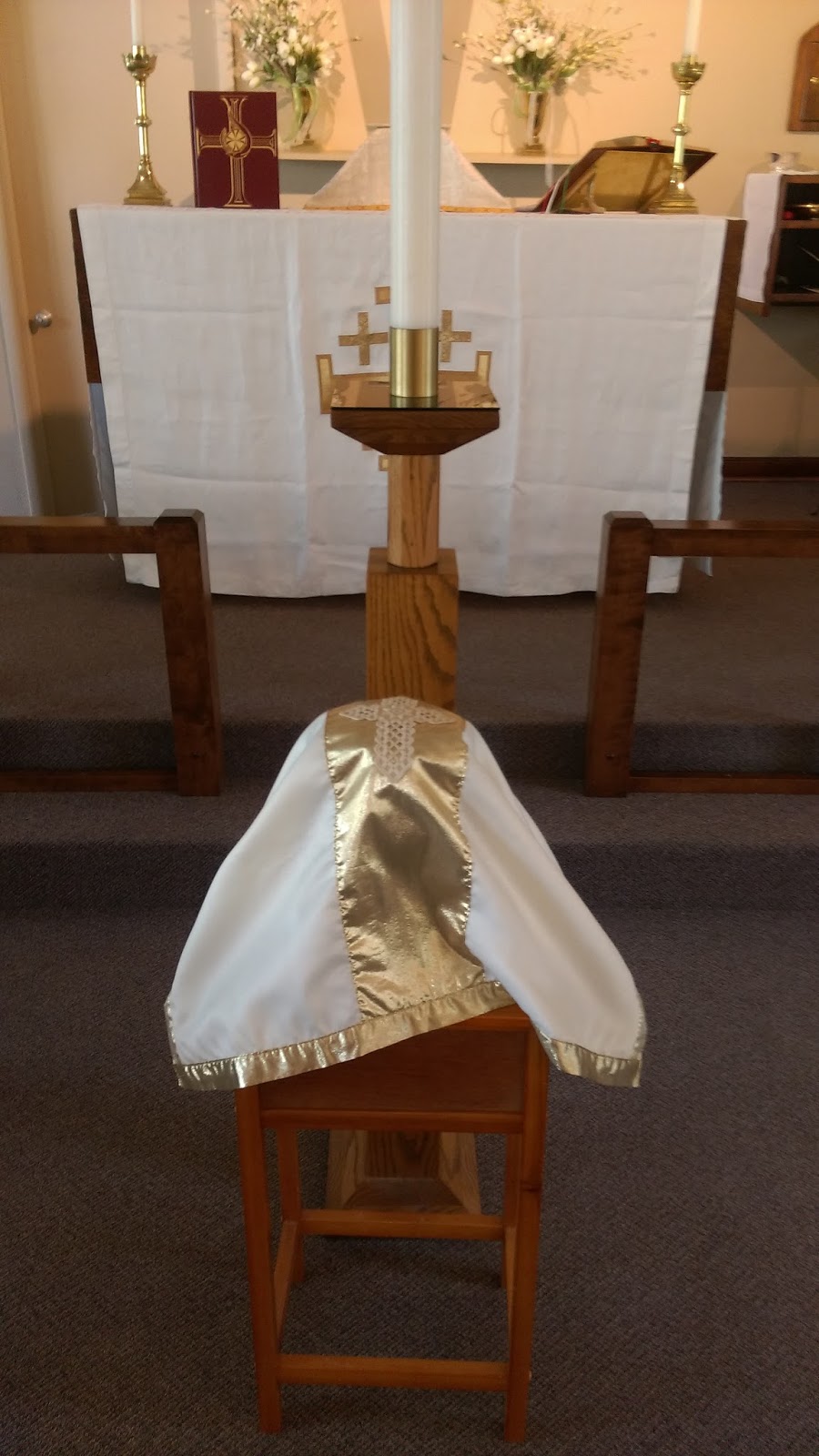 June 22, 2016
+ Back in November, we gathered here to do exactly what we are doing tonight. We gathered to pray for, to commend to God and to bury someone who we probably will never know, at least on this side of the veil, so to speak.
In November, we prayed for Adolf Scott. Tonight, we are praying for and commending to God this person, Linda. And much of what I am going to say tonight, I said then. It rings as true tonight as it did in November. And it will no doubt ring true in the future should we bury others in such a way.
We know very little about Linda. We know when we she was born, we know when she died, we know she had a husband and child. We know how she died and where she died. We know those basic facts about her. But that’s all. We do not know he if she was a good person, or a terrible person. And as I said in November about Adolf Scott, so I say tonight about Linda, none of that matters. What matters tonight is that we are welcoming her here in our midst and we are providing her with some dignity in her death.
In November, I shared the so called corporal acts of mercy. It’s no surprise to anyone here tonight that I hold those acts of mercy highly in my estimation. The corporal acts of mercy are...
- To feed the hungry;
- To give drink to the thirsty;
- To clothe the naked;
- To harbor the harborless;
- To visit the sick;- To ransom the captive;
- To bury the dead.
We, as a congregation of St. Stephen’s, as followers of Jesus, have strived to do every single one of these corporate acts of mercy in our collective ministry here. Throughout our 60 years, we have worked hard to do these seemingly basic acts. Because, like visiting the sick, and giving drink to the thirsty, and feeding the hungry and clothing the naked, burying the dead is a very basic act. It is something that is needed.
Every person deserves a proper burial. We do these acts not because we want or need a pat on the back. We do them not because we think they’ll get us in the good graces of God, or provide us with an easy ticket to heaven. We do them, because doing them brings about good in this world. And when good comes into this world, we believe God is present.
God is present with us this evening. We are seeing God present in this act of mercy, and even in this person of Linda. We don’t know if she actually even believed in God, or was a Christian, or anything.
But you know what? None of that matters right now. What matters is that God is, even now, able to work in this situation. God is here, in the act of mercy we are doing, in the fact that Linda’s ashes came to us, in the witness of her presence with us this evening and in the years to come.
Some of the greatest and loudest statements of God’s mercy come not in sermons
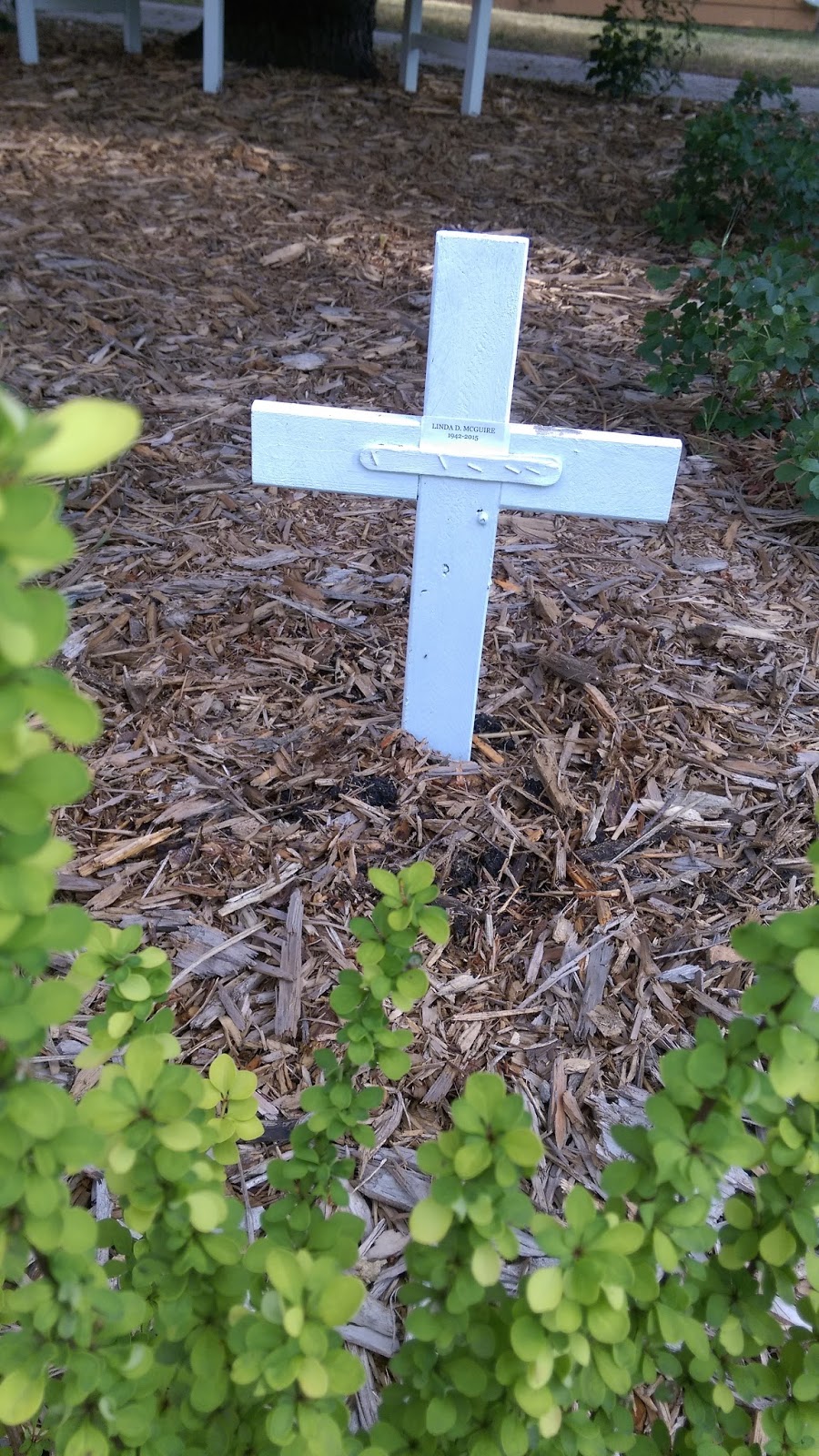 or evangelizing on the streets. Sometimes the loudest statements of God’s mercy and our own mercy to others comes in the starkness and quietness of an abandoned urn of ashes.
 Whoever Linda was, I am grateful for her presence with us. I am grateful that in years to come, she will be remembered by us. I am grateful that she will have a place here with us. And I am grateful that she will not be forgotten by any of us.
We commend you tonight, Linda,
to God’s mercy,
to God’s forgiveness and love.
Blessed be God the Creator,
who has caused the light of Christ
to shine upon you.
Go forth from this world:
in the love of God the Father
who created you,
in the mercy of Jesus Christ
who redeemed you,
in the power of the Holy Spirit
who strengthens you.
In communion with all the faithful,
may you dwell this day in peace and light.
Amen.
June 19, 2016
5 Pentecost
 June 19, 2016
Galatians 3.23-29;Luke 8.26-39
+ I had an interesting conversation with a friend of mine this past week, specifically about the shootings one week ago this morning at the Pulse nightclub in Orlando, Florida. This friend of mine is an agnostic. Not an atheist, mind you. An agnostic.
Now, most of you know, I am especially fond of agnostics because, let’s face it, we too are all agnostics, if we are honest with ourselves, if we but scratch our spiritual surfaces. An agnostic is one who says, I simply do not know. Which is one of the most honest ways of looking at spirituality. None of us, of course, knows. We hope. We long. We step into the unknown and hope and believe we will be held up.
What prompted this conversation was when my friend shared a comment on Facebook that said, essentially: “the devil’s followers don’t shoot people.” His thinking here is that, in the wake of the shootings in Orlando, it was people like Omar Mateen, a believer in God, who do things like this.
I don’t usually enter into these conversations. They go nowhere. No one’s minds are changed. But it was an interesting take on the situation. And I did have to say this to my friend:
evil is evil—and that where evil dwells, that is not the will of God, as I understand it.
I am no agnostic when it comes to such a belief. This is what I know. A person like Omar Mateen can claim God’s righteousness all he wanted, the Westboro Baptist Church can claim God’s righteousness all they want, but anyone-ANYONE—who murders, who belittles, who limits the inherent rights of others, who are violent in word or action, who HATES in the name of God is deceived. By saying they are doing it in the name of the God, they are committing sacrilege. The highest form of sacrilege. They are in fact doing the exact opposite of the will of God. They are doing the will of the so-called “Devil,” the deceiver, the unholy one—that personification of all evil.
Now, we often deceive ourselves. We convince ourselves that evil does not really exist. But let me tell you. In that nightclub last Sunday morning, evil existed. Evil ran rampant. Evil is what executed those cold-blooded murders. Not God. Not a follower of God.
I believe God was most definitely there. I have no doubt about that. But God was with those who were fleeing and dying and suffering.
In that moment, Omar Mateen was not God’s agent, was not representing God or anything that came close to God. He was the devil’s agent. And he was doing the Devil’s work. It was evil—plain and simple. And evil DOES exist.
Now I’m not saying I believe in actual supernatural devils or demons. But, the fact remains, whether we believe in actual demons or nor not, whether we believe in Satan as a spiritual reality or not, what we all must believe in is the presence of actual evil in this world. Whether that evil is natural or supernatural, or both, the fact is, there is evil. Even good rational people know that!
And those of us who are followers of Jesus have promised that we must turn away from evil again and again, in whatever way we encounter it. Whenever we are confronted with evil, we must resist it. In our Baptismal service, these questions are asked of the person being baptized (or their sponsors):
“Do you renounce Satan and all the spiritual forces of wickedness that rebel against God?”
And…
“Do you renounce the evil powers of this world which corrupt and destroy the creatures of God?”
And, as our Baptismal Covenant asks us asks us:
“Do you persevere in resisting evil, and whenever you fall into sin, repent and return to the Lord?”
Evil is something we must stand up against however we encounter it. Whether we encounter it as a spiritual force, or whether we encounter it in other forms, such as racism, sexism or homophobia, or as a rogue, fanatical gunman systematically shooting innocent people in a nightclub, as followers of Jesus, must stand up against evil and say no to it.
In a sense, what we are being asked to do is what Jesus did in this morning’s Gospel. We are being compelled, again and again, to cast out the evil in our midst, to send it away from us. This is not easy thing to do. It is not easy to look long and hard at the evil that exists in the world, and in our very midst. It is not easy to hear the stories of young gay and lesbian and transgender people huddling in bathroom stalls, pleading for their lives, or texting their mothers with messages of final goodbyes as they await the gunman.
We must, even as we face these stories, resist the evil that exists in this world. It too can be cast away. It too can be sent reeling from us.
The story of Jesus is clear: good always defeats evil ultimately. Again and again. It might not seem like it in the mass shootings and murder. But it is there.
Christ, as we heard in Paul’s Letter to the Galatians today, breaks down the boundaries evil in its various forms sets up. In Christ, we hear, there are no distinctions. In Christ, all those things that divide us and allow the seeds of evil to flower are done away with—those issue of sex, and social status and nationality and race are essentially erased, those things that cause people like Omar Mateen to lash out against.
And we, as followers of Jesus, so prone at times to get nitpicky and self-righteous and hypocritical and divide ourselves into camps of us versus them, are told in no uncertain terms that those boundaries, in Jesus, cannot exist among us. Those boundaries, those distinctions, only lead to more evil. To less love.
But even then, even when evil does seem to win out, even when there are moments of despair and fear at the future, there’s no real need to despair. Even in those moments when evil seems to triumph, we know that those moments of triumph are always, always short-lived. Good will always defeat evil ultimately.
Yes, we find the premise of good versus evil in every popular movie and book we encounter. This is the essence of conflict that we find in all popular culture. We learn that on the first day of Fiction Writing 101. Good versus evil—and good always wins. But, for us, as followers of Jesus, this is not fiction. That is not a fairy tale or wishful thinking. It is the basis on which our faith lies.
When confronted with those spiritual forces of wickedness that rebel against God, we must renounce them and move on. And what are those spiritual forces of wickedness in our lives? What are those forces that divide us and cause conflict among us? What are the legion of demons we find in our midst? Those spiritual forces of wickedness are those forces that destroy that basic tenant of love of God and love of each other. Those spiritual forces of wickedness drive us apart from each other and divide us. They harden our hearts and kill love within us.
When that happens in us, when we allow that to happen, we cannot be followers of Jesus anymore. We cannot call ourselves children of a loving God. When that happens our faith in God and our love for each other dies and we are left barren and empty.
We become like the demoniac in today’s Gospel. We become tormented by God and all the forces of goodness. We wander about in the tombs and the wastelands of our lives. And we find ourselves living in fear—fear of the unknown, fear of that dark abyss of hopelessness that lies before us. It would be easy to feel like that in the wake of Orlando and all the violence we experience in this world.
But when we turn from evil, we are able to carry out what Jesus commands of the demoniac. We are able to return from those moments to our homes and to proclaim the goodness that God does for us. That’s what good does. That’s what God’s goodness does to us and for us. That is what turning away from evil—in whatever form we experience evil—does for us.
So, let us do just that. Let us proclaim all that God has done for us. Let us choose good and resist evil. Let us love—and love fully and completely, without barriers. Let us love each other. Let us love peace and nonviolence. Let us cast off whatever dark forces there are that kills love within us. And let us sit at the feet of Jesus, “clothed in and in our right mind,” freed of fear and hatred and violence and filled instead with joy and hope and love.
June 13, 2016
In the Wake of the Pulse murders in Orlando.
As I write this, the news has just come out of 50 people filled at Pulse, a gay nightclub in downtown Orlando, Florida. It is devastating news to hear. Not only are we reeling with news of violence of more gun violence, we are also reeling because of more violence against GLBTQ people.
We, as Christians, find ourselves struggling with news like this. For me, personally, I find myself simply closing up and retreating into a kind of shocked silence. I know it is neither healthy behavior, nor is it helpful. But it is an honest reaction. When I heard the news of the shooting, I was preparing for our Sunday morning celebration of Holy Eucharist, at which we dedicated our new window of the Good Samaritan. In that service, I preached about Jesus’ commandment to love—love God, love our neighbor, love ourselves. It is hard to find love in our hearts when we are reeling with shock and pain over concentrated violence. But love, we must do, even in the face of such agony.
For me, prayer is the one consolation I have in moments like this. And the prayer I find myself drawn to in moments like this is the Great Litany, found in the Book of Common Prayer. If you have never read (or prayed) this incredible prayer, please do consider turning to page 148 in the BCP and looking at it. One special section of the Litany is called “The Supplication” (BCP p. 152), which can be prayed “especially in times of war, or of national anxiety, or of disaster.”
It was the Supplication I found myself praying in the wake of the Pulse mass murder. Sometimes, in the midst of tragedies like this, my own words in prayer simply do not suffice. That is why I continue to be so grateful for the Book of Common Prayer.
As we continue to process the horrible violence that surrounds, as we struggle to make sense of the murder of innocent people, as we struggle with continued violence against GLBTQ people, I ask you to pray, of course, for the souls of those who have died, pray for the turning of the hearts of our enemies and pray for peace. I also do invite you to pray the Supplication: V. From our enemies defend us, O Christ;
R. Graciously behold our afflictions.
V. With pity behold the sorrows of our hearts;
R. Mercifully forgive the sins of thy people.
V. Favorably with mercy hear our prayers;
R. O Son of David, have mercy upon us.
V. Both now and ever vouchsafe to hear us, O Christ;
R. Graciously hear us, O Christ; graciously hear us, O Lord
Christ.
We, as Christians, find ourselves struggling with news like this. For me, personally, I find myself simply closing up and retreating into a kind of shocked silence. I know it is neither healthy behavior, nor is it helpful. But it is an honest reaction. When I heard the news of the shooting, I was preparing for our Sunday morning celebration of Holy Eucharist, at which we dedicated our new window of the Good Samaritan. In that service, I preached about Jesus’ commandment to love—love God, love our neighbor, love ourselves. It is hard to find love in our hearts when we are reeling with shock and pain over concentrated violence. But love, we must do, even in the face of such agony.
For me, prayer is the one consolation I have in moments like this. And the prayer I find myself drawn to in moments like this is the Great Litany, found in the Book of Common Prayer. If you have never read (or prayed) this incredible prayer, please do consider turning to page 148 in the BCP and looking at it. One special section of the Litany is called “The Supplication” (BCP p. 152), which can be prayed “especially in times of war, or of national anxiety, or of disaster.”
It was the Supplication I found myself praying in the wake of the Pulse mass murder. Sometimes, in the midst of tragedies like this, my own words in prayer simply do not suffice. That is why I continue to be so grateful for the Book of Common Prayer.
As we continue to process the horrible violence that surrounds, as we struggle to make sense of the murder of innocent people, as we struggle with continued violence against GLBTQ people, I ask you to pray, of course, for the souls of those who have died, pray for the turning of the hearts of our enemies and pray for peace. I also do invite you to pray the Supplication: V. From our enemies defend us, O Christ;
R. Graciously behold our afflictions.
V. With pity behold the sorrows of our hearts;
R. Mercifully forgive the sins of thy people.
V. Favorably with mercy hear our prayers;
R. O Son of David, have mercy upon us.
V. Both now and ever vouchsafe to hear us, O Christ;
R. Graciously hear us, O Christ; graciously hear us, O Lord
Christ.
June 12, 2016
4 Pentecost
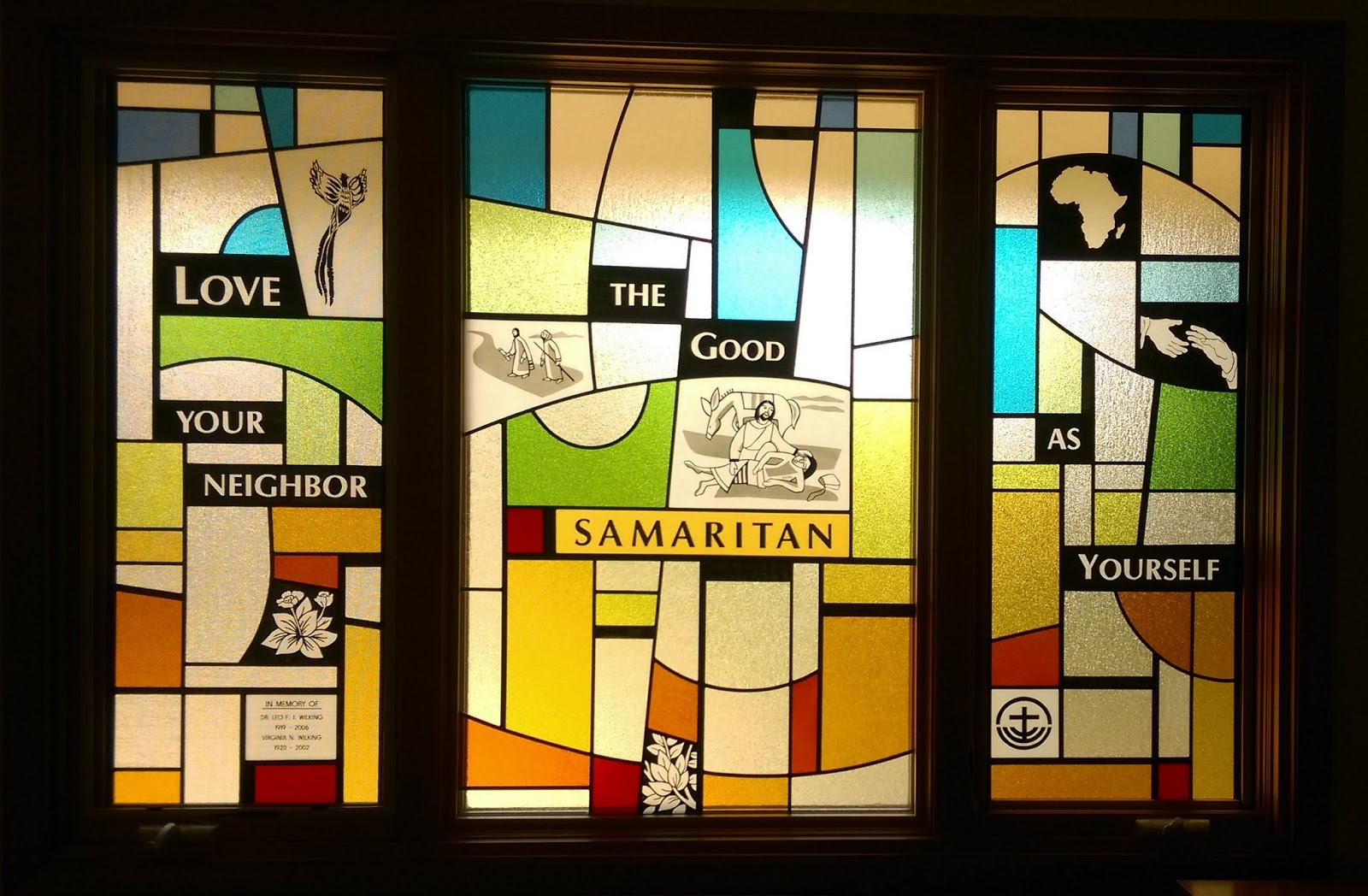 Dedication of the Good Samaritan Window
June 12, 2016
Luke 10.25-37
+ Today begins with a confession. According to our Lectionary—those prescribed readings that we hear each Sunday morning, the scriptures we heard this Sunday aren’t scheduled to be read until July 10. But it seems unusual to me that we celebrate this Sunday—the Sunday on which we dedicate our Good Samaritan window—without those scriptures, but then do it again in a few weeks. So, I made an executive decision—hoping that God will forgive—and switched that Sunday’s with today’s.
Even if we weren’t dedicating this window, our Gospel reading this morning is an important reading. No, I’m not being emphatic enough. It’s not just an important reading. It is, in my opinion, the single most important reading for us as Christians. Am I being clear on this? It’s THE most important reading we have as Christians. I’m not going to sugarcoat it.
And, for those of you who have known for me for any period, you know how I feel about what is being said in today’s Gospel. For me, this is IT. This is the heart of our Christian faith. This is where the “rubber meets the road.”
When anyone has asked me, “What does it mean to be a Christian?” it is this reading I direct them to. When anyone asks me, must I do this or that to be “saved,” I direct them to this reading. This is what it is all about.
So, why do I feel this way? Well, let’s take a look this all-important reading. We have two things going on. First, we have this young lawyer. He comes, in all earnestness, to seek from Jesus THE answer.
“What must I do to inherit eternal life?”
What must I do to be saved? And, guess what? He gets an answer. But, as always, Jesus flips it all around and gives it all a spin. Jesus answers a question with a question. He asks the lawyer,
“what does the law say?”
This law—the answer—is called The Shema. The Shema is heart of Jewish faith. It is so important that it is prayed twice a day, once in the morning, once at night. It is important, because it is the heart of all faith in God.
So, what is the answer? The answer is,
“You shall love the Lord your God with all your heart, , and with all your soul, and with all your strength, and with all your mind; and your neighbor as yourself.”
And then, Jesus says this:
“Do this, and you will live.”
I will repeat it.
Do this—Love God, love your neighbor—and you will live.
This is what we must do to be saved. Now that sounds easy. But Jesus complicates it all with a parable. Which is the second part of our reading.
And it’s a great story. Everyone likes this story of the Good Samaritan. After all, what isn’t there to like in this story?
Well…actually…in Jesus’ day, there were people who would not have liked this story. In Jesus’s day, this story would have been RADICAL. The part of this story that most of us miss is the fact that when Jesus told this parable to his audience, he did so with a particular scheme in mind.
The term “Good Samaritan” would have been an oxymoron for those Jews listening to Jesus that day.Samaritans were, in fact, quite hated. They were viewed as heretics, as defilers, as unclean. They were seen as betrayers of the Jewish faith. So, when Jesus tells this tale of a Good Samaritan, it no doubt rankled a few nerves in the midst of that company.
With this in mind, we do need to ask ourselves some very hard questions. Hard questions we did not think we would be asked on this Good Samaritan Sunday, as we dedicate this beautiful window. You, of course, know where I am going with this. So, here goes: Who are the Samaritans in our understanding of this story?
For us, the story only really hits home when we replace that term “Samaritan” with the name of someone we don’t like at all. Maybe it is “Fundamentalist,” or “Tea Party Republican” Maybe it is “progressive” or “Social Democrat” or “bleeding heart liberal.” Maybe it is “Muslim” or “Foreigner” or “Panhandler.” Maybe it is “Redneck” or “Racist” or “Misogynist” or “Homophobe.” Or maybe it is Donald Trump. It’s not hard to find the names. But it is maybe hard for some of us to put that word “good” in front of some of those names. It’s hard for a good many of us to find anything “good” in any of these people. For us, to face the fact that the Good Fundamentalist, or the Good Tea Party Republican or the Good Socialist Democrat or the Good Redneck could stop and help us out might not sit so comfortably with us.
We—good socially-conscious Christians that we are—are also guilty sometimes of being complacent. We too find ourselves sometimes feeling quite smug about our “advanced” or “educated” ways of thinking about society and God and the Church. And we too demonize those we don’t agree with sometimes.It is easy for me to imagine Christ living in me personally, despite all the shortcomings and negative things I know about myself. I know that, sometimes, I am a despicable person and yet, I know that Christ is alive in me. So, why is it so hard for me to see that Christ is present even in those whom I dislike, despite those things that make them so dislikeable to me?
For me, this is the hard part. Not only recognizing that Christ may live in and work through others, but actually seeing Christ alive in those people I have personally demonized is really one of the hardest things for me to do as a Christian.
The Gospel story today—and this window—shows us that we must love and serve and see Christ alive in even those whom we demonize—even if those same people demonize us as well. Being a follower of Jesus means loving even those we, under any other circumstance, simply can’t stand. And this story is all about being jarred out of our complacent way of seeing things.
It’s also easy for some of us to immediately identify ourselves with the Good Samaritan. We, of course, would help someone stranded on the road, even when it means making ourselves vulnerable to the robbers who might be lurking nearby.
But I can tell you that as I hear and read this parable, I—quite uncomfortably—find myself sometimes identifying with the priest and the Levite. I am the one, as much as I hate to admit it, who could very easily, out of fear or because of the social structure in which I live, find myself crossing over to the other side of the road. And I hate the fact that my thoughts even go there.
But… Something changes this whole story. Something disrupts this story completely.
Love changes this whole story.
When we truly live out that commandment of Jesus to us that we must love God and love our neighbor as ourselves, we know full-well that those social and political and personal boundaries fall to the ground. Love always defeats our dislike of someone. Love always defeats the political boundaries that divide us. Love always softens our hearts and our stubborn wills and allows us see the goodness and love that exists in others, even when doing so is uncomfortable and painful for us.
Now I say that hoping I don’t come across as naïve. I know that my love of the racist will not necessarily change the racist. I know that loving the homophobe will not necessarily change the homophobe. Trust me, I know that loving Donald Trump (and even saying those words aloud is difficult for me) is not going to change Donald Trump!
But you know what? It does change me. It does cause me to look—as much as I hate to do so—into the eyes of that person and see something more. It does cause me to look at the person and realize that God does love this person despite their failings and their faults—just as God loves me despite my failings and my faults.
These are the boundaries Jesus came to break down in us. And these are the boundaries Jesus commands us to break down within ourselves.
“What must I do to inherit eternal life?” the lawyer asks Jesus. And what’s the answer?
Love is the answer. We must love—fully and completely.
“Do this,” Jesus says, “ and you will live .”
It not just about our personal relationship with Jesus. It not about accepting Jesus as our personal Lord and Savior. Yes, you should have a personal relationship with Christ. But, that’s not ultimately what saves us. He nowhere says that is what will save us.What will save us? Love will save us. Love of God. Love of one another. Loving ourselves. Loving what God loves. Love will save us. Love will liberate us. Love will free us. Jesus doesn’t get much clearer than that.
Because let’s face it. We are the Samaritan in this story. We are—each of us—probably despised by someone in our lives. We, to someone, represent everything they hate.
The fact is, God is not expecting us to be perfect. God worked through the Samaritan—the person who represented so much of what everyone who was hearing that story represents as wrong. If God can work through him, let me tell God can work through you and me.
I think it’s very appropriate on this Sunday in which we dedicate this beautiful window for me to close with an analogy I deeply love and have used on multiple occasions, but probably never more appropriately than on this Sunday. Probably my favorite poet, as most of you know, is the Anglican priest and poet, George Herbert. Herbert only wrote one book of poetry, called The Temple. In it, he wrote poems about different aspects of the church building. Of course, we also wrote about the Windows. I’ve preached many times on this poem before.
This “The Windows” by George Herbert
Lord, how can man preach thy eternall word?
He is a brittle crazie glasse:
Yet in thy temple thou dost him afford
This glorious and transcendent place,
To be a window, through thy grace.
But when thou dost anneal in glasse thy storie,
Making thy life to shine within
The holy Preachers; then the light and glorie
More rev’rend grows, & more doth win:
Which else shows watrish, bleak, & thin.
Doctrine and life, colours and light, in one
When they combine and mingle, bring
A strong regard and aw: but speech alone
Doth vanish like a flaring thing,
And in the eare, not conscience ring.
We, “brittle crazie glass,” can still be a window through which God’s grace shines. We do not have to be perfect. We can be a cracked window. We can be a dirty window. But even despite this, despite whatever in us might be “waterish, bleak and thin,” “colors and light” combining and mingling, can show through us.
Let us be what this window is. As it takes and reflects the light upon us, let us take and reflect God’s light and goodness and love on others. Let us love, as this windows tells us. Let us love fully and radically and completely. Let us love God. Let us love each other.Let us love ourselves. Let us love all that God loves. Let us love our neighbor.
Who is our neighbor? Our neighbor is not just the one who is easy to love. Our neighbor is also the one who hardest to love.Love them—God, our neighbor—and yes, even ourselves. And you and I--we too will live, as Jesus says. And we will live a life full of the light we, like this window, have reflected in our own lives. And that light that will never be taken from us.
June 5, 2016
3 Pentecost
 June 5, 2016
Psalm 30; Luke 7. 11-17
+ This coming week, I will be observing the twelfth anniversary of my ordination to the Priesthood. It’s always an exciting time for me, as you all know. I like to look back over my years as priest, and also to look forward. It’s certainly been an interesting experience for me. And it is nowhere near what I initially thought it would be like twelve years ago.
But one of the areas I have deeply loved and appreciated in my ministry as a priest has been funerals. I know. That might sound morbid. But I truly do appreciate being the person there for people at this very important time in their lives.
Now, when I say I appreciate being a priest for funerals, I don’t simply mean being there to do the funeral. Rather, I also realize that much of what I do with funerals is in the days and weeks and months afterward. Because, let me tell, having been through my own dark season of mourning in my own life, I know that the really difficult time after the death of a loved one isn’t in the immediate aftermath of the death. It is in the days and weeks and months following the funeral. It is in those lonely days when the mourners have dispersed, and the condolence cards have been read, and the long-haul of mourning begins. That is when the priest and pastor needs to step up and reach out.
Often, the offer to help is politely declined. Mourning is a very private affair, after all. But it is then that our ministry begins of prayer and support—even if it is from a distance. There is a unique kind of ministry we have all been called to do when we minister to mourners—to widows and widowers, to the newly orphaned (and orphans, let me remind you are not just children—orphans come in all ages), to all those experiencing that dark season of mourning, which is, at times, a truly bleak season.
In our Gospel reading for today, we find someone who is going through that dark season of mourning. We find a widow who also has had a few things happen to her that were definitely hard. The story of the widow and her son makes very little sense unless we have some basic understanding of the culture in which it occurred.
From our perspective, it is a sad story in and of itself. A widow has lost her son. She is weeping. Jesus tells her not to sorrow and raises him from the dead. Very nice.
But there is more going on here than what we might fully appreciate at first.The fact that the woman is a widow is an important factor in the story.
Women, as we probably have figured out by this point, in that time and that place—in that culture—were not seen as equal to men. A woman’s identity was not her own. The only real importance a woman had was in relation to the males in her life—whether it be her father, her husband, her brother, or her son. A woman could not make money for herself, certainly not enough on which to live. Whatever money she had she received from the men in her life. A woman legally had no status in that culture. So, if a husband died, a widow was in trouble. Unless there was another man to take care of her—her son, her brother, her husband’s brother, her father, a new husband—she became destitute.
That is why this story is so important. That is why Jesus makes the issues he does here. With the death of this widow’s son, if there was no one else, she would be lost in a sense. She would have nothing. She would probably be out on the street, begging for money.
Elsewhere in scripture, in Psalm 68, we hear God described as
“the defender of widows.”
It’s a phrase we don’t hear much anymore. It doesn’t have the same meaning for us as it did in other times and places. And because it doesn’t have much meaning for us, for the most part, we don’t give a statement like that much thought.
God is “the defender of widows.”
But knowing what we know now, we realize how powerful a statement it really is.
God is “a defender of widows”
The God of Jesus truly was—and continues to be—the widow’s refuge, as our Gospel for today shows. Of course, in our day and age, widows for the most part are not by any means in the same predicaments as the woman in today’s Gospel is. Widows—women for the most part—are not seen as marginalized by our culture anymore.
So, since widows in our day are not seen as marginalized as they were in Jesus’ day, does that mean this story and God’s title as “defender of windows” have no meaning for us now? Not necessarily. I think a better question needs to be asked:
who are the widows in our midst today?
Now, I’m not talking here about those who have lost husbands and wives, because that is not the real meaning behind the story of the widow in our Gospel this morning. The “widows” in our lives are those living on the fringes. The “widows” in our lives are the ones who are wandering about, discarded by our culture, looked down on by most of us, the ones who are shunned and ostracized. The one who, by themselves, have little or no meaning in our society.
So, who are the “widows”? Who are marginalized? Who are the forgotten ones, the ignored ones, the invisible ones? Who are the ones on the fringes of our culture? Who are the ones on the fringes of our own community here at St. Stephen’s?
Because it is those people that Jesus is telling us, by his actions and by his words, to care for. It is those people our Baptismal Covenant demands we reach out and care for. It is those people that Jesus commands us—and he does command it of us—to love, as we want to be loved.
If we look around us, we might not readily see them. In Jesus’ day it was easier to see them. There was the widow, the leper, the Samaritan, the tax collector.
Today, they go by other names. You know what names they go by for you. If you take a moment to think of who the marginalized person is in your midst, you’ll be able to name them. The best way to find this person is to ask this question of yourself:
who is the person I want least as my neighbor?
Who is the person I don’t want living next to me or sitting next to me or sharing my table? Who is the person we don’t see in our midst? That person then becomes the marginalized person in our midst. And that is the person Jesus is telling us, throughout the Gospels again and again, to love as we would want to be loved. And this is the point we can take with us as well.
Today’s Gospel is really a beautiful one. Jesus has raised this widow’s son and, in doing so, he helps not only the son by giving him back life, he helps the widow as well by giving her life—or a better life—as well. This is what happens when we follow Jesus and believe in the God of Jesus. He pushes us outside our comfort zones and as he does, as frightening as it might seem to us, he gives us life as well. We might stand there, bewildered, in that place. But we stand there renewed.
Like the young man in today’s Gospel, hopefully we emerge from our spiritual deaths able to make a positive difference in people’s lives around us. Hopefully we, in those moments in which Jesus heals us and sends us on our way, are able to be a “widow’s refuge” to the “widows” in our own midst.
The message of today’s Gospel is not clear at first, but it becomes clear when we place it alongside our lives.The message of today’s Gospel is this:
Listen to the voice of God.
It saying to us, “be the widow’s refuge in your life.” Let us look long and hard for the “widows” in our lives this day and this coming week. Let us recognize those people who are lost, afraid, invisible, struggling because their support is gone. Let us look for those who are drifting, out there on the fringes. Let us search out that person we never in a million years would want as a neighbor. Let us reach out with love and compassion for those who are snubbed and mistreated by the society in which we all live. Let us avoid the snubbing and the mistreatment of others in our own lives.
Like the God of Jesus, let us be the refuge and defender for that marginalized person. Jesus raised us up, like the young man in today’s Gospel, from the shrouds and the decay of spiritual death. Let us go forth from our own graves, singing the words of the psalm we shared today:
“You have turned my wailing into dancing;
you have put off my sack-cloth and clothed me with joy.”
And in living, in dancing, in that all-encompassing joy, let us be the refuge and defender for someone who needs us.
May 29, 2016
2 Pentecost
[image error]
May 29, 2016
Luke 7. 1-10
+ Now anyone who has me for any period of time knows a few things very quickly about me. First of all, I’m pretty laid back. I am pretty even-keeled when it comes to most things.
But…but…there are a few things that can set me off. There are a few things that people who have worked with me for any length of time know to avoid.
One—this goes all the way back to when I was in junior high school and a teacher I had there—is this: Never begin a conversation with me with the words, “I have a bone to pick with you,” or any variation of that. I have to breathe deeply if I hear those words.
The second thing I am not good at at—and this is a hard one, especially for a priest—is: I hate being told what to do.
Yes, I know. I am under an actually vow of obedience to my bishop as a priest. But…I am not good at it, obviously.
For example, I really do not like people telling me what my job is as a priest. We get that a lot in congregations. I don’t tell people who are doctors how to be doctor. I don’t tell people who are teachers how to teach. People think they know what a priest should or should not do. They think they know what my responsibilities are.
I hate have being people boss me. And I hate being told “do this” or “do that.” This all goes back to being a kid.
Now, nobody would look at me now and say, “wow, that Father Jamie. He’s a real rebel.” Well, I know I don’t look it. But I kinda am. And I really HATE being told what to do. Just ask my poor mother.
I know it’s weird. I’ve worked hard on it over the years. And finally, at this point in my life, I just acknowledge it and accept it. And I’m honest with others about it. It’s not that I can’t take honest, creative, helpful criticism.
It’s not that I can’t work with others. I actually work very well with others—even with people who don’t work well with me. It’s just…don’t pick a bone with me.
So, with that in mind, I have to admit that our Gospel reading for this morning drives me kind of crazy. I know it sounds all nice and wonderful on the surface. Here’s this loyal Gentile. A centurion. A soldier. And here he is submitting to Jesus and the God of Jesus. It’s wonderful.
It’s so wonderful, we even find Jesus amazed at it. We don’t find Jesus amazed at much in the Gospels. So, when he is, we should take note.
But when I hear words like this—
“For I also am a man set under authority, with soldiers under me, and I say to one ‘Go’ and he goes, and to another ‘Come’ and he comes, and to my slave “do this’ and the slave does it…”
—I find myself reacting in much the same way I do when someone tells me they have a bone to pick with me.
This is faith? I have to wonder. This is what Jesus finds amazing? If so, I’m not in good place. And knowing many of you as well I do, I don’t think you are either. This is exactly the opposite of what we thought faith was.
Faith, as I’ve understood it, and certainly as I’ve preached it from this pulpit, is all about freedom. Remember some of those sermons I’ve preached? God does not want us to be robots, I’ve said. God does not want us to mindlessly do this and do that. So, all this talk really riles me up.
But, wait… It’s not so simple as all of that. Because if those are the words we get hung up on—and yes, I’ve gotten hung up on those words in this Gospel reading—then, we are really missing the point. Because, right before those words, the centurion says something else. Something really beautiful. Something really amazing.
“Lord, do not trouble yourself for I am not worthy to have you come under my roof,…but only speak the word, and let my servant be healed.”
This turns everything I have already said on its head. All that rebelliousness gets knocked flat at these words. There is a difference here between blind submission and…humility. And it is humility, not blind faith, that this Gospel reading is all about. I still echo what I have always said:
God does not want robots for the Kingdom of God. God does not want us to be mindless, submissive robots. We have brains and minds, that we must use. We have intellect that we must exercise. We must work on our faith, and question it at times, and struggle with it and under it at times.
But, sometimes..sometimes…and this is really hard…we must submit to it and humble ourselves before God. I know that’s hard for us. It’s hard for me. We are proud at times. And we can be proud. At times. But we also must humble ourselves too. We also must bow down and bend our bodies—and our hearts—to God. And we sometimes just have to stop doing it all ourselves and let God do some things.
That is the beauty of this encounter with the centurion this morning. And it is a beautiful encounter. That humble prayer to Jesus by the centurion really does get right to the heart of the matter.
Only speak, Lord, and there will be healing.
You’ll sometimes notice during our celebration of Holy Communion that I am up at the altar whispering quietly to myself. I’m not talking to myself, trust me. I’m saying certain prayers during this time, such as when I wash my hands, or when I pour water into the wine.
There’s also a prayer I pray right before I receive Holy Communion. It’s a prayer that everyone prays in the Roman Catholic Church right before they receive, and I wish we Episcopalians could have implemented it in our Prayer Book. But it’s a good prayer for all of us to pray right before we receive communion. The prayer is:
“Lord, I am not worthy to receive you, but only say the word and I shall be healed.”
It is a prayer that, of course, echoes our reading this morning. And it’s a beautiful prayer as far as I’m concerned. Yes, maybe a bit self-deprecating. But, it is truly a humble prayer.
The fact is, we are all called to be obedient as Christians. We are also all called to be humble. Neither of these callings are easy. But, then, nobody promised us that faith would be easy. If anyone ever did, they deceived you. Get your money back from them!
Faith is not easy. It is hard. And that’s all right. An easy faith is not one with any real rewards to it.
But a faith in which one needs to work—a faith in which one must work to be obedience and humble—that is a faith with purpose and meaning.
So, let us embrace such a faith. Let us each work hard on our faith. Let us be obedient, as the centurion was. Let us be humble. Let us ask Christ to come under our roof and to heal us and those who need healing in our lives.
When we do, it is then that our faith will truly flourish. It is then that Christ truly does come under our roof and dwells with us. It is then that Christ will no doubt be amazed and will delight in us as well.
Luke 7. 1-10
+ Now anyone who has me for any period of time knows a few things very quickly about me. First of all, I’m pretty laid back. I am pretty even-keeled when it comes to most things.
But…but…there are a few things that can set me off. There are a few things that people who have worked with me for any length of time know to avoid.
One—this goes all the way back to when I was in junior high school and a teacher I had there—is this: Never begin a conversation with me with the words, “I have a bone to pick with you,” or any variation of that. I have to breathe deeply if I hear those words.
The second thing I am not good at at—and this is a hard one, especially for a priest—is: I hate being told what to do.
Yes, I know. I am under an actually vow of obedience to my bishop as a priest. But…I am not good at it, obviously.
For example, I really do not like people telling me what my job is as a priest. We get that a lot in congregations. I don’t tell people who are doctors how to be doctor. I don’t tell people who are teachers how to teach. People think they know what a priest should or should not do. They think they know what my responsibilities are.
I hate have being people boss me. And I hate being told “do this” or “do that.” This all goes back to being a kid.
Now, nobody would look at me now and say, “wow, that Father Jamie. He’s a real rebel.” Well, I know I don’t look it. But I kinda am. And I really HATE being told what to do. Just ask my poor mother.
I know it’s weird. I’ve worked hard on it over the years. And finally, at this point in my life, I just acknowledge it and accept it. And I’m honest with others about it. It’s not that I can’t take honest, creative, helpful criticism.
It’s not that I can’t work with others. I actually work very well with others—even with people who don’t work well with me. It’s just…don’t pick a bone with me.
So, with that in mind, I have to admit that our Gospel reading for this morning drives me kind of crazy. I know it sounds all nice and wonderful on the surface. Here’s this loyal Gentile. A centurion. A soldier. And here he is submitting to Jesus and the God of Jesus. It’s wonderful.
It’s so wonderful, we even find Jesus amazed at it. We don’t find Jesus amazed at much in the Gospels. So, when he is, we should take note.
But when I hear words like this—
“For I also am a man set under authority, with soldiers under me, and I say to one ‘Go’ and he goes, and to another ‘Come’ and he comes, and to my slave “do this’ and the slave does it…”
—I find myself reacting in much the same way I do when someone tells me they have a bone to pick with me.
This is faith? I have to wonder. This is what Jesus finds amazing? If so, I’m not in good place. And knowing many of you as well I do, I don’t think you are either. This is exactly the opposite of what we thought faith was.
Faith, as I’ve understood it, and certainly as I’ve preached it from this pulpit, is all about freedom. Remember some of those sermons I’ve preached? God does not want us to be robots, I’ve said. God does not want us to mindlessly do this and do that. So, all this talk really riles me up.
But, wait… It’s not so simple as all of that. Because if those are the words we get hung up on—and yes, I’ve gotten hung up on those words in this Gospel reading—then, we are really missing the point. Because, right before those words, the centurion says something else. Something really beautiful. Something really amazing.
“Lord, do not trouble yourself for I am not worthy to have you come under my roof,…but only speak the word, and let my servant be healed.”
This turns everything I have already said on its head. All that rebelliousness gets knocked flat at these words. There is a difference here between blind submission and…humility. And it is humility, not blind faith, that this Gospel reading is all about. I still echo what I have always said:
God does not want robots for the Kingdom of God. God does not want us to be mindless, submissive robots. We have brains and minds, that we must use. We have intellect that we must exercise. We must work on our faith, and question it at times, and struggle with it and under it at times.
But, sometimes..sometimes…and this is really hard…we must submit to it and humble ourselves before God. I know that’s hard for us. It’s hard for me. We are proud at times. And we can be proud. At times. But we also must humble ourselves too. We also must bow down and bend our bodies—and our hearts—to God. And we sometimes just have to stop doing it all ourselves and let God do some things.
That is the beauty of this encounter with the centurion this morning. And it is a beautiful encounter. That humble prayer to Jesus by the centurion really does get right to the heart of the matter.
Only speak, Lord, and there will be healing.
You’ll sometimes notice during our celebration of Holy Communion that I am up at the altar whispering quietly to myself. I’m not talking to myself, trust me. I’m saying certain prayers during this time, such as when I wash my hands, or when I pour water into the wine.
There’s also a prayer I pray right before I receive Holy Communion. It’s a prayer that everyone prays in the Roman Catholic Church right before they receive, and I wish we Episcopalians could have implemented it in our Prayer Book. But it’s a good prayer for all of us to pray right before we receive communion. The prayer is:
“Lord, I am not worthy to receive you, but only say the word and I shall be healed.”
It is a prayer that, of course, echoes our reading this morning. And it’s a beautiful prayer as far as I’m concerned. Yes, maybe a bit self-deprecating. But, it is truly a humble prayer.
The fact is, we are all called to be obedient as Christians. We are also all called to be humble. Neither of these callings are easy. But, then, nobody promised us that faith would be easy. If anyone ever did, they deceived you. Get your money back from them!
Faith is not easy. It is hard. And that’s all right. An easy faith is not one with any real rewards to it.
But a faith in which one needs to work—a faith in which one must work to be obedience and humble—that is a faith with purpose and meaning.
So, let us embrace such a faith. Let us each work hard on our faith. Let us be obedient, as the centurion was. Let us be humble. Let us ask Christ to come under our roof and to heal us and those who need healing in our lives.
When we do, it is then that our faith will truly flourish. It is then that Christ truly does come under our roof and dwells with us. It is then that Christ will no doubt be amazed and will delight in us as well.
May 15, 2016
Pentecost
 May 15, 2016
Acts 2.1-21
+ This past week, I got it into my head that I would like to have an ikon of the Holy Spirit on display here at St. Stephen’s for this Sunday of Pentecost. It’s an important Sunday, after all. A VERY important Sunday. We commemorate the end of the Easter season today, which is important. But, of course, most importantly, we commemorate the descent of the Holy Spirit on those first followers of Jesus.
Well, just because I might think it’s an important Sunday doesn’t mean the rest of the world does, obviously. As I asked around at various religious stores to see if they had an ikon of the Holy Spirit, each one came up empty. They didn’t really even know of one in existence. It’s just not a common theme in ikons, I soon discovered.
Who would’ve thought? It kind of shocked me, actually. There was an abundance of the ikons of Jesus, of Mary and the child Jesus, of saints, even the famous Rubilev ikon of the Trinity. There was even an ikon of the God the Father. But none of the Holy Spirit alone. Even when I Googled it, I couldn’t really find any.
Finally, as I often do in such situation, I just made my own, I made it by finding a detail from another ikon of the Trinity. And it is that one that you will find on the votive stand this morning.
What’s interesting about all this searching for an ikon, is that the Holy Spirit is just one of those things people don’t think about often. As you probably notice, Christians think A LOT about Jesus. And that’s a very good thing. But, let’s face it, the Holy Spirit just doesn’t capture the imagination of most Christians like Jesus does. After all, the Spirit is usually depicted as a dove. Not an exciting symbol for most people.
But, let me tell you, the Holy Spirit is VERY important. Vitally important. In fact, the Spirit is probably that one aspect of God that we experience in our own lives more than any other aspect of God. Every time we feel God’s Presence in our life, every time we feel a sense of the Holy, that is the Spirit. Even here in the Holy Eucharist, when we partake of the Bread and the Wine, we are partaking in the Spirit of God. We call down the Spirit in this service.
So, the Spirit is very active in our lives. And by being active in life, we know that God is active in our lives.
Today we are reminded of how the Holy Spirit continued to move in our lives. We are reminded that the Holy Spirit is in the collective Church. And in us, as individuals. And that moving of the Holy Spirit within us, has changed us and made us a wonderful force of good and love in the world.
I think most of us—I hope most of us—have felt this moving of the Holy Spirit within us as some point. Still, even if we haven’t, when it comes to the Holy Spirit, we all find ourselves grasping and struggling to define who and what the Spirit is in our lives. The Spirit can be elusive and strange and sometimes we might have a hard time wrapping our minds around the Spirit.
But it is clear from the words of Jesus before he ascends back into heaven what the role of the Spirit is: Although Jesus might no longer be with us physically as he was when he walked with the disciples, his spirit will always remain with us. Jesus will leave—we will not be able to touch him and feel him and listen to his human voice again. But God is leaving something amazing in Jesus’ place. And this is just some nice, pleasant gift. It is a gift that makes us live up to our full potential as lovers of God.
In a sense what happens with the Descent of God’s Spirit upon us is the fact that we now have the potential to be prophets, as you’ve heard me say many, many times. The same Spirit which spoke to Ezekiel, which spoke to Isaiah, which spoke to Jeremiah, which spoke to Moses, also can now speak to us and be revealed to us just as it spoke and was revealed to those prophets from the Hebrew Bible.
That is who the Spirit is in our midst. The Spirit we celebrate today—and hopefully every day—is truly the Spirit of the God that came to us and continues to come to us—first to those prophets in our Hebrew past, then in the Word spoken by Jesus and finally in that rushing wind and in that rain of burning flames. It is through this Spirit that we come to know God in ways we might never have before.
The Spirit is God with us NOW. Right here. Right now.
When we sense holiness—when we feel God close to us in our own lives—that’s God’s Spirit with us. God’s Spirit comes to us wherever we may be in our lives—in any situation or frustration. God’s Spirit is with us, as Jesus promised, always. Always.
And it is through this Spirit that God comes to know us as well. For those of us who want to grasp these experiences—who want to have proof of them—the Spirit doesn’t fit well into the plan. We can’t grasp the Spirit. We can’t make the Spirit do what we want it to do. In that way, the Spirit truly is like the Wind that came rushing upon those first disciples.
So, how do we know the Spirit is working in our lives? Well, as Jesus said, we know the tree by its fruit. In our case, we know the Spirit best through the fruits God’s Spirit gives us.
It was on the feast of Pentecost in Jewish culture on which the first fruit were offered to God. In a sense, what happens on our Pentecost, is God returning those fruits to us. On the feast of Pentecost, we celebrate the fruits the Spirit of God gives to us and we can be thankful for them. The Spirit comes to us and manifests itself to us in the fruits given to us by the Spirit.
But, we must not let the Holy Spirit do all the work. It is important that we actually DO the work the Holy Spirit gives us. We must cultivate those fruits of the Spirit. Yes, we can pray for them. Yes, we can pray novenas and ask the Spirit to come and convict and convert us. But we have to be ready for that first. We have to be doing the work already—we have to be out there, getting the ground ready for those fruits first. But unless we work to make fertile ground in which those fruits grow and flourish, we are not doing OUR part.
The Spirit works with us, not for us. We can’t manipulate the Spirit. We can’t force the Spirit to do anything—especially what we want that Spirit to do. We can’t control that Spirit any more than we can control the wind. We have to do part of the work ourselves. This is the way the Spirit works.
For me, the Spirit of God has come to me at various points in my life not in a noisy, raucous way, but rather in a quiet, though just as intense, way. The Sprit of God as I have experienced it has never been a “raining down” so to speak, but rather a “welling up from within.” And that welling up from within came when the ground of my life was ready.
For us at St. Stephen’s, we can feel the Spirit of God dwelling here. I cannot tell you how many times I have people who have visited us for the time tell me: “Wow! I really felt the Holy Spirit present here.” One person told me it was like a charge of electricity. Sometimes that’s how we experience the Spirit. No doubt everyone here this morning has felt a similar experience of God’s Spirit, although you might not have readily recognized that experience as God’s Spirit. Maybe it was a sense of calm coming to you in the midst of a difficult time in your life. Maybe it was a comforting hand on your shoulder when you were sorrowing or a bit of advice you needed for some problem you had been carrying with you for some time. This is how God’s Spirit comes to us.
The Spirit does not tear open the ceiling and force its way into our lives. The Spirit rather comes to us just when we need the Spirit to come to us. Our job is to be open to the Spirit, to allow the Spirit to be present and to dowhat the Spirit does.
For us collectively here at St. Stephen’s, we’ve been doing that all along. How do we know that? Well, just take a look at our fruits. Take a look at the fruits of the Holy Spirit flourishing here at St. Stephen’s. And when we do, let’s not be critical, let’s not be proud, let’s not say to ourselves, “well, of course.” Rather, let us be thankful to the Spirit of God with us, to the Spirit who dwells with us here. And let us continue to welcome that Spirit into our midst to continue to the work begun here.
So, this week of Pentecost, let us look for the gifts of the Spirit in our lives and in those around us. Let us open ourselves to God’s Spirit and let it flow through us like a caressing wind. And let us remember the true message of the Spirit to all of us—whenever it seems like God is distant or nonexistent, that is when God’s Spirit might possibly be closest of all, dwelling within us, being breathed unto as it was those first disciples. On this feast of Pentecost—this feast of the fruits of God—let us feel the Holy Spirit move within us and let us give thanks to God for all the many fruits of the Spirit in our lives.
Let us pray.
Come Holy Spirit: come as the wind and cleanse; come as the fire and burn; convict, convert, consecrate the lives of the members of St. Stephen’s, to our great good and your greater glory. Let us know your Presence here and let the gift of your fruits flourish in our midst. Amen.



![[image error]](https://1.bp.blogspot.com/-iXJDIhsYma8/V0rxnggB5RI/AAAAAAABJns/lwGXz7RE0dcXbReqCNBZ90mCki_9mnx3wCLcB/s1600/centurion2016.jpg)