Jamie Parsley's Blog, page 63
March 25, 2016
Celan before the Grunewald Passion
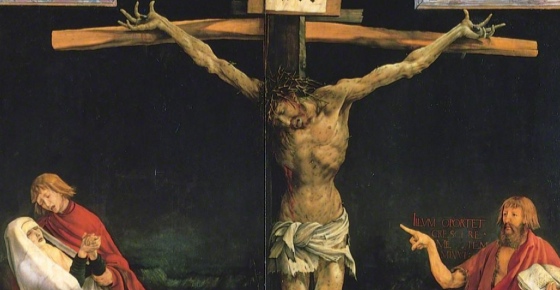
Celan before the Grünewald Passion
(Holy Week, 1970)
The limbsentwined—gnarled
as oak. Theblood flowed--red as
a mother’s,shed for naught in the labor
camp.The ribsstrained—
a father’s—typhus in itslast exhaled
breath. Ourown passionawaits us—
weeks from nowin waters
dark as noon,silentand unseen
by anyoneexceptsomeone’s downcast
gaze—tenderand distant
--Jamie Parsley
Paul Celan (1920-1970) was a Romanian-born German-language Jewish poet. After surviving the death camps, Celan became a well-respected poet in post-war Europe. He committed suicide on April 20, 1970, by drowning himself in the Seine in Paris.


March 24, 2016
Maundy Thursday
 1 Corinthians 11.23-26; John 13.1-17, 31b-35
+ I know this isn’t something many priests confess. But…I am a bit of a skeptic. No, not just a bit. I’m actually very much a skeptic. I’m very skeptical of so-called supernatural stories.
Still, even despite that, I am a deep lover of mystery. I love those shows on Discovery Channel or History Channel and other channels about UFOs and ghosts. Oftentimes, I just sit there and roll my eyes at all. But I am deeply entertained by it all. In fact, I can’t stop watching them.
Tonight, we are in the midst of a mystery as well. But this is a mystery at which I don’t roll my eyes. I am not a skeptic about this mystery. Tonight we commemorate God happening to us. We commemorate an event in our lives as Christians that has changed us and affected us and transformed us and made our spiritual lives better.
Tonight, we commemorate that incredible and amazing miracle—the institution of the Eucharist.
Tonight, we remember the fact that Jesus took bread, broke it, gave it and said, “This is my body,” and that he did the same with the wine and said, “This is my blood,” And that by doing so, something incredible happened. God happened. God broke through to us. God broke through to us in an incredible and wonderful way.
Every Sunday and Wednesday, we participate in this incredible, holy event. We come together. We celebrate together this mystery. We come forward and take this bread and drink from this cup and, in doing so, we take the Body and Blood of Christ. Every Sunday, our congregation celebrates this mystery, this miracle and this incredible conduit in which God still continues to come to us in this tangible, real way.
In this bread and wine we share, God happens to us. God is present with us in a unique and wonderful way. And recognizing this presence, how can we be anything other than in awe of it? We should be blown away by what is happening on our altar.
I hear all the time from people who tell me that it was this holy event of the Eucharist that converted them and changed them and transformed them. And that amazes me.
I’m sure there are people out there who see what we do as archaic. There are even some Christians out there who say we don’t need Holy Communion every Sunday. I disagree. We need Holy Communion every Sunday.
One of the reasons I came back to Church and have stayed in the Church as long as I have is this one act of the Church. Even when I wandered away from the Church and journeyed about spiritually, I oftentimes found myself craving what I had always experienced in the Eucharist. And it was this deep desire for the Eucharist that brought me back to the Church in my twenties.
The reason we come to church is so we can experience God’s presence. What better way than in in the Bread and the Wine and in one another? The reason we come to church is to be strengthened in our everyday faith life. We come to church to be fed spiritually, so that we can be sustained spiritually. And the amazing fact is, people are still being transformed by this event.
Each of us is transformed by what we do here. And so is anyone who comes to our altar and experiences God’s Spirit coming to us in this bread and wine. This is why Holy Communion is so important. This is why we celebrate this miracle every Sunday. There is nothing else like this kind of worship in the Church. It is one of the most intimate forms of worship we can know.
God truly comes among us and feeds us with this Holy Bread and Drink. We form a bond with God in Communion that is so strong and so vital to our spiritual lives.
Jesus tells us tonight, on the eve of his death, on the eve of his leaving us, that he will not leave us without something. Rather, he will leave us with a sign of his love for us.
As John tells us tonight, “Having loved his own who were in the world, he loved them to the end.”
He loved us even at the end so that he could leave us something to nourish us and sustain us until he comes to us again. He leaves us this wonderful and amazing sign of God’s sustaining us. But Holy Communion is more than just being fed in our bodies. What we learn at this altar of ours, when celebrate the Eucharist together and we share Holy Communion together is that, Jesus is our Bread of Life, our cup of Salvation, that Jesus is the Body given for us and the Blood shed for us, whenever we are starving or thirsting spiritually.When we feel empty and lost, God comes to us and refreshes us. God feeds our spirit with that presence of absolute love in our lives.
In other words, what Jesus is saying to us is: this is what will fulfill you. This God who feeds us, with Spirit, with food. God then becomes the very staple of our spiritual lives. God is the One who feeds that hunger we have deep within us, who quenches that seemingly unquenchable thirst that drives us and provokes us. God fills the voids of our lives with this life-giving Presence.
But it’s more than just a moment. This love that we experience in this Communion, is love that we can’t just hug to ourselves and bask in privately. This love we experience in this Eucharist is a love that is meant, like the Bread and the Cup, to be shared with others.
“Love one another,” is Jesus’ commandment to us in those moments before he is betrayed, in those hours before he is tortured, on the eve of his brutal murder. “Just as I have loved you, you should love one another. By this everyone will know that you are my disciples, if you have love for one another.”
Holy Communion—and the love we experience in it—is not just something we do here in church on Sunday mornings or on Maundy Thursday. It is something we take with us when we go from here. It is something we take out into the world from here. As Christians, we are not only supposed to share the Body and the Blood of Christ wherever we go because we carry those elements within us. We are to Become the Body and Blood of Christ to those who need Christ. And because we carry those elements within us, we are to feed those who are not just hungry of body, but are hungry of mind and spirit as well.We are to share and BE the Body and Blood of Jesus with all of those we encounter in the world.
How do we do this? We do it simply by loving. By loving and accepting fully and completely. That is how we live this Eucharist in our lives in joyful thanksgiving.
So, as we go from here this evening, during the rest of this Holy Week and especially during the holy season of Easter, let us go out into the world remembering what we carry within us. Let us remember WHO we are carrying within us. Let us remember what nourishes us, what sustains us, what quenches our own spiritual hunger and thirst. Let us go out, refreshed and filled with life-giving bread and life-refreshing cup—following Jesus and serving God, who feeds us with his very self.
But let us go out also into the world ready to share that bread and cup that gives such life to us. Let us show it in our actions and show it in our words. Let us show it by living out that commandment of love to all. Let that Presence of God within us nourish those around us just as it nourishes us.
March 23, 2016
Easter Letter
Lent – Easter, 2016
As most of you know and have heard me say on many occasions: Easter is, by far, my favorite Season in the Church Year. I love it not only for the Paschal Mystery we celebrate and contemplate; I love it as well because, like our baptismal faith, it is about renewal and rebirth.
During this Easter Season I would like to extend to you my blessings and deepest gratitude. St. Stephen’s has become a place and community in which I am finding myself rejoicing and giving thanks on a daily basis. We are community constantly renewing itself in God’s Spirit. Our continued commitment to welcome and include all people equally in the life of Christ is truly making a difference in people’s lives.
As we near Easter I would like to invite each of you to join with me in commemorating Jesus’ last week during Holy Week and celebrating this great and beautiful Event of the Resurrection at St. Stephen’s. There are plenty of opportunities for worship during Holy Week and the Easter Season. A schedule of Holy Week/Easter events is included in this mailing.
So, please do join in this beautiful and important time of the Year by worshipping at St. Stephen’s.
And again, please know of my deep gratitude and joy in being able to serve alongside you at St. Stephen’s. Each of you remain in my daily prayers. Please include me in yours as well.
Peace,
Fr. Jamie Parsley
Priest-in-Charge
As most of you know and have heard me say on many occasions: Easter is, by far, my favorite Season in the Church Year. I love it not only for the Paschal Mystery we celebrate and contemplate; I love it as well because, like our baptismal faith, it is about renewal and rebirth.
During this Easter Season I would like to extend to you my blessings and deepest gratitude. St. Stephen’s has become a place and community in which I am finding myself rejoicing and giving thanks on a daily basis. We are community constantly renewing itself in God’s Spirit. Our continued commitment to welcome and include all people equally in the life of Christ is truly making a difference in people’s lives.
As we near Easter I would like to invite each of you to join with me in commemorating Jesus’ last week during Holy Week and celebrating this great and beautiful Event of the Resurrection at St. Stephen’s. There are plenty of opportunities for worship during Holy Week and the Easter Season. A schedule of Holy Week/Easter events is included in this mailing.
So, please do join in this beautiful and important time of the Year by worshipping at St. Stephen’s.
And again, please know of my deep gratitude and joy in being able to serve alongside you at St. Stephen’s. Each of you remain in my daily prayers. Please include me in yours as well.
Peace,
Fr. Jamie Parsley
Priest-in-Charge
March 20, 2016
Palm Sunday
 March 20, 2016
Luke.22-14-23.56
+ I don’t always like to rehash my sermons. But I’m going to this morning. I’m going to rehash my sermon from last Sunday. Last week, in my sermon, I said this to you: save your palms. Keep them. Fold them up , display them in your homes. Keep them throughout this year. Let them dry out.
Because next February, I will ask you to bring them back to church. Because these palms that are so young, and green and fresh this morning, in February will be burned and made into the ashes for Ash Wednesday.
It’s interesting to ponder them in such a way. There is a strange kind of cycle here. These palms represent us, in many ways. Yes, they are green and fresh now. But they will, one day, be ashes. As we all will. We have them in joy at the beginning of this liturgy, but they also come to represent all that this coming week will entail.
In fact, everything that is about to happen this coming week, speaks to us, like these palms, on a very personal level. As we approach this Holy Week, we need to keep in mind a very important reality. What is about to happen in Holy Week is about us, as much as it about Jesus. Now, I’m not talking about this all in some abstract way. I mean it, when I say, this is our story too.
Let’s face it: we’ve been here. Our liturgy today—this service we have this morning—begins on a high note. Jesus enters in a hail of praises. The crowds acclaim him. It is a wonderful and glorious moment as Jesus enters Jerusalem, praised by everyone.
But everything turns quickly. What begins on a high note, ends on a lowest note possible. The crowds quickly turn against him. He is betrayed, whipped, condemned. And although we hopefully have not physically experienced these things, most of us, have been here emotionally.
We have known these highs and lows in our own lives. We have known the high notes—those glorious, happy moments that we prayed would never end. And we have known the low notes—when we thought nothing could be worse. And sometimes these highs and lows have happened to us as quickly as they did for Jesus. Unless we make personal what is happening to Jesus in our Gospel reading this morning, it remains a story completely removed from our own lives.
As we hear this reading, we do relate to Jesus in his suffering and death. How can we not? When we hear this Gospel—this very disturbing reading—how can we not feel what he felt? How can we sit here passively and not react in some way to this violence done to him? How can we sit here and not feel, in some small way, the betrayal, the pain, the suffering?
After all, none of us in this church this morning, has been able to get to this point in our lives unscathed in some way. We all carry our own passions—our own crucifixions—with us. We have all known betrayal in our lives as times. We have all known what it feels like to be alone—to feel as though there is no one to comfort us.
Whenever we feel these things, we are sharing in the story of Jesus. We are bearing, in our very selves, the wounds of Jesus—the bruises, the whip marks, the nails.
And when we suffer in any way in this life, and we all have, we have cried out, “where are you, God?” That is what this story of Jesus shows us very clearly.
Where is God when we suffer?
Where is God when it seems as though everyone has turned from us, and abandoned us? Where is God in our agony? Where is God?
The death of Jesus shows us where God is in those moments. Where is God? God is right here, suffering with us in those moments. How do we know this? Because we see it clearly and acutely in his story of Jesus.
The Gospel story we heard this morning is ourstory in a sense. For those of us who carry wounds with us, we are the ones carrying the wounds of Jesus in our bodies and in our souls as well. Every time we hear the story of Jesus’ torture and death and can relate to it, every time we can hear that story and feel what Jesus felt because we too have been maligned, betrayed, insulted, spat upon, then we too are sharing in the story. Every time we are turned away and betrayed, every time we are deceived, and every time we feel real, deep, spiritual pain, we are sharing in Jesus’ passion. When we can feel the wounds we carry around with us begin to bleed again when we hear the story of Jesus’ death, this story becomes our story too.
But…and this is very important…BUT, there’s something wonderful and incredible about all of this as well. The greatest part about sharing in this story of Jesus is that we get to share in the whole story. Look what awaits us next Sunday. These sufferings we read about today and in our own lives, are ultimately temporary.
But what we celebrate next Sunday is forever—it is unending. Easter morning awaits us all—that day in which we will rise from the ashes of this life—the ashes of Ash Wednesday, the ashes of these palms we wave this morning, and live anew in that unending dawn.
Next Sunday reminds us is that, no matter how painful our sufferings have been, no matter how deep our wounds are, God, who has suffered with us, will always raise us from this pain of ours, just as God raised Jesus from his tomb. God will dry all our tears. All our pains will be healed in the glorious light of Easter morning. This is our hope. This is what we are striving toward in case we might forget that fact. Our own Easter morning awaits us, as well.
So, as difficult as it might be to hear this morning’s Gospel, as hard as it is to relive our pains and sufferings as we experience the pains and sufferings of Jesus, just remember that in the darkness of Good Friday, the dawn of Easter morning is about to break. With it, the wounds disappear. The pains and the sufferings are forgotten. The tears are dried for good. The grave will lie empty behind us.
And before us lies life. Unending, pain-free life. Before us lies a life triumphant and glorious in ways we can only—here and now—just barely begin to comprehend.
March 17, 2016
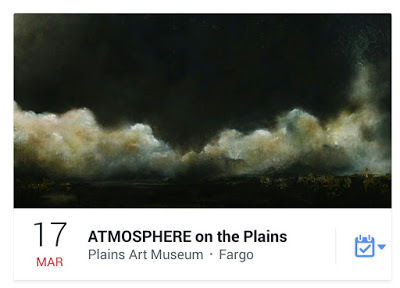
Reading at the Plains Art Museum
I'm looking forward to reading a few poems at this event tonight. Plains Arts Museum in Fargo, beginning at 6:00 p.m.

March 13, 2016
5 Lent
 March 13, 2016
John 12.1-8
+ If you know me for any period of time, you know this fact about me. At some point I am going to ask you one particular question: What are your funeral arrangements?
I think sometimes that I should’ve been a funeral director. I mean, let’s face it: I do a lot of funerals. A lot. And I often have to do funerals for people who have never made any plans for their funerals.
So, when I ask, don’t think it’s morbid or weird (though it is kind of morbid and weird). I ask because it’s an important question to ask. And it’s important to think about. Because, let me tell you, if you don’t make them, those left behind will. And sometimes, they are not in the best frame of mind to plan a service.
I always encourage people—especially parishioners: Make those plans in advance. And not just plans for the funeral service. But plans for the disposition of your remains.
And just so you think I’m not some hypocrite up here preaching (I hope you never think I’m a hypocrite up here preaching), yes, I have my own arrangements made. They’re in my in my will, and I express my wishes quite often to people. It’s no secret that for me personally I prefer cremation with burial. I am of the frame of mind that believes that the body, whether buried or cremated, should be treated with a certain level of respect and care and should be properly buried or disposed of in some way. These bodies, these vessels we have been given, are important and are wonderful gifts to us from God, and we should treat them with some level of respect.
In today’s Gospel, we find Mary doing something that sort of encompasses this view of the sacredness of the body. We find her coming before Jesus and doing a very unusual thing: she anoints his feet. And Jesus, even more strangely, reprimands Judas by saying that Mary is doing nothing more than anointing his body for burial. She is, in a sense, anointing him for burial.
As we near Holy Week—that final week of Jesus’ life before the cross—our thoughts are now turning more and more to these “last things.” Yes, it’s all starting to sound a little morbid. And no doubt, poor Judas was also thinking Jesus was getting weirdly morbid himself.
But, Jesus is reminding us, yet again, that even the simplest acts of devotion have deeper meaning and are meant to put us in mind of what is about to ultimately happen. Mary sees in Jesus something even his disciples don’t. She sees—and maybe doesn’t fully comprehend, though she certainly intuitively guesses—that Jesus is different, that God is working through Jesus in some very wonderful and unique way. And she sees that God is working through the very flesh and blood of Jesus.
For us, as Christians we do know that issues of the flesh are important. And not in some self-deprecating way, either. You will not hear me preaching much about the “sins of the flesh.” (Don’t think I’m encouraging them either, though) For us, flesh is important in a good way in our understanding of our relationship with God.
What we celebrate here every Sunday and Wednesday at the Eucharist is reminder to us how important issues like physical matter are. We worship not only in spirit and in spiritual things. We worship in physical things as well.
Bread and wine.
Candles and bells.
And, at Wednesday mass, incense.
These things remind us that we have senses, given to us by God. And these senses can be used in our full worship of that God. And that God that we worship is concerned with our matter as well. God accepts our worship with all our senses. God actually gets down in the muck of the matter of our lives.
One of my all-time favorite quotes is from one of the early Church Father, John of Damascus. John wrote a truly remarkable thing while defending the veneration of icons—or holy images of Christ and the saints. There was a time in the church when people felt there should be no images like this because it violated the commandment to make no graven images. John wrote in defense of icons:
“I do not worship matter, I worship the God of matter, who became matter for my sake and deigned to inhabit matter, who worked out my salvation through matter. I will not cease from honoring that matter which works for my salvation. I venerate it, though not as God."
I love that quote!
“I will not cease from honoring that matter which works for my salvation.”
Why so many Christians view matter or the flesh as such a horrible, sinful thing baffles me. And as we all know, there are Christians who believe that. There are Christians who believe that these bodies of ours are sinful and should be treated as wild, uncontrollable things that must be mastered and disciplined and ultimately defeated. Why we as Christians get so caught up with this awful ridiculous view that the flesh is this terrible, sin-filled thing we carry around is frustrating for me. In fact, the belief that the flesh is bad and the spirit all-good is a very early church heresy, which was condemned by the early Christian Church.
We have all known Christians who do think that flesh is a horrible, sinful thing—who think all we should do is concentrate only with the spiritual. For those of us in the know—even for those of who have suffered from physical illness and suffering ourselves in this flesh—we know that the flesh and the spirit truly are connected. We cannot separate the two while we are still alive and walking on the earth.
Still, I do always love the quote from one of my personal heroes, the Jesuit priest and paleontologist, Pierre Teilhard de Chardin, from his incredible book The Phenomenon of Man:
“We are not human beings having a spiritual experience; we are spiritual beings having a human experience.”
I think we could just as easily say that we are spiritual beings having a materialexperience. I, of course, don’t see that as a downplaying our flesh. Rather, I see it as truly the spirit making the material holy. Our flesh is sacred because God makes it sacred.
And if we have trouble remembering that our flesh is sacred, that God cares about us not just spiritually but physically, we have no further place to look than what we do here at this altar, in the Eucharist. Here, God truly does feed our flesh, as well as our spirits. And, we can even go so far as to say that by feeding our flesh, God becomes one with us physically as well as spiritually. That is what Holy Communion is all about.
This is part of the reason why I think that even following our death we should honor what remains of this flesh because it is sacred. We shouldn’t just toss it away or in any other way disrespect it. We should be respectful to our ashes and those of our loved ones, for truly God has worked through the flesh of all the people we have known in our lives and, by doing so, has made them each uniquely holy and special.
Next week, on Palm Sunday, we will begin our liturgy with joy and end it on a solemn note as we head into Holy Week. Next Sunday, we will also get palms. Now, every year you hear me say: save those palms. First of all, they are blessed palms. We will bless them at the beginning of the Mass. I say fold them, display them, let them dry out. Because next winter, right before Ash Wednesday, I will ask you to bring them back to church. Those green and beautiful palms that we wave next Sunday, will be burned and made into the ashes we use on Ash Wednesday, when we are reminded that we are dust, and to dust we shall return.
We are kind of like those palms. One day, we too will be ashes. But our ashes will still be important.
There is a strange and wonderful circle happening in all of this. We see it all comes around. And that God does really work through all of this in our lives as Christians. Yes, even in the ashes, and matter of our lives.
Holy Week is a time for us to be thinking about these last things—yes, our spiritual last things, but also our physical last things as well. As we make our way through Holy Week, we will see Jesus as he endures physically and spiritually, from a spirit so wracked with pain that he sweats blood, to the terror and torment of being tortured, whipped and nailed to a cross. As we journey through these last days of Lent, let us do so pondering how God has worked through our flesh and the flesh of our loved ones.
Yes, we truly are spiritual beings enjoying a physical experience. We are spiritual beings enjoying an incredible and wonderful pilgrimage through matter. So, enjoy it. Exult in it. Truly partake in this material experience. Let us rejoice in this material experience God has allowed us. Let us be grateful for all the joys we have received through this matter in which we dwell and experience each other. And let this joy be the anointment for our flesh as we ponder our own end and the wonderful new beginning that starts with that end.
March 7, 2016
The memorial service for Robert "Bob" Hendricks
 The memorial service forBob HendricksHanson-Runsvold Funeral HomeFargo, North DakotaMonday, March 7, 2016
Good afternoon. It a true honor to do this service for Bob. As I said at the beginning, I was Bob’s priest. And it was an honor for me to serve as such.
Last August, when Bob was in the hospital and was really beginning his final journey, I went up to see him. It was an interesting visit. Bob was, of course, beginning to really show signs of his dementia. And often, with illnesses such as that, important events come to the surface. That day, there was discussion about where Bob was going to be moved. But for Bob, he had his mind set on one thing. Where did Bob think he was going that day? He was certain he was going camping that day. And I’m happy that’s where he was in his thoughts.
What was particularly interesting, however, was, at one point, his doctor came in and was questioning Bob trying gauge where he was in relation to his dementia. Some of those questions, Bob answered incorrectly by the doctor’s standard. But at one point the Doctor turned to me, put his hand on my shoulder and asked Bob, “Do you know who this is?”
Without a beat, Bob, very clearly and very strongly, answered, “That’s Fr. Jamie, he’s my priest!”
I have thought a lot about that day over these last several months, and especially over this last week and half. I was honored and proud to be Bob’s priest. And like many of us today, I am very grateful for having known him. He was a special and unique person. And those special and unique people come into our lives sometimes very rarely. So, we should all be thankful today for this wonderful and unique man.
I am especially happy that the family wanted me to share this poem “Two Roads” by Robert Frost today. This poem was, of course, Bob’s favorite poem. And I loved reading it.
I don’t think that Bob’s family knew this when they asked for this poem, but I actually know a lot about poetry. I am a poet—in addition to being a priest. I’ve actually published 13 books of poems. I have a Master of Fine Arts Degree in Creative Writing. And I’m an Associate Poet Laureate of the state of North Dakota, in addition to being a priest. And I’m also kind of an amateur-expert on Robert Frost. I visited his grave in Bennington, Vermont. I’ve visited many of the places Frost lived in Massachusetts, New Hampshire (where Frost actually finished the poem “Two Roads”), Gainesville, Florida and Key West. And I actually know quite a bit about this poem. So, when the family asked for this poem, I said, yeah, I think I can do this.
This poem is an important poem in American literature, of course. And it is seen by so many people as a poem about rebellion. Which is completely correct.
We have a choice in our lives, Frost ponders. We can take the expected road—the well-paved road, the road that is expected of us. Or we can take the other road. The less-traveled road. The one few people travel.
It all sounds romantic, especially to those traveling the well-paved road. The grass is always greener on the other side. But for those travelling the less-traveled road, it is not always so wonderful either. It is a lonely road at times. It is a difficult road. It is, oftentimes, uncharted territory one travels through on that road. It can be frightening. And it can be uncertain.
The well-paved road is the road most of us travel. We often don’t make that choice. The choice is often made for us. But to travel the less-traveled road, that takes concentration. That takes a concentrated choice. One chooses the less-traveled road. And not everyone can take it. Most don’t.
So, when one does take the less traveled road, when the difficulties of that less-traveled road happen, there is no one to blame than one’s self. You chose this road, after all. No one else did it for you. You did. So you are ultimately the one responsible for whatever may come.
Bob knew this road in his life. Bob chose this road. And Bob would be the first to tell you, it was a hard road at times. It was difficult. It was uncharted territory at times. There were times when he no doubt felt alone on that road. There were no doubt times when he maybe he even regretted it (and that’s all right).
But I know for certain that, in the end, when all was said and done, he would have agreed with Robert Frost. It did make all the difference.
Bob, that perpetual teacher that he is, no doubt, saying that same thing to all of us today. He is saying us, choose wisely the road you travel. No matter how old you are, no matter where you are right now in your life—choose wisely. And then proceed with purpose and meaning.
That is what we take away from this day and from our memories of Bob Hendricks. Our choices matter. Our choices outlive us.
Bob lived with this sense of memorialization. He knew that things we did and said mattered and would have meaning in the long-run. Yearbooks from our high school years outlive all of us. They are oftentimes our only memorials. Future generations will look at those books and will see those teenagers we were, so full of hope for the future, so full of life, so full of all that could be in life. And that is how many of us will be remembered.
Bob knew that. Bob worked hard to make sure that is what is remembered. And each of us can thank him for that. What we do—the choices we make—matter. So chose well.
Yes, it is a sad day today for those of us who knew and loved Bob. But we do have our consolations today. Our consolation today is that all that was good in him, all that was talented and charming and full of life in him—all of that is not lost today. It is here, with us, who remember him and loved him. It is here in all that we learned from him.
And, for those of who have faith in God and in a life that is beyond this life, we take consolation that all of that goodness now dwells in a place free from pain and hardship. The consolation we can take away from today is that, all of the difficult things in Bob’s life are over for him. Thank God! That dementia, that Parkinson’s, that slow deterioration—it is all over for him. All of that has passed away for him and he is now fully and completely himself. He is whole in this moment.
Of course that doesn’t make any of this any easier for those who knew him and cared for him. Whenever anyone we love dies, we are going to feel pain. That’s just a part of life. But like the hardship in this life, our feelings of loss are only temporary as well. They too will pass away.
Realizing that and remembering that fact is what gets us through some of those hard moments of life. This is where we find our strength—in our faith that promises us an end to our sorrows, to our loss. It is a faith that can tell us with a startling reality that every tear we shed—and we all shed our share of tears in this life—every tear will one day be dried and every heartache will disappear.
It is in a moment like this that I am thankful that I was Bob’s priest. Because even now he still teaches me to understand how important this life is and how important the choices we make are to our lives.
Bob chose the right path. Those of us who are gathered together today can attest to that fact. So, let us be thankful that he did make the right choice in his life. It did make all the difference.
Amen.
March 6, 2016
4 Lent
 Laetare Sunday March 6, 2016
Luke 13.1-3,11b-32
+ I think I said it last week, but I’ll say it again today: Lent is a strange time of the year. Maybe I should not be saying this on Laetare Sunday, when we surrounded with so much rose. Yes, it is a time to think about things like sin and repentance. But it is also a time for reflection. And reflection, as serene as it might seem, can really be difficult too.
I don’t really like doing it. Because, reflection means looking at one’s self. And, more importantly, seeingone’s self. Really seeing one’s self. That can be very hard.
For me, as I said, I do find doing such a thing very difficult. And what I find even more difficult is when I compare who I am now with who I was, maybe just a few years ago. If I look back to, say, 2012, I realize: geesh, I’ve changed a lot! Yes, I am now a vegan teetotaler. Yes, that’s a big change from where I was in 2012. But, there were other changes. Not such great changes.
I didn’t think that, in my forties, I would be forced to grow even more. Isn’t there an end to growing? My parents in their forties seemed to have it all figured out. Why don’t I have it all figured out? But, no, here I am, still growing, still changing, still have to reflect on my changing self. It’s exhausting! There’s something both comforting and disturbing about that realization.
As I look back over my life, certainly I find some very solid mile posts. I know this might come as a surprise to most of who know me, but I have been a bit of a rebel in my life. No, not maybe the traditional rebel. I’m wearing rose-colored vestments today, after all. But I have rebelled a lot in my life.
Now, that might sound great to some people. Some people think the rebellious life is a romantic one. It’s so full of challenge and adventure. There’s never a boring day in the life of a rebel. I know you’re all so envious of that in my life, right? But there’s a downside to being rebellious. What is the downside to being a rebel? There is never a boring day in the life of a rebel! That is one of the downsides. Sometimes you just want a boring day. There’s no resting. There’s no day of not being a rebel. You don’t just get to have a day off from it.
Up in the morning,--rebel.
Before bed at night—rebel.
And, let me tell you, as romantic as people might think it is, the fact is: the rebellious life can be a very lonely life. It can be very isolating. Rebels aren’t the only ones who get exhausted. The people around rebels gets exhausted too. Oftentimes, the rebel is all alone in the cause of rebellion. There are days when it feels like one is Don Quixote fighting windmills. And it’s exhausting.
As I look back over the last four years or so, I realize: I’m tired. It’s been hard at times. And I’m not the same person I was before.
Maybe, to some extent, that is why I can relate so well to the story of the Prodigal Son. We have all been down that road of rebellion and found that, sometimes, it is a lonely road, as I said. Sometimes we do find ourselves lying there, hungry and lonely, lying with the “pigs” of our lives, and thinking about what might have been.
But for me, in those lonely moments, I have tried to keep my eye on the goal. I am, after all, one of those people who habitually makes goals for myself. I always need to set something before me to work toward. Otherwise I feel aimless.
Goals are good things, after all. They’re essentially mile markers for us to set along the way. The reality of goals are, however, that oftentimes—sometimes more often than not, I hate to admit for myself—they are not met sometimes. It was a really growing edge moment in my life when I stopped beating myself up and learned not to be too disappointed in myself when certain goals have not been met in my life.
Goals are one thing—good things. Hopes and dreams are something else entirely. There have been point in our lives when we have had one particular hope, I’m sure. We wanted this particular thing to happen so badly that we almost became obsessed with it. And when it finally did happen, it was fine, but then it was done and we were on the other side of that hope. The other side of hope, let me tell you, can be desolate place. It can feel very empty over there. That “other side”—the other side of our goals (once we’ve achieved our goals) and our hopes and dreams (when our hopes and dreams finally come true) can be, I think, even more dangerous places than the place that leads up to them.
In our Gospel for today, we find the Prodigal Son have some big goals and some pretty major hopes and dreams. First and foremost, he wants what a lot of us in our society want and dream about: money. He also seems a bit bored by his life. He is biting at the bit to get out and see the world—a place many of us who grew up in North Dakota felt at times in our lives. He wants the exact opposite of what he has. The grass is always greener on the other side, he no doubt thinks. And that’s a difficult place to be. He only realizes after he has shucked all of that and has felt real hunger and real loneliness what the ultimate price of that loss is. It’s difficult place to be, there, on the other side of hope.
But, I’ve been there. Many of us have been there. And it’s important to have been there. God does occasionally lead us down roads that are lonely. God does occasionally lead us down roads that take us far from our loved ones. And sometimes God allows us to travel down roads that lead us even from God (or so it seems at times).
But every time we recognize our loneliness and we turn around and find God again, we are welcomed back with open arms, and complete and total love. That, of course, is what most of us get from this parable.
But…there’s another aspect to the story of the prodigal son that is not mentioned in the parable. The prodigal has experienced much in his journey away. And as he turns back and returns to his father’s house, we know one thing: that prodigal son is not the same son he was when we left. The life has returned to is not the same exact life he left. He has returned to his father truly humbled, truly contrite, truly turned around. Truly broken.
And that’s the story for us as well. In my life I have had to learn to accept that person I have become—that people humbled and broken by all that life and people and the Church have thrown at me. And I have come to appreciate and respect this changed person I’ve become.
That’s the really hard thing to do. Accepting the change in myself is so very difficult. Realizing one day that I am not the same person I was in 2012 or even a year ago is very hard to do.
Who am I now? Who is this person I look and reflect upon? I sometimes don’t even recognize myself.
God at no point expects us to say the same throughout our lives. Our faith in God should never be the same either. In that spiritual wandering we do sometimes, we can always return to what we knew, but we know that we always come back a little different, a little more mature, a little more grown-up. No matter how old we are. We know that in returning, changed as we might be by life and all that life throws at us, we are always welcomed with open arms by our loving God. We know that we are welcomed by our God with complete and total love. And we know that, lost as we might be sometimes, we will always be found.
And in that finding, we are not the only ones rejoicing. God too is rejoicing in our being found. That is the really great aspect of this parable. God rejoices in us. God rejoices in embracing us and drawing us close.
So, let us this day rejoice in who we are, even if we might not fully recognize who we are. Let us rejoice in our rebelliousness and in our turning back to what we rebelled against. Let us rejoice in our being lost and in our being found. Let us rejoice especially in the fact that no matter how lonely we might be in our wanderings, in the end, we are always, without fail, embraced with an embrace that will never end. And let us rejoice in our God who rejoices in us.
February 28, 2016
3 Lent
 February 28, 2016
Luke 13.1-9
+ I know this is hard to believe, but we are rapidly—very rapidly—approaching the middle point of the season of Lent. For some of us, that might be a reason to rejoice. For those for whom this season gets a bit heavy, that is why we have our Lataere Sunday next Sunday, with our rose vestments. We get a little half-way break for Lent.
For me, I actually don’t mind this season. It gives me the opportunity to slow down a bit, to ponder, to make a concentrated effort to do some very specific spiritual reading. And I’ve been reading a lot of Richard Rohr this Lent.
For those of you who might not know him, Father Richard Rohr is a Roman Catholic Franciscan priest and author. He has written some truly incredible books on the spiritual life.
Recently, I was reading some articles he wrote about so-called 12-Step Spirituality. 12 Step Spirituality is pretty much what it sounds like. It is begins with the 12 Steps of Alcoholics Anonymous. Now, I’m not an alcoholic, but I’ve always found those 12 steps very interesting. They’re really brilliant. They are interesting because, as practical as they are, they are also very spiritual—very God-oriented.
Most of you might know what the 12 steps. They begin with admitting that a person is powerless over alcohol. They go on to say that we believe in a Power greater than ourselves will restore them to sanity. We make a decision to turn our will and our life to God. We make a searching and fearless moral inventory of ourselves. We admit to God, to ourselves and to others our wrongs. We make ourselves ready to have God remove all these defects of character. We humbly ask God to remove our shortcomings. On and on, essentially trying to make right the wrongs we have done to others and then sharing the message to others.
These 12 Steps have helped countless alcoholics free their lives. The Lutheran writer and pastor, Nadia Bolz-Weber, herself a recovering alcoholic, wrote about the spiritual aspects of recovery and the 12 step program on the 20thanniversary of her last drink. She writes:
as much as I love theology, most everything I’ve learned about God and how God works in the world and in my life I didn’t learn in seminary. I learned it from sober drunks. Most of them don’t go to church but I’ve never met a group of people who talk more about God. Not ideas about God. And not feelings about God, but God as a real and solid part of life, not in lofty terms, but in a “if I don’t turn my life and my will over to the care of God, I’m screwed” type of way. It’s amazing what kind of faith comes out of desperation. These folks aren’t choosing God as some kind of self-improvement guru. They know that God can do for them what they cannot do for themselves and it’s rely on God or drink.
I love that kind of experiential relationship with God. Yes, I love systematic theology and all the thinking that goes with it. But ultimately it is this experiential relationship with God that we find in things like the 12 Steps that I really find amazing and wonderful. Certainly, during this season of Lent, we see that those 12 steps of A.A. speak very loudly and clearly to us. If we look at the things in our lives that we are attached to, that cause us unhappiness, that make us miserable and affect our relationships with God and others, than that becomes the point from which the 12 steps are leading.
The 12 Steps essentially do what we are called to do during Lent. They cause us to recognize that we are powerless over negative things in our lives as times. We then realize we have to turn away from it, ask God to help us to change, work to make right the wrongs we have done and then resolve not to do it again. That sure does sound like all that repentance talk we get during Lent. And I think Father Rohr and Pastor Nadia really hit that nail on the head in such a way when they show us the Twelve Steps as a way to move forward.
In today’s Gospel, we hear Jesus say some very stern words to us that kind of sounds like a summary of the 12 Steps.:
“…unless you repent, you will all.”
Not pleasant talk. It’s uncomfortable to hear that! Especially when we hear words like “repent” we definitely find ourselves heading into an uncomfortable area. We may find ourselves exploring the territory of self-abasement. We may find some people lamenting and beating their breasts or throwing ashes in the air over all of this repentance talk. We have been taught for a large extent that what we are dealing with in all of this talk of repentance is that somehow God is going to punish us for all the wrongs we did and that is why we must repent—repent, of course, meaning turn around.
And at first glance in our Gospel reading that’s exactly what we might be thinking. God is angry and we must repent—we must turn away from what is making God so angry.
But if we look a bit closer and if we really let this reading settle in, we find that we might be able to use this idea of repentance in a more constructive and positive way. In our Gospel reading, we find Jesus essentially saying to us that we are not going to bear fruit if we have cemented ourselves into our stubborn way of seeing and believing. The Kingdom that Jesus is constantly preaching about only comes into our midst, as we have heard again and again, when we can love God, love others and love ourselves. When we do—when we love—we bear fruit. When we don’t love—and it is hard to love when we are stuck in all that negative stuff like being angry or stubborn or resentful—then we are essentially the fig tree that bears no fruit. And it’s important to see that this love needs to be spread equally. It is love for God, love for our neighbor and love for ourselves.
We are not bearing full fruit when we are only doing two of the three. The love becomes lopsided. If we love only God and ourselves, but not our neighbors, then we are in danger of becoming fanatical. If we love God and love our neighbors only and not ourselves, we become self-abasing. But if we strive to do all three—if we strive to love fully and completely—then we find ourselves being freed by that love.
And it is freeing. When we talk of our stubbornness, when talking of closing ourselves off in anger and frustration, we imagine that cementing feeling—that confinement. But when we speak of love, we imagine that cementing being feeling broken. We find ourselves freed from our confinement. We allow ourselves to grow and flourish.
That’s the point Jesus is making to us in our Gospel reading today. And that is why repentance is so essential for our spiritual growth, for the health of our Christian community and for the furthering of the Kingdom in our midst. Repentance in this sense means turning away from our self-destructive behavior, just like the 12 Steps tell us to do.
The Kingdom will not come into our midst when we refuse to love. The Kingdom cannot be furthered by us or by anyone when we feel no love for God, when we feel no love for others and when we feel no love for ourselves.
Repentance in this sense means to turn around—to turn away from our self-destructive behavior. Repentance in this sense means that we must turn around and start to love, freely and openly. Repentance in this sense means that by repenting—by turning around—we truly are furthering the Kingdom in our midst.
There’s also another aspect to the analogy Jesus uses in today’s Gospel reading. If you notice, for three years the tree didn’t bear fruit and so the man who planted the tree thought it was a lost cause. But the gardener protests. He promises to give the tree a bit of tender loving care and, we assume, the tree begins flourishing. What I love about that is the fact that it says to us that none of us are lost causes.
We all go through times in our lives when we feel as though we are bearing no fruit at all. We feel as though we are truly “wasting the soil” in which we live. We feel as though we are helpless and useless and that sometimes it feels as though the pains and frustrations of our lives have won. We have been cemented into our negative feelings and emotions. The pains and frustrations of this life have stifled in us any sense of new life and growth.
But that little dose of TLC was able to bring that seemingly barren tree to new life. A little bit of love and care can do wonders. It can change things. It can give life where it was thought there was no possibility of life before. It can renew and it can revitalize.
At this time of year, we are probably made most aware of this. Certainly when we look around at our seemingly dead and barren landscape, we might think that nothing beautiful and or wonderful can come from all this mud. And in this season of Lent, when we are faced with all this language of seeking mercy, on recalling our failings and shortcomings and sins, in this stripped-bare church season, it is hard to imagine that Easter is just a few weeks away.
But, in a sense, that is what repentance feelings like. Repentance is that time of renewal and revitalization that comes from the barren moments in our lives. Repenting truly does help us to not only bear fruit, but to flourish. Repenting and realizing how essential and important love of God, love of our neighbors, love of self are in our lives truly does allow us to blossom in the way that God wants us to flourish.
So, as we journey together through this season of Lent, toward the Cross, and beyond it to the Resurrection, let us do so with our hearts truly freed. Let us do so with a true, freeing and healthy love in our hearts, having turned away from those things that are ultimately self-destructive And let the love we feel be the guide for our actions. Through all of this, let us bring about the Kingdom of God into our midst slowly, but surely. Let the Kingdom come forth in our lives as blossoming fruit. And when it does, it is then that will flourish.
February 21, 2016
2 Lent
 February 21, 2016
Genesis 15.1-12, 17-18; Psalm 27; Luke 13.31-35
+ I don’t think I shared this with many of you. But…I may have. About nine years, I had a very unpleasant situation take place in my life. It was a situation that, even now, when I look back on it, seems very unreal. In about 2007, as I was serving as a priest at another congregation, I had a stalker. A pretty awful stalker actually. A very unstable person. He was bi-polar and was purposely not taking medication for his illness.
After I had to confront him when his erratic behavior become inappropriate, he turned his anger on me. And he manifested this anger in some very disturbing ways. He began keying my car. Not just once. But many times. After several months, after some five or six times, he did over $3,000 worth of damage to my car. That wasn’t all he did. He would call my house and leave very confrontational messages to me. He would show up at places he knew I would be and park his car in a way that he knew I would see it. He was menacing. And he was frightening.
But, I was more afraid of what he was going to do to me. I really thought he was going to hurt me or kill me. I imagined every kind of scenario. I imagined he was going to sneak into my bedroom at night and kill me. I imagined him surprising one day and stabbing me on the street. I went through it all. I had never experienced a situation like this before, so I didn’t know what could happen.
And, what was even worse about it all, was that none of my superiors did anything about it. I went to them and asked them to help. And what happened? Nothing happened. They didn’t help. They turned their collective back on me. Although this happened on church property, involving a parishioner of that church, the church did nothing to help pay my bills, even though this was all part of my job as a priest. Only when this particular person finally acted out against another person at the church (he stole her purse), was there finally some action.
It was a frightening and isolating experience for me. I felt alone. The only time I ever felt that frightened and alone before was 14 years ago today, when I had surgery for cancer.
With the stalker, the police couldn’t do anything because he wasn’t caught in the act (though they knew all about him). The Church, sadly, chose not to help until it was someone else who needed the help. And everyone who had not experienced it couldn’t even imagine the reality of this bizarre situation.
There were many nights in which I lamented and cried out to God and begged for God’s strength to keep me sane and strong.
Eventually, after the church finally stepped in as a result of this other person’s purse being stolen and put a restraining order on him, he eventually left me alone, although he did eventually contact me (he left a message on my answering machine about seven years ago) to tell me he was back on medications, although he never admitted he did it or apologized, I did keep close track on him.
I thought about him a lot and kept up on him. I kept up on his multiple arrests for harassment, for terrorizing other people. And I wondered about him and, yes, even prayed for him over the years.
Well, this year, right before I left on vacation, I saw his obituary in the paper. Seeing that obituary, I reacted in a way I did not expect. I thought maybe I would feel relief. I thought maybe I will feel as though there was a great weight lifted off me.
But no. I felt genuine sadness. I felt a real sorrow for this person. And I felt as though I had failed this person in some way. I don’t know in what way or how I did—I couldn’t articulate exactly how I felt I failed him—but I felt I had. I still don’t know why I feel that way. And all I could do was pray for him, remember him at Mass and hope that he finally found a peace he was unable to find in his life.
One of the lessons I learned from this incident—among several lessons—was a very hard lesson on living with the threat of real violence. Violence, I realize, is something most of us don’t even consider in our lives. It very rarely rears its ugly head in our lives. But let me tell you, when it does, it is terrible. And you are not the same person afterward that you were before.
And also, very importantly, we realize that violence is not always expressed physically. Violence can be expressed in multiple ways, including through intimidation, bullying and downright terror. There’s no getting around violence in our lives. We see it in the news. We, as a community here in Fargo, have seen it in the very recent shooting of Officer Jason Moszer and in the suicide of his assailant.
And even today, in our scriptures readings, we get some violent images. First, let’s take a look at the reading from Genesis. In it, we find God making a covenant with Abram (soon to be called Abraham). God commands Abram to sacrifice these different animals, to cut them in half and to separate them.
Violent and strange, yes. But the really strange part of the reading is the smoking fire pot and the flaming torch passing between the pieces.
If we don’t know the back story—if we don’t understand the meaning of the cut up animals—then the story makes little sense. It’s just another gruesome, violent story from the Hebrew scriptures.
But if we examine what covenant is all about, then the story starts taking on a new meaning. Covenant of course is not a word we hear used often anymore. In fact, none of us use it except when talking about religious things. But a covenant is very important in the scriptures. A covenant is a binding agreement. And when one enters into a covenant with God, essentially that bound agreement is truly bound.
In the days of Abram, when one made a covenant with someone, it was common practice for that person entering the agreement to cut up an animals and then to stand in the middle of the cut-up pieces. Essentially what they were saying by doing so was: “let this happen to me if I break our covenant.”
Let this violence come upon me if I break what we have sworn. What we find happening in our reading this morning is that it is not Abram standing in the midst of those cut-up animals. Rather it is God. God is saying to Abram that if I ever break this covenant with you let happen to me what has happened to these animals. God is saying to Abram: “my word is good. If this relationship between the two of us I breaks down it is not I who breaks the covenant.”
As Scot McKnight writes in his wonderful book, 40 Days Living the Jesus Creed: “What appears to us as gruesome was normal for Abraham; what was great was how graphic God got in the act of promise.”
Then, we come to our Gospel reading. Here too, we find a sense of impending violence. The Pharisees ominously come to tell Jesus that he is in danger from Herod. This is real danger. Life-threatening danger. And how does Jesus respond to this danger and impending violence? He is not concerned at all over Herod or even the danger that he himself is in. His concern is for Jerusalem—for the city which, no doubt, was in sight as he was speaking. His concern is for the city he is about to enter and in which he knows he will meet his death. His violent death.
As he does so, Jesus does something at this moment that really is amazing. He laments. He uses words similar to those found in the lamenting psalms. He uses poetry.
“Jerusalem, Jerusalem, the city that kills the prophets and stones those who are sent to it! How often have I desired to gather your children together as a hen gathers her brood under her wings, and you were not willing!”
It is beautiful. And it is powerful. It’s incredible poetry. Knowing what he knew—knowing that in Jerusalem he will be betrayed and murdered—Jesus laments. He knows that what essentially is going to happen in Jerusalem is what happened while Abram slept. In Jerusalem, God will once again stand in the midst of a shattered body and say to God’s people (as McKnight puts it): “I will remain faithful. My word is good.”
Lamenting is one of those things we don’t like to think about as Christians. After all, it is a form of complaining. And we don’t like to complain. We, for the most part, shrug our shoulders and soldier on. And when it comes to our relationship with God, we certainly never think about complaining to God.
But the fact is, although we find it hard to admit at times, we do actually despair occasionally. Even if we might not actually say it, we sometimes secretly do find ourselves crying out in despair, saying, if to no one else than ourselves, the words from our psalm today:
“Deliver me not into the hands of my adversaries.”
Let me tell you—that has often been prayer. It was definitely my prayer nine years ago with that stalker!
“Deliver me not in the hands of those who hate me.”
It’s good, honest language and it’s good to be honest about those negatives feelings we feel occasionally. It’s a strange moment when, as we examine our scriptures readings for today, and we ask ourselves: who do I relate to the most from our scriptures, that we find ourselves relating more to the cut-up animals than anyone else.
It’s hard to be in such a place. It’s hard to realize: people out there hate me, or don’t like me, or want to do me real harm.
So, what do we do in those moments? Well, most of us just simply close up. We put up a wall and we swallow that fear and maybe that anger and we let it fester inside us. For the most part, we tend to deny it.
But what about those feelings in relationship to God? Well, again, we probably don’t recognize our fear or our anger or our pain before God nor do we bring them before God.
And that is where Jesus, in today’s Gospels, and those lamenting Psalms come in. It is in those moments when we don’t bring our fear, our anger and our frustration before God, that we need those verses like the one we encounter in today’s Gospel and Psalm. When we look at what Jesus is saying in today’s Gospel and what the psalmist is saying today’s Psalm, we realize that, for them, it was natural to bring everything before God. It didn’t matter what it was. And I think this is the best lesson we can learn from our Gospel reading today.
Jesus is letting us see his fear and his sadness. Jesus is letting us see the fear he has in knowing that he, in a sense, has become the sacrifice that must be cut in two as part of the covenant God has made with us. He is letting us see him for what he is about to be, a victim of violence.
In fact, Jesus lays it all out before God and us. He wails and complains and lays himself bare before God. He is blatantly honest in his lamenting.
The fact is: sometimes we do fear and despair. I despaired and feared when I had to deal with that weird sort of violence in my own life… I despaired and feared when it seemed I was alone in the face of all of that. Sometimes we do want to pray to God,
“Hide not your face from me…”
It is in those sometimes awful moments, that it is completely all right to complain to God. It is all right to vent and open ourselves completely to God. Because, the important thing here is not how we are praying or even what we are praying for. It is important that, even in our fear, in our pain, in our despair, in our horror at the gruesomeness and violence we find in this world, that we come to God. We come before God as an imperfect person, full of insecurities, exposed and vulnerable.
Take what it is hurting you and bothering you and release it. Let it out before God. Be honest with God. Because God knows. God has stood in the midst of that violence. God, in Jesus, has experienced that violence first hand.
And what we might sometimes find in those moments of complaining and ranting is that the words coming out of our mouths are not ugly, bitter words at all.
But sometimes the words coming out of our mouths in those moments of despair are beautiful poetry. Sometimes, even in those moments, God takes our fear-filled words and turns them into diamonds in our mouths. See what we find in this morning’s Psalm. After all that complaining, we find the Psalmist able to sing,
“O tarry and await the LORD’s pleasure;be strong, and he shall comfort your heart; wait patiently for the Lord.”
See. Diamonds.
So, when we pray these psalms together and when we come across those scriptures full of violence that might take us by alarm, recognize in them what they truly are—honest prayers before God. Let us follow the example of Jesus, who even in the face of violence and death, was still able to open his heart and his soul in song and poetry. More importantly, let us, as Jesus himself did over and over again in his life, pray those psalms when we are afraid or angry or frustrated. Let the Psalms help us to release our own anger to the God who loves us and knows us more completely than anyone else.
In the shattered, cut-open pieces of our lives, God, as a bright light, passes back and forth.
I can tell you from first-hand experience that even in that “deep and terrifying darkness” God appears to us as a light. All we have to do is recognize God in that midst of that darkness. And in doing so, all we can sometimes do is open our mouths and let them the poems within us sing out to our God.