Jamie Parsley's Blog, page 60
September 25, 2016
19 Pentecost
 September 25, 2016
Luke 16.19-31
+ I know this might reveal my bizarre side. (We all have a bizarre side, after all) But…I love the parable we heard today. I think I might be one of the very few people who do actually love it. For some, it’s just so weird and…well, bizarre. And it is. But…there’s just so much good stuff, right under the surface of it.
In it, we find Lazarus. Now, if you notice, it’s the only time in Jesus’ parables that we find someone given a name—and the name, nonetheless, of one of Jesus’ dearest friends. In most of Jesus’ parables, the main character is simply referred to as the Good Samaritan or the Prodigal Son.
But here we have Lazarus. And the name actually carries some meaning. It means “God has helped me.”
Now the “rich man” in this story is not given a name by Jesus, but tradition has given him the name Dives, or “Rich Man”
Between these two characters we see such a juxtaposition. We have the worldly man who loves his possessions and is defined by what we owns. And we have Lazarus, who seems to get sicker and is hungry all the time. In fact, his name almost seems like a cruel joke. It doesn’t seem like God has helped Lazarus at all. The Rich Man sees Lazarus, is aware of Lazarus, but despite his wealth, despite all he has, despite, even his apparent happiness in his life, we can not even deign to give to poor Lazarus a scrap of food from all that he has.
Traditionally of course, we have seen them as a very fat Rich Man, in fine clothing and a haughty look and a skinny, wasted Lazarus, covered in sores, which I think must be fairly accurate to what Jesus hoped to convey. They are opposite, mirror images of each other.
But there are some subtle undercurrents to this story. Lazarus is not without friends or mercy in his life. In fact, is seems that maybe God is helping him. He is not quite the destitute person we think he is.
First of all, we find him laid out by the Rich Man’s gate. Someone must’ve put him there, in hopes that Rich Man would help him. Someone cared for Lazarus, and that’s important to remember.
Second of all, we find these dogs who came to lick his sores. The presence of dogs is an interesting one. Are they just wild dogs that roam the streets, or are they the Rich Man’s watch dogs? New Testament theologian Kenneth Bailey has mentioned that dog saliva was believed by people at this time to have curative powers. So, even the dogs are not necessarily a curse upon Lazarus but a possible blessing in disguise.
Finally, when Lazarus dies, God receives him into paradise. In fact, as we hear, “angels carried him to be with Abraham.”
The Rich Man dies and goes to Hades—or the underworld. Lazarus goes up, Dives goes down.
While in paradise, while the Rich Man, in the throes of his torment, cries out to him, Lazarus, if you notice, doesn’t ignore him or turn his back on him, despite the fact that the Rich Man did just that to Lazarus. Lazarus does not even scold him. It almost seems that Lazarus might almost be willing to go back and tell the Rich Man’s friends if only the gulf between them was not so wide.
There really is a beauty to this story and a lesson for us that is more than just the bad man gets punished the good man gets rewarded. But even more so, what we find is that, by the world’s standards, by the standards of those who are defined by the material aspects of this life, Lazarus was the loser before he died and the Rich Man was the winner, even despite his callousness.
And the same could be said of us as well. It might seem, at moments, as though we are being punished by the things that happen to us. It is too easy to pound our chests and throw dirt and ashes in the air and to cry out in despair and curse God when bad things happen. It is much harder to recognize that while we are there, at the gate outside the Rich Man’s house, lying in the dirt, covered in sores, that there are people who care, that there are gentle, soothing signs of affection, even from dogs. And it is hard sometimes to see that God too cares.
And for us, at St. Stephen’s, we’ve been through our share of hard times in our past, but even then, we have found glimmers of hope and joy in the midst of the darkness. We find those glimmers in the joy we celebrate here at this altar. We find joy in the marriages and baptism we celebrate. We find joy in welcoming new members into our midst, and the sounds of children in our building. We find joy in each other, as we gather here. See, we do find glimmers of light in the darkness.
To return for a moment to the beginning of our sermon and my bizarreness. Recently a person I only very slightly knew commented to me:
“I know this might sound strange, but I was visiting a cemetery north of Fargo and what did I behold? But a gravestone with your name on it.”
Yes, as many of you know, I do have my gravestone made up. It’s actually the backside of my parents’ gravestone at Maple Sheyenne Lutheran Cemetery near Harwood. And it even has a Celtic cross on it. I’m kind of proud of the fact that among all those Swedish Lutherans, there is a Celtic cross on my stone.
But what this particular person took note of was the epitaph I chose for myself. It’s actually the final line of a poem I wrote toward the end of my “cancer experience” which felt to me very much like a Lazarus experience. The poem was written as my father and I were driving to Minot on a particularly cold night in October shortly after the first snow fall of the year.
We were driving up there for my final interview with the Commission on Ministry before I was ordained to the Diaconate. As we neared the city and came up over a hill, I could see the city laid out below us. Above us, the sky had cleared after a particularly gray and gloomy day. When the clouds had cleared, we could see the stars, which, on that cold night, looked especially crisp and clear. And in that moment, after all that I had went through with my cancer, I suddenly knew for the first time, that, somehow, everything was going to be fine.
At the end of that poem, I wrote what would become the epitaph on my stone: I wrote in that poem, “Dusk” (I’m not going to inflict the whole poem on you, but it’s in my book, Just Once, which I’m giving away for free):
“…I look up into the skyand see it—a transformationso subtle I almost didn’t notice itas I sit there tremblingbehind the tinted windshield.I say to myself‘Look! Just look!
Look how the dusk—full of clouds and gloom—has dissolved intomultitudes of stars!’”
To some extent, that’s what it’s like to be a Christian. To some extent, that’s what its like: when we think the darkness and the gloom has encroached and has won out, we can look up and see those bright sparks of light and know, somehow, that it’s all going to be all right.
Paradise awaits us. It is there, just beyond those stars. That place to which Lazarus was taken by angels awaits us and, for those of us striving and struggling through this life, we can truly cling to that hope. For those of us still struggling, we can set our eyes on the prize, so to speak and move forward. We can work toward that place, rather than “diving” like Dives himself, into the pit of destruction he essentially created for himself.
In a real sense, the Rich Man was weighed down by his wealth, especially when he refused to share it, and he ended up wallowing in the mire of his own close-mindedness and self-centeredness.
But for those of us who, in the midst of our struggles, can still find those glimmers of light in the midst of the gloom, we are not weighed down. We are freed in ways we never knew we could be. We are lifted up and given true freedom.
We are Lazarus.
God truly has helped us. And we see it most when we recognize those multitudes of light shining brightly in the occasional gloom of our lives.


September 18, 2016
18 Pentecost
 September 18, 2016
Amos 8.4-7;1 Timothy 2.1-7; Luke 16.1-13
+ I’m going to share a story this morning that I don’t normally share. I’m not in the habit of sharing kind of horrible stories in my sermons. But this is one of those horrible stories.
Several years ago, when I was a board member for the Episcopal newspaper, Episcopal Life, I was in Atlanta for a board meeting. During a break in the meeting, I happened to wander around the very large church at which we were meeting in downtown Atlanta, and I noticed, as I wandered, a large number of brass memorial plates around the church for people who had died in 1962. Now, by this, I mean not just one or two. But memorials to Mr and Mrs So-and-So both of whom died in 1962
Well, you know me. I’m fascinated by a mystery. And when I am, I try to get to the bottom of it. So, I started asking around. And it didn’t take me long to get an answer.
One of the assisting priests at that church said, “Oh, yes. That was the Orly crash.”
The Orly Crash! When I got home I did some research into this so-called Orly crash. And here it is:
In late May 1962, a group of wealthy art-lovers in Atlanta decided to take a tour of Europe, visiting all the great art galleries. These 106 art-lovers from Atlanta decided to charter a plane. In this case, their chartered plane was an Air France 707. That’s a jet plane. Passenger jet travel in 1962 was VERY new.
They flew to Paris and began their tour of Europe. However, in Italy, many of the group ended up becoming ill with a cold and decided to cut the trip short, so they made their way back to Paris.
On June 4, 1962, the plane began to take off from Orly International Airport. It had reached its maximum speed, but because of a mechanical failure, the plane didn’t lift off The flight crew, with only 3,000 feet of runway left, decided to abort the flight, and using air breaks and reverse thrust attempted to stop the plane. The plane ended up going over the end of the runway and crashed and exploded with its tanks full of fuel for the flight to Atlanta. All 106 people from Atlanta, plus most of the flight crew were killed in the crash. Two stewardesses at the rear of the plane survived.
On a side note, one of Andy Warhol’s most famous early paintings was of the New York
 Daily Mirror cover story, entitled “129 Die in Jet”
Now, that alone is pretty horrible. But there was one more interesting aspect to the story that fascinated me. The plane crashed during much of the unrest in the Civil Rights movements. And the priest who told me this story in Atlanta said that it was famous for another reason. He told the story about how Malcom X, on hearing of the crash, was quoted as saying “Well, the chickens come home to roost.”
I had never heard that phrase before. And, in this context, it was jarring. Later, I found out, that Malcolm X never said that about the Orly Crash. He actually said about John F. Kennedy’s assassination the next year.
But the phrase stuck with me. Although it’s terrible in the context of that plane crash, it is a phrase that has much weight. It works on many other levels.
Now, for those of you who have known me for any period time, you have heard me use this phrase many, many times. One of the things so many of us have had to deal with in our lives are people who have not treated us well, who have been horrible to us, who have betrayed us and turned against us. It’s happened to me, and I know it’s happened to many of you. It is one of the hardest things to have to deal with, especially when it is someone we cared for or loved or respected.
In those instances, let’s face it, sometimes it’s very true.
“The chickens do come home to roost.”
Or at least, we hope they do. Essentially what this means is that what goes around, comes around. We reap what we sow. There are consequences to our actions. And I believe that to be very true.
And not just for others, who do those things to us. But for us, as well. When we do something bad, when we treat others badly, when gossip about people, or trash people behind their backs, who disrespect people in any way, we think those things don’t hurt them. And maybe that’s true. Maybe it will never hurt them. Maybe it will never get back to them. But, we realize, it always, always hurts us. And when we throw negative things out there, we often have to deal with the unpleasant consequences of those actions. I know because I’ve been there. I’ve done it.
But there is also a flip side to that. And there is a kind of weird, cosmic justice at work. Now, for us followers of Jesus, such concepts of “karma” might not make as much sense.
But today, we get a sense, in our scriptures readings, of a kind of, dare I say, Christian karma. Jesus’ comments in today’s Gospel are very difficult for us to wrap our minds around. But probably the words that speak most clearly to us are those words,
“Whoever is faithful in a very little is faithful in much.”
Essentially, Jesus is telling us this simple fact: what you do matters. There are consequences to our actions. There are consequences in this world. And there are consequences in our relation to God.
It often surprises me that Christians think they can “get by” with dishonest things. We read in the news about clergy doing bad things all the time. But not just clergy. We hear about church treasurers doing bad things. We hear about people who claim to be good Christians doing very unchristian-like things.
But Jesus message to us is very clear. For us, our faithfulness involves how we deal with others. It’s not just the big stuff, like sexual impropriety and financial misdealings. It is also about how we treat each other. How we treat each other as followers of Jesus and how we treat others who might not be followers of Jesus.
We have few options, as followers of Jesus, when it comes to being faithful. We must be faithful. Faithful yes in a little way that brings about great faithfulness. So, logic would tell us, any increase of faithfulness will bring about even greater faithfulness. Faithfulness in this sense means being righteous.
Jesus is saying to us that the consequences are the same if we choose the right path or the wrong path. A little bit of right, will reap much right. But a little bit of wrong, reaps much wrong.
I think most of us have found these to be true in our own lives. Doing wrong is a slippery slope. Once we step foot on it, we find ourselves sliding farther and farther into more wrongness. And it’s hard to stop. Often times, it’s because it feels so good. Doing good is often hard. But doing bad, oh, it’s often soooo easy.
However, as easy as it might be, that wrong path is not the path intended for us as followers of Jesus. Jesus is not walking that path, and if we are his followers, then we are not following when we step onto that path. Wrongfulness is not our purpose as followers of Jesus.
We cannot follow Jesus and willfully—mindfully—practice wrongness. If we do, let me tell you, the chickens come home to roost. We must strive—again and again—in being faithful. Faithful to God. Faithful to one another. Faithful to those who need us. Faithful to those who need someone. Being faithful takes work.
When we see wrong—and we all do see wrong—we see it around us all the time—our job in cultivating faithfulness means counteracting wrongfulness. If there are actions and reactions to things, our reaction to wrongfulness should faithfulness. Now that seems hard. And it is. But it is not impossible. We can do something in the face of wrongfulness. We can, when we step foot on that slippery slope of wrongfulness, make a concentrated effort to not slip, to turn around and do the faithful action. We can cultivate faithfulness in the face of wrongfulness.
We can remind ourselves that doing wrong does no good for us or for anyone else, ultimately. And what we do, does matter. It matters to us. And it matters to God. We do good. We must strive to be good.
Those good actions are actions each of us as followers of Jesus are also called to cultivate and live into.
As Christians, we are called to not only to ignore or avoid wrongfulness. We are called to confront it and to counter it. We are called to offer faithfulness in the face of wrongness.
So, let us do just that in all aspects of our lives. Let us offer kindness and generosity and hope and truth and forgiveness and joy and love and goodness, again and again and again whenever we are confronted with all those forces of wrongfulness. Let us offer light in the face of darkness. Let us strive, again and again, to do good, even in small ways.
For in doing so, we will be faithful in much. “For surely I will not forget any of their deeds,” God says in our reading from Amos today.
What we do matters. God does not forget the good we do in this world. We should rejoice in that fact. God does not forget the good we do. What we do makes a difference in our lives and in the lives of those around us. So let us, as faithful followers of Jesus, strive, always to truly “lead a quiet and peaceable life in all godliness and dignity.”
September 14, 2016
On the 6th Anniversary of my Father's Death
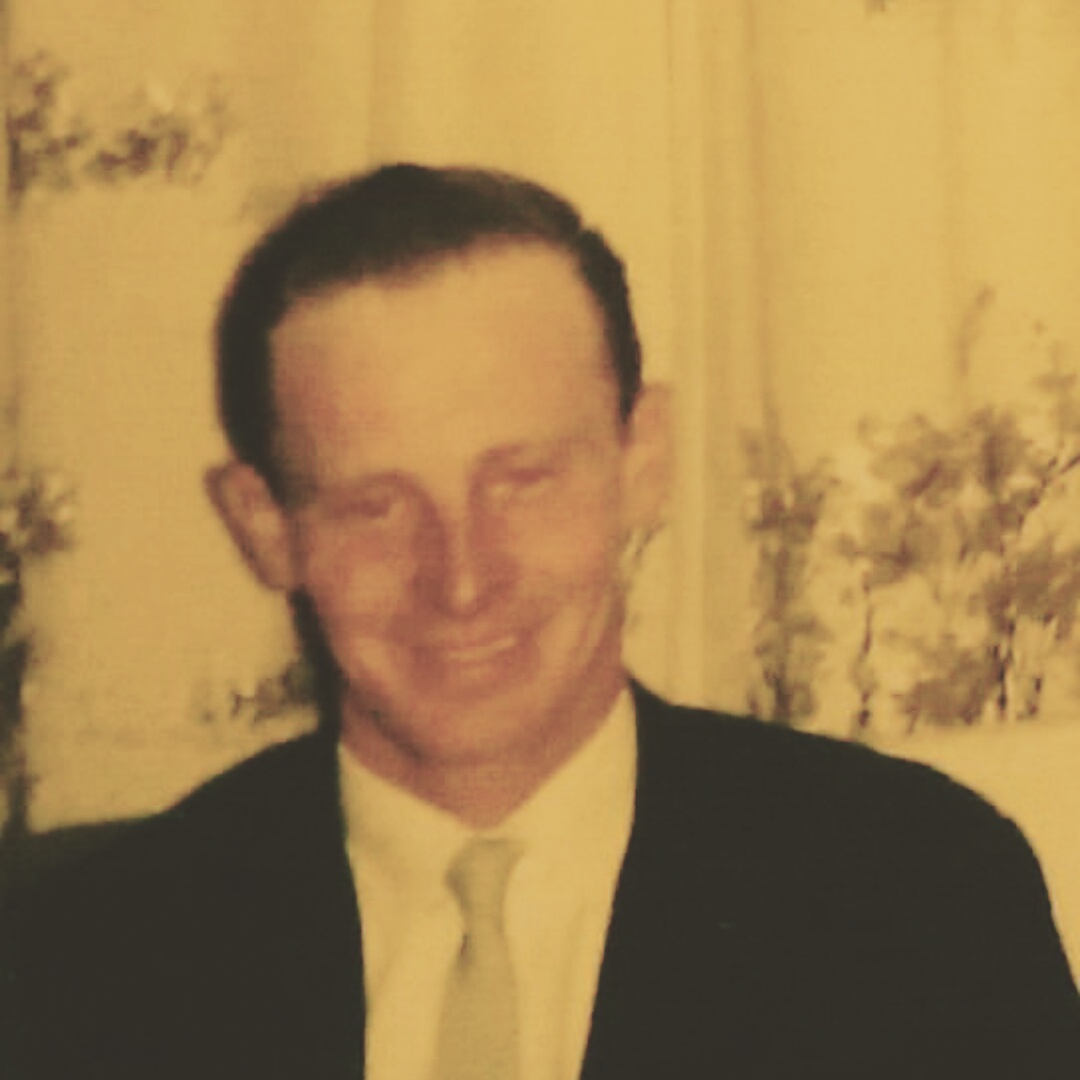 My father always jokingly confessed that he never understood me or the decisions I made in my life. While he was a meat-and-potatoes, crude-oil-under-his-fingernails, devout Lutheran, Nixon-supporter kind of guy, I was a vegetarian, a poet, a High Church Episcopal priest, a committed pacifist, an unapologetic liberal. Although he never once said a word against my lifestyle, he was often perplexed by almost every aspect of my life. And still, despite it all, he showed me nothing but unconditional, unwavering love and support. Throughout my life, even despite our differences, I was consistently amazed at how he always seemed to have it all together. Nothing seemed to faze him or upset him. He walked through life with an inner strength and an outward calm and kindness that I both admired and envied. Everyone who knew him said the same thing about him: he was, quite simply, a good man.
 I miss him almost every day and often find myself wishing I could ask his advice for some “thing” in my life. His death six years ago today transformed me in ways I still can’t quite fully process. But I sure am grateful he was my father. I just wish I had had a chance to tell him that.
Here is one of the poems about his death. It was included in my collection, That Word, published in 2014 by North Star Press.
COMMENDATION
Take from himwhatever stainseven Communion
and devotioncan’t undo.And let him
rise up—if not todayone day soon—
from the asheswe placed so carefully into
the dark recessof the earthand left there
where the rain’s soakingand the snow’s run-offand the heat of high noon
cannot reach himanymore.Let him rise up
from heremore beautiful than he is
in those dreamsfrom which I myselfrise and stumble
toward a slightly overcastdawn.
September 11, 2016
Dedication Sunday/ St. Stephen's 60th anniversary
September
 11, 2016
1 Peter 2.1-5,9-11
+ I am going to do something this morning that is a bit hypocritical of me. I once knew a preacher who loved to preach with a Bible in his hand. He would walk around as he preached, holding that Bible, maybe occasionally raising it up, or waving it at people. But…never once during his sermon did he ever actually openit. At one event at which this preacher was preaching, Mark Strobel, the current Dean at Gethsemane Cathedral, leaned over and motioned to the unopened Bible this preacher waved at us, and whispered, “Prop! That Bible's a prop!”
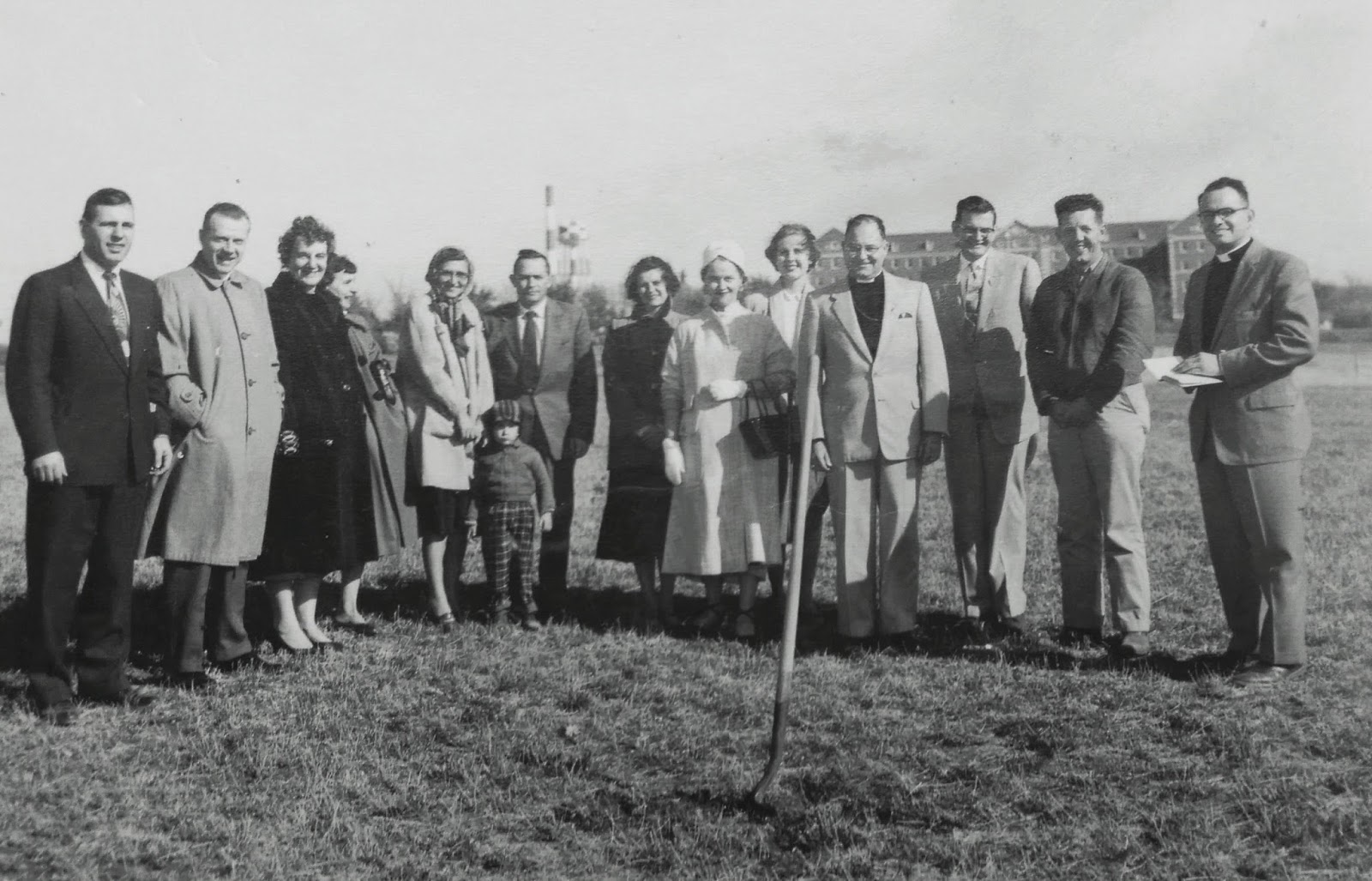
Well, I hate to admit this but…I am going to use a prop this morning in my sermon. And I apologize in advance for my hypocrisy in doing so. But, this is a photo of the dedication of St. Stephen’s way back, 60 years ago, on September 9, 1956. This was the day congregation first gathered to break ground. They would go from here to celebrate Holy Communion at the El Zagel Clubhouse earlier in the year, before the building was built. The church building that we are in would be completed by Christmas Eve, 1956.
But, it’s a great photo. After Mass today, I am going to invite you to look closely at this photo. I want to look in the faces of those people who are gathered there. And when you do, I would like to see-truly see—the hope. See that hope they had in their eyes on that day. It’s really wonderful.
Now, the names of these people are on the back on the photo and I looked them all up the other day. It seems, from the information I was able to find, everyone in this photo, except for the little boy in front, is no longer with us. They have all passed on to the nearer presence of God. In the case of Bishop Emery, some of them died in particularly unpleasant circumstances (his vehicle was struck by a train in Grand Forks in February 1964).
But in this photo, in this one instance, in this one frozen moment in time, as they stood there in an open field north of Fargo, with the VA Hospital in the background, all that was to come, all that was to be, this moment we are gathered here today right now, is all in their hopeful future.
In many ways, those people in that photo were kind of like prophets. They trusted in God enough to know that what they were doing that day would gain fruition. God would somehow work through their actions, even if they would never live to see that fruit.
And we, today, 60 years later, are thankful for those people who gathered together to look into the future, and to hope. The future that was laid out before those people in 1956 would be very different than anything they could have imagined.
Now, I’ve done this before, but I’ll do it again. Let’s go back to that first Sunday in September 1956. Let’s go back to Sunday morning, September 9, 1956. On this particular Sunday in 1956, it was truly a different America. The number one song in the country that Sunday morning was “Don’t Be Cruel” by Elvis Presley. In fact, that very night Elvis would appear on the Ed Sullivan Show—“coast to coast with your favorite host.” The number one book in the country that morning was Peyton Place by Grace Metalious. 1956 was an election year—a very different election year than this one, let me tell you. The current president, Dwight D. Eisenhower, would be going up against the Democratic hopeful, Adlai Stevenson, who would lose that November. What I wouldn’t do to have an election like that one!
According to the records, there were 51 people at that service. By the end of that year, there would be 51 communicants (39 of whom came from Gethsemane Cathedral) and a total of 94 baptized members listed. By 1958, there were 144 baptized members and 45 families and by Jan. 1, 1960, there were a whopping 214 members with 60 families. Over the years, those numbers just kept going up. Within ten years, in 1968, the membership reached its number of 243 members.
Those are things those people in 1956 no doubt expected and hoped for. But there were things in the future they could never have expected. Now, if you look closely at the photo, you’ll see that almost half of the people were women. Women who, in 1956, were not allowed to hold any official governing position in the Church. But women were instrumental in making sure this congregation was formed.
Within 15 years, life and society would change drastically. And within twenty years, St. Stephen’s would be the first congregation in this diocese to have a woman lay reader, a woman Senior Warden and a woman acolyte.
That lay reader and Senior Warden were the same person, Elthea Thacker, who died on November 29, 2002 (I actually assisted at her Requiem Mass at the Cathedral when I was there—her ashes actually showed up “fashionably late” for that service). That first female acolyte was Susan Frear, who is here with us this morning, along with her mother, Clotine, who also was a very instrumental parishioner in this congregation. And by 1985, St. Stephen’s would be the first congregation in this diocese to call a woman priest as their rector. And she is here as well this morning, Sandi Holmberg.
Now for us, here and now, in this time, it seems amazing that these were issues at all. For me, as a priest who has only known an Episcopal Church in which women always had equal leadership with men, it still baffles me to think of a time when this was not the case.
In fact, I don’t think I’ve ever shared this tory with Sandi, but the first time I ever attended any Episcopal church was way back in January 1995. And it was here in this congregation of St. Stephen’s. And one of the reasons I was so drawn to the Episcopal Church that morning was because Sandi was the priest. A woman was celebrating Holy Eucharist. It was amazing and wonderful to me, as former Roman Catholic. A woman could be a priest in the Church and no one seemed, at least to me on that cold morning in 1995, to even think otherwise about it.
But as Sandi, and Susan and Elthea would tell you, what they did was a BIG deal. And it wasn’t easy, at times. To be the first to do anything is hard. It involves breaking ground that has never been broken before.
We are grateful this morning for them and for their vision, for their foresight, for prophetic witness and for the fact that each heeded that call from God to move forward and to do what needed to be done. Even if it meant facing the unfairness and the inequality that existed (and, sadly, still exists in some places). It meant exposing themselves to criticism and scrutiny that was, no doubt, extremely difficult.
15 years ago today, on September 11, 2001, among the many brave and amazing people who died that day, one very great man died in the attacks on the Twin Towers. He too was a pioneer and prophet in the Church. Father Mychal Judge, a Roman Catholic Franciscan priest and Fire Department Chaplain, also was a maverick to some extent, as an openly gay (though celibate) priest in the Roman Catholic Church.
The day before the attacks, he preached a sermon in the Bronx. In that sermon, he said this (and it’s really amazing when you think about it):
“You do what God has called you to do. You show up, you put one foot in front of the other, and you do your job, which is a mystery and surprise. You have no idea…what God is calling you to. But [God] needs you…so keep going.”
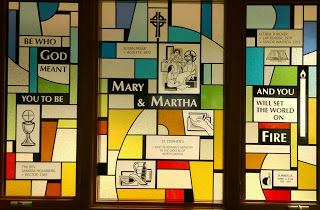
This sounds so very much like the quote from St. Catherine of Siena that we find on our newly dedicated window this morning:
“Be who God meant you to be and you will set the world on fire!”
Those first women who bravely did what they were called to do did just that. And we too are called in just that way.
We, this congregation of St. Stephen’s, we too are prophets. We too are mavericks. We too are looking forward into our future with bright and hopeful eyes, just like those people back in 1956. We do what God calls us to do, even when it is not popular, even when it is difficult, even when people and the organized Church and society opposes us and snubs us and turns their backs on us and tells us, “You can’t do that.”
We know God has called us. We know that because God has called us, we have to show up, we have to put one foot in front of another, and we have to do our job as Christians, as lovers of God and followers of Jesus. And it all is a mystery and a surprise. But, on wonderfully good days, it is also a joy.
God needs us. So we must keep going.
Those who have gone before—those who stood in that open field on that day in 1956 and heeded God’s call, who knew God was planning something wonderful for that space of ground in the middle of that field—they are still with us. They are here today with us as we gather to celebrate God’s mystery, to share this Body and Blood of Jesus. They are here, just on other side of that very thin veil that separates us from them. We are thankful this morning for them and for their vision. And we are thankful for those who are on this side of the veil who also led the way. We are thankful to Susan and Sandi and all those people who listened to God as God called them.
This morning, we are God’s own people who, according to our reading from First Peter this morning, are being called to “proclaimthe mighty acts of [God] who called [us] out ofdarkness into [that] marvelous light.”
That was the same call made to Elthea and Susan and Sandi and Bishop Emery and those people who smile back at us from that black and white photo from 1956. We are each being called to continue to their vision, to continue to do what God calls us to do.
So, let us show up. Let us put one foot in front of the other. Let us do the job God has called each of us to do. What we are doing is a mystery. And every day is certainly a surprise. But God needs us. So…let’s keep going. And if we do, if we keep going, if we keep being who God meant us to be, we—all of us—will set the world on fire.
 11, 2016
1 Peter 2.1-5,9-11
+ I am going to do something this morning that is a bit hypocritical of me. I once knew a preacher who loved to preach with a Bible in his hand. He would walk around as he preached, holding that Bible, maybe occasionally raising it up, or waving it at people. But…never once during his sermon did he ever actually openit. At one event at which this preacher was preaching, Mark Strobel, the current Dean at Gethsemane Cathedral, leaned over and motioned to the unopened Bible this preacher waved at us, and whispered, “Prop! That Bible's a prop!”
Well, I hate to admit this but…I am going to use a prop this morning in my sermon. And I apologize in advance for my hypocrisy in doing so. But, this is a photo of the dedication of St. Stephen’s way back, 60 years ago, on September 9, 1956. This was the day congregation first gathered to break ground. They would go from here to celebrate Holy Communion at the El Zagel Clubhouse earlier in the year, before the building was built. The church building that we are in would be completed by Christmas Eve, 1956.
But, it’s a great photo. After Mass today, I am going to invite you to look closely at
 this photo. I want to look in the faces of those people who are gathered there. And when you do, I would like to see-truly see—the hope. See that hope they had in their eyes on that day. It’s really wonderful.
Now, the names of these people are on the back on the photo and I looked them all up the other day. It seems, from the information I was able to find, everyone in this photo, except for the little boy in front, is no longer with us. They have all passed on to the nearer presence of God. In the case of Bishop Emery, some of them died in particularly unpleasant circumstances (his vehicle was struck by a train in Grand Forks in February 1964).
But in this photo, in this one instance, in this one frozen moment in time, as they stood there in an open field north of Fargo, with the VA Hospital in the background, all that was to come, all that was to be, this moment we are gathered here today right now, is all in their hopeful future.
In many ways, those people in that photo were kind of like prophets. They trusted in God enough to know that what they were doing that day would gain fruition. God would somehow work through their actions, even if they would never live to see that fruit.
And we, today, 60 years later, are thankful for those people who gathered together to look into the future, and to hope. The future that was laid out before those people in 1956 would be very different than anything they could have imagined.
Now, I’ve done this before, but I’ll do it again. Let’s go back to that first Sunday in September 1956. Let’s go back to Sunday morning, September 9, 1956. On this particular Sunday in 1956, it was truly a different America. The number one song in the country that Sunday morning was “Don’t Be Cruel” by Elvis Presley. In fact, that very night Elvis would appear on the Ed Sullivan Show—“coast to coast with your favorite host.” The number one book in the country that morning was Peyton Place by Grace Metalious. 1956 was an election year—a very different election year than this one, let me tell you. The current president, Dwight D. Eisenhower, would be going up against the Democratic hopeful, Adlai Stevenson, who would lose that November. What I wouldn’t do to have an election like that one!
According to the records, there were 51 people at that service. By the end of that year, there would be 51 communicants (39 of whom came from Gethsemane Cathedral) and a total of 94 baptized members listed. By 1958, there were 144 baptized members and 45 families and by Jan. 1, 1960, there were a whopping 214 members with 60 families. Over the years, those numbers just kept going up. Within ten years, in 1968, the membership reached its number of 243 members.
Those are things those people in 1956 no doubt expected and hoped for. But there were things in the future they could never have expected. Now, if you look closely at the photo, you’ll see that almost half of the people were women. Women who, in 1956, were not allowed to hold any official governing position in the Church. But women were instrumental in making sure this congregation was formed.
Within 15 years, life and society would change drastically. And within twenty years, St. Stephen’s would be the first congregation in this diocese to have a woman lay reader, a woman Senior Warden and a woman acolyte.
That lay reader and Senior Warden were the same person, Elthea Thacker, who died on November 29, 2002 (I actually assisted at her Requiem Mass at the Cathedral when I was there—her ashes actually showed up “fashionably late” for that service). That first female acolyte was Susan Frear, who is here with us this morning, along with her mother, Clotine, who also was a very instrumental parishioner in this congregation. And by 1985, St. Stephen’s would be the first congregation in this diocese to call a woman priest as their rector. And she is here as well this morning, Sandi Holmberg.
Now for us, here and now, in this time, it seems amazing that these were issues at all. For me, as a priest who has only known an Episcopal Church in which women always had equal leadership with men, it still baffles me to think of a time when this was not the case.
In fact, I don’t think I’ve ever shared this tory with Sandi, but the first time I ever attended any Episcopal church was way back in January 1995. And it was here in this congregation of St. Stephen’s. And one of the reasons I was so drawn to the Episcopal Church that morning was because Sandi was the priest. A woman was celebrating Holy Eucharist. It was amazing and wonderful to me, as former Roman Catholic. A woman could be a priest in the Church and no one seemed, at least to me on that cold morning in 1995, to even think otherwise about it.
But as Sandi, and Susan and Elthea would tell you, what they did was a BIG deal. And it wasn’t easy, at times. To be the first to do anything is hard. It involves breaking ground that has never been broken before.
We are grateful this morning for them and for their vision, for their foresight, for prophetic witness and for the fact that each heeded that call from God to move forward and to do what needed to be done. Even if it meant facing the unfairness and the inequality that existed (and, sadly, still exists in some places). It meant exposing themselves to criticism and scrutiny that was, no doubt, extremely difficult.
15 years ago today, on September 11, 2001, among the many brave and amazing people who died that day, one very great man died in the attacks on the Twin Towers. He too was a pioneer and prophet in the Church. Father Mychal Judge, a Roman Catholic Franciscan priest and Fire Department Chaplain, also was a maverick to some extent, as an openly gay (though celibate) priest in the Roman Catholic Church.
The day before the attacks, he preached a sermon in the Bronx. In that sermon, he said this (and it’s really amazing when you think about it):
“You do what God has called you to do. You show up, you put one foot in front of the other, and you do your job, which is a mystery and surprise. You have no idea…what God is calling you to. But [God] needs you…so keep going.”
This sounds so very much like the quote from St. Catherine of Siena that we find on our newly dedicated window this morning:
“Be who God meant you to be and you will set the world on fire!”
Those first women who bravely did what they were called to do did just that. And we too are called in just that way.
We, this congregation of St. Stephen’s, we too are prophets. We too are mavericks. We too are looking forward into our future with bright and hopeful eyes, just like those people back in 1956. We do what God calls us to do, even when it is not popular, even when it is difficult, even when people and the organized Church and society opposes us and snubs us and turns their backs on us and tells us, “You can’t do that.”
We know God has called us. We know that because God has called us, we have to show up, we have to put one foot in front of another, and we have to do our job as Christians, as lovers of God and followers of Jesus. And it all is a mystery and a surprise. But, on wonderfully good days, it is also a joy.
God needs us. So we must keep going.
Those who have gone before—those who stood in that open field on that day in 1956 and heeded God’s call, who knew God was planning something wonderful for that space of ground in the middle of that field—they are still with us. They are here today with us as we gather to celebrate God’s mystery, to share this Body and Blood of Jesus. They are here, just on other side of that very thin veil that separates us from them. We are thankful this morning for them and for their vision. And we are thankful for those who are on this side of the veil who also led the way. We are thankful to Susan and Sandi and all those people who listened to God as God called them.
This morning, we are God’s own people who, according to our reading from First Peter this morning, are being called to “proclaimthe mighty acts of [God] who called [us] out ofdarkness into [that] marvelous light.”
That was the same call made to Elthea and Susan and Sandi and Bishop Emery and those people who smile back at us from that black and white photo from 1956. We are each being called to continue to their vision, to continue to do what God calls us to do.
So, let us show up. Let us put one foot in front of the other. Let us do the job God has called each of us to do. What we are doing is a mystery. And every day is certainly a surprise. But God needs us. So…let’s keep going. And if we do, if we keep going, if we keep being who God meant us to be, we—all of us—will set the world on fire.
August 28, 2016
15 Pentecost
 August 28, 2016
Hebrews 13.1-8; Luke 14:1, 7-14
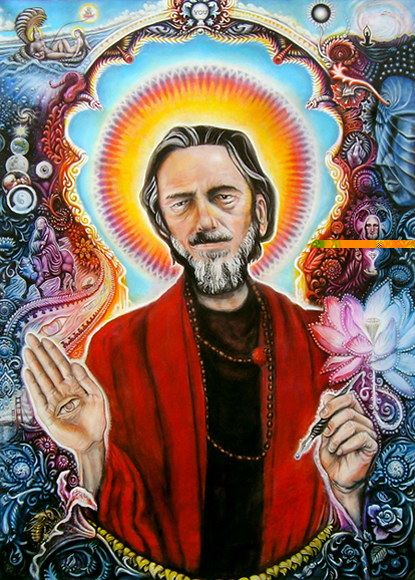
+ Last Sunday, of course, I was in Southern Minnesota. While there, I ended spraining an ankle. So, for the better part of last week, I was off my feet. Which means that when I wasn’t working from the couch, I was reading. And one of the books I read this past was actually a book I re-read. It was an influential book in my life, called Zen Effects, the Life of Alan Watts.
Now, you might not have heard of Alan Watts. Unless, of course, you were part of the so-called “counter-culture” of the 1960s and early 1970s. He was a pretty major force during that time. Watts, who died 1972, was a Zen Buddhist and Taoist, he advocated such things as drug experimentation, especially LSD, and multiple other psychedelic things.
Now, I know. You’re wondering what about Alan Watts would be so influential for me. Well, what very few people know about Watts was that he was actually an Episcopal priest for about 7 years in 1940s. Not a conventional Episcopal priest, by any sense of the word. But he was one nonetheless.
I loved Watts because of his unconventionality. He was an inspiration to me , especially when I was applying to graduate schools in my 20s, because we both had very unconvenential, non-traditional educations. But this past week, as I re-read the introduction to the Watts biography, paragraph really stuck me to my core. Monica Furlong, the author of the biography, writes:
“Among clergy in the Christian churches…some of them, often less remarkable than Watts, had almost all his characteristics. Though so splendidly and individually himself, Watts was at the same time a type, a type that nobody talked about much in the churches or in other religious communities because representatives of the type were something of an embarrassment, they were very often the subject of scandal. Certain sorts of disgrace tended to follow them, yet of the ones I had known well, there often seemed to be a special sort of grace as well, as if they were people who helped to break up rigid social patterns, forcing us to ask questions about them. We seemed to need them.
I love that description because I think there is a truth to it. Certainly, we all know them—those clergy who are viewed as kind of an embarrassment, behind whom “scandal” follows.
In this sense we are not talking about scandals like we often think. Scandal in the sense Furlong is talking is meaning clergy or other leaders who stepped outside the norm and were somewhat punished for it, at least socially. Leaders who, no doubt, attempted to live out the spirit of our scripture reading from Hebrews this morning “Do not neglect to do good and to share what you have, for such sacrifices are pleasing to God.” Doing good and sharing what we have—not just our riches, but what we have learned, what we have been gifted with—is hard. Shaking the “rigid social patterns” of the church and other organizations is not easy. In fact doing so is dangerous. People in authority, and those who sort of “belly up” to those in authority—those who cowtail, shall we say—do not like their social patterns shaken. And for those doing the shaking, they are often snubbed and ostrasized and shunned as scandalous and an embarrassment. And, let me tell you from my own experience, when you stand up for what you feel is right, when you do not neglect to do good and share what you have been given from God, and when others see that as against the norm—counter-cultural, shall we say—yes, it does seem like scandal and embarrassment. And when it is viewed that way, let me just say, few things are more humbling. But again, being humbled, especially for the sake doing right, for doing right for God, can be a very good thing.
Today, we get to hear in our Gospel reading this morning about humility. For those of us who were listening closely to this morning’s Gospel—and I hope you were—we might find ourselves struggling a bit with Jesus’ words. I know I was. And if we aren’t struggling—if those words don’t make us uncomfortable—then maybe we should be. They are uncomfortable words, after all.
Jesus—a person whose message was also seen as embarrassment and a scandal to those around him at times—is making clear to us that, if we neglect the least among us, if we consistently put ourselves first—if we let our egos win out—we are truly putting ourselves in jeopardy. What we do here on earth—in this life—does make a difference. It makes a difference here, and it makes a difference in the next world. It makes a difference with those we neglect. And it makes a difference—a big difference—with God. And we should take heed. We shouldn’t neglect those who are least among us.
But probably the most difficult aspect of our Gospel today is when Jesus summarized everything in that all-too-familiar maxim:
“For all who exalt themselves will be humbled, and those who humble themselves will be exalted.”
Jesus is not pulling any punches here. He is as clear as day. Humble yourselves. It is not all about YOU. (It is not all about ME) If we do humble ourselves, we will be exalted. If we are arrogant and full of ourselves, we will be humbled.
Humility and pride are too often huge issues for all of us Christians, whether we are laypeople or clergy. I have seen it again and again. For those of us who have spent a good part of lives in church, we have known too many arrogant, self-centered, conceited Christians in our lives. And they have, in many ways, destroyed the Church! They sometimes are on the Vestry, in the pews, in the kitchen, in the Bishop’s chair, or in the pulpit.
Pride is an ugly thing. It doesn’t do anyone any good, especially the prideful one. But to be fair, it’s easy enough to do. It’s easy enough to fall in that ugly trap of pride. I’ve done it. We all have. When we encounter those prideful Christians we need to be careful how we deal with them. Because we need to remind ourselves: “there but for the grace of God, go we.”
Pride is an easy trap to fall into as Christians. We know we are loved by God. We know we, as followers of Jesus, through our Baptisms, have a special place in relationship to God. It’s easy sometimes to feel smug and self-assured. And when we are fully immersed in Church work, when we are patted on the backs for the work we do, when we are told how invaluable our work is to the Church, it’s easy for us to think that the success or failure of the ministry of the Church depends on us as individuals.
Earlier this summer I preached about lone wolf ministry. Lone wolf ministry doesn’t work. And Jesus certainly never intended his followers to be lone wolves. Discipleship means community.
Still, even knowing that, we do it. I do it more often than I care to admit. It is a dangerous road to take when we start thinking everything revolves around us. And for clergy, they are in an even more vulnerable place.
As often as I fall into the pride trap in my life, I am lucky because I have a very clearly defined circle of friends and colleagues who put me in my place very quickly whenever I find my head getting a little too big for its own good. As clergy, we occasionally find ourselves being praised and treated with a sometimes undeserved respect. And although I have found my vocation to the priesthood to be a very humbling experience, there are times when we might find ourselves feeling very smug over a job well done. That’s true with all of us, as Christians. It’s easy to fall into that ugly trap of believing everything is about us as individuals. It’s easy to convince ourselves that the world revolves around us and only us.
Life, after all, is a matter of perspective. And from our perspective, everything else does in fact revolve around us.
But our job as followers and disciples of Jesus is to change that perspective. Our job as Christians is to, always and everywhere, put God first. It is not all about us. We are just a breath. We are just a blink of the eye in the larger scheme of everything. We are born, we live, we die. And then we are gone. And, without God, that is all we would be. There would be no hope, there would be no future, there would be no us, without God. God gives us our definition. God gives us our identity. God gives us our purpose. And this is what Jesus is getting at today, when he talks about the humbled being exalted.
Even the writer in our reading from Hebrews gives us some very practical advice on how not to let pride win out:
“Let mutual love continue,” we heard. “Do not neglect to show hospitality to strangers, for by doing that some have entertained angels without knowing it.”
What beautiful poetry! When we are full of pride, we are unable to show hospitality—real hospitality. But when we are humble and we love each other humbly, when we serve each other humbly, without thought of reward, without thought of our own exaltation, then we realize, yes, we are entertaining angels without knowing it.
So, when we find ourselves falling into the pride trap, we need to stop and remind ourselves to put God first. When we find ourselves seeing the world as revolving around the all-mighty ME, we do need to stop and remind ourselves that God is at the center of our lives and, as such, our world revolves around God. After all, as we hear in that beautiful reading from Hebrews, God says to us,
“I will never leave you or forsake you.”
As long as God is with us—as long as God’s light is shining through us—we can simply be who we are without trying to be something we are not. When we find ourselves shining with the glow of self-pride and self-contentment, let us remember that the light shining through us is not my light or your light, but Holy Spirit’s light and that any of our works is accomplished only through that light. When we find ourselves becoming prideful, let us stop and listen to the voice of Jesus as he says to you, “those who humble themselves will be exalted.”
God wants us to be exalted. God wants to exalt us. But we will be exalted as God wants us to be exalted, not as we want ourselves to be exalted, as frustrating as that might be. This can only happen when we come before God as humble servants, as humble disciples of Jesus, as humble friends of one another, serving God in those poor and needy people around us—those angels we are entertaining without knowing it. This can only happen when we place God at the forefront of our lives
So, let us put God first. Let us humble ourselves before our God. And let the light of God shine within us and through us in all that we do. Amen.
August 14, 2016
13 Pentecost
 August 14, 2016
Jeremiah 23.23-29; Hebrews 11:29-12.2; Luke 12.49-56
+ I know this might come as a shock to some of you. And I apologize in advance. But…I have, more than once, been very tempted to leave the Church. The Church here being the Capital “C” Church—the larger Church—the BIG church organization. There are times, we all have to admit, in which the Church—Capital C—is just not a great place to be. (Not St. Stephen’s)
There are people running it, after all. Fallible human beings. And, because there are, there will be divisions in the Church.
There are divisions among us, even in this congregation. Those divisions, at least here at St. Stephen’s, are, for the most part, little ones. Minor ones.
In the larger Church, they are much bigger ones. Issues of interpretation and personal convictions continue to divine the Church.
I get pretty firm about such things, as many of you know. Although I am patient when it comes to people telling me there are certain things about the Church they might not like personally—trust me there are many things I too personally don’t like about the Church and the way things are—even then, you have no doubt heard me say, “this is not an issue of any one of us.”We, as the Church, are a collective. And when one of us stiffens and crosses our arms and stands aloof off to the side, the divisions begin, and the breeches within the Church widen, and…and…the love of God is not proclaimed. When those moments happen, the rest of us, in those moments, must simply go on. WE must go on. And we do.
We must proclaim what needs to be proclaimed. We love what needs to be loved. We must move forward. And when it happens to me—and it happens to me quite a lot—I will occasionally speak out.But for the most part, I realize: this is the Church (Capital C).
And we must plow forward together because that is what Jesus intends us to do as his followers. He makes this quite clear.Jesus tells us today that he did not come to bring peace, but rather he came to bring division.
What? Did he just say that? The Price of Peace just said he did not come to bring peace? He came to bring what? Division? You mean, Jesus isn’t all peace and love and compassion? We want Jesus to bring peace, right?He’s the Prince of Peace, after all! We want Jesus to reflect all we want him to reflect.
Well, his message, of loving God and loving one another, is a message that does divide. We, who rebel against it, who inwardly stiffen at it, we rebel. We say, “no.” We freeze up.
But, Jesus makes this very clear to us. It is not our job, as his followers, to freeze up. It not an option for us to let our blood harden into ice. For, he came to bring fire to the earth. To us, his followers. When we were baptized, we were baptized with water, yes. But we are also baptized with fire! With the fire of the Holy Spirit that came to us as we came out of those waters. And that fire burned away the ice within us that slows us down, that hardens us, that prevents us from loving fully. That fire that Jesus tells us he is bringing to this earth, is the fire of his love. And it will burn.
Now, for most of us, when we think of fire in relation to God, think of the fires of hell. Ah, but not so. (I actually think that is there is an eternal hell, it is a place of ice and cold—a place so far removed from God’s love) Again and again in scripture, certainly for our scriptures for today, fire in relation to God is seen as a purifying fire, a fire that burns away the chaff of our complacent selves. Fire from God is ultimately a good thing, although maybe not always a pleasant thing. The fire of God burns away our peripheral nature and presents us pure and spiritually naked before God. And that is how we are to go before God.
But this fire, as we’ve made clear, is not a fire of anger or wrath. It is a fire of God’s love. It is the fire that burns within God’s heart for each of us. And that fire is an all-consuming fire.
When that consuming fire burns away our flimsy exteriors, when we stand pure and spiritually exposed before God, it is then we realize who we are.The fact remains, we are not, for the most part, completely at that point yet. That fire has not yet done its complete job in us. While we still have divisions, while we allow ourselves to stiffen in rebellion, when we allow our own personal tastes and beliefs to get in the way of the larger beliefs of the Church, we realize the fire has not completely done its job in us. The divisions will continue. The Church remains divided.
For us, as followers of Jesus, we are not to be fire retardant, at least to the fire of love that blazes from our God. As unpleasant and uncomfortable it might seem at times, we need to let that fire burn away the chaff from us. And when we do, when we allow ourselves to be humbled by that fire of God’s love, then, we will see those divisions dying. We will see them slowly dying off. And we will see that the Church is more than just us, who struggle on, here on this side of the veil. We will see that we are only a part of a much larger Church. We will see that we are a part of a Church that also makes up that “great cloud of witnesses” Paul speaks of in today’s Epistle. We will see, once our divisions are gone and we have been purified in that fire of God’s love, that that cloud of witnesses truly does surround us. And we will see that we truly are running a race as the Church.
Paul is clear here too: that the only way to win the race is with perseverance. And perseverance of this sort is only tried and perfected in the fire of God’s love.
Yes, this is the Church. This is what we are called to be here, and now, as followers of Jesus. This is what we, baptized in the fire of God’s love, are compelled to be in this world.
So, let us be just that. Let us be the Church, on fire with the love of God, fighting to erase the divisions that separate us. Let us be the prophets in whom God’s Word is like a fire, or a hammer that breaks a rock—or ice—in pieces. And when we are, finally and completely, those divisions will end, and we will be what the Church is on the other side of the veil. We will truly be the home of God among God’s people.
August 11, 2016
The Requiem Mass for Betty Spur
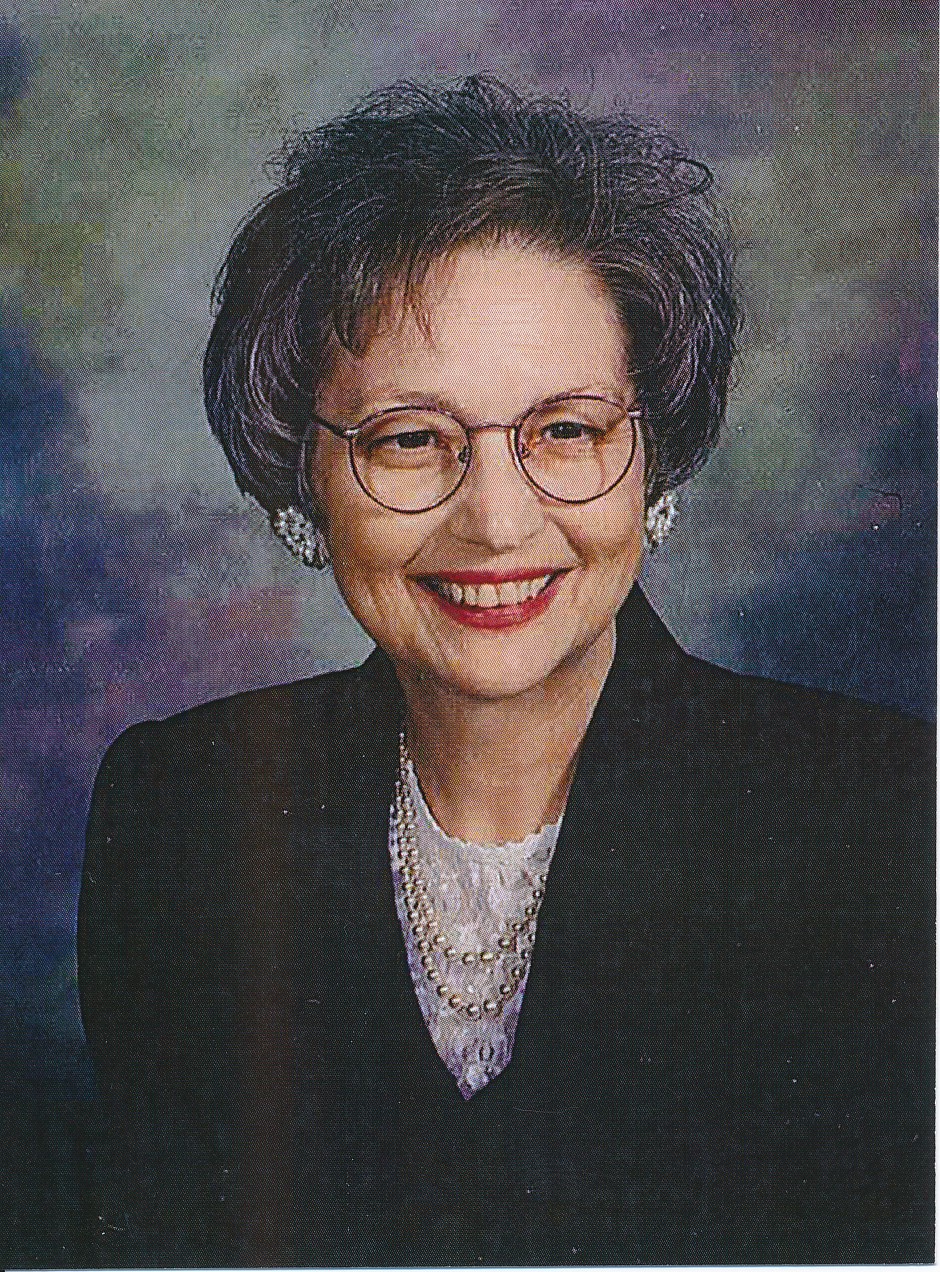 Betty Spur(August 30, 1935-July 27 , 2016)
Psalm 121; John 14.1-6
+ Today, of course, is a day we all knew was coming. Betty certainly knew it was coming. She planned this service. She thought ahead and took all of this into consideration. But knowing that this day was coming, doesn’t necessarily make it easier.
I can say, in all honesty, that Betty Spur meant quite a bit to me personally. And I’m sure many of us here today can say the same.
It struck me in these last few days that I have known Betty for at least eight years. Eight years. Eight years is a good amount of time to get to know someone. And I can tell you, in those eight years, I got to know Betty very well. And she knew me very well. In those eight years, I walked with her through some major highs and some major lows together. Many of us were with her through highs and lows in her life.
We journeyed alongside this very interesting person—Betty Spur. And she was truly interesting. There are not many people in the world quite like Betty Spur.
She had very strong convictions and opinions and a very clear sense of what she saw as right. And I respected that in her. Even if I might not have agreed with her on an issue. But, no matter what: I cared for her. And I know that she cared for me.
Well, actually one area of my life she didn’t care for. As many of you might know, I am, in addition to being a priest, I am also a poet. I’ve published a few books of poems. And Betty always made an effort to purchase copies of those books as they were published. But she was also quick to say: “I don’t really care for your poetry.”
“That’s all right, Betty,” I would say. “There are a lot of other people who don’t either.”
“I just don’t ‘get’ them,” she would say. “And they just don’t rhyme.”
Despite that, I knew she really did care for me. And I am grateful—very grateful—that she did.
I also know that Betty’s life was not always an easy one. And knowing how hard and difficult and tragic her life was at times made one more understanding of who she was. There were many times when I would go to her house to bring her Holy Communion when there were many tears shed. Holy Communion always seemed to bring out the tears. It was vitally important to her.
Which is why I am very grateful we are able to celebrate it today as part of this service for her. Communion was more just a quaint church-action for her. It was her sustenance. It was in Holy Communion that she truly found her spiritual strength. And she was spiritually strong.
So, it very appropriate that we celebrate this Living Bread and Living Cup today. We, in the Episcopal Church, call a funeral service in which the Eucharist is celebrated, a Requiem Eucharist. Requiem comes from the Latin phrase Requiem Aeternum, “Rest eternal grant to them...” There’s a great statement from The Anglican Service Book that I always like quote at Requiems (which you’ll find on the inside of your booklet this afternoon):
“A Requiem is a testament of triumph and hope, for those of us who remain know that we also journey toward the same eternal home…In the Holy Eucharist, which transcends all time and space, we are closest to our faithful departed loved ones, joining our prayers and praises to theirs. We pray for them, as we believe that they pray for us, so that all may be strengthened in their lives of service.”
I love that. And I believe that. And I know Betty believed that as well.
I think many of us today can feel that that separation between us here and those who have passed on is, in this moment, especially at Holy Communion, a very thin one. And because of that belief, I take a certain comfort in the fact Betty is close to us this afternoon. She is here, in our midst, with us. She is here, and she is full of joy and life. And she is, finally and completely, happy.
In her last days, as she repeated that one phrase, “I’m happy” over and over again, I know for a fact that she had no fear of what awaited her. She knew where she was going. And just as I know she cared for me, I can tell you, Betty knew that she was loved by God. And because she knew she was loved, and she was happy, Betty had no fear of death. She knew where she was going. And she knew that it was good.
At the end of this service, at the Commendation, we will hear these wonderful words:
All of us go down to the dust; yet even at the grave we make our song: Alleluia, alleluia, alleluia.
Yet even at the grave we make our song, Alleluia.
Betty’s joy and happiness in her last days were her Alleluia. That joy, that happiness, was her last defiant act in the face of death. We all can learn a few things from Betty Spur about facing death.
On every visit I made to her, Betty always requested one thing, again and again. She always requested Psalm 121, which was just led by Jessica. Betty loved that psalm because it captured perfectly her faith in God and in herself in the face of hardship.
I lift up my eyes to the hills; *
from where is my help to come?My help comes from the LORD, *
the maker of heaven and earth…The LORD…watches over you; *
the LORD is your shade at your right hand, So that the sun shall not strike you by day, *
nor the moon by night.The LORD shall preserve you from all evil; *
it is [God] who shall keep you safe.The LORD shall watch over your going out and your coming in, *
from this time forth for evermore.
God has watched over Betty and kept her safe. She has been preserved from all evil and is now truly and completely safe. Her God has truly watched over going her out and her coming in “from this forth forevermore.”
I prayed this psalm with her the Sunday before she died. As I did, although she could no longer follow along, she seemed to look past me as I prayed. Or rather I should say, she looked beyond me. I have no doubt that, in that moment, she was looking toward those hills, toward that place to which she was headed, where her God would keep safe forever. It was truly a holy moment. And I will remember it always.
I am going to miss Betty Spur. I already do. There is definitely an absence in the wake of her death. But, despite all this, we also have an abiding and overpowering faith.
She has taught us one very important thing: These negative things in life—no matter what they are—are ultimately temporary. The great and glorious things are eternal. They will never end. Betty knew that. She believed in that. And she is reminding us of that fact this afternoon. That happiness that she has finally gained will never be taken from her again. And we can all rejoice and be thankful for that.
May the angels lead you into paradise, Betty; May the martyrs receive you into the holy city Jerusalem. May the choirs of angels receive you, and may you, with Lazarus once poor, have everlasting rest and a joy that never ends.
August 7, 2016
12 Pentecost
 August 7, 2016
Luke 12:32-40
+ I don’t know about you, but I have to admit this this morning…I am kind of mourning summer already. It feels like summer is kind of winding down.Yes, I know it’s still hot, we’re still getting bad thunderstorms and all, but it feels like summer is on the down-turn. And that makes me sad. It makes me sad because I didn’t really get to enjoy it much.
It has been a very busy summer here at St. Stephen’s, with weddings, funerals, and parishioners’ health issues and all the other issues that normally don’t seem to happen during summer. I remember when I first came to St. Stephen’s. Summers were very quiet. Nothing much happened, it seemed. Not so anymore.
And let’s not even get started on what this summer was on a larger scale. It was a violent summer—a summer of shootings and murders. It doesn’t seem like that is letting up as summer winds down. And then…don’t even get me started on the political situation raging around us this summer.
As I was thinking about all of this, I found myself this past week really hearing our Gospel reading for this morning anew. I really let the Gospel reading sink in and I realized that, in it, Jesus was telling me—and all of us—two things that strike us at our very core:
First, he tells us something that is essential. It is, by far, the most important thing we can hear. He begins with “Do not be afraid.” With all the violence and uncertainty going on in this nation, with our collectively uncertain future, those words never sounded sweeter in my ears, and hopefully in yours as well. Those are the words we want Jesus to say to us and those are the words he tells us again and again in the Gospels. And those are words I love to preach about.
If I could peach on nothing else but Jesus’ commandment of “Do not be afraid” I would be a very happy priest. (Actually, I am a pretty happy priest anyway)
Do not be afraid.
Second, he tells us something else that is so vital. He says, “where your treasure is, there you heart will be also.” Now, at first, we might find ourselves nodding in agreement with this. But don’t nod too quickly here. Let’s listen very closely to what he is saying.
“Where your treasure is, there your heart will be also.”
When we hear him talking today of where your heart is there is your treasure, he isn’t talking so much of our material treasure. He is saying that where your heart is, that is where your passion will be. There is where your attention and your fulfillment will be found.
So that poses a very hard question in all of our lives this morning, that really does cut through all the violence and political uncertainty in this world.
Where is your heart this morning?
Where is your treasure?
Where is your passion?
Now, for me, I will tell you where mine are. I have two passions in this life. They are not secrets. The first, of course, is my vocation to the Priesthood. And, of course, my other passion is poetry. If I was asked where my treasures are on earth, I would say it was squarely within those two areas. Maybe that’s not too bad of places for one’s heart to be.
“Where your treasure is, there your heart will be also.”
So, where is your treasure? This might not be as easy for us to accept, because we know it is a very true statement. And few of us can say with all honesty that our treasures are built up enough in heaven that there too is our heart.
Our treasures, for the most part, are here on earth. But I’m not going to let you off the hook this morning. I really want you to carry this with you. I want you to truly ask yourself these questions.
Where is your treasure?
Or maybe the questions: what is your treasure? What is your passion? What is it that drives you and motivates you? Is it money? Is it fame? Is it your job? Or is it family or spouse?
It’s important to be honest with ourselves in regard to this question and to embrace and accept the answer. They are hard questions to ask and they are hard questions to answer. Jesus is clear here that we shouldn’t beat ourselves up about what our treasure is.
Rather, he says, we should simply shift our attention, shift our focus, and center ourselves once again on the treasure that will never disappoint, which is, essentially, God and all that God stands for.
Now, either that sounds really good to you or really bad to you. But bear with me for a moment. When we find our treasure in God, we find that that treasure is more than just some sweet, pious, God-and-me kind of relationship. Recognizing God as our treasure means making all that God loves and holds dear our treasure as well.
I’m going to repeat that:
Recognizing God as our treasure means making all that God loves and holds dear our treasure as well
To love God means to love what God loves as well.
And striving to see that and do that is where our real treasures lie. It seems that when do that—when we love as God loves—it all falls into place. I don’t mean that it falls into place in a simple, orderly way. It definitely does not ever seem to do that. God does not work in that way. (Sometimes I wish God did!)
More often than not, when we recognize all that God loves it only frustrates us and makes our lives more difficult. You mean, God loves that person I can’t stand? You mean God loves that person I think is vile and despicable? God loves even those people we think God shouldn’t love? Oh, this is a lot harder than I thought. Yup. It isa lot harder than we thought. Because that’s what it’s all about.
Loving God means loving all that God loves. And God loves fully and completely and wholly. And realizing this is truly the greatest treasure we will ever find.
“Where our treasures are , there our hearts will be also.”
For us here at St. Stephen’s, we know how to build up that treasure in heaven. We do it by following Jesus, and in following Jesus, we love God and strive—honestly—to love all that God loves. We try to make that our goal. Sometimes we fail, but we always keep on trying. We build up our treasures by doing what we do best. We do it by being a radical presence of love and peace and hospitality in a violent world or in an uncertain political environment or in a Church that sometimes truly does ostracize. We do it even when it’s really hard. We do it even when we don’t feel like it. We do it even when we would rather be doing our own thing, sitting by ourselves over here, all by ourselves.
For us a St. Stephen’s we are a place of radical love and acceptance, because Jesus, the One we follow, was the personification of radical love and acceptance. And because the God he represents and loved and stood for is our treasure, we know we are heading in the right direction in what we do. God and God’s radical, all-encompassing love is where we should find our treasure—our heart.
But even if we are not there yet, spiritually, it’s all right. We should simply cling to that command that God continues to make to us again and again, when the world around us rages and our futures seem uncertain and frightening:
“Do not be afraid.”
Do not be afraid. Do not be afraid of where our passions lead us and where our treasures lie. Do not get all caught up in the things of this earth.
Instead, just love as God loves. Love your neighbor as you would love yourself. And love your God who loves you in return.
So, let us build up our treasure. Let us embrace our passions. Let us move forward so we can build up our treasures, even when we’re tired, even when we are weary and beaten by this world.
Jesus tells us in no uncertain terms, “It is your Father’s good pleasure to give you the kingdom.”
The Kingdom is here, in our midst. Right here. Right now. We are bringing it forth, increment by increment. Step by step. Loving act after loving act. Truly, the Kingdom is just that close. And within it, all our real treasures lie.
July 31, 2016
11 Pentecost
July 31, 2016
Luke 12:13-21
+ Not long ago, I did something I didn’t really want to do. In fact, I dragged my heels about it and tried to get out of it as much as I could. But I knew it had to be done. I revised my Will.
Ugh!
I had come to the point in my life at which much of what was in my original Will (which was drafted in 2003, following my diagnosis with cancer) was no longer relevant. In fact, in that original Will, I had planned made a designation for a particular institution that I once held in high esteem. However, by the time I revised my Will, I no longer held that particular institution in such high esteem anymore. In fact, I really didn’t hold it in any esteem any longer. As often happens in life.
So, I had to revise my Will. At first, it thought it would be simple. Just a simple addendum, I thought. But, oh no. Not in this day. The whole Will was rewritten to conform to changes in the law since my last Will. It took a lot longer than I thought to get it done. But when it was, I felt a real relief. I felt as though things were in good order.
Which the whole reason we make Wills. We make Wills to give us a sense of security about what we have. We like to know where these things we worked hard to get will go.
Still, having said all that, I have never been comfortable talking about Wills and money. It’s such a personal thing. Maybe it’s because I kind of fret over these things. I fret over my possessions and what is going to happen to them when I’m gone. Which, I know, is pointless. But, still…I do it. I fret.
In this morning’s Gospel reading we find this “someone” in the crowd who is also fretting, it seems. And this “someone” just hasn’t quite understood what Jesus is saying when he says “do not be afraid,” which is what he was telling them right before this particular incident. But as easy as it is to judge this poor person quarreling with his brother—as much as we want to say—“look at that fool, bringing his financial concerns before Jesus,” the fact is, more often than we probably care to admit, this is the person we no doubt find ourselves relating to. I certainly do.
In this society that we live in, in this country in which we live in, we naturally think a lot about money and finances. We spend a lot of time storing our money, investing our money, making more money and depending on money. None of which, in and of its self, is bad.
But, we also worry about money quite a bit. And that is bad. For those who don’t have much, they worry about how to survive, how to live, how to make more. For those with money, they worry about keeping the money they have, making sure their money isn’t stolen or misused or how the stock market is doing.
And we don’t just worry about the money in our lives. We worry about all our material “treasures.” We worry about protecting our possessions from robbers, or fire or natural disaster. We insure them and store them and we spend time planning how to pass our treasures on after we die. We are concerned about what we have and we might even find ourselves looking for and seeking those things we don’t have.
And there is nothing inherently wrong with any of this either. It’s good stewardship to take care of that with which God has blessed us and take care of those things.
What Jesus is talking about in today’s Gospel is not so much these issues—it’s not money per se, or the “things” in our lives. What Jesus is talking is something worse. He is talking about greed, or as older translations used, covetousness. Greed and covetousness are not the same thing. They are actually two different things. Greed involves us—it involves us wanting more than we need. Covetousness is wanting what others have. Covetousness involves envy and jealousy. (And envy and jealousy are two different things as well, but we won’t get into that today). Covetousness involves looking at others and wanting what they have desperately. And at times, we’ve all been guilty of both of these things.
In our society, we are primed to be a bit greedy and we are primed to covet. Look at some of the ads we see on TV. We are shown products in such a way that we actually come to desire them. And they are shown in the context of some other person enjoying them so much that we should want them too. And, in this society, we are primed to want more than we need.
We’re all guilty of it. And we should be aware of this fact in our lives. And in being aware of this, we need to keep Jesus’ words close to heart. Because Jesus is clear here. There are two kinds of treasures. There are those treasures we have here on earth—the ones we actually own, the ones we might need and the ones others have that we want— and the ones we store up for ourselves in heaven.
And, let’s be honest, those treasures we are expected to store up for ourselves in heaven are not the easiest ones to gain for ourselves. They are not the ones we probably think about too often in our lives. Jesus isn’t too clear in today’s Gospel exactly what those treasures are, but it won’t take much guessing on our part to figure them out. The treasures we store up for ourselves in the next world are those that come out of loving God and loving each other. But we have to be careful when considering what it is we are storing up for ourselves. It is not necessarily the idea that good deeds will get us into heaven.
We need to be very clear here. Jesus is not at any point saying to us that what we do here on earth is going to guarantee us a place in heaven. But what he is saying is that we don’t get to take any of our possessions with us when we leave this world. All of it will be left behind. Every last thing we have right now in our lives—every previous thing—will be left behind when we die.
However, Jesus says, if you do these good things in your life, you will be closer to heaven. You will not “win” heaven by doing them. But…by doing good things for one another, you will be bringing heaven closer into our lives.
I can’t stress enough how important it is to take care of the treasures we have on earth. We should always be thankful for them. And we should be willing to share them as are needed.
Our job as Christians is to take care of our possessions here on earth—with whatever God granted to us in our lives. Even our Book of Common Prayer encourages us to look after our earthly treasures and to share them in a spirit of goodness and forbearance. I’d like you to take a look at a section of the Prayer Book you probably have never even explored. On page 445, you will find something very interesting. It says this,
The Minister of the Congregation is directed to instruct the people, from time to time, about the duty of Christian parents to make prudent provision for the well-being of their families, and of all persons to make wills, while they are in health, arranging for the disposal of their temporal goods, not neglecting, if they are able, to leave bequests for religious and charitable uses.
I always encourage people—no matter where they are financially in their lives—to make out a Will. Wills are more than just a means of giving away our earthly possessions when we die. They truly can be a practical expression of one’s faith and a positive acknowledgement of our own mortalness and dependence upon God.
I was inspired by this suggestion from the Prayer Book and had my original Will done thirteen years ago, and then revising it a few years ago. For me, there was a sense of accomplishment in knowing that what I had will be distributed to those people and those organizations that I know would appreciate them and benefit from them. It’s also, for that very reason, that I revised my will when one of those organizations became something other than it was originally. And it was also a relief to be able to put in that Will such practical instructions as my funeral arrangements (which again I highly encourage everyone to consider and write down in some way or form).
By arranging for our Wills to be made, by being generous with our gifts and with the instructions we give our loved ones who survive us, we are truly responding to today’s Gospel. By being generous with our gifts , and by being generous to those who share this earth with us, we are building up treasures in heaven. We are not “buying” our way into heaven. We are just striving to do good on this earth, as faithful followers of Jesus and as beloved children of a loving God. And striving to do good does build up those treasures in heaven.
In all of this, listen in a way the anonymous person in today’s Gospel did not. Listen to Jesus’ words of “do not be afraid.”
Do not be afraid.
Do not be afraid of what will happen to the possessions you have on earth. Do not let fear reign in your life by letting greed and covetousness rule your lives. Do not get all caught up in the things you have, or the things your neighbors have.
Instead, let us love our neighbor as we would love ourselves. And let us love our God who provides for us everything we can possibly need. And let us know that that same God whom we love and who loves us in return has a special place prepared for us which is full of riches beyond our comprehension.
For, as Jesus makes clear in pointing out, our lives do “not consist in the abundance of our possessions.” We are more than our possessions. We are more than what we have. In that place to which are going, we will go empty-handed. We will go shed of all attachments and possessions. We will go there shed even of our very bodies. But we will go there, unafraid. And we will go there gloriously and radiantly clothed with hope and joy and love.
Luke 12:13-21
+ Not long ago, I did something I didn’t really want to do. In fact, I dragged my heels about it and tried to get out of it as much as I could. But I knew it had to be done. I revised my Will.
Ugh!
I had come to the point in my life at which much of what was in my original Will (which was drafted in 2003, following my diagnosis with cancer) was no longer relevant. In fact, in that original Will, I had planned made a designation for a particular institution that I once held in high esteem. However, by the time I revised my Will, I no longer held that particular institution in such high esteem anymore. In fact, I really didn’t hold it in any esteem any longer. As often happens in life.
So, I had to revise my Will. At first, it thought it would be simple. Just a simple addendum, I thought. But, oh no. Not in this day. The whole Will was rewritten to conform to changes in the law since my last Will. It took a lot longer than I thought to get it done. But when it was, I felt a real relief. I felt as though things were in good order.
Which the whole reason we make Wills. We make Wills to give us a sense of security about what we have. We like to know where these things we worked hard to get will go.
Still, having said all that, I have never been comfortable talking about Wills and money. It’s such a personal thing. Maybe it’s because I kind of fret over these things. I fret over my possessions and what is going to happen to them when I’m gone. Which, I know, is pointless. But, still…I do it. I fret.
In this morning’s Gospel reading we find this “someone” in the crowd who is also fretting, it seems. And this “someone” just hasn’t quite understood what Jesus is saying when he says “do not be afraid,” which is what he was telling them right before this particular incident. But as easy as it is to judge this poor person quarreling with his brother—as much as we want to say—“look at that fool, bringing his financial concerns before Jesus,” the fact is, more often than we probably care to admit, this is the person we no doubt find ourselves relating to. I certainly do.
In this society that we live in, in this country in which we live in, we naturally think a lot about money and finances. We spend a lot of time storing our money, investing our money, making more money and depending on money. None of which, in and of its self, is bad.
But, we also worry about money quite a bit. And that is bad. For those who don’t have much, they worry about how to survive, how to live, how to make more. For those with money, they worry about keeping the money they have, making sure their money isn’t stolen or misused or how the stock market is doing.
And we don’t just worry about the money in our lives. We worry about all our material “treasures.” We worry about protecting our possessions from robbers, or fire or natural disaster. We insure them and store them and we spend time planning how to pass our treasures on after we die. We are concerned about what we have and we might even find ourselves looking for and seeking those things we don’t have.
And there is nothing inherently wrong with any of this either. It’s good stewardship to take care of that with which God has blessed us and take care of those things.
What Jesus is talking about in today’s Gospel is not so much these issues—it’s not money per se, or the “things” in our lives. What Jesus is talking is something worse. He is talking about greed, or as older translations used, covetousness. Greed and covetousness are not the same thing. They are actually two different things. Greed involves us—it involves us wanting more than we need. Covetousness is wanting what others have. Covetousness involves envy and jealousy. (And envy and jealousy are two different things as well, but we won’t get into that today). Covetousness involves looking at others and wanting what they have desperately. And at times, we’ve all been guilty of both of these things.
In our society, we are primed to be a bit greedy and we are primed to covet. Look at some of the ads we see on TV. We are shown products in such a way that we actually come to desire them. And they are shown in the context of some other person enjoying them so much that we should want them too. And, in this society, we are primed to want more than we need.
We’re all guilty of it. And we should be aware of this fact in our lives. And in being aware of this, we need to keep Jesus’ words close to heart. Because Jesus is clear here. There are two kinds of treasures. There are those treasures we have here on earth—the ones we actually own, the ones we might need and the ones others have that we want— and the ones we store up for ourselves in heaven.
And, let’s be honest, those treasures we are expected to store up for ourselves in heaven are not the easiest ones to gain for ourselves. They are not the ones we probably think about too often in our lives. Jesus isn’t too clear in today’s Gospel exactly what those treasures are, but it won’t take much guessing on our part to figure them out. The treasures we store up for ourselves in the next world are those that come out of loving God and loving each other. But we have to be careful when considering what it is we are storing up for ourselves. It is not necessarily the idea that good deeds will get us into heaven.
We need to be very clear here. Jesus is not at any point saying to us that what we do here on earth is going to guarantee us a place in heaven. But what he is saying is that we don’t get to take any of our possessions with us when we leave this world. All of it will be left behind. Every last thing we have right now in our lives—every previous thing—will be left behind when we die.
However, Jesus says, if you do these good things in your life, you will be closer to heaven. You will not “win” heaven by doing them. But…by doing good things for one another, you will be bringing heaven closer into our lives.
I can’t stress enough how important it is to take care of the treasures we have on earth. We should always be thankful for them. And we should be willing to share them as are needed.
Our job as Christians is to take care of our possessions here on earth—with whatever God granted to us in our lives. Even our Book of Common Prayer encourages us to look after our earthly treasures and to share them in a spirit of goodness and forbearance. I’d like you to take a look at a section of the Prayer Book you probably have never even explored. On page 445, you will find something very interesting. It says this,
The Minister of the Congregation is directed to instruct the people, from time to time, about the duty of Christian parents to make prudent provision for the well-being of their families, and of all persons to make wills, while they are in health, arranging for the disposal of their temporal goods, not neglecting, if they are able, to leave bequests for religious and charitable uses.
I always encourage people—no matter where they are financially in their lives—to make out a Will. Wills are more than just a means of giving away our earthly possessions when we die. They truly can be a practical expression of one’s faith and a positive acknowledgement of our own mortalness and dependence upon God.
I was inspired by this suggestion from the Prayer Book and had my original Will done thirteen years ago, and then revising it a few years ago. For me, there was a sense of accomplishment in knowing that what I had will be distributed to those people and those organizations that I know would appreciate them and benefit from them. It’s also, for that very reason, that I revised my will when one of those organizations became something other than it was originally. And it was also a relief to be able to put in that Will such practical instructions as my funeral arrangements (which again I highly encourage everyone to consider and write down in some way or form).
By arranging for our Wills to be made, by being generous with our gifts and with the instructions we give our loved ones who survive us, we are truly responding to today’s Gospel. By being generous with our gifts , and by being generous to those who share this earth with us, we are building up treasures in heaven. We are not “buying” our way into heaven. We are just striving to do good on this earth, as faithful followers of Jesus and as beloved children of a loving God. And striving to do good does build up those treasures in heaven.
In all of this, listen in a way the anonymous person in today’s Gospel did not. Listen to Jesus’ words of “do not be afraid.”
Do not be afraid.
Do not be afraid of what will happen to the possessions you have on earth. Do not let fear reign in your life by letting greed and covetousness rule your lives. Do not get all caught up in the things you have, or the things your neighbors have.
Instead, let us love our neighbor as we would love ourselves. And let us love our God who provides for us everything we can possibly need. And let us know that that same God whom we love and who loves us in return has a special place prepared for us which is full of riches beyond our comprehension.
For, as Jesus makes clear in pointing out, our lives do “not consist in the abundance of our possessions.” We are more than our possessions. We are more than what we have. In that place to which are going, we will go empty-handed. We will go shed of all attachments and possessions. We will go there shed even of our very bodies. But we will go there, unafraid. And we will go there gloriously and radiantly clothed with hope and joy and love.
July 24, 2016
10 Pentecost
 July 24, 2016
Luke 11.1-13
+ Tomorrow, July 25—the feast of St. James the Greater—I will be observing the 13th anniversary of my ordination as a Deacon. When I think about such a thing—13 years—it is very humbling. The other day, I was sharing the fact I would be observing this day with a friend of mine, and she said to me: “So, I’m really curious, as an ordained person, do you really pray when people ask you for prayers, or do you just say you’ll pray and forget?” It was one of the best questions I’ve ever been asked. And it’s an important question. I said this to her:
“I used to say I would and then would often forget and feel guilty for forgetting. So, now, what I do is when anyone asks for prayer from me, I immediately pray for them. Even if it’s a short, interior prayer, I will pray for them, ‘please, Lord, I pray for so-and-so’ and whatever issue they have. And when I do, I usually find that when I pray more fully, usually at Evening Prayer, and in a more focused way, that request is still there.”
And I can say this, prayer is as essential of a part of my ministry at St. Stephen’s as anything I do. And I know it is for many of you as well.
For me, as an ordained person, I can tell you, I took very seriously the vow I first made 13 years ago tomorrow night, when the Bishop asked me,
Will you be faithful in prayer…?
With that in mind, I can also say that one of the most common questions I have been asked in my 13 years of ordained ministry has been: “how should I pray?” Or “Am I praying correctly?” And I think that is one of the most important questions anyone can ask me. And I love to answer that question. It is essential. Prayer is essential to us as Christians. It is in praying, that we not only seekGod, but come to know God.
As I’ve shared with you many times, I was, for a period of time in my twenties, a very committed Buddhist. And, I have to say, I still kind of am. I really am of the opinion that Buddhism is less a religion than a philosophy—a way of perception. I learned an interesting concept in Buddhist about being spiritually imbalanced. If we center ourselves in our brains—if we become intellectual for the sake of anything else—we become spiritually top-heavy. If we center ourselves in our hearts—in our emotions, which I often tend to do—then we are also off balance. But if we center ourselves in the very core of our bodies—in our souls, where intellect and emotions balance out—then we become truly centered. And it is from here that true prayer comes. And that we get to feel God and know God.
For those of us seeking God and striving after God, and God, in return, coming to us and revealing God’s self to us, we do find the need to respond in some way. That response is, of course, prayer.
In our Gospel for today, we find Jesus talking about this response. We find him talking about prayer. The disciples ask Jesus to teach them to pray. Jesus responds by teaching them the prayer we know as the Lord’s Prayer, or the Our Father. Then he goes on to share a parable about a friend asking another friend for a loan. In the midst of this discourse on prayer, Jesus says those words we find quite familiar:
“For everyone who asks receives, and everyone who searches finds, and for everyone who knows, the door will be opened.”
Now, pay attention to some key words there:
-Asks
-Searches
-Knows.
I can’t tell you how many times I have heard the complaint from people about unanswered prayers.
“I prayed and I prayed and nothing happened,” I will hear. And I am definitely not going to tell you how many times I have complained about so-called “unanswered” prayer in my own life. But when we talk of such things as unanswered prayers, no doubt we are zeroing in on the first part of what Jesus is saying today:
“For everyone who asks receives.”
And before we move on from this, I just want to make clear—there is no such thing as unanswered prayer. All prayers are answered, as you’ve heard me say many times. The answer however is just not always what we might want to hear. Our God is not Santa Claus in heaven, granting gifts to good children, nor is our God the god of Sigmund Freud’s Moses and Monotheism—a projection of our own parental expectations (to which many of us act like spoiled children).
God grants our prayers, but sometimes the answer is “Yes,” sometimes is “not yet,” and, sadly—and we have to face this fact as mature people in our lives—sometimes the answer is “No.” And I can tell you from my own experience, the greatest moment of spiritual maturity is accepting that “no” from God.
But, that is, of course, the petitionary aspect of prayer, and very rarely do most of us move beyond asking God for “things,” as though God is some giant gift-dispenser in the sky. (I am telling you this morning, in no uncertain terms, that God is not a giant gift-dispenser in the sky. Sorry!)
Jesus shows us that prayer also involves seeking and knocking—searching and knowing. Oftentimes in those moments when a prayer is not answered in the way we think it should, we just give up. We shake our fists at God and say, “God does not exists because my prayers weren’t answered.” And that’s all right. That’s an honest and valid response to God. I’ve done it in my past. And I understand people who do it.
But if we seek out the reasons our prayers are not answered in the way we want them to, we may truly find another answer—an answer we might not want to find, but an answer nonetheless. And if we keep on knocking, if we keep on pushing ourselves in prayer, we will find more than we can even possibly imagine.
The point of all of this, of course, is that when God breaks through to us, sometimes we also have to reach out to God as well. And somewhere in the middle is where we will find the meeting point in which we find the asking, the seeking and knocking presented before us in a unique and amazing way. In that place of meeting, we will find that prayer is truly our response to God “by thought and deed, with or without words.” And in that place of meeting, we come to know God.
Jesus is clear that prayer needs to be regular and consistent and heart-felt. I have found that prayer is essential for all of us as Christians. If we do not have prayer to sustain us and hold us up and carry us forward, then it is so easy to become aimless and lost.
As some of you know, I lead a very disciplined prayer life. I’m not saying that to brag or to pat myself on the back. I lead a disciplined prayer because I can be lazy person. I pray the Daily Office every day—the services of Morning and Evening Prayer found in the Book of Common Prayer—because I need to. For myself. See, kind of selfish. But I do need it.
Archbishop Desmond Tutu, who also prays the Daily Office every day, says that when he doesn’t pray the Office, he feels off, like he hasn’t brushed his teeth. That’s what it’s like for me as well. And I pray it because it is a way for me to pray for everyone at St. Stephen’s by name through the course of the week. And, in addition to the Offices, I take regular times during the day to just stop and be quiet and simply “be” in the Presence of God, to just consciously open myself to God’s Presence and just “be” there with God. No petitions. No asking for anything. No fist-shaking or complaints. Just being there. That’s essentially what prayer is. It is us opening ourselves to God, responding to God, seeking God and trying to know God.
Roberta Bondi is one of the best contemporary theologians alive today. She is an expert in the so-called Desert Spirituality of the early Christian Church. In her excellent spiritual autobiography, Memories of God, she writes this abut prayer:
“I abandoned the notion that prayer is basically verbal, petition and praise, and came to see that prayer is sharing of the whole self and an entire life with God. With a great wrench I set aside the conviction that the process of moving closer to God in prayer should also be a process by which we discard the damaged parts of ourselves of which we are most ashamed. I learned instead that just the opposite is true, that prayer is a process of gathering in and reclaiming the lost and despised and wounded parts of ourselves…”
So, essentially, prayer is not something formal and precise. It does not have to perfect or “formulaic.” We do not do it only when we are pure and holy and in that right spiritual mind. We pray honestly and openly and when the last thing in the world we feel like is praying. We pray when life is falling apart and it seems like God is not listening. And we pray when we are angry at God or bitter at life and all the unfair things that have come upon us.
I actually have no problem praying in those situations. You know when I do have a problem praying? When things are going well. When all is well. In those moments, I sometimes forget to open myself to God. I sometimes forget just to say “thank you” for those good things. I forget sometimes just to be grateful for the good things. But even then we need to pray as well.
We pray to know God and to seek God. And if we do so, if we stick with it, there will be a breakthrough. I know, because I’ve experienced it. And many of you know it too because you’ve experienced it.
There will be a breakthrough. Of course, we can’t control when or how it will happen. All we can do is recognize that it is God breaking through to us, again and again. We see the breaking through fully in Jesus. He shows us how God continues to break through into this world. We see it in our own lives when, after struggling and worrying and despairing over something, suddenly it just “lifts” and we are filled with a strange peace we never thought would ever exists again.
In those moments, God does break through. In response to that breaking through, we can each find a way of meeting God, whenever and however God comes to us, in prayer. In that place of meeting, we will receive whatever we need, we will find what we’re searching for, and knocking, we will find a door opened to us. That is how God responds to us.
So, let us go out. Let us go to meet God. Let us seek God. Let us know God. God is breaking through to us, wherever we might be in our lives. Let us go out to meet the God who asks of us first, who seeks us out first, who knocks first for us to open the door.