Jamie Parsley's Blog, page 57
January 15, 2017
2 Epiphany
 January 15, 2017
John 1.29-42
+ A few weeks ago, our Senior Warden, Cathy McMullen and Michael McMullen gave me a wonderful Birthday/Christmas/Epiphany gift, a biography of the infamous Russian religious figure, Rasputin. I love the book! It was a fascinating book about Rasputin and the fall of the Romanov dynasty.
But surprisingly, what I found truly interesting was some of the back history about religious life in Russia before the Revolution. And I soon found myself exploring, on my own, some of those religious expressions, namely a branch of Russian Orthodoxy called hesychasm. Hesychasm was—and is—a mystical ascetical expression of the Orthodox Church that was prevalent in Russia right up to the Revolution one hundred years ago.
As I read some articles and historical accounts I found myself going down a kind of rabbit hole. I’m sure some of you history buffs do this on occasion. You find yourself going down side stories and interesting tidbits that go hither and yon.
Somehow, my rabbit hole led from Rasputin to hesychasm to a fascinating view in orthodoxy regarding the Lamb of God. Namely, the fact that, in the Orthodox Church, they do not allow any representations of the Lamb of God. Yes, there is Jesus in his human form, of course, depicted in icons. But they do not allow any representations of Jesus as the Lamb of God. Which shocked me. (I already sort of knew this about Orthodoxy, but never really have it a second thought).
So, my rabbit hole got deeper as I tried to find out why. Which led me to the Council of Trullo. The Council of Trullo was held in 692, I’m not going to go into all the controversies that were going on the Eastern church at the time. I invite you to go and explore them—they’re fascinating if you’re into all those things. But I will share what the Council of Trullo ultimately decided about the Lamb of God. Its 82nd canon declared:
In certain reproductions of venerable images, the precursor [St. John the Baptist] is pictured indicating the lamb with his finger. This representation was adopted as a symbol of grace. It is a hidden figure of that true lamb who is Christ, our God, and shown to us according to the Law. Having thus welcomed these ancient figures and shadows as symbols of the truth transmitted to the Church, we prefer today grace and truth themselves as a fulfillment of this law. Therefore, in order to expose to the sight of all that which is perfect, at least with the help of painting, we decree that henceforth Christ our God must be represented in His human form but not in the form of the ancient lamb.
In other words, they didn’t want people to think that Christ was really an actual lamb, with fleece and hoofs. Sort of like the lamb we find on today’s bulletin. It was only a description of him. And, as such, should not be represented in art and icons.
All of this, of course, hits home to me this week because our Gospel reading for today deals with Christ as the Lamb of God. And for some reason, this past week, as I was meditating on our Gospel reading for today, the whole image of Jesus as the Lamb of God really hit home to me in a new way.
In today’s Gospel reading we find John the Baptist calling out not once but twice, identifying Jesus as the Lamb of God. Now, we can kind of see where those bishops of Trullo are coming from. For us, it’s a very nice image. A nice fluffy, sweet-natured lamb.
But…is that the right image we have of Jesus? If God chose to be incarnate in the flesh, would God want to be looked upon as a sweet, fluffy lamb? No, not all. And that’s not what John is getting at when we calls out the way he does. Sweet and gentle is not what John saw when he observed Jesus as the Lamb of God. For John, what he observed when he looked at Jesus and saw the Lamb of God walking past, was truly a thing that would most vegans cringe:
he saw that sacrifice that was seen in the Temple in Jerusalem.
There, the lamb was sacrificed—and quite violently sacrificed—as a sin offering for the people. He saw before him not Jesus the man, but the sacrificial Lamb, broken and bleeding.
To be fair, in our own images of the Lamb of God, we don’t always have just a fluffy little lamb. In our images of the lamb, if you look at them closely, we see the Lamb pierced. We see blood pouring from the side of the Lamb. We see a sacrificed Lamb.
In our Sunday Mass, we sing the Agnes Dei—the Lamb of God—after I have broken the bread. I am so happy that we do. This “fraction anthem” as we call it, carries such meaning. In it we sing:
Lamb of God, who takes away the sins of the world, have mercy on us
Lamb of God, who takes away the sins of the world, have mercy on us.
Lamb of God, who takes away the sins of the world, grant us peace.
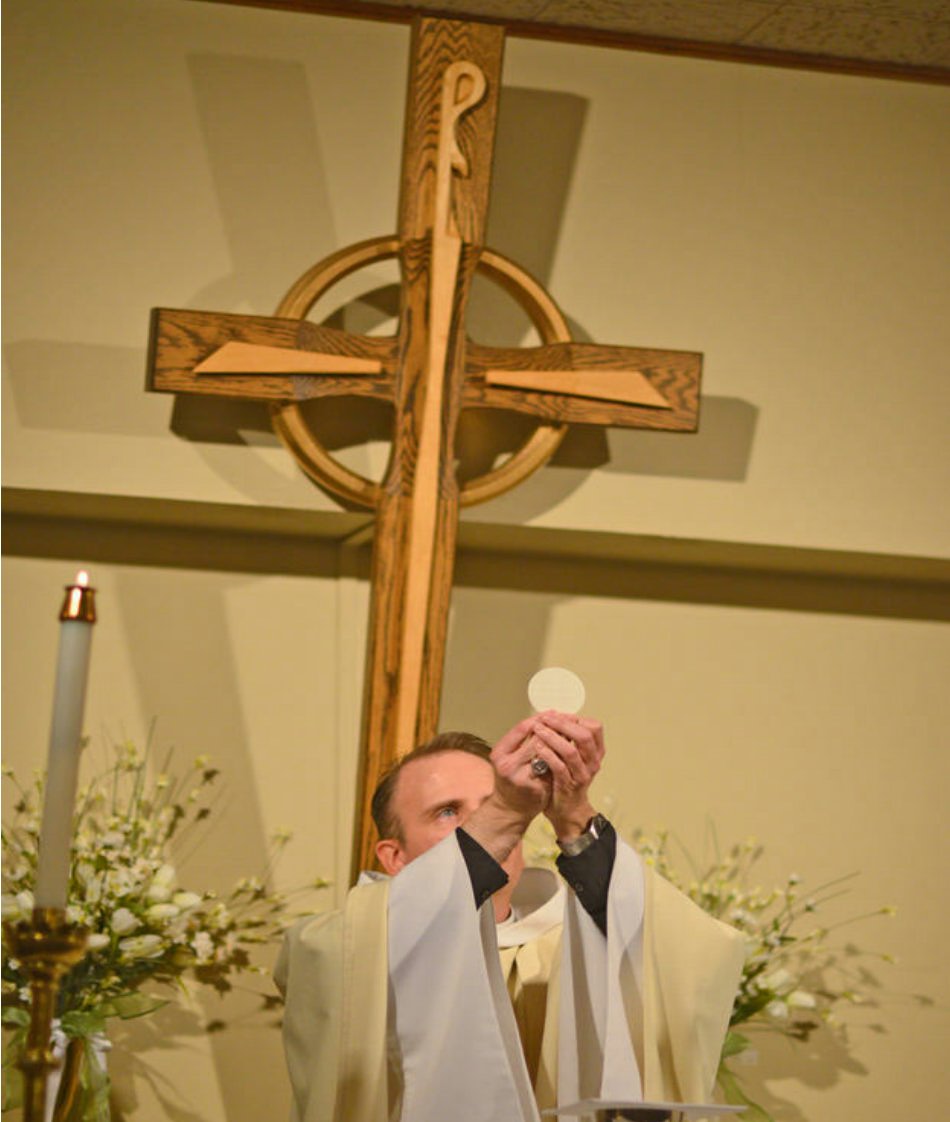
Then you see me hold up the chalice and that broken bread and you hear me say,
“This is the Lamb of God. This is the One who takes away the sins of the world. Happy are we who are called to this supper.”
This shed blood. This broken body. This sacrifice. That is what we hold up.
I cannot tell you how many times I have stood at this altar during that anthem and looked down at the broken bread on that paten and looked into that cup and had a moment of real spiritual clarity. So many times I have looked at the broken bread and the cup and thought, this is Jesus. This is the Lamb of God.
For me, that moment of spiritual clarity is very much like the moment John announces Jesus as the Lamb. For me, it might as well be the Baptist’s voice in my ear, announcing to me that this is the One. And it should be for all of us. The hesychasts of pre-revolutionary Russia would be proud with such a revelation.
But more than just some mystical experience is this concept of the Lamb being broken.
Why do we break the bread at the Eucharist? Why do I, when I hold up that broken bread with the chalice, say, “This is the Lamb of God. This is the One who takes away the sins of the world…”?
Yes, we do it to symbolize the broken body of the Lamb. The Lamb was broken. The Lamb was sacrificed. And it is importance to recognize that. Trust me, we understand brokenness right now in our world, in our society, and, no doubt, many of us know it in our lives. Brokenness is part of this imperfect world in which we live. And it is hard to bear. When we gaze upon that broken bread, when we gaze upon that broken lamb, we gaze upon our own brokenness as well. But we gaze upon a God who understands our brokenness. A God who understands these fractures and these pains each us bear within us and in this world in which we live.
But it symbolizes something even more practical. We break bread, so we can share it. We don’t get the option of just sitting around, wallowing in our brokenness. We don’t get to just close up and rock back and forth in pain over the unfairness of this world and society and our lives. We are called to go out and do something about it. We break this bread and then break it and then break it again until it becomes small pieces that we must share with one another. By sharing our God who knows brokenness, by sharing of our broken selves, we do something meaningful. We undo our brokenness. We become whole by sharing our brokenness.
It means we take what we have eaten here—this Lamb, this Christ, this God who knew pain and suffering and death—and we share this Christ with others, through our love, through our actions of love, through our acceptance of all people in love.
It is not enough that we simply recognize the broken Lamb. We must recognize the Lamb, broken for us, so that we then can share the Lamb with others. And that is the purpose of our lives as Christians.
Yes, we gather here and are Christians. But we are also gathered here so we can go out and share this Lamb that has been broken and given to us. And in sharing the Lamb, others too can share the Lamb.
So, let us listen to the voice of the Baptist proclaiming in our ears, “Behold the Lamb of God!” Let us hear that voice when I hold up the Bread and the Chalice. Let us hear that voice as we come forward to share that bread and drink from that chalice.
But let us be that voice when we leave here. Let us proclaim the Lamb of God as we share Christ with others, in all that we do as Christians, in the differences we make in this world around, in all the good we do and say in our lives. When we do that we will find ourselves, as we heard in the beautiful collect from this morning, “illuminated by [God’s] Word and Sacraments.” And being illuminated, we will “shine with the radiance of Christ’s glory, that he may be known, worshipped and obeyed to the ends of the earth.”


January 8, 2017
1 Epiphany
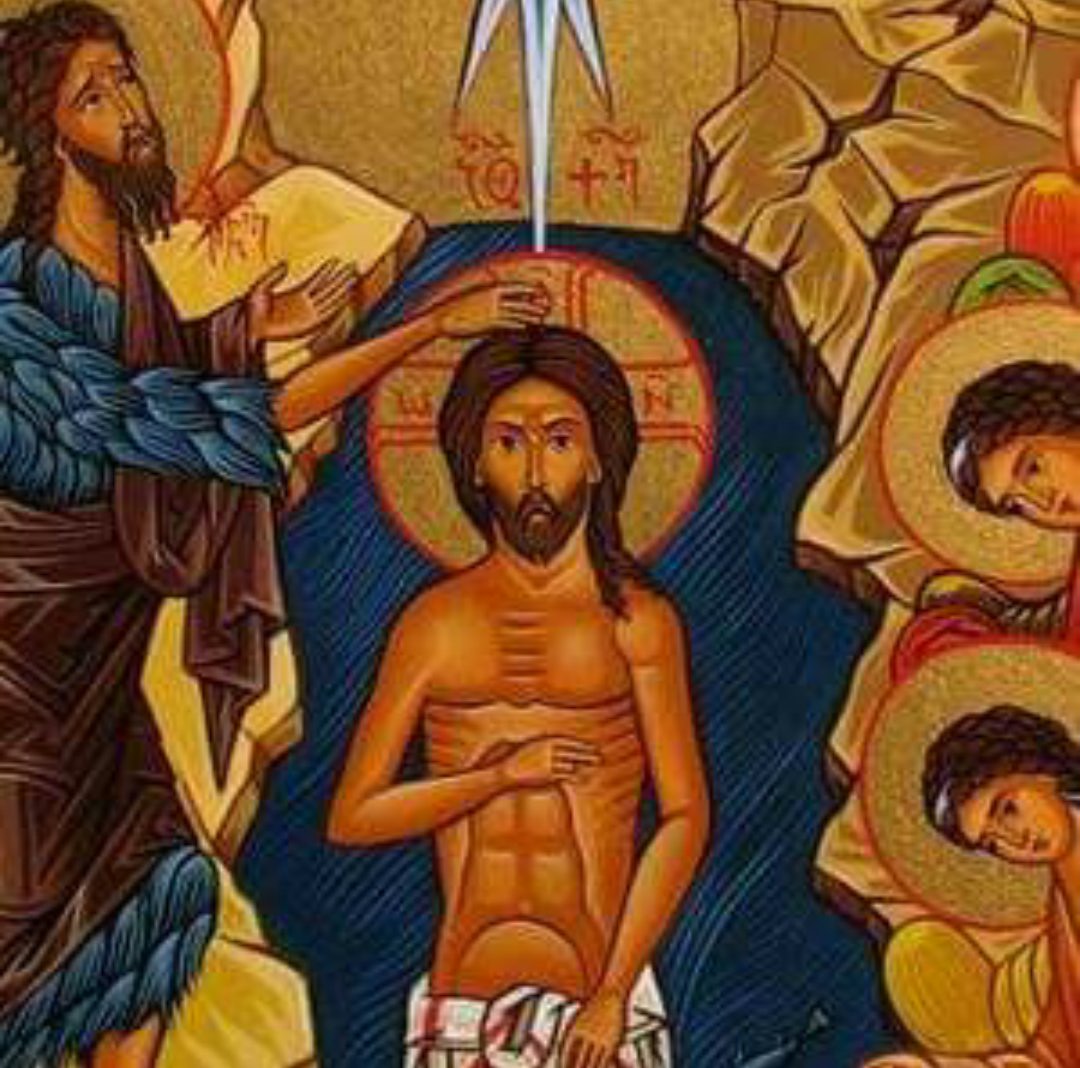 The Baptism of Our Lord
January 8, 2017
Isaiah 42.1-9; Matthew 3.13-17
+ Sometimes—oftentimes—when one preaches week in, week in, the preacher maybe—sometimes—oftentimes—falls into ruts. We preachers too are at the whim of our obsessions, whatever might be right on the surface in our lives, or what have you.
So, of course, on this Sunday—this Sunday of the Baptism of Our Lord, this Sunday in which we officially end the Christmas season—yeah, you kinda know where I’m going. You know it’s gonna be another of one of those Fr. Jamie Baptism sermons. Because, as you know, there are few things I like preaching about more than baptism.
It could be worse, right?
Of course I’m going to preach about baptism today. After all, we’re celebrating the Baptism of Jesus today! And of course, how can we not talk about baptism? And ministry?
Because this is what it’s all about for us as Christians. All ministry—the ministry we all do together—stems from that transformative event of our Baptism. In fact, to be baptized means, essentially, to be called to ministry. When we look at our spiritual lives and our ministries in the “big picture,” we cannot do so without seeing that big picture circling and being centered on the singular event of our baptism.
For those of you who have visited the rectory you have no doubt seen my baptismal certificate on my wall. It is there with my ordination certificates. It is there to remind me and to help me commemorate that incredible event in my life 47 years ago—this event that changed me and formed me as a Christian. And, this gives me another opportunity to remind you, if you haven’t done so yet, to do a bit of detective work and find the date of your baptism as well and to share it with me or James so we can commemorate it and celebrate it. After all, everything we do as Christians should come from the joy and amazing beauty of that simple event.
As you all know, as you have heard me preach from here many, many times, probably to the point you start rolling your eyes, Baptism, for me anyway, is not a sweet little christening event for us as Christians. It is not a quaint little service of dedication we do. For us Episcopalians, it a radical event in our lives as Christians. It is the event from which everything we do and believe flows. It was the day we were welcomed as loved children of God. And it was the day we began following Jesus.
And when we look at the actual service of Baptism in the Book of Common Prayer, the words of that service drive home to us how important that event is. For example, after the Baptism, when the priest traces a cross on the newly baptized person’s forehead, she or he says,
“You are sealed by the Holy Spirit in Baptism and marked as Christ’s own forever.”
You have heard me preach on those words many times before. And trust me, I will preach them again and again. I will because they are probably the most important words we are ever going to hear in our lives. That is not just some nice little sentiment. Those words convey that something transformational and amazing has happened in the life of that person. This is essential to our belief of what happens at baptism.
In baptism, we are marked as Christ’s own. Forever. It is a bond that can never be broken. We can try to break it as we please. We can struggle under that bond. We can squirm and resist it. We can try to escape it. But the simple fact is this: we can’t. Forever is forever.
On this Sunday on which we commemorate Jesus’ own baptism—on this Sunday in which we remember the fact that Jesus led the way through those waters of baptism and showed us a glimpse of all that happens in this singular event, we should remember and think about what happened at own baptisms. Yes, we might not actually remember the actual event. But the great thing about baptism is that, our own individual baptismal event was, for the most part, just like everyone else’s.
In those waters, God spoke to us the words God spoke to Jesus in today’s Gospel reading. In those waters, the words we heard in our reading from Isaiah were affirmed in us as well.
Here is my servant, whom I uphold,
my chosen, in whom my soul delights;
Those words are our words. Those words were spoken to us in those waters. In those waters, we were all made equal. In those waters, the same water washed all of us—no matter who are. In those waters, there are no class distinctions, no hatred, or discrimination or homophobia or sexism or war or violence. Or walls. In those waters, we are all equal to one another and we are all equally loved.
In a few moments, we will stand and renew the vows we made at baptism. When we are done, I will sprinkle you with water. The sprinkling of water, like all our signs and actions that we do in this church, is not some strange practice a few of us High Church-minded people do. That water that comes to us this morning is a stark reminder of those waters we were washed in at Baptism—those waters that made us who we are Christians, those waters in which we all stand on equal ground, with no distinctions between us.
Here at St. Stephen’s, all of our ministry—every time we seek to serve Christ and further the Kingdom of God in our midst—is a continuation of the celebration of baptism. Sometimes we lose sight of that. Sometimes we forget what it is that motivates us and charges us to do that wonderful work. Sometimes we forget that our ministry as baptized people is a ministry to stand up and speak out against injustice.
Our ministry is to echo those words from Isaiah God spoke to us at the beginning of our ministries:
I have put my spirit upon [you];
[you] will bring forth justice to the nations.
[You] will faithfully bring forth justice.
[You] will not grow faint or be crushed
until [you have] established justice in the earth;
The water of our baptism is a stark reminder to us of our call to the ministry of justice. There is a reason the baptismal font in the narthex—the place we actually baptize—is always uncovered and always filled with fresh, blessed water. Again, this is not some quaint, Anglo-Catholic tradition that spiky Fr. Jamie introduced here. This is a very valid and real reminder that in that place, in those waters, we began to do the radical things we are called to us as Christians. It is good for us to take that water and bless ourselves, and with it to be renewed for our call to justice. It is good for us to be occasionally sprinkled with water as a reminder of what we must still do in this world It is good to feel that cold water on our fingers and on our foreheads and on our faces as a reminder of our equality and our commitment to a God of love and justice. And, as you have heard me say many, many times, it is good to remember the date of our baptism and to celebrate that day, just as we would a birthday or a wedding anniversary.
Today, on this first Sunday in Epiphany, we start out on the right note. We start out celebrating. We start our commemorating the baptism of Jesus in the river Jordan. And by doing so, we commemorate our own baptism as well.
In our collect today, we prayed to God to “Grant that all who are baptized into [Jesus’] Name maybe keep the covenant that they have made, and boldly confess him as Lord and Saviour.”
That should be our prayer as well today and always. We pray that we may keep this Baptismal covenant in which we seek to follow Jesus and serve all people equally and fully in his name, no matter who they are. And we pray that we may boldly live out our covenant by all that we do as Christians in seeking out and helping others in love and compassion and justice.
May we always celebrate that wonderful baptismal event in our lives. And may we each strive to live out that baptism in our radical ministry of love and service of God and of one another. Amen.
January 1, 2017
The Holy Name of Jesus
 Holy NameJanuary 1, 2016
Numbers 6.22-27, Psalm 8, Galatians 4.4-7 and Luke 2.15-21
+ Happy New Year. I always sort of revel in the New Year. I really kind of like this time. I love getting up early on New Year’s Day and driving around town. It is so quiet and so serene.
This getting up early on New Year’s Day is a new tradition for me, especially ever since I became a teetotaler a few years ago. It’s nice waking up on New Year’s Day and not having a hangover, or, as my mother calls it, the “bottle flu.” There is always something so hopeful and wonderful about New Year’s Day.
But…I am going to share a story of a time when it wasn’t so wonderful and hopeful in my life. Fifteen years ago, as the new year of 2002 began, I faced a bleak new year. I had just been laid off from a job I really enjoyed because, surprise of surprises, I had some issues with my superiors. If you thought I was rebellious now, you should’ve seen me back in 2001!
It was an unpleasant situation, and two days after Christmas, they informed me that they were letting me go due to a “financial shortfall.” I knew the real reason., We all did.
But I limped toward the end of that year beaten down a bit. I was still three years away from being ordained a priest, and the past year had been a particularly difficult one for me in ministry. I was still transitioning from my pre-ministry life to the stark realities of what real ministry was like. And, let’s just say, it was hard. And it wasn’t always fun.
As that New Year dawned, I, for the first time in several years, had very serious doubts about whether I should be ordained or not. And I was, to put it bluntly, struggling. I was definitely praying for an answer, but no clear answer came.
In fact, rather than a clear answer telling me I should definitely go forward, the new year brought me a bigger devastation than losing my job. In February of 2002, I was diagnosed with cancer. And I spent most of the rest of that year getting better.
It’s not the most pleasant story for us to hear on this New Year’s Eve. But…actually it kind of is. The answers I received to the prayers I was praying on that bleak New Year’s Day in 2002 were answered. They were just not answered in the ways I expected, or even wanted. My zeal for being a priest was renewed. I was healed. I got well. I pushed forward. And look! I endured.
And when anyone asked me then, or even now, what got me through, I say:
The love of my parents, the support of my friends and the Holy Name of Jesus.
In the midst of the stress and turmoil of it all, in those moments, when I couldn’t form a tangible prayer in my head, the prayer I prayed most was simply the Name of Jesus. If any of you have ever been anointed by me in the hospital or at any other time, you will have invariably heard me repeat a wonderful passage that we find in the Book of Common Prayer. It goes,
The Almighty Lord, who is a strong tower to all who put their trust in him, to whom all things in heaven, on earth, and under the earth bow and obey: Be now and evermore your defense, and make you know and feel that the only Name under heaven given for health and salvation is the Name of our Lord Jesus Christ.
That passage spoke loudly to me back in 2002, especially when I was so sick. And you know what? It speaks loudly to us this morning as we begin this year of 2017.
Today, we celebrated the Feast of the Holy Name of Jesus. This feast used to be known at the Circumcision of Our Lord. We have kept the feast, but we’ve changed the name, probably for good reason. On the eighth day following Jesus’ birth, he, like all Jewish males born in his time, was brought to the temple, circumcised and named.
His name, Jesus or Joshua, Yeshua in Hebrew, was a common name in his day. There are two differing translation of the name: one is “God with us.” The other is “God saves,” or more specifically “God saves us from our sins.”
Today is an important feast. It’s a VERY important feast. Because, that Name is important to us. It’s important to those of who have been healed by it. It’s important for those of us who have found that it is, at times, the only prayer we can pray.
Today’s feast also reminds us that we do truly have an intimate relationship with God. God is no longer a nameless, distant deity. God has a name. The God who came to us in Jesus has a name.
Names, after all, are important. Our names are important to us. They define us. We have been trained to respond when we hear our name called. We, in effect, are our names. Our names and ourselves are bound inexorably together. Our name is truly who we are.
The same can be said of God. In the Old Testament God reveals the Divine Name as Yahweh. Yahweh is such a sacred and holy word to Jewish people that it cannot even be repeated. In a sense, the name Yahweh becomes so intertwined with Who God is that is becomes, for the Jews, almost like God. And I agree completely.
It is the Name God revealed to Aaron. God said,
“they shall put my name—Yahweh—on them and I will bless them.”
The message here to all of us is that to have a truly meaningful relationship with anyone—to truly know them—we need to know them by their name.
So, too, is this same idea used when we think about our own relationship with God and, in turn, God’s relationship with us. God knows us by name and we know God by name. This is important. God is not simply some distant Being we vaguely comprehend. God is close. God is here, with us. God knows us and we know God. We know each other by name.
This is why the name of Jesus is important to us. That is why we give the Name a certain level of respect. Like the Name that was revealed to Aaron, so has the Name of our God been revealed to us. And like the name Yahweh to the Jews, the Name of Jesus is holy and sacred to us Christians.
Certainly even for us, the Name is a vital and important part of what we believe as Christians. The collect for today recalls that the name of Jesus is the “sign of our salvation.”
Now, I don’t see that as a sweet, overly sentimental notion. I see it as a very important part of who we are as Christians.
As most of you know, I try very hard to take the Name of Jesus very seriously. Coming from a more Anglo-Catholic background, you’ll notice during our liturgy on Sunday or Wednesday night, I bow my head every time the Name of Jesus is mentioned. Again, I don’t see that as an overly pious action. I see it as a sign of respect for Jesus at a time when his Name is widely abused and misused.
We’ve all done it. We’ve all sworn, using the Name in a disrespectful way. I’ve done it. We have not given the rightful respect to God’s name in our lives, even when we know full well that a name is more than just a name.
A Name is, in a sense, one’s very essence. Certainly in the case of Jesus case, it is. Jesus is “God with us.” Jesus is “God saving us.” By this very name we have a special relationship with this God who has come among us. We belong to this God whose name we know. God, in Jesus, has come to all of us. God in Jesus knows each of us by name. We are special to our God. We are, each of us, deeply loved and cared for by our God.
Certainly those of us who are Christian know this in a unique way. When we were baptized, we, like Jesus eight days after his birth, were named. At our baptism, we were signed as Christ’s own forever. We were claimed by God by name. By Baptism, our own names became holy names. By Baptism, God came to know us by name and because of that, our names are sanctified. We bear in us our own holy name before God.
So today—this day we celebrate not only God’s holy name but our own as well—and in the days to come, take to heart the fact that God’s name is holy and sacred. Be mindful of the words you use and be mindful of that name of Jesus in your life. But also be mindful of your own holy name. When you hear your own name, remember that it is the name God knows you by and, as a result, it is truly holy. In sense our own names can be translated as “God with us.” When we hear our names, let us hear “God saves us.” And let us be reminded that God knows us better than anyone else—even our own selves. Claim the holiness of your name and know that God in Jesus is calling you to your own fullness of life by name. Amen.
December 25, 2016
Christmas
 December 25, 2016
+ Last night, before our Christmas Eve Mass, I was talking to a parishioner about the pitfalls of being an extrovert. A lot of people don’t talk about there being pitfalls to being extroverted. But for me, I climb the walls when I can’t be around people. I find a good amount of energy from being around people.
Yesterday morning and during the day, I was just…down. I was feeling run-down. I was emotional. Christmas does that to me. And by the time Christmas Eve Mass started rolling around, I thought to myself: how am I going to muster the energy for this?
And then…people started rolling in. Let me tell you: people started rolling in! And we ended up breaking our Christmas Eve attendance record (at least going back to 1988).
As the church filled up to the rafters, and the temperature from all those people started to rise, I found myself invigorated and rejuvenated.
As a result, I had trouble settling down last night. I went over to my mom’s and opened presents. I came home and lit the Menorah for the first night of Hanukkah. And I tried to sleep. But I was too wound up.
I felt great!
It just goes to show you: I really am a church geek. I love being in church. I love being around people. And this morning, even though I knew we wouldn’t be getting a huge crowd of people, I was still pretty excited.
I especially love the Christmas morning mass. The world seems to pristine, so new. And one of my greatest pleasures as a priest, is to celebrate the Eucharist with you on this morning that is, in its purest sense, holy.
Christmas Day Mass!
I also understand the tendency we all have of getting caught up in society’s celebration of Christmas. It’s easy to find ourselves getting a bit hypnotized by the glitz and glamour we see about us. I admit I enjoy some of those sparkly Christmas displays. I understand how easy it is to fall to the temptations of what the world tells us is Christmas.
But what I think happens to most of us who enjoy those light and airy aspects of Christmas is that we often get so caught up in them, we start finding ourselves led astray into a kind of frivolousness about Christmas. We find ourselves led off into a place where Christmas becomes fluffy and saccharine and cartoonish. Christmas becomes a kind of billboard. That, I think, is what we experience in the secular understanding of Christmas time. The glitz and the glamour of the consumer-driven Christmas can be visually stunning. It can capture our imagination with its blinking lights and its bright wrapping.
But ultimately it promises something that it can’t deliver. It promises a joy and a happiness it really doesn’t have. It has gloss. It has glitter. It has a soft, fuzzy glow. But it doesn’t have real joy.
The Christmas we celebrate here this morning, in this church, is a Christmas of real joy. But it is a joy of great seriousness as well. It is a joy that humbles us and quiets us. It is a joy filled with a Light that makes all the glittery, splashy images around us pale in comparison.
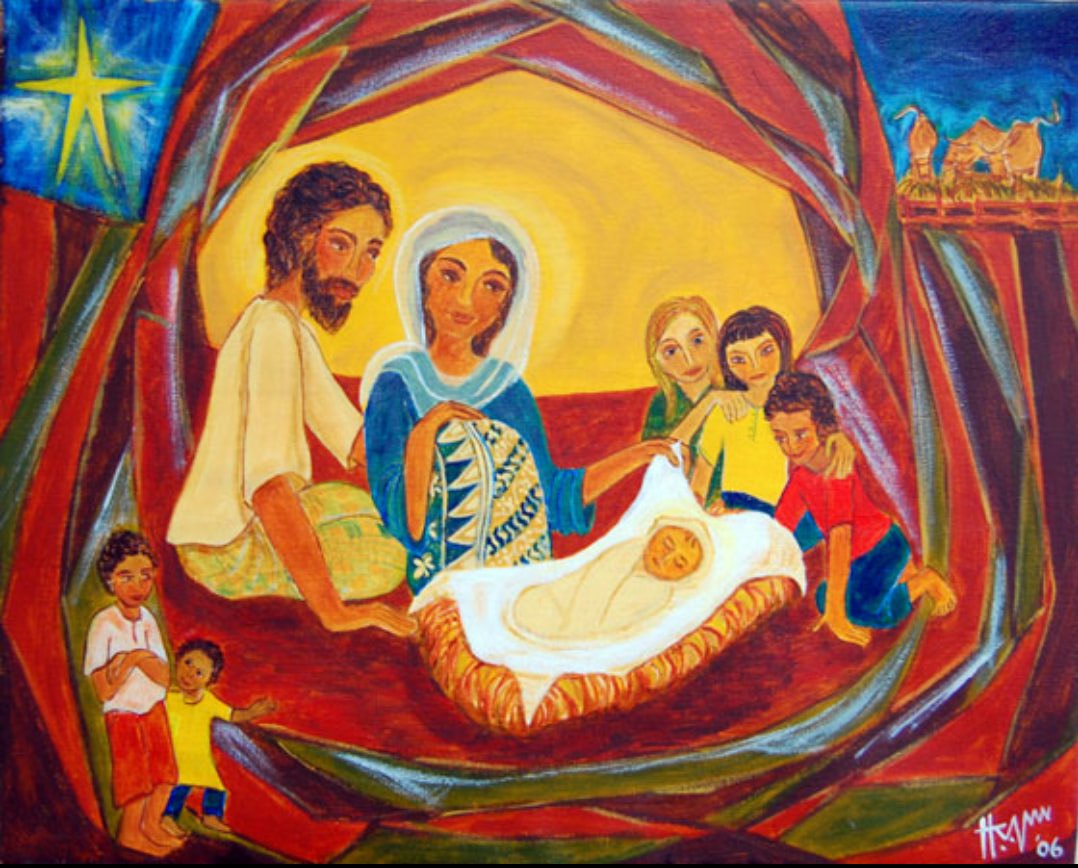
The Christmas we celebrate here is not a frivolous one. It is not a light, airy Christmas. Yes, it has a baby. Yes, it has angels and a bright shining star. But these are not bubblegum images.
A birth of a baby in that time and in that place was a scary and uncertain event.
Angels were not chubby little cherubs rolling about in mad abandon in some cloud-filled other-place. They were terrifying creatures—messengers of a God of Might and Wonder.
And stars were often seen as omens—as something that could either bring great hope or great terror to the world.
The event we celebrate this morning is THE event in which God breaks through to us. And whenever God beaks through, it is not some gentle nudge. It is an event that jars us, provokes us and changes us.
For people sitting in deep darkness, that glaring Light that breaks through into their lives is not the most pleasant thing in the world. It is blinding and painful. And what it exposes is sobering.
That is what Jesus does to us. That is what we are commemorating today. We are commemorating a “break through” from God—an experience with God that leaves us different people than we were before that encounter.
What we experience is a Christmas that promises us something tangible. It promises us, and delivers, a real joy.
The joy we feel today, the joy we feel at this Child’s birth, as the appearance of these angels, of that bright star, of that Light that breaks through into the darkness of our lives, is a joy that promises us something. It is a teaser of what awaits us. It is a glimpse into the life we will have one day. It is a perfect joy that promises a perfect life.
But just because it is a joyful event, does not mean that it isn’t a serious event. What we celebrate is serious. It is an event that causes us to rise up in a joyful happiness, while, at the same time, driving us to our knees in adoration. It is an event that should cause us not just to return home to our brightly wrapped presents, but it should also send us out into the world to make it, in some small way, a reflection of this life-changing joy that has come into our lives.
Throughout Advent I have been re-reading Advent of the Heart by Alfred Delp, a young German Jesuit priest who was killed by the Nazis on February 2, 1945. This is one of those books that has moved me to my very soul. My copy of the book is almost falling apart, I’ve read it that much. In the book, there is wonderful Advent play Delp wrote for children about ten years before his death. It ended with a monologue that captures perfectly a Christian understand of what Christmas truly is.
Delp wrote at the end of his play:
“That is Christmas—that a hand from above reached into our lives and touches our hearts. That is Christmas, not the other things. My friends, believe it, we have to suffer a lot and hang on. Only then is it Christmas.
“Christmas is a not a sweet fairytale for little children—for happy nurseries…Christmas is serious—so serious—that [people] gladly—die for it. —Tell everyone—many things have to change—first—here—inside…
“Christmas means that God—touches us, —that [God]—grasps our hands—and lays them—on—[God’s]—heart. —That God comes—to us—and sets us free. —Tell everyone—the other isn’t Christmas, —only this—is—Christmas, —that—God—is—with—us.”
Today is one of those moments in which true joy and gladness have come upon us. That’s what makes this a holy time.
So, cling to this holy moment. Savor it. Hold it close. Pray that it will not end. And let this joy you feel this morning be the strength that holds you up when you need to be held.
Today, God has reached out to us. God has touched us. God has grasped our hands. Our hands have been laid on God’s heart. This is what it is all about. God is here, among us.
This feeling we are feeling right now is the true joy that descends upon us when we realize God has come to us in our collective darkness. And this joy that we are feeling is because the Light that has come to us will never, ever darken.
December 24, 2016
Christmas Eve
 December 24, 2016
+ Most of us, throughout our lives, find ourselves clinging to life’s little pleasures. Occasionally, something fills us with such joy and happiness, that we find ourselves just wanting to savor that moment, cling to it, hope it will never end. They don’t happen often. And we can’t make those moments happen by own concentrated will, even if we try really hard. Even more often, we don’t ask for those special moments. They just happen when they’re meant to happen and sometimes they come upon us as a wonderful surprise.
Now, having said this, I’m going to admit something to you that will come as no surprise I’m sure. I really am a church geek. I love being in church. I always have.
And the best times to be in church were always Christmas Eve and Christmas morning. One of life’s pleasures for me has always been Christmas Eve. And more specifically a Christmas Eve Mass. Some of my most pleasant memories are of this night and the liturgies I’ve attended on this night. And one of my greatest pleasures as a priest, is to celebrate the Eucharist with you on this evening that is, in its purest sense, holy.
But, I also understand the tendency we all have of getting caught up in society’s celebration of Christmas. It’s easy to find ourselves getting a bit hypnotized by the glitz and glamour we see about us. I admit I enjoy some of those sparkly Christmas displays.
And you know what I really enjoy? I sometimes really enjoy a good Christmas commercial on TV.
I’ve probably shared this before at Christmas, but there’s one old commercial that instantly put me back into my childhood Christmases. I’m sure you’ll remember it too. If not, just look it up on Youtube. https://www.youtube.com/watch?v=xqhUu...
It begins with the Ink Spots are singing “I Don’t Want To Set The World On Fire” Two very attractive people are in a very modern (by 1980s standards), sparsely decorated office overlooking the Transamerica Building in San Francisco.
The man introduces himself as “Charles,” the woman as “Catherine.”
Charles asks Catherine: “Do you mind if I ask you a personal question?”
“No,” Catherine says. “What is it?”
We never find out what that question is because, just then, the shadow of a Leer jet flies across the Transamerica building. Then announcer comes says:
“Share the fantasy. Chanel no. 5”
For some reason, that commercial was synonymous with Christmas for me as a child. So much so, that later, I had to buy my mother a bottle of Chanel no. 5. Now, that might sound sweet, but every since then, guess what she wants ever few years? Chanel no. 5. Let me tell you, that stuff’s expensive!
Now, I know that that commercial had nothing at all to do with Christmas. There wasn’t a Christmas tree in sight in that commercial. Nothing about it spoke of Christmas. And yet, for me, it WAS Christmas. And I remember the joy I felt that first time I bought my mother that bottle of Chanel No. 5.
So, yes, I understand how easy it is to fall to the temptations of what the world tells us is Christmas. But what I think happens to most of us who enjoy those light and airy aspects of Christmas is that we often get so caught up in them, we start finding ourselves led astray into a kind of frivolousness about Christmas. We find ourselves led off into a place where Christmas becomes fluffy and saccharine and cartoonish. Christmas becomes a kind of billboard.
That, I think, is what we experience in the secular understanding of Christmas time. The glitz and the glamour of the consumer-driven Christmas can be visually stunning. It can capture our imagination with its blinking lights and its bright wrapping, or, as in the case of the Chanel No. 5 commercial, it can do it without any bright lights and wrapping. But ultimately it promises something that it can’t deliver. It promises a joy and a happiness it really doesn’t have. It has gloss. It has glitter. It has a soft, fuzzy glow. But it doesn’t have real joy.
The Christmas we celebrate here tonight, in this church, is a Christmas of real joy. But it is a joy of great seriousness as well. It is a joy that humbles us and quiets us. It is a joy filled with a Light that makes all the glittery, splashy images around us pale in comparison. The Christmas we celebrate here is not a frivolous one. It is not a light, airy Christmas.
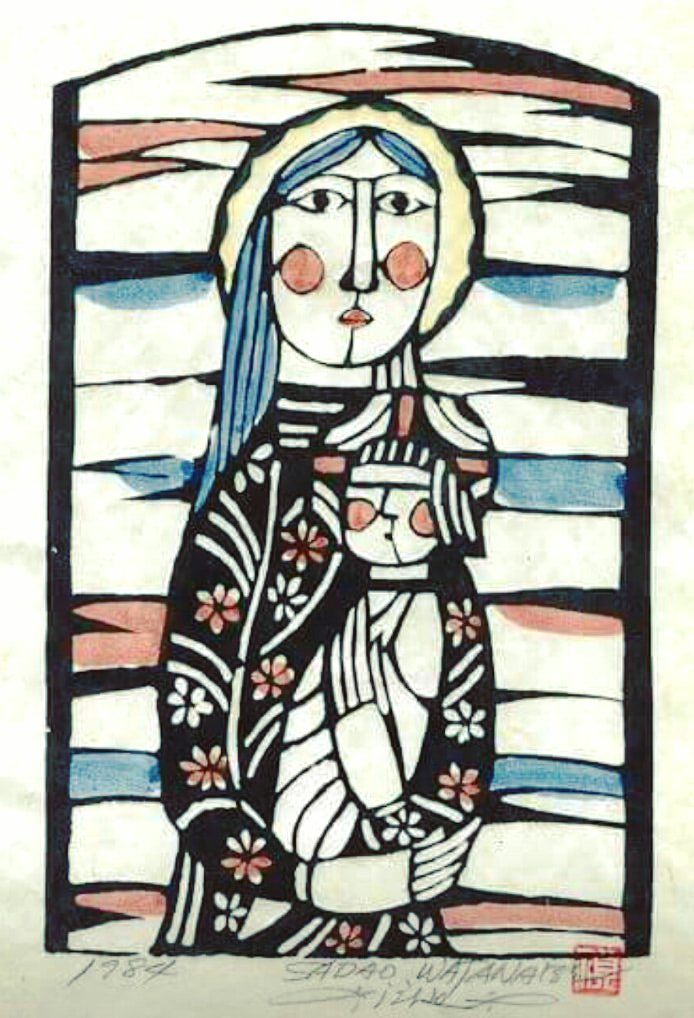
Yes, it has a baby. Yes, it has angels and a bright shining star. But these are not bubblegum images.
A birth of a baby in that time and in that place was a scary and uncertain event.
Angels were not chubby little cherubs rolling about in mad abandon in some cloud-filled other-place. They were terrifying creatures—messengers of a God of Might and Wonder.
And stars were often seen as omens—as something that could either bring great hope or great terror to the world.
The event we celebrate tonight is THE event in which God breaks through to us. And whenever God beaks through, it is not some gentle nudge. It is an event that jars us, provokes us and changes us. For people sitting in deep darkness, that glaring Light that breaks through into their lives is not the most pleasant thing in the world. It is blinding and painful. And what it exposes is sobering.
That is what Jesus does to us. That is what we are commemorating tonight. We are commemorating a “break through” from God—an experience with God that leaves us different people than we were before that encounter.
What we experience is a Christmas that promises us something tangible. It promises us, and delivers, a real joy. The joy we feel today, the joy we feel at this Child’s birth, as the appearance of these angels, of that bright star, of that Light that breaks through into the darkness of our lives, is a joy that promises us something.
It is a teaser of what awaits us. It is a glimpse into the life we will have one day. It is a perfect joy that promises a perfect life.
But just because it is a joyful event, does not mean that it isn’t a serious event. What we celebrate is serious. It is an event that causes us to rise up in a joyful happiness, while, at the same time, driving us to our knees in adoration. It is an event that should cause us not just to return home to our brightly wrapped presents, but it should also send us out into the world to make it, in some small way, a reflection of this life-changing joy that has come into our lives.
Tonight, is one of those moments in which true joy and gladness have come upon us. That’s what makes this a holy time.
So, cling to this holy moment. Savor it. Hold it close. Pray that it will not end. And let this joy you feel tonight be the strength that holds you up when you need to be held.
Tonight, God has reached out to us. God has touched us. God has grasped our hands. Our hands have been laid on God’s heart. This is what it is all about.
God is here, among us. This feeling we are feeling right now is the true joy that descends upon us when we realize God has come to us in our collective darkness. And this joy that we are feeling is because the Light that has come to us will never, ever darken.
December 19, 2016
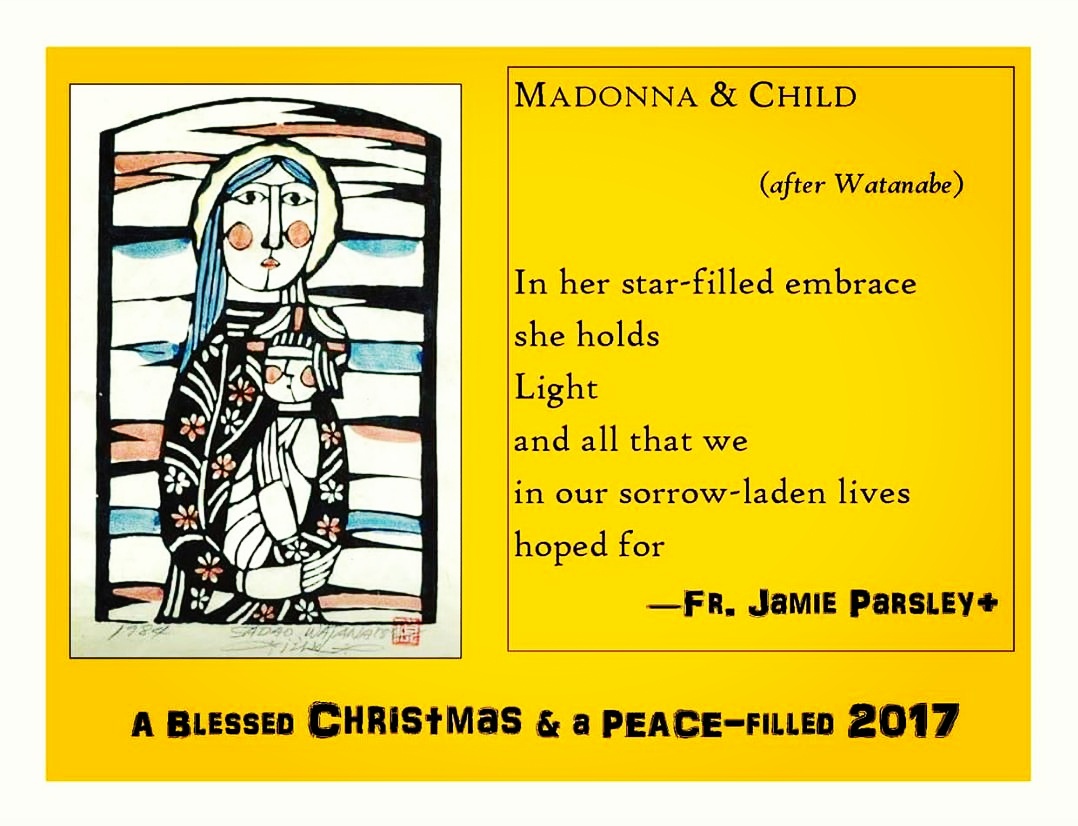
2016 Christmas Letter
 December 15, 2016
My Friends at St. Stephen’s,
As we near the birth of Jesus and as we look forward toward 2017, the future continues to look over brighter and brighter for us at St. Stephen’s.
Serving as St. Stephen’s continues to be one of the most fulfilling experiences of my priestly life. Our life together of worship, ministry, music and outreach, our life of being a safe place where all are accepted and welcomed has been a source of great personal joy for me and has helped me to see how gracious God is in showering blessings upon faithful, committed people who truly do seek after God.
As we move forward together into this future full of hope and potential growth, I ask for your continued prayers for St. Stephen’s and your continued presence on Sunday mornings, Wednesday nights and whenever else we gather together to worship and to do ministry.
As you know, I pray for each of you individually by name over the course of each week in my daily observance of the Daily Office (Morning and Evening Prayer). I also remember all of you at the altar during celebration of the Mass. This my way of expressing my gratitude to God for each of you. Above all, know that I also give God thanks every day for the continued opportunity to serve such a wonderful, caring and loving congregation of people who are committed to growth and radical hospitality.
In return, I ask for your prayers for me in my ministry. I depend on your prayers and blessings in my life and certainly can feel the full effect of those good works in lifting me up and sustaining me during those inevitable low times.
And please do join us during this Christmas season as we celebrate the birth of Christ. There will be plenty of opportunities to join in the celebration at St. Stephen’s/
My sincerest blessings to you and to all those you love during this season of joy, hope and love.
PEACE always,
Fr. Jamie Parsley+
Christmastide 2016 at St. Stephen’s Saturday December 24 - Christmas Eve7:00 pm – Holy EucharistFr. Jamie, celebrant/preacherJames Mackay, musicChristmas tableau for the Children during the reading of the Gospel
Sunday December 25 – Nativity of Our Lord 11:00 am Holy EucharistFr. Jamie, celebrant/preacherJames Mackay, music
Monday December 26 –St. Stephen6:00 pm – Holy EucharistFr. Jamie, celebrant/preacherJames Mackay, musicIncense will be offered at this MassSupper afterward at a local restaurant
December 18, 2016
4 Advent
 December 18, 2016
Isaiah 7.10-16; Romans 1.1-7; Matthew 1.18-25
+ I have had an interesting array of Advent reading this year. Inspired by William’s class earlier this Advent on Dietrich Bonhoeffer, I have re-read a few of my favorite Bonhoeffer books, including a wonderful book about Bonhoeffer’s views on preaching, Worldly Preaching. And I don’t need to tell anyone here who took William’s class, Bonhoeffer is really speaking loudly and clearly to all of us right now!
Most recently though I have been reading a fascinating biography of the great author and Christian apologist C.S. Lewis by the wonderful Anglican theologian Alister McGrath. Lewis continues to be such an important influence in so many Christian lives, and specifically in the lives of all of us who are Episcopalians and Anglicans.
In this particular biography though, I was especially struck with the story of Lewis’ conversion. As some of you might know, he was an atheist, then slowly, became an agnostic, then he became a believer in God. But his conversion to Christianity was different than his other realizations. Before, he believed in a God who was a rational realization, but One who was totally separate and separated from this world. When he came to believe in Christ, all of a sudden, it all came together for him. God, in Christ, became personal. And it just sort of happened on its own in Lewis’ life.
I think many of us can relate to this. I know I certainly can. Yes, most of us it seems have had that sense of the reality of God in our lives at times and we understand that, yes God exists. Out there. Maybe, vaguely, God cares for us and is aware of us. But God is out there. Distant and distinct from us.
For some of us, though, our experience of God becomes much more personal. And we often experience God in what we may call a so-called “Christ moment.” This Christ moment happens when we see that God, as we see God in the person of Christ, is something much closer to us, much more personal, much more intimate. God, in Christ, is here with us—in the turmoils and difficulties of this life. And for any of us who have that “Christ moment” experience (and I hope you’ve had that experience in some way in your life), our spiritual lives change. Our relationship with God changes. No longer is God that distant presence—out there. But, in Christ, God becomes a real presence. Right here. And we feel—truly feel—that God really does LOVE us! And accepts us. Fully and completely. For who we are and what we are.
I had this “Christ experience” in my own life many, many years ago. In fact, it was 35 years ago today, on Friday, December 18, 1981. Now, I really have never talked about this experience with others. I don’t know why I haven’t shared it. I guess, it’s just always been a very private experience for me. Maybe I’ve never been really able to process it until recently. But it was a very real.
I had just turned 12. I had long been interested in God and religion in general, though Church wasn’t all that exciting to me. And Jesus seemed like a nice teacher, a good guy, but I certainly did not see him at that time as the Son of God, or God incarnate. At that time in my life, I was going through a hard time—or as hard for a time as a twelve year goes though (and let’s face it 12 years old really do have it hard often times).
In the midst for this hard time, in the midst for this spiritual searching, I just suddenly, in the midst of this kind for vague sense of God’s Presence out there, I suddenly “got” this whole Christ thing. I got that Christ was God—God with us, God right here. Christ was God in this world, in this flesh. And Christ loved me. And Christ cared about the problems of that rebellious, eccentric 12-year-old.
Yes, Jesus was still a kind and good teacher in my undertanding. But he was also much more than that. The distance between that vague God and me closed up. And it all came together, as it did for C.S. Lewis. . It was amazing and it was very important. And I firmly believe it set my course for the rest of my life.
Now, I know some Christians—especially some Evangelical Christians—may call that a “born again” experience. In some ways, yes, I guess it was. But it was a weirdly intellectual experience as well, which is why I related so much to the story of C.S. Lewis’ conversion in the Alister McGrath biography. I mean, although there is still so much mystery and so much to the spiritual life I will never understand, in that moment it all just kind of made sense. And it was important to me.
I think it’s very appropriate that that experience happened to me during the Season of Advent (though I don’t think I really knew what Advent was in 1981) Because this kind of “Christ moment” experience of God is what Advent and certainly Christmas is all about.
This coming week, with Christmas upon us, like almost no other time in the Church Year, we recognize that what happened in the birth of Christ is the collective experience any for us who have experienced that intellectual and spiritual realization that Christ is God with us. This coming week at Christmas we are very strongly and uniquely reminded that God is no longer that distant, vague God out there. But that God is here, with us. God knows us—each of us. And loves us—each of us. God, coming among us in the form of Jesus, in the form of this child, born to the Virgin Mary, suddenly breaks every single barrier we ever thought we had to God.
No longer are there barriers. No longer is there is a distance. No longer is there a veil separating us from God. In Christ, we find that meeting place between us as humans and God. God has reached out to us and has touched not with a finger of fire, not with the divine hand of judgment, with tender, loving touch of a Child.
This is what Incarnation is all about. And because it is, because this “Christ event” changes everything, because we and our very humanity, our very physical bodies, are redeemed by this event, we should really want to glory in it. God came to us, where we are, and met us. We may not have asked for it. We may not even have imagined how it could have happened. But it did. And we are so much better for it.
Throughout our scriptures readings today, we hear that one common echo:
Emmanuel.
Emmanuel—God with us.
In our reading from Isaiah today, we find God speaking through the prophet announcing that, through the lineage of David, Immanuel will come to us. Paul today talks of how God worked to bring about this revelation of God’s self in human form. And in our Gospel reading, the angel calls Joseph, “son of David” and that through this lineage, through this virgin, we have Emmanuel.
We have “God with us.” Emmanuel is that point in which God and humanity met. God reached out to us.
This week, on Christmas, we will celebrate that event. We will celebrate that event in which God finally break through the barriers and, in doing, destroys those very barriers. This week we celebrate that cataclysmic event in which heaven and earth are finally merged, in which the veil torn aside, in which all that we are and all that we long for finally come together. Nothing will ever be the same as it was before. And realizing that, we can say: thank you, God! Thank you, O Christ! It is an event that transformed us and changed in ways we might not even fully realize or appreciate even at this point.
The coming is Emmanuel—God with us—is almost here. I don’t think any of us would doubt that. We see the trees, the lights, the Santas and the reindeer. But the real Christmas—that life-altering event in which God took on flesh like our flesh, is here, about the dawn into our lives.
Truly this is Emmanuel. This is “God with us.” God is with us.
So rejoice! The star that was promised to us has appeared in the darkest night of our existence. It is a sign. It promises us light, even all seemed bleak before. There now is a way forward through the darkness. And we will not travel that way forward alone. Oh no.
God is with us.
And that light that reminds of this holy and amazing fact is now shining brightly, right there, before us.
And its light is burning away the dark clouds of doubt and despair.
December 11, 2016
3 Advent
 (Gaudete Sunday)December 11, 2016
Isaiah 35.1-10; James 5.7-10; Matthew 11.2-11
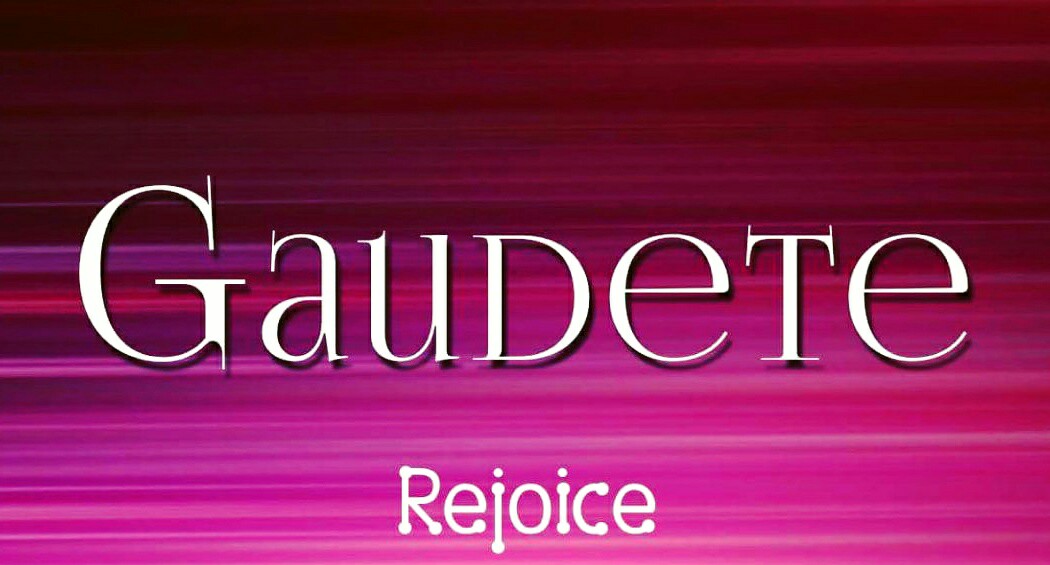
+ Today, of course, is special Sunday. Only twice in the Church year do we get to “go rose.” Today is Gaudete Sunday. Today we light our pink candle on the Advent wreath. And we wear these rose vestments because it’s an important day.
Today, in the midst of the blue season of Advent, we get to rejoice—or rather rejoice a little louder than usual. Gaudete means “Rejoice.” We also get to “go rose” in Lent in Laetare Sunday. I love these Rose Sundays!
But for now, we are here, on this Sunday. And it’s very appropriate that we are rejoicing on this Sunday. As we draw closer and closer to Jesus’ birth, we find ourselves with that strange, wonderful emotion in our hearts—joy. It is a time to rejoice. It is a time to be anxious (in a good way) and excited over the fact that, in just a few week’s time, we will be celebrating God coming to us.
Or, as St. James says in our Epistle reading this morning: “Be patient, therefore, beloved, until the coming of the Lord,” and then goes on to explain how farmers wait patiently for their precious crops.
We are like farmers waiting patiently for the seeds of our faith to grow and blossom.
“Strengthen your hearts, for the coming of the Lord is near.”
Certainly, so far in the season of Advent, we have been doing just that. We have been waiting. We have been praying.
Two weeks ago in my sermon, I mentioned that when we pray that prayer, “Lord Jesus, come quickly” what we are praying for is that Jesus will actually come to us. That has been our prayer and continues to be our prayer in Advent.
However…I hate to be this person. On the surface, doesn’t all of this seem kind of…dare I say? Fluffy and precious? I mean, here we are on this Sunday, with our pink paraments, lighting a pink candle, praying a seemingly sweet and precious and overly simple prayer?
Appearances are important, after all. On the surface, it seems we are not really embodying the spirit of what we experience in our Gospel reading for today. There we find Jesus discussing John the Baptist. There is nothing fluffy or frivolous about John the Baptist. He seems to me kind of like a wild man, out there in the desert in his clothes made from animal hides (that man was no vegan!), shouting about the coming of the Kingdom. If he was here this morning, at St. Stephen’s, my reaction would be: He is not going to like all these rose vestments.
So, when Jesus asks the crowds, “What did you go out in the wilderness to look at?”
Did they go out to see a reed shaken by the wind? Or someone dressed in soft robes? Did they go out to see something soft and frivolous? No, they went out to see a prophet.
So, are we, this morning, not living to our ideals as prophets of God by decking ourselves in these rose vestments? Are we proving to our critics that we are just flash and no substance? Awww, that’s what I love about Gaudete Sunday.
Let me tell you, appearances can be deceiving. Here, at St. Stephen’s, we find something else on this Gaudete Sunday. Yes, it may see all pink and rosy this morning. But what we see is exactly what those crowds in our Gospel reading were looking for.
We, this morning, are a community of prophets. We are proclaiming the coming of the Lord.
One year ago, on our last Gaudete Sunday, we met as a congregation. And we voted unanimously on that Sunday to seek Delegated Episcopal Pastoral Oversight. Yes, it was one year ago. And that decision was not an easy one for us. It certainly has not always been an easy year after doing so.
There is a feeling among us at times as though we have been shunned a bit, as though people may have chosen to step away from us as we journey forward. We have felt neglected at times and ignored for making the stand we made. Whether that is intentional or not is not our place to say. I do know that being in such a position is a hard one.
But, I will repeat to you what Jesus asked the crowd:
“What did you expect?”
What did anyone expect when we did what we did one year ago? After all, we are not reeds shaken by the wind. Being prophets, proclaiming the way of the Lord, is hard. I said that then. I repeat it this morning.
It’s hard. But it’s not impossible. We are safe on this journey, because, I can tell you, that while others may choose to turn away, or to distance themselves from us, while some may choose to ignore or neglect us, we know that our pathway is safe.
Those images we find in our reading today from Isaiah speak loud and clear to where we have been and where we are going as we follow the path we started one year ago.
“A highway shall be there,” we hear Isaiah say, “And it shall be called the Holy Way…It shall be for God’s people…No traveler, not even fools, shall go astray.”
This path we walk is the right path for us. We have had one year on this path to show us that reality.
It has been a hard year, yes. But it has been a very good year as well. While the world went on in its ways, we have remained committed to our path and to our vocation as prophets, even when it all seems overwhelming. But, we have found that our weak hands have been strengthened and our feeble knees have been made firm. When our hearts have been fearful this year, you have it heard proclaimed within these walls, again and again,
“Be strong, do not fear!”
We know that our God will come with vengeance, with “terrible recompense.” Our God, we know as prophets, will come and save us. And our pathway will be made straight.
This is why we rejoice on this Gaudete Sunday. Whenever we have doubted the path on which we walk, whenever we are tempted to stray from the road, our God who is coming to us nudges us forward toward the goal. That is why we rejoice on this beautiful rose-colored Sunday!
So…rejoice today. I say it, Rejoice! We are following the right path. We are doing the right thing. The decisions we made a year ago and continue to make have made a difference in people’s lives, and will continue to do so. That is why we are out here in the wilderness, proclaiming God’s coming among us.
Let us continue forward. Let us set our sights on our goals. And let us move forward. And let us know, as we journey, that “everlasting joy” will be on our heads. We shall obtain joy and gladness in our lives. And we will rejoice—we will REJOICE!—because sorrow and sighing shall flee away.
December 5, 2016
3 years Vegan
 Three years ago today, I went vegan. At the time, I meant only to do it temporarily. After all, I loved cheese. I mean, I really loved cheese! In fact, I loved most things dairy. After all, dairy products made going vegetarian so much easier. It seemed to be the natural replacement for meat. The problem was that I although I went vegetarian regularly, I usually ended up giving up on it because I often didn’t feel great after so long, which I blamed on being vegetarian (not on all the dairy I was eating as a meat replacement).
 However, after reading extensively about dairy products and the harm they did, and especially after reading about the Harvard study that linked dairy products with cancer, I decided to try veganism for one week. I certainly wasn’t excited about doing it. After all, it seemed so…daunting and hardcore. But what harm would it do? My consolation in doing it was that I promised myself that at the end of that week, I would get myself a cheese pizza. Those first few days were difficult to say the least. I went through a kind of withdrawal. I felt “off” all week. I remember one night that first week going to supper at a prospective member’s home. They graciously served me a vegan meal, but I felt so strange while I was there. The best way to describe how I felt was as being almost “tingly.” It felt as though my body were trying to get rid of something.
As the end of that first week neared, I was definitely looking forward to that cheese pizza. Then, something happened. On my very last day, on the morning of the day I was planning on giving up on veganism, I woke up and…I felt incredible! There was a weird clarity to everything. And even better: my sinuses, for the first time in years, had cleared. I thought: well, maybe I won’t take my allergy meds today. I didn’t. And I haven’t since.
These three years as vegan have been truly incredible. Before going vegan I got sick on a very regular basis with quick, severe flus or hyper-intensive colds that knocked me for a loop. Although they usually worked through my system in 24 hours or so, they came on strong and hit even stronger. I had severe sore throats that would usually incapacitate me, accompanied by searing fevers and intense headaches. My health, in general, was often very skewed. Even when I wasn’t sick, I never felt 100% great. I also had regular insomnia and was often extremely tired. My weight would fluctuate greatly between extremes. To put it bluntly, I often just felt rotten.
But in these last three years, my health has blossomed! I have never in my life felt this good. I haven’t had a single bout with the flu and only occasional, very slight colds (usually while I’m travelling). I sleep like a log every single night. In fact, I sleep so soundly that I often don’t even rumpled the sheets. My digestion is great. My weight has stabilized for the first time in my entire life. I feel like I’m in my twenties. In fact, I didn’t feel this good when I was in my twenties.
Some of the strange things that have happened as a result of going vegan are things I couldn’t have predicted. One of the biggest issues was, of course, the sudden “allergy” I developed toward alcohol. Over a year and a half after having a bad reaction to alcohol, I cannot to this day even take a sip of alcohol. I have no doubt in my mind that it has to do with the changes my vegan lifestyle has done to my body. I’m not complaining about the alcohol, mind you. My newfound teetotaling ways have only added to the general health I have been enjoying. It’s just a strange advantage.
I know this might seem obvious to some, but it wasn’t immediately obvious to me: I have also become much more empathetic to animals and their plight. It is difficult for me now to see meat on other’s plates and not see the animal behind that food. I have truly come to see that there is something karmic about the violence that goes into the process of meat that disturbs me now in a way it might not have before.
There have been other incredible pluses to this decision I’ve made, but I won’t go into it all. What I can say is this: although veganism has worked so well for me, I fully realize it might not be the best for everyone. I’m not everyone could be vegan. And I certainly don’t judge those who aren’t.
All I can say is that this is what works for me and I am thankful that I made that decision on the fateful day three years. I also excited to see what benefits await me in the years ahead as continue on this strange and wonderful vegan journey.