
Christopher Steiner's Blog, page 7
August 2, 2012
Knight Capital’s Algorithmic Fiasco Won’t Be The Last of its Kind

This Knight Capital employee is human. A non-human employee, however, did the damage on Aug. 1.
It’s hardly surprising that, on Wednesday, a set of computer algorithms once again co-opted the stock market, making nonsensical trades that sent portfolios on an accidental dipsy-do. It is surprising, however, that the rogue program in this case belonged to Knight Capital, one of the most adept and experienced hands in this new world of algorithms that grapple for control of our money.
The only good thing about this episode is that Knight can cover the losses related to these these trades, which are going to cost the firm $440 million. Knight’s program ran out of control for about 45 minutes — which means the company ultimately lost $10 million for each minute the new software was running. The real question is what happens when a smaller, less established firm does this kind of damage?
It’s a situation that almost seems inevitable. What will be the outcome when a couple of cowboy traders with a shallow pool of capital let loose an algorithm that blows $1 billion? Such an episode would take down not only the traders, but likely the brokerage house that gives them access to electronic markets and perhaps even other clients of that brokerage. It could completely subvert the little amount of trust the public still has in our stock markets.
We’ve been close to catastrophe before. In addition to 2010′s Flash Crash, when $1 trillion of wealth was eviscerated in less than 10 minutes before being largely restored, we’ve seen algorithms belonging to Chicago‘s Infinium Capital Management, a powerful prop trading firm, go berserk, roiling both the market for S&P 500 futures and, in another instance, the crude oil market. In the latter example, Infinium shut the algorithm down after just three seconds of trading, but it had already lost more than $1 million. That algorithm was on pace to lose $20 million a minute. What happens when a firm with fewer controls in place lets such an algorithm go?
There’s little doubt that we’re going to find out at some point.
As for the mistake on Aug. 1, the fact that something now being referred to as a “glitch” could send Knight, one of the steady hands of this market, scrambling for more capital is troubling. In programming, a glitch is usually something that can be easily and quickly fixed; the loss of $440 million doesn’t seem to qualify. There are whispers that this episode could ultimately destroy trust and equity that Knight has built within the greater market — perhaps ending its run as one of the preeminent trading houses of the last decade. The market has registered as much: in 24 hours, Knight’s market cap has shrunk 67% from $1 billion to $311 million.
Most people who spend their careers outside of Wall Street have never heard of Knight Capital. Even people who might consider themselves stock market junkies and avid day traders may not have heard of this firm. But Knight is one of the electronic vanguard that has best used automation to become one of the most consequential equity traders in the world. In fact, many at-home traders might be interested to know that Knight likely makes their trades happen. The group makes a bunch of its money by taking the constant stream of trades from places such as TD Ameritrade and ETrade and matching them up with orders from other small traders or those from Knight’s own book. It’s a formula that’s proved lucrative until yesterday, when, in three-quarters of an hour, a set of algorithms may wreck what Knight spent 15 years building.
Just as interesting — or scary, depending on what you consider entertainment — is the fact that the technology and theory behind algorithmic trading is now entering all sorts of other fields, from advertising to heathcare to pop music creation. There are even algorithms being used on you and me right now that listen to us speak, decide what kind of person we are and then decide how company X should treat us in the future.

It’s a trend I chronicle in my new book, Automate This, How Algorithms Came to Rule Our World, which will be released on Aug. 30 from Penguin.


June 26, 2012
Three Keys to Pitching Big Companies
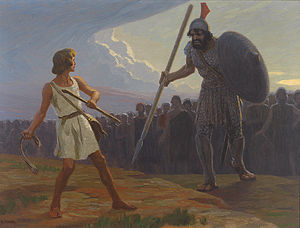
To partner with Goliath, put down the slingshot.
Paul Graham prefers his Y Combinator startups to avoid businesses where success hinges on hooking or partnering with big companies. His stance makes sense. Most of Y Combinator’s biggest hits—Dropbox, Airbnb, Heroku, Wufoo—didn’t require cooperation from large corporations to gain critical mass.
And it’s also true that two of the startup world’s brightest stars of the present, Instagram and Pinterest, didn’t require the cooperation of big companies to thrive. The same goes for Facebook and Groupon, the largest Web IPOs of the last few years.
But not all startups can create consumer-facing widgets like these and watch them go bananas. No matter how awesome your app, the consuming public has only so much bandwidth. There can only be one or two of these runaways in a year. And the room out there for other juggernauts in this mold shrinks every day.
All things being equal, my cofounder and I would love to have a product that didn’t require long sales cycles and so much finessing with large companies, but those constraints didn’t apply to our concept, which is in grocery, a realm that requires cooperation from large companies at every turn. At Y Combinator, Graham pointed out our weaknesses. He scared us enough that we contemplated other paths and ideas, but in the end we stayed the course. We’ve learned a lot about working with billion-dollar companies since then, some of the highlights of which I’ll share below.
While Aisle50 doesn’t merit mention with the YC hits above, our experience does illustrate that there are opportunities for startups that are willing to put on a crash helmet, dive into the fray and pitch big companies.
It’s perfectly understandable that most startups don’t want to do this. It’s hard to leave a large part of your company’s destiny to the whims of others. The enterprise realm is intimidating, slow and not exactly meritocratic. But that also means, often, that incumbent solutions and software are ripe for disruption.
There remains ample room out there for startups with solutions and apps that, at least on one side, face a big company. If a startup can crack that big company code and find its footing, great businesses can be built. Just as important, well-cultivated relationships with large companies leave potential foes with quite the barrier to entry.
To create such barriers, you actually have to land a few—hopefully more than a few—big companies. Here’s some of the things we’ve learned when courting the business of giants:
1. BE FOCUSED
Big companies see thousands of pitches. Focus on what makes yours unique.
When we began pitching our company in earnest during our summer at YC, we called and emailed every grocery company in existence. We peppered each target with at least 10 phone calls, five emails and even a custom-made, brand-specific demo video created in a hot garage in Silicon Valley. In all, we made nearly 50 videos for 50 different pitches, each one requiring multiple hours. This was a crude approach that took vast amounts of time, but we were feeling the pressure of an approaching YC Demo Day where, without something substantial to show potential investors, we’d just be some clowns with a big concept.
Things worked out for us on Demo Day and for the summer, but our wild pitching left behind a charred heap of leads whom we wouldn’t be able to sell to for months. So assuming there’s no demo day-type deadline hanging over you, I wouldn’t recommend the shotgun approach.
We were about as unfocused as was possible. Do the opposite. Find targets that are most likely to say yes and cultivate relationships with the people who matter at these places. What does that mean? List the benefits of your product for each potential target. Find the companies that stand the most to gain from your widget while also considering what companies you stand the best chance at landing (it’s often not the No. 1 player). Where these two properties converge sit your best targets.
April 24, 2012
Biz Dev Is A Clever Name For Dirty Work

If you're not getting dirty, you're not doing biz dev.
We recently called out to the Hacker News crowd with a job opening for a non-hacker “hustler type.” We got a load of resumés, thank you. While we were pleased with the applicant pool, we were also surprised at the general attitude of many of the job seekers.
Judging from the people who applied, it’s clear that startups have seized the zeitgeist that Wall Street once held with the youngish, smartish crowd, as a remarkable breadth of people now want to work at startups.
Within the applications, we saw a lot of pithy clichés like “thinking big” and “building something special” and joining “an exciting company.” Applicants all seemed willing to read the latest Seth Godin book—if they hadn’t already—but a very select few, it seemed, were willing to do what we need most: things that aren’t glamorous, don’t involve whiteboard dreaming and do comprise tasks that are, in general, taxing and annoying.
The kind of tasks that founders do, in other words.
For the most promising applicants, I would follow up with an email repeating what this job is: it will be a grinder; it will involve travel to spots that are far from cosmopolitan; it will require cold calls, rejection and the application of the law of large numbers. I’d finish the email with “If you’re still interested, please let me know. If you’re on the fence, then this job isn’t for you.”
The email may have been a bit stark, but we’re still surprised at how many people it completely scared off. One fellow, who came on strongly in his initial pitch and resume, responded to my email with this:
“Yeah, I don’t think this job is for me. But if you have something in the future that’s more focused on biz dev, please reach out and let me know.”
This applicant is a senior in college.
Hello there, son: this is biz dev. This is the beating, pumping heart of biz dev. I get the impression, from a lot of these biz dev’ers, that they think of biz dev as fun and sexy. One minute you’re grabbing lunch with Ron Conway and Ashton Kutcher and the next minute you’re closing a deal on the phone while you wait in the lobby at Microsoft to give Steve Ballmer the bad news: “No, we will not accept your acquisition offer of 3 trillion dollars.” From there, you head out for cocktails and swirl single-malt Scotch while discussing why Apple is so badass.
That might be biz dev at Facebook, but biz dev in the true startup world is 90% dirty work. The “fun” stuff, I’m afraid, is the hacking and the product development. That’s usually not in the job description for biz dev’ers.
December 13, 2011
The Top 5 Ski Resorts in the United States

More than 4,000 feet of the finest vertical in the world awaits skiers at Jackson Hole Mountain Resort.
When I became serious about skiing, I wanted to know where, exactly, I should be spending my time and my money. I approached the problem as an engineer might. I used quantitative methods: which resort gets the most snow, which has the largest vertical drop, where are the fastest lifts, the most runs, etc. But stats don’t tell the entire story when it comes to grading a ski resort. I’ve found that pairing raw data with the input of raw experience gives the most reliable results. To know a mountain’s virtues, faults and secrets, you must ski it. Not once, not twice, but days upon days, preferably with a local who will minimize the time you schlep and maximize the time your’re skiing something interesting.
So, in the name of interesting skiing, I’ve constructed a Top 5 resorts list according to proprietary, exacting and regularly calibrated metrics. I’ve boiled all of these data points down, consulted superheros, accounted for human error and put the data into a master algorithm that produces an output of a resort’s Pure Awesomeness Factor. In the biz, that’s called a PAF score. A perfect PAF score, which has yet to be produced by man, is 100 . In the name of getting you to the best ski destination possible, here are the top 5 PAF scores in the United States:

Jackson Hole: ridiculous.
1. Jackson Hole, Wyoming (PAF = 99): There’s long been a Four Seasons hotel installed at the base of Jackson Hole Mountain Resort. Such an institution implies all that one would expect: fancy snacks, celebrity sightings, rich cowboys and s’mores bars — all the normal trappings of your first-tier destination resort. But the thing that separates Jackson Hole from the rest of North America’s grade-A mountains is that it has, rather impossibly, managed to retain all of its soul. This is still a place where the best skiers in the world, before skiing off of 50-foot cliffs, gulp down waffles and Budweisers inside a mountaintop shanty called Corbet’s Cabin. Jackson is still the place with the best backcountry skiing in the world. It still gets more snow than anywhere not called Alta. It still has The Tram, the greatest ski lift on earth. For those building their game to rock star level, Jackson’s Steep and Deep camp, which begat imitations across the resort world, provides four days where all skiers can count on improvement. The program, run several times a year, attracts all different kinds of people with different appetites for risk–the one common theme: everybody is good and trying to get better. Nobody’s too good for Steep and Deep; cheeky campers can have their ego shaved by a trip down the tram fall line with olympic downhill gold medalist Tommy Moe. The big skill gainers at camp shimmy their ski tips up to the edge of Corbet’s Couloir. But actually pushing in is another matter.
Its hardcore credentials intact, Jackson has become a place that works well for families. Its Kids Ranch keeps tots well-fed and weaving through cones on their skis. It’s the perfect weaning ground for the next Eric Schlopy. The Bridger Gondola moves people quickly from the base to a point two-thirds up Jackson‘s ridiculous 4,139 vertical drop, where the black diamond folk can find thrills and the groomer folk can find long, wide highways all the way down. About that way down: this is Jackson‘s greatest asset. There’s no hopscotching from fall line to fall line on this mountain. The entire resort is one contiguous, unrelenting and glorious slope that points where it’s supposed to point: down. Those searching for wandering, time-wasting cat tracks might want to consider Colorado. For inquiries on something scenic like a movie (the Tetons), prolific like the Himalayas (450″ of snow) and a fun that’s a little bit different from anywhere else, try Wyoming.
 2. Alta and Snowbird, Utah (PAF = 98): For those looking for a weekend of skiing, there is no better option than these side-by-side resorts that occupy a splendid apron of Little Cottonwood Canyon just 30 minutes from downtown Salt Lake. That nearly 2 million Utahans live so close to skiing that truly defines world-class is a fact that remains a secret to most of the country. If you’ve flown to Denver and schlepped west for the last 10 years–or just two–please stop. Go to Utah. Just go. You won’t see the insides of Denver International for a long time after that, I can assure you. You’ll think you just discovered the Lost Dutchman’s mine and the gold–all of it–is yours and yours alone. And my, is there some gold! Alta and Snowbird average 600″ of snow a year–100% more than your typical Colorado mountain–and, to be fair, more than just about anywhere not in Alaska.
The Alta-Snowbird party scene lacks, well, it lacks. But there’s no shortage of plush accommodations, beginning with Snowbird’s Cliff Lodge, a wonderful modern building whose raw, reinforced concrete edifice evokes the work of architect Paul Rudolph, a brilliant shaper of glass and poured stone. The Cliff Lodge sits snug at the base of Snowbird, with expansive mountain views for every room in the house. Those sleeping in Little Cottonwood may, on rare occasions, be served with a legendary treat: getting “interlodged.” This happens when the road into Little Cottonwood gets closed due to heavy snowfall and avalanche danger. It can take hours sometimes for crews to place the right amount of explosives to clear avalanche paths and pop the road open. During that window of time, Alta and Snowbird often get some of their slopes skiable well before the road is cleared. That means heliskiing-style powder available only to the small band of people who slept the previous night in the Canyon. There’s nice lodging at Alta and Snowbird, but there isn’t a lot of it, which is why getting “interlodged” remains one of the most hallowed privileges in North American skiing.
September 8, 2011
The $700 Million Yogurt Startup

Just a few of the millions that go out every day.
In a scant four years, Hamdi Ulukaya has built something that even Silicon Valley types should covet: a $700 million business that’s profitable, dominant and growing at a furious clip.
Even more incredible: Ulukaya makes yogurt. YOGURT. The stuff comprised of milk and culture. This is the ancient food that must be produced, packaged and shipped to grocery store chains who, if they feel like stocking their shelves, finally disseminate it to consumers. It’s perishable (like software rot, but worse). And the yogurt market is competitive, stocked with old stalwarts such as Yoplait, Dannon and Fage, the king of Greek yogurt before Ulukaya showed up.
Ulukaya, in short, is the Steve Jobs of yogurt. That makes Chobani, of course, the Apple of Greek yogurt.
Ulukaya got Chobani got off the ground in 2007 with the help of an SBA loan. Between then and now, Chobani became the largest yogurt maker in America. It started with Ulukaya winning over upstate New York shops. Then came regional chains, then New England, then national coverage. Chobani became one of the primary engines in the great American discovery of Greek yogurt. Ulukaya could barely keep up with demand. Sometimes he couldn’t. His yogurt plant in New Berlin, NY used to see one milk truck a day. Now it sees 75.
Zero to $700 million in four years. That’s a story that Silicon Valley has only seen a few times. And Silicon Valley scales. Yogurt doesn’t. Well, not easily, anyhow.
Groupon, the fastest growing company ever, got to $700 million faster, but, as any snarky tech pundit will tell you, the Chicago deals site isn’t yet operating in the black. Chobani, by most indications and according to Ulukaya, is firmly profitable. Chobani has taken no investor money, instead building on cash flow and conventional bank loans. Making yogurt at this scale makes the production of software look easy. Don’t think so? Would you like to try your hand scaling up a base software product that already had a small but faithful legion of users? Or would you rather try and grow a popular boutique dairy into a national powerhouse, negotiating the whims of retail chains, consumers and dairy farmers? Do you want to figure out how to deal with 3 million pounds of milk a day? Option A, please.
I recently chatted with Ulukaya about the improbability of what Chobani has accomplished in four years. As a startup founder and a generally curious person, I found his story fascinating, not unlike something knit out of the tech world. (Other than the glaring fact that we’re talking about yogurt, of course.)
Here’s some of the salient nuggets from our talk in Q & A form; startup founders will find Ulukaya’s five tips at the bottom of this piece transfer well from yogurt to tech:
January 27, 2011
So What Kind Of Person Are You? The Machines Know.

The Donald's bombastic personality would be nailed in a matter of seconds by ELoyalty's algorithms.
Are you introverted, information-crazed, an emotional sucker or somebody who craves constant stimulation (hello, Donald Trump)? Do you stick to your “beliefs,” even when facts blatantly contradict you (hello, any politician)?
If you’re not sure what bucket your psyche falls in, ELoyalty’s CEO, Kelly Conway, has an algorithm or two that can tell you. Just like Google‘s algorithms seem to know what it is you’re searching for even when you don’t strike the perfect keywords, ELoyalty’s cache of 2 million algorithms can listen to you speak for as little as 20 seconds and brand you with a personality that would likely surprise you with its accuracy.
The new issue of Forbes magazine, on the stands this weekend, features a piece on Conway’s innovative software here.
Conway’s software assists call center agents in figuring out who you are and how best to deal with you. But Conway is poised to take his robotic psychologist into a menagerie of fields, starting with email scanning.
“How is our relationship with our biggest customer?” booms your boss. Conway’s offering could give an instant temperature of that relationship, as it would keep track of emails and their content in real-time, its algorithms scanning for hints, within the emails’ text, of soaring mutual confidence (good) or eroding trust (bad).
Where else might this technology take us? Might our computers try and cheer us up when we’re down? Will Apple‘s or Microsoft‘s OS, gaining perspective from the messages we type, one day deal with introverts differently than somebody who runs on outward emotional cues? Will Google’s AdWords algorithms use differing pitches for the same product based on Web surfers’ personalities? Will the Netflix algorithm base its movie recommendations not only on what you search for but how you ask? Will Groupon pitch you deals based not only on geography and past buys but based also on how you talk? Will hospitals deftly route patients to doctors who share their personality? If such a thing only takes 30 seconds, why not?
ELoyalty has proved that quick classification of humans’ personalities is possible. With that in the bag, the technology’s expansion becomes academic.
Check out my book, a NYTimes Bestseller, here.

December 8, 2010
Why Groupon Dumped Google – Is The Government to blame?
Many tech prognosticators have said Groupon walked away from Google because the Chicago company wanted to preserve its own culture, continue building its own story and pursue its own IPO in 2011. These things could all be true. But there’s one niggling matter that hasn’t drawn much attention: antitrust scrutiny.
A Silicon Valley source tells Forbes that Groupon was likely asking for a breakup guarantee from Google that the search giant would have to pay Groupon if, in the end, a Justice Department or FTC inquiry broke up the acquisition. Google may not have been willing to potentially sacrifice an amount north of $1 billion for nothing.

Groupon CEO on the cover of Forbes.
Business Insider first reported that a breakup fee could be at the root of failed deal Wednesday night.
While Groupon’s operations certainly wouldn’t have been interrupted by the Google deal sitting in limbo, it would have wreaked chaos on the ability of CEO Andrew Mason and the rest of the board to plan expansion, make acquisitions and continue to aggressively grow what is the fastest growing company ever. It’s hard to operate with an ambiguous future.
The tradeoff for assenting to a period of future ambiguity, of course, is the promise of a large breakup fee if the deal were not to go through. Google gave AdMob a $700 million guarantee when that deal was struck last fall (much to Apple’s chagrin). The kill fee was just short of the $750 million purchase price. That’s not to say Groupon asked for a $4 billion kill fee from Google, but the number was likely big enough to give Google, a company with $30 billion in cash, reason enough to say no.
And without Google, Groupon can still attain tech immortality if it were to land itself in the first row of Web properties alongside the likes of eBay, Amazon, Facebook, Yahoo! and, of course, Google.
Groupon’s rejection of Google shocked many opining bloggers who thought Mason and Co. were nuts for turning down the dough.
Still, some tech insiders weren’t surprised by Groupon’s move. Perhaps the most prolific angel investor of them all, Ron Conway, wasn’t shocked. “No, not really,” Conway says. “Andrew is a powerful entrepreneur.”
Check out my book, $20 Per Gallon, here.

Christopher Steiner's Blog

- Christopher Steiner's profile
- 21 followers

