
Christopher Steiner's Blog, page 5
December 10, 2014
Newer Towns Waste More Energy
Daniel Burnham, the best-known urban planner from a country—the United States—not known for producing them, didn’t fret about energy use the way we do now. But Burnham’s inclinations toward central plans, main boulevards and a mix of green space and density, have proven to be far more energy efficient than the absent methodology behind the last 60 years of suburban growth.
Burnham famously said, “Make no little plans. They have no magic to stir men’s blood and probably will not themselves be realized.” Small plans, with little room for the grandiose, can be a fine way to build a house. But as Burnham told us more than 100 years ago, they’re no way to build civilization.
One of the reasons Chicago is Chicago, with its vast network of lakefront parks and miles of abutting neighborhoods teeming with valuable skyscrapers, townhomes and condos, traces to its incorporation of many of Burnham’s notions put forth in his 1909 The Plan of Chicago.Burnham, whose proposal coincided with the rise of electricity and centralized energy plants, didn’t put much thought toward carbon footprints and utility bills, but, like all planners of the day, he sought to minimize commutes and make life simpler for Chicago’s residents—something that in itself curbs energy use. This fact, along with the advantages of shared walls and floors, puts residents of the U.S.’s denser cities far ahead when it comes to keeping energy bills down.
The energy savings for city households can be stark, according to a study by researchers at UC Berkeley. The average carbon footprint for a household in Chicago’s 60610 zip code, on the near north side where residents may eschew car travel for days or weeks, is 34.4 metric tons of carbon dioxide, with only 7 tons attributed to transportation. In Naperville, a far west suburb, the average household has a 149% larger footprint, at 85.8 tons of CO2, with 26 tons coming from transportation.
Naperville, which ranks highly with suburbanites for good schools and newer housing stock, has seen its population grow from 87,490 in 1990 to 143,684 in 2012. But too much of that growth has come from Burnham’s bane: small plans piled upon small plans, resulting in a town of willy-nilly subdivisions and cul-de-sacs where traffic on the too-few arterial roads—built decades ago for a smaller population—can paralyze commutes.
But suburbs aren’t inherently bad. Even Burnham, an original American urbanist who designed some of the world’s first skyscrapers, had a soft spot for the burbs: he moved his family to a sprawling estate in Evanston, just beyond Chicago’s north border, in 1896.
Burnham would likely be surprised to find out that Evanston, with its CTA L trains and commuter rail connections that take as little as 21 minutes from downtown Chicago, has become what’s known as an inner-ring suburb, where the niceties of city life mix with a few more trees, better schools and a higher-than-normal suburban population density to reward households with energy footprints far less than those of far-flung burbs. Evanston households have carbon footprints of 47.1 metric tons, 45% less than that of Naperville—with 12 tons of that coming from transportation, a 54% drop compared with car-dependent Naperville. Most Evanston residents can easily walk to a grocery store, or make their way via L trains or commuter rail to Chicago’s Loop, the second largest job center in the U.S. behind Manhattan.
Evanston benefits from infrastructure built a century ago. Naperville and suburbs like it—Livermore in San Francisco’s East Bay, Rancho Cucamonga east of Los Angeles, or The Woodlands outside Houston—don’t have the same energy advantages because of the way they were built: with a series of small plans, or worse, no plans.
Periods of low oil prices, which tend to be fleeting, don’t make suburbs more efficient; they merely encourage more small plans and increase our future liabilities for both carbon emissions and energy costs. But technology, in the form supercharged solar panels and hybrid and electric cars, could eventually bail exurbia out. Researchers from the University of Auckland in New Zealand concluded that exurban homes, with their meandering roof lines, will in the future generate 10 times as much solar energy per resident as taller, denser buildings in cities. Of course, all of that technology will cost money, albeit less than it has in the past. Until then, however, the advantage lies with the old-school infrastructure built a century ago: diverse road grids, denser mixed use plans and legacy rail.
Christopher Steiner is a former Forbes staff writer and the New York Times Bestselling Author of two books, including one on energy: $20 Per Gallon.


November 18, 2014
The Top 10 Ski Resorts In North America For 2015
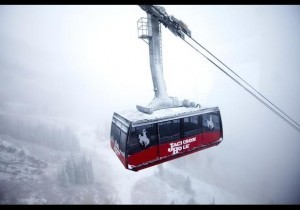 see photosNiall Bouzon
Click for full photo gallery: The Top 10 Ski Resorts For 2015
This is the third year of the best, most-read ski resort rankings on the Web. Each time we do this, we try to expand the number and depth of factors in our algorithm and explore and vet the nuances involved in ranking all of these ski mountains that can be so inherently different. We’ve also been listening to our millions of readers. Up until this year, for simplicity’s sake—and because gathering the right data takes time— we’ve only ranked resorts within the United States. This year, Whistler advocates can finally relax: we’ve expanded our rankings to include the whole of North America, which means that British Columbia, paragon of alpine snowfall, will be part of the mix that we sift.
As always, we have complete rankings for more than 200 North American resorts, with full sets of data, at ZRankings.com. If you don’t see a resort here in the top 10, you will almost definitely find it amongst those 200 best ski resorts at ZRankings.
Running through the spine of all of our rankings is the Pure Awesomness Factor. It’s how we grade resorts—and it’s the most pure mathematical expression for awesomeness as has been conceived in the universe. A resort’s PAF score cuts through the marketing, the dogma, the conventional wisdom that’s anything but to produce unadulterated, unalloyed truth. To believe the PAF is to believe the truth, to believe in awesome.
Believe that ranking ski resorts, while it’s certainly not a hard science—should be several magnitudes more scientific than many of the other rankings we see so often on the Web. For one thing, there are absolutes that matter when it comes to ski resorts, things like continuous, lift-serviced vertical, skiable acreage, efficiency of lifts, town and ambience and, perhaps most importantly, snow and terrain. The quality and quantity of snow varies widely from mountain to mountain; it’s what separates the elite from the good. Terrain can be even more of a separator, given consistently good snow conditions. Terrain doesn’t vary year to year. It’s not capricious, like the weather. Terrain offers us something of a binary qualifier—resorts either have it, or they don’t. Similarly, you have good gear, or you don’t—see Forbes’ top five gear pieces for this winter here, which include the most advanced life saving device you can strap on your back.
Rarefied terrain exists at only a handful of resorts, one of which you will not see in our rankings. Unlike the other resorts on our list, Silverton Mountain isn’t for everybody. But if you’re good, it is for you, and you should go. It’s a pilgrimage that all serious skiers should take at some point in their lives. I profiled how Aaron and Jen Brill built Silverton from the ground up in Forbes magazine nine years ago. I journeyed back to the San Juans of Colorado last winter to see what has changed at Silverton, and what has blessedly stayed the same. Read about it here.
Even if you’re not looking for elite terrain or aren’t ready to test yourself at Silverton, everybody is looking for snow. Cold precipitation can be the difference between a ski trip that’s remembered for a lifetime and one that fades into the pot of mundane memories. That’s why we measure not only annual averages, but also the standard deviation of a resort’s snowfall. Some resorts, like those around Lake Tahoe, can boast large annual averages, but they’re also far more likely than most resorts in the Rockies to go a month with little to no snow (like the winter of 2014). In other cases, some resorts inflate their numbers, reporting dubious annual snow averages or vertical drops that aren’t serviced by lifts; we adjust for that. Similar to last year, our snow ranking system has received an assist from Tony Crocker, who has been gathering snowfall data on more than 100 North American Resorts for more than a decade. His data come from a variety of sources, from patrol shack logs to avalanche center records. This data is more valuable than numbers reported by resorts on their websites and in their marketing grist because, as mentioned before, those numbers can sometimes skew away from reality.
Speaking of snow, Lake Tahoe resorts are conspicuously absent from our top 10 this year. Just as with every other year, we tweak the algorithm we use for the rankings. In the algorithm this year, we included snow scores devised at ZRankings.com by Tony Crocker. Tahoe area resorts didn’t show well in those snow rankings: too much variance, too little consistency and a snowpack formed by snow with high moisture content and assaulted by temperatures that are significantly warmer than those in the Rockies. And, it should be known, in coming to these grades, we basically ignored the ignominious winter that the Tahoe area suffered through last season. Here’s hoping this year is a banner one for the Sierras.
The complete snow breakdowns for more than 200 resorts in North America can be found here. Grading a resort’s snow requires analyzing several factors, including: its average quantity of snow seen during a skiing winter (December through March—we don’t care much about snow in October, it usually melts); the standard deviation of the snowfall (how dependable is it—is it 600 inches one year and 150 inches the next, or is it a steady 400 inches nearly every year); the quality of the snow (snow in the Pacific Northwest can often be wet and heavy, not so in the Rockies); the latitude and elevation of the resort—northerly latitudes and higher elevations lead to better snow preservation; and the aspects of the resort’s terrain—north-facing slopes preserve snow better than south-facing slopes.
And as always, we reserve a human touch for some of the data ingested by our algorithm: our team of ZRankings skiers criss-crosses the continent every winter to visit resorts new to us and reacquaint ourselves with resorts we may have visited several years ago.
With that bit of explanation out of the way, I invite you to explore the best ski resorts in North America, as ranked by their Pure Awesomeness Factors.
Black Diamond’s JetForce Is The Best Avalanche Pack In The World
Like packs built by ABS, Snowpulse and BCA, the JetForce ($1,299) deploys a large balloon when activated by the wearer. The volume of the inflated balloon helps keep the pack—and the person strapped to it—toward the top of the flow in a cascading avalanche. The JetForce works just like these other packs that have been on the market in some cases for nearly 20 years. The difference, and why we’re telling you about it, is that the JetForce simply works better.
The JetForce, released for this winter by Black Diamond and some of its other brands—Pieps and POC—is the best avalanche airbag pack ever made. It offers a large leap in performance, convenience and, in our estimation, dependability compared with everything else now on the market.
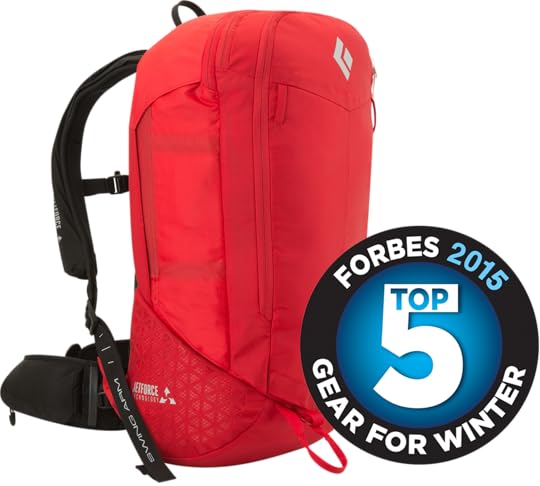
This is the avalanche pack equivalent of the iPhone’s initial release in 2007: the rest of the industry will undoubtedly close the gap in the next few years, but for now this pack is demonstrably better than every other comer.
Why? Because this pack does everything better. It also can do many things, like the first iPhone, that all other airbag packs can’t do.
Other airbag packs use some form of compressed air to inflate their balloons. Using this mechanical solution of quickly-released air gave the industry a fine solution two decades ago, but one that has always come with a number of caveats. The canisters in some cases are expensive—$90 each—and need to be refilled by the manufacturer. In other cases, they can be topped off by places that deal in compressed air—like paint-ball gun dealers—but that means a pack wearer essentially needs to trust the kid at the paint-ball shop with his life. An even bigger problem for many skiers: filled tanks can’t be transported by airlines in the United States, either in a traveler’s checked bag or as a carry on. Even worse, some packs’ trigger handles contain explosives and can’t be brought on commercial airliners. In addition, these ordnance-activated trigger handles can only be used once before being sent back to the manufacturer to be rearmed.
This also means training with the airbag can be expensive. In the field, if a rider pulls her trigger in a false alarm, or even in a real slide, she can’t use it again without an extra tank and trigger, adding cumbersome weight to a backcountry pack.
The JetForce eliminates many of these problems and hassles with an electronic solution that uses a lithium-ion battery-powered jet-fan to inflate its airbags. The rechargeable battery can fully deploy the balloon three times on a single charge. Full inflation takes less than three seconds, about the same amount of time as the compressed-air packs require.
Avalanches tend to be messy affairs that often involve trees, rocks and other pointy items that can puncture airbags. The JetForce, powered by a fan and not a finite supply of compressed air, can keep its balloon fully inflated even with a six-inch tear. The firmware aboard the electronic system, with the click of a button, can also perform an integrity check on the pack’s entire system and give the wearer a quick confirmation, in the form of a beep and flashing green light, that everything is in working order and ready for deployment.
And with the electronic system, Black Diamond leaves open the possibility for firmware updates in the future that could possibly improve the pack’s efficiency, fix a bug (there are no known bugs) or bring improvement to any number of facets controlled by the on-board electronics.
For now, however, the JetForce dominates its competition without updating anything. The only problem is finding one for sale.
Christopher Steiner is a New York Times Bestselling Author of Automate This, How Algorithms Came to Rule Our World, and the founder of ZRankings, which ranks the 220 best ski resorts in North America using more than 30 factors.
The Soul Of Skiing Still Lives At Silverton
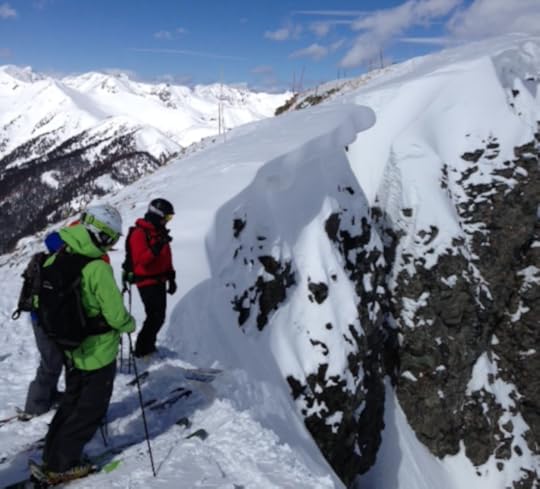
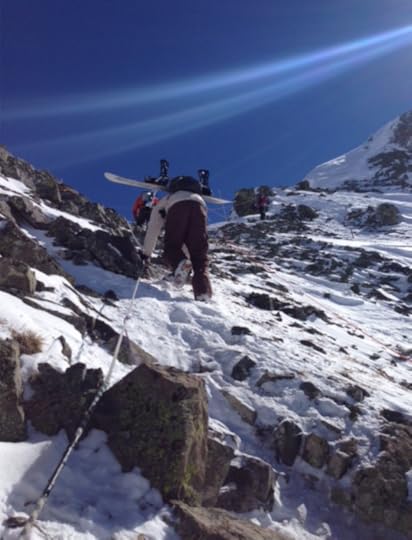
Standing at 13,000 feet, knee deep in snow, we faced an agonizing choice between two paths: drop off the ridge now, ski to the flats below and pile into a helicopter for one-run of untouched powder, or, alternatively, keep hiking up a steep spine of rocks, assisted by a rope, skis and boards on our backs, for another 20 minutes. The heli-skiing seemed to be the obvious choice, and five of our group of eight made that call with no hesitation. They skied down, yelling and whooping toward a waiting helicopter. Three of us kept trudging upward.
We had more than an inkling that we had made the right decision, however. Our leader in this case was Jen Brill, who founded Silverton Mountain with her husband, Aaron, 13 years ago. As the business has grown up, Brill, a former pro snowboarder, stepped back from guiding; in fact, we were the first people she’d guided on the mountain in four years. On the ridge, deliberating the heli decision, we got a nudge to keep going from Brill: “Guys, I can’t promise you anything, but I’m telling you, I think this is going to be good—really, really good.” For those of us left—myself, Sean Buxton, a wealth manager from Silicon Valley, and Joe Thornhill, a digital media publisher from Arizona—ignoring Brill’s clear excitement at what kind of skiing was ahead seemed imprudent.
So we kept going up, rope in our hands, one step at a time, eventually getting past a rather vertical pitch called the Hillary Step. Not quite the test as its namesake on Mt. Everest, we were still happy to get the crux behind us. When we reached the spot where we’d drop in, an hour after setting off from the ski lift at 12,500 feet, Jen chatted with her patrollers on the radio about where we should go. She had one particular spot in mind. “Has anybody been in there?” she asked. The response came quickly: “Nobody.”
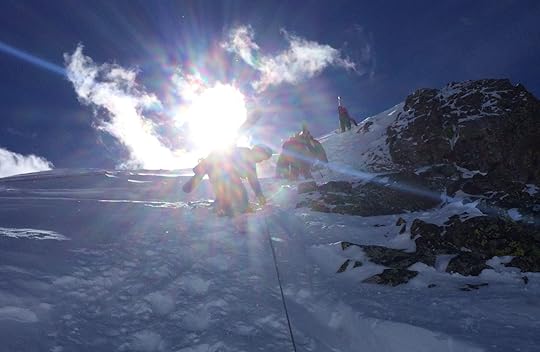
Our destination was a couloir that’s unofficially known as Porn Star. The U.S. Bureau of Land Management, which permits Brill’s operation to ski this patch of the San Juans in southwest Colorado, frowns upon referring to government land with fun, albeit juvenile monikers, so Porn Star stays off the books. Officially, we were skiing snow without a name.
With undisturbed powder and the shape of a 30-foot-wide water slide, the couloir lived up to Brill’s non-promises as we arced through it, linking turns for 1,000 vertical feet, rock walls at our sides, an immaculate drape of snow below us.
Our erstwhile hiking buddies, having been dispatched by the helicopter on a ridge across the valley, paused their own descent and admired our work. We looked like TGR gods, but, really, it wasn’t us. It was the perfect snow, the perfect pitch, the perfect proportions of a run that got its name because it makes everybody look like a porn star.
The couloir then transitioned to a narrower chute, smartly dubbed The Fluffer, which held deeper snow. These were the benefits of the extra vertical we earned on the ridge. To us urbanites, The Fluffer felt like the Chugach.
Most won’t be lucky enough to ski with one of the Brills when at Silverton, but runs like ours happen nearly every day this place is open. I profiled the Brills and their mountain nine years ago in Forbes magazine, and I ventured back last winter to have some fun and to see what’s changed for the Brills during a decade of shepherding expert skiers through this snowy, steep and high stretch of the Rockies.
The Brills work harder, longer, than most any resort operator in the industry. Their avalanche control and analysis work has become a standard. In 13 years of skiing this stretch of serrated peaks where heavy snowfall and high Colorado conditions combine to make for a dangerous snowpack, not one skier at Silverton has been buried by a slide, remarkable considering that people have been buried and killed in-bounds at big commercial ski resorts in recent years.
The hard work remains, but plenty has changed for the Brills. Since they first hatched this plan by attaining mining rights on the land in 2000 for a song, they’ve handed off most of the guiding to their staff, settled down in Silverton, started a family and watched as new restaurants and lodging options in town rallied around a winter tourist season that didn’t exist before the couple showed up from Montana. (Not to be missed: Montanya, serving Colorado-distilled gin, which makes for mean cocktails)
For skiers, change isn’t too apparent, other than the helicopter. Piloted by Philip Genick, an Austrian whose mechanical skill with the craft seems almost robotic, the helicopter rarely stops moving during the day, ferrying heli-skiing clients who pay $999 for the day or, in what is a uniquely Silverton offer, $179 for a single drop. Heli-skiing clients now come over from Aspen for the day, on a chartered plane to Telluride Airport, where the Silverton helicopter picks them up and has them at the base of the Brills’ mountain 10 minutes later. The charter flight is $2,000 round trip and can take four skiers.
Having honed the operations at Silverton Mountain to a fine science, the helicopter has allowed the Brills to expand to Alaska, the only place where terrain and snow can coalesce to create conditions that can beat Silverton at its best. Since 2009, Aaron has been taking several of his guides and the helicopter north to the promised land beginning in the second week of March until the end of April.
When the Brills expanded to Alaska—with the largest area of permitted skiing territory of any heli operation in the state—it was with the goal of solving two problems that had vexed other outfitters: uncooperative weather that can keep choppers grounded for days, ruining some skiers’ trips; and the thorny problem of skier compatibility. Being slotted into the wrong group for several days of heli-skiing creates a problem for everyone involved. Faster skiers who have paid the better part of $10,000 for their week in Alaska feel cheated when slower skiers cost them time, runs and vertical; and slower skiers feel the constant pressure of having to ski faster than they’re capable while rarely getting a fair rest (because they’re always working to catch up).
The Top 5 Gear Pieces For Winter 2015
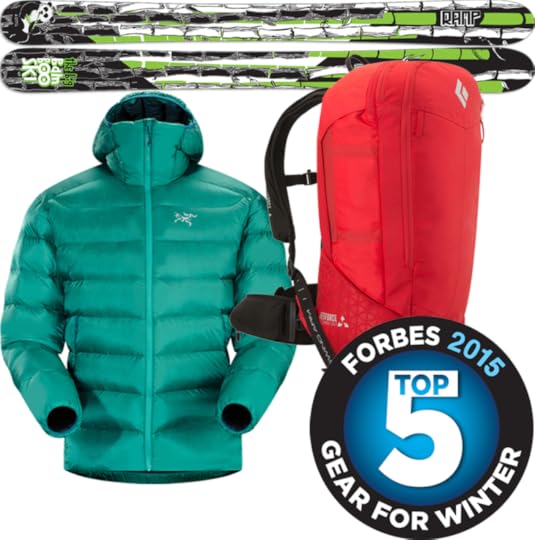
This year’s Forbes Top Winter Gear picks include some of the usual bric-a-brac one might covet when heading to the mountains in winter. Superb jackets, one pair of fancy ski bibs, goggles with the widest view we’ve seen, big, fun and bouncy skis. But one item will only be of use to a few; it’s not the kind of thing we’d usually include in the list as it’s something of a specialty piece, but its design, engineering and form factor are of a level that compelled us to grant its inclusion. This extra item pushed our Top 5 Gear to this year become the top 6. But we’re still calling it the Top 5.
This extra item is the Black Diamond JetForce avalanche airbag pack, which right now seems to be sold out everywhere, although I’m told that dedicated seekers can find a pack at local specialty shops here and there. But walking into REI isn’t going to work, I’m afraid. There’s a lot to say about this piece of paradigm-changing gear, so we’ll direct you to our separate piece focusing on the JetForce if you want to read more.
Arc’Teryx Cerium SV $499: Puffy down jackets of all calibers have infiltrated the closets of almost everybody who might go outside when it’s 40 degrees or cooler. Most of these jackets serve their wearers just fine; they’re warm, light and they can be stuffed into a small coffee cup. Arc’Teryx for years eschewed the down market in favor of synthetics that held up when wet.
To the chagrin of everybody else in the industry, the Canadian jacket maker piled into down last winter and, unsurprisingly, found new ways to make the straight down hoody even better. All of the Arc’Teryx down products sit as exemplars in the space, but we especially like the Cerium SV Hoody. It’s the toughest of the bunch (the SV stands for Severe Weather) and still only 15.5 oz with its baffles stuffed full of 850-fill goose down. Many competitors use 700-fill or less, which is fine, but 850 nopuffs up like a rocket ship.
Arc’Teryx designers stripped the coat of unnecessary fabric and volume for a trim look. Sleek appareance aside, the Cerium SV hase more then enough insulation for a winter like Minneapolis saw last year. The jacket contains small pockets of coreloft synthetic insulation in nooks where sweat can accumulate, with the 850 down in the core and hood.
Black Diamond Convergent Shell $379: I wrote about Black Diamond’s all-in outerwear foray in Forbes magazine in September. The move into textiles has produced a lot of intriguing pieces from a company that thinks of itself more like an Apple—engineering and iterative products—than it does a clothing maker. That’s a state of mind that Black Diamond has earned, with its roots that go back to some of the original alpine hardware making and with a factory in Salt Lake that pumps out 80% of the world’s supply of carabineers.
Chief among those new products is our favorite, the Convergent Shell. It’s an outer layer that gives wearers weather resistance that serves well in any conditions but a rain downpour while dumping more of the moisture that gets created in bootpack hike or an intense powder mission in the trees. The coat relies on Gore Windstopper, which, in this case, is taped like a full Gore-Tex product, making it more resistant to water and wind but still retaining Windstopper’s superior breathability to its waterproof cousin and all of its copycats.
The Convergent doesn’t include the Cohaesive cord lock technology that debuted in Black Diamond’s Front Point Shell, but we’re hoping maybe that comes along in next year’s model. This jacket can be your front-line shell on the mountain anywhere; for those who work a little for their lines, this should be the default.
Ramp Skis The Big Bambooski $599: The name might be enough to make them awesome by mere association. Ramp ensured these boards’ excellence, though, by fusing a bamboo core with Kevlar to lend them torsional rigidity and an everything-friendly footprint of 136-105-131 (millimeters) in ski sizes of 169, 179 and 189 cm.
An early rise plus a double tip let’s skiers get goofy without worrying about sacrificing maneuverability in the park or in the glades. The Kevlar also serves as something of a bullet-proof vest for the bamboo, keeping the boards safe from core shots, evil rocks and other attackers. The center of the ski carries a traditional camber that lets skiers put these on edge and escape back to the lift at getaway speeds after they’ve eaten their share of powder and crud at the trough.
As with all RAMP skis, snowboards and longboards, The Big Bambooski is built by hand in Park City, Utah, one of the best true mountain towns in the U.S. For those who make it to Utah, Ramp offers daily demos out of its factory.
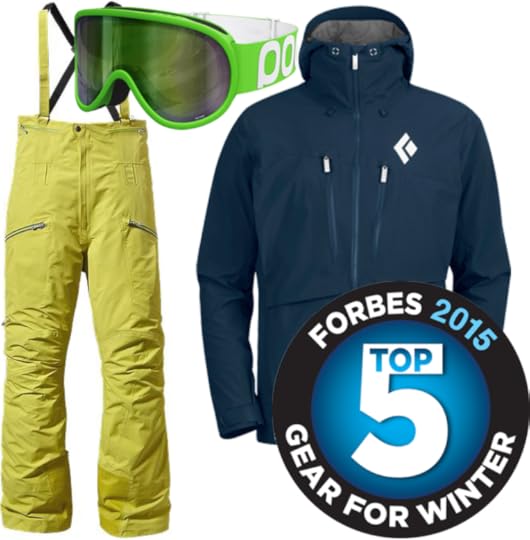
POC Retina Goggles $125: The Swedish team at POC came up with a goggle design that somehow stays inside of most helmet cutouts while giving skiers an even bigger lense through which to conduct the business of seeing. It’s a treat to don these goggles, whose slim outer frame offers less blockages to riders’ peripheral visions and an even bigger view of things that matter: trees, death cookies and, perhaps most important, other skiers.
Built from soft-coated polyurethane, the Retina frame keeps its form well and stays supple enough to wrap around and remain in contact with nearly any shape of face. An optical grade polycarbonate lens keeps the view clear and fog free. And as with most POC products, and much the general design that comes out of Sweden, the end result looks quite appealing.
Patagonia PowSlayer Bibs $599: Patagonia created a flagship set of outerwear for people who travel the chairlift like many others hop on local 6 train every morning. And just like riding the local, there’s often things encountered during the mountain commute that we’d rather not permeate our outer clothing later. For that, the Pow Slayer gets an A+, hard to do in an engineering class. These bibs are the lower half of your mountain Fort Knox.
September 10, 2014
A Fight For The Mountaintop: Yvon Chouinard’s Disciple Challenges Patagonia
A quarter-century on there is still a keen rivalry between Peter Metcalf and legendary outdoor entrepreneur and environmentalist Yvon Chouinard. A longtime protégé, Metcalf was running Chouinard’s original company, which made hard-core climbing equipment, rather than Patagonia apparel. In 1989 Chouinard Equipment was forced into bankruptcy after a series of suits filed by injured climbers who claimed “failure to warn.” Eventually Chouinard Equipment settled the largest suit, filed by the family of a man who died in the Tetons while using one of its harnesses. By then, though, Metcalf had put together a motley group of investors, raising $900,000 to buy the company’s liquidated assets.
“We both got a good deal,” says Metcalf, now 59. “But at the time I think we both thought we got screwed.” The sale was “really hard for him to go through,” he says of Chouinard, 75, who had hived off the business in 1981 to concentrate on apparel. Metcalf cinched together the business of making climbing carabiners, harnesses and backcountry skis, renamed the company Black Diamond Equipment and moved its operations from Patagonia’s coastal Ventura, Calif. headquarters to Salt Lake City, where he envisioned employees skiing and climbing before and after work. “I saw people at Patagonia getting soft,” Metcalf explains. “I wanted our environment to be accretive.”
Now the two companies are squaring off again as Black Diamond enters the apparel market. This is no contest of equals: At $600 million or so in 2013 revenue, Patagonia is three times as large as Black Diamond. It’s more like a showdown between Marc Benioff and Larry Ellison than, say, Steve Jobs and Bill Gates.
Metcalf, who still has the wiry build of a climber and a full head of gray-flecked black hair, grew up on flat Long Island, N.Y. But he still remembers as a teen receiving his first Chouinard Equipment catalog and hitchhiking 100 miles to climb at Shawangunk Ridge, west of New Paltz, N.Y. He put off college to climb remote peaks, including some first ascents in Alaska and Wyoming, eventually getting a degree in poli-sci from the University of Colorado. He worked odd jobs to maximize his time hanging from a rope. In 1982 he convinced Chouinard, who founded what became Patagonia in 1970, to hire him.
After moving Black Diamond to Salt Lake, clinging to $6 million in annual revenue, Metcalf persuaded a local bank to sell him a foreclosed 6-acre property near the foot of the Wasatch Range. The abandoned grocery store and 100,000 square feet of office and industrial space under six roofs are the footprint of today’s headquarters. Hero shots of employees outside using the equipment cover the walls. New engineering graduates designed strength-testing equipment and machines to bend and form aluminum into carabiners and make harnesses from nylon canvas; they’re still cranking 20 hours a day.
Through the 1990s the company focused on hardware, expanding into headlamps and avalanche equipment like shovels and probes. By 1998 sales were only $22 million. Black Diamond was a mere ridge among peaks like Columbia, The North Face, Canada’s Arc’teryx and, of course, Patagonia–the last two of which jumped from harnesses and packs into apparel. Not Metcalf. He expanded into backcountry skis, bindings, boots and ski packs. With 30 engineers on staff he developed the AvaLung, which dumps exhaled CO 2 away from users’ heads toward their lower backs, giving avalanche victims up to an extra 40 minutes of survival time. (This fall it’s releasing a $1,300 avalanche pack that inflates an air bag, meant to keep a user above the fray in a slide, with an electronically controlled turbo fan run by a lithium-ion battery.) “They’re product people with engineering at their core,” says Tom Boyle, strategic marketer at W.L. Gore & Associates, which makes Gore-Tex.
By 2010, when Black Diamond was a $92-million-a-year brand, long-faithful investors were getting antsy. So Metcalf did a reverse merger with the help of Warren Kanders, who ran a Stamford, Conn. private equity firm and made his fortune producing armor for U.S. Army Humvees in Iraq and Afghanistan and selling out to BAE Systems for $4.1 billion. The finagling involved two Kanders companies: Clarus Corp., a public but defunct software maker with $81 million in cash and $231 million in losses on its books, and Gregory Mountain Products, maker of backpacks and other goods. Using cash and debt, the deal paid Black Diamond shareholders $90 million and Gregory holders $45 million, allowing the sellers to buy into the recapitalized Black Diamond for $6 a share. With a 24% stake, Kanders became executive chairman. Gregory was sold to Samsonite this year for $85 million.
Looking for big veins of growth, Metcalf changed his mind about apparel. Gross margins on shells, pants and insulating jackets can touch 50%; climbing and hiking gear, 35% or so. To produce the right stuff, Black Diamond began poaching key people from Arc’teryx, The North Face and Orvis and two well-regarded experts, Tim Bantle and Martijn Linden, from Patagonia. Chouinard’s company returned the favor by ordering Patagonia to block all calls and e-mails from Black Diamond offices for a time in 2011. “Black Diamond makes great climbing equipment,” says a Patagonia spokesman. “But all it borrowed from Patagonia was some technical know-how”–not its soul. “Starting apparel has been tough,” says Metcalf. As for the Chouinard family, he concedes, “it’s challenged our friendship.”
The move to soft goods has also challenged the lovefest with investors. After rising to $15 a share last fall, Black Diamond’s stock has about halved. Metcalf says shareholders were disappointed by second-quarter results, which merely met company guidance. But some investors are leery after two consecutive losing quarters this year and as Black Diamond feels top-line drift after the sale of Gregory. “The golden years of this company are ahead of us,” asserts Metcalf.
There’d better be gold in waterproof, abrasion-resistant outerwear: Black Diamond is banking on a $250 million lift to revenue by the early 2020s, up from about zero a year ago. Last year it sold out initial offerings–fleeces and insulating goods–and its biggest customer, REI, is lining up for more. This fall Metcalf will offer 120 apparel products, up from 24 in 2013.
With six-year veteran Rose Marcario now at the helm, Patagonia is cutting new trails, too. Besides its aggressive push into sports, fishing and packs, the private company has opened a small food division (wild sockeye salmon) and a $20 million fund to back environmental startups.
While Metcalf just turned over day-to-day duties to Zeena Freeman, an ex-Sony and GAP manager, he still enjoys a good fight: “We’re like the 17-year-old delinquent who got kicked out of the house and has now made good.”
Christopher Steiner is a New York Times Bestselling Author of two books, including Automate This. Follow him on Twitter here.
November 13, 2013
Vail Resorts CEO Rob Katz: Likes Powder, Admires Deer Valley, Commands $2.5B Company
There hasn’t been a more interesting time for Vail Resorts, a $2.5 billion company that owns a bunch of the best ski resorts anywhere—more than a few of which rank well in the 2014 Top Ski Resorts List. Vail Resorts is traded on the NYSE and the man who answers to the market, snow or no snow, is CEO Rob Katz. There have been companies in the past that have taken disparate resorts and glommed them together, but its hard to call this glomming. There’s a holistic consistency, a standard, a set of features across such a large network that we’ve noticed from the flagships at Vail and Beaver Creek, all the way out to the West Coast at Heavenly. Katz is behind all of this—and the steady expansion of one of the best deals in skiing, The Epic Pass.

The dominant company in the ski industry.
Katz took a moment to chat with us before the upcoming season goes tilts full-on and chews up all of his time in the boardroom—and on the snow.
Christopher Steiner: What’s your favorite spot to ski? Part B: What’s your favorite spot to ski outside of Vail Resorts?
Rob Katz: Ricky’s Ridge at Vail Mountain has been a favorite for a long time, so much so that the name is now my twitter handle. Outside of the resorts we operate, I’m also a huge fan of Verbier in Switzerland. Both the French and Swiss Alps are just incredible, both in terms of the terrain they offer and the amazing vistas.
Steiner: What are the one or two resorts, outside of those belonging to your company, that you’re most impressed with in how they’ve run their business, built their clientele and executed on a plan?
Katz: I have a lot of respect for Deer Valley. Like us, they have an incredible attention to detail and a commitment to investing in their resort to continue to improve the guest experience.
Steiner: Many years ago, I was a freshly-minted engineering graduate who decided to spend a winter ski bumming. I ended up in Park City, and I worked on the mountain at The Canyons—a resort that has an interesting, zig-zagging history. After that winter, I got a “real job” at a resort design firm in Park City; The Canyons remained my home hill for several years. So I’m quite intrigued that Vail Resorts has become the newest owner of this mountain. This is Vail’s first Utah property. In the past, Vail has usually not stopped at one resort in one region—is there more to the Utah story for Vail Resorts?
Katz: Right now our focus is exclusively on Canyons and continuing the great progress the resort has made in both new amenities for skiers and riders and getting the word our about the incredible terrain they offer. We are always looking at new resorts to acquire, but with a focus on those places where we feel we can add value, and even more importantly, where the resort adds value to our company.
Steiner: Still on the Utah angle: I’ve always considered Utah to be Colorado’s biggest competitor, as a state and an airport (SLC) when it comes to luring destination skiers from all over, but particularly the Midwest and East Coast. Utah is a distant No. 2 to Colorado, clearly, but with so many of your resorts in Colorado—and arguably your two biggest revenue generators in Vail and BC (I could be mistaken on that), are you concerned that, in building out Canyons to its considerable potential, you’re strengthening the Utah market and perhaps, in the future, diverting some trips from Colorado to Utah?

In 2009 when the ski industry struggled, CEO Katz cut his nearly $1 million salary to $0.
Katz: Utah, in general, and Canyons offer their own unique experience that is different from Colorado. Our goal is to build overall skiing and riding and to promote the sport. There is no better way to do that than elevating the guest experience at as many resorts as possible. Today, we operate resorts in Colorado that certainly compete with each other. But we use that tension to make each of them better.
Steiner: The moves you made to buy ski hills in Minnesota and Michigan were good for all involved, it seems. Local skiers get improved facilities and the opportunity to buy an Epic Pass—and Vail Resorts gets added destination skiers when these pass holders take their annual trip out west. Any more plans to buy local hills like these?
Katz: We think there may be a handful of these opportunities for us in North America. There has to be the right combination of factors. First and foremost, a robust local skier market, which was certainly present in Minneapolis and Detroit. But, we also need a great ski area that can really deliver a great experience, even with a smaller footprint. These smaller ski areas are where many people start skiing and riding for the first time and we so we talk about these urban ski experiences as “Where Epic Begins”.
Steiner: In the vein of the last question and in light of the purchases in the Upper Midwest, will you ever look east—like New England East?
Katz: New England is a very different market than the Midwest and requires a very different business model. It’s certainly something we continue to look at and assess what might make sense for our overall strategy.
The Top 5 Ski Resorts For Families In 2014
We are breaking it down family style.
What makes a ski resort great for families? The factors range from easy access via the airport to the quality of ski schools to what we think is most important: how well a mountain is suited for li’l skiers, and all of their pole-less, hemet-bobbing, grunting, huffing, tumbling and cocoa-slurping behaviors.
First thing about a mountain that appeals to us when it comes to family skiing: mountains where the commute from the car to the slopes isn’t a killer. There are a few things that one might do on a so-called vacation that are more excruciating than schlep your ski gear, along with two other, smaller peoples’ ski gear across distances meant for a camel. In some cases, these little people may need some schlepping when it comes to their own persons, as they’re often wont to complain about walking any farther than 20 paces in any direction.
After the trip to get to the slopes, which we hope is as short as mercifully possible, what matters most are the slopes themselves: how far from the bottom of the mountain must sweaty parents further lug equipment and children to a chairlift that services some nice, big, wide groomers? Not far, we hope. Most mountains have a bit of a tapering run-out at the bottom, which creates a natural spot for slow green runs and mild terrain parks—a great situation for families.
There are more than a few mountains, however, where the big green groomers aren’t located right at the bottom of the hill. Or perhaps some greens have been placed down low, but they’re stubby little runs that don’t even merit a real chair lift. In addition to the difficulty of reaching family-friendly terrain at some mountains, there’s also the even larger issue of an acute dearth of true lower-intermediate terrain. Some mountains dress up cat-tracks (roads that criss-cross the mountain, used by snowmobiles and groomers in off hours) as green runs and include them prominently on the trail map. That can fool plenty of people who haven’t skied the mountain before, thinking they’ve found
We hereby demand that cat-tracks, even if they’re easy skiing, be reclassified on trail maps as purple bananas. They’re not worthy of being green circles, those magical zones where kids learn to turn, fall, get up and, ultimately, love skiing as much as their backwards-skiing, instructions-barking parents already love it. We expect those purple bananas to show up on trail maps next year; we know you’re reading this, resort people.
The best family resorts have long runs. The longer a run can be, the better. The more time you can spend skiing down at once, the fewer chairlift loadings and un-loadings are required by parent and child, and this is a blessed thing. Anybody who has skied with a tot or kid up to about 8 years old knows that both the moments of loading and unloading can bring on a fair amount of trepidation for both the older and the younger person.
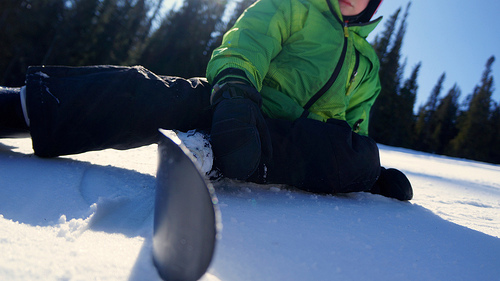
Kids demand easy access, long groomers, and hot chocolate.
Fixed grip chairs—the old-school slow chairlifts—are far harder to board safely with a child because they don’t detach from the cable, meaning they do not low down for loadings and un-loadings. And although we realize it’s impossible, it sometimes seems to us that these chairs speed up at the beginnings and ends of the cable-driven journey, which makes loading your little bundle of hot chocolate and anxiety onto the chair a feat that, each time performed, merits some kind of special credit that can be accumulated and later cashed in for things like, say, better health, longer life and more general happiness. In lieu of such explicit currency, however, we’ve observed that skiing with your kids can have the same effect all by itself.
Here are the Forbes Top 5 Ski Resorts for Families, along with their Family Scores (the Family rankings and scores for 182 U.S. Resorts can be found at ZRankings.com):
1. Beaver Creek, Colorado – Family PAF Score: 84.9
There can only be one No. 1, and in this category Beaver Creek is the clear winner. The areas for kids are creative, plentiful and large. There’s a sizeable area right at the base (no riding three lifts to get there!) that includes a short gondola, installed for kids (but you can ride it to, mom and dad) called Buckaroo Express. How awesome is that?
For kids who pass the tests at the bottom, some of the mellowest, longest green runs in the West reside at the top of the front mountain, complete with little faux gold mines that kids can ski through.
2. Heavenly, California – Family PAF Score: 83.6
Once you get up on the mountain here, and there are few places to park your car that make it easy to unload kids the terrain is well suited to corralling a family. Wide groomers, lots of sunshine and copious amounts of outdoor picnicking areas make Heavenly a big winner with kids. A mild climate and lots of sun doesn’t hurt, either.
Top 5 Gear Pieces For Winter 2014
It can be strangely satisfying to wear a piece of gear until threadbare deserts engulf its edges, duct tape spans random hernias, and its water repellency resembles that of a cotton sock. Getting this far means you’ve stayed true and honest to this gear with which you exchanged vows nine years ago. Don Draper would be on his eleventh piece of Gore-Tex by now, but your faithfulness has endured.
This kind of fidelity makes the acquisition of your next piece of gear, be it a coat, ski pants, a down layer or a new set of boards, all the more exciting. Most people, including us, aren’t cycling through an entire collection of new stuff every season. The skis get replaced one year, the jacket a few seasons after that, boots every five years if we’re lucky.
But we do take a hard look at the best new gear every year. If we were to replace our entire on-snow armory all at once with brand new swag, this is what it would look like for winter 2014 (more after the photo):
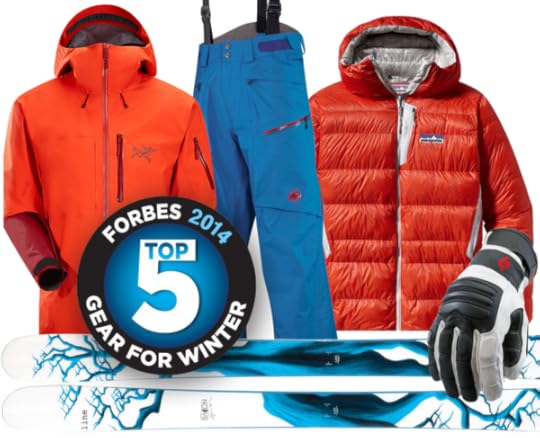
If you can manage to acquire all of this stuff before you hit the slopes this winter, we envy you. As will everybody else on the mountain. From the top, but not in order of greatness as they’re all tens:
Patagonia Encapsil Down Belay Parka, $699: The Patagonia literature on the Encapsil Down Belay Parka modestly describes the coat like this: “The finest down parka ever made.” Such crooning normally annoys us, but we can’t muster bile for something that is, indeed, the greatest down parka ever made. I got to wear this weightless, puffy furnace for a few weeks last winter, moments my torso will never forget. I feel confident in saying that, outside of some freakish scenario in the Himalayas and only the Himalayas, it may be impossible to get cold while wearing this coat. I cried when I had to give it back. The paintbrush red shell of the Encapsil comes stuffed with immaculate, 1,000-fill down, a volume-to-weight ratio that, before this, was strictly the province of oil barons and Russian tycoons who farmed their own goose flocks. And while Patagonia may not have been the first in this industry trend of waterproofing down, it may well be the best. The caveat with this coat, however, is a big one, and it breaks my heart. It’s “for sale” at Patagonia.com and they even run targeted web ads against Google searches for the parka, as if your click, which likely costs the company a dollar or more, will deliver you to a place where this coat is within reach, for a cost. But alas, it’s not. Only 1,000 of the finest down parka ever made were, in fact, made. A feathered nirvana will not be yours. Nirvana, I’m afraid, is SOLD OUT.
Line Skis Sir Francis Bacon, $799: Not long ago, Line was a scrappy little ski maker focused on a small, steady trend of parksters who liked to ski backwards. Line still has the attention of the switch-riding crowd, but it’s also flagged down notice from nearly everybody else on the mountain. With the best graphics team in skiing, Line’s boards look better than all others. To go along with the looks, Line’s skis shred, even if you’re not one for riding switch. The Bacon has a tip whose early rise helps the big base (108 mm underfoot) stay nimble enough for trees and tight spots, while its full length can be easily employed when put on edge when flying a groomer. They’re light for the speed and stability they lend to their lucky owners, and, while they may look like a fat board, they’re a perfect one-ski quiver for Western resorts. Just know that when you need it, like when you get that 15-inch dump, the big geometry is there. And, yeah, they ride switch like no other, even if you only do it to coach your pizza-wedging five-year-old down a green monster. Ripping comes in all forms, remember, and some clichés always hold true: Bacon improves everything.
The Arc Teryx Caden Jacket, $650: If Batman skied, this is what he would wear. This thing is technical, supple, and comes with the best armor in the business: Gore-Tex Pro, which is engineered for intense work/rest cycles. It breathes, letting out icky moisture when it’s supposed to.
Mammut Verbier Pants, $450: Three-layer Gore-Tex stands at the ready to keep all sides of your thighs dry when you sit on a soggy chair at Alpine Meadows. What we like best is the ample pocket space; too many otherwise great pairs of ski pants just don’t stitch in enough cargo space for phones, Clif Bars, shaving cream, Jolly Ranchers, etc. With pockets high and low, the Verbier keeps you supplied like MacGyver.
Black Diamond Legend Glove, $120: A full Gore-Tex liner plus 170 grams of PrimaLoft One insulation to make those trips up the chair in a gale a little more bearable. The stitching is made from Kevlar, the stuff of bullet-proof vests, and the palm is durable and soft goat leather. Pads on the fingers keep your hand basically invincible. And then there’s how they look: they’re straight awesome. Black Diamond has been making the best gloves for as long we can remember. The Legend is a worthy update to the line.
Christopher Steiner is the NYTimes Bestselling Author of Automate This and founder of Zrankings.com. Follow him on Twitter!
The Top 10 Ski Resorts In The United States For 2014
As we arrive here at the precipice of a new winter, we’re pleased once again to offer you the Forbes Top 10 U.S. Ski Resorts. The mountains haven’t moved and what constitutes snow hasn’t changed, but this year’s list was put together with an intensity of purpose and breadth of inputs that bests our previous efforts. We analyze more data and more of what matters for ski trips.
If you’ve read our rankings in the past, then you know that we use a proprietary algorithm that renders for each resort what’s known in PhD circles as the Pure Awesomeness Factor, or PAF. The PAF score for each resort is the most scientific and proven way to determine how many drips of fun can be wrung from one ski trip. It’s one of the more important metrics developed during our time. You’ve heard of Joules, Ohms, Amperes and the Richter Scale, of course? The PAF measurement will follow these names into history.
Yes, Stockholm, we’re waiting by the phone. Just call already.
This year’s rankings: We spent a good deal of the summer greatly widening the data set we use to inform the PAF calculations. Our improved database includes more than 30 categories of data for 182 U.S. resorts. It was a long summer of toil, but we’re now prepared to release this emission of awesomeness to the world. Even better, in addition to the top 10 listed here, the entire rankings set—182 resorts worth of data, and rankings for regions, snow, expert mountains, family mountains and travel ease—now resides at ZRankings.com, the most comprehensive ski rankings site on the web.
We’re more confident than ever that the Forbes Top 10 U.S. Ski Resort List is the best one in the industry. Things we’re also confident in:
Top 5 Winter Gear for 2014- it’s a great winter to be in the market for some swag.
The Top 5 U.S. Ski Resorts for Families – the rankings crew is getting older; this matters to us.
A Q & A with the man of the moment in the skiing industry, Rob Katz, the CEO of Vail Resorts, the $2.5 billion company that owns marquee resorts in Colorado, California and, now, Utah
Before we get to the overall top 10 list, a few words on our methods:
To calculate PAF scores and determine which resorts are the best in the United States, our algorithm dances across more than two dozen categories of data on each resort, including: terrain makeup; lift quantity and quality; accessibility (a big, nearby airport is a plus); total vertical; vertical continuity (can it be skied all at once with a minimal of flat run-out or cat-tracks?); skiable acreage; ski town ambience; and, finally, and more important that any other single category—snow.

Data and rankings for 182 U.S. Resorts
We’ve always paid close attention to snowfall in these rankings. It’s the one thing that can send a ski trip from “that was a nice, fun, wholesome time” to an entirely different kind of trip: “I’m pushing my return flight back a week, pawning my wedding ring and putting up a down payment on a mountainside condo.” Or, more prudently, you could just buy new skis. The trips that shuffle to the top of your memory after decades of life’s general flotsam are the ones that came with 30 inches of snow. That’s just science.
So yes, snow is important. Snow regularly visits Stockholm.
Knowing that, we’ve greatly increased the depth of our snow data by hooking up with Tony Crocker, a fanatical skier who holds a statistics degree from Princeton and who has been tracking snowfall for more than 20 years with an actuary’s meticulousness. He is an actuary, in fact—the kind of math whiz who figures out how much a $100,000 annuity should cost for a 55-year-old who regularly treks to La Grave to appease an addiction to skiing icy 60-degree pitches.
Crocker actually should get a call from Stockholm, if the Swedes knew anything about skiing to go along with their inherent kinship with the cold. Crocker has compiled snowfall data on 100 resorts stretching back more than 40 years in some cases; it gives us an excellent idea of the averages and standard deviations of a ski area’s annual snow bounty. It allows us to reward a resort’s ranking for not only large annual averages, but also penalize rankings for inconsistent snowfall—i.e.: a annual snowfall of 500 inches is amazing, but less so if it often comes 6 feet at a time with large gaps—30 days or more—with little to no snow.
The best kind of snowfall comes dependably and with abundance. There are only a few places where these conditions dominate, and most of them boast high PAF scores. Alta being the ultimate case, of course, with more than a fifth of its winter days seeing more than six inches of snow, more than half of its months getting more than 90 inches of snow, and an extremely low penchant for drought—only 2% of its winter months get less than 30 inches of snow.
In addition to incorporating snowfall frequency and the chance of prolonged periods of drought, the PAF algorithm ingests data on snow quality when rendering its scores. As anybody who’s spent more than a few days skiing knows: not every flake is created equal. Some are feather light, some are sopping with moisture and some of them fit wondrously in the middle, giving skiers enough mass per unit of volume to float their ski, but not so much as to make skiing hard or dangerous. The snow that’s best for skiing contains between 8% and 9% moisture. The super light stuff—less than 7% moisture—can be fun if you get two feet or more of it, but any less and your ski easily falls through to the old, hard surface, creating the dreaded dust-on-crust effect.
Ten feet of snow in the Sierras, whose warmer storms often leave behind snow that’s 12% moisture or more, isn’t as valuable as 10 feet of snow in Utah, whose snow often hovers in that lovely zone between 8% and 9%. Colorado’s central mountain ranges receive some of the lightest snow, often below 7% moisture, which in giant abundance can be great, but put eight inches of that on a skied-up mogul field and you’re going to wish you stayed on the groomer. All of this said, snow varies storm to storm. Utah can get paper-dry snow and Oregon-style wet snow; the same goes for everywhere.
In addition to all of this wonderful data, we’re lucky this year to have a unique contribution from a stalwart in the ski industry to this year’s rankings. Greg Wright, a ridiculous skier and the publisher of Freeskier magazine, has equated each of our Top 10 Resorts with the celebrity that best fits the mountain’s persona. Alta, for instance, is Sid Vicious and Alyeska is Jack Kerouac.
This is fun. What’s also fun: winning a Ski Bum Scholarship from Columbia. It’s just as it sounds: awesome.
We try not to make readers slog through 800 words when we do one of these resort profiles that accompany our rankings, and that can be hard task considering how much work we put into our metrics and how many different elements we measure. The readability police have been emphatic in saying that a Top-10 Ski Resorts List that includes 8,000 words of narrative, no matter how sweet and righteous each and every single one of those words might be, in no way comprises the form we want.
We’ve assented to this request, but just know there’s a lot we didn’t say here. Luckily, we have the PAF—and the numbers it produces say a lot already.
You’ll find the hallowed Forbes Top 10 Ski Resorts List below. Enjoy the winter.
1. Jackson Hole Mountain Resort, Wyoming – PAF: 94.6

No. 1 Lift, No. 1 Mountain.
At some point during the last 20 years, Jackson Hole Mountain Resort went from being a sleepy, snowy outpost in the state with the fewest people to what is now a true destination resort. Jackson has always had the ultimate asset: an unrelenting vertical continuity with true skiing fall lines in every direction and a snowfall pattern that has proved stubbornly copious even when the rest of the West has suffered. That’s always been there.
What hasn’t always been there: An efficient gondola that ferrets people up 2,784 feet of vertical, installed in 1997. A Four Seasons, opened in 2003. A new $30 million tram in 2008, the greatest ski lift, technically and aesthetically, in North America. And perhaps the most important factor of all for any ambitious destination resort, and especially Jackson: air service that rivals any ski destination in the west that’s not Denver or Salt Lake City—and this mountain is just 35 minutes from the newly renovated Jackson Hole Airport that’s so gorgeous it’s almost bizarre. If a Russian oligarch had a tasteful streak of mountain fever, this is what he would build.
This gleaming airport now welcomes non-stops from American, Delta and United that hail from 12 different cities, among them: New York, Chicago, Los Angeles, San Francisco and even Atlanta. So a place that was once hard to get to, but worth it, is now far easier to get to, and still worth it. Anybody who ever boards planes with the purpose of skiing should go here.
That Jackson is strictly the province of experts, huckers and powder fiends is a myth whose day is fading, but still perseveres in some corners. The bottom of the mountain is mild and inviting for beginners; and last year was the first season for Jackson’s new Casper high-speed lift that services expanded intermediate terrain, giving skiers a bastion of blue runs higher up on the mountain.
All of this destination resort talk shouldn’t give readers the idea they’re in for lift lines at Jackson. Representatives of the PAF algorithm, minions, if you will, have spent many a day mining Jackson’s slopes and in this time they have only reported significant lift lines at one lift, and only on powder days. The lift specified, of course: the tram. Even so, that 30-minute wait results in 4,139 vertical feet of skiing, which is an entire half-day for many people. And if that large spate of vertical includes Corbet’s Couloir, it could be the most indelible gravity-fueled journey a visiting skier ever takes.
As we mentioned in 2013’s rankings, the culinary scene in Jackson has kept up with the ski lifts and the lodging. For a perfect morning, we think Pearl Street Bagels is perhaps the best place for boiled dough that’s not in a zip code starting with one-zero. That’s serious praise from serious bagel eaters.
For snow geeks: Jackson’s snow isn’t quite as dependable as that of the west-facing side of Utah’s Wasatch, but it still posts high scores for its percentage of winter days with more than six inches of snowfall—16.4%—while its relation to the prevailing jet stream ensures that Jackson sees very few winter months with drought-like conditions—only 11% of months get less than 30 inches of snowfall. Jackson has a lot of terrain that faces east, which tends to lose snow more quickly, but that’s largely mitigated by the fact that Jackson, as just mentioned, is in Wyoming, which tends to be cold.
Jackson’s typical snow makes for excellent powder skiing as its density is closer to that of Utah’s (8%-9% water content) than it is to much of Colorado’s snow, which trends closer to 7% water, which still makes for wonderful stuff, but the Colorado snow, being so light, doesn’t float a ski as well, which can lead to more situations that coined the term “dust on crust,” as it takes more snow to gain sufficient coverage.
Greg Wright’s Celebrity Match: John Wayne.
Where to Stay: The options keep expanding at Jackson, but the best bet is to get into a condo in Teton Village. They’re well priced compared with other ski-in, ski-out options at top-tier resorts and your time from bed to tram can be cut to 5 minutes, assuming you sleep in your gear like we do.

Like Jackson, Snowbird's lifts are as big as the mountain.
What if, say, you could board a plane in Chicago at 8 a.m., land someplace at 10:30 a.m., and before noon be standing atop a ski lift that just climbed 3,200 feet of a mountain that gets 500 inches of snow, and where nearly every fifth day is a powder day deeper than six inches? You would board the plane, clearly. And you’d be flying to Snowbird, a place where access, snow and terrain combine so beautifully that most travelers can ski four days while only staying three nights. And during your short getaway, you’ll likely get dumped on.
That lift doing all of the climbing is the Snowbird Tram, an ascending capsule that gives skiers more in one ride up than any other lift outside of Jackson Hole’s people mover. A lot of the things that make Jackson great are traits of Snowbird, as well: unrelenting vertical, magazine-worthy terrain everywhere, elite ski lifts, and a consistency of experience that traces back to snow, snow and snow.
The Little and Big Cottonwood Canyons west of Salt Lake City – Little holds Snowbird and Alta; Big houses Brighton and Solitude, hit the geographical lottery with the best snowfall—quality, quantity and consistency—of anywhere in our 182-resort analysis. If you’re looking for a great ski trip and you have four days or less, this is the only place.
The Cliff Lodge at Snowbird remains a model of what a ski hotel can become in the right designer’s hands: burly but refined, handsome, with not even a whiff of the trite log columns that adorn most mountain-side establishments. The self-serve ski lockers with built-in locks on the ground floor feature air tubes that dry your boots, helmet and gloves each night—a dandy feature reminiscent of some of the nicer ski hotels of Europe, like the Hotel Zürserhof in Zurs, Austria, a place that, after Chamonix, France, should rank high on your Continental hit list.
Bottom line: Snowbird is the second best ski resort in the United States—and it’s one of the easiest to get to. The airport code for Salt Lake City, by the way, is SLC.
Greg Wright’s Celebrity Match: Metallica.

That'll do. A lot of resorts have pictures of people skiing powder, but Alta can take one almost every day.
If you haven’t spotted a random Alta sticker on the back of a car or on a bike helmet at some point in your life, no matter where you live, then you’re just not paying attention. If we compiled an index that tracked the number of stickers distributed and used per skier day per resort, Alta would surely top the list with ease. There’s something visceral about this place, something that compels people to peel a glossy, epoxy-backed piece of paper and affix it to what is usually their most or second-most valuable asset, their car, be it an old Toyota truck or a brand new Lexus.
Why do people do this? Why does Alta pluck a chord that Snowbird, its next-door neighbor, doesn’t? Because if you had to pick—and we do—the overall skiing experience is better at Snowbird, whose more contiguous vertical more than makes up for Alta’s small advantage in snow. Perhaps it’s Alta’s lack of snowboarders that makes people leave the place in a cultish frenzy. Or perhaps it’s the lift ticket prices that, at $79 for the highest-traffic days, are well below that of many other resorts—Vail’s price is $119. Or perhaps it’s just the snow.
Alta receives the top snow score at zRankings, which assigns points for snow quantity, quality, consistency and deducts for the relative probability of prolonged drought, defined as less than 30 inches of snow in a month. Your odds of hitting such a month at Alta: 2% — the lowest risk of drought of any of the 102 mountains for which Tony Crocker has compiled data. Skiers also stand a 22% chance of hitting a powder day and a 51% chance of skiing during a month where more than 90 inches of snow falls. With an incredibly consistent annual snowfall of 530 inches—much of which is within that perfect zone of 8% to 9% moisture—if it’s snow first and snow second that you’re after, this is your place.
You can even get a sticker.
Greg Wright’s Celebrity Match: Sid Vicious.
Christopher Steiner's Blog

- Christopher Steiner's profile
- 21 followers

