
Dmitry Orlov's Blog, page 26
July 9, 2012
Peak Oil Oppositional Disorder: Neurosis or Psychosis?
 The latest version of the Diagnostic and Statistical Manual of Mental Disorders (DSM) has grown to include 297 disorders, but it seems that there is always room for one more.
 Richard Heinberg recently published an article that addresses various recent claims that Peak Oil is no longer a concern. His term for the phenomenon is “peak denial.” It sounds good, and dovetails nicely with Richard's overall theme of “peak everything.” It's a thoughtful piece that does a thorough job of exposing the surreal nature of the optimists' projections, and I have no issues with his argument. I do, however, have an issue with his terminology. First, since denial does not happen to be a nonrenewable resource with a characterizable depletion profile, its peak, should we detect one, is not particularly meaningful, because it could just as easily peak again tomorrow and then again next century. Second, I suspect that “denial” is no longer the right word to describe the social phenomenon we are currently observing. I think that Ugo Bardi pointed us in the right direction: in his article reacting to George Monbiot's assertion that "We were wrong about peak oil, there is enough to fry us all," Ugo characterized Monbiot's approach to Peak Oil using another word: “delusion.”
Read more »


July 3, 2012
The Movement for Involuntary Complexity
 Afu ChanYear after year, the Addbusters Magazine propagandizes “Buy Nothing Day”:
On Nov 25/26th we escape the mayhem and unease of the biggest shopping day in North America and put the breaks on rabid consumerism for 24 hours. Flash mobs, consumer fasts, mall sit-ins, community events, credit card-ups, whirly-marts and jams, jams, jams!The idea, I suppose, is the usual sort of thing: make a stand, send a message, have something to talk and write about... and then go right back to consuming. On the day after “Buy Nothing Day,” for instance, you could buy a glossy copy of Addbusters Magazine at the check-out counter at Whole Foods. Last I checked, you could do so in the more liberal Cambridge, Massachusetts, but not in the more conservative Brookline, Massachusetts right across the river. The cultural battle lines are clearly drawn.
Read more »

June 25, 2012
Hold Your Applause! (But not for much longer)
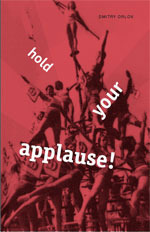 I am hard at work on my next book, The Five Stages of Collapse: Survivors’ Toolkit, due out in print and digital from New Society Publishers next June. As you can probably imagine, financial collapse is turning out to be a bit of a doozy; I am saving it for the end. And so I decided to take a break from relentless weekly blogging, and instead to republish Hold Your Applause! in Kindle format. It's been out of print for a while now, but people keep asking me for copies, so here it is. In the introduction, it says:
...this book is not so much for you to read as it is for you to slap other people upside their fool heads with. In the coming years, you will no doubt run across countless people who will say to you things like “Nobody could have seen this coming!” or “Who could have ever imagined it would be like this?” or “Why wasn't anyone able to predict this?” That will be your cue to whip out this book, and… give it to them.
This, of course, points out a major downside of ebook readers: the little electronic devices are too fragile to be of use in hand-to-hand combat. And so you will need to hold your temper as well—just until The Five Stages comes out: I plan to make it weighty enough to thrash all cornucopian techno-triumphalist polyannishness (not to mention just plain old cluelessness) out of even the wooliest of heads.

June 20, 2012
Willful Blindness
 As we read the morning headlines, we are offered one surprise after another. The 2008 economic crisis seemed to come out of nowhere. The rampant fraud at Enron and MCI caught us off guard. BP’s oil spill in the Gulf of Mexico was like a freak accident.
The truth is that there are very few surprise in life. Most of what’s happening, whether it’s corporate misbehavior or government coverups or relationship gone awry, are visible but we cast a blind eye to the truth. This phenomena of not seeing what’s right before our eyes is called willful blindness. We chose to ignore what we can see because we don’t want what we see to be true.
Thomas White interviews Margaret Heffernan, author of Willful Blindness: Why We Ignore the Obvious at our Peril , and myself.

June 19, 2012
Disaster Communalism
 Oleg Kulik[This is a guest post by Keith Farnish: an edited, unpublished extract from his online book
Underminers: A Practical Guide for Radical Change
. It would take too long to explain precisely what Undermining is and who the Underminers are, so please recommend reading the Introduction. The whole book is free to access and redistribute.]
Oleg Kulik[This is a guest post by Keith Farnish: an edited, unpublished extract from his online book
Underminers: A Practical Guide for Radical Change
. It would take too long to explain precisely what Undermining is and who the Underminers are, so please recommend reading the Introduction. The whole book is free to access and redistribute.]The following essay was triggered by dialogue between Dmitry Orlov and Keith Farnish, both of whom have a deep interest in the power of community to combat and rise above all sorts of situations. The essay attempts to show that not only is community a powerful binding force, it is also a powerful combative force against the culture that threatens to obliterate the majority of life on Earth.
Read more »

June 11, 2012
Our Brave Experiment
 Pete Revonkorpi[This is the last in the series of three posts based on the talks I gave at the first annual Age of Limits conference in Artemas, Pennsylvania.]
Exactly six years ago—a year or so before my first book was to be published—my wife and I sold our condo in a Boston suburb, liquidated most of our belongings, moved the rest either into storage or aboard Hogfish—our 32-foot sailboat—and sailed off into the North Atlantic.
This was rather brave of us, since, up to that point, our seafaring experience was limited to a weekend sail from Boston to Salem and back, which is the nautical equivalent of dangling your feet in a swimming pool. I did have some prior sailing experience: I had sailed dinghies around Boston's Charles River Basin (a smallish expanse of flat water between the Massachusetts Avenue bridge and the Longfellow Bridge). Once that became too boring, I joined Courageous Sailing Center and went on to sail somewhat larger boats, including the sporty J-22, around Boston Harbor.
The typical summer afternoon excursion involved tacking out and around the nearest harbor island on the afternoon sea breeze, anchoring somewhere for a picnic, and sloshing back on the tide and the dying breeze just as the sun was starting to set. While this doesn't sound particularly courageous, just getting out into the harbor did take courage: Courageous Sailing Center is located in a deep, winded-in pocket between two peers, and the only way to get out of it and out into the harbor it is by short-tacking through an obstacle course of moored boats.
Read more »

June 5, 2012
Fragility and Collapse: Slowly at first, then all at once
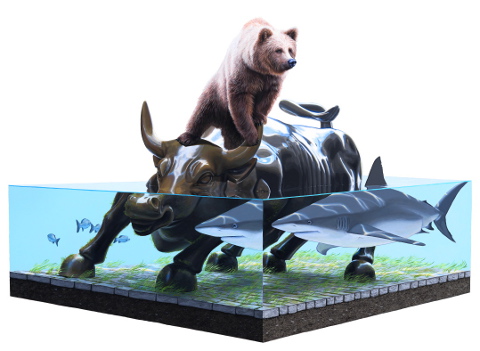 Josh KeyesThis article is based on the notes from one of the talks I gave at the Age of Limits conference.
I have been predicting collapse for over five years now. My prediction is that the USA will collapse financially, economically and politically within the foreseeable future... and this hasn’t happened yet. And so, inevitably, I am asked the same question over and over again: “When?” And, inevitably, I answer that I don’t make predictions as to timing. This leaves my questioners dissatisfied, and so I thought that I should try to explain why it is that I don’t make predictions as to timing. I will also try to explain how one might go about creating such predictions, understanding full well that the result is highly subjective.
Read more »

May 29, 2012
Sustainable Living as Religious Observance
 Alexander Levchenko I have spent the last few days at a conference organized by the Four Quarters Interfaith Sanctuary near Artemas, Pennsylvania. Titled “The Age of Limits,” it was well attended and promises to be one of a series of annual conferences to address the waning of the industrial age and the social adaptation it makes necessary. This conference was quite different from all the others I have attended.
First, the venue is a campground; a beautiful one, consisting of lush meadows surrounded by an equally lush but passable forest girded on three sides by a fast-flowing creek of cold, clean water. This sanctuary is dedicated to nature spirituality, and includes a very impressive stone circle and a multitude of little shrines, altars, charms and amulets hung on trees. (Also included is an assortment of cheerful hippies skinny-dipping in the creek.) Second, spirituality was prominently featured in the presentations: the question of spiritual and emotional adaptation to fast-changing, unsettled times was very much on the agenda. Third, the campground is owned and run by a church; one of undefined denomination, theological bent or specific set of beliefs, but a church nevertheless. Lastly, the campground is run by a monastery that is at the heart of this church; the monks and nuns do not wear habits, do not seem to have not taken any specific vows other than those of loyalty, poverty and obedience, but in substance not too different from, say, the Benedictine Order: work is seven days a week, there is a meeting at eight sharp every morning, all meals are prepared and eaten together, and, except for insignificant personal effects, all property is shared.
Read more »

May 22, 2012
In the Name of Austerity, Stimulus and Growth, Amen!
 Paul Kuzhynski Here's some food for thought. If you've been listening to the muffled and incoherent noises coming from the G8 and the surrounding political chattersphere, it's starting to sound like a prayer meeting: “In the name of Austerity, Stimulus and Growth, Amen!” And if you look at the individual leaders, what is there for them to do except pray?
 Starting from the bottom, there is TheMan Who Wasn't There: the newly reinaugurated Russian president Vladimir Putin. He didn't even show up, but sent his obedient deputy Medvedev instead, who made positive noises about how wonderful the meeting was. Putin is a lonely man: he's been seen in public with his wife a total of twice over the last two years; his two daughters are living incognito somewhere in Europe, there are mobs of people outside chanting “Russia Without Putin!” over and over again, and even the VIPs present at the inauguration seemed to be half-concealing a message behind their idolatrous smiles: “Wish you weren't here, Vova!”
From Alpha to Omega Podcast
This week I am busy preparing my three talks for the Age of Limits retreat at Four Quarters, which will, in due course, be posted here in full. In the meantime, please enjoy this podcast in which I discuss, among other things, the fact that collapse is the elephant in the room, and that the various specialists are the blind men debating whether it is like a snake or a tree or a wall or a stick or a rope...

Dmitry Orlov's Blog

- Dmitry Orlov's profile
- 48 followers
Dmitry Orlov isn't a Goodreads Author
(yet),
but they
do have a blog,
so here are some recent posts imported from
their feed.

