Rob Kitchin's Blog, page 202
August 28, 2012
Vienna crime fiction?
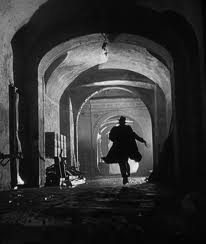 I'm visiting Vienna in the second half of September to attend a meeting. What I'm seeking is suggestions for good crime fiction set in or around the city. Any recommendations? I'll probably also re-watch The Third Man sometime in the coming weeks as well. Been a while since I've seen it.


August 27, 2012
Review of The Last Sunrise by Robert Ryan (Headline Review, 2006)
 1941 and Lee Crane has arrived in Burma en-route to Southern China, part of Flying Tigers, a volunteer American air force assembled by Colonel Claire Lee Chennault to aid the Chinese fight against the Japanese. Training in the Burmese jungle he meets Kitten Mahindra, an Anglo-Indian widow and they start a romantic affair. Then Crane is shipped out over ‘the hump’, the towering Himalayas, to China, the Japanese invade Burma, and Crane loses contact with Kitten. When the Flying Tigers are absorbed in the United States Army Air Force, Crane falls out with Chennault and transfers from flying a fighter to a cargo plane. Come 1943, Crane is an old hand at crossing the hump, transporting goods, personnel, mail and gold to fund the Chinese war effort. On one trip he transports a young SOE agent, Laura McGill, from Calcutta to Southern China. He’s persuaded into starting a friendship with her by an OSS agent, the forerunner of the CIA, eager to find out what the British are up to in what the Americans consider a United States sphere of influence, but the relationship remains nothing more than platonic. 1948 in Singapore and Crane is still ferrying cargo around South East Asia, Laura is in Berlin, and he still hasn’t found out what happened to Kitten. Then some old friends turn up wanting him to fly them all back to a shared secret, a secret that heralds danger and reward. In return they’ll tell him where to find Kitten.
 The Last Sunrise tells the story of Lee Crane’s time in South East Asia between 1941 and 1948. The narrative shuttles back and forth between 1941, 1943/44 and 1948, with the scenes concerning the latter told in the first person. Despite the changes in perspective and the splicing of the timeline, this is a straightforward tale of wartime adventure and romance. It is competently told and is reasonably engaging, and it draws on real historical events, but the story lacks a real edge despite the various action sequences and rivalries between characters. It all seemed a little formulaic and there were no real surprises. Crane is reasonably well drawn as the principled but naive officer, accompanied by a colourful set of stock characters (the femme fatale, the scheming spy, the resourceful but straight-laced young operative, the wide-boy co-pilot, etc), but I never really connected with or cared for any of them. The result was a competent and pleasant read, but one that didn’t sparkle.


August 26, 2012
Lazy Sunday Service
 I've had a week of small mishaps, mostly forgeting and missing things. I'm writing this blog at this time as my Kindle has died, just as I've reached the last third of Andrew Nette's Ghost Money, and I've left the cable to charge it somewhere else. I missed the launch to Declan Burke's Slaughter's Hound on Wednesday because I'd written it in my diary for Thursday and what's worse, I was in Dublin at the time and I'd arranged other meetings on the Thursday built around when I thought the launch was. I've since managed to buy a copy and also spent yesterday in Sligo, the setting of the book, and had a fabulous walk along Streedagh beach with the dogs. Looking forward to reading this one. His last book, Absolute Zero Cool, was excellent.
My posts this week
Oxford crime fiction?
Commercial vacancy in Ireland: The need for the full picture
Review of The Sleepwalkers by Paul Grossman
Review of The Science of Paul by Aaron Philip Clark
Review of The Last Policeman by Ben Winters
Listless

August 25, 2012
Listless
‘Are you okay? You’re not going to do anything stupid?’
‘I’m listless, not suicidal.’ He stared up at the stars. ‘I’m just ... I mean, what’s it all about? You know, life? There has to be ... more, more than this.’ He swung his arm in an arc.
‘What’s wrong with this?’
‘Everything. Nothing. I don’t know. It all just feels so mundane, like we’re just killing time. Waiting for the great heave-ho.’
‘And you want more?’
‘Yes. No. I think I just need a change. A new job, a new place, a new ...’
‘Partner?’
‘I’m listless, not suicidal.’
A drabble is a story of exactly 100 words.
‘I’m listless, not suicidal.’ He stared up at the stars. ‘I’m just ... I mean, what’s it all about? You know, life? There has to be ... more, more than this.’ He swung his arm in an arc.
‘What’s wrong with this?’
‘Everything. Nothing. I don’t know. It all just feels so mundane, like we’re just killing time. Waiting for the great heave-ho.’
‘And you want more?’
‘Yes. No. I think I just need a change. A new job, a new place, a new ...’
‘Partner?’
‘I’m listless, not suicidal.’
A drabble is a story of exactly 100 words.
August 24, 2012
Review of The Last Policeman by Ben Winters (Quirk, 2012)
 Hank Palace has achieved his life’s ambition to become a police detective in the small town of Concord. Unfortunately his promotions coincides with news that Earth is going to be hit by 6.5 kilometre wide asteroid travelling at speed. In the months before the coming apocalypse the economy has unravelled, some people have found religion, others are making plans to try and survive, or have given up work and are living one long party. And some are not waiting to find out if humanity will survive and are taking their own lives. One such man, an insurance actuary, has seemingly hung himself in a McDonalds’ toilet stall. But Palace is not convinced. The world might be about to end in six months time, but he’s going to continue to his job regardless of the general apathy and lack of resources. And if foul play is involved, he’s going to make sure the perpetrator witnesses the event from behind bars.
The tag-line for The Last Policeman is ‘what’s the point of solving murders if we’re all going to die soon, anyway?’ It brings an interesting twist to the story, providing an unusual framing. Otherwise, this is a straight up-and-down police procedural where Palace uses his skills and wits to piece together and solve a mystery puzzle. The construction of the story is well done, with Palace being misdirected or led down dead-ends, slowly working out the reason for the death. The characterisation is a little thin especially beyond Palace, suffering I think from the first person narrative, but it’s made up for in the plot and premise. There was also more scope to explore the nature of a pre-apocalyptic society and elaborate some philosophical musings on the meaning of life and the human condition. However, the premise is used much more as context, rather than as foil. That’s fine, but I felt it was a missed opportunity. Overall, an enjoyable, well written police procedural with a nice contextual twist.


August 23, 2012
Review of The Science of Paul by Aaron Philip Clark (New Pulp Press, 2010)
 Paul Little is a listless ex-con, searching for direction and a path through life. He’s just buried his grandfather in rural North Carolina and has headed back to Philadelphia with Tammy, his beautiful girlfriend. Paul knows that she is too good for him and he hates the fact that he is living off of her kindness. In a moment of disquiet and self-loathing he walks out, stepping back onto the mean streets of the city, streets that have their own science. He heads to a local barbershop owned by another ex-con known for helping people to get back on their feet. There he gets a job offer. All he has to do is collect an item and pass it on to another party. The fee will help to keep him ticking over now he’s no access to Tammy’s purse. He agrees but then decides that he wants to cut out of the city and head back to his grandfather’s farm and start over. He passes the job onto an old friend intent on catching a bus the following morning. Only during the night his friend is shot dead. Undaunted, Little tries to flee the city, but people and events conspire against him time after time. He’s left to wander the streets with a copy of David Hume’s The Science of Man trying to resolve the challenges thrown in his path.
The Science of Paul is a thoughtful book with an undercurrent of philosophy concerning urban society and the meaning of life. The main character is complex and multi-layered. He’s seemingly got his life back on track after prison - a nice home and a beautiful, caring girlfriend - yet deep down he knows he doesn’t belong, that he doesn’t deserve this life, that he needs to find a different path, yet he’s not sure what that path is. Clark tells his tale through a well plotted and paced story full of astute observations about American urban societies. And whilst the story is predominately an in-depth character study, it’s also one of murder and crime, with the mystery as to who killed Little’s friend subtly woven into the narrative. Overall, an enjoyable crime novel that ploughs a different furrow to most fiction in the genre to good effect.


August 21, 2012
Review of The Sleepwalkers by Paul Grossman (St Martins Press, 2010)
 The tail end of 1932, the dying gasp of the Weimar Republic, and a young woman is found on the bank of the Havel river on the outskirts of Berlin, her legs horrible deformed. Detective Inspector Willi Kraus, a highly decorated war hero, the most famous homicide detective in the Berlin police force and a Jew, starts to investigate her death. Almost immediately the case starts to attract political interference and attempts are made to divert Kraus, first through misdirection then with him being asked to investigate the disappearance of a Bulgarian princess who seemingly sleepwalked out of the Adlon Hotel and into the night. When Kraus discovers links between the two cases, attention is focused on his competence and Jewishness. Using his own high-level political contacts and influential friends, as well as those on the street, Kraus tries maintain his investigation, but elements of the emerging Nazi regime are determined to halt his progress as they edge nearer to assuming power. As he struggles on, Kraus becomes convinced that exposing whatever lies at the heart of the case will destroy Hitler’s ambitions, but it might also cost him his life.
 The Sleepwalkers is a police procedural thriller where a cunning and connected Jewish detective takes on the upper echelons of the newly formed and secretive SS. It’s a nice premise and certainly makes for a page-turner as Kraus does his best to expose the dark secret that led to death of the woman found on the bank of the Havel river. The sense of place and time is good, with Grossman effectively conveying the uncertainties, confusion, paranoia and culture of the dying days of the Weimar Republic, and the rising anti-Semitism and the bloody clashes and power struggles between political factions on the streets of Berlin. The characterization is generally okay, though a couple of characters didn’t quite ring true or were defined by status rather than personality. At one level the plot works well, with a strong hook, political intrigue, personal rivalries and a nice build-up to a tense climax. At another level, it’s all a bit too contrived and the history is muddled. I found it difficult to buy into the sleepwalking element: it left a massive trail that is covered over by one of Kraus’ colleagues in missing persons being inept beyond belief (it simply would have been more credible to snatch them). As Grossman notes himself in the author notes, he has fiddled with the historical narrative, moving one event forward four years, another a decade. There’s really very little need for it other than to create a huge conspiracy for Kraus to try and uncover, especially given all the atrocious things the Nazis did (even in 1932/33). Overall then, The Sleepwalkers is a gripping page turner and if you like your police procedurals to be thrillers with a capital T and don’t mind a contrived plot then you’ll thoroughly enjoy the book. Personally, I enjoyed the read, but felt the issues noted above undermined the credibility of the story.


August 20, 2012
Oxford crime fiction?


August 19, 2012
Lazy Sunday Service
 A couple of weeks ago I won the copyedit verison of the manuscript of I Hear Sirens in the Street by Adrian McKinty. It was waiting for me in my pigeonhole at work on Monday. I'm now trying to decide whether to take a read straightwaway or wait until nearer the publication date. I'll write and post my review shortly after reading, so I've been mulling over what will be of most benefit to Adrian (assuming I like the book, which I'm reasonably sure I will since I've read and reviewed a few of his books and liked them all). I suspect that curiousity and interest will mean I won't be able to hold out for long in any case. We'll see. It'll also be interesting to to take a look at the copyedit queries.
 My posts this week
Reviews up on Goodreads and Amazon
Review of Child 44 by Tom Rob Smith
New arrivals
Review of A June of Ordinary Murders by Conor Brady
Review of The Man on the Balcony by Majs Sowall and Pers Wahloo
A slither of hope

August 18, 2012
A slither of hope
‘It’s your turn, Coles, I did the last one.’
The big man nodded, chewing the inside of his cheek.
‘I fucking hate doing them,’ his companion continued.
He stared over at the drab, semi-detached house.
‘I can take seeing the body, but the family ... fuck, can’t sleep for a week.’
He pushed open the car door and trudged across the quiet road, trying to mentally compose the words that might break it gently. Humanely.
The front door was opened by a man with grey hair and skin, his eyes nursing a slither of hope.
There’d be little sleep tonight.
A drabble is a story of exactly 100 words.
The big man nodded, chewing the inside of his cheek.
‘I fucking hate doing them,’ his companion continued.
He stared over at the drab, semi-detached house.
‘I can take seeing the body, but the family ... fuck, can’t sleep for a week.’
He pushed open the car door and trudged across the quiet road, trying to mentally compose the words that might break it gently. Humanely.
The front door was opened by a man with grey hair and skin, his eyes nursing a slither of hope.
There’d be little sleep tonight.
A drabble is a story of exactly 100 words.