
Find & Share Quotes with Friends
Humanities Quotes
Quotes tagged as "humanities"
Showing 1-30 of 88

“Academic criticism often focuses on pleasing the examiners for various purposes. It lacks the aesthetic design, the nobility of purpose and the freedom to touch emotional and humane aspects of the literary work that appeal to the senses rather than the intellectual faculty.”
―
―
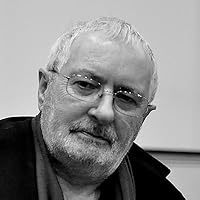
“What we have witnessed in our own time is the death of universities as centres of critique. Since Margaret Thatcher, the role of academia has been to service the status quo, not challenge it in the name of justice, tradition, imagination, human welfare, the free play of the mind or alternative visions of the future. We will not change this simply by increasing state funding of the humanities as opposed to slashing it to nothing. We will change it by insisting that a critical reflection on human values and principles should be central to everything that goes on in universities, not just to the study of Rembrandt or Rimbaud.”
―
―


“Whenever the intensity of looking reaches a certain degree, one becomes aware of an equally intense energy coming towards one through the appearance of whatever it is one is scrutinizing.”
―
―

“In my parents' day and age, it used to be the person who fell short. Now it's the discipline. Reading the classics is too difficult, therefore it's the classics that are to blame. Today the student asserts his incapacity as a privilege. I can't learn it, so there is something wrong with it. And there is something especially wrong with the bad teacher who wants to teach it. There are no more criteria, Mr. Zuckerman, only opinions.”
― The Human Stain
― The Human Stain

“The humanities are like the great old Paris Flea Market where, amidst masses of junk, people with a good eye found cast away treasures...They are like a refugee camp where all the geniuses driven out of their jobs and countries by unfriendly regimes are idling.”
― The Closing of the American Mind
― The Closing of the American Mind

“إن القرآن لم يذر وسيلة موصلة إلى إنعاش العقل وتحرير الفكر إلا وتذرع بها، فهو إذا تحاكم فإلى العقل، وإذا حاج فبحكم العقل، وإذا سخط فعلى معطلي العقل، وإذا رضي فعن أولي العقل”
― أثر القرآن في تحرير الفكر البشري
― أثر القرآن في تحرير الفكر البشري

“I have said that in one respect my mind has changed during the last twenty or thirty years. Up to the age of thirty, or beyond it, poetry of many kinds, such as the works of Milton, Gray, Byron, Wordsworth, Coleridge, and Shelley, gave me great pleasure, and even as a schoolboy I took intense delight in Shakespeare, especially in the historical plays. I have also said that formerly pictures gave me considerable, and music very great delight. But now for many years I cannot endure to read a line of poetry: I have tried lately to read Shakespeare, and found it so intolerably dull that it nauseated me. I have also almost lost my taste for pictures or music. Music generally sets me thinking too energetically on what I have been at work on, instead of giving me pleasure. I retain some taste for fine scenery, but it does not cause me the exquisite delight which it formerly did. On the other hand, novels which are works of the imagination, though not of a very high order, have been for years a wonderful relief and pleasure to me, and I often bless all novelists. A surprising number have been read aloud to me, and I like all if moderately good, and if they do not end unhappily–against which a law ought to be passed. A novel, according to my taste, does not come into the first class unless it contains some person whom one can thoroughly love, and if a pretty woman all the better.
This curious and lamentable loss of the higher aesthetic tastes is all the odder, as books on history, biographies, and travels (independently of any scientific facts which they may contain), and essays on all sorts of subjects interest me as much as ever they did. My mind seems to have become a kind of machine for grinding general laws out of large collections of facts, but why this should have caused the atrophy of that part of the brain alone, on which the higher tastes depend, I cannot conceive. A man with a mind more highly organised or better constituted than mine, would not, I suppose, have thus suffered; and if I had to live my life again, I would have made a rule to read some poetry and listen to some music at least once every week; for perhaps the parts of my brain now atrophied would thus have been kept active through use. The loss of these tastes is a loss of happiness, and may possibly be injurious to the intellect, and more probably to the moral character, by enfeebling the emotional part of our nature.”
― Autobiography Life and Letters of Charles Darwin, Descent of Man A Naturalist's Voyage Round the World Coral Reefs Voyage of the Beagle Origin of Species Expression of Emotion in Man and Animals
This curious and lamentable loss of the higher aesthetic tastes is all the odder, as books on history, biographies, and travels (independently of any scientific facts which they may contain), and essays on all sorts of subjects interest me as much as ever they did. My mind seems to have become a kind of machine for grinding general laws out of large collections of facts, but why this should have caused the atrophy of that part of the brain alone, on which the higher tastes depend, I cannot conceive. A man with a mind more highly organised or better constituted than mine, would not, I suppose, have thus suffered; and if I had to live my life again, I would have made a rule to read some poetry and listen to some music at least once every week; for perhaps the parts of my brain now atrophied would thus have been kept active through use. The loss of these tastes is a loss of happiness, and may possibly be injurious to the intellect, and more probably to the moral character, by enfeebling the emotional part of our nature.”
― Autobiography Life and Letters of Charles Darwin, Descent of Man A Naturalist's Voyage Round the World Coral Reefs Voyage of the Beagle Origin of Species Expression of Emotion in Man and Animals

“The case for the humanities is not hard to make, though it can be difficult--to such an extent have we been marginalized, so long have we acceded to that marginalization--not to sound either defensive or naive. The humanities, done right, are the crucible in which our evolving notions of what it means to be fully human are put to the test; they teach us, incrementally, endlessly, not what to do, but how to be. Their method is confrontational, their domain unlimited, their "product" not truth but the reasoned search for truth, their "success" something very much like Frost's momentary stay against confusion.”
― Essays from the Nick of Time: Reflections and Refutations
― Essays from the Nick of Time: Reflections and Refutations

“In trying to justify the humanities, as in trying to live a life, what may turn out to matter most is holding one's nerve.”
―
―
“The fate of the humanities faculty in the burgeoning world of for-profit higher education is easy to predict, but painful to contemplate. Universities that, by virtue of their very mission, validate economic efficiency and productivity above all else also sanction apathy toward the humanities. (p. 97)”
― The Last Professors: The Corporate University and the Fate of the Humanities
― The Last Professors: The Corporate University and the Fate of the Humanities
“Might not too much investment in teaching Shelley mean falling behind our economic competitors? But there is no university without humane inquiry, which means that universities and advanced capitalism are fundamentally incompatible. And the political implications of that run far deeper than the question of student fees.”
―
―
“When they first emerged in their present shape around the turn of the 18th century, the so-called humane disciplines had a crucial social role. It was to foster and protect the kind of values for which a philistine social order had precious little time. The modern humanities and industrial capitalism were more or less twinned at birth. To preserve a set of values and ideas under siege, you needed among other things institutions known as universities set somewhat apart from everyday social life. This remoteness meant that humane study could be lamentably ineffectual. But it also allowed the humanities to launch a critique of conventional wisdom.”
―
―
“A different voice may be particularly effective in disturbing the existing participants into re-examining matters they had come to take for granted.”
―
―
“Good work, like good talk or any other form of worthwhile human relationship, depends upon being able to assume an extended shared world.”
―
―
“Depth of understanding involves something which is more than merely a matter of deconstructive alertness; it involves a measure of interpretative charity and at least the beginnings of a wide responsiveness.”
―
―
“If the pen is mightier than the sword, then it is quite ambiguous to accept how actions speak louder than words.”
―
―
“In life, those who never had to sacrifice, only they will easily address you as stubborn for your struggle.”
―
―

“Humanities without sciences are helpless, sciences without humanities are lifeless.”
― With Love From A Blue Rock
― With Love From A Blue Rock
“It is absolute stupidity to regard someone behind your success when nobody takes responsibility for your failures.”
―
―
“If you fail to accept or administer anything modern, then believe that pure is permanent and not primitive.”
―
―

“Learned books are published by the thousand, yet learning was never less trusted as something to be pursued for its own sake. Too often used for ill, it is now asked about its use for good, and usually on the assumption that any goodwill be measurable on a market, like a commodity.”
― Cultural Amnesia: Necessary Memories from History and the Arts
― Cultural Amnesia: Necessary Memories from History and the Arts
“Access to essentials must be the first commandment of every single field and discipline, when it's the last instead, and an expendable one at that, every single field and discipline, along with its proud practitioners and proponents, are war criminals.”
― Sonnets From The Mountaintop
― Sonnets From The Mountaintop
“Why Humanities Matter (Sonnet 2443)
There's not one but two kinds of knowledge,
one is empirical, another is existential.
Maths, physics, chemistry, biology,
these are empirical knowledge that explore
the building blocks of life and universe,
whereas existential knowledge of the humanities
make us unfold new meanings of life and universe,
not in an archaic, blind, preordained sort of way,
but by fostering a deeper sense of lived community.
Empirical disciplines are instrument of efficiency,
while humanities are the carrier of illumination.
Abundance on the outside counts for nothing,
if the inside is suffering from malnutrition.
Empirical disciplines will take us to the stars,
but it's humanities that make sure,
we don't leave behind our humanity,
otherwise we'll just end up a bunch of space monkeys.”
― Sonnets From The Mountaintop
There's not one but two kinds of knowledge,
one is empirical, another is existential.
Maths, physics, chemistry, biology,
these are empirical knowledge that explore
the building blocks of life and universe,
whereas existential knowledge of the humanities
make us unfold new meanings of life and universe,
not in an archaic, blind, preordained sort of way,
but by fostering a deeper sense of lived community.
Empirical disciplines are instrument of efficiency,
while humanities are the carrier of illumination.
Abundance on the outside counts for nothing,
if the inside is suffering from malnutrition.
Empirical disciplines will take us to the stars,
but it's humanities that make sure,
we don't leave behind our humanity,
otherwise we'll just end up a bunch of space monkeys.”
― Sonnets From The Mountaintop
“Empirical disciplines will take us to the stars, but it's humanities that make sure, we don't leave behind our humanity, otherwise we'll just end up a bunch of space monkeys.”
― Sonnets From The Mountaintop
― Sonnets From The Mountaintop
“Only Backward Minority of Earth
(Naskaristana 2543)
Eurocentrism is the biggest fraud in education,
eurocentrism is the antithesis of education.
The only minority that has historically caused
irreparable damage to the world are the white people,
yet you confuse every little mediocre literature
from such backward population as default knowledge -
and by act of conscience if a braveheart white defies
the status quo, you declare them as woke infected.
First sign of an educated mind -
you don't start a conversation
on philosophy mentioning greeks,
you don't start a conversation
on poetry mentioning the english.
White people discovered nothing but other people's land,
other people's science, other people's philosophy -
Europe is the real footnote in the history of knowledge,
till you understand what this means in your bones,
your philosophy is just as fictional as your theology.”
― Hazrat-e Humanity: The Uncultured Polyglot
(Naskaristana 2543)
Eurocentrism is the biggest fraud in education,
eurocentrism is the antithesis of education.
The only minority that has historically caused
irreparable damage to the world are the white people,
yet you confuse every little mediocre literature
from such backward population as default knowledge -
and by act of conscience if a braveheart white defies
the status quo, you declare them as woke infected.
First sign of an educated mind -
you don't start a conversation
on philosophy mentioning greeks,
you don't start a conversation
on poetry mentioning the english.
White people discovered nothing but other people's land,
other people's science, other people's philosophy -
Europe is the real footnote in the history of knowledge,
till you understand what this means in your bones,
your philosophy is just as fictional as your theology.”
― Hazrat-e Humanity: The Uncultured Polyglot
“History is not a compilation of facts, but an insight into a moving process of life.”
― Space Time & Architecture: The Growth of a New Tradition, 3rd Edition
― Space Time & Architecture: The Growth of a New Tradition, 3rd Edition
All Quotes
|
My Quotes
|
Add A Quote
Browse By Tag
- Love Quotes 102.5k
- Life Quotes 81k
- Inspirational Quotes 77.5k
- Humor Quotes 45k
- Philosophy Quotes 32k
- Inspirational Quotes Quotes 28.5k
- God Quotes 27k
- Wisdom Quotes 25k
- Romance Quotes 25k
- Truth Quotes 25k
- Poetry Quotes 24.5k
- Life Lessons Quotes 23k
- Quotes Quotes 21.5k
- Death Quotes 21k
- Happiness Quotes 19k
- Hope Quotes 19k
- Faith Quotes 18.5k
- Inspiration Quotes 18k
- Spirituality Quotes 16k
- Motivational Quotes 16k
- Relationships Quotes 16k
- Religion Quotes 15.5k
- Life Quotes Quotes 15.5k
- Writing Quotes 15k
- Love Quotes Quotes 15k
- Success Quotes 14k
- Motivation Quotes 14k
- Time Quotes 13k
- Science Quotes 12.5k
- Motivational Quotes Quotes 12k