

Blake Crouch Is Back with More Quantum Leaps of Imagination
Posted by Cybil on July 1, 2022
As an agent for the Gene Protection Agency, Logan receives an upgrade to his DNA when a bust goes awry. Or does it? In his quest to return to a normal life with his wife and daughter, Logan learns that he is part of a bigger plan put in motion by his deceased mother potentially to alter the course of humanity.
Upgrade takes place far in the future. Logan’s mother, geneticist Miriam Ramsey, creates a catastrophic disaster remembered in history as the Great Starvation in her attempt to feed the world through altering crops. Now, posthumously, she is at it again with a genetic upgrade for Logan and his sister—and a plan to once again change the course of human history.
Author Blake Crouch talked to Goodreads contributor April Umminger about Upgrade, a book that can be described as a futuristic fable. Their conversation has been edited.
Goodreads: Upgrade, your latest, is a real page-turner. How did you start writing science fiction?
Blake Crouch: The only science class I took in college was geology. I thought I was going to be an English professor, and I wanted to take as few science classes as possible. Then, coming out of school, I fell in love with the idea of quantum mechanics. It’s the first scientific theory that really captured me, and I started reading everything I could about it and discovered I actually love science.
And I loved it before I started writing about it. But pretty soon I realized that we had a lot of people say things were like science fiction or near-future fiction but think that we live in the future now. I don't think there's this far-off future world we're all moving toward. We're in it. And we're either going to succeed or suffer the consequences. Writing about science and incorporating it into my fiction just opened a wealth of ideas and allowed me to talk about things I didn't feel I could talk about in straight thrillers.
GR: Very cool. So, to that point, how would you summarize Upgrade in a few sentences?
BC: Upgrade is my love letter to our species. All of our positives, all of our negatives. It's my attempt at writing a thriller about genetics. Genetics, to me, is just the surface piece of Upgrade. The deeper, more interesting aspect of this book is the conversation about where we are as a species and where we're going.
GR: Then, how did you get the idea for the book?
BC: Painfully. I wanted to write Upgrade after Dark Matter. Or rather, I wanted to write a gene-editing thriller after Dark Matter. Once I started looking at the science, I realized it was so much more daunting than quantum mechanics. So I put it on hold.
I was still doing research and still letting it percolate, but I went off and wrote Recursion. After Recursion, I thought, “If you don't do it now, you're never going to do it.”
I didn't have an idea—I had a concept. And the concept was gene editing: What can you do with it? The problem going into this book is that you can do so many things. Jurassic Park is a gene-editing novel. It's not just applicable to human beings, but it’s applicable to every living thing that has the DNA source code of life.
I really struggled. I wrote 70,000 words of a novel in 2019 and 2020 that, ultimately I realized, was the wrong way into this idea. If you're writing about gene editing and you're not writing about how it impacts our species, you're missing the point.
I had this sudden brainstorm one night. I had this very clear image of this woman named Miriam Ramsey who had tried to do an amazing thing with gene editing but had ended up creating a terrible situation for humanity.
I went straight to the idea of this Great Starvation, of this gene-editing mishap that essentially wipes out the world's breadbasket. And I thought, I don't want that to be what the book was about because that just becomes apocalyptic. But I saw that as the backdrop, as the backstory.
I started thinking about what if this is more, in a weird way, a family drama? And we go in from the angle of how this mistake has impacted her children?
I had the idea for her son to be working for this advanced Gene Protection Agency, this mea culpa trying to atone for his mom and what they had done, and then I was off and running. At least I was off and onto a better notion for a book. It was still enormously challenging.


BC: All of my books tend to be therapy in reverse. I don't realize at the time, but by the time, usually, when I finished the book, I can look at what I've done and realize, “Oh, this is why I'm writing this book.”
Dark Matter was my oh-shit-I'm-getting-divorced book. It’s about paths not taken. And I was questioning a lot of choices in my life during the writing of that book and didn't realize what I was really writing about until the end.
Recursion was about toxic nostalgia for choices I've made in my life and then realizing that you have to live with your choices. And you actually should love them because if you didn't make them, all the good things in your life probably wouldn't exist either.
I've been thinking a lot about what is the thing at the heart of Upgrade that I'm wrestling with, and it definitely feels to me that it is about family. It’s hard to miss that there's a very strong mother figure overshadowing this book. I don't know the deeper thing underneath the surface of Upgrade that I'm personally wrestling with.
GR: What is your writing process, and what was it for this book specifically?
BC: My writing process tends to go like this: I'll have a very vague notion of a concept I want to explore. Upgrade, it was obviously genetics; Recursion, it was time and memory.
I wish my books started with character, but they don't. The character comes after I land on the concept and the general plot machinations I want to explore. Sometimes I'll spend three or four months just journaling. I've been journaling on my new book, the one that will follow Upgrade since just before Christmas. I'm still writing notes on it. And I’ll fill a notebook, sometimes two, with just ideas. It might be a character sketch. It might be an idea for a plot thing that happens. It might be a location.
At the same time, if it is science based, which they all are these days, I'm also reading everything I can about the topic, and finding and engaging with subject-matter experts to assist me. Then once I feel like I've got my arms around what might happen from page one to the midpoint, at that point I'll start writing. Then I'll cross my fingers and hope that by the time I reach the midpoint, I'll know what's happening at the end.
For Upgrade, the process was: come up with an idea I think is right. Spend a year writing 70,000 words, come to the awful conclusion that I've actually gone into this idea the wrong way. Throw all that out. Keep a few of the threads that I felt were promising. Start over, engage an amazing subject matter expert—in this case, Michael Wiles, who worked at Jackson Laboratories. I really could not have written this book without Michael. Michael redlined two drafts of the manuscripts. We had multiple conversations about what I wanted the plot to do. Part of it was just educating me in the holes of my knowledge, and when it came to gene editing how DNA works. But he’d also often exploding my ideas out even more. I tended to be more conservative initially in what gene editing could do, and Michael constantly pushed me to go bigger because this technology is unbelievable.
GR: Yes, it seems that there are some amazing breakthroughs coming. Other than talking to a subject matter expert, how did you do your research?
BC: When I can, I will try to go visit locations, physics laboratories. If I'm writing about a place, I do everything I can to visit that place. It just makes a huge difference. There are small, small details you pick up that you would never get just doing image searches online or reading articles. You don't have the notion of how you respond to that, to a certain space, and that's always really impactful for me.
Climate change is a big piece of this, and I didn't want any part of this book to be polarizing to people or for people to think this is a book for people on one side of the political spectrum but not on the other.
One of the things I did for Upgrade, which I had never done before is that I reached out to friends who have very different political beliefs than I do, and asked them to read the manuscript before it was finished. I took their notes and really took to heart anytime they flagged something for me where they felt what I was picking on their beliefs or a certain political ideology, because that's not what I wanted to do.
I think this is all just a long-winded way of saying I do all sorts of things when it comes to try and get a book across the finish line and make it as great as it can be.
GR: When you start writing, do you generally know the ending of the book when you begin? How frequently are you surprised by changes that you make during the writing process?
BC: I don't know, with the exception of Wayward Pines, that I've ever known where a book was going to end. I wish I did.
And I think the reason I don't ever really know the end is it's because you can't until you really know the characters. I don't really know my characters until the last draft of a book. If you read Upgrade three drafts before this final one, I think people would say, “Oh, wow, these characters are sort of hollow and all over the place.” Writing characters to me is like actually getting to know people. You can say I want to create a certain kind of character, but you have to spend time with them and try things out. Really writing characters that are multi-dimensional takes multiple drafts. It's not something that can be done in an easy pass or an easy edit.
My takeaway from the state of literature right now is that a lot of books start off gangbusters. And I liken it to flying a plane. Taking off is a lot easier than landing. And I take the end, the third act of the book, very, very seriously. I think the first page sells the book itself. And the last page sells your next book, that's not written yet. What I want when people read my book is to know that I'm going to land the plane. I’m going to stick the landing.
That's why I throw out 50,000 to 70,000 words often because it doesn't do me any good to pour my heart and soul into a book for three years and then you almost get there at the end. I want people, like, laughing, cheering, crying, thinking at the end of the books. For me, it's really about making sure that true and right ending comes into focus.


BC: I don't write characters based on people I know, although I will absolutely steal lines of dialogue or something I hear someone say. My wife is the most quotable person I've ever met. I'm constantly lifting things she says, and she also edits my books. When she reads them, she just rolls her eyes and says she should get life rights for this. And I’m like, “I'm just stealing a piece of dialogue here and there.”
GR: [Laughs.] That is so funny.
BC: My protagonists, while they're not based on me, are ultimately whatever that thing is that they're wrestling with over the arc of the narrative tends to be something I am personally wrestling with. That's the closest I think it comes to my characters being based on someone. It's not that they're based on someone but their struggles, their desires, sometimes tend to reflect what I'm going through.
GR: And this book, like I mentioned earlier, it's such a page-turner. Do you have any tricks to writing suspense?
BC: I don't think it's something I consciously think about anymore, but I definitely know when it's not happening. It has a lot to do with putting characters, main characters particularly, just making sure they're at the end of their rope, whatever that rope may be. I don't like characters being comfortable. I want to put them through hell. As long as the pressure is being exerted from every conceivable side, I think tension arises naturally out of that.
GR: Other than the tension in the story, there does seem to be some sort of tension between compassion and intellect in the book. For example, the more intelligent Logan becomes, the more he can wall off and manage his feelings. Can you talk about that?
BC: I wrote this book in the time of COVID. It was right in the midst of it, as January 6 was happening, and in this unbelievably contentious time, particularly for our country, but more largely in the world. I felt a lot of frustration with us as a species and the choices that we were making, either intentionally or by omission. If I had to say one thing about why I wrote this book, it was dealing with that anger and sometimes that rage.
The ending of this book was a very hard one for me to arrive at. There was a part of me that wanted Logan just to join forces with his sister and burn the world down. Luckily, my better angels prevailed, and I stepped back and tried to look at everything and everyone–even the people you find most distasteful in terms of their behavior, beliefs—with nothing but compassion.
And while that's easier said than done, it was the way in to the end of the book for me. The idea of two things: You can't do nothing; you do have to step up and do something about where we're heading. The planet will be fine, but we won't be around to enjoy it. And the idea that—what you were touching on—the intellect versus compassion—is such an interesting one because I think intellect is maligned, and partially rightfully so, as a cold and calculating kind of ideology. And it doesn't have to be.
Science is so maligned these days, and it's so distrusted, and bringing in compassion for everyone and trying to integrate the two, at least for me, when I when I found that in the pages, I knew I had my ending.
GR: This book struck me as a futuristic fable. What would you say is the moral of the story?
BC: Interesting question—I want to be thoughtful about it. Futuristic fable is great too, because fable is such a, it feels almost antiquated in a way, and combining that with futuristic is really fun. I wish we'd done that in the jacket copy.
I think it comes down to selflessness. The moral is we need more self-awareness as a species. We have some unfortunate hard wiring that was put in place eons ago when we first started walking upright. That's just what we have to work with. That's our programming. But at least we know we are built to care about our tribe. That's not because we're evil; it's just, we're evolutionarily created and evolved that way.
We know on a purely intellectual level that we are globally interconnected. And we're not going to undo that. We're all now in this together. There's no going back to the old days of hunter-gatherer tribes scattered across Earth. We have to do something about that and we have to think about more than our immediate family. We have to feel pain and feel empathy and compassion for people whose lives appear never to interact with ours. Because they ultimately do.
And because we are all essentially ruining this planet together, we all have the potential to save it together. It's species self-awareness. That doesn't sound as sexy as I think it actually is. But that is probably, boiled down, that’s the heart of the fable.
GR: What would you say is the perfect science fiction book in your opinion? And who are your who are some of your favorite writers?
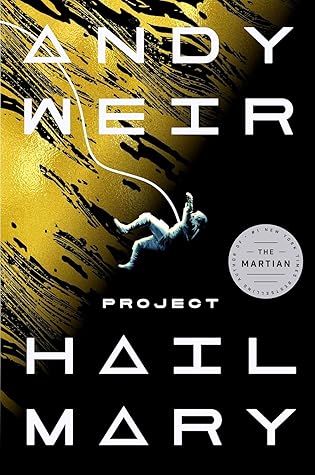
BC: Love Ursula K. Le Guin. I love Andy Weir. Of course, Michael Crichton. Project Hail Mary, by Andy Weir, which came out last year, is a spectacular novel. It's nearly flawless. It manages to have an immense amount of heart, and it really has only one human character. I loved it. Another perfect one I would have to call out, Jurassic Park, is the gold standard for hard science with a very unputdownable narrative.
GR: And then what books are you reading now?
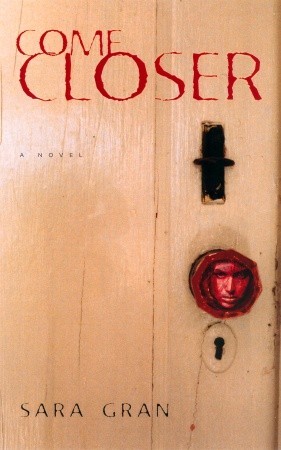
BC: I’m a little late to the game on this one. I just finished reading Come Closer by Sara Gran. Have you read it?
GR: I have not yet!
BC: Do you like really twisted stuff?
GR: In fiction, for sure.
BC: It’s great psychological fiction. And it is mind-blowingly engrossing. I was floored by it. It's one of those books I've heard people talking about forever. She's a writer people have been talking about forever, and I finally jumped into it. I just finished reading Klara and the Sun by Kazuo Ishiguro. Oh, I’ll tell you a near-perfect novel, Never Let Me Go.
It's newer, and it's just out, but a book I really loved was Aurora by David Koepp. It's his second novel. If you don't know David Koepp as a novelist, you've definitely watched his films. He's a screenwriter of Jurassic Park, Panic Room, and so many amazing blockbuster movies. Aurora is fantastic. It's the first post-COVID novel I've read that does it the right way, where it's not pulling you out of the narrative and making you think about all the things you went through in COVID. It's integrated seamlessly.
GR: You mentioned screenwriting, and I read in your About the Author that you cocreated the hit TNT show Good Behavior. How do you tackle writing for TV versus books?
BC: I don't know how people write original screenplays and make them work because I just know what my processes is in writing a book. It is just murder. By the time I’ve finished a book, I've worked out so much of the structure. As I was talking about before, I know the characters intimately, finally. When it comes to writing a screenplay, I'm not saying it's easy, but you're starting with a big wind at your back.
For me, and why I love writing scripts, is it's a way to further explore like I'm doing on Dark Matter, actually improving on the source material. Because no book is perfect. And once you start breaking it down and understanding how it works for a TV show or a movie, you start to see some of the flaws. Sometimes they're not flaws, it just works in a book or doesn't work in a film. It's like getting a do-over. It's also like getting to spend more time with these characters in an interesting way, and in a collaborative way. Now you're inviting more people, you're inviting the actors and producers and directors into the conversation, and you get the benefit of all of their ideas. I really love it, but only under certain terms and conditions.
GR: If you could hack your own genome, would you and what would you change?
BC: Is safety guaranteed?
GR: Yes.
BC: Then, absolutely. What would I change? What would I not change! I would love to remove the need for sleep. I love sleep, but I'd also love to have those extra hours in the day. I’d obviously do all of the health things. I’d love to live a bit longer.
I'm weary of it, though. I think gene editing has enormous potential. It's obviously doing so much good. But literally getting in there and just monkeying around with the source code that makes us who we are. This is my ultimate takeaway from all of the research I did for Upgrade. We are unbelievably complicated biological machines, infinitely more complicated than the most complicated quantum processor. We're still a fair ways off from understanding the interconnectedness of all of our genes and how they influence each other. Because it's not one-to-one. There are certain genes that are a little more straightforward, but the vast majority of them are massively complicated and the attributes that we think of something as simple as, you know, the sound of how our voice sounds, or the shape of our ear, it's like hundreds of genes working in this delicate concert to make that happen. All of these things evolved over millennia. The complexity is truly astounding.
GR: Last question! What else would you like your readers to know about Upgrade?
BC: For all of our discussion here, it's ultimately not a morality tale. It's not a lecture. It's definitely not a science text. It is truly meant to be enjoyed and to make you think.
Blake Crouch's Upgrade will be available in the U.S. on July 12. Don't forget to add it to your Want to Read shelf. Be sure to also read more of our exclusive author interviews and get more great book recommendations.
Comments Showing 1-37 of 37 (37 new)
date newest »
newest »
message 1:
by
Jacqueline
(new)
Jul 07, 2022 10:43PM
 Thank for this great interview.
flag

 My copy arrived today in the UK - can't wait to get started!
 I absolutely loved Dark Matter and Recursion! I’m married to a geneticist so I am very excited to to get ahold of Upgrade and to hear what my spouse thinks about the book and the science as it’s presented in the story. Project Hail Mary was one of my favorite reads last year and I love that Mr. Crouch felt similarly. His acknowledgment of Amor Towles for A Gentleman in Moscow at the conclusion of Recursion was quite touching. That was another book that truly captured my heart. It’s really wonderful to see authors who are great in their own right have the grace and humility to acknowledge the greatness of their contemporaries.

 Great article! Loved reading BC side of the story. Can't wait for my preorder to arrive!!
 I was able to read an ARC of this book and it is fantastic! My only gripe would be I wish it was longer.
 Loved the interview - especially the insight into the author’s thinking. Dark Matter and Recursion are fantastic books. I will be buying Upgrade as my next Crouch book. Never saw Wayward Pines or read the book, but having enjoyed Crouch’s books so far, I may go back in time and read that.
I really enjoyed the interview; can't wait to get my pre-ordered copy
Loved the interview - especially the insight into the author’s thinking. Dark Matter and Recursion are fantastic books. I will be buying Upgrade as my next Crouch book. Never saw Wayward Pines or read the book, but having enjoyed Crouch’s books so far, I may go back in time and read that.
I really enjoyed the interview; can't wait to get my pre-ordered copy of Upgrade! Recursion is one of my all-time favorites.
 It's great to read about Blake Crouch's process in writing. Dark Matter was fabulous, and I can't wait to read Upgrade. Thank you.
 This happens to be one the best interviews I've read recently ! Can't wait to read Upgrade! Blake Crouch is the best author in science fiction. Absolutely in love with Dark Matter and Recursion.

 Incredible article. So excited to fall in love with another one of Crouch’s books!
 Love it! Cannot wait to go buy my copy of Upgrade on Tuesday. Blake Crouch’s feels so comfortable in this interview, like he really is just talking about what he’s excited about and wants to share it.
 I received an ARC copy from netgalley and I read it with a couple of friends that are fans too. This is my first BC book but I did just get Recursion in the mail too. Can't wait to read it.
 Great interview. Blake Crouch is a favorite and this interview cemented the deal. Loved the examination of his process.
 It sounds like Mr. Crouch definitely put everything he's got into Upgrade. It will be interesting to see how he exploits the nuances of genetic engineering to create some mind-blowing plot points!
 Loved this book. Thank you so much, Blake Crouch, for not only writing it but for the truly remarkable way in which you ended it.
 Great interview as well. Always great to know how an author gives birth!
 I was able to read an ARC of this book and loved it. Logan Ramsey is an unforgettable character that is multi-dimensional; I cried at the end for him. Sci-fi isn't my usual go-to genre, but Blake Crouch writes such a compelling novel that he's a must-read author for me.
Great interview!
 Upgrade was the book I was impatiently waiting for this year. I read it a few months ago and it was worth the wait. Really enjoyed it!
 Great article. I’m a huge fan of Dark Matter and looking forward to Upgrade.
 Good interview. I learned a lot about the writing process followed by one of my favorite authors. I learned enough about the book to intrigue me without spoiling it (I generally avoid reading anything about the books written by my favorite thriller authors, including most GR reviews). Well done.
 Thanks for the interview.
Kinda surprised Crouch gave the draft script to friends with opposite political views and apparently took some of their comments into account. Seems odd considering his tweets but I'll take his word for it.
I followed him on Twitter when I first joined that site but didn't for too long cause he's a lefty that has no clue about politics and I felt my braincells evaporating reading some of his tweets. He probably thinks he's informed cause he listens to NPR or sees some CNN articles. But whatever.
Anyway I will admit I enjoy his novels. "Run" is one of my favorite books of all time; wow it's great. From his tweets I'm thinking he'd think I'm a Nazi fascist white supremacist but that's ok, people like him fit the NPC meme to a 'T.'
 I love his mention of Jurassic Park because I saw the new movie right before I read this book, and the great famine and the great starvation because of locusts really paralleled each other. I also loved the ending letter to his wife and daughter, the love letter to our species. Excellently done. In my review I even mentioned how much research must have gone into this and I was also glad to know he put the proper work in. This makes me respect Blake Crouch even more. To top it off, I guess I read these books in the right order because I haven’t read Recursion yet. In a weird way, I feel even more connected to this author now. Long live the Blake Crouch science fiction kingdom!
 Got this one through my Book of the Month subscription!! So excited to start it.
 Great interview..can't wait to read Upgrade. It's my most anticipated read of the year!
 this was very interesting loved it !! thank you for this interview
 Anyone else notice how the latest Jurassic Park movie has plotlines similar to Upgrade with worldwide famine due to gene editing?
 I'm so stoked. Especially since this book was conceptualized more closely after Dark Matter.
 Brilliant read.... Can't wait for an 'upgrade' from the dark matter.. Let's do this Mr.Crouch
 It's admirable to elicit feedback from those across the political aisle, demonstrating compassion and intelligence. The author definitely achieved his goal of entertaining me and provoking thought!
 I am excited to read this now. I loved Recursion; it is one of my top five favorite books. This one sounds like it will be just as good.
Yet another great BC read…but I’m currently obsessed with getting more info on the sequel to Return of the Jedi he wrote as a teen…. He mentioned it on a podcast and I’m SO curious now!
I am excited to read this now. I loved Recursion; it is one of my top five favorite books. This one sounds like it will be just as good.
Yet another great BC read…but I’m currently obsessed with getting more info on the sequel to Return of the Jedi he wrote as a teen…. He mentioned it on a podcast and I’m SO curious now!
 Great interview! I really enjoy Blake Crouch’s storytelling. The books he loves are books I love too. No wonder I like him. Thank you for sharing your process and your talent.