Discover new books on Goodreads
See if your friends have read any of Haala Humayun's books
more photos (1)
Haala Humayun’s Followers (28)


More friends…
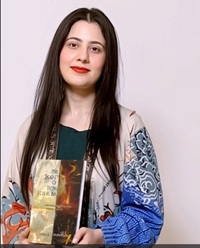
Haala Humayun
Goodreads Author
Born
in Lahore, Pakistan
Website
Twitter
Genre
Influences
Member Since
December 2021
URL
https://www.goodreads.com/httpsthelegendoftilsimhoshrub

Haala Humayun – Novelist & Author of The Legend of Tilsim Hoshruba
Haala Humayun is a lawyer by profession and a novelist by choice and the creative force behind the epic fantasy series The Legend of Tilsim Hoshruba. With a deep love for Middle Eastern folklore and mystical storytelling, she crafts worlds filled with magic, adventure, and romance. Her acclaimed series includes The Tilsim Quest (Book 1), The Tilsim Kusha: The Chosen One (Book 2), and the two-part Rebel Queens of Tilsim (Book 3).
Known for her poetic style and richly layered characters, Haala weaves tales that transport readers into a realm where destiny, love, and courage intertwine. Beyond writing, she engages with literary communities online and in Pakistan, inspiring reader Haala Humayun – Novelist & Author of The Legend of Tilsim Hoshruba
Haala Humayun is a lawyer by profession and a novelist by choice and the creative force behind the epic fantasy series The Legend of Tilsim Hoshruba. With a deep love for Middle Eastern folklore and mystical storytelling, she crafts worlds filled with magic, adventure, and romance. Her acclaimed series includes The Tilsim Quest (Book 1), The Tilsim Kusha: The Chosen One (Book 2), and the two-part Rebel Queens of Tilsim (Book 3).
Known for her poetic style and richly layered characters, Haala weaves tales that transport readers into a realm where destiny, love, and courage intertwine. Beyond writing, she engages with literary communities online and in Pakistan, inspiring readers and aspiring authors alike. Her work has positioned her as one of Pakistan’s rising voices in fantasy literature.
...more
To ask
Haala Humayun
questions,
please sign up.
Popular Answered Questions
Haala Humayun
The old bookshop was empty when I entered, yet as I flipped through a dusty novel, a handwritten note on the last page read: **"Stop turning the pages…moreThe old bookshop was empty when I entered, yet as I flipped through a dusty novel, a handwritten note on the last page read: **"Stop turning the pages—I’m reading over your shoulder."**
A cold breath brushed against my neck, and the book slipped from my trembling hands… turning one last page on its own.(less)
Haala Humayun
I would travel to the mystical and spellbinding world of Tilsim-e-Hoshruba, where magic reigns supreme, legendary warriors roam the lands, and ancient…moreI would travel to the mystical and spellbinding world of Tilsim-e-Hoshruba, where magic reigns supreme, legendary warriors roam the lands, and ancient secrets lie hidden within enchanted realms.
In this world, I would step into the shoes of Cihan, a character of my own creation—one whose journey is yet to unfold in the depths of Tilsim-e-Hoshruba.
Cihan is not just a traveler; he is a seeker of lost truths, a man burdened by the weight of his own destiny, walking a path carved long before he was born. He does not belong to any kingdom, nor does he swear allegiance to any ruler—his loyalty lies only with the unseen forces that whisper to him from beyond the veil of this world.
His journey is not of swords and battles, but of wisdom and awakening. He does not chase power, yet power bends before him. He does not crave magic, yet magic flows through him like an untamed river. In the grand game of sorcerers and queens, he is the anomaly—the one who exists outside the rules of their world, yet holds the key to its greatest secret.
If I were in his place, I would walk through the shattered ruins of forgotten civilizations, tracing the footsteps of those who once tried to unlock the mysteries of the universe. I would sit beneath the ancient trees that whisper prophecies and listen to their echoes of fate. I would break the barriers of illusion, not just in the world, but within myself—to discover whether I am truly the master of my destiny, or merely a piece in a game played by forces far beyond human comprehension.
For Cihan’s journey is not just about breaking an enchantment—it is about breaking the very concept of reality itself. And maybe, just maybe, in the end, he will find that the greatest tilsim was never in the world—but within him all along.
Would you dare to step into such a world? Or is reality the only magic we truly need?
(less)
In this world, I would step into the shoes of Cihan, a character of my own creation—one whose journey is yet to unfold in the depths of Tilsim-e-Hoshruba.
Cihan is not just a traveler; he is a seeker of lost truths, a man burdened by the weight of his own destiny, walking a path carved long before he was born. He does not belong to any kingdom, nor does he swear allegiance to any ruler—his loyalty lies only with the unseen forces that whisper to him from beyond the veil of this world.
His journey is not of swords and battles, but of wisdom and awakening. He does not chase power, yet power bends before him. He does not crave magic, yet magic flows through him like an untamed river. In the grand game of sorcerers and queens, he is the anomaly—the one who exists outside the rules of their world, yet holds the key to its greatest secret.
If I were in his place, I would walk through the shattered ruins of forgotten civilizations, tracing the footsteps of those who once tried to unlock the mysteries of the universe. I would sit beneath the ancient trees that whisper prophecies and listen to their echoes of fate. I would break the barriers of illusion, not just in the world, but within myself—to discover whether I am truly the master of my destiny, or merely a piece in a game played by forces far beyond human comprehension.
For Cihan’s journey is not just about breaking an enchantment—it is about breaking the very concept of reality itself. And maybe, just maybe, in the end, he will find that the greatest tilsim was never in the world—but within him all along.
Would you dare to step into such a world? Or is reality the only magic we truly need?
(less)
|
The Legend of Tilsim Hoshruba
it was amazing 5.00 avg rating — 13 ratings
—
2 editions
|
Error rating book. Refresh and try again.
Rate this book
Clear rating
|
|
THE LEGEND OF TILSIM HOSHRUBA: The Tilsim Quest
it was amazing 5.00 avg rating — 11 ratings
|
Error rating book. Refresh and try again.
Rate this book
Clear rating
|
|
The Legend of Tilsim Hoshruba : The Tilsim Kusha – ‘The Chosen One’
it was amazing 5.00 avg rating — 11 ratings
|
Error rating book. Refresh and try again.
Rate this book
Clear rating
|
|
THE LEGEND OF TILSIM HOSHRUBA: The Tilsim Quest
it was amazing 5.00 avg rating — 10 ratings
|
Error rating book. Refresh and try again.
Rate this book
Clear rating
|
|
The Legend of Tilsim Hoshruba: Book 3 – The Rebel Queens of Tilsim ✴ Part I: The Gathering Storm
it was amazing 5.00 avg rating — 10 ratings
|
Error rating book. Refresh and try again.
Rate this book
Clear rating
|
|
The Rebel Queens of Tilsim
it was amazing 5.00 avg rating — 10 ratings
|
Error rating book. Refresh and try again.
Rate this book
Clear rating
|
|
THE LEGEND OF TILSIM Hoshruba
it was amazing 5.00 avg rating — 10 ratings
|
Error rating book. Refresh and try again.
Rate this book
Clear rating
|
|
The Legend of Tilsim Hoshruba: The Tilsim Kusha - 'The Chosen One'
it was amazing 5.00 avg rating — 10 ratings
|
Error rating book. Refresh and try again.
Rate this book
Clear rating
|
|
The Legend of Tilsim Hoshruba: Book 3 – The Rebel Queens of Tilsim
it was amazing 5.00 avg rating — 1 rating
|
Error rating book. Refresh and try again.
Rate this book
Clear rating
|
|
The Legend of Tilsim Hoshruba: Book 3 - The Rebel Queens of Tilsim
it was amazing 5.00 avg rating — 1 rating
|
Error rating book. Refresh and try again.
Rate this book
Clear rating
|
ABU DHABI BOOK FAIR 2025
📚✨ Exciting Announcement ✨📚
Dear Readers,
I'm beyond thrilled to share that both my novels — The Legend of Tilsim Hoshruba: The Tilsim Quest (Book 1) and The Tilsim Kusha: The Chosen One (Book 2) — will be proudly showcased at the Pakistan Pavilion during the Abu Dhabi International Book Fair 2025!
📍 Date: April 26 – May 5, 2025
📍 Venue: Abu Dhabi National Exhibition Centre (ADNEC)
📍 Stand: No. Read more of this blog post »
Dear Readers,
I'm beyond thrilled to share that both my novels — The Legend of Tilsim Hoshruba: The Tilsim Quest (Book 1) and The Tilsim Kusha: The Chosen One (Book 2) — will be proudly showcased at the Pakistan Pavilion during the Abu Dhabi International Book Fair 2025!
📍 Date: April 26 – May 5, 2025
📍 Venue: Abu Dhabi National Exhibition Centre (ADNEC)
📍 Stand: No. Read more of this blog post »
Published on April 16, 2025 06:09
Haala’s Recent Updates
|
Haala Humayun
rated a book it was amazing
|
Error rating book. Refresh and try again.
Rate this book
Clear rating
|
|
'Home #itscomplicated': The Country We Carry Within Us There are some questions in life that do not demand an answer; they demand a journey. “Where is home?” A question that appears simple until one begins to search for its meaning. Because home is not 'Home #itscomplicated': The Country We Carry Within Us There are some questions in life that do not demand an answer; they demand a journey. “Where is home?” A question that appears simple until one begins to search for its meaning. Because home is not always the walls that shelter us, nor the streets where our footsteps first learned their rhythm. Sometimes home is a voice we remember after years of silence. Sometimes it is a childhood courtyard that no longer exists. Sometimes it is a country whose flaws we know intimately, whose wounds we have witnessed, and yet whose name still creates an ache somewhere deep within the heart. 'Home #itscomplicated', edited by Saba Karim Khan, seems to explore this very paradox — the beautiful, painful, and often confusing relationship between people and the land they call home. This anthology does not attempt to paint Pakistan in a single shade. Instead, it accepts its complexity. It understands that a country, like a person, cannot be defined by only its brightest moments or its darkest ones. It carries histories, contradictions, dreams, disappointments, and countless untold stories within itself. Through the voices of twenty-four contributors from different walks of life, the anthology becomes a collection of memories — memories of migration, belonging, displacement, identity, and the eternal search for roots. Each story appears to hold a different piece of the same puzzle: what does it mean to belong to Pakistan? Perhaps the most powerful aspect of this collection is its refusal to simplify belonging. Because loving a place does not mean ignoring its imperfections. Sometimes the deepest love is the one that dares to question. A child can be hurt by a parent’s mistakes and still carry that parent’s love in their heart. In the same way, people can acknowledge the struggles of their homeland while still feeling an undeniable connection to it. That is the emotional truth behind 'Home #itscomplicated'. The anthology reminds us that Pakistan is not merely a geographical identity. It exists in conversations around dining tables, in languages spoken by grandparents, in songs remembered from childhood, in prayers whispered for a better tomorrow, and in the memories carried by those who left but never truly departed. The question “But where are you really from?” becomes more than a question of nationality. It becomes a question of memory, identity, and belonging. Are we from the soil where we were born, the streets where we grew up, or the places that shaped our souls? Perhaps we are made of all of them. The reflections within this anthology appear to capture a generation caught between affection and uncertainty — people who look at Pakistan with both admiration and anguish. They see its struggles, but they also see its possibilities. They recognise what is broken, yet they continue to search for what can be rebuilt. And maybe that is the most honest relationship anyone can have with a home. A perfect home exists only in imagination. A real home is complicated. It disappoints us, challenges us, changes us — but somewhere beneath everything, it remains a part of who we are. 'Home #itscomplicated' is therefore not only a collection about Pakistan. It is a meditation on belonging itself. It asks us to look beyond borders and headlines and remember that every country is ultimately made of human stories. Stories of people who leave. Stories of people who stay. Stories of people who spend their entire lives trying to understand where they truly belong. And perhaps, at the end of this search, home is not just a place we find. It is a place that finds us. ...more |
|
|
|
|
|
Haala Humayun
rated a book it was amazing
|
Error rating book. Refresh and try again.
Rate this book
Clear rating
|
|
Book Review: Ulysses (Urdu Translation by Anwar Sen Roy) There are certain books that become legends long before they become reading experiences. Ulysses by James Joyce is one of those rare literary monuments whose name alone evokes curiosity, admirat Book Review: Ulysses (Urdu Translation by Anwar Sen Roy) There are certain books that become legends long before they become reading experiences. Ulysses by James Joyce is one of those rare literary monuments whose name alone evokes curiosity, admiration, intimidation, and endless debate. It is a work that has challenged readers, critics, translators, and scholars for more than a century. Yet, despite its towering reputation, it remained inaccessible to millions of Urdu readers—until Anwar Sen Roy undertook what many would have considered an impossible literary journey. His complete Urdu translation of Ulysses is not merely the translation of a novel; it is the translation of an entire literary civilization into another language. That, in itself, deserves admiration. Translating an ordinary novel demands linguistic skill. Translating Ulysses demands something far greater: patience, courage, scholarship, artistic intuition, and an unwavering devotion to literature. James Joyce did not simply write a story—he reinvented the very language of storytelling. His pages flow through fragmented memories, shifting thoughts, layered symbolism, hidden allusions, mythological parallels, philosophical reflections, and one of the most sophisticated uses of stream of consciousness ever attempted in world literature. Carrying all of that into Urdu while preserving both meaning and literary beauty is an achievement that few translators in the world would even dare to attempt. Anwar Sen Roy has accomplished precisely that. What moved me most about this translation is not merely that an English masterpiece now exists in Urdu, but that it represents a profound act of cultural bridge-building. Languages are not simply tools of communication; they are homes for emotions, histories, imaginations, and identities. Every time a monumental work crosses from one language into another with dignity and care, literature itself becomes richer. This translation allows Urdu readers to engage with one of the greatest achievements of twentieth-century literature through the warmth and familiarity of their own language without diminishing the intellectual grandeur of Joyce's vision. That is no small gift. The importance of this work extends far beyond readers alone. It is a landmark for Urdu literature itself. For decades, Ulysses was often spoken of as a book admired from afar—celebrated, referenced, studied, yet rarely experienced directly by Urdu audiences because of the formidable barriers posed by its language and style. This translation removes one of those barriers. It opens a door that remained closed for generations, inviting students, writers, translators, researchers, and lovers of literature into one of the most fascinating literary landscapes ever created. What makes this accomplishment even more remarkable is the nature of Joyce's writing. Ulysses refuses simplicity. It does not guide its readers gently through its pages; instead, it invites them to wander, question, interpret, and occasionally lose themselves before discovering unexpected moments of clarity. Its brilliance lies precisely in this complexity. Every chapter experiments with language in a different way, every sentence seems layered with meanings, and every ordinary moment quietly transforms into something universal. Translating such a work is not simply about replacing English words with Urdu ones—it requires recreating rhythm, preserving ambiguity where necessary, carrying cultural references with sensitivity, and ensuring that the emotional pulse of the original continues to beat within another language. Anwar Sen Roy's work stands as a testament to what literary translation can truly achieve when approached with scholarship and artistic dedication. Reading about this translation also reminded me of an important truth: great literature does not belong to one nation or one language. Stories that explore love, loneliness, memory, grief, hope, identity, and the endless movement of human thought ultimately belong to humanity itself. Translation allows these stories to travel beyond borders, inviting readers from entirely different cultures into conversations that began decades—or even centuries—earlier. It is through translators that literature refuses to remain confined by geography. In many ways, translators are among literature's quietest heroes. They rarely receive the recognition given to novelists, yet they spend years rebuilding masterpieces word by word, sentence by sentence, emotion by emotion. Their success is measured not by how visible they become, but by how naturally readers can experience another author's voice through an entirely different language. It is meticulous, demanding, and often invisible work. This Urdu translation of Ulysses is a reminder of just how invaluable that work truly is. What also deserves appreciation is the sheer courage behind publishing such a demanding work. In an age where speed often replaces depth and simplicity frequently overshadows complexity, bringing a novel like Ulysses into Urdu is an act of faith in readers themselves. It reflects a belief that Urdu literature deserves access to the world's most ambitious literary achievements, regardless of how intellectually demanding they may be. Such confidence in readers is refreshing and deeply encouraging. This translation is not merely for those seeking an easy narrative. It is for readers willing to think, reflect, revisit passages, and embrace literature that asks questions instead of offering immediate answers. Some books entertain us for a few days; others remain with us for years because they continually reveal new meanings. Ulysses belongs firmly to the latter category. The publication of this translation is therefore more than the release of another book. It is a milestone in the literary history of the Urdu language. It expands the horizons of what Urdu readers can experience and demonstrates the remarkable expressive capacity of Urdu itself. It also reminds us that our language possesses the richness necessary to engage with even the most challenging works of world literature. For that reason alone, Anwar Sen Roy deserves heartfelt appreciation. Whether one approaches Ulysses as a scholar, a student, a lover of classics, or simply a curious reader wishing to experience one of literature's greatest landmarks through Urdu, this translation represents an extraordinary opportunity. It reflects years of dedication, immense literary sensitivity, and a profound respect for both James Joyce's original masterpiece and the expressive beauty of the Urdu language. Some books become milestones because they change literature. Some translations become milestones because they change who has access to that literature. This remarkable Urdu rendition of Ulysses achieves exactly that. It is not merely a translation of words—it is the translation of an era, a literary philosophy, and an enduring human experience. It stands as a tribute to the timeless power of literature to transcend languages, cultures, and generations, reminding us that while languages may differ, the human soul has always spoken the same language through great stories. ...more |
|
|
|
|
|
Haala Humayun
rated a book it was amazing
|
Error rating book. Refresh and try again.
Rate this book
Clear rating
|
|
Book Review: My Silk Road: The Adventures & Struggles of a British Asian Refugee By Ram Gidoomal There are books that entertain, books that educate, and then there are books that quietly reshape the way we perceive the world. My Silk Road: The Adventur Book Review: My Silk Road: The Adventures & Struggles of a British Asian Refugee By Ram Gidoomal There are books that entertain, books that educate, and then there are books that quietly reshape the way we perceive the world. My Silk Road: The Adventures & Struggles of a British Asian Refugee belongs to the third category. Although presented as an autobiography, it transcends the boundaries of personal memoir and becomes a profound meditation on identity, displacement, resilience, faith, and the enduring power of human relationships. Rather than simply recounting the milestones of an extraordinary life, Ram Gidoomal invites readers to walk beside him through moments of triumph and devastation, allowing them to witness how adversity often becomes the birthplace of purpose. The title itself is deeply symbolic. Historically, the Silk Road was never merely a network of trade routes connecting East and West; it was a bridge where cultures met, ideas flourished, and civilizations exchanged more than material wealth. Gidoomal's own "Silk Road" reflects a similar journey. His travels are not measured by geographical distance alone but by emotional transformation. Every country he enters, every loss he endures, and every relationship he builds contributes another thread to the rich tapestry of his life. The road he walks is paved not with silk but with sacrifice, perseverance, and compassion. Born into a prosperous Sindhi family whose fortunes had already been shattered once during the Partition of India and Pakistan, Gidoomal's childhood in Mombasa appears almost idyllic. His family, through remarkable determination, rebuilt everything they had lost and established themselves once again as successful silk traders. Yet history proved unforgiving. Political upheaval in Kenya forced the family into exile for a second time, stripping them of their security almost overnight. At merely seventeen years of age, Ram arrived in Britain uncertain whether he would even be permitted to stay. This painful beginning immediately distinguishes the memoir from conventional success stories. It reminds readers that behind every refugee is not simply someone seeking safety, but someone mourning a life that once existed. One of the book's greatest strengths lies in its refusal to romanticize hardship. Gidoomal does not portray resilience as effortless optimism. Instead, he openly acknowledges the loneliness, rejection, misunderstandings, and prejudice that accompanied his arrival in Britain. His experiences of racism are described with honesty rather than bitterness, allowing readers to understand the invisible burdens many immigrants carry while attempting to rebuild their lives. These reflections feel especially relevant in today's increasingly interconnected yet deeply divided world, where migration continues to shape societies across the globe. Yet the memoir never becomes a narrative of victimhood. Instead, adversity gradually transforms into determination. Beginning with humble work in a corner shop, Gidoomal demonstrates that dignity resides not in status but in perseverance. His entrepreneurial journey illustrates that genuine business success is rooted in understanding people rather than merely pursuing profit. The family business flourished because it recognized the diverse needs of customers from different communities, highlighting an often-overlooked truth: empathy itself can become a competitive advantage. Perhaps the most compelling aspect of My Silk Road is its exploration of success. Modern society frequently defines achievement through wealth, titles, or public recognition. Gidoomal certainly attained these milestones. He rebuilt his family's financial stability, earned professional respect, and became an influential figure within British public life. Yet what distinguishes his story is his willingness to question whether external success alone could satisfy the human soul. This internal conflict reaches its climax during a visit to the slums of Mumbai, an encounter that becomes the emotional and spiritual turning point of the entire narrative. Witnessing profound poverty forced him to reconsider the purpose of his achievements. Rather than continuing to accumulate personal wealth, he redirected his life toward service, philanthropy, and community development. This transformation is presented not as a dramatic miracle but as the gradual awakening of conscience. It is perhaps the book's most powerful message: true success is measured not by what we possess but by what we contribute to the lives of others. Equally impressive is the memoir's portrayal of family. In many Western autobiographies, independence is often celebrated as the ultimate virtue. Gidoomal presents an alternative perspective rooted in the traditions of the Sindhi community, where extended families function as emotional, financial, and moral support systems. Throughout the memoir, family emerges not as a limitation but as a source of extraordinary resilience. Their willingness to trust one another, lend support without formal agreements, and remain united during times of crisis offers valuable insights into the strength of collective responsibility. Another noteworthy dimension of the book is its thoughtful discussion of cultural identity. Gidoomal occupies multiple worlds simultaneously: Indian by heritage, Kenyan by upbringing, British by nationality, and deeply engaged with diverse religious and cultural traditions. Rather than portraying identity as a fixed label, he demonstrates that it evolves through experience. His life becomes evidence that belonging is not determined solely by birthplace but by the values one chooses to embody. Faith also occupies a central place within the memoir, though it is presented with remarkable subtlety. Gidoomal's spiritual journey does not overshadow the narrative but quietly shapes its direction. His discovery of faith, followed by the life-changing experience in Mumbai, becomes the foundation upon which his later humanitarian work is built. Regardless of one's personal beliefs, readers are likely to appreciate how faith serves as a catalyst for compassion rather than division. It inspires action rather than passive reflection, encouraging service instead of self-interest. One particularly admirable quality of the memoir is its emphasis on relationships. Again and again, Gidoomal illustrates how seemingly insignificant acts of kindness can produce life-changing consequences decades later. Old friendships, mentors, professional acquaintances, and unexpected encounters become turning points that alter the direction of his journey. The book quietly argues that success is never achieved in isolation. Every accomplishment rests upon countless relationships cultivated through generosity, integrity, and mutual respect. This recurring theme adds emotional richness to the narrative while reminding readers that human connection often proves more valuable than financial capital. The writing itself is refreshingly sincere. Gidoomal does not rely on exaggerated drama or sentimental language to capture the reader's attention. Instead, his storytelling feels authentic because it embraces simplicity. Each chapter unfolds naturally, balancing personal memories with broader reflections on society, business, leadership, and faith. The conversational style makes complex social issues accessible without diminishing their significance. What makes My Silk Road particularly compelling is that it embraces the defining moments that shaped Ram Gidoomal's remarkable journey. Like many autobiographies, it naturally places greater emphasis on the milestones that transformed his life and the lessons they impart. Yet, as I read, I occasionally found myself wondering about the quieter moments that exist between those milestones—the silent doubts, private struggles, and moments of uncertainty that every human being experiences but often cannot fully capture in words. Rather than feeling like something was missing, this reflection reminded me that no memoir can ever contain the entirety of a person's inner world. Every life holds untold stories that remain known only to the one who has lived them. It is perhaps this very realization that makes the memoir's message so profoundly human. It reminds us that circumstances may alter our address, our possessions, and even our identity in the eyes of society, but they cannot define our purpose unless we allow them to. Gidoomal's life demonstrates that resilience is not the absence of suffering but the courage to continue walking despite it. His journey stands as a testament to the idea that life's greatest victories are not always measured by wealth or recognition, but by the compassion we cultivate, the lives we touch, and the hope we choose to leave behind. Perhaps the book's most enduring lesson lies in its quiet rejection of despair. Every major loss eventually becomes the foundation for unexpected opportunity. Every rejection opens another door. Every act of kindness plants a seed whose harvest may not appear until decades later. These recurring patterns transform the memoir from a personal success story into a universal reflection on hope itself. The author's lifelong maxim—"Never let what you can't do stop you from doing what you can"—beautifully encapsulates the spirit of the entire book. It is neither an empty motivational slogan nor a simplistic promise that hard work always guarantees success. Instead, it acknowledges the limitations life inevitably imposes while encouraging readers to act faithfully within those limits. In an era increasingly dominated by cynicism and instant gratification, such wisdom feels remarkably refreshing. Ultimately, My Silk Road is far more than the autobiography of a successful businessman or refugee. It is a thoughtful exploration of what it truly means to rebuild a life after losing everything. It challenges conventional definitions of success by demonstrating that wealth without compassion remains incomplete, while service rooted in empathy possesses the power to transform communities. Whether one approaches the book from an interest in history, business, migration, leadership, or personal growth, there is something deeply meaningful to discover within its pages. Closing the final chapter, one does not remember merely the countries Ram Gidoomal travelled through or the positions he eventually held. Instead, what lingers is a quieter realization: that every human being walks a Silk Road of their own. Some roads are lined with comfort, others with exile; some are illuminated by success, others by sacrifice. Yet all roads ultimately ask the same question—not how much we accumulated along the journey, but who we became while walking it. For readers seeking a memoir that combines historical context, emotional honesty, ethical leadership, and enduring hope, My Silk Road proves to be an inspiring and deeply rewarding read. It is a story that does not simply end with the final page; it continues to resonate long after the book has been closed, inviting readers to reflect on their own journeys, their own choices, and the legacy they hope to leave behind. "In the end, the truest Silk Road is not the one that leads us across continents, but the one that quietly leads the human heart from ambition to purpose, from possession to compassion, and from success to significance." ...more |
|
|
|
|
|
Haala Humayun
rated a book it was amazing
|
Error rating book. Refresh and try again.
Rate this book
Clear rating
|
|
There are some novels that entertain. Some novels impress. And then there are those rare novels that feel less like fiction and more like an old wound opening quietly beneath the skin of a society. Jurrat-e-Rindana by Amna Mufti belongs to that rare ca There are some novels that entertain. Some novels impress. And then there are those rare novels that feel less like fiction and more like an old wound opening quietly beneath the skin of a society. Jurrat-e-Rindana by Amna Mufti belongs to that rare category for me — a novel that does not merely narrate lives, but listens to the silent cracking sounds inside them. What astonished me most while reading this novel was the realization that this was a debut work. Because hidden within its pages are already visible the foundations of the deeply observant, psychologically intricate, and socially intelligent writer Amna Mufti would later become. One can almost witness an artist discovering the extent of her own voice. The brilliance here may still be raw in places, but rawness has its own dangerous beauty — like rain clouds gathering before a storm fully learns its thunder. Amna Mufti writes human beings the way old village mirrors reflect faces — without mercy, yet without cruelty. From the very beginning, Jurrat-e-Rindana carries the fragrance of Punjab within its breath. Not the decorative Punjab often romanticized in shallow narratives, but the real Punjab — layered with dust, fatigue, inherited pride, shrinking lands, restless youth, dying wilderness, and deeply buried emotional loneliness. Her Punjab breathes through harvested fields, tired evenings, ancestral homes, crowded Lahori streets, women whispering behind social curtains, and men carrying centuries of invisible expectations upon their shoulders. And perhaps this is where the soul of the novel truly resides. Amna Mufti does not merely describe landscapes; she mourns them. Beneath the social realism of the narrative runs a subtle ecological grief — a sorrow for a vanishing natural world continuously swallowed by expanding urban appetite and material ambition. Trees, seasons, fields, changing weather, birds, and rural stillness are not passive background elements in this novel; they are emotional participants. One feels throughout the narrative that the land itself is exhausted. That nature, much like the characters, is slowly losing space to survive. This sensitivity toward environment and disappearing rural textures gives the novel an aching poetic undercurrent. It explains why even ordinary scenes in the book leave behind emotional residue. There is always something fading in the background of Amna Mufti’s prose — a value, a relationship, a simplicity, a silence, a landscape. The emotional architecture of the novel rests primarily upon Munir and Shehla Beg, two recently orphaned siblings attempting to navigate not only financial uncertainty but also the suffocating inheritance of social expectation. Yet what makes these characters memorable is that they are not written as dramatic revolutionaries. Their rebellion is hesitant, confused, deeply human. They wish to break free, but they themselves do not fully understand what freedom demands. And that is exactly why they feel real. Munir’s relationship with land becomes one of the most powerful aspects of the novel. In Punjabi society, land is never simply property. It is masculinity. Legacy. Status. Bloodline. Memory. Identity. Through Munir’s struggle to sustain ancestral farming amid exploitation and economic instability, the novel quietly exposes the brutal transformation of agrarian culture. There is a tragic helplessness in his efforts — as though he is trying not only to save a farm, but to rescue an entire way of existence already collapsing before his eyes. Amna Mufti writes these rural tensions with remarkable authenticity because she understands something essential: poverty wounds differently in villages than in cities. In urban life, people lose comfort. In rural life, people lose belonging. Then comes Shehla’s movement toward Lahore — and suddenly the novel shifts emotionally from soil to social performance. Her arrival into the urban educational environment is written with extraordinary psychological sharpness. Lahore in this novel is vibrant, alive, culturally rich — but also deeply class-conscious. The city welcomes people conditionally. One can enter its institutions, but not always its emotional circles. Shehla carries with her the hesitations of rural upbringing into spaces dominated by urban polish, inherited confidence, and social privilege. Through her eyes, Amna Mufti dissects middle-class morality, class anxieties, and the exhausting performance of fitting in. And this is where the novel becomes devastatingly insightful. Because the girls around Shehla are not merely characters — they are representations of different forms of female survival within Pakistani society. Uzmana, with her intellectual hunger and suffocating lower-middle-class constraints, becomes symbolic of countless women whose minds outgrow the narrow futures prepared for them. There is something heartbreaking about her yearning for intellectual and emotional expansion while society continuously redirects her toward domestic predictability. Sadaf, meanwhile, may be one of the novel’s most psychologically layered creations. Fiercely independent yet internally fractured, she carries both admiration and resentment toward her unconventional mother. Through Sadaf, Amna Mufti explores a deeply uncomfortable social truth: women who challenge societal structures often pay for that defiance not only publicly, but emotionally through their children as well. Sadaf’s anguish feels inherited. Her rebellion feels exhausted even before it fully begins. What impressed me profoundly was that the novel never simplifies these women into symbols of empowerment or victimhood. Amna Mufti allows them complexity. Contradiction. Moral ambiguity. Emotional inconsistency. And that is the mark of mature writing. The dialogues throughout the novel are another extraordinary achievement. There is a natural sharpness in them — witty without sounding manufactured, emotionally loaded without becoming melodramatic. This is perhaps where one can most clearly recognize the future dramatist within Amna Mufti. Her scenes unfold visually. Conversations carry rhythm. Silences speak. A single exchange between characters often reveals more than pages of exposition could. Very few writers understand conversational realism this instinctively. What also fascinated me was the novel’s treatment of class. Class in Jurrat-e-Rindana is not merely economic — it is psychological. It shapes speech, confidence, morality, romance, ambition, even the right to dream. Some characters possess the luxury of emotional experimentation because financial security protects them from consequence. Others are denied even the freedom to imagine alternative lives. Amna Mufti captures this invisible violence of class with extraordinary subtlety. And beneath all these social layers lies the novel’s most haunting question: Can human beings truly escape the lives designed for them by birth, society, family, gender, and class? Or do they merely rename compromise as wisdom with age? This question echoes throughout the narrative like a quiet wound. The title itself — Jurrat-e-Rindana — suggests fearless, unapologetic courage. Yet the irony of the novel lies in the fact that almost every character struggles to fully embody that courage. They long for emotional freedom, intellectual freedom, romantic freedom, existential freedom — but the machinery of society is relentless. Again and again, the novel reveals how deeply conformity is woven into survival itself. And perhaps that is what makes the book emotionally unsettling. Because while reading it, one realizes that most people are not living the lives they truly desire. They are living negotiated versions of themselves. Amna Mufti’s greatest strength as a novelist, however, lies not merely in social commentary but in observation. She notices things lesser writers overlook — the insecurity hidden beneath arrogance, the loneliness inside rebellion, the exhaustion beneath social respectability, the quiet humiliation of economic dependence, the emotional claustrophobia of women, the silent collapse of nature around expanding cities. Her writing does not scream truths. It places them gently before the reader — and that gentleness makes them even more piercing. For a debut novel, the thematic maturity of Jurrat-e-Rindana is genuinely remarkable. Yes, one can occasionally sense a writer still refining certain narrative edges, still discovering the full rhythm of her literary power — but strangely, that incompleteness adds humanity to the work. It feels alive. Unfiltered. Honest. This is not a novel intoxicated with literary performance. It is a novel deeply interested in people. And perhaps that is why it lingers. Long after finishing the book, what remains is not merely the memory of characters or events, but a lingering emotional atmosphere — the dust of Punjab’s roads, the loneliness of Lahore’s social corridors, the silence of shrinking fields, the ache of unrealized freedom, and the painful understanding that life often forces human beings into becoming strangers to their own desires. Jurrat-e-Rindana is not simply a story about rebellion. It is a story about the terrifying cost of rebellion. About dreams negotiating with circumstance. About class quietly dictating destiny. About women carrying invisible prisons within themselves. About men inheriting burdens they never chose. About a society suspended between tradition and transition. And above all, about human beings desperately trying to preserve some fragment of authenticity while the world continuously reshapes them into something more acceptable. Some novels end on the final page. This one does not. It follows the reader afterward — quietly, persistently — like the scent of rain-soaked earth carried home in the folds of memory. “جرأتِ رندانہ” پڑھتے ہوئے بار بار یوں محسوس ہوا جیسے انسان اپنی مرضیوں کی زندگی نہیں جیتا، بلکہ اُن خوابوں کے ملبے پر جیتا ہے جنہیں معاشرہ جینے نہیں دیتا۔ آہنم مفتی نے اس ناول میں صرف کردار نہیں لکھے، بلکہ اُن خاموش خواہشوں کا نوحہ لکھا ہے جو پنجاب کی مٹی، لاہور کی گلیوں، اور انسان کے اندر ہی اندر دفن ہوتی رہتی ہیں۔ ...more |
|
|
|
|
|
Haala Humayun
rated a book it was amazing
|
Error rating book. Refresh and try again.
Rate this book
Clear rating
|
|
There are stories that disturb the mind for a few hours. And then there are stories that enter the human soul like a slow poison — quietly, invisibly — until one realizes that something inside has permanently changed. Ullu Baraye Farokht Nahi by Amna M There are stories that disturb the mind for a few hours. And then there are stories that enter the human soul like a slow poison — quietly, invisibly — until one realizes that something inside has permanently changed. Ullu Baraye Farokht Nahi by Amna Mufti is one such story. This is not merely a novel. It is a suffocating corridor of inherited cruelty. A mournful elegy for women buried alive inside traditions disguised as honor. A brutal mirror held before a society that worships land more passionately than it loves its daughters. And perhaps that is what makes this novel unforgettable. Amna Mufti does not write this story with the softness of a sentimental observer. She writes it like someone who has walked through the ruins of rural Punjab and listened carefully to the screams trapped inside its walls. There is a frightening honesty in her narrative voice. She does not decorate pain. She exposes it. The world of Ullu Baraye Farokht Nahi is deeply feudal, psychologically decaying, spiritually wounded, and morally claustrophobic. The Haveli in the novel is not simply a physical setting — it becomes a living organism. A prison. A graveyard of women’s desires. A structure built not merely with bricks, but with greed, silence, patriarchy, revenge, inheritance, and fear. What disturbed me most while reading this novel was the realization that the horrors within it do not emerge from monsters unfamiliar to society. They emerge from ordinary social customs people have normalized for generations. And that truth is terrifying. The central idea itself — denying daughters and sisters marriage in order to retain property and inheritance within the family — feels almost too cruel to believe, yet Amna Mufti presents it with such realism that one cannot escape its emotional weight. The novel tears apart the hypocrisy of a society where men freely exercise every moral liberty for themselves while simultaneously imprisoning women inside impossible expectations of purity, obedience, sacrifice, and silence. This is not oppression hidden beneath sophistication. This is naked, unapologetic control. What impressed me profoundly was that Amna Mufti never reduces the narrative into simplistic good-versus-evil storytelling. Her characters breathe with frightening complexity. Even the antagonists are not written like theatrical villains; they feel horrifying precisely because they appear psychologically believable. Their greed has history. Their cruelty has social legitimacy. Their violence hides behind cultural structures. And that makes the novel infinitely more disturbing. The tragedy of Kaneez Fatima stayed with me for a long time. There is something unbearably painful about watching a woman slowly lose not only her future but also her grip on reality itself. Kaneez is not destroyed in a single dramatic moment; she erodes gradually beneath loneliness, confinement, denied affection, emotional starvation, and social imprisonment. Her descent into psychological instability feels less like madness and more like the inevitable consequence of prolonged emotional suffocation. And perhaps that is one of the novel’s greatest strengths — Amna Mufti understands that societies do not merely kill women physically. Sometimes they destroy their minds first. Aasiya, however, became the emotional heartbeat of the narrative for me. Among all the darkness, she carries the last flicker of resistance. Educated, emotionally aware, internally strong yet visibly exhausted, she represents the terrifying burden of remaining sane inside an insane environment. What fascinated me most about her character was not simply her courage, but her psychological endurance. She witnesses decay from within the Haveli walls, watches women collapse around her, recognizes the sickness of the system — yet still struggles to preserve her identity. That is not ordinary strength. That is survival at war with despair. Her emotional journey gives the novel much of its depth because through her eyes the reader begins understanding the true scale of inherited violence. Aasiya is not merely fighting individuals; she is fighting centuries of normalized brutality masquerading as culture and honor. And then there is Fareed. Perhaps one of the most terrifying aspects of his character is that he does not initially reveal himself fully. His emotions, his authority, his layered behavior create unsettling ambiguity. Amna Mufti intelligently allows the horror surrounding him to unfold gradually, making the reader question intentions, emotional authenticity, and moral boundaries until eventually the full ugliness of his greed emerges. Fareed is not simply a man. He is feudalism with a human face. Through him, the novel exposes how power corrupts intimacy itself. Relationships cease to be emotional bonds and become instruments of ownership, revenge, inheritance, and control. Love disappears. Humanity disappears. What remains is possession. The atmosphere of the novel deserves special appreciation as well. Very few writers in Urdu literature can create psychological suffocation with such consistency. While reading, one almost feels trapped within the Haveli alongside the women. The air itself begins to feel heavy. Corridors seem haunted by unfinished grief. Every room carries echoes of suppressed screams. Even silence becomes frightening. And this is where Amna Mufti’s brilliance as a screenwriter becomes visible. She understands visual tension extraordinarily well. Her scenes unfold with cinematic intensity without losing literary depth. One can almost hear distant footsteps in empty courtyards, whispers behind doors, sudden screams piercing stillness, and the dreadful quietness that follows violence. The narrative possesses an eerie sensory quality that lingers long after reading. What also struck me deeply was the novel’s exploration of ignorance and superstition within rural structures — pirs, black magic, malangs, psychological fear, inherited myths, and spiritual manipulation. But even here, Amna Mufti avoids mockery. Instead, she portrays how desperation and emotional helplessness push people toward irrational belief systems when society denies them justice, agency, education, and emotional safety. Thematically, the novel operates on multiple layers simultaneously. On the surface, it is a dark family tragedy. Beneath that, it is an indictment of feudal structures. Beneath that, it becomes a study of psychological decay. And beneath everything lies an agonizing meditation on women’s imprisonment within patriarchal systems. What makes the novel particularly powerful is that its darkness never feels artificial. The tragedies are horrifying precisely because they feel socially possible. One cannot dismiss them as exaggerated fiction because somewhere within South Asian society, echoes of these realities still exist. And that realization leaves a wound. I also deeply admired Amna Mufti’s command over language and atmosphere. Her prose possesses both sharpness and heaviness. She writes with emotional intelligence, social awareness, and an almost painful observational honesty. There are passages in the narrative where one feels less like reading fiction and more like listening to buried voices finally speaking after generations of silence. The title itself — Ullu Baraye Farokht Nahi — carries devastating symbolic weight. The owl, often associated with omen, loneliness, abandoned spaces, and unsettling wisdom, becomes symbolic of women trapped inside inherited darkness. Creatures observed, feared, discussed — but never truly understood as human beings deserving freedom. And perhaps that is the novel’s most heartbreaking truth: In deeply feudal societies, women are often treated not as individuals with desires, futures, and emotional realities, but as extensions of land, honor, inheritance, and male authority. What makes this novel remarkable is not simply that it discusses these themes, but the emotional fearlessness with which it discusses them. Amna Mufti does not protect the reader from discomfort. She forces confrontation. She forces witnessing. And literature that forces society to witness its own ugliness possesses a rare kind of courage. Even after finishing the novel, its emotional atmosphere refuses to leave. The screams, the silences, the decaying Haveli, the trapped women, the poisoned relationships, the inherited cruelties — all continue lingering like shadows in memory. This is not the kind of novel one “enjoys.” This is the kind of novel one survives. Ullu Baraye Farokht Nahi is ultimately not only about feudalism or inheritance disputes. It is about what happens when greed becomes stronger than humanity. When tradition becomes more sacred than justice. When women are denied the right to live fully human lives. And perhaps most painfully of all — it is about how societies normalize cruelty for so long that even victims begin considering suffering their destiny. Some books entertain readers. Some books impress critics. But very few books possess the power to emotionally exhaust a reader while simultaneously forcing them to confront realities they would rather ignore. This novel does exactly that. And that is why it lingers — not as a story, but as a haunting. “اُلو” شاید اُس حویلی میں قید وہ عورتیں تھیں جنہیں جائیداد کے بدلے زندہ رکھا گیا، مگر جینے نہیں دیا گیا… اور “فروخت نہیں” شاید اس لیے، کیونکہ وہ بیچی تو کبھی نہیں گئیں، مگر پوری عمر وراثت، غیرت، رسم اور مردانہ لالچ کے ہاتھوں گروی ضرور رہیں۔ آمنہ مفتی نے اس عنوان کے ذریعے شاید یہی کہا ہے کہ بعض عورتیں بازاروں میں نہیں بکتیں… اُنہیں خاندانوں کی دیواروں کے اندر خاموشی سے عمر بھر قید رکھا جاتا ہے۔ ...more |
|
|
|
|
|
Haala Humayun
rated a book it was amazing
|
Error rating book. Refresh and try again.
Rate this book
Clear rating
|
|
There are stories that disturb the mind for a few hours. And then there are stories that enter the human soul like a slow poison — quietly, invisibly — until one realizes that something inside has permanently changed. Ullu Baraye Farokht Nahi by Amna M There are stories that disturb the mind for a few hours. And then there are stories that enter the human soul like a slow poison — quietly, invisibly — until one realizes that something inside has permanently changed. Ullu Baraye Farokht Nahi by Amna Mufti is one such story. This is not merely a novel. It is a suffocating corridor of inherited cruelty. A mournful elegy for women buried alive inside traditions disguised as honor. A brutal mirror held before a society that worships land more passionately than it loves its daughters. And perhaps that is what makes this novel unforgettable. Amna Mufti does not write this story with the softness of a sentimental observer. She writes it like someone who has walked through the ruins of rural Punjab and listened carefully to the screams trapped inside its walls. There is a frightening honesty in her narrative voice. She does not decorate pain. She exposes it. The world of Ullu Baraye Farokht Nahi is deeply feudal, psychologically decaying, spiritually wounded, and morally claustrophobic. The Haveli in the novel is not simply a physical setting — it becomes a living organism. A prison. A graveyard of women’s desires. A structure built not merely with bricks, but with greed, silence, patriarchy, revenge, inheritance, and fear. What disturbed me most while reading this novel was the realization that the horrors within it do not emerge from monsters unfamiliar to society. They emerge from ordinary social customs people have normalized for generations. And that truth is terrifying. The central idea itself — denying daughters and sisters marriage in order to retain property and inheritance within the family — feels almost too cruel to believe, yet Amna Mufti presents it with such realism that one cannot escape its emotional weight. The novel tears apart the hypocrisy of a society where men freely exercise every moral liberty for themselves while simultaneously imprisoning women inside impossible expectations of purity, obedience, sacrifice, and silence. This is not oppression hidden beneath sophistication. This is naked, unapologetic control. What impressed me profoundly was that Amna Mufti never reduces the narrative into simplistic good-versus-evil storytelling. Her characters breathe with frightening complexity. Even the antagonists are not written like theatrical villains; they feel horrifying precisely because they appear psychologically believable. Their greed has history. Their cruelty has social legitimacy. Their violence hides behind cultural structures. And that makes the novel infinitely more disturbing. The tragedy of Kaneez Fatima stayed with me for a long time. There is something unbearably painful about watching a woman slowly lose not only her future but also her grip on reality itself. Kaneez is not destroyed in a single dramatic moment; she erodes gradually beneath loneliness, confinement, denied affection, emotional starvation, and social imprisonment. Her descent into psychological instability feels less like madness and more like the inevitable consequence of prolonged emotional suffocation. And perhaps that is one of the novel’s greatest strengths — Amna Mufti understands that societies do not merely kill women physically. Sometimes they destroy their minds first. Aasiya, however, became the emotional heartbeat of the narrative for me. Among all the darkness, she carries the last flicker of resistance. Educated, emotionally aware, internally strong yet visibly exhausted, she represents the terrifying burden of remaining sane inside an insane environment. What fascinated me most about her character was not simply her courage, but her psychological endurance. She witnesses decay from within the Haveli walls, watches women collapse around her, recognizes the sickness of the system — yet still struggles to preserve her identity. That is not ordinary strength. That is survival at war with despair. Her emotional journey gives the novel much of its depth because through her eyes the reader begins understanding the true scale of inherited violence. Aasiya is not merely fighting individuals; she is fighting centuries of normalized brutality masquerading as culture and honor. And then there is Fareed. Perhaps one of the most terrifying aspects of his character is that he does not initially reveal himself fully. His emotions, his authority, his layered behavior create unsettling ambiguity. Amna Mufti intelligently allows the horror surrounding him to unfold gradually, making the reader question intentions, emotional authenticity, and moral boundaries until eventually the full ugliness of his greed emerges. Fareed is not simply a man. He is feudalism with a human face. Through him, the novel exposes how power corrupts intimacy itself. Relationships cease to be emotional bonds and become instruments of ownership, revenge, inheritance, and control. Love disappears. Humanity disappears. What remains is possession. The atmosphere of the novel deserves special appreciation as well. Very few writers in Urdu literature can create psychological suffocation with such consistency. While reading, one almost feels trapped within the Haveli alongside the women. The air itself begins to feel heavy. Corridors seem haunted by unfinished grief. Every room carries echoes of suppressed screams. Even silence becomes frightening. And this is where Amna Mufti’s brilliance as a screenwriter becomes visible. She understands visual tension extraordinarily well. Her scenes unfold with cinematic intensity without losing literary depth. One can almost hear distant footsteps in empty courtyards, whispers behind doors, sudden screams piercing stillness, and the dreadful quietness that follows violence. The narrative possesses an eerie sensory quality that lingers long after reading. What also struck me deeply was the novel’s exploration of ignorance and superstition within rural structures — pirs, black magic, malangs, psychological fear, inherited myths, and spiritual manipulation. But even here, Amna Mufti avoids mockery. Instead, she portrays how desperation and emotional helplessness push people toward irrational belief systems when society denies them justice, agency, education, and emotional safety. Thematically, the novel operates on multiple layers simultaneously. On the surface, it is a dark family tragedy. Beneath that, it is an indictment of feudal structures. Beneath that, it becomes a study of psychological decay. And beneath everything lies an agonizing meditation on women’s imprisonment within patriarchal systems. What makes the novel particularly powerful is that its darkness never feels artificial. The tragedies are horrifying precisely because they feel socially possible. One cannot dismiss them as exaggerated fiction because somewhere within South Asian society, echoes of these realities still exist. And that realization leaves a wound. I also deeply admired Amna Mufti’s command over language and atmosphere. Her prose possesses both sharpness and heaviness. She writes with emotional intelligence, social awareness, and an almost painful observational honesty. There are passages in the narrative where one feels less like reading fiction and more like listening to buried voices finally speaking after generations of silence. The title itself — Ullu Baraye Farokht Nahi — carries devastating symbolic weight. The owl, often associated with omen, loneliness, abandoned spaces, and unsettling wisdom, becomes symbolic of women trapped inside inherited darkness. Creatures observed, feared, discussed — but never truly understood as human beings deserving freedom. And perhaps that is the novel’s most heartbreaking truth: In deeply feudal societies, women are often treated not as individuals with desires, futures, and emotional realities, but as extensions of land, honor, inheritance, and male authority. What makes this novel remarkable is not simply that it discusses these themes, but the emotional fearlessness with which it discusses them. Amna Mufti does not protect the reader from discomfort. She forces confrontation. She forces witnessing. And literature that forces society to witness its own ugliness possesses a rare kind of courage. Even after finishing the novel, its emotional atmosphere refuses to leave. The screams, the silences, the decaying Haveli, the trapped women, the poisoned relationships, the inherited cruelties — all continue lingering like shadows in memory. This is not the kind of novel one “enjoys.” This is the kind of novel one survives. Ullu Baraye Farokht Nahi is ultimately not only about feudalism or inheritance disputes. It is about what happens when greed becomes stronger than humanity. When tradition becomes more sacred than justice. When women are denied the right to live fully human lives. And perhaps most painfully of all — it is about how societies normalize cruelty for so long that even victims begin considering suffering their destiny. Some books entertain readers. Some books impress critics. But very few books possess the power to emotionally exhaust a reader while simultaneously forcing them to confront realities they would rather ignore. This novel does exactly that. And that is why it lingers — not as a story, but as a haunting. “اُلو” شاید اُس حویلی میں قید وہ عورتیں تھیں جنہیں جائیداد کے بدلے زندہ رکھا گیا، مگر جینے نہیں دیا گیا… اور “فروخت نہیں” شاید اس لیے، کیونکہ وہ بیچی تو کبھی نہیں گئیں، مگر پوری عمر وراثت، غیرت، رسم اور مردانہ لالچ کے ہاتھوں گروی ضرور رہیں۔ آمنہ مفتی نے اس عنوان کے ذریعے شاید یہی کہا ہے کہ بعض عورتیں بازاروں میں نہیں بکتیں… اُنہیں خاندانوں کی دیواروں کے اندر خاموشی سے عمر بھر قید رکھا جاتا ہے۔ ...more |
|
|
|
|
|
Haala Humayun
rated a book it was amazing
|
Error rating book. Refresh and try again.
Rate this book
Clear rating
|
|
Some novels are read. Others are endured. And then there are those rare novels which do not merely tell a story — they seep into the human conscience like slow rainwater disappearing into cracked earth. Paani Mar Raha Hai felt exactly like that to me. Some novels are read. Others are endured. And then there are those rare novels which do not merely tell a story — they seep into the human conscience like slow rainwater disappearing into cracked earth. Paani Mar Raha Hai felt exactly like that to me. It did not feel like I was reading a conventional Urdu novel. It felt as though I was standing beside a dying river listening to centuries grieve in silence. What makes Amna Mufti’s writing extraordinary is that she does not treat water as an object. Water breathes in this novel. It remembers. It suffers. It watches mankind with the exhausted sadness of something ancient that once trusted humanity and now fears it. That is perhaps the most terrifying aspect of the novel. Not the snake. Not the storms. Not even the fish falling from the sky like frightened omens from another world. The most terrifying thing is the realization that nature in this novel is alive enough to mourn. There is an unbearable loneliness stitched into the atmosphere of the book. Every page carries the fatigue of rivers forced to change their destinies because mankind decided borders mattered more than creation itself. The partition of land was already tragic, but the partition of rivers — Amna Mufti presents it almost like a wound against the natural order of existence. And while reading, one slowly understands that the novel is not simply discussing environmental destruction. It is discussing arrogance. Human arrogance. The arrogance of believing that rivers can be redirected without consequence, that forests can be erased without memory, that the earth can continue tolerating violence committed against it in the name of progress. The brilliance of the novel lies in the fact that it never sounds preachy despite carrying such enormous themes. Instead, it unfolds like an old mystical tale whispered beside a fire on a storm-heavy night. Myth, spirituality, politics, grief, folklore, memory, migration — everything flows together with such haunting fluidity that one almost loses the distinction between realism and hallucination. I found Irfan to be one of the most disturbingly symbolic characters I have encountered in Urdu fiction. At first he appears polished, educated, civilized — a product of post-partition ambition and bureaucratic order. But slowly, as rivers begin dying, something inside him begins dying too. His transformation is not sudden. It crawls over him quietly, like dampness spreading across abandoned walls. The horror of his character lies precisely in that slowness. His obsession with rivers does not feel intellectual. It feels spiritual. Almost prophetic. The scene where he compares rivers to blood stayed with me for a very long time. Because suddenly the novel stops being about geography and becomes about existence itself. A river cannot survive on borrowed waters just as a body cannot survive forever on borrowed blood. That metaphor alone carries more emotional and philosophical depth than pages of political discourse ever could. And then comes the snake. What extraordinary symbolism. The snake in the novel does not merely feel like a creature hidden inside a room. It feels like the physical manifestation of everything humanity suppresses — fear, guilt, instinct, destruction, forbidden knowledge, ancient punishment. Every appearance of it creates unease not because it attacks anyone, but because its existence itself feels unnatural, as though nature has entered the house to reclaim something. But perhaps what affected me most deeply was Shahida. There is such fragile tragedy in her character. She begins within a world of elegance and cultivated beauty — lace curtains, painted sunsets, polished drawing rooms, expensive china, carefully arranged sophistication. Yet while reading, one slowly realizes that her luxurious world is built beside a collapsing spiritual landscape. She senses change before she understands it. That silent feminine intuition running through her character was written with painful beauty. And the writing itself… There are writers who tell stories. Then there are writers who create atmosphere so dense that the reader can almost smell the rain, hear distant thunder, feel the heaviness of dark clouds gathering above abandoned waters. Amna Mufti belongs to the second category. Some passages in the novel feel less like prose and more like fever dreams. The imagery arrives suddenly and leaves quietly, yet its emotional residue remains behind. The fish falling from the sky was one such moment for me. It was surreal, terrifying, almost apocalyptic — and yet emotionally human. That scene did not feel written. It felt witnessed. What I admired most was how fear in this novel never comes from dramatic events alone. It comes from imbalance. From the feeling that something sacred inside creation has been disturbed. The novel repeatedly reminds us that mankind believes itself to be the owner of rivers, lands, forests and skies, when in reality it is only a temporary inhabitant among them. That realization lingers painfully after finishing the book. In many Urdu novels, nature exists merely as decoration — rain for romance, flowers for beauty, rivers for scenery. But in Paani Mar Raha Hai, nature possesses agency, grief, anger and memory. And that alone makes the novel deeply unique within Urdu literature. Long after reading, the atmosphere of the novel refuses to leave completely. One keeps hearing water somewhere in the background. One keeps thinking of rivers forced into silence. One keeps remembering those tiny fish falling helplessly from the sky as though creation itself had finally begun mourning aloud. And perhaps that is the true success of this novel: It does not merely ask whether water is dying. It quietly forces us to ask whether humanity deserves to survive after killing the very things that once gave it life. Long after finishing Paani Mar Raha Hai, its atmosphere refuses to leave completely. One keeps hearing water somewhere in the background… restless, wounded, remembering. And perhaps that is the greatest achievement of the novel — it does not merely tell the story of dying rivers, it quietly reveals the slow death of human conscience itself. “پانی صرف مر نہیں رہا… انسان اپنے اندر کی آخری نمی بھی کھو رہا ہے۔” ...more |
|
|
|
|
|
Haala Humayun
rated a book it was amazing
|
Error rating book. Refresh and try again.
Rate this book
Clear rating
|
|
Some novels are read. Others are endured. And then there are those rare novels which do not merely tell a story — they seep into the human conscience like slow rainwater disappearing into cracked earth. Paani Mar Raha Hai felt exactly like that to me. Some novels are read. Others are endured. And then there are those rare novels which do not merely tell a story — they seep into the human conscience like slow rainwater disappearing into cracked earth. Paani Mar Raha Hai felt exactly like that to me. It did not feel like I was reading a conventional Urdu novel. It felt as though I was standing beside a dying river listening to centuries grieve in silence. What makes Amna Mufti’s writing extraordinary is that she does not treat water as an object. Water breathes in this novel. It remembers. It suffers. It watches mankind with the exhausted sadness of something ancient that once trusted humanity and now fears it. That is perhaps the most terrifying aspect of the novel. Not the snake. Not the storms. Not even the fish falling from the sky like frightened omens from another world. The most terrifying thing is the realization that nature in this novel is alive enough to mourn. There is an unbearable loneliness stitched into the atmosphere of the book. Every page carries the fatigue of rivers forced to change their destinies because mankind decided borders mattered more than creation itself. The partition of land was already tragic, but the partition of rivers — Amna Mufti presents it almost like a wound against the natural order of existence. And while reading, one slowly understands that the novel is not simply discussing environmental destruction. It is discussing arrogance. Human arrogance. The arrogance of believing that rivers can be redirected without consequence, that forests can be erased without memory, that the earth can continue tolerating violence committed against it in the name of progress. The brilliance of the novel lies in the fact that it never sounds preachy despite carrying such enormous themes. Instead, it unfolds like an old mystical tale whispered beside a fire on a storm-heavy night. Myth, spirituality, politics, grief, folklore, memory, migration — everything flows together with such haunting fluidity that one almost loses the distinction between realism and hallucination. I found Irfan to be one of the most disturbingly symbolic characters I have encountered in Urdu fiction. At first he appears polished, educated, civilized — a product of post-partition ambition and bureaucratic order. But slowly, as rivers begin dying, something inside him begins dying too. His transformation is not sudden. It crawls over him quietly, like dampness spreading across abandoned walls. The horror of his character lies precisely in that slowness. His obsession with rivers does not feel intellectual. It feels spiritual. Almost prophetic. The scene where he compares rivers to blood stayed with me for a very long time. Because suddenly the novel stops being about geography and becomes about existence itself. A river cannot survive on borrowed waters just as a body cannot survive forever on borrowed blood. That metaphor alone carries more emotional and philosophical depth than pages of political discourse ever could. And then comes the snake. What extraordinary symbolism. The snake in the novel does not merely feel like a creature hidden inside a room. It feels like the physical manifestation of everything humanity suppresses — fear, guilt, instinct, destruction, forbidden knowledge, ancient punishment. Every appearance of it creates unease not because it attacks anyone, but because its existence itself feels unnatural, as though nature has entered the house to reclaim something. But perhaps what affected me most deeply was Shahida. There is such fragile tragedy in her character. She begins within a world of elegance and cultivated beauty — lace curtains, painted sunsets, polished drawing rooms, expensive china, carefully arranged sophistication. Yet while reading, one slowly realizes that her luxurious world is built beside a collapsing spiritual landscape. She senses change before she understands it. That silent feminine intuition running through her character was written with painful beauty. And the writing itself… There are writers who tell stories. Then there are writers who create atmosphere so dense that the reader can almost smell the rain, hear distant thunder, feel the heaviness of dark clouds gathering above abandoned waters. Amna Mufti belongs to the second category. Some passages in the novel feel less like prose and more like fever dreams. The imagery arrives suddenly and leaves quietly, yet its emotional residue remains behind. The fish falling from the sky was one such moment for me. It was surreal, terrifying, almost apocalyptic — and yet emotionally human. That scene did not feel written. It felt witnessed. What I admired most was how fear in this novel never comes from dramatic events alone. It comes from imbalance. From the feeling that something sacred inside creation has been disturbed. The novel repeatedly reminds us that mankind believes itself to be the owner of rivers, lands, forests and skies, when in reality it is only a temporary inhabitant among them. That realization lingers painfully after finishing the book. In many Urdu novels, nature exists merely as decoration — rain for romance, flowers for beauty, rivers for scenery. But in Paani Mar Raha Hai, nature possesses agency, grief, anger and memory. And that alone makes the novel deeply unique within Urdu literature. Long after reading, the atmosphere of the novel refuses to leave completely. One keeps hearing water somewhere in the background. One keeps thinking of rivers forced into silence. One keeps remembering those tiny fish falling helplessly from the sky as though creation itself had finally begun mourning aloud. And perhaps that is the true success of this novel: It does not merely ask whether water is dying. It quietly forces us to ask whether humanity deserves to survive after killing the very things that once gave it life. Long after finishing Paani Mar Raha Hai, its atmosphere refuses to leave completely. One keeps hearing water somewhere in the background… restless, wounded, remembering. And perhaps that is the greatest achievement of the novel — it does not merely tell the story of dying rivers, it quietly reveals the slow death of human conscience itself. “پانی صرف مر نہیں رہا… انسان اپنے اندر کی آخری نمی بھی کھو رہا ہے۔” ...more |
|
|
|
|
|
Haala Humayun
rated a book it was amazing
|
Error rating book. Refresh and try again.
Rate this book
Clear rating
|
|
|
|
Quotes by Haala Humayun
(?)
Quotes are added by the Goodreads community and are not verified by Goodreads.
(Learn more)
“Secrets," he mused, "are like leaves in a forest, scattered and ever-changing. As a seeker, I merely collect those that cross my path.”
― Haala Humayun, The Legend of Tilsim Hoshruba
tags:
deep-quotes
“I know loving us is deemed a crime, punishable by death. But I will bear that pain willingly. I cannot go on pretending my heart feels nothing!”
― Haala Humayun, The Legend of Tilsim Hoshruba
tags:
forbidden-love
“This enigmatic prey," he began, "had deep blue eyes that held the mysteries of the ocean depths. I set out as a hunter, but in the heart of that moment, I became a savior rather than a pursuer.”
― Haala Humayun, The Legend of Tilsim Hoshruba
tags:
love-at-first-sight
“Prove your worth not with your bravery, for that is but one facet of the human spirit. Prove it with something that transcends mere valor.”
― Haala Humayun, The Legend of Tilsim Hoshruba
tags:
inspirational-quotes
“In the vast sea of eyes I've encountered, it is only your deep blue eyes that have the power to captivate me like no other.”
― Haala Humayun, The Legend of Tilsim Hoshruba
tags:
romance-book-quotes
“Our paths will cross once more, for the tapestry of destiny weaves in enigmatic ways. I will seek the truth, and our meeting shall be written in the stars.”
― Haala Humayun, The Legend of Tilsim Hoshruba
tags:
romance-book-quotes
“My appearance is not of my choosing, my Lord. I seek refuge from a dark fate, not to become an instrument of beauty.”
― Haala Humayun, The Legend of Tilsim Hoshruba
tags:
fantasy-young-adult
“It appears that Tilsim Hoshruba is not just a vacation destination for peace but rather a realm where tranquility takes an extended leave, and danger becomes the eager host.”
― Haala Humayun
― Haala Humayun
tags:
witty-quotes
Challenge Corner
— 5130 members
— last activity 2 hours, 16 min ago
There is at least one reading challenge within the group per month as well as quarterly reading challenges, buddy reads, book of the month group discu There is at least one reading challenge within the group per month as well as quarterly reading challenges, buddy reads, book of the month group discussions, non-competitive challenges, read to reviews, and more. Group Rules Please be respectful of this and other groups. Spamming other groups and other members will not be tolerated. Reviews must be original, new, and not be a synopsis of the book. Anyone not following these guidelines will be removed from the group after three infractions. If you have questions feel free to contact a moderator. ...more
Nothing But Reading Challenges
— 27353 members
— last activity 7 minutes ago
We NEVER email authors or publishers offering to promote books in exchange for payment. This is a large GR scam happening across many grou We NEVER email authors or publishers offering to promote books in exchange for payment. This is a large GR scam happening across many groups since GR took the ability of direct messaging away from the platform. Love books? Love a challenge? You're in the right place. Nothing But Reading Challenges is a community for readers who want to make their reading life more exciting. We turn reading into an adventure with creative challenges, monthly discussions, reading games, competitions and plenty of bookish fun. Whether you're trying to tackle that towering TBR pile, discover new authors or simply spend more time reading, you'll find encouragement, inspiration and great recommendations from fellow members. Because reading is better when it's shared. ...more
Romance Readers Reading Challenges
— 22396 members
— last activity 17 minutes ago
If you love to read romance novels, or just read, and you like reading challenges, come and join this group. If you look at your TBR list and don't kn If you love to read romance novels, or just read, and you like reading challenges, come and join this group. If you look at your TBR list and don't know which book to start with, worry no more. We will give you a reason to jump into your next novel. We have a variety of reading challenges, monthly book recommendations, buddy reads, book-and non-book-related discussions, author interviews/giveaways and plenty of fun and games to keep you entertain while hanging out with a bunch of people that love to read and talk about books. We know some members like to promote their work or a project but we ask that all promotion is posted in the allocated (Self) Promotions folder only. Happy Reading! ...more
Addicted to YA
— 66323 members
— last activity 26 minutes ago
“Sometimes, you read a book and it fills you with this weird evangelical zeal, and you become convinced that the shattered world will never be put bac “Sometimes, you read a book and it fills you with this weird evangelical zeal, and you become convinced that the shattered world will never be put back together unless and until all living humans read the book.” ― John Green, The Fault in Our Stars Welcome to Addicted to YA If you're addicted to Young Adult books, then this is the place for you! Here, you can openly share your thoughts on YA books and connect with like-minded individuals who share your passion. Join us in engaging group discussions about the books and their captivating characters. We wholeheartedly welcome new members with open arms! Before posting have you read our rules? General Rules Author, Q&A, and Giveaway Policies What is Book of the Month (BOTM)? Author Area (Self-Promotion) Rules Giveaways/Promotions Folder Rules ...more
Pakistani Readers
— 3619 members
— last activity Jul 13, 2026 04:44PM
For Pakistani Readers, authors and every one who like books.


