Stephanie Pedersen's Blog, page 3
February 20, 2018
Avoid Separate Meals for Picky Eaters: A Hygge Tip
If you’re a parent, it can be tempting to bypass mealtime drama by making different dishes for picky kids. But there are drawbacks to giving in to selective eaters. In European, Asian and African cultures, children know that food choices change on a daily basis: while one meal may contain a food they’re not fond of, another may contain a dish they adore. And often, with time, a strange food becomes a favorite. All of this teaches resilience—and letting go of entitlement. Some days you win; other days you get learning experiences.
What if a child is on a special diet? My picky son happens to be gluten-free, casein-free, also known as GFCF. When he is present, we serve everyone the same GFCF food. When he has to miss a family meal because of a concert or rehearsal, I am free to prepare something with gluten and dairy for the rest of us.
One last word about “short order cooking”: If your child knows you will go out of your way to make separate foods for him, it is only natural that he will think it’s normal to make special requests of other people in his life. My family is Danish and one of the tenets of Danish society is that each person’s time is valuable and it is never okay to unnecessarily inconvenience another person. You will never hear a Dane say, “Hey, it doesn’t hurt to ask!” That’s because inappropriate demands on each other’s time damages the considerateness that Scandinavians so love. As innocent as it may seem, making a separate meal for your child can have ramifications that last into adulthood.


Avoid Separate Meals for Picky Eaters
What if a child is on a special diet? My picky son happens to be gluten-free, casein-free, also known as GFCF. When he is present, we serve everyone the same GFCF food. When he has to miss a family meal because of a concert or rehearsal, I am free to prepare something with gluten and dairy for the rest of us.
One last word about “short order cooking”: If your child knows you will go out of your way to make separate foods for him, it is only natural that he will think it’s normal to make special requests of other people in his life. One of the tenets of Danish society is that each person’s time is valuable and it is never okay to unnecessarily inconvenience another person. You will never hear a Dane say, “Hey, it doesn’t hurt to ask!” That’s because inappropriate demands on each other’s time damages the hygge that Scandinavians so love. As innocent as it may seem, making a separate meal for your child can have ramifications that last into adulthood.
October 24, 2017
Essentialism
Hello!
It’s been awhile! I hope all is wonderful in your world.
I’ve been quiet lately and it’s actually felt wonderful. Not that I don’t love writing you, but there’s a reason behind my silence. In August, a dear friend recommended I read the book Essentialism: The Disciplined Pursuit of Less, by Greg McKeown. I bought it, tucked it in my handbag, and ignored it. But as I watched my friend’s life change in enormous ways by committing to one thing and getting rid of things that stood in the way of that commitment (the book’s central message), my interest piqued. I began reading, one chapter per night.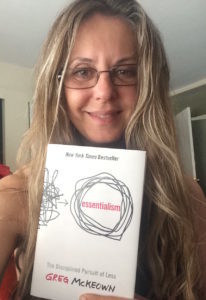 I won’t give away all of McKeown’s secrets, but the book’s premise is that you can become a more powerful force for good (and experience a new level of calm and joy) if you get rid of those things (activities, commitments, people, items, beliefs, etc.) that don’t serve you. Even if those things are things you feel an obligation around or (perversely) things you enjoy.
Each night I fell asleep with “aha’s” swimming in my thoughts. At one point in the book, McKeown asks you to commit to a single priority and get rid of anything that gets in the way of that commitment (again, even if it is something you enjoy; if it clashes with your commitment, it goes—at least temporarily).
I committed to my kids.
As many of you know, I am the mom of three boys, now 15, 13 and 9. Each is facing interesting (and kind of boring) challenges. Each is being given huge opportunities to grow, face fears, do the right thing, and to course-correct after doing the wrong thing.
There is a belief that as children grow into their tween and teen years, they need adults less. What I was finding, however, was the opposite: My kids needed me more. My job as a parent is to help createkind, proactive, thinking adults who spend their time on this planet making a positive difference. That will not happen if I steal away my sons’ ability to navigate the NYC subway or if I email their teachers for them or rescue them from a series of uncomfy interpersonal exchanges at school. While I was in no danger of intruding upon my son’s learning opportunities, it became clear that I had gone too far in the other direction.
In other words, I was the furthest thing possible from those helicopter parents so many people mock: I was forcing my kids to tackle so much on their own that they were getting scared or, (depending upon the kid), surly. My constant busyness was keeping me from being with them after school and in the evenings—the very times when each of them was showing their vulnerability and taking a chance on telling me the scary things they were facing in their lives.
Up until I read Essentialism, I worked every waking moment. I saw clients during in the morning and early afternoon, and I wrote at night, often letting the two boys I have at home (my 13-year-old is at a boarding school for choir boys, so currently I just have my 9-year-old and 15-year old at home) alone to eat the meal I made for them, do their homework, practice their voicework and instruments and get their stuff ready for the next day. When they would wander into my home office, I would listen to them distractedly or (I am so ashamed!) even ask if we could table the conversation for later because I had to get something to my editor. Usually they would mumble an okay, but hover behind me (for an uncomfortably long time!), as if they were hoping I’d change my mind, turn off my computer and chat, with them. Alas, I rarely did this. And while I didn’t miss many writing deadlines, I did miss many opportunities to support boys who were emotionally struggling—even hurting—with confusing activities or relationships or exchanges happening in their daily lives.
After committing to make my boys my priority, I realized something had to go. I am an almost-single mom (more on what that means in another email), so I am in charge of every kid-related activity and responsibility you can think of—plus running the household, walking the dog, paying for the math tutor, feeding everyone, managing schedules and, I am in a position (alas, again) where I must earn the money we need to pay for everything from groceries to new socks to tuition. Which is fine: I enjoy working immensely. I repeat: I enjoy working immensely. But I realized I had to do less of it if I wanted to focus more on my kids.
Lucky me! Around this time, I was hired to write two books for a well-known publisher. Suddenly, I knew exactly what to do to make my commitment work: Give up seeing clients and use my mornings and early afternoons for writing. My nights and weekends—suddenly freed up from work—would be spent “being there” for the kids.
You read the above correctly: I gave up seeing clients. Quietly I stopped marketing my nutrition sessions, my detox groups, my Wellness Circle, and more. I stopped going to BNI meetings and other network meetups meant to find referral partners and ultimately, new clients. I went weeks without jumping on my business social media accounts. I declined “get to know you” coffee dates with other professionals who wanted to learn about my nutritional counseling.
I can’t tell you that letting go of nutritional counseling has been easy. I am great at coaching people. I am a deep listener. I know nutrition inside and out and find it fun and easy to pinpoint just the thing that can help you lose weight or heal a health condition. But, like McKeown says, just because you’re good at something, and just because you enjoy something, doesn’t mean it is going to help you stick to your priorities.
Have I seen differences in the boys since making them my priority? Yes! One’s constant anxiety has eased up as I share my struggle with childhood anxiety and give him the strategies I used as a young adult to face fears.Another one has suddenly begun doing his homework on his own! Another’s rebellious attitude toward teachers has changed to a curiosity about them, once I shared with him how my knee-jerk youthful rebelliousness led to very specific not-fabulous outcomes. Plus, I have learned Common Core math, one of the things I was insisting my math-challenged youngest child tackle on his own because I didn’t have time at night to support him.
So why I am sharing all this? Because you’ve been with me, as a subscriber, perhaps a client, and as a friend, for awhile now and you are going to be seeing a change in what I send to you, what I talk about, and what I share on my social media accounts.
And you—if you’d like to let me know what you’ve been up to, I’d love to hear from you! You can email me and share!
July 22, 2017
Guest Blogpost: Self-Limiting Beliefs, by Mary Carlomagno
Today’s guest post comes from the fabulous Mary Carlomagno, author of several non-fiction—and now fiction—books. I am so grateful for Mary’s inspirational look at the fears that keep us stuck. Thank you, Mary!
Self-Limiting Beliefs
For years, I was afraid to write fiction, letting my insecurity about writing the perfect novel paralyze my efforts. One day while scrolling through Facebook, I saw a meme that spoke to me. It said “Do not let self-limiting beliefs hold you back from achieving your dreams.”
Now, I cannot be sure if this was a quote from a gifted psychologist or some straight talk from my neighbor down the road, because those lovely new graphics on Facebook can make your laundry list look like a pearl of wisdom. Graphics aside, the concept of self-limiting beliefs needed further research and now. Instead of writing my novel, I got to work on defining what exactly was holding me back from writing. I found that self-limiting beliefs are things that you believe about yourself that place limitations on your abilities. And so, I had my definition, I was suffering from Self-Limiting Beliefs or SLB as I have come to call them. Besides self-sabotage and googling about them, I also am fond of acronyms. Acronyms make things seem more real, don’t you think? Almost clinical, really…
Like crash diets, SLBS are usually not based in reality, but that does not mean we don’t believe them. My beliefs derailed my confidence for years and were expressed to me time and time again through a mean little group of people that populated my thoughts. Let’s call them the “the committee in my head,” as many of the other names I have called them are not quite appropriate for a guest blog. This group had something to say about just about everything.
“Really, those jeans, Mary, you can do better than that,” said my inner stylist.
“So, you think you can write fiction like Steinbeck or Atwood? You must be kidding, sister,” my inner editor chimed in.
Thankfully, my inner child crept out just in time, to protect me from all these bad thoughts. “Perhaps it’s better to just roll up in a fetal ball and binge watch Netflix for the rest of the day,” she said.
Generally, I am a very confident person due to my upbringing in a large Italian American family that, as my mother would say, “didn’t pull any punches.” (I am still not entirely sure what that phrase means.) And writing is not new to me. Books have been a part of my life since I was old enough to have a library card and take out every Judy Blume book I could get my hands on. I even majored in journalism and for years worked in book publishing with some of the best writers writing today. After leaving book publishing I became an expert at organizing and wrote three best-selling non-fiction books on the topic.
The fact that these books have been featured on the Oprah Winfrey Program, The Today Show and NPR, did not impress the committee. In fact, it made them dig their heels in deeper pointing out that reading is not writing and that writing non-fiction is easier than writing fiction. It’s like apples and oranges, they snipped. Perhaps they had been talking to my family about the sketchy metaphors?
Sketchy metaphors aside, I believed the committee. It was easier to roll up in my comfort zone, a non-risk taking fetal ball watching the BBC version of Pride & Prejudice or any romantic comedy directed by Nancy Myers. This cycle continued, instead of writing a romantic comedy, I wrote more from my nonfiction comfort zone including topics like “how to kick your shoe addiction” and “ten signs that your husband is a hoarder.” Ironically, I also wrote about procrastination and not letting fear of the unknown hold you back from the life you imagined. Ironic, isn’t it?
“Write what you know!” My committee insisted. Over and over again, they talked me out of writing fiction, believing deeply that, that kind of writing was elite and not something I could do. “After all, what would Tolstoy say if my book was shelved near his?” my inner marketing director asked.
Even though I had proven my ability to change careers, I could not get over the debilitating feeling that I was not worthy of writing fiction, like so many of my heroes.
The realization that I counsel my clients every day to do push their limits was not lost on me. That metaphor about the shoemaker’s daughter having no shoes, is pretty appropriate, because my grandfather was a shoemaker. But it must have skipped a generation as my addiction to shoes could populate ten more blog posts… but I digress: It was time to start taking my own advice, to get organized. On my way to work with a new client in lower Manhattan, I made my decision. No longer would I manage my anxiety about writing the novel. I would simply write the novel. I was believing the advice of my inner organizer now! My new client had hired me to catalogue all his writing, his rejection letters, unfinished short stories, article pitches and even his completed novel which he never shared with anyone.
Like Freud and I always say, there are no coincidences, so I took this as a sign from the universe to stop managing my emotions and those of my inner committee and to simply engage in the unknown. That summer, I began to write, rewrite, tweak and edit. Two more years of tweaking, and editing soon lead to pitching until I found the perfect publisher: Best Friend for Hire was published this June. In many ways, it is the culmination of all my life experiences—and like any good fiction, is more real than anything else I have ever written. And you know what? I am pretty sure Tolstoy would enjoy it.

Here are my best organizing tips overcome self-limiting beliefs:
1. Start. It does not matter where you begin, just engage in the process.
2. Dismiss judgment. Let go of the notion of “perfect,” and embrace perfect for you, right now.
3. Release the outcome. Do not think about the finish line, but the actual race. Focus on smaller achievable steps.
4. Setbacks happen to good people. Understand that you may have to take a few steps back to make some larger leaps forward.
5. Do not wait for perfect conditions to begin. They do not exist. There is no ideal condition that will enable the process.
6. Create situations that support you, whether that is a writing group, reliable friend or family member that understands and supports what you are doing. You don’t have to go it alone.
 Want to win a signed copy of Best Friend For Hire? Like Mary’s Facebook page and share what the title of your favorite book and tell us why you love it. One winner will be selected to receive a signed copy of Best Friend for Hire ! https://www.facebook.com/MaryCarlomagnoAuthor/
To check out Mary’s other books, go here.
July 21, 2017
Guest Blogpost: Reclaiming The Body’s Wisdom in Exercise, by Jean Vitrano
Today’s guest blog is from the gifted Jean Vitrano, LMT. I feel so blessed that Jean is sharing her story of love, wisdom, running, and training, with us! Thank you, Jean!
Reclaiming The Body’s Wisdom In Exercise by Jean Vitrano
The first half of my adult life was spent engrossed in the realm of the physical. As a choreographer and dancer in the contemporary NYC dance world, I lived and breathed in the world of movement. To my very core, I was a mover. What I and others asked of me was repetitive and often relentless. I dove in with passion, hurling my body from standing to the floor, jumping endlessly, lifting other bodies and being lifted. When the aesthetics of the choreography called for it, my back would arch and curve in extremes, my ribs would jut front and back and to the sides and my frame would be asked to hold weight equal to or more than my own. It didn’t occur to me at the time just how much demand I was putting on my body. People thought I lifted weights because my arms were cut and toned and I would laugh at the prospect, having never lifted a weight in my life. Gradually, the dancing lifestyle started to wear on me emotionally and all I wanted was time to walk in the woods.
As I faded out of the scene, I needed something to replace that physical emptiness. After all, I was a mover and there was no taking that out of me. What did I do? I started running. It was the closest I could get to the adrenaline rush that dance had given me. It wasn’t artistic, but it was continuous, demanding movement. When I started, every few minutes, I would stop and do something else, like battements (kicks) in all directions, jumps in first and second position, chassés, or other dance-like moves to mix it up. Just running didn’t make sense to me. Then over time, I began simply running and lost that natural inclination to vary what I did. When I went through my divorce, my running was at an all time high. I ran hard and escaped in it. There was a fire inside that I had to let out. It felt great. And then I met Mike, a local personal trainer, now my fiancé. It all changed again.
I would see Mike as I ran in the woods. He would be walking his dog, Sam, or he would be doing Thai Chi-like movements by the river’s edge. Then I noticed that he worked at the personal training gym, Longevity Personal Fitness, across from my apartment. One night, walking my dog by the gym’s tall glass windows, I saw him doing something on the ground inside and I felt the spark of something warmly familiar. The gym floor had little equipment. It reminded me of a dance studio with its clear, gray floor of open space. No one else was around. I gathered this guy wasn’t a typical trainer and that he moved in some form. When we finally did introduce ourselves passing in the woods one day, I was excited. But this isn’t a love story post; I already wrote that one. This is one about returning to movement and rest, getting stronger and feeling whole, doing less in better form, and remembering the loving-kindness that needs to be in everything we do.
Mike understood that I was a runner. He didn’t try to talk me out of it. After we got together, he offered to “train” me, a phrase my ears found and still find funny. In all my years of dance training, I didn’t think of it as training. I just thought of it as movement and learning. But I would listen to Mike and slowly adapted my ears to accept this new language. He helped me get back to a perspective on exercise that I intrinsically knew, but had gotten away from. And when my back finally gave out, I had no choice but to rethink what I had been doing. I started listening better and changing the way I approached being in this body. I became more physically mindful as I recognized that all of the messages Mike was sending me about how I approached my body resonate with all of my life’s work as a Mindfulness Facilitator and years of work as a Massage Therapist and Bodyworker.
Here was what came from my “training”with Mike:
Stop When It Feels Good
This was the first revelation Mike made explicit to me. Though I had years of training in Feldenkrais Method work, which is a system of learning through movement based on doing only what feels good, not going to the end range of your movement, stopping if there is pain, etc., when it came to staying “in shape,” I often went hard. Truthfully, I often pushed myself in all areas of my life past the point of what actually felt good. Whether it was organizing a closet or staying up to do one more thing, I knew how to keep going. There was a rush in that push that I was afraid to give up. The day Mike said it to me…”stop when it feels good”, though it challenged every ounce of my being, I knew he was right. My objections emerged like a monster out of the mud. “How will I know if I have done enough? What if I get lazy? I’m going to get fat if I do that.” Fear, fear and more fear. The answer to all of these objections was simple… trust in feeling good and let that be enough. In my world, this touches on the practice of loving-kindness and gratitude. When we treat ourselves with tenderness, with kindness, we awaken to the world we ultimately want to live in. In this worldview, we come from a place of goodness and gratitude and we start with ourselves. From there, we have a greater capacity to receive, to give, to feel full and to be happy. If we are always pushing, striving, we never feel satisfied (and lose a sense of gratitude). It is like filling a tub with a leak in the drain. I re-learned the value of stopping when it feels good in exercising and enjoying the goodness.
Rest & Recover
When I danced, I had it ingrained in me that if I didn’t keep dancing at least 6 days a week, my ability would diminish, or I would get out of shape, or somehow off track. On the day I graduated high school, rather than go out and celebrate like the rest of my class, I went to dance class or rehearsal. Maybe it was passion, but maybe it was just fear. Fear that if I rested or took a day off, I’d fall apart or I’d miss something. It took me a long time to change this way of thinking. To not act on fear, but to acknowledge it gently. Now, I resonate more with the monks and nuns in my teacher’s lineage who take a “lazy day” each week where they don’t have to do anything. Our body needs to rest and when we truly let it, without guilt, we refuel ourselves, not deplete ourselves. So when Mike says to me…watch what you do today…you did all of that yesterday, I take heed of his advice. And, if I did something well yesterday, I don’t need to repeat it today or even tomorrow. I can do something else. This is another form of loving-kindness practice — taking care of our bodies and respecting ourselves. Once again, we can trust that we will be better off for it.
Form Not Quantity
I used to run for 40 minutes, 5 times a week. That was on top of giving 12-15 massages, walking the dog, walking to the train, through the city and up multiple subway steps and taking care of twins. So when I started working with Mike and after a half hour and just 2 sets of a few reps of each task, I would say, “that’s it; that’s all I get!” He’d roll his eyes and walk away from me, giving me his usual wave of a hand in dismissal at my lack of understanding. He has trained me well. I still say it, just to get his reaction, but now I know…stop when I feel good and do what I am doing well. If the exercise I am doing isn’t helping me to organize myself in my body (i.e. have good alignment), then it is not very helpful to me. Do less and do it better. This is what Mike has gotten me to see through the details and focus of his sessions. You can see it in the way he works…his attention does not waver from his clients who are likewise, deep in concentration for 30 minutes. In meditation, it doesn’t matter how long we sit, but that we do it and we apply as much focus to stay in the present as we can. These days, I go to the high school track and mix up my running, with squats, sprints, crawls, rolls, jumps, stairs, balances. It’s only a matter of time before I’ll be adding dance moves back and making my kids cringe. It all takes under 25 minutes. I look and feel like an athlete and when I sprint up to the top of bleachers, I feel a bit like Rocky and I know I have done enough because I feel good.
Feeling Whole
When we think of ourselves as separate individuals and forget our inter-connection with everyone and everything around us, we end up suffering and we perpetuate suffering in society, in the environment, in the world. We cannot exist alone. Everything we do, eat, wear, depends on countless others all over the world and the choices we make effect countless others. This same understanding applies to our body. When we think of our body as an “it” with separate parts, we misunderstand how the body functions. We are not separate, independent parts. Each organ, bone, muscle, tissue, fluid depends on another and when we come out of homeostasis, the whole thing starts to collapse. It may happen slowly over time, but eventually we break down. We need to think of movement in the same way. When I only ran, I wasn’t using all of me. I was moving in one plane and strengthening only the muscles that helped me run. It wasn’t making me strong in a holistic way. Mike gives me movement that utilizes all of me…it brings me back to dancing where all the aspects of me were asked to function together. I appreciate that he doesn’t want to strengthen my hamstrings one day and my pecs the next. In fact, I believe he doesn’t even know how to think that way. He has me move in all planes and in all dimensions from the floor to standing. He helps me remember to move from a place of connection, not disconnection. Herein lies our true strength. When we remember our connectedness, we are whole.
This post is not a love story, but I knew I had found the right person when I saw that the way Mike approached his work and his passion was aligned with everything that I knew about feeling good, whole and happy. We should all be so lucky to find people like this in our lives…whether a trainer, a partner, an employer, or a friend. We could all choose to ally ourselves with who and what resonates with our life’s values and helps us stay close to them. Our approach to our body and mind would do well to come from this place also. We can ask if the physical practices we do resonate with what we value. Does it bring balance, connectedness, and does it make us feels good? If it does, can we trust that it is enough? And when fear arises, as it will, we can do what we do in meditation and “invite it to tea,” hear it out, and then choose an action. The action might be different than our habit energy might otherwise have us do. There is so much freedom and power in that.
 Our guest blogger, Jean Vitrano, LMT, has extensive experience working with the body and mind through years of training in contemporary dance, therapeutic massage, movement awareness, meditation and yoga. For the past 20 years, she has practiced mindfulness meditation and has enjoyed sharing the practice with others by leading weekly mindfulness groups and workshops. Her primary teaching influences have been Buddhist Zen Master Thich Nhat Hanh, and Insight Meditation Teachers Tara Brach and Sharon Salzberg. She holds a BA from NYU, has been a Licensed Massage Therapist since 2002, and graduated from the Feldenkrais Method Training Program. Jean currently has a private practice in Maplewood, New Jersey and in New York City. You can visit her website where you can read her blog and listen to recorded meditations at www.jeanvitrano.com.
Jean Vitrano, LMT
Specializing in Massage, Movement and Awareness
917-859-1073
jean@jeanvitrano.com
www.jeanvitrano.com
www.jeanvitrano.blogspot.com
https://www.facebook.com/jeanvitranolmt
80 East 11th Street, Suite 532, NY, NY 10003
697 Valley Street, Maplewood, NJ 07040
If you enjoyed Jean’s piece, you may also enjoy:
—Running with the Body & the Mind, by Sakyong Mipham. A Tibetan lama and leader of Shambhala, Sakyong Mipham incorporates his spiritual practice with running, presenting basic meditation instruction and fundamental principles he has developed. Even though both activities can be complicated, the lessons here are simple and designed to show how the melding of internal practice with physical movement can be used by anyone – regardless of age, spiritual background, or ability – to benefit body and soul.
—Running—The Sacred Art: Preparing to Practice, by Warren A. Kay. Penetrating reflections on “God,” creation and the role of Spirit in our lives with practical, concise tips for starting your own spiritual running journal. He helps turn your ordinary runs into extraordinary opportunities for spiritual growth. Whether you’ve logged thousands of miles or are new to the sport, you’ll find the guidance and inspiration you need in this unique book.
—Running with Mindfulness, by William Pullen. Letting your mind wander as you take a long walk, a slow jog, or a brisk run can give you a powerful, uplifting feeling. Some call it a runner’s high, others attribute it to endorphins. In this interactive workbook, psychotherapist William Pullen teaches you how to use mindful running to channel that exhilarating energy and use it to make positive change in your life.
—Running Mindfully: How to Meditate While Running for Yoru Body, Mind & Soul, by Brett Thomas. How to use your running practice as a powerful time for meditation.
—The Conscious Runner: A Comprehensive Running Program for Mind, Body and Soul, by Lisa Hamilton. The culmination of over 20 years of competitive running, The Conscious Runner is perfect for any of you who have ever tried to run “with the mind of meditation,” only to give up because your pesky thoughts kept following you.!
July 18, 2017
Hi, Healthy! I Am Looking for Guest Bloggers! Are You Interested?
Do you enjoy writing about healthy food? Self-care? Spirituality? Some type of wellness care (chiropractic, acupuncture, yoga, pilates, aromatherapy, etc.)? Caring for aging parents or your children? Supplements? Fitness? Another topic related to wellness and self-esteem? Have a first person story to share? Or something else health-related you’d like to explore? Maybe you’ve posted a kick-ass article on your own site and would love to share it here, as well! I am looking for guest bloggers.
What’s in it for you: This not a paying position, but I would love you to write a great bio for yourself and include links back to your site or program page or social media platforms. Guest blogging is a great way to increase your followers and (if you feel like you want it) gain more writing practicing.
Please send finished article with your bio and links to where readers can find you. Include a photo, too, if you’d like. Or, feel free to email me and ask what I think of a topic. My email is stephanie@stephaniepedersen.com
The Pizza Diet: Yes, it is a thing.
Pizza is one of the world’s most craved comfort foods. With its wheaty, carby base, savory sauce, and dairy-heavy cheese topping, pizza is a common binge food—something few people can stop eating once they start. (Some of the strongest cravings humans have are for foods that contain wheat and dairy.)
Unfortunately, pizza is high in carbohydrates, calories and fat— meaning that for most people, frequent indulges translate to extra pounds, disruptions in blood sugar, bloating, and rebound cravings.
Which is what makes pizza maker Pasquale Cozzolino so unusual.
Originally from Naples, Italy (home of the pizza!), Cozzolino moved to NYC to work in the restaurant industry. Within a year, his weight had increased more than 100 pounds. Having difficulty moving, picking up his toddler son, and finding clothes to fit him—as well as being admonished about his weight by his doctor—Cozzolino decided to lose weight. The only problem: He couldn’t give up his beloved pizza. After much experimentation, he decided to keep the pizza—with some guidelines.
 He would eat fruit, whole grain cereal and fruit for breakfast, an apple for a midmorning snack, and at lunch, allow himself an entire 12-inch pizza.
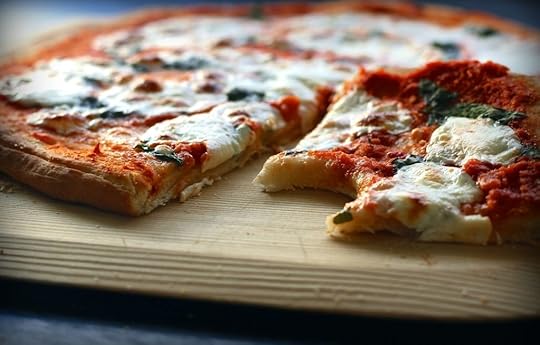
But not any type of pizza: Cozzolino opted for a very thin-crust pizza made with fermented dough, topped with smashed tomatoes and a small bit of fresh mozzarella. For dinner, he enjoyed fresh veggies and a serving of beans or fish.
In all, Cozzolino consumed between 2,400 to 2,700 calories a day, which worked for his large (6-foot 6-inch) frame. He also began attending rigorous kickboxing classes two or three times a week.
The weight began dropping gradually, but steadily, until after a year, he’d lost almost 100 pounds—which he has kept off for two years. He writes about his diet in The Pizza Diet: How I Lost 100 Pounds Eating My Favorite Food — and You Can, Too!
So could this diet work for you?
Maybe. With a few tweaks:
—For most of us shorter folk, Cozzolino’s 2400 to 2700 is way more calories than our bodies can use. The average middle-aged man needs to reduce calorie consumption to 1800 to 2200 calories to lose weight. Women need to shoot for a lower number, such as 1400 to 1800. )
—To lose weight, most people need to move more often than two or three times a week. Try to exercise daily for 20+ minutes, even if you’re doing something easy, like taking a walk, dancing to your favorite music, or following along to a yoga video on YouTube.
—Add a green drink to your breakfast to alkalize the body and prevent the carb cravings that often occur when eating a lot of wheat and dairy.
—Instead of an entire 12-inch pizza for lunch, have two slices and a salad or bowl of veggie soup.
—Snack on low-sugar veggies.
—Enjoy veggies and lean protein for dinner.
—Drink 8 or more glasses of water a day to help reduce the bloat that can occur after eating wheat and dairy.
Pizza Diet Resources
—The Pizza Diet: How I Lost 100 Pounds Eating My Favorite Food — and You Can, Too! This is Chef Cozzolino’s book, which outlines how he lost weight without giving up his daily pizza habit.
—Pizza, Pizza! The Health Benefits of Pizza!
—Paleo Pizza Cookbook: Lose Weight and Get Healthy by Eating the Food You Love.
—Paleo Pizza Recipes: 23 Recipes & 7 Creative Crusts.
—The Contrarian Diet: Lose Weight Eating Ice Cream, Pizza, & Candy.
—Healthy Fast Food. For Big and Small Fast Food Lovers. Burgers, Pizzas, Sandwiches and Hot Dogs.
—Skinny Pizzas: Over 100 Healthy Low-Fat Recipes for America’s Favorite Fun Food
—Pizza Cookbook: Mastering Art of Making Weight Loss Pizza Recipes
July 17, 2017
The Master Bowl Blueprints: From burrito bowls to breakfast bowls
Breakfast bowls, pudding bowls, acai bowls, burrito bowls, quinoa bowls, brown rice bowls, grain bowls, black bean bowls, lentil bowls, salmon bowls, dinner bowls, lunch bowls…. In the world of healthy eating, bowls are hot stuff.
Bowls began showing up on menus shortly after the paleo and gluten-free eating movements starting picking up steam. The premise was smart enough: get rid of the bread or the tortilla or the pasta or any other not-so-healthful carby ingredient, keep the healthful protein and the plants. For instance, a burrito bowl allows you to have the nutrient-dense beans, veggies, salsa, guacamole, lettuce and lean protein without having to eat the carby tortilla. A breakfast bowl delivers healthy fruit and acai or coconut or chia or eggs or vegetables, without the milk, cow’s milk yogurt or cereal.
And so on.
Brilliant, right?
As a someone who loves food, I adore all the great-tasting combinations you can get in a  breakfast bowl, lunch bowl or dinner bowl. As a busy entrepreneur, writer and mom, however, it’s the versatility, economy and ease that really impresses me: You can put together a bowl with just about anything you have in your kitchen—even if you only have small amounts of this and that. Plus, bowls are super portable: Just layer in a mason jar or “grab-and-go” container, toss in your bag, and you’ve got an easy breakfast, lunch, or dinner.
If you need some ideas on how to create the best-tasting, healthiest bowl around, check out these easy recipe blueprints. And don’t forgot to read my family’s fun “bowl bar.” It’s a custom buffet that lets everyone throw together their own signature bowls (and lets me get rid of small amounts of leftovers that aren’t enough for a full meal).
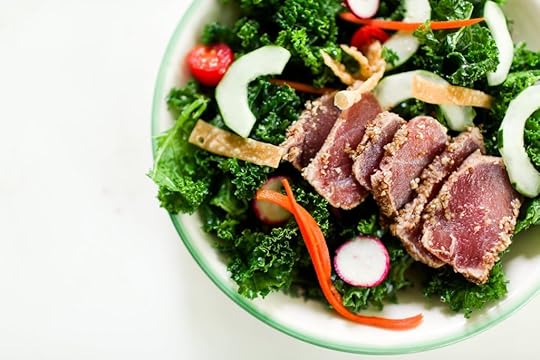
Bowl recipes
Acai Bowl Blueprint
Makes one to two servings
Acai bowls are super trendy and super tasty! Made with the pulp of acai (that superfood from South America), acai bowls are a cinch to make. Here’s a customizable recipe for you to try:
2 frozen unsweetened Acai packs (Sabazon is one brand that makes them)
1/4 cup coconut milk
1/2 cup frozen berries of your choice
Optional: 1/2 tablespoon raw honey or coconut nectar
Optional: 1/4 to 1/2 cup fresh fruit for topping
1. Add the contents of the acai packs, the coconut milk and the frozen berries to a blender.
2. Pulse the blender to liqueify the ingredients. Then blend on high until mixture is smooth and silky. This may take several minutes.
3. Add to a bowl or container, top with toppings of your choice, and serve immediately. (Acai doesn’t like to be kept waiting!)
Chia Pudding Breakfast Bowl
Makes two servings
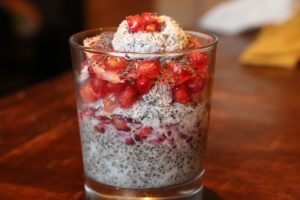 Protein-rich chia provides an easy, steady supply of energy that works as well for the average person trying to get through the day as it does for an endurance athlete. To experience the benefits of chia, may I suggest something sweet and delicious—like this chia pudding recipe made with coconut? It’s so easy and versatile. It’s also high in fiber, omega 3 fatty acids, phytonutrients and protein—meaning it’s a great way to start the day. It also makes a lovely mid-afternoon snack or can be dressed with few shavings of dark chocolate for an easy dessert. This comes from my coconut book, Coconut: The Complete Guide to the World’s Most Versatile Superfood (Sterling).
2/3 cup chia seeds
2 cups canned or fresh coconut milk
1/2 teaspoon vanilla extract
Optional sweetener: 1 to 3 teaspoons coconut nectar, honey, maple syrup, or other natural sweetener
Optional layering ingredient or topping: 2 tablespoons currants or chopped dried figs, or dates, or 1/4 to 1/2 cup berries, fresh fruit, or diced cooked sweet potato
Optional layering ingredient or topping: 2 tablespoons unsweetened coconut flakes
Optional topping: 1 or 2 tablespoons coconut cream
1. Put chia seeds, coconut milk, vanilla and, if using, optional sweetener, in a 1-quart glass jar with a lid. Tighten the lid and shake well to combine thoroughly. Or stir together these ingredients in a bowl.
2. Allow the pudding to thicken for 30 minutes or more. (Or, even better, make the pudding in the evening and let it sit, covered, overnight in the fridge.)
3. Adjust liquid if necessary. Spoon the pudding into bowls, layering and topping (if desired) with fruits, coconut flakes and/or coconut cream.
Superfood Bowl Blueprint
Makes 2 servings
Everyone needs a great, easy, flexible blueprint for a yummy, healthful, high-protein bowl—a hearty, dense, fiber-filled, fill-you-up dish made with high-protein beans, lentils, dried peas and/or superfood grains, such as millet, amaranth, quinoa, teff, buckwheat, barley black or another whole-grain rice. Something fun to make and super portable (perfect for bringing to the office or on a picnic) that is designed to deliver the nutrients your body needs to help keep your energy high all day.
I call this a blueprint because it is much more flexible than a traditional recipe: Use what you love eating or what you have on hand, and avoid any ingredients that you don’t digest well or that your healthcare practitioner has advised that you avoid. Sprinkle in a liberal amount of your favorite herbs (herbs are superfoods by the way, thanks to their ultra-high phytonutrient content), a bunch of chopped veggies, that leftover piece of chicken or salmon or those falafel balls waiting in the fridge to be eaten and voila! Something you can’t wait to enjoy! Is it lunchtime yet?
¼ cup (or more) vinaigrette or your favorite salad dressing (homemade or store-bought)
1 tablespoon (or more) of your favorite herb or mix of herbs
1 garlic clove, minced
¼ cup onion, scallions or shallots
Pinch salt and pepper
4 cups cooked beans or grain of your choice
1 cup chopped cooked or raw vegetables
Optional: 1 cup animal or plant protein of your choice
Optional: ¼ cup (or more) nuts or seeds, for crunch
Optional: 1 or 2 tablespoons minced herbs of your choice
1. In a large bowl, whisk together salad dressing, herbs, garlic, onion, salt and pepper.
2. Add in beans or grains and vegetables, tossing gently until well coated.
3. Adjust salt and pepper.
4. Allow to sit for 30 or more minutes so flavors can blend
5. Arrange animal or plant protein, if using, on top of the mixture. Then top with nuts or seeds, if using, and herbs, if using.
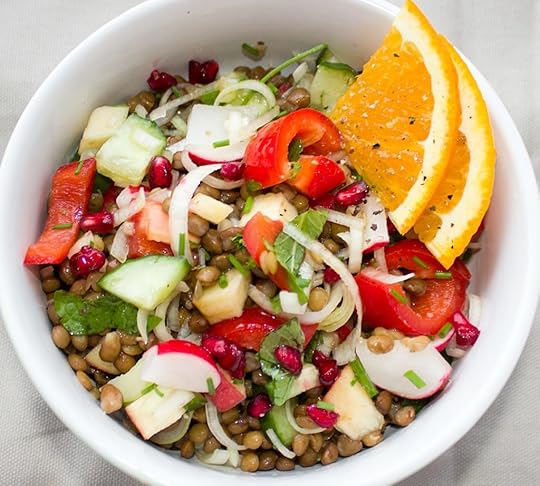
Stephanie’s Build-A-Bowl Bar
Makes as many as it makes
This truly flexible blueprint is a fun, fast nutritious way to do two things: Get dinner taken care of fast AND clean out the fridge. Are you ready?
Take all cooked leftovers out of the fridge and place each in it’s own serving dish. Place dishes on kitchen table or a buffet table.
Chop or grate a one or two or three of the cooked and raw veggies you have on hand, each placed in it’s own bowl. Place on the table.
If you have a boiled egg or a piece of cooked meat or fish or chicken, chop it and put it in a bowl. Place on the table.
Find a few smaller bowls and fill each with any nuts, seeds or dried fruit you may have.
Place a few bottles of salad dressing on the buffet table or whip up a quick vinagrette.
Place a 1/2 cup of cooked quinoa, black rice, millet, lentils, beans or whatever other grain or legume you may have on hand. In the bottom of two or four or however many bowls (one for each member of the family who is dining with you) and place on the table.
Call everyone to the table, ask them to line up buffet style, and they get to add what they want to their bowl.
Voila! Dinner! (Or lunch!)
Bowl resources
—Thermos Stainless Steel 16-ounce Food Jar. You can’t go wrong with a good, leakproof Thermos food container! Make sure it holds at least 16-ounces, which is around two cups (Otherwise, you’ll be hungry!)
—Wean Green 4-Pack Meal Bowls 22-ounce Large Tempered Glass Leak-Proof Bowls. At 22-ounce, this offers a more generous amount of food than the standard 16-ounce container. Plus, the sturdy glass containers are very leak-proof. Because there are four of them you can pack a bowl for someone else, as well.
—Ball Collection Elite Wide Mount 16-ounce Pint Jars (Pack of 4). Unlike the tall, tumbler-like mason jars, these ball-shaped, wide-mouthed jars make it easy to pack and enjoy a two-cup serving of food. I love making batches of chia pudding in these, which I then turn into a quick breakfast bowl (see recipe, above).
—Sistema To Go Collection Breakfast Bowl Food Storage Container, 17.9 Ounce/2.2 Cup, Clear with Assorted Color Accents. Although Sistema calls this a Breakfast Bowl container, you can use it for lunch and dinner bowls, as well!
—Sistema Klip It Collection Salad to Go Food Storage Container, 37 Ounce/ 4.6 Cup. Good for heartier eaters, this leakproof container by Sistema, holds over four-and-a-half cups of food.
—Wooden 3-piece Spoon Fork Chopsticks Set Lunch Tableware Set Japanese Style (with black cloth case). This gorgeous utensil set features a fork, spoon and chopsticks. You can toss it in your bag or keep it in an office desk drawer, making it easy to enjoy a breakfast or lunch bowl at work. To clean, just sponge with soapy water, rinse, dry, and tuck into the carrying cloth.
—Portable Stainless Steel Cutlery Chopstick Spoon Fork Dinnerware Set With Box Travel Kit. This easy-to-use, portable set features a fork, spoon and chopsticks—all stainless steel—nestled in an adorable hard protective case.
July 16, 2017
Jackfruit: The rockstar no-soy stand-in for meat, poultry and fish
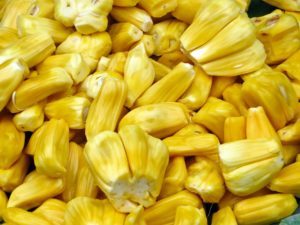
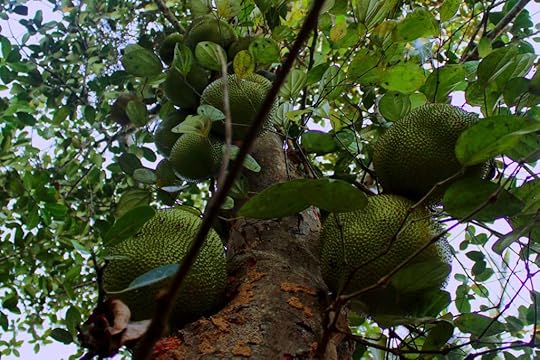
If you’re trying to cut down (or remove) animal protein and want to avoid soy-based meat analogs, you’ve got to check out jackfruit. What is jackfruit? It is a tropical, tree-based fruit. When eaten young—before it is fully mature—it makes a fantastic stand-in for meat, poultry and fish, readily taking on any seasoning you want to toss at it. Jackfruit pulled pork, jackfruit meatballs, jackfruit fish tacos, jackfruit curry—it seems there is no recipe that jackfruit can’t take on.
Just as important, jackfruit is good for you. A cup of canned jackfruit (the most common way to find the fruit) contains only 155 calories only 0.5 of a gram of fat. It is rich in three types of phytonutrients, lingnans, isoflavones and saponins. These highly antioxidant compounds protect the body against inflammation, cancer and aging. Studies—including one on the herpes virus—have found that jackfruit exhibits antimicrobial and antiviral abilities. A cup of jackfruit also contains a moderate amount of other nutrients, including:
2.4 grams protein
2.6 grams fiber
11.1 milligrams vitamin C (18 percent DV)
0.3 milligrams manganese (16 percent DV)
0.3 milligram copper (15 percent DV)
61.1 milligrams magnesium (15 percent DV)
500 milligrams potassium (14 percent DV)
0.2 milligram riboflavin (11 percent DV)
490 IU vitamin A (10 percent DV)
0.2 milligram vitamin B6 (9 percent DV)
23.1 micrograms folate (6 percent DV)
56.1 milligrams calcium (6 percent DV)
1 milligram iron (6 percent DV)
59.4 milligrams phosphorus (6 percent DV)
0.7 milligram zinc (5 percent DV)
Easy ways to use jackfruit
—Toss it into your sauté pan with your favorite pre-made sauce—from a curry simmer sauce to jarred marinara to a can of enchilada sauce. If you’d like, add whatever herbs and veggies make sense. And serve over quinoa or whatever grain you’d like!
 —Mix with a bit of barbecue sauce or sloppy joe sauce and spoon on to whole grain buns for a fast vegan sandwich.
—Toss it with salsa and spoon over organic tortilla chips for fast nachos.
—Replace the ground beef, ground turkey or sausage, in any recipe with canned young jackfruit (pulse it a few times in your food processor to give it a ground meat texture). It makes awesome vegan meatballs.
—Use jackfruit to extend the meat you do use. Replace up to half the ground meat, poultry or fish in any recipe with an equal amount of jackfruit.
Jackfruit recipe
Tuna-free Salad
Makes enough for two sandwiches
Many of us grew up eating tuna-salad sandwiches. I know I did! But these days, we’re more aware of the effects of overfishing, as well as the high mercury levels in tuna, so many of us no longer eat the stuff. If that is you, then this recipe is for you. It has the same texture as tuna salad, is a bit milder in flavor, and is vegan. It’s also easy!
1.5 to 2 cups canned or vacuum-packed jackfruit, rinsed and drained
2 tablespoons (or more, if you’d like) coconut cream or coconut milk or yogurt or mayo
1 or 2 tablespoons mustard (brown, Dijon, or any other type)
1 tablespoon minced fresh parsley (or try dill or cilantro)
¼ cup finely chopped red onion
¼ cup finely chopped celery
¼ cup finely chopped red bell pepper
Salt and pepper to taste
1. Add the rinsed, drained jackfruit to the bowl of a food processor. Pulse a couple times until it resembles chunky canned tuna. Set aside.
2. In a large bowl, whisk together coconut cream (or whatever you choose to use), mustard and parsley.
3. Add red onion, celery, and chopped red bell pepper to the bowl. Stir to combine.
4. Add the jackfruit to the bowl and fold gently to combine.
5. Add salt and pepper to taste.
6. Eat on lettuce leaves or use as a dip or a sandwich filling.
Interesting facts about jackfruit
—The scientific name of the jackfruit tree that produces jackfruit is Artocarpus heterophyllus.
— The jackfruit tree is a member of the family Moraceae, and is related to breadfruit, figs and mulberries.
—Jackfruit is thought to originate in the Southwestern rainforests of India and today is cultivated throughout Southeast Asia.
—The jackfruit is Bangladesh’s national fruit.
—Jackfruit are also grown in Southeast Asia, Brazil, and in parts of Africa.
—An individual jackfruit can grow as big as 110 pounds, though most are around 25 pounds.
—Jackfruits are known as the largest fruit produced by a tree.
—Unripe jackfruit has a meaty texture and mild taste, which make it a great stand-in for pork, poultry and fish.
—Mature jackfruit has a fruit flavor that some people compare to a blend of apple, pineapple and banana. Others say it tastes like that childhood favorite, Juicyfruit gum. Mature jackfruit is often dried and enjoyed as a dried fruit.
—The fruits contain an extremely sticky latex, which gets everywhere. Before cutting into jackfruit, oil your hands, cutting boards, knives and other surfaces. This will make cleanup easier.
—While jackfruit is available fresh, it is hard to work with, which is why most people prefer using canned or vacuum sealed jackfruit.
—Jackfruit is mostly water, with about 8% naturally-occurring sugar and 4% starch.
—Each jackfruit tree produces from 100 to 500 individual fruits.
—Ripe jackfruits have an unpleasant, musky aroma.
—Jackfruit’s seeds are also eaten. They are roasted and have a flavor and texture similar to chestnuts.
—Roasted jackfruit seeds are often ground into flour.
—The wood of jackfruit trees is used in construction, for furniture and musical instruments.
— Jackfruit wood is used in royal palaces in Bali and for temples in Vietnam.
Jackfruit resources
Native Forest Organic Young Jackfruit, Vegan Meat Replacement. Canned jackfruit is an easy way to take advantage of this hearty fruit—and for many of us, the only way we are going to have the opportunity to try it. This is young jackfruit, which is picked before the fruit has developed it’s sweetness, making it a great replacement for tofu, as well shredded pork and chicken in tacos, pulled pork, and any other dish.
Edward & Sons Young Jackfruit, vacuum packed pouches. Another unsweetened, young jackfruit, this one without the can. Use as-is in all kinds of recipes where you’d normally use tofu, chicken or pork.
Upton’s Naturals Jackfruit – Chili Lime Carnitas. This vegan, shelf-stable, ready-to-use meatless alternative to carnitas is out-of-this-world delicious and super convenient. I keep a few pouches of this around for those times when I want delicious Mexican food, but just don’t have the energy to make carnitas from scratch.
Upton’s Naturals Jackfruit – Bbq Flavor. If you’re not into carnitas, or have a hankering for vegan bbq, Upton’s also makes a barbecue-flavored jackfruit.
Mavuno Harvest Fair Trade Organic Dried Fruit, Jackfruit . Dried mature jackfruit is slightly sweet, making it a great option when you want to snack on dried fruit.
Republic of Tea Adventurer’s Tea: Jackfruit Honey. This lovely, slightly sweet, tea blends black tea with the full-bodied taste of jackfruit and honey. I love this in the early afternoon as a quick pick-me-up.
July 15, 2017
Turmeric: A potent anti-inflammatory food
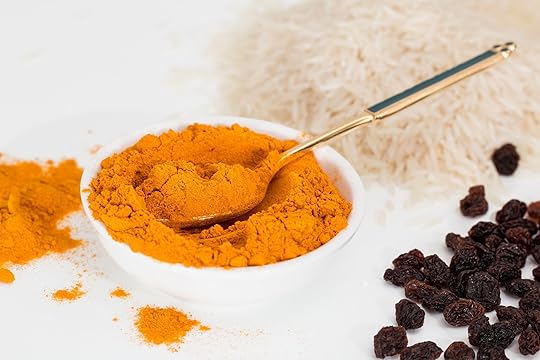
If you believe the hype, the health benefits of turmeric are huge. This humble rhizome is said to do everything from prevent cancer to repair sun damage, help diabetics regulate blood sugar levels to speed weight loss, lessen the pain of arthritis and so, so much more. Which is probably why Google listed turmeric as one of its most searched-for words in 2016.
2016 may be long over, but the searches continue. And with good reason: The spice—used fresh or dried—has only grown in popularity among health seekers looking for another way to slow the aging process (turmeric addresses the symptoms of many degenerative diseases) look and feel great.
The therapeutic component of turmeric is curcumin, a potent antioxidant and anti-inflammatory ingredient that helps prevent degenerative diseases caused by age, oxidation and damage. Curcumin also gives the spice it’s vibrant golden color. Another active ingredient in turmeric is turmerone. Although far less is known about turmerone compared to curcumin, some studies suggest tumerone can support cognitive performance due to its neuroprotective properties.
But what does the research say? There are over 900 studies on the spice that look at how turmeric helps helps us get, and stay, healthy. Here, I’ve listed just a few worth looking at.
Research studies about turmeric
—Protects the brain against the effects of nicotine.
—Help prevent and treat Alzheimer’s Disease: Turmeric has been found in numerous studies to lessen inflammation, treat oxidative damage, treat heavy metal build-up, as well as reduce the formation of beta-amyloid plaques, associated with Alzheimer’s Disease.
—Helps reduce inflammation associated with osteoarthritis.
—Inhibits the growth of bladder cancer cells.
—Protects the kidney against damage, injury and cancer.
—May help to protect against Parkinson’s Disease and motor impairments in Parkinson’s Disease patients.
—Help prevent numerous diseases through its potent anti-inflammatory properties.
—Helps prevent and treat liver damage.
— Is active against various chronic diseases including various types of cancers, diabetes, obesity, cardiovascular, pulmonary, neurological and autoimmune diseases.
—Protects skin against and repairs photoaging and ultraviolet damage.
Interesting facts about turmeric
— The turmeric plant is a perennial plant that reaches up to 1 m (3 ft 3 in) tall.
—A single turmeric plant can yield approximately 700 grams of consumable root.
—One tablespoon of fresh turmeric provides 15% of your daily allowance for iron
— The use of turmeric as a coloring agent for food and fabric dates as far back as 600 B.C.
— Turmeric was used in biblical times as a perfume.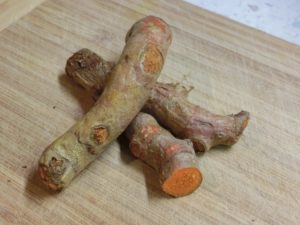
— Marco Polo, in 1280, mentioned turmeric in notes of his travels in China: “There is also a vegetable that has all the properties of true saffron, as well as the smell and the color, and yet it is not really saffron.”
— In medieval Europe, turmeric was known as “Indian saffron.” Since then, turmeric has been used as an inexpensive substitute for saffron.
—Ants dislike turmeric, making it a natural ant repellant.
—The city of Erode in the Indian state of Tamil Nadu is the world’s largest producer of turmeric. Erode has often been referred to as “Yellow City” or “Turmeric City.”
—The effectiveness of turmeric can be boosted as much as 2,000 percent by mixing it with a little black pepper (perhaps 1/8 teaspoon).
—Curcumin is fat-soluble, so turmeric is best consumed along with some form of fat to aid in absorption.
Buying and keeping fresh turmeric rhizomes
—You can find turmeric rhizomes in the produce department (usually near the fresh ginger 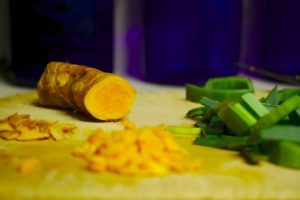 roots) of specialty grocery stores, heath food stores, or IndoPak, Asian or West Indian markest.
—Look for plump, dried rhizomes with no withering, weepy spots, softness, or mold.
—Store turmeric rhizomes in the refrigerator: Wrap them in paper towel, and then pop it in a plastic bag and place in the produce drawer. They should keep for up to two weeks. —If you notice any mold on a rhizome (but the rest of it looks fine), you can cut away the mold and wrap it in a new paper towel and placing it in a fresh plastic bag.
Buying and keeping dried turmeric
—To ensure you’ve got the freshest dried turmeric possible, purchase from heavily-shopped sellers or markets.
—Store in a dark, cool, dry place.
—Replace after a year.
How much turmeric you need
—When cooking with ground turmeric powder, the University of Maryland Medical Center recommends 1 to 3 grams per day. One gram of ground turmeric powder is about ½ teaspoon. Three grams is about 1½ teaspoons of ground turmeric powder.
— If you have access to fresh turmeric, the University of Maryland Medical Center Adults suggests 1.5 (about a tablespoon) to 3 g of raw, cut turmeric root per day.
—If you prefer to take a turmeric supplement, look for one that contains 500 mg of its active ingredient, curcumin. The National Institutes of Health (NIH) suggests you can take up to 500mg 1 to 3 times per day.
Before taking turmeric, talk to your health provider
—Turmeric is thought to worsen gallstones or bile duct dysfunction.
— Blood Thinning. According to the National Institutes of Health, turmeric thins the blood 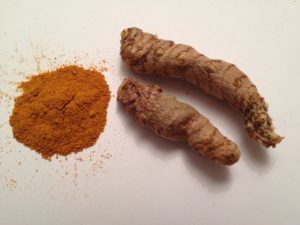 (which can be a good thing for cardiovascular health) and may slow blood clotting in some individuals. Avoid combining turmeric with anticoagulant and/or antiplatelet drugs. If you take blood thinning medication, consult with your health provider before eating turmeric in food or taking turmeric supplements.
— Due to blood thinning side effects of turmeric, stop taking turmeric at least two weeks before any surgical procedure.
—If you are medication for diabetes, know that turmeric may lower blood sugar levels, which could effect how much medication you need.
—If taken on an empty stomach, turmeric can cause nausea in some people.
—Turmeric may cause increased stomach acid if taken with antacid drugs such as Tagamet, Pepcid, Zantac, Nexium, or Prevacid.
—Talk to your healthcare provider if you are pregnant, breastfeeding or attempting to conceive.
Easy ways to use turmeric
—Toss a half-inch slice of fresh turmeric into the juicer next time you make green juice to give your green drink even more anti-inflammatory power. You can also add a sliver to the blender next time you make a smoothie.
—Make an easy tea by adding a sliver of fresh turmeric to a mug (go ahead and add a sliver of fresh ginger, too, if you’d like), then adding hot water. Allow to steep for five or more minutes. Strain out the turmeric (and ginger) if you’d like. Sweeten, if needed, with coconut nectar or raw honey.
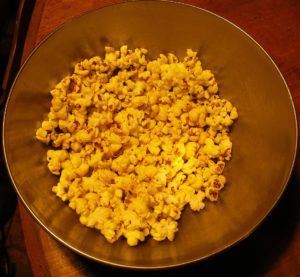 —Pop popcorn in coconut oil then toss with sea salt and a sprinkle of turmeric. Yum!
—Make ayurvedic golden milk by warming coconut milk over low heat and whisking in a sprinkle of dried turmeric. Sweeten, if desired, with coconut nectar or raw local honey.
—Add a sliver or fresh turmeric to the pot next time you make rice, quinoa, millet or another grain. Or, shake in a bit of dried turmeric.
—Next time you make an omelet or scambled eggs, shake a bit of dried turmeric into the mix.
—Add a few shakes of dried turmeric next time you roast veggies. This is especially pretty with pale-colored, yellow and orange veggies.
—Freshen up a bottled curry simmer sauce with a few shakes of dried turmeric, or a half-teaspoon of fresh, grated turmeric.
—Mash a half of an avocado and add in a teaspoon of dried turmeric or a tablespoon of fresh turmeric. Spread on clean skin and allow to sit for 20 minutes. Remove with a wet cloth. Skin will look brighter, firmer and more moisturized.
—Mix together a bit of raw honey and dried turmeric to form a paste. Pat a thick layer over pimples or pimple-prone skin and allow to sit for 20 or more minutes. Remove with a wet cloth. This kills the bacteria in the pimple, as well as shrinks it, removes redness, makes it less painful, and speeds healing.
—Make a scalp oil treatment by mixing 1 teaspoon of dried turmeric (or 1 tablespoon of fresh turmeric) with ¼ cup of cold-pressed avocado oil. Section hair and massage into the scalp, trying to treat the entire head. Allow to sit for 20 minutes. Shampoo and condition hair as you usually do. This is great for dandruff, dry scalps, lackluster hair, and thinning hair.
Recipe
Fresh Turmeric-Cashew Salad Dressing
Makes about 3/4 cup dressing
This sprightly, warming dressing is delicious on a simple salad of romain lettuce, but it’s also great drizzled over grains or roasted veggies. Feel free to use almond or sunflower butter if that’s what you have on hand.
3 (2-inch) pieces fresh turmeric, peeled and roughly chopped
1 (1-inch) piece fresh ginger, peeled and roughly chopped
1 garlic clove, roughly chopped
1/4 cup plus 2 tablespoons fresh lemon juice
3 tablespoons natural almond butter
1 tablespoon coconut nectar or honey
1/4 teaspoon salt
Black pepper, to taste
3 tablespoons water
1. Combine all ingredients with 3 tablespoons of water in a blender and purée until smooth, about 2 or 3 minutes. Taste and adjust salt, pepper or lemon juice, if desired.
My Favorite Turmeric Resources
—Cooking with Turmeric: Top 50 Most Delicious Turmeric Recipes, by Julie Hatfield. This Kindle book features 50 easy-to-make recipe for comfort food, health food, as well as Southeast Asian favorites. Plus, the book is free if you have Amazon Prime ( get a free 30-Day Trial here), Amazon Kindle Unlimited (get a free 30-Day Trial here). And it’s only 99 cents if you have neither.
— Viva Naturals Non-GMO Turmeric Curcumin 500 mg Vegetarian Capsules with Bioperine. Three are a lot of Turmeric supplements on the market, many with 1200 mg or more of Turmeric Curcumin. I like these because they contain a safe amount, and are pared wtih Bioperine form black pepper, which helps with absorption. And they are reasonably priced.
—Simply Organic Ground Turmeric. I like Simply Organic spices because the products are consistently high quality and fresh-tasting and the price points are reasonable. Their ground turmeric is no exception.
—Fresh Raw Turmeric Rhizomes, 4 pounds. This is a great, not-too-pricey option for anyone who can’t find fresh turmeric rhizomes in their area.
— Rishi Organic Turmeric Ginger Tea. This warming blend feels so wonderful on the throat.
— Choice Organic Easy Digest Tea with Ginger & Turmeric. This digestive tea also features lemongrass and licorice root. Much recommended for nausea, indigestion and sour stomach.
—Vicco Turmeric Cream. A friend brought this back for me after visiting her family in India. In Ayurvedic Medicine, turmeric prevents and cures skin infections, inflammation, blemishes, wounds, scars and sun damage. This cream is found in most Indian households and is said to soothes boils, pimples, acne and burns. I love it as a mid-weight day cream.
—Turmeric Essential Oil. I like to add a drop of this to pure argan oil and massage into my face, neck, chest and the back of my hands each night as a “last step” in my skincare routine. It’s great for helping to treat sun damage.
—Jillian Wright Skincare Detox Glow Face & Body Mask for Congested, Spotty, Large- Pored, Dull & Blemish Prone Skins. This superfood facial food is a turmeric-enriched powder that can be mixed with anything from honey to coconut water to make a scrub-mask. It’s on the pricey side but it is so effective in making skin look even and small-pored. Even on more mature skins (like mine). You’ll love it.
—Banjara’s Kastari Turmeric Skin Care Powder. This skincare powder is another Indian favorite for brightening and toning the skin. It can be mixed into a paste with any liquid you like and applied to the skin as a face mask. I love it blended with a bit of rosewater and fresh aloe gel. My skin looks so glowy and alive after I use this.
—Tula Probiotic Hydrating Day & Night Anti-Aging Facial Cream with Turmeric Extract. Soft, easily absorbed and very “plumping,” this lovely cream gives the skin a beautiful glow.