Stephanie Pedersen's Blog, page 2
July 16, 2018
Amazon Prime Day starts today at 3 pm ET. Here’s a few inexpensive things I think all Keto eaters need
Dear Keto Eating Friend,
I’m just going to come out and say it: The Keto diet ain’t cheap.
In fact, it’s one of the most expensive eating plans I’ve come across (even more expensive than the organic, local, raw superfood diet).
Because I have other things that require my financial attention—think mortgage payments, the electric bill, et al—I am always on the lookout for ways to save money on staying healthy.
That’s why I love Amazon Prime day—this year, it’s Monday, July 16. (And you don’t even need to be a Prime owner to get in on the deals—I’ll share the hack in a moment.)
I am not a big Amazon user. I find it’s usually cheaper to scout out deals at my local Trader Joe’s, Aldi’s, farmer’s market and the big fancy supermarket across the street from my home. When I do use Amazon, it’s usually for bulk ingredients, school-related supplies for the kids or free e-books.
So I’m going to admit straight-up that this is the first year I’ve even explored Amazon Prime Days. But after reading a few of my friends’ blog posts about it, I was intrigued and jumped on: Perhaps there was some huge deal waiting for me? Something that would save me a lot of money?
It turns out, there is. In fact, there are enough big deals that I want to share with you, my Keto eating friend.
But before I share my shopping list, I want to just say that you can get in on this even if you don’t have an Amazon Prime account. If you don’t have Amazon prime, your first step is to pick up a free 30-Day Prime trial. Just make sure to put the cancel date on your calendar so you can easily cancel before it renews. You can get a free 30-Day Prime trial here.
And while Amazon is trying to get shoppers to download their Amazon app in order to check out the Prime Day deals, that’s not necessary, either. In fact, I am not sure why anyone would use up valuable storage space with that when you can just open a window on your computer and show “the old fashioned way.”
Prime Day works by providing timed deals. A certain product goes on sale at a certain time and stays on sale until all they are all scooped up. I find this annoying—I hate the eBayish feel of this. (Maybe this is Amazon’s way of forcing you to stay on their site in hopes you’ll end up purchasing more than you need.) But, it isn’t going to stop me from hopping on and seeing if there is anything worth snagging.
Here is what I’ll be scooping up during my first Amazon Prime Day, keep reading (keeping in mind that each of these goes “on sale” at a very random, specific time):
* Free 30-Day Trial of Amazon Prime.
* EatSmart Digital Nutrition Scale – Professional Food and Nutrient Calculator. Keto eaters often need to be tediously precise with their food intake in order to reach (and stay in) ketosis. Therefore, a great kitchen scale is a must-have piece of equipment for the serious Keto eater. EatSmart’s version calculates calories, carbs, fiber, sodium, fats, vitamin k and six other nutrients from thousands of ingredients. Plus, it contains a Memory Mode that saves up to 99 entries for daily or weekly tracking.
* Dash Rapid Egg Cooker: 6 Egg Capacity Electric Egg Cooker for Hard Boiled Eggs, Poached Eggs, Scrambled Eggs, or Omelets with Auto Shut Off Feature. In a range of colors. Keto eaters eat eggs. And eggs can get boring if you eat them the same way day after day. Save time with a kick-butt egg cooker.
* A multi-cooker. Everyone—regardless of the way they eat—should own some type of slow-cooker or instapot. This essential piece of kitchen equipment is truly the “set it and forget it” hero of the modern kitchen, ensuring that you and your family have a nightly hot meal—even when you have no time to cook. This particular version is called a multipot, and does everything from slow cooking to rice cooking to steaming to yogurt making. And more.
* A spiralizer! If you’re a Keto eater—or a gluten-free eater—you need a spiralizer to make veggie-based pasta, rice and other no-carb (no-gluten) side dishes. A stand version is easy-to-use, versatile, and sturdy. You can also find versions that include a mandoline option (great for making homemade veggie chips).
* Food containers! Great food containers make it easier to pre-make meals and to pack perfect Keto lunches. I admit that I like the cheapo kind with the transparent lids that I get with my takeout food. You can by a 21 pack of them during the Amazon Prime Day sale for less than $15. Though this 18-piece glass set contains different sizes and looks arty.
* Meat thermometer. Most Keto eaters, and others who follow a low-carb diet, eat a good amount of animal protein. Knowing when your chicken or lamb is done can be tricky. A meat thermometer makes sure you’re cooking your food to perfection.
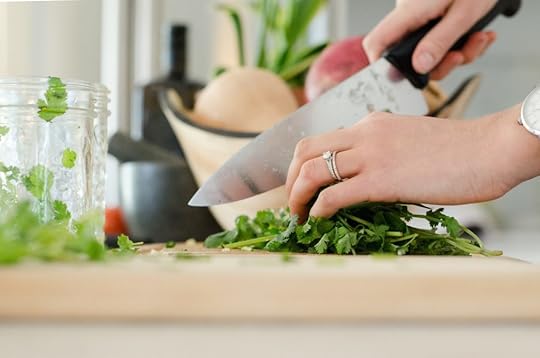
* Kitchen knives. A set of good kitchen knives is a must for anyone. As a Keto eater, however, a set of easy-to-use knives is essential. Prime Day has several options, from the lower-priced, to the higher-end.
* A high-powered blender. If you’ve been eyeing a professional-grade blender, Prime Day is a great day to take the plunge. Plus, most sellers have free or heavily discounted shipping. This Aimores commercial blender is a great deal.
* A lunch tote. Sure you can take your healthy Keto lunch to work or school in a brown paper sack. But a cool insulated lunch tote will not only keep your lunch intact and fresh. There are a few models for sale during Prime Day, including an insulated tote, a purple shoulder bag, and a black and white number.
* A Powerful Omega 3 Supplement. Antarctic Krill Oil Softgels contain 1500mg of Omega 3 fatty acid to help keep the brain healthy, immune system function high and strengthen the cardiovascular system. However, this particular brand is usually pricey enough that I reach for a less expensive brand. But I do love the “fishless” finish of these and the super high, very absorbable (and cleanly-sourced) omega 3 content.
* Amazon Prime Student 6-month Trial. If you have a boarding school student or college student in your life, a student subscription to Amazon Prime can give them access to free shipping on food, linens, toiletries, school supplies and even textbooks.
* $10 off $40+ orders with a Prime Pantry free trial. Prime Pantry is Amazon’s dry-goods delivery service. I use it to get discounts on large bags of beans, nuts and oats (for my kids), jerkey and meat sticks, tea and other items.
* $30 off your first Amazon Fresh delivery. Amazon Fresh has meal-kits, ready-to-cook entrees, fresh ingredients, and all kinds of food to help you make dinner inexpensively, conveniently, and healthfully.
Happy—and smart—shopping to you!
Much love,
Stephanie
P.S. Is there anything in particular that you have your eye on this Amazon Prime Day?


July 5, 2018
The Joy of Baking for One: How to Downsize Recipes for Baked Goods
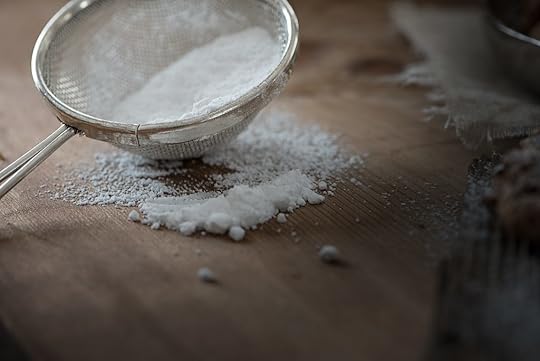
If you enjoy baking, you’ve probably noticed that most recipes for muffins, cookies, cakes and other baked goods, have moderate to large yields. The word “yield”, when used in a recipe, is the number of servings the recipe makes.
If you have kids at home, or live with someone, or are a scout leader, or like to take goodies into the office, these moderate to large yield recipes are no big deal. Even if you have or are none of these things, you can always package up extras and stash them in the freezer for up to three months for future consumption. I like to freeze baked goods in single-size portions so I can grab a solo serving and toss it in my lunch bag.
All this said, some of you don’t want extras lying around. Maybe you’re trying to stay away from carbs or you’re afraid you’ll binge on every cookie you have hiding in the freezer or your freezer is already full enough, thank you very much.
What then?
Can you simply make less of the food? Perhaps scale muffin or pie or scone recipe down, much like I showed you how to in this post here?
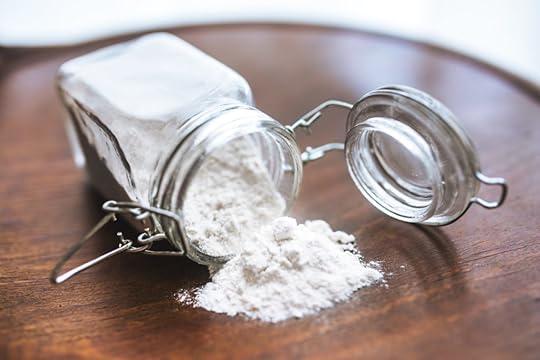
Baked goods are tricky, thanks to a few fiddly ingredients that don’t divide down well (nor do they multiply up well). Leaveners for instance—ingredients like baking soda, baking powder and yeast, which help baked goods rise and expand—need to be in a specific ration with liquids and fats and flours. Simply cutting everything in half, often means the leaveners won’t work. Further, things like one egg, doesn’t reduce down very easily. And so on.
You get the picture.
But, as I like to say, giving something a try is one of the best educations you can offer yourself. That goes for experimenting a bit with scaling down a recipe for a smaller yield.
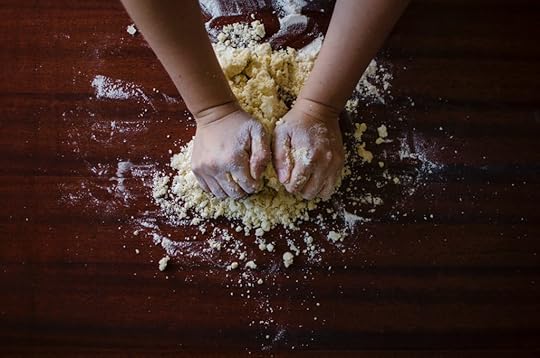
Here are some guidelines:
* If a recipe is in metrics, go ahead and divide all ingredients by 2 for a recipe that will deliver ½ the original yield. Or divide by 4 to get a recipe that will deliver ¼ of the original yield. It is almost impossible to scale a baked good recipe down to a single serving, but you can chunk a traditional yield down significantly.
* If the recipe is in Imperial (aka standard, or traditional measure, which is what we use in the States), you can so quarter or halve your recipes down.
* But you’ll need to do something different with the leavener. Most baked goods with a soft, moist crumb use some type of leavener, such as cream of tartar, baking soda, baking powder or even yeast. These often cannot be precisely quartered or halved down—you might have too much of the stuff and end up with metallic or soapy-tasting (too much leavener creates a yucky flavor) product, or one that rises in a weird, domed way. Here’s what I do: It is super unscientific and I know that I am going to get nasty comments by offering it up, by I use this all the time and it’s never done me wrong: I go ahead and half or quarter this measure along with all the other ingredients, then I remove a small pinch of the scaled down amount of leavener. I literally take my thumb and second finger and remove a small pinch. That way, I diminish the chance the finished product will taste soapy or metallic or overly tangy—my family is exquisitely sensitive to these tastes and will not eat something if they can taste baking soda or baking powder or cream of tartar. Weird, right?
* What do you do if the original recipe called for an uneven number of eggs? This means your scaled recipe most likely will end up requiring three-and-a-half eggs or even one egg. Here’s a secret about eggs in baked goods: You have some flexibility here. If your reduced recipe calls for 2.5 eggs, go ahead and use two of the largest eggs in your carton (or two of the regular ones with a splash of water to make up for the lost liquid). If your converted recipes asks you to use.05 of an egg, either find a small egg in your carton and use the entire dang thing, or crack the egg in a separate bowl, use a fork and mix it up a bit, and use half of that. Give the other half to the dog, or put it the fridge and add it to tomorrow’s scrambled eggs.
* Don’t lower the oven or stove temp. If the original recipe says 350 F or 375 F or 425 F, then that’s what you should use.
* Do use a smaller pan. For instance, if a recipe calls for a 13 x 8-inch or an 11 x 9-inch pan, try an 8-inch square pan.
* Bake or cook for a shorter period. Check the item 10 to 15 minutes earlier than the original recipe suggests.
And now, a low-yield cookie recipe. Those of you who’ve done programs with me in the past, know this recipe. It is nut-butter based, gluten-free, high-protein and super nutritious. If you don’t have baking soda, the recipe works well without it. Don’t lower the sugar content too much, as it helps leaven, tenderize and bind these cookies. They won’t hold together when baked without the sweetener. Sorry!!!
FLOURLESS NUT BUTTER COOKIES
Makes about 10 to 12
1 cup natural almond or peanut butter, smooth or crunchy (I often substitute cashew, sunflower or hazelnut butter; or you can even use seed butter)
1 cup natural sugar (such as sugar, maple sugar in the raw or coconut sugar)
1 large or medium or small egg, lightly beaten
Optional: 1 tablespoon vanilla extract
Optional: Dash cinnamon or allspice
Optional: 1/2 teaspoon baking soda for lighter texture
Optional: If your nut butter is runny, add a tablespoon or two of almond meal or pulverized oats or gluten-free flour or regular flour
Directions
1. Preheat the oven to 350 degrees F. and line a large baking sheet with foil or parchment paper.
2. Using a hand or stand mixer, mix the peanut butter, sugar, egg and vanilla on low speed until well combined.
3. Cover dough tightly and chill for an hour or for several days
4. Using a small cookie scoop, scoop about 1 1/2 tablespoons of dough 1 1/2-inches apart onto the baking sheet. If you don’t have a cookie scoop, drop the dough with a spoon.
5. Optional: Flatten the dough balls the tines of a fork, making a cross pattern on the cookies.
6. Bake the cookies for 10-12 minutes until they are golden around the edges. Allow the cookies to rest on the counter for 2 minutes before transferring them to a cooling rack.
July 4, 2018
The Joy of Cooking for One: How to Scale Down a Recipe Using Middleschool Math
In this blog post, I am going to share the shocking discovery I’ve made by eating alone for two weeks….
If you live in a one-person household, and if you cook for yourself only, I owe you an apology: For years and years I’ve developed, written and featured (on my blog, newsletter and books) recipes that serve four to eight people. There are five people in my family, I grew up in a family of six….. when I was in culinary school, all the recipe we used served between four and twelve.
Let’s just say I am used to creating recipes, and cooking from recipes, that serve several people.
Today I realized just how wrong this was of me. My kids have been in DC with my husband for the last two weeks and my eating has gotten…. Relaxed. I have whipped up a few easy things (a quick Keto chicken bowl made from some leftover rotisserie chicken and avocado and some greens, and a piece of salmon that was waiting for someone to cook it). But I haven’t done any of what I call “real cooking.”
The crockpot has not been in use. The convection oven, the food processor, the blender, even my chef knives, have been untouched for the last 10 days.
Following a recipe geared for six people simply felt like too much work. Plus, with just me in the apartment, I wasn’t buying the amount of food I usually do, so I didn’t necessarily have the six cups of this and three cups of that, which traditionally-scaled recipes require.
Sure, I could have gone ahead and just made a delicious looking recipe, but what about the leftovers. Ahh, the leftovers…. And here is where I hang my head in shame: I have had a few clients in the past hesitate about cooking one of my larger recipes. When I told them to halve the recipe, they still hesitated, saying even when halved, the recipe would be more food than they needed.
To which I answered: Just freeze the leftovers for another time, or pack them for tomorrow lunch.
I am hanging my head in shame.
In my defense, I adore have cooked food in the freezer because I can defrost it and quickly feed hungry teenagers. And I love having already-prepped food I can use for tomorrow’s lunch because it saves me a ton of time.
But I also understand one particular client’s comeback: “Stephanie, when you’re just one person, your fridge is already overflowing with leftovers for tomorrow’s lunch. And your freezer is already packed tight with frozen leftovers. I don’t want to cook a recipe and have leftovers.”

In honor of you, I will be adding a ton more single-serving recipes.
But I also want to share how easy it is to scale down “non-baked goods” recipes. (Recipes for baked goods can be tricky—the amount of eggs and leavener, such as baking powder, baking soda or yeast—work in ratio to flour and liquid and other ingredients, so simply dividing a recipe by two or three or four will not always create a usable blueprint. More on that here.)
You absolutely can find an online converter, but it’s always good to learn a skill the old fashioned way first so you can enjoy a basic understanding of how it works. Note: This formula below can be used for imperial or standard (two names for the system that Americans use) and metric (what most everyone else uses) measures.
Ready to learn? Let’s do this!
The formula is: number of servings you want ÷ number of servings in recipe = your magic number. In the case of our sample original recipe below, this would be 1 (the number of servings we desire) ÷ 4 (the servings given by the original recipe) = 0.25 (our magic number)
Multiply the ingredient amounts in the original recipe with your magic number to get your final scaled down measurements.
For instance, do you see how the amount of watermelon called for in our original Watermelon Gazpacho recipe below calls for 2 cups? Multiply 2 x 0.25 and you 0.5, or a half a cup. See how the original recipes calls for 3 tablespoons of lime juice? Multiply 3 x 0.25 and you get 0.75, or ¾ of a tablespoon.
There will be numbers that are just too fiddly for you to deal with. What, for instance, will you do if a recipe asks for 1-3/8 cup of something? Most modern recipes don’t ask for such odd measures, but if you do come across something similar, just round up or down to the nearest normal number and multiply that by 0.25.
This rounding up or down also goes for hard-to-divide ingredients, such a single egg. If you have a recipe that you’d like to scale down and it calls for a single egg, I’d beat the egg and use half of it. All the while assuming the recipe would work just as well and taste just as good.
Lastly, whenever you scale down a recipe that requires the oven or stove, there is no need to change the temperature for the scaled recipe. Reducing the size of the pan or baking dish you use for your smaller recipe— for example, if the recipe called for a 13 x 9-inch pan, use an 8-inch square pan—can help ensure the scaled recipe only needs as much cook-time as the original. But still, I like to hang around the kitchen just in case your new
Here is a scaled recipe in real life, my Watermelon Gazpacho. The original recipe is up top, and the single-serving rewrite, is below it.
WATERMELON GAZPACHO: The Original Recipe
Makes 4 servings
Gazpacho fans, this one’s for you! You’ll notice there’s no tomato in this one. Instead, watermelon steps into the starring role. And no, this isn’t a sweet, dessert-style soup, it’s a tasty savory dish, great for helping you stay cool and getting all your antioxidants on sweltering summer days. It is very yummy!
2 cups 1/4-inch-diced red watermelon (remove seeds)
2 cups orange juice
2 tablespoons extra-virgin olive oil
1 seedless cucumber, diced into 1/4-inch cubes
1 small red or yellow bell pepper, seeded and diced into 1/4-inch pieces
1 small onion, preferably a red onion, diced into 1/4-inch cubes
2 medium garlic cloves, minced
1 small jalapeno pepper, seeded and minced (optional)
3 tablespoons fresh lime juice
2 tablespoons chopped fresh cilantro
Salt and freshly ground black pepper
Optional: 1 or 2 chopped scallions for garnish
* Process 1/2 cup of watermelon, along with the orange juice and oil, in a blender or food processor until pureed.
* Transfer to a medium bowl, along with remaining ingredients. Season with salt and pepper to taste.
* Refrigerate until ready to serve. (Can be made several hours before serving.)
* Optional: Garnish with chopped scallions before serving.
WATERMELON GAZPACHO: The Scaled Down Version
Makes 1 serving
1/2 cup 1/4-inch-diced red watermelon (remove seeds)
1/2 cup orange juice
1/2 tablespoon extra-virgin olive oil
¼ of seedless cucumber, diced into 1/4-inch cubes
¼ of a small red or yellow bell pepper, seeded and diced into 1/4-inch pieces
¼ of small onion, preferably a red onion, diced into 1/4-inch cubes
½ of a medium garlic clove, minced
¼ of a small jalapeno pepper, seeded and minced (optional)
¾ of a tablespoon fresh lime juice
¾ of a tablespoons chopped fresh cilantro
Salt and freshly ground black pepper
Optional: ¼ to ½ of a scallion, chopped for garnish
* Process 2 tablespoons of watermelon, along with the orange juice and oil, in a blender or food processor until pureed.
* Transfer to a medium bowl, along with remaining ingredients. Season with salt and pepper to taste.
* Refrigerate until ready to serve. (Can be made several hours before serving.)
* Optional: Garnish with chopped scallions before serving.
April 6, 2018
Guest Blogpost: Cancer Survivors Walk in Nature, by Millie Elia
I’ve worked in oncology since the early 1990s, first as a registered nurse and then as a Advanced Practice Registered Nurse. My experience within the institutions I’ve worked in has always based on treatment options with proven effectiveness—like chemo and radiation—and conducted in sealed, sanitized rooms with the glare of luminescent lights, and loud, beeping technology.
My work has been with patients who, like warriors, were battling through fear, nausea and fatigue. This medical environment did little to promote a higher sense of well being.
In 2012 my own sister Catherine was diagnosed with metastatic breast cancer. I stood beside her right from the start, eventually becoming her sole caregiver. I recall how— whenever possible between appointments—she would ask me to bring her to a public park called “Wave Hill” in the New York neighborhood where she lived. She wanted to walk in the gardens and simply sit in quite contemplation, taking in all that nature had to offer. She said that being in these beautiful outdoor surroundings made her feel better. I understood her need intuitively and did my best to accommodate these requests.
Sadly, Catherine passed away in 2014. Three years after her passing I made the decision to leave institutional work in order to work alongside people in the community.
I became certified as a Health and Wellness coach and began to ponder how I could best serve in an more integrative way than my nursing career allowed. I remembered how much being outside meant to my sister during her illness, and out of curiosity I began to research what science had found regarding the health benefits of being in nature.
What I found was a large body of scientific knowledge dedicated to this, much of it in originating in the Japanese therapy called Forest Bathing. In fact, since the 1980s this has been incorporated as a standard part of Japan’s preventative healthcare system.
Through research it has been established that not only does walking through nature help alleviate depression, anxiety, and stress with a reduction in cortisol levels (which also promotes healthy sleep), but it also has positive effects on our immune system.
Studies reported by the National Institute of Health show that trees emit an aromatic essential oil called “phytoncide.” Breathing this actually boosts both the number and activity of natural killer cells, well as production of anti-cancer proteins produced by lymphocytes.
These survivors often feel they live more mindfully in the present after their diagnosis. They have a higher awareness and place great value in increasing their quality of life. They seek ways to empower themselves by taking control of their best health—physical and emotional—possible. And just as important to them is to look for ways to embrace life day-to-day and prioritize their self care.
Spending time in nature can do that for them.
I’m pleased to say that along with one-to-one phone coaching on lifestyle modifications— like healthy eating and exercise aimed at reducing the risk of recurrence—I have also incorporated an outdoor small group coaching “walking and talking” program. This program focuses not on the disease itself, bu ton thriving during and after treatment.
The participants enjoy activities like gardening, meditating, journaling, and weekly facilitated discussions on topics of interest. Between the participants there is a warm sisterhood and sense of community.
Besides providing all of the benefits of exercise by walking in nature, this program provides positive, nurturing, motivating, and fun activities that allow each woman precious opportunities to reflect.
Millie Elia is owner of M. Elia Wellness, a health coaching practice that specializes in one-on-one and group support for individuals facing a cancer diagnosis . If you would like to learn more about how Millie’s coaching for breast cancer survivors can help you in your recovery, you can contact her at millie@meliawellness.com for a free complimentary consultation.
April 3, 2018
Countdown Away From Procrastination
Procrastination is one more cup of coffee. It is one more load of laundry. One more unnecessary celebrity news story or Facebook post or interesting blog. It is picking up the phone call or answering the text that you know you probably should not. It is the needy friend who you’ve already given so much to and yet, perhaps unsurprisingly, still needs more. It is grocery shopping during those precious few hours you’ve given yourself to work. It is staring blankly at a wall or a screen or your cuticles for longer than you need to, instead of just starting.
At the very base of it, procrastination begins with a moment of hesitation, that then spirals into an extended period of catatonic, brain-foggy, unremarkable, non-productiveness.
Merriam Webster defines procrastination as the action of postponing or delaying something. And we do it for all kinds of reasons, some common to humankind, some unique to you.
One of my greatest procrastination triggers is having someone in my office (a corner of the master bedroom that features a desk and filing cabinets) when I am on assignment. If someone is lurking about, I stop writing and start answering emails, and updating my calendar, and cleaning out files on my hard drive until this person leaves and I can return to my writing. By then, hours may have passed and I have missed my deadline. So my behavior actually affects not only my output, but my income. Which in turn affects my entire family.
A more common cause of procrastination is feeling we need to “be there” for a friend or family member who is only all too happy to call or text you during work hours so you can be her sounding board, his cheerleader, their life coach.
Or you tell yourself that your hesitation is a mental health break, a moment to clear your head and enjoy the gorgeous tree outside your window. (Two hours later when you’re still staring at the tree, however, your mental health break has veered into full-blown procrastination.)
In the greater scheme of things, one or two days lost to inaction really aren’t so much of a big deal. But what if you’ve lost a week? A month? A year? A decade?
Or a lifetime?
You see what I’m getting at?
It’s not the things we do that make it hard to meet our goals and give life to our dreams. It’s the things we do all the time that make it challenging to meet our goals and give life to our dreams.
Put in another way: Losing a lifestime to procrastination can mean there is no time left for you to create your dreams and enjoy your desires.
For proof, just look at the power of water droplets. A trickle of water, after a decade, can split a rock. A trickle of water, after a millennia, can create a canyon.
That realization has hit me hard.
I am not someone whom you would think of as a slacker. I have written more than 20 books. I was a nutrition counselor and a life coach for many years. I am involved in charitable works. I have three very busy showbiz children whose careers I manage. Due to my husband’s job in another state, I am also a solo parent four or five days each week. In other words, there is a lot going on in my life. So much so, that I could easily pretend that I have achieved everything I have set out to create.
But I would be lying. In truth, there is a lot I desperately want to go on, but due to my own inaction, I have not yet created.
Such as:
A best-selling non-cookbook, non- health book, which requires a best-selling publicity campaign. (Which in return requires a bit of work on my part!)
A regular, radio show—one that generates income.
A yearly telesummit interview series.
A YouTube television talk show.
A Broadway musical.
A television series.
A creator’s lab/retreat center.
I take ownership of every single one of these things that I have not created. It would be so easy for me to blame the kids’ schedules, the lack of parenting help, and the needier people I have in my life for “using up” all of my work time.
I can’t’ do that, because I know—without doubt—that I am the reason I don’t have everything what I want.
When an acquaintance mentioned Mel Robbins’ five-second rule, and how it helped him overcome procrastination, I listened. Mel Robbins five-second rule is basically counting backwards from five the moment you feel yourself slipping into inaction.
Go here for a YouTube video about the five second rule.
Go here for a look at Mel’s Robbins book, The 5 Second Rule.
The five second rule works because it bypasses your brain which often pulls you down into fear-based inaction. “Your brain is designed to keep you where you are right now, because it is safe,” says Robbins, explaining why doing something new is often so hard.
Think of when you were a child and you were walking home with a friend from school and one of you would suddenly blurt out “Race you to the corner! Five, four, three, two, one, go!” And without even stopping to think—about whether or not it was a good idea to race to the corner, or that your friend was faster than you and you’d probably lose, or that you were wearing shoes that pinched your feet—your body would take over with no input from your brain whatsoever and your legs would immediately begin sprinting to the corner.
According to Robbins, hesitation can turn to procrastination: that split-second when you hesitate can grow into an hour of web surfing or a half a day of mindless whatever.
What I find what I find is if I can bypass that moment of inaction, procrastination does not have an opportunity to gain a foothold.
We all have our reasons for hesitating.
I hesitate when I feel overwhelmed. Hesitating—and then procrastinating—is how my subconscious intentionally lightens my workload. If I am busy “researching” something on the web, I can’t complete my kid’s work permit forms. If I am searching for seventh or eighth or eleventh opinions on whether or not my teenagers should have paying summer jobs, I can’t answer those half-dozen very lengthy client emails. If I am spending hours of (un)necessary research on summer camps, I get to feel busy while simultaneously not finishing up the overdue manuscript that my editor has been begging me to complete.
Here’s where I share that confession I promised. This example comes to you from my own life, circa October 217. I was four months turning in a manuscript for a dream book that was to be published Fall 2018. I was so late in finishing, in fact, that my publisher almost scrapped the project. Why was I so late? Because I was busy procrastinating with “family related stuff.” I procrastinated so severely that weeks would go by without me even writing a word on that manuscript.
This was a book I fought to write. A book that could launch me out of the health world that I feel ready to leave behind. A book on a topic that I grew up with, that I adore, that I want to share with the world. A book that I was tremendously excited to write. But, at the same time, I felt so overwhelmed with caring for my family, that I began to feel resentful of having another thing on plate. I didn’t want to deal with another task each day—even if it was my dream project. So I procrastinated, making snacks that my kids could have made themselves, picking up children who could have walked themselves home, wiping noses that could have been left alone. In the end, adopting he five-second rule stopped my frequent hesitation, and redirected me back to the writing (and away from the kids, who really did not need me to be constantly swooping in.) In the three weeks I used this technique, I wrote five chapters, finishing the manuscript and turning it in to my editor.
What I learned in this process is that the procrastination that came from hesitating was threatening to become more important than my goal of writing that book. Does the five-second rule work for everyone? I have no idea!
If you do try it, stop in here and let me know how it worked for you. Or, if you have another procrastination-busting tip, share it in the comments below! I am always looking for ways to make getting my work done even easier!
March 8, 2018
Meet me in Los Angeles at the Natural Products Expo West on Saturday, March 10, 2018!
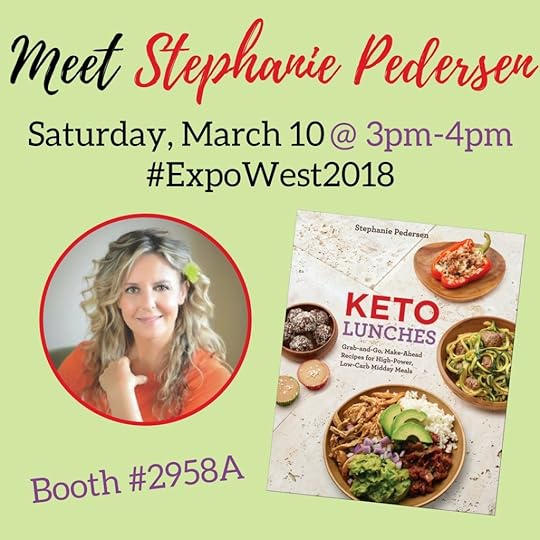
Meet me at the Natural Products Expo West, Booth 2958A, March 10 at 3 pm!
February 27, 2018
Health by Chewing and Other Ways to Improve Your Health
Do not eat standing up. Ever. You are not livestock. Humans, to fully digest their food and create the chemical that tells the brain it’s full, like to be seated. If you want something and cannot sit down, then do not eat it until you can.
Do not snack in front of a phone, computer, or television screen. Eating while answering emails, talking on the phone, or painting your toenails—or anything else is a form of multitasking. Give your body the opportunity to concentrate instead on fueling by not diverting your attention toward paying bills or cleaning out your file cabinet. Your body will reward this attention by telling you the moment it has consumed enough. Your senses will receive a well-deserved dive into the sight, aroma, taste, and texture of your food. And you’ll have given yourself a meditative moment to enjoy the relaxing pleasure of eating.
Chew thoroughly. Did you know that most humans chew their food an average of eight times? This is unfortunate, because the more you chew, the more thoroughly you break down your food is broken down and the more time the body has to flood the mouth with digestive enzymes. Not only does this help in utilizing food’s nutrients, but it also encourages you to slow down and enjoy what you have.
Choose a snack that has both plant and fiber protein. Snacks such as carrots and hummus, veggie strips and white bean dip, or celery with almond butter will fill you up and give you energizing protein, which in turn will lessen your desire for mindless, between-meal grazing.
Do not keep foods you do not want to consume in your home or office. Period. If you want an ice cream cone, by all means, have one. But go to a creamery and eat it there. Humans only have so much willpower.
Consider [MH1] where you eat. To avoid mindless snacking and really focus on your food, avoid eating in environments that foster distraction, such as your car or loud spaces. My grandparents never allowed us to eat in their cars. Even on long road trips—which they’d take with their motorhome—we always pulled into a picnic area or stopped at a restaurant to eat. Not only did this keep their vehicles immaculate, it also prevented us from getting into the habit of mindless snacking. Also avoid eating in messy places, as your food takes on the energy of the space you eat in.
No eating in a messy space. Your food takes on the energy of the space you eat in.
Avoid eating in a loud environment. Trying to manage a lot of noise makes it nearly impossible to focus on enjoying your food.
Do not eat straight from a bag, box, or carton. Take out a portion and serve yourself regally. As my grandmother used to say, “How you eat matters. Would the Queen of England eat the way you’re eating?” It’s a question I often ask myself when I am tempted to filch leftovers from my kid’s finished plates while doing the dishes, or grab a handful of food while vacuuming.
[MH1]AU: Tried to consolidate a few of these bullets for space. Feel free to tweak!
A Bare-Bones Cooking Equipment Guide: A Hygge Primer
For instance, maybe you are gluten-free and find that a breadmaker is necessary to create the homemade gluten-free sandwich loaves your family loves. Or perhaps you swear by your rice cooker and use it three times a week. A general rule of thumb is, if you don’t use something three or more times a week, you either don’t need it, or it doesn’t deserve to be sitting out where it takes up precious counter space. A cluttered kitchen looks unappetizing, is hard to keep sanitary, and is difficult (or, in some cases, dangerous) to work in. In general, these items are all you need to easily turn out wonderful meals:
The biggies: An oven with a stovetop, a refrigerator with a freezer, and—if you have room and can afford it—a dishwasher.
Knives and accessories: A well-made chef’s knife that feels great in your hand, a paring knife, and a serrated knife for cutting bread and tomatoes.
Countertop appliances: Limit yourself to no more than three, such as a juicer, a blender, and a coffee pot. Keep lesser-used appliances off the counter in a dedicated kitchen cabinet, and pull them out only when you use them.
Pots, pans, and other stoveware: Most of us use the same pan and the same two pots over and over. Which is why most people really only need a frying/sauté pan, a small or medium pot, and a pot that is large enough to cook pasta and make stock. Keep these heavily used pots and pans on your stovetop; tuck away others in a cupboard.
Bakeware: Like pots, most of us use the same few pans and over and again. If you’re in the market for a few new pieces, I recommend a 24-cup muffin tin, two 9-inch cake pans, two cookie sheets (used for everything from free-form bread loaves to cookies to fish patties), a 9 x 11-inch glass pan, and a two-quart casserole dish.
Kitchen helpers: Let the foods you eat regularly guide your choices. Keep items you use daily, within easy reach. For instance: In a large vase near the knife block I keep a vegetable peeler, a citrus reamer, a ladle, a large flat spoon, a wooden spoon, and a Danish whisk. Your lesser-used kitchen helpers can remain out of sight in a drawer or cupboard.
Bedrooms are not for eating in: A hygge tip
Do not eat in your bedroom. This was an ironclad rule for my siblings and me when we were growing up. Eating was done at the kitchen, dining room, or picnic table in the backyard. Sleeping and play took place in bedrooms. Now that I am adult, I am surprised at how many dirtied bowls and plates I see on people’s bedside tables or—worse—the floor around their beds. Eating in your bedroom undermines its role as an inner sanctum, a place where you go to rest and recharge. Plus, it is unsightly and can attract pests.
Bedrooms are not for eating: A Hygge Tip
Do not eat in your bedroom. This was an ironclad rule for my siblings and me when we were growing up. Eating was done at the kitchen, dining room, or picnic table in the backyard. Sleeping and play took place in bedrooms. Now that I am adult, I am surprised at how many dirtied bowls and plates I see on people’s bedside tables or—worse—the floor around their beds. Eating in your bedroom undermines its role as an inner sanctum, a place where you go to rest and recharge. Plus, it is unsightly and can attract pests.