Stephanie Pedersen's Blog, page 12
August 23, 2015
ICE, ICE, BABY!
If you’re in the Northern Hemisphere, I don’t have to tell you how hot it’s been this month. We all have ways with dealing with the heat, from wearing light colors to staying hydrated. One of my favorite ways to cool off is with ice pops.
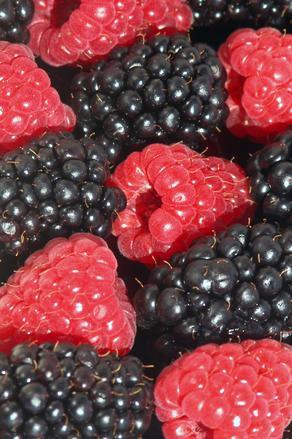 Not any ice pops, however—if they are loaded with artificial ingredients, dairy, soy, sugars (even fruit sugar), they will ultimately make you feel worse. That’s why I enjoy making my own: I get to control what goes in them, and I also get to load them up with some of my favorite superfoods.
These two ice pops are currently in heavy rotation at my home. The recipes come from my next cookbook, on berries. My kids love them, they are easy, and they taste great. Plus, they contain one of my favorite superfoods: Coconut. As well as some of my favorite superberries. Together, these ingredients strengthen the immune system, protect fro cancer, offer fiber and help the brain and heart.
Have a fave ice pop recipe? Share it here.
Coconut Water Berry Pops
Makes 6 servings
I just have to say it: This is a beautiful popsicle. It’s not super sweet but a cool, refreshing midday snack for grownups and adults! I like these after an afternoon workout to replace lost fluid. I happen to like my popsicle crowded with fruit, but fell free to use more or less berries, as desired.
3 cups coconut water
Optional: 1 tablespoon of your favorite natural sweetener
Optional: A squirt or two of lemon or lime juice
1 cup whole blueberries (or another sweet berry)
1 cup whole raspberries (or another sweet berry)
If desired, whisk sweetener and lemon juice into coconut water. Set aside.
Place a selection of whole berries in the bottom of each popsicle mold.
Fill each popsicle mold with coconut water and freeze until solid, about three hours.
Coconut Berry Pops
Makes 12 servings
This cool, creamy treat is a great option for people trying to wean themselves off of commercial ice cream and ice cream bars. The coconut gives it a luscious creaminess and the berries add just the right touch of sweetness. And off course both ingredients also make and keep you healthy!
1 can of coconut milk (regular or light)
6 tablespoons coconut nectar, honey, or another natural sweetener
¼ cup unsweetened dried coconut
2 cups fresh or frozen berries (my favorite is a mix of raspberries, red currants and strawberries)
Optional: A squirt or two of lemon or lime juice
Place all ingredients in the bowl of a food processor or blender. Process until completely smooth.
Pour mixture into popsicle molds, and freeze until solid, about three hours.
xoxo,

Stephanie Pedersen, MS, CHHC


August 13, 2015
FIGS!
 In my family, figs mean late summer. This is the time of year we travel from our Manhattan home to the countryside of Northern California, where I spent my teen years. It’s here, on my family’s property, where enormous ancient fig trees (first planted by Spanish settlers in the late 19th century) grow wild, bearing large crops of these succulent, sensual fruits. A member of the mulberry family, figs are a versatile fruit, as home whirred into a shake or smoothie as they are in a tart or cookie, poached in wine or liquor, paired with meats or nuts or cheese, dipped in chocolate or caramel, or stuffed with a variety of sweets and savories. A favorite of my husband and my third son, I am always on the lookout for new ways to enjoy these fiber-rich fruits.
Today, I offer this delicious—and easy—recipe. Give it a try! You can replace the figs, if you must, with Italian plums. But do give the figs a try first. And if you have a favorite way to enjoy figs, please share here! I’d love to hear from you!
Fig Salsa
Makes 3 cups
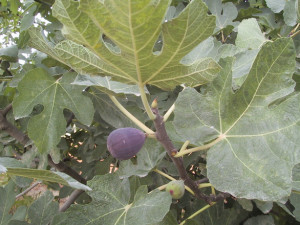 Make an effort to find ripe figs. Many people make the mistake of picking them slightly unripe, thinking they’ll ripen at room temperature. Alas, figs do soften but they will not sweeten. What to look for: fruit that is plump, tender and hefty. These are the perfect specimens for this lovely salsa, which is great served on sourdough or crackers as an antipasti, spooned over grilled meats and poultry or an arugula salad, or even eaten alone, as a it’s own salad course.
3 cups chopped fresh figs (I like Black Mission, but you can use any variety)
1 scallion, minced
2 tablespoons chopped fresh parsley
2 tablespoons seasoned rice wine vinegar
2 tablespoons extra virgin olive oil
Salt and pepper to taste
Toss together figs, scallion, parsley, rice wine vinegar and oil. Seasoning with salt and pepper to taste.
NOTE: Want more fig recipes? You will love Marie Simmons’ Fig Heaven (William Morrow)
Spicy Vegemite Nuts
 Makes about 8 servings
Vegemite is making news lately thanks to the Australian government’s discussion on whether or not to ban the salty paste (it’s been said that some people are using it to make home-distilled alcohol.). Like many who grew up in Oz, I ate a lot of vegemite on toast and vegemite sandwiches. Though it’s not my favorite food in the world, I do I have a soft spot for the stuff. (It’s made from yeast extract and is rich in B vitamins, especially riboflavin and folate) This recipe for spiced nut is adapted from one provided by Vegemite. (It’s a great introduction to the stuff!) Feel free to substitute different nuts or even pepitas and sunflower seeds.
1 cups raw pistachios
1 cups raw cashews
1 cupraw almonds
1 tablespoon VEGEMITE
1 tablespoon honey
2 teaspoons sesame oil or another oil (I like to use avocado oil)
2 teaspoons water
1 teaspoon ground cumin
1/2 teaspoon paprika
1/4 teaspoon chili powder
Preheat oven to 200F (180C if outside the States).
Line a large baking sheet with tin foil or baking parchment.
Place the nuts on the preparedbaking sheet and toast in the oven for 15 to 18 minutes (13 to 15 minutes if baking at 180C), or until g olden brown.
While the nuts are toasting, add remaining ingredients to a large bowl, stirring until all are combined.
Add toasted nuts to vegemite mixture, tossing to thoroughly coat.
Return nuts to baking tray and bake for another 5 to 8 minutes (3 to 5 minutes if baking at 180C), or until dry to the touch.
xoxo,
Stephanie Pedersen, MS, CHHC
July 26, 2015
GARDENING ANYWHERE!
I think most of us know that the safest (and most fun) way to give ourselves and our families the best, tastiest, cleanest produce possible is to grow it ourselves. But for many of us, this is undoable. We don’t have access to outdoor space. Or we don’t have a yard. Or we do have a yard but it’s super small. Or we just don’t have the energy or skill to manage a full-size kitchen garden.
Does any of that rings true for you? According to my friend Betsy Tracy, you can still grow your own food! I met Betsy at the Brielle, NJ library where I was giving a talk on superfoods and signing copies of my book Coconut: The World’s Most Versatile Superfood (published by Sterling). I was impressed by her commitment to her family’s health. She mentioned that one of the things she does with her children is grow food using something called a tower. A plant tower to be precise. Intrigued, I couldn’t wait to share this with you.
According to Tracy, “Tower Garden® simplifies traditional gardening, using a state-of-the-art vertical aeroponic growing system that makes it easy to grow your own fresh fruits and vegetables at home.”
 It was invented by former Epcot’s Greenhouse Manager of The Land, Tim Blank, He left Epcot and founded Future Growing with the dream that someday everyone on the planet would have access to healthy food in their own home and local community. Tower Garden can be home to 20 different types of plants or just one of your favorites! An extension kit can be added to increase your planting spots to 28.
It is comforting to know where our fruits and vegetables are coming from. There are absolutely no GMOs, pesticides, dirt or weeds to pull. Using state of the art aeroponic technology, the Tower Garden is truly the way of the future. The company just added grow lights making it an all year round option, allowing Tower Garden to thrive indoors.
For more information, or to contact Betsy, go to Betsy’s website: http://betsytracy.towergarden.com/
Much love,
Stephanie Pedersen, MS, CHHC

COOL AS A CUCUMBER
If you live in the States, you’ve probably heard a calm acquaintance or loved one described as being “cool as a cucumber.” It’s no accident that cucumbers are associated with calm personalities. This cooling, calming food is used in many traditional food systems used to remedy excess heat—making them a natural summer food.
Cucumbers boast powerful detoxifying abilities, which is why every green drink I make contains cucumber. I love the light, fresh flavor. I also love the nutritional profile: One cucumber provides about 19% of the daily recommended amount of vitamin K and just about 12% of molybdenum.
Cucumber also contains a few incredibly powerful phytonutrients from three antioxidant families: cucurbitacins, lignans, and flavonoids. These three types of phytonutrients provide us with valuable antioxidant, anti-inflammatory, and anti-cancer benefits. In animal studies, fresh extracts from cucumber have been shown to provide specific antioxidant benefits, including increased scavenging of free radicals and increased overall antioxidant capacity. Fresh cucumber extracts have also been shown to reduce unwanted inflammation and prevent and treat cancer in animal studies.
 But how to enjoy this powerful, cooling food? The easiest way is to chop cucumbers into salads or eat raw spears with hummus. In Australia, we put sliced cucumbers on burgers and sandwiches of all kinds. My Danish family also ate them on (open-faced) sandwiches or, even more often, soaked in a dill-spiked brine and kept in a container in the fridge. This container would be hauled out at each meal so people could enjoy the slices as a cooling side dish for literally anything my mother made for lunch or dinner. I loved these cucumber slices so much that when my mother wasn’t around, I’d sneak to the fridge and filch a few slices. Here’s a recipe so you can enjoy these delicious cucumbers yourself!
Scandinavian Cucumber
Makes about 1.5 cups
1 English (hothouse) cucumber
1 tablespoon kosher salt
1 1/2 cups water
1/2 cup white wine vinegar
1/2 cup sugar (coconut or regular)
Optional: A few very thin slices of red onion
Optional: ¼ teaspoon dill seed
Optional: 1 or 2 teaspoons snipped fresh dill
Slice the cucumber as thin as possible (use a mandoline or other vegetable slicer if you would like). Put the slices in a colander, toss them with the salt, and let stand for about 30 minutes. This helps drain excess moisture which could dilute the brine you are about to make.
Meanwhile, combine the water, vinegar, sugar, salt, and optional dill seed in a medium saucepan and bring to a boil. Remove from the heat and let cool.
Rinse the salt off the cucumbers, and squeeze or press out as much moisture as possible.
Put the cucumbers in a medium bowl and sprinkle with the optional fresh snipped dill. Add the pickling solution; they should be completely covered by the brine.
Cover and refrigerate for 3 to 6 hours before serving. The pickled cucumbers will keep in the refrigerator for up to 5 days.
July 15, 2015
BET YOU’VE NEVER DONE THIS WITH CANTALOUPE!
As a child in Northern California, melons were a summer staple in our garden (we grew watermelon, crenshaw, honeydew, casaba and cantaloupe), but I always had a soft spot for cantaloupe. Sweet, dense, with a gorgeous orange (my favorite color!) flesh, these versatile melons can be used in everything from gazpacho to sorbet. Of course, cantaloupe is pretty terrific eaten as-is!
 But really, it doesn’t matter how you enjoy it. Just eat it! At least weekly during the summer. Why? Because it’s outrageously nutritious! A one-cup serving of cantaloupe (also known as muskmelon) will give you 78% of the dietary recommended allowance of vitamin C, 30% of vitamin A and 12% of potassium—all at around 54 calories. It is rich in antioxidant phytonutrients that help the body repair itself and fight the inflammation hat can lead to heart disease, cancer and other health conditions. It even contains small amounts of omega 3 fatty acid!
To make it easy to add cantaloupe to your summer diet, let me offer one of my favorites: Cantaloupe Salsa. The recipe is really more of a guide than a strict recipe. Use whatever cantaloupe (of any size) you have on hand. Add cilantro if you don’t have parsley. Try it with ginger or red pepper flakes. Sub in lemon or lime juice for the vinegar if you’d prefer. Add something else if you are so moved to. Make it your own! It’s wonderful with grilled meats, poultry, fish, or even black bean tacos. My husband and one of my kids eat this as a salad and I’ve even stirred a cup of leftover salad into a pot of quinoa for a fast, delicious summer pilaf. (Wow, was that good!)
Let me know how you like it! And as always, if you have a favorite way to eat something I’ve talked about, email me a note with the recipe! I adore getting recipes from you!!!
Cantaloupe Salsa
Makes about 4 to 7 cups, depending upon the size of your cantaloupe
1 large cantaloupe (or 1.5 smaller cantaloupes), peeled, seeded and diced in 1/4 to 1/2 inch dice
1 medium red onion, diced
1/2 cup to 1 cup Italian parsley, chopped
1/2 cup fresh mint, chopped
2 tablespoon white balsamic or apple cider vinegar
2 tablespoons extra-virgin olive oil
Dash salt and pepper
1. Toss cantaloupe, onion, parsley, mint, vinegar and oil in a bowl.
2. Allow flavors to meld for 30 minutes to an hour before using. Add salt and pepper as desired at serving time. (Adding the salt early draws moisture out of the ingredients, making for a soggy salsa—best to do this right at serving time.)

WANT TO REVIEW ONE OF MY BOOKS?
 I have so many favorite things! One of them is taking care of you and my clients by teaching you how to get (and stay) healthy in a way that is easy, stress-free and fun. Another favorite thing is teaching you how to use and choose food for health—superfoods are a particular favorite. And yet another favorite activity is writing cookbooks based on both superfoods and on the health programs I run.
I tell you all of this because I have a favor to ask of you. If you have read one of my books, or have done one of my health programs which my books are based on, could I ask you to head to Amazon and provide a review? These reviews help potential book buyers, and they help me and my publisher, as well!
To make things easy on you, here are links to my recent books:
* Kale: The Complete Guide to the World’s Most Powerful Superfood
* The Pumpkin Pie Spice Cookbook
* Coconut: The Complete Guide to the World’s Most Versatile Superfood
* The 7-Day Superfood Cleanse
Thank you so, so much! I am so grateful for you!

Stephanie Pedersen, MS, CHHC
www.StephaniePedersen.com
July 14, 2015
WANT TO REVIEW ONE OF MY BOOKS?
 I have so many favorite things! One of them is taking care of you and my clients by teaching you how to get (and stay) healthy in a way that is easy, stress-free and fun. Another favorite thing is teaching you how to use and choose food for health—superfoods are a particular favorite. And yet another favorite activity is writing cookbooks based on both superfoods and on the health programs I run.
I tell you all of this because I have a favor to ask of you. If you have read one of my books, or have done one of my health programs which my books are based on, could I ask you to head to Amazon and provide a review? These reviews help potential book buyers, and they help me and my publisher, as well!
To make things easy on you, here are links to my recent books:
* Kale: The Complete Guide to the World’s Most Powerful Superfood
* The Pumpkin Pie Spice Cookbook
* Coconut: The Complete Guide to the World’s Most Versatile Superfood
* The 7-Day Superfood Cleanse
Thank you so, so much! I am so grateful for you!
Stephanie Pedersen, MS, CHHC
www.StephaniePedersen.com
BET YOU’VE NEVER DONE THIS WITH CANTALOUPE!
As a child in Northern California, melons were a summer staple in our garden (we grew watermelon, crenshaw, honeydew, casaba and cantaloupe), but I always had a soft spot for cantaloupe. Sweet, dense, with a gorgeous orange (my favorite color!) flesh, these versatile melons can be used in everything from gazpacho to sorbet. Of course, cantaloupe is pretty terrific eaten as-is!
 But really, it doesn’t matter how you enjoy it. Just eat it! At least weekly during the summer. Why? Because it’s outrageously nutritious! A one-cup serving of cantaloupe (also known as muskmelon) will give you 78% of the dietary recommended allowance of vitamin C, 30% of vitamin A and 12% of potassium—all at around 54 calories. It is rich in antioxidant phytonutrients that help the body repair itself and fight the inflammation hat can lead to heart disease, cancer and other health conditions. It even contains small amounts of omega 3 fatty acid!
To make it easy to add cantaloupe to your summer diet, let me offer one of my favorites: Cantaloupe Salsa. The recipe is really more of a guide than a strict recipe. Use whatever cantaloupe (of any size) you have on hand. Add cilantro if you don’t have parsley. Try it with ginger or red pepper flakes. Sub in lemon or lime juice for the vinegar if you’d prefer. Add something else if you are so moved to. Make it your own! It’s wonderful with grilled meats, poultry, fish, or even black bean tacos. My husband and one of my kids eat this as a salad and I’ve even stirred a cup of leftover salad into a pot of quinoa for a fast, delicious summer pilaf. (Wow, was that good!)
Let me know how you like it! And as always, if you have a favorite way to eat something I’ve talked about, email me a note with the recipe! I adore getting recipes from you!!!
Cantaloupe Salsa
Makes about 4 to 7 cups, depending upon the size of your cantaloupe
1 large cantaloupe (or 1.5 smaller cantaloupes), peeled, seeded and diced in 1/4 to 1/2 inch dice
1 medium red onion, diced
1/2 cup to 1 cup Italian parsley, chopped
1/2 cup fresh mint, chopped
2 tablespoon white balsamic or apple cider vinegar
2 tablespoons extra-virgin olive oil
Dash salt and pepper
1. Toss cantaloupe, onion, parsley, mint, vinegar and oil in a bowl.
2. Allow flavors to meld for 30 minutes to an hour before using. Add salt and pepper as desired at serving time. (Adding the salt early draws moisture out of the ingredients, making for a soggy salsa—best to do this right at serving time.)
July 7, 2015
YOU’VE GOT TO TRY WATERMELON GAZPACHO!
Growing up, I ate a lot of watermelon. My parents grew it, my friends’ parents grew it, everyone we went to church with or lived near to grew it. Huge torpedo-sized melons with red flesh and plenty of seeds. There were no seedless or yellow-fleshed melons in my childhood!
But there were big triangular slabs of melon stacked on a plate and served every summer evening for dessert. Neighborhood moms gave us slices, shooed us outside and encouraged us to keep busy with watermelon seed spitting contests. It wasn’t uncommon to see burly men walking home with a 15 pound watermelon resting on a shoulder, or see small groups of shoppers crowded around supermarket watermelon displays, thumping and inspecting, trying to find the perfect specimen. And watermelon showed up at every single summer barbecue, buffet and potluck party I ever attended.
All that watermelon helped lower our body temperature and keep us comfortably cool during those hot California Central Valley summers. In Traditional Chinese Medicine, watermelon is seen as a cooling food, one that helps lower your body’s temperature in high temperatures. Its high water content (92% of a watermelon is water) has a lot to do with its ability to help keep you hydrated.
At 80 calories for a two-cup serving, watermelon is the perfect health food.

Its fiber and high water content help with weight loss and management by making you so full and satisfied you lose your desire to overeat or snack on junk food. Further, watermelon helps boost your immune system and fight cancer, thanks to high levels of antioxidants, such as the phytonutrient and cancer-fighter, lycopene, the nutrient that actually gives red watermelon its rosy color.
The vitamin A found in watermelon—a serving contains 30% of your daily requirement— is important for optimal eye health and boosts immunity by enhancing the infection-fighting actions of white blood cells called lymphocytes. Vitamin B6 found in watermelon helps the immune system produce antibodies. Antibodies are needed to fight many diseases. Vitamin B6 helps maintain normal nerve function and form red blood cells. The body uses it to help break down proteins. The more protein you eat, the more vitamin B6 you need.
WATERMELON GAZPACHO
Makes 2 to 4 servings
Gazpacho fans, this one’s for you! You’ll notice there’s no tomato in this one. Instead, watermelon steps into the starring role. And no, this isn’t a sweet, dessert-style soup, it’s a tasty savory dish, great for helping you stay cool and getting all your antioxidants on sweltering summer days. It is very yummy!
2 cups 1/4-inch-diced red watermelon (remove seeds)
2 cups orange juice
2 tablespoons extra-virgin olive oil
1 seedless cucumber, diced into 1/4-inch cubes
1 small red or yellow bell pepper, seeded and diced into 1/4-inch pieces
1 small onion, preferably a red onion, diced into 1/4-inch cubes
2 medium garlic cloves, minced
1 small jalapeno pepper, seeded and minced (optional)
3 tablespoons fresh lime juice
2 tablespoons chopped fresh cilantro
Salt and freshly ground black pepper
Optional: 1 or 2 chopped scallions for garnish
1. Process 1/2 cup of watermelon, along with the orange juice and oil, in a blender or food processor until pureed.
2. Transfer to a medium bowl, along with remaining ingredients. Season with salt and pepper to taste.
3. Refrigerate until ready to serve. (Can be made several hours before serving.)
WANT TO REVIEW ONE OF MY BOOKS?
 I have so many favorite things! One of them is taking care of you by teaching you how to get (and stay) healthy with ease and fun. Another favorite thing is teaching you how to use and choose food for health—superfoods are a particular favorite. And yet another favorite activity is writing cookbooks based on both superfoods and on the health programs I run.
I tell you all of this because I have a favor to ask of you. If you have read one of my books, or done one of my health programs which my books are based on, could I ask you to head to Amazon and provide a review? These reviews help potential book buyers, and they help me and my publisher, as well!
To make things easy on you, here are links to my recent books:
* Kale: The Complete Guide to the World’s Most Powerful Superfood
* The Pumpkin Pie Spice Cookbook
* Coconut: The Complete Guide to the World’s Most Versatile Superfood
* The 7-Day Superfood Cleanse
Thank you so, so much! I am so grateful for you!
xoxo,

Stephanie Pedersen, MS, CHHC
June 22, 2015
HEALTHY SALAD DRESSINGS!
I am talking a lot about salads with my cooking class students, private clients, group program clients and even my family. It seems as if the one thing that stops most people from eating more salad is salad dressing. It’s understandable: Salad dressings are filled with all kinds of unhealthy fillers. Even the “healthy” ones you get at Whole Foods can be poor choices, as they’re often made with cheap soybean, safflower, canola or sunflower oils.
The best option is often to make your own. Before you say cannot cook, let me say that making salad dressing is one of the easiest things you’ll ever do in the kitchen. Seriously. All it requires is shaking up or whisking a bunch of ingredients. You can do this! Yes, you can! And to prove it to you, I offer up a few of my favorite salad and salad dressing recipes. They work on any kind of salad greens, beans and/or grains.
Tahini Lemon Dressing
Makes enough for 1 or 2 servings
1/2 tablespoons tahini
1/4 cup water
2 garlic cloves
3 tablespoons lemon juice
2 tablespoon tamari soy sauce
2 tablespoons tamari
1/2 tablespoons grade B maple syrup (optional)
Pinch of cayenne
1. In a blender, mix tahini and water until combined.
2. Add remaining ingredients and continue to mix until all ingredients are combined.
3. Adjust any flavors to your taste.
Creamy salad dressing template: Play with this!
Makes as much as you want
1-2 tablespoon a peanut butter, almond butter, cashew butter, sesame seed butter or tahini
1 tablespoon lemon juice or vinegar of choice
1 tablespoon extra virgin olive oil, avocado oil, coconut oil, rice bran oil, sesame oil, walnut oil, etc.
1 tablespoon hot water (you can turn on the sink and allow the water to get hot as you mix the first three ingredients)
Salt, pepper, spices, minced herbs or garlic or shallots to taste
1. With a fork, mix the first three ingredients into a paste. Season with salt, pepper, hot sauce, herbs and/or spices to taste.
2. Add hot water as needed to make the dressing the right consistency. Note: You may need more or less hot water depending upon the consistency of the nut butter you use.
Element Dressing
Makes about 2 1/2 cups
1 cup toasted sesame seeds
1 tablespoon tamari
1 tablespoon umeboshi vinegar
1 tablespoon sesame oil
1 tablespoon freshly grated ginger
1 tablespoon brown rice syrup
1 cup water
1. Combine all ingredients in a jar with a tight lid, shake well and use on salad or veggies.
Ginger Sunflower Seed Dressing
Makes about 4 servings
1/2 cup sunflower seeds
Juice of one lemon
Zest of one lemon
2 tablespoons brown rice vinegar
1 tablespoon ginger root, grated
1 clove garlic
1/4 cup no-wheat organic soy sauce
1 tablespoon honey, agave nectar or pure maple syrup
1 cup extra virgin olive and/or sesame oil
2 teaspoons mustard
1. Add all ingredients into a blender and purée until smooth.
2. Refrigerate before using.
Maple Dijon Vinaigrette
Makes about 5 servings
1/4 cup cider, red wine or balsamic vinegar
1/4 cup extra virgin olive oil or walnut oil (or a combination)
3 tablespoons pure maple syrup
1 tablespoon Dijon mustard
A couple pinches of sea salt and pepper
1. In a small bow whisk together all ingredients or place ingredients into a jar, cover and shake well.
2. Cover and refrigerate.
3. Shake well before serving.
WANT TO REVIEW ONE OF MY BOOKS?
I have so many favorite things! One of them is taking care of you by teaching you how to get (and stay) healthy with ease and fun. Another favorite thing is teaching you how to use and choose food for health—superfoods are a particular favorite. And yet another favorite activity is writing cookbooks based on both superfoods and on the health programs I run.
I tell you all of this because I have a favor to ask of you. If you have read one of my books, or done one of my health programs which my books are based on, could I ask you to head to Amazon and provide a review? These reviews help potential book buyers, and they help me and my publisher, as well!
To make things easy on you, here are links to my recent books:
* Kale: The Complete Guide to the World’s Most Powerful Superfood
* The Pumpkin Pie Spice Cookbook
* Coconut: The Complete Guide to the World’s Most Versatile Superfood
* The 7-Day Superfood Cleanse
Thank you so, so much! I am so grateful for you!
Much love,
Stephanie Pedersen, MS, CHHC