Jim Baumer's Blog, page 14
February 17, 2019
Songs From the Car Seat
I have two laptops. One that is my “travel” computer. It’s one of Lenovo’s Yoga Ideabooks, perfect for use on-the-go. It’s the very same version that thieves in Providence snatched after smashing the two side windows of Mary’s RAV4, the night before Mark’s celebration of life at Brown. My insurance money allowed me to buy another one.
On that laptop is a very long attempt at writing a review of Thursday night. I completed it on Friday afternoon after trekking to the JFK Presidential Library, as Mary and I had decided to spend an extra day in the city before boarding the train north for home, on Saturday. While she caught a catnap before we headed out to a romantic dinner in the city’s North End, I was banging out a review that I guess will never see the light of day.
It was Valentine’s and Mary and I were in Boston to see Car Seat Headrest (CSHR). Actually, I was the one who wanted to see the “next big thing” in indie rock, but being such a good sport, she decided to take me up on my offer of a second ticket and hit the rock show with me, even though she could care less about the indie music I’ve loved for forever: that’s the kind of girl that she is and has always been. I’m sure that quality is also why Mark loved his mom like he did.
Today is Sunday, three days after Thursday. We thoroughly enjoyed our time in an urban environment very different from where we live in Maine. Amtrak’s Downeaster made this trip especially enjoyable.
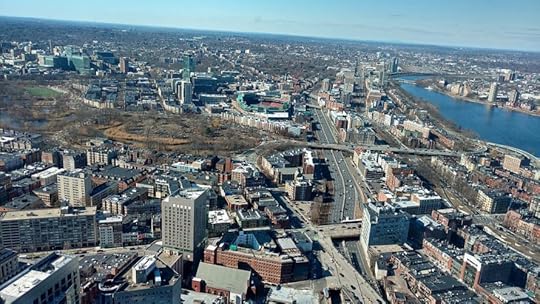
Back from Boston (from the Prudential Skywalk)
Our time in the big city was fun. I think the reason we had such a good time is because we left the car back in Brunswick. Being able to experience a city without the hassle of driving in city-style traffic lessens the stress. That and not having to find parking is a plus, too. Of course, it helps to be in an urban environment that has a stellar public transportation system. I know the locals love to bash the MBTA, but for someone like us who live in a small town with minimal public transportation options, being able to embark on public rail to crisscross the landscape of a major American city was a plus, and kind of fun, too.
Music remains one of a few things that have helped mitigate the pain and brokenness that I’ve been living since January 21, 2017 when Mark was killed. Car Seat Headrest is one of the many bands and artists that have spent time in my CD player, or on my turntable, permitting an alternative sense of reality that has somehow tempered my grief and loss.
During Mark’s final walk, during the fall of 2016, I’d finally gotten on the CSHR bandwagon. I’d been hearing them played a lot on some of the stations I stream, like KEXP from their hometown of Seattle, and WMBR (MIT). Something about Will Toledo’s lyrics, and then, learning a bit more about who he was as a budding rock star and where he’d come from captivated me. His history of lo-fi recording really struck a chord dating all the way back to the time in 1993 when I drove to Princeton, New Jersey, simply to see Guided by Voices, an influence present in Toledo’s music, especially the early recordings.
I’d emailed Mark about my CSHR fandom in the fall when he was out walking. I was especially smitten with their archived live show for KEXP from 2015, just after they’d signed with Matador and released Teens of Style.
I wrote at the time, “They have so many great songs. Will Toledo is one of those prolific songwriters who got his start making music in his bedroom and releasing it on Bandcamp at first.
The song ‘America’ made me think of your trip. Will’s writing from the perspective of seeing the country from life on the road, most likely in a tour van. The first line goes,.
‘You can drive across the whole thing in four days…if you want it,’ which again is the time when you’re driving. Still, there’s this sense of America being out there if you really want to see it, which you are doing on foot, literally!
Anyways that’s some of my ‘wisdom’ or at least thoughts, this morning.”
These were the kind of notes I sent him most mornings during the 100 days of his walking. Of course, if you know me, you know what happened on Day 101.
Mark wrote back about CSHR:
“Carseat Headrest sort of got me back into music. They’re good.”
From somewhere on Thursday night, during part of their set at Boston’s Royale, I sensed Mark’s presence, or perhaps I was just hearkening back to that exchange. Whatever the reason, songs they played that night elicited emotion and even tears at times.
Like happens these days almost every time I head out to a show, I end up being one of the older people in the crowd. On Thursday night, there were lots of younger types ahead of us in the long line waiting for the doors to open, and then, pogo-ing or moshing during Will and Co.’s set.
“Maybe we can adopt some of them,” I said to Mary.
On “Sober to Death,” which on this tour, with the opening band, Naked Giants, joining Will and his band, forming for all intents and purposes, an indie rock super group, they segue into Neil Young’s “Powerfinger,” and then at the end, incorporate refrains from Stevie Wonder’s “Don’t You Worry About a Thing.” It’s a powerfully evocative song, and in its current rendition, it’s a highlight of their live set. It likely means different things to different listeners, as music often proffers diverse interpretations dependent on who is listening to a song and where they are at when they hear it.
For me, Toledo’s pain-soaked outro,” don’t worry, you and me won’t be alone no more, don’t worry,” I can’t help but think that in fact, Mary and I will be “forever alone,” without Mark. Different than Toledo’s intent, but again, music offers what it needs to those who are listening. Here’s a bit more about this song, from a blog, written by a fan of the band.

Car Seat Headrest on VDay night/Royale in Boston (Bryan Lasky photo/Vanyaland
When I spent a couple of years in my early 30s DJ’ing at a college radio station, the students I rubbed elbows with were a lot like Toledo—young, smart, obsessed (and knowledgeable) about music. It’s probably not an accident that Toledo was a DJ at the VCU’s college radio station and had a band at the time. I’m still in touch with a few of the Bowdoin student, who like Toledo, were DJs and had bands.
In the fall of 2017, I saw the War on Drugs in Portland at the State Theater. They were touring in support of their A Deeper Understanding record, the one that “broke” them to a much larger audience. The New Yorker asked if they’d become rock’s “torchbearer.” I recognized similarities between the two bands from seeing them live: both exuded a confidence that comes from both the joy of doing something you love, but also, believing what you are doing, matters. Also, both the War on Drugs and Car Seat Headrest are finding their place in rock’s pantheon without pandering or a nostalgic reworking of something from the genre’s heyday.
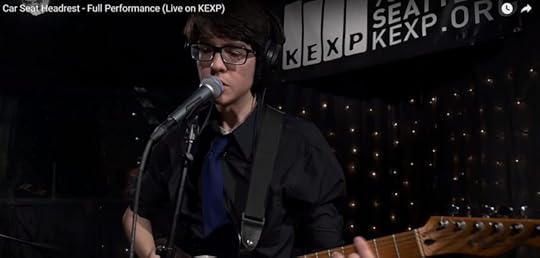
Will Toledo leading his band through a set at Seattle’s KEXP. (2015)
I do believe that this tour by Toledo and band represents that time just prior their entrée into a kind of rarified air—the kind that’s a mix of hype and acclaim—when longtime fans (the ones who remember Toledo’s lo-fi recordings) feel conflicted about others now being privy to their “little secret.” But if you are doing anything meaningful—whether as a writer, a musician, or some other type of artist—you want your work out there to a larger audience.
If you haven’t seen them and you still care about the future of rock and roll, then by all means, try to see them soon—because they are surely going to be one of the “next big things.” And btw, the current ideation of Toledo’s band is unbelievable!
[Toledo, dedicating songs to his “haters”]
[Naked Car Giant Seat Headrest-Indie Supergroup]


February 11, 2019
Presidential Girth and Finding a Healthy Weight
William Howard Taft was our largest president in terms of girth. It is rumored that he once got stuck in the White House bathtub, and if he didn’t, had a larger one installed. Taft’s BMI topped out at 42.3.
Donald Trump’s published weight a year ago was 239. If that’s an accurate weight, then his BMI would have been 29.9. This placed him well below Taft, and trailing other portly U.S. leaders, like Grover Cleveland (34.6), William McKinley (31.1), and Teddy Roosevelt (30.2). Bill Clinton, who it was said by his wife back in 1992 that her husband “loves to eat and he enjoys it,” had a BMI of 28.3 while president. During his first campaign, his weight ballooned 30 pounds, in part due to his penchant for Southern delicacies like ribs, potato salad, and sweet potato pie from Little Rock eateries Sims Bar-B-Q and Tex-Mex dishes made with lots of cheese, from Juanita’s, among others.
Interestingly, since he had his quadruple heart bypass surgery, the 42nd president is now mainly a plant-based vegan. If you’ve seen the former president, he looks great and is likely 30 to 40 pounds lighter than when he left office.
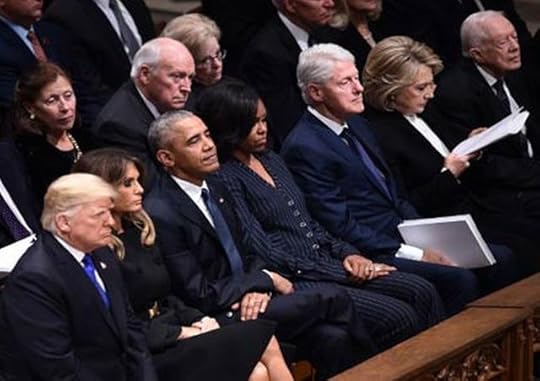
The current president (scowling) and other recent presidents at the George W. Bush funeral.
I am once again limiting my news consumption. Like the last time, I’m tired of the never-ending cycling of themes that have little or nothing to do with my life. Given that these days, journalism seems to be not much more than recycling presidential tweets, I’m really not interested in what these arbiters of truth tell me is “important.”
Not only am I limiting my exposure to the 24/7 news cycle, I’m also being much more intentional about the foods I am eating. As a result, I’ve dropped weight in a Clinton-esque manner. I am now down half of what the former president dropped after leaving office. Oh, I occasionally allow myself to “splurge” a bit, just like I do with political news.
The other day I heard that Mr. Trump was coming up on his annual appointment with his presidential physician. Not surprisingly (if you’ve paid attention to photos and his appearances on television), the president seems to have socked on a few pounds since he assumed his new home on Pennsylvania Avenue.
On Friday, he spent four hours at Walter Reed National Military Medical Center and had a check-up with Dr. Sean P. Conley, his physician. There were another 11 specialists taking part.
Conley put in writing that Trump is “in very good health and I anticipate he will remain so for the duration of his Presidency.” No word what his weight might have been. I’m sure it wasn’t 239 because on Thanksgiving, my weight was 236 and I’m the same height as the president. I’d say his weight’s considerably more than 239 these days, especially if you’ve been privy to a rash of unflattering photos of the prez, often on the golf course: he’s got a gut, and some have described him looking like a “tubby idiot.” That’s probably a little unkind, even if the president rarely shies away from mocking and making unflattering remarks about just about everyone else.
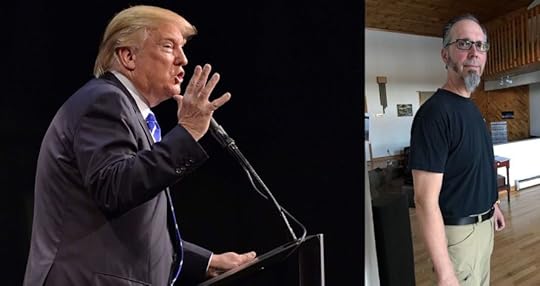
Weighing less than the president these days.
Apparently, the mystery of the president’s weight has spawned a community on Twitter using the hashtag, #Girthermovement. Followers posit what Trump’s true weight might actually be. The range is anywhere from 250 to 300 pounds, or more.
But hey: it’s not my place to question his views on exercise or choosing a diet consisting of nothing other than McDonald’s Big Macs, supplemented with KFC fare.
Unlike the president, my diet doesn’t include fast food and hasn’t for quite some time. But, I am much more disciplined these days in all areas of my life. I’m enjoying the results, too.
I’m aware of the pitfalls of diets and weight loss schemes. My focus has been on attaining my “leanest livable weight.” That term was coined back in 2015 by Traci Mann, author of Secrets From the Eating Lab. Her advice was relative to data showing that diets don’t work. Interestingly—in typical Twitter fashion—the article where Mann mentioned the term, published on Gwyneth Paltrow’s lifestyle site, Goop, caused a shit storm. Why? Because in dysfunctional America, no one bothers to read an article before reacting. Also, somehow, daring to urge people (especially women) to aim for the low-end of your body’s “settling weight” was somehow unreasonable. The inability of Americans to interact with facts and not react irrationally might be one reason why we have an obesity rate in the U.S. closing in on 40 percent, and affecting nearly 100 million Americans.
The CDC notes that obesity in the U.S. can lead to conditions that include heart disease, stroke, type 2 diabetes and certain types of cancer: these are some of the leading causes of preventable, premature death. Not only that, the estimated annual medical cost of obesity was $147 billion in 2008 dollars. No wonder healthcare costs continue skyrocketing, yearly. Oh, and obesity could be a more pressing concern than building a wall, Mr. Trump. Just saying.
One wish among many I have for the president is that he would “own” his weight. And then, perhaps make some healthy changes in how he eats, and even, add some exercise that includes something other than riding around in his golf cart, save to find a ball in the rough. But, he serves as an able “stand-in” for the people who support him and think he is incapable of ever doing anything wrong.
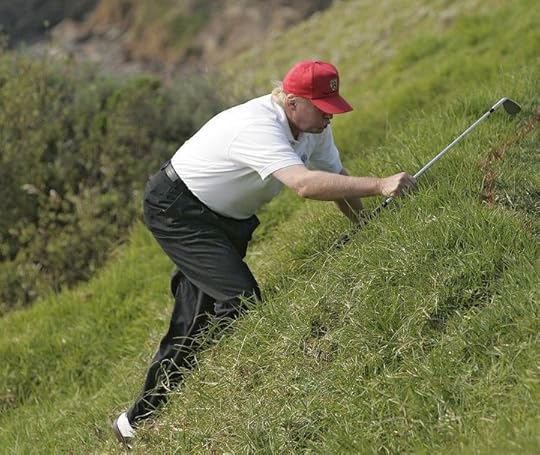
This doesn’t look like 239.
My own experience over the past 11 weeks or so has been positive in terms of eating healthy and moving towards my body’s optimum weight. Dispelling myths that you can’t enjoy food and still lose weight, by tweaking my plant-based vegan diet, I am eating a host of great-tasting options: burgers made from plant protein, potatoes, grains rich in proteins (like quinoa), lots of fruits and vegetables, and even an occasional “comfort food” like the delectable vegan ravioli produced by Nuttin Ordinary.
Finding your healthy weight requires some discipline. I won’t deny that. But the rewards for being more intentional are many—they can also include great-tasting foods that don’t poison the planet.
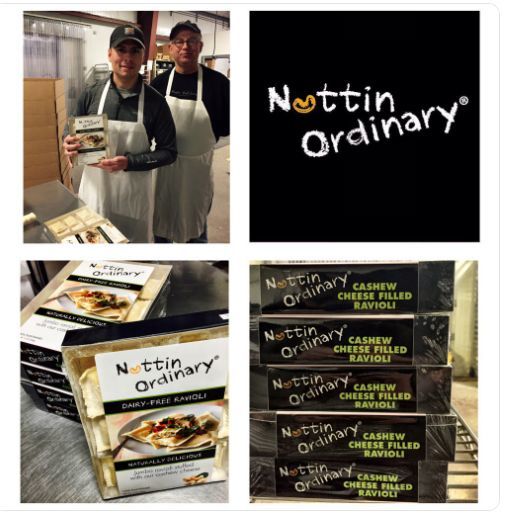
Plant-based comfort foods: good for you, good for the planet.
Disclaimer: The Content on this blog is not intended to be a substitute for professional medical advice, diagnosis, or treatment. Always seek the advice of your physician or other qualified health provider with any questions you may have regarding a medical condition. Never disregard professional medical advice or delay in seeking it because of something you have read on this website.
February 5, 2019
I Don’t Eat Beetloaf
In the summer of 2017, my trusty Ford Taurus sedan, a vehicle I bought new in 2008, was pushing 215,000 on the odometer and growing tired. Maine’s winters and the deterioration they cause were winning the battle. My attempts at DIY body shop touch-up weren’t able to keep up, as “rust never sleeps.”
When you’re 6’3”, compacts and sub-compacts won’t do. I figured I’d remain in a sedan, and so began my search for a lightly-used vehicle that wouldn’t break the bank. I looked at several brands including Toyota, Hyundai, and Honda. It was time to end my Ford streak I’d been on since the 1990s.
I ended up with a 2014 Honda Accord and after yesterday’s ho-hum Super Bowl and the Hyundai ad dissing vegans, I’m so glad I didn’t opt for their Sonata.
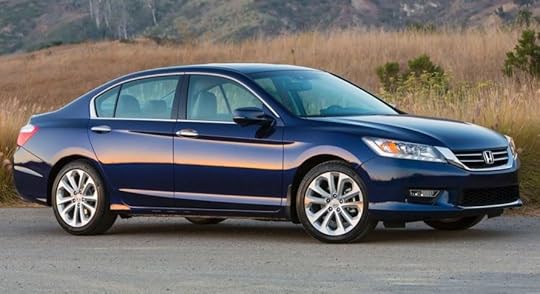
Glad I have a Honda, not a Hyundai.
I’m sure the “geniuses” that populate Hyundai’s creative suite or whoever they farm their marketing out to thought that equating a vegan dinner party with things like a root canal and jury duty among other dreaded tasks was piss-your-pants-funny, but what it really did was show how out-of-touch the creators really were. And what fucking vegan do you know (if you know any!) has even heard of beetloaf? I’ve been plant-based for more than two years and I’ve never considered making one. I have a great “meatloaf” that’s plant-based and you’d never know it if I served it to you.
The usual suspects have weighed-in, like PETA. That’s cool. Despite the stereotyping that this committed organization endures, they were spot-on in calling out Hyundai for the ad.
One of the reasons I became a vegan was because I couldn’t deny how damn good the food was that I was eating that was plant-based: none of it required slaughtering animals, either. All the reasons that non-vegans cling to in justifying their diets that contribute to climate change as well as unnecessary cruelty and suffering for animals are similar to the car company’s failed attempt at comedy—they are outdated and missing the shift happening in food throughout the world, especially in countries that don’t allow the meat and dairy lobbies to dictate dietary choices.
Anyone Mary and I have ever entertained and cooked for never got served anything like beetloaf. I’m amazed at how broad our palates have become since we decided to embrace a plant-based diet.
But the narrow-minded and ill-informed will continue clinging to their ideas about food that aren’t rooted in science or even culinary acumen.
Oh, and btw, the winning team’s quarterback, the age-defying Tom Brady—arguably the greatest QB of all-time—eats a plant-based diet that seeks to reduce inflammation. And despite out-playing peers that are nearly 20 years younger than him, hacks-masquerading-as-journalists continue mocking him with their equivalent of “come on Tom, just eat a goddamned steak and shut the fuck-up, will you!”
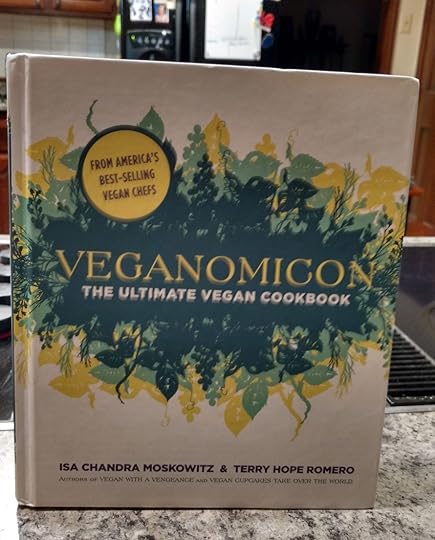
No recipes for beetloaf, here.
As Isa Chandra Moskowitz and Terry Hope Romero wrote in their wonderful book, Veganomicon: The Ultimate Vegan Cookbook, “Vegan Food=Normal Food.” They go on to say that their “mission in life is to prove that vegan food doesn’t have to be repetitive, difficult, or inaccessible.” A good cookbook and some skills in the kitchen will take you far with your plant-based food prep and their book is a must-have.
And Hyundai—you need to be better, too.
February 1, 2019
Studying History Part I
I have been time-traveling this week. History and historians allow all of us the privilege of looking back from where we came as a country and as a people. Thomas Jefferson has just been elected president and the Federalists are “barking” about it. Isn’t it true that the Federalists have always been a political scourge on the nation?
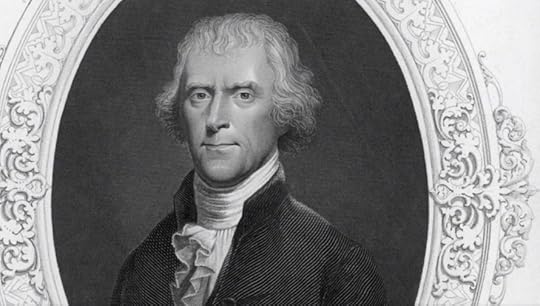
Thomas Jefferson in history.
Jefferson, our third president, wasn’t a perfect man. Is any leader without blemish or fault? History does inform us that his election represented a “victory for non-elites,” those non-Founders who represented the majority of Americans in the fledgling republic. Those damned Federalists once again were lamenting Jefferson and how his election represented a “slide down into the mire of democracy.”
Jefferson’s election was a “victory for non-elites. For Federalists, a slide “down into the mire of democracy.” He embraced “the politics of the masses.” He sought to convince the country that government answered directly to the people—this would lead to unity (national cohesion/union), not division (anarchy).
The victory of Jefferson in 1801 heralded for many the defeat of Federalism and allowing greater direct control of government by the citizenry.
In addition to the development of core Republican ideals, the 19th century also represented a nation’s look westward, and its subsequent expansion. Manifest destiny also meant the removal of indigenous people and the appropriation of their culture.
During the fall of 2016, I was reading Roxanne Dunbar–Ortiz’s book, An Indigenous Peoples’ History of the United States. The book resonated with me, offering me a deeper insight into our past and our nation’s practices of genocide.
In an interview with Dunbar-Ortiz, she talked about the rich (ancient) agricultural civilization that the white Europeans stepped into when they left the Mayflower.
“The Europeans appropriated it and then created agribusiness, capitalized, monetized the land, created real estate. The land is the body of the native people. The land as a body is monetized, capitalized. As is the African body. Not just African labor. That’s only half of it. It’s the human body. Land conquest and chattel slavery are so interlinked that if you separate them, you end up with a distorted story. And that interlink has to be at the core of a complete revision of U.S. history.”
The U.S. is many things, but did you hear Dunbar-Ortiz? She wants you to remember that the twins of our history as Americans is informed by “chattel slavery and land conquest.” There’s no getting around this, or denying it.
Here’s the point I want to make for today.
I didn’t know back in the fall of 2016, while Mark was out walking (and we were moving from the house where we had lived for 26 years) that 26 months later, I’d be sitting in a history class at USM, studying some of the very same things I was reflecting on back then. I wrote about some of that in a blog post I called “Dadtalk,” after Mark was killed.
I wish I could talk to him this weekend about my excitement about history and my HTY 122 class, and the way that I think my professor is going to present his narrative of the 19th century. But that won’t be possible.
January 29, 2019
Show Me Your Bona Fides
Small acts to remain sane in a world of madness, with mad men trying to burn it all down.
Music
Healthy food (for me and my house, it’s plant-based: thank you!!)
Books
Poetry
I could have left poetry off my list and had a perfectly-bulleted trifecta. That wouldn’t have done justice to James Tate and his strange book, The Ghost Soldiers.
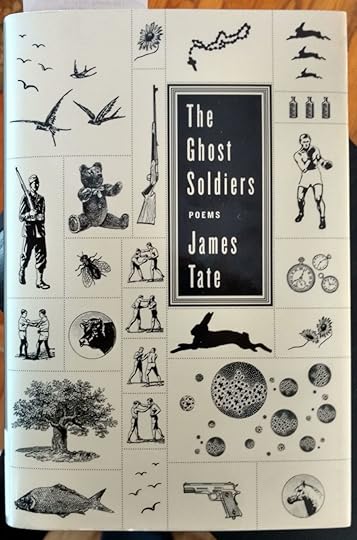
Poetry as a means of remaining sane.
I use “strange” in a laudatory manner. This is unlike most of the poetry I’ve ever read. While not a connoisseur of this element of literature, I’ve read more poetry over the last year than the previous 50+ years of being a reader. Poets are also a different animal than the other writers I fill my reading for pleasure time with.
There are a myriad of wonderful descriptions for poetry. I liked this one: “a means of bringing the wind in the grasses into the house.”
I’m not sure Tate fits that one. But most of the time I’ve spent with The Ghost Soldiers has made me laugh, take notice, and experience joy as a result of his writing.
Tate died in 2015. From his obituary, the writer framed him as someone who “perfected a style of poetic narrative that, with disarming simplicity, led readers down strange byways and mined comedy in bleak situations.”
When I read Tate, I hear echoes of poems my son wrote, surrealism and whimsy in abundance, while out on what would be a final walk.
One of poems in the book, “Bona Fides,” is a wonderful exegesis of the way we clutch tightly to unrealistic expectations of other humans. Someone who once occupied an honored pedestal has fallen. And people being people, friends and followers, have turned on him.
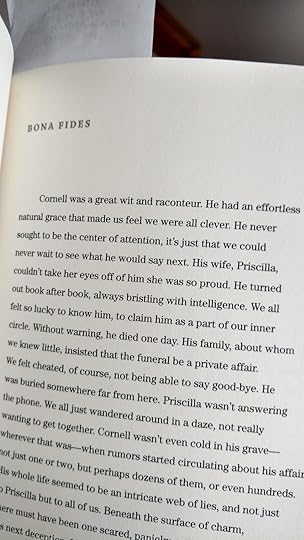
How are your bona fides?
The narrator, deeply troubled by the death of this giant, “a great wit and raconteur,” is then knocked back again when rumors and innuendo begin circulating: his friend wasn’t who he (and others) thought he was.
Tales of sexual improprieties and then, plagiarism, and the masses turn away from Cornell (his friend who he admired). His books no longer are taken down from the shelves. He is now cast “into outer darkness” by these other people.
Then Tate has the narrator ask, “Who are you? Show me your bona fides.”
This resonated with me.
Feel free to give one of his other poems a whirl. Here’s a bit more on Tate, also.
January 21, 2019
Parallel Grief
The racist demagogue who continues to hold Americans hostage with his petulant demands, along with one who acts like his concubine, refuse to honor the late Rev. Martin Luther King, Jr., on this national holiday. There are no White House events even scheduled for either man today. Last year, the “fearless leader” golfed.
VP Pence, who names the name of Jesus at every opportunity when it’s expedient for him, linked the Orange Menace to one of the great leaders in our nation’s history: all for the purpose of justifying a wall.
Here’s what the vice-president said after he took a quote out of context from King’s “I Have A Dream” speech:
“I think it is an act of statesmanship on the president’s part to say, ‘Here is what I’m for.’…We believe it provides a framework for ending this impasse, securing our border, and reopening our government,” Pence said.
A wall is not freedom, nor is it an effective means of corralling humans. King went to Berlin in 1964 and spoke out against walls. He said that they were a means of separation, “from their brothers.” Those who support a wall think of their Central American brethren as less than human, worthy of being herded like animals, or worse.
Today is a difficult day for me and my wife. It is the second anniversary of our son’s death. The past 24 months have felt like a nightmare that I can’t wake up from.
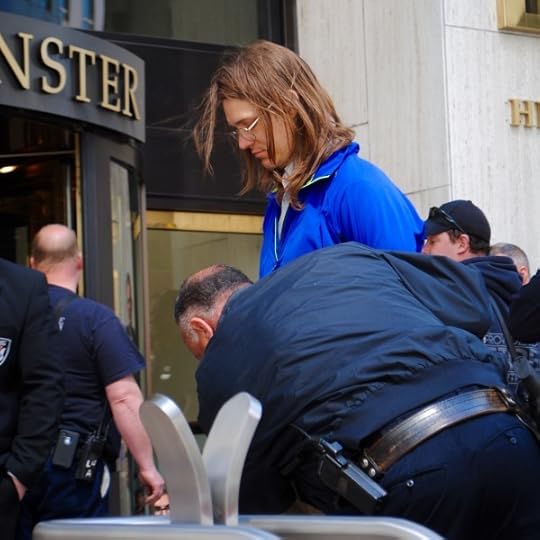
Missing Mark Baumer: anniversary #2 of his death. (Mark being arrested at Textron, 2016: he was protesting the manufacture of cluster bombs)
This nightmare has been amplified, also. Living through this parallel experience of loss while seeing our country and 200+ years of governmental infrastructure unravel due to the machinations of an angry, fearful president make life feel intolerable at times. I wish I could ask Mark how best to live in this new epoch.
I had great admiration for my son, Mark. He was called a “vegan superhero” by others. His death became the fodder of countless news features in most of the nation’s daily newspapers as well as The New Yorker magazine. That’s small consolation for me, his father, who misses him each and every day. My mourning following the intensity that comes from the grief and loss accompanying the death of someone like Mark will never end.
Back to Dr. King as I close out my post. I offer a reminder to those who may not remember the past, or choose to remember it differently than it happened.
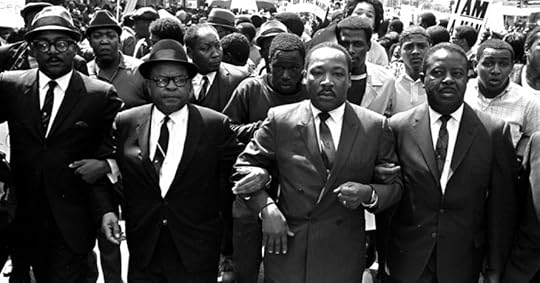
Dr. King, marching for the rights of workers, days before he was assassinated. (AP photo)
Martin Luther King, Jr. was assassinated while in Memphis, marching with striking black sanitation workers. He believed the struggle in Memphis exposed the need for economic equality and social justice that he hoped his Poor People’s Campaign would champion, nationally. This was “a fight by capable, hard workers against dehumanization, discrimination and poverty wages in the richest country in the world.”
What a contrast to our president’s ploy to exploit federal workers, forced to work without pay, while he pontificates and continues his outright lies, to obtain something that’s symbolic at best, but worse, a waste of resources on something that won’t even address his flawed understanding of immigration.
January 18, 2019
Hamburgers Aren’t Health Food
At our house, we don’t serve fast food to our friends. So why should the White House? But these days, all bets are off that you’ll get anything more than a slight upgrade from a McDonald’s Happy Meal when you show up as the guests of honor, like college football players who just won a national title.
Football is a tough sport to play. Regardless of how you feel about the controlled brutality of the game, to attain excellence requires grit, hard work, and perseverance. Even then, there’s no guarantee you’ll “run the table” like the 2018-19 Clemson Tigers football team just did.
I’m sure Clemson’s coach Dabo Swinney had high expectations for his team prior to their first practice this summer. But to finish 15-0, capping one of the greatest seasons in NCAA football history by winning the College Football National Championship when they beat Alabama 44-16, was the stuff of dreams.
So, honoring a team like that would seem to call for something better (and more healthy) than hamburgers from McDonald’s, Burger King, and Wendy’s. Oh, I forgot the “many, many French fries,” too. Of course, for a president who has had a longtime affinity for the Golden Arches, as well as Pizza Hut, and KFC fare, it shouldn’t come as a surprise. Donald Trump’s actions have long ago moved beyond incredulity.
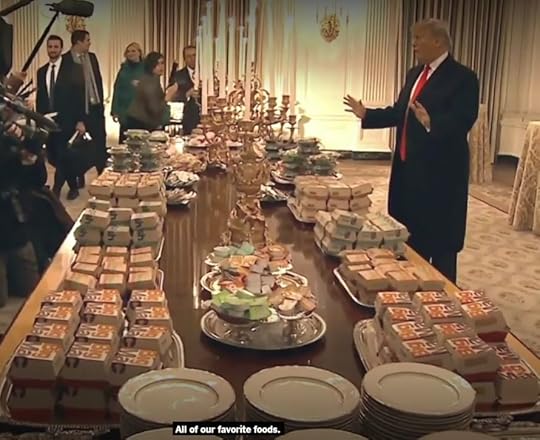
All the president’s favorite foods. (NY Times video)
I was thinking about this last night during the book event I attended at Longfellow Books, in Portland. The author was my wife’s cousin, P.K. Newby, who has a brand new book out on nutrition.
Longfellow is one of my favorite indie book stores and I’ve been to some of the best ones in the country, like Vroman’s. Longfellow and Co. always treat their authors well and offer patrons an amazing selection of reading choices. In Maine, no one comes close to Longfellow’s diversity of books, magazines, and other publications.
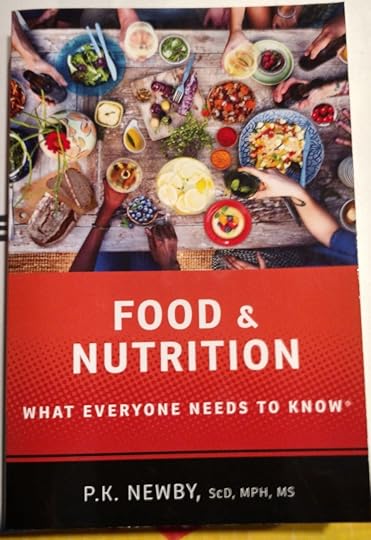
Food & Nutrition, informed by science.
Newby is a scientist, gastronome, and an author, too. She’s spent the past 25 years researching diet-related diseases and studying how (and why) people make the food choices they do. As she hammered home last night, “what we eat matters.”
During Q & A after her talk, I thought about asking her what the president’s choice of “garbage food” as a token of his appreciation to an award-winning college football team symbolized. Knowing her political predilections and how she feels about the president, and out of respect to the other 20 or so people in the store, I refrained.
But it does speak volumes about the man. And of course, he immediately began inflating numbers after serving his guests their soggy fare crated in cardboard and wax paper. Donald Trump is a compulsive liar, just one of a host of psychological and character flaws inherent in who he is. It’s also obvious in looking at him that his diet isn’t a healthy one, even if some hack physician dubbed him “in excellent health.” I’m sure his weight is tilting north of 270 these days (not the 239 that’s listed). If he has “good genes,” they’ve got their work cut out given the unhealthy food he calls “our favorite foods.”
Food isn’t rocket science. But, scientists like Newby help us to cut through the fog of lies and obfuscations that we’re fed by everyone from the president on down about what constitutes healthy food. I’m glad I know where to look and who to believe in choosing to eat the way that I do.
January 15, 2019
Building On Your Foundation
I had a gig that I loved. Of all the various “straight” jobs I’ve had, I felt that this one was as close to being perfect as I’d ever find. I felt uniquely qualified to carry it out. Then, a governor was elected, a man with an angry spirit much like Mr. Trump’s. He knew nothing about workforce training and because he was stupid (but thought he knew more than anyone else), he cut the budget for training in Maine. He continued his assault on the state’s training infrastructure for eight years.
Once I found out the job I enjoyed and was good at was going away, I figured it was time to craft my personal brand. That’s how the JBE originated in 2012.
I considered a host of various templates and ways to message what I wanted to say. I made sure I included a blog as part of the new WordPress site I built and plugged into the world wide web. Ultimately, I settled on the idea of “reinvention” because in 2004 and 2005 that’s what’d I was doing—reinventing my way of doing things. By 2012, I’d gotten pretty good at it. Writing was an essential skill I utilized then and still do.
I read Alvin Toffler in high school and I came back to the noted futurist during my period of retooling. It was Toffler who “gave me” the tagline of “learn, unlearn, and relearn” as a means of understanding what learning was in the context of creating something brand new—again, that idea of reinvention.
Besides Toffler, there were others. I became a fan of the likes of Seth Godin, Daniel Pink, and of course, I was already a fan of Mark Baumer, perhaps my biggest cheerleader relative to the need to embrace new ideas and doing it with gusto and with a certain kind of fearlessness.
It was Christmas 2013, and he bought his dad a three-month subscription to an online learning platform. He thought I could teach myself graphic design, especially how to use and utilize Adobe InDesign. I asked half-jokingly if this was because he was sick of doing my layout and design for my books and other projects I asked him to partner with me on. He assured me it wasn’t.
I never did become proficient with InDesign, although I recently updated my resource booklet for a publishing boot camp I held last fall. I appreciated having a son who was committed to learning, unlearning, and relearning and pushed his old man in that direction, too.
When Mark was killed, many of his friends and former MFA colleagues entered our lives. Some of them have become our friends over the course of the past two years of missing and mourning a son who we’ll never get over losing. Last week, I spoke with one of them. We spoke about how embracing new things can be scary as hell. We both agreed that being afraid and filled with doubt is preferable to living in a place where you are bored out of your mind—at least that’s how I roll and so does my friend.
He told me that he’s been taking drawing lessons. We talked about this idea that we have and know that others do, too, that often prevents people from taking on new tasks and learning new skills. Many times it’s rooted in the preconceived notion about “being good” at something and what being good or proficient means.
When Mark was small and our unit of three were living in Indiana, I bought a cheap Les Paul knock-off of a guitar for $25. I’d always wanted to learn to play guitar. I didn’t know where to start and it was years before I could play a few songs. I was stuck in that place where I was putting my playing up against guitar players I had grown up listening to. Of course I couldn’t match a Clapton solo on a song like “Crossroads” at that stage.
Once I figured out that I could learn to plays some songs (thank you, Jorma), my playing took off. I was still clumsy along the fretboard, but I was better than I used to be.
Being a writer, my focus has always been on my writing craft. Most of my free time (at least the time I’m not frittering away) not writing or trying to earn a couple of shekels is focused on writing. That means my guitar usually gets put in its case and stuck in the corner. Sometimes I won’t play guitar for months and there have been stretches of inactivity lasting more than a year.
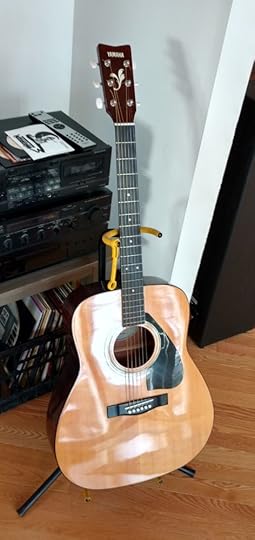
Waiting to be played
I signed up for a guitar class this summer through adult ed. I was excited about it. The instructor seemed like the kind of guitar player who had a lot to offer and teach his students. The first class was after my Father’s Day road trip. I struggled to sit comfortably due to my SI joint issue. Thinking I would be the worst player in the group, surprisingly, I could tell I knew more than all but one of the other aspiring guitarists in a group of eight. I had to drop the class.
Once I was able to sit again for more than 20 minutes, I got my guitar out and began playing. What I discovered is that while I was still a guitarist-in-search-of-skills, I’ve managed to forge a foundation over the years that allows me to come back to my instrument and begin building on things I’ve already put down.
When Darren and I were talking on Friday by phone, this is what I was thinking about when he was telling me about drawing and how meaningful it was to him, a writer who is a gifted poet.
I have been playing my guitar 20-30 minutes a day. That is my goal and on Saturday, I played for more than an hour. I am learning some new songs, too.
While it’s highly unlikely that you’ll ever be able to find me on Bandcamp or Spotify, I am enjoying playing in a way I haven’t for years. I’m also finding that this activity of embracing something that’s hard and requires intuition, has been a boon for me as a writer, in generating new ideas.
It’s funny how when you give yourself over to “learn, unlearn, and relearn,” exciting things follow. Mark knew that and I think he’d be happy to know what his dad is up to these days of still being sad and yet trying to stay true to the person that my son loved and cared about.
January 10, 2019
Listen, The Snow Is Falling*
For an artist to craft something so evocative that when you hear it, read it, see it, you immediately know what their performance/piece/painting/picture represents is remarkable and a gift that they bring to us via their art.
Galaxie 500 were a band with a devoted following during the late 1980s/early 1990s within indie music’s insular community. This three-piece played what I’d call “slowcore” and had an obvious affinity for The Velvet Underground.
The band released three studio albums between 1987 and 1991 when they split apart: Dean Wareham off to Luna and Damon Krukowski and Naomi Yang forming Damon & Naomi, focusing on dream pop splendor. Both post-Galaxie acts have remained active and viable since the three members went their separate ways.
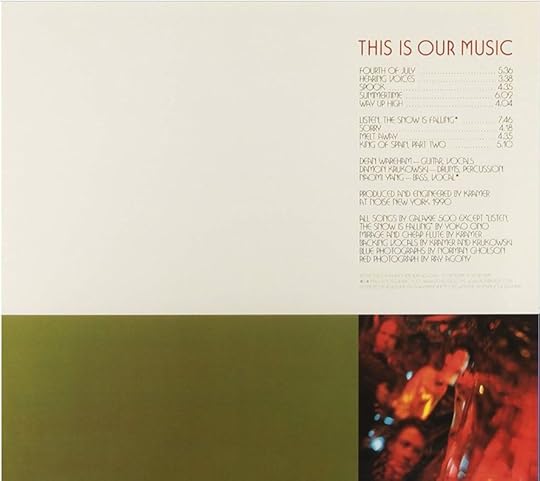
Back of Galaxie 500’s “This Is Our Music” record jacket (Rough Trade, 1990)
When I’m home on Thursdays, I like to stream WFMU’s “This Is the Modern World With Trouble” program. Her station profile describe what she plays as “a viking ship appears on the horizon, a likeness of Loretta Lynn carved into its bow. Rare birds flock together to sing Francoise Hardy as soul hits. A sunset of blips and bleeps fills the air.”
One of the blips that Lynn/Trouble played this morning was Galaxie’s cover of “Listen, The Snow Is Falling,” which I didn’t know was a cover. The band included a solitary cover song on each of their studio outings, including George Harrison’s “Isn’t It A Pity” on their second disc, On Fire. Who were they covering on “Listen The Snow Is Falling”? None other than Yoko Ono.
When I was DJ’ing at WBOR, I was fond of playing this song, especially during this time of the year. I’m sure there were times when I was doing one of my six-hour student break marathons that I played the cut because snow was falling outside the studio windows. It’s an evocative piece as performed by this under-appreciated three-piece.
I’ve never been a huge Yoko fan, but I included the original if you care to compare the two. There’s no difficulty for me in choosing the version I prefer and in fact, love. The Galaxie 500 remake is splendid to listen to on a gray winter’s day when snow is falling from the sky. Perfectly evocative, too.
I love Lynn/Trouble’s program because she always manages to craft a mood that works for me, especially on Thursdays when I’m home. I especially love to be writing when she’s spinning her magic from Jersey City. Not only does she play great music, much of it new to me, she’ll talk about things she’s read, political issues she’s been paying attention to, and things happening in her neck of the woods. This week, she referenced and commented on this article from the New York Times that she read related to enrollments of international students at U.S. colleges and universities, falling. Reading the article, this jumped out at me, and she commented on it:
Nearly 1.1 million international students attended American colleges and universities in 2017. They generated $42.4 billion in export revenue, more than double the amount eight years ago, according to the Bureau of Economic Analysis. (Because far fewer Americans study abroad, the United States ran a $34.2 billion surplus in education in 2017.) Nafsa, a nonprofit group that supports international education, estimates that students from abroad created or sustained more than 455,000 jobs in the United States, almost nine times the number of American coal miners.
Good stuff!
January 9, 2019
Liar, Liar
As a child, I was taught that lying is wrong. Of course, many of my elders have invalidated what they said by their actions. However, truth-telling was central during my formative stages. No matter that the former adults in my life have suddenly reneged on everything moral and holy: I remain convinced that duplicity is bad: bad for relationships, bad for organizations, and certainly, bad when you are the president of the United States.
Donald Trump lies incessantly. The Washington Post, one of a host of newspapers that the president includes in his pantheon of “fake news” in a universe framed by obfuscation, compiled this list of “whoppers” told by the president as of the first of June. Anyone with a hold on reality knows that the number has certainly grown substantially over the past seven months.
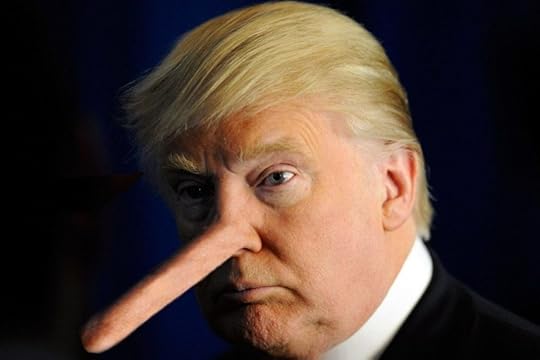
The lying president.
Last night, I missed his address, which was another opportunity for the president to spread more misinformation about his so-called wall. It’s a shame that the networks allow him to get away with what is the equivalent of Cold War era propaganda. They did go to new lengths to mitigate what they knew would be “political theater.”
I heard this on Rick Biskit Roth’s “If 6 Was 9” show on WMBR. It seems fitting this morning as I climb out of bed and wonder what new falsehoods the media will be commenting on, based upon Mr. Trump’s performance and promotion of his “national emergency” on the southern border. Democrats like Nancy Pelosi accurately framed Mr. Trump’s position in my opinion when she said, he “needs to stop holding the American people hostage, must stop manufacturing a crisis and must reopen the government.” A truly skilled dealmaker, something Trump has touted as a tool in what he incessantly characterizes as a “massive” toolkit wouldn’t continue insisting that re-opening government remain contingent on something as contentious and politically incendiary as building a wall that is more symbolism than anything else. Real people are feeling real pain as a result of his “my way or the highway” demands.
Lonnie Holley speaks of waking from a nightmare in “I Woke Up in a Fucked-Up America.I know how it feels wanting to wake-up from my ongoing nightmare of the past two years, only to have the pain and hopelessness compounded by the Orange Menace.
Here’s more on Holley, a fascinating artist who at 68, doesn’t seem to be allowing age to diminish or silence his art and the recognition that art (and poetry) have things to tell us about the state of America at the moment.
Welcome to another day in the kakistocracy.