
David Boyle's Blog, page 41
February 2, 2015
When are the middle classes allowed to speak up?
 I am pleased, not to say excited, to announce that I'm taking to the airwaves tomorrow (Tues) in the Radio 4 documentary Clinging On: The Decline of the Middle Classes.
As I explained in the Guardian on Friday, I don't quite understand why it is that admitting you are middle class in public should be such a difficult thing to do - but it is difficult, as you may have heard me saying on the various trailers for the programme.
It is even more difficult to admit it and then to complain the the middle classes are getting a raw deal. We generally speaking prefer to suffer in silence, behind drawn blinds, assuming it was somehow our fault and our shame - not seeing that there's any kind of pattern.
And the reason is that, it doesn't matter how many times you assure people that you are not saying that the middle classes have it worse than anyone else - quite the reverse - and that this isn't about starvation exactly, you will still have people accusing you of whingeing, or re-opening the class war, and of a range of rather less flattering things. These have been popping into my email in-box since my Sunday Times article about the programme yesterday.
Even so, Nick Curtis is a splendid writer and it almost feels a privilege to be beaten up in print by him in the Evening Standard.
Under a large picture of John Prescott, looking seriously constipated, this is how he caricatures what I say on the programme:
"Only a tiny few working in the financial sector can now afford the appurtenances many took for granted, like a home of their own or a chance to save little Sophia and Oliver from the horrors of (cringe) state education. Because the cost of living is accelerating like a Bugatti Veyron with a hedge-fund manager stamping on the accelerator as he snorts ketamine off a Ukrainian glamazon’s bum-cleft..."
Quite so. But look. What do Curtis and the other critics want the middle classes to do? Shut up entirely about the economic mega-trends that are seeing them squeezed by the ultra-rich? Wait until their children can afford nowhere to live in south east England - rented or bought - unless they embrace financial service careers? Or is it somehow impolite to point out that the interests of the working classes and the middle classes - in fact nearly everybody - are now largely aligned?
Or do we just shut up, keep quiet, and continue with the idea derived from the twentieth century - that the interests of the two classes are fundamentally opposed?
Because this isn't just to do with rising prices. It is about a future society that consists just of a hugely wealthy, tiny class of ubermenschen - in finance or the beneficial owners of the internet platforms - and a vast sprawling proletariat, timed when they go to the loo at work, in indentured servitude to Big Landlord plc.
Or do Curtis and friends feel rather like Hyacinth Bucket, that it isn't quite the done thing to point it out?
Find out more by reading my book Broke - or tuning in at 8pm on Tuesday night on Radio 4.
Subscribe to this blog on email; send me a message with the word blogsubscribe to dcboyle@gmail.com. When you want to stop, you can email me the word unsubscribe.


January 29, 2015
Forcing people into malevolent machines
 If there was one wrong assumption about the government of the New Labour years (and there was), it was the idea that no administrative problem was immune from the solution of a giant database and call centre.
I have mentioned this before, but feel increasingly that it is one - though only one - of the factors behind the widespread disaffection, political and otherwise, that seems so all-pervasive.
I was reminded of this when I read the story of Comcast in the USA. Now Comcast is a cable provider, and not a very popular one. This particular story, in
These database companies - TalkTalk, Virgin, E.on etc - will fight quite hard to prevent you from cancelling contracts, and will put you through to trained negotiators who often make matters worse.
In this case, Comcast failed to persuade their customer to stay, so instead they changed their name to 'Asshole' in the database. That meant that bills were delivered during the remaining months to 'Asshole Brown'.
Comcast is a fascinating company. One long night in 2006, a repairman from Comcast arrived at the home of a man called Brian Finkelstein and, after some time on the phone, he fell asleep on the sofa. Finkelstein filmed him snoring and stuck it online, together with the sound track of a song called ‘I need some sleep’.
The repairman was fired. But it transpired that he had actually fallen asleep after waiting over an hour on the phone to get through the useless systems that ran the call centre at his own office. This story seems horribly familiar to most of us who have to deal with organisations, and with call centres in particular.
But there is something else familiar about it – the slow realisation that it isn’t the fault of the repairman, or the person on the end of the phone; it is the system, stupid.
As I described in my book The Human Element, the poor individual in the call centre is probably as much a victim, if not more of a victim, than the people phoning up. They see only a tiny slice of the task that has to be done. They have to use a software system that often bears little relation to whatever the caller wants.
They are expected to get rid of the caller as quickly as possible, are regulated about the precise time they are allowed to spend in the loo, and have every aspect of their work measured and reported to their bosses.
Now it so happens that I'm having an argument with TalkTalk myself after AOL cancelled my broadband contract when I moved house.
The contract ended officially in October and I had no more to pay. But every month or so, TalkTalk sends me a warning that I still owe a some which is always around £10.
I always kick up a stink and they always tell me that I actually know nothing and they can't understand why it is happening.
I know, for example, that it couldn't possibly be that they have a random system that sends £10 bills every month or so to their ex-customers. I mean that would be insane? Wouldn't it?
And here is the central truth: if we programme our organisations to approach people in certain ways - whether it is Comcast or TalkTalk with their ex-customers or Atos with disabled claimants - it isn't really a matter of ethics: their professionals and their databases will behave accordingly, though they wring their hands in public.
I believe that this sense of being trapped in a malevolent machine that we all of us have dealing with these companies - and if we are claimants, we deal with it with the stakes much higher - is a major reason why people are so cross.
Is it the fault of New Labour? No, though they must take some responsibility for re-thinking public services along these lines, and using bonuses and targets to programme them so disastrously. But if you put people inside Kafka-esque machines, you shouldn't be surprised if they get cross.
January 28, 2015
A chink in the Great Wall between government and governed
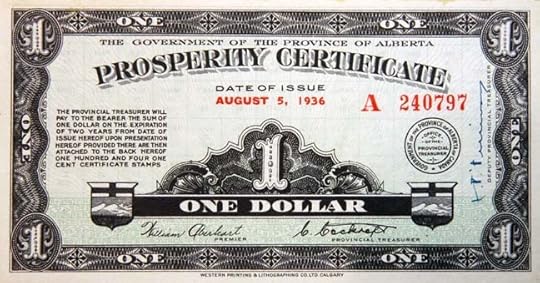
The story of the emergence of a political counterculture, initially in the late 1950s and given voice by the Liberals, and thereon spilling out into the voluntary sector and back again, has been a story of complete non-communication.
The political mainstream has their issues - they are usually about public spending and private ownership and little else - and the counterculture has theirs. There's little or no debate between them.
There are a few exceptions to this, I know. Roy Jenkins, as a reforming 1960s Home Secretary, managed to bring the two worlds together when he first legalised abortion and homosexuality. But it's a bit sad, generally speaking.
Try breaking into the general election debate with a new thought - as I have tried many times. It's a pretty thankless task.
One of the side-effects of this gulf is the rise of bizarre conspiracy theories - that the coalition is in the process of privatising the NHS, that the government wants to gag charities from public debate, that international bankers killed John F. Kennedy to prevent him changing the way they create money. You know the kind of thing.
It isn't really surprising given that one side talks about one set of issues and the other doesn't.
But I wondered today if the dam was showing signs of bursting.
First, there was Vince Cable going out of his way to address the concerns of trade campaigners about TTIP, calling for a great deal more transparency, and extracting a letter from the European Commission that confirms that the NHS will not be subject to its terms.
It is a brave move and it won't make him popular in the establishment. But of all the political gestures that claim to be leaping the chasm with the disaffected, this is about the only one that might do anything along those lines. It is one of those days that I feel quite proud of my own party.
Second, there was the Guardian's coverage of the Green Party's proposal for a citizens income. Nothing along those lines has been allowed in mainstream political coverage before. It wasn't exactly praising the idea - quite the reverse - but it opened a chink in the Great Wall between government and governed.
Personally, I am keener on the idea of a citizen's income, which seems to me to be a ferociously Liberal way of getting bureaucrats off our back and setting ordinary people free. The research the Guardian cites demonstrates that it would be next to impossible to organise this through the tax system.
The original idea of a citizens income was that it would become the new way that money was released into the economy. The banks would be prevented from creating money, as they do now, and it would be given to citizens instead to trickle up, rather than trickle down. A fundamental reform.
This was the platform of the Social Credit party when they took control of Alberta in 1943, only to have their citizens income ruled unconstitutional (they still stayed in power for nearly three decades).
The question I want to ask is this. Is there a middle way that allows the state to create money for a citizens income, and to prevent inflation by clawing some of it back through sales taxes, and by controlling - though not necessarily outlawing - some money creation by banks.
Our political debate is still so narrow that no other means of making things happen, apart from the failed business of tax and spend, ever gets considered. But today the dam cracked a little - just a little. And I'm excited about that.
Subscribe to this blog on email; send me a message with the word blogsubscribe to dcboyle@gmail.com. When you want to stop, you can email me the word unsubscribe.
January 27, 2015
Three bottomless money pits
 Well, it is true that I'm a little disappointed that - despite three Lib Dem MPs signing a motion that would have imposed a moratorium on fracking until we know more about its effects on drinking water - only 52 MPs voted for it.
 But despite this failure, the reforms that were cobbled together do change pretty much everything. But I don't believe there will now be widespread fracking in this country.
The local opposition will be too strong, and people's demand for pure drinking water - not least for their children - is too powerful. We don't have the wide open spaces that they have in the USA which allows risks to be taken with this.
But I expect the government will push on with the idea regardless, as it slowly becomes unviable - because that's what UK governments seem to do.
In fact, my frustration with the way these things get decided leads me to draw together three different topics and to name them as the Three Greatest Bottomless Money Pits of our time. And all of them because our system of government seems unable to think ahead:
Bottomless Money Pit #3: Housing Benefit, and as much as £12.9 billion of it is now paid to people in work, subsidising higher property costs and subsidising businesses which are not paying wages to employees that can keep them and their families with a roof. We do need sometimes to subsidise housing, but - unless we tackle the long 30-year boom in house prices, and unless we insist on a living wage - then soon even the middle classes will have housing subsidised by the state, which isn't affordable.
Bottomless Money Pit #2: Agency nurses, now costing £5.5 billion, mainly on foreign nursing staff to plug the gaps, as the NHS happily veers from training too many to training too few nurses, without any stable planning. And then Labour imagines it can suddenly snap its fingers and appoint 20,000 new nurses - and apparently to do so without dragging in the trained professionals from all over the developing world.
Bottomless Money Pit #1: Nuclear energy: the deal with EDF to build Hinkley Point will be paid for by an agreement that they can charge double the cost of power now for 35 years - bills we will saddle on the next generation. And that is before we factor in the soaring security costs and the costs of nuclear decontamination, and for storing high level waste for the next five centuries.
I ask myself why these kinds of decisions can be taken. One answer is the way we divide issues up in Whitehall, so that the downsides of short-term decisions always fall elsewhere in the government system. Another reason, perhaps, is the learned powerlessness that is part-and-parcel of extreme centralisation. Nobody in the system has the room for manoeuvre to say - no, it's time we approached this issue differently.
Sadly, there are a whole lot more issues which have the same effect, saddling the next parliament, the next government, or the next generation of taxpayers with ever higher costs - because there is no appetite for re-thinking the current compromises.
The rule of thumb is that when you tell yourself lies, it tends to end up expensive. But knowing that doesn't solve the problem.
How might we get such a re-think? I think we need to return to this question, but it seems to me to involve more, not less, democracy.
January 26, 2015
Which comes first: maths or the world it describes?
[image error]
When I should be blogging about politics, I find that I can't stop thinking instead about an article by the brilliant Bryan Appleyard, author of The Brain is as Wide as the Sky and other diatribes aimed at scientism and reductionism.
This is how he describes this revolt at the heart of science:
Unger and Smolin have also just gone into print with a monumental book – The Singular Universe and the Reality of Time – which systematically takes apart contemporary physics and exposes much of it as, in Unger’s words, “an inferno of allegorical fabrication.” The book says it is time to return to real science which is tested against nature rather than constructed out of mathematics. Physics should no longer be seen as the ultimate science, underwriting all others. The true queen of the sciences should be history – the biography of the cosmos.
Appleyard goes on:
Relaying on mathematics is demonstrably absurd because it makes two unprovable assumptions – that maths can accurately describe the universe and, even if that is true, that our maths at this particular moment is good enough to do it.
Two things strike me about this. The first is that the movement he describes sounds remarkably like the Danish film movement DOGME, a kind of demand for simplicity and authenticity in science and everywhere else. Just as the authentic film-makers demanded a simple approach to time, telling stories simply and without foreshadowing - so the doyens of authentic science want to return to the point where basic, underlying time is the measure of all things.
My own candidate for a campaign for real science would be to transform the scientific establishment from defenders of consensus to more open-minded seekers after truth, but then I've been dealing with too many dermatologists in my life (I have chronic eczema and am constantly amazed at how unquestioning scientific professionals can be).
The other thing that strikes me is that this very question - whether abstruse mathematics corresponds to the real world - is precisely the same dispute between the great philosopher Ludwig Wittgenstein and the young Alan Turing, which I've described in my book Alan Turing: Understanding the Enigma.
Wittgenstein lectured in his own room in an old lumber jacket and without any notes or preparation, and with copious periods of lengthy silence. When he read from notes, he told his biographer Norman Malcolm, the words “come out like corpses”. Turing was the only mathematician in this particular group and soon the lectures turned into a conversation between the two men, testing Wittgenstein’s assertion that common sense trumped logic.
For Wittgenstein, the famous Liar’s Paradox - the basis of Turing;s work on computing - was a “useless language game”. Turing claimed it did matter because a practical project could use maths which had been compromised by it. The bridge they were building could fall down.
What is interesting about this is that it isn't quite clear which of the two great men were right. Which comes first - the maths or the world it describes?
Personally, I would be sorry to lose the parallel universes that so inspired Philip Pullman. But it may be that we have to return to Wittgensteinian common sense.
This is how he describes this revolt at the heart of science:
Unger and Smolin have also just gone into print with a monumental book – The Singular Universe and the Reality of Time – which systematically takes apart contemporary physics and exposes much of it as, in Unger’s words, “an inferno of allegorical fabrication.” The book says it is time to return to real science which is tested against nature rather than constructed out of mathematics. Physics should no longer be seen as the ultimate science, underwriting all others. The true queen of the sciences should be history – the biography of the cosmos.
Appleyard goes on:
Relaying on mathematics is demonstrably absurd because it makes two unprovable assumptions – that maths can accurately describe the universe and, even if that is true, that our maths at this particular moment is good enough to do it.
Two things strike me about this. The first is that the movement he describes sounds remarkably like the Danish film movement DOGME, a kind of demand for simplicity and authenticity in science and everywhere else. Just as the authentic film-makers demanded a simple approach to time, telling stories simply and without foreshadowing - so the doyens of authentic science want to return to the point where basic, underlying time is the measure of all things.
My own candidate for a campaign for real science would be to transform the scientific establishment from defenders of consensus to more open-minded seekers after truth, but then I've been dealing with too many dermatologists in my life (I have chronic eczema and am constantly amazed at how unquestioning scientific professionals can be).
The other thing that strikes me is that this very question - whether abstruse mathematics corresponds to the real world - is precisely the same dispute between the great philosopher Ludwig Wittgenstein and the young Alan Turing, which I've described in my book Alan Turing: Understanding the Enigma.
Wittgenstein lectured in his own room in an old lumber jacket and without any notes or preparation, and with copious periods of lengthy silence. When he read from notes, he told his biographer Norman Malcolm, the words “come out like corpses”. Turing was the only mathematician in this particular group and soon the lectures turned into a conversation between the two men, testing Wittgenstein’s assertion that common sense trumped logic.
For Wittgenstein, the famous Liar’s Paradox - the basis of Turing;s work on computing - was a “useless language game”. Turing claimed it did matter because a practical project could use maths which had been compromised by it. The bridge they were building could fall down.
What is interesting about this is that it isn't quite clear which of the two great men were right. Which comes first - the maths or the world it describes?
Personally, I would be sorry to lose the parallel universes that so inspired Philip Pullman. But it may be that we have to return to Wittgensteinian common sense.
January 22, 2015
Jerusalem might save our politics from stagnation
It is now used by English cricketers and footballers as they dash out onto the pitch. So it is maybe time that people learned a little more about what the song means, and the story of its words and music.
Luckily, I've written about it. My ebook Jerusalem is published today at £1.99, and it tells the whole story - its call to spiritual struggle by Blake, its adoption by the Fight for Right movement in the First World War and as a suffragist anthem not long afterwards.
'Jerusalem’ has become one of the best-known poems in the English language, transformed into a soaring anthem with music by Sir Hubert Parry. It is sung by socialists and conservatives alike, by patriots and feminists and dreamers, partly because the words are obscure enough to satisfy everybody, and partly because the tune is stirring enough to have emerged as an alternative national anthem.
As England painfully seeks its own identity, apart from that of the other nations which make up the British Isles, ‘Jerusalem’ now looks set to take up the position as something rather more official. As it stands, it wears its radicalism and spirituality lightly. It is at the same time a condemnation of all the degradation of the industrial revolution, the ‘dark satanic mills’ – the meaning of which remain a little obscure – and a clue to Blake’s very personal mythology and radical spiritual message. It is a call to personal struggle to transform England into the paradise it was somehow called to be.
I'm fascinated by this partly because, at every stage in its creation, Jerusalem has been a call for spiritual struggle. It still is that.
And partly because, the transformation of a pastoral to an industrial England is at the very heart of our identity - as the Olympics opening ceremony showed in 2012.
It is also an opportunity, because those themes - the demolition of dark satanic mills - are systematically excised from the themes of modern English politics. It maybe that our national redemption depends on articulating them clearly again.
January 21, 2015
The euro and the strange blinkers of power
 Now that the eurozone appears to be about to be bailed out, very controversially, by the European Central Bank - I've been looking back through the things I used to write about the euro back when everyone was divided about it.
In the Lib Dem spring conference (or was it the autumn conference) of 2001, I threatened to torpedo my reputation in the party - such as it was - by urging the reps to reject the idea of joining it. Because, as I put it then: "single currencies tend to favour the rich and impoverish the poor".
They do so because changing the value of your currency, and varying your interest rate, is the way that disadvantaged places are able to make their goods more affordable. When you prevent them from doing that, you trap whole cities and regions – the poorest people in the poorest places – without being able to trade their way out.
I don't say this because I'm bragging - I get enough wrong, heaven knows. But it is a way of saying that the disaster of the euro was predictable and predicted. And don't let's be in any doubt about it - the single currency was a disaster which may yet tear Europe apart.
But the really scary bit is the predicted political implications. This is what I said back then:
"That’s the danger of the euro as presently arranged, and don’t underestimate it. It means success for the cities that are already successful. It means a real struggle for the great Lib Dem cities of Liverpool and Sheffield. It means a potent recruiting ground for the next generation of fascists in the regions that no longer count."
And what do we have all over Europe, and particularly in the unsuccessful places? The rise of fascism and other varieties of the intolerant right and left. Jews murdered in supermarkets. Anti-semitic salutes. Once again, it was predicted and it was predictable.
So I find myself wondering what it is about the political system that these decisions can be taken like this. They went ahead with the euro, even though there was no mechanism to transfer wealth between regions that they knew they needed. And even though the member nations had not met the basic economic requirements.
That was a continental problem. We might add that our own government at the time invaded Iraq although they knew the Americans were wrong about linking it to 9/11. They sent our own forces into Afghanistan, under-resourced and under-equipped, desperate to keep up with the Americans, but assuming somehow that - what? - it wouldn't matter because they said it wouldn't.
In fact, I'm been reading a fascinating review of recent books on UK involvement in Afghanistan in the London Review of Books: it turns out that many ordinary Afghans believed the British had arrived to wreak vengeance for their last defeat in 1874 - we were the last nation who ought to have been there, and should have known it.
I must admit I'm confused about all this. It isn't about 'evidence-based policy', which is another ideological construct designed to avoid political action. But somehow - the less room for manoeuvre our politicians have, the more they have convinced themselves that they can simply avoid predictable problems simply by making sure they are not discussed.
It is the strange blinkers that appear to go with power. They have always been there to some extent, but the last decade - particularly under Blair and Brown - they were powerful blinkers indeed. Yet the euro demonstrates that this was not just a UK problem.
They are also staggeringly expensive - the euro, the bank bail-out, Iraq, Afghanistan have cost us unimaginable sums. And they are just the tip of the iceberg. The coalition's treatment of disabled people springs to mind: as long as it keeps out of the headlines, ministers seem to feel it isn't real.
Is it too much to hope that the next government might include politicians who can see clearly, and act on what they see?
Subscribe to this blog on email; send me a message with the word blogsubscribe to dcboyle@gmail.com. When you want to stop, you can email me the word unsubscribe.
January 20, 2015
Plutonomy corrodes the middle classes too
 The news that the richest one per cent of the world's population will shortly own more than the other 99 per cent is an important symbolic moment.
Whether it was by accident or design, the way the financial world is currently structured is hoovering up the assets from everyone else, with serious implications - not just for the poor, but also for the middle classes, as I explained in my book Broke.
This is not just the structure of the system that has emerged. It is also a by-product of the vast transfer of public money to the banks from 2008 onwards (£1.5 trillion in the UK alone).
What is less understood is that there is something bigger going on: a huge transfer of assets from the middle classes to the new elite. Labour’s business secretary Peter Mandelson once said that the Labour Party was ‘intensely relaxed about people getting filthy rich’, but actually it does matter.
House prices are higher as a result, the salaries of those lower down the food chain are squeezed, pensions are top-sliced, while the financial class has become a new kind of landlord, living off the rents and charges of the financial system which funnel wealth upwards – while real wages, and real salaries, haven’t risen in real terms since 1970, and since 1960 in the USA where the process is most established.
The financial world has known about this process for some time. In 2005, the first of three reports was published privately by the US banking giant Citigroup, especially for their wealthiest clients; they coined a word to describe the phenomenon and tried to explain it. The first report was called ‘Plutonomy’, and it explained the idea like this:
"The world is dividing into two blocs – the plutonomies, where economic growth is powered by and largely consumed by the wealthy few, and the rest. Plutonomies have occurred before in sixteenth century Spain, in seventeenth century Holland, the Gilded Age and the Roaring Twenties in the US. We project that the plutonomies (the US, UK, and Canada) will likely see even more income inequality, disproportionately feeding off a further rise in the profit share in their economies, capitalist-friendly governments, more technology-driven productivity, and globalization. In a plutonomy there is no such animal as ‘the US consumer’ or ‘the UK consumer’, or indeed the ‘Russian consumer’. There are rich consumers, few in number, but disproportionate in the gigantic slice of income and consumption they take. There are the rest, the ‘non-rich’, the multitudinous many, but only accounting for surprisingly small bites of the national pie . . ."
Two more reports followed in 2006, explaining that plutonomy was a result of a kind of financialization of the economy – a huge expansion into financial assets, which are the target for investment rather than real assets, and which the financial sector repackages and repackages, inflating their prices each time. When the financial bubbles burst, they buy back the assets again at a lower cost. Even bursting bubbles make the One Per Cent better off.
This is helped by the fact that the most powerful governments of the world see the value of those assets – property, bank shares etc. – as the touchstone of economic success, which is why so much of the banking bailout was designed to reflate their value.
Citigroup came to regret publishing these reports, presumably because it encouraged the idea that they were cheerleaders for plutonomy. Over the years, copies began to leak out via the Internet, much to their horror. There was a concerted attempt to suppress them.
By 2010, Citigroup lawyers had managed to remove them all from the Web, only to find them seeping back again. The revelations are important because not only are these vital resources sucked out of the middle classes, just as they are sucked out of all classes.
They also affect the middle classes in other ways: unless they work in the financial sector themselves, they find their factories and real-world businesses starved of investment and their professional skills automated.
Why is this not the most important political issue of the day? Because none of the political parties have a prescription for doing anything about it, apart from putting the clock back to a time before plutonomy was a phenomenon.
But make no mistake. When the middle classes wake up to what it is doing to them, there will be trouble. Find out more in my radio documentary Clinging On, on Radio 4 on February 3 (8pm).
Subscribe to this blog on email; send me a message with the word blogsubscribe to dcboyle@gmail.com. When you want to stop, you can email me the word unsubscribe.
January 19, 2015
Islamophobia and anti-semitism in France
The modern history of France is a peculiar business. The nation seems never to have quite survived the wounds of the French Revolution, and violent outside interventions seem to make this horribly clear.
The Prussian invasion in 1870 led directly to the slaughter of the Communards in Paris the following year. The Nazi invasion in 1940 seemed to lead, not so much to occupation - as it did in the rest of occupied Europe - but to a kind of civil war: 75,000 French Jews were deported, and there were French people at the heart of the efforts both to deport them and to defend them.
Now the recent attacks in Paris seem to have made divisions clear again - the same divisions that are here too, but somehow more urgently and more frighteningly.
I have been wondering about the French treatment of Muslims - banning the burka and niqab in public, and where The Front Nationale has taken power, banning halal meat from school lunches. Islam is an afront to French secularism in a way that it isn't to other nations which have no such ambition.
The controversy over the recent front page cartoon in Charlie Hebdo is part of the same problem. It is understandable, and yet still insensitive given that so many law-abiding French citizens would find it deeply offensive.
I can't help wondering whether this difficulty that France sometimes has of assimilating Islam has something to do with the difficulty France currently has with anti-semitism.
I've always argued that anti-semitism emerged out of a medieval horror of banking, but I'm not sure about the relevance of this to modern Europe. It may just be what happens when religious minorities start to feel the heat.
The Prussian invasion in 1870 led directly to the slaughter of the Communards in Paris the following year. The Nazi invasion in 1940 seemed to lead, not so much to occupation - as it did in the rest of occupied Europe - but to a kind of civil war: 75,000 French Jews were deported, and there were French people at the heart of the efforts both to deport them and to defend them.
Now the recent attacks in Paris seem to have made divisions clear again - the same divisions that are here too, but somehow more urgently and more frighteningly.
I have been wondering about the French treatment of Muslims - banning the burka and niqab in public, and where The Front Nationale has taken power, banning halal meat from school lunches. Islam is an afront to French secularism in a way that it isn't to other nations which have no such ambition.
The controversy over the recent front page cartoon in Charlie Hebdo is part of the same problem. It is understandable, and yet still insensitive given that so many law-abiding French citizens would find it deeply offensive.
I can't help wondering whether this difficulty that France sometimes has of assimilating Islam has something to do with the difficulty France currently has with anti-semitism.
I've always argued that anti-semitism emerged out of a medieval horror of banking, but I'm not sure about the relevance of this to modern Europe. It may just be what happens when religious minorities start to feel the heat.
January 15, 2015
Is technology really changing faster?
 In the quiet, rather magical, days between Christmas and the New Year, the Guardian very kindly carried my thoughts about technology. It pointed out that news of the falling sales of tablets and ebooks rather confirmed the predictions of the French medievalist Jean Gimpel – who predicted the return of trams, bikes, natural fibres, real food and vinyl records.
And so it has proved.
For some reason, this article was shared and retweeted more than anything else I’ve ever written. And, if I’m honest, I know why.
It was because of what I said about technological change slowing down.
I won’t repeat my arguments here, except to say that I’ve been flying by Jumbo Jet and travelling in minis my entire life. I know the technology inside them is different, but compare that to the extraordinary development a century ago of submarines, cars, planes, moving pictures, washing machines and so on.
My submarine book – about the adventures of E14 in the Dardanelles a century ago – pointed out that my cousin Courtney Boyle could have commanded the first submarine in the navy yet lived to see the launch of the nuclear ballistic missile submarine Resolution in 1967 with a crew of 450: the full development of the technology.
It is true that I phrased it starkly to irritate the techno-fix pedlars. I certainly came in for criticism below the line, as always in the Guardian, from people who thought I was saying that technology hasn’t changed at all, which of course it has – just not as much as it did a century ago.
Now the business blog Flip Chart Fairy Tales has taken up the cause, and quoted me as backing for their scepticism about the heroic cheerleading of Silicon Valley.
But it always was more than that. By pouring scorn on claims that nothing will ever be the same again, I‘m also trying to remind people that social innovation is as urgent as technological innovation – and is barely noticed in comparison.
I’m not saying that mobile telephony is unimportant or irrelevant. I am saying that, when it comes to the key issues of the age – imaginative enterprise, looking after old people and educating young people – then measurement and communication breakthroughs are still not as important as human ones.
And if you don’t believe me, go ahead – and be looked after in your old age by a robot, managed by professionals who can’t see that here is any difference between virtual, robotic and human care.
David Boyle's Blog

- David Boyle's profile
- 53 followers
David Boyle isn't a Goodreads Author
(yet),
but they
do have a blog,
so here are some recent posts imported from
their feed.

