
Jane Brocket's Blog, page 36
August 27, 2012
advice
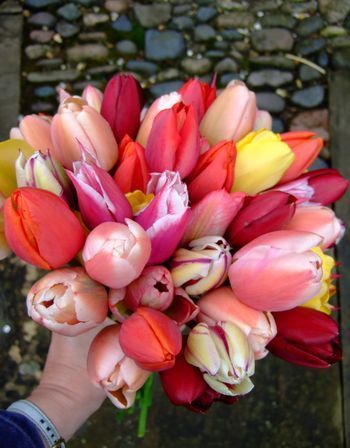
I've ordered my bulbs for planting this autumn. They haven't arrived yet, but will come sometime in September. So I was surprised to read Dan Pearson's advice in yesterday's Observer Magazine that 'Now is the perfect time to plant bulbs for next year'. I know this is part of a September checklist, but I would still argue that it is not time to plant, especially at this end of the month. Even the earliest do not need to go in for while - you can work this out by the fact that the bulbs are not available yet. And anyway, how would you plant bulbs when everything in the garden is still green and flourishing and alive? Now is also most certainly not the time to be thinking about potting up paperwhite narcissi and prepared hyacinths for forcing; it needs to be a lot colder and darker for that to happen.
But, now IS the time to think about buying bulbs. We get ours delivered from a couple of suppliers who send out the bulbs together in September, irrespective of recommended planting times. We then plant them all at the same time, over a series of weekends in November and early December. This includes the daffodils and crocuses that traditionally go in the ground in September, and we never have any problems. (We've had several lovely autumns recently and the ground has been too warm for the bulbs, plus we've still had other plants still looking good that I haven't wanted to pull out just for the sake of getting bulbs in at the 'correct' time.)
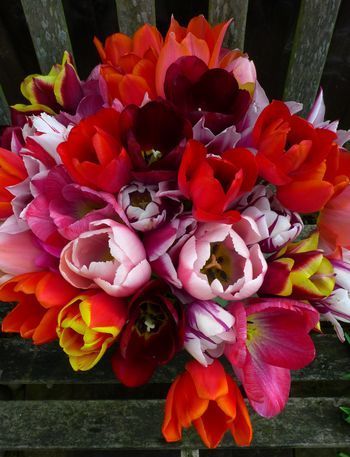
And now a word of advice about buying tulip bulbs. There is absolutely no need to pay a lot of money for tulips. The newspaper and magazine 'offers' and the packs of bulbs with pretty pictures in garden centres are outrageously overpriced. Many work out at around 50p per bulb which is mad when you think how much is still involved in getting them to the flowering stage and the fact that in spring you can buy cheap bunches of tulips at eg 20 for £10 which works out at... 50p per flower.
I've done some price comparisons and find that some major bulb specialists who do mail order business charge an average of £5 for 10 bulbs. Then you look around and find others selling exactly the same varieties for as little as £5 or even £4.50 for 25 bulbs. The only difference is that they don't have smart, glossy catalogues, don't take part in expensive flower shows, and don't sponsor posh gardens. If you buy from these great value suppliers whose tulip bulbs work out at an average of 18-20p each, and you choose varieties that you won't find in the shops and supermarkets next spring, you will be quids in. (I'm not talking about rare and unusual tulips that do cost a great deal, but the vast majority of garden tulips which should be good value, but can end up sounding very exotic and special when they cost 50p instead of 20p.)
My favourite, down-to-earth, reliable, friendly suppliers whose prices are competitive and fair are Peter Nyssen and Gee Tee Bulb Company. The minimum tulip order is usually 25 of any variety so you don't have to buy hundreds or thousands of bulbs but, believe me, you will be tempted. (It might be worth thinking about buying with a friend or two and dividing up the bags.) You do not need to pay more.
To sum up my advice: do read Dan Pearson's articles because they are mostly excellent with great photos (eg this), but don't plant bulbs yet.


August 25, 2012
thinking about wine
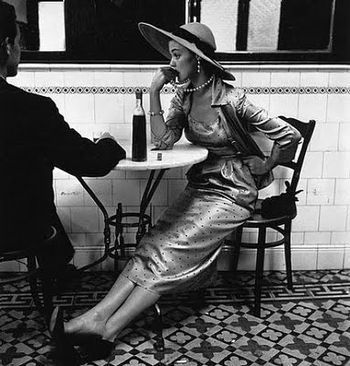
[photo by Irving Penn]
Treading grapes, easy and breezy wines, alphabetical wines, weekend wines - all on winestorm.
August 24, 2012
autum is icumen in*
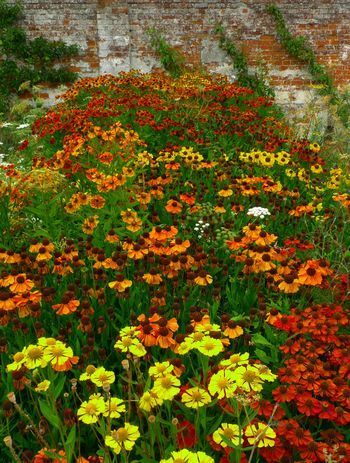
The days are already shorter. The breeze is a little cooler. The heleniums at Waltham Place are glowing in all shades of September. The exam season is over, notices have been handed in as the new university year comes closer, and I will soon need to think about socks.
[Well done, Phoebe. You are a star.]
*as in Sumer is icumen in, only later in the year
August 21, 2012
modern art cake
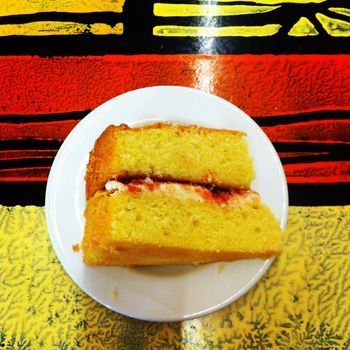
Cake on one of the tables in the temporary Yard café at Modern Art Oxford. A good place to sit and enjoy a cup of tea and a slice of cake before going in to see the enormous paintings by Jenny Saville.
The golden stone of the Oxford colleges, ancient and modern, looked lovely today in the soft sunny light. Of course, the older colleges are always spectacular, but I'm also particularly struck by the architecture of Nuffield College - especially its book tower and spire - which links so beautifully to the likes of Christ Church and Trinity College. It was a old-fashioned day of stopping trains and books, coffee houses and libraries, talking and walking. (The stations between Reading and Oxford on the First Great Western line are done up in white and royal blue, are very smart, and very pretty. You also get a glimpse of the Isambard Kingdom Brunel-designed Culham Station.)
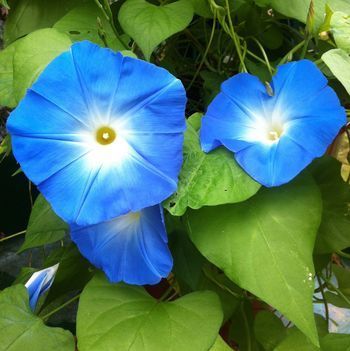
And just before I left to get my train, I found these morning glories in the greenhouse. Morning glories cause me more trouble than all my other grown-from-seed plants put together, so whenever I get one or two on a late summer morning, I am delighted (ridiculously so).
August 19, 2012
August 18, 2012
the waves
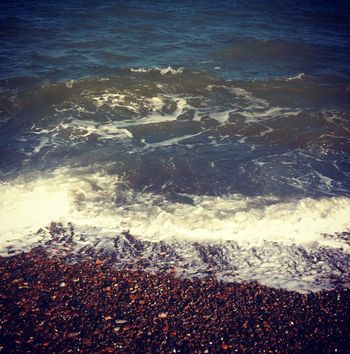
[waves, Aldeburgh]
I started The Waves to the sound of waves in Portugal, and finished The Waves by the waves in Suffolk. Between times, I tried to read it in land-locked Berkshire but found it difficult to pick up the ryhthms, the trails, and the voices again because too much was going on. It's a book that requires calm, careful, immersive reading; it's always described as a 'difficult' novel, and it's true that you need to escape into it fully in order to have any chance of grasping it (although it's hardly an 'escapist' read).
I found I needed to let the language to wash over my brain, to let it create the same type of hypnotic effect that watching waves can have. All the monologues are spoken internally, not aloud, and run into each other without clear breaks to create a work for voices (I can imagine listening to it on the radio) which builds up into an ebbing and flowing drama, but requires enormous concentration. The Waves feels intensely modern, even post-modern, like some kind of experimental theatre mixed up with elements of Chekhovian emptiness and absence, and the classical unities of Greek tragedy. It has sections and passages which hold you spellbound until, inexplicably, you lose the thread or your mind wanders (or perhaps the text does - it's hard to know when you can't always distinguish the speaker) and then, all of a sudden, it becomes brilliant and sparkling and clever again. Like waves, the prose rises and fall, sometimes lapping gently and sometimes crashing dramatically.
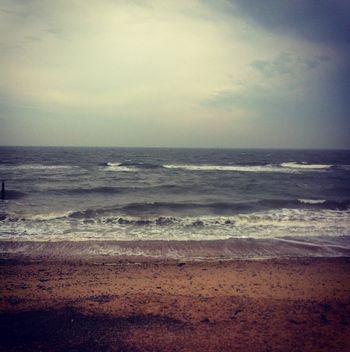
[waves, Southwold]
If I am honest, I don't think I would have finished the book if I hadn't already decided to read VW's novels instead of just reading about her and her life. Yet this is the one that needs to be read in order to understand her breakthrough style, her modernism, and just what what it was she was trying to do. Although it contains so many of her usual themes and motifs and words, it's more an exercise in control of material that is undoubtedly both part of, and ahead of, its time (think James Joyce and TS Eliot), than a conventional novel.
With its many repeats and refrains, The Waves often feels like very intense prose poetry. I was amazed by the way VW cleverly sustains the inner monologues to demonstrate how separate we all are and how our stories cannot be told in a linear, chronological, orderly fashion. She proves herself to be the high artist of the inner life, and her writing has a fragility and a delicacy, but also a hard, sometimes lurid, raw and hallucinatory style. It's as though the six characters who speak have been disemboided, flayed, exposed, and as a result are hyper-sensitive to all external stimuli. And all the way through there is water and death, waves and death, life and death, with several chilling, shivery moments about dying and drowning.
The Waves is about the 'incomprehensible nature of this our life', how we struggle to hold our personalities together, to make sense of life and our lives as we battle with the fragmentation of consciousness and our fractured perceptions of reality. As such, it's not a book I'd rush back to, but at least now that I have read it, I am no longer afraid of Virginia Woolf.
August 17, 2012
aglow
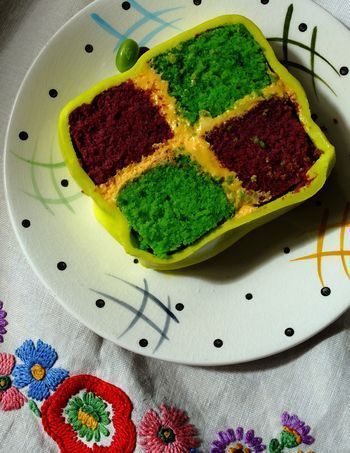
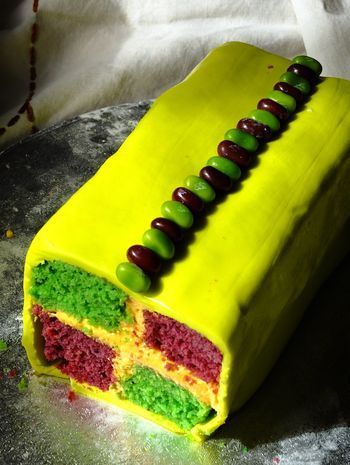
I wouldn't be surprised if this cake actually glowed in the dark.
I haven't baked for a while, and it's been a long time since we got the food colouring out. I could pretend my hand slipped while adding the paste, but that would be a lie.
August 15, 2012
blue sky thinking
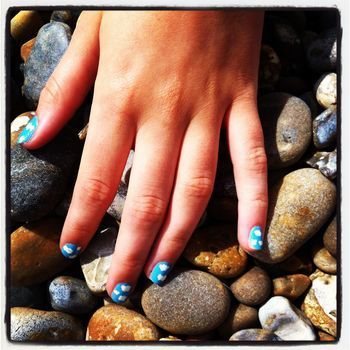
I would only ever use the phrase 'blue sky thinking' ironically, although it does sum up Phoebe's approach to nail art nicely.

August 14, 2012
immersion
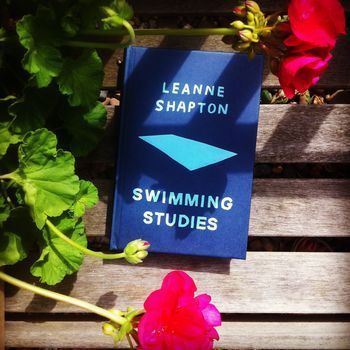
I needed a break from the watery intensity of Woolf, so jumped into a different book and immersed myself in Swimming Studies. A day later I feel refreshed by the pools so beautifully described by Leanne Shapton, and am ready to return to Woolf's rivers, waves, and seas.
This is an elegant, lightly lyrical, carefully written account of LS's years of training and competitive swimming interwoven with memories and digressions and descriptions of recent visits to pools (she compiles an enviable list of pools-I-have-swum-in). Leanne Shapton is an artist as well as a writer, and manages successfully to break many bookish conventions here by including a range of different visual and written elements, such as the central section containing a catalogue of her collection of swimming costumes. Although this and the highly stylised, almost abstract watercolours of pools, smells, and swimmers may appear at first glance a little precious, they are part of her style, and are what makes the book so original and personal. I admit I like this sort of creative rule-bending approach to the printed book; I also loved her earlier book which played with imaginative ways of telling stories.
Swimming Studies is now on my list of favourite wet books, along with Waterlog by Roger Deakin, The Haunts of the Black Masseur by Charles Sprawson, and a book that is too often overlooked: Swimming the Channel; A Memoir of Love and Loss by Sally Friedman.
August 11, 2012
scattered and collected
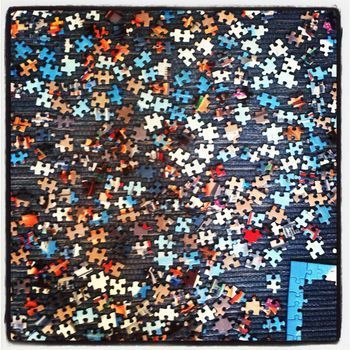
[Phoebe's jigsaw]
We are scattered this week. Two at home, two in Aldeburgh, one in Yorkshire.
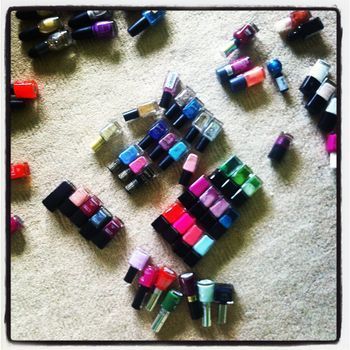
[sorting our joint nail varnish collcetion]
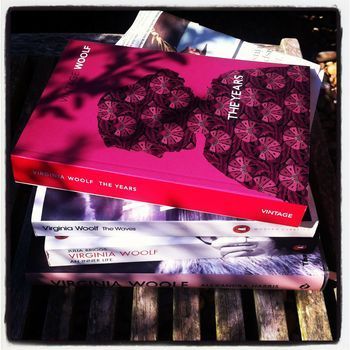
[collected reading]
Just finished The Waves, now starting The Years.
Jane Brocket's Blog

- Jane Brocket's profile
- 27 followers

