
Jane Brocket's Blog, page 38
July 21, 2012
epic scale

I know it's the wrong usage of the word 'epic' but it's popular at the moment, and I really like the element of exaggeration and overstatement it contains. And this chocolatiering on a heroic scale IS 'like, totally epic' as they say. This mega Mars Bar is at least thirty times the usual size, which means it contains all you need for work, rest, and play for a whole month.
Phoebe has been planning her extravaganza for at least two months. In fact, it's safe to say, the thought of it is what got her through her exams (she's been an avid reader of Pimp That Snack for years). So now that she's done her post-GCSE work experience, we went off to our nearest Asda to buy the ingredients (Asda baking aisle is amazing and great value) and came back with daft amounts of chocolate and sugar. Then she went to Lakeland to get the tins for the mould, as per her carefully researched plans. She made it over the course of three days this week: first the chocolate shell, then the filling and caramel, and yesterday the finishing and packaging.

She's not the first to make a massive Mars, but most people tend to take apart, say, thirty Mars Bars, melt the constituent parts and re-use. But not Phoebe, who made hers from scratch.

She made a mould with two 'takeaway'/freezer foil cartons, ends removed, taped together. She lined this with clingfilm, then poured melted chocolate over the base and sides to create a shell.

The filling is a recipe she found called ' Divinity Fudge' which is a kind of arshmallow fluff made with two tubes of glucose syrup, 600g of sugar, two eggs whites and 20 minutes in the mixer. The soft caramel topping is the one we use for millionaire's shortbread.

When it had set, she added the final layer of chocolate with loose swirls on top. She printed off a large Mars logo, coloured it it, and make a wrapping from a black bin bag. We took photos, sliced it, took more photos, and then she put it on Facebook.
Looks like we'll be having an epic Mars Bar eating party very soon.


July 20, 2012
mrs dalloway
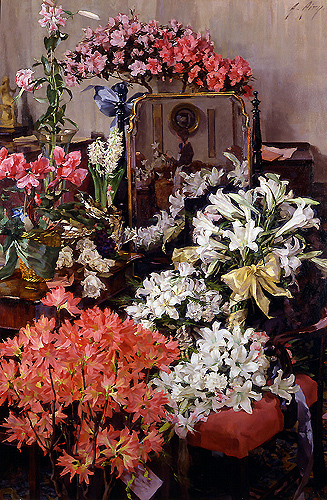
[The Little Mirror Anna Airy (1882 - the year of Woolf's birth-1964)]
I shall re-read Jacob's Room, but I won't be reading Mrs Dalloway again.
I've read it at least once before, maybe twice, and this time will be the last. What astonishes me is that it's generally talked about as a day in the life of a rich, elegant society hostess who is having a party that evening and goes to buy the flowers herself.
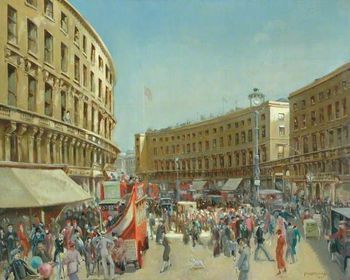
[Old Regent's Street (1924), John Kirby]
Usually, but - incredibly - not always (eg here), there is the mention of the second story of 'poor Septimus Warren Smith', a shell-shocked war veteran, who has visions and in the evening kills himself. Yet in essence, and my re-reading confirmed this most uncomfortably, Mrs Dalloway is a thoroughly harrowing portrayal and description of insanity that also suggests that we all of us have only a tenuous grasp on sanity. It's as much about a man shattered by the war and about a society desperate to rebuild, to cover over the deep cracks and chasms that have been both caused and revealed by this terrible experience, as it is about Mrs D..
I find that if I read any book about madness and mental instability closely and carefully, I get easily sucked into the hallucinatory, febrile mental atmopshere, and to begin to feel utterly uncomfortable and unsettled. It's for this reason that I can't read any more Dostoevsky, Katharine Mansfield or Sylvia Plath; I start to feel the tremors, fevers, and sweats of the author/character(s) and begin to experience the clutches of something horribly manic. It happened again with Mrs D. and this time I saw just how much of the book is taken up with wanderings - of the mind and body - which all ultimately lead to death. Strip away the society gloss, the flowers, the silks, the titles and positions, and you are left with vulnerable human beings who don't communicate well with or understand each other.
The descriptions of Smith's mania are terrifying. The behaviour and advice of the doctors are terrifying. The human condition is terrifying. But there is Mrs D. with her lovely flowers, her perfectly organised house, her love of life, apparently saving the novel and the reader from a complete descent into hell, yet she is also questioning her life, her choices, her memories, her diminished sexuality.
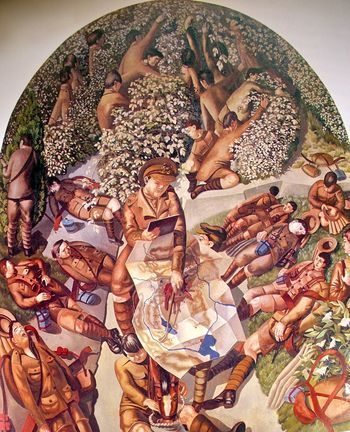
['Map Reading' mural at Sandham Memorial Chapel, Stanley Spencer]
Mrs Dalloway is also a book of revelations. Call them visions or moments of clarity, but at times they are quasi-religious in nature. This is an ordinary day in June in London, yet people in parks and on buses are having momentous revelations, and make me think of the paintings of Stanley Spencer (who had terrible experiences in the First World War) and the images he created of religious visions and ecstasy in everyday Cookham.
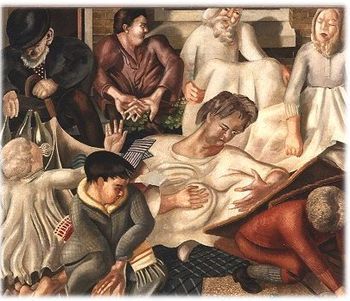
[Villagers and Saints (1933), detail, Stanley Spencer]
It's a tragic and, for me, ulitmately depressing book. I don't know how anyone can follow the trails of Smith's mind which are like the evanescent cloud-words of plane that flies over the capital without getting lost in some circle of hell, but I can appreciate the mastery of language, the poetry of the prose*, and the wonderfully modernistic cinematic view Woolf creates of London as seen from the sky. It's a masterpiece, but it's back on the shelf for good.
*Once again, I wondered why VW didn't write as a poet. So much of Mrs D. is a prose poem, and I marked section after section as potential free verse. Then I found that someone has actually set out a section (by coincidence, one of those I'd highlighted) as a prose poem. The question of whether she was a poet or a novelist was also addressed in an illuminating way by Winifred Holtby in her excellent book on Woolf. (Thanks to the person who emailed me to tell me about this book - the email has been lost and I've been unable to thank you for the recommendation.)
July 18, 2012
almost twenty

[English Macaroons, testing the recipe for Vintage Cakes which comes out in September]
Before I had children, I used to wonder what the teenage years would be like. Not with great relish and anticipation, I have to say, but more with a 'will-we-won't-we screw up and how does anyone get through without a litany of horror stories' sense of foreboding.
Tom and Alice are 19 now. For seven years Simon has been reminding me that 'a mother's place is in the wrong' which is both reassuring and bloody irritating. Because it's mostly true. Mothers - and fathers - are there to take a battering, to bounce back up when you have just been metaphorically flattened, and to continue with the shoe-finding, exam-testing, lift-giving support system, and the unconditional love. It has to be unconditional, because it would otherwise be like negotiating with terrorists.
This morning I got up early to go to an appointment. I saw the back view of Alice as she went off to work, and had about a minute's conversation with Tom before he disappeared to work, too. And I breathed a huge sigh of relief. They are both working incredibly hard (often 12-15 hour days), Tom on riverboats for the summer, and Alice in guest relations for her gap year. And what a difference this last year has made. Free from the horrible, relentless pressure of exams and anxieties about university applications, able to make their own decisions, in a position to pay for their own shoes (still getting lost) and holidays, they have become young adults. They are still quick to answer back (too often making me laugh), lethally clear-sighted, and desperately untidy, but they can cope in the big, wide world of work and university, take responsiblity, and find and keep jobs. One day, maybe, they will also remember to take their washing out of the machine.
I know now that you just have to have a little faith in yourself and your teenagers.
July 17, 2012
jacob's room
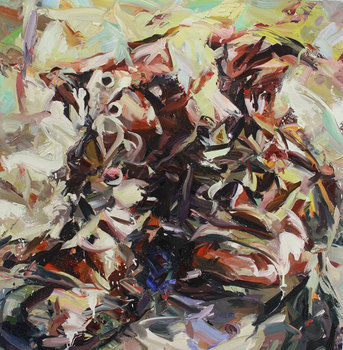
[Two Travellers (Enlargement) Paul Wright, from Thompson's]
While I was reading Jacob's Room in Aldeburgh, each day on my walk to get a newspaper/bread/scone and cream, I passed a large painting of a pair of boots (very similar to the one above) by Paul Wright. Even if I hadn't been reading the book, I would have stopped every time to look and admire the confident brushstrokes and arresting semi-abstract style. But the painting was all the more interesting to me at that moment because I knew that the books closes with Jacob's mother holding out a pair of her dead son's shoes in his empty room.
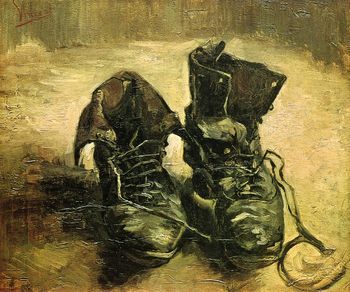
[A Pair of Shoes (1886) Vincent Van Gogh, Van Gogh Museum]
There is something unutterably sad and poignant about an empty pair of well-worn shoes or boots, which is also captured by different artists such as Van Gogh and Nicholson, but Virginia Woolf is the first (for me) to convey the whole futility and loss of war this way.
I'd known that Jacob's Room is regarded as a 'difficult' novel, and it's true that it's not an easy read. Fragmentary, evanescent, and elegiac, it's needs to be read slowly, a few pages at a time, to allow the words and rhythm to build up, wash over, and sink in. I was amazed that I loved being immersed in this strange book, even though I often had no idea who was who and what the reality was. The prose is beuatiful, fragile and delicate. It's often more poetry than prose, with a few lovely lines in iambic pentameter (eg 'the thin green water of the graveyard grass' and 'dim was the cow-parsley in the meadows').
It's a novel about emptiness and the difficulty of ever knowing anyone properly. Jacob is elusive, evasive, impossible to grasp, and it dawned on me that this is VW's tribute to the Unknown Soldier, her novel about the Great War and the damage and death it caused distilled into the fragmentary, just-glimpsed story of one man.
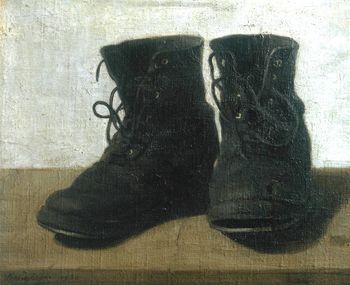
[Miss Jekyll's Gardening Boots (1920) William Nicholson, Tate Gallery]
All the common VW themes are here again: windows, water, moths, lighthouses and seas, waves and rivers, flowers and colours, public transport, London, books and letters, 'cloisters and classics'. And there are the usual moments of deep irritation with VW's treatment of the poor, the elderly (she is especially dismissive of gross old women, as she sees them), her fastidiousness about the lower classes and their manners and public behaviour, her flashes of quite startling snobbishness. But this is a beautiful novel, suggestive, tantalising, daringly nonconformist, and I know I'll be reading it again one day.
July 12, 2012
night and day
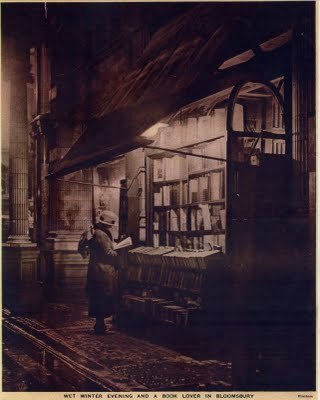
[Photo entitled 'Wet Winter Evening and a Book Lover in Bloomsbury', also used on the cover of the PQ Winter 2003. It has stayed in my mind all this time as one of the most atmospheric depictions of London ever.]
I began my Woolf reading with Night and Day, her second novel, rather than The Voyage Out, for the simple reason that I found a good secondhand copy in Skoob, a suitably Bloomsberryish bookshop a stone's throw from Brunswick Square (one of the various Bloomsbury squares colonised by the Bells and Woolfs et al), while sheltering from the rain on a cold, grey summer's day and waiting to meet a friend for tea. My reading couldn't have had more apposite start, as the tea-table looms large in this novel as the battleground for dicussion and negotiation of women's roles and worlds.
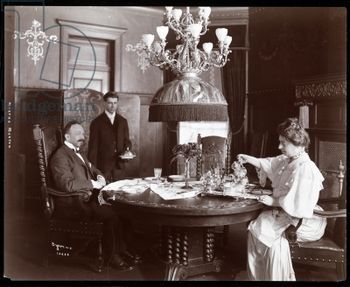
[Martha Morton at Home, Byron Company, 1902]
The other reason for wanting to read Night and Day first was that the copy I bought doesn't have an introduction; it just pitches the reader straight into the text which is exactly what I wanted. And now, having read some introductions to Woolf novels, I still think it's best to ignore them. For VW does funny things to introduction writers, most of whom lose themselves in abstract and overwritten cleverness - one notable exception being Elaine Showalter who writes clearly and intelligently on VW.
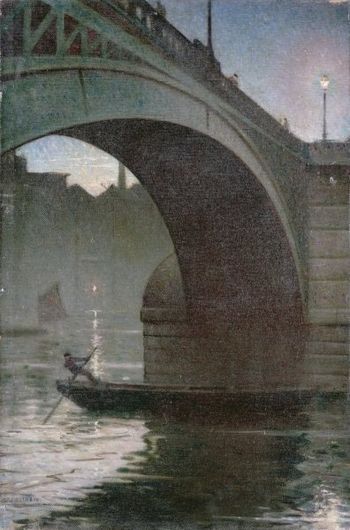
[Old Southwark Bridge c1919, CR Nevinson]
So what did I think of Night and Day? That it had far more echoes of and plot devices used by Jane Austen than I'd expected. That the parts set in London are much better than the parts set in Lincoln and around. That there are overtones of Thomas Hardy in the rural scenes, but only VW could have written the London scenes (brilliant and original). That surely nobody, no matter how attuned and perceptive they are, can read as much into faces and eyes and expressions as the characters in this book? That it was far more readable and traditionally novelistic than I'd imagined. That although VW does passion on a large psychological scale, I found it unbelievable that all four main characters could have such rigid (frigid?) physical self-control even at the height of their truly, madly, deeply moments. That VW is truly the poet of dusk, the time of day between day and night, 'the evening veil of unreality' and captures it beautifully; her descriptions of the fading light, the growing shadows, the blurring of the day, the electric lights coming on in London, the hour for tea, are all exceptional. (Example: 'Never are voices so beautiful as on a winter's evening, when dusk almost hides the body, and they seem to issue from nothingness with a note of intimacy seldom heard by day.')
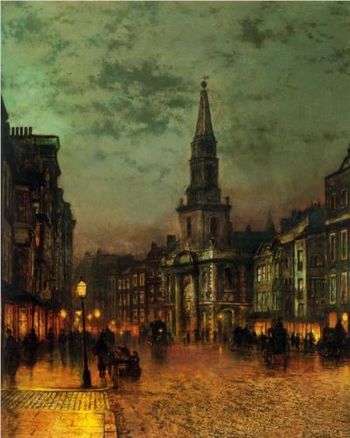
[Going Home at Dusk, 1882, by John Atkinson Grimshaw who is particularly well-known for his highly atmospheric, urban dusk and twilight paintings]
When VW is good, she is very, very good, and despite the old-fashioned feel in places (sometimes it's as though you are reading a mid c19 novel, and other times it's clearly early C20) there's a feeling of moving towards a newer, more experimental approach to novel-writing which of course is what comes with Jacob's Room. The imagery is delicate and sustained, the motifs and themes all there: moths, water, waves and rivers, flowers, London parks and streets and Tube stations, and the fundamental questioning of how women should live their lives. Night & Day is absorbing and, at times, exquisite.
Next: Jacob's Room
July 10, 2012
greenhouse pickings
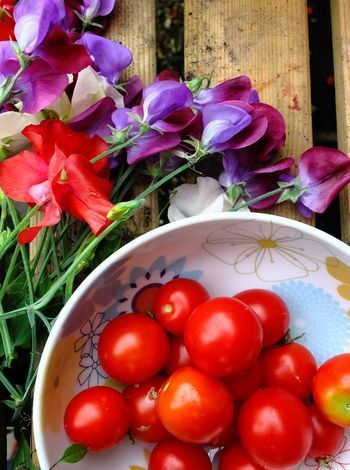
It's ironic that the first year we have a greenhouse there's a hosepipe ban and constant rain which means the greenhouse is the driest place in the garden and the most difficult to water. But my arms are getting good watering-can-workouts, and the tomatoes are ripening beautifully. I also missed the moment to plant out the sweet peas so left them indoors; I don't suppose they were ever meant to be grown in this unorthodox way but wierdly it has worked, and the greenhouse smells lovely.
[Meanwhile, inside the brick house, I can't believe our quilts are being so well used in July. It's also turning out to be a good summer for making them - they are ideal for keeping feet warm in the evenings while hand-quilting. I'm delighted to have inspired this summer/beach theme quilt, and I'd guess you'd need all the quilts you can get hold of in a hut by a blustery, rainy beach this year.]
July 8, 2012
on first looking into woolf's novels
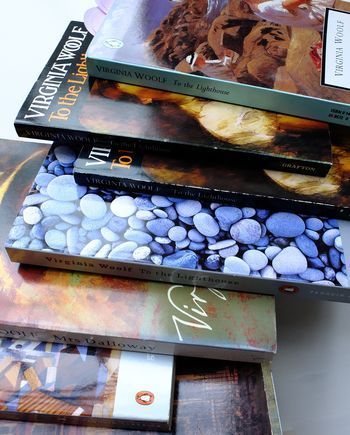
I grew up in a house in which very few books were owned, but many were borrowed. My Nana and my Mum were both great readers and library goers (Mum still is), and I followed suit. Nevertheless, it was always my ambition to own books, and as soon as I got a Saturday job in a hairdressers at the age of 13, I started buying, rather than borrowing. I can still remember the sheer joy when the books on the shelf on which I had started by keeping books at each end actually met up in the middle.
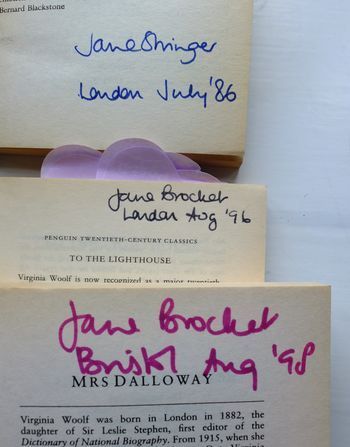
It was at this point, aged 13, that I borrowed a paperback from an older second cousin who was at university, and was extremely impressed by his sophisticated habit of writing his name plus the date and place of acquisition on the front page. I adopted the practice immediately, and did the same for years until I started buying books online and realised that it was now pretty much redundant. So it's now fascinating to trace my reading over the pre-Amazon years - actual and apsirational - and to try to remember why I had been buying in bookshops (mostly secondhand) in places like Uppingham, Skipton, and Leamington Spa.
[VW novels]
I thought about the title for this post (borrowed from Keats) before I started reading Virginia Woolf's novels for the first time last week, then saw that I've actually had quite a few 'first looks' into Woolf's novels. Just before leaving for Aldeburgh I collected some books to take and was slightly astonished to discover just how many times I have decided it was high time I read some of VW's novels instead of her letters, essays, and brilliant diaries. Yes, I'd read A Writer's Diary (recently reprinted by Persephone Books) and Flush, and numerous books about her and the Bloomsbury group, but still I'd skirted round the major novels.
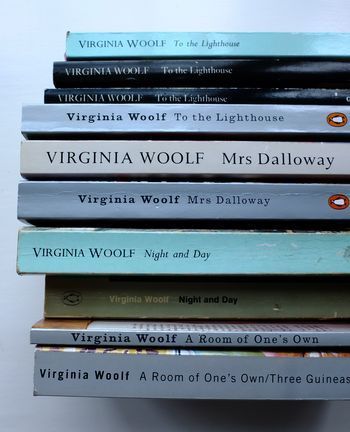
To be honest, I'd also read Mrs Dalloway and listened to the audiobook of To the Lighthouse read in beautiful and modulated tones by Eileen Atkins (despite owning four copies of the novel). But I'd never read VW creatively*, never really slowed down to VW's pace, or emptied my reading mind and let the words wash over me. Instead, I was always too keen to put VW on my of have-reads list when in fact she belongs on a have-experienced-and-thought-about list.
So it was high time I looked intoWoolf's novels for the first time - properly.
By coincidence, I started reading Francine Prose's book last week and, without my glasses on, mis-read the opening sentence of 'Can creative writing be taught?' as 'Can creative reading be taught? which I think is a better question, and something really worth talking about.
July 6, 2012
'craft me beautiful'
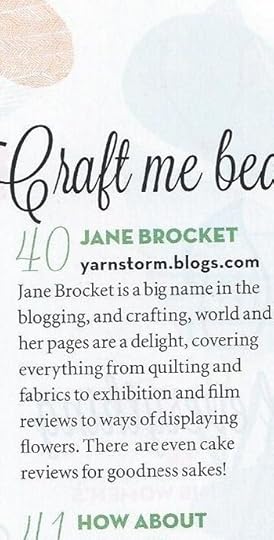
No, not a new book title. Not for me, anyway. (I may love colour, but I've never had my colours 'done' or submitted to Colour Me Beautiful, although I used to let Alice and Phoebe give me makeovers and always ended up looking more like Grayson Perry than Elizabeth Taylor. I don't wear make-up for a very good reason.)
Instead this is the category in which this blog has been named one of the 50 Best Blogs in Homes & Antiques magazine (August issue, page 80). I'm in good company, so it's very flattering to be included. Plus there are some lovely articles in there.
July 4, 2012
ten good reasons
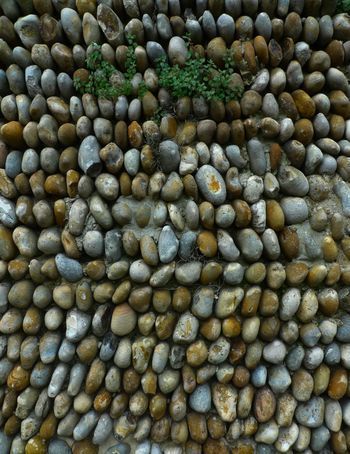
...to spend some time in Aldeburgh:
1. Pebbles
In beautifully made walls. Also on the long, vast, windswept beach which is usually virtually empty. The pebbles may have something to do with this, but I like them for this very reason.
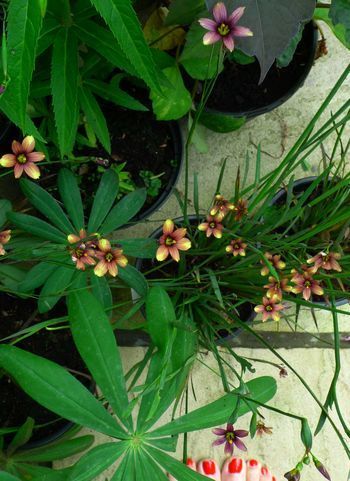
2. Plants
Aldeburgh is close to two wonderful nurseries: the inimitable Wootten's of Wenhaston (suppliers of sisyrinchium 'Quaint and Queer', above) and the delightful Walled Garden.
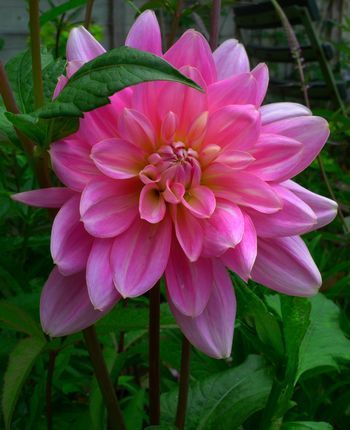
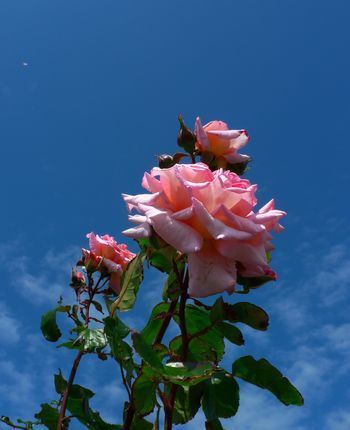
3. Pink
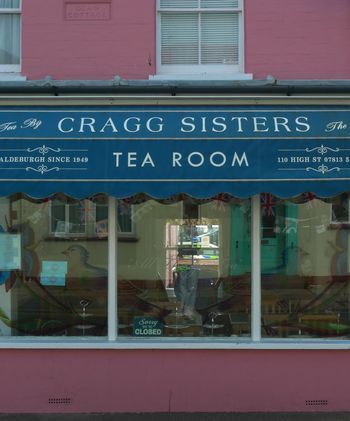
Houses, hollyhocks, valerian, dahlias, roses, tea rooms, and pigs (see below). If counties had their own colours, Suffolk's would be pink. (The dahlia is 'Gerry Hoek' from Woottens, which gets 10/10 in the owner Michael Loftus' entertainingly opinionated ratings.)
4. Independence/Independents
Aldeburgh has one of the very few non-homogeneous high streets left, and does its best to maintain independence from retail chains and groups.
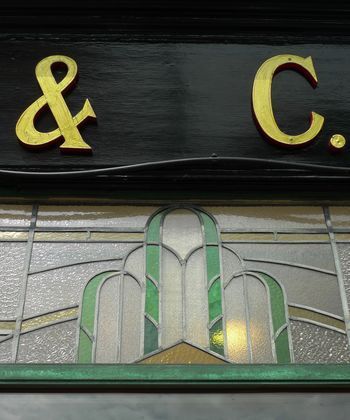
[detail of fascia of ladies and gents outfitters which always makes me think of Jane's shop in High Wages]
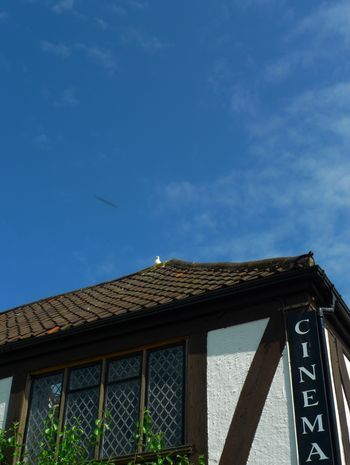
[Tudorbethan cinema; you'd almost expect it to show nothing but Ealing comedies and Powell and Pressburger classics, but in fact tonight it has the very contemporary Moonrise Kingdom]
It has an independent book shop, secondhand bookshop, cinema, newsagent, bakery, chemist, ice cream parlour, plus three independent wine merchants, numerous cafes and restuarants, clothes shops, and the marvellous and pink Cragg Sisters Tea Room (go for the crab sandwiches and scones) It is like an almost-modern version of the Eric Ravilious guide to the High Street (no furriers, though).
5. Pigs
Big, fat, pink pigs snuffling and grunting and basking on rolling soft hillsides are a feature of Suffolk (you pass a fieldful on the road to Aldeburgh) and they produce proper bacon, hams and sausages (from a real butcher, of course).
6. Hedgerows
Undisturbed, unsprayed, gloriously natural and profuse, the hedgerows around Aldeburgh are currently full of tall red poppies and white daisies that are allowed to flourish.
7. Golden fields
Like something out of storybook illustration, they are truly golden this week. (Aldeburgh is seven miles off the main road, and the little journey is like a rural decompression chamber as you leave urban and suburban life behind.)
8. Strawberries
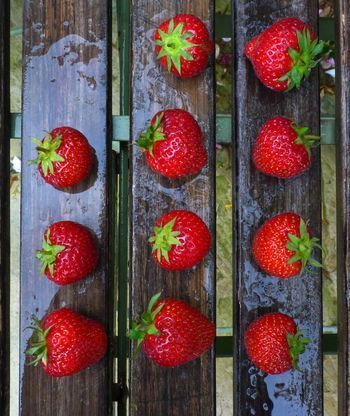
Properly ripe and seasonal, deeply red and juicy. And plenty more great local produce such as affordable asparagus and free range eggs from happy hens, and the best raspberry jam I've ever tasted.
9. Bricks
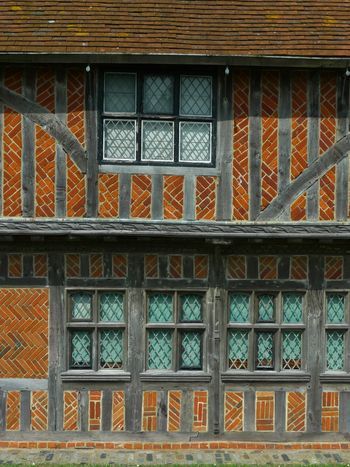
[C16 Moot Hall]
...and clever brickwork. (Aldeburgh still has its own brickworks.)
10. Places to stay
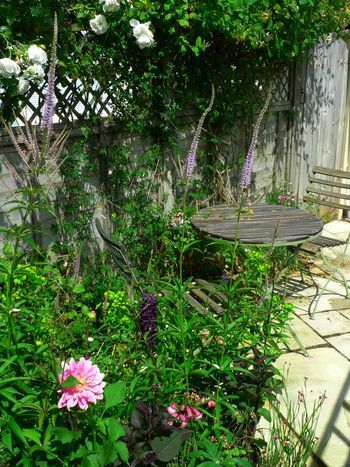
Like a teeny tiny cottage with a teeny tiny back yard with roses and honeysuckle (and a temporary makeover garden from Woottens, waiting till I go home). It wasn't always easy to get hold of good accommodation (you had to be in the know), but for the past few years we have booked through Best of Suffolk which has masses of great places.
10/10 to Aldeburgh, too.
July 2, 2012
return
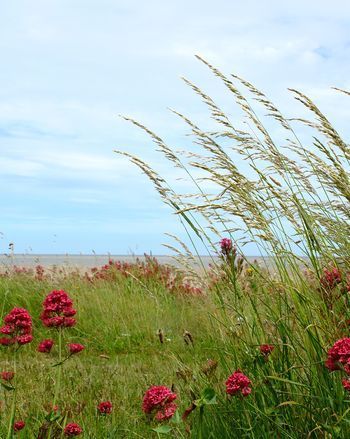
I was beginning to think that repetition of themes and motifs might not be a good thing, especially on a blog. But reading Virginia Woolf who returns over and again to London and Cornwall, waves, seas, rivers, lighthouses, flowers, books, tea-tables, train journeys, dusk, moths and butterflies, I see that there is a lot to be said for consistency, for limiting, choosing, revisiting, simplifying, and creating layers of returns.
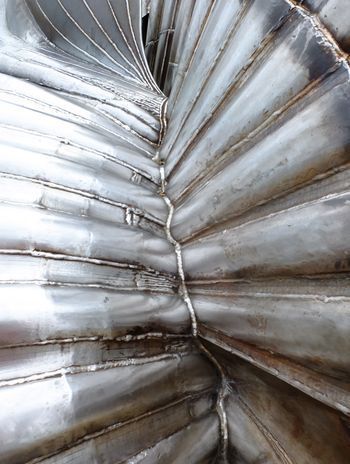
I'm not looking for novelty or any changes of direction. I enjoy returning to well worn themes, favourite pastimes, much-loved places. There's still so much to be learned, so much to do in the areas that appeal to and interest me. My list of return-tos would include London and Suffolk, train journeys, books, baking, textiles, flowers and gardens, colours, patterns, textures, painting. These are what form consistent threads and themes that have been running through my life since I was very young.

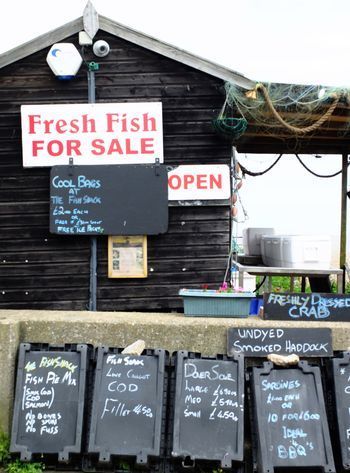
So it's Aldeburgh again, with pink and red valerian on the pebbly beach, ultra-fresh fish and chips, windy walks to the Scallop, soft white bread from the bakery, pretty garden paths lined with hollyhocks and day lilies, work to do, and the wonderful Aldeburgh Bookshop to distract me. And Virginia Woolf to set a good example.
Jane Brocket's Blog

- Jane Brocket's profile
- 27 followers

