Ava Brown's Blog, page 14
April 12, 2014
From country girl to corporate queen – by Elizabeth Pears


Back to press page
Back to press page
Businesswoman Ava Brown went from selling mangoes to completing an MBA while juggling marriage and motherhood.
SINCE APPEARING in the Financial Times and The Guardian, mother-of-two Ava Brown has been overwhelmed by comments from women who identify with her story of overcoming adversity while juggling motherhood.
The married 38-year-old, the first in her family to go to university, is a business development manager at the international firm IHS Global, but her first foray into business was selling mangoes as a child in Jamaica.
Brown worked as a teacher before undertaking a distance learning course and completing an MBA, which she described as one of the hardest things she has ever done. Here, the south Londoner from Croydon tells The Voice her story of advancing from a country girl to corporate queen.
“IT IS wonderful that women who have read my story feel motivated by it. That makes me happy. I got an email from a lady who is a mother-of-two like me, and was trying to finish her degree in social work. She was on the edge of quitting but said she changed her mind after reading about me.
“I grew up in St Elizabeth, called ‘the foodbasket of Jamaica’. It was a very carefree time. The village looks after you, so you never go hungry. As an adult, you start to understand more of your situation and there were challenges in terms of survival.
“My mum had nine children so it was hard. She was a domestic helper. From a very early age, I wanted to break the cycle and see what else the world had to offer.
“There were not a lot of role models around in terms of academics, so how I was going to get there I didn’t know, but I knew I wanted something else.
“I always had drive but the rest came along the way. As children, we’d pick mangoes from a tree and sell them in the market. I was aged nine or ten.
“By aged 19, I was a trained teacher. It was my first professional job, and it felt exhilarating to earn my own money. I did not have to wear hand-me-downs, I could treat myself to a new pair of shoes, and I could give back to my family – that was very important to me.
“I moved to the UK in 2002, after being robbed at gunpoint. My aunt encouraged me to come to London. I signed up with an agency and came as a teacher, which was not a great experience. I felt that I had been bought like some kind of a slave and traded.
“I taught design technology for nearly six years, but after that I had to stop because I didn’t have Qualified Teacher Status (QTS). It was hard to get a school to take me on directly with my Jamaican qualifications (in order to get QTS certification) as they kind of looked down on you. I found it frustrating and paradoxical. I had been good enough to teach for all those years, then suddenly you’re not good enough anymore. A piece of paper doesn’t determine how good of a teacher you are.
“I had to find something else. That was when I came across (internet learning provider) RDI and signed up to do the MBA. I was a working mother, juggling learning with paying the bills. It was hardcore – definitely one of the hardest things I’ve ever done.
“For my mum, it was groundbreaking. I was the first in my family to go to university. When I first started my teacher training, people donated a shirt or a book to help me on way.
“I like to think I am a good role model for my children. In Britain, black people are often marginalised. My children see me going to work every day, not signing on. If nothing else, I want to teach them to depend on themselves. I think that’s where some black people fall short. In life, your capabilities are almost limitless. It’s not about where you are from, but where you aim to go.
“In Jamaica, I worked hard but when you go abroad I feel you have to work twice as hard to prove yourself.
“It’s also challenging being a woman with children because childcare is an issue. I find that, and this is my opinion, companies tend to look at you differently. You hear comments about women ‘always being off sick with their children’. Motherhood is a mark against us and it should not be that way. In many ways, we are more confident and capable because we have the ability to multi-task.
“I think the Government should enforce that women are paid the same as men for the same job. The workplace also needs to be more flexible. Having a child sick at home, doesn’t mean I can’t work from home. Childcare is too expensive, what I pay on a monthly basis is astonishing. It is one of the biggest reasons women quit their jobs, and their careers get stalled. Companies need to consider on-site childcare facilities. Mothers would be more content to know they don’t have to rush off when the clock strikes six.
“When I was teaching I noticed that there were parents who didn’t see their children for a whole week – not because they were absentee but because they were working so hard to give their children a better life. London is so hard. It’s not like back home where we have an extended family to help us grow our children. Here, they spend so long with childminders or alone. That’s the first breakdown.
“I don’t have a legacy of money to give my children, but I want to teach them that education is one route to success they have at their disposal. Children have so much potential but we, the parents, need to tap into that.
“I am firm but fair. My daughter and I read together. We go on holiday together and, most importantly, I know where she is every day. We have an open relationship. I tell them to be honest with me, no matter what because then we can deal with it together.”
Source: http://www.voice-online.co.uk/article/country-girl-corporate-queen
12/04/2014 05:30 PM


April 3, 2014
Leading a multicultural team – by Hannah Friend

Back to press page
Back to press page
From mangoes to management: business consultant Ava Brown talks about her journey from Jamaican fruit seller to management leader.
Ava Brown got her first taste of business as a 10-year-old selling mangoes to train commuters in Jamaica – not with a business plan in mind, but through necessity. She later moved to the UK to teach and returned to business after struggling to get a permanent classroom role. Studying an MBA with distance learning provider RDI was a major turning point in her life and she now works as a global business development manager for IHS Global. The 38-year-old entrepreneurial mum of two talks here about her leadership and management style.
The mango business was all about survival. It was instinct. One of nine children, I grew up in St Elizabeth, Jamaica. My mum sent me to sell mangoes to commuters on the trains passing through the town. Life was a bit challenging and I needed to work so that my family could have food on the table. Growing up, I was the eldest so it wasn’t something we sat down and thought about. It was resourcefulness, I suppose. We chose mangoes because they were free, you could just go and pick them. They were abundant where I grew up. We chose the product that was most readily available and the profit margin was 100%.
As a teenager, I trained to work as a teacher. By the age of 19, I was teaching design and technology. I had my daughter in 1998, then moved to the UK in 2002 to work as a teacher because I didn’t feel safe in the Caribbean anymore. I wanted to do a QTS (qualified teacher status) qualification, but I had childcare issues, so I struggled to find a permanent role in a school.
I was doing supply teaching but I needed to have had a long-term job to be placed with the QTS. Back in Jamaica, I’d done a business degree with an American distance learning college but discovered that it wasn’t a recognised qualification in the UK. That was a difficult time. I couldn’t carry on teaching and I didn’t have the right qualifications to do anything else.
A real turning point for me in my business career came with studying for an MBA. My boyfriend at the time was studying human resources with distance learning provider RDI. I went online to get feedback from people who had done these courses, and realised studying for an MBA with them was a really great opportunity for me. It has really opened a lot of doors. It has helped me to return to business and to build a career. As well as having my own consultancy, I now work as a global business development manager at IHS Global.
Selling mangoes gave me a taste for business. It also helped me realise I had developed the ability to build rapport, and had resilience and tenacity, skills you need to succeed in business. It was entrepreneurial and I felt that I was able to focus on what I really wanted to do. I always wanted to own my own business and the other jobs were kind of a platform for where I wanted to be. Selling mangoes also gave me the soft skills of business, which I feel I can now nurture. To build up my skills, I tend to network a lot and do a lot of training courses and development myself. I have a number of friends in business, and I tend to stay close to them and learn from them. So it’s always been a passion, and I always seek new ideas of how to build my business.
The thing about England is that it’s very multicultural. You’re dealing with people from different cultures and you’ve got to think about a lot of other factors when you’re managing them. I find the management style here in the UK is a bit more consultative. There’s more staff involvement. It’s certainly very different from when I was managing people in Jamaica. Decisions were predominantly made without a lot of staff input. The cultural way of dealing with clients there is also different. I prefer the way things are done in the UK.
My advice on leadership is deal with people from different cultures as individuals. Respect people and also understand that at the end of the day we’re humans first. I think that’s what counts. If you can do that then that takes care of it all.
Ultimately, I’d like to become a sales trainer and life coach. I’d like to work with kids with similar experiences to my own and disadvantaged children. I have my consultancy business, which I am growing and building, but ultimately I want to be a sales coach and trainer, as well as a life coach. I think there are things I’ve learnt along my journey I could help others with. Education has always been a passion, in the sense it helped me to change my situation. Because of that, I’d like to open a school in Africa and Jamaica as I feel there are many talented pupils there who lack encouragement and opportunity. I think ultimately I want to be a multi-enterprising person, owning my own consultant company and growing in that role.
Source: http://careers.theguardian.com/careers-blog/management-leadership-cultural-differences
by Hannah Friend – Guardian Professional, Thursday 3 April 2014 07.00 BS
March 10, 2014
Women in business – by Charlotte Clarke
Back to press page
Back to press page
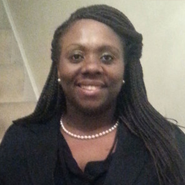
Ava Brown is an MBA graduate of Resource Development International, the distance learning provider, and an account manager at IHS, a global information company.
Ms Brown grew up one of nine children in Jamaica, where she often sold mangoes to passengers on trains instead of going to school as her family needed the money. She later qualified as a teacher and studied a US-based business degree before moving to the UK to work as a teacher and study for an MBA.
In her spare time, Ms Brown enjoys travelling, cooking and listening to music.
1. What academic achievement are you most proud of?
My MBA from RDI. It has opened doors for me. Before securing the MBA, I was embarrassed to apply for business roles as the business degree I had secured previously wasn’t recognised internationally. I’m from a family where nobody had attended university. I’m a little girl who came from nowhere in particular and hardly went to primary school because I was on the train selling mangoes. And now I have an MBA.
2. Why did you choose to do a distance learning course?
I discovered that my teaching qualification was only sufficient to secure my initial role in the UK and that I would need to top-up my credentials with further study to continue teaching. I also discovered that I had been misled about my US degree, which was not internationally recognised and therefore not valid in the UK. My boyfriend at the time, who is now my husband, was studying human resources with RDI. I went online to get feedback from people who had graduated from RDI courses to check that they were credible, and more importantly for me, that the MBA course I was interested in would be recognised as an internationally relevant qualification.
3. What is your favourite memory of the course?
The online lectures and the help I got from the tutors at RDI, especially the feedback they gave for course finals. They were supportive and very understanding when I needed help late in the evening and at the weekend. Outside their regular hours, they went beyond the call of duty to assist me. During the early part of my course I became pregnant but subsequently suffered the sadness of losing my baby. I became pregnant again and thankfully gave birth to my beautiful son, Mikhel. I got married during this time too. There were times when I felt like giving up on my studies. Part of the reason I didn’t was the help and encouragement I received from both my tutors and the student support team.
4. What is the best piece of advice given to you by a teacher?
Never limit yourself: there is potential in all of us. That was the advice given to me by Miss Taylor, my food technology teacher at St Elizabeth Technical High School in Jamaica. I used to go to school without any lunch, and sometimes I would even go barefoot, but I still believed her when she said that I could achieve great things. I couldn’t see that dream but I had faith in what she said and believed her. I’m still in touch with her.
5. What advice would you give to women graduating this year from business school?
Reach out and mentor another woman or girl who may just need that role model and guidance. You can be a future leader. You could help to give somebody a better life. And if you have found your passion, do not let any opportunity slip because you think you are not ready. Making use of your opportunities is the only way to get ready.
6. How do you deal with male-dominated environments?
I recommend building informal collegial relationships with your male colleagues. You may be the first woman they’ve had that kind of relationship with, so proceed thoughtfully. It takes time and effort, but it is usually possible and almost always worthwhile.
7. What are your top tips for networking?
I am a member of LinkedIn, Twitter and Facebook. I think networking is a great window/tool into business these days. Don’t be afraid to be different, to aim high, to demonstrate that you are the best at something and follow up.
8. If you could do it all again, what would you do differently?
I would finish school before settling down with a family because I found my MBA to be a bit more challenging than when I studied as a single person in Jamaica.
9. What are your future plans?
I want to be the managing director of my own consultancy company, Chakai Consultants – which I have already started; start schools in Africa and Jamaica; and publish my autobiography, which I will hopefully use to make a movie that will influence others growing up in difficult situations.
10. Who inspires you?
Ursula Burns, the chief executive of Xerox; Oprah Winfrey; and the African American author and poet, Maya Angelou. They are all women who have endured hardship and made it against the odds. I read Ursula Burns’ life story and can identify with some aspects of it, in particular how she struggled as a woman. Oprah Winfrey is raw and candid and not afraid to talk about her life. Maya Angelou has used her poetry to heal her situation.
Source: http://www.ft.com/cms/s/2/df33cd2e-a48f-11e3-b915-00144feab7de.htm
Compiled by Charlotte Clarke – March 10, 2014 11:26 am