
AVIS Viswanathan's Blog, page 7
January 14, 2016


January 12, 2016
Beyond 'earning a living', make time for living!
Why do we do precious little to nurture, develop, grow and protect all those things that come free in Life while ending up working 60+-hour weeks ‘earning a living’ and trying to cling on to, protect stuff, that in the end are impermanent, dispensible, unimportant, forgettable and replaceable?
January 11, 2016
What time is your appointment with Life?
Launching "#HelpYourselfToHappiness - Inspirational Reflections for Everyday Living"...This is a video blog series which I will post from time-to-time.
Today's post is on an appointment that we unwittingly miss ever so often - "Our Appointment With Life"!
Excerpt: "Vietnamese Buddhist Teacher Thich Nhat Hanh writes: 'Our appointment with Life is in the present moment. The place of our appointment is right here, in this place.' So beautiful!"
(Kindly bear with the video quality and editing - still new to the medium! :))
Today's post is on an appointment that we unwittingly miss ever so often - "Our Appointment With Life"!
Excerpt: "Vietnamese Buddhist Teacher Thich Nhat Hanh writes: 'Our appointment with Life is in the present moment. The place of our appointment is right here, in this place.' So beautiful!"
(Kindly bear with the video quality and editing - still new to the medium! :))
January 10, 2016
“Is it too late now to say ‘Sorry’?” No. Never!
A friend posed this question: Is the English word ‘sorry’ adequate to repair a relationship or heal a wounded heart – especially when you have caused the hurt, and want to repent, redeem and rebuild?
The simple answer is that as long as you feel sorry, genuinely sorry, and the feeling is arising from within your inner core, it doesn’t really matter what language you use. Language is just a medium of expression. It is the feelingthat matters the most. And feeling sorryrequires you to be brutally honest with yourself: you must drop all analysis, justification and judgment. When you have realized that you messed up, just own the accountability for what has happened and apologize. Period.
 But willingness to apologize is often accompanied by two more, often debilitating, emotions: grief over what happened; and guilt over how you have contributed to what has happened. I have learnt that anyone genuinely repenting a mistake often gets caught between grief and guilt. You begin to ask yourself the same question that my friend has posed – is saying ‘sorry’ adequate? This is when you should refuse to hold on to the grief and guilt for too long. Yet don’t resist the grief or the guilt – it will then persist. Instead, examine your grief and guilt. See the futility of holding on to them. Forgive yourself for your indiscretion or transgression or misdemeanor and move on. Chances are you will be forgiven by the party that you hurt. Chances are you may not or never be forgiven. Remember – you can never control another person’s thoughts or actions. Whatever be the other party’s stand, be clear that you must forgive yourself – only this can restore your inner peace.
I have talked about my experiences with feeling genuinely sorry, and overcoming grief and guilt, in several contexts, in my Book “Fall Like A Rose Petal” (Westland, 2014). One incident that I haven’t shared so far, however, pertains to a conversation that I once had, many years ago, with my dad in the lobby of Hotel Connemara in Chennai.
I have for long had a poor chemistry with my mother. On one occasion, the acrimony between my mother and I was really suffocating. I wanted to somehow try and force her to see reason and consider my point of view. So, I decided to talk to my dad in private, hoping to involve him in communicating with my mother on my behalf. We met at the hotel lobby and sat there for over an hour. I first shared what I wanted to. My dad did not say anything. He was just silent. I implored him, then I tried cajoling him, then I threatened him – demanding that he commit to telling my mother to “change her ways”. But my dad was deadpan. He continued to remain silent. In that entire hour, only I spoke – pleadingly, menacingly, softly, loudly. He never uttered a word. When I realized that this approach was not working out, in utter frustration, I blamed my dad by way of wrapping up the monologue and by way of a summary: “Appa, you are a vegetable (I used a stronger, stinging word by way of an aphorism but will not quote it here); if you had put Amma in her place long ago, there would have been peace and we would not have such a fractious environment in the family.” My words must have stung and I am sure my dad was hurt. But he said nothing. He just wiped his eyes, smiled at me, got up and walked away. Years later, perhaps on account of the spiritual awakening that I have had, I realized that the only way for me to handle the relationship I (don’t) have with my mother is to be both silent and distant. I concluded that she just cannot change; or see reason; at least in matters concerning me! When this realization dawned on me, I could not help but agree with my dad’s approach of employing stoic silence. I felt ashamed, angry, guilty and grief-stricken for the way in which I had hurt my dad. The hurt lingered on in me for a long time – until one day, I apologized to him in person. Again he said nothing. He just smiled back.
‘Sorry’ may seem like one word but involves a lot of hard work. This is what must be fundamentally understood: Do you genuinely feel the apology that you want to offer? Are you willing to first face and then let go of the grief and guilt that may arrive with your saying sorry? Can you accept a situation where you can live with lack of clarity on whether you have been forgiven or not? And unlike what Canadian singer Justin Bieber wonders in his recent chart-topping single ‘Sorry’, it is never too late to say a sorry. If you feel it, simply say it. And, no matter what follows, just forget about it!
 But willingness to apologize is often accompanied by two more, often debilitating, emotions: grief over what happened; and guilt over how you have contributed to what has happened. I have learnt that anyone genuinely repenting a mistake often gets caught between grief and guilt. You begin to ask yourself the same question that my friend has posed – is saying ‘sorry’ adequate? This is when you should refuse to hold on to the grief and guilt for too long. Yet don’t resist the grief or the guilt – it will then persist. Instead, examine your grief and guilt. See the futility of holding on to them. Forgive yourself for your indiscretion or transgression or misdemeanor and move on. Chances are you will be forgiven by the party that you hurt. Chances are you may not or never be forgiven. Remember – you can never control another person’s thoughts or actions. Whatever be the other party’s stand, be clear that you must forgive yourself – only this can restore your inner peace.
 I have talked about my experiences with feeling genuinely sorry, and overcoming grief and guilt, in several contexts, in my Book “Fall Like A Rose Petal” (Westland, 2014). One incident that I haven’t shared so far, however, pertains to a conversation that I once had, many years ago, with my dad in the lobby of Hotel Connemara in Chennai.
I have for long had a poor chemistry with my mother. On one occasion, the acrimony between my mother and I was really suffocating. I wanted to somehow try and force her to see reason and consider my point of view. So, I decided to talk to my dad in private, hoping to involve him in communicating with my mother on my behalf. We met at the hotel lobby and sat there for over an hour. I first shared what I wanted to. My dad did not say anything. He was just silent. I implored him, then I tried cajoling him, then I threatened him – demanding that he commit to telling my mother to “change her ways”. But my dad was deadpan. He continued to remain silent. In that entire hour, only I spoke – pleadingly, menacingly, softly, loudly. He never uttered a word. When I realized that this approach was not working out, in utter frustration, I blamed my dad by way of wrapping up the monologue and by way of a summary: “Appa, you are a vegetable (I used a stronger, stinging word by way of an aphorism but will not quote it here); if you had put Amma in her place long ago, there would have been peace and we would not have such a fractious environment in the family.” My words must have stung and I am sure my dad was hurt. But he said nothing. He just wiped his eyes, smiled at me, got up and walked away. Years later, perhaps on account of the spiritual awakening that I have had, I realized that the only way for me to handle the relationship I (don’t) have with my mother is to be both silent and distant. I concluded that she just cannot change; or see reason; at least in matters concerning me! When this realization dawned on me, I could not help but agree with my dad’s approach of employing stoic silence. I felt ashamed, angry, guilty and grief-stricken for the way in which I had hurt my dad. The hurt lingered on in me for a long time – until one day, I apologized to him in person. Again he said nothing. He just smiled back.
‘Sorry’ may seem like one word but involves a lot of hard work. This is what must be fundamentally understood: Do you genuinely feel the apology that you want to offer? Are you willing to first face and then let go of the grief and guilt that may arrive with your saying sorry? Can you accept a situation where you can live with lack of clarity on whether you have been forgiven or not? And unlike what Canadian singer Justin Bieber wonders in his recent chart-topping single ‘Sorry’, it is never too late to say a sorry. If you feel it, simply say it. And, no matter what follows, just forget about it!
January 8, 2016
You can never win fighting Life! So, Let Go!!
Fighting Life, by resisting whatever is happening to you, is a just not worth it.
Every which way, you stand to lose.But the human mind, driven by ego, wants you to believe that you can and must do something in a Life situation. So it will goad you to fight. To resist what’s happening to you. And that’s how, through such resistance, you invite misery into your Life. Let’s understand this better. There are only two kinds of problems. One set of problems are those that you can solve – either on your own or through a third party resource, expending money or through other means. The other set of problems are the ones that are, humanly, unsolvable. Only Life has to solve them over time. When you are faced with the second set of problems, the best thing to do is to let go!
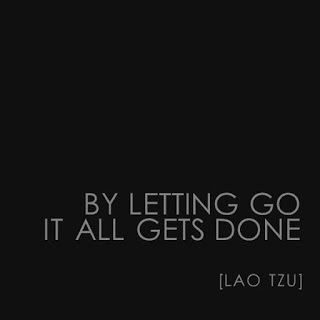 When you let go, your problem may still be there. But it won’t torment you. It will not cause you any misery. You become miserable only when you attempt doing something that you are incapable of doing or don’t like doing. Let’s get this straight –
Human beings do things. Life simply happens.
These are the only two realities. When you can’t solve a Life problem by
doing
something about it, let go and allow Life to
happen
to you – in total acceptance and humility! Just let it happen. Let go of your desire to control, to solve, to do. So, when you find that your doing something about a situation is of no use, simply flow with Life. Float like a piece of wood does on a river. Don’t worry about where Life is taking you or about why is it taking you wherever it is going or ask when will this journey end. This does not mean inaction.
The choice of allowing yourself to ‘float’ is significant action in itself!
Don’t, however, analyze and form opinions about outcomes and possibilities. Don’t reason what consequences will follow an outcome – if you end up here, this is what will happen or if you end up there, this is what it means. Let Go = non-reasoning, non analyzing, non-questioning! Let Go means living spontaneously!
When you let go, your problem may still be there. But it won’t torment you. It will not cause you any misery. You become miserable only when you attempt doing something that you are incapable of doing or don’t like doing. Let’s get this straight –
Human beings do things. Life simply happens.
These are the only two realities. When you can’t solve a Life problem by
doing
something about it, let go and allow Life to
happen
to you – in total acceptance and humility! Just let it happen. Let go of your desire to control, to solve, to do. So, when you find that your doing something about a situation is of no use, simply flow with Life. Float like a piece of wood does on a river. Don’t worry about where Life is taking you or about why is it taking you wherever it is going or ask when will this journey end. This does not mean inaction.
The choice of allowing yourself to ‘float’ is significant action in itself!
Don’t, however, analyze and form opinions about outcomes and possibilities. Don’t reason what consequences will follow an outcome – if you end up here, this is what will happen or if you end up there, this is what it means. Let Go = non-reasoning, non analyzing, non-questioning! Let Go means living spontaneously!
Living in ‘Let Go’ mode is not difficult. It is intelligent living. Because you are doing the most intelligent thing after trying to apply your intelligence to solving the problem or Life situation. When you live in a ‘Let Go’ you may have to live with your problem, your Life situation – but you will live in peace, in bliss.
 When you let go, your problem may still be there. But it won’t torment you. It will not cause you any misery. You become miserable only when you attempt doing something that you are incapable of doing or don’t like doing. Let’s get this straight –
Human beings do things. Life simply happens.
These are the only two realities. When you can’t solve a Life problem by
doing
something about it, let go and allow Life to
happen
to you – in total acceptance and humility! Just let it happen. Let go of your desire to control, to solve, to do. So, when you find that your doing something about a situation is of no use, simply flow with Life. Float like a piece of wood does on a river. Don’t worry about where Life is taking you or about why is it taking you wherever it is going or ask when will this journey end. This does not mean inaction.
The choice of allowing yourself to ‘float’ is significant action in itself!
Don’t, however, analyze and form opinions about outcomes and possibilities. Don’t reason what consequences will follow an outcome – if you end up here, this is what will happen or if you end up there, this is what it means. Let Go = non-reasoning, non analyzing, non-questioning! Let Go means living spontaneously!
When you let go, your problem may still be there. But it won’t torment you. It will not cause you any misery. You become miserable only when you attempt doing something that you are incapable of doing or don’t like doing. Let’s get this straight –
Human beings do things. Life simply happens.
These are the only two realities. When you can’t solve a Life problem by
doing
something about it, let go and allow Life to
happen
to you – in total acceptance and humility! Just let it happen. Let go of your desire to control, to solve, to do. So, when you find that your doing something about a situation is of no use, simply flow with Life. Float like a piece of wood does on a river. Don’t worry about where Life is taking you or about why is it taking you wherever it is going or ask when will this journey end. This does not mean inaction.
The choice of allowing yourself to ‘float’ is significant action in itself!
Don’t, however, analyze and form opinions about outcomes and possibilities. Don’t reason what consequences will follow an outcome – if you end up here, this is what will happen or if you end up there, this is what it means. Let Go = non-reasoning, non analyzing, non-questioning! Let Go means living spontaneously!Living in ‘Let Go’ mode is not difficult. It is intelligent living. Because you are doing the most intelligent thing after trying to apply your intelligence to solving the problem or Life situation. When you live in a ‘Let Go’ you may have to live with your problem, your Life situation – but you will live in peace, in bliss.
January 7, 2016
Why forsake your freedom for someone else’s folly?
Some people you meet in Life will be cantankerous, scheming and unethical to the core. Let them be.
Recently someone we know worked in a despicable manner against our interest. It was hurting to see how we were treated and how our self-esteem was trampled upon. We did not protest. We did not whine. We did not rant. We did not fight. We merely exited from the relationship.
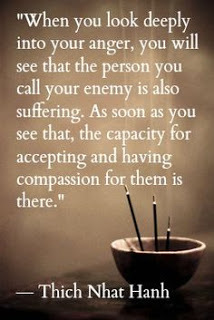 10 years ago, I would have kicked up a ruckus. I would have fought. I would have wanted to get even. I would have pushed hard to justify ourselves. I remember during one ghastly episode (which I have shared in my Book
“Fall Like A Rose Petal”
) with an unethical client, in 2003, I launched a 45-minute tirade against the CFO of the client’s company over the phone. It was a monologue – only I spoke, actually, I howled non-stop for those 45 minutes! When I was tired and done, and could bawl no more, the gentleman at the other end of the line calmly said, “Never waste your energy banging your head against a wall, AVIS. Not worth it.” But I did not heed his sage counsel. I threatened him and his company of dire consequences. For weeks on end, I tried to pursue options to sue them in international courts (they are an MNC). It was very late in the day when I realized I had I wasted precious time and inner peace on a dead cause. Mercifully, I am not that way anymore. This is what Life has taught me: People will be who they are. And what they do to you, need not__and must not__change the way you deal with them. A common response we, good, ethical, warm and kind folks, have to such people is that we become depressive or angry or vengeful. This only creates more negative energy in us. And that, you will agree, is simply not worth inviting into your Life! Here’s a Zen story which is awakening.
10 years ago, I would have kicked up a ruckus. I would have fought. I would have wanted to get even. I would have pushed hard to justify ourselves. I remember during one ghastly episode (which I have shared in my Book
“Fall Like A Rose Petal”
) with an unethical client, in 2003, I launched a 45-minute tirade against the CFO of the client’s company over the phone. It was a monologue – only I spoke, actually, I howled non-stop for those 45 minutes! When I was tired and done, and could bawl no more, the gentleman at the other end of the line calmly said, “Never waste your energy banging your head against a wall, AVIS. Not worth it.” But I did not heed his sage counsel. I threatened him and his company of dire consequences. For weeks on end, I tried to pursue options to sue them in international courts (they are an MNC). It was very late in the day when I realized I had I wasted precious time and inner peace on a dead cause. Mercifully, I am not that way anymore. This is what Life has taught me: People will be who they are. And what they do to you, need not__and must not__change the way you deal with them. A common response we, good, ethical, warm and kind folks, have to such people is that we become depressive or angry or vengeful. This only creates more negative energy in us. And that, you will agree, is simply not worth inviting into your Life! Here’s a Zen story which is awakening.
Two monks were washing their bowls in the river when they noticed a scorpion that was drowning. One monk immediately scooped it up and set it upon the bank. In the process the scorpion stung him. Unmindful, he went back to washing his bowl and again the scorpion fell into the river and began drowning. The monk saved the scorpion one more time and was again stung.
The other monk, who was watching this spectacle, asked him, “Friend, why do you continue to save the scorpion when you know it's nature is to sting?”“Because,” the first monk replied, “to save it is my nature.”So, stay true to your nature. And let no one affect it. This does not mean you must suffer in silence. There surely are other means to express yourself than to retaliate in a similar manner as the one who’s causing you pain. When you are filled with anger and act from that impulse, you breed negativity in you. When you are negative, your inner peace gets affected. When your inner peace is disturbed, you are held hostage by debilitating emotions. And that essentially means you are not living free!
Think about it: Do you really want to forsake your freedom because someone acted foolishly?
 10 years ago, I would have kicked up a ruckus. I would have fought. I would have wanted to get even. I would have pushed hard to justify ourselves. I remember during one ghastly episode (which I have shared in my Book
“Fall Like A Rose Petal”
) with an unethical client, in 2003, I launched a 45-minute tirade against the CFO of the client’s company over the phone. It was a monologue – only I spoke, actually, I howled non-stop for those 45 minutes! When I was tired and done, and could bawl no more, the gentleman at the other end of the line calmly said, “Never waste your energy banging your head against a wall, AVIS. Not worth it.” But I did not heed his sage counsel. I threatened him and his company of dire consequences. For weeks on end, I tried to pursue options to sue them in international courts (they are an MNC). It was very late in the day when I realized I had I wasted precious time and inner peace on a dead cause. Mercifully, I am not that way anymore. This is what Life has taught me: People will be who they are. And what they do to you, need not__and must not__change the way you deal with them. A common response we, good, ethical, warm and kind folks, have to such people is that we become depressive or angry or vengeful. This only creates more negative energy in us. And that, you will agree, is simply not worth inviting into your Life! Here’s a Zen story which is awakening.
10 years ago, I would have kicked up a ruckus. I would have fought. I would have wanted to get even. I would have pushed hard to justify ourselves. I remember during one ghastly episode (which I have shared in my Book
“Fall Like A Rose Petal”
) with an unethical client, in 2003, I launched a 45-minute tirade against the CFO of the client’s company over the phone. It was a monologue – only I spoke, actually, I howled non-stop for those 45 minutes! When I was tired and done, and could bawl no more, the gentleman at the other end of the line calmly said, “Never waste your energy banging your head against a wall, AVIS. Not worth it.” But I did not heed his sage counsel. I threatened him and his company of dire consequences. For weeks on end, I tried to pursue options to sue them in international courts (they are an MNC). It was very late in the day when I realized I had I wasted precious time and inner peace on a dead cause. Mercifully, I am not that way anymore. This is what Life has taught me: People will be who they are. And what they do to you, need not__and must not__change the way you deal with them. A common response we, good, ethical, warm and kind folks, have to such people is that we become depressive or angry or vengeful. This only creates more negative energy in us. And that, you will agree, is simply not worth inviting into your Life! Here’s a Zen story which is awakening. Two monks were washing their bowls in the river when they noticed a scorpion that was drowning. One monk immediately scooped it up and set it upon the bank. In the process the scorpion stung him. Unmindful, he went back to washing his bowl and again the scorpion fell into the river and began drowning. The monk saved the scorpion one more time and was again stung.
The other monk, who was watching this spectacle, asked him, “Friend, why do you continue to save the scorpion when you know it's nature is to sting?”“Because,” the first monk replied, “to save it is my nature.”So, stay true to your nature. And let no one affect it. This does not mean you must suffer in silence. There surely are other means to express yourself than to retaliate in a similar manner as the one who’s causing you pain. When you are filled with anger and act from that impulse, you breed negativity in you. When you are negative, your inner peace gets affected. When your inner peace is disturbed, you are held hostage by debilitating emotions. And that essentially means you are not living free!
Think about it: Do you really want to forsake your freedom because someone acted foolishly?
Never come in the way of your child’s Life choices
When your child makes an unconventional choice, celebrate, rather than worry!
Yesterday we met a gentleman who said he was concerned that his son, after his 12thgrade, wanted to pursue a career in art. What the man was perplexed about was that his child had never “demonstrated artistic talent” and yet he wanted to join a foundational undergrad program in art and follow it up with a two-year Master’s degree at some point.
I asked the gentleman what exactly was his concern.
He replied: “I wanted my son to have a basic qualification before he embarked on a career in art.”
By basic, what the man really meant is, doing a conventional degree in medicine, engineering, pure sciences, math, law or literature and such. And why does such a basic qualification matter? Because, as popular perception defines it, starting career plans in these fields are more stable and income, earning a living, doesn’t pose a challenge.
But what about doing what you love doing? What about passion?
“Well,” said the man, “Passion won’t go anywhere. You can always pursue passion later on in Life after you earn some money and save enough to last your lifetime!”
The gentleman is not alone. This is how most of the world thinks, works and lives. A majority of the people believe Life must and will progress linearly. Which is you finish school, go through college, get a job, earn an income, raise a family, build a house, put your kids through school and college, retire and post-retirement you try to follow your bliss – health and time (on the planet) permitting – and, eventually, you die. Even assuming that this linear progression and its attendant monotony is sufferable, there is no guarantee that anyone’s Life progresses along this straight path. A health challenge here, a relationship issue there, a career low or a fundamental skills issue (because you have opted to do something only because it pays you and not because you love doing it) – all this and more makes your Life path look like an ECG reading, often even treacherous to survive! So, after battling Life’s ups and downs, when you finally have reached a point when you can afford to go do what you love doing, you are either too exhausted and Life-weary or you just have run out of time!
Now, this perspective is not just about the career choices that your child may make. It is the best way forward for you – for your own inner peace – for all your child’s Life choices.
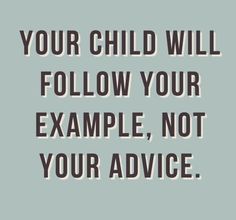 A fundamental principle of good, mature, intelligent parenting is to not try to live the lives of your kids. Simply, don’t come in their way. Don’t try to protect them. Yes, it is a natural tendency to tell them what you believe they must be doing. But say it suggestively and be done with it. Don’t impose your views. Don’t sweat over them. Don’t worry for them. Remember that they are individuals in their own right. They have an independent, intelligent mind – after all, they are your children! So, they want to go out into the big, bountiful world and experiment. They have a right to do what they love doing. And we must never come in their way.
What is the worst that can happen to your child if your child’s choice – of career or relationship or whatever – doesn’t work out? Critically time would have been lost during the tenure of the “experiment”. But how can you ever compute the value of the learning the experience will give your child? The experience of immersing in what she or he loves doing, the experience of selling a value proposition to the world, the experience of being rejected, the experience of thinking out of the box, the experience of stumbling, struggling, falling and standing up again. And how can you even put a value to whatever is making your child happy?
Yes, if a child is embracing a ruinous habit or when, for whatever reason, the child is straying on the wrong side of law or going against the principles of humanity, it is your duty as a parent to stand up and red flag that moment. But again, there are no guarantees that you will be heard or that your sane counsel will prevail. So, we come back to the same principle – suggest, advice and be done with it. Remember, in such cases, when you are not heard, you have not failed. It is just that your child’s learning curve is steeper!
I believe we can give our children only two things – roots, foundational values, on how Life can and must be lived and wings, freedom, so they can fly away. Why would you want to keep your child entrapped in your shadow? Why would you not let her or him just be, let her or him free, to fly away and touch the sky?
Yesterday we met a gentleman who said he was concerned that his son, after his 12thgrade, wanted to pursue a career in art. What the man was perplexed about was that his child had never “demonstrated artistic talent” and yet he wanted to join a foundational undergrad program in art and follow it up with a two-year Master’s degree at some point.
I asked the gentleman what exactly was his concern.
He replied: “I wanted my son to have a basic qualification before he embarked on a career in art.”
By basic, what the man really meant is, doing a conventional degree in medicine, engineering, pure sciences, math, law or literature and such. And why does such a basic qualification matter? Because, as popular perception defines it, starting career plans in these fields are more stable and income, earning a living, doesn’t pose a challenge.
But what about doing what you love doing? What about passion?
“Well,” said the man, “Passion won’t go anywhere. You can always pursue passion later on in Life after you earn some money and save enough to last your lifetime!”
The gentleman is not alone. This is how most of the world thinks, works and lives. A majority of the people believe Life must and will progress linearly. Which is you finish school, go through college, get a job, earn an income, raise a family, build a house, put your kids through school and college, retire and post-retirement you try to follow your bliss – health and time (on the planet) permitting – and, eventually, you die. Even assuming that this linear progression and its attendant monotony is sufferable, there is no guarantee that anyone’s Life progresses along this straight path. A health challenge here, a relationship issue there, a career low or a fundamental skills issue (because you have opted to do something only because it pays you and not because you love doing it) – all this and more makes your Life path look like an ECG reading, often even treacherous to survive! So, after battling Life’s ups and downs, when you finally have reached a point when you can afford to go do what you love doing, you are either too exhausted and Life-weary or you just have run out of time!
Now, this perspective is not just about the career choices that your child may make. It is the best way forward for you – for your own inner peace – for all your child’s Life choices.
 A fundamental principle of good, mature, intelligent parenting is to not try to live the lives of your kids. Simply, don’t come in their way. Don’t try to protect them. Yes, it is a natural tendency to tell them what you believe they must be doing. But say it suggestively and be done with it. Don’t impose your views. Don’t sweat over them. Don’t worry for them. Remember that they are individuals in their own right. They have an independent, intelligent mind – after all, they are your children! So, they want to go out into the big, bountiful world and experiment. They have a right to do what they love doing. And we must never come in their way.
 What is the worst that can happen to your child if your child’s choice – of career or relationship or whatever – doesn’t work out? Critically time would have been lost during the tenure of the “experiment”. But how can you ever compute the value of the learning the experience will give your child? The experience of immersing in what she or he loves doing, the experience of selling a value proposition to the world, the experience of being rejected, the experience of thinking out of the box, the experience of stumbling, struggling, falling and standing up again. And how can you even put a value to whatever is making your child happy?
Yes, if a child is embracing a ruinous habit or when, for whatever reason, the child is straying on the wrong side of law or going against the principles of humanity, it is your duty as a parent to stand up and red flag that moment. But again, there are no guarantees that you will be heard or that your sane counsel will prevail. So, we come back to the same principle – suggest, advice and be done with it. Remember, in such cases, when you are not heard, you have not failed. It is just that your child’s learning curve is steeper!
I believe we can give our children only two things – roots, foundational values, on how Life can and must be lived and wings, freedom, so they can fly away. Why would you want to keep your child entrapped in your shadow? Why would you not let her or him just be, let her or him free, to fly away and touch the sky?
January 5, 2016
If you are lonely in each other’s presence, it’s probably best to separate!
Loneliness is a virtue if you are alone, a learning if you are in a crowd and a curse if you experience it in a relationship – particularly in a marriage!
Someone who read my recent blogpost on Bajirao Mastani (http://avisviswanathan.blogspot.in/2015/12/what-we-can-learn-from-kashibai-about.html) shared her perspective: “I don’t think Kashibai deserves to be deified for her choice of separating from Bajirao. Perhaps, she was uninteresting and very traditional, housewife-ish? Perhaps Bajirao found Mastani very refreshing, vibrant, oozing mohabbat from every pore…perhaps the trappings of being a Peshwa and being bound to tradition – wife, kingdom, mother, army – shackled Bajirao and he just wanted to break free? And Mastani’s offer to be his companion gave him that exit route?”Hmmm….! In the absence of the real Bajirao, the real Kashibai and the real Mastani, you can’t entirely disagree with this reader’s point of view. Besides, if that is what drove Bajirao go with Mastani, nothing wrong with it at all. It is definitely a better choice than being lonely in a marriage – which, interestingly, leaves your spouse lonely too! In the movie The Lunchbox(Ritesh Batra, 2013), Lillete Dubey, who plays Illa’s (Nimrat Kaur) mother, poignantly alludes to how lonely – and dreary and traumatic – her Life has been until her husband’s passing away. In fact, she confesses, not in a grief-stricken state of stupor, but in a moment of absolute clarity, that all she really wants to do, to perhaps celebrate her new freedom, is to eat parathas! The reference to parathas is purely figurative. It could be anything that you love doing - anything except feeling lonely in a relationship, anything except suffering alone, anything except being shackled!
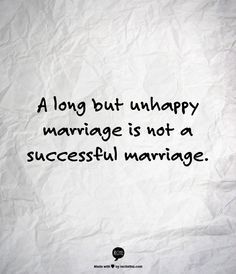 A marriage is nothing but an arrangement, equivalent of a business contract. If, for whatever reason, it doesn’t work out, the arrangement must be dissolved. There’s nothing to grieve about, feel sorry for or berate when a marriage fails. A marriage fails because the two people in it have stopped looking forward to each other. They can’t relate to each other anymore. They are lonely in each other’s presence. How much more banal and painful can it get? When you put up with loneliness of this kind in a relationship the entire responsibility of your suffering is yours. Remember: you have a choice. And that choice is to opt out.
I am not trying to suggest that all of us must break away from our marriages. All I am saying is that if you are unhappy, lonely and suffering in a marriage – or any relationship – exercise your choice to break free. The brutal truth is none of us has too much time left here. This Life has to be lived – each moment is to be celebrated and you must be happy every step of the way! When something or someone pins you down and makes you lonely, sad or unhappy, either get it or them out of the way or you get out of the way yourself! Simple!!
 A marriage is nothing but an arrangement, equivalent of a business contract. If, for whatever reason, it doesn’t work out, the arrangement must be dissolved. There’s nothing to grieve about, feel sorry for or berate when a marriage fails. A marriage fails because the two people in it have stopped looking forward to each other. They can’t relate to each other anymore. They are lonely in each other’s presence. How much more banal and painful can it get? When you put up with loneliness of this kind in a relationship the entire responsibility of your suffering is yours. Remember: you have a choice. And that choice is to opt out.
 I am not trying to suggest that all of us must break away from our marriages. All I am saying is that if you are unhappy, lonely and suffering in a marriage – or any relationship – exercise your choice to break free. The brutal truth is none of us has too much time left here. This Life has to be lived – each moment is to be celebrated and you must be happy every step of the way! When something or someone pins you down and makes you lonely, sad or unhappy, either get it or them out of the way or you get out of the way yourself! Simple!!
Walk in Faith – don’t worry about your clothes getting wet!
In Life’s most excruciatingly painful moments, keep the Faith – fundamentally in yourself. Know and believe that if you have been created (obviously, without your asking for it), you will be looked after, provided for and cared for.Ramakrishna Paramahamsa (1836~1886) often used to tell the story of a milkmaid to awaken people to have faith in themselves. Let me share that story with you. A farmer's daughter’s duty was to carry fresh milk to customers in various villages. One of the customers was a priest. To reach his house, the milkmaid had to cross a stream by a sort of ferry raft, for a small fee.
One day the priest, who performed worship daily by offering fresh milk to God, finding that it arrived very late each day, scolded the milkmaid. “What can I do?” she lamented, “I started out early from my house, but I had to wait a long time for the boatman to come.”
The priest refused to accept her explanation. He barked at her: “What! People have even walked across the ocean, on the water, by repeating the name of God, and you can't cross this small stream?” The milkmaid took his words very seriously. From then on she brought the priest's order of milk punctually every morning. After a few weeks of the milkmaid’s improved, on-time delivery, he became curious about it and asked her how it was that she was never late anymore.
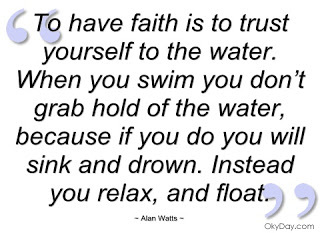 “I cross the river repeating the name of the Lord,” she replied, “just as you told me to do, without waiting for the ferry.” The priest was shocked. He didn't believe her, and asked, “Can you show me this, how you cross the river on foot, how you walk on water?” So they went together to the stream and the milkmaid began to walk on water. Looking back, the young lady saw that the priest had started to follow her but he was floundering in the water. He was refusing to move forward beyond a point.
“Sir!” she cried, “You are uttering the name of God, yet all the while you are holding up your clothes from getting wet. That is not trusting in God!”
Ramakrishna Paramahamsa used to sum up the moral of his story thus: “If you lose Faith you lose everything. Faith in ourselves, Faith in the God within, this is the secret to greatness. If you have Faith in all the three hundred and thirty million gods... but still have no Faith in yourselves, there is no salvation for you!”
I relate totally to that perspective. Most of the time, most of us are like that priest – holding up our clothes from getting wet, while professing faith in all the religions around us and in an external God. And that’s precisely the reason why we often feel depressed, deprived and lost in the face of Life’s challenges. When we learn to walk in Faith, in ourselves, than by sight alone, we will have learned to cross the river of Life – peacefully and joyfully!
One day the priest, who performed worship daily by offering fresh milk to God, finding that it arrived very late each day, scolded the milkmaid. “What can I do?” she lamented, “I started out early from my house, but I had to wait a long time for the boatman to come.”
The priest refused to accept her explanation. He barked at her: “What! People have even walked across the ocean, on the water, by repeating the name of God, and you can't cross this small stream?” The milkmaid took his words very seriously. From then on she brought the priest's order of milk punctually every morning. After a few weeks of the milkmaid’s improved, on-time delivery, he became curious about it and asked her how it was that she was never late anymore.
 “I cross the river repeating the name of the Lord,” she replied, “just as you told me to do, without waiting for the ferry.” The priest was shocked. He didn't believe her, and asked, “Can you show me this, how you cross the river on foot, how you walk on water?” So they went together to the stream and the milkmaid began to walk on water. Looking back, the young lady saw that the priest had started to follow her but he was floundering in the water. He was refusing to move forward beyond a point.
“Sir!” she cried, “You are uttering the name of God, yet all the while you are holding up your clothes from getting wet. That is not trusting in God!”
Ramakrishna Paramahamsa used to sum up the moral of his story thus: “If you lose Faith you lose everything. Faith in ourselves, Faith in the God within, this is the secret to greatness. If you have Faith in all the three hundred and thirty million gods... but still have no Faith in yourselves, there is no salvation for you!”
I relate totally to that perspective. Most of the time, most of us are like that priest – holding up our clothes from getting wet, while professing faith in all the religions around us and in an external God. And that’s precisely the reason why we often feel depressed, deprived and lost in the face of Life’s challenges. When we learn to walk in Faith, in ourselves, than by sight alone, we will have learned to cross the river of Life – peacefully and joyfully!


