
George Hodgman's Blog, page 10
March 10, 2015
The first reading of the Bettyville tour is tonight in NY at Barnes & Noble Uppe...
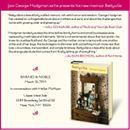
The first reading of the Bettyville tour is tonight in NY at Barnes & Noble Upper West Side. Hope to see you there: http://store-locator.barnesandnoble.com/event/86093


Today is the pub date of Bettyville. I want you to know that I love you and than...
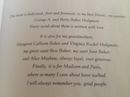
Today is the pub date of Bettyville. I want you to know that I love you and thank you for your support, particularly those from home whose reaching out has meant so much to me. I worry about your expectations. The book began with my love for my mother and the desire to show this ordinary/extraordinary woman facing with dignity, grace, spirit, and wit that challenge that we all confront: old age and all its hard steps. I wanted to show that, even though she may face moments of struggle and challenges, Betty--still stubborn, beautiful, funny, strong--remains here, through it all. There are things lost along the way, but is no need to turn away. Betty is still here, trying, and there are so many like her. Heres to your Bettys. The courage they all show everyday would not be truly honored without the depiction of the difficult realities of their struggles.
Above all in life I have treasured my parents. The book attempts to show how, despite differences that may superficially separate parents and children, the love of fathers and mothers provides a foundation that never goes away, even on city streets, far from home when life turns difficult. Houses disappear; home comes with you wherever you go, sheltering you. I have carried mine through many battles. Some may shock readers, but this book attempts to present people as they deal with the very human battles of life in a changing world. This is a book about real life. Valentines don't hold up when you are looking for a book that is a companion in hard times.
Bettyville attempts to show the towns I love, buffeted by bad economies and social transformation, but surviving with their sense of communities and kinds heart intact through it all. I love resilience most of all and I love theirs. I have loved coming home. I have loved being with my mom and all of you. I don't think I'm special here, trying to take care of my mom. All over, millions are taking care of someone. What I'm trying to say is that even someone like me--someone who thought he couldn't, someone who couldn't even even keep a cactus alive, or manage an insurance form or make anything better than a tuna casserole for dinner--can try to help and keep going. All you have to do is show up. Please forgive me for any errors. I'm sure there are many. I am going to trust you to approach this story with an open mind. A book is only as good as its readers. Those inclined to criticize will always be there to shake a stick, wag a tongue. In the background to everything there is always someone sharpening his blades.. Those inclined toward generosity, toward enlarging their hearts and experience will be there, too. I hope they will find a line or a page or two to remember now and then.
Above all in life I have treasured my parents. The book attempts to show how, despite differences that may superficially separate parents and children, the love of fathers and mothers provides a foundation that never goes away, even on city streets, far from home when life turns difficult. Houses disappear; home comes with you wherever you go, sheltering you. I have carried mine through many battles. Some may shock readers, but this book attempts to present people as they deal with the very human battles of life in a changing world. This is a book about real life. Valentines don't hold up when you are looking for a book that is a companion in hard times.
Bettyville attempts to show the towns I love, buffeted by bad economies and social transformation, but surviving with their sense of communities and kinds heart intact through it all. I love resilience most of all and I love theirs. I have loved coming home. I have loved being with my mom and all of you. I don't think I'm special here, trying to take care of my mom. All over, millions are taking care of someone. What I'm trying to say is that even someone like me--someone who thought he couldn't, someone who couldn't even even keep a cactus alive, or manage an insurance form or make anything better than a tuna casserole for dinner--can try to help and keep going. All you have to do is show up. Please forgive me for any errors. I'm sure there are many. I am going to trust you to approach this story with an open mind. A book is only as good as its readers. Those inclined to criticize will always be there to shake a stick, wag a tongue. In the background to everything there is always someone sharpening his blades.. Those inclined toward generosity, toward enlarging their hearts and experience will be there, too. I hope they will find a line or a page or two to remember now and then.
March 8, 2015
I get by with a little help my friends. Thank you. http://youtu.be/LXn8naS6Zuo
I get by with a little help my friends. Thank you. http://youtu.be/LXn8naS6Zuo

Alanis Morissette - Thank You (Live)
Roxy Theatre New York ,1999.
Alanis Morissette - Thank You (Live)
Roxy Theatre New York ,1999.
March 7, 2015
http://www.nytimes.com/2015/03/08/fas......
http://www.nytimes.com/2015/03/08/fashion/after-a-homecoming-a-son-finds-his-muse.html
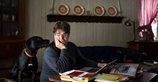
I would like to say that I am not really this fat. I've gained a few pounds, but only to reach an expanding market.
After a Homecoming, a Son Finds His Muse
www.nytimes.com
A book editor is downsized out of a job, but finds salvation and inspiration for a memoir when he returns home to care for his mom.
I would like to say that I am not really this fat. I've gained a few pounds, but only to reach an expanding market.
After a Homecoming, a Son Finds His Muse
www.nytimes.com
A book editor is downsized out of a job, but finds salvation and inspiration for a memoir when he returns home to care for his mom.
March 6, 2015
My name is Raj. I am so the star of this book.
My name is Raj. I am so the star of this book.

March 5, 2015
From Bettyville, coming March 10, from Viking:
“What’s wrong with you Betty? Wh...
From Bettyville, coming March 10, from Viking:
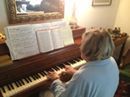
“What’s wrong with you Betty? What’s wrong with you? Why did you do that?” Betty is upset, talking to herself at the piano. She has played the wrong note. Later she is to accompany the choir at church and, scared of embarrassing herself, has gotten up early to practice. She still drives herself when she is scheduled to perform. The music stops; she coughs. I hope she won’t make more mistakes. A fragile bundle in pink flannel, she is sitting at the piano in the living room as the sun begins to fall through the lace curtains she says will crumble if washed once more.
“It’s imported,” she says of the fabric. “Switzerland. Somewhere.”
Betty is making her way slowly through “Take the Time to be Holy.” Not as sure or certain at the keyboard as she was, she hits a few “clunkers.” Each one hurts us both, tearing into our pictures of the woman we remember, shoulders held stiffly erect as she played, never hitting a wrong note. “Hold up your shoulders,” Mammy always told her. “Hold up your shoulders.” If her posture sagged, her father walked up behind her and struck her between the shoulder blades.
“Why did you play that?” my mother asks herself. “You know better than that.” I get angry, along with her, when she makes a mistake. I get mad when she is less than she was.
Every time she plays, it’s more of a trial. She will no longer allow me accompany her to church. She does not want me to hear her.
The piano has been my mother’s instrument since she was a girl taking lessons from Miss Elizabeth Richmond in Madison. Trudging through the street with her music books, she probably dawdled a bit, stopping to look at the windows of Chowning’s Dry Goods, run by Wray’s father, Scott, or stopping at the Rexall, if she had the money for a stick of candy or an orange slice. “We weren’t poor poor,” Mammy always said. “But we were poor.”
Betty’s gentle touch at the piano, the soft way she rests her fingers on the keys and makes the music flow, remains. There is such sweet feeling when she touches the keys. The piano is where she hides a certain part of herself that must be kept covered up and safe.
I don’t want her to have to stop playing in church. I don’t want her to stop trying. I don’t want to lose the part of her I feel when she makes music.
“What’s wrong with you Betty? What’s wrong with you? Why did you do that?” Betty is upset, talking to herself at the piano. She has played the wrong note. Later she is to accompany the choir at church and, scared of embarrassing herself, has gotten up early to practice. She still drives herself when she is scheduled to perform. The music stops; she coughs. I hope she won’t make more mistakes. A fragile bundle in pink flannel, she is sitting at the piano in the living room as the sun begins to fall through the lace curtains she says will crumble if washed once more.
“It’s imported,” she says of the fabric. “Switzerland. Somewhere.”
Betty is making her way slowly through “Take the Time to be Holy.” Not as sure or certain at the keyboard as she was, she hits a few “clunkers.” Each one hurts us both, tearing into our pictures of the woman we remember, shoulders held stiffly erect as she played, never hitting a wrong note. “Hold up your shoulders,” Mammy always told her. “Hold up your shoulders.” If her posture sagged, her father walked up behind her and struck her between the shoulder blades.
“Why did you play that?” my mother asks herself. “You know better than that.” I get angry, along with her, when she makes a mistake. I get mad when she is less than she was.
Every time she plays, it’s more of a trial. She will no longer allow me accompany her to church. She does not want me to hear her.
The piano has been my mother’s instrument since she was a girl taking lessons from Miss Elizabeth Richmond in Madison. Trudging through the street with her music books, she probably dawdled a bit, stopping to look at the windows of Chowning’s Dry Goods, run by Wray’s father, Scott, or stopping at the Rexall, if she had the money for a stick of candy or an orange slice. “We weren’t poor poor,” Mammy always said. “But we were poor.”
Betty’s gentle touch at the piano, the soft way she rests her fingers on the keys and makes the music flow, remains. There is such sweet feeling when she touches the keys. The piano is where she hides a certain part of herself that must be kept covered up and safe.
I don’t want her to have to stop playing in church. I don’t want her to stop trying. I don’t want to lose the part of her I feel when she makes music.
Update: BETTYVILLE is available for pre-order! Order from any of the following l...
Update: BETTYVILLE is available for pre-order! Order from any of the following locations, or your favorite independent bookstore:
Left Bank Books: http://bit.ly/1Lcbjww
Barnes & Noble: http://bit.ly/1Enyhz0
Books-A-Million: http://bit.ly/1CZtqjt
Amazon: http://amzn.to/1BgiDz8
iTunes: http://bit.ly/1uTou0L
Indiebound: http://bit.ly/1xZPJT3
ABOUT BETTYVILLE, A MEMOIR TO BE PUBLISHED MARCH 10, 2015:
In the Northeast part of Missouri, where the big rivers run, angels are prayed for, and Wal-Martians battle for bargains, there is a little town called Paris where you can find George and Betty—lifelong allies, conspirators, sharers of jokes and grudges, occasional warriors, mother and son.
Beneath the comic banter they share lies undying love, loyalty, and occasionally, the desire to throttle each other. They have been through it all. Now they are facing…a little more--the juncture that every son or daughter understands, that reversal of roles that rarely goes smoothly as parent grows older and child struggles, heart in hand, to hold on to what once was.
George—“fiftysomething-ish,” bruised from big-time Manhattan where he has lost his job—has returned to Missouri for Betty’s ninety-first birthday at the height of the hottest summer in years. The roses in the yard are in danger. As is Betty. The mother George remembers as the beautiful blonde flooring the accelerator of the family’s battered Impala has lost her driver’s license. Suddenly this ever -independent woman—killer bee at the bridge table, perfectionist at the piano—actually needs the help she would rather die than ask for.
Despite his doubts (“I am a care inflictor…I am the Joan Crawford of eldercare”) and near-lethal cooking skills, George tries to take over, stirring up and burning tuna casseroles with potato chips, mounting epic expeditions for comfortable but stylish shoes, coming to understand the battle his determined mother is waging against a world determined to overlook the no longer young. The question underlying everything? Will George lure Betty into assisted living? When hell freezes over. “Okay,” he concedes, “I’ll go.” He can’t bear to force her from the home they both treasure where the trees his father planted shelter Betty on her shaky trips around the yard.
But, along with camaraderie and these hard new concerns, this time they share triggers memories and sometimes old regrets. Despite their closeness, there is so much that this mother and son have never spoken of and now this seems to matter, maybe more than ever. Betty, who speaks her mind but cannot always reveal her heart, has never really accepted the fact that her son is gay. George has never outgrown the feeling that he has disappointed her. For so long, these two people—united but still silent about too many things—have struggled with words. They will never not be people who lead different kinds of lives. But they try their best to make things right. Betty sees her son’s sadness and tries to reach out. George is inspired by his mother’s unfailing bravery. As they redefine the home they find themselves sharing once more, a new chapter of their story is written. As they pass through George and Betty’s bittersweet hours and days, readers will find themselves moved by two imperfect but extraordinary people and what is finally the most human of stories, a tale of caring and kindness sparked by humor and touched by grace.

Bettyville: A Memoir (Hardcover) | Independent Since 1969
www.left-bank.com
Left Bank Books: http://bit.ly/1Lcbjww
Barnes & Noble: http://bit.ly/1Enyhz0
Books-A-Million: http://bit.ly/1CZtqjt
Amazon: http://amzn.to/1BgiDz8
iTunes: http://bit.ly/1uTou0L
Indiebound: http://bit.ly/1xZPJT3
ABOUT BETTYVILLE, A MEMOIR TO BE PUBLISHED MARCH 10, 2015:
In the Northeast part of Missouri, where the big rivers run, angels are prayed for, and Wal-Martians battle for bargains, there is a little town called Paris where you can find George and Betty—lifelong allies, conspirators, sharers of jokes and grudges, occasional warriors, mother and son.
Beneath the comic banter they share lies undying love, loyalty, and occasionally, the desire to throttle each other. They have been through it all. Now they are facing…a little more--the juncture that every son or daughter understands, that reversal of roles that rarely goes smoothly as parent grows older and child struggles, heart in hand, to hold on to what once was.
George—“fiftysomething-ish,” bruised from big-time Manhattan where he has lost his job—has returned to Missouri for Betty’s ninety-first birthday at the height of the hottest summer in years. The roses in the yard are in danger. As is Betty. The mother George remembers as the beautiful blonde flooring the accelerator of the family’s battered Impala has lost her driver’s license. Suddenly this ever -independent woman—killer bee at the bridge table, perfectionist at the piano—actually needs the help she would rather die than ask for.
Despite his doubts (“I am a care inflictor…I am the Joan Crawford of eldercare”) and near-lethal cooking skills, George tries to take over, stirring up and burning tuna casseroles with potato chips, mounting epic expeditions for comfortable but stylish shoes, coming to understand the battle his determined mother is waging against a world determined to overlook the no longer young. The question underlying everything? Will George lure Betty into assisted living? When hell freezes over. “Okay,” he concedes, “I’ll go.” He can’t bear to force her from the home they both treasure where the trees his father planted shelter Betty on her shaky trips around the yard.
But, along with camaraderie and these hard new concerns, this time they share triggers memories and sometimes old regrets. Despite their closeness, there is so much that this mother and son have never spoken of and now this seems to matter, maybe more than ever. Betty, who speaks her mind but cannot always reveal her heart, has never really accepted the fact that her son is gay. George has never outgrown the feeling that he has disappointed her. For so long, these two people—united but still silent about too many things—have struggled with words. They will never not be people who lead different kinds of lives. But they try their best to make things right. Betty sees her son’s sadness and tries to reach out. George is inspired by his mother’s unfailing bravery. As they redefine the home they find themselves sharing once more, a new chapter of their story is written. As they pass through George and Betty’s bittersweet hours and days, readers will find themselves moved by two imperfect but extraordinary people and what is finally the most human of stories, a tale of caring and kindness sparked by humor and touched by grace.
Bettyville: A Memoir (Hardcover) | Independent Since 1969
www.left-bank.com
March 4, 2015
Note to woman on Goodreads who left this rating:
3.5 rounded down.
1) No one...
Note to woman on Goodreads who left this rating:
3.5 rounded down.
1) No one said you could use fractions--including decimals which are less obvious and somehow even sneakier.
2) No one said there would be "rounding." I was not told that rounding would be a part of this.
3.5 rounded down.
1) No one said you could use fractions--including decimals which are less obvious and somehow even sneakier.
2) No one said there would be "rounding." I was not told that rounding would be a part of this.
LISTEN TO THE FIRST CHAPTER OF BETTYVILLE: This link (http://bit.ly/1aLydNF) wil...
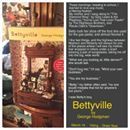
LISTEN TO THE FIRST CHAPTER OF BETTYVILLE: This link (http://bit.ly/1aLydNF) will get you to Soundcloud or somewhere, some darn cloud, where you can listen to the beginning of the audio book. Maybe you'll like it. The actor who reads the book is named Jeff Woodman and I like him a whole lot. He couldn't have tried harder to bring it to life. The audiobook, ebook, and hardback all come out Tuesday. Below is a homemade advertisement for the book made by my friend, Lauren (she likes Laurie better) Lowenthal who helped with editing and provided wise criticism.
March 3, 2015
My time, George time in Bettyville, where I live now, happily, begins after nine...
My time, George time in Bettyville, where I live now, happily, begins after nine, after I give my mother her pills, apply ointment to her tender pink eyelid where she gets infections, fill the humidifier to moisten the air she breathes, and help her get into bed. At night, Betty—ninety-two years old and so uncertain now-- gets nervous and upset. I try to hide the fact that I feel scared, too, scared for her, scared for me, scared of tomorrow, and next week, scared of everything that is approaching us here in the house where we have always lived, where a few of the trees my father planted remain alive in the backyard and the rosebushes from my grandmother’s garden will bloom again in a few months, when it is warm.
Sometimes now my mother seems like my little girl. When she is anxious at bedtime, I sit by her side and tell her to relax, take deep breaths, say that tomorrow she will feel better and that there is a pan of fresh cinnamon rolls for breakfast. When she goes to sleep, I throw her dirty clothes from the day into the washer. Her gowns, her soft precious nightgowns, are spotted from all the little battles that make up her days now. I can never bear to throw the old ones away and hide them in a drawer or up on the shelf of my closet when they are too worn to wear anymore.
In the family room, I eat a Dove bar, take our sweet dog up on my lap and cup his head in my hands as if he were my baby. Sometimes Raj looks so sad with all those feelings he cannot communicate swirling inside his warm, gentle being. I love the sound he makes when he opens his mouth to yawn and always notice how he looks the saddest when I am feeling low, when I am feeling the most aware of the fact that our days in this safe home together are scarce now. I see how I feel in his eyes. He sleeps stretched across my lap while I watch “House of Cards”, or read, or watch the snow, studying the footprints we have left in the yard during the day visible in the light falling through our back window.
The sky here is always full of stars. When I take Raj out for the last time at night, I always point out the big dipper but he looks at me strangely, as if I don’t know my constellations. Sometimes, for now reason at all, he just sits down to gaze at the dark woods behind our house. All over the earth, under this same sky, mother and fathers are watching their children sleep or waking them up. Workers are walking through pastures or through teeming city streets. People are praying, singing songs, dying and laughing, saying “Good morning” or goodbye. In the fullness of the dark, it is possible to feel all the life going on if you stand still in a quiet place for a moment. Your problems and pains take their places among all the other human concerns.
My mother is sick in complicated ways and I have been with her here for four years. Each winter has gotten more gray. When I brought Raj home year before last, not long before Christmas, Betty eyed him suspiciously. “That dog has a long tail,” she said. “Let’s cut it off.” She still never lets him get too close, but watches him very closely, yelling out, “Where’s the dog?” if he is nowhere to be seen. Sometimes when he bounds into the family room, prancing in that special, bouncy way he adopts when he has just pooped copiously by her bed, she looks at him, then looks at me. “I’m going to skin you alive,” she says to him, but mostly, when he has an accident, she delivers the news to me with sorrow, as if she is sad to have to tell me of his error.
In the beginning, Raj slept in a bed purchased for him by my friends. He slept with me for the first time, curled up in the fortress I had made of my legs on the night I came home from the hospital without Betty when we discovered she had cancer. He had not known a night without her and kept going into her room, missing her tissues that he loves to chew up. Every day, he traveled with me to the hospital, waiting in the car between our walks around the lake of Stephens Park. “How’s the dog?” Betty asked every morning first thing when I walked into her room before the doctor’s rounds.
Watching him as he plays, beating the new toy he clutches in his mouth against the carpet, seems to take her away. He amuses her and when she smiles, I am grateful. I don’t know if God sent us this dog or if there is a God, but if there is, I hope he has the same humble attributes as Raj. There have many things I have wanted to be in this life. Now I would just like to be as simply good as this dog.
In a few days, I have to leave for a while, to work, to promote a book so I can pay my rent and taxes. I don’t want to go. I don’t want to leave them. I treasure our days here—the rolls, and trees, and roses. I love what we have shared during these years, me and Betty and our little black dog. Betty doesn’t want me to go, but she says nothing. She thinks she had already taken too much of my time. She has not. I just want to do my job and get back to Bettyville and find that they are both safe here in our home. I don’t want to say goodbye before I have to.


Sometimes now my mother seems like my little girl. When she is anxious at bedtime, I sit by her side and tell her to relax, take deep breaths, say that tomorrow she will feel better and that there is a pan of fresh cinnamon rolls for breakfast. When she goes to sleep, I throw her dirty clothes from the day into the washer. Her gowns, her soft precious nightgowns, are spotted from all the little battles that make up her days now. I can never bear to throw the old ones away and hide them in a drawer or up on the shelf of my closet when they are too worn to wear anymore.
In the family room, I eat a Dove bar, take our sweet dog up on my lap and cup his head in my hands as if he were my baby. Sometimes Raj looks so sad with all those feelings he cannot communicate swirling inside his warm, gentle being. I love the sound he makes when he opens his mouth to yawn and always notice how he looks the saddest when I am feeling low, when I am feeling the most aware of the fact that our days in this safe home together are scarce now. I see how I feel in his eyes. He sleeps stretched across my lap while I watch “House of Cards”, or read, or watch the snow, studying the footprints we have left in the yard during the day visible in the light falling through our back window.
The sky here is always full of stars. When I take Raj out for the last time at night, I always point out the big dipper but he looks at me strangely, as if I don’t know my constellations. Sometimes, for now reason at all, he just sits down to gaze at the dark woods behind our house. All over the earth, under this same sky, mother and fathers are watching their children sleep or waking them up. Workers are walking through pastures or through teeming city streets. People are praying, singing songs, dying and laughing, saying “Good morning” or goodbye. In the fullness of the dark, it is possible to feel all the life going on if you stand still in a quiet place for a moment. Your problems and pains take their places among all the other human concerns.
My mother is sick in complicated ways and I have been with her here for four years. Each winter has gotten more gray. When I brought Raj home year before last, not long before Christmas, Betty eyed him suspiciously. “That dog has a long tail,” she said. “Let’s cut it off.” She still never lets him get too close, but watches him very closely, yelling out, “Where’s the dog?” if he is nowhere to be seen. Sometimes when he bounds into the family room, prancing in that special, bouncy way he adopts when he has just pooped copiously by her bed, she looks at him, then looks at me. “I’m going to skin you alive,” she says to him, but mostly, when he has an accident, she delivers the news to me with sorrow, as if she is sad to have to tell me of his error.
In the beginning, Raj slept in a bed purchased for him by my friends. He slept with me for the first time, curled up in the fortress I had made of my legs on the night I came home from the hospital without Betty when we discovered she had cancer. He had not known a night without her and kept going into her room, missing her tissues that he loves to chew up. Every day, he traveled with me to the hospital, waiting in the car between our walks around the lake of Stephens Park. “How’s the dog?” Betty asked every morning first thing when I walked into her room before the doctor’s rounds.
Watching him as he plays, beating the new toy he clutches in his mouth against the carpet, seems to take her away. He amuses her and when she smiles, I am grateful. I don’t know if God sent us this dog or if there is a God, but if there is, I hope he has the same humble attributes as Raj. There have many things I have wanted to be in this life. Now I would just like to be as simply good as this dog.
In a few days, I have to leave for a while, to work, to promote a book so I can pay my rent and taxes. I don’t want to go. I don’t want to leave them. I treasure our days here—the rolls, and trees, and roses. I love what we have shared during these years, me and Betty and our little black dog. Betty doesn’t want me to go, but she says nothing. She thinks she had already taken too much of my time. She has not. I just want to do my job and get back to Bettyville and find that they are both safe here in our home. I don’t want to say goodbye before I have to.
George Hodgman's Blog

- George Hodgman's profile
- 100 followers
George Hodgman isn't a Goodreads Author
(yet),
but they
do have a blog,
so here are some recent posts imported from
their feed.

