P.J. Fox's Blog, page 27
October 20, 2014
Is It Really Brave To Forgive Your Captor?
Making headlines this week is the fact that Michelle Knight “forgave her captor despite years of torture.”
And that’s great. And good for her. And I sincerely wish her all the best. But I wonder, is announcing that you forgive someone for abusing you in fact brave? It seems to me that far braver is admitting that you’re still angry; that you fantasize about killing that person. Because that’s what people don’t want to hear.
Everyone wants to hear, “I forgive! I’m all better now!” For years, I got tremendous pressure to forgive my biological mom for abusing me. When I was six years old and she responded to me not organizing her closet right by fracturing my skull and locking me in said closet overnight, I was encouraged by my other family members to think about what I might have done wrong to cause such a reaction. And I certainly wasn’t allowed to be angry. Neither was I at school. My anger at my unjust treatment was viewed as a flaw and something to be treated, possibly with medication, rather than as a perfectly normal and acceptable reaction to an unlivable life. This pattern continued into my adulthood, too; people often asked invasive questions about my biological family and, by way of response, what they mainly wanted to hear was whether I now “understood” my biological mother’s point of view.
They didn’t want anger; they wanted acceptance. They wanted everything to be okay, so they could tell themselves that everything was okay. That no one had been permanently damaged; that it was all a big misunderstanding. That there was no failure of the system and, more importantly, from their point of view, no failure on their own part to act.
The pressure to forgive is enormous; the stigma attached to anger even more enormous.
The bravest thing to do is to honor your authentic feelings. If those are forgiveness and acceptance, then fine. But I don’t think there’s actually anything wrong with saying, you know what, I actually can’t forgive the person who locked me in a basement and tortured me for ten years. I was locked in a variety of different basements, closets and cramped, unheated rooms for most of my first ten years and let me tell you, I’m still angry. Because it’s okay to get angry about injustice. If nobody ever got angry about injustice, if everyone instead practiced learning to be okay with injustice, then nothing would ever change.
Have I forgiven the people in my life, who let me down?
Honestly, I’m still struggling with that. Forgiveness is a goal of mine, and one I work toward every day. But to say that I’m there would be a lie. Because, deep down inside, part of me doesn’t want to be there. Part of me needs to be angry because part of me is still convincing me that what happened wasn’t, in fact, my fault. That I have a right to be angry; that my (so-called) family was wrong in telling me that she never would have “had” to hurt me if I’d only been a better child.
Anger can be a tool of healing, too.


Negative Feedback: What To Do
It’s a challenge for anyone, but particularly I think for writers: how to glean something useful from negative feedback. Sure, negative feedback sucks for everyone; but it’s particularly awful when people are absolutely excoriating your beloved baby. Your book. The Price of Desire, my second book, was not initially well received. There was too much history; there were too many interpersonal relationships, but they didn’t fit into any standard genre mold. There was too much discussion of political issues. The characters were too flawed. Which…none of that was fun to read.
And then, one day, while I was breaking my own rule and dwelling on my negative reviews, it came to me: one reviewer had, thoughtfully, provided me with the answer. “It’s not good science fiction, anyway,” he’d written. Which…he was right! It wasn’t! Because it wasn’t science fiction! It was speculative fiction. It was an alternate history (with, correspondingly, an alternate future). All the positive reviews, and comments from readers, had one thing in common: they kept calling the book “literary.”
Gosh, I realized, I’d written literary fiction.
People who actually enjoy this kind of book are my market.
All of this…was challenging to realize. Believe it or not. But once I did, I immediately felt better; because the problem wasn’t that my book wasn’t any good (I knew it was), but that it was encountering something of an ugly duckling problem. In terms of genre fiction, it was an ugly duckling. The issue, often, isn’t the quality of one’s writing but reader expectations. Finding success for your work can be as simple as finding the right audience. Now, “simple,” of course, doesn’t mean “easy.” Many straightforward, obvious things are in fact incredibly challenging to accomplish. But once I realized what the problem was, I had a goal.
And I realized, too, that I could use the feedback I’d received, both positive and negative, to help connect the book with people for whom these “flaws” were actually strengths; hearing that you’re not a duck can be hard, but knowing that you’re not a duck is one more step along the path to realizing that you are a swan.
When it comes to marketing your book, sometimes you get it right the first time around. And sometimes you don’t. Books on discrete topics, like how to self publish your novel, are pretty easy to shelve. But books that defy easy genre categorization are harder. Particularly when you’ve gotten comfortable of thinking of your book in one way, i.e. as a science fiction novel, and suddenly readers tell you different. It can feel a little like being cast adrift; but it’s also extremely liberating. Or can be, if you approach the situation with the right attitude.
The “right” attitude being, I think, what can I learn from this?
Yes, you can try to teach people what they should like in romance, or science fiction, or whatever. Or you can give the people what they want. Not by changing yourself, or your own writing, but by doing a better job connecting yourself with all the people out there who are already looking for you. Even if they might not know it. You are what someone wants; rather than fighting a losing battle, trying to convince someone (or a great many someone’s) to change their mind, go where you’re already wanted. Which takes a leap of confidence, assuming that those people do in fact exist but, like the commercial says, you’re worth it.
Thoughts?


The Catfish Blues
I live on a strange street.
Being known as “that person from Utah,” and a writer to boot, I am also regarded as quite strange. Although I’m actually from further west and ended up in Utah via first New Mexico and then Arizona before I was adopted. Upon finding out that I’d spent my formative years in the desert and was the middle of five children, my neighbor then decided that I was so strange, her children could no longer come over to visit with mine. She was further incensed that (with parental permission for an outing!) I’d taken the kids to the park and then bought them pizza. And asked if they wanted to go apple picking the next weekend.
It’s kind of hard being yourself, sometimes.
I have another neighbor who wants her husband–who, in all fairness, is kind of a jackass–to think that she takes her health as seriously as he does. So she goes “running” every morning. Meaning that she gets kitted up in this very serious-looking running outfit and then “runs” until she’s out of sight of her house. And then stops in front of our house, sits down on our retaining wall, and hangs out for awhile. I noticed this because, when I started falling behind my deadline for The Prince’s Slave, I kicked my butt into high gear and started getting up an hour earlier every morning. Which means I both get to appreciate the sunrise…and see some pretty strange things.
I began to wonder, why is she doing this? What benefit is there in pretending to run? Sure, she’s clearly doing it to impress her husband but why? He’s not that much of a jackass–is he? And, in any case, she seems to like him well enough. So then I considered: maybe it’s about her? Using him, and everyone else in her household, as a mirror? If they think she’s athletic, then she is?
I’ve observed this phenomenon before. I know one woman who’s actually completely unemployed and has been for years–by choice, she lives off of an inheritance–who nonetheless claims to hold a variety of interesting positions. Every time you talk to her, she has a new “career.” And pretends she never told you about the old one. Or ones. She’s “always” been an autism researcher, or a house flipper, or a world-famous writer of self help books. Or had an illustrious career on Broadway that she’s only recently left. Despite having neither talent nor training in these areas. I’ve had people pretend to be lawyers, when talking to me–not realizing that I, myself, was one. And I try to be polite, but…
Why? Why do people do this? At some point, wouldn’t it just be easier to go to school for ten years and actually become one of these things? The mental energy involved in keeping up this kind of facade has to be exhausting. And however much people praise you for your so-called “accomplishments,” deep down inside it’s got to suck because you know you haven’t done any of these things. They’re not praising you for who you actually are, or for what you’ve actually done, but a lie.
Which, I suppose, is the heart of the Catfish phenomenon. Within a limited exposure lens like Facebook, or really the internet in general, you can control how people see you. Tell people anything you want about yourself and, in effect, create your own “truth.”
But again…why?
Thoughts, world?


October 19, 2014
How To Support Your Transgender Friend
Am I transgender? No. So there’s an argument to be made that I’m not qualified to write this post. Even so, while I might not have much experience with questioning my gender identity, I do have quite a bit of experience with being the friend of people who have in the past, or are currently doing so. Which, I think, renders my outsider perspective quite useful: I can share what I’ve learned, both through trial and error and through my friends’ coaching, with other people who might be in the same boat.
Wondering, how can I be the best friend possible to my friend, during this undoubtedly strange time?
What if I say or do the wrong thing, and it’s really awkward?
How can I show my friend that I’m on his/her team, without making him/her feel like a science experiment?
Read on…
Saying something is better than saying nothing. Your friend is transitioning from one gender to another; she (I’m using “she,” here, for the sake of writing efficiency; pick your pronoun poison, and we’ll get to that later) isn’t hoping that no one will notice. Moreover, treating your friend like she has a disease isn’t helpful. It’s okay to compliment your friend; it’s okay to ask questions. At some point you will say the wrong thing, and that’s okay; apologize (sincerely) and move on. There was only ever one perfect man, and none of us are Him. Better to take the leap of faith and support your friend, the best way you know how, than to isolate that person through focusing unduly on your own ego. This isn’t about you, and your fear of your own inadequacy.
Your friend is still the same person. Think Doctor Who: she used to be Fred, now she’s Angela. Same person, regenerated into a different shape. It’s not necessary to inquire, every time you go out, if your friend now likes different foods, etc because your friend is “different.” Your friend is not different. Your friend is the same person she always was. She didn’t wake up one morning and decide to swap genders willy-nilly. The person you became friends with initially, however many days or months or decades ago, was pondering these same issues back then.
This is about more than genitals. Issues come up: the loss (or gain) of male privilege. The trial that is learning to apply mascara. If you know how to help with one or more of those things, then offer. Don’t make a big deal out of it. Pointing out that, “gee Angie, you really suck at putting on mascara and that’s probably because you used to be a boy” isn’t helpful. Moreover, Angie, in her mind, didn’t used to be a boy. She was always a girl. But girls helping each other deal with being girls is a normal rite of passage and part of life; whatever their birth genders. I help my friends with their makeup all the time.
Don’t use your friend as your diversity role model. Pointing out “my transgender friend” to every Tom, Dick and Harry you meet is not cool. Someone’s gender identity, and sexual orientation, are private things. It’s just plain rude to talk about your friend’s genitals without their permission. Moreover, people might not know that Angie used to be Fred. Think of it this way: let’s say you’re getting married, and instead of being happy for you your friend uses this Apex Life Moment as an opportunity to tell everyone she meets about your awful ex boyfriend and how at one point you planned on marrying him. You’d probably wonder, why can’t she just be happy for me now? Why does she need to air my dirty laundry to one and all? What is she getting out of doing this? Let your friend tell people what she wants to tell them about her personal life. These are her boundaries to draw; not yours.
Pronouns: when in doubt, ask. I have friends who prefer he, friends who prefer she, and friends who prefer they. Often, people fear to ask what is in fact a relatively simple question–what pronoun do you prefer–from fear of causing offense. Trust me, it’s way more offensive to not care enough to ask! And to demonstrate that lack of caring by using any old pronoun, regardless of your friend’s preference! Because you’re not invested enough in your friend’s happiness to learn these fundamental details about her life, her goals, and her identity. Like what gender she wishes to be known as. Think about it: when you meet a new person, you ask their name. You don’t just point and go, “I assign you the name Sue.” And then tell everyone that, well, that was easier (for you) than asking Sue her real name. Because that would be crazy. Strangers aren’t offended by the idea that you don’t automatically know their personal details; when people meet me for the first time, I expect them to have to ask questions in order to learn that my name is PJ and I’m from Utah. If they somehow already knew those things, then I would be frightened. So don’t act like a crazy psycho stalker and don’t be presumptuous! Show an interest! Ask!
Good Communication is important. Something on your mind? Part of being friends with people is, you know, talking to them. About things a little more deep than the weather. The surest way to kill a friendship isn’t to ask the wrong question, or accidentally say something offensive, but to disengage with your friend completely because their life is too confusing to you. I went through a rough period in my life a few years ago, a transition of sorts, and I lost a lot of friends. Friends who basically told me, “call me when you’re cheerful again.” Or, even better, “call me when you’re healthy again.” I’m sure some of them were shocked that, after regaining my health and good spirits, I didn’t call. If they didn’t have time for me when I was down and out, then I sure don’t have time for them now. Friendship isn’t about glossing over the parts of someone else’s life that are inconvenient to you. No, coming to visit a bedridden sick person isn’t any fun; but you know what? Friendship is a two way street. All their disinterest taught me was that their so-called “friendship” was conditional.
Confusion is normal. And I don’t mean about gender. Let’s say that, for example, you grew up with Fred. You were friends with Fred all through school; Fred was your best friend. But then Fred became Angie and Angie is hot. You may find yourself experiencing new and terrifying feelings for Angie. Worrying that if you, say, lose yourself in the moment and put your hand on her thigh, she will think you’re disgusting and hate you forever. You may also be confused about the fact that Angie used to be someone you played touch football with but now when you play touch football with Angie she has boobs. Because face it, in situations like this, I’m pretty sure that the transgender person is actually the least confused. Angie always knew she was Angie; you’re the one dealing with the sudden, and perhaps unwelcome realization that you now want to date her.
This is a pretty short list, and more of a soft intro than an exhaustive discussion. But tell me, what have I missed? Have you been in this situation, on either side? Do you feel like I’m off base about something?


Update!
As you probably know, some of my books are free right now.
So that’s exciting. Also exciting is the fact that, yesterday afternoon, the final, copy edited manuscript of Self Publishing Is For Losers went to the formatter. We’re looking for an early November release date on that but, as always, I’ll keep you posted. For a variety of reasons, release dates can be hard to predict.
Less exciting is the fact that everyone in my family but me has the flu. Originally we had church and then dinner with friends planned; now it looks like I’ll be staying home and writing while everyone else sleeps. Which I suppose could be construed as good news; one step closer to publishing The Black Prince!
That’s the heart of the challenge, I suppose, when it comes to writing: it’s a job, like any other. It’s a fun job, but it’s still a job. And, as with any job, you need to put in long hours and work hard during those hours to succeed–but you also need time off. And, sometimes, real life does intervene. For those who’ve been following along, you know that this fall has been plagued with non-writing related problems that have slowed my output somewhat. But I’m doing my best. And in the meantime, I, Demon is available in Kindle and paperback. Just in time for Halloween!


A Week of Free Ebooks Starting Tomorrow!

Read my books for free!
 Originally posted on Evil Toad Press:
To get in the spirit of both autumn (good writing weather) and the Halloween season, we’re running a special October promotion.
Starting tomorrow, Saturday, October 18th through Wednesday, October 22nd, three of our titles will be FREE in Kindle format on Amazon.com, including P.J. Fox’s new novel The Prisoner, released yesterday:
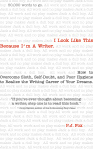
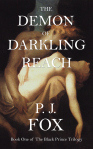
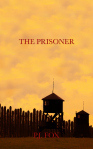
Click on the images above to be take to their Amazon product pages. Don’t miss out!


October 18, 2014
How To Write A Bestseller
Curious about how I’ve published six books (and over 700,000 words) this year so far?
It’s not a miracle–I’d built up quite a backlog in the years before finally deciding to take matters into my own hands–but I do produce, on average, two to three complete manuscripts per year. Self Publishing Is For Losers is coming out in just a few weeks but, in the meantime, the only writing guide you’ll ever need is free for Kindle today (and through October 22). I Look Like This Because I’m A Writer is my guide to how to write, but it’s also the blueprint for success that I created, over years, for myself. It’s the best of what I have to offer about the writing process. Whereas my guide to self publishing is about what to do with your manuscript once you’ve got one, ILLT is about how to actually write one. It’s your personal writing coach.
If you don’t like my books, or my advice, then ignore both. But if you’re curious about how I got to where I am–from “never published a book” to “supporting myself with my writing” in less than six months–then this is the best answer I can give you. And, as always, you can interact with me via this blog, via email, and via Twitter. I like hearing from you!
No one can guarantee a bestseller, but the one thing we are all in charge of, as authors, is the quality of our work. And honestly, I like to think that, in the end, quality will out. Happy writing!


Fact Check!
Years ago, I read an otherwise okay book wherein Harvard University was described as being in Harvard, Massachusetts. When in fact Harvard University is in Cambridge, Massachusetts. Trust me, I should know. There is, indeed, a Harvard, Massachusetts–and it’s home to a really great pick your own farm (that jars and sells its own really great applesauce) and nothing else. Whereas Cambridge is home to Bartley’s Burger Cottage. A wonderful place that almost single-handedly fed me for some years.
But the problem is hardly limited to the realm of self publishing. In one of Ann Rule’s books, the Provo Temple is incorrectly identified as the Salt Lake Temple. Being a) from Utah and b) a Mormon, I immediately noticed this difference! Stephen King, too, has made a number of mistakes in regards to describing both Mormons and their beliefs.
And the thing is, that matters. Not because his ignorance is offending all the Mormons out there but because what you describe–and how accurately you describe it–influences the course of your book. Whether you’re having your action take place in a pee-smelling concrete jungle with great burgers or an apple orchard matters. Whether you understand the religious beliefs of either the real life people you’re trying to profile or the fictional characters you’re trying to create matters. Because it all boils down to this question: how real do you want your world to be?
One of the criticisms I’ve gotten for The Demon of Darkling Reach is that it contains too much modern language. In fact, phrases like “fuck you” date back to Republican Rome. The Latin slang, which translates to “fuck” actually derives from the word fornix, which means arch; people used to get together for sexy time underneath the aqueduct arches in Rome. Moreover, nobody was actually speaking English in England’s middle ages; the modern language, with which we’re all familiar, hadn’t been born yet. People didn’t go around sounding like Cecil B. De Mille movies; all that “thee” and “thou” in the King James Bible (which came out substantially after the middle ages ended) is due to the fact that the progressive tense hadn’t been introduced to English yet.

And this is where fact checking–and research as a whole–gets interesting: often the actual facts don’t comport with our expectations, or assumptions, at all. Which is, of course, why people don’t research in the first place; they assume. Which is how we end up with people taking classes in apple orchards and shouting “away, scoundrel!” rather than doing anything reflective of what might actually be, or have been, reality.
Do your homework!


October 16, 2014
The Prisoner and I, Demon Are OUT!
Both The Prisoner and I, Demon are out today! Kindle versions only; their print versions should both be available by middle of next week (if not sooner). I’m thrilled that both are out in time for Halloween.
I, Demon is a collection of five different novellas, spanning time periods and dimensions. The Prisoner is one of the stories included in I, Demon, but is also being released as a novella in its own right. It costs 99 cents, making it a good introduction to my work for those who might not otherwise take the risk.
Unlike The Black Prince Trilogy, which has strong horror elements but is, at heart, a romance (if perhaps a romance for the dark-hearted), I, Demon is a collection of straight-up horror. Although fans of The Black Prince Trilogy will recognize one of the stories. If you want something to read, to get you in the Halloween spirit, then this will keep you up at night.
Captured as he attempts to guard the retreat of fleeing colonists, a young naval officer is stripped of all he owns, tortured, and then shipped to a place called, simply, Hell. A prison camp where men kill each other for rations. Where the rations themselves aren’t fit to eat. Where rivers of sewage flow in place of fresh water. Where a man adapts, or dies.
This is his story.
In this brilliant collection of five separate novellas, P.J. Fox takes you into the heart of a Hell that only she could imagine….
Each of the five stories in I, Demon each examines a different kind of demon and, with it, a different form of evil. “A Thousand and One Nights” tells the tale of a girl forgotten, and of the evil that lurks all around us. That, sometimes, appears right under our noses. But that we, in our rush to cross one more thing off that never ending to do list, ignore. Or never perceive at all. “Vampire Winter” is about more than possession; it’s the story of how a man turns into a monster. “The Prisoner” reminds us that depravity needs no supernatural element. “Paranoia” tells the story of a boy who cried wolf just one too many times…so that when a real wolf came knocking on his door in the dead of night, no one believed him. And finally, “The Assassin” illustrates that sometimes the worst evil is the most mundane. A “good” man is often more evil than a stone cold killer ever could be. When, at least, we have the courage to see the world as it is—rather than as we’d choose to imagine.
Enter, if you dare….
Happy reading!


The Self Publishing Guide Arrives In November
Between writing the first draft of Self Publishing Is For Losers: The Evil Toad Press Guide To Self Publishing and actually setting a publication date, I did of course begin to receive offers of representation. You know, traditional publishing started to woo me. Which, believe me, is not something I thought would ever happen. And I’m not telling you this to brag but, rather, to illustrate a point about why my original choice was–is–still the best. I’ve said before that, unfortunately, nothing succeeds like success. Traditional publishing came knocking for the same reason I initially chose to self publish: our brethren at the Big Five like a sure thing. When I’d first (and second, and third) gone to them, no one knew who I was. No one cared. When they came to me, that was no longer the case.
I’m no Stephen King. But I make a respectable living at what I do and hope to continue making a respectable living at what I do; not because I want a BMW (I recently sold mine, seeing as how I no longer have a law firm to drive to), but because I’d be writing anyway. On a desert island. So being able to buy groceries while still writing is just, like, a nice added bonus. Plus bills.
The sad truth is that most traditionally published authors aren’t making a living at what they’re doing. Neither are self published authors but the difference is that more self published authors are making a living than traditionally published authors. The market has proved that people buy books, not publishing companies; they buy on the strength of name brand recognition, not publishing company confidence.
Why, say, Random House would be more appealing to me after I’d proved that I didn’t need their imprint on my spine to sell a book than before, I have no idea. The mystique of the gatekeepers–agents, publishers, etc–relies on their actually being, you know, gatekeepers. The collective assumption that I must surely still want their help, even when I’d helped myself just fine without them, was predicated on an entirely different assumption: that writers are desperate. That no amount of success, out of the mainstream, can compensate for some arbitrary blessing of “legitimacy.” That, in other words, supporting myself and my family with my writing or, indeed, simply having the satisfaction of charting my own creative course cannot compete with the joy of knowing that some agent and some representative of the Big Five approve of me. Except…I’m not desperate, and I don’t need their approval.
I started out, not to gain approval but to write. To write, and to share my stories with the world. I believed, and still do believe, that my stories are good and that I have something to say. Something that can touch people.
I’m not, believe it or not, longing to sit at the popular kids’ table.
If your high school was anything like mine, then you probably noticed that the “popular” kids were pretty much self-proclaimed. They decided they were exclusive and awesome and everyone else, being sheep, pretty much more or less went along with that. In many cases, though, their supposed “success” wasn’t determined by any real world markers. They weren’t actually good at anything, including getting along with other people. Which is why, I think, so many popular kids flounder in the real world. No amount of self congratulation can compensate for actual success–and the older you get, the more success is determined by the ability to get up every morning and do something. To make friends with new people. To convince them to like you, and to want to work with you, on the basis of your own merits.
My husband has some (now former) friends who, years later, are still getting together and telling each other how cool they are. No one else really talks to them and most of them are chronically unemployed. The most successful one among them tends to hold each job he lands no longer than a few months. But they tell each other that they’re popular, and congratulate each other on being popular, and if their world is slowly shrinking around them then they’re refusing to notice.
Sometimes, traditional publishing reminds me of them: a group of cool kids whose time has passed and whose only method of interacting with the outside world seems to be to tell you how much you need them. Without, you know, ever doing anything. Other than be who they’ve always been and wonder why it’s not working anymore.
My husband’s friends missed the part where “cool” started to be determined by having a career and a family and, you know, life skills. Part of what makes them so sad is that they’re dinosaurs, and they don’t realize it. High school was great–for some people, I guess–but it ended.
Succeeding means staying relevant.
Much of the traditional publishing machine is, increasingly, not relevant. If you think about it, them coming to me isn’t so much a compliment to me as it is a point of concern about them. It’s become a joke, within and about traditional publishing, that no one can predict the next big thing. Which, imagine if this were true in any other field! Success in technology, for example, rests on being attuned to the customer’s needs. That traditional publishing can’t figure out what people want to read shouldn’t be a joke. It should be devastating. And continuing to do things exactly the same way, year after year, while trying to court authors to your team to make up for your deficiencies in not signing them in the first place is not a good thing.
It’s the equivalent of Samsung trying to sell you a typewriter.
Moreover, I have absolutely no urge whatsoever to give creative control up to some random publishing house when I’ve proved that I’m perfectly capable of making intelligent creative decisions on my own. More capable than they are; I knew my books would sell, and they didn’t. So what, exactly, is in it for me to trust their judgment over my own?
Oh, right, I forgot: popularity.
I wrote Self Publishing Is For Losers for other writers like me: serious-minded people who are serious about their success, and who want to succeed on their own terms. Who aren’t willing to compromise artistic integrity for some vague notion of “belonging.” Who want to compete with the big boys, but who don’t want to give into the comedy that only a bunch of old, white men who can’t even use the internet can possibly determine what sells.
If you touch yourself to Harold Bloom, then this book probably isn’t for you. It’s a takedown of the very institutions he defends; it’s meant to help you succeed without him, and men like him, men who’ve defined what “literature” is, and isn’t, for ages. It’s a self-help toolbox for those wishing to become their own gatekeepers and, as such, is going to encourage you to rely on your own best judgment. Traditional publishing and its hangers-on wants to disempower you by telling you what you need. By telling you what to think and what to want. Whereas the goal of Self Publishing Is For Losers is to empower you. By being both the pep talk and the master class in the nuts and bolts of the publishing industry you need to chart your own course–with the only limitation being you.