Jason SurfrApp's Blog, page 3
September 24, 2023
A Simple 6-Part Formula for an Effective Homepage Design
Your website is not just a decorative accessory for your business. It’s often the first impression someone has of your business and it needs to be assisting you in making revenue. This starts with an effective homepage design.
We’ve spent years building websites for our service-based businesses (offering branding and website design) as well as for our digital product businesses (selling online courses, e-books, memberships, and more).
Optimizing your website to be more effective in support of your strategy is vital to making your business successful. Your website should be working on your behalf to reach your revenue goals. If you aren’t hitting your goals and you desire growth, you need to consider the possibility that your website isn’t doing its job.
In this article, we’re going to share with you the processes we use over and over again to design an effective homepage.
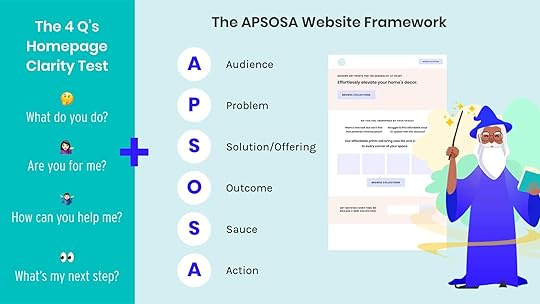

How To Gauge The Effectiveness of Your Homepage: 4Qs Clarity Test
Before you go making changes to your site, you need to gauge how effectively your homepage is communicating with your customer at the moment. Start by climbing into the shoes of someone visiting your site for the first time who knows nothing about your business.
Does your current homepage CLEARLY answer these 4 questions:Q1: What do you do?As a visitor, would you know immediately what kind of business your site promotes and what mental category to put it in? What’s the two-word category that your customer/client should put you in? You don’t want someone to be confused about what kind of business you run.
TIP: We call this your “two-word tango.” Someone should easily be able to identify you as a graphic designer, web developer, marketing consultant, business coach, fiction author, etc.
Q2: Are you for me?As a visitor, would you be able to identify if this business was geared toward you? Would you recognize yourself in the copy or resonate with the design elements?
Your website homepage should explicitly state your audience somewhere. Your target audience should be able to say to themselves, “I’m in the right place!” It’s about showing them that your business, brand values and personality are a match for them.
It also helps you sort through who you want to be working with. What kind of customers or clients do you want to be spending your time with? You want your site design to speak to those people, even if it means people who don’t fit that bill will be turned off.
Q3: How can you help me?As a visitor, would you know how your life would be improved by hiring this business or buying a product from this business? There should be a clear outcome stated for your client/customer. As Donald Miller from StoryBrand says, “make the customer the hero” and show them the journey they can go on with your business.
We love this quote from April Dunford on positioning yourself and your product:
Q4: What’s my next step?“Customers don’t care about your unique features, they care what those features can do for them. Your positioning needs to be centered on the value that you alone can deliver for customers.”
As a visitor, would you know what action you should take next if you were interested in this business? It should be super obvious, compelling and visually distinctive.
Please, for the love of Pete (whoever Pete is) stop burying your email signup form in the footer of your website, especially if that is one of your main objectives for your website. Also, don’t just say “sign up for my emails,” add a compelling statement as to WHY someone should give you their email address.
 4Qs ACTION STEP
Pop open a new browser tab and go to your website’s homepage (we know you have about 17 others open  ). Now go through the four questions outlined above. Does your homepage currently pass the 4Qs Clarity Test?
 Design An Effective Homepage Using Our APSOSA Framework
What do you do if your website DOESN’T pass the 4 Question Clarity test?
Don’t panic! We’ve come up with a magic spell (because, fun  ) that will get your website and homepage working toward your business goals in no time. We call this spell “APSOSA” and feel free to shout Websitium APSOSA! as you continue reading.
Use the APSOSA spell if you want to redesign your home page to CLEARLY speak to your customer and support your primary objective.
These are the following six elements that should be communicated clearly through your design and copy.
A – Audience:You want to be able to identify who you’re talking to and they need to immediately recognize themselves in your copy.
P – Problem:Speak to the problem that your audience currently has. Remind them what they’re struggling with.
S – Solution/Offering:Tell them the solution to their problem and position your offering as the thing to provide that solution.
O – Outcome:This is where you describe how their life will be better on the other side of buying from you/working with you. Paint a picture of the future they could have.
S – Sauce:What makes you stand out from the sea of other websites they’ll check out that day. Be memorable and add your own authentic spin throughout.
A – Action:Make it clear what the MOST important action you want them to take is. Be clear
about what’s waiting for them on the other side and make it compelling.
The video below is a clip from one of our Wandering Aimfully coaching sessions where we taught the APSOSA framework to our members using one of our awesome folks and their site as an example!
.embed-container { position: relative; padding-bottom: 56.25%; height: 0; overflow: hidden; max-width: 100%; } .embed-container iframe, .embed-container object, .embed-container embed { position: absolute; top: 0; left: 0; width: 100%; height: 100%; }
APSOSA ACTION STEP
Head back over to that browser tab with your website. Go through each step of the APSOSA framework and identify where on your homepage each facet is represented on the page. Are you addressing the six key elements in APSOSA right now? If not, write down any small changes you could make to your copy to satisfy all six parts of the formula.
 Homepage Design Wrap-Up!
We hope you’ve enjoyed learning our two processes for creating an effective homepage design that helps your business meet its objectives.
Before you make any changes, be sure to grab some analytics on how your website was performing before you made these tweaks. We recommend tracking:
 Number of visitors to your homepage in the last 30 days
 Number of conversions to signing up for your email list/free consult/contact form the last 30 days (whatever your “lead” action is)
 Number of conversions to hiring you or purchasing your product in the last 30 days
Then, if you haven’t done so already, put your homepage through the 4 Questions Clarity Test and the APSOSA framework. What do you need to change? What design dont’s do you need to fix?
Be willing to experiment with your homepage and lean toward having LESS content than you think you need. Keep your objectives for your website in mind and compare your changes to your baseline metrics!


September 22, 2023
This Goal Setting Routine Prevents Burnout
Are you tired of the chaotic whirlwind that entrepreneurship can become? Ready for a simplified, calm take on goal-setting?
Our business changed dramatically when we started implementing processes to set goals, make plans, and actually check in on them, rather than just flying by the seat of our business pants. Which, in case you were wondering, are definitely NOT corduroy pants. Ew.
We’ve created a set of goal-setting pies (mmm,  ) that help us set long-term goals AND short-term goals that feed into those long-term goals. There are four different goal-setting pies, each with a different time frame, and a different purpose that starts out very broad and gets more and more specific as we go:
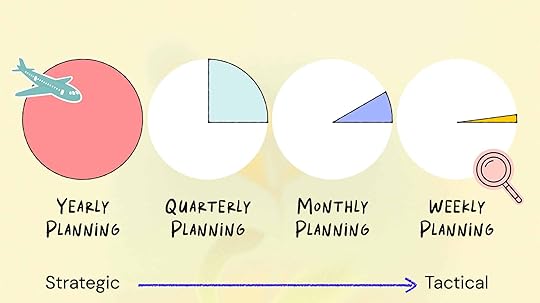
Let’s dig into each one of these and share with you HOW it will contribute to a greater feeling of calm in your business!
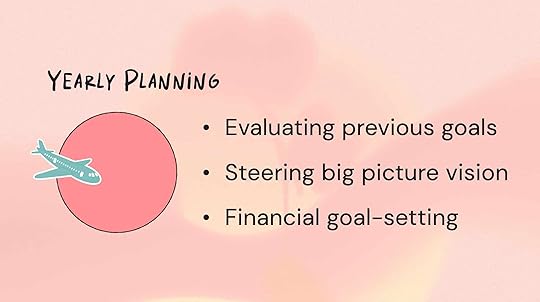
Start Goal-Setting with Yearly PlanningYearly planning IS the first goal-setting pie and it’s arguably the most important piece to start with.
You want to start by setting your vision and financial goals for the yearThis is the 20,000-foot view of your business from above. When we do our yearly planning, we carve out about 3 days at the beginning of the year (or before the year even kicks off) to imagine broadly where we want to steer our businesses. You don’t have to wait for a new year to start to do planning for the next year, feel free to start TODAY.
A few things we like to focus on that should help you with a yearly planning meeting… Theme of the Year – Is it a growth year? A more calm year? A year to invest in your skills and learn new things?
 Seasonality of the Year – What are the rough dates for your big projects? When are your launches?
 Personal Time of the Year – When do you want to travel? Are there days/weeks/months you are planning to take off?
 Financial Goals of the Year – What’s the total revenue you want to make in the next 12 months? How does it break down by project? How does it break down by month? How much profit are you expecting? What’s the high-level budget breakdown?
For the financial goals, we’re also taking a closer look at our projects and imagining what initiatives need to be created to actually make our revenue goals come true.
This is the overall view of what you want your next year to look like. Don’t skip this step, it’s what sets the tone for the rest of your goal-setting pies!
 Quarterly Planning to See a Path to Completing Goals
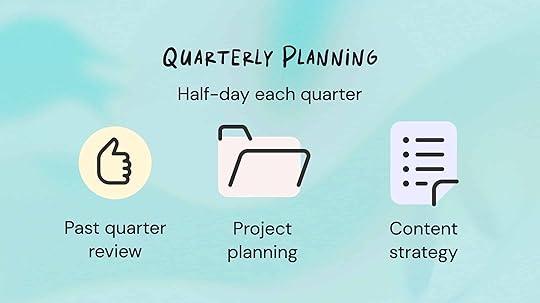
We like to meet for a half day once a quarter to chat about project planning and big-picture content creation for the next three months. There are two broad categories that help at this stage:
Prioritization Stage and Review Stage Prioritization: What projects do you want to prioritize for the upcoming quarter? What milestones and deadlines will help you stay on track to hit your quarterly goals?
We’ve found that if we don’t prioritize projects and plans at the beginning of a quarter, all our tasks and todos tend to pile up in a bit of a business car accident. We want you to AVOID a pileup of tasks and todos, which is why you prioritize ahead of time!
 Review: Look at your previous three months and adjust your bigger vision accordingly.
Maybe a marketing initiative didn’t go as planned or you decided to shift your strategy with new information. A quarterly meeting is a great place to reflect on how your previous plans came to fruition. It’s 100% okay if you didn’t hit your quarterly goals, this is the time to review and adjust so you can get back on track!
Quarterly Planning is also the goal-setting pie where you check in on your content strategyIt’s important to think about what content channels you WANT to be spending time creating for. Just because everyone is jumping on TikTok doesn’t mean your business needs to be on TikTok. If anything, quarterly planning is the perfect time to start a new content experiment and then reflect on the previous one to see if it’s actually working!
Questions to answer in your quarterly content planning time:
What content channels do you want to CONTINUE using?What content channels do you NOT want to prioritize?What do your email newsletters look like for the upcoming quarter?How did your email newsletters do last quarter? Any standouts?Is there anything new content-wise to experiment with?Think of your quarterly meeting as a great way to check the pulse on the yearly goals you set. This way, you can actually see progress and gain motivation.
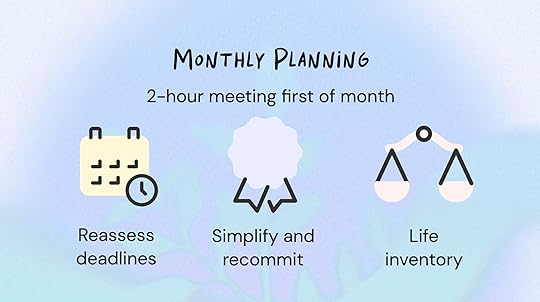
Monthly Planning is Where You Shift From Strategy to ExecutionEvery single month we sit down and have a 2-3 hour meeting where we check in on the progress of our projects, deadlines, personal goals, financial goals, and take the overall temperature of our business.
Every month is a chance at a fresh start for your goal-settingThe top of a new month is this kind of natural restart, so it’s always a good time to recommit to your priorities.
If you want to exercise more, or spend more time with friends, or go to bed earlier, or have more date nights, etc. these monthly meetings are the perfect time to check in on life, business, and ensuring that everything you’re doing month-to-month is helping you reach your goals.
 Weekly Planning is Where The Goal-Accomplishing Action Happens
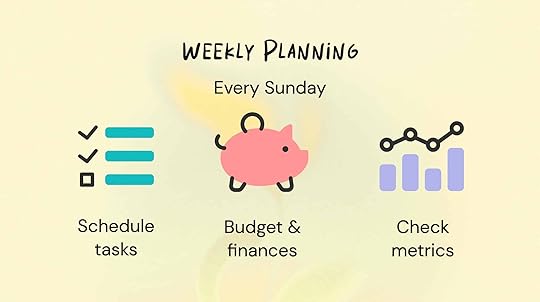
Pick a day of the week that works best for your schedule and block off 1-2 hours to get SUPER granular on your tasks and todos.
We like Sundays, as it gives us a nice springboard into the week. We’ve tried weekly planning on Mondays, but for us, it never felt quite right (almost like we started the week off a day late).
What we plan each week (please steal this!) What content/project are we working on this week?What are the metrics we need to track (email subscribers, website traffic, etc)?How is our latest biz experiment going?How are our life priorities doing?Do we have any customer issues we need to take care of?What (boring) maintenance items are on the docket (life or biz)?Weekly budget meeting (expense review) and forecast check-in
Feel free to add any other items to your weekly planning that fit your life and business. When we’re in a busier season of life, we often have 2-3 meetings per week to stay on the same page and avoid being overwhelmed.
Spend 6% of Your Working Hours on Planning Each YearWe did the math and we spend roughly 100 hours working through the various stages of our planning pies every year.
Out of the 1,500 (ish) working hours available each year (261 weekdays * 5.5 hours per day), we’ll gladly spend 6% of that time to improve our chance of hitting all our goals.
You may work less days and less hours per year. You may work more hours and more days per year. Whatever amount helps you live a calm life and run a calm business is the RIGHT amount!
Know where you’re trying to go, but be willing to evolve.
One of the core values of our business is evolution. We believe in designing businesses that can support who you are now but also who you’re becoming. As your needs and your life change, be willing to adjust your goals accordingly.
A final note on Goals vs SystemsThis concept comes from James Clear and his best-selling book Atomic Habits (aff link). In the book, he talks about how goals are the destinations we fixate on, but the true magic lies in the journey itself—or the repeatable systems we craft in pursuit of those goals.
It’s the small, consistent actions—the systems—that actually pave the way to the outcomes we want. By focusing on the input rather than the output, we can enjoy the process AND put our time towards things that will get us to our ultimate desired destination.
If you don’t consider yourself a planner or a goal-setter, we hope these goal-setting pies will help you bake (HEYO! ) planning into your business so that you can make better progress toward your goals!
How Weekly Budget Meetings Changed Our Financial Lives Forever
Running your own business means you’re thinking about money all the time, but are you thinking about the right things and do you have the right money habits?
We’re not those people who believe money is EVERYTHING and we’re just aiming to squeeze every last dollar of profit out of our businesses.
However, we do believe in using your business to fuel a spacious, calm lifestyle, and more money certainly helps alleviate stress and gives you more choices of how to spend your time.
There are two important money decisions we want to share with you in this article. Neither of them are groundbreaking in theory, but both of them drastically changed our financial situation by putting us more in control and shifting our mindset around money.
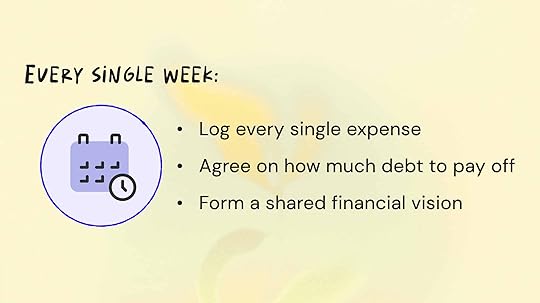
Important Money Decision #1: Mandatory Weekly Budget MeetingsThere was a time not too long ago when we were afraid to log in to our bank and credit card accounts. We thought if we ignored the financial truth of those accounts, mysteriously all our money problems would just sort themselves out. However, that is a tactic that simply does not work.
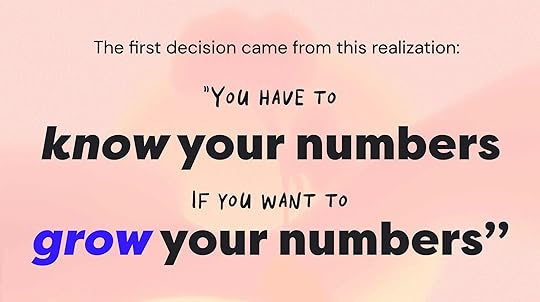
You HAVE to know your numbers in order to grow your numbers. Meaning, you can’t just ignore your finances and HOPE that your financial position will change.
When we were $100,000+ in debt a few years ago, it felt like we were climbing a money mountain that was insurmountable. But the single game-changing decision that turned the tide for us in getting out of debt was to finally commit to having weekly budget meetings where we had to actually look at our numbers.
The first weekly budget meeting sucks, then each week after gets easierWe’re not going to lie to you, that first weekly budget meeting can be like a punch to the gut. But, once we were through it, it allowed us to take back control and actually make a plan for how to pay down our debt and work toward some of our financial goals.
As we moved forward, our weekly budget meetings got less painful. Sure, more money didn’t just magically show up because we started reviewing our finances each week, but it became less uncomfortable to confront our financial reality.
During one of our early weekly budget meetings, we decided to look at paying off our debt like a game.Every expense tracked was a new item we discovered.
Every bill we forgot about was an unexpected mini-boss we had to battle.
Every dollar of income was a shiny gold coin that could get added to our ledger.
When our debt mindset shifted from shame to game, that’s when things got less stressful and when our plan became less daunting!
Further reading: We wrote an in-depth article about our full debt payoff plan and how we paid off $124,000+ in debt in under 3 years.
You might be wondering: Do we still have weekly budget meetings? And the answer is YES! Even many years later, completely debt-free, and with businesses that generate 5x the revenue, we continue to have weekly budget meetings because it keeps us in control of our money!
Important Money Decision #2: Setting “Enough-Based” Financial Goals“A million dollars isn’t cool. You know what’s. “A million dollars isn’t cool. You know what’s cool? A billion dollars.” Thanks for the fun movie quote, Sean Parker, but this type of thinking is what keeps people striving for goals that are unreachable OR reachable with loads of stress.
We want to make it very clear: Whatever amount of money you want to make is totally fine with us! But… We just ask that you take a hard look at your day-to-day life, your specific circumstances, and uncover a financial goal that’s suited to YOU.
We all see it everywhere, people talking about making six figs ($100,000+) and seven figs ($1m+). Again, if those numbers can be broken down and aren’t arbitrary, by all means have them as goals.
However, what we’ve found is more helpful is to set “enough-based” financial goals.
How much money is ENOUGH to live a good life?
Very quick story from Jason  :
:
When we started Wandering Aimfully (WAIM), we decided to take a different approach. It would’ve been easy to say, “let’s have WAIM make $1m per year!” Instead, we learned from Jason’s mistake and asked an important question: “How much money would be ENOUGH?”
This brought us to questions like:
How much do we want to spend on rent each month?What’s our clothing budget every year?Do we want to travel? What does that specifically look like?What about investing? Saving? Donating to causes?We went through every question we could think of to created an “enough-based” financial goal. In the end, we landed on $33,000/month* (~$400k/year) as our first enough goal.
*Note: Setting an enough-based financial goal does not have be a forever goal! Your goals can always change if your life changes. Our enough number has grown since setting this initial one due to new goals of wanting to buy a home, raising kids, and putting money aside to take care of our parents.
Further reading: If you want to read the entire story of how we hit our enough goal for WAIM in the first 3 years (with all the ups and downs along the way!) you can read that full story here.
Depending on your financial situation, $400k per year might sound like a lot or it might sound like not enough. For us, it felt like that amount would be a dream come true because that number was directly related to a lifestyle that would be a dream come true!
You’ll never know you’re satisfied unless you define exactly how big the container of your desires is.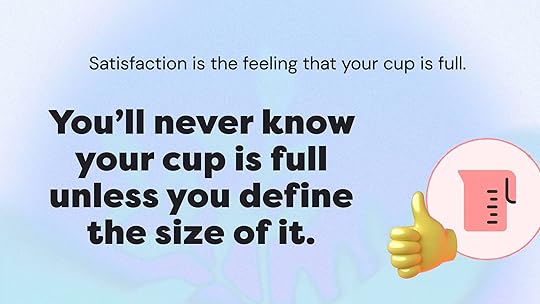

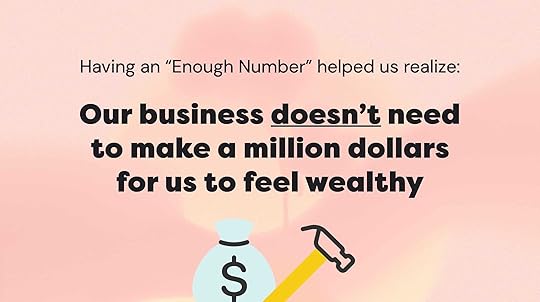
By actually asking ourselves these enough-based financial questions and applying REAL numbers to each category, we were able to see that our business doesn’t need to make a million dollars for us to feel wealthy.
Setting our enough number helped us feel more at ease in growing our business. We had a true north to head toward and it was a way of defining a boundary line of satisfaction. There are plenty of more impressive businesses that make way more money than ours, but we look around and we have gratitude every single day for what we have because we know our goals have contributed to us living our dream lives.
If you want to read more about the idea of ENOUGH and get our specific formulas on how to calculate your Monthly Minimum Magic (MMM) number and Enough number you can read this article.
We hope you’ll apply these two simple shifts to your own personal finance approach, and we hope they bring you less stress, and yes, even more (but also ENOUGH) money!
3 Ways to Unlock Profit Potential in Your Email Marketing: The Dorito Framework
What the heck does a scrumptiously crunchy Dorito chip have to do with profitable email marketing and making your emails irresistible for your subscribers to open?
We want to help you turn your regular email newsletters into a profit-generating powerhouse for your online business! There are 3 game-changing strategies in our “Dorito Framework ” (not actually trademarked, obvs) that will take your email campaigns from ‘meh’ to massive ROI!
Profitable Email Marketing, A 3-Pronged Approach (You Know, Like A Dorito)Let’s assume you ALREADY know the power of email marketing for your business.
You know that as of 2023, email marketing has an average ROI of 3600%, meaning for every dollar spent on email marketing, you receive $36 in return. Cool cool cool. That’s  right there.
Now, maybe you’ve been sending a consistent email newsletter to your audience and you aren’t seeing a 3600% return? You have this suspicion that your email audience is not engaged in the way you know they need to be in order to DRIVE SALES of whatever your offer is.
If that describes you, stick around because our Dorito Framework has the 3 tactics we used to level up our email newsletters, build a deeper connection with our subscribers, and keep our readers coming back for more—just like an irresistible bag of delicious Cool Ranch Doritos. Or Nacho Cheese Doritos. Or BBQ Doritos. You get to choose your favorite Doritos flavor, no judgment from us.
What is the ONE THING you ultimately want from your email marketing?You want it to translate to sales, right?
If you’re running a calm business, you know it’s not ALL about the money, but your time is precious so if you’re spending time on a marketing tactic, it eventually needs to translate to revenue.
And if you want people to BUY what you’re selling, ultimately these potential customers need to do two things…
They need to believe that your offer is a solution to a problem they haveThey also need to TRUST that YOU are the right business to deliver that solution.Trust is the name of the game here, especially if you’re running a client business or online course business.Your customer is making an educated guess about whether to trust you based on every single interaction you’ve had with them from the moment they came into contact with your business.
Which is where your email newsletter comes in.
Email marketing is your IN to building real trust with your audience.Someone who has given you permission to email them has raised their hand and shown interest. And that interest is stronger than just a quick tap of a follow button or a like.
They’ve essentially gone out on a limb and now this is your chance to reward that gesture of faith by showing them you have what it takes to actually improve their life.
Not JUST by sending them valuable content (aka content that is educational or entertaining or personal or time-saving)—though you should definitely do that. And not JUST by showing up consistently in their inboxes—though consistency is key and you should definitely be doing that too. But by showing them that you actually care about building a relationship with them, thus proving to them that handing over their email wasn’t a wasted effort.
And how do you do that? Doritos!
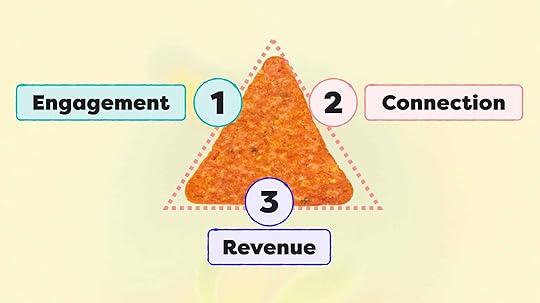
There are 3 things we try to do in every email we send, and they form a nice little triangle – but what’s better than a boring triangle? A more delicious triangle and that’s why we call it the Doritos Framework!
Here are the 3 sides of the Doritos Framework with the 3 things you want your emails to have: 1) A Trust Treasure, 2) A Reply Route, and 3) An Income Iceberg.
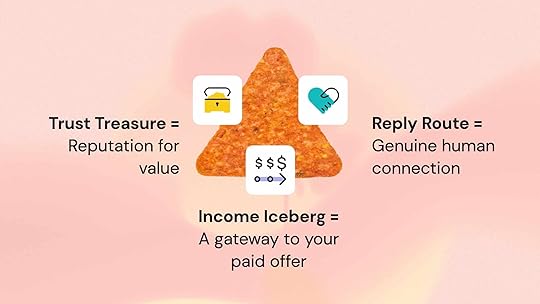
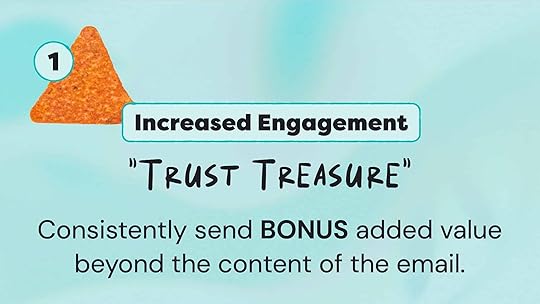
Dorito Corner #1: How a Trust Treasure Leads To Profitable Email MarketingLet’s start with a Trust Treasure – which is going to be some BONUS piece of additional added value beyond just the content of your email that can take your reader one step deeper.
For us, this Trust Treasure could be sending them a free un-boring coaching session to check out, which is normally behind our WAIM Unlimited program paywall, but maybe this one session is relevant to them.
For you, a Trust Treasure could be:
A PDF that creates action-taking on the email contentAn in-depth video that adds more context and learningA specific article that can help them level up furtherA podcast episode that shares the journey or storyA link to someone else’s business that adds more valueTrust Treasure can be ANYTHING you like, the point is that you’re going above and beyond what your audience expects, and you’re rewarding them for engaging deeper with your brand.
The more Trust Treasure you offer alongside your existing email content, the more your audience will come to think of you as someone who OVER-delivers on value. That over-delivering is going to contribute greatly to how someone perceives you when they decide whether to buy your offer.
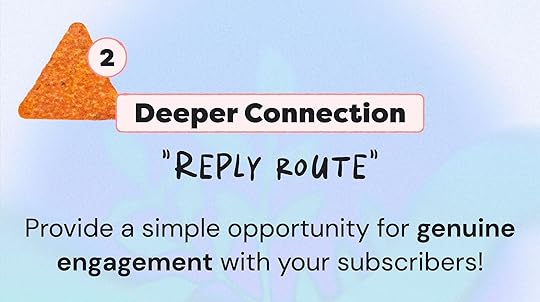
Dorito Corner #2: Add a Reply Route to Every EmailOne thing we hear all the time from folks who run email newsletters is, “I never get any replies to my emails, am I doing something wrong?” When we take a look at their email newsletters we see a very clear pattern: There isn’t a CLEAR and OBVIOUS Reply Route in the email.
If you want someone to reply to your email newsletters, you have to create and unbelievably clear and specific invitation for them to hit reply.There are tons of ways you can position your Reply Route, but here are two examples if this article was written as an email newsletter:
Reply Route Example #1: Hit reply and share which of the 3 parts of the Dorito Framework you’re most excited to try in your next email newsletterReply Route Example #2: You can give them a super convenient and easy reply route by saying something like “Reply with the word DORITO (or your fave Doritos flavor) if you felt like this email was valuable to you.”By lowering the barrier on the reply and making the call to reply visually prominent, you can still open up the two-way conversation and use that as an invitation to ask more questions, further forming trust.
Email newsletter replies are absolutely still a thing and even MORE valuable as email automation becomes a bigger part of marketing.
If you can show someone that you’re a real human and willing to take the time to reply to them, even if it’s short, your efforts are going a long way to building a bridge of trust.
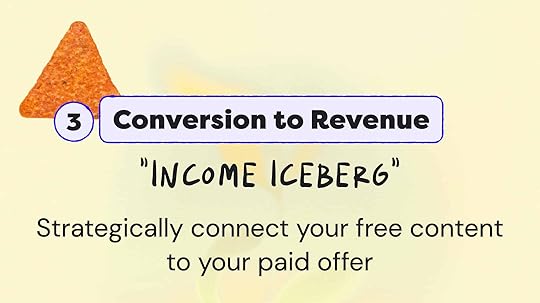
Dorito Corner #3: Build Your Income IcebergThink of your paid offer (your online course, template, etc) like an iceberg, with all this incredible value just waiting under the surface for someone to buy and get access to.
It’s your job to think of your email content like the very top bit of the iceberg bobbing ABOVE the surface.Your email content is the free part someone can see, but it needs to be connected to your deeper offer, otherwise, you’re attracting an audience that is never going to be relevant to what you’re selling.
Your Income Iceberg is especially important in the 4 weeks or so leading up to any kind of sales launch. The lead-up to a launch is arguably the most valuable content you’ll send to get your audience ready to purchase.
If you’re opening up a course or program for a limited time, make sure the emails in the weeks leading up to that window are HIGHLY related to your offer. They should help solve the tiny problem BEFORE the big problem your paid offer solves.
Here are 8 example emails you can send to create the best Income Iceberg possible:Transformation: The before and after results of your offerPaint The Picture: What could someone’s future look likeCustomer Story: Share an in-depth relatable customer storyMistakes We Made: What did you do wrong and how did you fix it?This Offer Is Different: What sets your product apart?I Feel Your Pain: How have you overcome the pain of your customer?Is This For You: The why/why not they should buyCommon Objections: Think of this like an FAQThere are SO MANY more emails you could send in the lead-up to your next product launch or sale. The key is to remember to give value, even in those lead (and “cart is open”) sales emails!
The Dorito Framework Wrap-UpThose are the 3 parts of our Dorito Framework that will take your email newsletters from good to great. Your email content itself still needs to be awesome and helpful, but those 3 tactics (Trust Treasure, a Reply Route, and an Income Iceberg) will help you create more profitable emails if you use them consistently.
We’ve been sending emails for over 10 years (!!!) and email marketing is STILL the primary channel that has led us to generate over $4,000,000 in revenue over the past decade, without relying on paid ads or social media.
In fact, one of our recent WAIM Unlimited coaching program launches was run entirely through email without any social promotion, and we generated $226,000 in sales in two weeks with an 11,000-person email list.
These 3 tactics are how we make the MOST of our email marketing strategy and we hope they help you too!
September 21, 2023
5 Ways To Differentiate Your Business and Stand Out Online
Every day more people are hopping on the online business bandwagon and as it gets more crowded you’re probably asking yourself: How the heck am I supposed to stand out online?
We have an answer for you! In fact, we have five ways you can think about standing out from the crowd.
It’s true the online business world feels crowded, but here’s the unique thing about running an online course business or a knowledge business: People can choose WHO they want to learn from.
There may be a thousand voices shouting about how to design websites, but when someone’s in the market for a web design course, they’re hunting for the one that clicks with their vibe.
They’re looking for a creator whose style aligns with their taste. That’s your in!
If you can set yourself apart from what else is out there, you can give someone a reason to choose you. And now, the million-dollar question:
Why is someone going to choose you? Your SOUCE.That’s not a typo, we’re not talking about delicious special sauce, we’re talking about your business SOUCE.
And why “SOUCE?” Because it’s weird, it’s quirky, and it’s unforgettable. And unforgettable is exactly what we’re shooting for in this article to help you stand out online!
You have to remember that marketing isn’t about blending in. It’s about making a freaking statement. It’s about getting noticed in the chaos.You COULD take the path of least resistance, follow the pack, and scramble to outwork your competitors, OR you can rewrite the script and play YOUR game by YOUR rules.
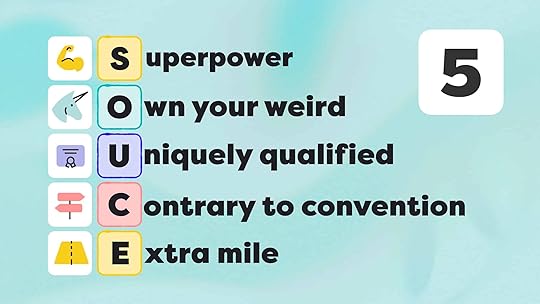
To Have Your Business Stand Out Online You Need S-O-U-C-EWe looooove a good acronym around Wandering Aimfully, and the weirder the better! So, let’s go ahead and break SOUCE down for you:
S stands for your Superpower (aka what are you really good at?)EVERYONE has a superpower. There’s something you can do better than most people.
You might be seriously gifted at breaking down big, complicated concepts into bite-sized nuggets.Or you are the most obsessively organized person you know.Or maybe you just have the biggest heart for helping people and you have a knack for knowing exactly what someone else needs to hear.Whatever it is, ask yourself HOW you can incorporate that superpower into your business and your brand.
Next up we have O as in Own your weird.
Personality-wise, what do you think makes you quirky compared to everyone else around you?
In the real world, you might be afraid of showing people your weird. But in the online marketing world, weird is wonderful. Weird is GOLD. Weird is memorable and distinct and yes, weird will even make you money.
Here’s the question you should answer to help your business stand out: What parts of you feel like they don’t fit into the crowd? How can you play that up in your business?
We (Jason and Caroline Zook  ) LOVE being silly, coming up with loads of inside jokes, and laughing about poop humor, and those are the first things that attracted us to each other. We took these quirks about ourselves and made an effort to incorporate our random metaphors and weird comedy bits into our podcast and our live coaching for our Wandering Aimfully members.
We’ve built our entire brand around being UN-BORING because so many business coaches are kind of dry and take themselves way too seriously.
Fellow weirdos know when they find us that we’re the right coaches for them. We stand out online, especially in a very crowded space (online business coaching), by leaning into being weird and easily detracting anyone who needs a non-silly biz coach.
Moving on to U, which stands for Uniquely qualified.
What is the overlap of skills or experiences in your background that is rare?
What’s that cocktail of your talents and perspective that collide to create magic?
For Example: You might be a tech-savvy designer who’s also a psychology buff. Combining aesthetics and user experience with psychological insights? That overlap is your advantage and it will set you apart from your competitors!
Then we have C, which is Contrary to convention
In what ways do you disagree or disrupt the status quo? Think about some of the common narratives or perspectives in your field, and ask yourself which ones you have a different take on.
This is not about disagreeing just for the sake of it. It’s about looking for opportunities to zig when everybody else is zagging.
That’s how you create CONTRAST with your peers and that contrast will act like a bat signal to customers that align with your point of view.
The final ingredient in your Special SOUCE comes from the E which stands for Extra mile
What’s the above-and-beyond thing you’re willing to do that others in your field aren’t? It doesn’t have to be something wild and crazy, a couple of simple things most people don’t do are:
Personalized customer interactionsA unique guarantee your business can provideUnparalleled customer support and experienceFor instance, we run our coaching program using a lifetime pricing model, which many people shy away from. Once you pay for our WAIM Unlimited program, you still get access PLUS you get access to ANY evergreen product or program we create in the future.
We still get email replies from our customers when we let them know their payments are done but they’ll continue to get our coaching sessions and they write back to us in actual disbelief because they’re not used to programs doing that. Even though we promised it to them, it still stands out because many online business owners don’t keep their promises (that alone is a simple differentiator!)
If you want to stand out online, you need to showcase your Special SOUCEWhen you find that one or two things that are almost UNREASONABLY great in your customers’ minds, they WILL tell people about it. In a time when it feels like you have to use social media to promote your business, word-of-mouth marketing is still king!
It’s time to embrace that Special SOUCE of yours, to dare to be different, and to reap the rewards. Stop doing things like everyone else in your niche is doing them.
September 19, 2023
A Simple Content Strategy for Creative Online Business Owners
Would you believe us if we told you we stopped posting daily social media content almost two years ago, and our business revenue didn’t tank… it actually grew

 ?
?If you’re absolutely EXHAUSTED from trying to keep up with the Instagram and TikTok algorithms, keep watching because there IS a way to eventually break free from the clutches of daily content demands. And we’re here to unveil that secret strategy.
Fighting against the advice of more

It seems like every podcast and tutorial out there is chanting the mantra of “more, more, more” when it comes to content.
 “Post ten times a day! Establish a LinkedIn presence! Why haven’t you joined TikTok yet?”
But guess who’s singing that tune? People who have their personal camera crews following them around, documenting every moment. People with creative teams that rehash content 20 different ways a day and meticulously manage each and every platform on their behalf.
And if that’s not your reality… we’re right there with you!
Is the daily content hamster wheel a necessary part of running a successful business? OR… could there be a content strategy for solo entrepreneurs or small teams that emphasizes “enough” content on platforms you genuinely enjoy?
Well, we wanted to test that for ourselves, so we stopped posting daily social media content almost two years ago. We hopped off the algorithm train and instead, we came up with a more sustainable strategy that we call our “Content Salad Strategy  ,” which has allowed us to actually get MORE customers in the past two years, without posting on Instagram and without ever opening TikTok.
There are 3 parts to our Content Salad Strategy
: You have the lettuce, the toppings, and the dressing.Are you ready for a SIMPLE yet incredibly powerful way we strategically tackle different content platforms, all while keeping your sanity intact and your revenue growing? Great, grab your business forks and let’s dig into this salad metaphor!
Content Salad Strategy Priority #1 is your Evergreen Content aka “Lettuce”There are two categories of content lifespan: Evergreen and Ephemeral
Evergreen content is medium to long-form content, and it can be discovered months or even years after it’s created, like a YouTube video or a blog post like the one you’re currently reading.
Ephemeral content has a much SHORTER shelf-life, it rarely lives on more than a week or two after it’s posted, if not gone in a day, like an Instagram story, a tweet, or a TikTok video.
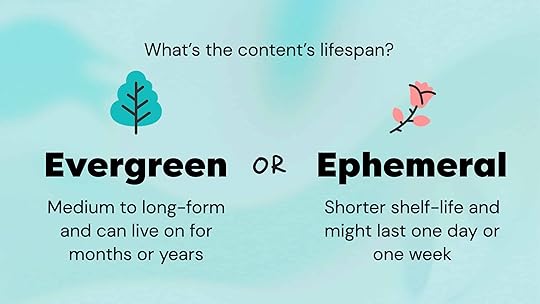
For your lettuce, you want a powerhouse primary content channel that’s all about Evergreen content, and it needs be on a platform where fresh eyes can stumble upon it.
That last bit is the real kicker because this Evergreen foundation is what will still be bringing NEW faces into your brand world, long after you’ve said goodbye to those fleeting social media posts.
We recommend publishing 8-10 blog posts for your Evergreen FoundationThese are 8-10 meaty, long-form articles that should strategically target several SEO keywords linked to your business that your audience is actively searching for.
 Further reading: Are you completely lost when it comes to SEO? Us too! We’ve learned a thing or two and you can read everything we know about SEO here.
People are still on the hunt for answers, asking Google for solutions. And guess what? They’re not stopping anytime soon. Until this behavior becomes obsolete, SEO-driven traffic is still a huge asset to your business.
We STILL get hundreds of new email subscribers a month coming from organic search to our articles, and that passive traffic is a huge part of why we don’t have to post on social media.
Stop putting off this foundational task to your content strategy! Get working on your Evergreen foundation articles (your “lettuce”) today!
Content Salad Strategy Priority #2 is your Tasty Toppings aka Ongoing ContentYou’ve put your lettuce on your plate, now it’s time to add consistent flavor to your salad! This is where your trust-building, ongoing NUTURE content comes into play.
An absolute non-negotiable ongoing content item is an email newsletterIt might sound unsexy, but email newsletters are still incredibly effective at driving sales, and it is the best way to capture the attention of your audience AWAY from social media platforms.
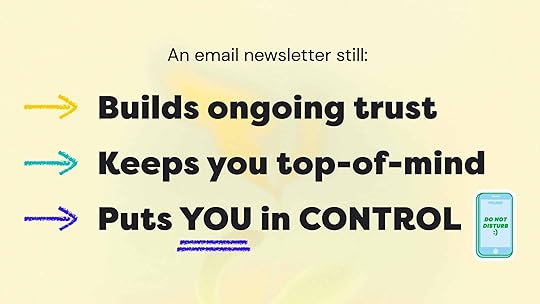
We can directly tie $4,000,000 in business revenue to our email newsletter in the past decade! Email is not dead and it’s not going anywhere anytime soon.
The consistency of your email newsletter, ideally on a weekly basis, forms an incredible relationship with your audience, which is the key to great marketing.
If you’re looking to add an additional tasty topping to your content strategy, we’d recommend YouTube videos or podcast episodes. The biggest thing to remember here is that the goal is to build TRUST, deliver value, and establish your authority with your audience (ongoing!)
Content Salad Strategy Priority #3 is your Dressing aka Ephemeral Social ContentDoes coming up with social media content ideas stress you out? Well, we have a SUPER EASY tactic to help you come up with ideas:
Take your foundation content or your nurture content and you want to repackage that into bite-sized social media posts.Boom! Simple. This is where your YouTube Shorts clips, Instagram Reels, Tweets, or TikTok videos come into play.
IMPORTANT NOTE: Your social content should guide people BACK to your lettuce and tasty toppingsRemember, the entire goal here is to get off the hamster wheel of daily content creation on social media. By using social media content to grow your nurture channels, you end up more in control of your audience growth and less beholden to algorithms.
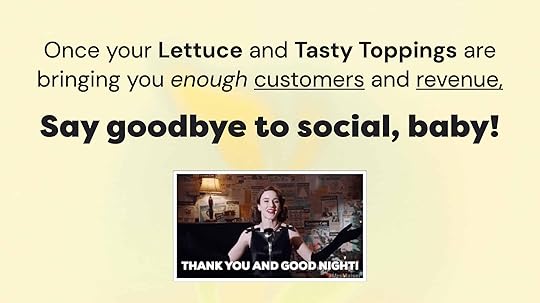
You absolutely may need to use social media for 3-6 months if you’re just getting started in growing your email newsletter, YouTube subscribers, or podcast listeners.
But the endgame is to build up organic search traffic so that your audience is growing on its own, not because you’re posting something new daily.Content Salad Strategy Wrap-Up!The most important thing we want for you is a content strategy that works on your behalf. One that doesn’t require you to feel stressed and constantly chasing the latest trend.
An email newsletter, a YouTube channel, a podcast, all of these content types are so much easier to maintain and build trust with your audience.
We’ve absolutely loved being off social media for the past two years while watching our business revenue grow and we want the same thing for you!Our days are now calmer, our focus is sharper, and we can tackle the game-changers in our business without the constant hum of Instagram, TikTok, Twitter, etc in the background.
While you may not be able to hop off the daily content treadmill TODAY, right now, you can ABSOLUTELY pave your way to a social media off-ramp.
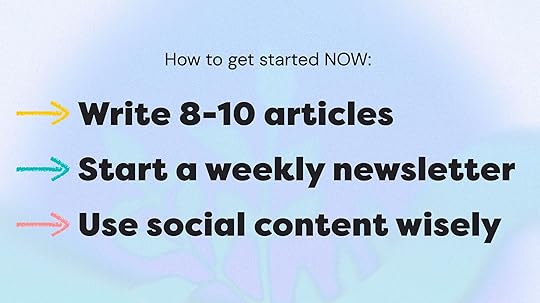
To start today, give our Content Salad Strategy
a whirl… 8-10 SEO-friendly articles as your foundation
 An email newsletter (optional: a podcast or YouTube channel)
 Sprinkling in social content that directs traffic back to your articles and series—until your organic traffic is consistently growing your newsletter without social media
It IS possible to have a simple, sustainable, and effective content strategy and to steer clear of social media… it just takes time, intention, and patience.
September 18, 2023
3 Key Parts of Defining Your Brand and Business VIBE
There are two additional elements you need to define BEYOND your brand visuals that will supercharge your brand and make sure you attract your ideal customer.
In this article, we’re going to reveal those two elements so you can make sure you have a COMPREHENSIVE brand strategy—one that attracts a small but mighty audience and lays the foundation for a business that feels 100% authentic to you.
Branding is the sum of the associations you create in the minds of your customers about your business. Here’s an example of what we hope comes to mind when you’re here at Wandering Aimfully:
Wandering Aimfully is fun, intentional, we have clear business experience, we care about customers, we love cinnamon rolls (and donuts), and we don’t take life or business too seriously.When most people think of creating a brand, they immediately think logos, colors, fonts, and maybe some little creative doodads. Those visual elements ARE very important, but a powerful brand isn’t just about how your brand looks – it’s how your brand SPEAKS and how your brand BEHAVES.
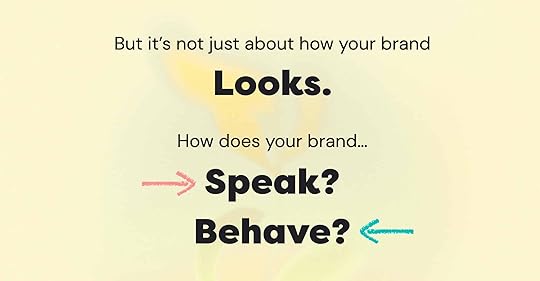
This brings us to the THREE crucial components of branding, or a little something we like to call the 3 V’s of your Brand Vibe.
Defining Your Brand Using The 3 V’s of Your Brand VibeCreating a clear Vibe isn’t just something trendy. You want to create a brand vibe to help your audience clearly understand who you are and if your business is the right fit to solve their problems.
The 3 V’s of defining your brand are as follows:
Your brand visualsYour brand valuesYour brand voiceThere’s plenty of information out there about creating great brand visuals, but we’d argue that your brand values and brand voice should actually be defined FIRST, so that you can match your brand visuals to these two intangible things.
Let’s dig into your brand VALUES and brand VOICE so you can leave this article with an idea of how to make your brand more attractive to your ideal audience!
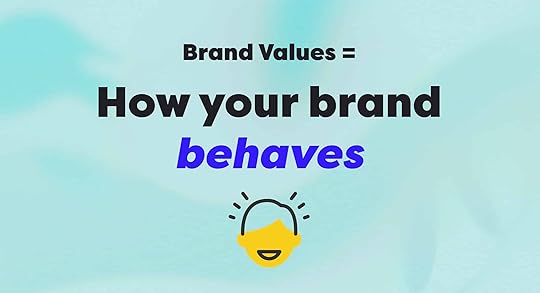
We like to think of brand VALUES as simply how your business behavesIf your business was a person, what notable qualities would they have and how would these qualities guide their decisions? For our business, Wandering Aimfully, we have several brand values but we can boil it down to these basic five qualities:
CuriosityIntentionalityTransparencyFunAuthenticityEvery decision we make in our business, from the type of content we create, to the things we decide to share, to HOW we structure things like our business accountability programs, all come back to these five words.
It’s the way our brand behaves that gives someone a clue about what we’re about and who we’re trying to attract.
While someone who encounters our brand may not be able to articulate those exact words directly, our customers have an idea of what we stand for because of the way our brand BEHAVES and how we show up online.
So now the question is… how does YOUR business behave? What are your guiding principles? What will your customers come to appreciate about you?
If you can define these values, you can use them as a decision filter for every choice you make in your business.
 Now let’s talk about the second V in defining your brand vibe: your brand VOICE.
How are you going to speak to your customers? Almost all of showing up online is based on communication. It’s website copy and social media captions, customer emails and YouTube scripts. And if you haven’t decided the tone of voice you’re going to use when you speak, you’re missing a huge opportunity to set a vibe for your brand.
Are you more authoritative?Or more friendly?Are you a little irreverent?Are you funny or sarcastic or intentionally dry and academic?Will you be long-winded or short and direct?For us, in everything we do, we try to come across as friendly, educational, laid back, and a little bit silly. We rarely communicate in extremes, though we definitely let our passion come through. We intentionally try not to be condescending or even authoritative (ain’t nobody ’round here trying to be a “thought leader” or a “guru” #nothankyou). Who else shares GIFs like this…

We don’t position ourselves as business experts —instead, we like speaking as a couple of friends with a decade of online business experiments, who just want to share what has worked for them.
That is all BY DESIGN, and it’s why we’ve been able to amass 1,000+ paying customers for our un-boring coaching program while only having an email list of 11,000 subscribers and barely any presence on social media.
 Once you know your VALUES and your tone of VOICE, then you can make sure your visuals align with those qualities.
It’s not a coincidence that one of our brand values is FUN, that our tone of voice is as a friend, and that we use whimsical stickers and emojis in our brand visuals.
We use happy saturated brand colors that are close to primary colors which give our brand that educational, approachable feel, but we also combine them with gradients, and bold, black type to make our brand feel modern and cool.
Branding can make a HUGE difference in helping you attract customers, but you have to make sure you’re not stopping short at designing a logo and picking out some colors.

Really decide WHO you want to be as a business, who you want to attract, and how you can have that personality come through in everything you do.
The more confident, consistent, and intentional you can be with your choices, the more your customer will pick up on the VIBE you’re trying to create. And that, friends, is what a good brand will do!
How to Build an Audience Organically That’s Small But Profitable
Whether it’s 100,000+ newsletter subscribers or tens of thousands of podcast downloads, and it may feel like growing your brand to that size is not only impossible but also… not something you even WANT to do.
Our main audience (our email list) continues to sit calmly at a small but mighty 11,000 subscribers, yet our business has continued to make over $400,000 for the past 3 years.

We wholeheartedly believe it’s not the size of your audience that matters, it’s the quality of your connection to your audience and the economics of your offer that will determine how financially successful your business is.
You don’t need a huge audience, all you actually need is a small but mighty audience that’s intentionally designed to match your skills and your business goals.
How To Use Our A.L.I.G.N.E.D. Approach To Building An Audience That Will Buy From You
We have 7 questions that will help you evaluate your audience and whether they have that small but mighty quality that can fuel a profitable and calm business.
First up, you should be able to clearly define your audience for your business.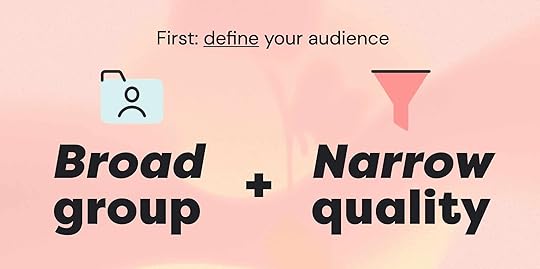
WHO is going to buy what you sell? Our simple formula for doing this is: “broad group PLUS narrow quality”
You want to start by defining a broad group like “business owners” or “art lovers” or “web designers” or “CEOs” or “scuba instructors”Then, you want to add to that broad group a quality or adjective that describes a more narrow segment of that broad group. So that could be INTENTIONAL business owners, POP CULTURE art lovers, MINIMALIST web designers, BURNT OUT CEOs, etcNow that you have some words to define your audience, let’s go over the 7 quick questions to double-check if this audience is perfectly aligned to become your small but mighty crowd of customers.
Our 7 questions to help you build an A.L.I.G.N.E.D. and powerful audienceA is for Alleviate – Can your unique skills alleviate the pain points of this group?If the skills you have don’t match the needs of your audience, it’s going to be hard to deliver value. Let’s use “minimalist web designers” for our audience example in this ALIGNED audience exercise.
Audience Need: Designers can have a hard time keeping up with the latest design tools like Figma because they don’t want to change their existing workflows. Designers don’t like the pressure of keeping up with the latest program updates.
Your Skill: You really enjoy being on the cutting edge of design programs and your teaching approach really speaks to simplicity and efficiency.
 L is for Like – Is this a group of people you like helping and interacting with?
What is the point of creating a business that serves a market of people you actually don’t want to help That’s never going to help you create a calm business.
For instance, maybe burnt-out CEOs are actually NOT that fun to be around and hard to get a hold of… let’s not make that your target audience!
Your Audience Interaction: If you love spending time on Dribbble, learning new things in Figma, and chatting with other designers about new trends, then minimalist web designers are the audience you want to serve.
 I is for Imagine – Can you easily imagine an individual in this group and connect to their perspective?
The easier it is for you to imagine your customer, the easier it will be to speak to them directly.
We tend to think of this person as a younger version of ourselves, trying to help them avoid the same mistakes we made honing our design aesthetic and growing our business. It’s easy for us to step into the shoes of this person because we WERE them!
 G is for Growing – Is this audience of people growing or shrinking in the macro sense?
Starting a radio repair business in 2023 may not be the best move; you want to make sure your audience market has long-term potential for your business.
Over the last 5 years, the number of web designers has increased by 5% YoY. Great news! For you reading this article, can you find any macro statistics or data to reinforce that your audience is growing and not declining?
 N is for Niche – Is your audience niche enough that you can speak to their exact pain points and hurdles?
Do you HAVE to target a niche in order to be successful in business? No. Does it absolutely help? YES, because you can speak directly to the problems and concerns of ONE distinct segment instead of speaking in vagueries to try to be everything to everyone.
Let’s go back to the broad group exercise at the start of this article and show you how we niched down our audience…
When we started WAIM, our audience was described as, “intentional business owners.” This is still pretty broad and we had a hard to time standing out to people looking for business coaching.We niched down and started focusing on “client-based business owners who want to transition to scalable online courses.”Can you see the big difference between the two audience groups? One is VERY broad while one is much more targeted and speaks directly to a solution they’re looking for!
 E is for Enough – Does this audience have enough money to buy what you want to sell?
Money of course isn’t everything, but if financial security is your goal with your business, you want to be very strategic about serving a group that can actually afford what you’re trying to sell.
If the price range of web design courses you want to sell are from $200 to $1,000 which is roughly equal to or less than one web design project, that feels like a price point this audience would entertain.
For you, when you look at the price of your offer, does it match what your audience is already paying for similar offers?
 D is for Discover – Where does this group go to discover businesses like yours?
Inevitably you’re going to need to market to this audience and attract them to your email list, podcast, etc. Knowing how and where you can connect with them is a good thing to consider upfront.
Keeping with our web designer example: If we were to teach a course on Figma or other design tools, to find that content, this audience might go to YouTube to search for free content, or a course platform like Skillshare. We also know designers hang out on sites like Dribbble, Twitter, and Reddit. This would give us 5 different marketing channels to spend time with!
That’s it! Did your audience pass the A.L.I.G.N.E.D. test?If your audience passed the ALIGNED test, you know this small but mighty segment can fuel your calm business for years to come! Remember, you don’t need 100,000 subscribers to grow a profitable business.
You just need to attract the right people who are willing to pay for the value you provide, and the best way to do that is to custom-tailor and ALIGN your business to that audience and their needs.
If your audience didn’t pass the ALIGNED test, go back through the 7 questions and spend time answering them and tweaking your outreach, marketing, copywriting, and content efforts:
Alleviate: Can your skills ease their pain points?Like: Do you enjoy assisting and interacting with this group?Imagine: Can you connect with an individual’s perspective?Growing: Is this audience expanding or shrinking?Niche: Can you address their specific pain points?Enough: Can they afford what you offer?Discover: Where do they find businesses like yours?January 7, 2023
Our 2022 Year-End Review and 2023 Preview
It’s another year-end review, friends! We’ve been writing these reviews for quite a few years now and we really enjoy cataloging our lives in these annual recaps.
2022 was definitely a year for the record books for us! Many of you already know we spent (almost) the entire year traveling throughout Europe and then we gulp decided to MOVE to Europe! Yeah, safe to say, it was a big one.
[image error]
We’re going to eventually write a full article sharing an in-depth recap from our year of full-time travel, but for now, if you want to catch up on our two-part podcast series recapping that adventure, you can listen below (or watch our travel YouTube videos here):
And now, let’s continue with the year-end review format, sharing what went well, what didn’t go well, what we’re looking forward to in 2023, as well as our guiding words for 2023.
 What Went Well In 2022?
 We traveled full-time in Europe for the whole year (well, almost)—and it was equal parts amazing and difficult
As already mentioned, a FULL article will be coming that shares a ton more details, stories, and photos from our 300 days living out of suitcases in Europe. For now, here’s the high level summation:
 We visited 10 countries: Portugal, Ireland, Croatia, France, Greece, The Netherlands, Scotland, England, Italy, and finally Switzerland
 We stayed in 30 different cities (England had the most at 7 and The Netherlands had the least at just 1)
 We took 17 flights across Europe (no lost luggage or canceled flights if you can believe it!)
 We rode on 5 trains
 We drove 8 rental cars (half of which were on the opposite side of the road from what we’ve known our entire lives)
 We took 2 ferries (technically, the same ferry… round trip)
 We stayed at 31 Airbnbs and 15 hotels
 We slept in 50 (!!!) different beds
 We ate at 12 Michelin Star restaurants (major bucket list item for Jason!)[image error]Everyone would probably plan a year of travel differently, but we have to say there’s not a ton we’d change about our itinerary.
Before we embarked on our trip, we set the intention of traveling slightly slower than most folks you see on YouTube. We planned to avoid bigger, more popular cities, and we knew changing locations every 3-4 days was NOT a recipe for success for us. 2 weeks was more what we were aiming for in a place. We did a pretty great job of sticking to our initial plans!
With all the amazingness that this year of travel brought, it was also really hard on us at times, especially on Caroline. That being said, even starting the year with pretty severe flight AND driving anxiety, she pushed through (on her terms) and developed a lot more resilience as the year went by.
[image error]
[image error]
[image error]
[image error]
[image error]
One of the hardest parts of the trip that is also one of the hardest to explain to someone not traveling full-time was the never-ending decision fatigue. Things like what grocery store to go to, what to eat for lunch, how customary things like parking and garbage work, and so many other “simple” life things that get complicated as you arrive in a new city where people speak a different language and you have no idea where anything is. That, coupled with the endless decisions of what we wanted to see, where we wanted to go next, where we wanted to stay, it was just… A LOT. We’re not complaining by any means, we gladly take on that decision fatigue for an experience like this we’re so grateful for—we just feel sharing the reality of the full-time travel life is as important as the glamorous parts.
We could write SOOOOOO much more about our year of travel and we will! But for now, just know that overall this was definitely a huge positive for us in 2022, and it was life-changing in many ways.
[image error]
[image error]
[image error]
[image error]
[image error]
[image error]
[image error]
[image error]
[image error]
[image error]
 We (unintentionally) took a year off social media, and don’t plan to go back anytime soon
Traveling full-time for a year… what great content to share on Instagram and TikTok, right!? Well… that may be true, but over the years we’ve learned: just because something is a “good” opportunity doesn’t mean it’s the right opportunity for you. We ended 2021 on a short break from IG (for our business account @wanderingaimfully), which eventually turned into not returning for all of 2022. I shared exactly FOUR posts (and two stories) on my personal IG account before realizing I simply didn’t care and didn’t want to spend the effort, and Caroline dipped out at the end of January for her own mental health.
As the months went on, we would have these amazing moments and think out loud, “gosh, this is pretty Instagrammable,” only to then come back to asking ourselves, “but why post it?  ” We know that some people love using Instagram (and TikTok) for promoting and marketing their businesses by sharing their lives, which we are 100% in support of if that’s what’s right for you. But for us, we finally reached a point where the negatives just outweighed the positives. We’ve prioritized building a business over the course of now five years that can survive without participating in the daily content grind, and we’re so so glad we made that decision because now we can choose when and how we show up in those spaces.
What we realized toward the mid-way point of 2022 was that if we’re not going to share the MOST “sharable” year of our lives on social media, that’s probably a sign we’re done using social media altogether. We’ll see how that position evolves—never say never—but for now, 2023 will likely be socials-free for us.
 Our businesses stayed afloat and we’ve built great systems and processes
Before we sold the last of our things and moved out of our rental home in Southern California, we had many conversations about what our businesses would look like in 2022. For those of you that don’t know, we run two businesses together: 1⃣ Wandering Aimfully Unlimited (WAIM), an un-boring coaching program and 2⃣ Teachery, a small online course software platform.
Both of these businesses give us the freedom and flexibility to work on them from anywhere, but they both do require our ongoing input and time. We were happy to discover that we absolutely COULD keep both businesses up and running, and even though we had virtually zero extra time to do more than the bare minimum tasks, our top-line revenue only decreased by 1% from 2021. Considering 2021 was our best year yet, and considering our time input in 2022 was a fraction of what it was in 2021, we feel like that’s a pretty amazing feat to accomplish. It’s also a reminder that you’ll never know whether you can work less hours, create less content & marketing, and still thrive until you really put your systems and processes to the test and check your own assumptions.
[image error]
We are truly grateful that we’ve honed our systems and processes over the years, especially as has become a Notion Wizard  . Notion (aff link) is truly a game-changer for us and keeps everything organized and on-track (even when we were completely exhausted after a long travel day from one country to another). We never lost sight of what we needed to do to keep the wheels on, and that was invaluable.
[image error]
[image error]
[image error]
Hiring freelancers for accessibility and designIf you would have asked us, “Hey Zooks, do you plan on bringing on any freelancers in 2022 while traveling full-time?” the answer would’ve been a resounding: NOPE.
However, we actually brought on TWO new amazing humans to help our businesses!
 Accessibility (Captions, Transcripts, etc)
It’s been a goal of ours to make our content (videos, podcasts, coaching sessions, etc) more accessible for a wider range of people who need/prefer different ways of consuming information. We were happy to find someone who LOVES the process of transcription, and is very good at it!
[image error]
 UX/UI Designer (for Teachery)
If you didn’t know, Caroline did the entire branding and application redesign of Teachery back in 2020… BY HERSELF  (and she’s not a UX/UI designer). With a long list of features we wanted to add to Teachery, we simply knew Caroline wouldn’t have the bandwidth to continue to do design work for our online course platform. We stumbled into finding a designer who had some availability pop up, and we’ve been working together for 4 months with great success. It’s a wonderful feeling to have someone else bringing our ideas for Teachery to life, and then making them even better by adding their unique skillset.
[image error]
We created one new product for WAIM in 2022: the Teachery Theme Pack [includes a new Teachery feature: Themes]This one we count as a two-fer because it involved a really big new feature for Teachery: Themes. You can read more about Themes here if you like, but this is a feature that helps our creators take their pre-designed courses and sell them as copyable designs for anyone to use and create new courses from.
On top of that new feature for Teachery users, we also wanted to give our WAIM members a handful of pre-designed Themes by us. We sat down and brainstormed 5 different Themes that we thought our core group of members would find useful. The Themes we ended up on were:
 Monochrome Yoga Theme (a minimal, monochrome color palette design for yoga instructors and wellness professionals)
 Pastel Planners Theme (a playful, pastel color palette design for digital planner creators and artists) Bold Design Theme (a striking, quirky color palette design for designers or developers)
 Dark Photography Theme (a simple dark mode color palette for photographers or filmmakers)
 Light Novelist Theme (a simple light mode color palette for writers and copywriters)
(And any of these Themes can be adapted to ANY type of online course, with instructions on how to customize the images, color palettes and fonts. Pretty cool!)
As is with all new products we create, of course it took more time than we wanted, and we went a little bit over and above in the execution  . But, we’re always happy to invest in delivering awesomeness to our WAIMers, as we truly appreciate them and want them to be happy they invested in us!

 Finding our new home in… Portugal!
Moving away from work stuff, this is a pretty big one  . We moved to Portugal!!! Sayyyy what!??
After visiting Portugal (Lisbon, specifically) in January, we really fell in love with Portugal. And, if you can fall in love with a country by only visiting one city, then you know it has a lot to offer. We planned a return trip in August to scout out two separate areas where we might actually want to live (big cities are not exactly our jam and Lisbon is definitely a big city to us). What happened on that scouting trip is that we absolutely fell in love with a small town in the Silver Coast (just 45min north of Lisbon) and found a dream home to rent for a year  .
.
[image error]
[image error]
[image error]
[image error]
[image error]
[image error]
If you want to listen to our podcast episode where we made the decision, it’s embedded here for ya:
We also recorded this podcast episode and this episode where we share what the first few weeks were like living in a new country.
Right now, the plan is to stay here for a few years and even possibly earn dual citizenship in the EU (which takes 5 years). We’re not making any crazy long-term plans at the moment, but we are SUPER happy so far and can’t wait to explore so much more of Portugal, as well as learn the language.
 What Didn’t Go Well In 2022? We both got COVID-19 and Caroline got shingles for a 4th time
Covid has been hard on everyone and it was particularly difficult for our families last year. That being said, we had successfully dodged it until we hit the road… during the Omicron variant  .
.
I (Jason) picked up the virus toward the tail-end of our FIRST week in Lisbon. Woof. Thankfully, I’d just gotten my booster shot right before we left, and I do believe that was helpful in keeping my symptoms mild. Caroline actually didn’t even catch it from me, which is hard to believe given how small our flat was, BUT perhaps it has something to do with my amazing “COVID fort” (see below)? Luckily, if I was going to get it anywhere, it was good to be in a city that was so easy to get access to testing, food/grocery delivery, and helpful people who could pass along the most up-to-date information. We did have to cancel our second planned stop of our trip to San Sebastián, Spain, but we didn’t mind the extra time in Lisbon as we were just loving Portugal.
[image error]
Caroline picked up the virus in the third country on our trip: Croatia. Unfortunately, COVID was a bit harder on her than it was on me, but again we had very friendly people to pass along helpful information and a comfortable Airbnb to “nest” in while her body fought it off.
[image error]
Having dealt with both us getting covid, one of Caroline’s additional points of anxiety during 2022 was having a shingles flare-up again. We know by now that this is just a recurring response Caroline’s body has to emotional stress. In 2021, we dealt with some pretty difficult family situations and Caroline had TWO shingles flare-ups as a result, so we know the cause and effect well by now. Our packed travel schedule that ramped up in April, plus the emotions of adjusting to full-time travel life and maybe even a fatigued immune system led to shingles rearing it’s ugly head for a FOURTH time while we were staying at a “tiny chateau” in France (it wasn’t actually a chateau, we just liked to call it that for fun).
This was one of those situations where we were in one of the trickiest locations to get sick. We were staying in a TEEEEEENY tiny town and the nearest place with a pharmacy or doctor was a 30+ minute drive. We ended up going to a pharmacy where we found a woman who spoke a tiny bit of English, found us a doctor who was “Canadian,” and we were able to book an appointment fairly quickly. The hilarity that ensued is that the “Canadian” doctor (reminder: we’re in France) was FRENCH Canadian  . He spoke even less English than the nice French pharmacist. But, all language barriers aside, we were able to secure a much-needed prescription of shingles anti-viral meds and pick them up for a total cost of €56 (€25 for the doctor’s visit and €31 for the pills).
[image error]
[image error]
The meds ended up doing their job and, thankfully, Caroline avoided the dreaded shingles rash — which is the absolute worst thing. But, the meds had some gnarly side effects for her and this would end up being the lowest point of our entire trip. I half-expected Caroline to ask to go back to the U.S., but to my surprise she didn’t want to cancel our trip, she just wanted to get the heck out of France  (France was honestly absolutely lovely though, with food that lived up to the hype and patient, kind people—we look forward to going back under different circumstances!)
 Our WAIM website traffic and email subscribers continued to decline (but revenue stayed steady!)
This is a trend that continued from 2020 to 2021 when we wrote last year’s review. Our overall website traffic and email subscriber numbers have been on the steady decline. Here’s what those numbers look like for WAIM:
 2020 unique website visitors: 353,021 2021 unique visitors: 206,574 (
 41.4% decrease) 2022 unique visitors: 121,805 ( 41% decrease #consistent)
 2020 total new email subscribers: 2,845 2021 total new subs: 4,469 ( 41.4% increase) 2022 total new subs: 2,634 ( 41% decrease) 2020 total net revenue: $168,102 2021 total net revenue: $274,359 ( 63.2% increase) 2022 total net revenue: $313,553 ( 14.2*% increase)
*This 14.2% number is JUST our WAIM net revenue, and the overall revenue number doesn’t include Teachery or other income sources. Total overall revenue between 2021 and 2022 was only off by 1% after factoring in everything else!
We’re not overly concerned with the decrease in organic website traffic or in new email subscribers, because our WAIM revenue has actually been increasing year-over-year  . We know by now that you can’t focus on EVERYTHING all the time, so sometimes you have to intentionally de-prioritize things. Our marketing bridge was working well enough that we knew we’d be okay to focus the majority of our energy on our program and our members, and leave our traffic and subscribers goals for another day.
There are several factors that contributed to our WAIM revenue increase, but the main 3 to share are:
We’ve gotten MUCH better at positioning and communicating our offer (WAIM Unlimited)We’ve found a promotion schedule (bi-annual launches) that works well for usOur existing WAIMers are helping bring in 60% of new members (affiliates!)With all that being shared, we will be focusing our efforts on traffic and email subscriber growth in 2023, but we’re certainly not planning on burning ourselves out with concern. We assumed our numbers would stay fairly similar or decline in 2022 due to having less hours to pour into our business(es). Thankfully, as noted above, our total overall revenue across the board was only down by 1% in 2022 which we did a celebratory butt-bump for in Switzerland…

Recording YouTube videos to recap our travel adventuresWe decided to put this in the “didn’t go well” section because, as much fun as the completed videos are to look back on, they really are a thorn in our sides to create.
It’s sooooo easy to watch travel YouTubers and think, “I could totally do that!” But then, when you’re traveling AND when you have two businesses to keep afloat, you realize just how much extra time and effort goes into recording, planning, organizing, editing, and publishing YouTube vids. If we didn’t have WAIM + Teachery, creating video content would be wildly easier.
As of writing this year-end update, we still have two straggler remaining travel videos (Italy + Switzerland) to edit and publish. We give travel YouTubers who also run businesses a TON of credit for consistently uploading! The next time you watch one of those videos, make sure to give those folks a  as it’s not easy work.
Oh, and in case you were curious, our YouTube stats for 2022:
16 videos uploaded (vs. 7 in 2021)1,847 new subscribers (vs. 3,047 in 2021)234,402 total video views (vs. 199,874 in 2021)$2,947 revenue earned (vs. $3,478.50 in 2021)In 2021, our first “Packing for Full-Time Travel” video had a huge surge in viewership, eventually hitting 150,000+ views which attributes to nearly all of the 2021 YouTube analytics.
[image error]
 It was a year of amazing memories, but also a year without a lot of breathing room
Capping off this section, we just want to share that while full-time travel life IS a dream come true (and we WOULD recommend it), it’s also very tiring and if you’re juggling work while living out of suitcases and Airbnbs/hotels, you don’t have much space (physical or mental) to breathe.
That said, there’s not a whole lot we’d change about our travels in 2022. Again, we just want to share that traveling for a year can look extremely glamorous and enviable from the outside (and it absolutely is at times!) but on the whole, it’s a lot of effort and (for us) not a sustainable lifestyle long-term.
 2023 Preview (What’s Next?) Getting more acclimated to life in Portugal and gaining long-term residency
As of writing this recap to you, two things are currently happening:
1⃣ We’re sitting in our new home in Portugal and pinching ourselves daily at how happy we are and how unbelievably lucky we feel to have found the area and the home we’re renting.
2⃣ Our long-stay (D7 Visa) applications have been approved and we are awaiting our appointment here in Portugal to receive our official residency card (good for 2 years).
For 2023, we hope to settle deeply back into “normal life” routines. You know, working from the same spot each day, using the same kitchen for each meal (and a batch of cinnamon rolls), sleeping in the same bed, and dealing with only ONE language barrier for the year!
[image error]
We also DO want to explore more of Portugal! We envision taking 3-4 road trips in 2023 up to the north of Portugal (Porto area) and the south of Portugal (the popular Algarve). We know a few expats in both areas, so it’ll be fun to connect with those folks when we do hit the road.
Speaking of meeting people, our goal is to try to meet some new friends in Portugal this year. We want to spend quality time learning Portuguese (we know it’s going to take years!) and we want to embrace local customs and cultures as we bump into them. Anyone who has moved to a completely new city knows how hard it can be to make new friends, and we earn an extra level of difficulty being the foreigners here 
 .
.
But yeah, we’re excited to be in the same place for weeks/months on end too. Full-time travel is not the lifestyle that works best for two Netflix-loving homebodies!
[image error]
 Jumping back in the business saddle and working on growth for WAIM and Teachery
As we noted a few times, things simply stayed afloat with Teachery and WAIM in 2022. Well, technically we did better than just floating, maybe it was a light bit of swimming in 2022 with our businesses.
What does growth look like for WAIM in 2023?We mentioned the website traffic and email subscriber numbers already, but we are trying to grow WAIM’s revenue in 2023. We’ll talk more about numbers in a moment. We had a total of 216 new WAIMers join us in 2022, and we don’t have a specific number we’re trying to hit in 2023, but if you’re asking us to pick a number: a high goal would be 300 total new WAIMers in 2023  .
.
[image error]
 What does growth look like for Teachery in 2023?
Ahhh Teachery, the side project that could! Teachery has always been a great little SaaS for us and has increased in revenue each year with virtually zero external effort on our part. Teachery doesn’t have a content strategy, we do NO marketing or promotion of it—it only continues to grow because our Teachery customers love it and help spread the word about it  .
.
That being said, we think 2023 is the year Teachery makes its biggest jump since it was created back in 2013. Feels fitting on Teachery’s 10th birthday to make a leap, right? Now, we’re not talking a gigantic leap, but we’d like to see our annual revenue increase by 50%. That’s a big goal and not sure we’ll hit it, but it’s also the very first time we’ll be putting in any revenue growth effort!
[image error]
 Chipping away at our new “enough number” that we set at the end of 2021 ($57,000/mo)
In 2021’s year-end review, we shared that our “enough number*” increased from $33,000/month to $57,000/month**. We hope it was VERY clear that our goal wasn’t to immediately make a 73% revenue jump per month. That new monthly goal is the number we’re working toward and at the rate we’re going, it will take a few years to get there (and that’s okay!)
*We talk in detail about defining an “enough number” in this article. 
**It’s important to keep in mind this number does not mean we take home $57K. This is a top-line revenue number so it doesn’t account for expenses, paying freelancers, affiliates, taxes, etc.
If you’re asking me to make a prediction about 2023, my hope is that our monthly revenue would creep into the 40s this year. But, we’re not interested in chasing these numbers at all costs. We want to enjoy life, we want to feel good about our workload, and we don’t want to pile on a ton of additional expenses just to boost our monthly revenue number.
Let’s Wrap It Up! How Are We Framing 2023? Caroline’s word for 2023: Capable2022 was a big year for me in terms of stepping outside of my comfort zone and really surprising myself with some of the discomfort I was able to move through. The reward for expanding my capacity for discomfort is that my anxiety levels are lower than they’ve ever been. What a gift! I feel like I’ve actually shifted my own self-perception, which, when I type it out like that, feels profound. I want to carry this new self-image into 2023 and show myself just how capable I am. In areas of health, relationships, speaking up for myself, being more assertive, and carrying less responsibility for others as a way to gain favor.
Jason’s word for 2023: InvestNow, you might be thinking, “cool, bro, so you’re buying low and selling high??” NOPE! Well, yes if we can, that’s just smart financial advice, but the word invest for me in 2023 is based on a few different things.
Investing in my health: I turned the ripe old young age of 40 in 2022 and while getting older doesn’t scare me, there are some truths and realities to it. That being said, after a year of not having a ton of time to prioritize health, I’m excited to invest heavily in my health with daily-ish exercise, getting some regular doctor checkups done, updating my eye prescription (maybe getting lasik eye surgery?), and focusing on a more balanced diet. Don’t worry, I believe cinnamon rolls and  s are also investments in health too
  .
.
Investing in our relationship: Traveling the world was a dream come true for us, but it also put a strain on our relationship at times. Especially as we’re navigating our new lives in a completely new country (with all kinds of fun logistical hurdles), I really want to focus on more quality time and thoughtfulness in our relationship because we’re in this for the long haul  .
.
Investing in our businesses: 2022 was not a growth year for our businesses (which was expected!), but we’d really like to make some strides in growing our revenue, our traffic, and honing in our processes even more. Investing in our businesses in 2023 should set us up well for many years to come!
Are you writing a “Year-End Review”? We’d love to read it!If you are, we’d love to read what you’re up to! Feel free to use the format we laid out here as an example and use our contact page to pass your review along to us.
These reviews are so fun to look back on and give us a ton of perspective as time passes along.
Hope you enjoyed reading about our 2022 and all that we have planned for 2023!
September 18, 2022
Avoid Burnout With Our Anti-Burnout Business Plan
What we can guarantee you, however, is that this article will help you put anti-burnout guardrails in place and assist you in the creation of a solid foundation for your business that is best FOR YOU and YOUR specific situation.
We want to share with you how we’ve learned to avoid burnout in our two businesses (Teachery + WAIM).
The goal of this article is to help you take actionable steps to avoid that dreaded moment when everything feels like too much and you have to take an extended break from your biz.
We’ve divided this article into four parts: Part 1: Setting realistic expectations (and enough-based goals)In this part, you get to define your enough number (and MMM number if you don’t know it). We’ll explain below what both “enough” and “MMM” numbers mean. We also recommend avoiding listening to the overnight success advice and turning your months-long timelines into years-long timelines. We believe that patience is an important part of the anti-burnout process. Embrace the idea that slow-and-steady is better than fast-and-leading-to-a-mental-breakdown.
 Part 2: Choosing the right business model FOR YOU
In part two, we identify the business model that’s right for YOU (and not just one you followed because of someone else’s story). We also start acknowledging that you will have to eat a few “shit sandwiches” (more on this later). We’ll share why using an experimenter’s mindset is helpful for weathering the inevitable tough moments and we want you to give yourself permission to pivot to a different business model if things aren’t working.
Part 3: Setting boundaries (and how you can implement these steps in day-to-day business and life)In the 3rd part of this article, we tackle setting your daily work hour boundaries. We talk about drawing your lines in the sand (days you don’t do calls, your response times, how to contact you, etc) and creating an inspiring and motivating workspace tailored for the way YOU work. In doing this, you get to define how you best work and build good habits for finding “flow.” Additionally, we encourage you to put intentional breaks on your calendar like daily walks, days off [GASP!], content breaks, etc.
 Part 4: Acknowledging burnout WHEN burnout happens and putting up guardrails to help you avoid burning out again
In this final part, we acknowledge that you will burn out (or burn out again). We hope you will come to accept that WE ALL EXPERIENCE BURNOUT . We’ll finish up by talking about building your burnout savings, not allowing burnout to affect your self-worth, and defining what you need if you’re currently burned out.
Without further ado, let’s dive into the first part…
Part 1: Setting realistic expectations and enough-based goals to avoid burnoutThe first key step to avoiding burnout starts with goal-setting. You may already be aware of why goal-setting is important but if you’ve run into burnout many times, it might be time to switch up your goal-setting approach.
Why goal setting matters to avoid burnout in your business1⃣ Not setting any goals can keep you constantly striving for more. If you don’t set any goals at all, your brain will likely fill in the gap with its familiar fallback setting: MORE. Your mind will tell you to do more, grow more, hire more, create more, and work more, without ever really asking itself what all that more is in the pursuit of. That’s a recipe for burnout, please ask us how we know .
[image error]
When we don’t set goals our eyes are bigger than we’re capable of handling.
2⃣ Huge goals with short timelines are a recipe for disaster. If you do happen to set goals, but the scale is too big in too rushed of a timeline (i.e. every “how to make $100,000* in 30 days” YouTube headline!), that is ALSO a recipe for burnout.
 *Please raise your hand if you’ve bought into these lofty promises only to realize it’s A) completely unrealistic and B) totally unsustainable for YOUR life.
Setting “enough goals.”Creating a realistic timeframe to hit your (enough) goals is THE most important way you can avoid burning out with your business.
What we mean by “enough goals” are goals that begin with you asking yourself this question:
What does ENOUGH look like in my life? (Enough money, enough subscribers, enough followers, enough time, etc.)Your enough goals will be different from anyone else’s, but that’s a good thing! Not everyone needs to run a $100k/year business, or needs to do 5/6-figure launches, or needs to build a team, etc. Instead, it’s about defining what would be enough for YOU, individually, to live a good and satisfying life. That’s why all those folks promising you wild success in short amount of time are only going to lead you to burning out, because they’re likely pointing you in a direction toward a goal that’s supposed to be one-size-fits-all, not one that’s tailor-made FOR YOU.
An enough number for your business is an amount of money generated by your business every month/year that would accomplish all your personal goals, but that wouldn’t require you to burn out trying to achieve it.
Defining your Monthly Minimum Magic (MMM) numberBut how do you begin to identify your enough number? A good place to start is by defining what we call your Monthly Minimum Magic (MMM) number. This number is your baseline expenses—just the things you absolutely need for each month. It’s the amount of money you need your business to make in order to basically break even. If you’ve never set an MMM number, we would highly recommend doing it right now. Your MMM number should include:
Bare bones living expenses +Minimum payments on any debts +Lowest possible amount of business expenses +A peace of mind cushion(As an example, let’s say your MMM number equals $3,500 per month)Think of your MMM number as the LEAST amount of money you could possibly live on each month, without feeling like you have to eat Ramen noodles at every meal!
Then, with your MMM number known, tack on (realistic) extra things that would bring you to that level of feeling really satisfied and secure in your life. It could be:
Additional savingsWealth redistribution + donation to causes you care aboutA complete debt payoff planFuture down payment for a homeNice-to-haves that would improve your overall wellbeingAnything else you define for YOUR life!(As a follow-up example, let’s say these additional items equal $4,000 per month, your total enough number would be $7,500 per month)Your MMM number + realistic extras = YOUR enough number
What you’ll find (we’ve seen this over and over again since we’ve been talking about and teaching folks to define enough) is that your specific enough number is less than you may think, and it’s probably also less than that arbitrary number you’ve been striving for in the past! Your previous self has been following someone else’s number, not defining what amount of money would be considered enough for YOU.
Setting realistic expectations for YOUR timelineNow that you know what number you’re aiming for, we can figure out how long it’s going to take to achieve that specific (for you!) goal.
The online business world is far too saturated with messages about “building your business overnight” and “hitting $10k months in just a few weeks” and “creating a 6-figure business by following a few simple steps.” To be 100% honest with you, all of that messaging is garbage #sorrynotsorry.

What we should all do with “build your biz overnight” promises.
The truth is, to succeed with your online business, it is going to take WAYYYYYY more time than you probably hope/want. Coming to terms with this fact should actually feel empowering because you can take the pressure off yourself and your business a bit. If you simply embrace and understand that you’re in this for the long haul, you can avoid the trappings of working 12+ hour days, weekends, and still feeling like you’re not achieving your goals at the pace you’re supposed to.
Instead of thinking your business has to reach some “finish line” in the next 3-6 months, what if you planned for it to take 3-6 years?Instead of seeing a small, finite, jam-packed schedule ahead of you (that will cause you to burn out), what if you zoomed the lens out a bit and gave yourself a realistic timeline that feels spacious instead of angst-filled? If you did that, you may find yourself less focused on the short-term, immediate result and more focused on making sure the journey feels good along the way. (You can see how extending your timeline helps stave off burnout.)
Prioritizing patience helps avoid burnoutPatience and business go hand-in-hand, it’s just that no one will try to sell you an online course about being more patient because no one would buy that course. However, and we saw this ourselves when we built Wandering Aimfully, planning ahead to prioritize patience in your business approach will get you through the inevitable tough patches.
 Patience will help you overcome the revenue dips and lackluster launches.
Patience will reassure you when the social media algorithms change.
Patience will calm your brain when a successful marketing effort stops working or when a sales funnel that was working goes kaput.
The ultimate irony of anyone telling you that you can succeed overnight, in the next 30 days, etc, is that you are likely in pursuit of EVENTUALLY having a calm and profitable business. Yet, the stress and work you’d have to put in (that 99.9% of the time won’t actually get you there) to see results on this hyper-speed timeline will take your life and stress levels in the opposite direction of calm and profitable.
That’s why a 3-6 year plan to reach your enough number is the crucial first step in our anti-burnout business plan. It’s time to stop buying into the idea that you can fast-track success just because someone sells you on a new way to skip all the hard work. Hard work is where success comes from, but with proper (enough) goal-setting, timeline planning, and patience, building your business doesn’t have to be an arduous, frustrating process.
We’re happy to be riding the (slower) anti-burnout business train and we’d love for you to join us!
PART 1 RECAP Here’s what Part 1⃣ of building an anti-burnout business takes:
Define your enough number (and MMM number if you don’t know it)Stop listening to the overnight success adviceZoom the lens out and turn your months-long timelines into years-long timelinesSee patience as an important part of the anti-burnout processEmbrace the idea that slow-and-steady is better than fast-and-leading-to-a-mental-breakdownPart 2: Choosing the right business model to avoid burnout
Building a business of ease and freedom starts with making sure your foundation actually lends itself to… ease and freedom!
No business model is perfect and different business models bring different types of stressors.
If your business is built on a foundation that requires you to stay on an endless content treadmill (like a YouTube sponsorship model, for example) when producing content is especially taxing for you, that’s a recipe for burnout. Or maybe your business model requires you to work 1-and-1 with clients when you don’t do well with other people’s expectations and schedules; that’s also going to lead you to burnout.
Identifying a business model that’s right for YOU!You have to find a revenue-generating business model that aligns with what you enjoy doing most AND what you’re best at.
A lot of people choose a business model they think will make them successful (because, maybe someone on YouTube, Instagram, TikTok, or in your email inbox convinced you there was an “easy road to success”). The truth is, no business model is perfect and different business models bring different types of stressors.
Want to run a digital product business?Awesome! It’s a very low-barrier-to-entry business model and if you’re a creative person with lots of ideas, this model gives you the freedom to express those ideas. However, you will have to navigate some technology to create and deliver your digital product. Then, as time goes on, you’ll probably need to update that product with new info. Also, other folks may want you to believe that digital products sell passively, but while that CAN happen, the reality is that you will likely find yourself constatntly writing sales emails, sales copy, and tweaking your sales strategy to bring in consistent sales.
What about a membership or paid community?The recurring revenue is great with a membership or paid community, and if you love teaching or helping people in scalable way, this model can be great. But the reality is that you will need to show up for your customers on a recurring basis for them to continue to pay you. And, with recurring payments comes the admin work of dealing with failed payments and cancelations.
Related reading: We have an in-depth article if you want to know EVERYTHING we’ve learned about running a paid membership community with our WAIM Unlimited program.)
Those are just two options. There are many other business types and models to explore. The key for you is to understand which one is right for your situation AND to make sure you’re up for all the challenges that any business model will bring (but maybe pick the one with the least challenges to avoid burnout ).
Elizabeth Gilbert talks about this idea of a “shit sandwich” in her book, Big Magic. What she means by that phrase is: there are going to be parts of any creative process that aren’t particularly enjoyable but that are worth choosing anyway. Your job is to decide which flavor of “shit sandwich” you’re willing to eat aka which sucky parts you’re willing to move through.
The truth is, when it comes to running a business, there are going to be crappy parts that take away from the joyful and awesome stuff. Find the business model or revenue strategy that feels worth it to you, even when you take into consideration the parts that are less than ideal.

An anti-burnout business model means you’re trying to maximize spending time and energy on the good stuff you LOVE and are passionate about. But, you’re also smart enough to acknowledge there will be hard problems to solve and you’re choosing a specific business model because the positives outweigh the negatives.
What if you don’t know which “shit sandwich” you’re willing to eat yet??You won’t know which “shit sandwich” you are willing to eat until you actually try different business models. This isn’t a bad thing. Remember, thankfully it’s a metaphorical sandwich .

 You might find you don’t actually love selling digital products through Etsy and while it seems attractive, there are just too many parts that aren’t right for you. You may start selling an online course, only to realize you don’t want to talk about that content topic any longer (hello, that’s me [Jason] and my ‘How To Get Sponsorships’ course). You could fire up an awesome membership but notice quickly that the pressure to show up for customers (and keep track of their payments) is just too much for the hours you have available to work.
Sometimes the only way to discover these options aren’t right for you is to experience the burnout that comes with them, which will ultimately allow you to course-correct.
We said it before and we’ll say it again: You WILL probably burnout at some point—and sometimes that’s even the only way to know what shit sandwich ISN’T worth it—but the key is trying to have your burnout be as painless as possible and not like a volcanic eruption.
Use an experimenter’s mindset!

We’ve said this for years and it’s one of the best mindset shifts we ever made in online business. It IS emotional when you’re creating your own business. You DO feel some attachment to it and it can hurt when things don’t go to plan. But… If you can always think of yourself as a scientist, constantly experimenting your way through product building, content creation, marketing, sales, customer support, etc then it becomes easier to deal with things when they go wrong.
You likely won’t be able to read this article and magically think your way to the business model that’s right for you. Instead, you’ll have to try a few versions of something, fail at a few things, and experiment through different ideas until you feel what’s right. The important part is to check in with yourself at each step of the way to see if what you’re doing is sustainable long-term.

You, as an [experimenting] business person.
When (not if, sorry) something goes wrong in your business, instead of feeling like your self-worth got punched in its gut, you can simply see it as a failed experiment: “Well, that didn’t go to plan, and it sucks, but here’s what I learned and now I’m going to do XYZ to avoid having that happen again.”
Everything… and we mean EVERYTHING is an experiment in online business. The more you can reframe everything that way, the easier the hits are to take when they come your way.
Give yourself permission to pivot to avoid burnoutAnd don’t be afraid to pivot! Maybe you’re running a digital product business and it’s not as passive as you’d hoped. Or maybe you’re thinking of creating a membership to shift to more recurring income? No matter where you are, take it from two people who completely blew up their businesses in 2018 and essentially started from square one. Success won’t happen overnight, but you absolutely can completely change things up and create an anti-burnout business 
 .
.
PART 2 RECAP Here’s what Part 2⃣ of building an anti-burnout business takes:
Identifying a business model that’s right for YOU (and not just one you followed because of someone else’s story)Acknowledging that you will have to eat a few “shit sandwiches”Using an experimenter’s mindset to better weather the inevitable tough momentsGiving yourself permission to pivot to a different business model if things aren’t workingPart 3: Let’s talk about how BOUNDARIES help avoid business burnout
We’ve talked about creating a foundation that is sustainable for you, in this next part, we’re going to focus on your day-to-day actions and how those actions can keep you from over-extending yourself.
One of the quickest ways to ride the bullet train to Burnout Town is by not having firm boundaries. When it comes to the amount of hours you work each day and what things take priority on your to-do list, it’s important to remember (if you work for yourself) that YOU are your own boss!
You make the schedule, you set the priorities each day/week/month, so it’s within your power to make sure you’re not burning the candle at both ends.

 The importantance of work hour boundaries
Many years ago when Caroline was working with clients doing brand design, she found herself feeling like there were never enough hours in the day and she was always behind schedule. To solve this problem, we sat down in front of her calendar and started by asking the question, “how many hours do you WANT to work?” After some chatting, it was decided that 5 hours of dedicated client work per day was most realistic, and the hours of 10am – 4pm (with an hour break for lunch) were her most productive. From that moment forward, a boundary was put in place for those specific work hours. She started building her client proposals based on these time blocks available on her calendar. And guess what happened? Almost immediately she felt more productive and in control, as she knew when she needed to get into work mode, and then she had a stopping time each day so she wouldn’t overwork herself.
When was the last time you SET your working hour boundaries?You may have started your business to escape the 9am-5pm schedule, but it IS helpful to have set working hours based on your lifestyle and when you want to fit work into it.
Keep in mind you can also adapt this idea for how you work best. Maybe it’s not the same exact hours each day. Maybe you need something more flexible and adaptable to your energy. The most important part is that you ask yourself the question and set the intention NOT to overwork.
Whether you’re a seasoned pro or you’re just getting started with your biz, now would be the perfect time to sit down and answer these two questions:
How many hours do I realistically want to work per day?What are my most productive working hours?Once you have those answers, put that schedule on your calendar the next few weeks and try it out!
What are your “lines in the sand” when it comes to work?To set a “line in the sand” simply means to establish a boundary you’re not willing to cross.
To set a “line in the sand” simply means to establish a boundary you’re not willing to cross. It’s helpful to take some time and ask yourself, “what rules do I want to establish about the way I conduct my business?” These rules can be instrumental in not engaging in behaviors that drain you or lead you to exhaustion.
For example, quite awhile ago, I (Jason  ) found myself on phone calls, interviews, or having online meetings on Mondays and Fridays. I DREADED THEM. Monday calls killed my beginning of the week momentum and Friday calls interrupted my end-of-week push to tie up loose ends and transition calmly into the weekend. Then, I had a moment of realization: Why am I doing this to myself!?? There’s no rule that says I have to take calls on Mondays or Fridays, so why the heck am I doing that? Pretty soon after that moment, I put a boundary in place to NOT do calls on Mondays or Fridays. If someone reached out and only had those days available, I would kindly say I don’t schedule calls on those two days but am happy to chat Tues-Thurs. There hasn’t been a single time in nearly a decade when I’ve had to break this boundary.
Those of you with clients have most definitely run into the late night email/text/DM where a client has an “urgent” request. But, just because something is urgent for them does NOT mean it has to be urgent for YOU. The way we learned to get around this issue is to put a boundary in place early on where you’re 100% honest about your response time. Two things we’ve done that work really well:
Tell your clients/customers the turnaround response time they should expect. (I usually say to expect a response within 48 hours, even though I typically reply in the first 24 hours.)Tell your clients/customers your working hours, but make sure they know that’s their time to contact you if they need you. (“I work between 11am – 4pm each day, and am juggling a few clients, but I try to get back to everyone in our agreed upon turnaround time.”)One more line in the sand we think is super helpful for running an anti-burnout business is letting people know the appropriate ways they can get in touch with you.Just because something is urgent for your client or customer does NOT mean it has to be urgent for YOU.
Just because a client asks for your phone number doesn’t mean you need answer their calls or texts! If you want people to communicate with you via email, make it VERY clear what you want them to send to you in email requests (is it screenshots? Loom videos? Etc). Maybe you don’t love email and you want to create a dedicated support inbox using a service like HelpScout or even something simple like a Google Form folks can fill out. And, if you want to offer a support chat/messenger directly on your website (or in your online course), just make sure you’re setting the boundaries for when folks can expect a reply (be VERY clear it’s not “live” support).
All of these boundaries serve to set the expectation for other people about how they can engage with your business in a way that doesn’t feel overly taxing for you. That is one key to being able to continue your work long-term.
Where do you work and how do you work?We talked a bit about time boundaries, but now let’s talk about physical boundaries.
An often overlooked part of running a business that doesn’t burn you out is having a dedicated workspace that’s separate from your life. Trust us, we’ve tried working from the couch or the dining room table MANY TIMES, but the result of this was that work too easily can bleed over into your life, consuming much of your free time to rest and recharge. Creating a separation will lead you to actually enforce those work hours we spoke about and then when you’re away from your work space, your brain will actually be able to wind down.
Even if you live in a small space, consider a spot for a tiny desk. And, regardless of the size of the desk you can fit in your home, MAKE IT FUN! The more you can enjoy the physical area you sit or stand in to crank out some work, the more restorative and energized your work time will be.
[image error]
That covers where you work, but what about HOW you work?It’s key to experiment with different approaches to productivity until you land on something that allows you to get in that “flow” zone.
For Jason: First thing I want to do is toss on a synthwave or lofi  playlist. From there, I need to close out of all ancillary applications on my computer and just have the ONE (or two) apps open for whatever task I’m working on. And how do I know what I’m working on? My Google Calendar is chalk-full of time blocks (30, 60, 90 minutes) and I don’t stray from the task at hand.
[image error]
For Caroline: First and foremost I need to know what tasks I intend to complete any given week (I keep track of that with my favorite app Notion.) Then I’ll choose an order for those tasks each day based on where my energy is at. I use the Pomofocus.io app to split up work blocks into pomodoro increments and then I put on a playlist that matched my mood and I go to town. The MOST important part of my work day, though, is that I take intentional breaks—which is our next big tip.
If you’re anything like us, your work can spill over into weekends and holidays, leaving you constantly saying, “I didn’t even know it was Labor Day!?” We’ve found that taking intentional breaks from our work can be super impactful in recharging our batteries, even in small increments.

 Daily walks help us clear our minds
A small daily break that has always been positively impactful for us is taking a 15-30 minute walk. Whether we end up at a coffee shop, are just circling the block, or are trekking into nature a little bit, a daily walk is a good time to step away from technology and rest our eyes and minds. You might find it hard to carve out this time, but pick something that works well with your schedule! Define this time, put it on your calendar, and be intentional about making it a habit.

We don’t actually take daily walks in slow motion 

 Content breaks keep us off the hamster wheel of creation
We also take breaks with our content schedule. We intentionally pause our weekly email newsletter every summer so we can recharge those writing batteries and so our readers have the chance to get excited about our content again. We take the occasional month or even months-long break from our What is it all for? podcast too just to give ourselves time and space to feel refreshed. These intentional content breaks are absolutely crucial for staying engaged with our work, but it’s also helpful for keeping your audience on their toes and not letting that connection get stale.
Alrighty, that’ll do it for part three! Let’s get your action steps…
PART 3 RECAP Here’s what Part 3⃣ of building an anti-burnout business takes:
Set your daily work hour boundariesDraw your lines in the sand (days you don’t do calls, your response times, how to contact you, etc)Create an inspiring and motivating workspaceDefine how you best work and build good habits for finding “flow”Put intentional breaks on your calendar (daily walks, days off, content breaks, etc)Part 4: Accepting that you unfortunately WILL burnout
In this final section, rather than give you one more tip for avoiding burnout, we thought it would be far more practical to talk about the burnout-elephant in the room, which is this: despite following the tips we outlined, you WILL likely burn out anyway.
Because the burnout threshold is different for everyone, and human instinct is to push the limit until you know what the limit actually is. We call this the “hand on the stove” moment, or that moment of pain you have to experience yourself before you know just how badly you want to avoid it in the future.
We want to offer you some tips for when burnout happens. How to soften the blow, how to be kind to yourself, and how to apply that lesson to the future.
Burnout happens to everyone
Ripping the bandaid right off, let’s just be 100% truthful and honest: Burnout may not be “normal” (meaning working ourselves into the ground is not healthy) but it is COMMON. It happens to so many entrepreneurs—including us! If you find yourself hitting a wall with your work, it’s important to know there’s nothing wrong with you. It’s a predictable part of the entrepreneurial journey.
Sometimes we hit burnout because we put too much on our plates, or life overwhelms us, or we bite off more than we can (business) chew, or we just run into a string of bad luck.

Even though it’s common, that still doesn’t mean it’s fun, though! It sucks, and it’s hard to get through. But, on the bright side, the burnout experience can often be a solid life/business lesson that will make us stronger and help us avoid bigger problems in the future.
Having this mindset of acceptance towards burnout when it comes can help you bounce back with confidence (in time) and avoid any kind of shame or guilt you may experience when it arises.
What are you going to do when you burnout?Having a mindset of acceptance toward burnout can help you bounce back with confidence and avoid any shame or guilt you might experience.
Once you accept burning out is a part of the journey, the question becomes how are you going to handle it when it arises?
Whether you’re currently experiencing burnout, are on the cusp of burning out, or are in a good place and just want to know how you should handle it in the future, the best piece of advice we can give you is this: give yourself TIME to recover from burnout  .
.
As much as we’d love to tell you there’s a simple 3-step process to overcoming burnout, what we’ve learned over the years (and many burnouts) is that TIME is the only healer. Taking a break, stepping aside, completely removing yourself from the work that led you to burnout is the answer. And while that’s easy to type out in a sentence, we know from lots of experience how challenging that is!
What do you do for money if you can’t work on your biz?How do you continue to move toward your goals if you’re completely spent?How do you separate your self-worth from your business, especially in a down time?Those are all great questions and they all come with answers that are different for everyone. We can’t guarantee our advice will be perfect, but we can tell you what’s worked for us:
How do you make money when you’re burned out?It could be dipping into your savings. It’s why you save, after all—for one of those rainy days (and with burnout, there’s a 100% chance of [metaphorical] rain on the forecast). If you don’t have savings, it boils down to figuring out what you can do for money that can sustain you. Is it selling stuff around your house? Is it asking a friend to hire you for low-pressure contract work? Is it moving back home to build back up with less overhead? All of these options are on the table and none should be ignored.
How do you work toward your goals when you’re burned out?Honestly… your goals get put on hold when you’re burned out. There’s NO sense in trying to continue to push forward or make progress, you must rest and you must be okay with the fact that the pause button is your only button. In these situations, it’s important to remember you’re taking one step back to ultimately take two steps forward. In that regard, you ARE still working toward your goals, you’re just making sure you’re in a healthy, energized head space in order to go after what you want.
How do you separate your self-worth from negative burnout feelings?This one is sooooo difficult because when you work for yourself it’s incredibly hard to separate your work from your worth. The best advice we can give you is to repeatedly remind yourself that your work is not tied to your identity. Your work is a set of experiments in a scientific lab of sorts. As soon as you leave that lab (your work), you are your own person with a separate identity. What happens in Vegas the lab stays in the lab!
It’s really hard to hear, but again, TIME is the only answer to overcoming burnout.
Allow yourself a break, and do whatever you must to survive and get by in the meantime, because the harder you push against burnout, the longer it will take to overcome (and the more damage you may be doing in the process.)
What guardrails are you putting in place for yourself?Okay, let’s say you’ve burned out, you’ve given yourself time to recover, and you’re feeling good again… now how the heck do you avoid burning out again!??
Well first, read the previous parts of this article . The second thing to learn from your last bout of burnout is to understand what may have gotten you there. Then, put up some strong guardrails to help you avoid falling off the burnout cliff in the future.
Only you are going to know what guardrails are most important for you, and it’s important you don’t ignore the mistakes of your past.
Only you are going to know what guardrails are most important for you, and it’s important you don’t ignore the mistakes of your past. We’ve certainly experienced burnout multiple times for the same reasons, and it’s not like you’re going to fix things perfectly after burnout, but you should absolutely try!
How to avoid the “shiny new” brand of burnout? (Hello, TikTok, etc.)The last part of avoiding burnout is being able to recognize when you’re pouring your energy into a business tactic that isn’t sustainable.
This is especially dangerous when a shiny new opportunity comes along and you feel pressure to a) take advantage of a marketing channel that can get you disproportionately high organic reach or b) hop on the bandwagon because you see other business owners doing it.

It’s easy to get caught up in trends, especially when your previous efforts may not have worked well, and then something new clicks and you start to see a lot of momentum. You want to ride that bullet train toward your goals and hold on for dear life! But, if you go too hard and invest too much time and energy in something new, all your foundational things can easily get left behind (goals, processes, boundaries, healthy habits, basic biz stuff, etc).
We’ve been there: The new thing emerges, you start to feel a positive change in your business, and you want to do everything in your power to grab ahold of that bucking bronco and soak up as much growth as you possibly can. However, if something new is taking up all your precious resources, something is going to have to give in its place. That’s when you typically end up burning out, even if you’re generating the most revenue, the most audience growth, and the most notoriety you’ve ever had.
We DO want you to notice the experiments that are working in your business!We DO want you to enjoy the success those things bring! But, we also want you to remember you are trying to build an Anti-Burnout Business and to have something that sustains you for the long-term, not just a flash in the pan.
When it comes to shiny new burnout, just keep in mind your processes and your goals. You may need to reconfigure both of those things and you may need to reprioritize what really matters, but that’s the key: Embrace the new awesome thing, but be intentional with how all of that time and effort fits into your existing day-to-day.
PART 4 RECAP Here’s what Part 4⃣ of building an anti-burnout business takes:
Acknowledge that you will burnout (or burnout again)Accept that WE ALL EXPERIENCE BURNOUTStart building your burnout savings now (and/or create a plan)Decide what guardrails you need if you’re currently burned outBe prepared for the new shiny object burnoutIn Conclusion, Your 19-Step Plan to Avoid Burnout
Here are all nineteen tips we shared in this article to help you avoid burnout in the future and build an Anti-Burnout Business :
1. Define your enough number (and MMM number if you don’t know it)
2. Stop listening to the overnight success advice
3. Zoom the lens out and turn your months-long timelines into years-long timelines
4. See patience as an important part of the anti-burnout process
5. Embrace the idea that slow-and-steady is better than fast-and-leading-to-a-mental-breakdown
6. Identifying a business model that’s right for YOU (and not just one you followed because of someone else’s story)
7. Acknowledging that you will have to eat a few “shit sandwiches”
8. Using an experimenter’s mindset to better weather the inevitable tough moments
9. Giving yourself permission to pivot to a different business model if things aren’t working
10. Set your daily work hour boundaries
11. Draw your lines in the sand (days you don’t do calls, your response times, how to contact you, etc)
12. Create an inspiring and motivating workspace
13. Define how you best work and build good habits for finding “flow”
14. Put intentional breaks on your calendar (daily walks, days off, content breaks, etc)
15. Acknowledge that you will burnout (or burnout again)
16. Accept that WE ALL EXPERIENCE BURNOUT
17. Start building your burnout savings now (and/or create a plan)
18. Decide what guardrails you need if you’re currently burned out
19. Be prepared for the new shiny object burnout
We hope that you are able to take actionable steps to avoid burnout from this article. As a reminder, reading an article does not promise you’ll never burn out again. But what we can guarantee is that you now have the knowledge to help you put anti-burnout guardrails in place and assist you in the creation of a solid foundation for your business that is best FOR YOU and YOUR specific situation!