Tushar Mangl's Blog, page 3
July 22, 2022
What developments should the Indian Real Estate Market expect in 2022

2022 as prospective homebuyers continue to prefer larger homes, better amenities and affordable pricing.
Moreover, the increasing need for modern office spaces and the emerging trend of urban and semi-urban living spaces are acting as another key factors influencing growth. The investors in the real estate segment have trusted commercial real estate as a rewarding investment choice as it provides high ROI and additional income opportunities. Aliso have made some predictions such as Investors are willing to pay 20 to 25% higher prices for ultra-luxury products. The transparency level in the country’s real estate sector has only been possible because of increased institutional investment and the increasing numbers of Real Estate Investment Trusts (REITs) helping to broaden market data and bring more order to the sector to complement regulatory initiatives like the Model Tenancy Act.
With the reshaping of the Indian economy and a majority of the workforce returning back to offices, the need for commercial real estate is at the highest in a while. The digitalization of processes, policy support extended from the government, low interest rates and growing customer trust has enhanced the value of this segment and newer trends and innovations are constantly coming up.
Commercial real estate is also witnessing a high increase in eco-friendly and sustainable developments due to rise in awareness and the need to curb pollution and tackle climate change. For a sustainable future, the consumer's focus has shifted towards eco-friendly & sustainable infrastructure, use of energy efficient systems, renewable sources of energy, rainwater and waste water management, greenery and better policies for the residents. The evolving trend of buyers looking for well-being, stability, and future security has skyrocketed housing sales.
Market bounce back is also the progression of the gradual recovery observed in the past six to nine months. After less demand due to the pandemic, the real estate market has been on an upswing since the second half of the previous year. The real estate in tier two and three markets will also climb fast with sustained infrastructure investments, increased connectivity, and better job opportunities, these markets show prominent growth. Investments in data centers and digital infrastructure will also boom in the coming months. Big tech giants such as Google and Amazon are already planning several investments in the Indian data center space, banking on its long-term potential. These promising factors have placed the sector on an upward climb and it clearly shows that the post COVID era investment era belongs to real estate industry.
_________________________
Authored Article by Vipin Suree, Founder & Managing Director, Space Creattors Heights


July 21, 2022
Fire evacuation lift mandatory across Maharashtra
Making the ‘Fire Evacuation Lift’ mandatory is seen as a visionary step in providing Safer and Faster route for Fire Officers to reach the higher floors to save lives and assets. Meanwhile, it is one of the safest and fastest modes for evacuating people stranded in emergency situations of fire in High Rise Buildings. Maharashtra has become the first State in India to make Fire Evacuation Lifts mandatory for buildings 70meters and above since January 2018 in what is termed as the solution to mounting emergencies during fire-fighting.
As part of the evacuation solutions, many Developers of High - Rise Buildings in the cities like Mumbai have installed or are currently opting to install non-standardized or low graded Fire Evacuation solutions/Lifts. However, these Non-standard Fire Solutions/ Evacuation Lifts may not provide right security and safety to people in the event of a fire due to compromise in quality by the builders and regular passenger lift makers. In contrast, the Fire Evacuation Lifts are a far more secure and safer option and are developed by specialized teams of a Fire Evacuation Lift Manufacturer. It protects and enables fire-fighters to reach higher floors faster and evacuate a group of 10-18 people of all ages and abilities including pets at one given time in less than three minutes(i.e. almost 100 people in 30 minutes approximately).
As per the New Circular, henceforth, it is mandatory to obtain the permission for erection and License for operation of Fire Evacuation Lifts in the State of Maharashtra.
The implementation of the new Circular shall be effective immediately from the date of issue for the upcoming Fire Evacuation Lift installations and shall apply with retrospective effect to the existing Fire Evacuation Lift installations.
Century Plyboards’s Q1 Results for Financial Year 2022-23
India’s leading plywood company, Century Plyboards (India) Ltd., held their board meeting today to announce the company’s Q1 financial results for the quarter ending June 30th, 2022.
Highlights:
· Net Revenue from operations for the Quarter, ending 30th June, 2022 were Rs. 881.48 crores; an increase of 96.4% over corresponding period of last financial year Rs. 448.88 crores.
· Earnings before Depreciation Interest and Tax for the last quarter of Financial Year 2022-23 was Rs. 151.26 crores, an increase of 128.8% over corresponding period of last financial year Rs. 66.11 crores.
· Profit After Tax for the quarter ending 30th June, 2022, was Rs. 96.47 crores; showing an increase of 184.68% over corresponding period of last financial year Rs. 33.89 crores.
· We have performed exceptionally well across our product portfolio during the quarter under review
Commenting on the company’s performance, Sajjan Bhajanka, Chairman, Century Plyboards (I) Ltd said “Q1FY23 (Q1 being a leanest quarter in a financial year) ended with the company achieving revenue which was just 1.5% lower compared to Q4FY22 sales (Q4 being a peak quarter in a financial year). Despite the sustained input cost pressure in core segments of plywood & laminate, we have been able to mitigate a large part of our gross margin pressure by taking corresponding price increases and also through operating leverage.”
February 20, 2022
All you need to know about Accent Walls
We want our homes and offices to be decorated special. We take up interior projects to liven up our indoors. When doing up interiors of a home, Accent walls can be a good choice to add that extra zing to the spaces.
An accent wall can be the secret sauce to a beautifully designed room. But can any wall be turned into an accent wall? What exactly does an accent wall mean? Read on to know more about this exciting design concept.
What is an accent wall?
The accent wall is the one main wall of the room, which is decorated in a specific way. Its objective is to highlight the design persona of the room. Such walls bring life to a room and add to its charm. When you walk into a room, the one wall that catches your attention is the one you can turn into an accent wall. That's a thumb rule, of course, as you cannot turn any random wall into an accent wall. That wall is the focal point of your room and can add to the elegant appeal of the room.
Here are some tips for designing your accent walls -
Paper them up
Wallpapers are in vogue these days and are great for accent walls. They are easy to put up, quick on the installation and light on the wallet. They are also low maintainance and easy to clean. The markets are flooded with plenty of design options to choose from. Also, they are not permanent fixtures on the walls.
Splash some paint
If you are looking for something permanent or long term, you can go for a coat of paint on the walls. However, for accent walls, hues which are bold are always favourable. Metallic or strip finishes with patterns can also be done for the special wall.
Light it up
A great wall decor needs an interesting light fixture to complement it. Spotlights or picture lights can do the trick. While picking up the lights, make sure to decide whether to go for warm or soft colours for the lighting.
Colour coordination
Contrast the colours well with the other walls of the room. When going for a paint colour for walls, always pick the colour for the accent wall at the end. The other walls can be in any colour, preferably lighter in shades like grey, beige or white colour. In this way, an accent wall in bright and bold colours will contrast wonderfully with neutral coloured walls.
Art and Pictures
Add something extra than wallpaper or paint to your accent wall. Pictures and Art pieces can be a great way to liven up the wall. You can play around with their designs and placements. Also, you can add shelves to add showpieces or frames on the wall. You can also bring out your creative self and showcase a photo gallery on your accent wall.
Accent walls can be an aesthetic architectural statement for your indoor spaces. They can also make a room appear bigger than its size because of the play of colours and design. If done well, they will enhance the ambience of your rooms.
April 21, 2021
Earth Day 2021 - Restore Our Earth
As I write this, we are surrounded by a Global Health Emergency. The Covid-19 virus has not just caused a pandemic but also shaken the way our Planet functions.
 Picture Copyright Tushar Mangl 2021
Millions are dying, economies shattered, travel is becoming harder by the day, all due to this Pandemic. In this backdrop, it becomes vital that we pay attention to this year's Earth Day theme.
In the year 1970, the Earth Day movement began in the United States, raising concerns about the harm to our environment and seeking solutions for the same. In 2021 its purpose remains as relevant as 51 years ago. As our population increases, so is the grave harm to our Planet.
It is this harm that is resulting in climate change, threatening ecosystems, and destroying wildlife spaces. Animals to Humans virus transfer thus becomes inevitable, raising possibilities of Pandemics like Covid-19.
The theme this restore our Earth might be our chance to atone the mistakes of the past. We don't need to plant more trees. We need to talk about this, escalate climate literacy and come with concrete visions for the future.
Here is a list of five things any of us can do from our homes to restore our Planet.
1) Plantation at home - Raise more plants at your home. Decorate those staircases with Greens. Use that terrace space to grow some food. Plant something fragrant in your front yard.
2) Upcycle- You have a lot of belongings. Reuse, Recycle or Repurpose them.
3) Be Climate Literate - Learn facts about what's happening to our climate. Find solutions to what needs to be done at an individual level to repair the harm to our seasons.
4) Begin Composting - It's the easiest way to do something good for mother Earth.
5) Redo your lifestyle - Sustainability does not mean that you have to adopt a new way of living. Just making small changes in your routine can also do wonders for your environment.
Cleaner air and environs, less pollution of soil and Earth, will ultimately benefit you, your loved ones, and their health. Let us work together to restore our Earth.
April 2, 2021
Decoding the Ludhiana Greentop Project
North India's air is so polluted that many of its large cities regularly feature in Global top 100 lists of bad air.
 (Creeper Rose - Picture by @tusharmangl)
 Ludhiana District in the state of Punjab is another city with air not fit to breathe in. While there are many reasons for the massive pollution of air, we have witnessed few solutions from the society.
In fact, like other districts, deforestation is so common, tree cutting looks like a favorite hobby of citizens. Everywhere I hear the same refrain. Now that everyone needs a car bigger and flashier than the neighbor let's get rid of the green belts. It's the duty of trees to make way for concrete to house those cars, like their cousins were cut to make homes for humans.
Given this situation, I am impressed by a few going beyond the rhetoric and social media posse's and formulating solutions. Some activists approach NGT to keep authorities in check. Some are creating awareness with RTI and all.
Sambhav Foundation (founded circa 1999) has come with a unique idea called the Ludhiana Greentop City.
On the lines of the famous "Oota from your Thota" (OFYT), a major terrace gardening movement in Bengaluru, this one envisages terrace gardens in everyone's home.
Suppose everyone plants 15-20 trees on their terrace. As per Sambhav team, we can drastically improve the green cover of the city. Not to mention the benefits like better AQI and better health, especially for an industrial district.
But is it as simple as it sounds?
Let's say there are 4 lakh households in the District. If our target is 20 plants per household, we require 80 lakh plants.
Add commercial and other buildings, and we can estimate 1 Crore plants.
The scale seems to be quite ambitious. The NGO has kept a tight deadline of 15th August by when they plan to achieve all this. It looks like a tall order given that you need resources to put it all together.
How to make Ludhiana a Greentop City?
I agree with the concept, being an ardent supporter of terrace gardens. These can be your private spaces of solitude and peace. Plants bring out the best in all of us. That's the love of nature, and its bounties come in various forms.
What we require first of all to achieve this target is to conduct massive training programs and workshops. I have often witnessed that people are unable to take care of their plants due to a lack of knowledge. Plus, this project will bring with it a cultural change. Say someone who never had a garden now has one on his roof. Mass training programs are needed to train and equip people with basic knowledge.
Another focus area would be a liaison with several NGOs, Resident Welfare Associations, institutions, etc. Block and Area level committees would need to be formed for better co-ordination and faster results.
Challenge also lies in marshaling the resources and ensuring that they are put to the best use.
The team of Ludhiana Greentop Project seems to be on the right course. They have set up a roster of volunteers and are enlisting more people to join in. Capability seems to not a problem. Let us hope this project comes up with something positive for Ludhiana residents.
Both the Mental and Physical health of Ludhiana citizens is extremely poor. That's one of the reasons why Covid-19 turned out to be deadly for the city. A project like this could be very well the solution that is needed to address this situation.
December 17, 2020
Farmers Protest 2020: Glory for Women Farmers
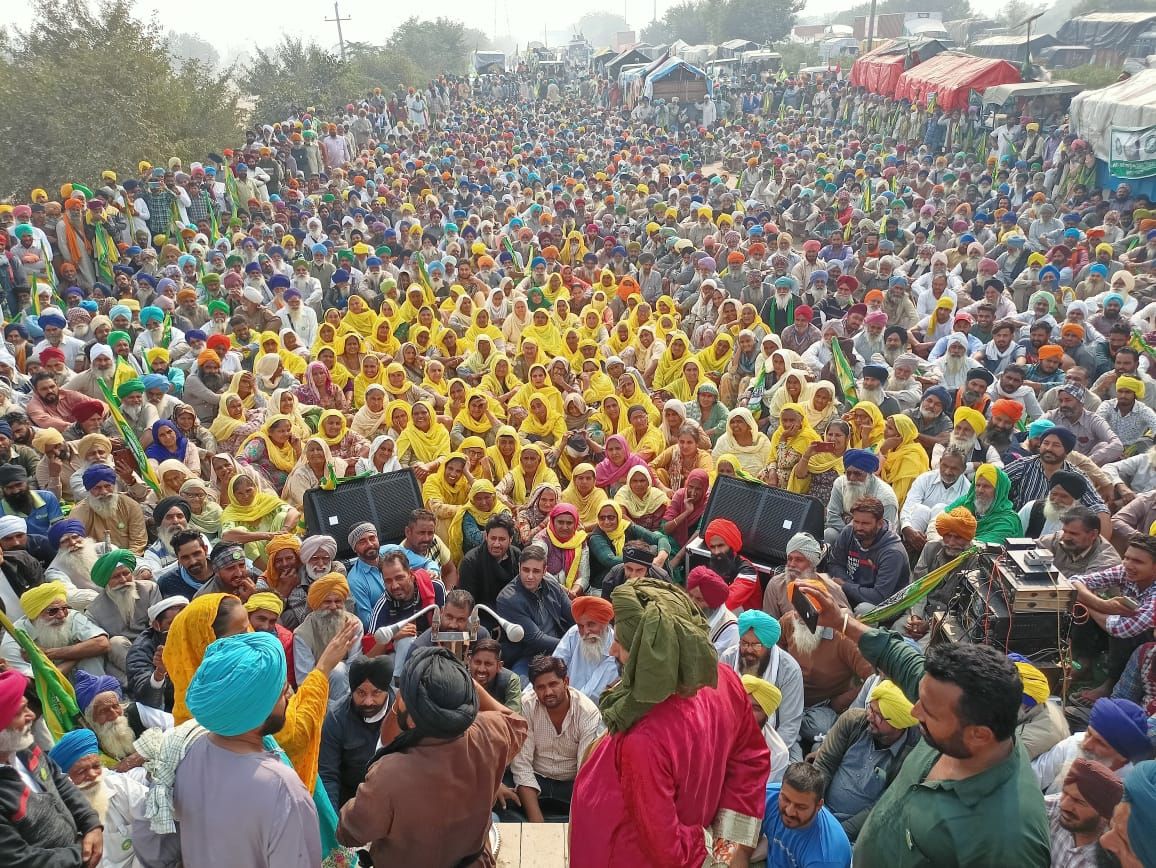
The Farmers of Punjab pushed the green revolution, which changed India's landscape of food security forever. 2020 has witnessed another revolution of sorts with Farmers taking a stand against the Farm Acts, which they believe are meant to put them out of business.
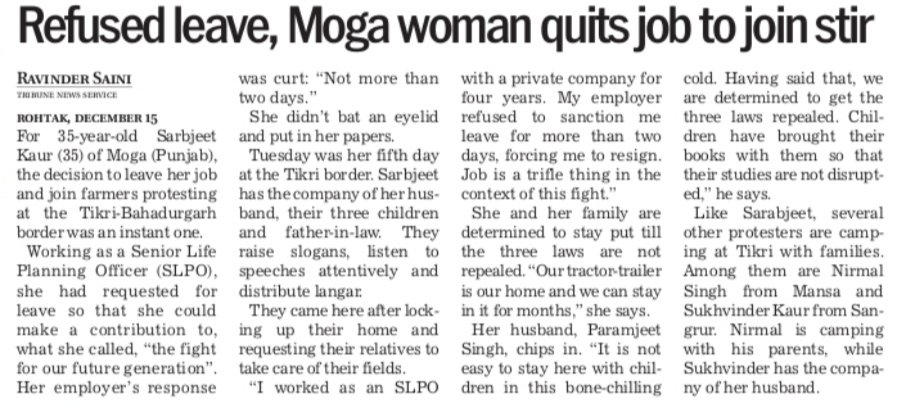
What we have seen is nothing short of a revolution—the Youth and Old alike pushing boundaries and digging in to make their voices heard. And equally significant is the rise of Women Farmers leading the way.
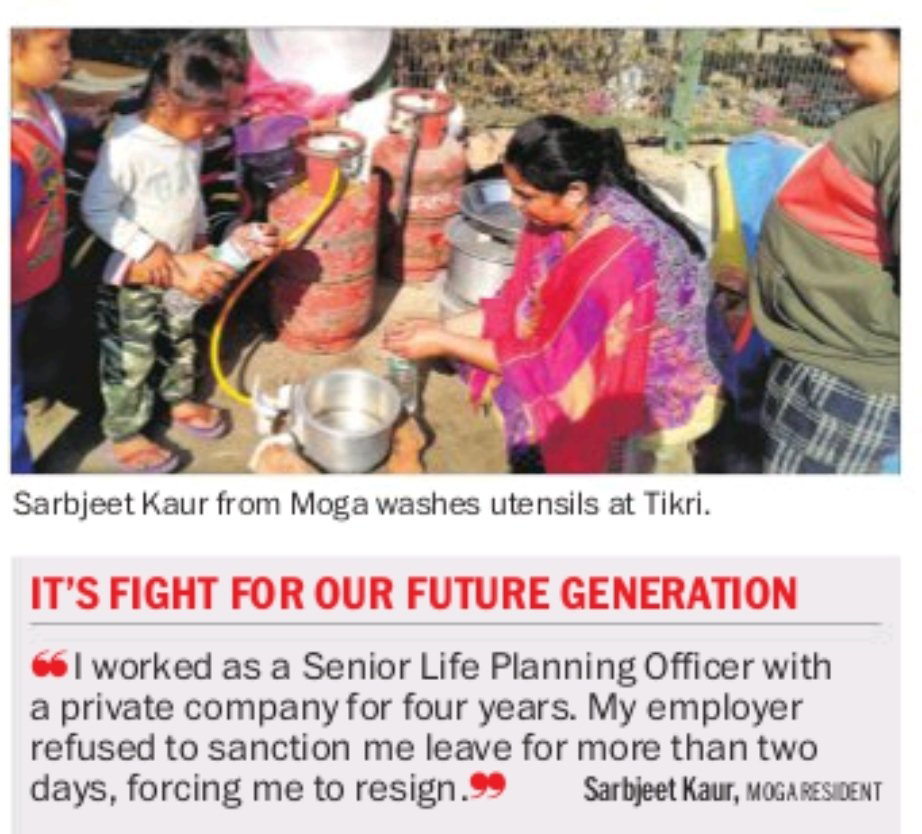
Women have traditionally been a background in Indian agriculture. Not out of choice but as a matter of family duty, they have always worked the fields, taken care of animals besides their usual house chores. That's how the traditions have ever been. Although never in the foreground, they have always worked the fields. It's not a career choice for which they get respect, like a bank official, but it's a career, no doubt.
It's heartening to see in 2020 how Punjab women farmers are now coming out of the shadows to etch a name for themselves. Ever since the protests started in June, the women farmers have been marching alongside their male counterparts. Even when the "Delhi Chalo" call was given, many women farmers packed their bags for what they knew would be a challenging and long haul. The rural women are not well-traveled with duties at home, bounding them for years. Still, they picked up the flag for an adventure they weren't aware of.
The Challenges
As of today, December 17, the women have not been able to enter Delhi. Many had set out from their homes on November 25 and are still camping out outside Delhi, living on the roads amidst bad sanitary conditions, chilling cold, and a hostile government. They, too, had to bear the brunt of the police force against the farming community.
But the biggest enemy of a woman can be a woman only—That's what I always believe. So even though thousands of women are on the protest site, India's women journalists prefer to demean them by just blacking them out.
These women are not here to cook meals and do the heavy work for the male leaders. They have a voice of their own and often speak on the dias. The Bhartiya Kisan Union - Ugrahan, makes it a point that women are always well represented on stage and are given opportunities to speak.
Their leader, Joginder Singh Ugrahan, has a formidable personality and is an old school leader. They have a Vice President, Harinder Kaur Bindu, who leads the women wing. It's inspirational. Women are not being used as a background prop but given a front seat. I heard one woman tell a small media outlet that the farm laws affect them the worst. When farmers' income dwindles, the most significant burden will fall on the homemaker, who has to run the household on limited means.
But you will not hear all this on National Media. Our well educated middle class prefers to look down upon these women from rural areas depending on their political preferences. No women's commission is questioning how the right to protest is being muzzled for these women.
The urban types call these people terrorists, Khalistan sympathizers, for hire protestors, and whatnot. Never mind that Harinder Bindu has been farming for 30 years now. Along with her activist experience, indeed, I can look up to her opinions as an expert. She would know things better than me. But in a pure chauvinist manner, we muzzle down her voice. We blackout the women from our national discourse. From our TV screens. Never mind that the same woman we are calling a terrorist lost her father to Khalistanis. Her father, Megh Raj, fought against them and was killed as a result. How more can you demean a woman other than insulting the memory of her father. The entire nation should be ashamed of watching and listening to those who support such an argument.
The silver lining
Things are tough for women in the protest field. We have lost 70-year-old Bibi Gurmel Kaur, who dies on December 8, fighting for the cause. We saw how an elderly lady was termed as a protestor for hire by the powers to be. We can see that even lakhs of females work our fields, with Union Ministers no female leader was present for talks.
But the good news is that Punjab now recognizes its women's farm leaders. In a Press Conference, a farmer leader said they are making arrangements as facilities are not proper for women to protest. Many women want to participate, and they are working on it.
At Sewa Stalls by people, several essentials are being distributed by people of Punjab. I was heartened to see Sanitary Napkins for ladies being distributed free. In a country still shy to discuss PMS in Urban or Rural areas, that people are collecting money to distribute free Pads at a protest site is a positive sign.
It will do well for India to recognize and build upon this leadership. This farmer's movement is redefining how women's role is being seen. An appreciation also holds suitable for those handling the farms and the fields as their husbands, fathers, and brothers are fighting the battle on Borders of Delhi.
It's time for the entire nation to recognize, respect, and amplify their voice. This revolution belongs to them in a way.
GT SABERA 2020 reflects the future of Social Impact in India
Themed ‘Humanity beyond Calamity: Preparing for the new world order’, the third consecutive edition of Social And Business Enterprise Responsible Awards & Summit, GTSABERA 2020 concluded during an exclusive virtual event today. The annual event attracted nationwide participation by diverse organizations and individuals across corporate and development sector. The awards acknowledged the inspiring stories of impact and development aligned with Sustainable Development Goals. There were 74 entries for 13 different categories and 3 research based nominations across thematic areas like environment, education, responsible business, pharma, individual change makers and others.*
“I am thankful to our presenting partner Grant Thornton Bharat LLP, The UN Global Compact Network, Nayara Energy partners, jury members, participants and the entire SABERA family for their relentless support and enabling us to showcase the inspiring stories of ‘good’ from across the country. GTSABERA2020 is special as it aspires to build hope while we motivate each other by recognising the initiatives which have truly made a difference in the lives of individuals and communities and empowering them with lasting change.” said Suparnaa Chadda, Curator, SABERA.
Vishesh C Chandiok, CEO, Grant Thornton Bharat said, “A year ago, who would have thought the 2020 edition of SABERA will be conducted in the middle of a global health crisis that will claim many lives and leave those left behind vulnerable due to its unprecedented nature. This pandemic cannot go waste and I believe the need for a platform like SABERA has grown manifold in the post-COVID world. At Grant Thornton Bharat, we have been helping businesses address common challenges to contribute to a more vibrant economy and we take immense pride in our association with SABERA”
The theme this year ‘Humanity beyond Calamity: Preparing for the new world order’, emphasised on the shifting focus of large corporates from mere profit oriented operations to initiatives creating a larger social impact. The summit preceding the awards discussed critical issues like climate change, Increasing importance of indicators such ESG and SDGs and integrated reporting standards adopted by companies. The summit also deliberated utilizing technology, e commerce and digital solutions to mitigate future crisis.
“Women are an integral part of the initiatives that we’ve taken. It is an honour to be conferred the Responsible Business of the Year Award at SABERA2020. I am privileged to accept this award on behalf of TATA Power and communities we work with.” said Mr. Praveer Sinha CEO & Managing Director, Tata Power while accepting the award.
Priya Nair, ED, Beauty and Personal Care, Hindustan Unilever said, “HUL wants to make sustainable living commonplace. If the communities thrive, our business will thrive. We have built scaled sustainable initiatives over the years. I would like to thank the jury of SABERA awards for this prestigious recognition of Responsible Business of the Year award.”
Exemplifying SABERA’s intent to catalyse ‘good’ and leave no one behind, the awards were anchored by Payal, a 15 year old from a small village in Rajasthan. The daughter of a humble launderer fulfilled her dream of anchoring a live show in fluent English.
Zelma Lazarus of Impact India Foundation said “I am grateful to the jury members of GTSABERA2020 awards for conferring on me the Change Maker of the Year award. This award is dedicated to Impact India Foundation staff of 52 change makers, trustees, donors, doctors and so many others who’ve helped us make 129793 rural beneficiaries healthy.
The award also acknowledged stories of change and transformation anchored by individuals and not-for-profit organisations.
“Swades Foundation is happy to receive the GTSABERA Award for not-for-profit of the Year Category. We work towards bringing lasting change in the lives of rural communities and our commitment only goes higher with such recognition”. said Mangesh Wange, CEO, Swades Foundation.
The event also hosted the launch of Grant Thornton Bharat’s survey based thought leadership publication Integrated Reporting (IR) in India. Key insights from the survey are as follows:
· 66% of respondents felt they did not have adequate levels of awareness about IR
· The primary drivers for those who have adopted IR is its reference in corporate governance codes, followed by adoption of Integrated Thinking within their organisations
· 56% of respondents agreed that IR improves transparency and governance, while almost 70% believe it will help enhance stakeholder value
· 75% of respondents believe IR will help improve corporate reporting in their organisations
· Almost 50% of respondents also highlighted the need for additional resources, skills and costs to adopt IR
In line with its commitment of bringing together public, private and third sectors to solve global challenges, Grant Thornton Bharat also launched Faces of Vibrant Bharat. Focused on sociopreneurs, this initiative brings together ‘hybrid’ enterprises and gives them a platform to connect, engage and inspire.
The occasion was graced by speakers like Dr Bibek Debroy, Chair Economic Advisory to PM; Dr Preetha Reddy, Apollo Hospitals Group; Suhela Khan, UN Women; Sanjay Dube, International Institute for Energy Conservation; Vishesh C Chandiok, Grant Thornton Bharat LLP, Amit Kumar Bajaj, Grant Thornton Bharat; Lalit Malik, Dabur India Ltd.; Dr Jeremy Osborn, International Integrated Reporting Council; Mohua Mukherjee, Global Development Economics Professional; Kedar Upadhyay, Cipla Ltd.; Niranjana Maru, MAKAAM; Sue Stepehnson, IMPACT2030 and Ravi Bhatnagar, Reckitt Benkiser.
Table 1
Category A
Scores/Results
I
Paryavaran
1
Birlasoft Limited - SHODHAN
TROPHY
2
Trident Group- 5’R concept (Reduce Reprocess Reuse Recycle Recover)
CERTIFICATE
3
Perfetti Van Melle India - Water Conservation & Access to potable water
COMMENDATION
II
Shiksha
1
IIMPACT - Learning Centres
TROPHY
2
Sightsavers - Royal Commonwealth Society for the Blind - SANKALP
CERTIFICATE
3
WNS Global Services Pvt.Ltd - Computer Aided Learning
CERTIFICATE
4
PRAGATI - Marginalised Education in Millenium City
TROPHY
5
Ayaas Prayas Charitable Trust- educating communities
CERTIFICATE
III
Sashktikaran (Enablement)
1
Bosch Limited - Bridge
TROPHY
2
Kranti - Kamathipura Red Light area
TROPHY
3
The Tata Power Company Limited - Women Micro enterprise
CERTIFICATE
4
Raah Foundation - Tribal Microbusiness
CERTIFICATE
IV
Swasthya, Paushan & Kalyan (Health, Nutrition & Wellbeing)
1
ANUGRAHA DRISHTIDAAN - Avoidable Blindness
TROPHY
V
Krishi,& Gramin Vikas (Agriculture & Rural development)
1
Kamalnayan Jamnalal Bajaj Foundation- Rejuvenation of Yashoda River
TROPHY
2
SBI Foundation - Gram Seva
CERTIFICATE
VI
Layngik Samanta (Gender Equality)
1
SheThePeople.TV & Aditya Birla Sun Life MF - Wo Money Ki Baat
CERTIFICATE
VII
Most Innovative Development Sector Project
1
MOHAN Foundation - Organ Donation
TROPHY
2
Small Industries Development Bank of India - Swavalamban
TROPHY
Category B
I
Not for Profit of the Year
1
Swades Foundation
TROPHY
2
SANJEEVANI LIFE BEYOND CANCER
TROPHY
II
Responsible Business
1
Atyati Technologies Private Limited
TROPHY
2
Bayer
TROPHY
3
BPCL
TROPHY
4
Fengtays India
TROPHY
5
Hindustan Unilever Limited
TROPHY
6
Hindustan Zinc Limited
TROPHY
7
National Investment and Infrastructure Fund (NIIF)
TROPHY
8
Recykal
TROPHY
9
Small Industries Development Bank Of India
TROPHY
10
The Tata Power Company Limited
TROPHY
III
Best Integrated Report
1
L&T
TROPHY
IV
Exemplary Business Adaptation through COVID
1
MARUTI
TROPHY
V
Non- jury award for Pharmaceutical during COVID
1
Cipla
TROPHY (TBC)
2
Zydus Cadilla
TROPHY (TBC)
Category C
I
Promising Social Leader
1
Nandini Dhawan- 16 year old
CERTIFICATE
2
SAMRIDHI AGARWAL- Coforge Limited Samridhi Agarwal
CERTIFICATE
II
Social leader of the Year
1
Manie Mehrotra
TROPHY
2
Saloni Bhardwaj - Lotus Petal Foundation
TROPHY
3
Vandana Singh - Food Security Foundation India
CERTIFICATE
4
Vikas Goel - MG Motor India Pvt Ltd
CERTIFICATE
5
CA Prabhash Jha- Namami Mithila Foundation
CERTIFICATE
III
Change Makers
1
Meera Shenoy - Youth4Jobs
TROPHY
2
Zelma Lazarus- IMPACT INDIA FOUNDATION
TROPHY
3
Rajiv mehta - Ratnanidhi charitable trust
CERTIFICATE
4
Abhay Deshpande, Founder – Recykal
CERTIFICATE
IV
Lifetime Achievement Award
1
Patrick San Francesco - Samarpan Foundation
TROPHY
December 13, 2020
Farmers Protest 2020: Let's listen to the Indian Constitution
Many of you have written to me in the past several days inquiring what's happening. Moreover, the Indian Media is so biased that it acts more of a Govt. mouthpiece than the fourth estate it was envisioned to be.
Let me begin by saying that these laws' foundation is so shaky and dicey that reading the bills themselves doesn't make any sense.

In our Indian Constitution, there are lists. These cover which segment will be a State Subject and which will be a Central Government subject. Defense, for example, comes under Centre. For any sector that we need to discuss, we have to see who is authorized to create policies for that sector.
Let us move forward to the State List. No. 14 mentions - "Agriculture, including agricultural education and research, protection against pests and prevention of plant disease." No. 27 says that trade and commerce within a state also fall under State purview.
How then, one wonders, the Central Government is railroading these laws in the Parliament calling them Agriculture Reforms? If Agriculture needs reforms, let the State enacts its own law, consulting its own farmers. We won't get any farmer agitation that way. Each State can sit with its farmers and work its policies.
Even the Mandi issue will be addressed if the Centre stops encroaching on the Federal Structure. In Bihar, the farmers were okay with the closure of Mandis (agriculture marketplaces). In Punjab, we have a powerful Mandi System. So Bihar can opt-out of it, and Punjab, whose farmers want it, can work with the State authorities to empower it.
The whole issue is standing on the Central Govt's stubbornness, not recognizing the Constitution and bullying the State Governments to tow the line. They should have guided the local governments to amend local laws based on local realities. By not respecting the Constitution's boundaries, it appears they were not even authorized to bring these laws into effect.
Now let us move on to the Farmers protesting against these laws. I am reading much weird stuff like why are they sitting on roads, why are they protesting when a legitimate government has made these Acts for them.
We have to understand here what our Constitution, the law of our land, says about this. Article 19(1)(a) guarantees the freedom of speech and expression; Article 19(1)(b) assures citizens the Right to assemble peaceably and without arms. Article 19(2) imposes reasonable restrictions on the Right to assemble peaceably and without arms.
If the farmers, who are without any arms, who had not participated in any violence since June when the protests started, are being bullied by the Mainstream Media and the Indian State, it's wrong.
The Farm Laws might be wrong or right in the language. We can argue against them or for them. You cannot tell the farmers that they cannot protest. The tear gases, the use of barriers, water cannons, and the police's brute force are entirely wrong. It also belies the intentions of the State. If it is openly harassing the protestor, how can one believe that it has their best interests in the heart? Again, a suitable place agreeable to all sides should be allocated to the protestors to conduct a peaceful protest.
You don't need to be an expert to figure out that the Fundamental Right of Peaceful Protest is being violated here. It is not about picking aside. It is about going by the Constitution. India might be the largest democracy on this Planet. But it is only so if we follow what the Constitution has laid down for us.
November 12, 2020
Is it time to call for the Obituary of the Indian National Congress?
Is it time to call for the Obituary of the Indian National Congress?
The Indian National Congress is one of the oldest political parties in India. Although around for decades, it seems that it is bracing towards collapse as we leap on to the next decade beyond 2020.
The results of Bypolls and Assembly elections for everyone to see and understand. Faced with ruthless competition from the ruling Party, the Congress is doddering. Even in States, it has won, like Goa and Karnataka, it lost its MLAs and elected representatives who dumped the Party for greener pastures with the other Party. True, allegations of horse-trading were floated around. But as in Madhya Pradesh, there is clear evidence of Indians favoring turncoats. The BJP hardly won the mandate in Goa, Karnataka, or Madhya Pradesh, but turncoats swung the numbers.
Questions should be raised about how majorities are being stitched. Similarly, it's interesting to probe that the Congress, one of India's principal political parties, has no sway with its members. The leadership is non-existent. Even alliance decisions, such as which Party to align with, is being taken by a handful of state leaders. For example, in Maharashtra, the local leaders decided to board the Shiv Sena bus to power. Except in smaller States like Punjab, the Party can hardly stand on its own without an alliance with a regional party. Such are the affairs of a hundred-year-old Party who once ruled India with an iron grip.
Indeed if we do a cursory look at the top leadership, the people running the Party, there is hardly a name you could classify as an election warhorse or a mass leader. Most of the leaders have lost plenty of elections, are not ranked high for their oratory skills, or are known for their administrative acumen. As the heir apparent himself, Mr. Gandhi has no administrative experience and has lost the recent election from Amethi's safe family seat. The Party's continuous downfall and the diminishing vote shares in almost every other polls should worry.
It's true that the Indian media and even social media are heavily biased. We all read the WSJ report on how Facebook's senior employees advocated for Congress's main competitors. These kinds of situations ensure media blackout of many events and press conferences of the Congress party. The media ridicule it bears further drowns its voice. But that shouldn't mean that the Party stops trying. It has almost given up. The region where it is doing good is because of local leaders trying to protect their turf. Like in Haryana, they take their own decisions, do whatever they please, and the Party reaps the benefit of their local leaders' fight for their political survival. They are not necessarily thinking about the party ideology but their survival, and in few cases of the dynasty, they wish to erect.
Which brings me back to the big question about the relevance of the Grand Old Party of India. Is it now defunct, giving way to so many offshoots ( the regional parties running the show in their regions) and with a large number of its members ditching it in times that are probably the worst for the Party since its inception?
Let me know your comments in the section below. Thank you for reading.