
Shevlin Sebastian's Blog, page 98
December 25, 2015
A Christmas Story
 By Shevlin Sebastian
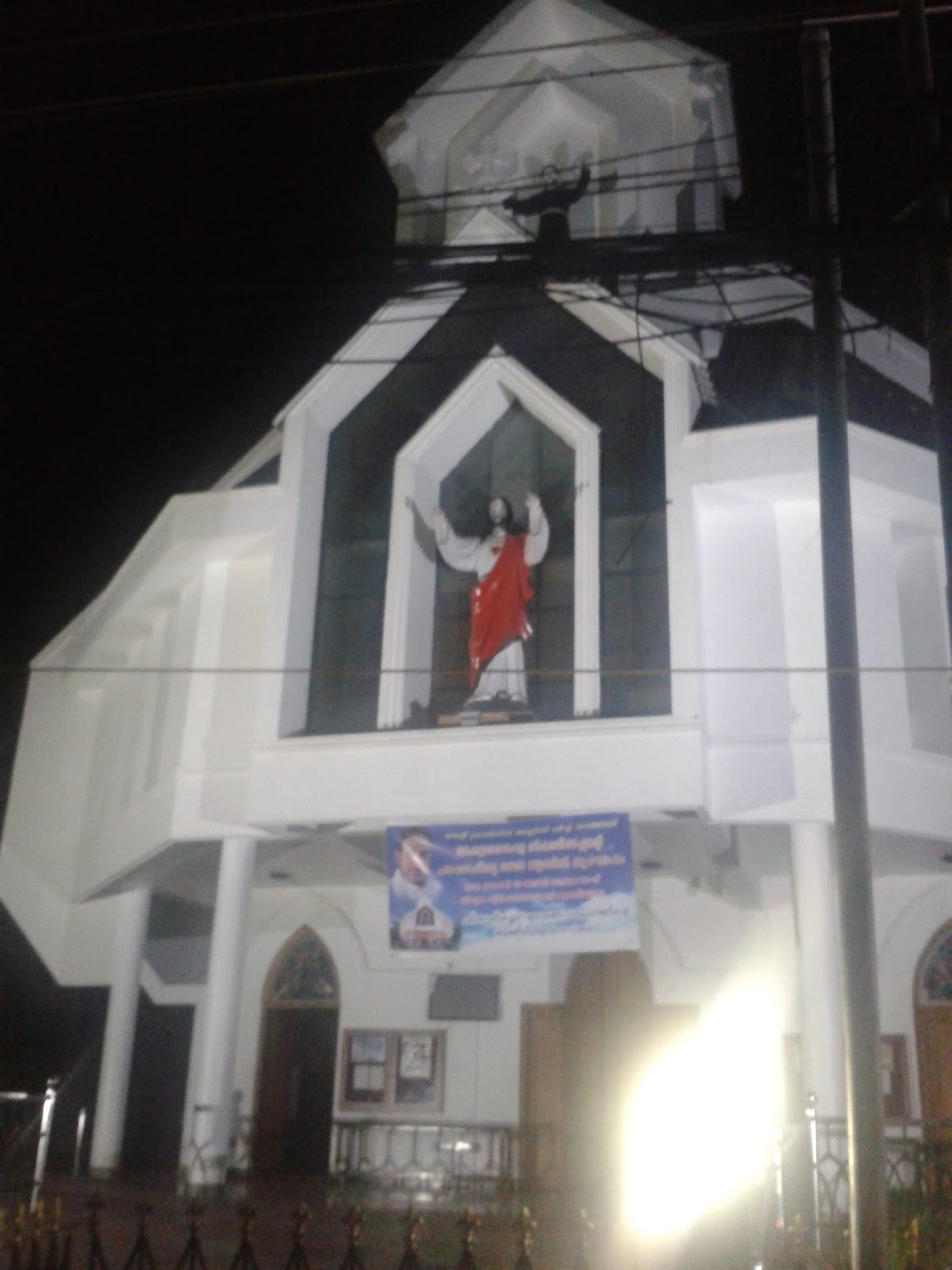
A couple of days ago, while standing near the St. Francis Church in Kakkanad, Kochi, at 7 p.m., while my daughter had gone for singing practice, I noticed a group of men milling around in front of the church. It was clear from their looks that they were from North India. They began talking among themselves. Then they looked at the church again. Finally, they walked towards three men standing around in a semi-circle and talking. They asked them something. The men nodded their heads, in typical Kerala style.
Then they took off their sandals, slippers and shoes and walked towards the entrance.
Suddenly, one man came back and took off his socks.
Then they entered the church.
I also followed them silently and stood at the entrance.
They went and sat on one of the benches.
The church was in darkness except for the light over the altar.
Like in all places of worship, where people come and say chants or prayers over a long period of time, there exists a certain spirituality.
I feel this deeply when I go to any place of worship, be it church, mosque or temple.
You will feel this when you go to the heart of the Meenakshi Temple in Madurai.
I am sure everybody feels it.
I then stepped away and stood outside.
After a while, the men came out and put on their footwear.
I resisted the urge to talk to them.
Why be a journalist all the time?
But curiosity dies hard.
The need to know gripped me.
I approached them.
I asked where they were from?
“From Meerut,” said Sachin.
So, it is the heart of Uttar Pradesh.
They had come for three months to do some repair on the main Doordarshan tower.
They had never been inside a church.
So they were curious.
So what was the experience like?
“It was nice,” said Sachin. “Can we come again?”
“Indeed, you can. Any time and all the time,” I said. “God is the same everywhere.”
They smiled.
We shook hands.
And once again, a small brick was added to the centuries-old edifice of syncretism in Kerala, and hopefully, for India also.


December 23, 2015
Banishing Away the Bad Omens

 COLUMN: LOCATION DIARY
Make-up artist Pattanam Rasheed talks about his experiences in Mollywood
By Shevlin Sebastian
Photos: Pattnam Rasheed applying make-up on Mohanlal for the film, 'Paradesi'; In his studio
At 4 a.m., on a cold winter's day, in 2007, superstar Mohanlal knocked on make-up artist Pattanam Rasheed's door in a hotel at Jodhpur and said, “Are you awake?”
“Yes Sir,” said Rasheed, as he opened the door.
They both had tea. Then the elaborate make-up for Mohanlal began. In PT Kunju Mohammed's film, 'Paradesi', Mohanlal plays Valiyakaththu Moosa, a Muslim who went to Pakistan, before Partition, but returns soon after, but he possesses a Pakistani passport. So he is not accepted as an Indian.
“In the film, Mohanlal's ages from 35 to 80,” says Rasheed. “For this particular shot, Mohanlal was playing an old man.” Rasheed used a prosthetic cap to make Monahlal look bald. Thereafter, he used a white beard as well as an old age stipple lotion, to indicate wrinkled skin.
At the shoot commenced, in the Thar desert, the villagers gathered around. A group of men asked Rasheed, “Who is the star?”
Rasheed pointed at Mohanlal and said, “He is.”
With a mocking look, one of them said, “How can this old man be the star?” Another man said, “You are fooling us.” They abused Rasheed and walked away.
But Rasheed felt happy. “In fact, I felt thrilled that they did not realise that it was all make-up,” he says. “The triumph of a make-up artist happens when viewers look at an actor and cannot figure out whether make-up has been used or not.”
The shoot progressed smoothly. However, the next morning, when Rasheed placed the bald cap, on Mohanlal's head, a large indentation appeared at one side. “Somehow, I could not solve the problem even after one-and-a-half hours,” he says. So Rasheed told the director if he could do a scene with Mohanlal as a middle-aged man. He promised to finish the make-up in half an hour. Kunju Mohammed agreed.
That night, when they were relaxing in the hotel, Rasheed told veteran actor Thangal, who had a small role, about the events regarding the bald cap. Thangal, who has some knowledge of healing, asked Rasheed to get a few eggs.
Then Thangal wrote something in Arabic on the shell of two eggs.
Thereafter, they went into Mohanlal's room. Thangal made the star lie down on the bed. “Then Thangal said some mantras in Arabic while moving the eggs over Mohan Lal's body,” says Rasheed. “Afterward, he threw the eggs out of the window. He did the same for me.”
Following this, there were no problems whatsoever on the film. “Thangal told me that a crew member may have given out negative vibrations,” says Rasheed. “He removed it with his mantras.”
It seemed to have worked. The film won several awards including Best Actor for Mohanlal at the Kerala State Film Awards as well as the National Award for Best Make-up Artist for Rasheed, the first time a make-up person from Mollywood has won it.
(The New Indian Express, Kochi, Thiruvananthapuram and Kozhikode)
Places of Beauty and Charm


 The projects of the architecture firm, 'Stapati', headed by Tony Joseph, have received international appreciation Photos: Tony Joseph (centre, middle row) with members of the Stapati team; Alila Diwa in Goa; the Vythiri Resort in Wayanad, Kerala
 By Shevlin SebastianSometime ago, architect Tony Joseph, founder of the firm, Stapati, had gone to Singapore. While having a meeting with one of the island’s top architects, he was introduced to a group of people. When he told them that he is from Kerala, they said that they had stayed at the Kumarakom Lake Resort. “I designed it,” said Joseph. There was an instant elation among the group members who congratulated him on designing such a beautiful property. “It feels great when your work is appreciated,” says Joseph.
The book, priced at Rs 2600, has been published by the San Francisco-based Oro Editions. While leading architect Christopher C. Benninger has penned the foreword, the text has been written by Stapati architect Sujith GS. It was released at a function at the Crowne Plaza, Kochi, on December 21, by Alex Kuruvila, the Chief Executive of Conde Nast India, in the presence of Kochi Biennale founder Bose Krishnamachari.
Asked his philosophy, Joseph says, “When you are sincere to a project, you will make sure that the site is not disturbed. This will ensure that the end-user is happy. It is also important to keep the costs low, so that the owner is also happy. So, for me, the prime attitude is one of sincerity.”
(The New Indian Express, Kochi and Thiruvananthapuram)
December 22, 2015
A Meeting of Sheela and Sheela
 Businesswoman Sheela Kochuouseph and actor Sheela will be holding a joint painting exhibition at the Le Meridien, Kochi
Photo: Sheela Kochuouseph (left) with actor Sheela. By Ratheesh Sundaram
By Shevlin Sebastian
It was Asif Ali Komu, of the Aluva-based Komusons Art Gallery, who got the idea to hold a joint exhibition of two women achievers: businesswoman Sheela Kochuouseph and actor Sheela.
“I came to know that both were painters in their spare time, so I felt that I should hold an exhibition featuring the two,” he says. “In fact when I told some people about it, they were skeptical and said, ‘Can they paint?’ This exhibition is to show that they are talented artistes.”
Asif was speaking at the press meet to announce the exhibition which will begin on December 23. A host of prominent personalities, from all sections of society, including Mollywood, are expected to participate.
And the duo got together recently when they met at the Kochi home of Sheela Kochuouseph. While there, the actor asked the spelling of the businesswoman's name. “It is the same as yours,” said Sheela Kochuouseph.
Then the actor asked the full name. “Sheela Grace is my name,” said Sheela Kochuouseph.
The astonished actor said, “That is also my name. My mother was called Grace.”
A total of 100 paintings will be on display: 60 of actor Sheela and 40 of Sheela Kochuouseph. There is a mix of abstract and realistic paintings. While actor Sheela paints in the early morning, at her home in Chennai, Sheela Kochuouseph paints in the afternoon, when she comes home from office during the lunch hour. “Instead of going to sleep, I prefer to paint for one or two hours,” she says. “I feel fresh after doing this.”
As Sheela Kocuouseph is speaking, an art lover comes up and says, “I would like to buy this painting.”
The particular oil painting is called ‘Combustion’. Painted in a deep shade of red, it shows dried leaves, suffering men and women and a blazing sun above them. “In the future, there will be no trees, only sunlight,” says Sheela Kochuouseph. “All the people are sad. They want to be cool, but they cannot be. The theme is about global warming.”
Both the women say that they will use the money for charity works. However, Sheela Kochuouseph has a specific plan: “I want to use it to clean up the garbage alongside Marine Drive. I will be asking permission from the Mayor [Saumini Jain] to do it.”
(The New Indian Express, Kerala State Editions)
December 20, 2015
An European Sojourn

 Italian director Simone Mariani has made an Italian documentary on the little-known but phenomenal tabla player Sanjay Kansa Banik, who plays in Europe. He grew up in a small town in West Bengal
Photos: Simone Mariani. Photo by Ratheesh Sundaram; Sanjay Kansa Banik and wife Rupa
By Shevlin Sebastian
Musician Sanjay Kansa Banik sits on his haunches in a small music shop in the town of Habra (49 kms from Kolkata). A man is tuning his tabla. After a while, he asks Banik to test it out. Banik hits the surface of the instrument with his fingers and starts playing. After a while, he closes his eyes. Then he says, “It's choking a bit. Can you loosen the bolts some more?”
Meanwhile, somebody places an earthen cup of tea on the floor. Banik sips it in evident relish.
Soon, the scene shifts to the banks of the river Hooghly, on a pleasant winter morning. Banik is playing the tabla, while being accompanied by a local musician on the harmonium. And as they play the mellifluous Hindustani classical music, two fishermen go past on a boat.
These are the opening moments of the 50-minute Italian documentary, 'A Journey on the Tabla' by director Simone Mariani. He was present in Kochi for the world premiere at the All Lights India International Film Festival in mid-November.
“I was very keen that the premiere should take place in India,” he says. “The response has been very good.”
Mariani came across Banik in Rome, when he attended a performance by the multi-ethnic Orchestra Di Piazza Vittorio. Apart from Banik, there were musicians from Senegal, Argentina, Hungary, Cuba, Ecuador, Brazil and Tunisia.
Out of all these musicians, Mariani was entranced by Banik's playing. Later, they met, and became friends. Then, one day, it occurred to Mariani that he could make a film on Banik's journey: from a small town in India, to playing all over Europe.
“I wanted to reveal the soul of Sanjay,” says Mariani. “His passion for the tabla began when he was only four years old. I felt it would be an inspiring story to tell. How the music connects with Europeans without using words. Over the years, Sanjay has collaborated with many orchestras, as well as jazz, fusion and classical musicians.”
But the documentary took three years in the making. One reason is that Mariani is a busy television and film actor. He has worked in the upcoming Hollywood film, 'Inferno', which stars Tom Hanks and Felicity Jones.
Nevertheless, Mariani travelled to Kolkata several times. All of Banik's family gave their views: his younger sister, parents, and fellow musicians, with whom he played with, before he left for Italy. In Rome, the director of the orchestra, Mario Tronco, as well as his colleagues spoke about his phenomenal talent.
Indeed, when Banik plays, he is mesmerising. As he himself says, “When I am on stage, after a certain point, I don't know where I am. The stage becomes a temple for me.”
But it is not all smooth sailing. Banik, who speaks fluent Italian, spoke about the difficulty of getting a work permit. “This suffering sometimes drives me crazy,” says Banik, who moved to Italy in 2006.
But the documentary also shows incidents of great joy, like his marriage to classical singer Rupa at Habra, in 2011. Later, when Rupa joined Banik in Rome in April, 2012, the couple gave a performance to an Italian audience at the invitation of the Alain Danielou Foundation. “They played the Raga Malkauns,” says Foundation Director Jacques Cloarec. “Both were fantastic.”
All in all, it is a documentary which reveals a diminutive man's tall ambition to make a mark abroad through hard work and determination. It helps that Banik has a great talent.
(Published in Sunday Magazine, The New Indian Express, South India and Delhi)
December 18, 2015
The Story of a Market

 Artist Orijit Sen spoke about one of the most popular shopping areas in Goa - the decades-old Mapusa Market
Photos: Orijit Sen (left) with Australian artist Alistair Rowe; bread in Mapusa Market
By Shevlin Sebastian
A first glance of graphic artist Orijit Sen can cause a surprise. He has long hair, parted in the middle, that goes way beyond his shoulders. While the hair is black, the moustache and goatee are a mix of grey and black. Sen was in Kochi to give a 'Let's Talk' outreach programme, titled 'Mapping Mapusa Market', organised by the Kochi Biennale Foundation, and moderated by Australian artist Alistair Rowe.
Mapusa Market is one of Goa's most famous old-style markets, set in the town of Mapusa in Northern Goa. In the late 1990s, Sen lived in a village near Mapusa for a few years. He was fascinated by this market and spent a lot of time there. “The market has multiple layers of products, activities, and people,” says Sen.
The mapping of the market was facilitated by Goa University under its Mario Miranda Chair Visiting Professor Programme.
Incidentally, the first object that catches the visitor's eye is a statue of Shakuntala sitting on a crop of rocks, surrounded by a couple of deer. The statue came up just as the Portuguese were leaving India in 1961.
“Initially, there was a plan to put up a statue of a Portuguese hero like Vasco Da Gama,” says Sen. “But that was shelved. The market comprised mostly of Hindu and Catholic traders. The latter were not keen for a Hindu god to come up. Somebody suggested Shakuntala. Everybody agreed that it was a good idea.”
Like most markets in India, the variety is mind-boggling. “There are numerous bakeries, which offer different types of traditional bread, like pao and poee,” says Sen. “You can get all types of fish, chicken, foodgrains, vegetables, clay pots, plastic buckets, watches, apart from computer parts and Chinese items.”
There are also many small outlets where men do elementary repair work of old stoves, mixers, fans, and umbrellas. And there are restaurants and bars - 'Market Cafe Bar & Rest' - to name one, to quench the shoppers' hunger and thirst.
Using pertinent visuals, Sen presented an absorbing show of life in the market.
Thereafter, he spoke about his comic book, 'River of Stories', which is regarded today as the first graphic novel in India, about the agitation against the Narmada Dam.
Here are some thought-provoking lines:
'Here is the story of a river But stories themselves are riversRivers that well up from the undergroundOf Consciousness.'
Sen also showed a visual of the 246-feet long mural, 'From Punjab, With Love', which he had done at the Virasat-e-Khalsa Museum in Anandpur Sahib, Punjab. It shows an immense variety of life in Punjab - farmers in the fields, women washing clothes, children flying kites, and buffaloes wading into a pond. It is a mind-boggling work by a top quality artist.
(The New Indian Express, Kochi and Thiruvananthapuram)
Hot and Chilly

 Chilean poet, Raul Zurita, the first artist of the Kochi Biennale 2016, gave a reading of his poems
Photos: Raul Zurita; Translator Anna Deeny and Raul Zurita during the reading
By Shevlin Sebastian
When Malayalam poet Balachandran Chullikkadu placed a ponnada across the shoulders of the Chilean poet Raul Zurita at the 'Sky Below' event at the Town Hall, Kochi, on Tuesday, the latter had a puzzled look on his face.
gSir, this is our way of showing honour to you,” said Chullikkadu, as Zurita broke out into a warm smile. Later, Chullikkadu said, “A great poet defines his country in its historical context. Poetry is the political resistance of the human soul.”
Zurita, 65, is dressed elegantly: a pastel overcoat and trousers and brown canvas shoes. The first artist to be selected for the Kochi Biennale of 2016 walks with a shuffling gait. But when he begins to recite his poems, in Spanish, his voice gains in power and strength.
Here are a few lines from 'Dream 36/To Kurosawa', read out by his translator Anna Deeny, who works at the Center for Latin Studies in Georgetown University, USA:
'I’m tied up at the back of a militarytruck that jolts each time it hits a potholein the road. We’re facedown, crisscrossedone on top of the other like those boardfences stacked up around barracks and Ifeel the weight of the ones who ended upon top of me. At each pothole our bodies jolt too...
The heel of my shoe is rammed up againstthe face of someone who ended up belowme and the weight of the ones on top endsup ramming it in even further.'
This poem refers to Zurita's life-changing moment: on September 11, 1973, he was arrested by security forces on the day that Auguste Pinochet took power in Chile through a military coup. Subsequently, Pinochet ruled Chile for the next 17 years.
This poem became part of the book, 'Purgatorio', which became a best-seller in Chile.
Later, Zurita, along with writers and artists Fernando Balcells, Diamela Eltit, Lotty Rosenfeld and Juan Castillo, set up the 'Colectivo De Acciones de Arte', a group that did provocative public-art performances against the Pinochet government.
Like the one at New York, in 1982. Five aeroplanes drew letters in the form of white smoke against the blue sky. These were the words from Zurita's poem, 'La Vida Neuva ' (The New Life). Thereafter, ten years later, on the sands of the Atacama Desert, Zurita wrote the words, 'Ni Pena Ni Miedo' (Neither pain nor fear). These four words are more than three kilometres long. This sentence can still be seen from the air because the locals have maintained it against the elements.
Thus far, Zurita has published more than 20 books of poetry. And among the many honours he has won are the Pable Neruda Prize in 1998, the Chilean National Literature Prize in 2000, and the Casa De Las Americas Prize for Poetry in 2006.
At Kochi, as he grips the mike firmly, Zurita says, “Without poetry, humanity disappears.”
(The New Indian Express, Kochi and Thiruvananthapuiram)
December 16, 2015
A Nun Faces the End

Photo: The nuns of Poor Clares of Perpetual Adoration
By Shevlin Sebastian
When my mother sees Sr. Mary Gertrude she could not help but widen her eyes in shock. The 85-year-old nun is lying immobile, on a bed, in a room at the Poor Clares of Perpetual Adoration monastry in Chelcombu, Kerala.
It is a serene setting: rubber trees and plants growing all around. The only sounds are the rustle of the leaves and the cawing of crows.
“Gertrude has been suffering from Parkinson’s disease and spondylitis for the past few years,” says Sr. Mary Tancy. “She is being fed by a tube. She is not able to speak. But she can hear very well and understand everything that we say.”
My mother leans forward and kisses Sr. Gertrude's face. There is a trace of recognition in the nun's eyes. “Do you remember how much fun we used to have during the summer vacations?” my mother says.
One of the fondest memories of my mother was the fun-filled times she had with her cousins at their grandmother's home in Varapuzha. Sr. Gertrude, my mother's cousin, was a few years older. “Gertrude had a lot of energy,” my mother later said. “She was always running about.”
In the ancestral home, there were a couple of ponds. The children would catch fish or go for a swim. Sometimes, the girls played hop-scotch, or chased each other. There were many guava, coconut and mango trees. But Sr. Gertrude's father had explicitly warned that no mango could be plucked before it was ripe.
One evening, Sr. Gertrude dared her cousins that she would pluck an unripe mango, and disobey her father. The cousins challenged her. A cool Sr. Gertrude plucked a mango. But it was a clever choice. “It was a diseased one, so nobody could scold her,” says my mum.
Sr. Gertrude's mother had died when she was a child. So, she was brought up by a widowed aunt, as well as her grandmother. When Gertrude reached school-going age, she was placed in a boarding which was run by nuns. “Maybe that was why she decided to become a nun,” my mother said.
But, unlike others, the nuns of the Poor Clares lead an unusual life. They have all taken a Vow of Enclosure. This means that a nun will never leave the convent, except for medical emergencies or for voting. She can never spend time with her family or visit new places. But they pray fervently to God throughout the day and the night. “We have dedicated our lives to God,” says Sr. Tancy. There have been many instances when, thanks to their prayers, good things have happened.
So, it is no surprise that the monastery is a magnet for the troubled. The faithful from all over Kerala come to meet the nuns. “Husbands and wives who don’t get along, parents and children who have trouble understanding each other, those with financial and physical setbacks, and siblings who are involved in property disputes,” says Sr. Tancy. The nuns also receive letters from the distressed in Europe and America. Some call up from West Asia and request for prayers.
But, for Sr. Gertrude, all these activities have come to an end. Instead, she lives in a deep silence. Neither my mother nor Sr. Gertrude could have imagined, when they ran around, having the time of their lives, during their childhood, that way off, into the future, there would come a day when Gertrude would become sick, immobile, and silent.
I stare at Sr. Gertrude. She has soft eyes and an unlined face. This is surely the last lap for Sr. Gertrude before the finishing tape comes in sight. For others, in a similar situation, but far less spiritual, it is a time of suffering, turmoil and unhappiness.
Who knows how our last stage is going to be like? Once the body breaks down, you have to depend on others to look after you. But will they treat you with kindness and sympathy? Or does helplessness provoke indifference or cruelty in people? Will one's children be around, offering solace and companionship? Or will we have to face the exit on our own?All these questions filled my mind, as I watched my mother caress her cousin's face.
(Published as a middle in The New Indian Express, South India)
December 15, 2015
An Endless Love of Unniappams

COLUMN: LOCATION DIARY
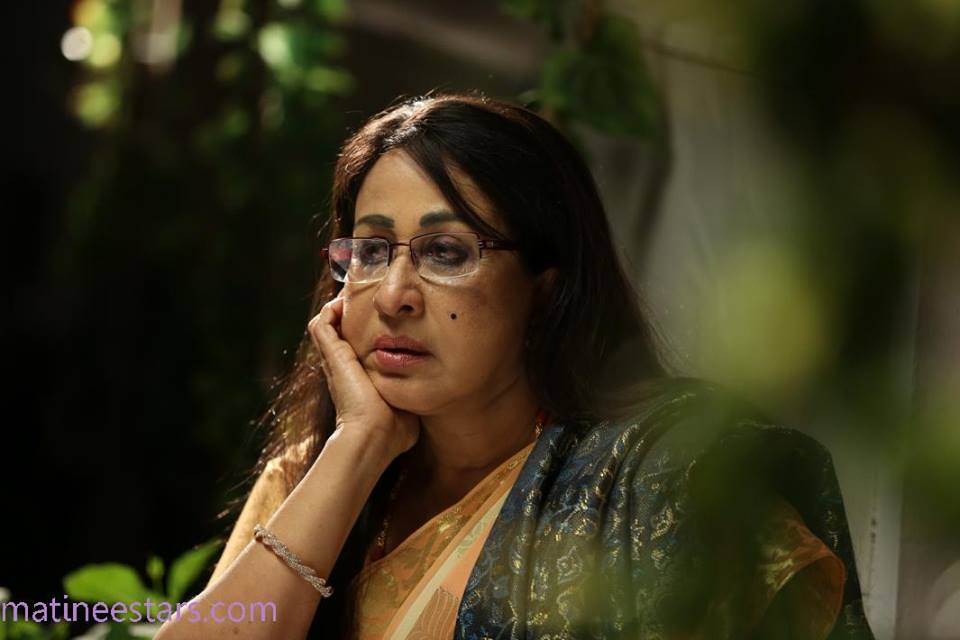
Veteran actress Sheela talks about her experiences in Mollywood
By Shevlin Sebastian
In 1982, Sheela decided that she would stop acting, after working in more than 450 films. “I did not tell anybody, except the people close to me,” she says. At that time, she was acting in the Malayalam film, ‘Madrasile Mon’.
In her last scene, at a bungalow in Chennai, she was supposed to eat unniappams. These unniappams were brought from an Ayyappan temple, because they were known to be very tasty. “Unniappams have been my big weakness since childhood,” says Sheela. “I love eating them. My mother Gracy would make it so tastefully.”
For the shot, she needed to eat only one. “But I purposely made some mistakes, so that the shot had to be taken again and again, and I could carry on eating the unniappams,” says Sheela, with a laugh.
Two decades later, Sheela made a comeback. She was acting in Sathyan Anthikad’s film,'Manassinakkare'. Sheela played a rich landlady by the name of Kochu Thresia, who remained in touch with her childhood friend, Kunju Maria, played by KPAC Lalitha.
And in the first scene, which was shot, at a bungalow in Shoranur, which was supposed to be Kunju Maria's house, Sheela was served unniappams. “The coincidence was too much,” says Sheela. “It would seem as if I never went away. I also realised that God was giving His blessings on my comeback.”
It would seem so, because 'Manassinakkare' became a hit. And Sheela began her second innings with aplomb.
Sheela also remembers her interaction with Nayantara [original name: Diana] who was making her debut in this film. Somehow, during the course of the filming, Sathyan, Jayaram and Sheela felt that Diana needed a new screen name. So they sat together and went through numerous names before they selected 'Nayantara'.
“When we told Diana this name, she accepted it at once,” says Sheela. The veteran actress teased the youngster by saying, “This name will make you a very big star. You will be staying in a big house. And Sathyan, Jayaram and I will come one day and say, 'Nayantara, we had acted together in 'Manassinakkare'. Do you remember us?'”
But now Sheela's words have come true. “Nayantara has, indeed, become a big star,” she says.
On the set Sheela also passed some tips to Nayantara. “At that time, her dance movements were not upto the mark,” says Sheela. “She looked tense, as she tried hard to remember the steps. I told her, 'There is only one thing you must never forget to do. Whatever steps you take, just do it with a bright smile. The audience will only be looking at your face and will not notice the mistakes you are making'. And Nayantara has followed that advice.”
Recently when Sheela met Nayantara, the latter hold her, “Sheela Maam I am still following the tips you gave me that day. And it works!”
(Published in The New Indian Express, Kochi, Kozhikode and Thiruvananthapuram)
'Tata Trusts Wants to Give Opportunities'
 Says Deepika Sorabjee, Senior Programme Officer, Media, Arts and Culture
Photograph by Ratheesh Sundaram
By Shevlin Sebastian
“The National Curriculum (NC) of 2005 observes that the awareness of the arts is ebbing steadily among students, guardians, teachers and among policy-makers and educationists,” said Deepika Sorabjee, Senior Programme Officer, Media, Arts and Culture, Tata Trusts. “That’s practically the entire community involved in pedagogy. The NC sums up the mindset of society and the art community itself. So where does one go from there?”
Ten years later, it is a despondent situation in a country where only one per cent of the GDP is spent on health and a minuscule amount on art. “But then we have [Krishnamachari] Bose and Riyas [Komu], who, in this milieu of immense sadness, decided to set up the biggest democratic public art event against all odds,” said Deepika, while speaking at the recently-held conference on art education conducted by the Foundation of Indian Art and Education and Kochi Biennale Foundation. “They did what others - governments, policy makers, educationists, gallerists, collectors or investors - could not do. They filled a gap that was glaring. They did it for the sake of art, with no expectation of personal return.”
And the Tata Trusts are also trying to do their bit. “Philanthropic institutions are not the government,” said Deepika. “But they do make substantial contributions, by supporting projects and initiating programmes to fulfill the lacunae that exists. Education in the arts is one such gap that the government and art institutions have failed to fill, not only due to economic reasons, but because of a dearth of mentors, maestros, gurus, teachers and facilitators.”
So, Tata Trust is supporting the upcoming Students' Biennale. “We want to give opportunities for those who fall outside the radar of contemporary art,” says Deepika. “The Kochi Biennale Foundation's continued dialogue with the Students' Biennale will, perhaps, throw up the artists of the future.”
Deepika also spoke about the need for artistic freedom. “At the seminar, Prof. (Dr.) J. Letha, Vice Chancellor [Cochin University of Science and Technology], spoke about the need for art education to be given complete freedom as regards their curriculum, since it cannot be taught like the sciences. Maybe people like her, at the helm, could speak to administrators so that the policy can be influenced.”
(The New Indian Express, Kochi and Thiruvananthapuram)


