Michael Patrick Hicks's Blog, page 63
January 20, 2015
State of The Blog 2015
So, despite the grandiose title, let’s just consider this a bit of housekeeping.
The blog is now a year old, and come February 21, I will have hit my one-year anniversary as an author. Lest I rest on my laurels, I thought I’d take this time to catch you up a few things.
Here’s the basics, for those new to this site:
You can connect with me not only here, but on plenty of other sites. Take a gander and feel free to add/like/friend/etc.
All of these links can also be found right up at the very top.
Now, onto the bookish side of things.
In addition to publishing CONVERGENCE and CONSUMPTION last year, I’ve also been dabbling in book reviews, so you’ll find plenty of those here, and expect lots more to come. I’ll be dropping a review for Tim Curran’s latest horror release soon, and have plenty more titles in the queue thanks to NetGalley.
On the novel side of things, I’m prepping EMERGENCE for release and expect to have it out by the summer. This is a sequel to CONVERGENCE, and stuffed to the rafters with action, duplicity, and intrigue. I’m really happy with how it’s shaping up, and can’t wait to get it into reader’s hands! Stay tuned for more on this one soon.
More immediately, you’ll be seeing news soon on the release of an anthology, featuring an all-new short story, REVOLVER, from me. I’m hearing word of a March release for this one, and it includes fresh works from Lucas Bale, S. Elliot Brandis, Harry Manner, J.S. Collyer, Alex Roddie, S.W. Fairbrother, and Nadine Matheson. And, we have one hell of an author pegged for the foreword, but I think I’ll keep that one secret for the time being.
Now, if you would like to get early access to the anthology, as well as my upcoming release, EMERGENCE, sign up for my newsletter. I promise not to spam you, and only give you periodic updates or reminders about new stuff. In exchange, you’ll get free stories, and you’ll get them before anyone else. I’m also planning on offering up a few freebies for subscriber’s only. Join now!
Lastly, to my followers new and old, I just want to say thanks. Thank you for reading these posts, my books, tweets, ramblings, whatever. I hope you’ve been enjoying things, and I expect to have a fair amount of great content throughout 2015. Happy reading!


January 19, 2015
Review: Blockbuster by Lisa von Biela
 About Blockbuster
In the year 2025, survival of the fittest takes on new importance. Hungry for market share and driven by greed, BigPharma companies battle to produce the next blockbuster drug. And they will go to any length to win—and survive.
Dan Tremaine has found the secret to success for Denali Labs. Phil Horton is desperate to save his family firm, Horton Drugs. When they’re put in a head-to-head competition to find the cure for a deadly flesh-eating disease, who will win?
And at what cost?
The clock is ticking. The body count is rising.
And someone has created a monster.
About the Author
Lisa von Biela worked in Information Technology for 25 years, and still claims there is no application she cannot break in testing. She left the field to attend the University of Minnesota Law School, graduating magna cum laude in 2009. She now practices law in Seattle, Washington. One of her legal articles, a research piece published in the Food and Drug Law Journal, was cited in an amicus brief before the U.S. Supreme Court.
Just after the turn of the century, Lisa began to write short, dark fiction. Her first publication was in The Edge in 2002. She went on to publish a number of short works in various small press venues, including Gothic.net, Twilight Times, Dark Animus, AfterburnSF, and more.
She is the author of THE GENESIS CODE, THE JANUS LEGACY, ASH AND BONE, BLOCKBUSTER, and SKINSHIFT (coming June 2015).
My Thoughts
Lisa von Biela’s Blockbuster is a solid medical thriller that reads well, but lacks much in the way of character depth.
So, let me tackle the bad and get this gruesome bit of business out of the way first. Despite having a number of principal cast members, none of them feel very well defined or memorable. Outside of Dan Tremaine, owner of Denali Labs, I’m having a bit of a hard time remembering any of the other characters. There’s the female scientist, Sylvia, and her lawyer husband, as well as the scientist’s older co-worker who has a crush on her – and I remember that particular detail because as soon as he’s introduced von Biela spends a number of paragraphs telling us how much he’s crushing on her. There’s also the US President who is obsessed with the word “Homeland” and uses it unsparingly.
Dialogue is a bit flat, wooden, and rings a bit out of tune a bit too often to my ears. There’s also a few instances where dialogue serves primarily as infodump, because von Biela wants to convey certain information about the world her story inhabits, but can only relay it through long-winded conversations where people talk in ways that very few real-life humans speak.
Those are by big gripes with this book. Now, the good.
In spite of her stilted characters, Blockbuster tells a really damn good story. In fact, I found the story itself to be so gripping that the problems I had with the character’s realizations were not the deal breaker they otherwise might have been.
This germ-driven story of conspiracy and manipulation is great fodder to build a plot from. There’s all kinds of techno-whiz-bang stuff of the near-future coloring her world, including a nifty high-tech smart watch that puts the disappointing and strangely mundane iWatch to shame. But the crux is the story revolves around an all-too plausible horror of BigPharma playing a game of chicken with modified diseases and a high susceptible public in an effort to cause epidemics and drive up profits. It’s truly insidious stuff, and Tremaine, with his pseudo-cocaine habit, could easily be The Wolf Of Pharmaceuticals.
The disease in question is MRSA-II, which makes its flesh-eating predecessor look like the flu. I can typically handle traditional, vile horror romps. But, I’ve got a thing for needles, and von Biela’s judicious and vivid descriptions of the toll MRSA-II takes on the human body, and the early efforts at treatment, had me squirming.
Most importantly, Blockbuster is just, plain and simple, a compelling story. Some might even go so far as to call it an…infectious read? Puns aside, for me these good bits outweighed the bad, and I was drawn in by the dueling businesses/grudge match of Denali Labs and Horton Drugs and how the response to the changing pharmaceutical marketplace trumps ethical practices. There’s a writ-large morality play underpinning Blockbuster, and most of the characters in this book either lack ethics or have huge blind spots that allow them to trudge their way through enormous ethical lapses, bad decisions, and terrorism, all in the name of winning, while the wee little people pay the ultimate price for the rank hubris of these corporation’s bottom lines. Regardless of its narrowly defined characters and some schlocky dialogue, there’s a really good tale of smart bio-horror here. The execution may fall a little flat, but plot-wise it’s on the money.
Buy Blockbuster At Amazon


January 16, 2015
My Gut Reaction to Naomi Baron’s “Case” Against E-Readers

Before I dig in, it’s time for a quick disclaimer: I write, primarily, for the digital medium. I blog, and am the author and producer of eBooks. I am a reader of novels, more often than not, at least lately, in their digital format. I own and adore my Kindle. I do not, for a single second, believe that physical books are superior in any way – but, I used to, for reasons that were predominately irrational. And this WaPo article? I read it digitally, not in their print publication, but via their link on the Facebook website. I am a user, generator, and consumer of digital stories. Now, on with the show…
I usually ignore these types of articles, or, at best, take them with an incredibly large grain of salt. But, this latest salvo in the “grrr! argh! digital!” argument from Naomi S. Baron, courtesy of Washington Post, was particularly rankling.
Baron takes care of the easy-picking arguments typically found in these debates, looking at ease of portability, digital democratization, environmental factors (renewable trees versus irreplaceable and toxic rare Earth metals in production of books vs digital devices – both of which would have been much more interesting, and more well deserved of research, than her focus on the low-hanging fruit she occupies herself with), before writing about her research – just in time for the publication of her novel, Words Onscreen: The Fate of Reading in a Digital World.
Now, I haven’t read her book, nor do I plan to. I want to talk (rant?) solely about Baron’s Washington Post article and its narrow, murky thesis. The gist of her article seems (to me, anyway) to revolve around this: eReaders are OK for fluffy little best-sellers, but not for monoliths of “important” literature, like James Joyce. And the implicit argument in that is, eBooks are fine for the wee little minds geared only for entertainment, but if you’re a serious connoisseur of literature, you cannot possibly read it digitally.
To me, this reeks of elitism, and its a classist argument, a facade of high brow mindedness pitting “real” readers versus consumers of more pedestrian novels. The argument goes, if you are a true, pure-blooded reader of literature, you best dare not read it on your Nook. And just why not? Well, Baron argues, because, distractions. She writes:
But the real nail in the coffin for one-size-fits-all electronic reading is concentration. Over 92 percent of those I surveyed said they concentrate best when reading a hard copy. The explanation is hardly rocket science. When a digital device has an Internet connection, it’s hard to resist the temptation to jump ship: I’ll just respond to that text I heard come in, check the headlines, order those boots that are on sale.
Readers are human. If you dangle distractions in front of us (or if we know they are just a click or swipe away), it’s hard not to take the bait.
But, are eReaders really the object to blame for reader’s attention deficits? I don’t find that to be a very valid argument, and Baron seems to send a bit of a mixed message here. Her argument carries the same sort of baggage that other, older, similar arguments had in response to any technological revolution that threatened to destabilize The Old Way. If I recall correctly, television, video games, and smart phones have all had the same criticisms leveled against them. It’s a bit of a chicken and the egg argument – are people to blame for their dwindling concentration, or are the inanimate devices around them to blame? But, then she points out that humans are supremely distractable anyway, so maybe it’s a moot point. So, then, why make it at all, let along as a particular crux in your axe grinding?
Some also acknowledged they took more time with printed text and read more carefully – not really a surprise, since digital screens encourage scrolling and hasten us along to grab the next Web site or tweet.
Now, I’m not sure what kind of eReader Baron is using (I’ll give her the benefit of the doubt and presume that she is actually familiar with these devices), but after having avidly used a Kindle for the better part of a year, I never felt “encouraged” to scroll or “hasten” along.
Mind you, not all “digital screens” are equal, nor are the guts behind their shiny display. Your traditional PC computer software functions quite differently than your eReader software. You interact with it differently, and both the behaviors and purposes of the devices are different. Further, I do not think the format one reads in is at the center of blame for their bad behaviors.
Here’s an anecdotal example for you. When I was reading physical books, either for enjoyment or for school, I would – gasp! – set the book down on occasion to go online and check out Twitter, reply to an e-mail, or check the headlines. Should we then blame the physical novel for that? I “jumped ship” even without any internet connected devices!
This anecdote is ridiculous, of course, but so is what Baron is implying. Because readers can easily switch between a novel and a web browser, all on the same device, that means digital is bad for books? Admittedly, I’m not a rocket scientist, but I do not find her premise to be as plainly clear-cut as she implies. I have little trouble staying engaged in a story regardless of its medium. Maybe I’m just special, who knows.
What fascinates me is how many people – from teenagers to millennials to those of a certain age – prefer print when reading both for pleasure and for school or work. Drawing examples from my own research, some of the reasons are aesthetic (“charm of actually turning pages” and “scent of a new book”). Others involve a sense of accomplishment (“able to see how much I read”), ease of annotation (“I can write on the pages”), and navigation (“easy to locate where I was”).
Baron is initially supported here by a 2013 research study that was widely circulated amongst various news outlets, and which responders showed a strong preference for physical books. Looking back at my own self circa 2013, I would have been one of those readers affirming preference for physical books. Now, two years later, I staunchly prefer digital. I’d be curious to find more recent studies to see what they show. I suspect there’s been a growth, perhaps even a large growth, in acceptance of eBooks in the intervening years, so this merits some more research on my part. It could be out there and I’m just not aware of it. I do wonder, though, how much of Baron’s new book is reliant on old research. Technology and adoption rates of new devices can advance a hell of a lot in such a short amount of time.
And drawing examples from my own use of a Kindle, I find Baron’s other examples lackluster at best. Before actually giving digital a try, I was a die-hard physical book only reader, convinced that I would never, never!, read a digital book. There was something pure about a printed work, the scent of those pages, the accomplishment and ease of seeing how much I’d read and what was left to go. And that was largely all nonsense, in hindsight. Which, again, makes me wonder just how current Baron’s research is and how dated her pool of examples might be in the present day. Times change, sometimes very rapidly, and I doubt I’m the only to reverse course on this issue.
In 2013, I slowly began reading eBooks on my wife’s iPad – and largely because I was able to find a hefty novel for less than $2 to read through the Kindle app. It was a matter of sheer convenience in the beginning. Did I want to lug around, say, for example, Stephen King’s massive door stopper, IT, or a light-weight iPad? But, the more eBooks I read, the more I realized that I was not actually missing anything. The story was the same, as pure as it had ever been, but a little more portable, and a little easier to access on cross-platform devices – I could literally take my book anywhere and read it on anything, aestheticism be damned.
I took me a little while to adjust to the “accomplishment” factor, but again, it was not a significant hurdle that made one form of delivery inherently superior to another. I’ve got plenty of Kindle books with real page numbers that I can digitally bookmark, and I can type in annotations and highlight passages. And that highlighting business? That is something I absolutely would not have ever done to a physical novel, short of a textbook, because I so strongly believed in the sanctity of the novel, as if it were a monolithic object to be revered. After all, it was special and sacred, damn it! I actually got annoyed when I would lend out a pristine yet well-read favorite novel to a friend, only to have it returned dog-eared and its spine broken and scarred. Digital books? I can loan them out with full peace of mind. And I can, and have, highlighted and annotated away without troubling my conscience.
I think the argument behind this “preference” is really just a lack of understanding about the digital world. The reasons Baron lists for why physical books are preferred were many of the same that I shared way back when, but which were easily corrected as I became familiar with eBook devices and their various options. These examples she relies on in her research are not a “digital book problem” so much as “user error.”
I also wonder how many people just blindly cling to the assumption that print is better, as I once did, just because it was all they knew and were hesitant, or maybe even fearful, of change.
We know a lot about the pros and cons of reading a hard-copy book vs. reading electronically. The problem is, many of us refuse to listen.
I refuse to listen unless solid evidence can be presented. I want facts, not opinions or preferences. If you want to tell me that eBooks are bad and print books are great, or maybe even the be-all, end-all of our shared reading experiences, then I want something a little better than “well, Joe, likes how books smell.” Because, really, what are these pros and cons, and what do they essentially boil down to? Baron doesn’t do this argument much service in her WaPo article beyond what’s been quoted here, and most of these cons are really non-issues, ultimately.
The ones that could legitimately foster discussion and thought – such as the use of rare Earth metals in production of eReaders – the discussions that could put serious weight behind the “are eBooks bad?” argument, are quickly dismissed in favor of respondents preferences. And, frankly, I couldn’t give a shit about what Joe think versus what Timmy think, because Billy said this while Sue said that. I mean, really? That’s what this debate is, at its heart.
Beyond that, a number of these are cons that can be worked around, or even turned into pros. It might mean trading page numbers for percentages read, but that’s not really the end of the world or a nail in anybody’s coffin. Preferences do not mean an eReader is bad – it only means that you think it’s bad. It’s telling that Washington Post’s capsule summary in their Facebook post distills her piece down to “Hard copy books are just more pleasant to read.” Oh, well, OK then. Show’s over! The case has been made!
I don’t buy into the argument that one way of reading a book is more valid than another, that one way of reading is “more pleasant” than another. I’ll levy this against the fact that I do get eyestrain from prolonged computer monitor use; Kindle books, well, not so much. So, it’s pretty rare that I’ll read a book on a PC screen for any length of time. This is an important distinction to make because there are differences in the quality and types of screens in various eReaders, where much focus has been made toward ensuring the comfort of its users. Whatever eyestrain issues that the proponents of print books have, I think that particular argument has been lessened by technological advances and will be, if it hasn’t already been, eliminated entirely.
I can’t help but think that Baron’s article is borne entirely out of fear for the loss of the cherished, Old Way of doing things. Mostly, this whole argument behind book vs eBook is a silly canard, with time better spent encouraging people to read, regardless of the format they choose. And isn’t it better that they have an option as to how they get to enjoy or study their material rather than being confined to one particular method, simply because that’s just how it was done in the past? We should be celebrating the written word, rather than agonizing over the various options available for the consumption of those words.
What are you thoughts? Chime in below.


January 15, 2015
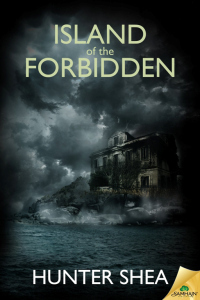
Review: Island of the Forbidden by Hunter Shea
 About Island of the Forbidden
Sometimes, the dead are best left in peace.
Jessica Backman has been called to help a strange family living on a haunted island in Charleston Harbor. Ormsby Island was the site of a brutal massacre two decades ago, and now the mysterious Harper family needs someone to exorcise the ghosts that still call it home. The phantoms of over one hundred children cannot rest.
But something far more insidious is living on the island. When the living and the dead guard their true intentions, how can Jessica discover just what sort of evil lurks on Ormsby Island? And why is Jessica the only one who can plumb its dark depths?
About the Author
Hunter Shea is the author of the novels Forest of Shadows, Swamp Monster Massacre, Evil Eternal, Sinister Entity and The Graveyard Speaks. His stories have appeared in numerous magazines, including Dark Moon Digest, Morpheus Tales and the upcoming anthology, Shocklines : Fresh Voices in Terror. His obsession with all things horrific has led him to real life exploration of the paranormal, interviews with exorcists and other things that would keep most people awake with the lights on. He is also half of the Monster Men video podcast, a fun look at the world of horror. You can read about his latest travails and communicate with him at http://www.huntershea.com, on Twitter @HunterShea1, Facebook fan page at Hunter Shea or the Monster Men 13 channel on YouTube.
My Thoughts
[Note: I received an advanced reader’s copy from the publisher via NetGalley for review.]
Hunter Shea’s latest, Island of the Forbidden, brings back his series heroine, Jessica Backman, and her paranormal hunting partner, Eddie Home, for a third adventure.
While I haven’t read any of the prior Backman books (yet!), Shea’s previous release, Hell Hole, was enough to get me to jump into the deep end with his assurances, via his blog, that this one could be read as a standalone novel. And, for the most part, I’d have to agree. Shea does a great job of catching reader’s up on the background between Backman and Home, and their last case together, which has weakened Home and driven a rift between he and Jessica, setting her off on a solo cross-country journey.
However, the paranormal perils of Ormsby Island and the threat it poses for two young children, are enough to draw Jessica and Eddie back together. The island, and the mansion that rests there, have been bought by the Harper family in an effort to drum up money by selling their real-life ghost story as a reality TV show. But, in order to do that, they first have to rile up the dead, putting themselves and their children in danger.
Island of the Forbidden is a bit of a slow-burn ghost novel. Shea does some strong character work, and it’s fascinating to witness how Ormsby Island changes the Harper’s, particularly Tobe, the family patriarch. (And, a side-note here, but I can’t but think that Tobe Harper may be a bit of an ode to horror film director Tobe Hooper, who is best known for the movie Poltergeist.) There’s also a long unraveling of what, exactly, happened on Ormsby Island, the site of a massive massacre (to say the least), a description that serves merely to scratch the surface of the awful truth.
Unlike the weird western Hell Hole, however, this work is not a constant stream of paranormal action and gunfights against the undead or undying. Rather, this is a more subtle and nuanced work of horror, with the ghostly shenanigans sprinkled throughout and building toward a powerful climax that sees the full fury of the island’s apparitions brought to bear against the living.
Overall, I was nicely satisfied by Island of the Forbidden, and found it to be an accessible entry-point to Shea’s series despite not having read any of the prior Jessica Backman novels. If anything, I’m even more intrigued in these past stories now and will be aiming to read through them as soon as I can. She’s a fun, plucky character that I’d like to read more about as she square’s off against ghastly, ghostly threats. Here’s to hoping we haven’t seen the last of her and Eddie.
Buy Island of the Forbidden At Amazon


January 12, 2015
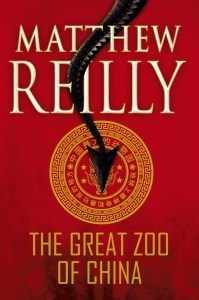
Review: The Great Zoo Of China by Matthew Reilly
 About The Great Zoo Of China
Publication Date: January 27, 2015
The all-new thriller from #1 internationally bestselling author Matthew Reilly!It is a secret the Chinese government has been keeping for forty years. They have found a species of animal no one believed even existed. It will amaze the world. Now the Chinese are ready to unveil their astonishing discovery within the greatest zoo ever constructed. A small group of VIPs and journalists has been brought to the zoo deep within China to see its fabulous creatures for the first time. Among them is Dr. Cassandra Jane “CJ” Cameron, a writer for National Geographic and an expert on reptiles. The visitors are assured by their Chinese hosts that they will be struck with wonder at these beasts, that they are perfectly safe, and that nothing can go wrong. Of course it can’t…GET READY FOR ACTION ON A GIGANTIC SCALE.
About the Author
Matthew Reilly is the international bestselling author of numerous novels, including The Five Greatest Warriors, The Six Sacred Stones, Seven Deadly Wonders, Ice Station, Temple, Contest, Area 7, Scarecrow, the children’s book Hover Car Racer, and one novella, Hell Island. His books are published in more than twenty languages in twenty countries, and he has sold more than 7 million copies worldwide.
My Thoughts
[Note: I received an advanced reader’s copy from the publisher via NetGalley for review.]
Elevator pitch: It’s like Jurassic Park, but with dragons and waaaay more action.
If that capsule summary has you hooked, then you’re in for one hell of a ride! Matthew Reilly’s latest, The Great Zoo of China, is, first and foremost, fun. A damn lot of fun at that.
I’ve only read a couple of Reilly’s past efforts, both from his Scarecrow series, and although this particular novel is a standalone the gist of Reilly’s work is this – he takes a cool premise and turns it into a big-budget Hollywood thrill-ride spectacle, with as much action as possible stuffed into its pages. His twitter bio is both succinct and highly accurate, describing him as a “Creator of rollercoaster rides on paper.”
In The Great Zoo of China, Reilly takes us to a country renowned primarily for building stuff for the industries of other nations. If it wants to be a world leader, then China needs to win the war of soft diplomacy and become a cultural sensation. The solution, then, is to open a zoo unlike any ever seen – not just The Great Zoo of China, but The Great Dragon Zoo of China. And obviously that’s a really swell idea and everything turns out hunky-dory. I mean, what could possibly go wrong, right?
Um…well…quite a lot, it turns out.
Reilly embellishes his fantastical central premise with a nice smidge of just-plausible-enough science to get the ball rolling. Readers aren’t beaten over the head with technical details and scientific minutia, but rather a gently laid groundwork that gives the existence of dragons enough credibility to get us to a metric ton of explosions, and death-defying derring-do as the zoo finds itself under siege.
Taking center stage is reptile expert, and National Geographic writer, CJ Cameron, who has survived a crocodile attack that left her face badly scarred. Cameron is a smart and brave action heroine, from the Ellen Ripley mold, and a fiercely determined protagonist once all hell breaks loose. She takes quick command of the world-shaking developments rocking the zoo, and steers the plethora of chaotic events that ensue toward a satisfyingly bloody and fiery finish.
The Great Zoo of China is a huge, Hollywood-ready blockbuster, brimming with enough action and pyrotechnics to make Michael Bay jealous. And Reilly never loses sight of his primary goal, which is to make a big, muscular, and enjoyable thriller that only rarely pauses to catch a breath before diving headlong back into the fray.
Buy The Great Zoo Of China At Amazon


January 7, 2015
Review: Atlanta Burns by Chuck Wendig
 About Atlanta Burns
You don’t mess with Atlanta Burns.
Everyone knows that. And that’s kinda how she likes it—until the day Atlanta is drawn into a battle against two groups of bullies and saves a pair of new, unexpected friends. But actions have consequences, and when another teen turns up dead—by an apparent suicide—Atlanta knows foul play is involved. And worse: she knows it’s her fault. You go poking rattlesnakes, maybe you get bit.
Afraid of stirring up the snakes further by investigating, Atlanta turns her focus to the killing of a neighborhood dog. All paths lead to a rural dogfighting ring, and once more Atlanta finds herself face-to-face with bullies of the worst sort. Atlanta cannot abide letting bad men do awful things to those who don’t deserve it. So she sets out to unleash her own brand of teenage justice.
Will Atlanta triumph? Or is fighting back just asking for a face full of bad news?
Revised edition: Previously published as two volumes, Shotgun Gravy and Bait Dog, this combined edition includes editorial revisions.
About the Author
Chuck Wendig is the author of The Heartland Trilogy and the Atlanta Burns series, as well as numerous novels for adults. He is also a game designer and screenwriter. He cowrote the short film Pandemic, the feature film HiM, and the Emmy-nominated digital narrative Collapsus. Chuck lives in “Pennsyltucky” with his family. He blogs at http://www.terribleminds.com.
My Thoughts
[I received an advanced reader’s copy from the publisher via NetGalley for review.]
With Atlanta Burns, Chuck Wendig lobs one helluva hand grenade into the middle of the Young Adult genre with this bleak, broody affair.
Temporarily trading in the far-future cornpunk pastures of his Heartland series for the redneck noir of Pennsyltucky, Wendig fully delivers with this terrific thriller. It’s stocked to the gills with white supremacists, dogfighting rings, drugs, murder, and mayhem. It also has plenty of heart in between, and the titular heroine, Atlanta Burns, is wildly worth rooting for. If you’ve followed Wendig’s other heroine, Miriam Black (Blackbirds), Burns may feel familiar and has a similar world-toughened outer shell and a mouthful of razor-sharp sarcasm.
At times, Atlanta’s world feels a lot tougher than Black’s urban paranormal escapades. Maybe that’s just because this book is kept so firmly grounded in the much-too-recognizable real-world and pulls zero punches. There’s bullying, inferences of sexual assault, and lynchings. By the time I finished the first part of Bait Dog, I was a mess. Wendig’s descriptions of animal abuse and the tortuous regimen of training dogs for pit fighting tore at my guts more than the last dozen horror novels I’ve read, and, more than a few times, the book left me in some serious need of cat cuddles from my little fur-ball.
Although Atlanta Burns collects two previously published titles, the novella Shotgun Gravy and the novel Bait Dog, the two stories are so closely interrelated that it reads comfortably well as a single narrative. It’s a terrific suspense-thriller that not only packs an emotional wallop but is tough as nails. Highly recommended.
Buy Atlanta Burns AT Amazon


January 6, 2015
Timeline of the Future
 Originally posted on The Nerd Nebula:
Have you ever wondered what might become of our planet, humanity or space millions of years from now? Here is a timeline that takes you down that road of evolution – enjoy:
 Far Future Timeline
What events have you foreseen that are not on the timeline? What encroaching event scares you most?
✘ Hack It! ✘


January 5, 2015
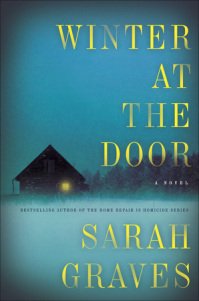
Review: Winter At The Door by Sarah Graves
 About Winter At The Door
Perfect for fans of Jenny Milchman, Linda Castillo, and Lisa Gardner—the first book in a suspenseful new crime thriller series featuring the tough but haunted police chief Lizzie Snow, a big-city cop with a mission, taking on a small town with a dark side.
Moving from Boston to remote Bearkill, Maine, isn’t homicide cop Lizzie Snow’s idea of a step up. But breaking away from tragedy and personal betrayal is at least a step in the right direction. Her dead sister’s fate still torments her, as does her long-missing niece’s disappearance. Lizzie hopes to find the mysteriously vanished child here, amid the coming ice and snow. But in the Great North Woods, something darker and more dangerous than punishing winter is also bound for Bearkill.
The town is a world apart in more than distance—full of people who see everything, say little, and know more than they’ll share with an outsider. The only exceptions are the handsome state cop who once badly broke Lizzie’s heart and desperately wants another chance—and Lizzie’s new boss, sheriff Cody Chevrier, who’s counting on her years of homicide experience to help him solve his most troubling case, before it’s too late.
A rash of freak accidents and suicides has left a string of dead men—all former local cops. Now the same cruel eyes that watched them die are on Lizzie—and so is the pressure to find out what sort of monster has his hooks in this town, what his ruthless game is, and just how brutally he’ll play to win. Whatever the truth is, its twisted roots lie in the desolate backwoods of Aroostook County: where the desperate disappear, the corrupt find shelter, and the innocent lose everything. It’s there that a cunning and utterly cold-blooded killer plans the fate of the helpless lives at his mercy—one of whom may be the lost child Lizzie will do anything to save. As a blizzard bears down, and Bearkill’s dark secrets claw their way to the surface, Lizzie gears up for a showdown that could leave the deep, driven snow stained blood red.
About the Author
Sarah Graves lives with her husband in Eastport, Maine. She is working on the second Lizzie Snow novel, THE GIRLS SHE LEFT BEHIND. Visit her at http://www.sarahgraves.net or http://www.mainecrimewriters.com
My Thoughts
[I received an advanced reader’s copy from the publisher via NetGalley for review.]
Homicide detective Lizzie Snow is a recent transplant to Bearkill, Maine, a small town where there’s more trees than people, and a heck of a lot of drama going around.
Lizzie has taken a job as a deputy with the Bearkill Sheriff’s office in an effort to track down her missing niece. Her boss, Chevrier, has hired her to help solve a string of suicides among ex-cops, which he believes to be work of a murderer.
This is the first book I’ve read from Sarah Graves, and most of my past mystery reads have leaned toward the Connelly/Connolly/Sanford/Lehane end of the spectrum. I wasn’t quite sure what to expect from Graves’ work, and my first reaction was there was a heck of a lot of stuff going on in this book, and I wasn’t entirely sure how much of it was relevant. This helped give those little “a-ha!” moments a lot of oomph once I began seeing how all the so-very-disparate elements connected.
But, jeez, waiting for connections to get made? It was actually kind of annoying and made it feel like there was a lot of water being tread in-between, particularly during the novel’s first half. And to top it off, there was a pretty heavy focus on Snow’s romantic triangle quandaries between her, her ex-lover and fellow cop, Dylan, and a local veterinarian. That, of course, is in addition to Snow being stalked and spied on, breaking up bar-room brawls, and dealing with multiple senior citizens suffering from dementia.
For being a fairly light read, at times Winter At The Door felt awfully bloated. My main hurdle to tackle was the surprisingly light investigative focus on the central mysteries. As noted above, my mystery reads tend to fall heavily toward male authors, where the action and procedural details are very front and center, and whatever romantic entanglements may be present are less prevalent. Winter At The Door struck me as a pretty sharp inverse of this dynamic, with the romance element being more central to Graves’s story, and the dual mysteries at the book’s core taking on a more secondary role. But, by around the half-way point when she starts tying all these threads together, the focus on resolving all the story elements gives the book a strength that was lacking in the front-end.
There’s just an odd dichotomy to the story-telling here that makes the book feel somewhat imbalanced, and it feels like Graves was having trouble reconciling the various entanglements of her story. Finally, for the last third of the book, the author was able to settle into a killer groove that resolves Snow’s man-hunt for a killer in the snowy Maine woods for a really well-done finale.
While Winter At The Door is certainly not poorly done, it didn’t quite hit all the right notes for me. Graves tells a solid story, and has a strong knack for detail. Her description of Bearkill and life in that small-town are really well done and evocative. Readers will get a terrific sense of community and the ties that bind the small populace of Bearkill together. And the way she ties in the various elements into a cohesive plot helped me feel a bit like I was a step or two ahead of the game, while still providing a few surprises. All that said, it just felt a little too cozy for me, which is a bit odd for a novel featuring murder, stalking, meth dealing, kidnapping, suicides, etc. On the other hand, Snow was a fun heroine to follow and Winter At The Door left me satisfied enough in the end to consider giving Graves a second chance whenever the next Lizzie Snow novel releases.
Buy Winter At The Door At Amazon


January 3, 2015
I, for one, am really happy to see Nelson DeMille’s John...


I, for one, am really happy to see Nelson DeMille’s John Corey series as today’s Kindle Daily Deal. Six books for $1.99 each. I read Plum Island a while ago and loved it. I’ll be re-reading it eventually, whenever I find time to dig into this series as a whole. Check ‘em out!


January 1, 2015
2015 Goodreads Reading Challenge
 No sooner did the 2014 Goodreads Reading Challenge end than the 2015 challenge begins. For the last two years, I’ve set my goal at an entirely feasible 45 books and surpassed this number both times. This year, I’m knocking that number up a little bit and aiming for 50 titles across the year. I think this is entirely doable, and might even get ahead of the challenge by a few extra novels.
Here’s a quick look at the novels I am planning/hoping on getting to throughout January:
 Reading this one now!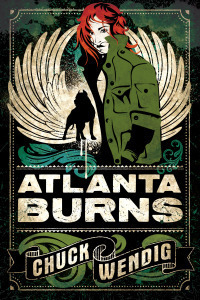
Are you taking part in the reading challenge this year, and what books are on your list?