
Brett Hetherington's Blog: "First thought:" My Substack page, page 38
July 29, 2017
Video: 'The markets won't fix themselves' -- Yanis Varoufakis
"“We have a major imbalance between savings and investment. We have the highest savings rates in the history of capitalism and lowest level of investment. You only have to state that to realise what the source of our troubles are.”
Speaking at FundForum International 2017, former Greek Finance Minister and DiEM25 Co-Founder Yanis Varoufakis sat down with FundForum Correspondent Emma Walden to talk about the state of global markets, the role that politics plays in economic stability, and what that means for investment in years to come."
Varoufakis understands that the democracies of the world have consistently rejected full-blown Communism.
For this reason we all have to accept that a version of Socialism is the only option that can succesfully be advocated and implemented with the fair consent of the populace.
To impose a system of government and economy on people without enough wider support is doomed to quickly fail.
The people must be brought along by their leaders rather than dumped on. That is not utopian. It's practical.
Wealth can then be redistributed with only the wealthiest against it happening.
The DiEM25 movement backs this idea.
Speaking at FundForum International 2017, former Greek Finance Minister and DiEM25 Co-Founder Yanis Varoufakis sat down with FundForum Correspondent Emma Walden to talk about the state of global markets, the role that politics plays in economic stability, and what that means for investment in years to come."
Varoufakis understands that the democracies of the world have consistently rejected full-blown Communism.
For this reason we all have to accept that a version of Socialism is the only option that can succesfully be advocated and implemented with the fair consent of the populace.
To impose a system of government and economy on people without enough wider support is doomed to quickly fail.
The people must be brought along by their leaders rather than dumped on. That is not utopian. It's practical.
Wealth can then be redistributed with only the wealthiest against it happening.
The DiEM25 movement backs this idea.


July 22, 2017
"Discover Catalonia -- Routes and Getaways"
 An extremely detailed and well-produced English language PDF on the various parts of Catalonia (for tourists and travellers) is available for free
here
.
An extremely detailed and well-produced English language PDF on the various parts of Catalonia (for tourists and travellers) is available for free
here
.July 15, 2017
"Echoes of history at Europe's borders"
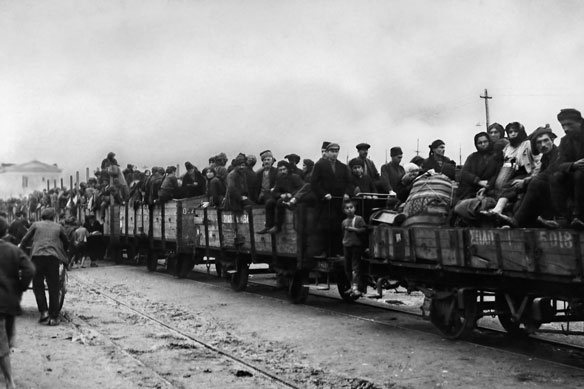
"Almost a century after a mass “exchange” of Muslim and Christian minorities, the Aegean coast sees a new wave of refugees.
Last March, history repeated itself on Turkey’s Aegean coast after a 94-year hiatus.
Across the water that separates the country from the northern Greek islands, boats carrying refugees – the vast majority of them victims of today’s wars in the Middle East – traced the journeys of the boats that carried unwanted Muslims and Christians between the newly formed Republic of Turkey and Greece in 1923, when the two countries agreed to exchange their respective minorities by mass deportation.
It seems to be the fate of this misleadingly tranquil coastline, dotted with olive groves and fishing villages, to witness politicised human traffic on the borders of Europe.
Ayvalik lies just ten nautical miles east of the Greek island of Lesbos, on which thousands of refugees are still held in detention camps. The island of Cunda, accessible via a bridge from the main town of Ayvalik, is a sleepy harbour town of vague nostalgia and faded beauty, of crumbling villas converted into cheap hotels, and abandoned churches converted into mosques or automobile museums. The town has largely resigned itself to tourism, and several high-profile industrialists have built discreet holiday homes on its shores.
Until 1922, Ayvalik was an entirely Greek Orthodox town in the heterogeneous hodgepodge of the Ottoman Empire; a hive of trade and commerce, bustling with merchants, olive farmers and black-robed priests. All the Christians who once lived there were either killed in the last years of Turkey’s War of Independence (1918-22) or shipped off to mainland Greece in 1923, to be replaced by Muslim Ottomans, many of them from nearby Lesbos. In total, 1.2 million Christians were “exchanged” for 400,000 Muslims – almost the totality of each minority residing in the two countries, with the exception of those living in Istanbul and Western Thrace.
Today, the elder generations of the imported Muslims who replaced Ayvalik’s former Orthodox inhabitants sit playing backgammon under slowly turning fans in seafront cafés: weather-beaten but upright, dignified men chatting quietly in a mixture of Turkish and a Greek dialect learned from their parents, who were brought here from the Greek island of Crete in 1923. The dialect is Cretan, or “Giritli” as the Turks call it – a rougher version of standard Greek, incomprehensible to other Turks and to mainland Greeks."
Read more from source at New Humanist here.
July 7, 2017
"Real red: Corbyn, Goytisolo and the rallying of the left" -- My latest opinion column for Catalonia Today magazine
 Elections can be strange events. The British one last month produced a mixture of results but one thing it showed was that a genuinely democratic socialist government there is a distinct possibility after the next time the nation goes to vote again.
For the first time since the mid-1940s, the Labour Party in the United Kingdom, led by underdog Jeremy Corbyn is offering a collection of policies that are not a softer, pale imitation of the Conservatives and roughly supporting the economic and social status quo.
This Labour party with its election programme (or ‘manifesto’) was full of plans to tax the richest in society and increase company tax to pay for better public funding of schools, hospitals and social care, all of which have been cut away horrifically by the Cameron and May governments since 2010. In truth, many of these severe austerity policies had actually begun under previous Labour leaders in power.
Corbyn however has moved his party clearly to the left and many of his ideas proved to be popular during the last few weeks of the election campaign. Theresa May lost her majority in parliament but we simply cannot know for sure how much this was due to her bumbling campaign and how much credit Corbyn can rightly claim.
What we do know is that over 70 per cent of young voters in the 18 to 24 age bracket voted for Labour candidates. Partly, this must have been due to Corbyn’s policy of guaranteeing free university places for all, instead of the current system which demands exorbitant annual fees but it seems that his appeal was wider than just this one promise.
His more concrete and costed commitments to put the rail network back in public control and reverse the creeping sell off of the NHS public health system also appear to have found support from the young to the old. Labour’s pledge to raise the minimum wage to 10 pounds an hour was another vote winner. It showed that they have once again gone back to their red roots and are not afraid of being labelled radical by the establishment-controlled media.
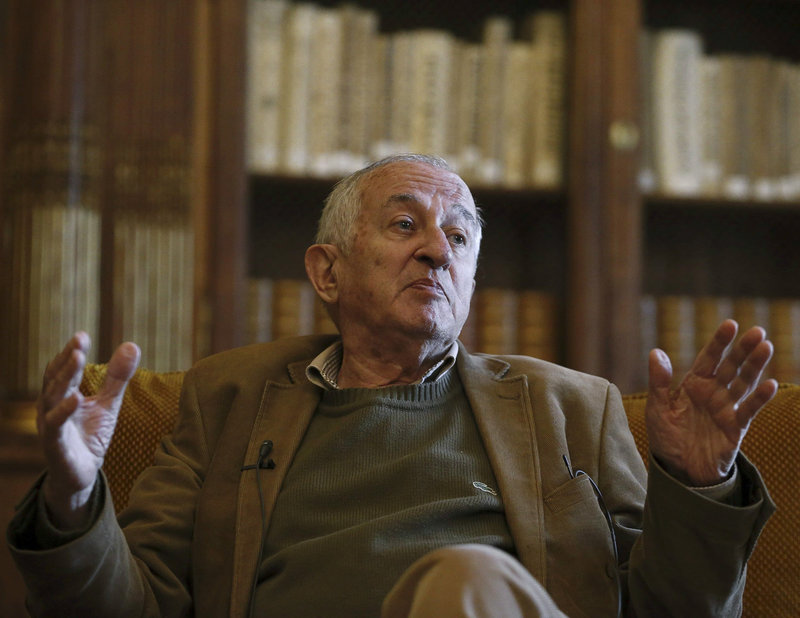
Another progressive iconoclast who has lived by his left-wing beliefs and regularly paid a price for doing so is Barcelona-born writer Juan Goytisolo [pictured above], who sadly died at the age of 86 at his adopted Moroccan home in June of this year. As a critic of General Franco and conservatism in general, he was known across Europe for his books such as “Campos de Níjar,” a travelogue that detailed the harsh social and economic conditions in 1950s Andalucia (translated into English by Peter Bush.)
As a writer, I was also inspired by Goytisolo’s autobiography, “Forbidden Territory”. It is rare to read such brutal honesty about his own evolving sexuality and highly-personal inner landscape. Through creamy prose, he makes a sharp dissection of the “ill-formed universe” of his bourgeois upbringing. We can only hope to see others follow in his wake.
[This article was first published under the title "The rallying of the left" in Catalonia Today magazine, July 2017.]
July 1, 2017
'Ours is not a bloodline, but a textline'
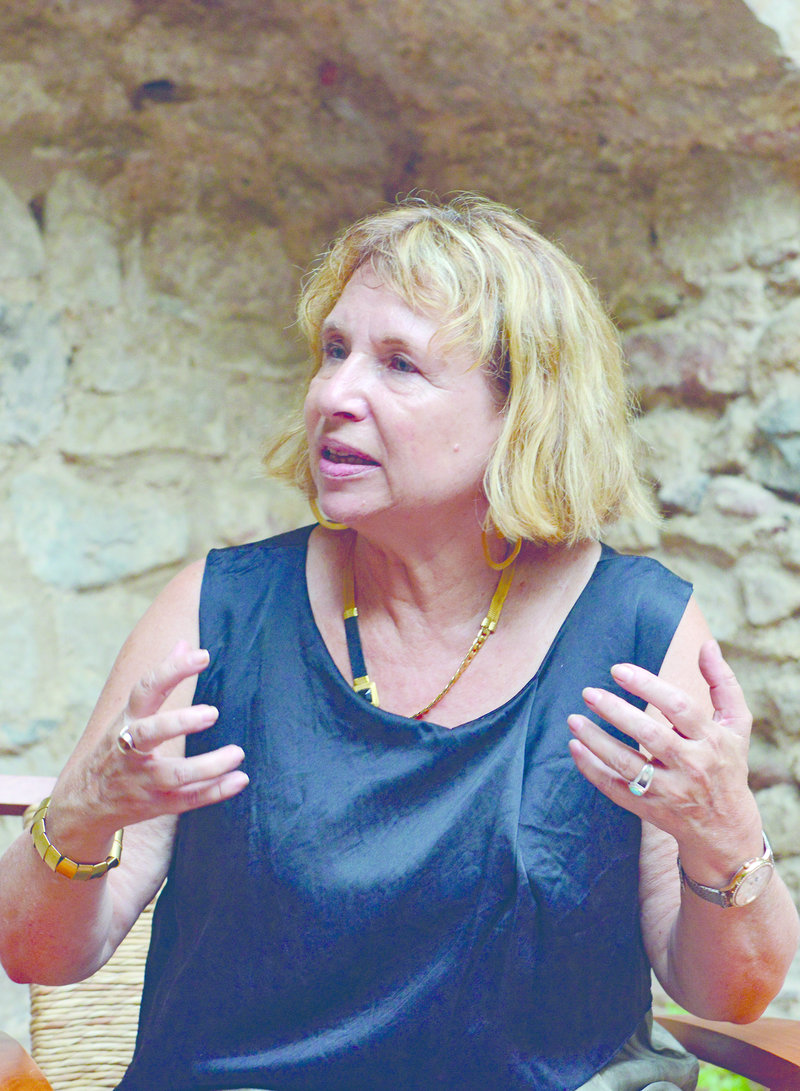 [Photo: EVDOKIM PEREVALSKY.] "I just found out only a few weeks before coming to Girona, that through the Horowitz branch of my family, I am Gironan, through my forebear Rabbi Isaiah Halevi Horowitz. This made me shudder a little bit, but I still don’t believe in God. I don’t think it’s a coincidence; I think it has to do with the secular movement of Jewish continuity."
Israeli writer and historian Fania Oz-Salzberger who was interviewed by Catalonia Today editor Marcela Topor here.
June 24, 2017
Video: 'Capitalism will always create bullshit jobs' | Owen Jones meets Rutger Bregman
"Rutger Bregman is the author of Utopia for Realists and he advocates for more radical solutions to address inequality in society. His ideas include the introduction of a universal basic income, a 15 hour working week and...open borders.
When I went to meet him, he told me politicians have failed to come up with new, radical ideas, instead sticking to an outdated, technocratic form of politics. He argues this has allowed politicians like Geert Wilders and Donald Trump to slowly shift extreme ideas into the mainstream."
June 18, 2017
"The lost photos of Barcelona"
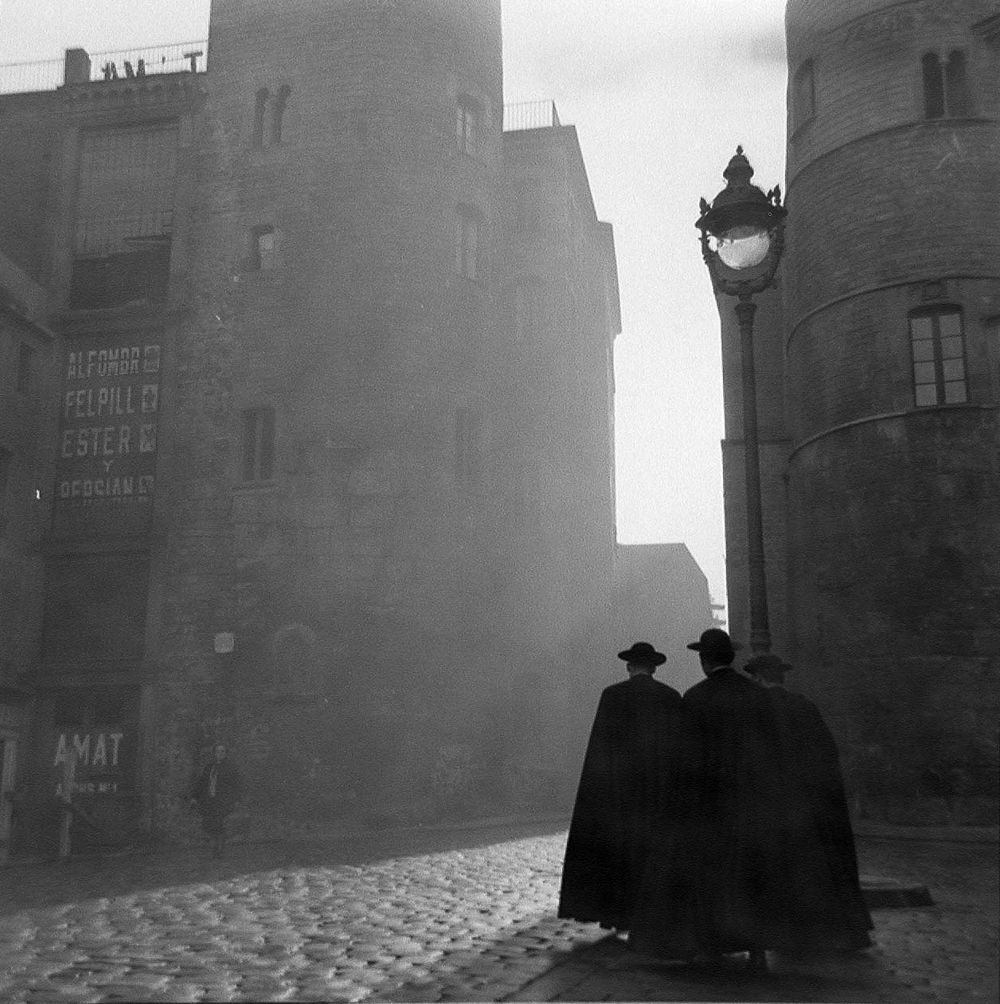 [Image: Milagros Caturla, courtesy of Tom Sponheim]
An envelope in a Barcelona flea market held the work of an unknown master photographer...
"In the summer of 2001, American Tom Sponheim was vacationing in Barcelona with his wife. On their way to the cathedral of Sagrada Familia, they wandered through the bustling flea market of Els Encants.
Sponheim spotted a stack of photo negatives on a table, and after checking that they were decently exposed, asked the vendor how much. She asked for $2.50 for an envelope of the shots. He paid her $3.50.
Upon returning home, Sponheim scanned the negatives and discovered that he had stumbled upon the work of an unknown but immensely talented photographer."
Read more from source and see more of the remarkable photos here.
(Article first found via Business Over Tapas.)
June 10, 2017
"The quiet one" -- My latest article for Catalonia Today magazine
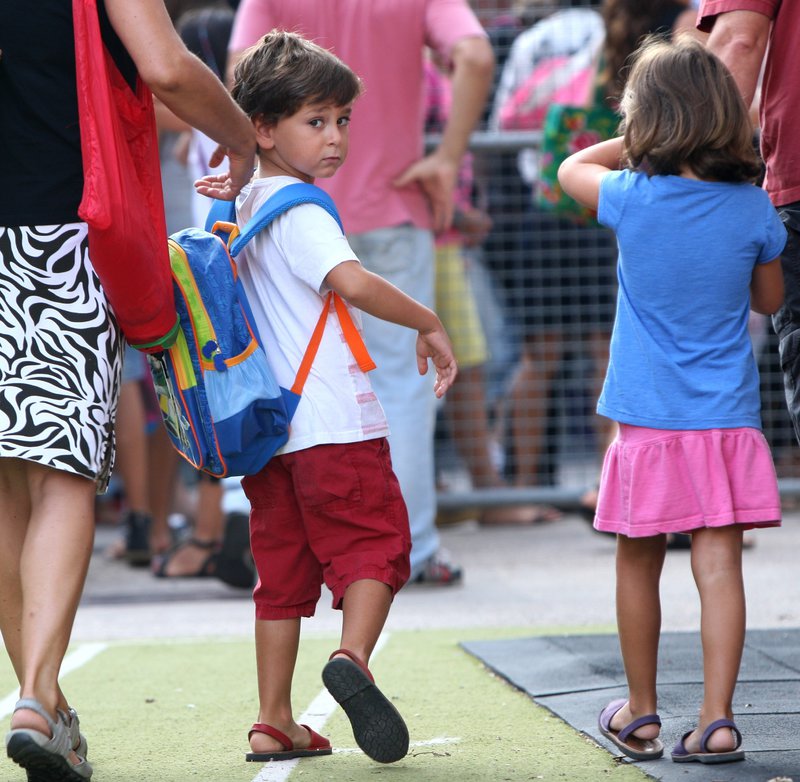 [Photo: Lluís Serrat.] There he is. Sitting along the side of the class, with his head down. He could be a child or an adult -- and certainly female too -- but today at least this introvert has very little to say for himself.
 Familiar to most of us who spend any time in group situations at work or in a social setting, the introvert is not shy by definition.
According to North American author (and self-acknowledged introvert) Susan Cain, shyness is actually about fear of being judged by others.
In fact, she argues, it’s just that “introverts feel at their most alive and their most switched-on and their most capable when they're in quieter, more low-key environments.” Extroverts -- their opposites -- are people who simply function better with a high level of social stimulation.
The wider point that Cain makes in her book on the subject is she believes that a bias has crept into “our most important institutions, our schools and our workplaces. They are designed mostly for extroverts and for extroverts' need for lots of stimulation. And also we have this belief system right now that I call the new groupthink, which holds that all creativity and all productivity comes from a very oddly gregarious place.”
Myself, as someone who does not fit neatly into either category of the out-going chatterbox or the silent internal type (but rather seem to flit between the two depending on the moment) I confess to having largely failed in my attempts to run a fully inclusive classroom.
When I was a secondary teacher I tried to democratically involve all of my students in being vocal but (like many educators) I was unaware of how best to do this or that some teenagers just do not want to speak if it can be avoided.
Teaching adults over the last few years I’ve learned that the prevailing culture in this part of the world too is clearly in favour of extroverts. I have even taught in companies where they believe that they do not have any introverts working alongside them as their colleagues.
In the endless rounds of group meetings and chatty open plan offices introverts often fade into the background. It is as if being introverted is a mark of shame and sets someone apart as “not a team player.”
But there is no good reason for this to be the case.
As Susan Cain discovered, “when it comes to leadership, introverts are routinely [ignored] for leadership positions, even though introverts tend to be very careful...and when psychologists look at the lives of the most creative people, what they find are people who are very good at exchanging ideas and advancing ideas, but who also have a serious streak of introversion in them.”
She gives the examples of Charles Darwin, Steve Jobs and genius children’s author Dr Seuss.
Of course, extroverts can and do lead us the wrong way though.
Cain notes that “groups famously follow the opinions of the most dominant or charismatic person in the room, even though there's zero correlation between being the best talker and having the best ideas.”
For some reason, the name Donald Trump immediately comes to mind.
[This article was first published in Catalonia Today magazine, June 2017.]
June 3, 2017
Video: Spanish man wins at European Stone Stacking Championships 2017
Pedro Duran from Arcos de la Frontera in Cadiz, Spain has been awarded first prize for 'Most stones balanced' at the first annual European Stone Stacking Championships 2017 in Scotland.
On one day of skill, patience and artistry "the competition brought together a community of stackers from across Europe and featured some inspiring and breathtaking balances."
On one day of skill, patience and artistry "the competition brought together a community of stackers from across Europe and featured some inspiring and breathtaking balances."
May 28, 2017
"Most EU states drifted backward on gay rights"
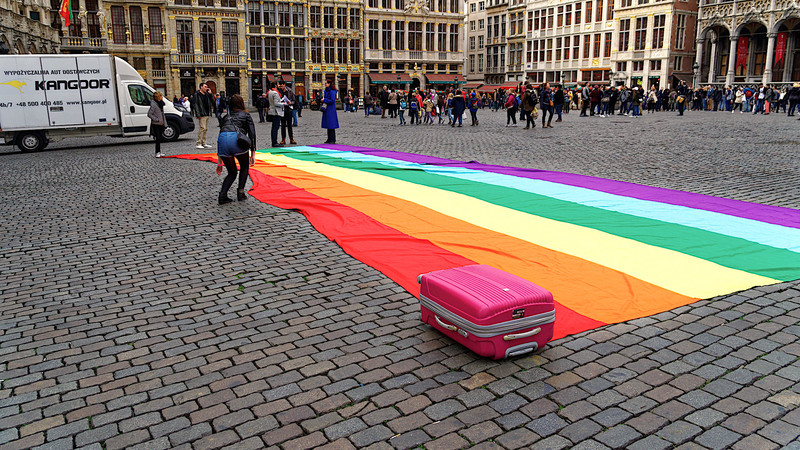 (Photo: Miguel Discart) "Latvia, Lithuania, and Poland still show the least respect of all EU countries toward sexual minorities, with activists calling for political “courage” and “backbone” by EU institutions.
 The three member states all scored below 20 percent on a map of human rights compliance in Europe published by Ilga-Europe, a pressure group in Brussels.
The NGO ranks countries on the basis of laws and policies that impact LGBTI people’s rights in six areas, including equality and non-discrimination, family, and hate speech and violence.
At the other end of the scale, Malta (88%), the UK (76%), and Belgium (72%) led the way, with France (71%) not far behind.
The map, as in previous years, showed more red (non-compliant) or shades of red and orange in the east, compared to green (compliant) in the west.
The rating did not always correlate with religious mores - Italy, a Roman Catholic country, scored just 27 percent, but Ireland, Portugal, Spain, which are also Catholic, scored between 52 percent and 69 percent.
Even though Italy scored low, it improved by 7 percent from 2016.
Denmark, Finland, France, and Slovenia also improved slightly, but the group-of- five were the only ones to do so, while most counties eroded slightly and a few others stayed the same.
Meanwhile, the worst places in Europe to be gay were Azerbaijan (5%) and Russia (6%), where gay people have been rounded up, jailed, abused, and, on some occasions murdered in Russia’s Chechnya province despite EU outcries.
Ilga-Europe said legal gender recognition in France, civil unions in Italy, and a ban on conversion therapy in Malta “made global headlines” last year, but it said LGBTI people in other parts of Europe were “literally living in fear of their lives”.
It said marriage equality was “not the only marker of improvement” and the new frontier in Europe is the rights of trans and intersex people"
Read more from source at EU Observer here.
"First thought:" My Substack page

For readers who like stimulating & original lit-bits on social & personal issues. From the mind of an always-curious author/teacher/journalist living long-term in Europe (Catalonia/Spain.)
- Brett Hetherington's profile
- 10 followers

