
Brett Hetherington's Blog: "First thought:" My Substack page, page 34
March 14, 2018
"The Spanish female referee proving rugby is not just a man’s game"

"Alhambra Nievas is blazing a trail for women in the sport, becoming the first woman to be the main referee in an international men’s rugby test match.
The first woman to be the main referee in an international men’s rugby test match, taking charge of the Women’s Rugby Sevens Final at the 2016 Rio Olympics, being crowned World Rugby referee later that year… Spaniard Alhambra Nievas is taking a traditionally male-dominated game by storm.The award-winning rugby referee from Granada became the first woman to officiate in a men’s international fixture last November, marking the latest accomplishment on her record-breaking CV.


March 10, 2018
"A very personal reason" -- My latest column for Catalonia Today magazine
If I lived in the USA, I could well face the prospect of being heavily in debt for the rest of my life. A civilised society is one that looks after its lower income earnersIf you are a regular reader of this column you might remember several articles I’ve written in support of the public health system over the past few years.This month I have an interest that is particularly close to home because I am just two days away from having a kidney transplant in Bellvitge Hospital in l’Hospitalet de Llobregat, just outside Barcelona. The organ donor is my wife Paula so I now have another reason to be grateful to her, apart from putting up with me for the last 25 years.We only have to look at the United States of America to witness the hideous tragedies that unfold when there is no universal public health scheme to protect those who cannot afford to pay for private medical insurance.According to the United Network for Organ Sharing, “the first-year billed charges for a kidney transplant are more than US$262,000.” On top of this, the drugs that are needed after the operation, including anti-rejection drugs and other medications are estimated to be about US$3,000 a month.In my case, probably like many others who are lucky enough to live where we do, the financial burden on my family and I will be limited to some loss of income because I won’t be able to work for a few weeks or a month or so.If I was living in the USA, I could well face the prospect of being heavily in debt for the rest of my life, or even completely devastated. This, purely because I have had the misfortune to inherit a genetic fault.As one American reported recently, “after we went through all of our savings, all of our retirement, and all of the equity in our house, we filed for bankruptcy.” Sadly, these kinds of situations are as common as hot dogs and apple pie in the USA.New schemes have helped some people to a limited extent, under the Affordable Care Act and the so-called ‘Obama Care’ state and federal funding, but the Trump administration is determined to end these programmes.Republican party members of congress have their eyes equally fixed on ensuring that the private health industry completely dominates patient treatment and that increases its ability to make a healthy profit from unhealthy people. At the moment, there are still 27 million Americans without the insurance that is necessary for them to ensure they get looked after properly.It’s easy to take what we have for granted in this country. Personally, I have no problem paying my share of taxes, provided it goes to vital services, like health, education or other human infrastructure.The mark of civilised society is that it looks after its lower income earners or those who make next to nothing. Having a health problem should never be a passport to financial misery.These are the kind of thoughts I have as I think about what I am facing in the coming weeks. I am extremely thankful to my donor but also thankful to all those ordinary people who both fund and fight for the continuation of a quality public health system. Long may it continue to help people like me who need it.
[This article was first published in Catalonia Today magazine, March 2018.]
March 6, 2018
Video: "The truth about our national identity? It's made up."
"Nationality feels powerful, especially today. But the idea of identifying with millions of strangers just based on borders is relatively new. We explain why it was invented — and how it changed the world."
Watch video from the New York Times here.
March 3, 2018
"How we fight Fascism" [Lessons from history]
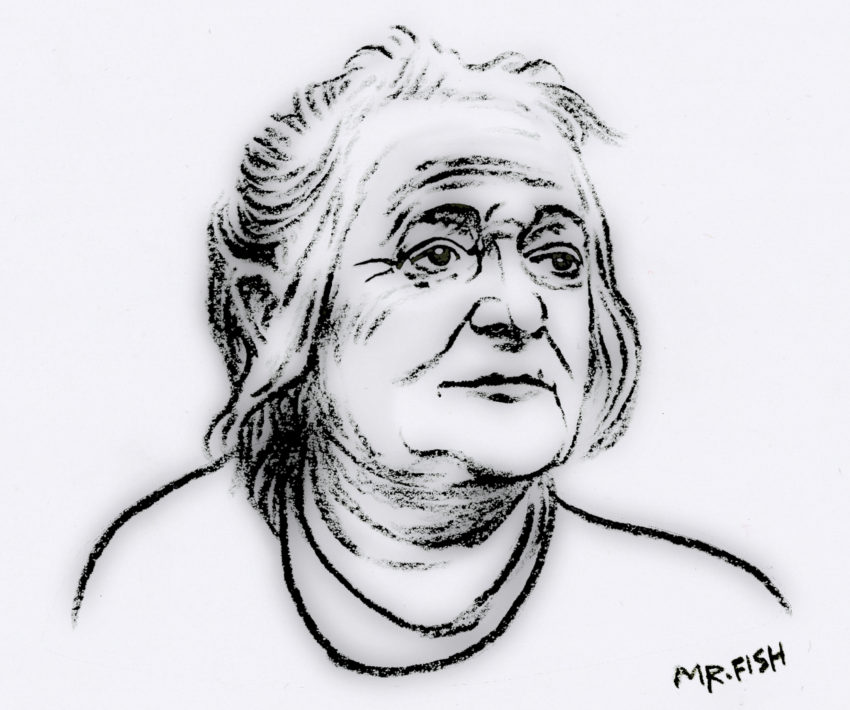 As Europe (including Spain's government) piles on the right-wing repression, Chris Hedges sees clear comparisons with another earlier era...
"In 1923 the radical socialist and feminist Clara Zetkin gave a report at the Communist International about the emergence of a political movement called fascism.
Fascism, then in its infancy, was written off by many liberals, socialists and communists as little more than mob rule, terror and street violence.
But Zetkin, a German revolutionary, understood its virulence, its seduction and its danger.
She warned that the longer the stagnation and rot of a dysfunctional democracy went unaddressed, the more attractive fascism would become. And as 21st-century America’s own capitalist democracy disintegrates, replaced by a naked kleptocracy that disdains the rule of law, the struggle of past anti-fascists mirrors our own.
History has amply illustrated where political paralysis, economic decline, hypermilitarism and widespread corruption lead.
Zetkin’s analysis, eerily prophetic and reprinted in the book “Fighting Fascism: How to Struggle and How to Win,” edited by John Riddell and Mike Taber, highlights the principal features of emerging fascist movements. Fascism, Zetkin warned, arises when capitalism enters a period of crisis and breakdown of the democratic institutions that once offered the possibility of reform and protection from an uninhibited assault by the capitalist class. The unchecked capitalist assault pushes the middle class, the bulwark of a capitalist democracy, into the working class and often poverty. It strips workers of all protection and depresses wages. The longer the economic and social stagnation persists, the more attractive fascism becomes. Zetkin would have warned us that Donald Trump is not the danger; the danger is the growing social and economic inequality that concentrates wealth in the hands of an oligarchic elite and degrades the lives of citizens.The collapse of a capitalist democracy, she wrote, leaves those in the working class disempowered. Their pleas go unheard. Reforms to address their suffering are cosmetic and useless. Their anger is written off as irrational or racist. A bankrupt liberal class, which formerly made incremental and piecemeal reform possible, ameliorating the worst excesses of capitalism, mouths empty slogans about social justice and the rights of workers while selling them out to capitalist elites. The hypocrisy of the liberal class evokes not only a disdain for it but a hatred for the liberal, democratic values it supposedly espouses. The “virtues” of democracy become distasteful. The crude taunts, threats and insults hurled by fascists at the liberal establishment express a legitimate anger among a betrayed working class. Trump’s coarseness, for this reason, resonates with many pushed to the margins of society. Demoralized workers, who also find no defense of their interests by establishment intellectuals, the press and academics, lose faith in the political process. Realizing the liberal elites have lied to them, they are open to bizarre and fantastic conspiracy theories. Fascists direct this rage and yearning for revenge against an array of phantom enemies, most of them scapegoated minorities."Read more from source at Truthdig here .
February 28, 2018
[3.55 min. video:] "EU citizens in the UK -- The impact of Brexit"
"NC4EU in cooperation with TrettFilms spoke to EU professionals about the impact the uncertainty of living #inlimbo will continue to have on the British public."
February 23, 2018
'Nothing temporary about work' -- My latest opinion column for Catalonia Today magazine
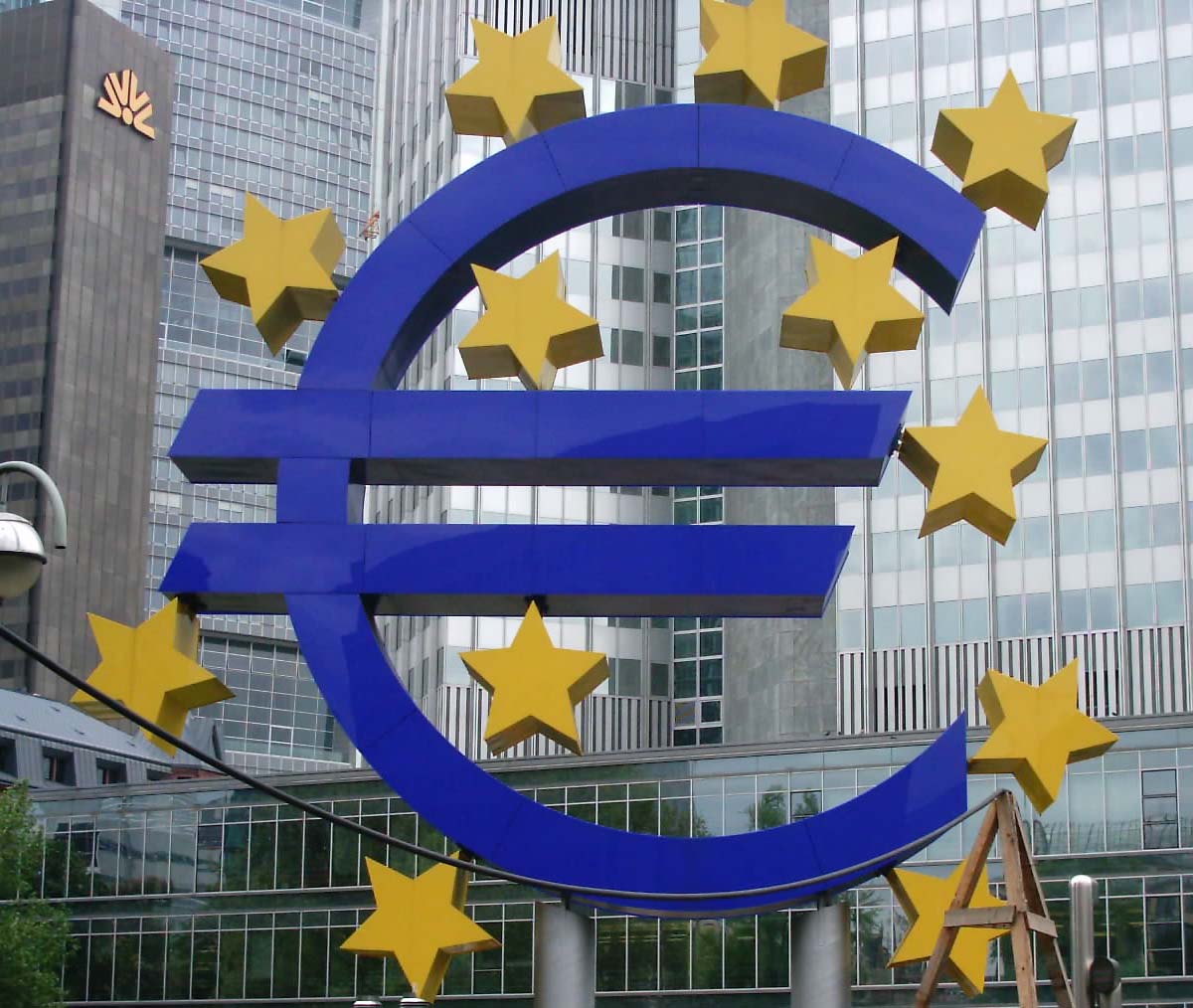
The good times are back and we don't need Prozac! The conservatives who run Spain and most of Europe would have us believe this is because the economic growth figures and employment statistics are apparently rising at a faster rate than they have for almost a decade (when the average person was plunged into a 'crisis' that was not of our making.)
What we have to ask is who is now benefiting from this bright new dawn?
In actual fact, the IMF recently found that over the last few years the economic gap between the rich and poor has grown faster in Spain than any other country in Europe.
Astoundingly, the number of millionaires has risen by 40% but the number of Spaniards living in “severe material deprivation” doubled to just over three million people, according to the charity Oxfam.
The profits from economic growth have been almost completely handed to the wealthiest.
And who is in new work?
Again, the reality is bleak. Temporary workers now make up more than a quarter of the workforce in Spain and this is not only for seasonal work.
Part-time contracts have become more common among hospital workers, teachers, those in the information technology industry and even public servants.
Statistics show that short-term jobs made up about 90% of the contracts signed last year. Roughly one in four lasted seven days or less.
According to a report from the highly informative Business Over Tapas news service, the UGT (one of Spain's most influential unions) said that the labour market was still suffering the effects of the crisis and austerity measures implemented by Prime Minister Mariano Rajoy's government.
"In December 2017 just four out of every 100 contracts signed were long-term and full-time," they found.
In my experience there is another attitude to work here that is strange. It is the dominance of so-called “projects” inside companies and it is used to justify poor work conditions.
This means that our jobs are often made up of tasks that have very limited time windows and require bursts of energy rather than methodical or consistent effort.
It’s a symptom of the era we live in that what we care about are events, festivals and spectacles more than equality or social justice and this has infected the way we work too.
Short-term thinking and short-term contracts have been at the cost of longer-term economic planning by both governments and companies: the exact thing that has helped Japan and China produce new industries out of ruins.
This ‘temporariness’ might sit well in a modern world where our attention spans are shorter than ever before but it disturbs me.
If work is to be satisfying (or even fulfilling) it must have a greater purpose than the simple moving of objects from one place to another or the organisation/supervision of this activity. (That is how the great philosopher Bertrand Russell defined work.)
If we accept the proposition that we will spend the longest part of our lives working, it is obvious that work itself is anything but temporary.
What we essentially do in our jobs goes on day after day and to do these jobs well demands concentration, focus and significant psychological effort.
When this is taken for granted in the form of almost meaningless ‘contracts’ (which are almost always written by employers alone) it insults our existence as living creatures who have evolved beyond animalistic toil and servitude.
But as Russell also argued, on top all this there are the idle rich, who “are able to make others pay for the privilege of being allowed to exist and to work.”
This article was first published in Catalonia Today magazine, February 2018.
February 17, 2018
"Is Europe truly recovering?"
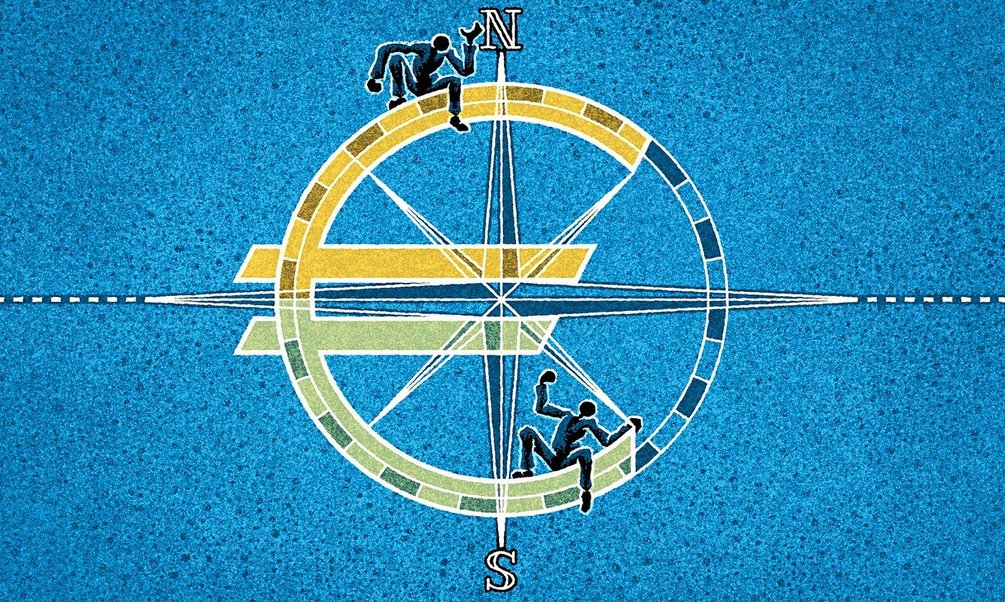 "Nobel laureate Paul Krugman wrote an opinion article last Sunday arguing that Europe is recovering steadily from the 2008 financial crisis.
 Indeed, graphs and numbers suggest as much.
But we should be skeptical whether this economic recovery will result in widespread economic gains, and even more skeptical that it will suppress Europe’s political shift to the far right.
Underneath the graphs and numbers, there is a much quieter story of daily struggle and disappointment. People are hesitant to believe that Europe’s future is bright. Even the International Monetary admits that income inequalities grew across generations in Europe. In the meantime, the rich are getting richer worldwide, boosting income inequalities even further. How can we call this a recovery if its gains go so disproportionately to the very top?Even Krugman’s analysis acknowledges an exception: Greece. This raises additional challenging questions. How can Europeans really and truly recover if some countries are left with strict austerity for decades to come? Is Europe a ‘success story’ if youth unemployment is at 40% in Greece? This, of course, under the economic stewardship of the troika."Read more from DiEM25 member Aris here.
February 2, 2018
"As the European migrant trail has gone underground, the threat of sexual violence has increased"
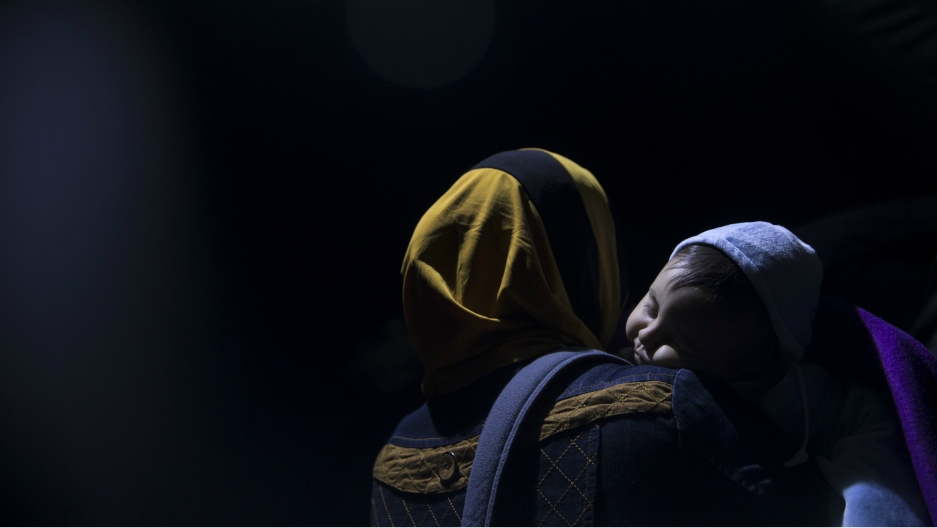
"When Simin reached Europe, she thought the hardest part of her journey was behind her.
She left her native Iran, where she had lived all of her 44 years, because she feared being arrested for her work as a journalist. It took her three months to travel from Iran to Serbia, much of it by foot across mountains and borders.
But it was when she was crossing into Croatia that the worst happened. She was raped by two smugglers, themselves migrants, from Afghanistan.“The smugglers forced me to be with them. He threatened to not let me get in the car if I refused being with him,” says Simin, who is living in a center for refugees on the outskirts of Zagreb, Croatia.“I had to do it. I was a woman alone — all on my own.”A common storySimin’s story is one of many similar accounts from women who have traveled the European migrant trail since the crisis began in 2015.Rights groups say women face assault, harassment and sexual violence at every step of the way along the trail, including on European soil.And there are signs that the environment for attacks against women along the route has only worsened since the height of the crisis. European countries have closed their borders and pushed the trail underground, putting women at greater risk than ever before. Many sexual crimes go unreported due to the precarious legal status of the victims as they cross borders and try to avoid authorities. And even when women do report incidents they have little hope of justice, for the same reason. " Read more from source at PRI, here.
January 27, 2018
"The [top] 1% grabbed 82% of all wealth created in 2017"

"More than $8 of every $10 of wealth created last year went to the richest 1%.
That's according to a new report from Oxfam International, which estimates that the bottom 50% of the world's population saw no increase in wealth.Oxfam says the trend shows that the global economy is skewed in favor of the rich, rewarding wealth instead of work."The billionaire boom is not a sign of a thriving economy but a symptom of a failing economic system," said Winnie Byanyima, executive director of Oxfam International.The head of the advocacy group argued that the people who "make our clothes, assemble our phones and grow our food" are being exploited in order to enrich corporations and the super wealthy."Read more from source here.
January 20, 2018
"God-bloggerer" -- My latest opinion column for Catalonia Today magazine
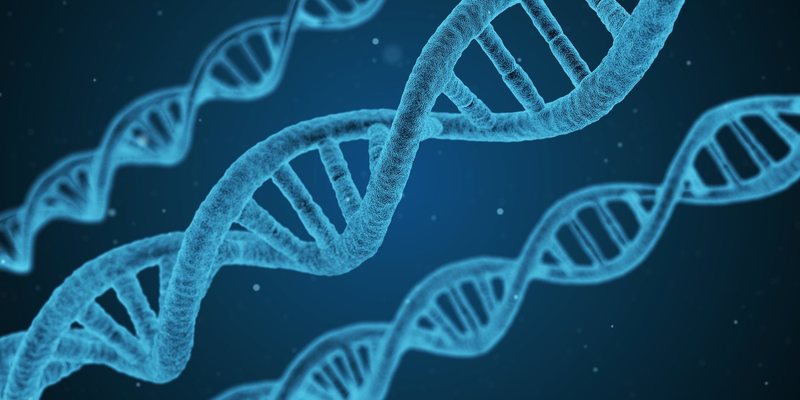 [Photo: DNA strand. Religion did not give us this.] I call myself an atheist because god has not been proven to any clear degree, but like other people I can enjoy certain things that are called “the spiritual”.I think the biggest mystery is to do with what we call consciousness and this is one of the enticingly ’wonder-full’ areas that art and creativity can put to use so well.One problem of atheism is that some atheists go too far by maintaining that religious-inspired work is automatically somehow wrong, regardless of its content.I only have to listen to someone like the Pakistani singer Nusrat Fateh Ali Khan to feel the power of his voice as an expression of something right and good, even though I don’t share the love of Allah that fuels that voice.We all need that sense of awe and humility that comes from, say, the extraordinariness of so much in the natural world: all that science cannot explain or come near to doing justice to. (There is after all, not even an adequate definition of what a thought is.)Plenty of scientist-atheists have no problem with the unknown and the transient, in fact they embrace it and some even work at finding answers in it, though they often end up with more questions than they started with.When religion asks questions, I applaud it. But when it simply quotes ancient texts or ‘interprets’ them I start to twitch.I think it makes perfect sense to doubt what you know. The attitude of “I could be wrong, but...[insert opinion]” is the most sensible one to have because without it there is either blind faith or the conceit of absolute certainty.I think this is the healthy basis of what we could call moral concerns. Organised religion often likes to claim that it has a monopoly on the ethically correct outlook but too often the people who are making the claims have not genuinely questioned their beliefs and have instead relied on their traditional leaders to set out a position first.Equally, the celebrities that are so admired in today’s world are often ignorant about basic scientific truth but we still hold many of them up as role models and guiding lights. Even someone as cerebral as Barack Obama recently made comments linking vaccines to a supposed rise in autism.It seems like this era’s obsession with the body, rather than the mind or the continuing inequality that exists across the globe, means that everything from karma to astrology to detox dieting is legitimate as something to believe in and use as a basis of living.If our species can eliminate superstition we will have eliminated a major cause of our problems.
[This article was first published in Catalonia Today magazine, January 2018.]
"First thought:" My Substack page

For readers who like stimulating & original lit-bits on social & personal issues. From the mind of an always-curious author/teacher/journalist living long-term in Europe (Catalonia/Spain.)
- Brett Hetherington's profile
- 10 followers

