
Brett Hetherington's Blog: "First thought:" My Substack page, page 35
January 13, 2018
Spain gang-rape case exposes problems in justice system
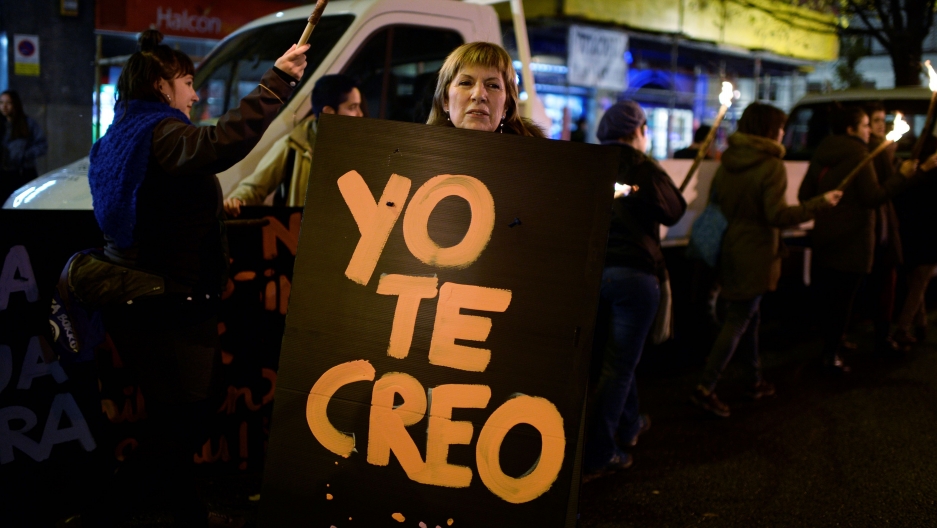 ["I believe you." Photo: Vincent West/Reuters ] "On Nov. 14, a young woman entered the Navarre provincial court in northern Spain, a bottle of water in one hand, a piece of paper in the other. She sat on a chair placed at the center of the room before a tribunal and then, probed along by her attorney, recounted the events from two summers past that have dominated Spanish headlines since.The young woman from Madrid, known only as la víctima, “the victim,” in local media, was 18 then when she alleges she was raped by five men in the early morning hours of July 7, 2016. She’d gone to Pamplona for the Running of the Bulls — the city’s celebrated and testosterone-fueled tradition of “bullfights, street dancing ... and much drinking of strong Spanish wine,” as immortalized by one American superfan.According to her testimony, she’d lost sight of the friend she’d traveled with and ended up making her way toward the car, which they'd planned on spending the night in. When a group of five male friends from Seville, strangers to her until then, struck up a conversation and suggested accompanying her to the vehicle, she accepted. At some point while they twisted their way down the dark streets, they led her to a doorway, pulled her in and took turns raping her, she said. When they’d finished, they seized her phone and left. After some time, she got dressed, sought help and reported the rape. It was only later after she’d pressed charges, and a trial was underway, that she discovered the men had filmed the act on their phones and shared the videos in their WhatsApp group.The meat and bones of the retelling over, Navarre district attorney Elena Sarasate suddenly veered into new territory. “You seem to be a pretty social and extroverted young person,” she stated before the tribunal. “Do you usually post on social media?”“Yes,” the young woman replied. “But I’m not going to post pictures of myself crying. I’m trying to lead a normal life. I’m not going to post a picture of myself on social media crying so that everyone can ask, ‘What happened to that girl?’ No. I’m going to continue living normally, and what I normally do is post pictures of myself out partying.”What would appear to be an unusual turn in the woman’s testimony — her social media habits — has become the crux of the case known as La Manada, or “The Wolf Pack,” after the five accused men’s WhatsApp group name. In a bid to prove the young woman was not raped but consented to having group sex, the men’s defense hinges on proving she did not suffer any trauma following the sex act, which they’ve chiefly done by presenting social media posts showing her out with friends, knocking back a few drinks, or sharing content of an ostensibly sexual nature.To the prosecution and feminist collectives the country over, the defense’s tactic is an age-old trope with new technological trappings — an updated version of “She was asking for it because she wore a miniskirt.” For the defense, it’s a necessary method designed to reflect the plaintiff’s psychological makeup. The trial ended in late November, and a verdict is still pending. If found guilty, the accused could each face up to 25 years and nine months in prison. The decision will have far-reaching implications. How much can social media reflect a person’s psychology or establish a motive? And should that content be admitted in a court of law?"Read more from source at PRI/Global Post here.

January 5, 2018
"Reclaiming the commons" -- an interview with veteran land rights campaigner George Monbiot
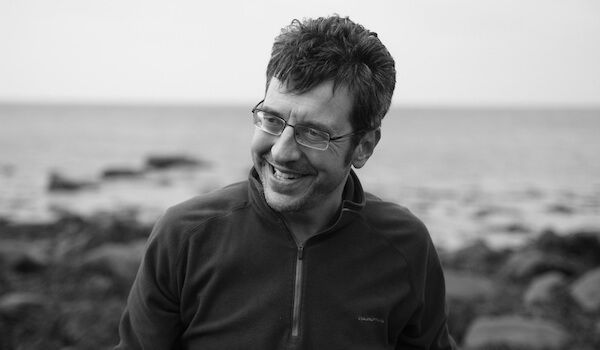 "Guy Shrubsole speaks to veteran land rights campaigner George Monbiot...
Movements for land reform in the British Isles have ebbed and flowed for centuries. Each new wave can seek to learn from the past - or be destined to repeat its mistakes. The Land senses that the past year has seen a fresh flowering of public interest in land issues - sparked by the ongoing housing crisis, the Grenfell Tower disaster, debates about farming post-Brexit, and other factors. It’s a good time to take stock, so this section brings together voices, new and established, to make sense of the current moment and lend momentum to a new, rising land movement. It features veteran land rights campaigners George Monbiot, Marion Shoard, and Andy Wightman, includes a graphic history of UK land movements, and an assessment of land value capture as a mechanism for economic fairness, before introducing a representative of the Other Side, and some of the activists and organisations of today’s land movement.
GS: What first got you interested in land and land rights?
GM: I was working in Brazil in the late 1980s, and I was interested in why so many people were moving into the Amazon, often with quite damaging impacts on the rainforests. It didn’t take me long to see that people were being effectively forced to go because their own land was being stolen from them in their home states. A group of very violent businesspeople supported by the Government were seizing the land owned by peasant communities. People with indigenous roots often going back millennia, but who didn’t have written, legal title to their land; rather it had been held by them in common for a very long time. There were people being killed left, right and centre; there was a bishop who was murdered. I spent long enough there to get beaten up myself by the military police. Then after six years of working in Brazil, West Papua and East Africa, I returned to Britain, and was persuaded by some of my friends to go along to Twyford Down, where there was this huge dispute over a road being driven through beautiful chalk downland and Iron Age remains. And as soon as I got there I thought, this is what I’ve been seeing in Brazil. This is a land dispute over land massively valued by local people, being taken from them by an outside force – in this case, government combined with a huge construction company, and everything that people value here being destroyed. I started reading the poems of John Clare, and saw how his early poetry documented the rich life of the community in which he was brought up, and the way their lives were granted meaning by the land, spiritually, ceremonially, economically, socially – and then his later poems, like The Fallen Elm, documenting the destruction of that entire system through enclosure. And I realised that this was exactly the same process that I’d seen happening amongst indigenous people in the three continents in which I’d worked. Alienation and anomie leading to psychic rupture. And then I realised that what I’d witnessed there is still with us here, in Britain today.
GS: In 1995 you wrote A Land Reform Manifesto, in which you criticised a huge landowning estate for selling off its land for the Newbury bypass to be built. At the time you said a landed estate’s “power to treat its property as it wishes is scarcely restrained. It is this that lies at the heart of our environmental crisis” . Do you still believe that?
GM: Well, I would take it further. Land as an issue has to be painfully uncovered, because it’s so successfully hidden from us. Hidden in a thousand ways – hidden by the media, obviously; hidden by economics, which discusses land as if it were any other form of capital, a great methodological mistake; hidden by the power of patrimonial capital. It’s not just the power of the great estates to do as they will; my thinking’s gone way beyond that – it’s the conversion of broad possession into narrow property in general. It’s the almost complete closure of a whole sector of the economy, the commons, and its replacement by both state and market."
Read more from The Land Magazine [PDF] here.
January 2, 2018
"Don't be fooled, the crisis is still there: the Euro is in danger"
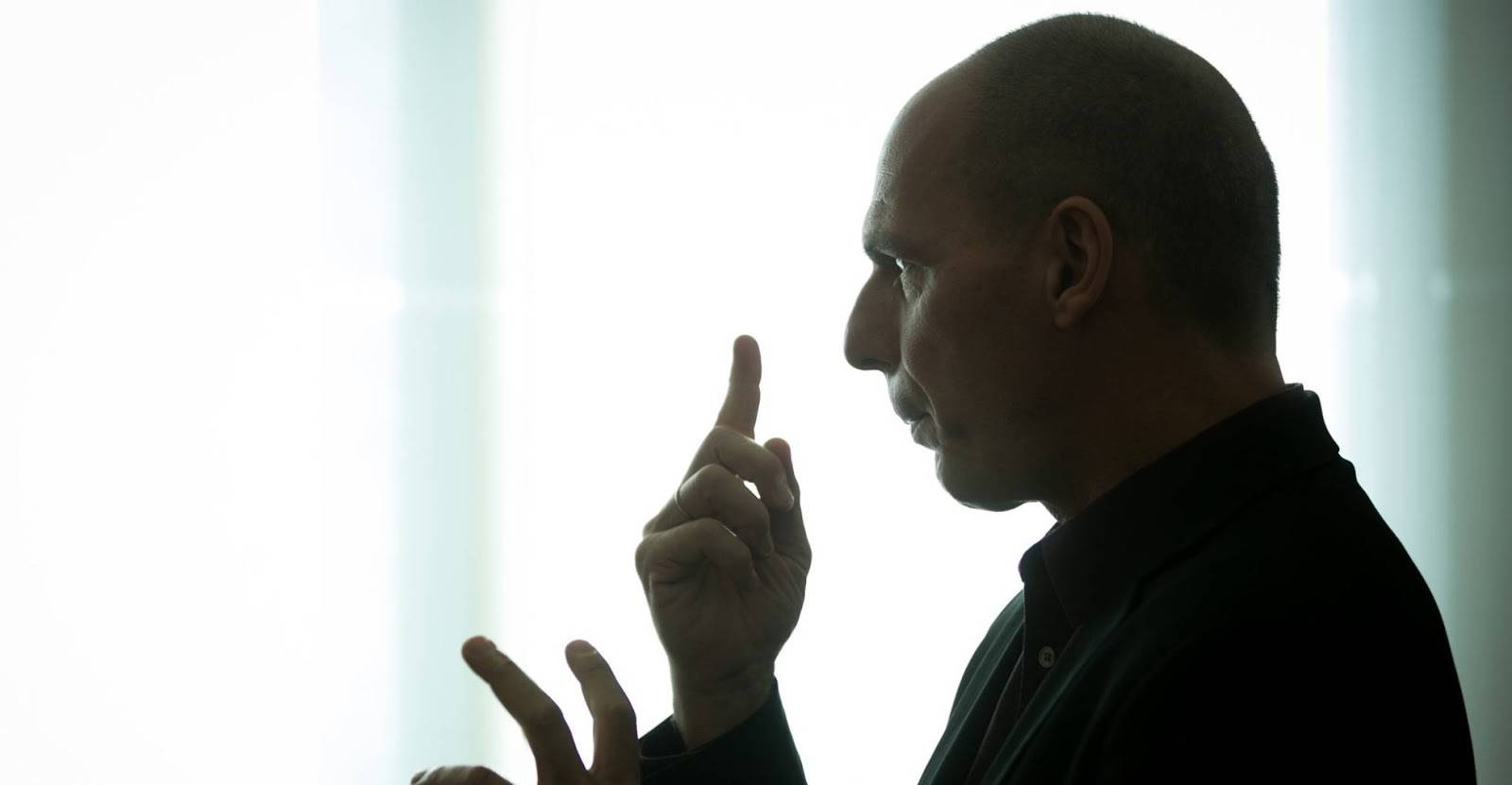 [Photo: Barcelona, 9 Nov. 2017, ALBERT GARCIA]
Today in El País - Yanis Varoufakis, co-founder of DiEM25...
"The current situation reminds me of 2001: we came from twenty years of stringing bubbles, the dotcom broke out, and even so we managed to stay the same and provoked an even more serious crisis with an even larger bubble that burst in 2008.
We run the risk of going back to the old ways. In Spain, total debt is rising. In Italy there is capital flight, a banking crisis in the making, an explosive political situation.
What we have in Greece cannot be called recovery, and the debt is unpayable.
The examples are inexhaustible.
Throughout the periphery we exchanged full-time jobs for precarious jobs, thereby endangering future pensions and the foundations of the European economy.
The financial and macroeconomic imbalances not only have not been reduced, but are even greater: I am afraid that we are not in a position to celebrate...The euro, as it is today, is unsustainable."
Full interview in Castilian Spanish here: http://bit.ly/2CbhiST
December 30, 2017
VIDEO: "The Big Picture: How We Got Into This Mess, And How We Get Out..."
Robert Reich looks at the rise of Big Money in politics, the decline of our democracy, and Trump's election.
December 23, 2017
VIDEO: "Meet DiEM25"
"Almost two years ago, we got together under DiEM25’s broad umbrella [Democracy in Europe Movement] to challenge old-style politics, to shatter TINA (“There Is No Alternative”) at the pan-European level, to turn Europe’s democratisation into a radical, realistic, uniting project.
2017 was an awful year for European democracy. But it was an amazing year for DiEM25. We:Rallied tens of thousands of people in cities including Amsterdam, Brussels, Berlin, Dublin, Belfast, Hamburg, and London, and toured the breadth and length of Greece & Italy, demonstrating that There is An Alternative; that Another Europe Is Already Here!Nurtured our activists. There are now 70,000 DiEMers in almost every country on the planet!Launched and pushed specific campaigns to expose the Establishment’s worst abuses – and we just filed a lawsuit against the European Central Bank to force them to release #TheGreekFilesLaunched our European New Deal, our concrete social and economic Policy Agenda, crowd-sourced from DiEM25ers and experts across the worldInfluenced elections with our interventions, like in Germany, France and the UK, and supported/partnered with candidates or parties that embraced them, like in Catalonia, Zagreb, Denmark and PolandWelcomed progressive leaders to our movement, like Naomi Klein and Richard SennettKickstarted the process for taking the European New Deal to a polling station near every European – at the Volksbuehne Theatre, in Berlin Began electing our Coordinating Collective Presented the Real State of the Union in Brussels, at the Bozar Theatre Set in motion the ‘ Not Just Another Political Party ’ endeavour Elected our first National Collectives (NCs), taking to new levels our ambitious experiment in grassroots transnational democracy – with all members (despite nationality) voting for different national collectives..."
Read more about DiEM25 here.
December 16, 2017
"The High Cost of Denying Class War"
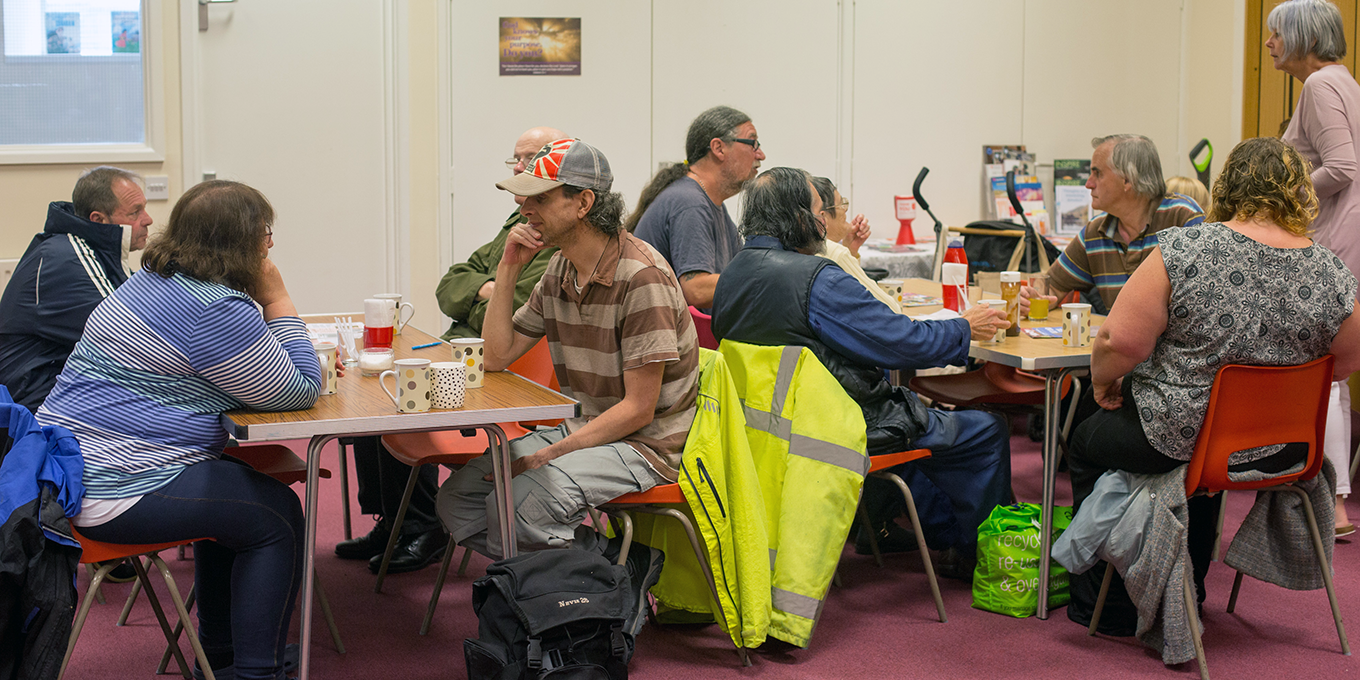
"In 2016, the year of both Brexit and Trump, two pieces of data, dutifully neglected by the shrewdest of establishment analysts, told the story. In the United States, more than half of American families did not qualify, according to Federal Reserve data, to take out a loan that would allow them to buy the cheapest car for sale (the Nissan Versa sedan, priced at $12,825).
Meanwhile, in the United Kingdom, over 40% of families relied on either credit or food banks to feed themselves and cover basic needs..."
Read more from this article by DiEM25's co-founder Yanis Varoufakis here.
December 9, 2017
VIDEO: "To be a progressive..." (6 months after the British election)
"It’s exactly six months today, since [Britain] went to the polls.
As the clock struck ten and we held our breath for the exit poll, few guessed the extraordinary result that was to come. Against all the odds, a Tory landslide had been stopped in its tracks – and a big part of that was down to the Progressive Alliance...
The impact of this is already being felt. We believe we are starting to see the end of austerity, and the beginning of a restoration of our public services, with the lifting of the cap on pay rises for parts of the public sector.
It wasn’t just that the Progressive Alliance got us more progressive MPs – it introduced a different kind of politics that was non-tribal and about something bigger than any single party. Through the Progressive Alliance we found out what we all have in common...
During the election campaign, we at Compass were often asked what it means to be a ‘progressive’, which is why we made a video.
Watching it takes us back to that time, and revives the feelings of pride and gratitude (and relief!) that we hope you share.
Some days the news can make us angry or sad, even fill us with desperation.
On these moments, it can be helpful to remind ourselves why we are doing what we are doing, and why it matters to continue to believe in, and fight for, a better world.
Whether you’ve seen it before or not – this five-minute story will give your progressive spirit a boost:
Watch it here (YouTube Link)
Or here (Facebook link) "
December 4, 2017
"A ray of hope for Europeans" -- My latest article for Catalonia Today magazine
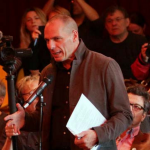
Ultra-conservatives will always do what their natures demand.
Given any opportunity, they strangle democracy while at the same time claiming that it is democracy that they want to breathe life into.
The horrifying repression in Catalonia is an extreme illustration of this and makes a perfect example of right wing crimes against humanity but it is certainly not the only current case of the most privileged in society making sure they stay in complete control.
Over the border in France, President Emmanuel Macron (the man whose election held off a far-right National Front victory) brought down his first budget.
He handed a huge €7 billion tax cut to the wealthy and slashed social spending which included robbing €1.7 billion from housing aid and the elimination of 120,000 state-funded short-term job contracts.
In Italy, three time Prime Minister and convicted tax fraud billionaire Silvio Berlusconi is gone but the forces he represented are still alive and kicking hard. In Sicily -- as with much of the country -- a rightist alliance has had considerable electoral success blaming their economic problems and high unemployment on immigrants.
Of course it is actually the policy of continuing austerity which allows precious investment to go into speculation rather than job creation that is truly at fault for low living standards there and right across the continent.
But people can see immigrants and refugees every day in the streets where they live and the market economy is harder to point at and blame. All this at a time where public health services are being sold off to private business interests and hospitals are “‘close to collapse’ in Rome, Turin and Naples.”
In the upcoming 2019 European elections there is a new and exciting alternative for voters who have seen the EU parliament as irrelevant to our lives. Understandably, most voters find it difficult to even name a single one of their representatives in Brussels but until now there has been little reason to care.
The arrival of academic and author Yanis Varoufakis’ Diem25 (Democracy in Europe Movement) has given those with a progressive outlook something credible to believe in. Varoufakis has a very personal reason to want to democratise Europe.
The International Monetary Fund and German-backed troika refused to negotiate with him in 2015 when he was the new Greek Finance Minister. Keeping his integrity intact, he resigned from the government and went on to be a cofounder of DiEM25 only one year ago.
In a remarkably short time, under the main slogan of “Transparency for Europe” this ‘pan-European’ activist movement has come up with a persuasive and comprehensive manifesto.
Their basic argument is that unless Europe and its institutions become genuinely democratic then it is doomed to disintegrate.
Partly inspired by the clear historical success of Franklin Roosevelt's New Deal in breaking the Great Depression of the 1930s in the USA, DiEM25 has developed its own highly detailed European New Deal to end the mainstream EU dogma that there is no alternative to more years of severe austerity and secret backroom deals.
Varoufakis and his organisation are also offering concrete proposals that include a Basic Universal Income, refugee justice and crucially, a plan to tame capital and finance. Amongst other major changes, they are in favour of “regulating banking and establishing a new public digital payments platform that ends the monopoly of banks over Europe’s payments.”
At the moment, DiEM25 is in the process of getting votes from its members to decide whether to become a political party that will stand candidates in the 2019 European election.
If the response is a ‘Yes’ then ordinary men and women across Europe will finally have something worthwhile to get behind and support.
[This article was first published in Catalonia Today magazine, December 2017.]
December 2, 2017
"The 'tribes' of Europe"
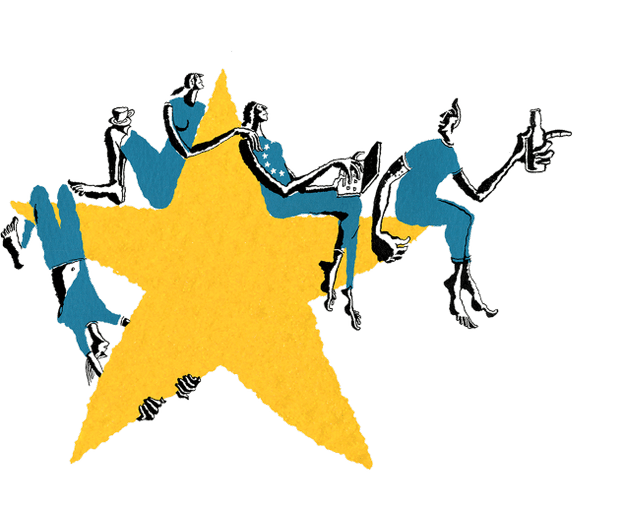 You can always count on the British establishment to investigate how "human beings can be classified like insects," as George Orwell said.
One of their 'royal institutes' has done this, using a survey to divide up 10,000 Europeans from Austria, Belgium, France, Germany, Greece, Hungary, Italy, Poland, Spain and the UK.
For what it's worth, the Find Your Tribe exercise found " six political ‘tribes’ across Europe with different views about the EU and its future.
November 25, 2017
"Wealth inequality in Spain deepens as poorest get poorer and corporate profits soar..."
"An analysis of tax data in Spain shows how austerity and labour market counter-reforms have slashed the wage share of the country’s wealth to new lows while corporate profits have soared.
The findings by economist Gabriel Flores published in online newspaper Nueva Tribuna are:
Labour income has declined as a proportion of GDP from 50% in 2008 to 46.9% in the first quarter of 2017
Corporate profits after taxes, interest and dividends, have more than doubled from 8% of GDP in 2008 to 17.5% today
Austerity policies have benefitted high earners but the lowest paid have seen a significant fall in income
The 650,000 odd Spaniards on incomes above 60,000 euros annually saw a 10% rise in income, the income of the 6 million on less than 12,000 euros dropped by 8% and the 10 million on 12,000-60,000 euros a year increased by about 6%
Despite high GDP growth rates in 2015-2017 (3%-plus), the trend towards greater inequality among the majority relying on wages for their income has been consolidated
None of the above data includes the black economy, where low and insecure wages dominate.Says Flores:“This strong growth in business profitability, based on the successive reforms of the labour market, has occurred at the expense of lower tax revenues of the state and lower labor income, multiplying social inequalities.“All the inequality indicators show that, despite the high GDP growth rates between 2015 and 2017, the trend towards greater inequality has been consolidated among the majority that rely on wages.“To reverse the inequality to pre-crisis levels it is not enough to increase the GDP growth rates; it is necessary to repeal the successive reforms of the labour market approved in recent years and to distance as much as possible the economic policy from the principles of austerity and wage devaluation that have guided government decisions.”Flores calls for “an inclusive growth model in which the important thing is not the amount of growth but the redistribution and good management of growth to meet the needs of the majority, improve their welfare and secure an equitable distribution of income, restoring the principle of social, territorial and economic cohesion as a guide to economic policy.”
Source: translated at Revolting Europe.
"First thought:" My Substack page

For readers who like stimulating & original lit-bits on social & personal issues. From the mind of an always-curious author/teacher/journalist living long-term in Europe (Catalonia/Spain.)
- Brett Hetherington's profile
- 10 followers

