Allan Hudson's Blog, page 16
December 3, 2022
The Story Behind the Story with Bretton Loney of Nova Scotia, Canada.

Bretton is no stranger to the Scribbler.
During the Scribbler’s 4Q days, he was a guest back in 2019.
If you missed it, please go HERE.
He’s sharing the story behind the story for his new book -
Joe Howe’s Ghost.
As an added bonus, you can read an excerpt from the novel below.
Read on, my friends.
I am a novelist and non-fiction writer who has published two previous books that were nominated for Whistler Independent Book Awards: in 2018 for my first novel, The Last Hockey Player, and in 2015 for a biography, Rebel With A Cause: The Doc Nikaido Story.
My short stories have appeared in Canadian short story anthologies and literary journals, including the short story collection Everything Is So Political. In 2013 my short story Tommy’s Mother was one of 12 stories shortlisted for the Writers’ Union of Canada’s 20thannual Short Prose Competition for Developing Writers.
In 2019 my story, “The Coulee Song”, appeared in The Group of Seven Reimagined, a collection of very short stories inspired by the artists’ paintings.
I was a journalist for more than 20 years in Nova Scotia and Newfoundland and worked in communications for the Government of Nova Scotia for the past 16 years.
Working Title: Joe’s Howe’s Ghost

Synopsis:
In Joe Howe’s Ghost, Erin Curran, a rookie Government MLA, has a startling encounter with the ghost of Joe Howe, Nova Scotia’s most famous politician and journalist, which changes the trajectory of her career and her life.
Erin is a young, bright and articulate politician learning to balance her new responsibilities to constituents and her party with trying to protect time with her husband and toddler.
Howe has been silently walking the halls of historic Province House for more than 150 years and Erin is the first living soul he has spoken to in all that time. At first, it is Erin who learns from Howe, the master politician and communicator, who brought responsible government to Nova Scotia, defended free speech and bitterly opposed Confederation.
But as their friendship grows, Howe gains an appreciation of our times as Erin faces the trials of today’s politics and the unique challenges facing female MLAs—from sexist colleagues to misogynist social media trolls.
Joe Howe’s Ghost is a reflection on Howe’s tumultuous political era and of provincial politics today. It explores the personal struggle between the desire for political power and upholding heartfelt personal convictions that are common to both eras.

The Story behind the Story:
In 2015, I had the idea to combine elements of Nova Scotia history and politics with today’s provincial political scene and Joe Howe’s Ghost was born. As a former journalist and long-time, behind-the-scenes observer of provincial politics, Joe Howe’s story has always called to me.
How could anyone not find Howe interesting?
· He was a crusading journalist and editor who won a famous libel trial defending freedom of the press by representing himself in court
· He fought a duel in Point Pleasant Park and won – and yet no one died
· As a politician, he was a driving force behind Nova Scotia achieving responsible government.
· He fought viciously against Nova Scotia joining Confederation and then changed sides and became a federal cabinet minister in one of Sir John A Macdonald’s first cabinets.
· He visited the Red River colony prior to the Riel Rebellion.
· He attended Queen Victoria’s coronation and once went out for a long hike with the novelist Charles Dickens
As the writing of this book evolved, the fictitious character, rookie MLA and future cabinet minister Erin Curran, began to speak to me too. Particularly regarding the trials of today’s politics and the unique challenges facing female MLAs.
And as my friends and colleagues will tell you, I have more than a few thoughts about Nova Scotia politics. The more I thought about the challenges of Joe Howe’s political career and the travails of Erin’s present-day political life, the more the parallels between the two became apparent.
Website: www.brettonloney.com
A question before you go, Bretton.
Can you tell us about the perfect setting you have, or desire, for your writing? Music or quiet? Coffee or tequila? Neat or notes everywhere?
My best writing time is for a few hours between 8:30 am and noon while my head is still fresh. The most productive place is a desk in our spare bedroom on an old desktop computer that I’ve written two novels and a biography on.
I love some background music – classical, jazz, techno or mood music – but it can’t have any words or no words that I can understand so I listen to Brazilian and Latin jazz too.
Mild caffeination – either a coffee or tea – is necessary. My desk is notoriously untidy with notes and research strewn everywhere and taped to the nearby walls and window sill.
My “perfect” writing setting would be at a villa in the south of France with an ocean view, but to date my royalties haven’t made that dream come true. Sometimes when my royalty cheques come in, I can afford to splurge and buy my wife and I some fancy coffees, which is a bonus really because who writes for the money?
 Grand idea!
Excerpt.
(Copyright is owned by the author. Used with permission)
***Authors note: In this opening chapter readers are introduced to the legendary Nova Scotia politician and journalist, Joe Howe, and to the young rookie MLA, Erin Curran. Accompanying Howe is his aide in life and in the afterlife, Ennis Douglas.

JOE HOWE’S GHOST
Chapter 1
The second time I saw him I felt him first. Every hair tingled. The taste of metal coated my tongue. The speaker piping in the drone of late-night debate from my fellow MLAs fell silent. I was alone in the Legislative Library, and it was as still as a tomb.
At the top of the winding, wrought iron staircase to the second-floor book stacks was a shape. To the left of a portrait of the Duke of Kent. No more than a shadow in a room cloaked in semi-darkness. I shook my head. After a sleepless night pacing the floor with a sick toddler in my arms, I was too exhausted to be at work.
In the gloom a hand formed grasping the railing so tightly a row of knuckles popped up. An elderly man took shape out of the nothingness. He had a large head, a wild crown of white hair, and a turnip-shaped nose.
He wore a long, dark frock coat with a white, high-collared shirt, a vest, and a bow tie. His left hand was hooked on the lapel of the frock coat. His feet anchored as though steadying himself on a rocking ship. He gazed down on me from under winged eyebrows.
“Good evening, madam,” he said formally, his voice hoarse and dusty as though unused for a long time.
Eight porcelain busts mounted along the walls turned their heads toward him ever so slightly.
The freakish movement was startling. Winded me like a punch to the stomach. I blurted out “Good evening” as my head fell to the table and the world went black.
***
“Joe, you sh-sh-sh-should not have appeared out of the blue like that. You s-s-scared the young woman nearly out of her wits. She has fainted straight away.”
“For goodness sake, Ennis, I know. I couldn’t help myself. Over the years we have crept around here, I have tried to reach out to many of these fellows. To dissuade them from poor policies or to encourage certain bills, but I could never make a connection. Then, the first time I try with this young woman, something magical happens. I feel as though I have been struck by a thunderbolt.”
“She does remind one of your lovely wife, does she not?”
“Of my own little editor, my dearest Susie? Do you think so?”
“You know that she does. Her spirit and intelligence shine through in this p-p-place, not to mention the adorable little nose and those hazel eyes. It’s quite remarkable.”
“God’s teeth, that is it exactly. I have seen her dozens of times in these hallways. Her keen mind and grace are evident whether she is conversing with members of her own party or fellows from the other side of the House. She listens carefully and politely, weighing their words, never offering too much nor too little of her own opinion until she has the perfect thing to say. Rather extraordinary.”
“Our Nova Scotia needs someone like her, Joe, more than ever.”
“I feel awful for scaring her. Quite diabolical of me. Should I try to revive her? Blow in her face or tap on the table beside her head?”
“I think you have done quite enough for one night. It has been nearly 150 years since you last conversed with the living. I think you can give the young woman a day or two to try and understand what she has seen before attempting again. I am sure you have plenty to say to her, but it can wait. I have tried to be good company for you since I came over, Joe, but admittedly I have not been as good a conversationalist, and as good a listener, as I was at first. One grows tired.”
“My friend, you have been fine company. It is I who have grown tedious. I am tired of this place, the unchanging nature of the issues and, most of all, of politicians. I long for eternal sleep, but somehow you and I seem impervious to its charms. For some reason known only to fate, I have made a tenuous connection with this promising young woman, and I must say it fills me with hope. We should raise a bumper of wine in celebration, but of course that is not possible. Yes, we will let her sleep and gather her thoughts. I must be a fright to the living, eh, Ennis?”
“And to the dead too, s-s-s-speaking on behalf of the dearly departed.”
Okay, I want to know what else happens!
Thank you for sharing your story with us, Bretton.
.jpg)
Wishing you continued success on your writing journey.
And a Brobdingnagian Thank You to our readers and visitors.

Did you look that word up?


November 26, 2022
Interview with Artist, Poet & Musician Nancy Schofield of Barachois, NB, Canada.

If you looked up the word ‘Creative’ in the dictionary, the definition would likely by accompanied with a photo of Nancy Scofield beside it.
She’s an author, a poet, a visual artist and a singer. The founder of the Breach House Gang, which is a collection of other creatives who publish their stories and poems collectively.
I get exhausted just thinking about all her accomplishments.
And she’s our special guest this week and we are reverting back to an interview format for this week’s post.
Nancy King Schofield was born in Saint John, NB, began her artistic career in music and was singing in musicals by the age of five. This talent was nurtured by formal training in voice and piano and resulted in years of competitive and public performance and professional recording. After graduating from high school, her family encouraged her to choose a conventional profession and she entered a three-year program at St. Joseph’s Hospital School of Nursing. She eventually married and raised three children.
In 1986, King Schofield entered Mount Allison’s BFA program as a mature student and graduated in 1991 with a double major in painting and printmaking. Since then, she has pursued life as an artist and in the process, emerged as a major figure on the Canadian scene. She is now recognized for her originality in mastering the difficult medium of carved wood relief.
Nature is both muse and theme in King Schofield’s work. Although equally acclaimed for large two-dimensional canvasses, she is best known for her mixed-media simulations that dramatize the tactile qualities of nature. Her technical skill in drawing free hand with a router, carving and gouging wood produce landscapes that are at once both abstract and representational. She finds inspiration from collected pieces of metal, driftwood and rocks that she integrates into sculpted two-dimensional pieces.
In the thirty years that she has worked professionally, King Schofield has displayed exceptional commitment to the growth of art in her community, contributing pieces to raise money for art causes. In 1996 she was one of 15 women featured in “The Creators,” a Women’s Television Network series on women artists. She has served on the board of Imago Print Shop, Galerie 12 (Moncton, NB) and Struts Gallery (Sackville, NB). She also helped found three collectives; Galerie 12 (Aberdeen Cultural Centre), The Breach House Gang (2000) and Women Who Write (2017). King Schofield credits her extensive gallery tours in Europe in 2002 and 2009 with giving both sustenance and inspiration to her artistic commitment.
She began to write poetry in 1999 and often incorporates lyrical arrangements of words on the surface of her mixed-media art to add “musical”texture to the work. In 2009, she was awarded first place in the WFNB Poetry Competition. In 2021, she was a featured artist in a UNB project on March 8th to honour International Women’s Day.
King Schofield’s paintings are featured in many collections in Canada and the United States, and she has participated in more than one hundred exhibitions. The overwhelming acceptance her work has garnered during a career that extends from 1991, confirms for her a significant place in New Brunswick’s artistic community.
Nancy King Schofield lives in Grand Barachois, NB in her studio / house near the ocean called, “the Breach House.”
Scribbler: With so many outlets for your creativity, is there a favorite? One you always go back to?
Nancy: Throughout my life, I have always gone back to visual art because of its accessibility. That was a redeeming factor for me while looking after three children and making frequent moves across Canada to accommodate my husband’s career. This lifestyle disrupted my ability to become established in either music or writing circles, but painting allowed me to work on my own until I was able to obtain formal training at Mount Allison University.
Scribbler: First off, please tell our readers about the Breach House Gang.

Nancy: When I started writing poetry in 1999, I needed someone to listen to me. I approached an artist and asked her if she was interested, and we read our work to each other occasionally. I thought there must be many other writers who needed the same support and that was when I decided to get a group together. At first there were only three active members and we met at my studio but with the onset of Covid, we decided it was safer to meet online. One initial member still attends, and we meet once per month but now we number 11.
Scribbler: Can you tell us about your writing? What are you working on at present?
Nancy: What I plan to do this winter is to define poems that I have been writing over a couple of years and then to publish a collection. Because of time needed to manage the two writers’ groups, I haven’t much of the same to spend on my writing, even though my daughter Alex (poet and visual artist) chairs our meetings and another writer (Elizabeth Blanchard) acts as treasurer.
Similarly, I hope to prepare paintings over the next couple of years and launch an exhibition of art. I have already collected many interesting wood pieces from nature and have covered a long table with over a hundred metal pieces.
Mixed media on carved wood.
Scribbler: Please tell us about your art?
Nancy: During my formative years, my family had a summer cottage situated next to the Kennebecasis River. Every year I spent eight weeks observing organic growth, wildlife and the many moods of this powerful river. Deep feelings of guardianship for the natural order were fostered in me at this time; stones, driftwood, and rusting objects left behind for earth and water to absorb. However, I was unaware that the physicality of these objects would later become a point of reference in my art.
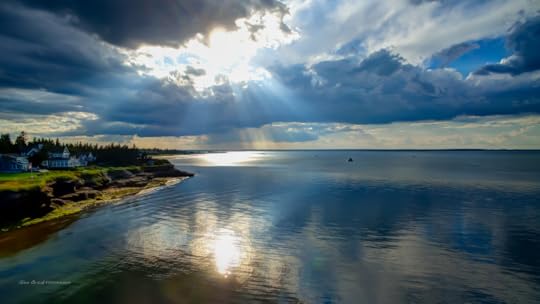
I need more than just paint to express my emotional response to the natural landscape. Moving energetically over the surface of a piece of plywood with an electrical router; changing bits to determine the width of grooves, gouging, sanding and chiselling the surface is what gives energy to my process. It also contributes to a sense of movement in the piece itself and I am drawn into an extraordinary experience of nature, through it. Paint and collage are added later for greater psychological impact. The large scale of many pieces is intended to place the viewer at the center of the landscape.
Mixed media on carved wood.
I studies intaglio printmaking with Dr. David Silverberg over four years at Mt. Allison. This involves using acid to bite grooves into the surface of a zinc plate that will eventually be filled with ink and printed. Similarly, I use a router to incise my drawings in wood (bas-relief) and fill these channels with paint.
My written text is often added to the piece, suspended across the surface like a transparent veil of texture.
Scribbler: I am envious that you can sing and entertain with music. Do you sing professionally?
Nancy: I haven’t sung professionally for many years. Making moves across Canada when I was actively involved in singing made it practically impossible to put down roots and become established in that arena. Also, taking care of two growing children plus a challenged son was a big responsibility and one that I took seriously.

Before marriage, I sang professionally with orchestras, on radio and TV, in music festivals and for many different organizations. Stepping away from music wasn’t a choice but something that was necessary but because I have always thought that Art is a house with many rooms, I just went into a different room and made paintings instead of songs. And when the time was right, I entered the room of writing and learned about poetry. Occasionally now, I visit the music room and sing folk songs with other singers. Therefore, nothing is really lost because my goal in art is to evolve in whatever process I undertake.
Scribbler: Anything else you’d like to share with our readers?
Nancy: The only other thing I would like to share is that I was fortunate to grow up in an Irish community that valued music and the arts. Also, both of my parents were gifted musically and therefore, music and art played an important part in our family and affected our decision making throughout our lives. Being involved in music was what we loved to do.
Last of all, I wish to thank you Allan, for your interest and for inviting me to participate in Scribbler. It has been a pleasure!

It’s been our treat to have you as a guest, Nancy. Thanks for your time and answers. Wishing you continued success with your artistic endeavors.

Thank you to the many readers and visitors. It’s fun.
What’s your favorite artistic outlet? Tell us I the comments box below.
November 20, 2022
The Story Behind the Story with British Author, Angela Wren.

Guess who’s back!!!!!
One of my favorite authors is telling us about her newest cozy mystery. Her main character is a very cool guy. You’ll like him.
Angela has been a guest before, a few times actually, and if you missed it, please go HERE.
I know you’ll enjoy Angela’s stories.
Read on!
Angela Wren is an actor and director at a theatre in Yorkshire, UK. An avid reader, she has always loved stories of any description. She writes the Jacques Forêt crime novels set in France and is a contributing author to the Miss Moonshine anthologies produced by Authors on the Edge and the Dark anthologies produced by her publisher, Darkstroke Books. Her short stories vary between romance, memoir, mystery and historical. Angela has had two one-act plays recorded for local radio.
Working Title: Mazargues (Jacques Forêt Mystery #6)

Synopsis: With his private investigation business in a slump, Jacques Forêt rashly accepts a commission to find a missing painting.
The mysterious owner of the artwork remains in the background, and Jacques and his partner, Didier Duclos, are left to piece together the life of the artist and the provenance of the painting.
Jacques’ unrelenting search leads him to discover a network of secrecy and lies – and a dead body. Who is the victim? And who is the killer?
A difficult case that takes Jacques into the dark, and sometimes money-laundered, world of art.

The Story Behind the Story: I’ve always been interested in art. I actually grew up in a household with artists. Both my brothers could draw and paint and so could my dad. Me? I have a keen eye for colour and design but that’s about it. I don’t seem to have the required gene. So, I’ve made up for the deficit by visiting art galleries whenever I could. My particular interests are the Renaissance - because that period saw the then revolutionary introduction of perspective - and the Impressionists and some more modern artists such as Georgia O’Keefe.
About five years ago, when I realised I had more than just the first four Jacques Forêt stories to tell, I came across an article in the newspaper about the theft, over one weekend, of some precious artworks. That set me thinking. How did the thieves do that? How did they get round the alarm system? For weeks afterwards my brain just would not stop circling that issue. The customary notes were made in a number of my many notebooks and, although I had no idea of what the story would be, I knew there was a book in there somewhere.

Come forward to 2020 and the pandemic hits. Being confined, as we all were, gave me the opportunity to indulge in my love of art from the comfort of my own library/home office. I signed up for all sorts of lectures online. And I was so glad I did.
#Mazargues is not just a crime story involving art it’s also about the life and work of an artist. Yes, my story is something that developed in my imagination, but creating the life and body of work of my imaginary artist really stretched the brain. How could I have my central character Jacques discuss the case with his colleague Didier, if I didn’t have any clear idea of the actual picture that they had been commissioned to find?
That meant research. A lot of it, but it was a fascinating journey. I looked up the Impressionists. Monet, Renoir, Matisse I already had some books about, but others, Pissarro, Morisot, Caillebotte, Singer Sargent, Hopper, Merrit Chase and Sisley, were complete strangers to me. Whilst not all of those artists get a mention in the text, examination of their work enabled me to invent some works of art that I hope come across to the reader as credible.
So, it is William Merrit Chase’s work Child on a Garden Path that provided the inspiration for one of the pictures that comes up during the investigation. Similarly, the missing painting of the investigation is based on At the Seasidealso by Chase.
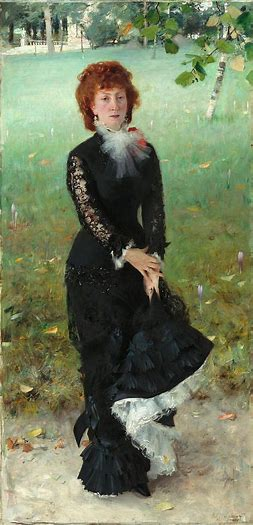
For the portraiture mentioned in my story I used some of John Singer Sargent’s work as my models. The monochrome portrait that Jacques spends time gazing at is actually an amalgam of two of Sargent’s paintings - Madame Pailleronand Madame Gautreau. I took specific elements from each actual portrait in order to create the one that Jacques comes across in his research.
Similarly with the other pictures that are mentioned. They are either amalgams of real land- or seascapes or they are complete fictions based on an actual sketch or panel by one of the artists mentioned.
It would have been wonderful to be able to illustrate this post with the works that are named in the book. Sadly, the best I can do is to tell you to click the link behind the title of each of the paintings above. It won’t take you on the amazing journey of research that I encountered, but it might give you a hint about how enjoyable my search was.
Website: http://www.angelawren.co.uk/
A question for you before you go, Angela:
What is your favorite part of writing and the part you enjoy the least?
I guess I love all of it, really. The thinking, the working out what the story is, or is not. The planning, the actual writing - although there are times when that becomes a bit tiresome. It usually means that I need to take a break for a few hours or a few days or so, and then come back with a fresh mind and eye. I think the most difficult bit is editing. And note I said ‘difficult’ and not the ‘least enjoyable’. I find self-editing requires constant sustained concentration and that often makes me very tired. But it is an essential part of the process so I just have to go with it.
I think a lot of authors feel the same way about editing. Not always fun, but necessary.

Thanks for being our guest once more, Angela. Looking forward to reading about Jacque’s latest adventure.
.jpg)
Thank you, dear Readers & Visitors.
Do you like cozy mysteries?
Tell us what’s on your mind.
Leave us a comment.
Don't forget: Iron Spear 1941
Coming in December

Have a look .
November 11, 2022
The Story behind the Story with CP Daly of Nova Scotia, Canada.

I take great pleasure in introducing you to a kind and generous author.
CP Daly is notorious for her sharing and support of fellow authors. Many of us are indebted to her for her largesse.
We're pleased to have her as our guest this week. She will be telling us about her captivating stories.
Read on, my friends.
C P Daly
Like most writers, I’m an avid reader. This led to creative writing classes in my thirties. Being a writer was not something I thought about, that was for people who lived in exotic places. Definitely not a girl from the East Coast of Canada.
The years flew by and my passion for writing grew. It wasn’t until after I raised my family and retired, did I take my writing to the next level. At the age of sixty, I found myself with a completed novel, Dead After Midnight. No one was more surprised than I.
Little did I know, the real work had just begun.
Working Titles: The Kelsey Woods Trilogy
Dead After Midnight – Book 1

Dead Before Sunrise – Book 2

Dead Days Ahead – Book 3
.jpg)
Synopsis: Suzie Q is a prostitute and determined to get out of her current line of work and excited for a fresh start with best friend Lucy by her side. Her dreams come to an abrupt halt, when, she stumbles upon Lucy's brutally murdered body. Fearing for her life, Suzie runs to her neighbor, Luke, for help and to regroup. She discovers he's not just a client, but an undercover FBI agent. He blindsides her when he reveals she's mixed up in an FBI investigation, and she's been unknowingly working for Johnny Stone, New York's notorious crime boss. Suzie flees New York, hiding in a quaint seaside town in Maine. She changes her identity and her life. Now she has to survive, to keep the life she has come to love.
The Story Behind the Story: The idea for the story of Suzie Q, came from a short newsclip I saw while on vacation, over twenty years ago. The newsclip was regarding arrests that had been made inside a prison. They had arrested prison guards, and other prison staff, who were involved. They were smuggling prostitutes into the prison at night. The prisoners were paying the prison employees for time with the prostitutes.
My mind immediately started to churn out all sorts of scenarios. What kind of girl would agree to be smuggled into a prison? Certainly, not by choice. Desperation? Fear? Money? Were the girls forced? By whom?
This stayed with me, until finally I began to write about it. I tried to write a sensitive story of a girl who had no options, no family, and no support system. She made bad decisions, for money, for a roof over her head, to survive.
Suzie was saving money for a fresh start, in a new city, and to live a life she could be proud of. She wanted to make something of herself, be safe and have a place to call home.
But of course, I write thrillers. The road to happiness is full of obstacles.
I’m very excited to share, my current work-in-progress is a stand-alone mystery/thriller, that is set in Nova Scotia. The title is yet to be determined, sadly my title never comes to me until after the book is written. It is due to be released in 2023.
Website: https://www.cpdaly.com/

One question for you before you go:
What is your favorite part of writing and the part you enjoy the least?
I love to plot and fit the pieces together like a puzzle and create a mix of eclectic characters. But I have to admit, my favorite part of the process is writing, The End. A euphoric sense of satisfaction washes over me. It takes countless hours and many hurdles to reach the finish line. It’s pure joy when I wrap up my final draft with the editor.
The anticipation of the book’s arrival, and the fulfillment I feel when I hold it in my hands. Admiring the cover and savoring the moment. I think of the readers, and hope they love it, or at the very least, like it. Fingers crossed! Then, it’s time to shelf it and move on to the next book. The excitement of creating something new, never gets old.
It’s the marketing and administrative tasks that are the worst part of the job for me. There are never enough hours in the day to write, and do the business aspect of the job. I’ve learned not to stress over it, and just be happy with my best efforts.
Thank you, Allan, for inviting me to be a part of The Scribbler.
***Thank you for being our guest. Wishing you continued success with your writing.

And thank you to our readers & visitors. Appreciate you dropping by.
What is your favorite genre to read? Your favorite author?
Please feel free to leave a comment.
For those who may be interested, keep watching for my next thriller.
Code Name : Iron Spear 1941

Aircraftsman 2nd Class Jeremy Carter is the rawest recruit at Royal Canadian Air Force Station Scoudouc – a training center for British, New Zealand and Australian pilots during World War 2. Ordered to clean debris from the back fields, he makes a startling discovery. Reporting the incident directly to his superiors, he’s warned to keep the finding to a small and select group of airmen of which the base’s commanding officer is one. There are too many secrets at RCAF Scoudouc for this to go public.
Warrant Officer Stefan Kravchenko of the Royal Canadian Air Force is with the Service Police and his reputation is on the rise. Stationed at RCAF Saint John, he works out of the Milledgeville Airport. Thinking his day is finished, he’s called to the office of his commanding officer. He receives orders to proceed to RCAF Station Scoudouc, 150 miles away. Immediately. His not given a reason why, only that it is orders.
A German spy was sent to New Brunswick by the Abwehr before the war broke out. German intelligence receives rumours of the existence of a highly classified device leaving England, destined for the shores of Atlantic Canada. Iron Spear is activated and sent to Scoudouc. In civilian life, he was a butcher.
Nov/Dec.
November 5, 2022
The Story Behind the Story with Author/Photographer Deborah Carr of Hillsborough, Canada.

Let's welcome Deborah Carr to the Scribbler.
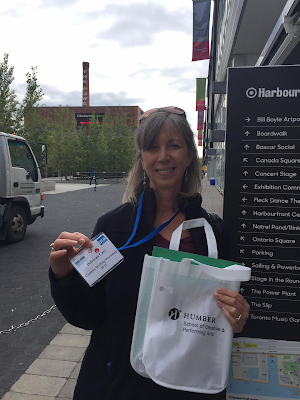
Deborah and I met a few years back at a WFNB conference and I’ve been following her writing and her photos for some time.
I’ve featured her photos before on my weekly blog and you’ll find one today on the sidebar.
Deborah has kindly accepted my invitation to tell us TSBTS of the biography she penned about Naturalist Mary Majka. The reviews have been great with many being 5 stars.
I know you’ll enjoy meeting Deborah and discover her writing.
Deborah Carr is a freelance writer, photographer, workshop leader, and environmental activist based along the Bay of Fundy in south-east New Brunswick. She writes about conservation and nature; our relationship to place and each other; and the challenges of protecting and healing this battered, but beautiful planet. For over 20 years, her non-fiction stories and photos have appeared in regional newspapers, national and international magazines and other special publications.
Title: Sanctuary: The Story of Naturalist Mary Majka

Synopsis: Sanctuary is the biography of Mary Majka, a post-war immigrant who entered Canada through Halifax’s Pier 21 in 1951. Shortly after making her permanent home in south-eastern New Brunswick, she became known as a vocal spokesperson for nature.
Born in 1923, the daughter of a Polish educator and an Austrian countess, Mary’s life seemed destined for privilege. Her childhood in Poland was replete with cultural diversity, nannies, custom-made clothing, spa vacations, and summers on the Baltic Sea. But all that changed with one tragic event when she was 12, and she lost all that was familiar to her. Four years later, just as she was re-gaining some stability in her life, Hitler invaded Poland and all semblance of security vanished. She found herself alone, dependent on her own resourcefulness to survive the deadliest war in history.
The book, which begins with Majka’s affluent childhood in pre-war Poland, spans her incarceration during WWII and subsequent emigration out of the devastated landscape of Europe to peaceful Caledonia Mountain in south-eastern New Brunswick. There she found a purpose, working passionately to protect fragile spaces and species for generations to come. She lobbied for changes in wildlife laws, initiated projects that led to the protection of ecologically sensitive habitats, hosted a children’s television show, taught outdoor education, and started the first children’s nature centre in a Canadian national park.
Before too long, Mary Majka became recognized as a visionary and pioneer within Canada’s fledgling environmental movement, and was featured in newspaper and magazine articles, books and documentaries that heralded both her heritage restoration projects and wildlife rehabilitation activities.
This is the intensely personal story of the tragedies and losses that shaped the woman who left a legacy of conservation in New Brunswick and encouraged others to leave their own mark on the world.
The Story Behind the Story: As a child, I watched Mary Majka’s television show, Have you Seen?, and it sparked my lifelong interest in nature. Twenty years later, my first home as a married woman was on Caledonia Mountain, where I encountered the well-known New Brunswick naturalist in person.
Having been hugely entertained over the years by the stories of her many escapades, I eventually asked if I might write her biography. Frankly, I wanted to learn what it takes to become a woman like her. I hoped to discover the motivations that drove her to a life dedicated to a cause, and the wisdom she’d gained through her experiences. So began our weekly interviews. I never imagined the book would take seven years to reach publication, but it was an extraordinary learning experience.
Maintaining objectivity on a biography is difficult. Mary could not achieve what she did without a strong spine and a determined character. She was an indomitable, feisty, complex woman. So, along with many memorable moments and laughter, we also had our struggles and differences of opinion. We waded through traumatic memories, and also stories that shifted details with each telling, as recollections often do. It was a very emotional undertaking, and I also had to write about the parts of her that I didn’t particularly like or admire. But there was no dispute over her inner strength and resilience, the depth of her heart and her genuine compassion for all living things. She was an extraordinary woman (she passed away in 2014) and I’m grateful she entrusted me with her story.
Through the researching, writing and shaping of Mary’s story, I realized that those who discover the secret to resilience let adversity shape, but not define them. By focusing on a goal beyond themselves, they are able to transcend difficulties, perceiving them as only temporary circumstances. This helped me gain my own sense of resilience, my own ability to see beyond the struggles of the moment, and my own strength of spine. I became an environmental activist because of the lessons I learned from Mary’s life. She taught me the importance of acting in defense of nature, and of listening to the call of one’s own heart.
Website: https://deborahcarr.ca
A question for you before you go, Deborah:
What is your favorite part of writing and the part you enjoy the least?
I intensely dislike writing first drafts. Simply the hint of a new writing project will compel me to rearrange the basement, dust the baseboards, clean out the fridge, scrub the grout between floor tiles, tidy the linen closet, or empty the castings from my worm farm. But once I’ve exhausted my procrastination projects and wrestled some faint semblance of a patchwork story out of the dark murk and muck of my mind and onto the page, I can dive into the intensely enjoyable part of refining that draft into a piece of work that becomes a pleasure for others to read. I’m a compulsive tweaker…editing, deleting, arranging and rearranging, rewording, adding layers, seeking significance, noting patterns, trimming the excess, then doing it again. The other hard part is finally recognizing when it’s time to stop tweaking and let it fly on its own.
Thank you so much, Deborah, for sharing the insights into writing this memoir of someone you admire. And thank you for your lovely photos you share with us on Facebook.

And thank you dear readers and visitors. Thanks for stopping by.
Feel free to leave us a comment.
The Story Behind the Story with Author/Photographer Deborah Carr of Caledonia Mountain, Canada.
Let's welcome Deborah Carr to the Scribbler.
Deborah and I met a few years back at a WFNB conference and I’ve been following her writing and her photos for some time.
I’ve featured her photos before on my weekly blog and you’ll find one today on the sidebar.
Deborah has kindly accepted my invitation to tell us TSBTS of the biography she penned about Naturalist Mary Majka. The reviews have been great with many being 5 stars.
I know you’ll enjoy meeting Deborah and discover her writing.
Deborah Carr is a freelance writer, photographer, workshop leader, and environmental activist based along the Bay of Fundy in south-east New Brunswick. She writes about conservation and nature; our relationship to place and each other; and the challenges of protecting and healing this battered, but beautiful planet. For over 20 years, her non-fiction stories and photos have appeared in regional newspapers, national and international magazines and other special publications.
Title: Sanctuary: The Story of Naturalist Mary Majka
Synopsis: Sanctuary is the biography of Mary Majka, a post-war immigrant who entered Canada through Halifax’s Pier 21 in 1951. Shortly after making her permanent home in south-eastern New Brunswick, she became known as a vocal spokesperson for nature.
Born in 1923, the daughter of a Polish educator and an Austrian countess, Mary’s life seemed destined for privilege. Her childhood in Poland was replete with cultural diversity, nannies, custom-made clothing, spa vacations, and summers on the Baltic Sea. But all that changed with one tragic event when she was 12, and she lost all that was familiar to her. Four years later, just as she was re-gaining some stability in her life, Hitler invaded Poland and all semblance of security vanished. She found herself alone, dependent on her own resourcefulness to survive the deadliest war in history.
The book, which begins with Majka’s affluent childhood in pre-war Poland, spans her incarceration during WWII and subsequent emigration out of the devastated landscape of Europe to peaceful Caledonia Mountain in south-eastern New Brunswick. There she found a purpose, working passionately to protect fragile spaces and species for generations to come. She lobbied for changes in wildlife laws, initiated projects that led to the protection of ecologically sensitive habitats, hosted a children’s television show, taught outdoor education, and started the first children’s nature centre in a Canadian national park.
Before too long, Mary Majka became recognized as a visionary and pioneer within Canada’s fledgling environmental movement, and was featured in newspaper and magazine articles, books and documentaries that heralded both her heritage restoration projects and wildlife rehabilitation activities.
This is the intensely personal story of the tragedies and losses that shaped the woman who left a legacy of conservation in New Brunswick and encouraged others to leave their own mark on the world.
The Story Behind the Story: As a child, I watched Mary Majka’s television show, Have you Seen?, which sparked my lifelong interest in nature. Twenty years later, my first home as a married woman was on Caledonia Mountain, where I encountered the well-known New Brunswick naturalist in person.
In 2003, having been hugely entertained over the years by the stories of her many escapades, I asked if I might write her biography. Frankly, I wanted to learn what it takes to become a woman like her. I hoped to discover the motivations drove her to a life dedicated to a cause, and the wisdom she’d gained through her experiences. So began our weekly interviews. I never imagined it would take seven years to complete the project. After three years of weekly interviews, I then started interviewing others and conducting background research, then finally began the real work of writing and editing, then eventually publishing and promoting.
Mary could not achieve what she did without a strong spine and a determined character. She was an indomitable, feisty, complex woman. We certainly had our struggles and differences through the process of interviewing and writing the book. We waded through traumatic memories and stories that shifted details with each telling. Maintaining objectivity was difficult at times. Reality was sometimes different than my expectations and I also had to write about the parts of her that I didn’t particularly like or admire. But there was no dispute over her inner strength and resilience, the depth of her heart and her genuine compassion for all living things.
Through the process of researching, writing and shaping Mary’s story, I realized that those who discover the secret to resilience let adversity shape, but not define them. By focusing on a goal beyond themselves, they are able to transcend difficulties, perceiving them as only temporary circumstances. Through the writing of the book, I gained my own sense of resilience, my own ability to see beyond the struggles of the moment, and my own strength of spine. I became an environmental activist because of the lessons I learned from Mary’s life. Through her own actions, she taught me the importance of acting in defense of nature, and of listening to the call of one’s own heart.
Website: https://deborahcarr.ca
A question for you before you go, Deborah:
What is your favorite part of writing and the part you enjoy the least?
I intensely dislike writing first drafts. Simply the hint of a new writing project will compel me to rearrange the basement, dust the baseboards, clean out the fridge, scrub the grout between floor tiles, tidy the linen closet, or empty the castings from my worm farm. But once I’ve exhausted my procrastination projects and wrestled some faint semblance of a patchwork story out of the dark murk and muck of my mind and onto the page, I can dive into the intensely enjoyable part of refining that draft into a piece of work that becomes a pleasure for others to read. I’m a compulsive tweaker…editing, deleting, arranging and rearranging, rewording, adding layers, seeking significance, noting patterns, trimming the excess, then doing it again. The other hard part is finally recognizing when it’s time to stop tweaking and let it fly on its own.
Thank you so much, Deborah, for sharing the insights into writing this memoir of someone you admire. And thank you for your lovely photos you share with us on Facebook.
And thank you dear readers and visitors. Thanks for stopping by.
Feel free to leave us a comment.
October 29, 2022
The Story Behind the Story with Pierre C. Arseneault of Moncton, NB, Canada.

Spooky Time! with Pierre C. Arseneault of Moncton, NB.
With Halloween just around the corner, what better than a horror story from a talented author.
Pierre’s been here before. Most recently in February with a SBTS for another of his works - HERE.
His first visit to the Scribbler was in February 2015 – HERE.
It’s been a pleasure to work with Pierre on the Paths Anthologies as part of the Seasonal Collective. See more HERE.
Read on about Pierre’s newest novel.
The youngest of eleven children, Pierre C. Arseneault grew up in the small town of Rogersville, New Brunswick. As a cartoonist, Pierre was published in over a dozen newspapers. As an author, he has six titles published so far. You can also read short stories by Pierre in the Paths anthology series.
Working Title: Maple Springs

Synopsis: Maple Springs is a town with a lot of history, and a lot of mystery. People seem to disappear at an alarming rate, yet the townsfolk brush the disappearances off with bizarre explanations. But some, like Robyn Skidmoore, think there is more going on in Maple Springs. As Robyn searches for her missing friend, she deals with tales of a legendary recluse, monsters, mobsters, and meddlesome neighbors.

The Story Behind the Story: I always love to hear what inspired a story. Sometimes it’s the most mundane things like an image on a book cover which is what inspired my novel Poplar Falls, the Death of Charlie Baker. Or perhaps it’s some small event that happened to you on the way to work, like what inspired my short story called Melvin in the upcoming Winter Paths anthology. Sometimes you just set your mind wandering on a topic and a weave of a tale starts to form, like my short story A Path to Redemption in the Autumn Paths anthology.
I recall having coffee once, long ago and all around the booths, there was a slot in the backings. Patrons had inserted pennies which were a perfect fit. I remember telling my friend that stories can comes from just about anywhere, I said pointing to the coins in the slot.
“Penny for your thoughts,” said I as I proceeded to talk of Delroy, a homeless man with a curse and a gift rolled into one. Right there, I had the premise for a short story that would get published in my anthology Sleepless Nights.
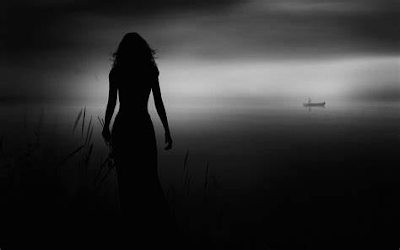
Origins of story ideas fascinate me almost as much as the stories themselves. For this new horror novel called Maple Springs, its origins stem from a few places. The first being this idea I had for a gifted woman who had abilities. Things she learned to use at a young age to get the things she wanted. I had her in the back of my mind and even though I’m one of those people who don’t have a mind’s eye, I could picture her. Long wavy blonde hair, large golden hoop earrings, a long flowing black skirt that reached the ground and a man’s button blue shirt with the sleeves rolled to her forearms and a large knot tied at the waist. She had a boldness about her, even before I wrote a single word.
Which brings me to the second part that inspired this horror novel. A television show that never ended, leaving me hanging with unanswered questions. Too many times, I began watching a show that captured my curiosity only to have it get cancelled with forever unanswered cliffhangers. Happy Town was one of these shows for me. I absolutely loved the characters, settings and mysteries. In Happy Town, people were vanishing mysteriously at the hands of someone they called the Magic Man. I’m positive this entire show was inspired by the song from the band Heart. This show was epic, but after airing six episodes during the summer, it was pulled off the air. There was a total of eight episodes filmed and blam… cancelled and left hanging forever. So, with what felt like an itch that I needed to scratch, I decided to write my own story about mysterious disappearances. Only I would answer the questions.
With that said, don’t go thinking I stole the idea. The only premise which is similar is the mysterious disappearances which wasn’t an original idea that the creators of Happy Town had invented. There are many books, television shows and movies out there also about mysterious disappearances and even they didn’t invent this either. This is something that many real-life monsters have made a sad reality for many. But I’m not alone in having a fascination for dark fiction. So, I sat down to write a novel about mysterious disappearances, monsters and things that live in the darkness. Things that might scare some and attract others. All you have to do is go to a Halloween store to see the evidence of this fascination with the macabre and horrific.
Maple Springs is one of those novels that I got so engrossed in writing that it took over my life for a short while. Which leads me to mention the hardest part of being a writer.
Waiting.
When you write a story you love as much as I love this one, you want to share it with readers. I was itching to have someone read it. But I’m often hesitant to have someone delve into it before my publisher or even close friends read it. It’s a strange feeling to be sitting on this new book you’re completely excited about only to have to wait to share it. And the strangest part is writing something new while you still have this on the back burner, waiting to put it out there.
I could tell you more about this novel but that would involve way more spoilers than I’m comfortable with. But Maple Springs was a labor of dark love and I’m excited to finally get to share it with readers.
Website:
A question for you before you go, Pierre.
What is your favorite part of writing and the part you enjoy the least?
My favorite part of writing is the very beginning as the possibilities are endless. Before you write a single word, you could be a pirate captain on a ship about to face a mutiny. You could be a gunslinger, about to face an opponent that you know will be your undoing. You could just as well be a warrior in armor on a battlefield as much as an accountant on the brink of insanity. You could be in space, on another planet, in Detroit or at the bottom of the ocean. You could be anywhere, anything and anyone… just about anyway. You can’t be Harry Potter or Batman. Someone out there might have something to say about that. But you could be a time traveling accountant who’s on the brink of insanity and is now convinced he’s Batman. That you could do.
My least favorite part of writing is when I hit a wall. Denial that writers block is something I can get was once a thing but no more. Sometimes you write and get to a point where you realize that the novel you were writing has dried up. What comes next? Sometimes you know what comes next but if I write that part, well my novel could now be a novelette or novella. But I can’t stop there, can I? Not if I want to make this a novel. Like as I write this, I’m thinking about the crime thriller I’m trying to write. I’m stuck. But like most writers, I’ve been there before and will get through it. So, type on, people. Stories don’t write themselves…
I think a lot of authors feel like you do, Pierre. Sometimes we get stuck and have to redo, or pause , or reflect but as you say “… and will get through it.”
Thanks for sharing the news about Maple Springs, Pierre. It’s a great story and we wish you continued success with your writing efforts.

And a humongous-Grand-Canyon-thank-you to all our visitors and readers. It's all for you.
Do you like/love spooky stories? If not, what's your favourite?
Please tell us in the comment box below.
October 22, 2022
The Story Behind the Story with Tawnya Torres of the Pacific Northwest.

The release of a book is a great reason to celebrate.
This week we share the excitement with Tawnya about her novel – A Silent Discovery - which was released a few days ago.
The story sounds captivating, and I'm sure it will be a great success.
Read on as she tells us about herself and the story.
I'm a half white half Asian girl living in the Pacific Northwest. When I'm not writing, I'm hanging out by the beach with my dog. I was born to service industry parents and work in the industry myself. Right now I do a little bit of everything in a coffee shop and bakery that overlooks the river but I’ve always been attracted to the arts. When I was a kid I thought I was going to grow up to be a painter or comic book artist but it turns out I’m better at writing.
Working Title: A Silent Discovery
.jpg)
Synopsis: Being a mute princess isn’t easy, especially as the oldest of four sisters. Amadeus Sloane has to be wed first in order for her siblings to get married. Her sister Adrian is resentful and cruel as is her mother. Adrian constantly terrorizes Amadeus for her affliction. Her other sisters Penelope and Margaux keep their distance due to the family’s broken nature. Queen Kathryn makes Amadeus feel worthless. Every time a suitor rejects Amadeus her mother acts harshly, driving the silent princess further into despair.
Her father was a great king but died during the chimera wars when she was a child. Because of this the kingdom of Syrosa no longer fights their own battles, they outsource to other armies and pay swords for hire. Syrosa is a wealthy kingdom but lacks integrity. After many rejections Amadeus is worried her mother’s wrath may be more than she can bear.
The baby sister Margaux has been sneaking into the woods to meet with a human-animal hybrid which is forbidden. Amadeus catches Margaux with the deer boy but keeps her secret. Only when the queen realizes Margaux hasn’t bled in three months is she found out and kicked out of the castle. Amadeus becomes closer with her sister Penelope only for her to die from illness.
Alone with Adrian and their mother brings on an incomprehensible hurt. Not like having to have a wedding and funeral the same day. Amadeus is informed the chimeras are back and the great warlord Kade of Tessafaye has agreed to take her hand in marriage as payment for fighting in their place. This frightens Amadeus and she worries Kade may be more brutal than her own family. The rumors say the warlord is a merciless man with windswept hair and eyes the color of desert sand. He leaves for the war right after their wedding. Their relationship confuses Amadeus but she waits for his return. She is nervous when he comes to retrieve her but is glad he kept his promise to come back for her. He takes her to his land where she finds herself happy and accepted although she isn’t sure if she trusts Kade. She waits for the day he will abuse her–but he never does. An unlikely match falls in love despite it being an arranged marriage and together they find truth in the silence.
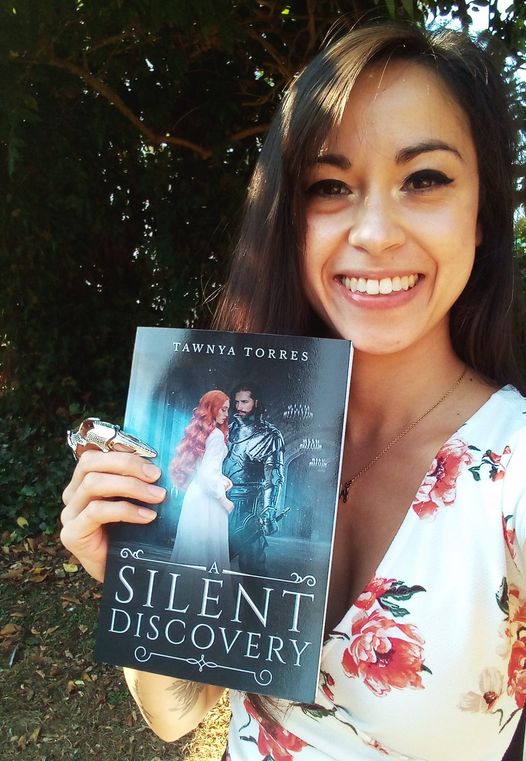
The Story Behind the Story: I started writing after I lost my job for the second time during the pandemic. Determined to overcome my trauma, I worked hard on my mental and physical health. It was cathartic for me. I used images and emotions inspired by my EMDR therapy sessions. A Silent Discovery is the 5th book I’ve written, but the first to be published. I wanted to write an expressive character with no dialogue, creating the main character Amadeus, who is mute.
Find more info HERE

A question for you before you go, Tawnya:
What is your favorite part of writing and the part you enjoy the least?
I love exploring the characters and crafting their personality, diving into their emotions, or the world they live in. I find editing dreadfully boring but it’s a must!
Thanks for being our guest this week, Tawnya. Wishing you lots of success with your novel and writing journey.
.jpg)
And another BIG thank you to all our visitors and readers. You folks are THE BEST!
What is your favourite novel? Your favourite Author?
Please leave us a comment & thank you again.
October 15, 2022
The Story Behind the Story with J. Ivanel Johnson of New Brunswick, Canada.
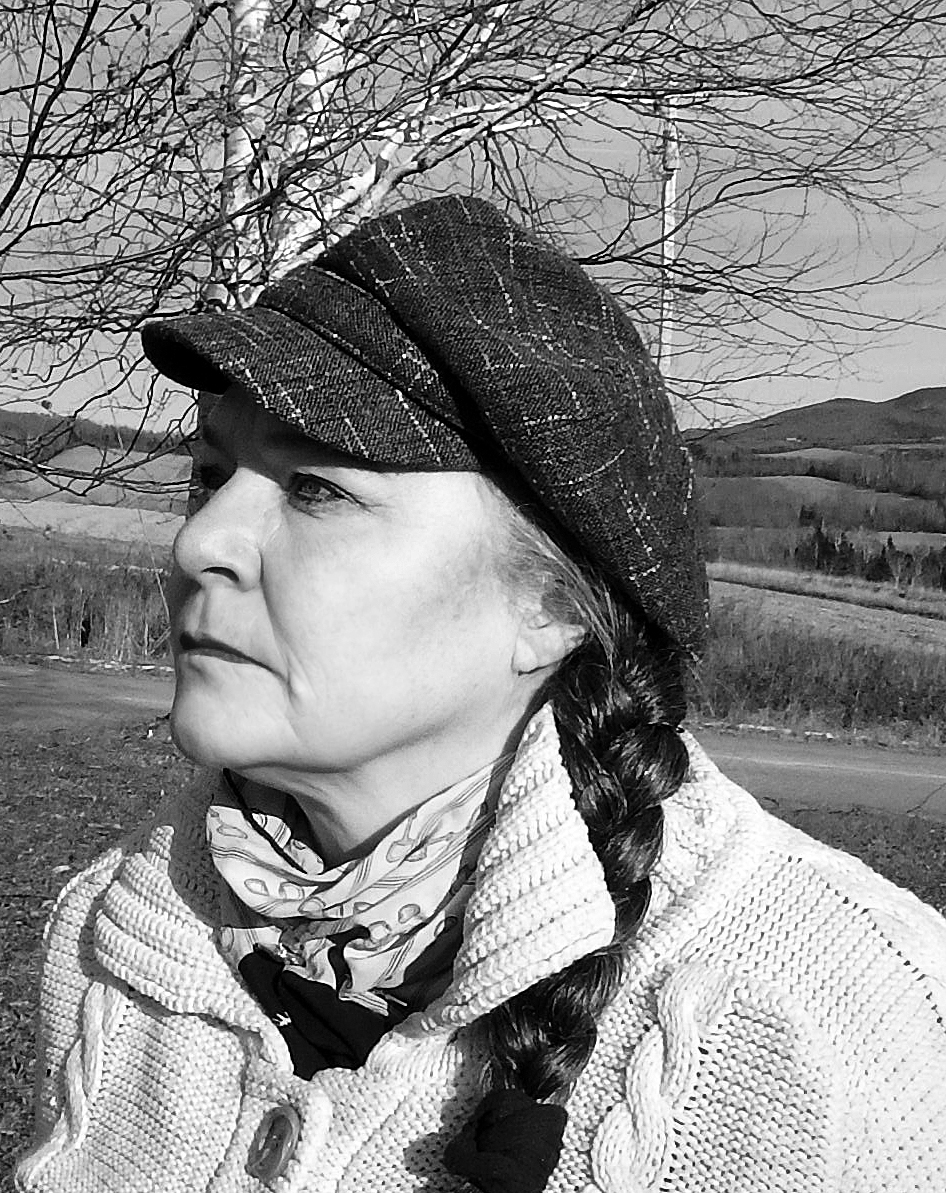
It’s always a treat to welcome another New Brunswick author to the Scribbler.
Johnson’s novel is garnering a lot of attention these days and we’re fortunate to have her visit this week to tell us about it.
J. Ivanel Johnson is the pen name for an author/playwright (with disability) who now resides on a farm in the Appalachians of New Brunswick. As in Just A STILL LIFE, she strives always to write about marginalized and culturally-diverse characters, many based on people from the First Nations, inner-city or mountain communities where she has previously lived and taught across the UK, USA and Canada. Her full-length musical, Rough Notes, also set in NB’s Upper River Valley, is currently being rehearsed for 2 professionally-workshopped performances in October and a number of Wolastoqiyik, Mi’kmac and several others from Black, Acadian and Latino communities of NB are involved to represent her range of characters.
Title: Just A STILL LIFE (first in the JUST (e)STATE mysteries series)

Synopsis: In the simpler times of 1971 Inspector Philip Steele, recently transferred to Fredericton, takes a much-deserved holiday with his elderly godmother in her quaint Victorian-styled village just north of the capital city. After a happy week exploring some of his boyhood haunts from summer vacations past, a bank robbery occurs. Later that night Oliver, a teen-age boy, is shot and killed. Having been an instrumental leader earlier that year on the case of one of Canada’s first serial killers, Phil is emotionally exhausted. Reluctantly, however, he must now return to long days of investigation with his oft-misquoting sergeant Zareb Woodbridge, a former journalist, who struggles with questioning some of the more racist locals. (In the remote, mostly-treed province of New Brunswick in that decade, a black person - especially one in authority - sets local tongues wagging behind his back and lips firmly pressed shut in his presence. )
The youth’s murder is not the only one to occur in the village; soon after two more people are killed in fairly quick succession. New Brunswick potato and orchard farmers whose families helped settle the Upper River area a century ago are offset with the likes of Carol Caribou, a First Nations Wolastoqiyik post-office intern who is able to help gather gossip as potential clues. Additionally, North Shoreman Gaston Hauche and fingerprinting expert Jose Santana, (whose Cuban family have lived in Atlantic Canada since the 1700's cod/sugar trades but who is still considered an outsider) are also part of the culturally-diverse problem-solving team.
And while Phil's godmother P.J. secretly prepares her annual Harvest Moon Ritual to be used as a trap for the murderer, he himself has fallen in love with the accused: watercolorist Beth Grimball, enjoying new-found 'freedom' albeit in a jail cell. Phil finds he is not only urgently compelled to solve the crimes because it's his job, but to save the lives of those he has always loved. And those he has just begun to. First in the new 'Just (e)State' mysteries, the following books prequels to Just A STILL LIFE.

The Story Behind the Story: This is a doozie, and goes back exactly 75 years! My grandmother originally drafted this (originally entitled “Prison Is A Private Place) in 1947, and she set it back then. I made her a death-bed promise, some forty-five years later, that I’d someday rewrite and ‘update’ it. Which took me another 30 years of on-again, off-again attempts (as well as the various drafts crossing the ocean and the continent several times with me as I moved to various countries/provinces/states). I only updated it to the early 1970s, though, as I wanted to keep its intrinsic simplicity (no high-tech stuff, most of which I don’t use and can’t abide, including cell phones!) The sequels to this book, all part of the Just (e)State mysteries, are actually prequels going back two years each. Thus, the next book, Just A STALE MATE is set in 1969.
The original manuscript my grandmother whipped up was set in “Straffordville”, the village in Ontario where we both grew up. Well, I was actually two miles out of the village on a small rural ‘estate’, thus the title of the series, interestingly an anagram for Astute Jest, which is rather a running theme through the series. But I still understood very well how villages/small towns function – often with copious amounts of gossip salted with racism and bullying, all stemming from boredom and ignorance.
When we moved to New Brunswick six years ago I wanted to change the setting to this province, give NB more exposure in the literary world because Ontario already has quite a bit. So I reinvented our original flat-lands village, plunked it in the rolling mountains and called it Victoria, my grandmother’s first name. But I also liked the name of Victoria because we live in Victoria County and it suggests an old-fashioned, more genteel time, doesn’t it?
Website: HERE
A question for you before you go, Julie:

What is your favorite part of writing and the part you enjoy the least?
I think MOST authors feel the same as I do – we love the creative part of planning, plotting, devising and actually doing the writing, for the most part. But the majority of us don’t care for all the revisions, re-writes, re-reads, ‘killing our darlings’, multiple submissions, and all the promotion work! Occasionally I’ve heard a writer say they LIKE to edit their work, and once in a while I hear someone say they enjoy doing interviews, plugging/selling their books, etc.
But not very often!
Having said the latter, thanks for this opportunity, Allan – it feels good to do this interview for a NB-specific site, and I hope lots of NB readers will be keen to see how much of their province and its people appear in Just A STILL LIFE (incl. fallen Fredericton officers Costello and Burns, whose families kindly gave me permission to use their names as otherwise-fictional 1970s police investigators).
Sounds like Philip Steele has his hands full!
Thanks for being our guest, Julie. Wishing you lots of success with your novel.
.jpg)
And a big thank you to our visitors and readers.
Don’t be shy to say Hi.
October 8, 2022
Guest Author Kabishev Alexander Konstantovich & The HYPERPOEM Project.

This week, the Scribbler offers you something different which will appeal to the poets and authors as well as you readers.
Earlier this year, a local poet and friend, Richard Doiron (he’s been a popular guest on the Scribbler, and you can read about him HERE), introduced me to our guest this week - Kabishev Alexander Konstantinovich – who has developed the HYPERPOEM project. He’s going to tell us about the project.
Kabishev Alexander Konstantinovich (K.A.K.) is an engineer, a graduate of the D.F. Ustinov Military Technical University, a poet and writer, an artist of a new direction in literature and art - choism. Volunteer journalist of the magazine "POET", active participant and director of the magazine at the foundation "LIFE LINE OF EVERY CHILD", founder and head of the international creative and cultural project "DEMO GOG", editor-in-chief of the magazine "HUMANITY", author of the collection of short stories "NIGHTMARE", collection of poems "DANCE OF POETRY", the novel "RED CORAL". Curator and organizer of collections of modern prose and poetry "SILICON AGE" (2 volumes), the collection "WHISPER IN THE WIND", the first Russian-Vietnamese collection "DAWN", the first Russian-Serbian collection "FRIENDSHIP". Director of a documentary about the charity "ECLF". Founder and mentor of the world record project – HYPERPOEM. Member of the Russian Union of Writers. The leader of the youth movement of the Russian Union of Writers. Member of the Writers' Union of North America. Winner of the 3rd degree of the international literary award "Not a day without a line". Co-author of many collections and publications in magazines and online media. A number of his author's works have been translated and published in Spanish, Arabic, Italian, Vietnamese, French, English, Hindi, Portuguese, Serbian, Greek, Tagalog and other languages (Russia, the city of St. Petersburg).

Description of HYPERPOEM
Background
The idea of the HYPERPOEM project originated in the summer of 2020. Then, as part of the work of the DEMO GOG group, it was planned to create a large Internet poem with the participation of several dozen authors. However, at that time the project did not receive proper coverage and attention from poets and their readers, so it was suspended for a while. Everything changed in the fall of 2021. When the number of band members approached 10,000, people began to ask about the project and express a desire to take part in it. In light of those events, the project was revived and restarted!
Project idea
The idea of the project is very simple – to connect as many authors as possible within the framework of a given topic: "International cooperation and friendship" to set a world record in the Guinness Book in the direction of: The largest poem in the history of mankind by the number of participating authors (accompanying: by the number of languages in one work). To participate, each author needs to: write a quatrain within a given topic (in their native language or English) and fill out a participant questionnaire. The questionnaire is designed to protect copyright and at the same time is proof that the participant is a real author.
Progress
Now more than 1000 authors have taken part in HYPERPOEM (for a record, you need to connect at least 1500). What deserves special attention are authors from more than 50 countries and most of them offered quatrains in their native language!

Plans
Now the main task is to collect 1,500 quatrains by the authors, with the subsequent obtaining of a world record, but HYPERPOEM will not stop there. There are already plans to work in the second half of 2022 and continue to connect the authors after the recognition of the record. In addition, after obtaining a world record, HYPERPOEM is planned to be presented as a monument of world literature in Unesco.
Conclusion
Although the current situation in the world remains tense, both against the background of political differences between large and developed countries and regional conflicts, projects such as HYPERPOEM allow authors from different countries to get to know each other, exchange creativity and establish universal friendship on planet Earth. And even though it may seem insignificant now, great things begin with small things. We are for world peace!
Here's the link to the names of the authors/poets who are participating: (4) DEMO GOG | All GOG! Now we have 1236 authors | Facebook

Good luck with your project and thanks for sharing with my readers.
.jpg)