Allan Hudson's Blog, page 15
March 4, 2023
The Story Behind the Story with Author DC Malcolm of New Brunswick, Canada.

This week on the Scribbler, we are featuring another New Brunswick Author.
I’m pleased she accepted our invitation to share the good news about her debut novel.
Read on.
Born and raised in New Brunswick, D.C. Malcolm has always been fascinated by literature and had a vivid imagination. Whether she was going on some magical adventure; or making up scary stories about the house next door with her friends. As D.C. got older, D.C. started to write down her ideas and transform them into short stories. In the third grade, after winning a short story contest, her teacher suggested she become an author, and D.C. has been chasing that dream ever since. At 36 years old, she dedicated her spare time to launching her writing career.
Working Title: Guilty Deceptions
.jpg)
Synopsis: I am Sheriff Dawson, and things are usually quiet in this small town. Let me tell you why September 1869 changed my life. Young Caroline found what was left of the poor souls in Willow Grove, leading to the most complex investigation I have ever seen, let alone investigated. Sometimes I think I will never find answers as I try to make sense of this case. Even the clues that point to the prime suspect, a famous architect, complicate things. Now, I must prove his innocence before it's too late!

The Story behind the Story: I have always been interested in True Crime. I grew up with Robert Stack’s Unsolved Mysteries.
I watched every Friday night and never missed an episode. I became obsessed with local crimes, and read up on Allan Legere and Noel Winters among others. That’s when I stumbled upon a case from 1869. It was the case of Maggie Vail.
That case intrigued me because there were so many holes. So many unanswered questions that it made me wonder if they got it right.
In 2013, the first idea for Guilty Deceptions surfaced. After a single trip to the library and many late nights online researching about Maggie, and Saint John in the 1860s and I was finally ready to write. In my early drafts of Guilty Deceptions, I included real names as the book followed the truth of the case. Yet, time went on and the story evolved, and last names got changed because the story had transformed and leaned away from the truth. Suddenly it became a fictionalized story based on a real-life murder.
It took me eight years to publish Guilty Deceptions but it needed time to grow. Finally, in 2021 it was complete.
My mother, an avid reader had read the first five chapters and helped me get inside the characters' heads. She taught me how their personality would be at that time, and how they’d react to certain situations within the story. Many of the places mentioned in Guilty Deceptions were real places in Saint John or Willow Grove at that time. Like the gallows rumored to have been built by John.
In high school, I had toured the old courthouse for Law class and when I used the spiral staircase, I got sick and dizzy. Thus Sheriff Dawson had a problem with the stairs. On the same trip, I stood in the very spot the gallows once stood.
My brother had heard the story many times because I read out loud when I’m editing. He loved the scene: Get out of me house! He burst into fits of laughter whenever he heard it so I knew that scene was a keeper.
I had fun writing Guilty Deceptions and I have been told by others that they have fun reading it. There will be at least two other books featuring Sheriff Dawson, Saint John, and Willow Grove sometime soon.
Website: https://dcmalcolm83.wixsite.com/dcmal...
A question before you go, DC:
.jpg)
Can you tell us about the perfect setting you have, or desire, for your writing? Music or quiet? Coffee or tequila? Neat or notes everywhere?
Over the new year, I finally got my desk for a semi-office space in my living room. My apartment is small and before that, I was writing on my couch! I usually start writing at 6 AM and continue writing off and on throughout the day until about 6 pm. I tend to write better when I listen to music (the track list depends on what I’m writing) currently the track list on my Spotify is 90s music, as I’m writing a romance based in the 90s. I usually have a coffee at my side. Most
of my notes are on my laptop, but my desk can get messy sometimes. I also don’t stop writing when I travel, but usually take a notebook and pen as opposed to my laptop.
An Excerpt from Chapter 1 of Guilty Deceptions:
.jpg)
Chapter One
Who would have dreamed that something like this would happen in a quiet town such as here? I've lived it and I'm not sure how I feel about it. However, I’m getting ahead of myself. I tend to do that. Anyway, it all begins with the Sheppard family.
Billy and Anne Sheppard lived out in Willow Grove, on Black River Road. They were farmers because men of Billy's complexion got little education, but, Billy’s content with his little farm. They had three daughters. Margaret, the oldest, looked just like Anne. The middle child, Martha, a perfect mix of the two, and the youngest Caroline was Billy through and through. On September 12th, 1869, young Caroline stumbled onto the horrifying scene that altered our lives; forever.
Caroline and her sisters Margaret and Martha were out picking blueberries at the junction of Black River and Quaco. Caroline wandered off the main road and ended up a little way into the Barrens. As she plucked blueberries, she noticed a bit of cloth sticking up from beneath the brush. Now Caroline was a curious child and so she pulled at it with her hands. Caroline’s high-pitched scream echoed around the barrens and alerted her sisters, who rushed to her side. In a state of shock; all three of the girls threw their buckets of blueberries on the ground and ran all the way home. Swearing to keep what they discovered a secret; forever.
Where was I? At the police station, sitting at my desk and reading The Murders in the Rue Morgue for the thousandth time. I’m not alone, Deputy Patrick Jackson sat at his desk, fiddling with a deck of cards and I was reminded of the interview for his job.
“What do your folks do?” I asked. Patrick leaned forward and folded his hands on the desk.
“Well, my father, Thomas, is a banker. My mother passed away about ten years ago,” he said.
I frowned. “So sorry for your loss,” I said. Patrick shifted in his seat.
“Thank you,” he said. “It was a long time ago now. I barely remember her. Father never remarried, instead he focused all his energy on me.”
“Yeah, well that's the thing about fathers, they tend to do that,” I said. “So, tell me what makes you want to be deputy?”
Patrick crossed his arms. “Not my father. He doesn’t approve. He feels it’s a dangerous job,” he said.
“I certainly can relate,” I said. “I notice you’re rather young. No wife or a girlfriend to speak of, why is that?” Patrick glanced down, wringing his hands. He hesitated for a moment it could have been two before he shook his head.
“No,” he said. “I’ve got no interest in settling down with a woman. I hope that doesn’t stop me from getting this job.”
“Of course not,” I said.
Patrick’s odd. His lack of desire has very little to do with his looks. In fact, it's not that Patrick isn't handsome. With his wavy blonde hair, he parts in the middle–to cover the slight scar under his left eye. His green eyes and ivory complexion make Patrick look like a prince in shining armour; even with the scar.
The door opened and John Riley walked in like he owned the place. John’s my brother-in-law, of course, but truth be told, I didn’t like him all that much.
“Hello, John,” I said.
John nodded. “Stephen,” he said. He was being very formal this morning and I wasn't sure why.
I nodded. “How’s your father?” I asked. John shrugged and his eyes narrowed, and he was glaring at the wall behind me.
“I don’t care,” he said.
“You don’t?” I asked.
“My entire life he has done nothing for me,” John said.
“He gave you life,” I said.
“Father only cares about his stature in life,” he said.
“I’m sure that’s not true,” I said.
“I might be his son, but he doesn't care about me,” he said.
“How’s Annie and the boys?” I asked, changing the subject. This made John smile.
“They are doing well, thank you,” John said. John married my sister, Annie, in 1862. They have three youngsters, the oldest is about seven. John, a middle-aged man, has a thick red mane that curled around his ears and sticks out about an inch. His eyes are the colour of emeralds and he has a very thick and prominent scar that runs down his left cheek. He hovered over my desk like he’s the most important person in the room; I hate that.
“What brings you in today?” I asked, rolling my eyes. For about a year now, John has been coming in everyday without fail and he always has a feeble excuse for his visits.
“I wanted to remind you to bring a bottle of whisky to dinner tomorrow night,” he said, his eyes locked on mine as he waited for an answer. I blinked and shook my head.
“Don’t I always?” I asked. John peered at me and nodded.
“Yeah,” He answered. I peered back at him and furrowed my brow.
“Of course I'd bring one tomorrow,” I said.
Monday, September 13th, 1869
That morning, Billy and Anne were sure that something happened the day before with their girls. While all of their girls seem bothered by something, young Caroline’s the worst. She isn’t eating, and she isn’t sleeping, she’s ashen-faced, and Billy even noted her mumbling to herself a few times. That’s what made him decide to talk to Caroline. She’s sitting on the porch when he found her and she’s staring at her feet. He sat down beside her.
“Caroline, why are you not eating or sleeping?” Billy asked and glanced at the ground. Caroline sighed and pressed her lips together.
“Something bad,” Caroline said, not looking up at him. Billy glanced at his daughter, and noticed she’s trembling.
“What?” He asked. Caroline shook her head.
“Me can’t tell, me promised to not tell,” Caroline said and Billy pressed his lips together.
“What did you see out there in them Barrens? Can you show me at least?” Billy asked. Caroline sighed and nodded.
Thank you for being our guest this week, DC. Wishing you tons of success with your novel.
.jpg)
Thank you to all our readers and visitors.
I dare you to leave a comment.


February 26, 2023
The Story Behind the Story with Susan Bernhardt of Wisconsin, US.

Let’s welcome Susan back.
This is not her first visit to the Scribbler and we are always happy to share her latest news.
If you missed her earlier visit, please go HERE.
Over to you, Susan.
Susan's town in northern Wisconsin was an inspiration for the quaint setting of her Kay Driscoll novels. Like Kay Driscoll in her cozy mysteries, Susan is a retired nurse who volunteers at her local free clinic. She also writes the Irina Curtius mysteries which take place in Manhattan.
An avid reader of mysteries, she is a member of Sisters in Crime, Inc., and the Wisconsin Writers Association.
Her published works include: The Ginseng Conspiracy (A Kay Driscoll Mystery Book 1), Murder Under the Tree (A Kay Driscoll Mystery Book 2), Murder by Fireworks (A Kay Driscoll Mystery Book 3), Paradise Can Be Murder (A Kay Driscoll Mystery Book 4), Murder Misunderstood (A Kay Driscoll Mystery Book 5), The Neighborhood (A Kay Driscoll Mystery Book 6), A Manhattan Murder Mystery (An Irina Curtius Mystery), Dress to Kill (An Irina Curtius Mystery), "October 31st", "Midsummer", and "John and Madeline.
Working Title: The Neighborhood
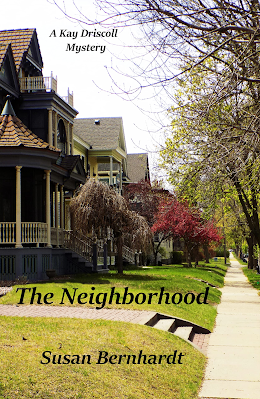
Synopsis: A new City Planner and his "Stepford wife" move into Kay Driscoll's neighborhood. The city of Sudbury Falls has a planning committee headed by this newly hired city planner intent on building a dam in the Sudbury River. The purpose, to create a lake for waterfront property featuring high-priced, luxury condominiums that the locals could never afford.
An uproar arises among the citizens who are passionate about the natural beauty of the Sudbury River. A newly formed Sudbury River Protection Society attracts Kay Driscoll and her friends with their “Save the River” movement.
When a murder occurs in the neighborhood, the unexpected happens. Chief Kirk asks Kay for her help in investigating the crime. What is up his sleeve? In the meantime Elizabeth's ex-husband shows up at her book signing after a five-year absence, Deirdre has a community feng shui-inspired May Day celebration at Planetary Herbals, and Janey goes on her first date.
Welcome back to Kay's world.

The Story Behind the Story: Why did I write this mystery? The truthful reason I wrote this sixth Kay Driscoll mystery is simply because writing seems to be in my blood. I can't imagine not writing. And I write to entertain, mostly through the characters, the plot of the story, and dry humor.
My first book was released in January 2014 by a Canadian publisher. I started writing the mystery five years previous to the publication date taking a number of writing classes.
What inspired the book? The environment is important for everyone. And not to be destroyed for the chosen rich. This idea became a focus for The Neighborhood. The book focuses on a small, but important level, on the lives of those living in the fictional Sudbury Falls. In real life, big companies, businesses, and industries are creating havoc in our environment and on the world.

Author Page on Facebook:
https://www.facebook.com/TheGinsengConspiracyBySusanKBernhardt
A question before you go, Susan: Can you tell us the perfect setting you have, or desire, for writing? Music or quiet? Coffee or tequila? Neat or notes everywhere?

I've always been fascinated with romantic ideas of where authors write. Perhaps I had seen too many movies, but when I became an author, I pictured myself looking out of a second floor palazzo window onto the Grande Canal in Venice, with a glass of Prosecco beside my desk, pounding away on the keyboard.
Three years ago my husband and I did visit Venice and we stayed in a palazzo but there wasn't a balcony and if there had been, it wouldn't have looked out over the Grande Canal. But we did share a bottle of Prosecco in our room. If only I had brought my writing along.
Or I might be in NYC working in an Upper West Side Brownstone where I could practically touch the tree outside of my window. In between paragraphs, I'd watch the hustle and bustle of the street below with the only things on my mind being my novel and trying to decide which neighborhood eatery I would try that evening, Indian, Thai or Italian.
I've sort of lived out this dream...lol...writing a mystery where part of it takes place in this exact setting, a Brownstone on the Upper West Side of Manhattan.

A Victorian home, a "Painted Lady" in San Francisco would be cool, looking out over the San Francisco Bay, hearing the cable cars in the distance and the seagulls above. I'd try to finish a chapter before meeting friends in North Beach at a coffee bar.
We have lived in the San Francisco Bay area and often times walked the different parts of the city including North Beach. But I wasn't writing then.
I recently was able to live out one of my romantic ideas of where to write. I went on holiday with my husband to the Caribbean and wrote on the powdery, white beach where I could look up and view the surreal, blue-green water. Between writing, I went for a swim and saw dozens of beautiful tropical fish in the crystal clear waters. Now that is romantic and I lived it completely! Paradise Can Be Murder (A Kay Driscoll Mystery Book 4) is the result.
But most of the time, I'm at home sitting on my sofa in our living room with my laptop on my lap typing away. There's a wall-sized window where I can look out over our neighborhood or watch the birds build their nests in our yew tree in the spring. I have a little make-shift side table, a Red Wing crock where I keep my teacup filled throughout the day. And when I'm not watching my carbs, I often have a scone sitting next to the teacup slathered in lemon curd and clotted cream.
These all sound like enjoyable creative settings, Susan. Thanks for being our guest this week. Wishing you the best of luck with the new novel and wishing you continued success with your writing.

And as usual, a tremendous thank you to our visitors and readers.
A question for you: What is your all-time favorite book you’ve read many times?
February 18, 2023
The Story Behind the Story with Poet & Author Kayla Geitzler of Moncton, New Brunswick, Canada.

It’s an honour to have Kayla as our guest this week. Not only is she a noted poet and author, but a very busy lady, as you will see in her bio.
We are most fortunate to have Kayla as the organizer and creator of so many wonderful events and opportunities to share our work.
She is deserving of every accolade and award she receives.
Let’s meet Kayla.
Kayla Geitzler was born and raised in Moncton, which is within Siknikt of the Mi'kma'ki. Named a "Rad Woman of Canadian Poetry", she holds a Masters in English with a specialty in Creative Writing from the University of New Brunswick. She was Moncton's inaugural Anglophone Poet Laureate and Frye Festival Poet Flyee, and is the organizer of the Attic Owl Reading Series. Her first collection of poetry, That Light Feeling Under Your Feet (NeWest Press, 2018), was a Calgary Bestseller and finalist for two awards. She is co-editor of Cadence: Voix feminines Females Voices (Frog Hollow Press, 2020) a multilingual poetry anthology, the first publication of its kind in NB. Kayla co-created Poésie Moncton Poetry, a website archiving video poetry of Mi'kmaq and Moncton region poets with Francophone Poet Laureate Jean-Philippe Raîche. She works as an editor & writing consultant, offering full-service editing and writing, book layout, university-level writing workshops, writing and performance coaching. In 2021, Kayla received a Top 20 Under 40 Award from the Chamber of Commerce of Greater Moncton for her entrepreneurial success and dedication to literature in her community.
Working Title: That Light Feeling Under Your Feet (NeWest Press, 2018)

Synopsis: That Light Feeling Under Your Feet plunges headfirst into the surreal and slogging world of cruise ship workers. These masterfully crafted poems challenge perpetuating colonial and class relations, as well as the hedonistic lifestyle attributed to the employees of these floating resorts. Kayla Geitzler’s debut collection interprets isolation, alienation, racism, and assimilation into the margins as inevitable consequences for the seafaring workforce of the most profitable sector of the tourism industry. Exploring the liminal space between labour and leisure, the poems in That Light Feeling Under Your Feet are at once buoyant and weighty, with language that cuts like a keel through the sea.

The Story behind the Story: That Light Feeling Under My Feet chronicles the two years I worked "the life" (as cruise ships employees call it) on three separate cruise ships. Although there is a disclaimer in the end notes claiming the poems' circumstances can't be verified as true, I'm always surprised at how many readers understand that to mean I made it all up. The book is autobiographical. The morgue really did break, the ice cream really was thrown overboard, and the bodies really were stored in the freezer. John Denver Jr. was the 17-year-old son of an entertainer, and I wasn't the only one who found him extremely annoying. He used to gallop around the ship on a hobby horse, firing a cap gun. I really did tell cruisers how the moose get to France, and I grieved with my Indonesian crewmates when the 2004 tsunami destroyed their villages. The Saturday my first contract ended (or was supposed to end), Hurricane Katrina swept into the Gulf and began its devastation of much of the Southern US.
As Shoppies, or duty-free sales associates, we worked eighteen to twenty-hour days with a one-hour break and no guaranteed time off. This was not the Love Boat. Staff and crew members didn't go to bingo—they worked past the point of exhaustion, coping as best they could with what were often privileged and abusive passengers, and after letting off some steam in the crew bar, they slept the short sleep of the working dead below the waves. All this continues today.
In 2004 and 2005, I was contracted by Starboard Cruise Ltd. As a new Shoppie, I had a base salary of $500 USD a month, and any extra income had to be made through commission sales. That might sound like a sweet deal, but here's the reality. On our thirty-five-day cruise from Vancouver to the Brazilian Amazon, the Duty-free staff only had two half-days and one full day off. (Cruise ships fly under "flags of convenience", they are registered in countries where there are few workers' rights.) We worked, on average, about 17 hours a day. That equals out to about $1.75 USD an hour. And we had accomplished something no other cruise ship had on an extended cruise: constant sell-out sales. For instance, I sold $15,000 USD in amber jewelry one evening, and $175,000 USD in Columbian emerald jewelry in one afternoon.

That Light Feeling is an examination of how travel and living in the margins alters, or perhaps reforms, who you will be for the rest of your life. For good and ill. It also looks at the systems that take advantage of global employees. Cruise ships workers will tell you they "work to die"; the environment is that difficult for them. They often choose this work because they don't have to pay for room and board. I didn't choose to work on cruise ships because they seemed glamourous. I only wanted to travel. While it was a very difficult experience overall, it was just as rewarding in the relationships I made with my coworkers, the life lessons, and the lands and peoples I was able to visit. I worked with people from all over the world and made lifetime friends.
After a debilitating back injury, I returned to NB. I enrolled in UNB and completed my BA in English with First Class Honours. When I entered the Creative Writing Masters programme, I was encouraged to write my thesis on the cruise ships. The stories were already old for me; I'd been telling them for five years at that point. But this presented an enormous challenge for me as a new poet. I had good training, but how would I conceptualize this idea—how would I craft these stories, many of which were dark or depressing?
I took direction from "the life" itself, from its often chaotic sense of fluidity. I let the form be what it wanted. I used humour and I layered the writing to make it nuanced. Above all, as I wasn't just writing about myself, I had a responsibility to accurately and respectfully capture the crew while remaining honest. And as narrative poetry, for some reason, is often looked down on, I wanted to do something more encompassing than just tell stories.
Five years later, after many failed submissions and two rewrites, I sent it to NeWest Press in Edmonton. While the board was reviewing my manuscript, it won the WFNB 2016 Bailey Prize for Best Unpublished Manuscript. I was thrilled when That Light Feeling was chosen to be an inaugural edition for their Crow Said Poetry series.
Next year, 2024, will mark twenty years since I first felt that light feeling under my feet and roamed ports with a journal, scribbling terrible poetry. When I was a twenty-something skipping across the crests of waves in a speeding tender, or selling $3000 bottles of brandy, I didn't foresee this writing life for myself. But when a reader finishes That Light Feeling and tells me they were absorbed by one long story, and that they empathize with cruise ship workers, I'm glad these narratives live in the world.

Website: https://kaylagwrites.com
A question before you go, Kayla:

Can you tell us about the perfect setting you have, or desire, for your writing? Music or quiet? Coffee or tequila? Neat or notes everywhere?
I don't like a lot of noise or distracting movements; I get into a flow and I need to stay there. I enjoy a quiet cafe with large windows, but I mostly work at home, at the kitchen table. If I'm working on form poetry, I need two screens, so I'll work in my office. In warmer weather, I sit on the porch when traffic is not so heavy.
I like to write with music in the background, usually something classical or atmospheric such as Agnes Obel, Vivaldi, Hania Rani, Fairouz, or Tori Amos. Silence helps with crafting language for emotions.
I like to have a cup of tea nearby, and I can write at any time of the day, although I prefer to write new material earlier in the day, and to edit/revise at night. If I'm writing new material in the evening, I'll sometimes pour myself a glass of Sicilian or Spanish red wine or a few fingers of Irish whiskey, neat.

Excerpt:
REVENGE: BEST SERVED WITH GHOST SHIP
Early morning sleep perforated by thunderous feet running past cabin
doors — someone crying Sea day! Sea day! in the hall cursing and shuffling,
Steiners and Casino dealers straightening uniforms over booze-bloated
bellies as they trip over Dancers raising Senor Frog glasses to work ethic.
Sleep-deprived Shoppies salute the day with Fuck off! and roll over until
the Manager phones: Get up to the Shops now, you twats! and through
anemic asbestos walls their disbelief unites in a boys’ choir of stiff
stretches and hangover tumbles from bunks; deodorant smeared under
navy cruise line polos as photophobic eyes squint out portholes —
Oh God, we’re stationary.
Sandbar-moored in the Mississippi’s middle: a whole day late getting
back to N’awlins — ten hours with angry flight-missed passengers; to
feed them staff and crew meals rationed. Then, in the terminal, seven
hundred would-be cruisers ugly with luggage; the midnight of our souls
in their flushed faces.
Four days of the guests from hell: vomit in the stairwells, riots over
souvenir maracas and 3xl t-shirts; stewards and bar staff weeping;
despite Captain intervention even a food fight night of the Black and
White Ball; so the av department played horror movies. Whenever
anyone turned on the tv there was Ghost Ship, The Poseidon Adventure,
Open Water, Titanic, The Perfect Storm — any scenario where seas
swallowed vessels and everybody fucking drowned.
Thank you for taking the time to be our guest, Kayla, and for the outstanding excerpt. Wishing you continued success with your writing journey.

And a big thank you to all our visitors and readers. It’s all for you.
Do you have a favourite poet?
February 11, 2023
The Story Behind the Story with Sonia Nicholson of Victoria, BC, Canada.

I met Sonia on Twitter when I was drawn to the beautiful cover on her debut novel and she kindly accepted my offer to be our guest this week.
When you visit her website you will read,
“Using my words for good.”
I like that.
Let’s go meet Sonia.
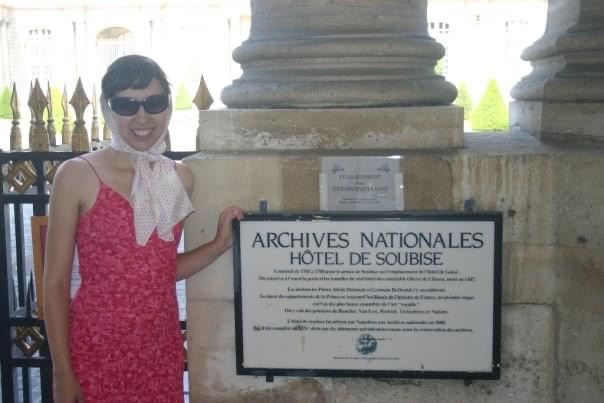
Sonia Nicholson has worked in archives for fifteen years. A first generation Canadian who grew up in a Portuguese immigrant family in Osoyoos, British Columbia, Canada, she went on to study French and Spanish at the University of Victoria. She remained in Victoria and lives there with her husband, two children, and two rescue dogs. She's been to France several times, and just might be a bit obsessed with the country and culture. Her work has appeared most recently in Inspirelle, Literary Heist, Pinhole Poetry, Heimat Review, and Rivanna Review.
Working Title: Provenance Unknown

Synopsis: An archivist without a past of her own doesn't expect her profession to get personal. Thirty-year-old single mom Michele Norman has finally found her dream job at the city archives in her hometown of Victoria, British Columbia, Canada. But while she does a deep dive into every inquiry that comes in, there’s one past she won’t touch: her own. After all, she doesn’t need to know why she grew up with her best friend, Amanda. If Michele’s family didn’t want her, then good riddance to them. Besides, with a son starting kindergarten, a stack of unpaid bills, and the possibility of her work hours being cut back, she has enough to worry about. When she discovers a forgotten French diary from WWII in the vault, the treasure hunt for information is on; she’s drawn to the notebook more than anything before. Written by a local woman, it tells a story of love, loss, second chances, and an injustice that leaves Michele livid. In her obsessive quest to make things right, Michele makes questionable choices that jeopardize not only her fledgling career and her already precarious living situation but her relationships too. Soon she uncovers the shocking truth about the mystery writer and, even more determined, embarks on a journey from the west coast of Canada all the way to Paris, France. On route, she meets Sébastien, a Parisian workaholic who is full of surprises. It's not long before she's fully swept up by City of Light's charms—and by his. Will Michele be distracted from her mission by the intriguing and maddening lawyer? Or will she finally find answers to the family questions she has never been ready to ask?

The Story behind the Story: When the idea for PROVENANCE UNKNOWN first came to me, I myself was a young mother and working in a municipal archive—just like Michele.
Before landing at the archives, I’d spent months racking my brains trying to “come up” with a new career. As if I could conjure up the right profession by thinking about it hard enough. I may have become fixated on this quest for fulfilment. I didn’t want to go back to my retail job but had no idea what to do next. And although I wasn’t a single mom like Michele, my husband was away frequently for work. Looking back, I think I was lonely and lost.
It sounds cheesy, or maybe anti-climactic. But when a certain movie showed me that archives were a thing, that was it. I couldn’t stop thinking about it. How had I not thought of archives sooner? Once the notion planted itself, it made perfect sense for my skill set and personality.
Off I went. I stepped into the field as a volunteer when I was still on maternity leave and worked my way into a staff position. I was lucky to have the best mentor anyone could ever ask for, and she taught me everything I know. All the roles. All the tasks. Over time, I tried my hand at everything.
Equally important, I learned the stories. Behind every document, every photo, every piece of ephemera, there was a story. Some longer than others. Some that made me smile. Some that broke my heart.
Whenever I held these records, I felt privileged. Wanted to know more. It was easy to go down a rabbit hole.
My husband lovingly teased me about making friends with dead people. He wasn’t wrong. I got to know them. See how their lives unfolded. How they ended. These connections were as real as the ones I formed with the living, breathing humans around me.
Out of this experience came a question: Wouldn’t it be interesting to have an archives professional who was obsessed with everyone else’s history, but didn’t know (and didn’t want to know) their own?
Running parallel to this thread was my nostalgia for Paris. I’d visited three times: the first on a high school trip at age 16, the second between graduation and university, and the third with my husband. (For more, read my essay at Inspirelle: https://inspirelle.com/memories-of-paris-by-seasons-how-the-city-of-light-is-a-city-of-life/) Over that fifteen year span, I’d created stories of my own in the City of Light. Romantic, funny, and even wacky memories that had stayed with me, begging to be shared.
Between work, and wrangling a preschooler, and everything else I had going on, I managed to somehow plot out Provenance Unknown. Genealogical charts, character profiles, chapter outlines, research—the works. By the time I finished, though, I’d run out of gas. My notebooks disappeared into a cupboard, where they would remain for ten (!) years.
Life can get in the way like that.
When circumstances changed and I could go down to part-time work—and my now two children were that much older—I was finally ready to finish the darn thing. Since childhood, I’d always been a storyteller at heart. Poetry, mainly. Now I could write my first-ever book.
Definitely not my last.
Provenance Unknown is near and dear to my heart, for obvious reasons. And here we are, the release date about a month or so away.
I’m nervous and excited and all the feelings. But I move forward. I’m still learning.
Still writing.
Website: https://sonianicholson.com/
A question before you go, Sonia:

Can you tell us about the perfect setting you have, or desire, for your writing? Music or quiet? Coffee or tequila? Neat or notes everywhere?
I generally need quiet to write. White noise is good, too, so even airports and ferries have been productive locations for me. The sounds blend into the background. Family chaos? Less conducive to the writing process.
Most times, I have an oversized mug of green tea with lemon to keep me company, though I’ve been known to occasionally swap that out for a good scotch.
An organized environment is a must! I don’t do paper notes anymore, but a handy tote keeps any hard copies of things nicely contained.
If I could wave a magic wand, I would love to go to Europe for a writers’ retreat. Bonus points if I was invited as a guest and it was paid for. But failing that, I would take a weekend alone in a beachfront hotel in Parksville, here on Vancouver Island.

Thank you for being our guest this week, Sonia. Best of luck with the novel and wishing you continued success with your writing.
.jpg)
And a big thank you to our visitors and readers.
Who’s your favorite Author?
Don’t be shy. Leave us a comment.
February 5, 2023
The Story Behind the Story with Bruce Bishop of Nova Scotia, Canada.

The Scribbler is pleased to welcome Bruce back to share the Story Behind the Story with his latest publication.
If you missed his first visit, check it out here.
I had an opportunity to read an early version of the story and was highly entertained. Well done, Bruce.
Let’s tell our readers about it.
Bruce W. Bishop is a Nova Scotian author who writes from his home base in the capital city of Halifax. He started writing professionally in the mid-1990s primarily in the travel and lifestyle genres as a freelance journalist and was fortunate to travel to many parts of the world. With stints also working as an online English teacher to Korean business professionals, owning and operating a travel consultancy, and working in the public relations sector, Bishop has finally found his calling in writing novels.
Title: Undeniable Relations

Synopsis: In the post war renaissance of the 1950s, the idealistic daughter of a fishing industry magnate grapples with knowing that her father’s decades-old criminal activities, hidden under the guise of respectability, have impacted everyone she loves.

The Story Behind the Story: Undeniable Relations is technically part three of a family saga trilogy I’ve called Families’ Storytelling.
The first novel in the interlinked series, Unconventional Daughters, was inspired by a true incident of an unorthodox marriage in Nova Scotia during the Roaring ‘20s. This debut novel was popular with readers, so I followed it up with Uncommon Sons, featuring some of the characters who appeared in the first book. ‘Sons’ is not technically a sequel because it contains a wholly different storyline that is set in 1935-36.
After this book also performed well, I decided to move some of the popular cast of characters twenty years into the future – the 1950s – and Undeniable Relations was born.
I have a background in film and video production, and while my career path had veered away from that discipline, the passion for this line of work has re-emerged. I’m currently adapting the trilogy into what I hope will be an internationally engaging television series. I envision it being filmed as a period piece in its true-to-the-book settings: southern Sweden and Nova Scotia, Canada, from the late 1880s to the mid-Depression years.
Website: https://www.brucebishopauthor.com
.png)
Enjoy an excerpt:
From Undeniable Relations, chapter 1:
January 10, 1958
When he was shoved off the public wharf into the depths of Yarmouth Harbor at high tide, he had no time to speculate whether anyone had witnessed his murder. He didn’t even have a moment to be angry with himself for having agreed to meet his killer at the wharf. The fog was “as thick as pea soup” the locals say, and it was impossible to tell what anybody was doing a couple of feet in front of, or behind you. It was as if that mass of white had been expressly ordered by his enemy to swallow the town, and him with it.
When he hit the surface, he thrashed about in the blackness, and he knew his life would soon be over. He had never learned to swim, and the shock of the frigid harbor that assaulted his body lulled him into complete submission. The claustrophobic saltwater demanded to fill his mouth, nose, and ears. He lapsed into unconsciousness, and as death overtook him, he welcomed it: whatever had gone wrong, or whatever he had done wrong in his life, now meant nothing.
After his demise, his body slowly floated southward. The fluorescent pools of gasoline on the harbor’s surface, cigarette butts, candy wrappers and miscellaneous paper products accompanied him. When his body was found many hours later at low tide, it had not yet reached the mouth of the harbor, but had become entangled in rocks and ubiquitous masses of seaweed. Some would later say that it was a righteous end for a person like himself.
A question before you go, Bruce:
Can you tell us about the perfect setting you have, or desire, for your writing? Music or quiet? Coffee or tequila? Neat or notes everywhere?

I like the quiet when I write – no music, although I’ll listen to classical, or nature sounds sometimes to drown out street traffic. Ideally, though, give me a pet-and-insect-free location in a warm climate, like a verandah overlooking a body of water, and I’m all set. I’ll take coffee or alcohol-free beer anytime, and while I’d like to keep a tidy desk, that’s only an aspiration.
Thank you for asking me to contribute to the Scribbler once again!
It’s been a treat having you as our guest this week Bruce. Wishing you lots of success with the new book.

And a big thank you to our readers and visitors.

Tell us what you liked today.
January 28, 2023
The Story Behind the Story with Christopher Sweet of New Brunswick, Canada.

I met Christopher at a reading in Miramichi. Discovering he published his debut novel last year, I was intrigued.
I now own a copy which I’m looking forward to reading in the very near future.
I invited Christopher to be our guest this week and share the news of his novel with the Story Behind the Story.
I’m a father of two crazy little boys, Gideon (3) and Sullivan (1), and beast-dad to three dogs and a cat (Colby, Zelda, Stanley, and Gemma). My wife, Annie, and I (et al) live on the gorgeous Tabusintac River where we help manage my parents’ campground, Ocean River RV Resort. Summers are spent working outdoors, tending the grounds, and winters are spent in relative creative isolation. We moved here in 2021 from Hamilton, Ontario and the change in pace and lifestyle has been incredible for our family and for our creative work (Annie is a very gifted visual artist, creator, singer, and, not least of all, mom). I’ve been writing for quite literally longer than I can remember and fairly recently decided to “seriously” funnel my ambition and creative energy into what has been my life’s passion. I took broadcast journalism at Mohawk College in Hamilton and screenwriting at University of Toronto. Journalism was fun but being awakened to screenwriting changed my life and really lit a fire under the writer in me — I wrote several screenplays before I got up the guts to write my first novel. With Annie’s encouragement, I quit what I assumed would be my career for the discernible future and got to work writing. In March of 2022 I published my first novel, The Boy in the Canvas.
Working Title: The Boy in the Canvas

Synopsis: The Boy in the Canvas is a coming-of-age / magical-realism / horror novel set in 1984. It tells the story of twelve-year-old Joseph Ward who, after the death of his mother, is sent to St. Theodore’s Academy, a correctional school run by a frightening headmaster. During his time in the school, Joseph befriends Odilon Mercier and makes a startling discovery—he is able to enter paintings and experience them as real worlds. Using this newfound gift, Joseph plans to escape St. Theodore’s and its sadistic staff. But the paintings themselves are inhabited by their own dangers…

The Story behind the Story: The idea for The Boy in the Canvas comes from a couple of places. The notion itself of someone being able to travel into the world of paintings was something I’d had floating around in the creative ether of my mind for a while. But all I had was the idea. There was no story, reason, or purpose behind it. So, I scribbled it down somewhere in a short paragraph—which is how I record most of my ideas—and forgot about it.
Sometime later, my father had instigated an investigation into training schools, institutions that were a popular place to stick “incorrigible youth” from the mid-1950s until the late-1970s or thereabouts. He had been thrown in one of these places where he, and countless others, had suffered some pretty horrific stuff. He suggested to me one day that I write a movie based on his experiences there. It wasn’t something I was keen to do—the notion of recreating the real-life horrors that had occurred in those places made me ill. So, I let the idea drop.
Then my writing mentor gave me one of the most practical and memorable pieces of advice I’ve received about writing. He said, “Write what scares you.”
I took the advice to heart and it didn’t take long for me to apply it to my compunctions towards writing about the training schools. And in the magical way that few, if any, writers can explain, the idea of a boy jumping into paintings came hurdling at me from out of the blackness at the edges of my imagination and landed itself right on the doorstep of what I suppose is an avatar for those wretched institutions.
A couple of years and dozens of rewrites later, The Boy in the Canvas saw the light of day.
Website: www.authorchristophersweet.com
A question before you go, Christopher:

Can you tell us about the perfect setting you have, or desire, for your writing? Music or quiet? Coffee or tequila? Neat or notes everywhere?
I prefer a closed room, if possible. My current workspace is in a corner of our open basement but I’m able create a closed-off atmosphere by putting my devices on Do Not Disturb, turning off the lights, and using a warm-glowing lamp.
Music is essential, though when I’m in the zone, I don’t notice it. I find it’s a good buffer between my brain and everything going on in the world around me. I’m a bit of a classical music nerd and listen pretty exclusively to that or movie soundtracks when I write. I listen to a lot of horror and sci-fi movie scores.
Coffee is often essential, especially since I typically write in the morning. If I’m writing after eight o’clock, bourbon is preferred.
I’m a notes everywhere kind of guy. By the time The Boy in the Canvas was finished, I had two walls full of sticky notes, scraps of paper littering my desk, and several notebooks and a few legal pads on my shelves and in my drawers just for that one project.
Thank you for being our guest this week, Christopher. Wishing you continued success with your writing.
.jpg)
Thank you to all our visitors and readers.
What is your favorite genre to read?
January 22, 2023
The Story Behind the Story with Susan White of New Brunswick, Canada.
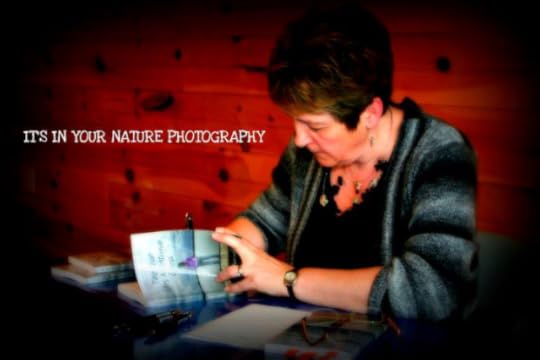
Susan White is our featured author this week and we are happy to have her return to the Scribbler.
If you missed her previous visit, I invite you to have a look HERE.
Susan’s novels have garnered many great reviews and honoured with awards.
It’s an exciting time to launch new work and Susan is going to tell us more about it.
Read on, my friends.
Susan White was born in Moncton, New Brunswick. She earned her BA and BEd at St. Thomas University in Fredericton. She and her husband Burton raised four children and ran a small family farm on the Kingston Peninsula while Susan taught elementary school and Burton had a career in the military. In 2009 Susan retired from teaching to write full time. She is the author of six middle grade /young adult novels, including the Ann Connor Brimer Award winning The Year Mrs. Montague Cried. She has also written six adult novels including Fear of Drowning which was shortlisted for a NB Book Award in 2019.Her thirteenth novel The Way I Feel will be released by Acorn Press in the spring of 2023.
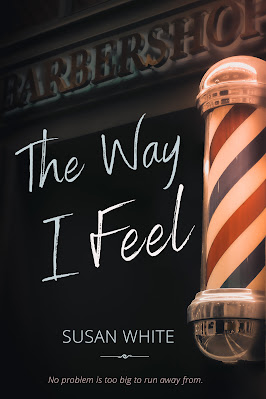
Working Title: The Way I Feel

Synopsis:
No Problem is too big to run away from
For Ginny Collins running away wasn’t on her radar until an old postcard drops from her mother in law’s photo album. Is the life she’s living the only one available to her? Are the dreams she cast aside long ago still waiting to be realized? Can she change the discontent and unhappiness she feels by driving away and leaving everything behind? For Ginny Collins the decision to run away from a 40 year marriage starts the search and she behind to uncover the truth she’s worked so hard at ignoring.

The Story Behind the Story:
I am not exactly sure where the story came from except to say I had the title first. I knew I wanted or needed to write a story about a woman in her early sixties who finds herself an empty nester, settled in to a life of frustration, discontent and longing. She makes a bold decision to run away. The escape begins an inner journey and a brave, honest introspection. It is not autobiographical but it was written during a very transformative time in my own life. I believe Ginny story mirrors the way women often feel when the years of centering their lives around maintaining a home and raising children is behind them.
Website: Home - Susan White
A question before you go, Susan:
Can you tell us about the perfect setting you have, or desire, for your writing? Music or quiet? Coffee or tequila? Neat or notes everywhere?

My mind thinks writing wherever I am and ideas find their way in. Sometimes I jot them down but I have found if the idea matters it sticks or at least it comes back. I have gone on several writing retreats with Gerard Collins and Janie Simpson’s on their Go and Write adventures. Italy, Scotland and St. Andrews have provided wonderful inspiration and comradery with other writers. But for the actual work of getting it down, I prefer the quiet order and routine of my office. After spending 29 years in the classroom, I love the opportunity to schedule my weeks and days around writing. I normally write from September to June but have been known to write all summer when a book won’t let me go. I often have the drone of CBC radio in the background. Definitely coffee in the morning and I often eat my lunch in my office. I keep notes as I’m writing a book. The notes are contained in writing journals. I love looking back at them when the book is done seeing the changes that took place as the story and the characters took over.
An Excerpt from The Way I Feel.
Spencer lets out a particularly loud snore and shifts a bit. His right leg jolts, kicking the throw cushion onto the floor. I reach for the folded afghan and drape it over him. I stand for a few seconds as my eyes scan the room. The kids’ framed graduation pictures look somewhat ominous, shadowed and eerie. Each of their expressions seem to be taunting me and challenging the decision which minutes ago surfaced, simmered, and came to a boil. Am I being dramatic, selfish, foolish, and ridiculous? Am I overreacting? I focus on the rise and fall of Spencer’s chest, expecting his breathing to balance my own before going upstairs.
I pull up the handle of the suitcase, and as quietly as I can wheel it along the hall. I pick it up and slowly make my way downstairs. I glance at Spencer as I reach to turn the lamp off. The kitchen light guides my way through the dining room and kitchen, then into the back hall. I grab my purse, throw my phone in, and slip on my sandals before I open the back door. Is there anything else I need?
I get into the driver’s seat of the Expedition and look toward the house. It always looks so peaceful in the dark. I love the way the solar lights give the back veranda a glow, a look of enchantment, hiding the flaws of a thirty-five-year-old house. Midnight glow and early morning light always give me an optimism the rest of the day doesn’t offer. I turn the ignition key, wondering if Spencer will be jolted awake by the beam of headlights coming through the window. Will he jump up and come out to see who might be in the yard this late?
I put the Expedition into drive and glance back, making sure the lights on the trailer are working. I look quickly at the gas gauge. About half full. I pull away and start down the driveway. I have no idea where I am going, but I am going.
Thank you for being our guest this week, Susan and sharing your good news. Wishing you continued success with your stories.
.jpg)
And thanks to our visitors and readers.
Do you have a favourite author?
Tell us about him/her.
January 14, 2023
The Story Behind the Story with Mark Scott Piper of Santa Rosa, Ca.

The Scribbler is beyond pleased to have Mark back to tell us about his new novel.
I received my copy by courier yesterday and I am anxious to dig in. Mark is an award-winning author and a fine storyteller.
He’s been a guest before and if you missed his interview, please go HERE.
Let’s see what Mark is up to.
Mark Scott Piper has been writing professionally his entire adult life. He holds a Ph.D. in English from the University of Oregon and has taught literature and writing at the college level for several years. His short stories have appeared in Short Story America, The California Writers Club Literary Review, and several online literary magazines, including, Scrutiny, Writing Raw, Fabula Argentea, Animal, and Slurve. In addition, two of his short stories have been Honorable Mention selections in Short Story America Prize for Short Fiction contests. At the age of 76 he published his debut novel, You Wish, which was the 2019 American Eagle Book Awards first-place gold winner. To date he has released two other novels, The Old Block (2020) and Until Proven Innocent (2022). He is currently at work on his fourth novel and a collection of stories.
Working Title: Until Proven Innocent: A Mystery
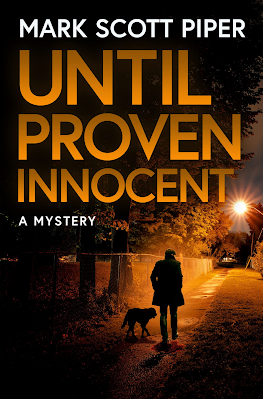
Synopsis: Recently retired English professor Mac Faulk returns to Headley University to teach one more creative writing class. Among the first batch of student stories, he comes across an anonymous dark tale describing a heinous crime. He thinks little of it—until the story’s details begin to come true.
When the unknown author of the story submits two, even more disturbing stories, Mac is caught up in a web of intrigue and mystery that makes him the chief suspect in the eyes of the local police. The only way for Mac to prove his innocence—and to try to save the life of the next victim—is to find and stop the perpetrator. But the odds are stacked against him ... and he’s running out of time.

The Story behind the Story: My debut novel featured a 14-year-old protagonist, and the main character in my second book was 24. This time, I wanted to create a protagonist who was older. Mac Faulk is 62 and retired, but that doesn’t mean he’s too over the hill to deal with life’s problems and pitfalls. When I first started to think about the novel, I was close to Mac’s age and experience. I didn’t want him to be some kind of spokesman for our generation, but I felt there was a perspective us older folks have that was worth exploring. I’m certainly not the first author to do that. But the thing is, Mac Faulk is a lot like me. We’re both old farts, we both taught English in college, we both played recreational softball into our 60s, we both have a sarcastic sense of humor, and we both have trouble understanding women (not an issue that applies only to older guys).
When I sent early versions of Until Proven Innocent out to critique groups, many readers, especially women, reacted negatively to Mac. They thought he was arrogant, misogynistic, and generally unlikeable. Imagine my consternation. Mac is me! Not what I was expecting, since readers who know me and my sense of humor thought Mac was hilarious. Clearly, sarcasm doesn’t translate well on the written page. It was a wake-up call for me.
Mac Faulk is a first-person narrator, so readers are privy to his thoughts, opinions, and worldview. I had to find a way to cut back on Mac’s sarcastic thoughts and clarify his true feelings toward others, especially women. And I had to accomplish that without undermining the humor of the piece or turning my protagonist into a complete wimp. The character needed more than fine-tuning. It took me several rewrites, and more than a few ardent discussions with my female editor-partner. Based on early reviews of Until Proven Innocent, though, Mac is no longer as offensive to women readers. But he’s still a lot like me.
Main character aside, I had another problem with Until Proven Innocent from the outset. I wanted to write a mystery, even a thriller, but I hoped to for a humorous undertone. After all, that’s a huge part of my voice, my style. Many readers of the mystery/thriller genre expect certain things: a dead body in the first chapter; immediate tension that builds rapidly to the end; and a savvy detective-like protagonist who steps in and solves the crime. That wasn’t my vision for Until Proven Innocent. Yes, I know not all mysteries or crime stories are the same. Not every protagonist is a cliché, and certainly not every mystery novel features the same tropes. Until Proven Innocent is just one that doesn’t follow expectations. I’ve never been able to color inside the lines when it comes to my forays into genre fiction. Doesn’t make me unique, but it does make me a little nervous about how readers might react.
Since the story is told exclusively through Mac’s point of view, the mystery unfolds only as quickly as Mac is able to figure it out. The result is a slow burn, as tension builds tentatively at first and increases exponentially as the plot develops. At least, that’s my goal.
And finally, Mac is no Sam Spade. Again, not unheard of in mysteries and thrillers. He’s just an ordinary guy who’s thrown into a bizarre, dangerous situation he may not be equipped to deal with. Overcoming those obstacles is what, I hope, helps Mac emerge from the novel victorious, if not actually heroic.
Website: http://www.markpiper.net/
A question before you go, Mark.
Can you tell us about the perfect setting you have, or desire, for your writing? Music or quiet? Coffee or tequila? Neat or notes everywhere?
I have a home office dedicated to my writing. My alarm goes off at 5:00 each morning. That gives me four hours or so of calm until the rest of the house wakes up. And that’s when I get the most writing done. I find background music distracting. As I'm often reminded, I'm easily distracted most of the time. I try not to let anything come between me and the fictional world I’m forging. Like a lot of authors, writing for me is a personal, private activity, one that I share with the characters I’m channeling. For me, silence is golden when I’m working. That said, my current protagonist likes music playing in the background when he reads student papers. In that regard, he’s more like Stephen King than me.
I may be breaking a writers' code here, but I’ve given up coffee in favor of chai latte. Slightly higher pretentiousness quota, but I do live in Northern California, and it’s popular here. Besides, it’s still caffeine, just not so enough to get me wired.
My writing environment isn’t exactly “neat,” but it stops short of chaotic. I do all my writing on the computer. Editing is a bit different because I most often print pages and mark them by hand. It’s a method that works best for me, but it can add to the clutter. When I make notes preparing to write a piece of fiction, I do that at the keyboard or with a digital recorder when I’m away from home.
On the other hand, when I'm reviewing another writer's novel, I tend to jot down points and ideas on a notepad before I compose the review (and all its edits) on the computer. Mine isn’t a work environment that works for everyone, but it does for me.
Excerpt from Until Proven Innocent:
With Jim Morrison meandering through “Riders on the Storm,” I hunkered down at my dining room table. Time to take on the first stack of student short stories. Tolstoy, my golden retriever roommate, strolled over for a vigorous head scratch. He made three clockwise turns, settled himself at my feet, and promptly fell asleep. He had his rituals; I had mine.
When I read student work, background music makes the experience feel less like a chore. My other paper-grading indulgence is a glass of wine, today a very nice cabernet sauvignon. I never drink more than one glass while reading student submissions. A second glass is my reward for getting through the pile. Besides, red wine is supposed to be good for you. I read that on Yahoo.
I studied the stack, puffed out a sigh. Thing was, I wasn’t even supposed to be doing this. I’d retired at sixty-two, after three decades teaching English at Headley University in Reymond—a small Northern California college town. Some years ago I’d managed to publish a couple of short stories, but I wanted to know once and for all if I had a novel in me. If I did, I hadn’t found it in the ten months since I’d retired.
My writer’s block was kicked to the curb when out of nowhere a former colleague, Kay Whitfield, decided to join her husband in Mississippi—two days before spring term started—and I was coerced by a panicked English Department chairman into taking over Kay’s Community Outreach creative writing class. Headley offered these noncredit classes to locals at a reduced cost, essentially a PR move. It could have been worse. I had only eight students. Besides, teaching this class counted as legitimate avoidance behavior. The alleged novel would have to wait.
As the Doors glided into the extended instrumental of “Light My Fire,” I rechecked the stories. All seven of the students who’d attended the first two classes were accounted for. But I had eight stories. The eighth one not only didn’t follow the manuscript format spelled out in the syllabus, and the writer hadn’t even put a name on it. I checked the roster again. Must be the work of Roger Cole, the one student who hadn’t shown up for either class and, therefore, hadn’t seen the syllabus.
We had an agreement. You don’t attend class; I don’t read your work. I shouldn’t even look at the thing. After all, rules are rules. I shook my head, then heard my brain screech to a halt.
Wait. Rules are rules? Where the hell did that come from? What happened to the rebel spirit I’d painted onto signs back in my civil rights and Vietnam War protest days? Had I really become some unbending old guardian of the rules?
I glanced down at Tolstoy. “So what do you think, buddy? Should I read it or not?”
Tolstoy looked up at me for a couple of seconds and laid his head back down next to my feet. Close enough to a nod. I decided to see what Mr. Cole had to offer.
Thank you for being our guest this week, Mark. Thanks for the tantalizing excerpt. Wishing you continued success with your stories.
.jpg)
And a big thank you to our visitors and readers.
Do you have a favourite book?
Tell us about it.
January 7, 2023
The Story Behind the Story with Author Sarah Butland of Nova Scotia, Canada.
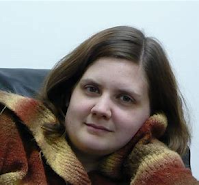
The first post of 2023 is with Nova Scotia Author, Sarah Butland.
This is her second visit to the Scribbler, and we are pleased to have her as a guest once more. To revisit her first posting, please go HERE.
She has lots of new books and she’s going to tell us about her newest publication.
Let’s hear from Sarah.
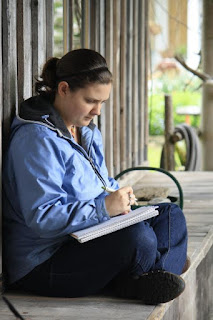
Filling her days with writing adjacent to-do’s, Sarah Butland has always considered herself a writer and a fraudster. A total pantser, whenever Butland gives herself permission to write the characters show up and chat. While writing is a struggle for some, just finding the time is the challenge she faces as she works full time, plus freelances, and markets, and sometimes cleans the house, rarely but even folds the laundry sometimes.
At five years old Butland knew she was a writer and still lets that kid out sometimes through the page. Despite all doubts, discouragement and challenges, for Butland writing is as vital as breathing. Now living in Nova Scotia, she spent fifteen years in New Brunswick impressing teachers with her ability to create darkness, edit newspapers and often have her letters to the editor in the local newspaper published.
Working Title: Gaining It At 41

Synopsis: Annabelle's story isn't over. After being introduced to her in Losing It At 40, readers demanded more; Gaining It At 41 offers all that and more! A mix of romance, comedy and characters that will last a lifetime, Gaining It At 41 is a must read.
Annabelle says:
My age was a factor. Not to mention my contraceptive measures that failed and delayed menopause that I had to look forward to while raising a toddler. I asked about tying my tubes before the test was positive and they laughed, very unprofessionally, but I had the right. Abigail was a miracle, after all. A healthy miracle child, they told me, after numerous precautions taken not to have her exist at all.

The Story behind the Story: I wrote Gaining It At 41 as the sequel to Losing It At 40 which was in high demand. My second romance, Gaining Its premise was sparked when a friend mentioned Annabelle should get pregnant. Nothing else seemed to inspire me until that was mentioned which magically sparked the next step.
Writing romance has been interesting as it wasn’t my first genre of choice, not reading many in that category. With the recommendation of the genre gaining in popularity due to ereaders and readers not being ashamed of the racy covers, I thought I’d give it a try. What an adventure it has been!
Birthdays for me have always been skewed with emotions, false starts and forgotten wishes so this was my opportunity to write a birthday themed celebration that honoured a fresh start and a great day.
Within about three months I wrote the first book and, about a year later, another three months to write the second, something sparked. With a natural comedic tone, Annabelle reinvents herself when she turns 40 in Losing It At 40 (written before I turned 40 myself, not before I lost “it”) and in Gaining It At 41, Annabelle learns even more.
Gaining It At 41 to me is just wrapping up a chaotic, hilarious adventure of a romance with a nice bow with icing on top.
Website: Please visit my site at www.SarahButland.com to see what I’m up to, for a free award-winning short story and my latest review.
A question before you go, Sarah.
Can you tell us about the perfect setting you have, or desire, for your writing? Music or quiet? Coffee or tequila? Neat or notes everywhere?

For me it’s never about the setting, it’s about the time. With limited time available to dedicate to the art, setting up the perfect place and finding the best drink cuts into the time I have to write. I simply open my laptop and let my fingers dance across the keyboard, hoping they make sense while blocking out the room. While I’m not organized at all, though would love to be, as a pantser I don’t need notes – just a blank page and a keyboard, and to stop checking Facebook.
Thanks so very much for having me here and for supporting Canadian authors!

Thank you so much for being our guest this week, Sarah. Wishing you continued success with your writing.
.jpg)
And a BIGthank you to my readers and visitors.
Who’s your favorite author?

December 31, 2022
What a Year it has Been!
The last post for 2022.
After a three-week break, I’m glad to be back with you wonderful visitors and readers. I won’t ramble on too much about what I did or didn’t do in 2022, nor too much about 2023 other than wishing you only happy things in the future.

The Scribbler had a terrific year with super guests and interesting posts.
78,500 page views in 2022.
No statistics on how many stayed.
Some highlights below.

These are the five most popular:
#1 - MJ LaBeff with 1905 page views Go HERE.

#2 – Janet Sanford – 492 page views. Go HERE.
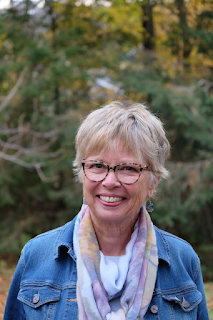
#3 – Christian Brun – 489 page views. Go HERE.

#4 - Darlene Foster – 359 page views. Go HERE.
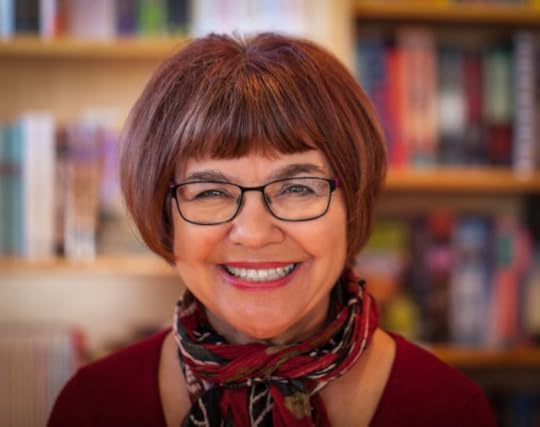
#5 – Heather McBriarity – 328 page views. Go HERE.

Most popular Page views.
#1 – SHORTSwith 2270 page views. Go HERE.

#2 – About Me with 1680 page views. Go HERE.

#3 – Fatherwith 1007 page views. Go HERE.
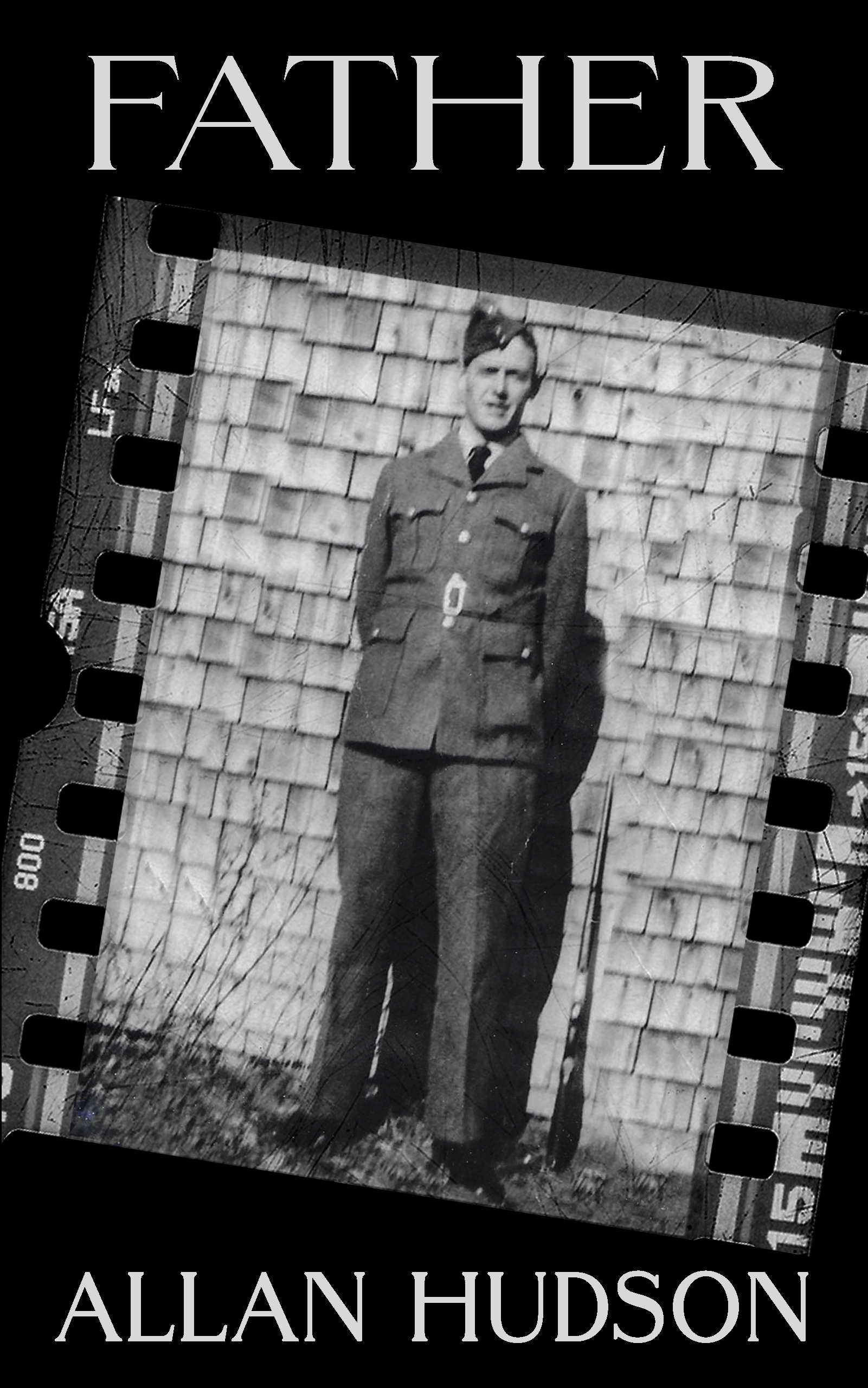
I’ve had the good fortune of publishing two novellas this year, Father& Shattered Dreams, as well as my newest novel, Code name: Iron Spear 1941. I also participated in an anthology – Winter Paths - with eight other authors. The response to my stories has been overwhelming and I am so thankful to my faithful readers and new readers who take a chance on my stories.
For more info, please go here – Father


Winter Paths. An anthology.

THANK YOU
There are so many people I need to thank, and I probably missed a few but I appreciate every share, every comment, every purchase of my books.
Gloria
Allen & Gracia
Sally Cronin
Anne Smith-Nochasak
A M Mawhinney
James Fisher
Leonard Shortall
MJ LaBeff
Stephen Shortall and Therese LeBlanc
Angela Wren
Merk Scott Piper
Caleb Pirtle III
The Seasonal Collective.
Debby Geis
There is lots of good things to look forward in the new year. Returning guests and New Guests. Some artists as well as authors.
Sarah Butland
- Author.
Susan Bernhardt - Author.

Kayla Geitzler
- Author & Poet Laureate.
Mark Scott Piper
- Author.
Sonia Nicholson
- Author.
Christopher Sweet
- Author.
Margaret Eaton
- Author.
Susan White - Author.
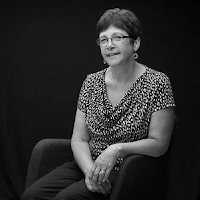
Shannon Beers - Artist.

….to be continued with more fun guests.
What’s coming for 2023!
The Alexanders. Vol 2. 1921 – 1930.
I am working on the first draft of I hope to have it ready for summer 2023.
The Roaring Twenties. Flappers and Speakeasys. The good years before the Depression.
Dominic Alexander watches his business grow, itches to be a father but fate works against him and Maria, his wife. In his adventures, he will encounter enemies, questionable friendships. There will be good times and sad times. Dealing with a criminal element trying to disrupt his business. Issues arise which people aren’t prepared to deal with in the twenties.

Shattered Series with Jo Naylor
I am almost finished the fourth installment in the Shattered Series. Not sure what the title will be yet but I’m leaning towards Shattered Hope. The story takes place in New Zealand. Jo is nicely settled in and avoiding all possible trouble spots, but…
When a new friend explains how her sister might be in trouble, Jo can’t stop herself from getting involved. A young man from Canada is missing and assumed dead. Jo’s not alone this time either. The parents of the boy missing have asked a good friend to intervene. Drake Alexander and Jo Naylor make a formidable team. What they uncover is one of the worst crimes possible.

Spring Paths
I’m planning my short story for the next Anthology with the Seasonal Collective which is targeted for November 2023. We will have two new members joining the Collective – Gianetta Murray of Great Britain and Eden Monroe of New Brunswick.

Planned for the future:
Fifth and final installment for the Shattered Series.
A novel based on my short story, One Bedroom Ark. Go HERE.
The next Drake Alexander Adventure which will take him and his team to Africa.
Other than that, I'd like to go on a trip somewhere with my best friend, Gloria. Maybe Spain.

I’d like to volunteer but can’t decide. I’m giving myself until the end of January to make a commitment.

Do you volunteer anywhere? I’d love to hear about what you do and/or some suggestions.

Thank you again all you valuable readers and visitors. May you only have happy things happen in 2023.