Libby Fischer Hellmann's Blog, page 28
January 31, 2015
Interested In A Free Crime Thriller?
If you love crime thrillers, I have great news–
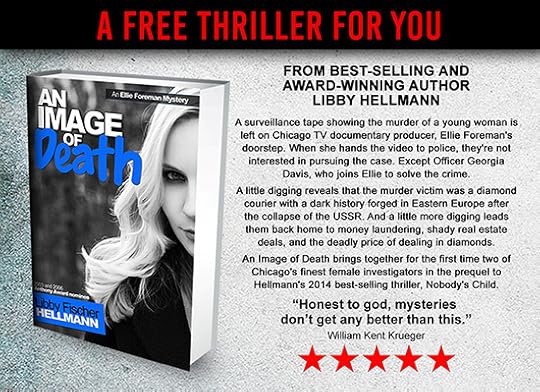
If that sounds like something you’d like, just click anywhere on the image. (Ha). There are rumors that An Image of Death is my favorite of the Ellie Foreman mysteries. But if asked, I’ll deny it. I mean, all four are my “babies” and I love them equally. Really. But it does feature Ellie and Georgia Davis (now a PI but then a police officer) working together for the first time, so if you’re unfamiliar with one, or both, you’ll get a pretty good idea of each character.
Enjoy!
The post Interested In A Free Crime Thriller? appeared first on .


Want a Free Crime Thriller?
If you love crime thrillers, I have great news–
Interested? Just click anywhere on the image. (Ha). There are rumors that An Image of Death is my favorite of the Ellie Foreman mysteries. But if asked, I’ll deny it. I mean, all four are my “babies” and I love them equally. Really.
Enjoy!
The post Want a Free Crime Thriller? appeared first on .
January 29, 2015
The Cuba Files #2 Redux: Santería
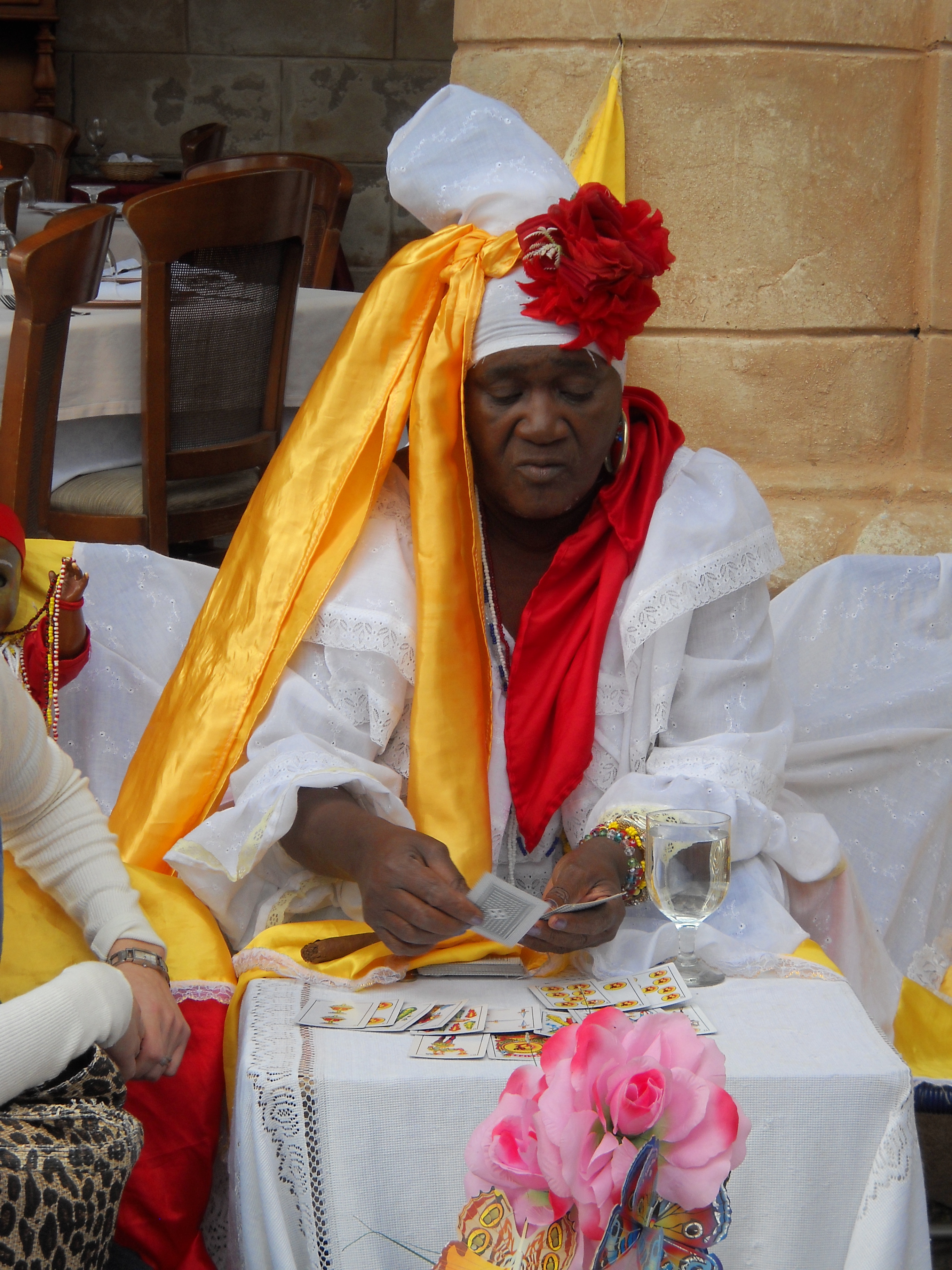 If you have read Havana Lost you’ll have noticed the way I’ve woven the Santería religion through the plot. A potent mix of European Catholicism and African Voodoo, it is a constant backdrop to the Cuban psyche. My character Carla Garcia believes in it more than any of the other characters in the book, not unusual for someone of her background and generation. So what is it, and how does it affect Cubans in 2015?
A faith of many names
Santería is a faith with many names, also called La Religión, Regla de Ocha, La Regla Lucumí and Lukumi. Translated roughly from Spanish, it means ‘worship of the saints.’ It’s a blend of West African and Caribbean influences mixed with Roman Catholicism, and even has its own language, a Yoruba dialect originally from Nigeria and brought to the Americas with the slave trade. The faith probably also includes some Native Indian traditions, trance-like states for communicating with ancestors and gods, animal sacrifices (not widely used these days), drumming, and dancing.
Far from primitive
Sometimes called an esoteric or ‘primitive religion, in reality , Santería is very sophisticated. The Yoruba were civilized people with a famously rich culture, great philosophers with a profound sense of ethics still found in today’s Santería. It is also very practical, aiming to help people live in harmony with themselves and their world, with “ache” – the universe’s spiritual energy – at its core. If that sounds like many of today’s alternative spiritual frameworks, it is.
Spread far and wide
By the time it crossed the water to Cuba, Santería had evolved into the faith today’s Cubans recognize. It has also made its presence felt on the US mainland, with the first Santería church officially incorporated in the USA in 1974. According to Wikipedia, by the turn of the new century there were actually around 22,000 Santería practitioners in the US.
Building positive relationships with mortal spirits
The religion isn’t written down, instead being passed from generation to generation by word of mouth. It focuses on building good relationships between human beings and powerful mortal gods known as Orishas, who act as manifestations of Olodumare, AKA God.
Believers feel these spirits help and support them through everyday life, helping them to achieve the destiny the gods planned for them before birth. Theirs is a human, mutual relationship, so much so that Orishas can only exist if they are worshipped by humans.
Orishas can be male, but are more often female. Believers and Orishas belong to an ilé, a word meaning ‘family’. An ilé’s function is to honor the spirits and get, in return, spiritual experience and heavenly wisdom. In other words the ilé sets out the path of spiritual growth, ‘en santo’.
There are very few buildings dedicated to the faith. Instead, believers rent public spaces for services or make home altars to worship at. There are even special shops where you buy the necessary materials, called Botánicas.
The Catholic connection
The Roman Catholic connection is fascinating. Orishas are closely associated with Catholic Saints, particularly Saint Barbara, who they call Shangó, the embodiment of justice and strength and is associated with lightning and fire. They also feel a strong connection with Our Lady of Charity, who they call Ochún. She is the goddess of the river, associated with water, money, and love. And the Catholic Saint Lazarus, called Babalú-Ayé, looks after the sick.
But Santería believers are at the same time often Catholics, and Catholic symbolism is common in their rituals. One ritual against the evil eye, for example, is made up of a special herbal bath, three Our Fathers, three Credos, and three Ave Marias.
Santería on the streets
 If and when you visit Cuba you will see “priests” and (more commonly) “priestesses” practicing Santería on the streets of Havana. They may be charlatans—and probably are—but they are the most common exposure tourists have to Santería. These priestesses move shells around, burn incense, and do all sorts of voodoo-ish things, charging tourists as well as locals a hefty fee. Basically they’re fortune tellers, which is how Carla uses them in Havana Lost.
Stranger still…
 Depending how far you are prepared to suspend skepticism, Cuba is supposedly part of the Atlantean chain of islands and, according to people who believe in such things, still has very powerful “energy” derived from crystals.
Gives you an idea of how, even today, mysticism profoundly affects the island and its people.
Have you experienced Santería? It doesn’t seem all that different from the Creole religions.
The post The Cuba Files #2 Redux: Santería appeared first on .
Writing Lite Tip #42: Hobson’s Choices and dilemmas

While worst-case scenarios are one type of obstacle your protagonist must overcome, there are others. Hobson’s Choice dilemmas are a great tool – Your character must decide which one of two people will live and which will die.
Or your alcoholic character has years of sobriety behind him, but needs to drink to prove he’s “one of the guys.” Or shoot heroin. Or your character picks up a gun after swearing never to again. A no-win situation is a terrific opportunity to reveal your character’s soul.
You can see all my Writing Lite tips thus far here on Pinterest.
The post Writing Lite Tip #42: Hobson’s Choices and dilemmas appeared first on .
January 27, 2015
The Cuba Files Redux: Che Guevara
 As Cuba is more and more in the news these days I’m struck by how little Americans really know about Cuba. So I thought I’d re-post a few of my blogs about Cuba. I’m certainly not an expert, but I have read a lot about the island’s history and culture, and I spent ten days there fact-checking for my thriller Havana Lost. You’ll find a lot more info in the novel. (Just saying).
In the meantime, welcome to “The Cuba Files.”
A short history of Che Guevara
For the first “Cuba File,” I’m taking a look at Ernesto Che Guevara, the man who personifies Cuba for many people, and a true legend, especially for the Radical Left during the late Sixties.
Curiously, Che is from Argentina, not Cuba, and he was educated and trained as a doctor. As a young medical student he traveled through South America, a journey which radicalized him as he experienced first-hand the region’s endemic poverty, hunger, and disease. This led him to eventually become a Marxist revolutionary, author, guerrilla leader, and military theorist.
He met Fidel and Raul Castro in Mexico City where, as Wikipedia says:
(He) joined their 26th of July Movement, and sailed to Cuba aboard the yacht, Granma, with the intention of overthrowing US-backed Cuban dictator Fulgencio Batista.[10] Guevara soon rose to prominence among the insurgents, was promoted to second-in-command, and played a pivotal role in the victorious two-year guerrilla campaign that deposed the Batista regime.
In fact, Che is essentially credited with winning the revolution. In Havana Lost, I talk about how he derailed a train that was filled with military troops and ammunition in the city of Santa Clara. Although Che and his band of rebels were outnumbered, the army surrendered rather than fight. This prompted Batista’s flight out of Cuba on New Years Eve and allowed Fidel to ride victoriously into Havana a week later.
 Today, Che is treated with the reverence of a patron saint in Cuba. In a country where there’s very little commercialism, Che’s likeness is EVERYWHERE… on buildings, billboards, postcards, shops, books.


They even sell his signature beret on the streets.

He’s almost more hallowed than Fidel, of whom you rarely see images in Cuba, probably because Che is dead and Fidel isn’t… yet.
The Che effect, post-revolution
After the Cuban Revolution, Guevara held key roles in the new government, which included the signing of death warrants (by firing squad) for “convicted” war criminals. He also drove agrarian land reform as Minister of Industries, took on roles as Cuba’s National Bank President as well as Instructional Director of the country’s armed forces. Eventually he travelled the world as a diplomat and representative of Cuba’s unique brand of socialism.
The ultimate betrayal
But Che’s fame had repercussions. He and Fidel, along with Camilo Cienfuegos, had been considered the “Three Musketeers” of the revolution, and they were soul mates. After the revolution, though, things changed. Cienfuegos died in a mysterious plane crash, and Che and Fidel grew apart. In fact, it’s said that Che became disillusioned with Fidel ad his brand of leadership, to the point of contemplating an insurrection.
That never happened, but Che grew increasingly restless. In 1967 Fidel decided to get him out of Cuba, and sent him on a mission to export Cuba-style revolution and Marxism to other countries. Che went to Bolivia, where— gee, wouldn’t you know it—he was caught and executed in the jungle by CIA-assisted Bolivian forces. I wonder how they knew where he was. Did Fidel tell someone? Did he betray his best friend in order to consolidate his own power? Who knows? Maybe the conspiracy theorists have it right.
Or maybe not.
Che’s desire to overturn what he saw as the capitalist exploitation of Latin America by the US could have been his undoing. He, even more than Fidel, became an icon of the radical left in the US and beyond. I’ll never forget when I worked at an underground newspaper in Washington, D.C., the staff always spoke his name with reverence. Millions in Cuba appear to do the same. Just take a look at some of the photos I took. Che pervades almost every area of Cuban life.
Your turn now. When you hear the words “Che Guevara,” what comes to mind?
The post The Cuba Files Redux: Che Guevara appeared first on .
January 23, 2015
Writing Lite Tip 40: Break open some champagne after you write ‘The End’

Sorry this is out of order… my bad.
Even though you’ll be editing and polishing for weeks afterwards, celebrate the fact that you’ve written an entire book. It’s an amazing feat. Congratulations!
You can see all my Writing Lite tips thus far here on Pinterest.
The post Writing Lite Tip 40: Break open some champagne after you write ‘The End’ appeared first on .
January 20, 2015
Writing Lite Tip #41: To create suspense, first think of a worst-case scenario…

A fundamental task in creating suspense is to confront your protagonist with obstacles and hurdles he or she must overcome. Then, just as he/she thinks they have a handle on the situation, it becomes even worse.
One of the best examples I’ve read is in William Kent Krueger’s Purgatory Ridge. Two mothers and their children try to escape from a man who’s kept them captive in a shack in the middle of the woods during a brutal Minnesota winter. Pretty dangerous circumstances, right? Then we discover one of the children is diabetic, and if he doesn’t get his insulin, he’ll die.
I think you get the idea. Now do it!
You can see ALL my Writing Lite tips here on Pinterest.
The post Writing Lite Tip #41: To create suspense, first think of a worst-case scenario… appeared first on .
January 17, 2015
Christmas in London and Surrey

I was so busy talking about Bletchley Park last week that I totally forgot to post pics from London and Surrey. It’s never too late to enjoy the Holidays. Even when they’re over. I missed Carnaby Street and Hyde Park…must go back and catch them next year. And yes that’s me in Diagon Alley.
Which we passed after we saw a wonderful play called “When The Play Goes Wrong”.. it was advertised as a cross between Mousetrap and Monty Python, and it was very cleverly done. If you get a chance, definitely see it.

I had some time before the play, so I walked around Covent Garden. Had a lovely mince pie and some hot cider inside.


After the play we walked down to Trafalgar Square, then to a lovely cafe that Ruth Dudley Edwards enjoys. And a floating Santa.


A cab ride back to the station, and yes… I was a bit blurry by then…
The rest of the time was spent in various restaurants and pubs with nautical themes and cozy fireplaces in Farnham with Tania, Luca, Marco, Giorgio,and Marco’s parents. Just the thing for chilly winter days.


The post Christmas in London and Surrey appeared first on .
January 11, 2015
Why Short Stories Rock (& A little BSP)
Over the past few years, I’ve written a couple of blogs about short stories and how valuable they are for a writer. One of them, in particular, has been circulated quite a bit. If you haven’t already read it, maybe now’s a good time. Then come back because what I’m going to say will be more meaningful.
I wrote two short stories this year, both on “spec”—that is, I wasn’t asked to write them for a specific anthology; nor did I know what I wanted to do with them.
Letters From Cuba
The first one is called Letters From Cuba  . As you know, I published Havana Lost
 in 2013, and I was lucky enough to go there. While in Havana, I took a tour of the Nacionale Hotel. It’s the place where all the celebrities used to stay, and it had its own casino and night club. What you might not know about, however, is the underground bunker on the back lawn of the hotel. It was originally built in the late 1700’s, but during the Cuban Missile Crisis, Castro made it his go-to place. He was so sure the US was going to drop a nuclear bomb on Cuba that the bunker was prepared for top government officials, if necessary. Of course, that never happened, and the bunker is now the site of a display about the Missile crisis, from the Cuban point of view. Which, of course, is fascinating as well.
I knew then I was going to write a short story about that bunker, and I did. It’s about two brothers, one who escaped to the US right after the revolution, and one who stayed in Havana with their aging parents.
No Good Deed
The other story I wrote this year is No Good Deed. The idea was told to me by WGN  newsman Steve Sanders, who is originally from Birmingham and claims it is a true story. It involves a KKK member who is convicted of murder, goes to prison and meets a young African-American boy. Against all odds, they become close. Author Les Edgerton
 was incredibly generous with his time — he served a few years at Pendleton in Indiana—and helped me understand race relations and the life inside.
I wrote the story, hoping it would be accepted into Kristine Rusch and Dean Wesley Smith’s Fiction River anthology 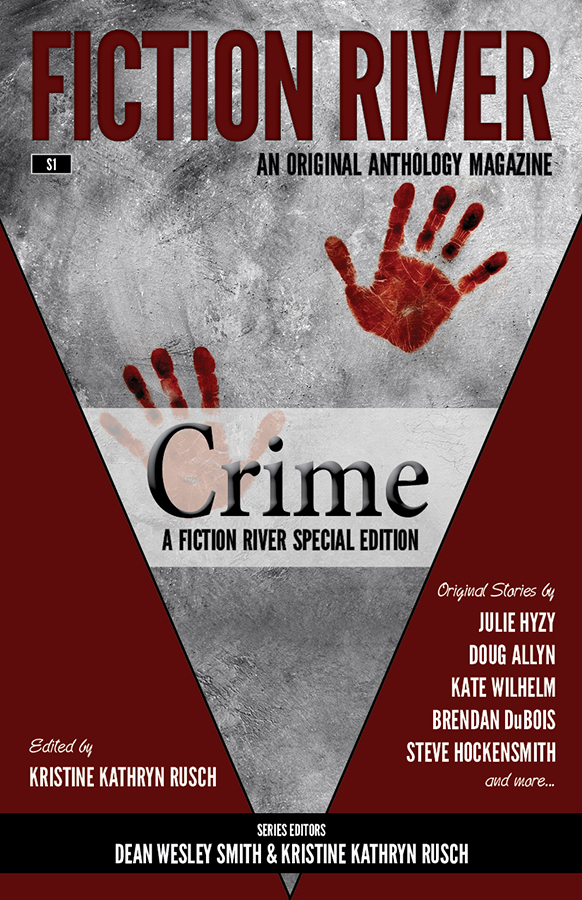 series, the Crime edition. It was.
Now for the payoff.
 I submitted Letters to The Saturday Evening Post’s 2014 Fiction Contest, which I heard about on Anne Allen’s blog – which, btw, is a must-read for any serious writer. I promptly forgot about it until I received an email in November telling me Letters had received honorable mention in their contest and would be published in a special Saturday Evening Post anthology. Which just came out.
And No Good Deed? Well, on Friday, Ed Gorman, who along with Bill Crider, collects and publishes an annual anthology of the best “Criminally Good” stories, emailed me to say that No Good Deed would be one of the stories in the anthology.
I am a happy camper.
This is why writing short stories should be part of your author’s arsenal, aside from the joy of writing a self-contained story, of course.
Have a great week.
The post Why Short Stories Rock (& A little BSP) appeared first on .
January 9, 2015
Second Sunday Crime Starts This Sunday!
 As I mentioned a couple of weeks ago, one of my long-time dreams is coming true. Ever since I was in high school, listening to Motown and then the Beatles, I’ve had a hankering to be a radio DJ. I worked at the college radio station at the University of Pennsylvania, and my first paid job was as a copy girl at KYW All-News Radio, also in Philadelphia. Then, when I lived in New York, I was won over by Allison Steele, the “Nightbird” at WNEW-FM (Unfortunately she is no longer with us).
 Turns out that hankering is now going to be a reality! I’m hosting a monthly internet radio show called “Second Sunday Crime.” The first show debuts this Sunday, January 11th on the “Authors on the Air” network. My guest will be William Kent Krueger. Kent is an award winning author many times over, especially this year. I hope you’ll join us on this live program at 6 pm CST right here.
You can call in as well by dialing (347) 884-8266. So bring your questions!
That’s 7 PM EST, 6 PM CST, and 4 PM PST. See you there!
The post Second Sunday Crime Starts This Sunday! appeared first on .