Libby Fischer Hellmann's Blog, page 24
June 19, 2015
It’s My Birthday, So I Got You A Present!

It’s my birthday next week, so… I got you a present! I’m giving away 4 of my short stories so you can celebrate with a blast of short summer reads… Download through Sunday June 21!
Your Sweet Man
“Calvin waited for the man who’d been convicted of killing his mother.”
Flight
“Kristin Forge spotted him on the second level of the O’Hare airport parking garage around four in the afternoon…”
The Jade Elephant
“Gus stared at the jade elephant in the window of the pawnshop, wondering if it could be his salvation.”
Josef’s Angel
“Sunlight glinted off their black leather boots when they marched.”
The post It’s My Birthday, So I Got You A Present! appeared first on .


June 17, 2015
Your 2015 Summer Reading List
Hi, all. It’s summer, when millions of us look forward to spending time reading in the sun or shade. Here are six books I’m excited about this summer: some are thrillers and crime fiction; others aren’t. But they’re all going to be great reads. Promise.
The Swimmer by Joakim Zander
I read The Swimmer, an espionage thriller translated from the Swedish, and couldn’t put it down. It’s the author’s debut, which makes the sensation it’s caused even more impressive. The HarperCollins website says:
It’s “Homeland meets Stieg Larsson,”… heralding the arrival of a new master in the footsteps of Larsson, Le Carré, and Graham Greene.
It was certainly more suspenseful than LeCarré, and I love suspense. But what I liked even more were the details and actions he ascribed to his characters. It was full of “show don’t tell’s” – which for me is evocative. As in many first novels, it’s a tad bloated, but I didn’t mind. If you like espionage, family conflicts, and bad guys who think they’re heroes, you’ll like The Swimmer.
The Devil’s Game by Sean Chercover
 I’m reading Sean Chercover’s new book, The Devil’s Game. Full disclosure: Sean’s a good friend and when I edited Chicago Blues, an anthology featuring short stories by a bunch of Chicago authors, I forced him to submit a story. At the time, Sean was writing straight PI crime fiction, and I loved his character Ray Dudgeon. Now, though, he’s moved into new territory, and I’m not quite sure what to call it. Sci-fi thriller? Religious thriller? Conspiracy thriller? Here’s what the blurb on Sean’s site says:
“Daniel Byrne spent ten years as a Vatican investigator, scrutinizing and debunking miracle claims— until he burned that life to the ground when one investigation shook his faith and revealed disturbing earthly conspiracies. Determined to find the truth, he steps into a new life of secrets and lies, joining a powerful group that wields hidden influence over world events. In this fast-paced sequel to the bestselling The Trinity Game, can Daniel navigate a shadow world of secrets and conspiracy to stop a pandemic with devastating global consequences?”
Actually, that’s what’s so great about Sean’s writing. It’s so polished you’ll follow him anywhere. Even when he takes you on surreal journeys, which The Devil’s Game seems to be. Btw, I’ll be interviewing Sean July 12, on Second Sunday Crime. More details coming soon.
The English Spy by Daniel Silva
 You know it’s a great book when you really can’t put it down. Daniel Silva is a NYT best- selling thriller writer and one of my all time favorite authors. I think I’ve read all his thrillers, even before he introduced Gabriel Allon. While some of his plots may seem familiar, his elegant prose and unexpected plot curve balls keep me coming back for more. Silva always brings his books out in midsummer, so look for The English Spy at the end of June. It’s the 15th in the acclaimed Gabriel Allon series – and Gabriel is now head of The Office. This should be a good one!
Btw, you can hear Daniel Silva in a LIVE interview on Authors on The Air with Pam Stack (I might be there too!) Thursday, June 25 at 6:00pm EDT. Please join us!
What about some great new reads by female authors? Here are a few I’m delighted to feature.
The Nut Hut by Kathleen Taylor
 Sometimes I get tired of bleak and dark, and it’s good to have a laugh. Kathleen Taylor’s The Nut Hut does that while still delivering a bite. I was proud to blurb the book. Here’s what I said:
A sweeter, less caustic version of One Flew Over the Cuckoo’s Nest, The Nut Hut is the story of attendant Becky Decker’s first week in a mental institution during the early 1970’s. Still the story retains a bite. The prose is velvety smooth, and the sharp characterizations make for a fast, unputdownable read. I recommend it highly, if only to remind those of us who are not impaired how blessed we really are.
This is a not to be missed story, and a very fast read. It’s out on Friday, and I hope you enjoy it as much as I did.
What the Lady Wants by Renee Rosen
 As a Chicagoan, any book telling the story of my windy city is worth reading. This one, a ‘novel of Marshall Field and the Gilded Age’, is a dream of a historical novel, full of heartbreak and scandal, set against the backdrop of Chicago’s Great Fire and the years after.
As the Barnes & Noble website says, in a review by Erika Robuck, national bestselling author of Fallen Beauty:
“Rosen skillfully charms, fascinates, frustrates, and moves her readers in this turn of the century tale. Set on an epic historical stage, What the Lady Wants contains all of the hedonism, decadence, success, and tragedy of the great American novel.”
I gobbled it up without stopping, and enjoyed it immensely. In fact, it reminded me a bit of the BBC’s Mr Selfridge TV series, and I kept seeing Jeremy Piven as Marsh Field. I highly recommend this read, which, of course, was meticulously researched and full of spirit.
The Incidental Spy by…. Me!
 Speaking of historical fiction, you didn’t think I’d let an opportunity pass without mentioning a novella I’ve written. You’ll have to wait a couple of months before it comes out (in September — and no, that’s not the real cover). Actually, writing it was a surprise for me. After Set The Night On Fire, A Bitter Veil, and Havana Lost, I thought I was done with historical thrillers. Guess what? I wasn’t. So I wrote a novella that’s set during World War Two. Here’s how I describe it:
Young Lena Bentheim is forced to flee Nazi Germany for Chicago in 1935, leaving her family and boyfriend behind. After learning English, she eventually finds a new life as a secretary in the Physics Department of the University of Chicago. She meets and marries another German refugee scientist and has a child. Then tragedy strikes, and Lena is forced to spy on the nuclear fission experiments at the U of Chicago. A novella set in the early years of the Manhattan Project, The Incidental Spy is another fascinating historical thriller by Libby Fischer Hellmann.
I’ll have much more information about it in the weeks ahead, but if you’d like to review it I’m happy to send you an advanced reader’s copy. Just let me know.
Happy Summer Reading, everyone. And no, there will not be a Pop Quiz in the fall.
What are your best recommendation for summer 2015 reading?
The post Your 2015 Summer Reading List appeared first on .
June 5, 2015
Comings and Goings
I have a couple of live events to tell you about, and a personal share…
Catch Me In-Person…

— At Printers Row Lit Fest this Saturday (only); if you’re in the Chicago area, please come on down. You can find me at the Chicago Writers Association booth (Tent “F” on Dearborn). I’ll also be on a “Kickass Heroines” panel at 2:15 pm in the Jones College Prep; Room 5010. More info here.
Catch Me Live…
— Sunday at 6 PM CDT, we’re having a party… at least on radio. It’s the Killer Femmes Anniversary Party. A year ago, you might recall, five of us put together a Boxed Set of mysteries, including Chris Kling, Sujata Massey, Zoe Sharp, Julie Smith, and me. We called it “Killer Femmes: Five Irresistible Novels From Around the World.” All for just 99¢. It’s still selling like gangbusters, so we’re celebrating on Second Sunday Crime. We’ll all be on the air chatting about mysteries, writing, and life. Please join us and call in live!
My Personal Share (shameless brag?)…
 Nobody’s Child has now been honored with two award nominations:
— The Daphne du Maurier Award for Excellence in Mystery and Suspense (winner announced July 23)
and the other day I found out I’m a finalist for
— The Shamus Award for Best Indie PI novel (winner announced at Bouchercon in October)
Color me happy.
The post Comings and Goings appeared first on .
June 3, 2015
Fads in Crime Fiction – It’s A Human Thing
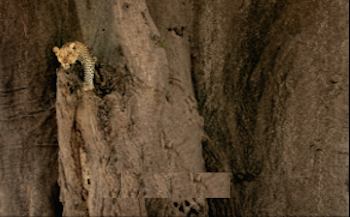 Humans love patterns. According to scientists, pattern-seeking is an evolutionary imperative, vital to our ancestors’ survival. If you had the ability to spot a tiger’s stripes hidden in long grass, for example, you’re more likely to avoid being eaten than a fellow ancient human who’s not so skilled.
We still do it to this day – we seek patterns everywhere without even thinking about them. So it’s interesting to see patterns emerging in books. If you’ve ever randomly picked up two new books in a row only to find the characters or plot are uncannily similar, or the tone and style are the same, it’s probably our innate love of patterns.
That’s the basis of ‘trending topics’ online. When we see a pattern emerging, it’s hard not to join in. On a more cynical note, when a novel takes fiction in a new direction and sells millions, it’s also human nature—and publishers’ too—to jump on the bandwagon.
Here are some I’ve come across, mostly in crime fiction.
The Unreliable Narrator
You ca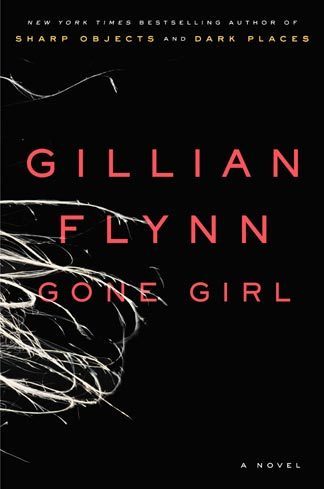 n trust every word the narrator of a novel says, right? Wrong. There’s no law saying narrators have to be truth-tellers. Thanks to Gillian Flynn, the best-selling Chicago-based thriller writer, an unreliable narrator seems to turns up a lot these days.
The Girl on the Train is a good example, a book that unabashedly compares itself to Flynn, and has climbed the book charts quite nicely because of it. But to me, it’s nowhere near as good as Flynn’s Gone Girl, with its brilliant mid-plot twist. We Were Liars is another – I haven’t read it, but the reviews on Goodreads are spectacular. The Dinner by Herbert Koch is another. And then there are the classics: Catcher in the Rye, Lolita, and more.
More men writing women protagonists
There’s no law saying men can’t write from a women’s POV and vice versa. Think Tolstoy’s Anna Karenina or Flaubert’s Madame Bovary. In crime fiction, though, it seems to be ubiquitous. That might have something to do with the fact that women make 80% of the purchasing decisions about novels.
Right 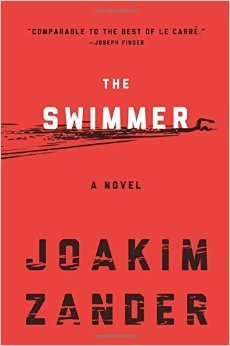 now I’m reading The Swimmer, by Swedish author Joakim Zander, which has been compared to LeCarre (who himself wrote The Little Drummer Girl.) There’s a female at its heart, although she’s the daughter of another major character. Then there’s the feisty, angry, dangerous Lisbeth Salander from the Millennium Trilogy, created by Stieg Larsson. And, of course, Thomas Perry’s Jane Whitefield series. And Joe Konrath’s Jack Daniels. Robert Goolrick’s A Reliable Wife, Alan Bradley’s Flavia De Luce, and recently James Ziskin’s Ellie (ahem) Stone series. And that doesn’t include male authors, who, for one book only, might feature a female protagonist.
The rise and rise of the historical thriller
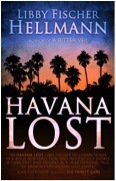 Another crime fiction fad is the historical thriller (I plead guilty here, btw.) The past is a rich resource and landscape, full of ready-made issues, conflicts, and characters ripe for exploration. Of course, I’m not the only one – there are thriller writers, romance authors, Diana Gabaldon types, and plenty of literary authors, all basing plots around actual historical events. And millions of readers love the result.
The dead authors’ club
 Here’s one I don’t like, but if I say so, some of my author friends will not be happy with me
June 1, 2015
Is it Worth It?
I am delighted to host friend and fellow author Patti Abbott, whose first novel was just published. Writing clearly is in the family’s blood– Megan Abbott is her daughter and must have learned at her mother’s knee. Still, Patti has some questions about it all. I know what I’d say to her, but I’d rather have YOU tell her how you feel.
Is It Worth It?
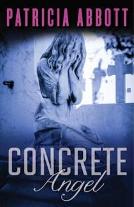 And by that question I mean publishing a first novel at age 67. When I express doubts to nearly anyone they are likely to say, “Well, it’s better than death.” Or, “What would you rather be doing?” Something along those lines. But the truth is: is it really worth exerting all the energy it takes to write, find a publisher, and then publicize a book when I could be doing something far less exhausting? And even more than that, doing something where I am putting myself in a place where I am likely to be criticized or, even more likely, ignored.
These are some of my worries: I will be the cause of financial ruin for my publisher, I will embarrass my family, I will jeopardize my ability to publish short stories with the time it takes to write and publicize a novel, I will be a bore on social media sites, my self-worth will plummet–one of the reasons I have shrunk from doing this before now. The likelihood of my making any money from this venture is pretty slim. I don’t even care about that. See what I mean?
So why am I doing it? For my entire life, I have shrunk from taking on challenges. Or even more plainly-taking chances. I never pursued a job that required much of me or paid much. My birth family was one of low expectations: find a job with benefits and hang on to it. When I wrote more literary short stories, I never once tried to place them in the better journals. I gave up looking for an agent and then a publisher without much effort. Some people claim to have sent out hundreds of queries. I sent out about two dozen.
So finally at age 67, I was given a break by Polis Books, so I am taking a chance. Hoping that a few people will read and like my novel. Hoping that I may publish another. Hoping that I will make my family proud. It’s a big chance, but one I have to take now or never.
The post Is it Worth It? appeared first on .
May 27, 2015
Buy Books Through Facebook – No Amazon Required
Now and again a quiet revolution starts brewing. This is one of those times. Facebook has just made it possible for readers to buy ebooks directly from an author’s fan page without clicking to Amazon or any other retailer.
It’s a huge development, and I think it’s going to require a major shift in buyers’ attitude. But if that shift happens, Facebook, which we haven’t yet considered as the place to buy books, will deliver SO much potential!
Introducing Heyo Cart – Ridiculously easy
What is Heyo Cart? It’s a third party app that works seamlessly with Facebook to let people buy digital products… like ebooks. When someone buys, the purchases go to HeyoCart. A day or so later, 80% of book price is deposited in the author’s bank account.
It’s ridiculously easy to set up. An author creates a post with the book cover. If the person seeing the posts wants the book, all they do is type in the word “Buy.” HeyoCart and its payment partner Stripe.co (a system very like PayPal and Square) do the rest.
Anything that makes it easier and faster to impulse buy is a good thing for book sales. And because there’s no need to click to Amazon or iBooks, no momentum or time is lost between desire and purchase.
The system also makes a list of buyers’ email addresses so the author can invite them to join their email list.
My Heyo Cart Experiment
I like to try new technologies, so I’ve already experimented. But I started small, with a short story that’s just come out as a “single” after being in an anthology for 3 years. It’s called Capital Partners. I discounted the price from 99¢ (the price on all the ebook retailer platforms I’m on) to 75¢, to provide an incentive. And I only sold to my existing fans. But bear in mind that you can expand your potential customer base by creating a Facebook ad, which I also did later on.
So, did it work? My first attempt got an interesting response. Here’s a screenshot of the post I created.

And here’s a screen shot of a few of the ‘results’, i.e. the comments saying ‘buy’. As you can see, Heyo replies right away, engaging with buyers to say thank you. Another plus.

I would say it was a moderate success.
Working out the Kinks
There’s so much that’s good about HeyoCart’s system– ease of use, convenience, its power and efficiency — that I hope the kinks can be worked out quickly. And there are a few:
Once someone says BUY they are taken to HeyoCart to actually make the purchase. Only about half of the people ultimately complete the buy, even though it isn’t cumbersome. Why do they not finish, I’m wondering. What can we do to help?
An author can only upload one format at a time, i.e. either Mobi or E-pub, unless they want to create a Zip file with both formats. I don’t, as I’m sure someone could pirate both versions. HeyoCart says they’re working on this, but right now it’s an issue.
The biggest issue, I think, is familiarity with the author. If an author creates an ad, a prospective buyer might go to Amazon first to check the reviews. Since they’re already there, maybe they buy the book at Amazon? Or maybe they don’t buy at all?
How to make fans feel better about buying direct ?
This is where the rubber meets the road, so to speak. Authors need a way to “prove their worth” to a potential buyer without a buyer clicking to Amazon, and I’m not sure how to do that. Over the long term, sure, we try to engage and build trust with our readers, but what about the ones we’re enticing with a short story or novel they can buy on FB? Although ebooks have only been with us for 7-8 years, the habit of going to Amazon, iBooks or Kobo to buy is deeply entrenched.
Some potential readers might actually never buy directly from an author because they can’t be sure of what they’re getting. Others might be worried about giving up their credit cards online, others may not like the way Facebook itself treats personal data.
One potential solution would be to include snippets of reviews in the post we create, or add links to our author website where reviews are posted.
Your best thinking needed…

I’m sure there are other solutions. What do you think? How can authors help readers feel more comfortable buying ebooks directly on Facebook? Please leave your suggestions in the comments. In fact, I’m adding an incentive of my own – for every legitimate suggestion, I’ll send you a copy of Capital Partners… FREE. 
The post Buy Books Through Facebook – No Amazon Required appeared first on .
May 25, 2015
Daphne and Me
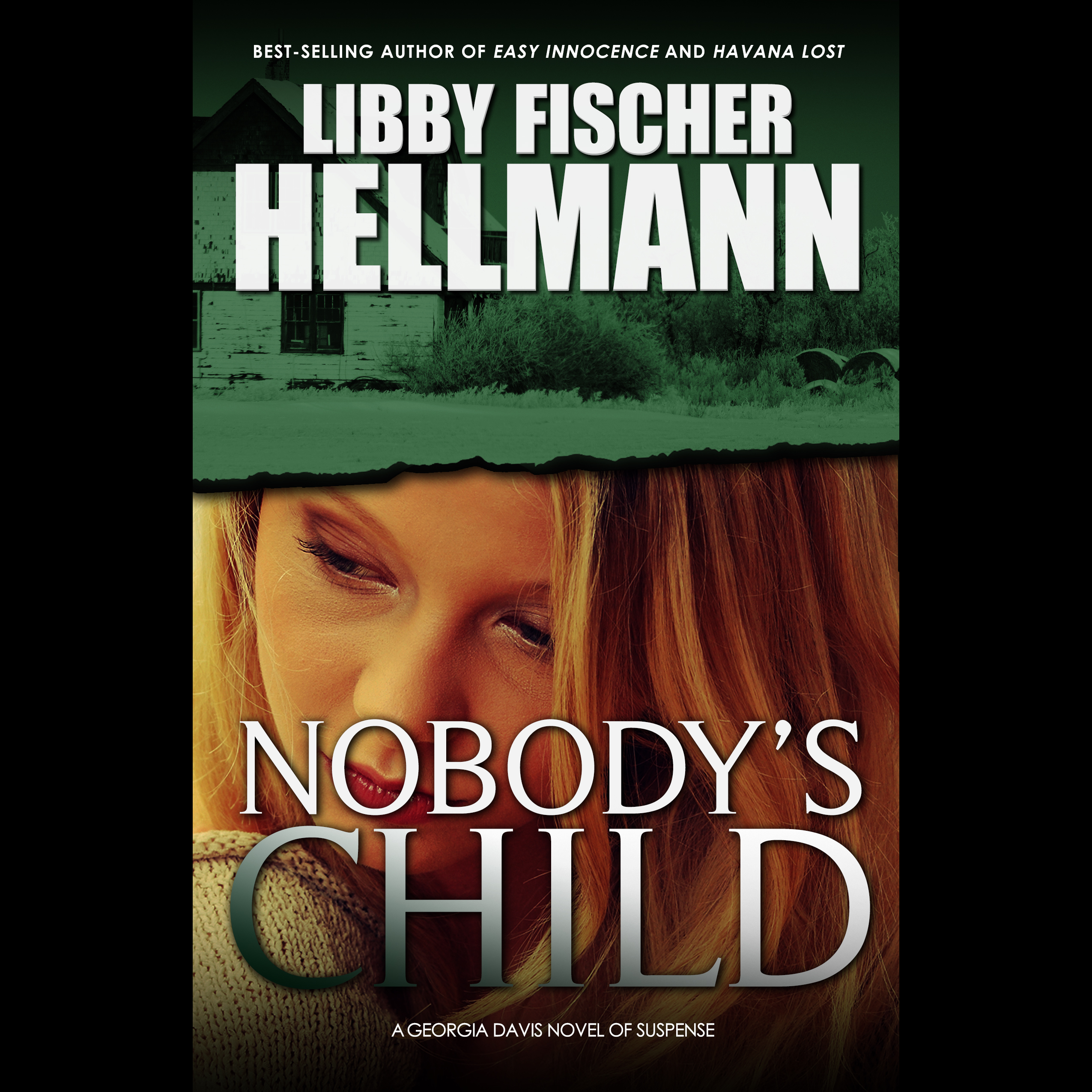
The 4th Georgia Davis novel.
I am absolutely thrilled to announce that Nobody’s Child is a finalist in the Daphne du Maurier Award for Excellence in Mystery/Suspense. It’s in their “Mainstream” category.
The award will be given in July in NYC during the RWA convention at the Death by Chocolate event.
I think I’ll be going.
The post Daphne and Me appeared first on .
May 5, 2015
Short Is The New Long: 8 Classic Short Stories
 There’s been a lot of discussion recently about the comeback of short stories, both reading and writing them. Anne Allen’s most recent post, “13 reasons Why You should write a short story this month” is well worth reading, not only because May happens to be short story month. In her post she alludes to a Mashable blog that touted “Snackable content,” the consumption of bits of content rather than large chunks because of our ridiculously shortened attention spans. We’ve seen from the success of NPR’s Serial how successful short episodic stories can be. Even the Huffington Post has weighed in on Why Short Stories Matter. I guess I was a little ahead of the curve (That’s got to be first time in my life) because I wrote a blog post exactly three years ago titled “6 reasons to Write Short Stories.”
But that’s not what I want to write about today. I’d like to tell you about some of my all time favorite short stories—Classics, as opposed to modern stories. That’s not to give short shrift to the wonderful stories from Alfred Hitchcock, Ellery Queen, Glimmer Train, or the academic journals that nurture so many young writers. But I’d like to revisit the ones you read (or were supposed to read) in high school. I know now that they had more of an impact on me than I realized (more about that later), and I hope that reading them will rekindle your love for great story-telling.
Before we start, you should know that almost all of them are available online and are free, at least in print. I do hope you’ll hunt them down. You can read one a day, or week, during your commute, at the doctor’s office, or whenever you have a spare minute or five. I hope they rekindle a love for unique, well-written, and surprising stories. They did for me.
The Lottery by Shirley Jackson
Because it presents a base evil so casually presented, one of my friends says The Lottery changed her life. When she read it in high school, she became a cynic overnight. I get it. The story is about the inhabitants of a small town who draw lots once a year, until one of them is selected for — well, I can’t tell you; you’ll have to read it. It was first published in the New Yorker in 1948, and was immediately christened the most controversial—and best—story ever published by the magazine. Unfortunately, Jackson got a lot of hate mail because it was so noir. If you’ve never read it or you’ve forgotten about it, start there.
The Necklace by Guy de Maupassant
First published in 1884, I think The Necklace might be my favorite short story, because the protagonist, while vain, self-serving and prone to calling herself a martyr, must take responsibility for her actions. After losing what she thinks is a priceless necklace borrowed from a friend, her life goes from genteel middle class to abject poverty because she had to buy a high-priced replica to return. Years later, she learns the truth about the necklace. And a lot more about the perception of value and worth of material objects.
Good Country People by Flannery O’Connor
In her collection of stories A Good Man is Hard to Find, which itself is a wonderful story, O’Connor creates a similar tone in Good Country People. The story deals with a stranger who unexpectedly appears at a Southern farm. He flirts with the owner’s thirty-two year old daughter who lost a leg in childhood. The two end up in the barn, where the stranger breaks out the booze and some condoms and asks the girl to remove her prosthetic leg. She does, and the stranger steals it, along with her innocence. An ironic and bleak story, it was ahead of its time in dealing with “stranger danger.”
The Tell-Tale Heart by Edgar Allan Poe
Poe’s 1843 story might have been your first introduction to mystery and suspense. If it was, you might have found it overwritten, even melodramatic. I did. But it’s an example of gothic fiction, which stylistically required that overwrought quality. The story may also be one of the first to introduce the “unreliable narrator,” as you will discover. However, for pure (ahem) heart-pumping adrenaline, as well as poetic language, the story can’t be beat. It’s about a man with a massive case of anxiety who murders an elderly man, tries to cover up the crime by dismembering and hiding the body, and maintains his innocence when the police come. However, he’s haunted by the sound of the old man’s heart beating, and—well, you’ll have to read the rest. It’s one of Poe’s most famous stories.
The Veldt by Ray Bradbury
Although I was more familiar with Bradbury’s Farenheit 451, The Martian Chronicles, and even Dandelion Wine, I came across this 1950 short story around the time of his death in 2012, and I love it. Like much of his writing, it takes place in the future, and it’s prescient in what it depicts… namely a house that is fully automated to the point where the “house” does everything, including cooking, cleaning, and taking care of the children. The children, incidentally, can go into the nursery and the room telepathically travels to any spot in the world—a kind of virtual reality. The children are transported to an African veldt, where, in the distance lions are feasting on something – we don’t know what. Until the end of the story, when the children refuse to come out of the nursery at all. I’m simplifying the plot – it’s the kind of story you just need to read to believe, and it’s very noir. (Don’t read it this Mother’s Day weekend.)
Gift of The Magi by O. Henry
I recall loving O. Henry in high school because every story I read of his had a twist at the end. Of course, I now know that is almost de rigueur for genre stories, but I still love his work. Gift of the Magi is a holiday story, because it deals with a couple with almost no money trying to buy Christmas gifts for each other. It was originally published in 1900, and it’s one of the only stories on this list with a “happy ending.” I won’t say more, except that you should read this charming story, and then celebrate Christmas in May.
Witness for the Prosecution by Agatha Christie
Some of you probably know this is also a very successful play and film, but it started life as a short story published in 1925. It didn’t come across the pond to America until 1948, however. And it is one of the few stories that Christie rewrote when it was turned into theater. It’s about a man on trial for murdering a wealthy widow who had made him her only heir. The case doesn’t look good because of that, but the devastating blow arrives when his wife testifies for the prosecution rather than him. The interesting part is that Christie became less enamored of the abrupt ending and changed it significantly. You can watch the movie after you read the story to see how it was altered.
Why I Live At the P.O. by Eudora Welty
It was a toss up whether to list A Worn Path or Why I Live at the P.O. from this prolific Southern writer, who won the Pulitzer Prize for her novel The Optimist’s Daughter in 1973. I’m going with the Post Office story, because its tone is different from much of her other work, as well as the other stories on this list. Ostensibly about a woman who leaves her family home because she’d rather live at the post office, the story weaves a hilariously complex plot that basically is about two sisters, trying to manipulate each other, both refusing to admit their own narcissism and petty jealousies. One of the sisters eventually moves to the post-office to find some peace and quiet and maybe, just maybe, take revenge on the other. The story brims with eccentric family characters who seem to occupy their own worlds and rarely play by the rules. It’s a funny story, but a poignant one too, where Welty uses humor as a sharp tool to expose our weaknesses and foibles.
There are dozens of other superb short stories, but these will get you started. Btw, I’ve come to believe that short stories like these, even more than novels, inspired me to start writing crime thrillers. For two reasons: one, I’m drawn to the bleak noir tone of so many; and two, because of the twist at the end. To be surprised and then understand a story from a new perspective once you know the denouement is similar to solving a crime or discovering a long-held secret. It forces you to see life differently.
Finally, you didn’t think I’d end without telling you that I’ve written about twenty short stories myself, did you? You can see them all at a glance right here.
What about you? What’s your favorite short story classic??
The post Short Is The New Long: 8 Classic Short Stories appeared first on .
April 29, 2015
Si usted lee en Español…
 La novela premiada de la autora más vendida de novelas de detectives, Havana Lost, ambientada en Cuba durante la revolución y el Período especial treinta años más tarde, ahora está disponible en español. La Habana perdida será publicada el 1 de abril de 2015, en rústica, ebook, y en tres meses, en audio. La versión en inglés, la décima novela de la Srta. Hellmann, fue publicada en 2013.
Una decana de las escenas de novelas ficcionales de detectives en Chicago, la Srta. Hellmann es la autora de las series de suspenso Georgia Davis y Ellie Foreman, colecciones de historias cortas, y de varias novelas de suspenso independientes que ella denomina “Trilogía de Revoluciones”. La Habana perdida es la tercera novela independiente, y la más reciente.
La Habana perdida comienza en las semanas que anteceden a la Revolución Cubana. La muchacha testaruda de 18 años de edad, Francesca Pacelli huye de su despiadado padre, un Jefe de la Mafia en La Habana, a los brazos de su amante, un rebelde que lucha con Fidel Castro. Su padre, desesperado por enviarla a la seguridad de los Estados Unidos, recurre a la tortura y al chantaje para buscarla en la isla.
Lo que sigue es una saga fascinante que abarca tres generaciones de la misma familia. Décadas después, la promesa de riquezas incalculables seduce a la familia Pacelli a regresar a Cuba. Pero el rastrear esas riquezas conlleva tanto peligro como oportunidad, y en última instancia, Francesca debe enfrentar las consecuencias letales de sus decisiones. Desde las conflictivas calles de La Habana a las peligrosas calles de Chicago, La Habana perdida revela el verdadero costo de perseguir el poder en lugar del amor.
La Srta. Hellmann dijo: “Desde temprana edad, siempre había estado fascinada por Cuba, especialmente después de que Fidel Castro asumiera el poder. ¿Cómo puede ser que una isla tan pequeña fuera un problema tan grande para Estados Unidos? Ahora que estamos en el umbral de mejores relaciones, quería que los lectores descubrieran nuestra historia compartida y complicada. También espero que los lectores descubran cómo el espíritu humano puede ser tan resistente y vulnerable al mismo tiempo. La pasión y la vitalidad de la gente cubana son evidencias de su habilidad para resistir la agitación de la revolución en la vida de ellos, sus familias, sus comunidades, en realidad, en toda su cultura.
La Habana perdida es un testimonio de la habilidad de Hellmann para retratar los auténticos detalles históricos, así como su talento para escribir novelas de suspenso que llevan a la lectura compulsiva.
Hellmann pasó diez días en Cuba investigando y verificando informacion.
Premios para Havanna Lost (Ingles) :
Finalista en la revista Foreword Review en el concurso Thriller of the Year 2013
“Libro apasionante” en la revista Shelf Unbound Libro del año 2014
Mención Honorable en la Asociación de Escritores de Chicago Mejor Libro de Ficción 2013
Elogios para Havanna Lost (Ingles) :
“Una aventura con muchos niveles… escritura inteligente, hecha en estilo consumado por un autor que nunca defrauda a sus lectores”. Mystery Scene Magazine
“Un fascinante thriller histórico… Este libro atrapante, que cubre varias generaciones, está lleno de intriga y sucesos inesperados e impactantes en la trama”. Booklist
“Una historia extensa… la historia de la revolución cubana, así como los esfuerzos militares cubanos en Angola, es fascinante…” Publishers Weekly
“La escritura de Hellmann ha madurado considerablemente desde sus primeras novelas. Su trama se ha vuelto más sólida y segura, sus personajes más realistas, sus ambientes descritos maravillosamente. Esta es una novela muy buena y excelentemente desarrollada”. Deadly Pleasures
“Magistralmente elaborada… Hellmann tiene un magnífico don para describir vívidamente a sus personajes. No me puedo imaginar a ningún aficionado de thrillers que no disfrute de Havana Lost“. A Literary Reeder
“Hellmann ya es un icono en la escena de misterio de Chicago. En LA HABANA PERDIDA, se dirige hacia una nueva dirección, en la cual evoca magistralmente a una Cuba del pasado y el presente en un cuento desgarrador… ”
Sean Chercover, autor de EL JUEGO DE LA TRINIDAD
Trade Paperback ISBN: 9781938733802
Ebook ISBN: 9781938733819
Audio ISBN: 9781938733826 julio, 2015
Audio en Inglés en Audible.com, iTunes, Amazon
Disponible a través de Createspace y otros
FICCIÓN/Suspenso 6″ x 9″ – 300 páginas aprox.
The Red Herrings Press, Chicago
¡Buenas noticias!: LA HABANA PERDIDA se encuentra GRATIS aquí y aquí por tiempo limitado. Bienvenidos comentarios!
The post Si usted lee en Español… appeared first on .
April 27, 2015
For Fiction Writers: How To Write Chapters
 I’m excited to share with you a structure for both writing and editing a chapter of your novel. We’ve all been schooled in introductions, conclusions, and the overall flow of a novel. But what about individual chapters, which, after all, are the building blocks of your story? Is there a format? How do you know if you’re doing it right? Frankly, that’s usually where I have problems.
But now there’s a solution. It’s called CASTS and I use it all the time. It’s a terrific vehicle, and I wish I could claim credit for inventing it. But I didn’t. CASTS is the brainchild of mystery author Nancy Pickard, whose amazing suspense novel, THE VIRGIN OF SMALL PLAINS won the Kansas Book of the Year when it was published in 2007. Her subsequent novel, THE SCENT OF RAIN AND LIGHTNING has also been highly acclaimed. Nancy says she figured it out while editing and revising those books.
It’s deceptively simple, and yet you could spend hours doing it. Indeed, Nancy conducts workshops on how to use CASTS effectively, but she’s given me permission to share it with you. And although this is not a workshop, I think you’ll get the idea. I’ll also share her sure-fire way to test whether you’ve done it right.
CASTS is an acronym for the following elements all of which are critical to a powerful chapter.
Conflict
We know in fiction that there must be conflict on every page, even if it’s just a character wanting a glass of water that they can’t get. There should be a conflict in every chapter. It doesn’t necessarily have to be THE conflict of the novel, but in some way, you need to illustrate or explore something your character wants but hasn’t yet been able to get.
Action
There needs to be action in every chapter. You might think this is gratuitous. Of course there is action in every chapter, but what kind of action? Internal monologues won’t do it. Beautiful narratives won’t either, unless one of your characters does something during the narrative.
Surprise
Something in every chapter should surprise a character…and/or the reader. Again, this doesn’t have to be a BIG surprise. It could be something as small as a character discovering an object they hadn’t seen before. It could be as big as finding a dead body. Or the reader discovering that a character is not the person they thought he/she was.
Anytime a character says,
“Oh really?”
“What?”
“Oh my God”
you have surprise. Btw, surprises may be hiding, and your characters don’t readily see them. Tease them out, reveal them in a unique way, and you’ll have more drama.
Turn
This concept comes from screenwriter Robert McKee’s well known book Story: Substance, Structure, Style and the Principles of Screenwriting. Even though McKee is discussing film scripts, Nancy says the principle works just fine with novels. The idea is that something needs to “turn”— or change in every chapter. Again, this doesn’t have to be a big change. It could be a character’s mood swinging from hope to despair or from fear to confidence. It could be as simple as changing locations… a character drives from the beach back to town. A character might change their clothes. Then again, it could be a major “turn,” ie an important plot reveal or event.
But whatever its nature, a turn is essential for every chapter.
Sensory Detail
This is pretty much what you think: a reminder to use all five senses in your narrative to describe your characters, setting, and action. Personally, I feel the sense of smell is underused, but it’s extremely powerful; so use it judiciously.
Testing CASTS
Now… how do you know if you’ve used CASTS effectively in a chapter? Here’s a way to check:
Get 5 different colored highlighters, one for each letter in CASTS. Print out the chapter. Then go through it line by line and highlight the parts of your chapter that correspond to each element of CASTS. If you’ve missed one, well, you know what to do.
Hope this helps your writing… I know it’s helped mine, and I’m delighted to share. Nancy got it just right, didn’t she?
The post For Fiction Writers: How To Write Chapters appeared first on .