Libby Fischer Hellmann's Blog, page 25
April 25, 2015
La Habana Perdida
I’m very excited to announce that the Spanish translation of Havana Lost will be released May 1. In honor of the release, I’m giving away 2 print copies via Goodreads. You’ll find everything you need to know below. I hope you’ll enter!
Goodreads Book Giveaway
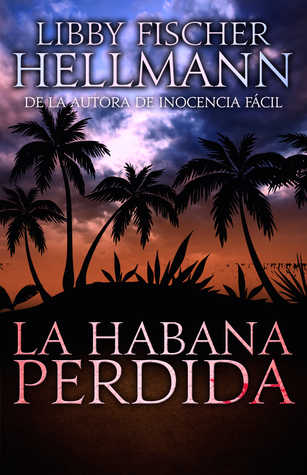
La Habana Perdida
by Libby Fischer Hellmann
Giveaway ends May 15, 2015.
See the giveaway details
at Goodreads.
If you’re more interested in the e-version, you can find it here, here, and here. And the audiobook will be coming in a month or so.
If you do read it, I would appreciate your honest review. Thanks!
The post La Habana Perdida appeared first on .


April 20, 2015
Orphan Black is Back!
 Suddenly Orphan Black is the most talked about show on TV. For the uninitiated, Season three started Saturday night on BBC America, and it promises to be even more complex (maybe even a little unwieldy) than the past two seasons. I’ve been watching it since the beginning, and I’ve been a big fan. Part of this post is a redo of a post I did last summer, but now that the rest of the world has discovered OB, it bears repeating why I like it so much.
Why, you ask? Because the story, the film-making, and most of all,the acting are superb. Possibly better than Mad Men and Homeland, my other not-to-be-missed shows. Orphan Black is part corporate conspiracy, part sci-fi, part romance, and all-around suspense thriller.  Its premise centers on a youngish female grifter, Sarah Manning, who assumes the identity of a look-alike cop who has committed suicide. It turns out Sarah has bumped into a scientific experiment with clones, of which she is one of nine—and possibly more. Actress Tatiana Maslany plays all the clones, and that’s where the magic begins.
Every clone character Maslany plays is extraordinary. Not only does she imbue each character with their own personality, but her accents, physicial mannerisms, and facial expressions are unique to each character. She does this with such ease and professionalism that I never once got the feeling she was “impersonating” a character. Each of the women are nuanced individuals. Whether she’s scientist Cosima, soccer mom Alison, or crazy Helena, Maslany invests herself in each role. I had no trouble knowing and believing in the credibility of each character. That’s how good she is.
 And when they’re talking to each other in the same scene—well, that’s when the technical wizardry of the film-makers comes in. Never once did I see a clumsy double pasted into a scene. The superimpositions were done seamlessly which shows (at least to me) a mastery of form and craft. And, btw, the opening titles are visually magnificent.
The story is quite dark, and Season Three promises to continue that mood. The show is often violent, but just when you think you might need a break,  comic relief appears, usually through Sarah’s foster brother, Felix, who is superbly played by Canadian Jordan Gavaris (In fact, most of the actors are Canadian)… and Alison, the perfect soccer mom, who has a hilariously noirish edge.
BBC America produces the series, which is shot in Canada, and Season 1 and 2 are on Amazon, if you’re in Prime.
Now for the most important question. Who is your favorite? There’s Sarah, of course, always dark and brooding; Cosima, the brainy scientist with dreadlocks and a perpetual smile; Helena, childlike but mentally deranged and dangerous; Alison, the suburban soccer Mom; Rachel, the Machiavellian corporate executive; a cross-gender clone, Tony who may or may not be back, and new this season, Crystal.
I’ll tell you mine, if you tell me yours…
The post Orphan Black is Back! appeared first on .
April 17, 2015
For Readers of All Stripes

I just finished a short article by Gretchen Rubin on the PW Tip Sheet titled “How To Become A Better Reader in 10 Steps” that I can’t praise highly enough. Whether you’re a fiction reader, (and I hope you are) a non-fiction reader, a news/internet/research article junkie, I hope you find it as liberating as I did. Thanks to both Ms. Rubin and PW for posting it!
Again, enjoy it right here. And have a great weekend!
The post For Readers of All Stripes appeared first on .
April 15, 2015
The Doubleback Backstory
 As some of you know, my 6th novel, Doubleback is on sale this week at Amazon for 99¢/.99£. I thought you might like to hear some of the backstory — why and how this book came to be. It was published in 2009, but I’d been thinking about it for a while. Especially the first chapter.
You see, people who know me well know I’m slightly neurotic. Some of my primal fears are flying, bees, and being trapped in a stalled elevator.
So, of course, I imagined 6 people in a downtown Chicago office building elevator that lurches to a stop somewhere around the 57th floor. The lights go out, the car sways, and panic ensues – people cry, curse, pray and yell. They think they’re going to die. Suddenly the elevator resumes operating and descends to the lobby as if nothing has happened. The people spill out, and the last man out looks at his watch and says, “Right on schedule.”
That’s the first chapter of Doubleback. Now all I needed was the rest of the book. At the time I started writing, Blackwater (now called Z) was all over the news. Eric Prince, Blackwater’s CEO, was saying his mercenaries weren’t exactly military, so they shouldn’t be accountable to military law. Then he said they weren’t really civilians either, so they shouldn’t be accountable to civilian law. It was a Catch-22 and it infuriated me. So I decided to incorporate that into the story. What if mercenaries, who are up to the highest bidder anyway, changed sides? What would happen? How would you detect it? How would you fight it?
Finally, I knew I wanted to bring together both my series protagonists: video producer Ellie Foreman and PI Georgia Davis. They are completely different people — Ellie will go to lunch with you and give you TMI about her life, and she has a solid support and family life. Georgia, on the other hand, won’t go to lunch with you at all. She’s a loner, she has baggage, and she’s very cautious about people. Still, I was curious to see how they’d end up working together (They worked together in An Image of Death but Georgia was still a cop at the time.) now that Georgia was a PI. I liked the result.
I hope you do too.
In case you havent seen it here’s the video trailer. Enjoy.
The post The Doubleback Backstory appeared first on .
April 13, 2015
Need Your Input…

Hi, everyone. I’m happy spring is trying to settle in Chicago. On the left is Oak Street beach. It doesn’t quite look like this yet, but I’m counting on it soon. And hoping we’ve seen the last of the tornadoes.
I have some fun things for you: not one, but two stories each under a dollar, and I could use your help figuring out a new cover for one of my books…
Doubleback On Sale for Just 99¢
Little Molly Messenger is kidnapped on a sunny June morning. Three days later she’s returned, apparently unharmed. A few days later, the brakes go out on Molly’s mother’s car.
An accident? Maybe. Except that it turns out that Chris, Molly’s mother, is the IT manager at a large Chicago bank and may have misappropriated three million dollars. Molly’s father hires PI Georgia Davis to follow the money and investigate Chris’s death.
Doubleback reunites PI Georgia Davis (Easy Innocence) with video producer Ellie Foreman (An Eye For Murder, A Picture Of Guilt, An Image Of Death, A Shot To Die For). The two women track leads from Northern Wisconsin to an Arizona border town, where illegal immigrants, smuggled drugs, and an independent contractor come into play.
Find out what happens next here.
Capital Partners – A Short Story – Just 99¢

Imagine if your spouse got caught in a Ponzi scheme.
This story is about just that: two women whose husbands are involved in a fraudulent investment operation. The couples vacation at a posh ski resort, where the women take matters into their own hands.
Publishers Weekly called it “a fine story…”
This story was originally published in the Writes of Spring Anthology, Nodin Press, 2012, edited by Pat Frovarp and Gary Shulze.
Discover how the story unfolds at Amazon, B&N, iBooks, and Kobo.
Help a Graphically-Challenged Author?
I’ve had nothin g but trouble with the cover of AN IMAGE OF DEATH. I’ve changed it several times, and it’s still not right. The cover looks too sweet and not enough like the thriller crime novel it’s supposed to be.
Any suggestions ? I’d love to hear them. Or you can join the conversation underneath the video I did on my Facebook page here.
Thanks in advance, and Happy reading!
The post Need Your Input… appeared first on .
April 11, 2015
Anne Lamott Has A Birthday…
 Many of you have read Bird by Bird by Annie Lamott. When I started my journey of writing, hers was the first book I read. I still have to remind myself it’s okay to write shitty first drafts. And I still have to remember it doesn’t all happen at once. But her advice has weathered the passage of time, and I still recommend Bird by Bird to every aspiring author.
Now she has a new work that I think I’ll be recommending — but this one is for everyone. If you haven’t already seen it, she wrote a birthday note on Facebook to mark the occasion of her 61st. She calls it “Everything I know.” And boy she does know a lot. It is just so poignant and wise and true that I’m simply going to reprint it here and hope you find it as valuable as I. Btw, I suspect she wouldn’t mind if you substitute your God and religion if, like me, you’re not Christian.
Thank you for writing this, Annie, and bringing us closer together.
I am going to be 61 years old in 48 hours. Wow. I thought I was only 47, but looking over the paperwork, I se e that I was born in 1954. My inside self does not have an age, although can’t help mentioning as an aside that it might have been useful had I not followed the Skin Care rules of the 60s, i.e., to get as much sun as possible while slathered in baby oil. (My sober friend Paul O said, at 80, that he felt like a young man who had something wrong with him.) Anyway, I thought I might take the opportunity to write down every single thing I know, as of today.
1. All truth is a paradox. Life is a precious unfathomably beautiful gift; and it is impossible here, on the incarnational side of things. It has been a very bad match for those of us who were born extremely sensitive. It is so hard and weird that we wonder if we are being punked. And it is filled with heartbreaking sweetness and beauty, floods and babies and acne and Mozart, all swirled together.
2. Almost everything will work again if you unplug it for a few minutes, including you.
3. There is almost nothing outside of you that will help in any kind of lasting way, unless you are waiting for an organ. You can’t buy, achieve or date it. This is the most horrible truth.
4. Everyone is screwed up, broken, clingy, and scared, even the people who seem to have it more or less together. They are much more like you than you would believe. So try not to compare your insides to their outsides. Also, you can’t save, fix or rescue any of them, or get any of them sober. But radical self-care is quantum, and radiates out into the atmosphere, like a little fresh air. It is a huge gift to the world. When people respond by saying, “Well, isn’t she full of herself,” smile obliquely, like Mona Lisa, and make both of you a nice cup of tea.
5. Chocolate with 70% cacao is not actually a food. It’s best use is as bait in snake traps.
6. Writing: shitty first drafts. Butt in chair. Just do it. You own everything that happened to you. You are going to feel like hell if you never write the stuff that is tugging on the sleeves in your heart — your stories, visions, memories, songs: your truth, your version of things, in your voice. That is really all you have to offer us, and it’s why you were born.
7. Publication and temporary creative successes are something you have to recover from. They kill as many people as not. They will hurt, damage and change you in ways you cannot imagine. The most degraded and sometimes nearly evil men I have known were all writers who’d had bestsellers. Yet, it is also a miracle to get your work published (see #1). Just try to bust yourself gently of the fantasy that publication will heal you, will fill the Swiss cheesey holes. It won’t, it can’t. But writing can. So can singing.
8. Families: hard, hard, hard, no matter how cherished and astonishing they may also be. (See #1 again.) At family gatherings where you suddenly feel homicidal or suicidal, remember that in half of all cases, it’s a miracle that this annoying person even lived. Earth is Forgiveness School. You might as well start at the dinner table. That way, you can do this work in comfortable pants. When Blake said that we are here to learn to endure the beams of love, he knew that your family would be an intimate part of this, even as you want to run screaming for your cute little life. But that you are up to it. You can do it, Cinderellie. You will be amazed.
9. Food: Try to do a little better.
10. Grace: Spiritual WD-40. Water wings. The mystery of grace is that God loves Dick Cheney and me exactly as much as He or She loves your grandchild. Go figure. The movement of grace is what changes us, heals us and our world. To summon grace, say, “Help!” And then buckle up. Grace won’t look like Casper the Friendly Ghost, but the phone will ring, or the mail will come, and then against all odds, you will get your sense of humor about yourself back. Laughter really is carbonated holiness, even if you are sick of me saying it.
11. God: Goodnesss, Love energy, the Divine, a loving animating intelligence, the Cosmic Muffin. You will worship and serve something, so like St. Bob said, you gotta choose. You can play on our side, or Bill Maher’s and Franklin Graham’s. Emerson said that the happiest person on earth is the one who learns from nature the lessons of worship. So go outside a lot, and look up. My pastor says you can trap bees on the floor of a Mason jar without a lid, because they don’t look up. If they did, they could fly to freedom.
11. Faith: Paul Tillich said the opposite of faith is not doubt, but certainty. If I could say one thing to our little Tea Party friends, it would be this. Fundamentalism, in all its forms, is 90% of the reason the world is so terrifying. Three percent is the existence of snakes. The love of our incredible dogs and cats is the closest most of us will come, on this side of eternity, to knowing the direct love of God, although cats can be so bitter, which is not the god part: the crazy Love is. Also, “Figure it out” is not a good slogan.
12. Jesus: Jesus would have even loved horrible, mealy-mouth self-obsessed you, as if you were the only person on earth. But He would hope that you would perhaps pull yourself together just the tiniest, tiniest bit — maybe have a little something to eat, and a nap.
13. Exercise: If you want to have a good life after you have grown a little less young, you must walk almost every day. There is no way around this. If you are in a wheelchair, you must do chair exercises. Every single doctor on earth will tell you this, so don’t go by what I say.
14. Death. Wow. So f-ing hard to bear, when the few people you cannot live without die. You will never get over these losses, and are not supposed to. We Christians like to think death is a major change of address, but in any case, the person will live fully again in your heart, at some point, and make you smile at the MOST inappropriate times. But their absence will also be a lifelong nightmare of homesickness for you. All truth is a paradox. Grief, friends, time and tears will heal you. Tears will bathe and baptize and hydrate you and the ground on which you walk. The first thing God says to Moses is, “Take off your shoes.” We are on holy ground. Hard to believe, but the truest thing I know.
I think that’s it, everything I know. I wish I had shoe-horned in what E.L. Doctorow said about writing: “It’s like driving at night with the headlights on. You can only see a little ways ahead of you, but you can make the whole journey that way.” I love that, because it’s true about everything we try. I wish I had slipped in what Ram Dass said, that when all is said and done, we’re just all walking each other home. Oh, well, another time. God bless you all good.
The post Anne Lamott Has A Birthday… appeared first on .
April 8, 2015
Two New Short Stories
As you know, I’m a big fan of short stories for all sorts of reasons, so when a couple of my own pop up, I’m delighted to tell you about them.
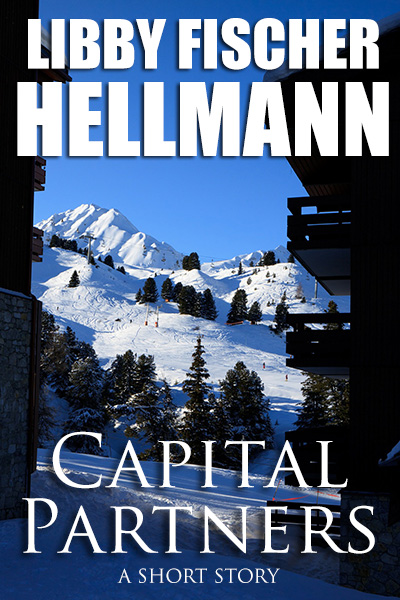 Capital Partners – A Short Story
Two women, whose husbands have been caught in a Ponzi scheme, vacation at a posh ski resort and take matters into their own hands. This story was originally published in the Writes of Spring Anthology, Nodin Press, 2012, edited by Pat Frovarp and Gary Shulze.
Publishers Weekly called it “a fine story…”
Just 99¢, it’s at Amazon, Kobo, iBooks, and B&N.
 No Good Deed
A former Ku Klux Klan member in prison for life forms an unlikely friendship with a young black man. This story was published in 2014 in Fiction River Special Edition: Crime, edited by Kris Rusch at WMG Publishing. It will also be re-published in Ed Gorman’s “25 Most Criminally Good Stories of 2014.”
(It is eligible for the Anthony Award for Short Story, so if you want to read it, let me know, and I’ll send it to you.)
The post Two New Short Stories appeared first on .
April 7, 2015
Putting Our Pets on a Pedestal
I’m still not sure how it happened, but somehow over the past few years, we’ve elevated our pets in the family pecking order. They are now our sine qua non, our raison d’etre, deserving of abject love, often as deep, if not more, than our kids. After all, children grow up and leave us.
My theory about why and how this happened has to do with social media. None of us really want to expose our kids to the relentless and very public timelines of our online lives. For all sorts of good reasons, we have chosen to shield their privacy.
But our pets? Well that’s a different kettle of fish, Ollie.
You can’t scroll Facebook these days without seeing an adorable puppy doing something adorable, a cat doing something quite feline, a rabbit, a duck, a horse, etc.
Pet photos and videos have not only become a way to express their personalities, but they’re a safe way to express how much love we have for them.
And in a way, showing all those pet images helps bring us together. It’s a safe, entertaining way to share. I’d even go so far as to say it’s a universal pleasure, no matter where you live or what language you speak. For example, how can you not love this video about the puppy who can’t wait to see its owner?
Or this one, appropriately named “Popcorn Kittens?”
A pet owner myself, I’ve decided to dedicate this post to our canine and feline love objects (although a rabbit or two may show up). Following are some of my favorite books about pets. One or two are for kids, but there’s no Dr. Seuss . Or even Frog and Toad. Or Old Yeller. Most of these, believe it or nor, are for adults.
 Shiloh
When my son read this 1991 YA book by Phyllis Reynolds Naylor, I was so curious that I read it myself. It’s a heart-warming story about a boy, his Beagle, and a nasty old man. And it’s a wonderful read. In fact, when we got a dog a year later, it was a Beagle and my son named him Shiloh. All the kids in the neighborhood knew why.
The novel begins when a young Beagle follows 11-year-old Marty as he takes a walk in the hills on the road past the old Shiloh schoolhouse near Friendly, West Virginia. Because the dog is “slinking down, . . . tail between his legs like he’s hardly got the right to breathe” and backing off and cringing when Marty puts out his hand, he is sure the dog’s owner is abusing him. Marty feels protective of the dog, and names him Shiloh.
He’s right about the abuse, but the nasty old man who owns Shiloh won’t let Marty keep him, so eventually, Marty works for the man in order to buy Shiloh. It’s a story about human behavior, determination, and the lengths that people will go to right a wrong. I recommend it highly, both for kids and adults. It won a Newberry Medal which is given to the best YA and children’s books by the American Library Association.
A movie was made and you can find it on Amazon.
 Suspect
Robert Crais’s crime novel, Suspect, has the best portrayal of a dog’s thinking of any book I’ve read. Here’s the book description:
LAPD cop Scott James is not doing so well. Eight months ago, a shocking nighttime assault by unidentified men killed his partner Stephanie, nearly killed him, and left him enraged, ashamed, and ready to explode. He is unfit for duty—until he meets his new partner, a dog.
Maggie the dog is not doing so well, either. A German shepherd who survived three tours in Iraq and Afghanistan sniffing explosives before losing her handler to an IED, her PTSD is as bad as Scott’s.
They are each other’s last chance. Shunned and shunted to the side, they set out to investigate the one case that no one wants them to touch: the identity of the men who murdered Stephanie. What they begin to find is nothing like what Scott has been told, and the journey will take them both through the darkest moments of their own personal hells. Whether they will make it out again, no one can say.
I found Suspect unputdownable, mostly because the chapters written from the dog’s point of view are so realistic. Unlike the other books featuring animals, Maggie’s thoughts and feelings—such that they are— feel totally authentic. Robert Crais did not anthropomorphize Maggie. She is a dog through and through, but she is a smart dog, and I could totally understand her behavior.
It’s also a great thriller, so I recommend it highly. And yes, the film rights have been sold. Let’s hope we’ll see Scott and Maggie on the screen soon.
 The Art of Racing in the Rain
Published in 2008 by Garth Stein, The Art of Racing in the Rain, unlike Suspect, is told completely from the dog’s point of view. And while Enzo, the dog (named after Enzo Ferrari) can think and feel human emotions, it’s still a touching, emotional ride. The story follows the life of Denny Swift, a race car driver and customer rep in a high-end Seattle auto dealership through marriage, fatherhood, child custody conflicts, and more. Enzo, who believes in the Mongolian legend that a dog may be reincarnated in his next life as a human, spends most of his day watching television. In that way he learns what Denny loves about car racing, and tries to relate it to his and Denny’s lives. Once you start, be prepared to finish in one sitting. And have some tissues handy. I loved it.
The rights to the movie were acquired, but the film has not yet appeared. Which is too bad. If it were done well, it would be a blockbuster.
 Watership Down
In this classic by Richard Adams, which was published in 1972, British rabbits take center stage. Of course, they can think and talk and act just like humans. And have a rabbit culture and system of laws. The central premise is that the rabbits must overcome their differences and develop a sense of trust that will help them find, build, and maintain a home in a safe location. Hazel, the leader, takes his warren on a journey to build a new home at Watership Down. In the course of the journey, the rabbits battle the elements, a “Hitler-esque” rabbit, and their own fears. In other words, it’s an epic Tolkien-like story, in which the rabbits and their culture are tested.
It has been adapted into a 1978 animated film, also a classic, as well as a television series.
 Call of The Wild
Call of the Wild by Jack London features Buck, the dog-wolf. It’s considered another classic, but it’s just as fresh as the day it was published in 1903. I promise. It’s set in the Yukon, waaay up north, during the 1890’s Gold Rush when sled dogs were a necessity. Buck is a domesticated dog, a St. Bernard Collie mix, who is stolen and sold as a sled dog. Poor Buck reverts to a wild state where he is forced to fight other dogs in order to survive. Along the way he meets a man named Thorton with whom he develops an unbreakable bond of loyalty and love. But, as in so many love stories, the course of true love doesn’t run smoothly, and at the end, Buck sheds the veneer of civilization altogether.
It’s a simple story, a love story between man and dog, a heroic journey, and ultimately a tear jerker.
Interestingly, it first appeared as a serialized novel in the Saturday Evening Post but was released as a novel soon afterwards. There have been several adaptations for film and TV.
Enjoy your animals. See you next month.
The post Putting Our Pets on a Pedestal appeared first on .
March 31, 2015
Foreign Translations and Indie Publishing, Part 2
 Picking up from the end of Part 1, I’m afraid I left you with the impression that investing in a foreign translation of your book isn’t worth the cost and effort. That may be true for some, but the benefits are pretty awesome too. (Btw, be forewarned… this is a looong post.)
Benefits of Foreign Translations
— You have the opportunity to introduce yourself to a much broader audience; with the accompanying royalties. Plus, WOM works abroad, too. If someone in China falls in love with your story, he/she will recommend it to their friends.
–Through reading your book, someone from another culture will learn about your culture, what drives you, how you look at the world.
–Once your book is translated into one language assuming it does well, it can open doors to more translations in additional languages, thus multiplying the results.
— Modest results in the US might, in another language, become a best-seller. My friend Jamie Freveletti’s first book did well in the US, but in Germany, it was a best-seller. That kind of success is always good for your career going forward whether you are publishing indie or go the traditional route.
So with that in mind, following are the steps you need to consider when you’re producing a foreign translation.
Identify the title and language
—The first step is to take a long hard look at your book. Will it appeal to Spanish language readers? Italian? German? Do they need to read it? Why? Does it add something they can’t afford to miss: a surprise twist, a sympathetic character, an unreliable narrator, a political, economic, or social attitude they don’t have in books of their own language? Just because you’ve written a book or a novel doesn’t mean it’s right for foreign translations.
Your sales figures and reviews (honest reviews) will help. If you’re consistently in top rankings at Amazon and other platforms, and your reviews emphasize how unique your book, it’s a good sign.
—You’ll also need to decide what language to start with. For example, if you’ve written a thriller, Germany might be a good choice, while Spanish might be better in an audio market. Other markets could be smaller and more specialized, and could well be more difficult to reach without an agent who knows the markets and how to negotiate foreign rights.
Choose a Translator and Editor (or two)
You will need two, and possibly three, people who speak the language fluently. The first will be your translator. The second will edit and polish what the translator did. For a translator, I prefer using a native of the country. For an editor, I would recommend a bi-lingual American who can deal with unique American expressions and slang. However, even then, mistakes and awkward constructions can pop up. If you can, a third pair of eyes to proof what the translator and editor did can be helpful.
I recommend you take some time to learn PubMatch. I guarantee you’ll find it fascinating, and you might find a translator and editor there. Of course, you can also ask friends for recommendations.
Publish the translation
You’ll publish the translation just like you do an indie book. Your cover can be variation of the existing one, or it can be different, especially if certain design styles are popular in the country you’ve chosen.
Remember, too, that most readers in other languages still read print books, so I recommend both an ebook and print version. Btw, the print version will include a back cover, which means your English book description and review blurbs will need to be translated. There will be additional translations when you begin marketing (See below), so be sure to include everything when you ask for a quote.
Distribute the book
 Here’s where you need to do a little homework. There’s no question that Amazon and/or iBooks, with all their foreign markets, are great places to start. In fact, I put Bitterer Schleier into Select for a few months so I could go free and try to get some reviews on Amazon.de. I got over 700 downloads, which was great, but they didn’t yield as many reviews as I’d hoped. However, those I did get were quite good. Which was a relief. It also triggered a nice flurry of sales after the price went back up to 4.99 Euros.
After a time, I took Bitterer out of Select and uploaded it to other platforms. In addition to the “usual suspects,” there is a consortium of bookstores and retailers in Germany that, collectively, are doing as well as Amazon. It took a while and some luck with the financial arrangements, but ultimately, I uploaded it to Epubli, where it has since been distributed to other bookstores in the consortium, including Tolino. It’s taken a couple of months, but I started to see some sales just last week.
So it’s useful to research the market in which you’ll be distributing ahead of time. For example, Tolino is about to expand into Netherlands and Denmark, I believe, and it’s worth getting your book on their system.
Promote Your Title
Which brings us to marketing. As in the US, marketing and promotion can be a black hole. I never know what works best or for how long, but here are some thoughts on what I’ve done or am going to do vis a vis translations.
o Offer free copies in exchange for reviews
♣ Facebook groups (readers in Spanish, German, etc) are good sources
♣ Facebook ads are also helpful here
♣ Amazon also has a host customer discussion groups, and while you can’t promote on their lists, you might be able to identify individuals to whom you can email a request
o In addition to the end book material, back cover, book description, ask your translator to translate:
♣ 6-8 tweets in their language about the book
♣ A one page sell sheet (See here for example)
♣ A press release that you’ve written in advance
o Distribute your press release online to the press outlets in the country you’re selling in. Google the major ones— there may be online services like the ones that exist here. If you’re not having any luck, go to your library and ask the reference librarian for help.
o Prepare and place ads on Facebook in the foreign language. It doesn’t have to be expensive, and if you target the right audience, you may have surprising results. Same with Twitter and Google+.
o Explore Facebook, Google+, Goodreads, and Linked-In foreign language readers’ groups to see if there is an appropriate way to get the news out about your book.
o Go free for a period of time
o Do a Goodreads giveaway in the country you’re selling in – not for reviews, but so readers can put it on their TBR lists.
Be Aware of the Bottom Line
As I said before, it’s not going to be cheap, but if you’re like me and you’re willing to invest your profits back into your business, it’s doable.
For example, a Spanish translator starts at $2K. For German, it’s double or triple that..
An Editor will be about $1200.
Publishing and distribution, compared to the above, will be negligible
Promotion is whatever you’re prepared to spend.
Curb Your Expectations
As an Indie Publisher, it’s hard to know what to expect. The process is much slower. I had to go free with two books before I began to see some traction. If you’re with a publisher or Amazon Crossing, sales will undoubtedly be more robust and faster.
But, as I said, it is a long-term investment for me, and one that I hope will ultimately bring a lot of satisfaction.
Questions? What did I leave out? Let me know.
The post Foreign Translations and Indie Publishing, Part 2 appeared first on .
March 28, 2015
Foreign Translations and Indie Publishing: Part 1
One of the most exciting opportunities in our brave new world of indie publishing is foreign translations. At least to me. When I was traditionally published, only the top best-selling crime fiction was translated, and it was often a NY Times listed book. I didn’t sell well enough to make the cut, and I envied my more successful colleagues who, of course, liked to drop the fact that their work had been translated into 6 or 12 or 26 languages.
What I didn’t realize back then was that bragging rights might have been the most tangible benefit of the process. It was one thing if an author’s publisher made the deal—an author had some assurance that the bookkeeping would be more or less accurate. But if the contract was negotiated by an agent, the process could take years and might yield an uncertain outcome. Your agent had to contact or respond to an agent in the overseas country. Then that sub-agent had to find a publisher willing to translate, edit, publish, and distribute the book. Finally, there was no guarantee that the accounting by the foreign publisher and/or agent would be correct.
With indie publishing, a lot of that has changed, and an author can do foreign translations herself. First off, I need to thank Kris Rusch, with whom I exchanged emails about 4-5 years ago about translations. She gave me the shot of confidence I needed to try. Btw, over the past few years, the process has grown even easier.
So, this is going to be a two-part blog. Part 1 is the “backstory” of the translations I’ve done and how they came about. Part 2 will be a how-to for you, including marketing.
 My first foreign translation was serendipitous. I was approached by an Italian graduate student studying English who wanted to translate Nice Girl Does Noir (My short story collection) into Italian for her thesis. So began a process that ultimately took about two years. She translated six of the stories first, and then did the rest. Her thesis advisor edited them. I published them, both separately and then as a collection. They’ve been available in print as well as ebook, and they’re just starting to sell well. (More on the financial investment vs the return in Part 2).
 Buoyed by the relative ease of the Italian translation, I decided to translate Easy Innocence into Spanish. If had to do it again, I probably would have chosen German, because it’s a more mature market, but I had no connections to German translators and of all the translations to do, German is the most expensive. Best-selling Paranormal Romance author Tina Folsom was kind enough to refer me to her Spanish translator and editor, and I hired them.
This is where the uncertainly comes in. Even with two fluent Spanish-speakers’ eyes on the manuscript, there were some errors in syntax, colloquialisms, even grammar. But not knowing what they were, I couldn’t fix them. (More on that in Part 2).
As for sales, to be honest, the print version has not done all that well. But… I subcontracted with a Miami production company for an audiobook in Spanish, and they did a spectacular job. In fact, the audio has done far better than print version, which I understand is common in the Spanish market.
Remember how I said the process has become easier?
 Well, there’s now a website called PubMatch that facilitates foreign translations of all kinds in a kind of clearinghouse set-up. I listed a few of my titles, and about a year later, was contacted by a German freelance writer. He had done a lot of corporate/business translations but wanted to start translating fiction. As I mentioned, German translations are quite expensive, but since this was his first novel, we were able to negotiate a deal to translate A Bitter Veil. I hired Tina Folsom’s German editor, and a few months later, I had a German translation. I decided to try something a little different in distributing this version. I used Amazon Select for a few months, Createspace, and Epubli, a German e-tailer. This time the results have been more robust. (I’ll report on them in Part 2).

My 2013 Cuban mafia thriller, Havana Lost, was a natural for a Spanish translation, and I’m just now having the translation proof-read by a third editor (More on that later). But the cover is done, and as soon as the proofing is done, it will go up. I’ll also begin producing an audiobook with the same production house that did Inocencia Fácil.
 Finally, and who would believe it, three of my titles are being translated into Chinese! This came about through Fiberread, a new organization that seems to be legit and… this is the best part… requires no upfront costs to the author. Instead, if they select your title, you split royalties with the translators and the organization itself. Because China is such a potentially lucrative market, and because the deal was so tantalizing, I went for broke and gave them An Eye For Murder, Easy Innocence, and Havana Lost. So far, so good. The translators contact me every time they have questions, and I’ve enjoyed chatting with them. They’re almost finished with Eye and Easy Innocence, so I hope to see them up in the next few months.
So, there you have it. Some things to keep in mind, which I’ll talk more about in Part 2:
— I am NOT making a lot of money on these translations. They haven’t even paid for themselves, although Bitterer Schleier probably will in 6 months. They are long-term investments which I chose to make, knowing they were a risk.
— There is a lot of uncertainty involved in the quality of the translations
— It does take a long time
— There is a method to the madness of traditional publishing. They (and Amazon Crossing) choose translations based on domestic sales, the foreign market’s potential, and the upfront investment required. As an indie author, we have to learn to make the same choices. I’ve been lucky with some, not so much with others.
But it sure has been fun.
Part 2 will be coming next week.
The post Foreign Translations and Indie Publishing: Part 1 appeared first on .